
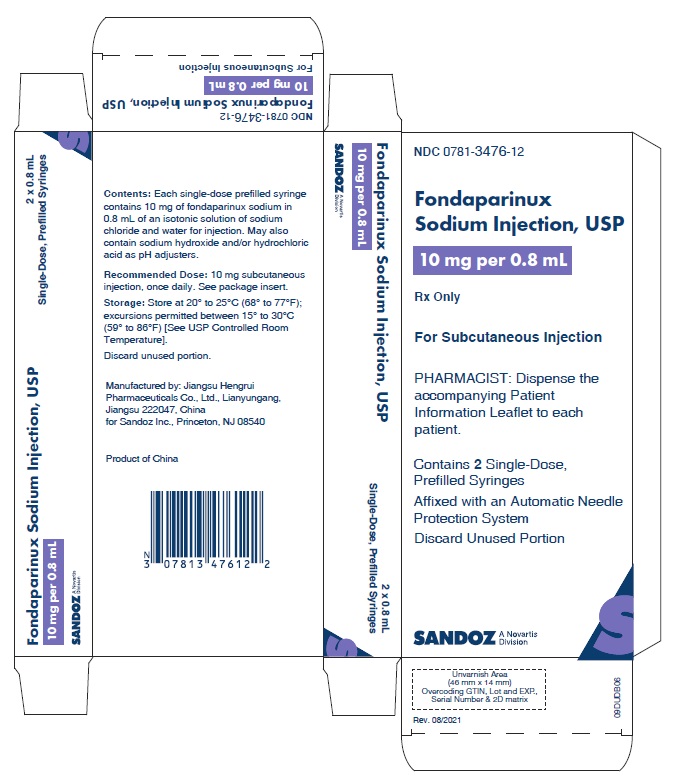
Fondaparinux Sodium 10 mg/.8mL Injection, 2 syringes — NDC 0781-3476-12 (Billing 00781-3476-12)
This is a package of 2 syringes of Fondaparinux Sodium 10 mg/.8mL Injection from Sandoz Inc., marketed since Jun 2019 and currently FDA-listed.
NDC database record
One package, one record: these facts belong to NDC 0781-3476-12 alone.
- Record
- FDA NDC Directory package listing · Human prescription drug
- Code segments
- 0781 labeler · 3476 product · 12 package
- Package marketed since
- Jun 18, 2019
- Sample package
- No — commercial package
- Listing certified through
- Dec 31, 2026
- Barcode (UPC)
- 0307813465126, 0307813476955, 0307813476122, 0307813465959
- FDA record last changed
- Jul 24, 2026
Identity & classification
Regulatory identifiers FDA, NLM and CMS codes for this package
Drug-database identifiers Medi-Span GPI and First Databank GCN / HICL / AHFS classification
- GSN (GCN sequence number): 058353
- GCN: 23777
- GPI-14 (Medi-Span): 83103030102045
- HICL (First Databank): 023233
- AHFS class code: 20:12.04.15
- RxCUI (RxNorm): 861356
Where does this data come from?
- FDA openFDA NDC Directory · synced Oct 8, 2026
- FDA label on DailyMed · label index refreshed Oct 6, 2026
- RxNorm (NLM RxNav) · catalog refreshed Oct 1, 2026
- Medi-Span GPI (licensed)
- First Databank (licensed) · refreshed Oct 8, 2026
RxNorm drug class
This medicine belongs to the Factor Xa Inhibitor class.
Where does this data come from?
- RxClass (NLM) · catalog refreshed Oct 1, 2026
Clinical
- It prevents blood clots after hip, knee, or abdominal surgery. It also treats DVT and PE in adults, together with warfarin, and VTE in children 1 year and older weighing at least 1...
- It is injected under the skin, usually once a day. Do not mix it with anything else in the syringe. Your prescriber decides the dose and length of treatment, so follow their direct...
- Bruising, minor bleeding, and injection site rash or itching are common. Anemia, dizziness, insomnia, and low blood pressure can also occur. Call your doctor if bleeding is heavy o...
- Get help right away for back pain, leg numbness or weakness, or bowel or bladder problems, especially after a spinal procedure. Also call for black or bloody stools, serious bleedi...
Patient education
Supplement & herbal interactions
Where does this data come from?
- MedlinePlus (NLM) · refreshed Oct 1, 2026
- FDA label on DailyMed · label index refreshed Oct 6, 2026
Ask a licensed pharmacist directly — free, answered by our team.
Pricing
A drug doesn't have one price. Each row is a different public payment system, and none is what you'd pay at the counter — that depends on your insurance. The ⓘ on each row explains what it measures.
| Price system | Per each | Per package |
|---|---|---|
| Retail pharmacies payNADAC · weekly | Not in the retail survey — common for institutional, discontinued, or low-volume packs. | |
| Medicaid paysCMS SDUD · 12 mo | No recent Medicaid claims on file for this NDC — rare and low-volume NDCs are suppressed in the public data. | |
| Medicare drug plans payPart D · Q2 2026 | $34.64 | $69.28 / 2 syringes |
| Medicare Part B allowsASP · J1652 | $0.925 / J1652 unit | — |
Where does this data come from?
- CMS NADAC weekly file
- CMS ASP pricing files · refreshed Sep 20, 2026
- CMS Medicaid State Drug Utilization Data · refreshed Oct 8, 2026
- CMS Part D plan pricing files · refreshed Sep 24, 2026
- VA National Acquisition Center price file
Billing & reimbursement
Where does this data come from?
- CMS ASP NDC-HCPCS crosswalk · refreshed Sep 22, 2026
- DMEPDAC NDC-HCPCS crosswalk
- openFDA NSDE billing units · refreshed Oct 7, 2026
Packaging — all sizes for this product
| Package NDC | Description | Per unit | Per pack | Marketing start | Marketing end | Status |
|---|---|---|---|---|---|---|
| 00781-3476-12 You're viewing this | 2 SYRINGE in 1 CARTON / .8 mL in 1 SYRINGE | — | — | 2019-06-18 | — | Active |
| 00781-3476-95 0781-3476-95 Main listing | 10 SYRINGE in 1 CARTON / .8 mL in 1 SYRINGE | $44.82 / mL | $358.53 | 2019-06-18 | — | Active |
Pack size FAQ
What quantity is in this package?
How does this package differ from NDC 00781-3476-95?
What NDC number is used to bill for this package of Fondaparinux Sodium 10 mg/.8mL Injection?
Prices are the latest CMS NADAC pharmacy acquisition cost per NDC; per-pack figures are per-unit × pack quantity, shown only when the pack is denominated in the same measure NADAC prices.
Therapeutic equivalents
| Product | Labeler | Pack | NADAC/unit | TE | Status | Price vs. this |
|---|---|---|---|---|---|---|
| Fondaparinux Sodium 10 mg/.8mL 55111-0681-02 | Dr. | 2 syringes | $18.369 | AP | FDA listed | — |
| Fondaparinux Sodium 10 mg/.8mL 67457-0585-08 | Mylan | 10 syringes | $44.816 | AP | Availability likely | — |
| fondaparinux sodium 10 mg/.8mL 70710-1517-06 | Zydus | 10 syringes | $44.816 | AP | Availability likely | — |
| Fondaparinux Sodium 10 mg/.8mLthis 00781-3476-12 | Sandoz | 2 syringes | — | — | FDA listed | — |
| fondaparinux sodium 10 mg/.8mL 11797-0157-06 | Italfarmaco | 10 syringes | — | AP | FDA listed | — |
| Fondaparinux Sodium 10 mg/.8mL 55150-0233-02 | Eugia | 2 syringes | — | AP | FDA listed | — |
| Arixtra 10 mg/.8mL 67457-0595-08 | Mylan | 10 syringes | — | AP | FDA listed | — |
Where does this data come from?
- FDA openFDA NDC Directory · synced Oct 8, 2026
- FDA Orange Book · refreshed Oct 3, 2026
- CMS NADAC weekly file
Availability & generic status
This product is an FDA-approved generic. Other versions of the same drug are listed under Therapeutic equivalents, least expensive first.
Where does this data come from?
- FDA Orange Book · refreshed Oct 3, 2026
Inactive Ingredients / Excipients
Inactive ingredients, also called excipients, are components of the drug product other than the active ingredient. They may include fillers, dyes, coatings, preservatives, flavors, or other formulation ingredients.
🧪 Avoiding an ingredient? See Fondaparinux inactive ingredients by manufacturer: every current product's list side by side, so you can ask your pharmacy for the version that does not list it.
💡 Tap an ingredient (hover on desktop) to see what it is and why it’s used.
-
UNII QTT17582CB
A strong acid used to adjust and maintain the proper pH level in liquid medicines, ensuring stability and preventing breakdown of active ingredients.
-
UNII 451W47IQ8X
Sodium chloride is common table salt. It's used in medicines as a buffer to maintain proper pH, as a filler to add bulk, or to adjust the osmotic balance in liquid formulations.
-
UNII 55X04QC32I
A strong alkaline chemical used to adjust and maintain the pH balance of liquid medicines. It helps keep the medicine stable and ensures it stays effective during storage.
3 inactive ingredients listed in the exact product block matched to this NDC.
Where does this data come from?
ingredient classCode="IACT" elements from the exact product block matched by this NDC. Label-section narrative from DailyMed / the openFDA label index is shown separately when available.- FDA label on DailyMed · label index refreshed Oct 6, 2026
- FDA openFDA NDC Directory · synced Oct 8, 2026
Inactive ingredient FAQ
Are inactive ingredients the same for every manufacturer?
Why might an inactive ingredient be missing?
Can inactive ingredients matter?
Manufacturer & labeler
More NDCs from Sandoz Inc. labeler code 00781
- Phenylephrine Hydrochloride 10 mg/mL Injection NDC 0781-3458-95
- Fondaparinux Sodium 7.5 mg/.6mL Injection NDC 0781-3465-12
- Phenylephrine Hydrochloride 10 mg/mL Injection NDC 0781-3466-70
- Sugammadex 200 mg/2mL Injection, Solution NDC 0781-3468-95
- Sugammadex 500 mg/5mL Injection, Solution NDC 0781-3469-95
- CARMUSTINE Kit NDC 0781-3474-32
- PANTOPRAZOLE SODIUM I.V. 40 mg/10mL Injection, Powder, For Solution NDC 0781-3480-95
- Tigecycline 50 mg/10mL Injection, Powder, Lyophilized, For Solution NDC 0781-3481-92
- Iron Sucrose 50 mg/2.5mL Injection NDC 0781-3485-95
- Iron Sucrose 100 mg/5mL Injection NDC 0781-3486-95
- Iron Sucrose 200 mg/10mL Injection NDC 0781-3487-14
- Azacitidine 100 mg Injection, Powder, Lyophilized, For Solution NDC 0781-3491-94
Where does this data come from?
- FDA openFDA NDC Directory · synced Oct 8, 2026
- Drugs@FDA
Full prescribing information FDA SPL
🚨 Boxed Warning ▾
WARNING: SPINAL/EPIDURAL HEMATOMAS Epidural or spinal hematomas may occur in patients who are anticoagulated with low molecular weight heparins (LMWH), heparinoids, or fondaparinux sodium and are receiving neuraxial anesthesia or undergoing spinal puncture. These hematomas may result in long-term or permanent paralysis. Consider these risks when scheduling patients for spinal procedures.
Factors that can increase the risk of developing epidural or spinal hematomas in these patients include: use of indwelling epidural catheters concomitant use of other drugs that affect hemostasis, such as non-steroidal anti-inflammatory drugs (NSAIDs), platelet inhibitors, or other anticoagulants a history of traumatic or repeated epidural or spinal puncture a history of spinal deformity or spinal surgery Optimal timing between the administration of fondaparinux sodium and neuraxial procedures is not known. Monitor patients frequently for signs and symptoms of neurologic impairment.
If neurologic compromise is noted, urgent treatment is necessary. Consider the benefit and risks before neuraxial intervention in patients anticoagulated or to be anticoagulated for thromboprophylaxis [see Warnings and Precautions ( 5.1 ) and Drug Interactions ( 7 )]. WARNING: SPINAL/EPIDURAL HEMATOMAS See full prescribing information for complete boxed warning .
Epidural or spinal hematomas may occur in patients who are anticoagulated with low molecular weight heparins (LMWH), heparinoids, or fondaparinux sodium and are receiving neuraxial anesthesia or undergoing spinal puncture. These hematomas may result in long-term or permanent paralysis. Consider these risks when scheduling patients for spinal procedures.
Factors that can increase the risk of developing epidural or spinal hematomas in these patients include: use of indwelling epidural catheters concomitant use of other drugs that affect hemostasis, such as non-steroidal anti-inflammatory drugs (NSAIDs), platelet inhibitors, or other anticoagulants a history of traumatic or repeated epidural or spinal puncture a history of spinal deformity or spinal surgery Monitor patients frequently for signs and symptoms of neurologic impairment. If neurologic compromise is noted, urgent treatment is necessary.
Consider the benefit and risks before neuraxial intervention in patients anticoagulated or to be anticoagulated for thromboprophylaxis [see Warnings and Precautions ( 5.1 ) and Drug Interactions ( 7 )].
🎯 Indications and Usage ▾
1 INDICATIONS AND USAGE Fondaparinux sodium injection is a Factor Xa inhibitor (anticoagulant) indicated for: Prophylaxis of deep vein thrombosis (DVT) in adult patients undergoing hip fracture surgery (including extended prophylaxis), hip replacement surgery, knee replacement surgery, or abdominal surgery. (1.1) Treatment of DVT or acute pulmonary embolism (PE) in adult patients when administered in conjunction with warfarin. ( 1.2 , 1.3 ) Treatment of venous thromboembolism (VTE) in pediatric patients aged 1 year or older weighing at least 10 kg.
(1.4)
1.1Prophylaxis of Deep Vein Thrombosis in Adult Patients Fondaparinux sodium injection is indicated for the prophylaxis of deep vein thrombosis (DVT in adults), which may lead to pulmonary embolism (PE): in patients undergoing hip fracture surgery, including extended prophylaxis; in patients undergoing hip replacement surgery; in patients undergoing knee replacement surgery; in patients undergoing abdominal surgery who are at risk for thromboembolic complications.
1.2Treatment of Acute Deep Vein Thrombosis in Adult Patients Fondaparinux sodium injection is indicated for the treatment of acute deep vein thrombosis in adults when administered in conjunction with warfarin sodium.
1.3Treatment of Acute Pulmonary Embolism in Adult Patients Fondaparinux sodium injection is indicated for the treatment of acute pulmonary embolism in adults when administered in conjunction with warfarin sodium when initial therapy is administered in the hospital.
1.4Treatment of Venous Thromboembolism in Pediatric Patients Fondaparinux sodium injection is indicated for the treatment of venous thromboembolism (VTE) in pediatric patients aged 1 year or older weighing at least 10 kg.
⏱️ Dosage and Administration ▾
2 DOSAGE AND ADMINISTRATION For subcutaneous use, do not mix with other injections or infusions. ( 2.1 ) Prophylaxis of deep vein thrombosis in adults: Fondaparinux sodium 2.5 mg subcutaneously once daily after hemostasis has been established. The initial dose should be given no earlier than 6 hours to 8 hours after surgery and continued for 5 days to 9 days.
For patients undergoing hip fracture surgery, extended prophylaxis up to 24 additional days is recommended. ( 2.2 , 2.3 ) Treatment of deep vein thrombosis and pulmonary embolism in adults: Fondaparinux sodium 5 mg (body weight less than 50 kg), 7.5 mg (50 kg to 100 kg), or 10 mg (greater than 100 kg) subcutaneously once daily. Treatment should continue for at least 5 days until INR 2 to 3 is achieved with warfarin sodium.
( 2.4 ) Treatment of venous thromboembolism in pediatric patients weighing at least 10 kg: Fondaparinux sodium 0.1 mg/kg subcutaneously once daily. ( 2.5)
2.1Important Dosing Information Do not mix other medications or solutions with fondaparinux sodium injection. Administer fondaparinux sodium injection only subcutaneously. Discard unused portion. Monitor routine complete blood counts (including platelet count), serum creatinine level, and stool occult blood periodically [see Warnings and Precautions (5.6)].
2.2Deep Vein Thrombosis Prophylaxis Following Hip Fracture, Hip Replacement, and Knee Replacement Surgery in Adults In adult patients undergoing hip fracture, hip replacement, or knee replacement surgery, the recommended dose of fondaparinux sodium injection is 2.5 mg administered by subcutaneous injection once daily after hemostasis has been established. Administer the initial dose no earlier than 6 hours to 8 hours after surgery. Administration of fondaparinux sodium injection earlier than 6 hours after surgery increases the risk of major bleeding.
The usual duration of therapy is 5 days to 9 days; up to 11 days of therapy was administered in clinical trials. In patients undergoing hip fracture surgery, an extended prophylaxis course of up to 24 additional days is recommended. In patients undergoing hip fracture surgery, a total of 32 days (peri-operative and extended prophylaxis) was administered in clinical trials [see Warnings and Precautions (5.6), Adverse Reactions (6), and Clinical Studies (14)].
2.3Deep Vein Thrombosis Prophylaxis Following Abdominal Surgery in Adults In adult patients undergoing abdominal surgery, the recommended dose of fondaparinux sodium injection is 2.5 mg administered by subcutaneous injection once daily after hemostasis has been established. Administer the initial dose no earlier than 6 hours to 8 hours after surgery. Administration of fondaparinux sodium injection earlier than 6 hours after surgery increases the risk of major bleeding.
The usual duration of administration is 5 days to 9 days, and up to 10 days of fondaparinux sodium injection was administered in clinical trials.
2.4Deep Vein Thrombosis and Pulmonary Embolism Treatment in Adults In adult patients with acute symptomatic DVT and in patients with acute symptomatic PE, the recommended dose of fondaparinux sodium injection is 5 mg (body weight less than 50 kg), 7.5 mg (body weight 50 kg to 100 kg), or 10 mg (body weight greater than 100 kg) by subcutaneous injection once daily (fondaparinux sodium treatment regimen). Initiate concomitant treatment with warfarin sodium as soon as possible, usually within 72 hours. Continue treatment with fondaparinux sodium injection for at least 5 days and until a therapeutic oral anticoagulant effect is established (INR 2 to 3).
The usual duration of administration of fondaparinux sodium injection is 5 days to 9 days; up to 26 days of fondaparinux sodium injection was administered in clinical trials [see Warnings and Precautions (5.6) , Adverse Reactions (6) , and Clinical Studies (14) ].
2.5Venous Thromboembolism Treatment in Pediatric Patients Aged 1 Year or Older Weighing at Least 10 kg For patients weighing 10… [Excerpted — this section continues on DailyMed.]
💊 Dosage Forms and Strengths ▾
3 DOSAGE FORMS AND STRENGTHS Injection: Single-dose, prefilled syringes containing clear and colorless to slightly yellow liquid containing either 2.5 mg/0.5 mL, 5 mg/0.4 mL, 7.5 mg/0.6 mL, or 10 mg/0.8 mL of fondaparinux sodium. Single-dose, prefilled syringes containing 2.5 mg, 5 mg, 7.5 mg, or 10 mg of fondaparinux sodium. (3)
⛔ Contraindications ▾
4 CONTRAINDICATIONS Fondaparinux sodium injection is contraindicated in the following conditions: • Severe renal impairment (creatinine clearance [CrCl] less than 30 mL/min) [see Warnings and Precautions (5.3) and Use in Specific Populations (8.6)]. • Active major bleeding. • Bacterial endocarditis. • Thrombocytopenia associated with a positive in vitro test for anti-platelet antibody in the presence of fondaparinux sodium. • Body weight less than 50 kg (venous thromboembolism [VTE] prophylaxis in adults only) [see Warnings and Precautions (5.4)] . • History of serious hypersensitivity reaction (e.g., angioedema, anaphylactoid/anaphylactic reactions) to fondaparinux sodium.
Fondaparinux sodium injection is contraindicated in the following conditions: (4) Severe renal impairment (creatinine clearance less than 30 mL/min) in prophylaxis or treatment of venous thromboembolism. Active major bleeding. Bacterial endocarditis.
Thrombocytopenia associated with a positive in vitro test for anti-platelet antibody in the presence of fondaparinux sodium. Body weight less than 50 kg (venous thromboembolism prophylaxis in adults only). History of serious hypersensitivity reaction (e.g., angioedema, anaphylactoid/anaphylactic reactions) to fondaparinux sodium.
⚠️ Warnings and Cautions ▾
5 WARNINGS AND PRECAUTIONS • Spinal or epidural hematomas, which may result in long-term or permanent paralysis, can occur. (5.1) • Patients taking fondaparinux sodium with risk factors for bleeding are at increased risk of hemorrhage. (5.2) • Bleeding risk is increased in renal impairment and in adult patients with low body weight less than <50 kg.
(5.3, 5.4) • Thrombocytopenia can occur with administration of fondaparinux sodium. (5.5) • Periodic routine complete blood counts (including platelet counts), serum creatinine level, and stool occult blood tests are recommended. (5.6)
5.1Neuraxial Anesthesia and Post-operative Indwelling Epidural Catheter Use Spinal or epidural hematomas, which may result in long-term or permanent paralysis, can occur with the use of anticoagulants and neuraxial (spinal/epidural) anesthesia or spinal puncture. The risk of these events may be higher with post-operative use of indwelling epidural catheters or concomitant use of other drugs affecting hemostasis such as NSAIDs [see Boxed Warning] . In the postmarketing experience, epidural or spinal hematoma has been reported in association with the use of fondaparinux sodium by subcutaneous (SC) injection.
Optimal timing between the administration of fondaparinux sodium and neuraxial procedures is not known. Monitor patients undergoing these procedures for signs and symptoms of neurologic impairment such as midline back pain, sensory and motor deficits (numbness, tingling, or weakness in lower limbs), and bowel or bladder dysfunction. Consider the potential risks and benefits before neuraxial intervention in patients anticoagulated or who may be anticoagulated for thromboprophylaxis.
5.2Hemorrhage Fondaparinux sodium increases the risk of hemorrhage in patients at risk for bleeding, including conditions such as congenital or acquired bleeding disorders, active ulcerative and angiodysplastic gastrointestinal disease, hemorrhagic stroke, uncontrolled arterial hypertension, diabetic retinopathy, or shortly after brain, spinal, or ophthalmological surgery. Cases of elevated aPTT temporally associated with bleeding events have been reported following administration of fondaparinux sodium (with or without concomitant administration of other anticoagulants) [see Adverse Reactions (6.2)].
Conditions associated with increased bleeding in pediatric patients include systemic lupus erythematosus, Wilms tumor, antiphospholipid syndrome, antithrombin III deficiency, Factor V Leiden, malignancy, pancytopenia, indwelling chest tubes, thoracotomy, invasive infections, hypertensive encephalopathy, intestinal lymphangiectasia and von Willebrand disease. Do not administer agents that enhance the risk of hemorrhage with fondaparinux sodium unless essential for the management of the underlying condition, such as vitamin K antagonists for the treatment of VTE.
If co-administration is essential, closely monitor patients for signs and symptoms of bleeding. Do not administer the initial dose of fondaparinux sodium earlier than 6 to 8 hours after surgery. Administration earlier than 6 hours after surgery increases risk of major bleeding [see Dosage and Administration (2) and Adverse Reactions (6.1)] .
5.3Renal Impairment and Bleeding Risk in Adult Patients Fondaparinux sodium increases the risk of bleeding in adult patients with impaired renal function due to reduced clearance [see Clinical Pharmacology (12.4)]. The incidence of major bleeding by renal function status reported in clinical trials of adult patients receiving fondaparinux sodium for VTE surgical prophylaxis is provided in Table 4. In these patient populations, the following is recommended: • Do not use fondaparinux sodium for VTE prophylaxis and treatment in patients with CrCl less than 30 mL/min [see Contraindications (4)] . • Fondaparinux sodium may cause prolonged anticoagulation in patients with CrCl 30 mL/min to 50 mL/min.
Table 4: Incidence of Major Bleeding in Adult Patients Treated with Fondaparinux So… [Excerpted — this section continues on DailyMed.]
🤒 Adverse Reactions ▾
6 ADVERSE REACTIONS The following clinically significant adverse reactions are described elsewhere in the labeling: • Spinal or epidural hematomas [see Warnings and Precautions (5.1)] • Hemorrhage [see Warnings and Precautions (5.2)] • Renal impairment and bleeding risk [see Warnings and Precautions (5.3)] • Body weight less than 50 kg and bleeding risk [see Warnings and Precautions (5.4)] • Thrombocytopenia [see Warnings and Precautions (5.5)] The most serious adverse reactions associated with the use of fondaparinux sodium are bleeding complications.
(6.1) To report SUSPECTED ADVERSE REACTIONS, contact Sandoz Inc. at 1-800-525-8747 or FDA at 1-800-FDA-1088 or www.fda.gov/medwatch.
6.1Clinical Trials Experience Because clinical trials are conducted under widely varying conditions, adverse reaction rates observed in the clinical trials of a drug cannot be directly compared to rates in the clinical trials of another drug and may not reflect the rates observed in practice. Clinical Trials Experience in Adults The adverse reaction information below is based on data from 8,877 patients exposed to fondaparinux sodium in controlled trials of hip fracture, hip replacement, major knee, or abdominal surgeries, and DVT and PE treatment.
Hemorrhage During administration of fondaparinux sodium, the most common adverse reactions were bleeding complications [see Warnings and Precautions (5.2)]. Hip Fracture, Hip Replacement, and Knee Replacement Surgery The rates of major bleeding events reported during 3 active-controlled peri-operative VTE prophylaxis trials with enoxaparin sodium in hip fracture, hip replacement, or knee replacement surgery (N = 3,616) and in an extended VTE prophylaxis trial (n = 327) with fondaparinux sodium 2.5 mg are provided in Table 5.
Table 5: Bleeding Across Randomized, Controlled Hip Fracture, Hip Replacement, and Knee Replacement Surgery Studies Peri-Operative Prophylaxis (Day 1 to Day 7 ± 1 post- surgery) Extended Prophylaxis (Day 8 to Day 28 ± 2 post- surgery) Fondaparinux Sodium 2.5 mg subcutaneously once daily N = 3,616 Enoxaparin Sodium a, b N = 3,956 Fondaparinux Sodium 2.5 mg subcutaneously once daily N = 327 Placebo subcutaneously once daily N = 329 Major bleeding c 96 (2.7%) 75 (1.9%) 8 (2.4%) 2 (0.6%) Hip fracture 18/831 (2.2%) 19/842 (2.3%) 8/327 (2.4%) 2/329 (0.6%) Hip replacement 67/2,268 (3.0%) 55/2,597 (2.1%) — — Knee replacement 11/517 (2.1%) 1/517 (0.2%) — — Fatal bleeding 0 (0%) 1 (less than 0.1%) 0 (0%) 0 (0%) Non-fatal bleeding at critical site 0 (0%) 1 (less than 0.1%) 0 (0%) 0 (0%) Re-operation due to bleeding 12 (0.3%) 10 (0.3%) 2 (0.6%) 2 (0.6%) BI greater than or equal to 2 d 84 (2.3%) 63 (1.6%) 6 (1.8%) 0 (0%) Minor bleeding e 109 (3%) 116 (2.9%) 5 (1.5%) 2 (0.6%) a Enoxaparin sodium dosing regimen: 30 mg every 12 hours or 40 mg once daily. b Not approved for use in patients undergoing hip fracture surgery. c Major bleeding was defined as clinically overt bleeding that was (1) fatal, (2) bleeding at critical site (e.g., intracranial, retroperitoneal, intraocular, pericardial, spinal, or into adrenal gland), (3) associated with re-operation at operative site, or (4) with a bleeding index (BI) greater than or equal to 2. d BI greater than or equal to 2: Overt bleeding associated only with a bleeding index (BI) greater than or equal to 2 calculated as [number of whole blood or packed red blood cell units transfused + [(pre-bleeding) – (post-bleeding)] hemoglobin (g/dL) values]. e Minor bleeding was defined as clinically overt bleeding that was not major.
A separate analysis of major bleeding across all randomized, controlled, peri-operative, prophylaxis clinical studies of hip fracture, hip replacement, or knee replacement surgery according to the time of the first injection of fondaparinux sodium after surgical closure was performed in patients who received fondaparinux sodium only post-operatively. In this analysis, the incidences of major bleeding were as follows: less than 4 hours wa… [Excerpted — this section continues on DailyMed.]
🔄 Drug Interactions ▾
7 DRUG INTERACTIONS In clinical studies performed with fondaparinux sodium, the concomitant use of oral anticoagulants (warfarin sodium), platelet inhibitors (acetylsalicylic acid), NSAIDs (piroxicam), and digoxin did not significantly affect the pharmacokinetics/pharmacodynamics of fondaparinux sodium. In addition, fondaparinux sodium neither influenced the pharmacodynamics of warfarin sodium, acetylsalicylic acid, piroxicam, and digoxin, nor the pharmacokinetics of digoxin at steady state. Agents that may enhance the risk of hemorrhage should be discontinued prior to initiation of therapy with fondaparinux sodium unless these agents are essential.
If co-administration is necessary, monitor patients closely for hemorrhage [see Warnings and Precautions (5.2)] . In an in vitro study in human liver microsomes, inhibition of CYP2A6 hydroxylation of coumarin by fondaparinux (200 micromolar i.e., 350 mg/L) was 17% to 28%. Inhibition of the other isozymes evaluated (CYPs 1A2, 2C9, 2C19, 2D6, 3A4, and 3E1) was 0% to 16%.
Since fondaparinux does not markedly inhibit CYP450s (CYP1A2, CYP2A6, CYP2C9, CYP2C19, CYP2D6, CYP2E1, or CYP3A4) in vitro, fondaparinux sodium is not expected to significantly interact with other drugs in vivo by inhibition of metabolism mediated by these isozymes. Since fondaparinux sodium does not bind significantly to plasma proteins other than ATIII, no drug interactions by protein-binding displacement are expected. Discontinue agents that may enhance the risk of hemorrhage prior to initiation of therapy with fondaparinux sodium unless essential.
If co-administration is necessary, monitor patients closely for hemorrhage. (7)
👥 Use in Specific Populations ▾
8 USE IN SPECIFIC POPULATIONS Because elderly patients are more likely to have reduced renal function, fondaparinux sodium should be used with caution in these patients. (8.5) The risk of bleeding is increased with reduced renal or hepatic function. (8.6, 8.7)
8.1Pregnancy Risk Summary Available data from published literature and postmarketing reports have not reported a clear association with fondaparinux sodium and adverse developmental outcomes. Fondaparinux sodium plasma concentrations obtained from four women treated with fondaparinux sodium during pregnancy and their newborn infants demonstrated low placental transfer of fondaparinux sodium (see Data) . There are risks to the mother associated with untreated venous thromboembolism in pregnancy and a risk of hemorrhage in the mother and fetus associated with use of anticoagulants (see Clinical Considerations) .
In animal reproduction studies, there was no evidence of adverse developmental outcomes when fondaparinux sodium was administered to pregnant rats and rabbits during organogenesis at doses 32 times and 65 times, respectively, the recommended human dose based on body surface area. The estimated background risk of major birth defects and miscarriage for the indicated population is unknown. All pregnancies have a background risk of birth defect, loss, or other adverse outcomes.
In the U.S. general population, the estimated background risk of major birth defects and miscarriage in clinically recognized pregnancies is 2% to 4% and 15% to 20%, respectively. Clinical Considerations Disease-Associated Maternal and/or Embryo/Fetal Risk Pregnancy confers an increased risk for thromboembolism that is higher for women with underlying thromboembolic disease and certain high-risk pregnancy conditions. Published data describe that women with a previous history of venous thrombosis are at high risk for recurrence during pregnancy.
Fetal/Neonatal Adverse Reactions Fondaparinux sodium has been demonstrated to cross the placenta in humans (see Data) . Use of anticoagulants, including fondaparinux sodium, may increase the risk of bleeding in the fetus and neonate. Monitor neonates for bleeding [see Warnings and Precautions (5.2, 5.4, 5.6)] .
Labor or Delivery All patients receiving anticoagulants, including pregnant women, are at risk for bleeding. Fondaparinux sodium use during labor or delivery in women who are receiving neuraxial anesthesia may result in epidural or spinal hematomas. Pregnant women receiving fondaparinux sodium should be carefully monitored for evidence of bleeding or unexpected changes in coagulation parameters.
Consideration for use of a shorter acting anticoagulant should be specifically addressed as delivery approaches [see Warnings and Precautions (5.1, 5.6)] . Human Data In a study of five pregnant women treated with fondaparinux sodium during the third trimester of pregnancy at a dose of 2.5 mg/day, four of the women had elevated anti-factor Xa activity noted in the cord blood. Anti-factor Xa clotting times in these four cases were between 37.5 seconds and 50.9 seconds.
The patient who did not have elevated anti-factor Xa activity had received only one dose of fondaparinux sodium 22 hours prior to delivery. The concentration of fondaparinux sodium in umbilical cord plasma was approximately 1/10th the level of fondaparinux sodium in maternal plasma. None of the infants experienced adverse effects.
Animal Data Embryo-fetal development studies have been conducted with fondaparinux sodium in pregnant rats at subcutaneous doses up to 10 mg/kg/day (about 32 times the recommended human dose based on body surface area) administered from days 6 to 17 of gestation and pregnant rabbits at subcutaneous doses up to 10 mg/kg/day (about 65 times the recommended human dose based on body surface area) administered from days 6 to 18 of gestation. These studies have revealed no evidence of adverse developmental outcomes when fondaparinux sodium was administered to pregnant ra… [Excerpted — this section continues on DailyMed.]
🤰 Pregnancy ▾
8.1Pregnancy Risk Summary Available data from published literature and postmarketing reports have not reported a clear association with fondaparinux sodium and adverse developmental outcomes. Fondaparinux sodium plasma concentrations obtained from four women treated with fondaparinux sodium during pregnancy and their newborn infants demonstrated low placental transfer of fondaparinux sodium (see Data) . There are risks to the mother associated with untreated venous thromboembolism in pregnancy and a risk of hemorrhage in the mother and fetus associated with use of anticoagulants (see Clinical Considerations) .
In animal reproduction studies, there was no evidence of adverse developmental outcomes when fondaparinux sodium was administered to pregnant rats and rabbits during organogenesis at doses 32 times and 65 times, respectively, the recommended human dose based on body surface area. The estimated background risk of major birth defects and miscarriage for the indicated population is unknown. All pregnancies have a background risk of birth defect, loss, or other adverse outcomes.
In the U.S. general population, the estimated background risk of major birth defects and miscarriage in clinically recognized pregnancies is 2% to 4% and 15% to 20%, respectively. Clinical Considerations Disease-Associated Maternal and/or Embryo/Fetal Risk Pregnancy confers an increased risk for thromboembolism that is higher for women with underlying thromboembolic disease and certain high-risk pregnancy conditions. Published data describe that women with a previous history of venous thrombosis are at high risk for recurrence during pregnancy.
Fetal/Neonatal Adverse Reactions Fondaparinux sodium has been demonstrated to cross the placenta in humans (see Data) . Use of anticoagulants, including fondaparinux sodium, may increase the risk of bleeding in the fetus and neonate. Monitor neonates for bleeding [see Warnings and Precautions (5.2, 5.4, 5.6)] .
Labor or Delivery All patients receiving anticoagulants, including pregnant women, are at risk for bleeding. Fondaparinux sodium use during labor or delivery in women who are receiving neuraxial anesthesia may result in epidural or spinal hematomas. Pregnant women receiving fondaparinux sodium should be carefully monitored for evidence of bleeding or unexpected changes in coagulation parameters.
Consideration for use of a shorter acting anticoagulant should be specifically addressed as delivery approaches [see Warnings and Precautions (5.1, 5.6)] . Human Data In a study of five pregnant women treated with fondaparinux sodium during the third trimester of pregnancy at a dose of 2.5 mg/day, four of the women had elevated anti-factor Xa activity noted in the cord blood. Anti-factor Xa clotting times in these four cases were between 37.5 seconds and 50.9 seconds.
The patient who did not have elevated anti-factor Xa activity had received only one dose of fondaparinux sodium 22 hours prior to delivery. The concentration of fondaparinux sodium in umbilical cord plasma was approximately 1/10th the level of fondaparinux sodium in maternal plasma. None of the infants experienced adverse effects.
Animal Data Embryo-fetal development studies have been conducted with fondaparinux sodium in pregnant rats at subcutaneous doses up to 10 mg/kg/day (about 32 times the recommended human dose based on body surface area) administered from days 6 to 17 of gestation and pregnant rabbits at subcutaneous doses up to 10 mg/kg/day (about 65 times the recommended human dose based on body surface area) administered from days 6 to 18 of gestation. These studies have revealed no evidence of adverse developmental outcomes when fondaparinux sodium was administered to pregnant rats and rabbits during organogenesis.
Additionally, there were no effects on pre- and postnatal development in a study conducted in rats at subcutaneous doses up to 10 mg/kg/day (about 32 times the recommended human dose based on body surface area).
🧒 Pediatric Use ▾
8.4Pediatric Use The safety and effectiveness of fondaparinux sodium for the treatment of venous thromboembolism have been established in pediatric patients aged 1 year and older weighing at least 10 kg. Use of fondaparinux sodium for this indication is supported by evidence from adequate and well-controlled studies in adults with additional pharmacokinetic, pharmacodynamic, safety, and efficacy data in pediatric patients aged 0.3 years and older [see Adverse Reactions (6.1), Clinical Pharmacology (12.4), and Clinical Studies (14.8)] .
The frequency, type, and severity of adverse reactions observed were generally consistent with those observed in adults. The safety and effectiveness of fondaparinux sodium have not been established in pediatric patients for the treatment of venous thromboembolism who are younger than 1 year old, weigh less than 10 kg, or with any category of renal or hepatic impairment. The safety and effectiveness of fondaparinux sodium have not been established in pediatric patients for the prophylaxis of DVT and treatment of DVT or PE in conjunction with warfarin sodium.
🧓 Geriatric Use ▾
8.5Geriatric Use Over 3,000 patients 65 years and older have received fondaparinux sodium in randomized clinical trials for the treatment or prophylaxis of DVT and PE. There were over 2,000 patients 65 years of age and older in the orthopedic surgery clinical studies for prophylaxis of DVT and PE [see Clinical Studies (14)] . Of the total number of fondaparinux sodium-treated patients in these orthopedic surgery studies, 1,111 (30.9%) were 65 years of age to 74 years of age, while 1,227 (34.2%) were 75 years of age and older.
No overall differences in effectiveness of fondaparinux sodium have been observed between patients 65 years of age and older and younger adult patients. Serious adverse events were more frequent in patients 65 years of age and older. When using fondaparinux sodium in elderly patients, pay particular attention to dosing directions and concomitant medications (especially anti-platelet medication) [see Warnings and Precautions (5.2)] .
Fondaparinux sodium is substantially excreted by the kidney, and the risk of adverse reactions to fondaparinux sodium may be greater in patients with impaired renal function. Because geriatric patients are more likely to have decreased renal function, assess renal function prior to fondaparinux sodium administration [see Contraindications (4), Warnings and Precautions (5.3), and Clinical Pharmacology (12.4)]. In the peri-operative hip fracture, hip replacement, or knee replacement surgery clinical trials with patients receiving fondaparinux sodium 2.5 mg, serious adverse events increased with age for patients receiving fondaparinux sodium.
The incidence of major bleeding in clinical trials of fondaparinux sodium by age is provided in Table 9. Table 9: Incidence of Major Bleeding in Patients Treated with Fondaparinux Sodium Injection by Age Age Less than 65 years % (n/N) 65 years to 74 years % (n/N) Greater than or equal to 75 years % (n/N) Orthopedic surgery a Extended prophylaxis 1.8% (23/1,253) 1.9% (1/52) 2.2% (24/1,111) 1.4% (1/71) 2.7% (33/1,277) 2.9% (6/204) Abdominal surgery 3% (19/644) 3.2% (16/507) 5% (14/282) DVT and PE treatment 0.6% (7/1,151) 1.6% (9/560) 2.1% (12/583) a Includes hip fracture, hip replacement, and knee replacement surgery prophylaxis.
🆘 Overdosage ▾
10 OVERDOSAGE Overdose of fondaparinux sodium may lead to hemorrhagic complications. Discontinue treatment and initiate appropriate therapy if bleeding complications associated with overdosage occur. There is no known antidote for fondaparinux sodium. Data obtained in patients undergoing chronic intermittent hemodialysis suggest that clearance of fondaparinux sodium can increase by 20% during hemodialysis.
🧬 Clinical Pharmacology ▾
12 CLINICAL PHARMACOLOGY
12.1Mechanism of Action The antithrombotic activity of fondaparinux sodium is the result of antithrombin III (ATIII)-mediated selective inhibition of Factor Xa. By selectively binding to ATIII, fondaparinux sodium potentiates (about 300 times) the innate neutralization of Factor Xa by ATIII. Neutralization of Factor Xa interrupts the blood coagulation cascade and thus inhibits thrombin formation and thrombus development.
Fondaparinux sodium does not inactivate thrombin (activated Factor II) and has no known effect on platelet function. At the recommended dose, fondaparinux sodium does not affect fibrinolytic activity or bleeding time.
12.2Pharmacodynamics Anti-Xa Activity The pharmacodynamics/pharmacokinetics of fondaparinux sodium are derived from fondaparinux plasma concentrations quantified via anti-Factor Xa activity. Only fondaparinux can be used to calibrate the anti-Xa assay. (The international standards of heparin or LMWH are not appropriate for this use.) As a result, the activity of fondaparinux sodium is expressed as milligrams (mg) of the fondaparinux calibrator.
The anti-Xa activity of the drug increases with increasing drug concentration, reaching maximum values in approximately three hours.
12.3Pharmacokinetics Absorption: Fondaparinux sodium administered by subcutaneous injection is rapidly and completely absorbed (absolute bioavailability is 100%). Following a single subcutaneous dose of fondaparinux sodium 2.5 mg in young male subjects, Cmax of 0.34 mg/L is reached in approximately 2 hours. In patients undergoing treatment with fondaparinux sodium injection 2.5 mg, once daily, the peak steady-state plasma concentration is, on average, 0.39 mg/L to 0.5 mg/L and is reached approximately 3 hours post-dose.
In these patients, the minimum steady-state plasma concentration is 0.14 mg/L to 0.19 mg/L. In patients with symptomatic deep vein thrombosis and pulmonary embolism undergoing treatment with fondaparinux sodium injection 5 mg (body weight less than 50 kg), 7.5 mg (body weight 50 kg to 100 kg), and 10 mg (body weight greater than 100 kg) once daily, the body-weight-adjusted doses provide similar mean steady-state peaks and minimum plasma concentrations across all body weight categories. The mean peak steady-state plasma concentration is in the range of 1.20 mg/L to 1.26 mg/L.
In these patients, the mean minimum steady-state plasma concentration is in the range of 0.46 mg/L to 0.62 mg/L. Distribution: In healthy adults, intravenously or subcutaneously administered fondaparinux sodium distributes mainly in blood and only to a minor extent in extravascular fluid as evidenced by steady state and non-steady state apparent volume of distribution of 7 L to 11 L. Similar fondaparinux distribution occurs in patients undergoing elective hip surgery or hip fracture surgery.
In vitro, fondaparinux sodium is highly (at least 94%) and specifically bound to antithrombin III (ATIII) and does not bind significantly to other plasma proteins (including platelet Factor 4 [PF4]) or red blood cells. Metabolism: In vivo metabolism of fondaparinux has not been investigated since the majority of the administered dose is eliminated unchanged in urine in individuals with normal kidney function. Elimination: In individuals with normal kidney function, fondaparinux is eliminated in urine mainly as unchanged drug.
In healthy individuals up to 75 years of age, up to 77% of a single subcutaneous or intravenous fondaparinux dose is eliminated in urine as unchanged drug in 72 hours. The elimination half-life is 17 hours to 21 hours.
12.4Special Populations Renal Impairment: Fondaparinux elimination is prolonged in patients with renal impairment since the major route of elimination is urinary excretion of unchanged drug. In patients undergoing prophylaxis following elective hip surgery or hip fracture surgery, the total clearance of fondaparinux is approximately 25% lower in patients with mild renal impairment (CrCl… [Excerpted — this section continues on DailyMed.]
🧬 Mechanism of Action ▾
12.1Mechanism of Action The antithrombotic activity of fondaparinux sodium is the result of antithrombin III (ATIII)-mediated selective inhibition of Factor Xa. By selectively binding to ATIII, fondaparinux sodium potentiates (about 300 times) the innate neutralization of Factor Xa by ATIII. Neutralization of Factor Xa interrupts the blood coagulation cascade and thus inhibits thrombin formation and thrombus development.
Fondaparinux sodium does not inactivate thrombin (activated Factor II) and has no known effect on platelet function. At the recommended dose, fondaparinux sodium does not affect fibrinolytic activity or bleeding time.
📦 How Supplied / Storage and Handling ▾
16 HOW SUPPLIED/STORAGE AND HANDLING Fondaparinux sodium injection, USP is available in single-dose, prefilled syringes containing clear and colorless to slightly yellow liquid in the following strengths: 2.5 mg/0.5 mL fondaparinux sodium injection, USP in single-dose prefilled syringe, affixed with a 27-gauge x ½-inch needle and an automatic needle protection system with white plunger rod. NDC 0781-3443-95 10 Single Unit Syringes 5 mg/0.4 mL fondaparinux sodium injection, USP in single-dose prefilled syringe, affixed with a 27-gauge x ½-inch needle and an automatic needle protection system with white plunger rod.
NDC 0781-3454-95 10 Single Unit Syringes 7.5 mg/0.6 mL fondaparinux sodium injection, USP in single-dose prefilled syringe, affixed with a 27-gauge x ½-inch needle and an automatic needle protection system with white plunger rod. NDC 0781-3465-95 10 Single Unit Syringes 10 mg/0.8 mL fondaparinux sodium injection, USP in single-dose prefilled syringe, affixed with a 27-gauge x ½-inch needle and an automatic needle protection system with white plunger rod. NDC 0781-3476-95 10 Single Unit Syringes Store at 20°C to 25°C (68°F to 77°F); excursions permitted between 15°C to 30°C (59°F to 86°F) [See USP Controlled Room Temperature].
Discard unused portion. PHARMACIST: Dispense a Patient Information Leaflet with each prescription.
📋 Description ▾
11 DESCRIPTION Fondaparinux sodium injection, USP is a sterile solution containing fondaparinux sodium. It is a synthetic and specific inhibitor of activated Factor X (Xa). Fondaparinux sodium is methyl O-2-deoxy-6-O-sulfo-2-(sulfoamino)-α-D-glucopyranosyl-(1→4)-O-β-D-glucopyra- nuronosyl-(1→4)-O-2-deoxy-3,6-di-O-sulfo-2-(sulfoamino)-α-D-glucopyranosyl-(1→4)-O-2-O- sulfo-α-L-idopyranuronosyl-(1→4)-2-deoxy-6-O-sulfo-2-(sulfoamino)-α-D-glucopyranoside, decasodium salt.
The molecular formula of fondaparinux sodium is C31H43N3Na10O49S8 and its molecular weight is 1728. The structural formula is provided below: Fondaparinux sodium injection, USP is supplied as a sterile, preservative-free injectable solution for subcutaneous use. Each single-dose, prefilled syringe of fondaparinux sodium injection, USP, affixed with an automatic needle protection system, contains 2.5 mg of fondaparinux sodium in 0.5 mL, 5 mg of fondaparinux sodium in 0.4 mL, 7.5 mg of fondaparinux sodium in 0.6 mL, or 10 mg of fondaparinux sodium in 0.8 mL of an isotonic solution of sodium chloride and water for injection.
May also contain sodium hydroxide and/or hydrochloric acid as pH adjusters. The final drug product is a clear and colorless to slightly yellow liquid with a pH between 5 and 8. image description
💬 Information for Patients ▾
17 PATIENT COUNSELING INFORMATION Advise the patient to read the FDA-approved patient labeling (Patient Information and Instructions for Use).
17.1Patient Advice If the patients have had neuraxial anesthesia or spinal puncture, and particularly, if they are taking concomitant NSAIDS, platelet inhibitors, or other anticoagulants, inform patients to watch for signs and symptoms of spinal or epidural hematomas, such as back pain, tingling, numbness (especially in the lower limbs), muscular weakness, and stool or urine incontinence. If any of these symptoms occur, advise patients to contact his or her physician immediately. The use of aspirin and other NSAIDS may enhance the risk of hemorrhage.
Advise patients to discontinue use prior to fondaparinux sodium injection therapy whenever possible; if co-administration is essential, the patient’s clinical and laboratory status should be closely monitored [see Drug Interactions (7)]. If patients must self-administer fondaparinux sodium injection or if administered by a caregiver, (e.g., if fondaparinux sodium injection is used at home), advise patients of the following: • Advise patients that fondaparinux sodium injection should be given by subcutaneous injection.
Instruct patients in the proper technique for administration. • Instruct patients that if they miss a dose of fondaparinux sodium injection, to inject the dose as soon as they remember. Advise patients not to inject two doses at the same time. • The most important risk with fondaparinux sodium injection administration is bleeding. Counsel patients on signs and symptoms of possible bleeding. • Advise patients that it may take them longer than usual to stop bleeding. • Advise patients that they may bruise and/or bleed more easily when they are treated with fondaparinux sodium injection. • Advise patients to report any unusual bleeding, bruising, or signs of thrombocytopenia (such as a rash of dark red spots under the skin) to their physician [see Warnings and Precautions (5.2, 5.5)] . • Advise patients to tell their physicians and dentists they are taking fondaparinux sodium injection and/or any other product known to affect bleeding before any surgery is scheduled and before any new drug is taken [see Warnings and Precautions (5.2)] . • Advise patients to tell their physicians and dentists of all medications they are taking, including those obtained without a prescription, such as aspirin or other NSAIDs [see Drug Interactions (7)] .
Manufactured by Jiangsu Hengrui Pharmaceuticals Co., Ltd. Lianyungang, Jiangsu 222047, China for Sandoz Inc., Princeton, NJ 08540
🧬 Pharmacokinetics ▾
12.3Pharmacokinetics Absorption: Fondaparinux sodium administered by subcutaneous injection is rapidly and completely absorbed (absolute bioavailability is 100%). Following a single subcutaneous dose of fondaparinux sodium 2.5 mg in young male subjects, Cmax of 0.34 mg/L is reached in approximately 2 hours. In patients undergoing treatment with fondaparinux sodium injection 2.5 mg, once daily, the peak steady-state plasma concentration is, on average, 0.39 mg/L to 0.5 mg/L and is reached approximately 3 hours post-dose.
In these patients, the minimum steady-state plasma concentration is 0.14 mg/L to 0.19 mg/L. In patients with symptomatic deep vein thrombosis and pulmonary embolism undergoing treatment with fondaparinux sodium injection 5 mg (body weight less than 50 kg), 7.5 mg (body weight 50 kg to 100 kg), and 10 mg (body weight greater than 100 kg) once daily, the body-weight-adjusted doses provide similar mean steady-state peaks and minimum plasma concentrations across all body weight categories. The mean peak steady-state plasma concentration is in the range of 1.20 mg/L to 1.26 mg/L.
In these patients, the mean minimum steady-state plasma concentration is in the range of 0.46 mg/L to 0.62 mg/L. Distribution: In healthy adults, intravenously or subcutaneously administered fondaparinux sodium distributes mainly in blood and only to a minor extent in extravascular fluid as evidenced by steady state and non-steady state apparent volume of distribution of 7 L to 11 L. Similar fondaparinux distribution occurs in patients undergoing elective hip surgery or hip fracture surgery.
In vitro, fondaparinux sodium is highly (at least 94%) and specifically bound to antithrombin III (ATIII) and does not bind significantly to other plasma proteins (including platelet Factor 4 [PF4]) or red blood cells. Metabolism: In vivo metabolism of fondaparinux has not been investigated since the majority of the administered dose is eliminated unchanged in urine in individuals with normal kidney function. Elimination: In individuals with normal kidney function, fondaparinux is eliminated in urine mainly as unchanged drug.
In healthy individuals up to 75 years of age, up to 77% of a single subcutaneous or intravenous fondaparinux dose is eliminated in urine as unchanged drug in 72 hours. The elimination half-life is 17 hours to 21 hours.
🧬 Pharmacodynamics ▾
12.2Pharmacodynamics Anti-Xa Activity The pharmacodynamics/pharmacokinetics of fondaparinux sodium are derived from fondaparinux plasma concentrations quantified via anti-Factor Xa activity. Only fondaparinux can be used to calibrate the anti-Xa assay. (The international standards of heparin or LMWH are not appropriate for this use.) As a result, the activity of fondaparinux sodium is expressed as milligrams (mg) of the fondaparinux calibrator.
The anti-Xa activity of the drug increases with increasing drug concentration, reaching maximum values in approximately three hours.
🔬 Clinical Studies ▾
14 CLINICAL STUDIES
14.1Prophylaxis of Thromboembolic Events Following Hip Fracture Surgery in Adult Patients In a randomized, double-blind, clinical trial in patients undergoing hip fracture surgery, fondaparinux sodium 2.5 mg subcutaneously once daily was compared to enoxaparin sodium 40 mg subcutaneously once daily, which is not approved for use in patients undergoing hip fracture surgery. A total of 1,711 patients were randomized and 1,673 were treated. Patients ranged in age from 17 years to 101 years (mean age 77 years) with 25% men and 75% women.
Patients were 99% Caucasian, 1% other races. Patients with multiple traumas affecting more than one organ system, serum creatinine level more than 2 mg/dL (180 micromol/L), or platelet count less than 100,000/mm3 were excluded from the trial. Fondaparinux sodium was initiated after surgery in 88% of patients (mean 6 hours) and enoxaparin sodium was initiated after surgery in 74% of patients (mean 18 hours).
For both drugs, treatment was continued for 7 ± 2 days. The primary efficacy endpoint, venous thromboembolism (VTE), was a composite of documented deep vein thrombosis (DVT) and/or documented symptomatic pulmonary embolism (PE) reported up to Day 11. The efficacy data are provided in Table 10 and demonstrate that under the conditions of the trial fondaparinux sodium was associated with a VTE rate of 8.3% compared with a VTE rate of 19.1% for enoxaparin sodium for a relative risk reduction of 56% (95% CI: 39%, 70%; P <0.001).
Major bleeding episodes occurred in 2.2% of patients receiving fondaparinux sodium and 2.3% of enoxaparin sodium patients [see Adverse Reactions (6.1)]. Table 10: Efficacy of Fondaparinux Sodium Injection in the Peri-operative Prophylaxis of Thromboembolic Events Following Hip Fracture Surgery Endpoint Peri-operative Prophylaxis (Day 1 to Day 7 ± 2 post-surgery) Fondaparinux Sodium 2.5 mg subcutaneously once daily Enoxaparin Sodium 40 mg subcutaneously once daily n/N a % (95% CI) n/N a % (95% CI) VTE 52/626 8.3% b (6.3, 10.8) 119/624 19.1% (16.1, 22.4) All DVT 49/624 7.9% b (5.9, 10.2) 117/623 18.8% (15.8, 22.1) Proximal DVT 6/650 0.9% b (0.3, 2) 28/646 4.3% (2.9, 6.2) Symptomatic PE 3/831 0.4% c (0.1, 1.1) 3/840 0.4% (0.1, 1) a N = all evaluable hip fracture surgery patients.
Evaluable patients were those who were treated and underwent the appropriate surgery (i.e., hip fracture surgery of the upper third of the femur), with an adequate efficacy assessment up to Day 11. b P value versus enoxaparin sodium <0.001. c P value versus enoxaparin sodium: NS.
14.2Extended Prophylaxis of Thromboembolic Events Following Hip Fracture Surgery in Adult Patients In a noncomparative, unblinded manner, 737 patients undergoing hip fracture surgery were initially treated during the peri-operative period with fondaparinux sodium 2.5 mg once daily for 7 ± 1 days. Eighty-one (81) of the 737 patients were not eligible for randomization into the 3-week double-blind period. Three hundred twenty-six (326) patients and 330 patients were randomized to receive fondaparinux sodium 2.5 mg once daily or placebo, respectively, in or out of the hospital for 21± 2 days.
Patients ranged in age from 23 years to 96 years (mean age 75 years) and were 29% men and 71% women. Patients were 99% Caucasian and 1% other races. Patients with multiple traumas affecting more than one organ system or serum creatinine level more than 2 mg/dL (180 micromol/L) were excluded from the trial.
The primary efficacy endpoint, venous thromboembolism (VTE), was a composite of documented deep vein thrombosis (DVT) and/or documented symptomatic pulmonary embolism (PE) reported for up to 24 days following randomization. The efficacy data are provided in Table 11 and demonstrate that extended prophylaxis with fondaparinux sodium was associated with a VTE rate of 1.4% compared with a VTE rate of 35% for placebo for a relative risk reduction of 95.9% (95% CI = [98.7; 87.1], P <0.0001). Major bleeding rates during th… [Excerpted — this section continues on DailyMed.]
🧪 Nonclinical Toxicology ▾
13 NONCLINICAL TOXICOLOGY
13.1Carcinogenesis, Mutagenesis, Impairment of Fertility No long-term studies in animals have been performed to evaluate the carcinogenic potential of fondaparinux sodium. Fondaparinux sodium was not genotoxic in the Ames test, the mouse lymphoma cell (L5178Y/TK +/- ) forward mutation test, the human lymphocyte chromosome aberration test, the rat hepatocyte unscheduled DNA synthesis (UDS) test, or the rat micronucleus test. At subcutaneous doses up to 10 mg/kg/day (about 32 times the recommended human dose based on body surface area), fondaparinux sodium was found to have no effect on fertility and reproductive performance of male and female rats.
📄 Carcinogenesis, Mutagenesis, Impairment of Fertility ▾
13.1Carcinogenesis, Mutagenesis, Impairment of Fertility No long-term studies in animals have been performed to evaluate the carcinogenic potential of fondaparinux sodium. Fondaparinux sodium was not genotoxic in the Ames test, the mouse lymphoma cell (L5178Y/TK +/- ) forward mutation test, the human lymphocyte chromosome aberration test, the rat hepatocyte unscheduled DNA synthesis (UDS) test, or the rat micronucleus test. At subcutaneous doses up to 10 mg/kg/day (about 32 times the recommended human dose based on body surface area), fondaparinux sodium was found to have no effect on fertility and reproductive performance of male and female rats.
📄 Patient Package Insert ▾
PATIENT INFORMATION F ondaparinux (fon-da-PEH-rih-nux) sodium injection for subcutaneous use What is the most important information I should know about fondaparinux sodium injection? Fondaparinux sodium injection may cause serious side effects, including: • Spinal or epidural blood clots (hematoma). People who take a blood thinner medicine (anticoagulant) like fondaparinux sodium injection, and have medicine injected into their spinal and epidural area, or have a spinal puncture have a risk of forming a blood clot that can cause long-term or permanent loss of the ability to move (paralysis).
Your risk of developing a spinal or epidural blood clot is higher if: a thin tube called an epidural catheter is placed in your back to give you certain medicine you take non-steroidal anti-inflammatory drugs (NSAIDs) or a medicine to help prevent blood from clotting you have a history of difficult or repeated epidural or spinal punctures you have a history of problems with your spine or have had surgery on your spine If you use fondaparinux sodium injection and receive spinal anesthesia or have a spinal puncture, your doctor should watch you closely for symptoms of spinal or epidural blood clots.
Tell your doctor right away if you have back pain, tingling, numbness, muscle weakness (especially in your legs and feet), and loss of control of your bowels or bladder (incontinence). Because the risk of bleeding may be higher, tell your doctor before using fondaparinux sodium injection if you: are also taking certain other medicines that affect blood clotting such as aspirin, an NSAID (for example, ibuprofen or naproxen), clopidogrel, or warfarin sodium have bleeding problems had problems in the past with pain medication given through the spine have had surgery to your spine have a spinal deformity See “What are the possible side effects of fondaparinux sodium injection?” for more information about side effects.
What is fondaparinux sodium injection? Fondaparinux sodium injection is a prescription medicine that is used to: • help prevent blood clots from forming in adults who have had certain surgeries of the hip, knee, or the stomach-area (abdominal surgery). • treat adults who have blood clots in their legs or blood clots that travel to their lungs, along with the blood thinner medicine called warfarin sodium. • treat children 1 year of age or older weighing at least 22 pounds (10 kg) who have blood clots. It is not known if fondaparinux sodium injection is safe and effective for use in children: • younger than 1 year of age and weighing less than 22 pounds (10 kg) who have blood clots. • younger than 1 year of age with kidney problems. • for the prevention of blood clots in the legs and to treat blood clots in the legs or lungs when given with warfarin sodium. • with liver problems.
Who should not use fondaparinux sodium injection? Do not use fondaparinux sodium injection if you: • have certain kidney problems • have active bleeding problems • have an infection in your heart • have low platelet counts and if you test positive for a certain antibody during treatment with fondaparinux sodium injection • weigh less than 110 pounds (50 kg) and fondaparinux sodium injection will be used to help prevent blood clots in adults undergoing certain surgery. See “What are the possible side effects of fondaparinux sodium injection?” • had a serious allergic reaction to fondaparinux sodium injection Before using fondaparinux sodium injection, tell your doctor about all of your medical conditions, including if you: • have had any bleeding problems (such as stomach ulcers) • have had a stroke • have had recent surgeries, including eye surgery • have diabetic eye disease • have kidney or liver problems • have uncontrolled high blood pressure • are pregnant or plan to become pregnant.
Fondaparinux sodium may harm your unborn baby. If you are pregnant, talk to your doctor about the best way for you to prevent or treat blood clots. • are breastfeeding or plan t… [Excerpted — this section continues on DailyMed.]
📄 Package Label / Principal Display Panel ▾
INSTRUCTIONS FOR USE Fondaparinux (fon-da-PEH-rih-nux) sodium injection for subcutaneous use This Instructions for Use contains information on how to inject fondaparinux sodium injection. Before you use fondaparinux sodium injection, read and follow the step-by-step instructions. Talk to your or your child’s doctor or pharmacist if you have any questions.
Important Information You Need to Know Before Injecting Fondaparinux Sodium Injection • Fondaparinux sodium injection is available in different types of syringes. Confirm the syringe looks like the figure (Syring looks 1) below before you continue: • Your healthcare provider should show you how to prepare and inject fondaparinux sodium injection. Do not inject yourself or someone else until you have been shown how to inject fondaparinux sodium injection. • Each fondaparinux sodium injection syringe is 1 dose of fondaparinux sodium injection.
The syringe is for a one-time use only. • Use fondaparinux sodium injection exactly as prescribed by your doctor. How should I store fondaparinux sodium injection syringes? • Store fondaparinux sodium injection at room temperature between 68°F to 77°F (20°C to 25°C). • Keep fondaparinux sodium injection syringes and all medicines out of the reach of children. Do not use fondaparinux sodium injection if: • the solution appears discolored (the solution should normally appear clear) • you see any particles in the solution • the syringe is damaged • it is out of date (expired) How should I give an injection of fondaparinux sodium injection?
Fondaparinux sodium injection is injected into a skinfold of the lower stomach-area (abdomen) as directed by your or your child’s doctor. Do not inject fondaparinux sodium injection into muscle. The following instructions are specific to the Hypak TM SCF TM injection system and may differ from the directions for other injection systems.
Instructions for self-administration The different parts of fondaparinux sodium injection safety syringe are: Rigid needle shield Plunger Finger-grip Security sleeve Figure Syringe BEFORE USE Figure Syringe AFTER USE 1. Wash your hands well with soap and water, rinse and towel dry. 2.
Sit or lie down in a comfortable position. Choose a spot on the lower stomach area (abdomen), at least 2 inches below your belly button ( Figure A ). Change (alternate) between using the left and right side of the lower abdomen for each injection.
If you have any questions talk to your nurse or doctor. Figure A. 3.
Clean the injection area with an alcohol swab. 4. Remove the needle shield, by pulling it in a straight line away from the body of the syringe ( Figure B ).
Discard (throw away) the needle shield. Do not touch the needle or let it come in contact with any surface before the injection. A small air bubble in the syringe is normal.
To be sure that you do not lose any medicine from the syringe, do not try to remove air bubbles from the syringe before giving the injection. Figure B. 5.
Gently pinch the skin that has been cleaned to make a fold. Hold the fold between the thumb and the forefinger of one hand during the entire injection ( Figure C ). Figure C.
6. Hold the syringe firmly in your other hand using the finger grip. Insert the full length of the needle directly up and down (at an angle of 90°) into the skin fold ( Figure D ).
Figure D. 7. Inject all of the medicine in the syringe by pressing down on the plunger as far as it goes.
This will ensure you have injected all the contents of the syringe ( Figure E ). Figure E . 8.
Remove the syringe from the injection site keeping your finger on the plunger. Orient the needle away from you and others, and activate the safety shield by firmly pushing the plunger. The protective sleeve will automatically cover the needle and you will hear a “click” when safety shield is activated ( Figure F and Figure G ).
Throw away the used fondaparinux sodium injection syringe. See “Disposing of used fondaparinux sodium injection needles and syringes”… [Excerpted — this section continues on DailyMed.]
Medicare Part D spend CMS · PART D · 2026 (Q1)
About this NDC listing & data coverage
What data is (and isn’t) available for this NDC — tap to expand
| NDC identity (package / product / labeler codes) | ✓ Available |
| Labeler | ✓ Available |
| Product & package description | ✓ Available |
| Marketing category & status | ✓ Available |
| Active ingredient / dosage form / route | ✓ Available |
| FDA label (SPL via DailyMed) | ✓ Available |
| Package photos | ✓ Available |
| Inactive ingredients (structured) | ✓ Available |
| NADAC pharmacy acquisition price (CMS) | — Not published for this NDC CMS publishes NADAC only for NDCs reported in its retail-pharmacy survey. |
| Orange Book / therapeutic-equivalence data | — Not published for this NDC Applies only to products approved under an NDA/ANDA; many listings are out of scope. |
| HCPCS J-code billing crosswalk | ✓ Available |
| Medicaid utilization (CMS SDUD) | — Not published for this NDC CMS reports utilization only for NDCs with Medicaid claims above its privacy threshold. |