
Tigecycline 50 mg/10mL Injection, Powder, Lyophilized, For Solution — NDC 0781-3481-92 (Billing 00781-3481-92)
This is a package of Tigecycline 50 mg/10mL Injection, Powder, Lyophilized, For Solution from Sandoz Inc, marketed since Nov 2017 and currently FDA-listed. It is this product's only package size.
NDC database record
One package, one record: these facts belong to NDC 0781-3481-92 alone.
- Record
- FDA NDC Directory package listing · Human prescription drug
- Code segments
- 0781 labeler · 3481 product · 92 package
- Package marketed since
- Nov 30, 2017
- Sample package
- No — commercial package
- Listing certified through
- Dec 31, 2027
- Barcode (UPC-A, from the NDC)
- 3 0781348192 8
- FDA record last changed
- Aug 6, 2026
Identity & classification
Regulatory identifiers FDA, NLM and CMS codes for this package
Drug-database identifiers Medi-Span GPI and First Databank GCN / HICL / AHFS classification
- GSN (GCN sequence number): 059270
- GCN: 24855
- HICL (First Databank): 032986
- AHFS class code: 08:12.24.12
- RxCUI (RxNorm): 581531
Where does this data come from?
- FDA openFDA NDC Directory · synced Oct 8, 2026
- FDA label on DailyMed · label index refreshed Oct 6, 2026
- RxNorm (NLM RxNav) · catalog refreshed Oct 1, 2026
- Medi-Span GPI (licensed)
- First Databank (licensed) · refreshed Oct 8, 2026
RxNorm drug class
This medicine belongs to the Tetracycline-class Antibacterial class.
Where does this data come from?
- RxClass (NLM) · catalog refreshed Oct 1, 2026
Clinical
- Tigecycline is an IV antibiotic for adults with complicated skin infections, complicated belly infections, or community-acquired bacterial pneumonia. It is not approved for diabeti...
- In clinical trials, slightly more people on tigecycline died than people on other antibiotics, and no one knows exactly why. Most deaths were from worsening infection or other illn...
- A nurse or other professional gives it through an IV, usually over 30 to 60 minutes, about every 12 hours. Treatment commonly lasts one to two weeks depending on the infection. You...
- Nausea and vomiting are the most common, often in the first day or two. Diarrhea, stomach pain and headache can also happen. Tell your team if the nausea is hard to manage.
Patient education
Supplement & herbal interactions
Some supplements/herbs that may interact with Tigecycline — tap one for details:
Tigecycline may be associated with lower levels of 11 nutrients — worth a chat with your pharmacist, not a cause for alarm.
Where does this data come from?
- MedlinePlus (NLM) · refreshed Oct 1, 2026
- FDA label on DailyMed · label index refreshed Oct 6, 2026
Ask a licensed pharmacist directly — free, answered by our team.
Pricing
A drug doesn't have one price. Each row is a different public payment system, and none is what you'd pay at the counter — that depends on your insurance. The ⓘ on each row explains what it measures.
| Price system | Per mL | Per package |
|---|---|---|
| Retail pharmacies payNADAC · weekly | Not in the retail survey — common for institutional, discontinued, or low-volume packs. | |
| Medicaid paysCMS SDUD · 12 mo | No recent Medicaid claims on file for this NDC — rare and low-volume NDCs are suppressed in the public data. | |
| Medicare drug plans payPart D · Q2 2026 | $68.34 | $6,833.91 / 100 ml |
| Medicare Part B allowsASP · J3243 | $0.517 / J3243 unit | — |
Where does this data come from?
- CMS NADAC weekly file
- CMS ASP pricing files · refreshed Sep 20, 2026
- CMS Medicaid State Drug Utilization Data · refreshed Oct 8, 2026
- CMS Part D plan pricing files · refreshed Sep 24, 2026
- VA National Acquisition Center price file
Billing & reimbursement
Where does this data come from?
- CMS ASP NDC-HCPCS crosswalk · refreshed Sep 22, 2026
- DMEPDAC NDC-HCPCS crosswalk
- openFDA NSDE billing units · refreshed Oct 7, 2026
Packaging — all sizes for this product
| Package NDC | Description | Marketing start | Marketing end | Status |
|---|---|---|---|---|
| 00781-3481-92 You're viewing this Main listing | 10 VIAL, SINGLE-DOSE in 1 CARTON / 10 mL in 1 VIAL, SINGLE-DOSE | 2017-11-30 | — | Active |
Therapeutic equivalents
| Product | Labeler | Pack | NADAC/unit | TE | Status | Price vs. this |
|---|---|---|---|---|---|---|
| Tygacil 50 mg/5mL 00008-4990-20 | Wyeth | 10 vials | — | AP | FDA listed | — |
| Tygacil 50 mg/5mL 00008-4994-20 | Wyeth | 10 vials | — | AP | FDA listed | — |
| Tigecycline 50 mg/10mLthis 00781-3481-92 | Sandoz | 10 vials | — | AP | FDA listed | — |
| Tigecycline 50 mg 55150-0228-10 | Eugia | 10 vials | — | AP | FDA listed | — |
| Tigecycline 50 mg/5mL 60505-6098-01 | Apotex | 10 vials | — | AP | FDA listed | — |
| Tigecycline 50 mg/5mL 70121-1647-07 | Amneal | 10 vials | — | AP | FDA listed | — |
| Tigecycline 50 mg/5mL 71288-0019-11 | Meitheal | 10 vials | — | AP | FDA listed | — |
Where does this data come from?
- FDA openFDA NDC Directory · synced Oct 8, 2026
- FDA Orange Book · refreshed Oct 3, 2026
- CMS NADAC weekly file
Availability & generic status
This product is an FDA-approved generic. Other versions of the same drug are listed under Therapeutic equivalents, least expensive first.
Where does this data come from?
- FDA Orange Book · refreshed Oct 3, 2026
What it looks like
Where does this data come from?
- FDA label on DailyMed · label index refreshed Oct 6, 2026
Inactive Ingredients / Excipients
Inactive ingredients, also called excipients, are components of the drug product other than the active ingredient. They may include fillers, dyes, coatings, preservatives, flavors, or other formulation ingredients.
🧪 Avoiding an ingredient? See Tigecycline Injection inactive ingredients by manufacturer: every current product's list side by side, so you can ask your pharmacy for the version that does not list it.
💡 Tap an ingredient (hover on desktop) to see what it is and why it’s used.
-
UNII QTT17582CB
A strong acid used to adjust and maintain the proper pH level in liquid medicines, ensuring stability and preventing breakdown of active ingredients.
-
100 mg / 10 mL
UNII EWQ57Q8I5X
Lactose monohydrate is a natural sugar derived from milk. It serves as a filler and binder in tablets and capsules, helping create the proper size, texture, and consistency of the medicine.
-
UNII 55X04QC32I
A strong alkaline chemical used to adjust and maintain the pH balance of liquid medicines. It helps keep the medicine stable and ensures it stays effective during storage.
3 inactive ingredients listed in the exact product block matched to this NDC.
Where does this data come from?
ingredient classCode="IACT" elements from the exact product block matched by this NDC. Label-section narrative from DailyMed / the openFDA label index is shown separately when available.- FDA label on DailyMed · label index refreshed Oct 6, 2026
- FDA openFDA NDC Directory · synced Oct 8, 2026
Inactive ingredient FAQ
Are inactive ingredients the same for every manufacturer?
Why might an inactive ingredient be missing?
Can inactive ingredients matter?
Manufacturer & labeler
More NDCs from Sandoz Inc labeler code 00781
- Phenylephrine Hydrochloride 10 mg/mL Injection NDC 0781-3466-70
- Sugammadex 200 mg/2mL Injection, Solution NDC 0781-3468-95
- Sugammadex 500 mg/5mL Injection, Solution NDC 0781-3469-95
- CARMUSTINE Kit NDC 0781-3474-32
- Fondaparinux Sodium 10 mg/.8mL Injection NDC 0781-3476-12
- PANTOPRAZOLE SODIUM I.V. 40 mg/10mL Injection, Powder, For Solution NDC 0781-3480-95
- Iron Sucrose 50 mg/2.5mL Injection NDC 0781-3485-95
- Iron Sucrose 100 mg/5mL Injection NDC 0781-3486-95
- Iron Sucrose 200 mg/10mL Injection NDC 0781-3487-14
- Azacitidine 100 mg Injection, Powder, Lyophilized, For Solution NDC 0781-3491-94
- DEXMEDETOMIDINE HYDROCHLORIDE IN 0.9% SODIUM CHLORIDE 4 ug/mL Injection NDC 0781-3493-95
- DEXMEDETOMIDINE HYDROCHLORIDE IN 0.9% SODIUM CHLORIDE 4 ug/mL Injection NDC 0781-3494-95
Where does this data come from?
- FDA openFDA NDC Directory · synced Oct 8, 2026
- Drugs@FDA
Full prescribing information FDA SPL
🚨 Boxed Warning ▾
WARNING: ALL-CAUSE MORTALITY An increase in all-cause mortality has been observed in a meta-analysis of Phase 3 and 4 clinical trials in tigecycline-treated patients versus comparator. The cause of this mortality risk difference of 0.6% (95% CI 0.1, 1.2) has not been established. Tigecycline should be reserved for use in situations when alternative treatments are not suitable [see Indications and Usage ( 1.4 ), Warnings and Precautions ( 5.1 , 5.2 ) and Adverse Reactions ( 6.1 )].
WARNING: ALL-CAUSE MORTALITY See full prescribing information for complete boxed warning. All-cause mortality was higher in patients treated with tigecycline than comparators in a meta-analysis of clinical trials. The cause of this mortality risk difference of 0.6% (95% CI 0.1, 1.2) has not been established.
Tigecycline should be reserved for use in situations when alternative treatments are not suitable ( 1.4 , 5.1 , 5.2 , 6.1 ).
🎯 Indications and Usage ▾
1 INDICATIONS AND USAGE Tigecycline for injection is a tetracycline class antibacterial indicated in patients 18 years of age and older for: • Complicated skin and skin structure infections ( 1.1 ) • Complicated intra-abdominal infections ( 1.2 ) • Community-acquired bacterial pneumonia ( 1.3 ) Limitations of Use: Tigecycline for injection is not indicated for treatment of diabetic foot infection or hospital-acquired pneumonia, including ventilator-associated pneumonia ( 1.4 ). To reduce the development of drug-resistant bacteria and maintain the effectiveness of Tigecycline for injection and other antibacterial drugs, Tigecycline for injection should be used only to treat infections that are proven or strongly suspected to be caused by bacteria ( 1.5 ).
1.1Complicated Skin and Skin Structure Infections Tigecycline for injection is indicated in patients 18 years of age and older for the treatment of complicated skin and skin structure infections caused by susceptible isolates of Escherichia coli, Enterococcus faecalis (vancomycin-susceptible isolates), Staphylococcus aureus (methicillin-susceptible and -resistant isolates), Streptococcus agalactiae, Streptococcus anginosus grp. (includes S. anginosus, S. intermedius, and S. constellatus ), Streptococcus pyogenes , Enterobacter cloacae , Klebsiella pneumoniae , and Bacteroides fragilis.
1.2Complicated Intra-abdominal Infections Tigecycline for injection is indicated in patients 18 years of age and older for the treatment of complicated intra-abdominal infections caused by susceptible isolates of Citrobacter freundii, Enterobacter cloacae, Escherichia coli, Klebsiella oxytoca, Klebsiella pneumoniae, Enterococcus faecalis (vancomycin-susceptible isolates), Staphylococcus aureus (methicillin-susceptible and -resistant isolates), Streptococcus anginosus grp. (includes S. anginosus, S. intermedius, and S. constellatus ) , Bacteroides fragilis, Bacteroides thetaiotaomicron, Bacteroides uniformis, Bacteroides vulgatus, Clostridium perfringens, and Peptostreptococcus micros.
1.3Community-Acquired Bacterial Pneumonia Tigecycline for injection is indicated in patients 18 years of age and older for the treatment of community-acquired bacterial pneumonia caused by susceptible isolates of Streptococcus pneumoniae (penicillin-susceptible isolates), including cases with concurrent bacteremia, Haemophilus influenzae , and Legionella pneumophila.
1.4Limitations of Use Tigecycline for injection is not indicated for the treatment of diabetic foot infections. A clinical trial failed to demonstrate non-inferiority of tigecycline for injection for treatment of diabetic foot infections. Tigecycline for injection is not indicated for the treatment of hospital-acquired or ventilator-associated pneumonia.
In a comparative clinical trial, greater mortality and decreased efficacy were reported in tigecycline-treated patients [see Warnings and Precautions ( 5.2 )].
1.5Usage To reduce the development of drug-resistant bacteria and maintain the effectiveness of tigecycline for injection and other antibacterial drugs, tigecycline for injection should be used only to treat infections that are proven or strongly suspected to be caused by susceptible bacteria. When culture and susceptibility information are available, they should be considered in selecting or modifying antibacterial therapy. In the absence of such data, local epidemiology and susceptibility patterns may contribute to the empiric selection of therapy.
Appropriate specimens for bacteriological examination should be obtained in order to isolate and identify the causative organisms and to determine their susceptibility to tigecycline. Tigecycline for injection may be initiated as empiric monotherapy before results of these tests are known.
⏱️ Dosage and Administration ▾
2 DOSAGE AND ADMINISTRATION • Initial dose of 100 mg, followed by 50 mg every 12 hours administered intravenously over approximately 30 to 60 minutes. ( 2.1 ) • Severe hepatic impairment (Child Pugh C): Initial dose of 100 mg followed by 25 mg every 12 hours. ( 2.2 ) • Obtain baseline blood coagulation parameters, including fibrinogen, and continue to monitor regularly during treatment with tigecycline. ( 2.4 , 5.6 )
2.1Recommended Adult Dosage The recommended dosage regimen for tigecycline is an initial dose of 100 mg, followed by 50 mg every 12 hours. Intravenous infusions of tigecycline should be administered over approximately 30 to 60 minutes every 12 hours. The recommended duration of treatment with tigecycline for complicated skin and skin structure infections or for complicated intra-abdominal infections is 5 to 14 days.
The recommended duration of treatment with tigecycline for community-acquired bacterial pneumonia is 7 to 14 days. The duration of therapy should be guided by the severity and site of the infection and the patient's clinical and bacteriological progress.
2.2Dosage in Patients With Hepatic Impairment No dosage adjustment is warranted in patients with mild to moderate hepatic impairment (Child Pugh A and Child Pugh B). In patients with severe hepatic impairment (Child Pugh C), the initial dose of tigecycline should be 100 mg followed by a reduced maintenance dose of 25 mg every 12 hours. Patients with severe hepatic impairment (Child Pugh C) should be treated with caution and monitored for treatment response [see Clinical Pharmacology ( 12.3 ) and Use in Specific Populations ( 8.6 )].
2.3Dosage in Pediatric Patients The safety and efficacy of the proposed pediatric dosing regimens have not been evaluated due to the observed increase in mortality associated with tigecycline in adult patients. Avoid use of tigecycline in pediatric patients unless no alternative antibacterial drugs are available. Under these circumstances, the following doses are suggested: • Pediatric patients aged 8 to 11 years should receive 1.2 mg/kg of tigecycline every 12 hours intravenously to a maximum dose of 50 mg of tigecycline every 12 hours. • Pediatric patients aged 12 to 17 years should receive 50 mg of tigecycline every 12 hours.
The proposed pediatric doses of tigecycline were chosen based on exposures observed in pharmacokinetic trials, which included small numbers of pediatric patients [see Use in Specific Populations ( 8.4 ) and Clinical Pharmacology ( 12.3 )]. There are no data to provide dosing recommendations in pediatric patients with hepatic impairment.
2.4Monitoring of Blood Coagulation Parameters Obtain baseline blood coagulation parameters, including fibrinogen, and continue to monitor regularly during treatment with tigecycline [see Warnings and Precautions ( 5.6 )].
2.5Preparation and Administration Each vial of tigecycline should be reconstituted with 5.3 mL of 0.9% Sodium Chloride Injection, USP, 5% Dextrose Injection, USP, or Lactated Ringer’s Injection, USP to achieve a concentration of 10 mg/mL of tigecycline. (Note: Each vial contains a 6% overage. Thus, 5 mL of reconstituted solution is equivalent to 50 mg of the drug.) The vial should be gently swirled until the drug dissolves.
Reconstituted solution must be transferred and further diluted for intravenous infusion. Withdraw 5 mL of the reconstituted solution from the vial and add to a 100 mL intravenous bag for infusion (for a 100 mg dose, reconstitute two vials; for a 50 mg dose, reconstitute one vial). The maximum concentration in the intravenous bag should be 1 mg/mL.
The reconstituted solution should be yellow to orange in color; if not, the solution should be discarded . Parenteral drug products should be inspected visually for particulate matter and discoloration (e.g., green or black) prior to administration. Once reconstituted, tigecycline for injection may be stored at room temperature (not to exceed 25°C/77°F) for up to 24 hours (up to 6… [Excerpted — this section continues on DailyMed.]
💊 Dosage Forms and Strengths ▾
3 DOSAGE FORMS AND STRENGTHS For Injection: Each single-dose 5 mL glass vial and 10 mL glass vial contain 50 mg of tigecycline as an orange lyophilized powder for reconstitution. For Injection: 50 mg, lyophilized powder for reconstitution in a single-dose 5 mL vial or 10 mL vial. ( 3 )
⛔ Contraindications ▾
4 CONTRAINDICATIONS Tigecycline is contraindicated for use in patients who have known hypersensitivity to tigecycline or to any of the excipients. Reactions have included anaphylactic reactions [see Warnings and Precautions ( 5.3 ) and Adverse Reactions ( 6.2 )]. • Known hypersensitivity to tigecycline. ( 4 )
⚠️ Warnings and Cautions ▾
5 WARNINGS AND PRECAUTIONS • All-Cause Mortality: A meta-analysis of Phase 3 and 4 clinical trials demonstrated an increase in all-cause mortality in tigecycline-treated patients compared to controls with a risk difference of 0.6% (95% CI 0.1, 1.2). The cause of this increase has not been established. An increase was also seen in a meta-analysis limited to the approved indications [0.6% (95% CI 0.0, 1.2)].
The greatest difference in mortality was seen in tigecycline-treated patients with ventilator-associated pneumonia. ( 5.1 , 5.2 ) • Anaphylactic Reactions: have been reported with tigecycline, and may be life-threatening. Avoid use in patients with known hypersensitivity to tetracyclines.
( 5.3 ) • Hepatic Adverse Effects: have been reported with tigecycline. Patients who develop abnormal liver function tests during tigecycline therapy should be monitored for evidence of worsening hepatic function and evaluated for risk/benefit of continuing tigecycline therapy. ( 5.4 ) • Pancreatitis, including fatalities, has been reported with tigecycline.
If pancreatitis is suspected, then consider stopping tigecycline. ( 5.5 ) • Monitoring Blood Coagulation Parameters: Hypofibrinogenemia has been reported with tigecycline. Monitor blood coagulation parameters, including fibrinogen, at baseline and regularly during treatment with tigecycline.
( 5.6 ) • Tooth Discoloration and Enamel Hypoplasia: The use of tigecycline during tooth development (last half of pregnancy, infancy, and childhood to the age of 8 years) may cause permanent discoloration of the teeth (yellow-gray-brown) and enamel hypoplasia. ( 5.7 ) • Inhibition of Bone Growth: The use of tigecycline during the second and third trimester of pregnancy, infancy, and childhood up to the age of 8 years may cause reversible inhibition of bone growth. ( 5.8 ) • Clostridioides difficile -Associated Diarrhea (CDAD): evaluate if diarrhea occurs.
( 5.9 )
5.1All-Cause Mortality An increase in all-cause mortality has been observed in a meta-analysis of Phase 3 and 4 clinical trials in tigecycline-treated patients versus comparator-treated patients. In all 13 Phase 3 and 4 trials that included a comparator, death occurred in 4.0% (150/3788) of patients receiving tigecycline and 3.0% (110/3646) of patients receiving comparator drugs. In a pooled analysis of these trials, based on a random effects model by trial weight, the adjusted risk difference of all-cause mortality was 0.6% (95% CI 0.1, 1.2) between tigecycline and comparator-treated patients.
An analysis of mortality in all trials conducted for approved indications (cSSSI, cIAI, and CABP), including post-market trials showed an adjusted mortality rate of 2.5% (66/2640) for tigecycline and 1.8% (48/2628) for comparator, respectively. The adjusted risk difference for mortality stratified by trial weight was 0.6% (95% CI 0.0, 1.2). The cause of this mortality difference has not been established.
Generally, deaths were the result of worsening infection, complications of infection or underlying co-morbidities. Tigecycline should be reserved for use in situations when alternative treatments are not suitable [see Boxed Warning, Indications and Usage ( 1.4 ), Warnings and Precautions ( 5.2 ) and Adverse Reactions ( 6.1 )].
5.2Mortality Imbalance and Lower Cure Rates in Hospital-Acquired Pneumonia A trial of patients with hospital acquired, including ventilator-associated, pneumonia failed to demonstrate the efficacy of tigecycline. In this trial, patients were randomized to receive tigecycline (100 mg initially, then 50 mg every 12 hours) or a comparator. In addition, patients were allowed to receive specified adjunctive therapies.
The sub-group of patients with ventilator-associated pneumonia who received tigecycline had lower cure rates (47.9% versus 70.1% for the clinically evaluable population). In this trial, greater mortality was seen in patients with ventilator-associated pneumonia who received tigecycline (25/131 [19.1%] versus 15/122… [Excerpted — this section continues on DailyMed.]
🤒 Adverse Reactions ▾
6 ADVERSE REACTIONS The following serious adverse reactions are described elsewhere in the labeling: • All-Cause Mortality [see Boxed Warning and Warnings and Precautions ( 5.1 )] • Mortality Imbalance and Lower Cure Rates in Hospital-Acquired Pneumonia [see Warnings and Precautions ( 5.2 ) ] • Anaphylaxis [see Warnings and Precautions ( 5.3 )] • Hepatic Adverse Effects [see Warnings and Precautions ( 5.4 )] • Pancreatitis [see Warnings and Precautions ( 5.5 )] The most common adverse reactions (incidence >5%) are nausea, vomiting, diarrhea, abdominal pain, headache, and increased SGPT.
( 6.1 ) To report SUSPECTED ADVERSE REACTIONS, contact Sandoz Inc. at 1-800-525-8747 or FDA at 1-800-FDA-1088 or www.fda.gov/medwatch .
6.1Clinical Trials Experience Because clinical trials are conducted under widely varying conditions, adverse reaction rates observed in the clinical trials of a drug cannot be directly compared to rates in the clinical trials of another drug and may not reflect the rates observed in practice. In clinical trials, 2514 patients were treated with tigecycline. Tigecycline was discontinued due to adverse reactions in 7% of patients compared to 6% for all comparators.
Table 1 shows the incidence of adverse reactions through test of cure reported in ≥2% of patients in these trials. Table 1. Incidence (%) of Adverse Reactions Through Test of Cure Reported in ≥2% of Patients Treated in Clinical Studies Body System Adverse Reactions Tigecycline (N=2514) Comparators Vancomycin/Aztreonam, Imipenem/Cilastatin, Levofloxacin, Linezolid.
(N=2307) Body as a Whole Abdominal pain 6 4 Abscess 2 2 Asthenia 3 2 Headache 6 7 Infection 7 5 Cardiovascular System Phlebitis 3 4 Digestive System Diarrhea 12 11 Dyspepsia 2 2 Nausea 26 13 Vomiting 18 9 Hemic and Lymphatic System Anemia 5 6 Metabolic and Nutritional Alkaline Phosphatase Increased 3 3 Amylase Increased 3 2 Bilirubinemia 2 1 BUN Increased 3 1 Healing Abnormal 3 2 Hyponatremia 2 1 Hypoproteinemia 5 3 SGOT Increased LFT abnormalities in tigecycline-treated patients were reported more frequently in the post therapy period than those in comparator-treated patients, which occurred more often on therapy.
4 5 SGPT Increased 5 5 Respiratory System Pneumonia 2 2 Nervous System Dizziness 3 3 Skin and Appendages Rash 3 4 In all 13 Phase 3 and 4 trials that included a comparator, death occurred in 4% (150/3788) of patients receiving tigecycline and 3% (110/3646) of patients receiving comparator drugs. In a pooled analysis of these trials, based on a random effects model by trial weight, an adjusted risk difference of all-cause mortality was 0.6% (95% CI 0.1, 1.2) between tigecycline and comparator-treated patients (see Table 2 ).
The cause of the imbalance has not been established. Generally, deaths were the result of worsening infection, complications of infection or underlying co-morbidities. Table 2.
Patients with Outcome of Death by Infection Type Infection Type Tigecycline Comparator Risk Difference 1 n/N % n/N % % (95% CI) cSSSI 12/834 1.4 6/813 0.7 0.7 (-0.3, 1.7) cIAI 42/1382 3 31/1393 2.2 0.8 (-0.4, 2) CAP 12/424 2.8 11/422 2.6 0.2 (-2, 2.4) HAP 66/467 14.1 57/467 12.2 1.9 (-2.4, 6.3) Non-VAP 2 41/336 12.2 42/345 12.2 0 (-4.9, 4.9) VAP 2 25/131 19.1 15/122 12.3 6.8 (-2.1, 15.7) RP 11/128 8.6 2/43 4.7 3.9 (-4, 11.9) DFI 7/553 1.3 3/508 0.6 0.7 (-0.5, 1.8) Overall Adjusted 150/3788 4 110/3646 3 0.6 (0.1, 1.2) 3 CAP = Community-acquired pneumonia; cIAI = Complicated intra-abdominal infections; cSSSI = Complicated skin and skin structure infections; HAP = Hospital-acquired pneumonia; VAP = Ventilator-associated pneumonia; RP = Resistant pathogens; DFI = Diabetic foot infections.
1. The difference between the percentage of patients who died in tigecycline and comparator treatment groups. The 95% CI for each infection type was calculated using the normal approximation method without continuity correction.
2. These are subgroups of the HAP population. 3.
Overall adjusted (random effect… [Excerpted — this section continues on DailyMed.]
🔄 Drug Interactions ▾
7 DRUG INTERACTIONS • Warfarin: Suitable anticoagulation test should be monitored if tigecycline is administered to patients receiving warfarin. ( 7.1 ) • Calcineurin Inhibitors: Serum concentrations of calcineurin inhibitors (e.g., tacrolimus, cyclosporine) should be monitored during treatment with tigecycline due to risk of toxicity. ( 7.2 )
7.1Warfarin Prothrombin time or other suitable anticoagulation test should be monitored if tigecycline is administered with warfarin [see Clinical Pharmacology ( 12.3 )].
7.2Calcineurin Inhibitors Concomitant use of tigecycline and calcineurin inhibitors such as tacrolimus or cyclosporine may lead to an increase in serum trough concentrations of the calcineurin inhibitors. Therefore, serum concentrations of the calcineurin inhibitor should be monitored during treatment with tigecycline to avoid drug toxicity.
7.3Oral Contraceptives Concurrent use of antibacterial drugs with oral contraceptives may render oral contraceptives less effective.
👥 Use in Specific Populations ▾
8 USE IN SPECIFIC POPULATIONS • Lactation: Avoid breastfeeding for longer than 3 weeks while taking tigecycline. A lactating woman may also pump and discard breast milk during treatment and for 9 days after the last dose of tigecycline ( 8.2 ) • Pediatrics: Use in patients under 18 years of age is not recommended. Pediatric trials were not conducted because of the higher risk of mortality seen in adult trials ( 8.4 )
8.1Pregnancy Risk Summary Tigecycline, like other tetracycline class antibacterial drugs, may cause permanent discoloration of deciduous teeth and reversible inhibition of bone growth when administered during the second and third trimesters of pregnancy [see Warnings and Precautions ( 5.7 , 5.8 ), Data, and Use in Specific Populations ( 8.4 ) ]. There are no available data on the risk of major birth defects or miscarriage following the use of tigecycline during pregnancy. Administration of intravenous tigecycline in pregnant rats and rabbits during the period of organogenesis was associated with reduction in fetal weights and an increased incidence of skeletal anomalies (delays in bone ossification) at exposures of 5 and 1 times the human exposure at the recommended clinical dose in rats and rabbits, respectively.
Advise the patient of the potential risk to the fetus if tigecycline is used during the second or third trimester. The estimated background risk of major birth defects and miscarriage for the indicated population is unknown. All pregnancies have a background risk of birth defect, loss, or other adverse outcomes.
In the U.S. general population, the estimated background risk in clinically recognized pregnancies is 2 to 4% and 15 to 20%, respectively. Data Human Data The use of tetracycline-class antibacterial drugs, that includes tigecycline, during tooth development (second and third trimester of pregnancy) may cause permanent discoloration of deciduous teeth. This adverse reaction is more common during long-term use of tetracyclines but has been observed following repeated short-term courses.
Tigecycline may cause reversible inhibition of bone growth when administered during the second and third trimesters of pregnancy. A decrease in fibula growth rate has been observed in premature infants given oral tetracycline in doses of 25 mg/kg every 6 hours. Animal Data In embryo-fetal development studies, tigecycline was administered during the period of organogenesis at doses up to 12 mg/kg/day in rats and 4 mg/kg in rabbits or 5 and 1 times the systemic exposure at the recommended clinical dose, respectively.
In the rat study, decreased fetal weight and fetal skeletal variations (reduced ossification of the pubic, ischial, and supraoccipital bones and increased incidences of rudimentary 14 th rib) were observed in the presence of maternal toxicity at 12 mg/kg/day (5 times the recommended clinical dose based on systemic exposure). In rabbits, decreased fetal weights were observed in the presence of maternal toxicity at 4 mg/kg (equivalent to the human exposure at the recommended clinical dose). In preclinical safety studies, 14 C-labeled tigecycline crossed the placenta and was found in fetal tissues.
8.2Lactation Risk Summary There are no data on the presence of tigecycline in human milk; however, tetracycline-class antibacterial drugs are present in breast milk. It is not known whether tigecycline has an effect on the breastfed infant or on milk production. Tigecycline has low oral bioavailability; therefore, infant exposure is expected to be low.
Tigecycline is present in rat milk with little or no systemic exposure to tigecycline in nursing pups as a result of exposure via maternal milk. When a drug is present in animal milk, it is likely that the drug will be present in human milk. The developmental and health benefits of breastfeeding should be considered along with the mother’s clinical need for tigecycline and any potential adverse effects on the breastfed child from tigecycline or from the underlying… [Excerpted — this section continues on DailyMed.]
🧒 Pediatric Use ▾
8.4Pediatric Use Use in patients under 18 years of age is not recommended. Safety and effectiveness in pediatric patients below the age of 18 years have not been established. Because of the increased mortality observed in tigecycline-treated adult patients in clinical trials, pediatric trials of tigecycline to evaluate the safety and efficacy of tigecycline were not conducted.
In situations where there are no other alternative antibacterial drugs, dosing has been proposed for pediatric patients 8 to 17 years of age based on data from pediatric pharmacokinetic studies [see Dosage and Administration ( 2.3 ) and Clinical Pharmacology ( 12.3 )]. Because of effects on tooth development, use in patients under 8 years of age is not recommended [see Warnings and Precautions ( 5.7 )].
🧓 Geriatric Use ▾
8.5Geriatric Use Of the total number of subjects who received tigecycline in Phase 3 clinical studies (n=2514), 664 were 65 and over, while 288 were 75 and over. No overall differences in safety or effectiveness were observed between these subjects and younger subjects, but greater sensitivity to adverse events of some older individuals cannot be ruled out. No significant difference in tigecycline exposure was observed between healthy elderly subjects and younger subjects following a single 100 mg dose of tigecycline [see Clinical Pharmacology ( 12.3 )].
🆘 Overdosage ▾
10 OVERDOSAGE No specific information is available on the treatment of overdosage with tigecycline. Intravenous administration of tigecycline at a single dose of 300 mg over 60 minutes in healthy volunteers resulted in an increased incidence of nausea and vomiting. Tigecycline is not removed in significant quantities by hemodialysis.
🧬 Clinical Pharmacology ▾
12 CLINICAL PHARMACOLOGY
12.1Mechanism of Action Tigecycline is a tetracycline class antibacterial [see Microbiology ( 12.4 )].
12.2Pharmacodynamics Cardiac Electrophysiology No significant effect of a single intravenous dose of tigecycline 50 mg or 200 mg on QTc interval was detected in a randomized, placebo- and active-controlled four-arm crossover thorough QTc study of 46 healthy subjects.
12.3Pharmacokinetics The mean pharmacokinetic parameters of tigecycline after single and multiple intravenous doses based on pooled data from clinical pharmacology studies are summarized in Table 3 . Intravenous infusions of tigecycline were administered over approximately 30 to 60 minutes. Table 3.
Mean (CV%) Pharmacokinetic Parameters of Tigecycline Single Dose 100 mg (N=224) Multiple Dose 100 mg initially, followed by 50 mg every 12 hours 50 mg every 12h (N=103) C max (mcg/mL) 30-minute infusion 1.45 (22%) 0.87 (27%) C max (mcg/mL) 60-minute infusion 0.90 (30%) 0.63 (15%) AUC (mcg·h/mL) 5.19 (36%) – AUC 0-24h (mcg·h/mL) – 4.70 (36%) C min (mcg/mL) – 0.13 (59%) t 1/2 (h) 27.1 (53%) 42.4 (83%) CL (L/h) 21.8 (40%) 23.8 (33%) CL r (mL/min) 38 (82%) 51 (58%) V ss (L) 568 (43%) 639 (48%) Distribution The in vitro plasma protein binding of tigecycline ranges from approximately 71% to 89% at concentrations observed in clinical studies (0.1 to 1.0 mcg/mL).
The steady-state volume of distribution of tigecycline averaged 500 to 700 L (7 to 9 L/kg), indicating tigecycline is extensively distributed beyond the plasma volume and into the tissues. Following the administration of tigecycline 100 mg followed by 50 mg every 12 hours to 33 healthy volunteers, the tigecycline AUC 0-12h (134 mcg·h/mL) in alveolar cells was approximately 78-fold higher than the AUC 0-12h in the serum, and the AUC 0-12h (2.28 mcg·h/mL) in epithelial lining fluid was approximately 32% higher than the AUC 0-12h in serum.
The AUC 0-12h (1.61 mcg·h/mL) of tigecycline in skin blister fluid was approximately 26% lower than the AUC 0-12h in the serum of 10 healthy subjects. In a single-dose study, tigecycline 100 mg was administered to subjects prior to undergoing elective surgery or medical procedure for tissue extraction. Concentrations at 4 hours after tigecycline administration were higher in gallbladder (38-fold, n=6), lung (3.7-fold, n=5), and colon (2.3-fold, n=6), and lower in synovial fluid (0.58-fold, n=5), and bone (0.35-fold, n=6) relative to serum.
The concentration of tigecycline in these tissues after multiple doses has not been studied. Elimination Metabolism Tigecycline is not extensively metabolized. In vitro studies with tigecycline using human liver microsomes, liver slices, and hepatocytes led to the formation of only trace amounts of metabolites.
In healthy male volunteers receiving 14 C-tigecycline, tigecycline was the primary 14 C-labeled material recovered in urine and feces, but a glucuronide, an N-acetyl metabolite, and a tigecycline epimer (each at no more than 10% of the administered dose) were also present. Tigecycline is a substrate of P-glycoprotein (P-gp) based on an in vitro study using a cell line overexpressing P-gp. The potential contribution of P-gp-mediated transport to the in vivo disposition of tigecycline is not known.
Excretion The recovery of total radioactivity in feces and urine following administration of 14 C-tigecycline indicates that 59% of the dose is eliminated by biliary/fecal excretion, and 33% is excreted in urine. Approximately 22% of the total dose is excreted as unchanged tigecycline in urine. Overall, the primary route of elimination for tigecycline is biliary excretion of unchanged tigecycline and its metabolites.
Glucuronidation and renal excretion of unchanged tigecycline are secondary routes. Specific Populations Hepatic Impairment In a study comparing 10 patients with mild hepatic impairment (Child Pugh A), 10 patients with moderate hepatic impairment (Child Pugh B), and 5 patients with severe hepatic impairment (Ch… [Excerpted — this section continues on DailyMed.]
🧬 Mechanism of Action ▾
12.1Mechanism of Action Tigecycline is a tetracycline class antibacterial [see Microbiology ( 12.4 )].
📦 How Supplied / Storage and Handling ▾
16 HOW SUPPLIED/STORAGE AND HANDLING Tigecycline for injection, USP is supplied in a single-dose 5 mL glass vial or 10 mL glass vial, each containing 50 mg tigecycline lyophilized powder for reconstitution. Supplied: NDC 0781-3481-95 box of ten 50 mg 5 mL vials NDC 0781-3481-92 box of ten 50 mg 10 mL vials Prior to reconstitution, tigecycline should be stored at 20° to 25°C (68° to 77°F); excursions permitted to 15° to 30°C (59° to 86°F) [see USP Controlled Room Temperature]. The reconstituted solution of tigecycline may be stored at room temperature (not to exceed 25°C/77°F) for up to 24 hours (up to 6 hours in the vial and the remaining time in the intravenous bag) [see Dosage and Administration ( 2.5 )].
📋 Description ▾
11 DESCRIPTION Tigecycline is a tetracycline class antibacterial for intravenous infusion. The chemical name of tigecycline is (4 S ,4a S ,5a R ,12a S )-9-[2-( tert -butylamino)acetamido]-4,7-bis(dimethylamino)-1,4,4a,5,5a,6,11,12a-octahydro-3,10,12,12a-tetrahydroxy-1,11-dioxo-2-naphthacene-carboxamide. The empirical formula is C 29 H 39 N 5 O 8 and the molecular weight is 585.65.
The following represents the chemical structure of tigecycline: Tigecycline is a sterile orange lyophilized powder. Each tigecycline single-dose 5 mL or 10 mL vial contains 50 mg tigecycline lyophilized powder for reconstitution for intravenous infusion and 100 mg of lactose monohydrate. The pH is adjusted with hydrochloric acid, and if necessary sodium hydroxide.
The product does not contain preservatives. tigecycline chemical structure
💬 Information for Patients ▾
17 PATIENT COUNSELING INFORMATION Tooth Discoloration and Inhibition of Bone Growth Advise pregnant women that tigecycline may cause permanent discoloration of deciduous teeth and reversible inhibition of bone growth when administered during the second and third trimesters of pregnancy [see Warnings and Precautions ( 5.7 , 5.8 ) and Use in Specific Populations ( 8.1 , 8.4 )] . Lactation Advise a woman not to breastfeed for longer than 3 weeks while taking tigecycline because of the lack of data on effects due to prolonged breastfeeding, and the theoretical risk of dental discoloration and inhibition of bone growth.
Women may also consider reducing infant exposure through pumping and discarding breastmilk during and for 9 days after the last dose of tigecycline [see Use in Specific Populations ( 8.2 )]. Diarrhea Advise patients, their families, or caregivers that diarrhea is a common problem caused by antibacterial drugs, including tigecycline. Sometimes, frequent watery or bloody diarrhea may occur and may be a sign of a more serious intestinal infection.
If severe watery or bloody diarrhea develops, advise patients to contact his or her healthcare provider [ see Warnings and Precautions ( 5.9 )]. Development of Resistance Patients should be counseled that antibacterial drugs including tigecycline should only be used to treat bacterial infections. They do not treat viral infections (e.g., the common cold).
When tigecycline is prescribed to treat a bacterial infection, patients should be told that although it is common to feel better early in the course of therapy, the medication should be taken exactly as directed. Skipping doses or not completing the full course of therapy may (1) decrease the effectiveness of the immediate treatment and (2) increase the likelihood that bacteria will develop resistance and will not be treatable by tigecycline or other antibacterial drugs in the future. Manufactured by Lek d.d., Slovenia for Sandoz Inc., Princeton, NJ 08540 Revised: 08/2025
🧬 Pharmacokinetics ▾
12.3Pharmacokinetics The mean pharmacokinetic parameters of tigecycline after single and multiple intravenous doses based on pooled data from clinical pharmacology studies are summarized in Table 3 . Intravenous infusions of tigecycline were administered over approximately 30 to 60 minutes. Table 3.
Mean (CV%) Pharmacokinetic Parameters of Tigecycline Single Dose 100 mg (N=224) Multiple Dose 100 mg initially, followed by 50 mg every 12 hours 50 mg every 12h (N=103) C max (mcg/mL) 30-minute infusion 1.45 (22%) 0.87 (27%) C max (mcg/mL) 60-minute infusion 0.90 (30%) 0.63 (15%) AUC (mcg·h/mL) 5.19 (36%) – AUC 0-24h (mcg·h/mL) – 4.70 (36%) C min (mcg/mL) – 0.13 (59%) t 1/2 (h) 27.1 (53%) 42.4 (83%) CL (L/h) 21.8 (40%) 23.8 (33%) CL r (mL/min) 38 (82%) 51 (58%) V ss (L) 568 (43%) 639 (48%) Distribution The in vitro plasma protein binding of tigecycline ranges from approximately 71% to 89% at concentrations observed in clinical studies (0.1 to 1.0 mcg/mL).
The steady-state volume of distribution of tigecycline averaged 500 to 700 L (7 to 9 L/kg), indicating tigecycline is extensively distributed beyond the plasma volume and into the tissues. Following the administration of tigecycline 100 mg followed by 50 mg every 12 hours to 33 healthy volunteers, the tigecycline AUC 0-12h (134 mcg·h/mL) in alveolar cells was approximately 78-fold higher than the AUC 0-12h in the serum, and the AUC 0-12h (2.28 mcg·h/mL) in epithelial lining fluid was approximately 32% higher than the AUC 0-12h in serum.
The AUC 0-12h (1.61 mcg·h/mL) of tigecycline in skin blister fluid was approximately 26% lower than the AUC 0-12h in the serum of 10 healthy subjects. In a single-dose study, tigecycline 100 mg was administered to subjects prior to undergoing elective surgery or medical procedure for tissue extraction. Concentrations at 4 hours after tigecycline administration were higher in gallbladder (38-fold, n=6), lung (3.7-fold, n=5), and colon (2.3-fold, n=6), and lower in synovial fluid (0.58-fold, n=5), and bone (0.35-fold, n=6) relative to serum.
The concentration of tigecycline in these tissues after multiple doses has not been studied. Elimination Metabolism Tigecycline is not extensively metabolized. In vitro studies with tigecycline using human liver microsomes, liver slices, and hepatocytes led to the formation of only trace amounts of metabolites.
In healthy male volunteers receiving 14 C-tigecycline, tigecycline was the primary 14 C-labeled material recovered in urine and feces, but a glucuronide, an N-acetyl metabolite, and a tigecycline epimer (each at no more than 10% of the administered dose) were also present. Tigecycline is a substrate of P-glycoprotein (P-gp) based on an in vitro study using a cell line overexpressing P-gp. The potential contribution of P-gp-mediated transport to the in vivo disposition of tigecycline is not known.
Excretion The recovery of total radioactivity in feces and urine following administration of 14 C-tigecycline indicates that 59% of the dose is eliminated by biliary/fecal excretion, and 33% is excreted in urine. Approximately 22% of the total dose is excreted as unchanged tigecycline in urine. Overall, the primary route of elimination for tigecycline is biliary excretion of unchanged tigecycline and its metabolites.
Glucuronidation and renal excretion of unchanged tigecycline are secondary routes. Specific Populations Hepatic Impairment In a study comparing 10 patients with mild hepatic impairment (Child Pugh A), 10 patients with moderate hepatic impairment (Child Pugh B), and 5 patients with severe hepatic impairment (Child Pugh C) to 23 age and weight matched healthy control subjects, the single-dose pharmacokinetic disposition of tigecycline was not altered in patients with mild hepatic impairment. However, systemic clearance of tigecycline was reduced by 25% and the half-life of tigecycline was prolonged by 23% in patients with moderate hepatic impairment (Child Pugh B).
Systemic clearance of tigecycline was… [Excerpted — this section continues on DailyMed.]
🔬 Clinical Studies ▾
14 CLINICAL STUDIES
14.1Complicated Skin and Skin Structure Infections Tigecycline was evaluated in adults for the treatment of complicated skin and skin structure infections (cSSSI) in two randomized, double-blind, active-controlled, multinational, multicenter studies (Studies 1 and 2). These studies compared tigecycline (100 mg intravenous initial dose followed by 50 mg every 12 hours) with vancomycin (1 g intravenous every 12 hours)/aztreonam (2 g intravenous every 12 hours) for 5 to 14 days. Patients with complicated deep soft tissue infections including wound infections and cellulitis (≥10 cm, requiring surgery/drainage or with complicated underlying disease), major abscesses, infected ulcers, and burns were enrolled in the studies.
The primary efficacy endpoint was the clinical response at the test of cure (TOC) visit in the co-primary populations of the clinically evaluable (CE) and clinical modified intent-to-treat (c-mITT) patients. See Table 4. Clinical cure rates at TOC by pathogen in the microbiologically evaluable patients are presented in Table 5.
Table 4. Clinical Cure Rates from Two Studies in Complicated Skin and Skin Structure Infections after 5 to 14 Days of Therapy Tigecycline 100 mg initially, followed by 50 mg every 12 hours n/N (%) Vancomycin/ Aztreonam Vancomycin (1 g every 12 hours)/Aztreonam (2 g every 12 hours) n/N (%) Study 1 CE 165/199 (82.9) 163/198 (82.3) c-mITT 209/277 (75.5) 200/260 (76.9) Study 2 CE 200/223 (89.7) 201/213 (94.4) c-mITT 220/261 (84.3) 225/259 (86.9) Table 5. Clinical Cure Rates By Infecting Pathogen in Microbiologically Evaluable Patients with Complicated Skin and Skin Structure Infections Two cSSSI pivotal studies and two Resistant Pathogen studies Pathogen Tigecycline n/N (%) Vancomycin/ Aztreonam n/N (%) Escherichia coli 29/36 (80.6) 26/30 (86.7) Enterobacter cloacae 10/12 (83.3) 15/15 (100) Enterococcus faecalis (vancomycin-susceptible only) 15/21 (71.4) 19/24 (79.2) Klebsiella pneumoniae 12/14 (85.7) 15/16 (93.8) Methicillin-susceptible Staphylococcus aureus (MSSA) 124/137 (90.5) 113/120 (94.2) Methicillin-resistant Staphylococcus aureus (MRSA) 79/95 (83.2) 46/57 (80.7) Streptococcus agalactiae 8/8 (100) 11/14 (78.6) Streptococcus anginosus grp.
Includes Streptococcus anginosus, Streptococcus intermedius, and Streptococcus constellatus 17/21 (81.0) 9/10 (90.0) Streptococcus pyogenes 31/32 (96.9) 24/27 (88.9) Bacteroides fragilis 7/9 (77.8) 4/5 (80.0)
14.2Complicated Intra-abdominal Infections Tigecycline was evaluated in adults for the treatment of complicated intra-abdominal infections (cIAI) in two randomized, double-blind, active-controlled, multinational, multicenter studies (Studies 1 and 2). These studies compared tigecycline (100 mg intravenous initial dose followed by 50 mg every 12 hours) with imipenem/cilastatin (500 mg intravenous every 6 hours) for 5 to 14 days. Patients with complicated diagnoses including appendicitis, cholecystitis, diverticulitis, gastric/duodenal perforation, intra-abdominal abscess, perforation of intestine, and peritonitis were enrolled in the studies.
The primary efficacy endpoint was the clinical response at the TOC visit for the co-primary populations of the microbiologically evaluable (ME) and the microbiologic modified intent-to-treat (m-mITT) patients. See Table 6. Clinical cure rates at TOC by pathogen in the microbiologically evaluable patients are presented in Table 7.
Table 6. Clinical Cure Rates from Two Studies in Complicated Intra-abdominal Infections after 5 to 14 Days of Therapy Tigecycline 100 mg initially, followed by 50 mg every 12 hours n/N (%) Imipenem/ Cilastatin Imipenem/Cilastatin (500 mg every 6 hours) n/N (%) Study 1 ME 199/247 (80.6) 210/255 (82.4) m-mITT 227/309 (73.5) 244/312 (78.2) Study 2 ME 242/265 (91.3) 232/258 (89.9) m-mITT 279/322 (86.6) 270/319 (84.6) Table 7. Clinical Cure Rates By Infecting Pathogen in Microbiologically Evaluable Patients with Complicated Intra-abdominal Infections Two cIAI pivotal… [Excerpted — this section continues on DailyMed.]
🧪 Nonclinical Toxicology ▾
13 NONCLINICAL TOXICOLOGY
13.1Carcinogenesis, Mutagenesis, Impairment of Fertility Lifetime studies in animals have not been performed to evaluate the carcinogenic potential of tigecycline. No mutagenic or clastogenic potential was found in a battery of tests, including in vitro chromosome aberration assay in Chinese hamster ovary (CHO) cells, in vitro forward mutation assay in CHO cells (HGRPT locus), in vitro forward mutation assays in mouse lymphoma cells, and in vivo mouse micronucleus assay. Tigecycline did not affect mating or fertility in rats at exposures up to 5 times the human daily dose based on AUC (28 mcg·hr/mL at 12 mg/kg/day).
In female rats, there were no compound-related effects on ovaries or estrous cycles at exposures up to 5 times the human daily dose based on AUC.
13.2Animal Toxicology and/or Pharmacology In two week studies, decreased erythrocytes, reticulocytes, leukocytes, and platelets, in association with bone marrow hypocellularity, have been seen with tigecycline at exposures of 8 times and 10 times the human daily dose based on AUC in rats and dogs, (AUC of approximately 50 and 60 mcg·hr/mL at doses of 30 and 12 mg/kg/day) respectively. These alterations were shown to be reversible after two weeks of dosing.
📄 Carcinogenesis, Mutagenesis, Impairment of Fertility ▾
13.1Carcinogenesis, Mutagenesis, Impairment of Fertility Lifetime studies in animals have not been performed to evaluate the carcinogenic potential of tigecycline. No mutagenic or clastogenic potential was found in a battery of tests, including in vitro chromosome aberration assay in Chinese hamster ovary (CHO) cells, in vitro forward mutation assay in CHO cells (HGRPT locus), in vitro forward mutation assays in mouse lymphoma cells, and in vivo mouse micronucleus assay. Tigecycline did not affect mating or fertility in rats at exposures up to 5 times the human daily dose based on AUC (28 mcg·hr/mL at 12 mg/kg/day).
In female rats, there were no compound-related effects on ovaries or estrous cycles at exposures up to 5 times the human daily dose based on AUC.
📄 Recent Major Changes ▾
Contraindications ( 4 ) 1/2025 Warnings and precautions, Tetracycline-Class Adverse Effects ( 5.11 ) 3/2025
📄 Package Label / Principal Display Panel ▾
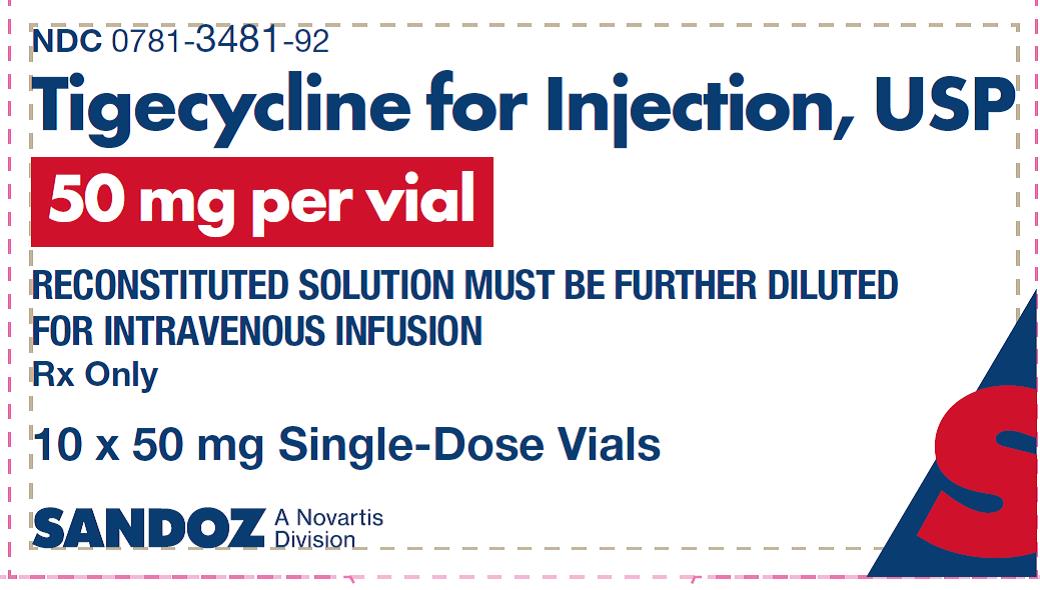
Package/Label Display Panel NDC 0781-3481-92 Rx only Tigecycline for Injection, USP 50 mg per vial RECONSTITUTED SOLUTION MUST BE FURTHER DILUTED FOR FOR INTRAVENOUS INFUSION 10 x 50 mg Single-Dose Vials 10mL-carton
Medicare Part D spend CMS · PART D · 2026 (Q1)
About this NDC listing & data coverage
What data is (and isn’t) available for this NDC — tap to expand
| NDC identity (package / product / labeler codes) | ✓ Available |
| Labeler | ✓ Available |
| Product & package description | ✓ Available |
| Marketing category & status | ✓ Available |
| Active ingredient / dosage form / route | ✓ Available |
| FDA label (SPL via DailyMed) | ✓ Available |
| Package photos | ✓ Available |
| Inactive ingredients (structured) | ✓ Available |
| NADAC pharmacy acquisition price (CMS) | — Not published for this NDC CMS publishes NADAC only for NDCs reported in its retail-pharmacy survey. |
| Orange Book / therapeutic-equivalence data | ✓ Available |
| HCPCS J-code billing crosswalk | ✓ Available |
| Medicaid utilization (CMS SDUD) | — Not published for this NDC CMS reports utilization only for NDCs with Medicaid claims above its privacy threshold. |