
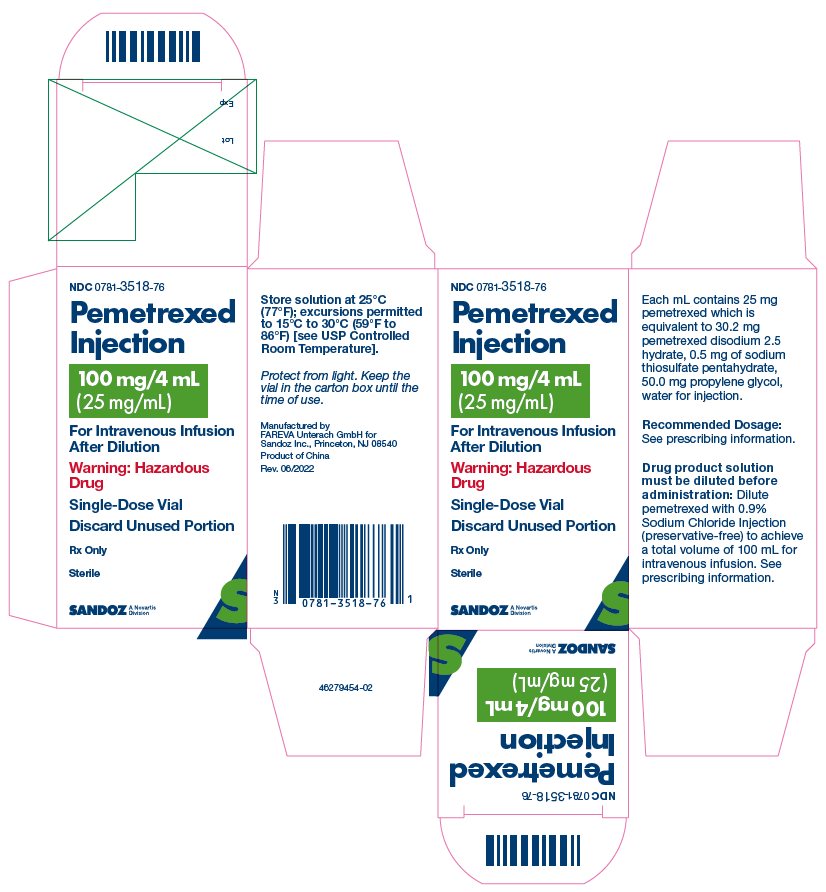
Pemetrexed 100 mg/4mL Injection, Solution — NDC 0781-3518-76 (Billing 00781-3518-76)
This is a package of Pemetrexed 100 mg/4mL Injection, Solution from Sandoz Inc., marketed since Jun 2022 and currently FDA-listed. It is this product's only package size.
Other active recalls for Pemetrexed Disodium (different manufacturers) — 2 · tap to view
Identity & classification
Regulatory identifiers FDA, NLM and CMS codes for this package
Drug-database identifiers Medi-Span GPI and First Databank GCN / HICL / AHFS classification
- GSN (GCN sequence number): 082691
- GCN: 47963
- GPI-14 (Medi-Span): 21300053102020
- HICL (First Databank): 025905
- AHFS class code: 10:00.00.00
- RxCUI (RxNorm): 2602363
Where does this data come from?
- FDA openFDA NDC Directory · synced Oct 1, 2026
- FDA label on DailyMed · label index refreshed Oct 1, 2026
- RxNorm (NLM RxNav) · catalog refreshed Oct 1, 2026
- Medi-Span GPI (licensed)
- First Databank (licensed) · refreshed Oct 1, 2026
RxNorm drug class
This medicine belongs to the Folate Analog Metabolic Inhibitor class.
Where does this data come from?
- RxClass (NLM) · catalog refreshed Oct 1, 2026
Clinical
- It treats non-squamous non-small cell lung cancer, in several situations such as first treatment, maintenance and recurrent disease. It also treats malignant pleural mesothelioma,...
- It is given as an IV infusion that takes about 10 minutes, on Day 1 of each 21-day cycle. You will also take folic acid daily, get a vitamin B12 shot, and take dexamethasone around...
- Fatigue, nausea, vomiting, loss of appetite, constipation, diarrhea and mouth sores are common. Low blood counts can also happen, which is why you will have blood tests. Your team...
- Call for fever or signs of infection, severe skin blistering or peeling, new cough or trouble breathing, or much less urine than usual. Also report redness or blistering where you...
Patient education
Supplement & herbal interactions
Where does this data come from?
- MedlinePlus (NLM) · refreshed Oct 1, 2026
- FDA label on DailyMed · label index refreshed Oct 1, 2026
Ask a licensed pharmacist directly — free, answered by our team.
Pricing
A drug doesn't have one price. Each row is a different public payment system, and none is what you'd pay at the counter — that depends on your insurance. The ⓘ on each row explains what it measures.
| Price system | Per mL | Per package |
|---|---|---|
| Retail pharmacies payNADAC · weekly | Not in the retail survey — common for institutional, discontinued, or low-volume packs. | |
| Medicaid paysCMS SDUD · 12 mo | No recent Medicaid claims on file for this NDC — rare and low-volume NDCs are suppressed in the public data. | |
| Medicare drug plans payPart D · quarterly | No Part D plan price is available for this NDC in our data. | |
| Medicare Part B allowsASP · J9297 | $4.879 / J9297 unit | — |
Where does this data come from?
- CMS NADAC weekly file
- CMS ASP pricing files · refreshed Sep 20, 2026
- CMS Medicaid State Drug Utilization Data · refreshed Oct 3, 2026
- CMS Part D plan pricing files · refreshed Sep 24, 2026
- VA National Acquisition Center price file
Billing & reimbursement
Where does this data come from?
- CMS ASP NDC-HCPCS crosswalk · refreshed Sep 22, 2026
- DMEPDAC NDC-HCPCS crosswalk
- openFDA NSDE billing units · refreshed Sep 7, 2026
Packaging — all sizes for this product
| Package NDC | Description | Marketing start | Marketing end | Status |
|---|---|---|---|---|
| 00781-3518-76 You're viewing this Main listing | 1 VIAL in 1 CARTON / 4 mL in 1 VIAL | 2022-06-08 | — | Active |
Therapeutic equivalents
| Product | Labeler | Pack | NADAC/unit | TE | Status | Price vs. this |
|---|---|---|---|---|---|---|
| Pemetrexed 100 mg/4mL 00409-0020-02 | Hospira, | 1 vial | — | — | FDA listed | — |
| Pemetrexed 100 mg/4mL 00409-1045-01 | Hospira, | 1 vial | — | — | FDA listed | — |
| Pemetrexed 25 mg/mL 00480-4516-01 | Teva | 1 vial | — | — | FDA listed | — |
| Pemetrexed 100 mg/4mLthis 00781-3518-76 | Sandoz | 1 vial | — | — | FDA listed | — |
| Pemetrexed disodium 100 mg/4mL 43598-0386-62 | Dr. | 1 vial | — | AP | FDA listed | — |
| pemetrexed 100 mg/4mL 70710-1654-01 | Zydus | 1 vial | — | AP | FDA listed | — |
| pemetrexed 100 mg/4mL 70771-1691-01 | Zydus | 1 vial | — | AP | FDA listed | — |
| Pemetrexed 100 mg/4mL 68001-0543-41 | BluePoint | 1 vial | — | AP | FDA listed | — |
| Pemetrexed 100 mg/4mL 63323-0134-10 | Fresenius | 1 vial | — | AP | FDA listed | — |
Where does this data come from?
- FDA openFDA NDC Directory · synced Oct 1, 2026
- FDA Orange Book · refreshed Sep 3, 2026
- CMS NADAC weekly file
Availability & generic status
The FDA lists approved generic versions of this medicine, but that does not always mean a pharmacy can get one today. Patent rules, launch agreements, supply and pricing can affect when generics actually arrive.
Where does this data come from?
- FDA Orange Book · refreshed Sep 3, 2026
Inactive Ingredients / Excipients
Inactive ingredients, also called excipients, are components of the drug product other than the active ingredient. They may include fillers, dyes, coatings, preservatives, flavors, or other formulation ingredients.
Where does this data come from?
IACT rows and label-wide narrative are kept separate; availability and product-level specificity depend on the submitted label.- FDA label on DailyMed · label index refreshed Oct 1, 2026
- FDA openFDA NDC Directory · synced Oct 1, 2026
Inactive ingredient FAQ
Are inactive ingredients the same for every manufacturer?
Why might an inactive ingredient be missing?
Can inactive ingredients matter?
Manufacturer & labeler
Where does this data come from?
- FDA openFDA NDC Directory · synced Oct 1, 2026
- Drugs@FDA
Full prescribing information FDA SPL
🎯 Indications and Usage ▾
1 INDICATIONS AND USAGE Pemetrexed Injection is a folate analog metabolic inhibitor indicated: • in combination with pembrolizumab and platinum chemotherapy, for the initial treatment of patients with metastatic non-squamous non-small cell lung cancer (NSCLC), with no EGFR or ALK genomic tumor aberrations. ( 1.1 ) • in combination with cisplatin for the initial treatment of patients with locally advanced or metastatic, non-squamous NSCLC. ( 1.1 ) • as a single agent for the maintenance treatment of patients with locally advanced or metastatic, non-squamous NSCLC whose disease has not progressed after four cycles of platinum-based first-line chemotherapy.
( 1.1 ) • as a single agent for the treatment of patients with recurrent, metastatic non-squamous, NSCLC after prior chemotherapy. ( 1.1 ) Limitations of Use: Pemetrexed Injection is not indicated for the treatment of patients with squamous cell, non-small cell lung cancer. ( 1.1 ) • initial treatment, in combination with cisplatin, of patients with malignant pleural mesothelioma whose disease is unresectable or who are otherwise not candidates for curative surgery.
( 1.2 )
1.1Non-Squamous Non-Small Cell Lung Cancer (NSCLC) Pemetrexed Injection is indicated: • in combination with pembrolizumab and platinum chemotherapy, for the initial treatment of patients with metastatic non-squamous non-small cell lung cancer (NSCLC), with no EGFR or ALK genomic tumor aberrations. • in combination with cisplatin for the initial treatment of patients with locally advanced or metastatic, non-squamous NSCLC. • as a single agent for the maintenance treatment of patients with locally advanced or metastatic, non-squamous NSCLC whose disease has not progressed after four cycles of platinum-based first-line chemotherapy. • as a single agent for the treatment of patients with recurrent, metastatic non-squamous, NSCLC after prior chemotherapy.
Limitations of Use Pemetrexed Injection is not indicated for the treatment of patients with squamous cell, non-small cell lung cancer [see Clinical Studies ( 14.1 )].
1.2Mesothelioma Pemetrexed Injection is indicated, in combination with cisplatin, for the initial treatment of patients with malignant pleural mesothelioma whose disease is unresectable or who are otherwise not candidates for curative surgery.
⏱️ Dosage and Administration ▾
2 DOSAGE AND ADMINISTRATION • The recommended dosage of Pemetrexed Injection administered with pembrolizumab and platinum chemotherapy in patients with a creatinine clearance (calculated by Cockcroft-Gault equation) of 45 mL/min or greater is 500 mg/m 2 as an intravenous infusion over 10 minutes, administered after pembrolizumab and prior to platinum chemotherapy, on Day 1 of each 21-day cycle. ( 2.1 ) • The recommended dosage of Pemetrexed Injection, administered as a single agent or with cisplatin, in patients with creatinine clearance of 45 mL/minute or greater is 500 mg/m 2 as an intravenous infusion over 10 minutes on Day 1 of each 21-day cycle.
( 2.1 , 2.2 ) • Initiate folic acid 400 mcg to 1000 mcg orally, once daily, beginning 7 days prior to the first dose of Pemetrexed Injection and continue until 21 days after the last dose of Pemetrexed Injection. (2.4) • Administer vitamin B 12 , 1 mg intramuscularly, 1 week prior to the first dose of Pemetrexed Injection and every 3 cycles. ( 2.4 ) • Administer dexamethasone 4 mg orally, twice daily the day before, the day of, and the day after Pemetrexed Injection administration.
( 2.4 )
2.1Premedication and Concomitant Medications to Mitigate Toxicity Vitamin Supplementation • Initiate folic acid 400 mcg to 1000 mcg orally once daily, beginning 7 days before the first dose of Pemetrexed Injection and continuing until 21 days after the last dose of Pemetrexed Injection [see Warnings and Precautions ( 5.1 )]. • Administer vitamin B 12 , 1 mg intramuscularly, 1 week prior to the first dose of Pemetrexed Injection and every 3 cycles thereafter. Subsequent vitamin B 12 injections may be given the same day as treatment with Pemetrexed Injection [see Warnings and Precautions ( 5.1 )] .
Do not substitute oral vitamin B 12 for intramuscular vitamin B 12 . Corticosteroids • Administer dexamethasone 4 mg orally twice daily for three consecutive days, beginning the day before each Pemetrexed Injection administration.
2.2Recommended Dosage and Administration Non-Squamous NSCLC • The recommended dosage of Pemetrexed Injection when administered with pembrolizumab and platinum chemotherapy for the initial treatment of metastatic non-squamous NSCLC in patients with a creatinine clearance (calculated by Cockcroft-Gault equation) of 45 mL/min or greater is 500 mg/m 2 as an intravenous infusion over 10 minutes administered after pembrolizumab and prior to carboplatin or cisplatin on Day 1 of each 21-day cycle for 4 cycles. Following completion of platinum-based therapy, treatment with Pemetrexed Injection with or without pembrolizumab is administered until disease progression or unacceptable toxicity.
Please refer to the full prescribing information for pembrolizumab and for carboplatin or cisplatin. • The recommended dosage of Pemetrexed Injection when administered with cisplatin for initial treatment of locally advanced or metastatic non-squamous NSCLC in patients with a creatinine clearance (calculated by Cockcroft-Gault equation) of 45 mL/min or greater is 500 mg/m 2 as an intravenous infusion over 10 minutes administered prior to cisplatin on Day 1 of each 21-day cycle for up to six cycles in the absence of disease progression or unacceptable toxicity. • The recommended dosage of Pemetrexed Injection for maintenance treatment of non-squamous NSCLC in patients with a creatinine clearance (calculated by Cockcroft-Gault equation) of 45 mL/min or greater is 500 mg/m 2 as an intravenous infusion over 10 minutes on Day 1 of each 21-day cycle until disease progression or unacceptable toxicity after four cycles of platinum based first-line chemotherapy. • The recommended dosage of Pemetrexed Injection for treatment of recurrent non-squamous NSCLC in patients with a creatinine clearance (calculated by Cockcroft-Gault equation) of 45 mL/min or greater is 500 mg/m 2 as an intravenous infusion over 10 minutes on Day 1 of each 21-day cycle until disease progression or unacceptable toxicity.
Mesothelioma… [Excerpted — this section continues on DailyMed.]
💊 Dosage Forms and Strengths ▾
3 DOSAGE FORMS AND STRENGTHS Injection: Pemetrexed Injection is a clear, colorless to yellow or green-yellow solution available in sterile single-dose vials as follows: • 100 mg/4 mL (25 mg/mL) • 500 mg/20 mL (25 mg/mL) • 1000 mg/40 mL (25 mg/mL) Injection: 100 mg/4 mL (25 mg/mL), 500 mg/20 mL (25 mg/mL), 1000 mg/40 mL (25 mg/mL) in single-dose vials. ( 3 )
⛔ Contraindications ▾
4 CONTRAINDICATIONS Pemetrexed Injection is contraindicated in patients with a history of severe hypersensitivity reaction to pemetrexed [see Adverse Reactions ( 6.1 )]. History of severe hypersensitivity reaction to pemetrexed. ( 4 )
⚠️ Warnings and Cautions ▾
5 WARNINGS AND PRECAUTIONS • Myelosuppression: Can cause severe bone marrow suppression resulting in cytopenia and an increased risk of infection. Do not administer Pemetrexed Injection when the absolute neutrophil count is less than 1500 cells/mm 3 and platelets are less than 100,000 cells/mm 3 . Initiate supplementation with oral folic acid and intramuscular vitamin B 12 to reduce the severity of hematologic and gastrointestinal toxicity of Pemetrexed Injection.
( 2.4 , 5.1 ) • Renal Failure: Can cause severe, and sometimes fatal, renal failure. Do not administer when creatinine clearance is less than 45 mL/min. ( 2.3 , 5.2 ) • Bullous and Exfoliative Skin Toxicity: Permanently discontinue for severe and life-threatening bullous, blistering or exfoliating skin toxicity.
( 5.3 ) • Interstitial Pneumonitis: Withhold for acute onset of new or progressive unexplained pulmonary symptoms. Permanently discontinue if pneumonitis is confirmed. ( 5.4 ) • Radiation Recall: Can occur in patients who received radiation weeks to years previously; permanently discontinue for signs of radiation recall.
( 5.5 ) • Embryo-Fetal Toxicity: Can cause fetal harm. Advise patients of the potential risk to a fetus and to use effective contraception. ( 5.7 , 8.1 , 8.3 )
5.1Myelosuppression and Increased Risk of Myelosuppression without Vitamin Supplementation Pemetrexed can cause severe myelosuppression resulting in a requirement for transfusions and which may lead to neutropenic infection. The risk of myelosuppression is increased in patients who do not receive vitamin supplementation. In Study JMCH, incidences of Grade 3 to 4 neutropenia (38% versus 23%), thrombocytopenia (9% versus 5%), febrile neutropenia (9% versus 0.6%), and neutropenic infection (6% versus 0) were higher in patients who received pemetrexed plus cisplatin without vitamin supplementation as compared to patients who were fully supplemented with folic acid and vitamin B 12 prior to and throughout pemetrexed plus cisplatin treatment.
Initiate supplementation with oral folic acid and intramuscular vitamin B 12 prior to the first dose of Pemetrexed Injection; continue vitamin supplementation during treatment and for 21 days after the last dose of Pemetrexed Injection to reduce the severity of hematologic and gastrointestinal toxicity of Pemetrexed Injection [see Dosage and Administration ( 2.4 )] . Obtain a complete blood count at the beginning of each cycle. Do not administer Pemetrexed Injection until the ANC is at least 1500 cells/mm 3 and platelet count is at least 100,000 cells/mm 3 .
Permanently reduce Pemetrexed Injection in patients with an ANC of less than 500 cells/mm 3 or platelet count of less than 50,000 cells/mm 3 in previous cycles [see Dosage and Administration ( 2.6 )] . In Studies JMDB and JMCH, among patients who received vitamin supplementation, incidence of Grade 3 to 4 neutropenia was 15% and 23%, the incidence of Grade 3 to 4 anemia was 6% and 4%, and incidence of Grade 3 to 4 thrombocytopenia was 4% and 5%, respectively. In Study JMCH, 18% of patients in the pemetrexed arm required red blood cell transfusions compared to 7% of patients in the cisplatin arm [see Adverse Reactions ( 6.1 )].
In Studies JMEN, PARAMOUNT, and JMEI, where all patients received vitamin supplementation, incidence of Grade 3 to 4 neutropenia ranged from 3% to 5%, and incidence of Grade 3 to 4 anemia ranged from 3% to 5%.
5.2Renal Failure Pemetrexed can cause severe, and sometimes fatal, renal toxicity. The incidences of renal failure in clinical studies in which patients received pemetrexed with cisplatin were: 2.1% in Study JMDB and 2.2% in Study JMCH. The incidence of renal failure in clinical studies in which patients received pemetrexed as a single agent ranged from 0.4% to 0.6% (Studies JMEN, PARAMOUNT, and JMEI [see Adverse Reactions ( 6.1 )] .
Determine creatinine clearance before each dose and periodically monitor renal function during treatment with Pemetrexed Injection. Withh… [Excerpted — this section continues on DailyMed.]
🤒 Adverse Reactions ▾
6 ADVERSE REACTIONS The following adverse reactions are discussed in greater detail in other sections of the labeling: • Myelosuppression [see Warnings and Precautions ( 5.1 )] • Renal failure [see Warnings and Precautions ( 5.2 )] • Bullous and exfoliative skin toxicity [see Warning and Precautions ( 5.3 )] • Interstitial pneumonitis [see Warnings and Precautions ( 5.4 )] • Radiation recall [see Warnings and Precautions ( 5.5 )] • The most common adverse reactions (incidence ≥20%) of pemetrexed, when administered as a single agent are fatigue, nausea, and anorexia.
( 6.1 ) • The most common adverse reactions (incidence ≥ 20%) of pemetrexed when administered with cisplatin are vomiting, neutropenia, anemia, stomatitis/pharyngitis, thrombocytopenia, and constipation. ( 6.1 ) • The most common adverse reactions (incidence ≥ 20%) of pemetrexed when administered in combination with pembrolizumab and platinum chemotherapy are fatigue/asthenia, nausea, constipation, diarrhea, decreased appetite, rash, vomiting, cough, dyspnea, and pyrexia. ( 6.1 ) To report SUSPECTED ADVERSE REACTIONS, contact Sandoz Inc.
1-800-525-8747 or FDA at 1-800-FDA-1088 or www.fda.gov/medwatch.
6.1Clinical Trials Experience Because clinical trials are conducted under widely varying conditions, adverse reactions rates cannot be directly compared to rates in other clinical trials and may not reflect the rates observed in clinical practice. In clinical trials, the most common adverse reactions (incidence ≥20%) of pemetrexed, when administered as a single agent, are fatigue, nausea, and anorexia. The most common adverse reactions (incidence ≥20%) of pemetrexed, when administered in combination with cisplatin are vomiting, neutropenia, anemia, stomatitis/pharyngitis, thrombocytopenia, and constipation.
The most common adverse reactions (incidence ≥20%) of pemetrexed, when administered in combination with pembrolizumab and platinum chemotherapy, are fatigue/asthenia, nausea, constipation, diarrhea, decreased appetite, rash, vomiting, cough, dyspnea, and pyrexia. Non-Squamous NSCLC First-line Treatment of Metastatic Non-squamous NSCLC with Pembrolizumab and Platinum Chemotherapy The safety of pemetrexed, in combination with pembrolizumab and investigator’s choice of platinum (either carboplatin or cisplatin), was investigated in Study KEYNOTE-189, a multicenter, double-blind, randomized (2:1), active-controlled trial in patients with previously untreated, metastatic non-squamous NSCLC with no EGFR or ALK genomic tumor aberrations.
A total of 607 patients received pemetrexed, pembrolizumab, and platinum every 3 weeks for 4 cycles followed by pemetrexed and pembrolizumab (n=405), or placebo, pemetrexed, and platinum every 3 weeks for 4 cycles followed by placebo and pemetrexed (n=202). Patients with autoimmune disease that required systemic therapy within 2 years of treatment; a medical condition that required immunosuppression; or who had received more than 30 Gy of thoracic radiation within the prior 26 weeks were ineligible [see Clinical Studies ( 14.1 )] .
The median duration of exposure to pemetrexed was 7.2 months (range: 1 day to 1.7 years). Seventy-two percent of patients received carboplatin. The study population characteristics were: median age of 64 years (range: 34 to 84), 49% age 65 years or older, 59% male, 94% White and 3% Asian, and 18% with history of brain metastases at baseline.
Pemetrexed was discontinued for adverse reactions in 23% of patients in the pemetrexed, pembrolizumab, and platinum arm. The most common adverse reactions resulting in discontinuation of pemetrexed in this arm were acute kidney injury (3%) and pneumonitis (2%). Adverse reactions leading to interruption of pemetrexed occurred in 49% of patients in the pemetrexed, pembrolizumab, and platinum arm.
The most common adverse reactions or laboratory abnormalities leading to interruption of pemetrexed in this arm (≥2%) were neutropenia (12%), anemia (7%), asthenia (4%), pneumonia (… [Excerpted — this section continues on DailyMed.]
🔄 Drug Interactions ▾
7 DRUG INTERACTIONS OAT3 Inhibitors: Modify the ibuprofen dosage as recommended. Avoid other OAT3 inhibitors. ( 2.5 , 5.6 , 7 )
7.1Effects of Other Drugs on Pemetrexed Injection OAT3 Inhibitors Avoid concomitant administration of ibuprofen for 2 days before, the day of, and 2 days following administration of Pemetrexed Injection [see Dosage and Administration ( 2.5 )] . Avoid concomitant administration of other OAT3 inhibitors before and after administration of Pemetrexed Injection, when possible. If concomitant administration cannot be avoided, monitor patients more frequently for myelosuppression, renal, and gastrointestinal toxicity.
Pemetrexed is an OAT3 substrate [see Clinical Pharmacology ( 12.3 )] . Concomitant use with an OAT3 inhibitor increases pemetrexed systemic exposure (AUC) [see Clinical Pharmacology ( 12.3 )] , which may increase the risk of Pemetrexed Injection adverse reactions.
👥 Use in Specific Populations ▾
8 USE IN SPECIFIC POPULATIONS Lactation: Advise not to breastfeed. ( 8.2 )
8.1Pregnancy Risk Summary Based on findings from animal studies and its mechanism of action, pemetrexed can cause fetal harm when administered to a pregnant woman [see Clinical Pharmacology ( 12.1 )] . There are no available data on Pemetrexed Injection use in pregnant women. In animal reproduction studies, intravenous administration of pemetrexed to pregnant mice during the period of organogenesis was teratogenic, resulting in developmental delays and malformations at doses lower than the recommended human dose of 500 mg/m 2 [see Data ] .
Advise pregnant women of the potential risk to a fetus [see Use in Special Populations ( 8.3 )] . In the U.S. general population, the estimated background risk of major birth defects and miscarriage in clinically recognized pregnancies is 2 to 4% and 15 to 20%, respectively. Data Animal Data Pemetrexed was teratogenic in mice.
Daily dosing of pemetrexed by intravenous injection to pregnant mice during the period of organogenesis increased the incidence of fetal malformations (cleft palate; protruding tongue; enlarged or misshaped kidney; and fused lumbar vertebra) at doses (based on BSA) 0.03 times the human dose of 500 mg/m 2 . At doses, based on BSA, greater than or equal to 0.0012 times the 500 mg/m 2 human dose, pemetrexed administration resulted in dose-dependent increases in developmental delays (incomplete ossification of talus and skull bone; and decreased fetal weight).
8.2Lactation Risk Summary There is no information regarding the presence of pemetrexed or its metabolites in human milk, the effects on the breastfed infant, or the effects on milk production. Because of the potential for serious adverse reactions in breastfed infants from Pemetrexed Injection, advise women not to breastfeed during treatment with Pemetrexed Injection and for one week after the last dose.
8.3Females and Males of Reproductive Potential Based on animal data pemetrexed can cause malformations and developmental delays when administered to a pregnant woman [see Use in Specific Populations ( 8.1 )]. Pregnancy Testing Verify pregnancy status of females of reproductive potential prior to initiating Pemetrexed Injection [see Use in Specific Populations ( 8.1 )]. Contraception Females Because of the potential for genotoxicity, advise females of reproductive potential to use effective contraception during treatment with Pemetrexed Injection and for 6 months after the last dose.
Males Because of the potential for genotoxicity, advise males with female partners of reproductive potential to use effective contraception during treatment with Pemetrexed Injection and for 3 months after the last dose [see Nonclinical Toxicology ( 13.1 )] . Infertility Males Pemetrexed may impair fertility in males of reproductive potential. It is not known whether these effects on fertility are reversible [see Nonclinical Toxicology ( 13.1 )] .
8.4Pediatric Use The safety and effectiveness of pemetrexed in pediatric patients have not been established. The safety and pharmacokinetics of pemetrexed were evaluated in two clinical studies conducted in pediatric patients with recurrent solid tumors (NCT00070473, N=32 and NCT00520936, N=72). Patients in both studies received concomitant vitamin B 12 and folic acid supplementation and dexamethasone.
No tumor responses were observed. No new safety signals were observed. Single-dose pharmacokinetics of pemetrexed were evaluated in 22 patients aged 4 to 18 years enrolled in NCT00070473 were within range of values in adults.
8.5Geriatric Use Of the 3,946 patients enrolled in clinical studies of pemetrexed, 34% were 65 and over and 4% were 75 and over. No overall differences in effectiveness were observed between these patients and younger patients. The incidences of Grade 3 to 4 anemia, fatigue, thrombocytopenia, hypertension, and neutropenia were higher in patients 65 years of age and older as compared to younger pat… [Excerpted — this section continues on DailyMed.]
🤰 Pregnancy ▾
8.1Pregnancy Risk Summary Based on findings from animal studies and its mechanism of action, pemetrexed can cause fetal harm when administered to a pregnant woman [see Clinical Pharmacology ( 12.1 )] . There are no available data on Pemetrexed Injection use in pregnant women. In animal reproduction studies, intravenous administration of pemetrexed to pregnant mice during the period of organogenesis was teratogenic, resulting in developmental delays and malformations at doses lower than the recommended human dose of 500 mg/m 2 [see Data ] .
Advise pregnant women of the potential risk to a fetus [see Use in Special Populations ( 8.3 )] . In the U.S. general population, the estimated background risk of major birth defects and miscarriage in clinically recognized pregnancies is 2 to 4% and 15 to 20%, respectively. Data Animal Data Pemetrexed was teratogenic in mice.
Daily dosing of pemetrexed by intravenous injection to pregnant mice during the period of organogenesis increased the incidence of fetal malformations (cleft palate; protruding tongue; enlarged or misshaped kidney; and fused lumbar vertebra) at doses (based on BSA) 0.03 times the human dose of 500 mg/m 2 . At doses, based on BSA, greater than or equal to 0.0012 times the 500 mg/m 2 human dose, pemetrexed administration resulted in dose-dependent increases in developmental delays (incomplete ossification of talus and skull bone; and decreased fetal weight).
🧒 Pediatric Use ▾
8.4Pediatric Use The safety and effectiveness of pemetrexed in pediatric patients have not been established. The safety and pharmacokinetics of pemetrexed were evaluated in two clinical studies conducted in pediatric patients with recurrent solid tumors (NCT00070473, N=32 and NCT00520936, N=72). Patients in both studies received concomitant vitamin B 12 and folic acid supplementation and dexamethasone.
No tumor responses were observed. No new safety signals were observed. Single-dose pharmacokinetics of pemetrexed were evaluated in 22 patients aged 4 to 18 years enrolled in NCT00070473 were within range of values in adults.
🧓 Geriatric Use ▾
8.5Geriatric Use Of the 3,946 patients enrolled in clinical studies of pemetrexed, 34% were 65 and over and 4% were 75 and over. No overall differences in effectiveness were observed between these patients and younger patients. The incidences of Grade 3 to 4 anemia, fatigue, thrombocytopenia, hypertension, and neutropenia were higher in patients 65 years of age and older as compared to younger patients: in at least one of five randomized clinical trials [see Adverse Reactions ( 6.1 ) and Clinical Studies ( 14.1 , 14.2 )].
🆘 Overdosage ▾
10 OVERDOSAGE No drugs are approved for the treatment of pemetrexed overdose. Based on animal studies, administration of leucovorin may mitigate the toxicities of pemetrexed overdosage. It is not known whether pemetrexed is dialyzable.
🧬 Clinical Pharmacology ▾
12 CLINICAL PHARMACOLOGY
12.1Mechanism of Action Pemetrexed is a folate analog metabolic inhibitor that disrupts folate-dependent metabolic processes essential for cell replication. In vitro studies show that pemetrexed inhibits thymidylate synthase (TS), dihydrofolate reductase, and glycinamide ribonucleotide formyltransferase (GARFT), which are folate-dependent enzymes involved in the de novo biosynthesis of thymidine and purine nucleotides. Pemetrexed is taken into cells by membrane carriers such as the reduced folate carrier and membrane folate binding protein transport systems.
Once in the cell, pemetrexed is converted to polyglutamate forms by the enzyme folylpolyglutamate synthetase. The polyglutamate forms are retained in cells and are inhibitors of TS and GARFT.
12.2Pharmacodynamics The depth of the absolute neutrophil counts (ANC) nadir correlates with the systemic exposure to pemetrexed and supplementation with folic acid and vitamin B12. There is no cumulative effect of pemetrexed exposure on ANC nadir over multiple treatment cycles. There is insufficient information to characterize the effect of Pemetrexed Injection on the QTc interval.
12.3Pharmacokinetics The pharmacokinetics of pemetrexed administered as a single agent in doses ranging from 0.2 to 838 mg/m 2 (0.0004 to 1.7 times the recommended dose) infused over a 10-minute period have been evaluated in patients with a variety of solid tumors. Pemetrexed total systemic exposure (AUC) and maximum plasma concentration (C max ) increased in a dose proportional manner. Pemetrexed does not accumulate over multiple treatment cycles.
Distribution Pemetrexed steady-state volume of distribution is 16 L. Pemetrexed plasma protein binding is 81% in vitro . Elimination Pemetrexed elimination half-life is 3.5 hours in patients with normal renal function [creatinine clearance (CLcr) of 90 mL/min] with a total systemic clearance of 92 mL/min.
As renal function decreases, the clearance of pemetrexed decreases and AUC of pemetrexed increases. Excretion Pemetrexed is primarily eliminated in the urine, with 70% to 90% of the dose recovered unchanged within the first 24 hours following administration. Specific Populations No clinically significant differences in the pharmacokinetics of pemetrexed were observed based on age (26 to 80 years), sex and race (Whites and Blacks or African Americans).
Patients with Hepatic Impairment No effect of elevated AST, ALT, or total bilirubin on the PK of pemetrexed was observed in clinical studies. Patients with Renal Impairment Plasma clearance of pemetrexed decreases as renal function decreases, with a resultant increase in systemic exposure. Patients with creatinine clearances of 45, 50, and 80 mL/min had 1.6, 1.5 and 1.1-fold increase, respectively in systemic exposure (AUC).
Third-Space Fluid The pemetrexed plasma concentrations in patients with various solid tumors with stable, mild to moderate third-space fluid were comparable to those observed in patients without third space fluid collections. The effect of severe third space fluid on pharmacokinetics is not known. Drug Interaction Studies Clinical Studies OAT3 Inhibitors: Pemetrexed systemic exposure (AUC) increased by approximately 1.2-fold in patients with CLcr >80 mL/min following concomitant administration of ibuprofen (OAT3 inhibitor) 400 mg four times a day.
Other Drugs: No clinically significant differences in pemetrexed pharmacokinetics were observed when used concomitantly with aspirin 325 mg every 6 hours, folic acid, vitamin B12 or cisplatin. No clinically significant differences in the pharmacokinetics of the following drugs were observed when used concomitantly with pemetrexed: cisplatin. In Vitro Studies CYP450 Enzymes: Pemetrexed does not inhibit CYP3A, CYP2D6, CYP2C9, and CYP1A2.
Transporter Systems: Pemetrexed is a substrate of OAT4 and OAT3.
🧬 Mechanism of Action ▾
12.1Mechanism of Action Pemetrexed is a folate analog metabolic inhibitor that disrupts folate-dependent metabolic processes essential for cell replication. In vitro studies show that pemetrexed inhibits thymidylate synthase (TS), dihydrofolate reductase, and glycinamide ribonucleotide formyltransferase (GARFT), which are folate-dependent enzymes involved in the de novo biosynthesis of thymidine and purine nucleotides. Pemetrexed is taken into cells by membrane carriers such as the reduced folate carrier and membrane folate binding protein transport systems.
Once in the cell, pemetrexed is converted to polyglutamate forms by the enzyme folylpolyglutamate synthetase. The polyglutamate forms are retained in cells and are inhibitors of TS and GARFT.
📦 How Supplied / Storage and Handling ▾
16 HOW SUPPLIED/STORAGE AND HANDLING How Supplied Pemetrexed Injection is supplied as a sterile single-dose vial containing clear colorless to yellow or green-yellow solution in a clear glass vial with a grey rubber closure, aluminum cap, and light blue flip-off cap Strength/Fill volume NDC number Pack style 100 mg/4 mL NDC 0781-3518-76 Carton containing one (1) single-dose vial 500 mg/20 mL NDC 0781-3519-90 Carton containing one (1) single-dose vial 1,000 mg/40 mL NDC 0781-3520-91 Carton containing one (1) single-dose vial Storage and Handling Store solution at 25°C (77°F); excursions permitted to 15°C to 30°C (59°F to 86°F) [see USP Controlled Room Temperature].
Protect from light. Keep the vial in the carton box until the time of use. Pemetrexed Injection is a hazardous drug.
Follow applicable special handling and disposal procedures [see References ( 15 )]. 1
📋 Description ▾
11 DESCRIPTION Pemetrexed Injection is a folate analog metabolic inhibitor. The drug substance, pemetrexed disodium, has the chemical name N-[[4-[2-(2-Amino-4-oxo-4,7-dihydro-1H-pyrrolo[2,3-d]pyrimidin-5-yl)ethyl]phenyl] carbonyl] -L-glutamic acid disodium, 2.5H 2 O with a molecular formula of C 20 H 19 N 5 Na 2 O 6
2.5H 2 O and a molecular weight of 516.41 The structural formula is as follows: Pemetrexed Injection is supplied as a sterile clear colorless to yellow or green-yellow solution for intravenous infusion available in single-dose vials. Each mL contains 25 mg pemetrexed (30.2 mg pemetrexed disodium 2.5 hydrate), 0.5 mg sodium thiosulfate pentahydrate, 50 mg propylene glycol, water for injection. Hydrochloric acid and/or sodium hydroxide may have been added to adjust pH.
Pemetrexed Injection requires dilution prior to intravenous infusion. Pemetrexed Injection should be diluted in 0.9% sodium chloride injection (preservative-free) to achieve a total volume of 100 mL for intravenous infusion. chemical-structure
💬 Information for Patients ▾
17 PATIENT COUNSELING INFORMATION Advise the patient to read the FDA-approved patient labeling ( Patient Information ). Premedication and Concomitant Medication: Instruct patients to take folic acid as directed and to keep appointments for vitamin B 12 injections to reduce the risk of treatment-related toxicity. Instruct patients of the requirement to take corticosteroids to reduce the risks of treatment-related toxicity [see Dosage and Administration ( 2.4 ) and Warnings and Precautions ( 5.1 ) ].
Myelosuppression: Inform patients of the risk of low blood cell counts and instruct them to immediately contact their physician for signs of infection, fever, bleeding, or symptoms of anemia [see Warnings and Precautions ( 5.1 )] . Renal Failure: Inform patients of the risks of renal failure, which may be exacerbated in patients with dehydration arising from severe vomiting or diarrhea. Instruct patients to immediately contact their healthcare provider for a decrease in urine output [see Warnings and Precautions ( 5.2 )] .
Bullous and Exfoliative Skin Disorders: Inform patients of the risks of severe and exfoliative skin disorders. Instruct patients to immediately contact their healthcare provider for development of bullous lesions or exfoliation in the skin or mucous membranes [see Warnings and Precautions ( 5.3 )] . Interstitial Pneumonitis: Inform patients of the risks of pneumonitis.
Instruct patients to immediately contact their healthcare provider for development of dyspnea or persistent cough [see Warnings and Precautions ( 5.4 )] . Radiation Recall: Inform patients who have received prior radiation of the risks of radiation recall. Instruct patients to immediately contact their healthcare provider for development of inflammation or blisters in an area that was previously irradiated [see Warnings and Precautions ( 5.5 )] .
Increased Risk of Toxicity with Ibuprofen in Patients with Renal Impairment: Advise patients with mild to moderate renal impairment of the risks associated with concomitant ibuprofen use and instruct them to avoid use of all ibuprofen containing products for 2 days before, the day of, and 2 days following administration of Pemetrexed Injection [ see Dosage and Administration ( 2.5 ), Warnings and Precautions ( 5.6 ), and Drug Interactions ( 7 )] . Embryo-Fetal Toxicity: Advise females of reproductive potential and males with female partners of reproductive potential of the potential risk to a fetus [see Warnings and Precautions ( 5.7 ) and Use in Specific Populations ( 8.1 )] .
Advise females of reproductive potential to use effective contraception during treatment with Pemetrexed Injection and for 6 months after the last dose. Advise females to inform their prescriber of a known or suspected pregnancy. Advise males with female partners of reproductive potential to use effective contraception during treatment with Pemetrexed Injection and for 3 months after the last dose [see Warnings and Precautions ( 5.7 ) and Use in Specific Populations ( 8.3 )] .
Lactation: Advise women not to breastfeed during treatment with Pemetrexed Injection and for 1 week after the last dose [see Use in Specific Populations ( 8.2 )] . Manufactured by FAREVA Unterach GmbH for Sandoz Inc., Princeton, NJ 08540
🧬 Pharmacokinetics ▾
12.3Pharmacokinetics The pharmacokinetics of pemetrexed administered as a single agent in doses ranging from 0.2 to 838 mg/m 2 (0.0004 to 1.7 times the recommended dose) infused over a 10-minute period have been evaluated in patients with a variety of solid tumors. Pemetrexed total systemic exposure (AUC) and maximum plasma concentration (C max ) increased in a dose proportional manner. Pemetrexed does not accumulate over multiple treatment cycles.
Distribution Pemetrexed steady-state volume of distribution is 16 L. Pemetrexed plasma protein binding is 81% in vitro . Elimination Pemetrexed elimination half-life is 3.5 hours in patients with normal renal function [creatinine clearance (CLcr) of 90 mL/min] with a total systemic clearance of 92 mL/min.
As renal function decreases, the clearance of pemetrexed decreases and AUC of pemetrexed increases. Excretion Pemetrexed is primarily eliminated in the urine, with 70% to 90% of the dose recovered unchanged within the first 24 hours following administration. Specific Populations No clinically significant differences in the pharmacokinetics of pemetrexed were observed based on age (26 to 80 years), sex and race (Whites and Blacks or African Americans).
Patients with Hepatic Impairment No effect of elevated AST, ALT, or total bilirubin on the PK of pemetrexed was observed in clinical studies. Patients with Renal Impairment Plasma clearance of pemetrexed decreases as renal function decreases, with a resultant increase in systemic exposure. Patients with creatinine clearances of 45, 50, and 80 mL/min had 1.6, 1.5 and 1.1-fold increase, respectively in systemic exposure (AUC).
Third-Space Fluid The pemetrexed plasma concentrations in patients with various solid tumors with stable, mild to moderate third-space fluid were comparable to those observed in patients without third space fluid collections. The effect of severe third space fluid on pharmacokinetics is not known. Drug Interaction Studies Clinical Studies OAT3 Inhibitors: Pemetrexed systemic exposure (AUC) increased by approximately 1.2-fold in patients with CLcr >80 mL/min following concomitant administration of ibuprofen (OAT3 inhibitor) 400 mg four times a day.
Other Drugs: No clinically significant differences in pemetrexed pharmacokinetics were observed when used concomitantly with aspirin 325 mg every 6 hours, folic acid, vitamin B12 or cisplatin. No clinically significant differences in the pharmacokinetics of the following drugs were observed when used concomitantly with pemetrexed: cisplatin. In Vitro Studies CYP450 Enzymes: Pemetrexed does not inhibit CYP3A, CYP2D6, CYP2C9, and CYP1A2.
Transporter Systems: Pemetrexed is a substrate of OAT4 and OAT3.
🧬 Pharmacodynamics ▾
12.2Pharmacodynamics The depth of the absolute neutrophil counts (ANC) nadir correlates with the systemic exposure to pemetrexed and supplementation with folic acid and vitamin B12. There is no cumulative effect of pemetrexed exposure on ANC nadir over multiple treatment cycles. There is insufficient information to characterize the effect of Pemetrexed Injection on the QTc interval.
🔬 Clinical Studies ▾
14 CLINICAL STUDIES
14.1Non-Squamous NSCLC Initial Treatment in Combination with Pembrolizumab and Platinum The efficacy of pemetrexed in combination with pembrolizumab and platinum chemotherapy was investigated in Study KEYNOTE-189 (NCT02578680), a randomized, multicenter, double-blind, active-controlled trial conducted in patients with metastatic non-squamous NSCLC, regardless of PD-L1 tumor expression status, who had not previously received systemic therapy for metastatic disease and in whom there were no EGFR or ALK genomic tumor aberrations.
Patients with autoimmune disease that required systemic therapy within 2 years of treatment; a medical condition that required immunosuppression; or who had received more than 30 Gy of thoracic radiation within the prior 26 weeks were ineligible. Randomization was stratified by smoking status (never versus former/current), choice of platinum (cisplatin versus carboplatin), and tumor PD-L1 status (TPS <1% [negative] versus TPS ≥1%). Patients were randomized (2:1) to one of the following treatment arms: • Pemetrexed 500 mg/m 2 , pembrolizumab 200 mg, and investigator’s choice of cisplatin 75 mg/m 2 or carboplatin AUC 5 mg/mL/min intravenously on Day 1 of each 21-day cycle for 4 cycles followed by pemetrexed 500 mg/m 2 and pembrolizumab 200 mg intravenously every 3 weeks.
Pemetrexed was administered after pembrolizumab and prior to platinum chemotherapy on Day 1. • Placebo, pemetrexed 500 mg/m 2 , and investigator’s choice of cisplatin 75 mg/m 2 or carboplatin AUC 5 mg/mL/min intravenously on Day 1 of each 21-day cycle for 4 cycles followed by placebo and pemetrexed 500 mg/m 2 intravenously every 3 weeks. Treatment with pemetrexed continued until RECIST v1.1 (modified to follow a maximum of 10 target lesions and a maximum of 5 target lesions per organ)-defined progression of disease as determined by the investigator or unacceptable toxicity.
Patients randomized to placebo, pemetrexed, and platinum chemotherapy were offered pembrolizumab as a single agent at the time of disease progression. Assessment of tumor status was performed at Week 6, Week 12, and then every 9 weeks thereafter. The main efficacy outcome measures were OS and PFS as assessed by BICR RECIST v1.1, modified to follow a maximum of 10 target lesions and a maximum of five target lesions per organ.
Additional efficacy outcome measures were ORR and duration of response, as assessed by the BICR according to RECIST v1.1, modified to follow a maximum of 10 target lesions and a maximum of 5 target lesions per organ. A total of 616 patients were randomized: 410 patients to the pemetrexed, pembrolizumab, and platinum chemotherapy arm and 206 to the placebo, pemetrexed, and platinum chemotherapy arm. The study population characteristics were: median age of 64 years (range: 34 to 84); 49% age 65 or older; 59% male; 94% White and 3% Asian; 56% ECOG performance status of 1; and 18% with history of brain metastases.
Thirty-one percent had tumor PD-L1 expression TPS <1%. Seventy-two percent received carboplatin and 12% were never smokers. A total of 85 patients in the placebo, pemetrexed, and chemotherapy arm received an anti-PD-1/PD-L1 monoclonal antibody at the time of disease progression.
The trial demonstrated a statistically significant improvement in OS and PFS for patients randomized to pemetrexed in combination with pembrolizumab and platinum chemotherapy compared with placebo, pemetrexed, and platinum chemotherapy (see Table 10 and Figure 1 ). Table 10: Efficacy Results of KEYNOTE-189 Endpoint Pemetrexed Pembrolizumab Platinum Chemotherapy n=410 Placebo Pemetrexed Platinum Chemotherapy n=206 OS Number (%) of patients with event 127 (31%) 108 (52%) Median in months (95% CI) NR (NR, NR) 11.3 (8.7, 15.1) Hazard ratio * (95% CI) 0.49 (0.38, 0.64) p-value † <0.0001 PFS Number of patients with event (%) 245 (60%) 166 (81%) Median in months (95% CI) 8.8 (7.6, 9.2) 4.9 (4.7, 5.5) Hazard ratio * (95% CI) 0.52 (0.43, 0.64) p-value † <0.… [Excerpted — this section continues on DailyMed.]
🧪 Nonclinical Toxicology ▾
13 NONCLINICAL TOXICOLOGY
13.1Carcinogenesis, Mutagenesis, Impairment of Fertility No carcinogenicity studies have been conducted with pemetrexed. Pemetrexed was clastogenic in an in vivo micronucleus assay in mouse bone marrow but was not mutagenic in multiple in vitro tests (Ames assay, Chinese Hamster Ovary cell assay). Pemetrexed administered intraperitoneally at doses of ≥0.1 mg/kg/day to male mice (approximately 0.0006 times the recommended human dose based on BSA) resulted in reduced fertility, hypospermia, and testicular atrophy.
📄 Carcinogenesis, Mutagenesis, Impairment of Fertility ▾
13.1Carcinogenesis, Mutagenesis, Impairment of Fertility No carcinogenicity studies have been conducted with pemetrexed. Pemetrexed was clastogenic in an in vivo micronucleus assay in mouse bone marrow but was not mutagenic in multiple in vitro tests (Ames assay, Chinese Hamster Ovary cell assay). Pemetrexed administered intraperitoneally at doses of ≥0.1 mg/kg/day to male mice (approximately 0.0006 times the recommended human dose based on BSA) resulted in reduced fertility, hypospermia, and testicular atrophy.
📚 References ▾
15 REFERENCES 1. “OSHA Hazardous Drugs.” OSHA. [https://www.osha.gov/hazardous-drugs]”
📄 Patient Package Insert ▾
PATIENT INFORMATION Pemetrexed (pem-e-TREX-ed) Injection for intravenous use What is Pemetrexed Injection? Pemetrexed Injection is a prescription medicine used to treat: • a kind of lung cancer called non-squamous non-small cell lung cancer (NSCLC). Pemetrexed Injection is used: o as the first treatment in combination with pembrolizumab and platinum chemotherapy when your lung cancer with no abnormal EGFR or ALK gene has spread (advanced NSCLC). o as the first treatment in combination with cisplatin when your lung cancer has spread (advanced NSCLC). o alone as maintenance treatment after you have received 4 cycles of chemotherapy that contains platinum for first treatment of your advanced NSCLC and your cancer has not progressed. o alone when your lung cancer has returned or spread after prior chemotherapy.
Pemetrexed Injection is not for use for the treatment of people with squamous cell non-small cell lung cancer. • a kind of cancer called malignant pleural mesothelioma. This cancer affects the lining of the lungs and chest wall. Pemetrexed Injection is used in combination with cisplatin as the first treatment for malignant pleural mesothelioma that cannot be removed by surgery or you are not able to have surgery.
Pemetrexed Injection has not been shown to be safe and effective in children. Do not take Pemetrexed Injection if you have had a severe allergic reaction to any medicine that contains pemetrexed. Before taking Pemetrexed Injection, tell your healthcare provider about all of your medical conditions, including if you: • have kidney problems. • have had radiation therapy. • are pregnant or plan to become pregnant.
Pemetrexed Injection can harm your unborn baby. Females who are able to become pregnant: o Your healthcare provider will check to see if you are pregnant before you start treatment with Pemetrexed Injection. o You should use effective birth control (contraception) during treatment with Pemetrexed Injection and for 6 months after the last dose. Tell your healthcare provider right away if you become pregnant or think you are pregnant during treatment with Pemetrexed Injection.
Males with female partners who are able to become pregnant should use effective birth control (contraception) during treatment with Pemetrexed Injection and for 3 months after the last dose. • are breastfeeding or plan to breastfeed. It is not known if pemetrexed passes into breast milk. Do not breastfeed during treatment with Pemetrexed Injection and for 1 week after the last dose.
Tell your healthcare provider about all the medicines you take, including prescription and over-the-counter medicines, vitamins, and herbal supplements. Tell your healthcare provider if you have kidney problems and take a medicine that contains ibuprofen. You should avoid taking ibuprofen for 2 days before, the day of, and 2 days after receiving treatment with Pemetrexed Injection.
How is Pemetrexed Injection given? • It is very important to take folic acid and vitamin B 12 during your treatment with Pemetrexed Injection to lower your risk of harmful side effects. o Take folic acid exactly as prescribed by your healthcare provider 1 time a day, beginning 7 days (1 week) before your first dose of Pemetrexed Injection and continue taking folic acid until 21 days (3 weeks) after your last dose of Pemetrexed Injection. o Your healthcare provider will give you vitamin B 12 injections during treatment with Pemetrexed Injection.
You will get your first vitamin B 12 injection 7 days (1 week) before your first dose of Pemetrexed Injection, and then every 3 cycles. • Your healthcare provider will prescribe a medicine called corticosteroid for you to take 2 times a day for 3 days, beginning the day before each treatment with Pemetrexed Injection. • Pemetrexed Injection is given to you by intravenous (IV) infusion into your vein. The infusion is given over 10 minutes. • Pemetrexed Injection is usually given once every 21 days (3 weeks). What are the possible side effects… [Excerpted — this section continues on DailyMed.]
📄 Package Label / Principal Display Panel ▾
Principal Display Panel – 4 mL NDC 0781-3518-76 Pemetrexed Injection 100 mg/4 mL (25 mg/mL) For Intravenous Infusion After Dilution Warning: Hazardous Drug Single-Dose Vial Discard unused Portion Rx Only Sterile SANDOZ 4ml-carton
Principal Display Panel – 20 mL NDC 0781-3519-90 Pemetrexed Injection 500 mg/20 mL (25 mg/mL) For Intravenous Infusion After Dilution Warning: Hazardous Drug Single-Dose Vial Discard unused Portion. Rx Only Sterile SANDOZ 20ml-carton
Principal Display Panel NDC 0781-3520-91 Pemetrexed Injection 1000 mg/40 mL (25 mg/mL) For Intravenous Infusion After Dilution Warning: Hazardous Drug Single-Dose Vial Discard unused Portion. Rx Only Sterile SANDOZ 40ml-carton
Medicare Part D spend CMS · PART D · 2026 (Q1)
About this NDC listing & data coverage
What data is (and isn’t) available for this NDC — tap to expand
| NDC identity (package / product / labeler codes) | ✓ Available |
| Labeler | ✓ Available |
| Product & package description | ✓ Available |
| Marketing category & status | ✓ Available |
| Active ingredient / dosage form / route | ✓ Available |
| FDA label (SPL via DailyMed) | ✓ Available |
| Package photos | ✓ Available |
| Inactive ingredients (structured) | — Not published for this NDC The labeler did not submit a structured excipient list, or no SPL is available. |
| NADAC pharmacy acquisition price (CMS) | — Not published for this NDC CMS publishes NADAC only for NDCs reported in its retail-pharmacy survey. |
| Orange Book / therapeutic-equivalence data | — Not published for this NDC Applies only to products approved under an NDA/ANDA; many listings are out of scope. |
| HCPCS J-code billing crosswalk | ✓ Available |
| Medicaid utilization (CMS SDUD) | — Not published for this NDC CMS reports utilization only for NDCs with Medicaid claims above its privacy threshold. |