
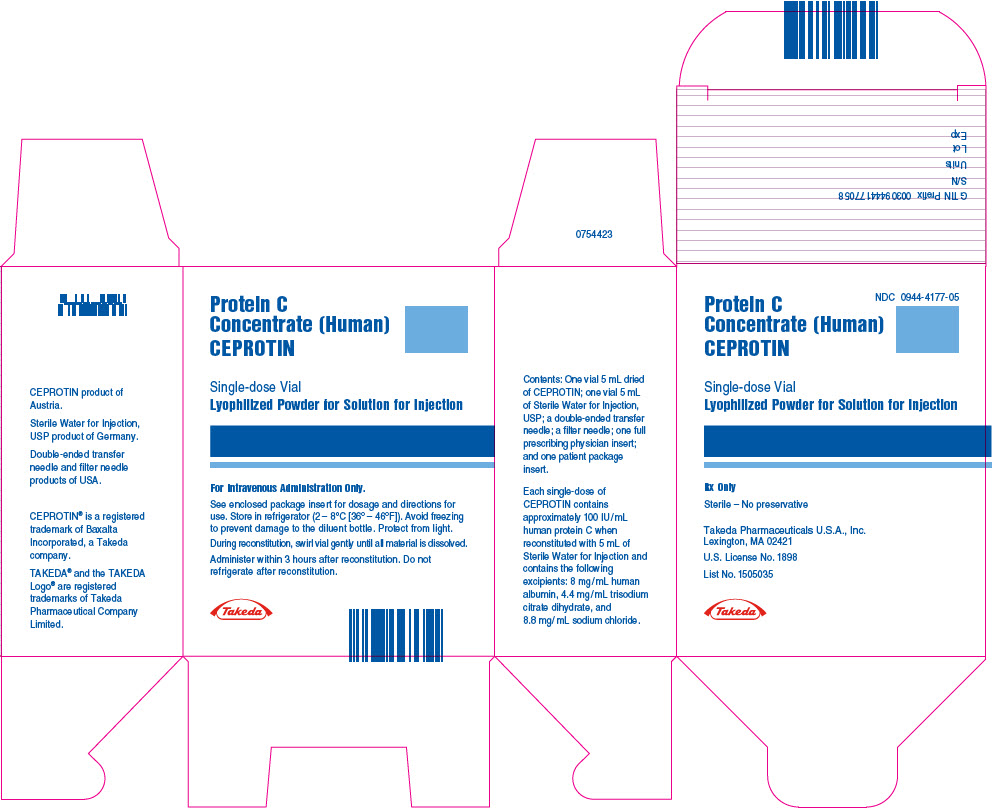
CEPROTIN Protein C Concentrate Human Kit — NDC 0944-4177-05 (Billing 00944-4177-05)
This is a package of CEPROTIN Protein C Concentrate Human Kit from Takeda Pharmaceuticals America, Inc., marketed since Aug 2010 and currently FDA-listed. It is this product's only package size.
NDC database record
One package, one record: these facts belong to NDC 0944-4177-05 alone.
- Record
- FDA NDC Directory package listing · Plasma derivative
- Code segments
- 0944 labeler · 4177 product · 05 package
- Package marketed since
- Aug 9, 2010
- Sample package
- No — commercial package
- Listing certified through
- Dec 31, 2026
- Barcode (UPC-A, from the NDC)
- 3 0944417705 8
- Medicaid fills, this package
- 66 prescriptions in the last four reported quarters
- FDA record last changed
- Oct 8, 2026
Identity & classification
Regulatory identifiers FDA, NLM and CMS codes for this package
Drug-database identifiers Medi-Span GPI and First Databank GCN / HICL / AHFS classification
- GSN (GCN sequence number): 049799
- GCN: 15482
- GPI-14 (Medi-Span): 85550060102120
- HICL (First Databank): 023226
- AHFS class code: 20:12.04.92
Where does this data come from?
- FDA openFDA NDC Directory · synced Oct 8, 2026
- FDA label on DailyMed · label index refreshed Oct 6, 2026
- RxNorm (NLM RxNav) · catalog refreshed Oct 1, 2026
- Medi-Span GPI (licensed)
- First Databank (licensed) · refreshed Oct 8, 2026
Clinical
Patient education
Supplement & herbal interactions
Where does this data come from?
- MedlinePlus (NLM) · refreshed Oct 1, 2026
- FDA label on DailyMed · label index refreshed Oct 6, 2026
Ask a licensed pharmacist directly — free, answered by our team.
Pricing
A drug doesn't have one price. Each row is a different public payment system, and none is what you'd pay at the counter — that depends on your insurance. The ⓘ on each row explains what it measures.
| Price system | Per each | Per package |
|---|---|---|
| Retail pharmacies payNADAC · weekly | Not in the retail survey — common for institutional, discontinued, or low-volume packs. | |
| Medicaid paysCMS SDUD · 12 mo | $1.50 | — |
| Medicare drug plans payPart D · quarterly | No Part D plan price is available for this NDC in our data. | |
| Medicare Part B allowsASP · J2724 | $15.071 / J2724 unit | — |
Where does this data come from?
- CMS NADAC weekly file
- CMS ASP pricing files · refreshed Sep 20, 2026
- CMS Medicaid State Drug Utilization Data · through Q4 2025
- CMS Part D plan pricing files · refreshed Sep 24, 2026
- VA National Acquisition Center price file
Billing & reimbursement
Where does this data come from?
- CMS ASP NDC-HCPCS crosswalk · refreshed Sep 22, 2026
- DMEPDAC NDC-HCPCS crosswalk
- openFDA NSDE billing units · refreshed Oct 7, 2026
Packaging — all sizes for this product
| Package NDC | Description | Marketing start | Marketing end | Status |
|---|---|---|---|---|
| 00944-4177-05 You're viewing this Main listing | 1 KIT in 1 CARTON * 5 mL in 1 VIAL, GLASS * 5 mL in 1 VIAL, GLASS | 2010-08-09 | — | Active |
Therapeutic equivalents
| Product | Labeler | Pack | NADAC/unit | TE | Status | Price vs. this |
|---|---|---|---|---|---|---|
| Ceprotin 00944-4179-10 | Takeda | 1 kit | — | — | FDA listed | — |
| Ceprotinthis 00944-4177-05 | Takeda | 1 kit | — | — | FDA listed | — |
Where does this data come from?
- FDA openFDA NDC Directory · synced Oct 8, 2026
- FDA Purple Book · refreshed Oct 5, 2026
- CMS NADAC weekly file
Availability & biosimilar status
Biologics have no small-molecule generics; biosimilar competition is tracked in the FDA Purple Book.
Where does this data come from?
- FDA Purple Book · refreshed Oct 5, 2026
Inactive Ingredients / Excipients
Inactive ingredients, also called excipients, are components of the drug product other than the active ingredient. They may include fillers, dyes, coatings, preservatives, flavors, or other formulation ingredients.
Where does this data come from?
IACT rows and label-wide narrative are kept separate; availability and product-level specificity depend on the submitted label.- FDA label on DailyMed · label index refreshed Oct 6, 2026
- FDA openFDA NDC Directory · synced Oct 8, 2026
Inactive ingredient FAQ
Are inactive ingredients the same for every manufacturer?
Why might an inactive ingredient be missing?
Can inactive ingredients matter?
Manufacturer & labeler
More NDCs from Takeda Pharmaceuticals America, Inc. labeler code 00944
- ADVATE Antihemophilic Factor (Recombinant) Kit NDC 0944-3053-02
- ADVATE Antihemophilic Factor (Recombinant) Kit NDC 0944-3054-02
- HEMOFIL M antihemophilic factor human Kit NDC 0944-3940-02
- HEMOFIL M antihemophilic factor human Kit NDC 0944-3942-02
- HEMOFIL M antihemophilic factor human Kit NDC 0944-3944-02
- HEMOFIL M antihemophilic factor human Kit NDC 0944-3946-02
- CEPROTIN Protein C Concentrate Human Kit NDC 0944-4179-10
- ADYNOVATE Antihemophilic Factor (Recombinant) PEGylated Kit NDC 0944-4622-01
- ADYNOVATE Antihemophilic Factor (Recombinant) PEGylated Kit NDC 0944-4623-01
- ADYNOVATE Antihemophilic Factor (Recombinant) PEGylated Kit NDC 0944-4624-01
- ADYNOVATE Antihemophilic Factor (Recombinant) PEGylated Kit NDC 0944-4625-01
- ADYNOVATE Antihemophilic Factor (Recombinant) PEGylated Kit NDC 0944-4626-01
Where does this data come from?
- FDA openFDA NDC Directory · synced Oct 8, 2026
- Drugs@FDA
Full FDA label FDA SPL
🎯 Indications and Usage ▾
1 INDICATIONS AND USAGE CEPROTIN is indicated for patients with severe congenital Protein C deficiency for the prevention and treatment of venous thrombosis and purpura fulminans. CEPROTIN is indicated as a replacement therapy for pediatric and adult patients. ( 1.1 )
1.1Severe Congenital Protein C Deficiency CEPROTIN is indicated for patients with severe congenital Protein C deficiency for the prevention and treatment of venous thrombosis and purpura fulminans. CEPROTIN is indicated as a replacement therapy for pediatric and adult patients.
⏱️ Dosage and Administration ▾
2 DOSAGE AND ADMINISTRATION Initiate treatment under the supervision of a physician experienced in using coagulation factors/inhibitors where monitoring of Protein C activity is feasible. ( 2.1 ) NA = Not applicable; Q = every. CEPROTIN Dosing Schedule for Acute Episodes, Short-term Prophylaxis and Long-term Prophylaxis Dosing is based upon a pivotal clinical trial of 15 patients.
Initial Dose The dose regimen should be adjusted according to the pharmacokinetic profile for each individual ( 2.1 , 2.2 ) Subsequent 3 Doses Maintenance Dose Acute Episode / Short-term Prophylaxis CEPROTIN should be continued until desired anticoagulation is achieved. 100-120 IU/kg 60 - 80 IU/kg Q 6 hours 45 - 60 IU/kg Q 6 or 12 hours Long-term Prophylaxis NA NA 45 - 60 IU/kg Q 12 hours Store at 2°C – 8°C (36°F-46°F) and protect from light. Avoid freezing.
Administer via intravenous injection within 3 hours of reconstitution. ( 16 )
2.1General Treatment with CEPROTIN should be initiated under the supervision of a physician experienced in replacement therapy with coagulation factors/inhibitors where monitoring of protein C activity is feasible. CEPROTIN is administered by intravenous injection after reconstitution of the powder for solution for injection with Sterile Water for Injection. Allergic type hypersensitivity reactions are possible.
See WARNINGS/PRECAUTIONS: Hypersensitivity/Allergic Reactions (5.1) . The dose, administration frequency and duration of treatment with CEPROTIN depends on the severity of the protein C deficiency, the patient’s age, the clinical condition of the patient and the patient’s plasma level of protein C. Therefore, the dose regimen should be adjusted according to the pharmacokinetic profile for each individual patient.
See DOSAGE AND ADMINISTRATION: Protein C Activity Monitoring (2.2). Table 1 provides the CEPROTIN dosing schedule for acute episodes, short-term prophylaxis and long-term prophylaxis. Table 1: CEPROTIN Dosing Schedule for Acute Episodes, Short-term Prophylaxis and Long-term Prophylaxis Dosing is based upon a pivotal clinical trial of 15 patients.
NA = Not applicable; Q = every. Initial Dose The dose regimen should be adjusted according to the pharmacokinetic profile for each individual ( 2.1 , 2.2 ) Subsequent 3 Doses Maintenance Dose Acute Episode / Short-term Prophylaxis CEPROTIN should be continued until desired anticoagulation is achieved. 100-120 IU/kg 60 - 80 IU/kg Q 6 hours 45 - 60 IU/kg Q 6 or 12 hours Long-term Prophylaxis NA NA 45 - 60 IU/kg Q 12 hours An initial dose of 100-120 IU/kg for determination of recovery and half-life is recommended for acute episodes and short-term prophylaxis.
Subsequently, the dose should be adjusted to maintain a target peak protein C activity of 100 %. After resolution of the acute episode, continue the patient on the same dose to maintain trough protein C activity level above 25% for the duration of treatment. In patients receiving prophylactic administration of CEPROTIN, higher peak protein C activity levels may be warranted in situations of an increased risk of thrombosis (such as infection, trauma, or surgical intervention).
Maintenance of trough protein C activity levels above 25% is recommended. These dosing guidelines are also recommended for neonatal and pediatric patients. See USE IN SPECIFIC POPULATIONS: Pediatric Use (8.4) and CLINICAL PHARMACOLOGY: Pharmacokinetics (12.3) .
2.2Protein C Activity Monitoring The measurement of protein C activity using a chromogenic assay is recommended for the determination of the patient’s plasma level of protein C before and during treatment with CEPROTIN. The half-life of CEPROTIN may be shortened in certain clinical conditions such as acute thrombosis, purpura fulminans and skin necrosis. See CLINICAL PHARMACOLOGY: Pharmacokinetics (12.3) .
In the case of an acute thrombotic event, it is recommended that protein C activity measurements be performed immediately before the next injection until the patient is stabil… [Excerpted — this section continues on DailyMed.]
💊 Dosage Forms and Strengths ▾
3 DOSAGE FORMS AND STRENGTHS CEPROTIN is available in single-dose vials that contain nominally 500 (blue color bar) or 1000 (green color bar) International Units (IU) human protein C and is reconstituted with 5 mL and 10 mL of Sterile Water for Injection, respectively to provide a single dose of human Protein C at a concentration of 100 IU/mL. CEPROTIN, when reconstituted with the appropriate volume of diluent, contains the following excipients: 8 mg/mL human albumin, 4.4 mg/mL trisodium citrate dihydrate and 8.8 mg/mL sodium chloride.
Blue Bar: Approximately 500 IU/vial ( 3 ) Green Bar: Approximately 1000 IU/vial ( 3 ) Each single-dose vial contains the following excipients: 8 mg/mL human albumin, 4.4 mg/mL trisodium citrate dihydrate and 8.8 mg/mL sodium chloride when reconstituted with the appropriate amount of diluent. ( 3 )
⛔ Contraindications ▾
4 CONTRAINDICATIONS None. None. ( 4 )
⚠️ Warnings and Cautions ▾
5 WARNINGS AND PRECAUTIONS Discontinue administration if symptoms of hypersensitivity/allergic reactions occur. ( 2.1 , 5.1 , 6.1 ) Made from pooled human plasma. The possibility of transmitting infectious agents cannot be ruled out.
( 5.2 , 11 ) Simultaneous administration with tPA and/or anticoagulants may increase risk of bleeding. ( 5.3 ) Contains heparin. If heparin-induced thrombocytopenia is suspected, check platelet counts immediately and discontinue administration.
( 5.4 ) Contains sodium >200 mg. Patients on a low sodium diet and/or patients with renal impairment should be informed. ( 5.5 )
5.1Hypersensitivity / Allergic Reactions CEPROTIN may contain traces of mouse protein and/or heparin as a result of the manufacturing process. Allergic reactions to mouse protein and/or heparin cannot be ruled out. If symptoms of hypersensitivity/allergic reaction occur, discontinue the injection/infusion. In case of anaphylactic shock, the current medical standards for treatment are to be observed.
5.2Transmission of Infectious Agents CEPROTIN is made from human plasma. Products made from human plasma may contain infectious agents, such as viruses, that can cause disease. The risk that such products will transmit an infectious agent has been reduced by screening plasma donors for prior exposure to certain viruses, by testing for the presence of certain current virus infections, and by inactivating and/or removing a broad range of viruses during manufacture.
See DESCRIPTION (11) . Despite these measures, such products can still potentially transmit disease. Because this product is made from human blood, it may carry a risk of transmitting infectious agents, e.g., viruses and theoretically, the Creutzfeldt-Jakob disease (CJD) agent.
ALL infections thought by a physician possibly to have been transmitted by this product should be reported by the physician or other healthcare provider to Baxter Healthcare Corporation, at 1-866-888-2472. The physician should discuss the risks and benefits of this product with the patient. Some viruses, such as Human Parvovirus B19 (B19V) or Hepatitis A, are particularly difficult to remove or inactivate.
B19V most seriously affects pregnant women (fetal infection), or immune-compromised individuals. Symptoms of B19V infection include fever, drowsiness, chills and runny nose followed about two weeks later by a rash and joint pain. Evidence of Hepatitis A may include several days to weeks of poor appetite, tiredness, and low-grade fever followed by nausea, vomiting and abdominal pain.
Dark urine and a yellowed complexion are also common symptoms. Patients should be encouraged to consult their physician if such symptoms appear. Appropriate vaccination (hepatitis A and B) should be considered for patients in regular and/or repeated receipt of human plasma-derived Protein C.
5.3Bleeding Episodes Several bleeding episodes have been observed in clinical studies. Concurrent anticoagulant medication may have been responsible for these bleeding episodes. However, it cannot be completely ruled out that the administration of CEPROTIN further contributed to these bleeding events. Simultaneous administration of CEPROTIN and tissue plasminogen activator (tPA) may further increase the risk of bleeding from tPA.
5.4Heparin-induced Thrombocytopenia (HIT) CEPROTIN contains trace amounts of heparin which may lead to Heparin-induced Thrombocytopenia. The platelet count should be determined immediately and discontinuation of CEPROTIN should be considered.
5.5Low Sodium Diet / Renal Impairment Patients on a low sodium diet should be informed that the quantity of sodium in the maximum daily dose of CEPROTIN exceeds 200 mg. Patients with renal impairment should be monitored more closely for sodium overload.
🤒 Adverse Reactions ▾
6 ADVERSE REACTIONS The most serious and common adverse reactions observed in clinical trials were rash, itching and lightheadedness. ( 2.1 , 5.1 , 6.1 ) The most serious adverse reactions postmarketing were hemothorax and hypotension. ( 6.2 ) To report SUSPECTED ADVERSE REACTIONS, contact Baxter Healthcare Corporation at 1-866-888-2472 or FDA at 1-800-FDA-1088 or www.fda.gov/medwatch.
6.1Clinical Studies Experience The most serious and common adverse reactions related to CEPROTIN treatment observed were hypersensitivity or allergic reactions (itching and rash) and lightheadedness . Because clinical studies are conducted under widely varying conditions, adverse reaction rates observed in one clinical study of a drug cannot be directly compared with rates in the clinical studies of the same drug or another drug and may not reflect the rates observed in practice. The safety profile of CEPROTIN was based on 121 patients from clinical studies and compassionate use in severe congenital Protein C deficiency.
Duration of exposure ranged from 1 day to 8 years. One patient experienced hypersensitivity/allergic reactions (itching and rash) and lightheadedness which were determined by the investigator to be related to CEPROTIN. No inhibiting antibodies to CEPROTIN have been observed in clinical studies.
However, the potential for developing antibodies cannot be ruled out.
6.2Post-marketing Experience The following adverse reactions have been identified during postapproval use of CEPROTIN: hemothorax, hypotension, hyperhydrosis, fever and restlessness. Because these reactions are reported voluntarily from a population of uncertain size, it is not always possible to reliably estimate their frequency or establish a causal relationship to drug exposure.
🔄 Drug Interactions ▾
7 DRUG INTERACTIONS No formal drug interaction studies have been conducted. See WARNINGS AND PRECAUTIONS: Bleeding Episodes (5.3) for information regarding simultaneous administration of CEPROTIN and tissue plasminogen activator (tPA). See DOSAGE AND ADMINISTRATION: Initiation of Vitamin K Antagonists (2.3) for information regarding use of CEPROTIN and vitamin K antagonists. None known. ( 7 )
👥 Use in Specific Populations ▾
8 USE IN SPECIFIC POPULATIONS Pregnancy: Not studied. ( 8.1 ) Labor and Delivery: Not studied. ( 8.2 ) Nursing Mothers: Not studied. ( 8.3 ) Pediatric Use: Recommended for neonate and pediatric use. ( 2.1 , 8.4 , 12.3 ) Renal/Hepatic Impairment: Not studied. ( 8.6 )
8.1Pregnancy Pregnancy Category C. Animal reproduction studies have not been conducted with CEPROTIN. It is also not known whether CEPROTIN can cause fetal harm when administered to a pregnant woman or can affect reproduction capacity. CEPROTIN has not been studied for use in pregnancy.
8.2Labor and Delivery There has been one report of CEPROTIN exposure during labor and delivery with no adverse outcome. CEPROTIN has not been studied for use during labor and delivery.
8.3Nursing Mothers It is not known whether CEPROTIN is excreted in human milk. CEPROTIN has not been studied for use in nursing mothers.
8.4Pediatric Use Neonatal and pediatric subjects were included in several retrospective and prospective studies, evaluating the safety and effectiveness of CEPROTIN. Subjects were enrolled from as early as 2 days old throughout adolescence.
8.5Geriatric Use Clinical studies of CEPROTIN did not include sufficient numbers of subjects aged 65 and over to determine whether they respond differently from younger subjects.
8.6Renal/Hepatic Impairment No experience in the treatment of patients with renal and/or hepatic impairment is available.
🤰 Pregnancy ▾
8.1Pregnancy Pregnancy Category C. Animal reproduction studies have not been conducted with CEPROTIN. It is also not known whether CEPROTIN can cause fetal harm when administered to a pregnant woman or can affect reproduction capacity. CEPROTIN has not been studied for use in pregnancy.
🧒 Pediatric Use ▾
8.4Pediatric Use Neonatal and pediatric subjects were included in several retrospective and prospective studies, evaluating the safety and effectiveness of CEPROTIN. Subjects were enrolled from as early as 2 days old throughout adolescence.
🧓 Geriatric Use ▾
8.5Geriatric Use Clinical studies of CEPROTIN did not include sufficient numbers of subjects aged 65 and over to determine whether they respond differently from younger subjects.
🆘 Overdosage ▾
10 OVERDOSAGE No symptoms of overdose with CEPROTIN have been reported. The maximum infusion rate administered in clinical studies were doses of up to 600 IU/kg body weight (BW)/day (150 IU/kg BW every 6 hours) of CEPROTIN. There have been no overdosages of CEPROTIN reported during clinical studies. In long-term prophylactic treatment of doses up to 291.7 IU/kg BW/day, no adverse events were reported.
🧬 Clinical Pharmacology ▾
12 CLINICAL PHARMACOLOGY
12.1Mechanism of Action Protein C is the precursor of a vitamin K-dependent anticoagulant glycoprotein (serine protease) that is synthesized in the liver. See DOSAGE AND ADMINISTRATION: Initiation of Vitamin K Antagonists (2.3) . It is converted by the thrombin/thrombomodulin-complex on the endothelial cell surface to activated Protein C (APC).
APC is a serine protease with potent anticoagulant effects, especially in the presence of its cofactor protein S. APC exerts its effect by the inactivation of the activated forms of factors V and VIII, which leads to a decrease in thrombin formation. APC has also been shown to have profibrinolytic effects.
The Protein C pathway provides a natural mechanism for control of the coagulation system and prevention of excessive procoagulant responses to activating stimuli. A complete absence of protein C is not compatible with life. A severe deficiency of this anticoagulant protein causes a defect in the control mechanism and leads to unchecked coagulation activation, resulting in thrombin generation and intravascular clot formation with thrombosis.
12.2Pharmacodynamics In clinical studies, the intravenous administration of CEPROTIN demonstrated a temporary increase, within approximately half an hour of administration, in plasma levels of protein C. Replacement of protein C in protein C-deficient patients is expected to control or, if given prophylactically, to prevent thrombotic complications.
12.3Pharmacokinetics Table 3 provides pharmacokinetic results for asymptomatic and symptomatic subjects with protein C deficiency. Table 3: Pharmacokinetics of CEPROTIN in Subjects with Severe Congenital Protein C Deficiency C max = Maximum concentration after infusion; T max = Time at maximum concentration; AUC 0-Infinity = Area under the curve from 0 to infinity; MRT = Mean residence time; and Incremental recovery = Maximum increase in Protein C concentration following infusion divided by dose PK parameter N Median 95% CI for median Min Max C max [IU/dL] 21 110 106 to 127 40 141 T max [h] 21 0.50 0.50 to 1.05 0.17
1.33Incremental recovery [(IU/dL)/(IU/kg)] 21 1.42 1.32 to 1.59 0.50
1.76Initial half-life [h] 21 7.8 5.4 to 9.3 3.0
36.1Terminal half-life [h] 21 9.9 7.0 to 12.4 4.4
15.8Half-life by the non-compartmental approach [h] 21 9.8 7.1 to 11.6 4.9
14.7AUC 0-Infinity [IU*h/dL] 21 1500 1289 to 1897 344 2437 MRT [h] 21 14.1 10.3 to 16.7 7.1
21.3Clearance [dL/kg/h] 21 0.0533 0.0428 to 0.0792 0.0328 0.2324 Volume of distribution at steady state [dL/kg] 21 0.74 0.70 to 0.89 0.44
1.65The protein C plasma activity was measured by chromogenic and/or clotting assay. The maximum plasma concentrations (C max ) and area under the plasma concentration-time curve (AUC) appeared to increase dose-linearly between 40 and 80 IU/kg. The median incremental recovery was 1.42 [(IU/dL)/(IU/kg)] after intravenous administration of CEPROTIN.
The median half-lives, based on non-compartmental method, ranged from 4.9 to 14.7 hours, with a median of 9.8 hours. In patients with acute thrombosis, both the increase in protein C plasma levels as well as half-life may be considerably reduced. No formal study or analysis has been performed to evaluate the effect of covariates such as race and gender on the pharmacokinetics of CEPROTIN.
The pharmacokinetic profile in pediatric patients has not been formally assessed. Limited data suggest that the pharmacokinetics of CEPROTIN may be different between very young children and adults. The systemic exposure (C max and AUC) may be considerably reduced due to a faster clearance, a larger volume of distribution, and/or a shorter half-life of protein C in very young children than in older subjects.
This fact must be considered when a dosing regimen for children is determined. Doses should be individualized based upon protein C activity levels. See DOSAGE AND ADMINISTRATION: Protein C Activity Monitoring (2.2) .
🧬 Mechanism of Action ▾
12.1Mechanism of Action Protein C is the precursor of a vitamin K-dependent anticoagulant glycoprotein (serine protease) that is synthesized in the liver. See DOSAGE AND ADMINISTRATION: Initiation of Vitamin K Antagonists (2.3) . It is converted by the thrombin/thrombomodulin-complex on the endothelial cell surface to activated Protein C (APC).
APC is a serine protease with potent anticoagulant effects, especially in the presence of its cofactor protein S. APC exerts its effect by the inactivation of the activated forms of factors V and VIII, which leads to a decrease in thrombin formation. APC has also been shown to have profibrinolytic effects.
The Protein C pathway provides a natural mechanism for control of the coagulation system and prevention of excessive procoagulant responses to activating stimuli. A complete absence of protein C is not compatible with life. A severe deficiency of this anticoagulant protein causes a defect in the control mechanism and leads to unchecked coagulation activation, resulting in thrombin generation and intravascular clot formation with thrombosis.
📦 How Supplied / Storage and Handling ▾
16 HOW SUPPLIED/STORAGE AND HANDLING CEPROTIN is available in single-dose vials that contain the following nominal product strengths: 500 IU per vial: (NDC: 0944-4175-05) 1000 IU per vial: (NDC: 0944-4175-10) Actual potency is printed on the vial label. One package of CEPROTIN contains one glass vial of CEPROTIN powder, one glass vial of Sterile Water for Injection, USP, one transfer needle, one filter needle, one full prescribing physician insert and one patient package insert. CEPROTIN, packaged for sale, is stable for 3 years when stored refrigerated at 2°C – 8°C (36°F - 46°F).
Do not freeze in order to prevent damage to the diluent vial. Store the vial in the original carton to protect it from light. The reconstituted solution should be used within 3 hours of reconstitution.
Do not use beyond the expiration date on the CEPROTIN vial. Blue Bar Green Bar
📋 Description ▾
11 DESCRIPTION CEPROTIN [Protein C Concentrate (Human)] is manufactured from human plasma purified by a combination of filtration and chromatographic procedures, including a column of immobilized mouse monoclonal antibodies on gel beads. See WARNINGS/PRECAUTIONS: Transmission of Infectious Agents (5.2) . The manufacturing process for CEPROTIN includes processing steps designed to reduce the risk of viral transmission.
Screening against potentially infectious agents begins with the donor selection process and continues throughout plasma collection and plasma preparation. Each individual plasma donation used in the manufacture of CEPROTIN is collected only at FDA-approved blood establishments and is tested by FDA licensed serological tests for Hepatitis B Surface Antigen (HBsAg), and for antibodies to Human Immunodeficiency Virus (HIV-1/HIV-2) and Hepatitis C Virus (HCV) in accordance with U.S. regulatory requirements. As an additional safety measure, plasma pools for manufacturing are tested for the presence of HIV-1 and HCV by FDA licensed Nucleic Acid Testing (NAT) and found negative.
To further improve the margin of safety, two dedicated, independent and effective virus inactivation steps (Polysorbate 80 [P80] treatment and vapor heating) have been integrated into the manufacturing process in addition to other purification steps such as immunoaffinity chromatography. Comprehensive virus clearance studies have been performed for the following steps: P80 treatment alone or coupled with an ion exchange chromatography step (IEX I), immunoaffinity chromatography (IAX) and vapor heating. In each study, the validity of the downscaled process has been confirmed by measuring process and biochemical parameters and comparing these with data from the large-scale manufacturing process.
Where applicable (i.e. for P80 treatment and for vapor heating), the robustness of virus clearance has also been investigated by adjusting critical process parameters to levels least favorable for virus inactivation (e.g. temperature and incubation time for vapor heating). Virus clearance studies for CEPROTIN have demonstrated that the process provides for a robust overall virus clearance capacity. A summary of log 10 virus reduction factors per virus and manufacturing step is presented in the Table 2 .
Table 2: Summary of Mean Log 10 Virus Reduction Factors for the CEPROTIN Manufacturing Process Manufact- uring Step HIV-1 HCV Model Viruses PRV HAV MMV BVDV TBEV P80 Treatment >5.1 >4.7 n.d.
2.5Coupled with IEX. I Abbreviations: IEX, Ion Exchange Chromatography; IAX, Immunoaffinity Chromatography; HIV-1, Human Immunodeficiency Virus Type I; TBEV, Tick-Borne Encephalitis Virus (model for hepatitis C virus); BVDV, Bovine Viral Diarrhea Virus (model virus for HCV and other small, enveloped RNA viruses); PRV, Pseudorabies Virus (model virus for enveloped DNA viruses, e.g. HBV, Hepatitis B Virus); HAV, Hepatitis A Virus; MMV, Mice Minute Virus (model for Human Parvovirus B19 and for non enveloped viruses); n.d., not done. >3.8
1.4IAX 5.7 n.d. 4.8 5.4 3.1
3.6Vapor Heating 4.6 >5.9 n.d. 5.9 >4.2
1.2CEPROTIN is supplied as a sterile, white or cream colored, lyophilized powder for IV injection. It has a pH between 6.7 and 7.3 and an osmolality not lower than 240 mosmol/kg. One International Unit (IU) of protein C corresponds to the amidolytically measured activity of protein C in 1 mL of normal plasma.
The potency (IU) is determined using a chromogenic substrate method referenced against the World Health Organization (WHO) International Standard (86/622).
💬 Information for Patients ▾
17 PATIENT COUNSELING INFORMATION Patients should be informed of the early signs of hypersensitivity reactions including hives, generalized urticaria, tightness of the chest, wheezing, hypotension and anaphylaxis, as the risk of an allergic type hypersensitivity reaction cannot be excluded. In addition, CEPROTIN may contain traces of mouse protein or heparin as a result of the manufacturing process. Allergic reactions to mouse protein or heparin cannot be ruled out.
If symptoms of hypersensitivity/allergic reaction occur, patients should immediately discontinue the injection/infusion and inform their physician as soon as possible. Prior to reconstitution, CEPROTIN should be protected from light. Reconstitute the lyophilized CEPROTIN powder with the supplied diluent (Sterile Water for Injection) using the sterile transfer needle.
Gently swirl the vial until all powder is dissolved. Visually inspect the solution for discoloration and particulate matter. The reconstituted solution should be colorless to slightly yellowish and clear to slightly opalescent and essentially free from visible particles.
CEPROTIN should not be administered if discoloration or particulate matter is observed. The solution is drawn through the sterile filter needle into a sterile disposable syringe. The reconstituted solution contains no preservatives and is intended for single use only.
Once reconstituted, it is recommended that the product be administered by intravenous injection within 3 hours. All unused solution, empty vials and used needles must be discarded appropriately. The attached CEPROTIN (Protein C Concentrate [Human]) “Information For Patients” contains more detailed instructions on the preparation of CEPROTIN.
Baxter Healthcare Corporation Westlake Village, CA 91362 USA US License No. 140 This product, or its use, may be covered by one or more US Patents including US Patent No. 5,549,893 in addition to other patents pending.
BAXTER and CEPROTIN are trademarks of Baxter International Inc. Revision Date: 03/2007 Information for Patients CEPROTIN [Protein C Concentrate (Human)] Pronounced: see PRO ten Please read this leaflet carefully before using CEPROTIN [Protein C Concentrate (Human)]. This leaflet is based on the information provided to your doctor, and is a summary of the important information you need to know about your medicine for your severe congenital Protein C deficiency.
This leaflet does not take the place of talking with your doctor and does not contain all of the information available about CEPROTIN. This leaflet should be used only after you have received instructions from your doctor. If you have any questions after reading this leaflet, ask your doctor or pharmacist.
1. What is CEPROTIN and what is it used for? The name of your medicine is CEPROTIN, pronounced “see PRO ten”.
CEPROTIN contains Protein C, a natural protein that is made in the liver and is present in your blood. Protein C is a part of human plasma that regulates the blood clotting (coagulation) system and prevents abnormal clot formation (thrombosis). Plasma is the liquid part of human blood.
CEPROTIN is used to treat patients with Severe Congenital Protein C Deficiency for the prevention and treatment of: venous thrombosis (blood clot in the vein), and purpura fulminans (blood spots, bruising and discoloring to skin as a result of clotting of small blood vessels in the skin). 2. How does CEPROTIN work?
CEPROTIN temporarily raises the levels of Protein C in the body. Protein C plays a major role in preventing your body from forming too many blood clots. CEPROTIN is for those patients who either don’t produce enough Protein C or whose Protein C doesn’t work correctly.
CEPROTIN allows your body’s blood clotting process to function properly. 3. Who should not use CEPROTIN?
You should not use CEPROTIN unless your doctor confirms that you have severe congenital Protein C deficiency. You should tell your doctor about all your medical conditions. Allergic to Mouse Pro… [Excerpted — this section continues on DailyMed.]
🍼 Nursing Mothers ▾
8.3Nursing Mothers It is not known whether CEPROTIN is excreted in human milk. CEPROTIN has not been studied for use in nursing mothers.
🧬 Pharmacokinetics ▾
12.3Pharmacokinetics Table 3 provides pharmacokinetic results for asymptomatic and symptomatic subjects with protein C deficiency. Table 3: Pharmacokinetics of CEPROTIN in Subjects with Severe Congenital Protein C Deficiency C max = Maximum concentration after infusion; T max = Time at maximum concentration; AUC 0-Infinity = Area under the curve from 0 to infinity; MRT = Mean residence time; and Incremental recovery = Maximum increase in Protein C concentration following infusion divided by dose PK parameter N Median 95% CI for median Min Max C max [IU/dL] 21 110 106 to 127 40 141 T max [h] 21 0.50 0.50 to 1.05 0.17
1.33Incremental recovery [(IU/dL)/(IU/kg)] 21 1.42 1.32 to 1.59 0.50
1.76Initial half-life [h] 21 7.8 5.4 to 9.3 3.0
36.1Terminal half-life [h] 21 9.9 7.0 to 12.4 4.4
15.8Half-life by the non-compartmental approach [h] 21 9.8 7.1 to 11.6 4.9
14.7AUC 0-Infinity [IU*h/dL] 21 1500 1289 to 1897 344 2437 MRT [h] 21 14.1 10.3 to 16.7 7.1
21.3Clearance [dL/kg/h] 21 0.0533 0.0428 to 0.0792 0.0328 0.2324 Volume of distribution at steady state [dL/kg] 21 0.74 0.70 to 0.89 0.44
1.65The protein C plasma activity was measured by chromogenic and/or clotting assay. The maximum plasma concentrations (C max ) and area under the plasma concentration-time curve (AUC) appeared to increase dose-linearly between 40 and 80 IU/kg. The median incremental recovery was 1.42 [(IU/dL)/(IU/kg)] after intravenous administration of CEPROTIN.
The median half-lives, based on non-compartmental method, ranged from 4.9 to 14.7 hours, with a median of 9.8 hours. In patients with acute thrombosis, both the increase in protein C plasma levels as well as half-life may be considerably reduced. No formal study or analysis has been performed to evaluate the effect of covariates such as race and gender on the pharmacokinetics of CEPROTIN.
The pharmacokinetic profile in pediatric patients has not been formally assessed. Limited data suggest that the pharmacokinetics of CEPROTIN may be different between very young children and adults. The systemic exposure (C max and AUC) may be considerably reduced due to a faster clearance, a larger volume of distribution, and/or a shorter half-life of protein C in very young children than in older subjects.
This fact must be considered when a dosing regimen for children is determined. Doses should be individualized based upon protein C activity levels. See DOSAGE AND ADMINISTRATION: Protein C Activity Monitoring (2.2) .
🧬 Pharmacodynamics ▾
12.2Pharmacodynamics In clinical studies, the intravenous administration of CEPROTIN demonstrated a temporary increase, within approximately half an hour of administration, in plasma levels of protein C. Replacement of protein C in protein C-deficient patients is expected to control or, if given prophylactically, to prevent thrombotic complications.
🔬 Clinical Studies ▾
14 CLINICAL STUDIES
14.1Pivotal Study This was a multi-center, open-label, non-randomized, phase 2/3 study in 3 parts which evaluated the safety and efficacy of CEPROTIN in subjects with severe congenital protein C deficiency for the (on-demand) treatment of acute thrombotic episodes, such as purpura fulminans (PF), warfarin-induced skin necrosis (WISN) and other thromboembolic events, and for short-term or long-term prophylaxis. Eighteen subjects (9 male and 9 female), ages ranging from 0 (newborn) to 25.7 years participated in this study.
The clinical endpoint of the study was to assess whether episodes of PF and/or other thromboembolic events were treated effectively, effectively with complications, or not treated effectively. Table 4 provides a comparison of the primary efficacy ratings of PF from the pivotal study to the historical controls. Inadequate data is available for treatment of WISN.
Table 4: Comparison of Primary Efficacy Ratings of Episodes of Purpura Fulminans in the Protein C Concentrate (Human) Pivotal Study to Historical Controls N = Number of episodes Protein C Concentrate (Human) Historical Controls Episode Type Primary Efficacy Rating N % N % Purpura Fulminans Effective 17 94.4 11
52.4Effective with Complication 1 5.6 7
33.3Not Effective 0 0.0 3
14.3Total 18 100.0 21 100.0 Of 18 episodes of PF (6 severe, 11 moderate, 1 mild) treated with CEPROTIN for the primary efficacy rating, 17 (94.4%) were rated as effective, and 1 (5.6%) was rated as effective with complications; none (0%) were rated not effective. When compared with the efficacy ratings for 21 episodes of PF (historical control group), subjects with severe congenital protein C deficiency were more effectively treated with CEPROTIN than those treated with modalities such as fresh frozen plasma or conventional anticoagulants.
Table 5 provides a summary of the secondary treatment ratings for treatment of skin lesions and other thrombotic episodes from part one of the study. Table 5: Summary of Secondary Treatment Ratings for Treatment of Skin Lesions and Other Thrombotic Episodes - Protein C Concentrate (Human) Pivotal Study Part 1 N = Number of episodes Purpura Fulminans Skin Necrosis Other Thrombotic Events Total Mild Moderate Severe Total Total Rating Category N % N % N % N % N % N % Excellent 1 5.6 7 38.9 5 27.8 13 72.2 4 80.0 17
73.9Good 0 0.0 4 22.2 0 0.0 4 22.2 1 20.0 5
21.7Fair 0 0.0 0 0.0 1 5.6 1 5.6 0 0 1
4.3Total 1 5.6 11 61.1 6 33.3 18 100.0 5 100.0 23 100.0 In a secondary efficacy rating, 13 (72.2%) of the 18 episodes of PF treated with CEPROTIN were rated as excellent, 4 (22.2%) were rated as good, and 1 (5.6%) episode of severe PF was rated as fair; all were rated as effective. Four (80%) of the 5 episodes of venous thrombosis had treatment ratings of excellent, while 1 (20%) was rated as good. CEPROTIN was also demonstrated to be effective in reducing the size and number of skin lesions.
Non-necrotic skin lesions healed over a maximum 12-day (median 4-day) period and necrotic skin lesions healed over a maximum 52-day (median 11-day) period of CEPROTIN treatment, as shown in Table 6 . Table 6: Number of Days to Complete Healing of Skin Lesions in the Protein C Concentrate (Human) Pivotal Study Lesion Type Number of Episodes (Number of Subjects) Mean Median Minimum Maximum Non-necrotic 16 (9 subjects) 4.6 4.0 1 12 Necrotic 7 (5 subjects) 21.1 11.0 5 52 Changes in the extent of venous thrombus were also measured for the 5 thromboembolic episodes.
CEPROTIN prevented an increase in the extent of thrombus during 4 (80%) of the thromboembolic episodes by Day 3 of treatment, and 1 (20%) episode by Day 5 of treatment. All seven of the short-term prophylaxis treatments with CEPROTIN were free of complications of PF or thromboembolic events, as shown in Table 7 . Table 7: Summary of Complications During Short Term Prophylaxis in the Protein C Concentrate (Human) Pivotal Study Reason for Treatment Number of Treatments Presentation of Purpu… [Excerpted — this section continues on DailyMed.]
🧪 Nonclinical Toxicology ▾
13 NONCLINICAL TOXICOLOGY
13.1Carcinogenesis, Mutagenesis, Impairment of Fertility Protein C contained in CEPROTIN is a normal constituent of human plasma and acts like endogenous protein C. Studies in heterologous species to evaluate carcinogenicity, reproductive toxicology and developmental toxicology have not been performed. CEPROTIN has not demonstrated mutagenic potential in the Salmonella Thyphimurium reverse mutation assay (Ames test).
13.2Animal Toxicology and/or Pharmacology Safety Pharmacology: Cardio-respiratory studies performed in dogs evaluating mean arterial pressure, cardiac output, systemic vascular resistance, heart rate, QT interval changes, pulmonary artery pressure, respiratory rate and respiratory minute volume demonstrated no adverse effects at a maximum dose of 500 IU/kg. Anaphylactoid reactions as determined by measurement of bronchospastic activity in guinea pigs demonstrated no adverse effects at the maximum dose of 300 IU/kg.
Thrombogenic potential was evaluated in rabbits using the Wessler stasis model and demonstrated no adverse effects at 200 IU/kg. Overall, safety pharmacology studies evaluating cardio-respiratory function, acute dose anaphylactoid potential and thrombogenicity demonstrated no adverse effects in a range of doses from 1.6 to 4.2 times the maximum single human dosage per kilogram body weight. Acute Dose Toxicity: Toxicity testing in rats and mice following single dosing of 2000 IU/kg or 1500 IU/kg, respectively, demonstrated no adverse clinical effects or gross pathology at 14 days post dosing.
Repeated Dose Toxicity : Studies were not conducted to evaluate repeated-dose toxicity in animals. Prior experience with CEPROTIN has suggested immunogenic response in heterologous species following repeated dosing of this human derived protein. Thus, the long-term toxicity potential of CEPROTIN following repeated dosing in animals is unknown.
Local Tolerance Testing: Investigation of route of injection tolerance demonstrated that CEPROTIN did not result in any local reactions after intravenous, intra-arterial injections of 500 IU/kg (5 mL) and paravenous injections of 100 IU/kg (1 mL) in rabbits. Citrate Toxicity : CEPROTIN contains 4.4 mg of Trisodium Citrate Dihydrate (TCD) per mL of reconstituted product. Studies in mice evaluating 1000 IU vials reconstituted with 10 mL vehicle followed by dosing at 30 mL/kg (132 mg/kg TCD) and 60 mL/kg (264 mg/kg TCD) resulted in signs of citrate toxicity (dyspnea, slowed movement, hemoperitoneum, lung and thymus hemorrhage and renal pelvis dilation).
📄 Carcinogenesis, Mutagenesis, Impairment of Fertility ▾
13.1Carcinogenesis, Mutagenesis, Impairment of Fertility Protein C contained in CEPROTIN is a normal constituent of human plasma and acts like endogenous protein C. Studies in heterologous species to evaluate carcinogenicity, reproductive toxicology and developmental toxicology have not been performed. CEPROTIN has not demonstrated mutagenic potential in the Salmonella Thyphimurium reverse mutation assay (Ames test).
📄 Package Label / Principal Display Panel ▾
Principal display panel CEPROTIN 1000 IU unit carton Protein C Concentrate (Human) CEPROTIN NDC 0944-4175-10 Single-dose Vial Lyophilized Powder for Solution for Injection Rx Only Sterile-No preservative Baxter Healthcare Corporation Westlake Village, CA 91362 USA U.S. License No. 140 List No.
1501507 CEPROTIN 1000 IU vial label NDC 0944-4175-02 Protein C Concentrate (Human) CEPROTIN Single-dose Vial Lyophilized Powder for Solution for Injection . For Intravenous Administration Only . See package insert Rx Only .
Baxter Healthcare Corporation Westlake Village, CA 91362 USA U.S. Lic. No 140 10 mL Sterile Water for Injection vial label 10 mL NDC 52919-005-05 Sterile Water For Injection, USP for reconstitution of accompanying product Do no use unless clear.
No antimicrobial agent or other substance has been added. Do not use for intravascular injection without making approximately isotonic by addition of suitable solute. Single dose container Nonpyrogenic CEPROTIN 1000 IU unit carton CEPROTIN 1000 IU vial label 10 mL Sterile Water for Injection vial label
Medicaid utilization & spend
Medicare Part D spend CMS · PART D · 2025 (Q1-Q4)
About this NDC listing & data coverage
Kit / multi-component package
This NDC identifies a kit — a package containing more than one component. Structured data (pricing, ingredients, equivalents) is often reported per component rather than for the kit NDC itself, which can make this page look thinner than the components' own pages.
What data is (and isn’t) available for this NDC — tap to expand
| NDC identity (package / product / labeler codes) | ✓ Available |
| Labeler | ✓ Available |
| Product & package description | ✓ Available |
| Marketing category & status | ✓ Available |
| Active ingredient / dosage form / route | ✓ Available |
| FDA label (SPL via DailyMed) | ✓ Available |
| Package photos | ✓ Available |
| Inactive ingredients (structured) | — Not published for this NDC The labeler did not submit a structured excipient list, or no SPL is available. |
| NADAC pharmacy acquisition price (CMS) | — Not published for this NDC CMS publishes NADAC only for NDCs reported in its retail-pharmacy survey. |
| Orange Book / therapeutic-equivalence data | — Not published for this NDC Applies only to products approved under an NDA/ANDA; many listings are out of scope. |
| HCPCS J-code billing crosswalk | ✓ Available |
| Medicaid utilization (CMS SDUD) | ✓ Available |