
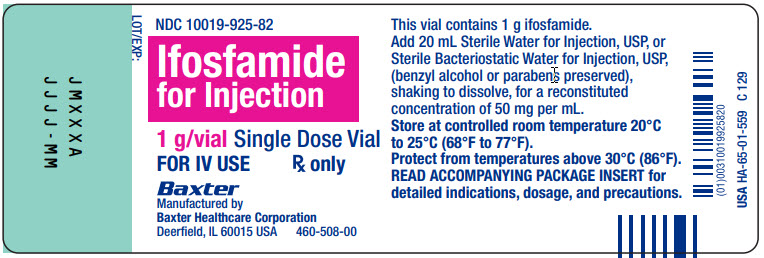
IFOSFAMIDE 3 g/60mL Injection, Powder, For Solution
🆔 Identity & classification
Where does this data come from?
🏷️ RxNorm drug class
This medicine belongs to the Alkylating Drug class.
Where does this data come from?
🏭 Manufacturer & labeler
Where does this data come from?
🩺 Clinical
- Ifosfamide is a chemotherapy drug used to treat germ cell testicular cancer — specifically when at least two earlier treatment regimens haven't worked. It's always given as part of...
- Mesna is a protective drug that is always given alongside ifosfamide. One of ifosfamide's byproducts, acrolein, can irritate and damage your bladder, causing a serious condition ca...
- Why do I also have to take mesna, and what does it do?
- The most urgent things to call your care team about are: fever or signs of infection (your white blood cell count can drop dangerously low), blood in your urine, or any sudden conf...
Patient education
Supplement & herbal interactions
Some supplements/herbs that may interact with Ifosfamide — tap one for details:
Ifosfamide may be associated with lower levels of 4 nutrients — worth a chat with your pharmacist, not a cause for alarm.
Where does this data come from?
Ask a licensed pharmacist directly — free, answered by our team.
🧪 Inactive Ingredients / Excipients
Inactive ingredients, also called excipients, are components of the drug product other than the active ingredient. They may include fillers, dyes, coatings, preservatives, flavors, or other formulation ingredients.
Where does this data come from?
IACT rows and label-wide narrative are kept separate; availability and product-level specificity depend on the submitted label.Inactive ingredient FAQ
Are inactive ingredients the same for every manufacturer?
Why might an inactive ingredient be missing?
Can inactive ingredients matter?
💲 Pricing
A drug doesn't have one price. Each row is a different public payment system, and none is what you'd pay at the counter — that depends on your insurance. The ⓘ on each row explains what it measures.
| Price system | Per mL | Per package |
|---|---|---|
| Retail pharmacies payNADAC · weekly | Not in the retail survey — common for institutional, discontinued, or low-volume packs. | |
| Medicaid paysCMS SDUD · 12 mo | $69.03 | $4,142.04 / 60 ml |
| Medicare drug plans payPart D · quarterly | No Part D plan price is available for this NDC in our data. | |
| Medicare Part B allowsASP · J9208 | $27.613 / J9208 unit | — |
Where does this data come from?
🧾 Billing & reimbursement
Where does this data come from?
🔁 Therapeutic equivalents
| Product | Labeler | Pack | NADAC/unit | TE | Status | Price vs. this |
|---|---|---|---|---|---|---|
| Ifex 3 g/60mL 00338-3993-01 | Baxter | 1 vial | — | AP | FDA listed | — |
| Ifosfamide 3 g/60mLthis 10019-0926-02 | Baxter | 1 vial | — | AP | FDA listed | — |
| Ifosfamide 3 g/60mL 10019-0929-03 | Baxter | 1 vial | — | AP | FDA listed | — |
Where does this data come from?
⏳ Availability & generic status
The FDA lists approved generic versions of this medicine, but that does not always mean a pharmacy can get one today. Patent rules, launch agreements, supply and pricing can affect when generics actually arrive.
Where does this data come from?
🗺️ Medicaid utilization & spend
📊 Medicare Part D spend CMS · PART D · 2025 (Q1-Q4)
🔬 Reported adverse events (FAERS)
Top reported reactions
Age at onset
Reporter sex
Serious outcomes
Where does this data come from?
📦 Packaging — all sizes for this product
| Package NDC | Description | Marketing start | Status |
|---|---|---|---|
| 10019-0926-02 You're viewing this | 1 VIAL, SINGLE-DOSE in 1 CARTON (10019-926-02) / 60 mL in 1 VIAL, SINGLE-DOSE (10019-926-16) | 1988-12-30 | Active |
🧭 About this NDC listing & data coverage
What data is (and isn’t) available for this NDC — tap to expand
| NDC identity (package / product / labeler codes) | ✓ Available |
| Labeler | ✓ Available |
| Product & package description | ✓ Available |
| Marketing category & status | ✓ Available |
| Active ingredient / dosage form / route | ✓ Available |
| FDA label (SPL via DailyMed) | ✓ Available |
| Package photos | ✓ Available |
| Inactive ingredients (structured) | — Not published for this NDC The labeler did not submit a structured excipient list, or no SPL is available. |
| NADAC pharmacy acquisition price (CMS) | — Not published for this NDC CMS publishes NADAC only for NDCs reported in its retail-pharmacy survey. |
| Orange Book / therapeutic-equivalence data | ✓ Available |
| HCPCS J-code billing crosswalk | ✓ Available |
| Medicaid utilization (CMS SDUD) | ✓ Available |
Questions about this listing
Why is there no price listed?
Is the NDC printed on the package the same as the 11-digit billing NDC?
What do the three segments of this NDC mean?
Is this package still being marketed?
Who lists this product with the FDA?
Do I need a prescription for this product?
Does this product have a billing J-code?
Where does this data come from?
📄 Full prescribing information FDA SPL
🚨 Boxed Warning ▾
WARNING: MYELOSUPPRESSION, ENCEPHALOPATHY, NEPHROTOXICITY and UROTOXICITY • Myelosuppression can be severe and lead to fatal infections. Monitor blood counts prior to and at intervals after each treatment cycle [see Warnings and Precautions (5.1) ]. • Encephalopathy can be severe and may result in death. Monitor for CNS toxicity and discontinue treatment for encephalopathy [see Warnings and Precautions (5.2) ]. • Nephrotoxicity can be severe and result in renal failure.
Hemorrhagic cystitis can be severe and can be reduced by the prophylactic use of mesna [see Warnings and Precautions (5.3) ]. WARNING: MYELOSUPPRESSION, ENCEPHALOPATHY, NEPHROTOXICITY and UROTOXICITY See full prescribing information for complete boxed warning . • Myelosuppression can be severe and lead to fatal infections ( 5.1 ) • Encephalopathy can be severe and may result in death ( 5.2 ) • Nephrotoxicity can be severe and result in renal failure. Hemorrhagic cystitis can be severe.
( 5.3 )
🎯 Indications and Usage ▾
1 INDICATIONS AND USAGE Ifosfamide for Injection is indicated for use in adults in combination with certain other approved antineoplastic agents for third-line chemotherapy of germ cell testicular cancer. Ifosfamide for Injection is an alkylating drug indicated for use in adults in combination with certain other approved antineoplastic agents for third-line chemotherapy of germ cell testicular cancer. ( 1 )
⏱️ Dosage and Administration ▾
2 DOSAGE AND ADMINISTRATION • Administer Ifosfamide for Injection with extensive hydration consisting of at least 2 liters of oral or intravenous fluid per day to reduce the incidence or severity of bladder toxicity. ( 2.1 , 5.3 ) • Administer mesna with Ifosfamide for Injection to reduce the incidence or severity of hemorrhagic cystitis. ( 2.1 , 5.3 ) • Administer Ifosfamide for Injection as a slow intravenous infusion (at least 30 minutes) at a dose of 1.2 grams per m 2 per day for 5 consecutive days.
Repeat every 3 weeks or after recovery from hematologic toxicity. ( 2.2 ) • Individualize the dose and dosing schedule of Ifosfamide for Injection based on patient risk factors and adverse reactions. ( 2.2 ) • See Full Prescribing Information for instructions on preparation and administration.
( 2.3 )
2.1Important Administration Instructions Administer Ifosfamide for Injection with extensive hydration consisting of at least 2 liters of oral or intravenous fluid per day to reduce the incidence or severity of bladder toxicity. Administer Ifosfamide for Injection with mesna to reduce the incidence or severity of hemorrhagic cystitis [see Warnings and Precautions (5.3) ].
2.2Recommended Dosage The recommended dosage of Ifosfamide for Injection is 1.2 grams per m2 per day administered as a slow intravenous infusion (lasting at least 30 minutes) for 5 consecutive days. Treatment is repeated every 3 weeks or after recovery from hematologic toxicity. Individualize the dose and dosing schedule of Ifosfamide for Injection based on patient risk factors and adverse reactions.
2.3Preparation and Administration Ifosfamide for Injection is a hazardous drug. Follow applicable special handling and disposal procedures.1 Skin reactions associated with accidental exposure to Ifosfamide for Injection may occur. To minimize the risk of dermal exposure, always wear impervious gloves when handling vials and solutions containing Ifosfamide for Injection.
If Ifosfamide for Injection solution contacts the skin or mucosa, immediately wash the skin thoroughly with soap and water or rinse the mucosa with copious amounts of water. Prepare Ifosfamide for Injection for intravenous use by adding Sterile Water for Injection, USP or Bacteriostatic Water for Injection, USP (benzyl alcohol or parabens preserved) to the vial and shaking to dissolve. Before administration, the substance must be completely dissolved.
Use the quantity of diluents shown in below to reconstitute the product: Table 1: Ifosfamide for Injection Quantities for Dilution and Final Concentrations Dosage Strength Quantity of Diluent Final Concentration 1 gram 20 mL 50 mg per mL 3 grams 60 mL 50 mg per mL Solutions of ifosfamide may be diluted further to achieve concentrations of 0.6 to 20 mg/mL in the following fluids: • 5% Dextrose Injection, USP • 0.9% Sodium Chloride Injection, USP • Lactated Ringer’s Injections, USP • Sterile Water for Injection, USP Because essentially identical stability results were obtained for Sterile Water admixtures as for the other admixtures (5% Dextrose Injection, 0.9% Sodium Chloride Injection, and Lactated Ringer’s Injection), the use of large volume parenteral glass bottles, VIAFLEX bags or PAB bags that contain intermediate concentrations or mixtures of excipients (e.g., 2.5% Dextrose Injection, 0.45% Sodium Chloride Injection, or 5% Dextrose and 0.9% Sodium Chloride Injection) is also acceptable.
Refrigerate constituted or constituted and further diluted solutions of Ifosfamide for Injection and use within 24 hours. Benzyl-alcohol-containing solutions can reduce the stability of ifosfamide. Parenteral drug products should be inspected visually for particulate matter and discoloration prior to administration, whenever solution and container permit.
💊 Dosage Forms and Strengths ▾
3 DOSAGE FORMS AND STRENGTHS For injection: white, crystalline powder available in: • 1 gram single-dose vial for reconstitution • 3 gram single-dose vial for reconstitution • For injection: Single dose vials: 1 gram, 3 grams ( 3 )
⛔ Contraindications ▾
4 CONTRAINDICATIONS Ifosfamide for Injection is contraindicated in patients with: • Known hypersensitivity to administration of ifosfamide. • Urinary outflow obstruction. • Known hypersensitivity to administration of ifosfamide. ( 4 ) • Urinary outflow obstruction. ( 4 )
⚠️ Warnings and Cautions ▾
5 WARNINGS AND PRECAUTIONS • Myelosuppression: Monitor blood counts prior to treatment, during treatment, and as clinically indicated. ( 5.1 ) • Encephalopathy: Monitor for signs and symptoms of CNS toxicity during and after Ifosfamide for Injection treatment. Dose interruption or permanent discontinuation may be required based on individual safety and tolerability.
( 5.2 ) • Nephrotoxicity and Urotoxicity: Monitor signs and symptoms. Monitor serum and urine chemistries. (2.1, 5.3 ) • Cardiotoxicity: Arrhythmias, other ECG changes, and cardiomyopathy can occur and result in death.
Cardiotoxicity is dose dependent and the risk is increased in patients with preexisting cardiac, treatment with other cardiotoxic agents, radiation, and renal impairment. ( 5.4 ) • Pulmonary toxicity: Interstitial pneumonitis, pulmonary fibrosis, and pulmonary toxicity with fatal outcomes can occur. Monitor for signs and symptoms of pulmonary toxicity and treat as clinically indicated.
( 5.5 ) • Secondary malignancies can occur. ( 5.6 ) • Veno-occlusive Liver Disease can occur. ( 5.7 ) • Embryo-Fetal Toxicity: Can cause fetal harm.
Advise of potential risk to a fetus and use of effective contraception. ( 5.8 , 8.1 , 8.3 ) • Infertility: Can impair male and female reproductive function. ( 5.9 ) • Anaphylactic/anaphylactoid reactions have been reported.
( 5.10 )
5.1Myelosuppression Ifosfamide for Injection can cause myelosuppression that results in severe or fatal infections including sepsis or septic shock. Ifosfamide‑induced myelosuppression includes leukopenia, neutropenia, thrombocytopenia (with bleeding events), and anemia. The nadir of the leukocyte count usually occurs during the second week after administration of Ifosfamide for Injection.
The risk of myelosuppression is dose‑dependent and increased in patients with reduced renal function, bone marrow metastases, prior radiation, and concomitant or prior therapy with other cytotoxic agents. Monitor complete blood counts, including leukocytes, neutrophils, platelets, and hemoglobin prior to each administration of Ifosfamide for Injection, at appropriate intervals during treatment, and as clinically indicated. Myelosuppression may require dosage delays.
Avoid administration of Ifosfamide for Injection to patients with a WBC count below 2000/µL, a platelet count below 50,000/µL, or when signs or symptoms of active infection or severe immunosuppression are present.
5.2Encephalopathy Ifosfamide for Injection can cause encephalopathy which may be fatal. Signs and symptoms may include confusion, somnolence, coma, hallucination, blurred vision, psychotic behavior, extrapyramidal symptoms, urinary incontinence, and seizures. Risk factors include high ifosfamide dosage, hypoalbuminemia, impaired renal function, poor performance status, bulky abdominal-pelvic disease, nephrotoxic treatments including cisplatin, CNS active drugs, or alcohol use.
Signs and symptoms may occur or recur within hours to days after administration of Ifosfamide for Injection. Continue supportive care until complete resolution of CNS signs and symptoms. Monitor for signs and symptoms of encephalopathy during and after Ifosfamide for Injection treatment.
Dose interruption or permanent discontinuation may be required based on individual safety and tolerability. Consider methylene blue for treatment of encephalopathy.
5.3Nephrotoxicity and Urotoxicity Ifosfamide for Injection can cause severe or fatal nephrotoxicity and urotoxicity including glomerular or tubular dysfunction, tubular necrosis, renal parenchymal necrosis, acute renal failure, chronic renal failure, and hemorrhagic cystitis (requiring blood transfusion). Tubular damage may occur up to years after cessation of Ifosfamide for Injection treatment. The risk of nephrotoxicity is increased in patients with renal impairment or reduced nephron reserve.
Hemorrhagic cystitis is dose‑dependent and the risk is increased with past or concomitant radiation of the bladder or busul…
🤒 Adverse Reactions ▾
6 ADVERSE REACTIONS The most common (≥ 10%) adverse reactions were alopecia, nausea/vomiting, hematuria, leukopenia, anemia, CNS toxicity, infection. ( 6.1 ) To report SUSPECTED ADVERSE REACTIONS, contact Baxter Healthcare at phone: 1 866 888 2472 or FDA at 1-800-FDA-1088 or www.fda.gov/medwatch .
6.1Clinical Trials Experience Because clinical trials are conducted from widely varying conditions, adverse reaction rates observed in the clinical trials of a drug cannot be directly compared to rates in the clinical trials of another drug and may not reflect the rates observed in clinical practice. The adverse reactions in Table 2 below are based on 30 publications describing clinical experience with fractionated administration of ifosfamide as a single agent with a total dose of 4 to 12 g/m 2 per course. Table 2: Adverse Reactions in Patients Treated with Single Agent Ifosfamide for Injection Adverse Reaction Single Agent Ifosfamide for Injection % (number of patients) Skin and Subcutaneous Tissue Disorders Alopecia 90% (540/603) Dermatitis 0.08% (1/1317) Papular rash 0.08% (1/1317) Gastrointestinal Disorders Nausea/Vomiting 47% (443/964) Diarrhea 0.7% (9/1317) Stomatitis 0.3% (4/1317) Renal and Urinary Disorders Hemorrhagic cystitis Includes dysuria and pollakiuria Hematuria - without mesna 44% (282/640) - with mesna 21% (33/155) Macrohematuria - without mesna 11% (66/594) - with mesna 5% (5/97) Renal dysfunction Includes acute renal failure, irreversible renal failure (fatal outcomes) serum creatinine increased, BUN increased, creatinine clearance decreased, metabolic acidosis, anuria, oliguria, glycosuria, hyponatremia, uremia, creatinine clearance increased -- Renal structural damage Includes acute tubular necrosis, renal parenchymal damage, enzymuria, cylindruria, proteinuria -- Blood and Lymphatic System Disorders Leukopenia Includes neutropenia, granulocytopenia, lymphopenia, and pancytopenia (any) -- Leukopenia <1 x 10 3 /µL 44% (267/614) Anemia Includes anemia and decrease in hemoglobin/hematocrit 38% (202/533) - with mesna 21.3% (33/155) Thrombocytopenia Includes severe or fatal bleeding (any) -- Thrombocytopenia, 50 x 10 3 /µL 4.8% (35/729) Nervous System Disorders Central nervous system toxicity Includes coma and death Includes abnormal behavior, affect lability aggression, agitation, anxiety, aphasia, asthenia, ataxia, cerebellar syndrome, cerebral function deficiency, cognitive disorder, coma, confusional state, convulsions, cranial nerve dysfunction, depressed state of consciousness, depression, disorientation, dizziness, electroencephalogram abnormal, encephalopathy, flat affect, hallucinations, headache, ideation, lethargy, memory impairment, mood change, motor dysfunction, muscle spasms, myoclonus, progressive loss of brainstem reflexes, psychotic reaction, restlessness, somnolence, tremor, urinary incontinence 15% (154/1001) Peripheral neuropathy 0.4% (5/1317) Infections and Infestations Infection 10% (112/1128) General Disorders and Administration Site Conditions Phlebitis Includes phlebitis and irritation of the venous walls 2.8% (37/1317) Neutropenic fever Includes granulocytopenic fever 1% (13/1317) Fatigue 0.3% (4/1317) Malaise Unable to calculate Hepatobiliary Disorders Hepatotoxicity Includes increased serum alanine aminotransferase (ALT), serum aspartate aminotransferase (AST), alkaline phosphatase, gamma-glutamyltransferase (GGT) and lactate dehydrogenase (LDH) 1.8% (22/1190) Metabolism and Nutrition Disorders Anorexia 1.1% (15/1317) Cardiac Disorders Cardiotoxicity Includes severe or fatal congestive heart failure, tachycardia, pulmonary edema 0.5% (7/1317) Vascular Disorders Hypotension Includes shock and death 0.3% (4/1317)
6.2Postmarketing Experience The following adverse reactions have been identified during post-approval use of Ifosfamide for Injection. Because these reactions are reported voluntarily from a population of uncertain size, it is not always possible to reliably estimate their frequ…
🔄 Drug Interactions ▾
7 DRUG INTERACTIONS • CYP3A4 Inducers: Monitor for increased toxicity when used in combination with CYP3A4 inducers. ( 7.1 ) • CYP3A4 Inhibitors: Use in combination with CYP3A4 inhibitors could decrease the effectiveness of ifosfamide. ( 7.2 )
7.1Inducers of CYP3A4 CYP3A4 inducers may increase the metabolism of ifosfamide to its active alkylating metabolites. CYP3A4 inducers may increase the formation of the neurotoxic/nephrotoxic ifosfamide metabolite, chloroacetaldehyde. Closely monitor patients taking ifosfamide with CYP3A4 inducers for toxicities and consider dose adjustment.
7.2Inhibitors of CYP3A4 CYP3A4 inhibitors may decrease the metabolism of ifosfamide to its active alkylating metabolites, perhaps decreasing the effectiveness of ifosfamide treatment.
👥 Use in Specific Populations ▾
8 USE IN SPECIFIC POPULATIONS • Lactation: Advise not to breastfeed. ( 8.2 ) • Renal impairment: Closely monitor for adverse reactions and consider dosage modifications. ( 8.6 )
8.1Pregnancy Risk Summary Based on mechanism of action [see Clinical Pharmacology (12.1) ] , and human and animal data (see Data) , Ifosfamide for Injection can cause fetal harm when administered to a pregnant woman. Fetal growth retardation and neonatal anemia have been reported following exposure to ifosfamide‑containing chemotherapy regimens during pregnancy. In the U.S. general population, the estimated background risk of major birth defects and miscarriage in clinically recognized pregnancies is 2 to 4% and 15 to 20%, respectively.
Data Animal Data Animal studies indicate that ifosfamide is capable of causing gene mutations and chromosomal damage in vivo . In pregnant mice, resorptions increased and anomalies were present at day 19 after a 30 mg/m 2 dose of ifosfamide was administered on day 11 of gestation. Embryo-lethal effects were observed in rats following the administration of 54 mg/m 2 doses of ifosfamide from the 6th through the 15th day of gestation and embryotoxic effects were apparent after dams received 18 mg/m 2 doses over the same dosing period.
Ifosfamide is embryotoxic to rabbits receiving 88 mg/m 2 /day doses from the 6th through the 18th day after mating. The number of anomalies was also significantly increased over the control group.
8.2Lactation Risk Summary Ifosfamide is excreted in breast milk. Because of the potential for serious adverse events, and the tumorigenicity shown for ifosfamide in animal studies, advise women not to breastfeed during treatment with Ifosfamide for Injection and for one week after the last dose.
8.3Females and Males of Reproductive Potential Ifosfamide for Injection can cause fetal harm when administered to a pregnant woman [see Use in Specific Populations (8.1) ] . Pregnancy Testing Verify pregnancy status in females of reproductive potential prior to initiating Ifosfamide for Injection [see Use in Specific Populations (8.1) ] . Contraception Females Advise female patients of reproductive potential to use effective contraception during treatment with Ifosfamide for Injection and for 12 months after the last dose.
Males Advise males with female sexual partners of reproductive potential to use effective contraception during treatment with Ifosfamide for Injection and for 6 months after the last dose [see Nonclinical Toxicology (13.1) ] . Infertility Females Amenorrhea has been reported in patients treated with ifosfamide. The risk of permanent chemotherapy induced amenorrhea increases with age.
Males Men treated with ifosfamide may develop oligospermia or azoospermia. Azoospermia may be reversible in some patients, though the reversibility may not occur for several years after cessation of therapy. Sexual function and libido are generally unimpaired in these patients.
Some degree of testicular atrophy may occur. Patients treated with ifosfamide have subsequently fathered children. Females and Males Based on animal studies, Ifosfamide for Injection may impair fertility in females and males of reproductive potential.
The reversibility of these effects is unknown [see Nonclinical Toxicology (13.1) ] .
8.4Pediatric Use Safety and effectiveness have not been established in pediatric patients. Renal rickets and growth retardation in pediatric patients treated with ifosfamide have been reported. Ifosfamide for Injection may cause temporary or permanent infertility in prepubertal girls or in females of child-bearing potential and may have an increased risk of developing premature menopause.
Ifosfamide for Injection may cause abnormal secondary sexual characteristic development in prepubertal males. Sterility, azoospermia, and testicular atrophy have been reported in male patients. Azoospermia may be reversible in some patients, but may not occur for several years after cessation of Ifosfamide for Injecti…
🤰 Pregnancy ▾
8.1Pregnancy Risk Summary Based on mechanism of action [see Clinical Pharmacology (12.1) ] , and human and animal data (see Data) , Ifosfamide for Injection can cause fetal harm when administered to a pregnant woman. Fetal growth retardation and neonatal anemia have been reported following exposure to ifosfamide‑containing chemotherapy regimens during pregnancy. In the U.S. general population, the estimated background risk of major birth defects and miscarriage in clinically recognized pregnancies is 2 to 4% and 15 to 20%, respectively.
Data Animal Data Animal studies indicate that ifosfamide is capable of causing gene mutations and chromosomal damage in vivo . In pregnant mice, resorptions increased and anomalies were present at day 19 after a 30 mg/m 2 dose of ifosfamide was administered on day 11 of gestation. Embryo-lethal effects were observed in rats following the administration of 54 mg/m 2 doses of ifosfamide from the 6th through the 15th day of gestation and embryotoxic effects were apparent after dams received 18 mg/m 2 doses over the same dosing period.
Ifosfamide is embryotoxic to rabbits receiving 88 mg/m 2 /day doses from the 6th through the 18th day after mating. The number of anomalies was also significantly increased over the control group.
🧒 Pediatric Use ▾
8.4Pediatric Use Safety and effectiveness have not been established in pediatric patients. Renal rickets and growth retardation in pediatric patients treated with ifosfamide have been reported. Ifosfamide for Injection may cause temporary or permanent infertility in prepubertal girls or in females of child-bearing potential and may have an increased risk of developing premature menopause.
Ifosfamide for Injection may cause abnormal secondary sexual characteristic development in prepubertal males. Sterility, azoospermia, and testicular atrophy have been reported in male patients. Azoospermia may be reversible in some patients, but may not occur for several years after cessation of Ifosfamide for Injection therapy.
🧓 Geriatric Use ▾
8.5Geriatric Use Clinical studies of Ifosfamide for Injection did not include sufficient numbers of patients aged 65 and over to determine whether they respond differently from younger subjects. A study of patients 40 to 71 years of age indicated that elimination half-life appears to increase with advancing age [see Pharmacokinetics (12.3) ] . This apparent increase in half-life appeared to be related to increases in volume of distribution of ifosfamide with age.
No significant changes in total plasma clearance or renal or non-renal clearance with age were reported. Ifosfamide and its metabolites are known to be substantially excreted by the kidney, and the risk of toxic reactions to this drug may be greater in patients with impaired renal function. Because elderly patients are more likely to have decreased renal function, closely monitor for adverse reactions and monitor renal function as clinically indicated.
🆘 Overdosage ▾
10 OVERDOSAGE No specific antidote for Ifosfamide for Injection is known. Patients who receive an overdose should be closely monitored for the development of toxicities. Serious consequences of overdosage include manifestations of dose-dependent toxicities such as CNS toxicity, nephrotoxicity, myelosuppression, and mucositis [see Warnings and Precautions (5) ].
Management of overdosage would include general supportive measures to sustain the patient through any period of toxicity that might occur, including appropriate state-of-the-art treatment for any concurrent infection, myelosuppression, or other toxicity. Ifosfamide as well as ifosfamide metabolites are dialyzable. Cystitis prophylaxis with mesna may be helpful in preventing or limiting urotoxic effects with overdose.
🧬 Clinical Pharmacology ▾
12 CLINICAL PHARMACOLOGY
12.1Mechanism of Action Ifosfamide is a prodrug that requires metabolic activation by hepatic cytochrome P450 isoenzymes to exert its cytotoxic activity. Activation occurs by hydroxylation at the ring carbon atom forming the unstable intermediate 4‑hydroxyifosfamide and its ring-opened aldo tautomer, which decomposes to yield the cytotoxic and urotoxic compound acrolein and an alkylating isophosphoramide mustard isophosphoramide mustard. The exact mechanism of action of ifosfamide has not been determined, but its cytotoxic action is primarily through DNA crosslinks caused by alkylation by the isophosphoramide mustard at guanine N-7 positions.
The formation of inter- and intra-strand cross-links in the DNA results in cell death.
12.3Pharmacokinetics Ifosfamide exhibits dose-dependent pharmacokinetics in humans. At single doses of 3.8 to 5.0 g/m 2 , the plasma concentrations decay biphasically and the mean terminal elimination half-life is about 15 hours. At doses of 1.6 to 2.4 g/m 2 /day, the plasma decay is monoexponential and the terminal elimination half-life is about 7 hours.
Ifosfamide exhibits time-dependent pharmacokinetics in humans. Following intravenous administration of 1.5 g/m 2 over 0.5 hour once daily for 5 days to 15 patients with neoplastic disease, a decrease in the median elimination half-life from 7.2 hour on Day 1 to 4.6 hours on Day 5 occurred with a concomitant increase in the median clearance from 66 mL/min on Day 1 to 115 mL/min on Day 5. There was no significant change in the volume of distribution on Day 5 compared with Day 1.
Distribution Ifosfamide volume of distribution (Vd) approximates the total body water volume, suggesting that distribution takes place with minimal tissue binding. Following intravenous administration of 1.5 g/m 2 over 0.5 hour once daily for 5 days to 15 patients with neoplastic disease, the median Vd of ifosfamide was
0.64 L/kg on Day 1 and
0.72L/kg on Day 5. Ifosfamide shows little plasma protein binding. Ifosfamide and its active metabolites are extensively bound by red blood cells.
Ifosfamide is not a substrate for P-glycoprotein. Metabolism Ifosfamide is extensively metabolized in humans through two metabolic pathways: ring oxidation (“activation”) to form the active metabolite, 4-hydroxy-ifosfamide and side-chain oxidation to form the inactive metabolites, 3-dechloro-ethylifosfamide or 2-dechloroethylifosfamide with liberation of the toxic metabolite, chloroacetaldehyde. Small quantities (nmol/mL) of ifosfamide mustard and 4‑hydroxyifosfamide are detectable in human plasma.
Metabolism of ifosfamide is required for the generation of the biologically active species and while metabolism is extensive, it is also quite variable among patients. Excretion After administration of doses of 5 g/m 2 of 14 C-labeled ifosfamide, from 70% to 86% of the dosed radioactivity was recovered in urine as metabolites, with about 61% of the dose excreted as parent compound. At doses of 1.6 to 2.4 g/m 2 only 12% to 18% of the dose was excreted in the urine as unchanged drug within 72 hours.
Two different dechloroethylated derivatives of ifosfamide, 4-carboxyifosfamide, thiodiacetic acid and cysteine conjugates of chloroacetic acid have been identified as the major urinary metabolites of ifosfamide in humans and only small amounts of 4‑hydroxyifosfamide and acrolein are present. Specific Populations Pediatric Patients Population PK analysis was performed on plasma data from 32 pediatric patients various malignant diseases aged between 1 and 18 years. Patients received a total of 45 courses of ifosfamide at doses of 1.2, 2.0 and 3.0 g/m 2 given intravenously over 1 or 3 hours on 1, 2, or 3 days.
The mean±standard error population estimates for the initial clearance and volume of distribution of ifosfamide were 2.4±0.33 L/h/m 2 and 21±1.6 L/m 2 with an interindividual variability of 43% and 32%, respectively. Effect of Age A study of 20 patients between 40 to 71 years of…
🧬 Mechanism of Action ▾
12.1Mechanism of Action Ifosfamide is a prodrug that requires metabolic activation by hepatic cytochrome P450 isoenzymes to exert its cytotoxic activity. Activation occurs by hydroxylation at the ring carbon atom forming the unstable intermediate 4‑hydroxyifosfamide and its ring-opened aldo tautomer, which decomposes to yield the cytotoxic and urotoxic compound acrolein and an alkylating isophosphoramide mustard isophosphoramide mustard. The exact mechanism of action of ifosfamide has not been determined, but its cytotoxic action is primarily through DNA crosslinks caused by alkylation by the isophosphoramide mustard at guanine N-7 positions.
The formation of inter- and intra-strand cross-links in the DNA results in cell death.
📦 How Supplied / Storage and Handling ▾
16 HOW SUPPLIED/STORAGE AND HANDLING Ifosfamide for injection is available in single-dose vials as follows: NDC 10019-925-01 1-gram Single-Dose Vial NDC 10019-926-02 3-gram Single-Dose Vial Store at controlled room temperature 20°C to 25°C (68°F to 77°F). Protect from temperatures above 30°C (86°F).
📋 Description ▾
11 DESCRIPTION Ifosfamide for Injection (ifosfamide for injection, USP) single-dose vials for constitution and administration by intravenous infusion each contain 1 gram or 3 grams of sterile ifosfamide. Ifosfamide is a alkylating drug chemically related to the nitrogen mustards and a synthetic analog of cyclophosphamide. Ifosfamide is 3-(2-chloroethyl)-2-[(2-chloroethyl)amino]tetrahydro-2H-1,3,2-oxazaphosphorine 2-oxide.
The molecular formula is C 7 H 15 Cl 2 N 2 O 2 P and its molecular weight is 261.1. Ifosfamide is a white crystalline powder soluble in water. There are no excipients in the formulation.
Each vial contains 1 gram or 3 grams of sterile ifosfamide alone. Its structural formula is: Structural Formula
💬 Information for Patients ▾
17 PATIENT COUNSELING INFORMATION Myelosuppression • Advise patients that treatment with Ifosfamide for Injection may cause myelosuppression which can be severe and lead to infections and fatal outcomes. • Inform patients of the risks associated with the use of Ifosfamide for Injection and plan for regular blood monitoring during therapy [see Boxed Warning, Warnings and Precautions (5.1 )] . • Inform patients to report fever or other symptoms of an infection [see Boxed Warning, Warnings and Precautions (5.1) , Adverse Reactions (6.2 )] . • Advise patients on the risks of bleeding and anemia [see Warnings and Precautions (5.1 , 5.8 ), Adverse Reactions (6.2) ], Use in Specific Populations (8.1) ] .
Encephalopathy • Advise patients on the risk of encephalopathy and other neurotoxic effects with fatal outcome [see Boxed Warning, Warnings and Precautions (5.2) ] . • Inform patients that Ifosfamide for Injection may impair the ability to operate an automobile or other heavy machinery [see Boxed Warning, Warnings and Precautions (5.2) ] . Nephrotoxicity and Urotoxicity • Advise patients on the risk of bladder and kidney toxicity. • Advise patients of the need to increase fluid intake and frequent voiding to prevent accumulation in the bladder [see Warnings and Precautions (5.3) ] .
Cardiotoxicity • Advise patients on the risk of cardiotoxicity and fatal outcome. • Advise patients to report preexisting cardiac disease and manifestations of cardiotoxicity [see Warnings and Precautions (5.4) , Adverse Reactions (6.2) ] . Pulmonary Toxicity • Advise patients on the risk of pulmonary toxicity leading to respiratory failure with fatal outcome. • Inform patients to report signs and symptoms of pulmonary toxicity [see Warnings and Precautions (5.5) ] . Secondary Malignancies • Advise patients on the risk of secondary malignancies due to therapy [see Warnings and Precautions (5.6) ] .
Veno-occlusive Liver Disease • Advise patients on the risk of veno-occlusive liver disease [see Warnings and Precautions (5.7) ] . Embryo-Fetal Toxicity • Advise pregnant women and females of reproductive potential of the potential risk to a fetus. Advise females to inform their healthcare provider of a known or suspected pregnancy [see Warnings and Precautions (5.8) and Use in Specific Populations (8.1) ] . • Advise females of reproductive potential to use effective contraception during treatment with Ifosfamide for Injection and for 12 months after the last dose [see Use in Specific Populations (8.3) ] . • Advise male patients with female partners of reproductive potential to use effective contraception during treatment with Ifosfamide for Injection and for 6 months after the last dose [see Use in Specific Populations (8.3) ] .
Lactation • Advise women not to breastfeed during treatment with Ifosfamide for Injection and for 1 week after the last dose [see Use in Specific Populations (8.2) ] . Infertility • Advise females and males of reproductive potential that Ifosfamide for Injection may cause temporary or permanent infertility [see Use in Specific Populations (8.3) ] . Skin and Subcutaneous Tissue Disorders • Advise patients on the risk of alopecia, wound healing, and other serious skin and subcutaneous tissue disorders [see Warnings and Precautions (5.11) , Adverse Reactions (6.2) ] .
Gastrointestinal Disorders • Advise patients that the therapy may cause gastrointestinal disorders and alcohol may increase nausea and vomiting [see Adverse Reactions (6.2) ] . • Advise patients on the risk of stomatitis and the importance of proper oral hygiene [see Adverse Reactions (6.2) ] . Eye Disorders • Advise patients on the risk of eye disorders such as visual impairment, blurred vision, and eye irritation [see Adverse Reactions (6.2) ] . Ear and Labyrinth Disorders • Advise patients on the risk of ear and labyrinth disorders such as deafness, vertigo, and tinnitus [see Adverse Reactions (6.2) ] .
Baxter Healthcare Corporation Deerfield, IL 60015 USA For Product Inq…