
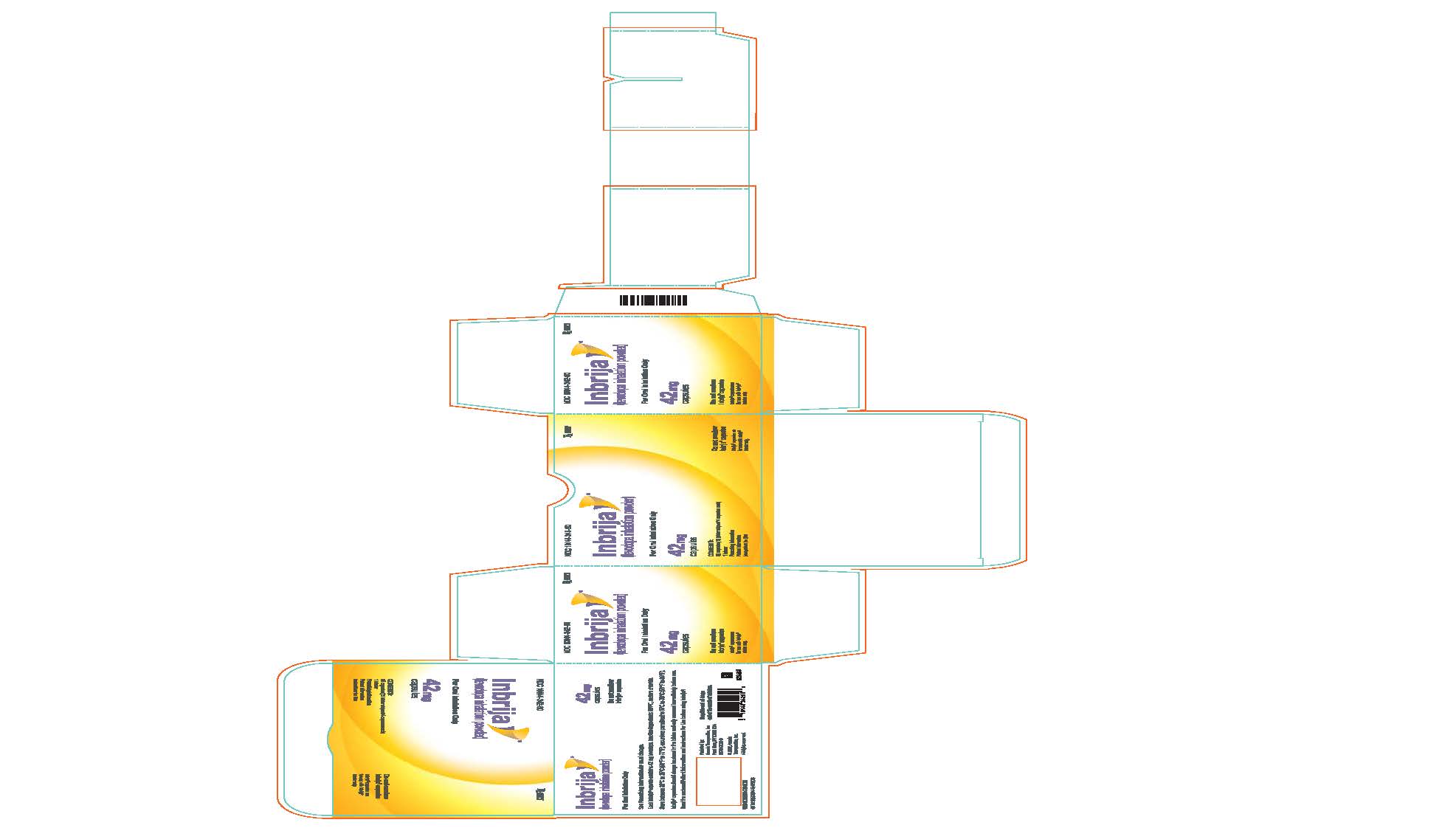
Inbrija levodopa 42 mg Capsule, 4-count
🆔 Identity & classification
Where does this data come from?
🏷️ RxNorm drug class
This medicine belongs to the Aromatic Amino Acid class.
Where does this data come from?
🏭 Manufacturer & labeler
Where does this data come from?
🩺 Clinical
Levodopa inhalation is used along with the combination of levodopa and carbidopa (Duopa, Rytary, Sinemet) to treat ''off'' episodes (times of difficulty moving, walking, and speaking that may happen when other medication(s) wear off) in people with Parkinson's disease (PD; a disorder of the nervous system that causes difficulties with movement, muscle control, and balance). Levodopa inhalation will not work to prevent ''off'' episodes but will help to control symptoms when an ''off'' episode has already begun. Levodopa is in a class of medications called dopamine agonists. Levodopa works by mi...
Read the full MedlinePlus article ↗- An OFF episode is when your regular oral Parkinson's medication temporarily stops working as well as it should. You might notice your symptoms — stiffness, slowness, tremor, or dif...
- What exactly is an OFF episode, and how will I know when I'm having one?
- Yes, absolutely — Inbrija is not a replacement for your regular carbidopa/levodopa tablets or capsules. It only works when used alongside your oral medication. Think of it as a res...
- Do I still take my regular Parkinson's pills if I use Inbrija?
Patient education
Supplement & herbal interactions
Some supplements/herbs that may interact with Levodopa — tap one for details:
Levodopa may be associated with lower levels of 2 nutrients — worth a chat with your pharmacist, not a cause for alarm.
Where does this data come from?
Ask a licensed pharmacist directly — free, answered by our team.
💊 What it looks like
Where does this data come from?
🧪 Inactive Ingredients / Excipients
Inactive ingredients, also called excipients, are components of the drug product other than the active ingredient. They may include fillers, dyes, coatings, preservatives, flavors, or other formulation ingredients.
💡 Tap an ingredient (hover on desktop) to see what it is and why it’s used.
-
UNII 2W15RT5V7V
A phospholipid derived from soy or synthetic sources. It acts as an emulsifier and surfactant to help mix oil and water components, and may improve how the medicine is absorbed in the body.
-
UNII 451W47IQ8X
Sodium chloride is common table salt. It's used in medicines as a buffer to maintain proper pH, as a filler to add bulk, or to adjust the osmotic balance in liquid formulations.
2 inactive ingredients listed in the exact product block matched to this NDC.
Where does this data come from?
ingredient classCode="IACT" elements from the exact product block matched by this NDC. Label-section narrative from DailyMed / the openFDA label index is shown separately when available.Inactive ingredient FAQ
Are inactive ingredients the same for every manufacturer?
Why might an inactive ingredient be missing?
Can inactive ingredients matter?
💲 Pricing
A drug doesn't have one price. Each row is a different public payment system, and none is what you'd pay at the counter — that depends on your insurance. The ⓘ on each row explains what it measures.
| Price system | Per each | Per package |
|---|---|---|
| Retail pharmacies payNADAC · weekly | Not in the retail survey — common for institutional, discontinued, or low-volume packs. | |
| Medicaid paysCMS SDUD · 12 mo | No recent Medicaid claims on file for this NDC — rare and low-volume NDCs are suppressed in the public data. | |
| Medicare drug plans payPart D · Q2 2026 | $22.89 | $91.57 / 4 capsules |
Where does this data come from?
🔁 Therapeutic equivalents
| Product | Labeler | Pack | NADAC/unit | TE | Status | Price vs. this |
|---|---|---|---|---|---|---|
| Inbrija 42 mg 00259-6142-16 | Merz | 16 capsules | — | — | FDA listed | — |
| Inbrija 42 mgthis 10144-0342-04 | Merz | 4 capsules | — | — | FDA listed | — |
Where does this data come from?
⏳ Availability & generic status
We did not find an FDA-approved generic match for this exact strength, form and route. Patent/protection dates below may affect future generic timing.
Why the date isn’t exact: Generic timing can change because patents may be challenged, settled, licensed, added, removed, or worked around with a narrower label — and FDA approval does not always mean a pharmacy can get the generic today.
🛈 What do these terms mean?
- Patent
- Legal protection listed in the Orange Book that may delay generic approval or launch. Issued by the U.S. Patent & Trademark Office.
- Substance patent
- Covers the active drug molecule itself — the hardest to design around. A generic generally can’t launch until it expires.
- Formulation (product) patent
- Covers a specific formulation or dosage form. A generic can sometimes work around it with a different formulation.
- Method-of-use patent
- A patent covering one specific approved use of the drug — not necessarily the whole molecule. A generic can sometimes launch with a “skinny label” that carves out the protected use and keeps the others.
- Skinny label
- A generic label that omits a still-patented use when the FDA allows it — letting a generic reach the market for the unprotected uses.
- Exclusivity
- FDA-granted marketing protection, separate from patents — e.g. 5-yr new chemical entity, 7-yr orphan drug, or a +6-month pediatric extension.
- Paragraph IV
- A generic applicant’s formal challenge to a listed patent. It can potentially lead to earlier generic entry, but often involves litigation or a settlement.
- RLD / RS
- Reference Listed Drug — the brand product the FDA uses as the reference for generic applications. Reference Standard — the product the FDA expects generics to compare against in bioequivalence testing.
- TE / AB rating
- FDA therapeutic-equivalence rating. An AB rating generally means the FDA considers a generic therapeutically equivalent to — and substitutable for — the brand.
- LOE (loss of exclusivity)
- The latest patent or exclusivity currently listed — the loss-of-exclusivity / latest-listed-protection date shown on this page. Paragraph-IV challenges and settlements can move the real date earlier; FDA approval and a manufacturer’s decision to market can move it later.
Built from the FDA Orange Book. The bars above are scaled to each protection’s expiry; the red LOE marker is the last one to lapse.
| Patent | Type | Use code | Expires |
|---|---|---|---|
| US 12458615 ↗ | Method of use | U-2484 | Oct 21, 2033 |
| US RE43711 ↗ | Method of use | U-2484 | Feb 3, 2029 |
| US 8685442 ↗ | Drug product | — | Nov 16, 2032 |
| US 8945612 ↗ | Drug product | — | Nov 16, 2032 |
| US 8545878 ↗ | Drug product | — | Nov 16, 2032 |
| US 9393210 ↗ | Drug product | — | Nov 16, 2032 |
Is there a generic version of INBRIJA 42 MG INHALATION CAP?
The FDA approved a generic — why can’t I get it at my pharmacy yet?
Why do different websites show different generic release dates?
What does “FDA listed” mean?
What does a patent or protection date mean here?
What does “current Orange Book estimate” mean?
Can a generic come out before the last patent expires?
Can a generic come out after the listed dates?
What is the difference between patents and exclusivity?
Why are there multiple patent dates?
Where does this data come from?
💊 Medicaid utilization by pack size
📊 Medicare Part D spend CMS · PART D · 2026 (Q1)
📦 Packaging — all sizes for this product
| Package NDC | Description | Marketing start | Status |
|---|---|---|---|
| 10144-0342-04 You're viewing this | 1 BLISTER PACK in 1 CARTON (10144-342-04) / 4 CAPSULE in 1 BLISTER PACK (10144-342-01) | 2019-08-29 | Active |
| 10144-0342-12 | 3 BLISTER PACK in 1 CARTON (10144-342-12) / 4 CAPSULE in 1 BLISTER PACK (10144-342-01) | 2019-08-29 | Active |
| 10144-0342-16 | 4 BLISTER PACK in 1 CARTON (10144-342-16) / 4 CAPSULE in 1 BLISTER PACK (10144-342-01) | 2018-12-22 | Active |
| 10144-0342-32 | 8 BLISTER PACK in 1 CARTON (10144-342-32) / 4 CAPSULE in 1 BLISTER PACK (10144-342-01) | 2018-12-22 | Active |
| 10144-0342-60 | 15 BLISTER PACK in 1 CARTON (10144-342-60) / 4 CAPSULE in 1 BLISTER PACK (10144-342-01) | 2018-12-22 | Active |
| 10144-0342-92 | 23 BLISTER PACK in 1 CARTON (10144-342-92) / 4 CAPSULE in 1 BLISTER PACK (10144-342-01) | 2018-12-22 | Active |
This pack shows little to no recent Medicaid volume — a different pack size carries most fills. See all packs ↓
Pack size FAQ
What quantity is in NDC 10144-0342-04?
What is the difference between NDC 10144-0342-04 and NDC 10144-0342-12?
What NDC number is used to bill for this package of Inbrija levodopa 42 mg Capsule?
🧭 About this NDC listing & data coverage
What data is (and isn’t) available for this NDC — tap to expand
| NDC identity (package / product / labeler codes) | ✓ Available |
| Labeler | ✓ Available |
| Product & package description | ✓ Available |
| Marketing category & status | ✓ Available |
| Active ingredient / dosage form / route | ✓ Available |
| FDA label (SPL via DailyMed) | ✓ Available |
| Package photos | ✓ Available |
| Inactive ingredients (structured) | ✓ Available |
| NADAC pharmacy acquisition price (CMS) | — Not published for this NDC CMS publishes NADAC only for NDCs reported in its retail-pharmacy survey. |
| Orange Book / therapeutic-equivalence data | ✓ Available |
| HCPCS J-code billing crosswalk | — Not published for this NDC Most self-administered / retail products have no J-code — that is normal. |
| Medicaid utilization (CMS SDUD) | — Not published for this NDC CMS reports utilization only for NDCs with Medicaid claims above its privacy threshold. |
Questions about this listing
Why is there no price listed?
Is the NDC printed on the package the same as the 11-digit billing NDC?
What do the three segments of this NDC mean?
Is this package still being marketed?
Does this product come in other package sizes?
Who lists this product with the FDA?
Do I need a prescription for this product?
Where does this data come from?
📄 Full prescribing information FDA SPL
🎯 Indications and Usage ▾
1 INDICATIONS AND USAGE INBRIJA is indicated for the intermittent treatment of OFF episodes in patients with Parkinson's disease treated with carbidopa/levodopa. INBRIJA is an aromatic amino acid indicated for the intermittent treatment of OFF episodes in patients with Parkinson's disease treated with carbidopa/levodopa ( 1 )
⏱️ Dosage and Administration ▾
2 DOSAGE AND ADMINISTRATION INBRIJA capsules are for oral inhalation only and should be used only with the INBRIJA inhaler. For oral inhalation only. DO NOT swallow INBRIJA capsules.
Only use INBRIJA capsules with the INBRIJA inhaler ( 2.1 ) Inhale the contents of two INBRIJA capsules (84 mg) as needed for OFF symptoms, up to 5 times daily ( 2.2 ) The maximum dose per OFF period is 84 mg, and the maximum recommended daily dosage of INBRIJA is 420 mg ( 2.2 )
2.1Important Administration Instructions INBRIJA capsules are for oral inhalation only and should be used only with the INBRIJA inhaler. INBRIJA capsules must not be swallowed as the intended effect will not be obtained. INBRIJA capsules should be stored in their blister package and only removed immediately before use [see How Supplied/Storage and Handling (16.2) ] .
2.2Recommended Dosage INBRIJA should be taken when symptoms of an OFF period start to return. The recommended dosage of INBRIJA is oral inhalation of the contents of two 42 mg capsules (84 mg) as needed, up to 5 times a day. The maximum dose per OFF period is 84 mg, and the maximum daily dosage is 420 mg. INBRIJA has been shown to be effective only in combination with carbidopa/levodopa [see Indications and Usage (1) ].
💊 Dosage Forms and Strengths ▾
3 DOSAGE FORMS AND STRENGTHS INBRIJA (levodopa inhalation powder) consists of INBRIJA capsules and the INBRIJA inhaler. INBRIJA capsules contain 42 mg dry powder formulation of levodopa in a white capsule with two black color bands, and "A42" printed on one side. Inhalation powder: INBRIJA capsules contain 42 mg levodopa for use with the INBRIJA inhaler ( 3 )
⛔ Contraindications ▾
4 CONTRAINDICATIONS INBRIJA is contraindicated in patients currently taking a nonselective monoamine oxidase (MAO) inhibitor (e.g., phenelzine and tranylcypromine) or who have recently (within 2 weeks) taken a nonselective MAO inhibitor. Hypertension can occur if these drugs are used concurrently [see Drug Interactions (7.1) ]. INBRIJA is contraindicated in patients currently taking a nonselective monoamine oxidase (MAO) inhibitor or who have recently (within 2 weeks) taken a nonselective MAO inhibitor ( 4 , 7.1 )
⚠️ Warnings and Cautions ▾
5 WARNINGS AND PRECAUTIONS May cause falling asleep during activities of daily living ( 5.1 ) Avoid sudden discontinuation or rapid dose reduction to reduce the risk of withdrawal-emergent hyperpyrexia and confusion ( 5.2 ) Hallucinations/exacerbation of psychosis may occur. Patients with a major psychotic disorder should not be treated with INBRIJA ( 5.3 , 7.2 ) Impulse Control Disorders: consider dose reduction or stopping INBRIJA ( 5.4 ) May cause or exacerbate dyskinesia: adjustment of levodopa therapy may be considered, including stopping INBRIJA ( 5.5 ) Not recommended in patients with asthma, COPD, or other chronic underlying lung disease ( 5.6 )
5.1Falling Asleep During Activities of Daily Living and Somnolence Patients treated with levodopa, the active ingredient in INBRIJA, have reported falling asleep while engaged in activities of daily living, including the operation of motor vehicles, which sometimes resulted in accidents. Although many of these patients reported somnolence, some reported no warning signs (sleep attack) and believed that they were alert immediately prior to the event. Some of these events have been reported more than 1 year after the initiation of treatment.
Prescribers should reassess patients for drowsiness or sleepiness. Prescribers should also be aware that patients may not acknowledge drowsiness or sleepiness until directly questioned about drowsiness or sleepiness during specific activities. Before initiating treatment with INBRIJA, advise patients about the potential to develop drowsiness and ask about factors that may increase the risk for somnolence with INBRIJA such as the concomitant use of sedating medications and the presence of sleep disorders.
Consider discontinuing INBRIJA in patients who report significant daytime sleepiness or episodes of falling asleep during activities that require active participation (e.g., conversations, eating, etc.). If treatment with INBRIJA continues, patients should be advised not to drive and to avoid other activities that might result in harm if the patients become somnolent. There is insufficient information to establish that dose reduction will eliminate episodes of falling asleep while engaged in activities of daily living.
5.2Withdrawal-Emergent Hyperpyrexia and Confusion A symptom complex that resembles neuroleptic malignant syndrome (characterized by elevated temperature, muscular rigidity, altered consciousness, and autonomic instability), with no other obvious etiology, has been reported in association with rapid dose reduction, withdrawal of, or changes in dopaminergic therapy.
5.3Hallucinations/Psychosis In placebo-controlled trials [see Clinical Studies (14) ], hallucinations were reported in less than 2% of patients treated with INBRIJA. Hallucinations may be responsive to reducing levodopa therapy. Hallucinations may be accompanied by confusion, insomnia, and excessive dreaming.
Abnormal thinking and behavior may present with one or more symptoms, including paranoid ideation, delusions, hallucinations, confusion, psychotic-like behavior, disorientation, aggressive behavior, agitation, and delirium. Because of the risk of exacerbating psychosis, patients with a major psychotic disorder should ordinarily not be treated with INBRIJA. In addition, medications that antagonize the effects of dopamine used to treat psychosis may exacerbate the symptoms of Parkinson's disease and may decrease the effectiveness of INBRIJA [see Drug Interactions (7.2) ].
5.4Impulse Control/Compulsive Behaviors Patients treated with INBRIJA can experience intense urges to gamble, increased sexual urges, intense urges to spend money, binge eating, and/or other intense urges, and the inability to control these urges while taking one or more of the medications that increase central dopaminergic tone. In some cases, although not all, these urges were reported to have stopped when the dose was reduced or the medication was discontinued. Because patients may not reco…
🤒 Adverse Reactions ▾
6 ADVERSE REACTIONS The following serious adverse reactions are discussed below and elsewhere in the labeling: Falling Asleep During Activities of Daily Living and Somnolence [see Warnings and Precautions (5.1) ] Withdrawal-Emergent Hyperpyrexia and Confusion [see Warnings and Precautions (5.2) ] Hallucinations/Psychosis [see Warnings and Precautions (5.3) ] Impulse Control/Compulsive Behaviors [see Warnings and Precautions (5.4) ] Dyskinesia [see Warnings and Precautions (5.5) ] Bronchospasm in Patients with Lung Disease [see Warnings and Precautions (5.6) ] Glaucoma [see Warnings and Precautions (5.7) ] The most common adverse reactions (incidence ≥ 5% and higher than placebo) were cough, nausea, upper respiratory tract infection, and sputum discolored ( 6.1 ) To report SUSPECTED ADVERSE REACTIONS, contact Acorda Therapeutics, Inc. at 1-800-367-5109 or FDA at 1-800-FDA-1088 or www.fda.gov/medwatch.
6.1Clinical Trials Experience Because clinical trials are conducted under widely varying conditions, adverse reaction rates observed in the clinical trials of a drug cannot be directly compared to rates in the clinical trials of another drug and may not reflect the rates observed in clinical practice. Adverse Reactions in Study 1 Table 1 lists the adverse reactions that occurred in at least 2% of patients with Parkinson's disease who were treated with INBRIJA 84 mg and higher than placebo for OFF periods in Study 1 [see Clinical Studies (14) ].
Study 1 was a double-blind, placebo-controlled study, in which 114 patients received INBRIJA 84 mg (two 42 mg capsules) for an average of 2 doses per day, to a maximum of 5 times a day, and 112 patients received placebo. INBRIJA-treated patients were 45-82 years of age (mean 63.5 years of age) and were predominantly male (72%) and white (94%). All patients were also treated with oral carbidopa/levodopa.
The most common adverse reactions (≥ 5% and higher than placebo) in Study 1 were cough, nausea, upper respiratory tract infection, and sputum discolored. Table 1: Adverse Reactions at an Incidence ≥2% and More Frequent with INBRIJA than with Placebo in Study 1 Adverse Reactions INBRIJA 84 mg N=114 % Placebo N=112 % Respiratory, thoracic and mediastinal disorders Cough 15 2 Sputum discolored 5 0 Nasal discharge discoloration 2 0 Oropharyngeal pain 2 0 Gastrointestinal disorders Nausea 5 3 Vomiting 3 0 Infections and infestations Upper respiratory tract infection 6 3 Nasopharyngitis 3 2 Bronchitis/pneumonia 2 0 Nervous system disorders Dyskinesia 4 1 Headache 2 0 Injury, poisoning and procedural complications Fall 3 2 Laceration 2 0 Skin abrasion 2 0 General disorders and administration site conditions Chest discomfort 2 0 Investigations Blood bilirubin increased 2 0 Red blood cell count decreased 2 0 Musculoskeletal and connective tissue disorders Pain in extremity 2 1 Psychiatric disorders Insomnia 2 1 Vascular disorders Orthostatic hypotension/blood pressure decreased 2 0 Adverse Reactions Leading to Discontinuation in Study 1 In Study 1, 6 of 114 patients (5%) in the INBRIJA 84 mg group and 3 of 112 patients (3%) in the placebo group discontinued because of adverse reactions.
The most common of these adverse reactions was cough, which lead to discontinuation in 2% of patients in the INBRIJA 84 mg group and none in the placebo group.
6.2Postmarketing Experience The following adverse reaction has been identified during post approval use of INBRIJA. Because adverse reactions are reported voluntarily from a population of uncertain size, it is not always possible to reliably estimate their frequency or establish a causal relationship to drug exposure: sensation of choking immediately following administration.
🔄 Drug Interactions ▾
7 DRUG INTERACTIONS Monitor patients on MAO-B inhibitors for orthostatic hypotension ( 7.1 ) Dopamine D2 antagonists, isoniazid, and iron salts: May reduce the effectiveness of INBRIJA ( 7.2 , 7.3 )
7.1Monoamine Oxidase (MAO) Inhibitors The use of nonselective MAO inhibitors with INBRIJA is contraindicated [see Contraindications (4) ] . Discontinue use of any nonselective MAO inhibitors at least two weeks prior to initiating INBRIJA. The use of selective MAO-B inhibitors with INBRIJA may be associated with orthostatic hypotension. Monitor patients who are taking these drugs concurrently.
7.2Dopamine D2 Receptor Antagonists and Isoniazid Dopamine D2 receptor antagonists (e.g., phenothiazines, butyrophenones, risperidone, metoclopramide) and isoniazid may reduce the effectiveness of levodopa. Monitor patients for worsening Parkinson's symptoms.
7.3Iron Salts Iron salts or multivitamins containing iron salts can form chelates with levodopa and consequently reduce the bioavailability of levodopa.
👥 Use in Specific Populations ▾
8 USE IN SPECIFIC POPULATIONS Pregnancy: Based on animal data, may cause fetal harm ( 8.1 )
8.1Pregnancy Risk Summary There are no adequate data on the developmental risk associated with the use of INBRIJA in pregnant women. In animal studies, carbidopa/levodopa has been shown to be developmentally toxic (including teratogenic effects) [see Data ]. In the U.S. general population, the estimated background risk of major birth defects and miscarriage in clinically recognized pregnancies is 2-4% and 15-20%, respectively.
The background risk of major birth defects and miscarriage for the indicated population is unknown. Data Animal Data When administered to pregnant rabbits throughout organogenesis, carbidopa/levodopa caused both visceral and skeletal malformations in rabbits. No teratogenic effects were observed when carbidopa/levodopa was administered to pregnant mice throughout organogenesis.
There was a decrease in the number of live pups delivered by rats receiving carbidopa/levodopa during organogenesis.
8.2Lactation Risk Summary The prolactin-lowering action of dopamine suggests that levodopa may interfere with lactation, although there are limited data on the effects of levodopa on milk production in lactating women. Levodopa has been detected in human milk. There are no adequate data on the effects of levodopa on the breastfed infant.
The developmental and health benefits of breastfeeding should be considered along with the mother's clinical need for INBRIJA and any potential adverse effects on the breastfed infant from INBRIJA or from the underlying maternal condition.
8.4Pediatric Use Safety and effectiveness in pediatric patients have not been established.
8.5Geriatric Use Of the Parkinson's disease patients in Study 1 who took INBRIJA 84 mg, 49% (n=56) were 65 years of age and older and 51% (n=58) were under 65 years of age. Of these patients, the following age-related differences in adverse reactions were reported in patients 65 years of age and older vs. in patients under 65 years of age, respectively: cough 25% vs. 5%; upper respiratory tract infection 11% vs.
2%; nausea 7% vs. 3%; vomiting 4% vs. 2%; pain in the extremities 4% vs.
0%; and discolored nasal discharge 4% vs. 0%.
🤰 Pregnancy ▾
8.1Pregnancy Risk Summary There are no adequate data on the developmental risk associated with the use of INBRIJA in pregnant women. In animal studies, carbidopa/levodopa has been shown to be developmentally toxic (including teratogenic effects) [see Data ]. In the U.S. general population, the estimated background risk of major birth defects and miscarriage in clinically recognized pregnancies is 2-4% and 15-20%, respectively.
The background risk of major birth defects and miscarriage for the indicated population is unknown. Data Animal Data When administered to pregnant rabbits throughout organogenesis, carbidopa/levodopa caused both visceral and skeletal malformations in rabbits. No teratogenic effects were observed when carbidopa/levodopa was administered to pregnant mice throughout organogenesis.
There was a decrease in the number of live pups delivered by rats receiving carbidopa/levodopa during organogenesis.
🧒 Pediatric Use ▾
8.4Pediatric Use Safety and effectiveness in pediatric patients have not been established.
🧓 Geriatric Use ▾
8.5Geriatric Use Of the Parkinson's disease patients in Study 1 who took INBRIJA 84 mg, 49% (n=56) were 65 years of age and older and 51% (n=58) were under 65 years of age. Of these patients, the following age-related differences in adverse reactions were reported in patients 65 years of age and older vs. in patients under 65 years of age, respectively: cough 25% vs. 5%; upper respiratory tract infection 11% vs.
2%; nausea 7% vs. 3%; vomiting 4% vs. 2%; pain in the extremities 4% vs.
0%; and discolored nasal discharge 4% vs. 0%.
🆘 Overdosage ▾
10 OVERDOSAGE Based on the limited available information, the acute symptoms of carbidopa/levodopa overdosage can be expected to arise from dopaminergic overstimulation. Using more than one dose (84 mg) to treat the same OFF period may result in CNS disturbances, with an increasing risk for cardiovascular disturbance (e.g., hypotension, tachycardia) and increased risk for new or worsening psychiatric problems at higher doses. Reports of rhabdomyolysis and transient renal insufficiency suggest that levodopa overdosage may give rise to systemic complications.
Monitor patients and provide supportive care. Patients should receive electrocardiographic monitoring for the development of arrhythmias; if needed, appropriate antiarrhythmic therapy should be given. The possibility that the patient may have taken other drugs, increasing the risk of drug interactions (especially catechol-structured drugs) should be taken into consideration.
🧬 Clinical Pharmacology ▾
12 CLINICAL PHARMACOLOGY
12.1Mechanism of Action Levodopa, the metabolic precursor of dopamine, crosses the blood-brain barrier and presumably is converted to dopamine in the brain. This is thought to be the mechanism whereby levodopa relieves symptoms of Parkinson's disease.
12.2Pharmacodynamics There are no relevant data on the pharmacodynamic effects of INBRIJA.
12.3Pharmacokinetics In the presence of carbidopa, the pharmacokinetics of levodopa are dose-proportional in healthy subjects taking up to 84 mg of INBRIJA. In the presence of carbidopa, the terminal elimination half-life (t 1/2 ) of levodopa following a single administration of INBRIJA 84 mg was 2.3 hours. Absorption After a single dose of INBRIJA 84 mg (two 42 mg capsules), the median T max for plasma levodopa was approximately 0.5 hours (range 0.17–2.00 hours).
In fasted healthy volunteers the bioavailability of levodopa from INBRIJA was approximately 70% relative to immediate-release oral levodopa tablets. The dose-normalized C max of levodopa from INBRIJA is approximately 50% of that following immediate-release oral tablets. Distribution Apparent volume of distribution (Vz/F) was 168 L for INBRIJA 84 mg.
Metabolism and Elimination Levodopa is extensively metabolized, and the two major metabolic pathways are decarboxylation by dopa decarboxylase and O-methylation by catechol-O-methyltransferase (COMT). Specific Populations Geriatric Population Clinical studies specifically designed to analyze the effects of age on the pharmacokinetics of levodopa were not conducted with INBRIJA. Male and Female Patients After a single dose administration of INBRIJA 84 mg, the body-weight adjusted C max and AUC 0-24 were similar between women and men.
No adjustment in dosage is required based on sex. Hepatic/ Renal Impairment INBRIJA has not been studied in patients with hepatic or renal impairment. Smokers In a pharmacokinetic study following a single administration of INBRIJA 84 mg dose in the presence of carbidopa, levodopa exposure (AUC and C max ) in smokers (N=25) and non-smokers (N=31) were similar.
🧬 Mechanism of Action ▾
12.1Mechanism of Action Levodopa, the metabolic precursor of dopamine, crosses the blood-brain barrier and presumably is converted to dopamine in the brain. This is thought to be the mechanism whereby levodopa relieves symptoms of Parkinson's disease.
📦 How Supplied / Storage and Handling ▾
16 HOW SUPPLIED/STORAGE AND HANDLING
16.1How Supplied INBRIJA 42 mg contains foil blister strips of INBRIJA (levodopa inhalation powder) white capsules with two black bands on the body and "A42" in black on the cap, and one INBRIJA inhaler. Carton containing 4 INBRIJA capsules (1 blister card containing 4 capsules) and 1 INBRIJA inhaler: NDC 10144-342-04 Carton containing 12 INBRIJA capsules (3 blister cards containing 4 capsules each) and 1 INBRIJA inhaler: NDC 10144-342-12 Carton containing 60 INBRIJA capsules (15 blister cards containing 4 capsules each) and 1 INBRIJA inhaler: NDC 10144-342-60 Carton containing 92 INBRIJA capsules (23 blister cards containing 4 capsules each) and 1 INBRIJA inhaler: NDC 10144-342-92 INBRIJA inhaler consists of a blue cap, blue handle with "INBRIJA" imprinted on it, and white mouthpiece covering the capsule chamber.
16.2Storage and Handling Store in a dry place between 20°C to 25°C (68°F to 77°F), excursions permitted to 15°C to 30°C (59°F to 86°F). INBRIJA capsules should always be stored in the blister packaging and only removed immediately before use. INBRIJA capsules should not be stored inside the INBRIJA inhaler. INBRIJA capsules should be used only with the INBRIJA inhaler. The INBRIJA inhaler should not be used to administer any other medicines.
📦 Storage and Handling ▾
16.2Storage and Handling Store in a dry place between 20°C to 25°C (68°F to 77°F), excursions permitted to 15°C to 30°C (59°F to 86°F). INBRIJA capsules should always be stored in the blister packaging and only removed immediately before use. INBRIJA capsules should not be stored inside the INBRIJA inhaler. INBRIJA capsules should be used only with the INBRIJA inhaler. The INBRIJA inhaler should not be used to administer any other medicines.
📋 Description ▾
11 DESCRIPTION INBRIJA consists of a dry powder formulation of levodopa for oral inhalation with the INBRIJA inhaler. The inhalation powder is packaged in white hypromellose capsules. Each capsule contains a spray-dried powder of 42 mg levodopa active ingredient with 1,2-dipalmitoyl-sn-glycero-3-phosphocholine (DPPC) and sodium chloride.
The active component of INBRIJA is levodopa, an aromatic amino acid. Its chemical name is (2S)-2-amino-3-(3,4-dihydroxyphenyl) propanoic acid and its structural formula is: Levodopa has a molecular weight of 197.19 g/mol and molecular formula C 9 H 11 NO 4 . Levodopa is a white to slightly off-white powder and is readily soluble in formic acid, slightly soluble in water, and practically insoluble in ethanol and diethyl ether; it dissolves in dilute hydrochloric acid.
The INBRIJA inhaler is a plastic device with a blue body, blue cap, and white mouthpiece used for inhaling INBRIJA powder. The INBRIJA inhaler is breath-actuated by the patient. Under standardized in vitro testing conditions, the INBRIJA inhaler delivered 36.1 mg of levodopa (emitted dose) for the 42 mg capsule from the mouthpiece.
No significant difference in emitted dose was observed when varying the flow rate and volume from 20 liters per minute/1L up to 90 liters per minute/2L. Peak inspiratory flow rates (PIFR) achievable through the INBRIJA inhaler were evaluated in 24 adult patients with mild to moderate Parkinson's disease. The mean PIFR was 64 L/min (range 39–98 L/min) for patients in the ON state and 57 L/min (range 29–98 L/min) in the OFF state.
Chemical Structure
💬 Information for Patients ▾
17 PATIENT COUNSELING INFORMATION Advise the patient to read the FDA-approved patient labeling (Patient Information and Instructions for Use). Instructions for Administering INBRIJA It is important for patients to understand how to correctly administer INBRIJA. It is recommended that patients be instructed in the proper administration of INBRIJA prior to use [see Dosage and Administration (2.1) ] .
Patients should be counseled to take a dose of INBRIJA when the return of their Parkinson's symptoms (OFF periods) first occur [see Dosage and Administration (2.2) ] . Instruct patients to read the Instructions for Use before using INBRIJA. Remind patients that INBRIJA capsules should only be administered via the INBRIJA inhaler and the INBRIJA inhaler should not be used for administering other medications.
Remind patients that the contents of INBRIJA capsules are for oral inhalation only and must not be swallowed. Instruct patients to keep INBRIJA capsules in their sealed blister packaging and to remove each INBRIJA capsule immediately before using [see Dosage and Administration (2.1) ] . Remind patients they need to orally inhale the contents of two capsules to take a full dose.
They should not take more than 5 doses of INBRIJA in one day. Instruct patients they should not take more than one dose (2 capsules) per OFF period [see Dosage and Administration (2.2) ] . Lung Disease Ask patients to report whether they develop asthma, COPD, or other chronic lung diseases, since INBRIJA is not recommended in patients with these conditions [see Warnings and Precautions (5.6) ] .
Cough/Sensation of Choking Inhalation of INBRIJA can lead to coughing or a sensation of choking at the time of administration [see Warnings and Precautions (5.6) , and Adverse Reactions (6.1 , 6.2) ] . Discoloration of Body Fluids Patients should be advised that dark color may appear in bodily fluids (saliva, sputum, urine, or sweat) when using INBRIJA [see Adverse Reactions (6.1) ] . Falling Asleep Advise patients that certain side effects such as sleepiness and dizziness may affect some patients' ability to drive and operate machinery safely.
Advise patients of the possible additive sedative effects when taking other CNS depressants in combination with INBRIJA [see Warnings and Precautions (5.1) ] . Impulse Control Disorder Inform patients of the potential for experiencing Impulse Control Disorder: patients may experience intense urges to gamble, increased sexual urges, and other intense urges and the inability to control these urges while taking one or more of the medications that increase central dopaminergic tone, that are generally used for the treatment of Parkinson's disease [see Warnings and Precautions (5.4) ] .
Dyskinesia Instruct patients to notify their healthcare provider if abnormal involuntary movements appear or get worse during treatment with INBRIJA [see Warnings and Precautions (5.5) ] . Hypotension and Syncope Advise patients that while they are on levodopa therapy, including INBRIJA, that they may develop orthostatic hypotension with or without symptoms such as dizziness, nausea, syncope, and sweating [see Adverse Reactions (6.1) ] . Advise patients to rise slowly after sitting or lying down, especially if they have been doing so for a prolonged period.
Iron Salts Inform patients that iron salts or multivitamins containing iron salts can reduce the bioavailability of levodopa [see Drug Interactions (7.3) ]. Pregnancy and Breastfeeding Instruct patients to notify their physicians if they become pregnant or intend to become pregnant during therapy [see Use in Specific Populations (8.1) ] . Instruct patients to notify their physicians if they intend to breastfeed or are breastfeeding an infant [see Use in Specific Populations (8.2) ] .