
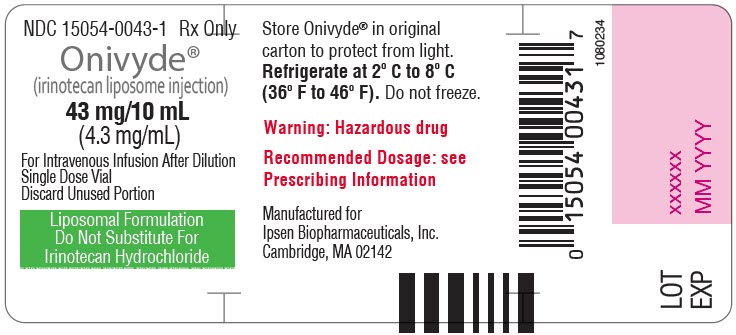
Onivyde IRINOTECAN HYDROCHLORIDE 4.3 mg/mL Injection, Powder, For Solution — NDC 15054-0043-1 (Billing 15054-0043-01)
This is a package of Onivyde IRINOTECAN HYDROCHLORIDE 4.3 mg/mL Injection, Powder, For Solution from Ipsen Biopharmaceuticals, Inc., marketed since Oct 2015 and currently FDA-listed. It is this product's only package size.
NDC database record
One package, one record: these facts belong to NDC 15054-0043-1 alone.
- Record
- FDA NDC Directory package listing · Human prescription drug
- Code segments
- 15054 labeler · 0043 product · 1 package
- Package marketed since
- Oct 22, 2015
- Sample package
- No — commercial package
- Listing certified through
- Dec 31, 2026
- Barcode (UPC)
- 0015054004317
- Medicaid fills, this package
- 1,148 prescriptions in the last four reported quarters
- FDA record last changed
- Jul 24, 2026
Identity & classification
Regulatory identifiers FDA, NLM and CMS codes for this package
Drug-database identifiers Medi-Span GPI and First Databank GCN / HICL / AHFS classification
- GSN (GCN sequence number): 075024
- GCN: 39929
- GPI-14 (Medi-Span): 21550040201820
- HICL (First Databank): 042715
- AHFS class code: 10:00.00.00
- RxCUI (RxNorm): 1719772
Where does this data come from?
- FDA openFDA NDC Directory · synced Oct 1, 2026
- FDA label on DailyMed · label index refreshed Oct 3, 2026
- RxNorm (NLM RxNav) · catalog refreshed Oct 1, 2026
- Medi-Span GPI (licensed)
- First Databank (licensed) · refreshed Oct 1, 2026
RxNorm drug class
This medicine belongs to the Topoisomerase Inhibitor class.
Where does this data come from?
- RxClass (NLM) · catalog refreshed Oct 1, 2026
Clinical
Irinotecan is used alone or in combination with other medications to treat colon or rectal cancer (cancer that begins in the large intestine). Irinotecan is in a class of antineoplastic medications called topoisomerase I inhibitors. It works by stopping the growth of cancer cells.
Read the full MedlinePlus article ↗- Irinotecan hydrochloride injection, including Camptosar, treats metastatic colon or rectum cancer. Onivyde, a different product, treats metastatic pancreatic adenocarcinoma in comb...
- It is given by IV infusion, usually over about 90 minutes, by your care team. The schedule depends on your regimen, so follow what your prescriber sets.
- Diarrhea is the main side effect to take seriously. Keep loperamide on hand as your team directs and start it at the first loose stool. Call your team promptly, especially if it co...
- Nausea, vomiting, belly pain, constipation, low appetite, tiredness, fever, low blood counts, and hair loss are common. Call your team for fever or signs of infection, since low wh...
Patient education
Supplement & herbal interactions
Some supplements/herbs that may interact with Irinotecan Hydrochloride — tap one for details:
Where does this data come from?
- MedlinePlus (NLM) · refreshed Oct 1, 2026
- FDA label on DailyMed · label index refreshed Oct 3, 2026
Ask a licensed pharmacist directly — free, answered by our team.
Pricing
A drug doesn't have one price. Each row is a different public payment system, and none is what you'd pay at the counter — that depends on your insurance. The ⓘ on each row explains what it measures.
| Price system | Per mL | Per package |
|---|---|---|
| Retail pharmacies payNADAC · weekly | Not in the retail survey — common for institutional, discontinued, or low-volume packs. | |
| Medicaid paysCMS SDUD · 12 mo | $243.96 | $2,439.59 / 10 ml |
| Medicare drug plans payPart D · quarterly | No Part D plan price is available for this NDC in our data. | |
| Medicare Part B allowsASP · J9205 | $65.861 / J9205 unit | — |
Where does this data come from?
- CMS NADAC weekly file
- CMS ASP pricing files · refreshed Sep 20, 2026
- CMS Medicaid State Drug Utilization Data · through Q1 2026
- CMS Part D plan pricing files · refreshed Sep 24, 2026
- VA National Acquisition Center price file
Billing & reimbursement
Where does this data come from?
- CMS ASP NDC-HCPCS crosswalk · refreshed Sep 22, 2026
- DMEPDAC NDC-HCPCS crosswalk
- openFDA NSDE billing units · refreshed Sep 7, 2026
Packaging — all sizes for this product
| Package NDC | Description | Marketing start | Marketing end | Status |
|---|---|---|---|---|
| 15054-0043-01 You're viewing this Main listing | 1 VIAL, SINGLE-DOSE in 1 CARTON / 10 mL in 1 VIAL, SINGLE-DOSE | 2015-10-22 | — | Active |
Therapeutic equivalents
| Product | Labeler | Pack | NADAC/unit | TE | Status | Price vs. this |
|---|---|---|---|---|---|---|
| Onivyde 4.3 mg/mLthis 15054-0043-01 | Ipsen | 1 vial | — | — | FDA listed | — |
Where does this data come from?
- FDA openFDA NDC Directory · synced Oct 1, 2026
- FDA Orange Book · refreshed Oct 3, 2026
- CMS NADAC weekly file
Availability & generic status
The FDA lists approved generic versions of this medicine, but that does not always mean a pharmacy can get one today. Patent rules, launch agreements, supply and pricing can affect when generics actually arrive.
Why the date isn’t exact: Generic timing can change because patents may be challenged, settled, licensed, added, removed, or worked around with a narrower label — and FDA approval does not always mean a pharmacy can get the generic today.
🛈 What do these terms mean?
- Patent
- Legal protection listed in the Orange Book that may delay generic approval or launch. Issued by the U.S. Patent & Trademark Office.
- Substance patent
- Covers the active drug molecule itself — the hardest to design around. A generic generally can’t launch until it expires.
- Formulation (product) patent
- Covers a specific formulation or dosage form. A generic can sometimes work around it with a different formulation.
- Method-of-use patent
- A patent covering one specific approved use of the drug — not necessarily the whole molecule. A generic can sometimes launch with a “skinny label” that carves out the protected use and keeps the others.
- Skinny label
- A generic label that omits a still-patented use when the FDA allows it — letting a generic reach the market for the unprotected uses.
- Exclusivity
- FDA-granted marketing protection, separate from patents — e.g. 5-yr new chemical entity, 7-yr orphan drug, or a +6-month pediatric extension.
- Paragraph IV
- A generic applicant’s formal challenge to a listed patent. It can potentially lead to earlier generic entry, but often involves litigation or a settlement.
- RLD / RS
- Reference Listed Drug — the brand product the FDA uses as the reference for generic applications. Reference Standard — the product the FDA expects generics to compare against in bioequivalence testing.
- TE / AB rating
- FDA therapeutic-equivalence rating. An AB rating generally means the FDA considers a generic therapeutically equivalent to — and substitutable for — the brand.
- LOE (loss of exclusivity)
- The latest patent or exclusivity currently listed — the loss-of-exclusivity / latest-listed-protection date shown on this page. Paragraph-IV challenges and settlements can move the real date earlier; FDA approval and a manufacturer’s decision to market can move it later.
Built from the FDA Orange Book. The bars above are scaled to each protection’s expiry; the red LOE marker is the last one to lapse.
| Patent | Type | Use code | Expires |
|---|---|---|---|
| US 9717724 ↗ | Method of use | U-2091 | Jun 12, 2033 |
| US 9492442 ↗ | Method of use | U-1917 | Jun 12, 2033 |
| US 9364473 ↗ | Method of use | U-1856 | Jun 12, 2033 |
| US 12364691 ↗ | Method of use | U-1848 | Jun 12, 2033 |
| US 11369597 ↗ | Method of use | U-1848 | Jun 12, 2033 |
| US 9339497 ↗ | Method of use | U-1848 | Jun 12, 2033 |
| US 9452162 ↗ | Method of use | U-1899 | Jun 12, 2033 |
| US 9492442 ↗ | Method of use | U-1899 | Jun 12, 2033 |
| US 9717724 ↗ | Method of use | U-1848 | Jun 12, 2033 |
| US 9492442 ↗ | Method of use | U-1848 | Jun 12, 2033 |
| US 11344552 ↗ | Method of use | U-3824 | Aug 19, 2036 |
| US 10980795 ↗ | Method of use | U-1848 | Jun 12, 2033 |
| US 8147867 ↗ | Drug substance | — | Aug 29, 2028 |
| US 12059497 ↗ | Drug product | — | Oct 15, 2036 |
| US 10456360 ↗ | Drug product | — | Oct 15, 2036 |
| US 10993914 ↗ | Drug product | — | Oct 15, 2036 |
| US 8329213 ↗ | Drug substance | — | Jan 6, 2027 |
| Code | What it grants | Expires |
|---|---|---|
| I-932 | New indication (3-year) | Feb 13, 2027 |
| ODE-463 | Orphan Drug Exclusivity (7-year) | Feb 13, 2031 |
Is there a generic version of ONIVYDE 43 MG/10 ML VIAL?
The FDA approved a generic — why can’t I get it at my pharmacy yet?
Why do different websites show different generic release dates?
What does “FDA listed” mean?
What does a patent or protection date mean here?
What does “current Orange Book estimate” mean?
Can a generic come out before the last patent expires?
Can a generic come out after the listed dates?
What is the difference between patents and exclusivity?
Why are there multiple patent dates?
Where does this data come from?
- FDA Orange Book · refreshed Oct 3, 2026
Inactive Ingredients / Excipients
Inactive ingredients, also called excipients, are components of the drug product other than the active ingredient. They may include fillers, dyes, coatings, preservatives, flavors, or other formulation ingredients.
💡 Tap an ingredient (hover on desktop) to see what it is and why it’s used.
-
UNII 043IPI2M0K
A phospholipid derived from natural sources, commonly used as an emulsifier and surfactant in medicines. It helps mix oil and water-based ingredients together and is often used in injectable formulations and lipid-based drug delivery systems.
-
UNII 97C5T2UQ7J
Cholesterol is a fatty substance found naturally in animal tissues. In medications, it's used as an ingredient in liposomal formulations and lipid-based drug delivery systems to help encapsulate and stabilize active drugs for better absorption.
-
UNII RWW266YE9I
A buffering agent derived from piperazine chemistry. It helps maintain stable pH levels in liquid medicines, particularly in injectable or ophthalmic formulations, preventing degradation of active ingredients.
-
UNII 451W47IQ8X
Sodium chloride is common table salt. It's used in medicines as a buffer to maintain proper pH, as a filler to add bulk, or to adjust the osmotic balance in liquid formulations.
-
UNII 3L6NN8ZZKU
A synthetic lipid compound derived from polyethylene glycol and phospholipids. It functions as an emulsifier and solubilizer in medications, helping to stabilize and distribute oil and water-based ingredients evenly throughout the formulation.
5 inactive ingredients listed in the exact product block matched to this NDC.
Where does this data come from?
ingredient classCode="IACT" elements from the exact product block matched by this NDC. Label-section narrative from DailyMed / the openFDA label index is shown separately when available.- FDA label on DailyMed · label index refreshed Oct 3, 2026
- FDA openFDA NDC Directory · synced Oct 1, 2026
Inactive ingredient FAQ
Are inactive ingredients the same for every manufacturer?
Why might an inactive ingredient be missing?
Can inactive ingredients matter?
Manufacturer & labeler
More NDCs from Ipsen Biopharmaceuticals, Inc. labeler code 15054
- Sohonos palovarotene 1 mg Capsule NDC 15054-0010-1
- Sohonos palovarotene 1.5 mg Capsule NDC 15054-0015-1
- Sohonos palovarotene 2.5 mg Capsule NDC 15054-0025-1
- Sohonos palovarotene 5 mg Capsule NDC 15054-0050-1
- Iqirvo elafibranor 80 mg Tablet, Film Coated NDC 15054-0080-1
- Sohonos palovarotene 10 mg Capsule NDC 15054-0100-1
- Dysport Botulinum Toxin Type A 500 U Injection, Powder, Lyophilized, For Solution NDC 15054-0500-1
- Dysport Botulinum Toxin Type A 300 U Injection, Powder, Lyophilized, For Solution NDC 15054-0530-6
- Increlex mecasermin 40 mg/4mL Injection, Solution NDC 15054-1040-5
Where does this data come from?
- FDA openFDA NDC Directory · synced Oct 1, 2026
- Drugs@FDA
Full prescribing information FDA SPL
🚨 Boxed Warning ▾
WARNING: SEVERE NEUTROPENIA AND SEVERE DIARRHEA Neutropenia Severe and life-threatening neutropenia, including fatal neutropenic sepsis and fatal neutropenic fever, has occurred in patients receiving ONIVYDE in combination with oxaliplatin, fluorouracil and leucovorin and in combination with fluorouracil and leucovorin. Withhold ONIVYDE for absolute neutrophil count below 1500/mm 3 or neutropenic fever. Monitor blood cell counts periodically during treatment [see Dosage and Administration (2.2) and Warnings and Precautions (5.1) ].
Diarrhea Severe and life-threatening diarrhea has occurred in patients receiving ONIVYDE in combination with oxaliplatin, fluorouracil and leucovorin and in combination with fluorouracil and leucovorin. Do not administer ONIVYDE to patients with bowel obstruction. Withhold ONIVYDE for diarrhea of Grade 2-4 severity.
Administer loperamide for late diarrhea of any severity. Administer atropine, if not contraindicated, for early diarrhea of any severity [see Dosage and Administration (2.2) and Warnings and Precautions (5.2) ]. WARNING: SEVERE NEUTROPENIA and SEVERE DIARRHEA See full prescribing information for complete boxed warning Neutropenia Severe or life-threatening neutropenia , including fatal neutropenic sepsis and fatal neutropenic fever, has occurred in patients receiving ONIVYDE in combination with oxaliplatin, fluorouracil and leucovorin and in combination with fluorouracil and leucovorin.
Withhold ONIVYDE for absolute neutrophil count below 1500/mm 3 or neutropenic fever. Monitor blood cell counts periodically during treatment ( 2.2 ), ( 5.1 ). Diarrhea Severe and life-threatening diarrhea has occurred in patients receiving ONIVYDE in combination with oxaliplatin, fluorouracil and leucovorin and in combination with fluorouracil and leucovorin.
Do not administer ONIVYDE to patients with bowel obstruction. Withhold ONIVYDE for diarrhea of Grade 2-4 severity. Administer loperamide for late diarrhea of any severity.
Administer atropine, if not contraindicated, for early diarrhea of any severity ( 2.2 ), ( 5.2 ).
🎯 Indications and Usage ▾
1 INDICATIONS AND USAGE ONIVYDE is indicated, in combination with oxaliplatin, fluorouracil and leucovorin for the first-line treatment of adult patients with metastatic pancreatic adenocarcinoma. ONIVYDE is indicated, in combination with fluorouracil and leucovorin, for the treatment of adult patients with metastatic pancreatic adenocarcinoma after disease progression following gemcitabine-based therapy. Limitations of Use: ONIVYDE is not indicated as a single agent for the treatment of patients with metastatic pancreatic adenocarcinoma. [see Clinical Studies (14) ] .
ONIVYDE is a topoisomerase inhibitor indicated: in combination with oxaliplatin, fluorouracil and leucovorin, for the first-line treatment of adult patients with metastatic pancreatic adenocarcinoma, ( 1 ) in combination with fluorouracil and leucovorin, for the treatment of adult patients with metastatic pancreatic adenocarcinoma after disease progression following gemcitabine-based therapy. ( 1 ) Limitation of Use: ONIVYDE is not indicated as a single agent for the treatment of patients with metastatic pancreatic adenocarcinoma.
( 1 )
⏱️ Dosage and Administration ▾
2 DOSAGE AND ADMINISTRATION Do not substitute ONIVYDE for other drugs containing irinotecan HCl. ( 2.1 ) ONIVYDE in combination with oxaliplatin, fluorouracil and leucovorin: Recommended dose of ONIVYDE is 50 mg/m 2 intravenous infusion over 90 minutes every two weeks. ( 2.2 ) Recommended starting dose of ONIVYDE in patients homozygous for UGT1A1*28 is 50 mg/m 2 every two weeks.
( 2.2 ) There is no recommended dose of ONIVYDE for patients with serum bilirubin above the upper limit of normal. ( 2.2 ) ONIVYDE in combination with fluorouracil and leucovorin: Recommended dose of ONIVYDE is 70 mg/m 2 intravenous infusion over 90 minutes every two weeks. ( 2.2 ) Recommended starting dose of ONIVYDE in patients homozygous for UGT1A1*28 is 50 mg/m 2 every two weeks.
( 2.2 ) There is no recommended dose of ONIVYDE for patients with serum bilirubin above the upper limit of normal. ( 2.2 ) Premedicate with a corticosteroid and an anti-emetic 30 minutes prior to ONIVYDE. ( 2.2 )
2.1Important Use Information DO NOT SUBSTITUTE ONIVYDE for other drugs containing irinotecan HCl.
2.2Recommended Dosage In combination with oxaliplatin, fluorouracil and leucovorin for the first-line treatment of patients with metastatic pancreatic adenocarcinoma Administer ONIVYDE prior to oxaliplatin, fluorouracil and leucovorin [see Clinical Studies (14) ] . The recommended dosage of ONIVYDE regardless of UGT1A1*28 allele genotype is 50 mg/m 2 administered by intravenous infusion over 90 minutes every 2 weeks. There is no recommended dosage of ONIVYDE for patients with serum bilirubin above the upper limit of normal [see Adverse Reactions (6.1) and Clinical Studies (14) ].
In combination with fluorouracil and leucovorin for the treatment of patients with metastatic pancreatic adenocarcinoma after disease progression following gemcitabine-based therapy Administer ONIVYDE prior to fluorouracil and leucovorin [see Clinical Studies (14) ] . The recommended dosage of ONIVYDE is 70 mg/m 2 administered by intravenous infusion over 90 minutes every 2 weeks. The recommended starting dose of ONIVYDE in patients known to be homozygous for the UGT1A1*28 allele is 50 mg/m 2 administered by intravenous infusion over 90 minutes.
Increase the dose of ONIVYDE to 70 mg/m 2 as tolerated in subsequent cycles. There is no recommended dosage of ONIVYDE for patients with serum bilirubin above the upper limit of normal [see Adverse Reactions (6.1) and Clinical Studies (14) ]. Premedication Administer a corticosteroid and an anti-emetic 30 minutes prior to each ONIVYDE infusion.
2.3Dosage Modifications for Adverse Reactions Recommended dosage modifications for ONIVYDE are in Table 1 and Table 2. Table 1 Recommended Dosage Modifications for ONIVYDE in combination with oxaliplatin, fluorouracil and leucovorin Toxicity Toxicity grading per NCI CTCAE v5.0. Occurrence ONIVYDE adjustment in patients receiving 50mg/m 2 Grade 3 or 4 Adverse reactions No dosage modification is necessary for asthenia, alopecia and Grade 3 anorexia.
Withhold ONIVYDE Upon recovery to ≤ Grade 1 Do not resume until the absolute neutrophil count is ≥2000/mm 3 (2×10 9 /L) and the platelet count is ≥100,000/mm 3 (100×10 9 /L). , For Grade ≥3 nausea and vomiting, reduce dose only if occurs despite optimal anti-emetic therapy. , Refer to the Full Prescribing Information of fluorouracil and oxaliplatin. When ONIVYDE dose is reduced for adverse reactions, reduce fluorouracil (FU) and oxaliplatin doses: for first occurrence, reduce dose to 80% of original dose; for second occurrence, reduce dose to 65% of original dose; for third occurrence, reduce dose to 50% of original dose; discontinue therapy for fourth occurrence.
Oxaliplatin may be discontinued if not well tolerated and treatment with ONIVYDE + FU/LV can continue . Maintain original dose level of leucovorin for first, second and third occurrence of toxicity. , resume ONIVYDE at: First 40 mg/m 2 Second 32.5 mg/m 2 Third 25 mg/m 2 Fourth Discontinue ONIVYDE Grade 3… [Excerpted — this section continues on DailyMed.]
💊 Dosage Forms and Strengths ▾
3 DOSAGE FORMS AND STRENGTHS Injection: 43 mg/10 mL irinotecan free base as a white to slightly yellow, opaque, liposomal dispersion in a single-dose vial. Injection: 43 mg/10 mL (4.3 mg/mL) single dose vial ( 3 )
⛔ Contraindications ▾
4 CONTRAINDICATIONS ONIVYDE is contraindicated in patients who have experienced a severe hypersensitivity reaction or anaphylaxis to ONIVYDE or irinotecan HCl. [see Warnings and Precautions (5.4) , Adverse Reactions (6.2) ]. Severe hypersensitivity reaction to ONIVYDE or irinotecan HCl. ( 4 , 5.4 )
⚠️ Warnings and Cautions ▾
5 WARNINGS AND PRECAUTIONS Interstitial lung disease (ILD): Fatal ILD has occurred in patients receiving irinotecan including ONIVYDE. Discontinue ONIVYDE if ILD is diagnosed. ( 5.3 ) Severe hypersensitivity reaction: Permanently discontinue ONIVYDE for severe hypersensitivity reactions.
( 5.4 , 4 ) Embryo-fetal toxicity: Can cause fetal harm. Advise females of reproductive potential of the potential risk to a fetus and to use effective contraception. ( 5.5 , 8.1 , 8.3 )
5.1Severe Neutropenia ONIVYDE can cause severe or life-threatening neutropenia and fatal neutropenic sepsis. In NAPOLI 3, Grade 3 and 4 neutropenia occurred in 26% of patients receiving ONIVYDE in combination with oxaliplatin, fluorouracil, and leucovorin (NALIRIFOX) and fatal neutropenic fever in 0.3% of patients [see Adverse Reactions (6.1) ]. In NAPOLI-1, Grade 3 and 4 neutropenia occurred in 20% of patients receiving ONIVYDE in combination with fluorouracil and leucovorin (ONIVYDE/FU/LV).
Neutropenic sepsis occurred in 3% and fatal neutropenic sepsis in 0.8% [see Adverse Reactions (6.1) ]. In NAPOLI 3, the incidence of Grade 3 or 4 neutropenia was similar among Asian patients [6 of 20 (30%)] compared to White patients [76 of 289 (26%)] receiving ONIVYDE in combination with oxaliplatin, fluorouracil, and leucovorin. Neutropenic fever was reported in 5% of Asian patients (1 of 20) compared to 2.3% of White patients (7 of 306).
In NAPOLI-1, the incidence of Grade 3 or 4 neutropenia was higher among Asian patients [18 of 33 (55%)] compared to White patients [13 of 73 (18%)] receiving ONIVYDE/FU/LV. Neutropenic fever/neutropenic sepsis was reported in 6% of Asian patients compared to 1% of White patients [see Clinical Pharmacology (12.3) ]. Monitor complete blood cell counts on Days 1 and 8 of every cycle and more frequently if clinically indicated.
Withhold ONIVYDE if the absolute neutrophil count (ANC) is below 1500/mm 3 or if neutropenic fever occurs. Resume ONIVYDE when the ANC is 1500/mm 3 or above. Reduce ONIVYDE dose for Grade 3-4 neutropenia or neutropenic fever following recovery in subsequent cycles [see Dosage and Administration (2.2) ] .
5.2Severe Diarrhea ONIVYDE can cause severe and life-threatening diarrhea. Do not administer ONIVYDE to patients with a bowel obstruction. Severe or life-threatening diarrhea can follow one of two patterns: late onset diarrhea (onset more than 24 hours following chemotherapy) and early onset diarrhea (onset within 24 hours of chemotherapy, sometimes occurring with other symptoms of cholinergic reaction) [see Adverse Reactions (6.1) ] .
An individual patient may experience both early and late-onset diarrhea. In NAPOLI 3, Grade 3 and 4 diarrhea (early and late-onset) occurred in 20% receiving ONIVYDE in combination with oxaliplatin, fluorouracil, and leucovorin (NALIRIFOX). In NAPOLI-1, Grade 3 or 4 diarrhea occurred in 13% receiving ONIVYDE/FU/LV.
The incidence of Grade 3 or 4 late onset diarrhea was 9% in patients receiving ONIVYDE/FU/LV. The incidence of Grade 3 or 4 early onset diarrhea was 3% in patients receiving ONIVYDE/FU/LV. Of patients receiving ONIVYDE/FU/LV in NAPOLI-1, 34% received loperamide for late-onset diarrhea and 26% received atropine for early-onset diarrhea.
To reduce the risk of severe diarrhea, patients should stop lactose-containing products, eat a low-fat diet and maintain hydration during treatment with ONIVYDE. Withhold ONIVYDE for Grade 2-4 diarrhea. Administer intravenous or subcutaneous atropine 0.25 to 1 mg (unless clinically contraindicated) for early onset diarrhea of any severity.
Initiate loperamide for late onset diarrhea of any severity. Local institutional guidelines should be followed for the treatment of diarrhea that does not improve within 48 hours and may include the addition of diphenoxylate hydrochloride plus atropine sulfate or octreotide. Following recovery to Grade 1 diarrhea, resume ONIVYDE at a reduced dose [see Dosage and Administration (2.3) ] .
5.3Interstitial L… [Excerpted — this section continues on DailyMed.]
🤒 Adverse Reactions ▾
6 ADVERSE REACTIONS The following adverse drug reactions are discussed in greater detail in other sections of the label: Severe Neutropenia [see Warnings and Precautions (5.1) ] Severe Diarrhea [see Warnings and Precautions (5.2) ] Interstitial Lung Disease [see Warnings and Precautions (5.3) ] Severe Hypersensitivity Reactions [see Warnings and Precautions (5.4) ] The most common adverse reactions (reported in ≥ 20% of patients) were for: ONIVYDE in combination with oxaliplatin, fluorouracil and leucovorin: diarrhea, fatigue, nausea, vomiting, decreased appetite, abdominal pain, mucosal inflammation, constipation, and decreased weight.
The most common laboratory abnormalities (≥ 10% Grade 3 or 4) were decreased neutrophils, decreased potassium, decreased lymphocytes, and decreased hemoglobin. ( 6.1 ) ONIVYDE in combination with fluorouracil and leucovorin: diarrhea, fatigue/asthenia, vomiting, nausea, decreased appetite, stomatitis, and pyrexia. The most common laboratory abnormalities (≥ 10% Grade 3 or 4) were lymphopenia and neutropenia.
( 6.1 ) To report SUSPECTED ADVERSE REACTIONS, contact Ipsen Biopharmaceuticals, Inc.at 1-855-463-5127 or FDA at 1-800-FDA-1088 or www.fda.gov/medwatch .
6.1Clinical Trials Experience Because clinical trials are conducted under widely varying conditions, adverse reaction rates observed in clinical trials of ONIVYDE cannot be directly compared to rates in clinical trials of other drugs and may not reflect the rates observed in practice. Pancreatic Adenocarcinoma In Combination with Oxaliplatin, Fluorouracil and Leucovorin for First-Line Treatment The safety of ONIVYDE in patients with metastatic pancreatic adenocarcinoma who had not previously received chemotherapy was evaluated in NAPOLI 3 [see Clinical Studies (14) ] .
Patients received ONIVYDE 50 mg/m 2 in combination with oxaliplatin 60 mg/m 2 , leucovorin 400 mg/m 2 and fluorouracil 2400 mg/m 2 over 46 hours every 2 weeks (NALIRIFOX; N=383) or nab-paclitaxel 125 mg/m 2 over 35 minutes and gemcitabine 1000 mg/m 2 over 30 minutes on Day 1, 8 and 15 of each 28-day cycle (Gem+NabP; N=387). The median duration of exposure to ONIVYDE in combination with oxaliplatin, fluorouracil, and leucovorin was 24 weeks (range: 0 to 101 weeks). Serious adverse reactions occurred in 54% of patients who received ONIVYDE in combination with oxaliplatin, fluorouracil and leucovorin.
Serious adverse reactions in ≥2% of patients included infections including COVID-19 (14%), diarrhea (9%), vomiting (6%), nausea (4.9%), fatigue (3.8%), embolism (3.5%), gastrointestinal tract stenosis or obstruction (3.5%), hemorrhage (3%), abdominal pain (2.7%), cerebrovascular accident (2.7%), dehydration (2.7%), liver function test abnormalities (2.2%), and pyrexia (2.2%). Fatal adverse reactions occurred in 6% of patients who received ONIVYDE in combination with oxaliplatin, fluorouracil and leucovorin including cerebrovascular accident (1.1%), hemorrhage (0.5%), pneumonia (0.5%), sepsis (0.5%) and sudden death (0.5%).
Permanent discontinuation of ONIVYDE due to an adverse reaction occurred in 17% of patients. Adverse reactions which resulted in permanent discontinuation of ONIVYDE in ≥1% of patients included neutropenia, thrombocytopenia, diarrhea, fatigue, infections and cerebrovascular accident. Dosage reduction of ONIVYDE due to an adverse reaction occurred in 52% of patients.
Adverse reactions which required dosage reduction in ≥1% of patients included anemia, decreased appetite, diarrhea, fatigue, febrile neutropenia, hypokalemia, liver function test abnormalities, nausea, mucosal inflammation, neutropenia, peripheral neuropathy, vomiting, thrombocytopenia and weight decreased. Dosage interruptions of ONIVYDE due to an adverse reaction occurred in 1.9% of patients. Adverse reactions which required dosage interruption in ≥0.5% of patients included hypersensitivity and infusion related reaction.
The most common adverse reactions (≥20% with a difference between arms of ≥ 5… [Excerpted — this section continues on DailyMed.]
🔄 Drug Interactions ▾
7 DRUG INTERACTIONS Strong CYP3A4 Inducers: Avoid the use of strong CYP3A4 inducers if possible. Substitute non-enzyme inducing therapies at least 2 weeks prior to initiation of ONIVYDE. ( 7.1 ) Strong CYP3A4 Inhibitors: Avoid the use of strong CYP3A4 or UGT1A1 inhibitors, if possible; discontinue strong CYP3A4 inhibitors at least 1 week prior to starting therapy. ( 7.2 )
7.1Strong CYP3A4 Inducers Following administration of non-liposomal irinotecan (i.e., irinotecan HCl), exposure to irinotecan or its active metabolite, SN-38, is substantially reduced in adult and pediatric patients concomitantly receiving the CYP3A4 enzyme-inducing anticonvulsants phenytoin and strong CYP3A4 inducers. Avoid the use of strong CYP3A4 inducers (e.g., rifampin, phenytoin, carbamazepine, rifabutin, rifapentine, phenobarbital, St. John's wort) if possible.
Substitute non-enzyme inducing therapies at least 2 weeks prior to initiation of ONIVYDE therapy [see Clinical Pharmacology (12.3) ] .
7.2Strong CYP3A4 or UGT1A1 Inhibitors Following administration of non-liposomal irinotecan (i.e., irinotecan HCl), patients receiving concomitant ketoconazole, a CYP3A4 and UGT1A1 inhibitor, have increased exposure to irinotecan and its active metabolite SN-38. Co-administration of ONIVYDE with other inhibitors of CYP3A4 (e.g., clarithromycin, indinavir, itraconazole, lopinavir, nefazodone, nelfinavir, ritonavir, saquinavir, telaprevir, voriconazole) or UGT1A1 (e.g., atazanavir, gemfibrozil, indinavir) may increase systemic exposure to irinotecan or SN-38.
Avoid the use of strong CYP3A4 or UGT1A1 inhibitors if possible. Discontinue strong CYP3A4 inhibitors at least 1 week prior to starting ONIVYDE therapy [see Clinical Pharmacology (12.3) ] .
👥 Use in Specific Populations ▾
8 USE IN SPECIFIC POPULATIONS Lactation: Do not breastfeed. ( 8.2 )
8.1Pregnancy Risk Summary Based on animal data with irinotecan HCl and the mechanism of action of ONIVYDE, ONIVYDE can cause fetal harm when administered to a pregnant woman [see Clinical Pharmacology (12.1) ] . There are no available data in pregnant women. Embryotoxicity and teratogenicity were observed following treatment with irinotecan HCl, at doses resulting in irinotecan exposures lower than those achieved with ONIVYDE 70 mg/m 2 in humans, administered to pregnant rats and rabbits during organogenesis [see Data ] .
Advise pregnant women of the potential risk to a fetus. In the U.S. general population, the estimated background risk of major birth defects and miscarriage in clinically recognized pregnancies is 2-4% and 15-20%, respectively. Data Animal Data No animal studies have been conducted to evaluate the effect of irinotecan liposome on reproduction and fetal development; however, studies have been conducted with irinotecan HCl.
Irinotecan crosses the placenta of rats following intravenous administration. Intravenous administration of irinotecan at a dose of 6 mg/kg/day to rats and rabbits during the period of organogenesis resulted in increased post-implantation loss and decreased numbers of live fetuses. In separate studies in rats, this dose resulted in an irinotecan exposure of approximately 0.002 times the exposure of irinotecan based on area under the curve (AUC) in patients administered ONIVYDE at the 70 mg/m 2 dose.
Administration of irinotecan HCl resulted in structural abnormalities and growth delays in rats at doses greater than 1.2 mg/kg/day (approximately 0.0002 times the clinical exposure to irinotecan in ONIVYDE based on AUC). Teratogenic effects included a variety of external, visceral, and skeletal abnormalities. Irinotecan HCl administered to rat dams for the period following organogenesis through weaning at doses of 6 mg/kg/day caused decreased learning ability and decreased female body weights in the offspring.
8.2Lactation Risk Summary There is no information regarding the presence of irinotecan liposome, irinotecan, or SN-38 (an active metabolite of irinotecan) in human milk, or the effects on the breastfed infant or on milk production. Irinotecan is present in rat milk [see Data ]. Because of the potential for serious adverse reactions in breastfed infants from ONIVYDE, advise a nursing woman not to breastfeed during treatment with ONIVYDE and for one month after the last dose.
Data Radioactivity appeared in rat milk within 5 minutes of intravenous administration of radiolabeled irinotecan HCl and was concentrated up to 65-fold at 4 hours after administration relative to plasma concentrations.
8.3Females and Males of Reproductive Potential Contraception Females ONIVYDE can cause fetal harm when administered to a pregnant woman [see Use in Specific Populations (8.1) ]. Advise females of reproductive potential to use effective contraception during treatment with ONIVYDE and for seven months after the last dose. Males Because of the potential for genotoxicity, advise males with female partners of reproductive potential to use condoms during treatment with ONIVYDE and for four months after the last dose [see Nonclinical Toxicology (13.1) ].
8.4Pediatric Use Safety and effectiveness of ONIVYDE have not been established in pediatric patients.
8.5Geriatric Use Of the 634 patients who received ONIVYDE as a single agent, in combination with FU and leucovorin or in combination with oxaliplatin, FU and leucovorin in NAPOLI-1 and NAPOLI 3, 49% were ≥ 65 years old and 10% were ≥ 75 years old. No overall differences in safety and effectiveness were observed between these patients and younger patients.
🤰 Pregnancy ▾
8.1Pregnancy Risk Summary Based on animal data with irinotecan HCl and the mechanism of action of ONIVYDE, ONIVYDE can cause fetal harm when administered to a pregnant woman [see Clinical Pharmacology (12.1) ] . There are no available data in pregnant women. Embryotoxicity and teratogenicity were observed following treatment with irinotecan HCl, at doses resulting in irinotecan exposures lower than those achieved with ONIVYDE 70 mg/m 2 in humans, administered to pregnant rats and rabbits during organogenesis [see Data ] .
Advise pregnant women of the potential risk to a fetus. In the U.S. general population, the estimated background risk of major birth defects and miscarriage in clinically recognized pregnancies is 2-4% and 15-20%, respectively. Data Animal Data No animal studies have been conducted to evaluate the effect of irinotecan liposome on reproduction and fetal development; however, studies have been conducted with irinotecan HCl.
Irinotecan crosses the placenta of rats following intravenous administration. Intravenous administration of irinotecan at a dose of 6 mg/kg/day to rats and rabbits during the period of organogenesis resulted in increased post-implantation loss and decreased numbers of live fetuses. In separate studies in rats, this dose resulted in an irinotecan exposure of approximately 0.002 times the exposure of irinotecan based on area under the curve (AUC) in patients administered ONIVYDE at the 70 mg/m 2 dose.
Administration of irinotecan HCl resulted in structural abnormalities and growth delays in rats at doses greater than 1.2 mg/kg/day (approximately 0.0002 times the clinical exposure to irinotecan in ONIVYDE based on AUC). Teratogenic effects included a variety of external, visceral, and skeletal abnormalities. Irinotecan HCl administered to rat dams for the period following organogenesis through weaning at doses of 6 mg/kg/day caused decreased learning ability and decreased female body weights in the offspring.
🧒 Pediatric Use ▾
8.4Pediatric Use Safety and effectiveness of ONIVYDE have not been established in pediatric patients.
🧓 Geriatric Use ▾
8.5Geriatric Use Of the 634 patients who received ONIVYDE as a single agent, in combination with FU and leucovorin or in combination with oxaliplatin, FU and leucovorin in NAPOLI-1 and NAPOLI 3, 49% were ≥ 65 years old and 10% were ≥ 75 years old. No overall differences in safety and effectiveness were observed between these patients and younger patients.
🆘 Overdosage ▾
10 OVERDOSAGE There are no treatment interventions known to be effective for management of overdosage of ONIVYDE.
🧬 Clinical Pharmacology ▾
12 CLINICAL PHARMACOLOGY
12.1Mechanism of Action Irinotecan liposome injection is a topoisomerase 1 inhibitor encapsulated in a lipid bilayer vesicle or liposome. Topoisomerase 1 relieves torsional strain in DNA by inducing single-strand breaks. Irinotecan and its active metabolite SN-38 bind reversibly to the topoisomerase 1-DNA complex and prevent re-ligation of the single-strand breaks, leading to exposure time-dependent double-strand DNA damage and cell death.
In mice bearing human tumor xenografts, irinotecan liposome administered at irinotecan HCl-equivalent doses 5-fold lower than irinotecan HCl achieved similar intratumoral exposure of SN-38.
12.3Pharmacokinetics The plasma pharmacokinetics of total irinotecan and total SN-38 were evaluated in patients with cancer who received ONIVYDE, as a single agent or as part of combination chemotherapy, at doses between 35 mg/m 2 and 155 mg/m 2 and concentration proportional to dose was observed. The pharmacokinetic parameters of total irinotecan and total SN-38 following the administration of ONIVYDE 70 mg/m 2 as a single agent or part of combination chemotherapy are presented in Table 7. Table 7 Summary of Geometric Mean (CV) Total Irinotecan and Total SN-38 Dose (mg/m 2 ) Descriptive Statistics Total Irinotecan Total SN-38 C max [µg/mL] AUC SS [day∙µg/mL] t 1/2 [day] V [L] C max [ng/mL] AUC SS [day∙ng/mL] V [L] AUC SS : Area under the plasma concentration curve at steady-state t 1/2 : Terminal elimination half-life V: Volume of distribution 50 Geometric Mean 25.1 37.8 1.93 3.63 2.09 12.1
3.46CV (%) 18.5 73.6 14 33.5 42.1 46.6 35.5 70 Geometric Mean 30.8 50.4 1.87 4.23 2.64 14.7
4.06CV (%) 19.7 75.3 26.4 28.1 64.5 58
29.4Distribution Direct measurement of irinotecan liposome showed that 95% of irinotecan remains liposome -encapsulated, and the ratios between total and encapsulated forms did not change with time from 0 to 170 hours post-dose. The mean volume of distribution is summarized in Table 7. Plasma protein binding is <0.44% of the total irinotecan in ONIVYDE.
Elimination Metabolism The metabolism of irinotecan liposome has not been evaluated. Irinotecan is subject to extensive metabolic conversion by various enzyme systems, including carboxylesterases to form the active metabolite SN-38, and UGT1A1 mediating glucuronidation of SN-38 to form the inactive glucuronide metabolite SN-38G. Irinotecan can also undergo CYP3A4-mediated oxidative metabolism to several inactive oxidation products, one of which can be hydrolyzed by carboxylesterase to release SN-38.
In the population PK analysis of irinotecan liposome, UGT1A1*28 7/7 homozygous status (10.6%) had no effect on SN-38 clearance compared with patients not homozygous for UGT1A1*28 7/7. Excretion The disposition of ONIVYDE has not been elucidated in humans. Following administration of irinotecan HCl, the urinary excretion of irinotecan is 11 to 20%; SN-38, <1%; and SN-38 glucuronide, 3%.
The cumulative biliary and urinary excretion of irinotecan and its metabolites (SN-38 and SN-38 glucuronide), over a period of 48 hours following administration of irinotecan HCl in two patients, ranged from approximately 25% (100 mg/m 2 ) to 50% (300 mg/m 2 ). Specific Populations Age, Sex, Ethnicity, Renal and Hepatic Impairment: The population pharmacokinetic analyses suggest that age (20 to 87 years) and BSA (1.15 to 2.88 m 2 ) had no clinically meaningful effect on the exposure of irinotecan and SN-38. Irinotecan and SN-38 AUC in female patients were 28% and 32% higher, respectively, than those in male patients.
Irinotecan AUC in patients of Asian ethnicity were 32% lower than that in non-Asian patients. The exposures of irinotecan and SN-38 in patients with mild or moderate renal impairment were comparable to patients with normal renal function after adjusting for BSA. The exposures of irinotecan and SN-38 in patients with mild hepatic impairment (based on NCI score) were comparable to patients with normal hepatic function.
Ther… [Excerpted — this section continues on DailyMed.]
🧬 Mechanism of Action ▾
12.1Mechanism of Action Irinotecan liposome injection is a topoisomerase 1 inhibitor encapsulated in a lipid bilayer vesicle or liposome. Topoisomerase 1 relieves torsional strain in DNA by inducing single-strand breaks. Irinotecan and its active metabolite SN-38 bind reversibly to the topoisomerase 1-DNA complex and prevent re-ligation of the single-strand breaks, leading to exposure time-dependent double-strand DNA damage and cell death.
In mice bearing human tumor xenografts, irinotecan liposome administered at irinotecan HCl-equivalent doses 5-fold lower than irinotecan HCl achieved similar intratumoral exposure of SN-38.
📦 How Supplied / Storage and Handling ▾
16 HOW SUPPLIED/STORAGE AND HANDLING How Supplied ONIVYDE is available in a single-dose vial containing 43 mg irinotecan free base at a concentration of 4.3 mg/mL. NDC: 15054-0043-1 Storage and Handling Store ONIVYDE at 2ºC to 8ºC (36°F to 46°F). Do NOT freeze. Protect from light. ONIVYDE is a hazardous drug. Follow applicable special handling and disposal procedures. 1
📦 Storage and Handling ▾
Storage and Handling Store ONIVYDE at 2ºC to 8ºC (36°F to 46°F). Do NOT freeze. Protect from light. ONIVYDE is a hazardous drug. Follow applicable special handling and disposal procedures. 1
📋 Description ▾
11 DESCRIPTION ONIVYDE is formulated with irinotecan hydrochloride trihydrate, a topoisomerase inhibitor, into a liposomal dispersion for intravenous use. The chemical name of irinotecan hydrochloride trihydrate is (S)-4,11-diethyl-3,4,12,14-tetrahydro-4-hydroxy-3,14-dioxo1H-pyrano[3',4':6,7]-indolizino[1,2-b]quinolin-9-yl-[1,4'bipiperidine]-1'-carboxylate, monohydrochloride, trihydrate. The empirical formula is C 33 H 38 N 4 O 6 ∙HCl∙3H 2 O and the molecular weight is 677.19 g/mole.
The molecular structure is: ONIVYDE is a sterile, white to slightly yellow opaque isotonic liposomal dispersion. Each 10 mL single-dose vial contains 43 mg irinotecan free base at a concentration of 4.3 mg/mL. The liposome is a unilamellar lipid bilayer vesicle, approximately 110 nm in diameter, which encapsulates an aqueous space containing irinotecan in a gelated or precipitated state as the sucrose octasulfate salt.
The vesicle is composed of 1,2-distearoyl-sn-glycero-3-phosphocholine (DSPC) 6.81 mg/mL, cholesterol 2.22 mg/mL, and methoxy-terminated polyethylene glycol (MW 2000)-distearoylphosphatidyl ethanolamine (MPEG-2000-DSPE) 0.12 mg/mL. Each mL also contains 2-[4-(2-hydroxyethyl) piperazin-1-yl]ethanesulfonic acid (HEPES) as a buffer 4.05 mg/mL and sodium chloride as an isotonicity reagent 8.42 mg/mL. Chemical Structure
💬 Information for Patients ▾
17 PATIENT COUNSELING INFORMATION Advise patients of the following: Severe Neutropenia Advise patients of the risk of neutropenia leading to severe and life-threatening infections and the need for monitoring of blood counts. Instruct patients to contact their healthcare provider immediately if experiencing signs of infection, such as fever, chills, dizziness, or shortness of breath [see Warnings and Precautions (5.1) ] . Severe Diarrhea Inform patients of the risk of severe and life-threatening diarrhea.
Advise patients to stop lactose-containing products, maintain hydration, and eat frequent small meals with a low-fat diet. Advise patients to contact their healthcare provider if they experience persistent vomiting or diarrhea; black or bloody stools; or symptoms of dehydration such as lightheadedness, dizziness, or faintness [see Warnings and Precautions (5.2) ] . Interstitial Lung Disease Inform patients of the potential risk of ILD.
Advise patients to contact their healthcare provider as soon as possible for new onset cough or dyspnea [see Interstitial Lung Disease (5.3) ]. Hypersensitivity to irinotecan HCl or ONIVYDE Advise patients of the potential risk of severe hypersensitivity and that ONIVYDE is contraindicated in patients with a history of severe allergic reactions with irinotecan HCl or ONIVYDE. Instruct patients to seek immediate medical attention for signs of severe hypersensitivity reaction such as chest tightness; shortness of breath; wheezing; dizziness or faintness; or swelling of the face, eyelids, or lips [see Contraindications (4) and Warnings and Precautions (5.4) ].
Females and males of reproductive potential Embryo-fetal toxicity : Inform females of reproductive potential of the potential risk to a fetus, to use effective contraception during treatment and for seven months after the last dose, and to inform their healthcare provider of a known or suspected pregnancy [see Warnings and Precautions (5.5) , Use in Specific Populations (8.1 , 8.3) ] . Contraception : Advise male patients with female partners of reproductive potential to use condoms during treatment with ONIVYDE and for four months after the last dose [see Females and Males of Reproductive Potential (8.3) ].
Lactation Advise women not to breastfeed during treatment with ONIVYDE and for one month after the last dose [see Use in Special Populations (8.2) ] . Manufactured for: Ipsen Biopharmaceuticals, Inc. Cambridge, MA 02142 ONIVYDE is a registered trademark of Ipsen Biopharm Ltd.
🧬 Pharmacokinetics ▾
12.3Pharmacokinetics The plasma pharmacokinetics of total irinotecan and total SN-38 were evaluated in patients with cancer who received ONIVYDE, as a single agent or as part of combination chemotherapy, at doses between 35 mg/m 2 and 155 mg/m 2 and concentration proportional to dose was observed. The pharmacokinetic parameters of total irinotecan and total SN-38 following the administration of ONIVYDE 70 mg/m 2 as a single agent or part of combination chemotherapy are presented in Table 7. Table 7 Summary of Geometric Mean (CV) Total Irinotecan and Total SN-38 Dose (mg/m 2 ) Descriptive Statistics Total Irinotecan Total SN-38 C max [µg/mL] AUC SS [day∙µg/mL] t 1/2 [day] V [L] C max [ng/mL] AUC SS [day∙ng/mL] V [L] AUC SS : Area under the plasma concentration curve at steady-state t 1/2 : Terminal elimination half-life V: Volume of distribution 50 Geometric Mean 25.1 37.8 1.93 3.63 2.09 12.1
3.46CV (%) 18.5 73.6 14 33.5 42.1 46.6 35.5 70 Geometric Mean 30.8 50.4 1.87 4.23 2.64 14.7
4.06CV (%) 19.7 75.3 26.4 28.1 64.5 58
29.4Distribution Direct measurement of irinotecan liposome showed that 95% of irinotecan remains liposome -encapsulated, and the ratios between total and encapsulated forms did not change with time from 0 to 170 hours post-dose. The mean volume of distribution is summarized in Table 7. Plasma protein binding is <0.44% of the total irinotecan in ONIVYDE.
Elimination Metabolism The metabolism of irinotecan liposome has not been evaluated. Irinotecan is subject to extensive metabolic conversion by various enzyme systems, including carboxylesterases to form the active metabolite SN-38, and UGT1A1 mediating glucuronidation of SN-38 to form the inactive glucuronide metabolite SN-38G. Irinotecan can also undergo CYP3A4-mediated oxidative metabolism to several inactive oxidation products, one of which can be hydrolyzed by carboxylesterase to release SN-38.
In the population PK analysis of irinotecan liposome, UGT1A1*28 7/7 homozygous status (10.6%) had no effect on SN-38 clearance compared with patients not homozygous for UGT1A1*28 7/7. Excretion The disposition of ONIVYDE has not been elucidated in humans. Following administration of irinotecan HCl, the urinary excretion of irinotecan is 11 to 20%; SN-38, <1%; and SN-38 glucuronide, 3%.
The cumulative biliary and urinary excretion of irinotecan and its metabolites (SN-38 and SN-38 glucuronide), over a period of 48 hours following administration of irinotecan HCl in two patients, ranged from approximately 25% (100 mg/m 2 ) to 50% (300 mg/m 2 ). Specific Populations Age, Sex, Ethnicity, Renal and Hepatic Impairment: The population pharmacokinetic analyses suggest that age (20 to 87 years) and BSA (1.15 to 2.88 m 2 ) had no clinically meaningful effect on the exposure of irinotecan and SN-38. Irinotecan and SN-38 AUC in female patients were 28% and 32% higher, respectively, than those in male patients.
Irinotecan AUC in patients of Asian ethnicity were 32% lower than that in non-Asian patients. The exposures of irinotecan and SN-38 in patients with mild or moderate renal impairment were comparable to patients with normal renal function after adjusting for BSA. The exposures of irinotecan and SN-38 in patients with mild hepatic impairment (based on NCI score) were comparable to patients with normal hepatic function.
There was insufficient data in patients with severe renal impairment (CLcr < 30 mL/min) or in patients with moderate and severe hepatic impairment to assess their effects on the exposures of irinotecan and SN-38. Increased AST/ALT had no effect on irinotecan clearance; however, increased bilirubin level was associated with lower SN‑38 clearance. SN-38 AUC was increased by 32% in patients with bilirubin level of 1.14 mg/dL (95 th of the overall population) compared with that of median bilirubin level of 0.44 mg/dL.
No data are available in patients with bilirubin >2.8 mg/dL. Drug Interactions In a population pharmacokinetic analysis, the pharmacokinetics of… [Excerpted — this section continues on DailyMed.]
🔬 Clinical Studies ▾
14 CLINICAL STUDIES Pancreatic Adenocarcinoma In Combination with Oxaliplatin, Fluorouracil and Leucovorin for First-Line Treatment of Metastatic Pancreatic Adenocarcinoma The efficacy of ONIVYDE in combination with oxaliplatin, fluorouracil and leucovorin (NALIRIFOX) was evaluated in NAPOLI 3 (NCT04083235), a randomized, multicenter, open-label, active-controlled trial in 770 patients with metastatic pancreatic adenocarcinoma who had not previously received chemotherapy in the metastatic setting. Randomization was stratified by region, liver metastases and ECOG performance status.
Patients were randomized (1:1) to receive one of the following treatment arm: NALIRIFOX: ONIVYDE 50 mg/m 2 as an intravenous infusion over 90 minutes, followed by oxaliplatin 60 mg/m 2 as an intravenous infusion over 120 minutes, followed by leucovorin 400 mg/m 2 intravenously over 30 minutes, followed by fluorouracil 2400 mg/m 2 intravenously over 46 hours, every 2 weeks. Gem+NabP: Nab-paclitaxel 125 mg/m 2 as an intravenous infusion over 35 minutes, followed by gemcitabine 1000 mg/m 2 intravenously over 30 minutes on days 1, 8 and 15 of each 28-day cycle.
Patients homozygous for the UGT1A1*28 allele initiated ONIVYDE at the same dose (50 mg/m 2 ONIVYDE). Treatment continued until RECIST v1.1 defined disease progression or unacceptable toxicity. Tumor status assessments were conducted at baseline and every 8 weeks thereafter as assessed by the investigator according to RECIST v1.1.
The main efficacy outcome measure was overall survival (OS). Additional efficacy measures were investigator-assessed progression-free survival (PFS) and objective response rate (ORR). Baseline demographic and patient characteristics were: median age of 65 years (range: 20-85); 50% age 65 or older; 56% male; 83% White, 4.9% Asian, 2.5% Black or African American, 0.4% multiple race, 0.3% American Indian or Alaska Native; 0.1% Native Hawaiian or other Pacific Islander, 1.7% other, 7% not reported; and 82% non-Hispanic, 10% Hispanic, 8% not reported.
ECOG performance status was 0 or 1 in 44% and 56% of patients, respectively; 80% had liver metastases. NAPOLI 3 demonstrated a statistically significant improvement in OS and PFS for the NALIRIFOX arm over Gem+NabP arm as summarized in Table 8 and Figure 1. Table 8 Efficacy Results of All Randomized Patients in NAPOLI 3 NALIRIFOX NALIRIFOX= ONIVYDE+oxaliplatin/5-fluorouracil/leucovorin; Gem+NabP=gemcitabine+nab-paclitaxel; CI=confidence interval (N=383) Gem+NabP (N=387) **Based on the stratified Cox proportional hazard model; stratified by ECOG PS (0 vs.
1), region (North America vs. East Asia vs. Rest of the world), and liver metastases (yes vs. no) per interaction web response system Overall Survival Number of Deaths, n (%) 259 (68) 285 (74) Median Overall Survival (months) 11.1 9.2 (95% CI) (10.0, 12.1) (8.3, 10.6) Hazard Ratio (95% CI) 0.84 (0.71, 0.99) p-value Based on stratified log-rank test.
0.0403 Progression-Free Survival Death or Progression, n (%) 249 (65) 259 (67) Median Progression-Free Survival (months) 7.4 5.6 (95% CI) (6.0, 7.7) (5.3, 5.8) Hazard Ratio (95% CI) 0.70 (0.59, 0.85) P-value 0.0001 Objective Response Rate ORR result was not statistically significant. ORR (95% CI) 41.8 (36.8, 46.9) 36.2 (31.4, 41.2) CR, n (%) 1 (0.3) 1 (0.3) PR, n (%) 159 (41.5) 139 (35.9) Figure 1 Kaplan-Meier Curve for Overall Survival in all randomized Patients in NAPOLI 3 Figure 1 Previously treated metastatic pancreatic adenocarcinoma in combination with fluorouracil and leucovorin The efficacy of ONIVYDE was evaluated in NAPOLI-1 (NCT01494506), a three-arm, randomized, open-label trial in patients with metastatic pancreatic adenocarcinoma with documented disease progression, after gemcitabine or gemcitabine-based therapy.
Key eligibility criteria included Karnofsky Performance Status (KPS) ≥70, serum bilirubin within institution limits of normal, and albumin ≥3.0 g/dL. Patients were randomized to receive ONIVYDE plus fluorouraci… [Excerpted — this section continues on DailyMed.]
🧪 Nonclinical Toxicology ▾
13 NONCLINICAL TOXICOLOGY
13.1Carcinogenesis, Mutagenesis, Impairment of Fertility No studies have been performed to assess the potential of irinotecan liposome for carcinogenicity, genotoxicity or impairment of fertility. Intravenous administration of irinotecan hydrochloride to rats once weekly for 13 weeks followed by a 91-week recovery period resulted in a significant linear trend between irinotecan HCl dosage and the incidence of combined uterine horn endometrial stromal polyps and endometrial stromal sarcomas. Irinotecan HCl was clastogenic both in vitro (chromosome aberrations in Chinese hamster ovary cells) and in vivo (micronucleus test in mice).
Neither irinotecan nor its active metabolite, SN-38, was mutagenic in the in vitro Ames assay. Dedicated fertility studies have not been performed with irinotecan liposome injection. Atrophy of male and female reproductive organs was observed in dogs receiving irinotecan liposome injection every 3 weeks at doses equal to or greater than 15 mg/kg, (approximately 3 times the clinical exposure of irinotecan following administration to ONIVYDE dosed at 70 mg/m 2 ) for a total of 6 doses.
No significant adverse effects on fertility and general reproductive performance were observed after intravenous administration of irinotecan HCl in doses of up to 6 mg/kg/day to rats; however, atrophy of male reproductive organs was observed after multiple daily irinotecan HCl doses both in rodents at 20 mg/kg (approximately 0.007 times the clinical irinotecan exposure following ONIVYDE administration at 70 mg/m 2 ) and in dogs at 0.4 mg/kg (0.0007 times the clinical exposure to irinotecan following administration of ONIVYDE).
📄 Carcinogenesis, Mutagenesis, Impairment of Fertility ▾
13.1Carcinogenesis, Mutagenesis, Impairment of Fertility No studies have been performed to assess the potential of irinotecan liposome for carcinogenicity, genotoxicity or impairment of fertility. Intravenous administration of irinotecan hydrochloride to rats once weekly for 13 weeks followed by a 91-week recovery period resulted in a significant linear trend between irinotecan HCl dosage and the incidence of combined uterine horn endometrial stromal polyps and endometrial stromal sarcomas. Irinotecan HCl was clastogenic both in vitro (chromosome aberrations in Chinese hamster ovary cells) and in vivo (micronucleus test in mice).
Neither irinotecan nor its active metabolite, SN-38, was mutagenic in the in vitro Ames assay. Dedicated fertility studies have not been performed with irinotecan liposome injection. Atrophy of male and female reproductive organs was observed in dogs receiving irinotecan liposome injection every 3 weeks at doses equal to or greater than 15 mg/kg, (approximately 3 times the clinical exposure of irinotecan following administration to ONIVYDE dosed at 70 mg/m 2 ) for a total of 6 doses.
No significant adverse effects on fertility and general reproductive performance were observed after intravenous administration of irinotecan HCl in doses of up to 6 mg/kg/day to rats; however, atrophy of male reproductive organs was observed after multiple daily irinotecan HCl doses both in rodents at 20 mg/kg (approximately 0.007 times the clinical irinotecan exposure following ONIVYDE administration at 70 mg/m 2 ) and in dogs at 0.4 mg/kg (0.0007 times the clinical exposure to irinotecan following administration of ONIVYDE).
📚 References ▾
15 REFERENCES 1. OSHA Hazardous Drugs. OSHA. http://www.osha.gov/SLTC/hazardousdrugs/index.html
📄 Recent Major Changes ▾
Indications and Usage ( 1 ) 02/2024 Warnings and Precautions ( 5.1 , 5.2 ) 02/2024 Warnings and Precautions ( 5.3 ) 12/2024
📄 Package Label / Principal Display Panel ▾
PRINCIPAL DISPLAY PANEL - 43 mg/10 mL Vial Label NDC 15054-0043-1 Rx Only Onivyde ® (irinotecan liposome injection) 43 mg/10 mL (4.3 mg/mL) For Intravenous Infusion After Dilution Single Dose Vial Discard Unused Portion Liposomal Formulation Do Not Substitute For Irinotecan Hydrochloride PRINCIPAL DISPLAY PANEL - 43 mg/10 mL Vial Label
PRINCIPAL DISPLAY PANEL - 43 mg/10 mL Vial Carton NDC 15054-0043-1 Rx Only onivyde ® (irinotecan liposome injection) 43 mg/10 mL (4.3 mg/mL) For Intravenous Infusion After Dilution Warning: Hazardous drug Single Dose Vial Discard Unused Portion Liposomal Formulation Do Not Substitute For Irinotecan Hydrochloride PRINCIPAL DISPLAY PANEL - 43 mg/10 mL Vial Carton
Medicaid utilization & spend
Medicare Part D spend CMS · PART D · 2026 (Q1)
About this NDC listing & data coverage
What data is (and isn’t) available for this NDC — tap to expand
| NDC identity (package / product / labeler codes) | ✓ Available |
| Labeler | ✓ Available |
| Product & package description | ✓ Available |
| Marketing category & status | ✓ Available |
| Active ingredient / dosage form / route | ✓ Available |
| FDA label (SPL via DailyMed) | ✓ Available |
| Package photos | ✓ Available |
| Inactive ingredients (structured) | ✓ Available |
| NADAC pharmacy acquisition price (CMS) | — Not published for this NDC CMS publishes NADAC only for NDCs reported in its retail-pharmacy survey. |
| Orange Book / therapeutic-equivalence data | ✓ Available |
| HCPCS J-code billing crosswalk | ✓ Available |
| Medicaid utilization (CMS SDUD) | ✓ Available |