
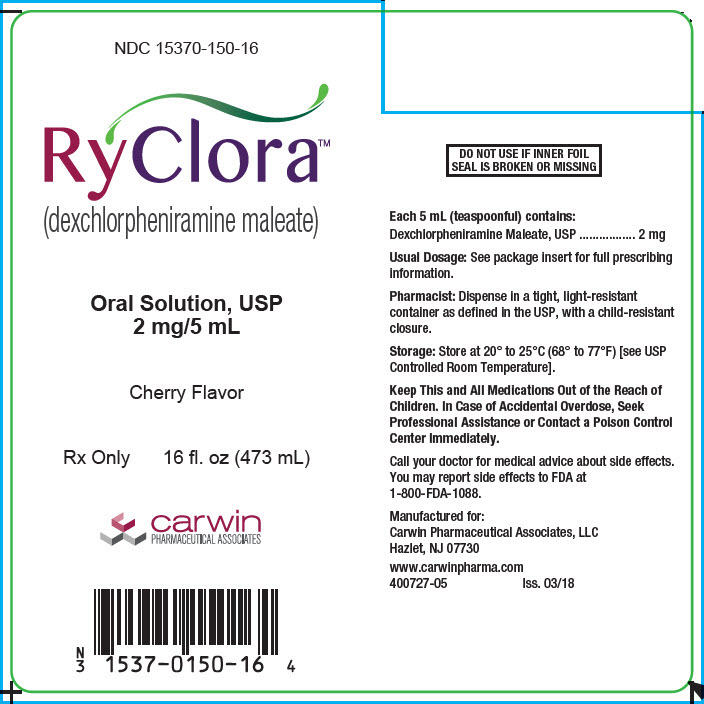
RYCLORA Dexchlorpheniramine Maleate 2 mg/5mL Liquid, 473 mL
🆔 Identity & classification
Where does this data come from?
🏷️ RxNorm drug class
This medicine belongs to the Substituted alkylamines class.
Where does this data come from?
🏭 Manufacturer & labeler
Where does this data come from?
🩺 Clinical
Patient education
Supplement & herbal interactions
Where does this data come from?
Ask a licensed pharmacist directly — free, answered by our team.
💊 What it looks like
Where does this data come from?
🧪 Inactive Ingredients / Excipients
Inactive ingredients, also called excipients, are components of the drug product other than the active ingredient. They may include fillers, dyes, coatings, preservatives, flavors, or other formulation ingredients.
💡 Tap an ingredient (hover on desktop) to see what it is and why it’s used.
-
UNII 2968PHW8QP
A weak organic acid derived from citrus fruits or made through fermentation. It works as a buffer to control pH, a preservative to extend shelf life, and a flavoring agent in medications.
-
UNII WZB9127XOA
A synthetic red dye used to color medications and make them easier to identify. It serves as a colorant in tablets, capsules, and liquid formulations.
-
UNII PDC6A3C0OX
Glycerin is a clear, thick liquid derived from plant oils or fats. It acts as a humectant to retain moisture, a sweetener, and a solvent in medications.
-
UNII L7T10EIP3A
A cooling compound from mint plants used as a flavoring agent and to create a fresh sensation in medicines. It helps mask bitter tastes and improve how the product feels in the mouth.
-
UNII A2I8C7HI9T
Methylparaben is a preservative derived from benzoic acid that prevents growth of bacteria, fungi, and mold in medicines. It extends the product's shelf life and maintains safety during storage.
-
UNII 6DC9Q167V3
Propylene glycol is a clear liquid derived from petroleum or vegetable sources. It acts as a solvent, humectant, and preservative in medicines, helping dissolve active ingredients and maintain product stability.
-
UNII Z8IX2SC1OH
Propylparaben is a chemical preservative used to prevent bacterial and fungal growth in medicines and personal care products. It helps extend shelf life and maintain product safety during storage.
-
UNII C151H8M554
A natural sugar derived from sugar cane or sugar beets. It's used as a sweetener, filler, and binder to improve taste, add bulk, and help hold tablet or capsule ingredients together.
-
UNII B22547B95K
A salt derived from citric acid that helps maintain the proper acid-base balance in the medicine. It's used as a buffer to keep the product stable and at the right pH level.
-
UNII 059QF0KO0R
Water is a liquid solvent that dissolves and mixes ingredients together in liquid medicines, syrups, and injections. It helps distribute the active drug evenly throughout the product.
10 inactive ingredients listed in the exact product block matched to this NDC.
Where does this data come from?
ingredient classCode="IACT" elements from the exact product block matched by this NDC. Label-section narrative from DailyMed / the openFDA label index is shown separately when available.Inactive ingredient FAQ
Are inactive ingredients the same for every manufacturer?
Why might an inactive ingredient be missing?
Can inactive ingredients matter?
💲 Pricing
A drug doesn't have one price. Each row is a different public payment system, and none is what you'd pay at the counter — that depends on your insurance. The ⓘ on each row explains what it measures.
| Price system | Per mL | Per package |
|---|---|---|
| Retail pharmacies payNADAC · weekly | Not in the retail survey — common for institutional, discontinued, or low-volume packs. | |
| Medicaid paysCMS SDUD · 12 mo | No recent Medicaid claims on file for this NDC — rare and low-volume NDCs are suppressed in the public data. | |
| Medicare drug plans payPart D · quarterly | No Part D plan price is available for this NDC in our data. | |
Where does this data come from?
🔁 Therapeutic equivalents
| Product | Labeler | Pack | NADAC/unit | TE | Status | Price vs. this |
|---|---|---|---|---|---|---|
| Ryclora 2 mg/5mLthis 15370-0150-16 | CARWIN | 473 ml | — | — | FDA listed | — |
| Corphena 2 mg/5mL 73684-0300-08 | BluCrest | 237 ml | — | — | FDA listed | — |
Where does this data come from?
⏳ Availability & generic status
This product is an FDA-approved generic. Other versions of the same drug are listed under Therapeutic equivalents, least expensive first.
Where does this data come from?
💊 Medicaid utilization by pack size
📊 Medicare Part D spend CMS · PART D · 2025 (Q1-Q4)
📦 Packaging — all sizes for this product
| Package NDC | Description | Per unit | Per pack | Marketing start | Status |
|---|---|---|---|---|---|
| 15370-0150-04 | 118 mL in 1 BOTTLE, PLASTIC (15370-150-04) | $2.90 / mL | $342.45 | 2018-10-07 | Active |
| 15370-0150-16 You're viewing this | 473 mL in 1 BOTTLE, PLASTIC (15370-150-16) | — | — | 2018-10-07 | Active |
| 15370-0150-99 | 20 mL in 1 BOTTLE, PLASTIC (15370-150-99) | — | — | 2018-10-07 | Active |
You're viewing the largest of 3 pack sizes for this product.
This pack shows little to no recent Medicaid volume — the 118 ml pack carries most fills. See all packs ↓
Pack size FAQ
What quantity is in NDC 15370-0150-16?
What is the difference between NDC 15370-0150-16 and NDC 15370-0150-99?
What NDC number is used to bill for this package of RYCLORA Dexchlorpheniramine Maleate 2 mg/5mL Liquid?
Prices are the latest CMS NADAC pharmacy acquisition cost per NDC; per-pack figures are per-unit × pack quantity, shown only when the pack is denominated in the same measure NADAC prices.
🧭 About this NDC listing & data coverage
What data is (and isn’t) available for this NDC — tap to expand
| NDC identity (package / product / labeler codes) | ✓ Available |
| Labeler | ✓ Available |
| Product & package description | ✓ Available |
| Marketing category & status | ✓ Available |
| Active ingredient / dosage form / route | ✓ Available |
| FDA label (SPL via DailyMed) | ✓ Available |
| Package photos | ✓ Available |
| Inactive ingredients (structured) | ✓ Available |
| NADAC pharmacy acquisition price (CMS) | — Not published for this NDC CMS publishes NADAC only for NDCs reported in its retail-pharmacy survey. |
| Orange Book / therapeutic-equivalence data | — Not published for this NDC Applies only to products approved under an NDA/ANDA; many listings are out of scope. |
| HCPCS J-code billing crosswalk | — Not published for this NDC Most self-administered / retail products have no J-code — that is normal. |
| Medicaid utilization (CMS SDUD) | — Not published for this NDC CMS reports utilization only for NDCs with Medicaid claims above its privacy threshold. |
Questions about this listing
Why is there no price listed?
Is the NDC printed on the package the same as the 11-digit billing NDC?
What do the three segments of this NDC mean?
Is this package still being marketed?
Does this product come in other package sizes?
Who lists this product with the FDA?
Do I need a prescription for this product?
Where does this data come from?
📄 Full prescribing information FDA SPL
🎯 Indications and Usage ▾
INDICATIONS AND USAGE Perennial and seasonal allergic rhinitis Vasomotor rhinitis Allergic conjunctivitis due to inhalant allergens and foods Mild, uncomplicated allergic skin manifestations of urticaria and angioedema Amelioration of allergic reactions to blood or plasma Dermographism As therapy for anaphylactic reactions adjunctive to epinephrine and other standard measures after the acute manifestations have been controlled.
⏱️ Dosage and Administration ▾
DOSAGE AND ADMINISTRATION DOSAGE SHOULD BE INDIVIDUALIZED ACCORDING TO THE NEEDS AND THE RESPONSE OF THE PATIENT. Recommended Dosage Adults and Children 12 years of age and older: 2 mg (1 teaspoonful) Children 6 to 11 years: 1 mg (1/2 teaspoonful) Children 2 to 5 years: 0.5 mg (1/4 teaspoonful) Doses are generally given every 4 to 6 hours.
⛔ Contraindications ▾
CONTRAINDICATIONS Use in Newborn or Premature Infants This drug should not be used in newborn or premature infants. Use in Nursing Mothers Because of the higher risk of antihistamines for infants generally and for newborns and prematures in particular, antihistamine therapy is contraindicated in nursing mothers. Use in Lower Respiratory Disease Antihistamines should NOT be used to treat lower respiratory tract symptoms including asthma.
Antihistamines are also contraindicated in the following conditions: Hypersensitivity to dexchlorpheniramine maleate or other antihistamines of similar chemical structure Monoamine oxidase inhibitor therapy (See Drug Interaction section)
⚠️ Warnings ▾
WARNINGS Antihistamines should be used with considerable caution in patients with: Narrow angle glaucoma Stenosing peptic ulcer Pyloroduodenal obstruction Symptomatic prostatic hypertrophy Bladder neck obstruction Use in Children In infants and children, especially, antihistamines in overdosage may cause hallucinations, convulsions, or death. As in adults, antihistamines may diminish mental alertness in children. In the young child, particularly, they may produce excitation.
Use in Pregnancy Experience with this drug in pregnant women is inadequate to determine whether there exists a potential for harm to the developing fetus. Use with CNS Depressants RYCLORA™ Oral Solution has additive effects with alcohol and other CNS depressants (hypnotics, sedatives, tranquilizers, etc.). Use in Activities Requiring Mental Alertness Patients should be warned about engaging in activities requiring mental alertness such as driving a car or operating appliances, machinery, etc.
Use in the Elderly (approximately 60 years or older) Antihistamines are more likely to cause dizziness, sedation, and hypotension in elderly patients.
🤒 Adverse Reactions ▾
ADVERSE REACTIONS General: Urticaria, drug rash, anaphylactic shock, photosensitivity, excessive perspiration, chills, dryness of mouth, nose and the throat. Cardiovascular System: Hemolytic anemia, thrombocytopenia, agranulocytosis. Hematologic System: Hemolytic anemia, thrombocytopenia, agranulocytosis.
Nervous System: Sedation, sleepiness, dizziness, disturbed coordination, fatigue, confusion, restlessness, excitation, nervousness, tremor, irritability, insomnia, euphoria, paresthesias, blurred vision, diplopia, vertigo, tinnitus, acute labyrinthitis, hysteria, neuritis, convulsions. G.I. System: Epigastric distress, anorexia, nausea, vomiting, diarrhea, constipation.
G.U. System: Urinary frequency, difficult urination, urinary retention, early menses. Respiratory System: Thickening of bronchial secretions, tightness of chest and wheezing, nasal stuffiness.
Call your doctor for medical advice about side effects. You may voluntarily report side effects to FDA at 1-800-FDA-1088. Questions or comments?
Call Carwin Pharmaceutical Associates, LLC at 1-844-700-5011.
🔄 Drug Interactions ▾
Drug Interaction MAO inhibitors prolong and intensify the anticholinergic (drying) effects of antihistamines.
🆘 Overdosage ▾
OVERDOSAGE Antihistamine overdosage reactions may vary from central nervous system depression to stimulation. Stimulation is particularly likely in children. Atropine-like signs and symptoms—dry mouth, fixed, dilated pupils, flushing, and gastrointestinal symptoms may also occur.
If vomiting has not occurred spontaneously the patient should be induced to vomit. This is best done by having the patient drink a glass of water or milk after which the patient should be made to gag. Precautions against aspiration must be taken, especially in infants and children.
Saline cathartics , such as milk of magnesia, draw water into the bowel by osmosis and therefore, are valuable for their action in rapid dilution of bowel content. Stimulants should not be used. Vasopressors may be used to treat hypotension.
🧬 Clinical Pharmacology ▾
CLINICAL PHARMACOLOGY Dexchlorpheniramine maleate is an antihistamine with anticholinergic (drying) and sedative side effects. Antihistamines appear to compete with histamine for cell receptor sites on effector cells.
📦 How Supplied / Storage and Handling ▾
HOW SUPPLIED RYCLORA™ Oral Solution is supplied as a red colored, cherry flavored liquid in the following sizes: 4 fl oz (118 mL), NDC 15370-150-04 16 fl oz (473 mL), NDC 15370-150-16 0.7 fl oz (20mL), NDC 15370-150-99 (as physician sample) RECOMMENDED STORAGE Store at 20° to 25°C (68° to 77°F) [see USP Controlled Room Temperature]. Dispense in a tight, light-resistant container as defined in the USP, with child-resistant closure.
📦 Storage and Handling ▾
RECOMMENDED STORAGE Store at 20° to 25°C (68° to 77°F) [see USP Controlled Room Temperature]. Dispense in a tight, light-resistant container as defined in the USP, with child-resistant closure.
📋 Description ▾
DESCRIPTION Each 5 mL (teaspoonful) contains: Dexchlorpheniramine Maleate, USP 2 mg Dexchlorpheniramine Maleate, USP, an antihistamine agent, is a white, odorless crystalline powder that is freely soluble in water. The molecular formula is C 16 H 19 ClN 2 ∙ C 4 H 4 O 4 , designated chemically as (+)-2-[p-Chloro-α-[2-(dimethylamino)ethyl]benzyl] pyridine maleate (1:1). M.W. = 390.86 Inactive Ingredients: Citric acid, cherry flavoring, FD&C Red No.
40, glycerin, menthol, methylparaben, propylene glycol, propylparaben, purified water, sodium citrate dihydrate, and sugar. Chemical Structure