
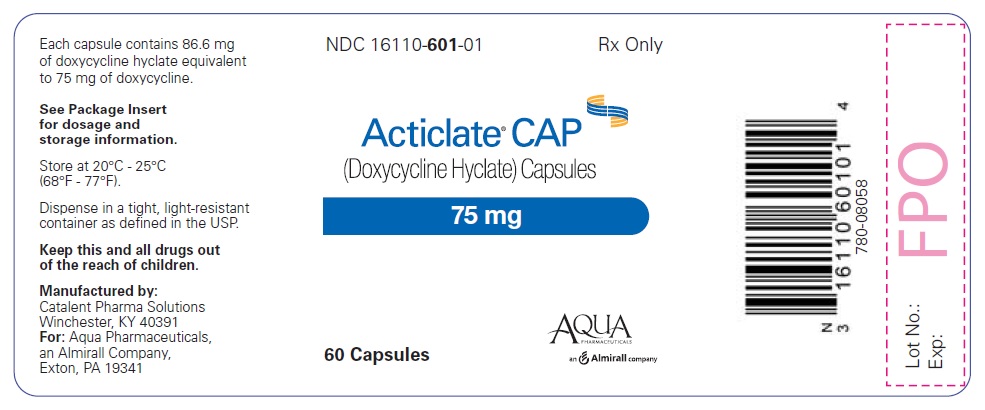
Acticlate CAP doxycycline hyclate 75 mg Capsule, 60-count — NDC 16110-601-01 (Billing 16110-0601-01)
This is a package of 60 capsules of Acticlate CAP doxycycline hyclate 75 mg Capsule from Aqua Pharmaceuticals, no longer marketed (first marketed May 2018), no longer in the FDA NDC Directory. It is this product's only package size.
NDC database record
One package, one record: these facts belong to NDC 16110-601-01 alone.
- Record
- FDA NDC Directory package listing · Human prescription drug
- Code segments
- 16110 labeler · 601 product · 01 package
- Package marketed since
- May 31, 2018
- Sample package
- No — commercial package
- Listing certified through
- Dec 31, 2026
- Barcode (UPC)
- 0316110601014
- FDA record last changed
- Jul 24, 2026
Other active recalls for Doxycycline Hyclate (different manufacturers) — 1 · tap to view
Identity & classification
Regulatory identifiers FDA, NLM and CMS codes for this package
- RxCUI (RxNorm): 1791505
Where does this data come from?
- FDA openFDA NDC Directory · synced Oct 8, 2026
- FDA label on DailyMed · label index refreshed Oct 8, 2026
- RxNorm (NLM RxNav) · catalog refreshed Oct 1, 2026
- Medi-Span GPI (licensed)
- First Databank (licensed) · refreshed Oct 8, 2026
RxNorm drug class
This medicine belongs to the Tetracycline-class Drug class.
Where does this data come from?
- RxClass (NLM) · catalog refreshed Oct 1, 2026
Clinical
- It is an antibiotic for bacterial infections such as rickettsial infections, sexually transmitted infections, respiratory tract infections and eye infections. Some products are als...
- Take it exactly as your prescriber and label say. Swallow capsules with a full glass of water and avoid taking them right before lying down. For one capsule product, take it at lea...
- Diarrhea, nausea, vomiting, stomach upset and loss of appetite are the most common. You may also sunburn much more easily, so cover up and avoid tanning beds. Call me or your docto...
- Call right away for severe or watery diarrhea, a blistering or peeling rash, headache with vision changes, trouble swallowing, or signs of an allergic reaction. Diarrhea can show u...
Patient education
Supplement & herbal interactions
Some supplements/herbs that may interact with Doxycycline Hyclate — tap one for details:
Doxycycline Hyclate may be associated with lower levels of 7 nutrients — worth a chat with your pharmacist, not a cause for alarm.
Where does this data come from?
- MedlinePlus (NLM) · refreshed Oct 8, 2026
- FDA label on DailyMed · label index refreshed Oct 8, 2026
Ask a licensed pharmacist directly — free, answered by our team.
Pricing
A drug doesn't have one price. Each row is a different public payment system, and none is what you'd pay at the counter — that depends on your insurance. The ⓘ on each row explains what it measures.
| Price system | Per each | Per package |
|---|---|---|
| Retail pharmacies payNADAC · weekly | Not in the retail survey — common for institutional, discontinued, or low-volume packs. | |
| Medicaid paysCMS SDUD · 12 mo | No recent Medicaid claims on file for this NDC — rare and low-volume NDCs are suppressed in the public data. | |
| Medicare drug plans payPart D · quarterly | No Part D plan price is available for this NDC in our data. | |
Where does this data come from?
- CMS NADAC weekly file
- CMS ASP pricing files · refreshed Sep 20, 2026
- CMS Medicaid State Drug Utilization Data · refreshed Oct 8, 2026
- CMS Part D plan pricing files · refreshed Sep 24, 2026
- VA National Acquisition Center price file
Packaging — all sizes for this product
| Package NDC | Description | Marketing start | Marketing end | Status |
|---|---|---|---|---|
| 16110-0601-01 You're viewing this Main listing | 60 CAPSULE in 1 BOTTLE | 2018-05-31 | — | Discontinued by firm |
Therapeutic equivalents
| Product | Labeler | Pack | NADAC/unit | TE | Status | Price vs. this |
|---|---|---|---|---|---|---|
| Acticlate CAP 75 mgthis 16110-0601-01 | Aqua | 60 capsules | — | — | Discontinued | — |
| Doxycycline Hyclate 75 mg 62135-0975-20 | Chartwell | 20 capsules | — | — | FDA listed | — |
Where does this data come from?
- FDA openFDA NDC Directory · synced Oct 8, 2026
- FDA Orange Book · refreshed Oct 3, 2026
- CMS NADAC weekly file
Availability & generic status
FDA-approved generic versions are listed, and recent pricing/market data suggests they may be available — see Therapeutic equivalents.
Where does this data come from?
- FDA Orange Book · refreshed Oct 3, 2026
Inactive Ingredients / Excipients
Inactive ingredients, also called excipients, are components of the drug product other than the active ingredient. They may include fillers, dyes, coatings, preservatives, flavors, or other formulation ingredients.
🧪 Avoiding an ingredient? See Doxycycline inactive ingredients by manufacturer: every current product's list side by side, so you can ask your pharmacy for the version that does not list it.
💡 Tap an ingredient (hover on desktop) to see what it is and why it’s used.
-
UNII OP1R32D61U
Microcrystalline cellulose is a purified form of cellulose, a natural fiber from plant sources. It acts as a binder and filler in tablets and capsules, helping hold ingredients together and give the medicine its shape and size.
-
UNII H3R47K3TBD
FD&C Blue No. 1 is a synthetic blue dye approved for use in foods and medicines. It serves as a colorant to give the medication its distinctive appearance and help with product identification.
-
UNII WZB9127XOA
A synthetic red dye used to color medications and make them easier to identify. It serves as a colorant in tablets, capsules, and liquid formulations.
-
UNII 70097M6I30
Magnesium stearate is a salt made from magnesium and stearic acid, a fatty substance. It's used in tablets and capsules as a lubricant and glidant to help ingredients flow smoothly during manufacturing and prevent sticking.
-
UNII 15FIX9V2JP
Titanium dioxide is a bright white mineral powder commonly used as a colorant and opacifying agent. It makes pills and tablets white or lighter in color and helps make coatings non-transparent.
5 inactive ingredients listed in the exact product block matched to this NDC.
Where does this data come from?
ingredient classCode="IACT" elements from the exact product block matched by this NDC. Label-section narrative from DailyMed / the openFDA label index is shown separately when available.- FDA label on DailyMed · label index refreshed Oct 8, 2026
- FDA openFDA NDC Directory · synced Oct 8, 2026
Inactive ingredient FAQ
Are inactive ingredients the same for every manufacturer?
Why might an inactive ingredient be missing?
Can inactive ingredients matter?
Manufacturer & labeler
More NDCs from Aqua Pharmaceuticals labeler code 16110
- Seysara sarecycline hydrochloride 60 mg Tablet, Coated NDC 16110-245-00
- Seysara sarecycline hydrochloride 100 mg Tablet, Coated NDC 16110-246-00
- sarecycline hydrochloride 150 mg Tablet, Coated NDC 16110-247-00
- Klisyri tirbanibulin 10 mg/g Ointment NDC 16110-391-05
- Aczone dapsone 75 mg/g Gel NDC 16110-526-30
- Cordran flurandrenolide 4 ug/cm2 Tape NDC 16110-587-24
- Tazorac tazarotene .5 mg/g Gel NDC 16110-833-10
- Azelex azelaic acid .2 g/g Cream NDC 16110-869-30
- Tazorac tazarotene .05 mg/g Cream NDC 16110-915-30
- Tazorac tazarotene .1 mg/g Cream NDC 16110-916-30
Where does this data come from?
- FDA openFDA NDC Directory · synced Oct 8, 2026
- Drugs@FDA
Full prescribing information FDA SPL
🎯 Indications and Usage ▾
1 INDICATIONS AND USAGE ACTICLATE ® and ACTICLATE ® CAP are tetracycline class drugs indicated for: Rickettsial infections ( 1.1 ) Sexually transmitted infections ( 1.2 ) Respiratory tract infections ( 1.3 ) Specific bacterial infections ( 1.4 ) Ophthalmic infections ( 1.5 ) Anthrax, including inhalational anthrax (post-exposure) ( 1.6 ) Alternative treatment for selected infections when penicillin is contraindicated ( 1.7 ) Adjunctive therapy for acute intestinal amebiasis and severe acne ( 1.8 ) Prophylaxis of malaria ( 1.9 ) To reduce the development of drug-resistant bacteria and maintain the effectiveness of ACTICLATE and ACTICLATE CAP and other antibacterial drugs, ACTICLATE and ACTICLATE CAP should be used only to treat or prevent infections that are proven or strongly suspected to be caused by bacteria.
( 1.10 )
1.1Rickettsial Infections ACTICLATE ® and ACTICLATE ® CAP are indicated for treatment of Rocky Mountain spotted fever, typhus fever and the typhus group, Q fever, rickettsial pox, and tick fevers caused by Rickettsiae .
1.2Sexually Transmitted Infections ACTICLATE and ACTICLATE CAP are indicated for treatment of the following sexually transmitted infections: Uncomplicated urethral, endocervical or rectal infections caused by Chlamydia trachomatis . Nongonococcal urethritis caused by Ureaplasma urealyticum . Lymphogranuloma venereum caused by Chlamydia trachomatis .
Granuloma inguinale caused by Klebsiella granulomatis . Uncomplicated gonorrhea caused by Neisseria gonorrhoeae . Chancroid caused by Haemophilus ducreyi .
1.3Respiratory Tract Infections ACTICLATE and ACTICLATE CAP are indicated for treatment of the following respiratory tract infections: Respiratory tract infections caused by Mycoplasma pneumoniae . Psittacosis (ornithosis) caused by Chlamydophila psittaci . Because many strains of the following groups of microorganisms have been shown to be resistant to doxycycline, culture and susceptibility testing are recommended.
Doxycycline is indicated for treatment of infections caused by the following microorganisms, when bacteriological testing indicates appropriate susceptibility to the drug: Respiratory tract infections caused by Haemophilus influenzae . Respiratory tract infections caused by Klebsiella species . Upper respiratory infections caused by Streptococcus pneumoniae .
1.4Specific Bacterial Infections ACTICLATE and ACTICLATE CAP are indicated for treatment of the following specific bacterial infections: Relapsing fever due to Borrelia recurrentis . Plague due to Yersinia pestis . Tularemia due to Francisella tularensis .
Cholera caused by Vibrio cholerae . Campylobacter fetus infections caused by Campylobacter fetus . Brucellosis due to Brucella species (in conjunction with streptomycin).
Bartonellosis due to Bartonella bacilliformis . Because many strains of the following groups of microorganisms have been shown to be resistant to doxycycline, culture and susceptibility testing are recommended. ACTICLATE and ACTICLATE CAP are indicated for treatment of infections caused by the following gram-negative microorganisms, when bacteriological testing indicates appropriate susceptibility to the drug: Escherichia coli Enterobacter aerogenes Shigella species Acinetobacter species Urinary tract infections caused by Klebsiella species.
1.5Ophthalmic Infections ACTICLATE and ACTICLATE CAP are indicated for treatment of the following ophthalmic infections: Trachoma caused by Chlamydia trachomatis , although the infectious agent is not always eliminated as judged by immunofluorescence. Inclusion conjunctivitis caused by Chlamydia trachomatis .
1.6Anthrax Including Inhalational Anthrax (Post-Exposure) ACTICLATE and ACTICLATE CAP are indicated for the treatment of Anthrax due to Bacillus anthracis , including inhalational anthrax (post-exposure); to reduce the incidence or progression of disease following exposure to aerosolized Bacillus anthracis .
1.7Alternative Treatment for Selected Infections when… [Excerpted — this section continues on DailyMed.]
⏱️ Dosage and Administration ▾
2 DOSAGE AND ADMINISTRATION Important Administration Instructions for ACTICLATE and ACTICLATE CAP ACTICLATE Tablets (150 mg) can be broken into two-thirds or one-third to provide a 50 mg and 100 mg strength, respectively. ( 2.1 ) Swallow ACTICLATE CAP Capsule whole. Do not break, open, crush, dissolve or chew the capsule.
( 2.1 ) Dosage in Adults for ACTICLATE or ACTICLATE CAP: The usual dosage is 200 mg on the first day of treatment (administered 100 mg every 12 hours) followed by a maintenance dose of 100 mg daily. ( 2.1 ) In the management of more severe infections (particularly chronic infections of the urinary tract), 100 mg every 12 hours is recommended. ( 2.1 ) Dosage in Pediatric Patients for ACTICLATE or ACTICLATE CAP: For all pediatric patients weighing less than 45 kg with severe or life-threatening infections (e.g., anthrax, Rocky Mountain spotted fever), the recommended dose is 2.2 mg per kg of body weight administered every 12 hours.
Pediatric patients weighing 45 kg or more should receive the adult dose. ( 2.3 ) For pediatric patients with less severe disease (greater than 8 years of age and weighing less than 45 kg), the recommended dose is 4.4 mg per kg of body weight divided into two doses on the first day of treatment, followed by a maintenance dose of 2.2 mg per kg of body weight (given as a single daily dose or divided into two doses. For pediatric patients weighing over 45 kg, the usual adult dose should be used.
( 2.3 ) See Full Prescribing Information for additional indication specific dosage information and important administration instructions for ACTICLATE and ACTICLATE CAP. ( 2.1 , 2.4 , 2.5 )
2.1Important Administration Instructions The usual dosage and frequency of administration of ACTICLATE and ACTICLATE CAP differs from that of the other tetracyclines. Exceeding the recommended dosage may result in an increased incidence of adverse reactions. Administer ACTICLATE and ACTICLATE CAP with adequate amounts of fluid to wash down the drugs and reduce the risk of esophageal irritation and ulceration [see Adverse Reactions ( 6 )] .
If gastric irritation occurs, ACTICLATE and ACTICLATE CAP may be given with food or milk [see Clinical Pharmacology ( 12.3 )] Swallow ACTICLATE CAP whole. Do not break, open, crush, dissolve or chew the capsule. ACTICLATE tablets (150 mg) can be broken into two-thirds or one-third to provide a 100 mg and 50 mg strength, respectively [see FDA-approved patient labeling ].
2.2Dosage in Adult Patients The usual dosage of ACTICLATE is 200 mg on the first day of treatment (administered 100 mg every 12 hours) followed by a maintenance dose of 100 mg daily. The maintenance dose may be administered as a single dose or as 50 mg every 12 hours. In the management of more severe infections (particularly chronic infections of the urinary tract), 100 mg every 12 hours is recommended.
For certain selected specific indications, the recommended duration or dosage and duration of ACTICLATE or ACTICLATE CAP in adult patients are as follows: Streptococcal infections, therapy should be continued for 10 days. Uncomplicated urethral, endocervical, or rectal infection caused by Chlamydia trachomatis : 100 mg by mouth twice-a-day for 7 days. Uncomplicated gonococcal infections in adults (except anorectal infections in men): 100 mg, by mouth, twice-a-day for 7 days.
As an alternate single visit dose, administer 300 mg stat followed in one hour by a second 300 mg dose. Nongonococcal urethritis (NGU) caused by C. trachomatis and U. urealyticum: 100 mg by mouth twice-a-day for 7 days. Syphilis – early: Patients who are allergic to penicillin should be treated with doxycycline 100 mg by mouth twice-a-day for 2 weeks.
Syphilis of more than one year’s duration: Patients who are allergic to penicillin should be treated with doxycycline 100 mg by mouth twice-a-day for 4 weeks. Acute epididymo-orchitis caused by N. gonorrhoeae : 100 mg by mouth, twice-a-day for at least 10 days. Acute epididymo-orchitis caus… [Excerpted — this section continues on DailyMed.]
💊 Dosage Forms and Strengths ▾
3 DOSAGE FORMS AND STRENGTHS ACTICLATE Tablets: ACTICLATE (doxycycline hyclate) Tablets, 75 mg are round, convex, light-teal, film-coated, tablets with “75” debossed on one side of the tablet and “AQ101” debossed on the other (each tablet contains 75 mg doxycycline as 86.6 mg doxycycline hyclate). ACTICLATE (doxycycline hyclate) Tablets, 150 mg are oval-shaped, convex, mossy-green, film-coated tablets. Each side of the functionally scored tablet has two parallel score lines for splitting into 3 equal portions with “A” debossed on each portion of one side of the tablet, and no debossing on the other (each tablet contains 150 mg doxycycline as 173.2 mg doxycycline hyclate).
ACTICLATE CAP Capsules: ACTICLATE CAP (doxycycline hyclate) Capsules, 75 mg have a navy blue opaque body and cap with the inscription “AQUA 101C75” in black (each capsule contains 75 mg doxycycline as 86.6 mg doxycycline hyclate). ACTICLATE Tablets: 75 mg and 150 mg (functionally scored) ( 3 ) ACTICLATE CAP Capsules: 75 mg ( 3 )
⛔ Contraindications ▾
4 CONTRAINDICATIONS ACTICLATE and ACTICLATE CAP are contraindicated in persons who have shown hypersensitivity to any of the tetracyclines. ACTICLATE and ACTICLATE CAP are contraindicated in persons who have shown hypersensitivity to any of the tetracyclines. ( 4 )
⚠️ Warnings and Cautions ▾
5 WARNINGS AND PRECAUTIONS The use of drugs of the tetracycline-class during tooth development (last half of pregnancy, infancy and childhood to the age of 8 years) may cause permanent discoloration of the teeth (yellow-gray-brown). ( 2.2 , 5.1 ) Clostridium difficile -associated diarrhea (CDAD) has been reported. Evaluate patients if diarrhea occurs.
( 5.2 ) Photosensitivity manifested by an exaggerated sunburn reaction has been observed in some individuals taking tetracyclines. Limit sun exposure. ( 5.3 ) Overgrowth of non-susceptible organisms, including fungi, may occur.
If such infections occur, discontinue use and institute appropriate therapy. ( 5.4 )
5.1Tooth Development The use of drugs of the tetracycline-class during tooth development (last half of pregnancy, infancy and childhood to the age of 8 years) may cause permanent discoloration of the teeth (yellow-gray-brown). This adverse reaction is more common during long-term use of the drugs but it has been observed following repeated short-term courses. Enamel hypoplasia has also been reported.
Use ACTICLATE and ACTICLATE CAP in pediatric patients 8 years of age or less only when the potential benefits are expected to outweigh the risks in severe or life-threatening conditions (e.g., anthrax, Rocky Mountain spotted fever), particularly when there are no alternative therapies.
5.2Clostridium difficile Associated Diarrhea Clostridium difficile associated diarrhea (CDAD) has been reported with use of nearly all antibacterial agents, including ACTICLATE and ACTICLATE CAP, and may range in severity from mild diarrhea to fatal colitis. Treatment with antibacterial agents alters the normal flora of the colon leading to overgrowth of C. difficile . C. difficile produces toxins A and B which contribute to the development of CDAD.
Hypertoxin producing strains of C. difficile cause increased morbidity and mortality, as these infections can be refractory to antibacterial therapy and may require colectomy. CDAD must be considered in all patients who present with diarrhea following antibacterial use. Careful medical history is necessary since CDAD has been reported to occur over two months after the administration of antibacterial agents.
If CDAD is suspected or confirmed, ongoing antibacterial use not directed against C. difficile may need to be discontinued. Appropriate fluid and electrolyte management, protein supplementation, antibacterial treatment of C. difficile , and surgical evaluation should be instituted as clinically indicated.
5.3Photosensitivity Photosensitivity manifested by an exaggerated sunburn reaction has been observed in some individuals taking tetracyclines. Patients apt to be exposed to direct sunlight or ultraviolet light should be advised that this reaction can occur with tetracycline drugs, and treatment should be discontinued at the first evidence of skin erythema.
5.4Potential for Microbial Overgrowth ACTICLATE and ACTICLATE CAP may result in overgrowth of non-susceptible organisms, including fungi. If such infections occur, discontinue use and institute appropriate therapy.
5.5Severe Skin Reactions Severe skin reactions, such as exfoliative dermatitis, erythema multiforme, Stevens-Johnson syndrome, toxic epidermal necrolysis, and drug reaction with eosinophilia and systemic symptoms (DRESS) have been reported in patients receiving doxycycline [See Adverse Reactions ( 6 ) ]. If severe skin reactions occur, doxycycline should be discontinued immediately and appropriate therapy should be instituted.
5.6Intracranial Hypertension Intracranial hypertension (IH, pseudotumor cerebri) has been associated with the use of tetracyclines including ACTICLATE and ACTICLATE CAP. Clinical manifestations of IH include headache, blurred vision, diplopia, and vision loss; papilledema can be found on fundoscopy. Women of childbearing age who are overweight or have a history of IH are at greater risk for developing tetracycline associated IH.
Concomitant use of isotre… [Excerpted — this section continues on DailyMed.]
🤒 Adverse Reactions ▾
6 ADVERSE REACTIONS The following adverse reactions have been identified during clinical trials or post-approval use of tetracycline-class drugs, including doxycycline. Because these reactions are reported voluntarily from a population of uncertain size, it is not always possible to reliably estimate their frequency or establish a causal relationship to drug exposure. Gastrointestinal: Anorexia, nausea, vomiting, diarrhea, glossitis, dysphagia, enterocolitis, and inflammatory lesions (with monilial overgrowth) in the anogenital region, and pancreatitis.
Hepatotoxicity has been reported. These reactions have been caused by both the oral and parenteral administration of tetracyclines. Superficial discoloration of the adult permanent dentition, reversible upon drug discontinuation and professional dental cleaning has been reported.
Permanent tooth discoloration and enamel hypoplasia may occur with drugs of the tetracycline class when used during tooth development [ See Warnings and Precautions ( 5.1 ) ]. Instances of esophagitis and esophageal ulcerations have been reported in patients receiving capsule and tablet forms of drugs in the tetracycline-class. Most of these patients took medications immediately before going to bed [see Dosage and Administration ( 2.1 )].
Skin: Maculopapular and erythematous rashes, Stevens-Johnson syndrome, toxic epidermal necrolysis, exfoliative dermatitis, and erythema multiforme have been reported. Photosensitivity has been reported [see Warnings and Precautions ( 5.3 )]. Renal: Rise in BUN has been reported and is apparently dose-related [see Warnings and Precautions ( 5.8 )].
Hypersensitivity reactions: Urticaria, angioneurotic edema, anaphylaxis, anaphylactoid purpura, serum sickness, pericarditis, and exacerbation of systemic lupus erythematosus, and drug reaction with eosinophilia and systemic symptoms (DRESS). Blood: Hemolytic anemia, thrombocytopenia, neutropenia, and eosinophilia have been reported. Intracranial Hypertension: Intracranial hypertension (IH, pseudotumor cerebri) has been associated with the use of tetracyclines [see Warnings and Precautions ( 5.6 )].
Thyroid Gland Changes: When given over prolonged periods, tetracyclines have been reported to produce brown-black microscopic discoloration of thyroid glands. No abnormalities of thyroid function are known to occur. Adverse reactions observed in patients receiving tetracyclines include anorexia, nausea, vomiting, diarrhea, rash, photosensitivity, urticaria, and hemolytic anemia.
( 6 ) To report SUSPECTED ADVERSE REACTIONS, contact Aqua Pharmaceuticals at 1-866-665-2782, or FDA at 1-800-FDA-1088 or www.fda.gov/medwatch.
🔄 Drug Interactions ▾
7 DRUG INTERACTIONS Patients who are on anticoagulant therapy may require downward adjustment of their anticoagulant dosage. ( 7.1 ) Avoid co-administration of tetracyclines with penicillin. ( 7.2 ) Absorption of tetracyclines, including ACTICLATE and ACTICLATE CAP is impaired by antacids containing aluminum, calcium, or magnesium, bismuth subsalicylate and iron-containing preparations.
( 7.3 ) Concurrent use of tetracyclines, including ACTICLATE and ACTICLATE CAP may render oral contraceptives less effective. ( 7.4 ) Barbiturates, carbamazepine and phenytoin decrease the half-life of doxycycline. ( 7.5 )
7.1Anticoagulant Drugs Because tetracyclines have been shown to depress plasma prothrombin activity, patients who are on anticoagulant therapy may require downward adjustment of their anticoagulant dosage.
7.2Penicillin Since bacteriostatic drugs may interfere with the bactericidal action of penicillin, it is advisable to avoid giving tetracyclines, including ACTICLATE and ACTICLATE CAP in conjunction with penicillin.
7.3Antacids and Iron Preparations Absorption of tetracyclines, including ACTICLATE and ACTICLATE CAP is impaired by antacids containing aluminum, calcium, or magnesium, bismuth subsalicylate, and iron-containing preparations.
7.4Oral Contraceptives Concurrent use of tetracyclines, including ACTICLATE and ACTICLATE CAP may render oral contraceptives less effective.
7.5Barbiturates and Anti-Epileptics Barbiturates, carbamazepine, and phenytoin decrease the half-life of doxycycline.
7.6Penthrane ® The concurrent use of tetracycline and Penthrane ® (methoxyflurane) has been reported to result in fatal renal toxicity.
7.7Drug and Laboratory Test Interactions False elevations of urinary catecholamines may occur due to interference with the fluorescence test.
👥 Use in Specific Populations ▾
8 USE IN SPECIFIC POPULATIONS Tetracycline-class drugs can cause fetal harm when administered to a pregnant woman, but data for doxycycline are limited. ( 5.6 , 8.1 ) Tetracyclines are excreted in human milk; however, the extent of absorption of doxycycline in the breastfed infant is not known. ACTICLATE and ACTICLATE CAP use during nursing should be avoided if possible. ( 8.3 )
8.1Pregnancy Teratogenic Effects. Pregnancy Category D: [see Warnings and Precautions ( 5.7 )] There are no adequate and well-controlled studies on the use of doxycycline in pregnant women. The vast majority of reported experience with doxycycline during human pregnancy is short-term, first trimester exposure.
There are no human data available to assess the effects of long-term therapy of doxycycline in pregnant women such as that proposed for the treatment of anthrax exposure. An expert review of published data on experiences with doxycycline use during pregnancy by TERIS - the Teratogen Information System - concluded that therapeutic doses during pregnancy are unlikely to pose a substantial teratogenic risk (the quantity and quality of data were assessed as limited to fair), but the data are insufficient to state that there is no risk.
1 A case-control study (18,515 mothers of infants with congenital anomalies and 32,804 mothers of infants with no congenital anomalies) shows a weak but marginally statistically significant association with total malformations and use of doxycycline anytime during pregnancy. Sixty-three (0.19%) of the controls and 56 (0.30%) of the cases were treated with doxycycline. This association was not seen when the analysis was confined to maternal treatment during the period of organogenesis (that is, in the second and third months of gestation), with the exception of a marginal relationship with neural tube defect based on only two-exposed cases.
2 A small prospective study of 81 pregnancies describes 43 pregnant women treated for 10 days with doxycycline during early first trimester. All mothers reported their exposed infants were normal at 1 year of age. 3 Nonteratogenic effects: [see Warnings and Precautions ( 5.1 , 5.7 )].
8.3Nursing Mothers Tetracyclines are excreted in human milk, however, the extent of absorption of tetracyclines including doxycycline, by the breastfed infant is not known. Short-term use by lactating women is not necessarily contraindicated. The effects of prolonged exposure to doxycycline in breast milk are unknown 4 .
Because of the potential for serious adverse reactions in nursing infants from doxycycline, a decision should be made whether to discontinue nursing or to discontinue the drug, taking into account the importance of the drug to the mother [see Warnings and Precautions ( 5.1 , 5.7 )].
8.4Pediatric Use Because of the effects of drugs of the tetracycline-class on tooth development and growth, use ACTICLATE and ACTICLATE CAP in pediatric patients 8 years of age or less only when the potential benefits are expected to outweigh the risks in severe or life-threatening conditions (e.g., anthrax, Rocky Mountain spotted fever), particularly when there are no alternative therapies [see Warnings and Precautions ( 5.1 , 5.7 ) and Dosage and Administration ( 2.1 , 2.5 )] .
8.5Geriatric Use Clinical studies of doxycycline hyclate tablets did not include sufficient numbers of subjects aged 65 and over to determine whether they respond differently from younger subjects. Other reported clinical experience has not identified differences in responses between the elderly and younger patients. ACTICLATE Tablets each contains less than 1 mg of sodium.
🤰 Pregnancy ▾
8.1Pregnancy Teratogenic Effects. Pregnancy Category D: [see Warnings and Precautions ( 5.7 )] There are no adequate and well-controlled studies on the use of doxycycline in pregnant women. The vast majority of reported experience with doxycycline during human pregnancy is short-term, first trimester exposure.
There are no human data available to assess the effects of long-term therapy of doxycycline in pregnant women such as that proposed for the treatment of anthrax exposure. An expert review of published data on experiences with doxycycline use during pregnancy by TERIS - the Teratogen Information System - concluded that therapeutic doses during pregnancy are unlikely to pose a substantial teratogenic risk (the quantity and quality of data were assessed as limited to fair), but the data are insufficient to state that there is no risk.
1 A case-control study (18,515 mothers of infants with congenital anomalies and 32,804 mothers of infants with no congenital anomalies) shows a weak but marginally statistically significant association with total malformations and use of doxycycline anytime during pregnancy. Sixty-three (0.19%) of the controls and 56 (0.30%) of the cases were treated with doxycycline. This association was not seen when the analysis was confined to maternal treatment during the period of organogenesis (that is, in the second and third months of gestation), with the exception of a marginal relationship with neural tube defect based on only two-exposed cases.
2 A small prospective study of 81 pregnancies describes 43 pregnant women treated for 10 days with doxycycline during early first trimester. All mothers reported their exposed infants were normal at 1 year of age. 3 Nonteratogenic effects: [see Warnings and Precautions ( 5.1 , 5.7 )].
🧒 Pediatric Use ▾
8.4Pediatric Use Because of the effects of drugs of the tetracycline-class on tooth development and growth, use ACTICLATE and ACTICLATE CAP in pediatric patients 8 years of age or less only when the potential benefits are expected to outweigh the risks in severe or life-threatening conditions (e.g., anthrax, Rocky Mountain spotted fever), particularly when there are no alternative therapies [see Warnings and Precautions ( 5.1 , 5.7 ) and Dosage and Administration ( 2.1 , 2.5 )] .
🧓 Geriatric Use ▾
8.5Geriatric Use Clinical studies of doxycycline hyclate tablets did not include sufficient numbers of subjects aged 65 and over to determine whether they respond differently from younger subjects. Other reported clinical experience has not identified differences in responses between the elderly and younger patients. ACTICLATE Tablets each contains less than 1 mg of sodium.
🆘 Overdosage ▾
10 OVERDOSAGE In case of overdosage, discontinue medication, treat symptomatically and institute supportive measures. Dialysis does not alter serum half-life and thus would not be of benefit in treating cases of overdosage.
🧬 Clinical Pharmacology ▾
12 CLINICAL PHARMACOLOGY
12.1Mechanism of Action Doxycycline is a tetracycline-class antimicrobial drug [see Microbiology ( 12.4 )] .
12.3Pharmacokinetics Absorption ACTICLATE (doxycycline hyclate) Tablets: Following administration of a single 300 mg dose to adult volunteers, average peak plasma doxycycline levels were 3.0 mcg per mL at 3 hours, decreasing to 1.18 mcg per mL at 24 hours. The mean C max and AUC 0-∞ of doxycycline are 24% and 15% lower, respectively, following single dose administration of ACTICLATE, 150 mg tablets with a high fat meal (including milk) compared to fasted conditions. The clinical significance of these decreases is unknown.
ACTICLATE CAP (doxycycline hyclate) Capsules. Following administration of a single 300 mg dose to adult volunteers, average peak plasma doxycycline levels were 2.8 mcg per mL at 3 hours, decreasing to 1.1 mcg per mL at 24 hours. The mean C max of doxycycline is approximately 20% lower and the AUC 0-∞ is unchanged following single dose administration of ACTICLATE CAP Capsules with a high fat meal (including milk) compared to fasted conditions.
The clinical significance of this decrease in C max is unknown. Excretion Tetracyclines are concentrated in bile by the liver and excreted in the urine and feces at high concentrations and in a biologically active form. Excretion of doxycycline by the kidney is about 40% per 72 hours in individuals with a creatinine clearance of about 75 mL per minute.
This percentage may fall as low as 1% per 72 hours to 5% per 72 hours in individuals with a creatinine clearance below 10 mL per minute. Studies have shown no significant difference in the serum half-life of doxycycline (range 18 to 22 hours) in individuals with normal and severely impaired renal function. Hemodialysis does not alter the serum half-life.
12.4Microbiology Mechanism of Action Doxycycline inhibits bacterial protein synthesis by binding to the 30S ribosomal subunit. Doxycycline has bacteriostatic activity against a broad range of Gram-positive and Gram-negative bacteria. Resistance Cross resistance with other tetracyclines is common.
Antimicrobial Activity Doxycycline has been shown to be active against most isolates of the following microorganisms, both in vitro and in clinical infections [see Indications and Usage ( 1 )] . Gram-negative bacteria Acinetobacter species Bartonella bacilliformis Brucella species Campylobacter fetus Enterobacter aerogenes Escherichia coli Francisella tularensis Haemophilus ducreyi Haemophilus influenzae Klebsiella granulomatis Klebsiella species Neisseria gonorrhoeae Shigella species Vibrio cholerae Yersinia pestis Gram-positive bacteria Bacillus anthracis Listeria monocytogenes Streptococcus pneumoniae Anaerobic bacteria Clostridium species Fusobacterium fusiforme Propionibacterium acnes Other bacteria Nocardiae and other aerobic Actinomyces species Borrelia recurrentis Chlamydophila psittaci Chlamydia trachomatis Mycoplasma pneumoniae Rickettsiae species Treponema pallidum Treponema pallidum subspecies pertenue Ureaplasma urealyticum Parasites Balantidium coli Entamoeba species Plasmodium falciparum* *Doxycycline has been found to be active against the asexual erythrocytic forms of Plasmodium falciparum , but not against the gametocytes of P. falciparum .
The precise mechanism of action of the drug is not known. Susceptibility Testing Methods When available, the clinical microbiology laboratory should provide cumulative reports of in vitro susceptibility test results for antimicrobial drugs used in local hospitals and practice as periodic reports that describe the susceptibility profile of nosocomial and community-acquired pathogens. These reports should aid in the selection of an appropriate antibacterial drug for treatment.
Dilution techniques: Quantitative methods are used to determine antimicrobial minimum inhibitory concentrations (MICs). These MICs provide estimates of the susceptibility of bacteria to antimicrobial compounds. The MICs v… [Excerpted — this section continues on DailyMed.]
🧬 Mechanism of Action ▾
12.1Mechanism of Action Doxycycline is a tetracycline-class antimicrobial drug [see Microbiology ( 12.4 )] .
📦 How Supplied / Storage and Handling ▾
16 HOW SUPPLIED/STORAGE AND HANDLING How Supplied ACTICLATE (doxycycline hyclate) Tablets, 75 mg are round, convex, light-teal, film-coated, tablets with “75” debossed on one side of the tablet and “AQ101” debossed on the other. Each 75 mg tablet contains 86.6 mg of doxycycline hyclate equivalent to 75 mg of doxycycline. Bottles of 60 tablets: NDC 16110-501-01 ACTICLATE (doxycycline hyclate) Tablets, 150 mg are oval-shaped, convex, mossy-green, film-coated tablets.
Each side of the functionally scored tablet has two parallel score lines for splitting into 3 equal portions with “A” debossed on each portion of one side of the tablet, and no debossing on the other. Each 150 mg tablet contains 173.2 mg of doxycycline hyclate equivalent to 150 mg of doxycycline. Bottles of 60 tablets: NDC 16110-502-01 ACTICLATE CAP (doxycycline hyclate) Capsules, 75 mg, have a navy blue opaque body and cap with the inscription “AQUA 101C75” in black.
Each 75 mg capsule contains 86.6 mg of doxycycline hyclate equivalent to 75 mg of doxycycline. Bottles of 60 capsules: NDC 16110-601-01 Storage Store at 20° to 25°C (68° to 77°F) excursions permitted to 15° to 30°C (59° to 86°F) [See USP Controlled Room Temperature]. Protect from light and moisture.
Dispense in a tight, light-resistant container as defined in the USP using a child-resistant closure.
📦 Storage and Handling ▾
Storage Store at 20° to 25°C (68° to 77°F) excursions permitted to 15° to 30°C (59° to 86°F) [See USP Controlled Room Temperature]. Protect from light and moisture. Dispense in a tight, light-resistant container as defined in the USP using a child-resistant closure.
📋 Description ▾
11 DESCRIPTION ACTICLATE (doxycycline hyclate) Tablets and ACTICLATE CAP (doxycycline hyclate) Capsules contain doxycycline hyclate, a tetracycline class drug synthetically derived from oxytetracycline, in an immediate release formulation for oral administration. The molecular formula of doxycycline hyclate is (C 22 H 24 N 2 O 8 • HCl) 2 • C 2 H 6 O• H 2 O and the molecular weight of doxycycline hyclate is 1025.87. The chemical name for doxycycline hyclate is: 4-(Dimethylamino)-1,4,4a,5,5a,6,11,12a-octahydro-3,5,10,12,12a-pentahydroxy-6-methyl-1,11-dioxo-2-naphthacenecarboxamide monohydrochloride, compound with ethyl alcohol (2:1), monohydrate.
The structural formula for doxycycline hyclate is: Figure 1: Structure of Doxycycline Hyclate Doxycycline hyclate is a yellow crystalline powder soluble in water and in solutions of alkali hydroxides and carbonates. ACTICLATE Tablet: ACTICLATE is available as 75 mg and 150 mg tablets. Each 75 mg tablet contains 86.6 mg of doxycycline hyclate equivalent to 75 mg of doxycycline.
Each 150 mg tablet contains 173.2 mg of doxycycline hyclate equivalent to 150 mg of doxycycline. Inactive ingredients in the tablet formulation are: microcrystalline cellulose, sodium lauryl sulfate, croscarmellose sodium and magnesium stearate. Film-coating contains: polyvinyl alcohol, titanium dioxide, polyethylene glycol, talc, FD&C Blue #1 (75 mg Tablet), FD&C Blue #2 (150 mg Tablet) and yellow iron oxide (150 mg Tablet).
ACTICLATE Tablets, 75 mg contain 0.34 mg (0.0146 mEq) of sodium. ACTICLATE Tablets, 150 mg contain 0.68 mg (0.0295 mEq) of sodium. ACTICLATE CAP Capsule: ACTICLATE CAP is available as 75 mg capsules.
Each 75 mg capsule contains 86.6 mg of doxycycline hyclate equivalent to 75 mg of doxycycline. Inactive ingredients in the capsule formulation are: microcrystalline cellulose, magnesium stearate, and a hard gelatin capsule which contains titanium dioxide, FD&C Red #40 and FD&C Blue #1. The capsules are printed with edible ink containing ammonium hydroxide, propylene glycol, isopropyl alcohol, N-butyl alcohol, black iron oxide, and shellac glaze in ethanol. structural formula
💬 Information for Patients ▾
17 PATIENT COUNSELING INFORMATION Advise the patient to read the FDA-approved patient labeling ( Instructions for Use ). Advise patients taking ACTICLATE and ACTICLATE CAP for malaria prophylaxis: that no present-day antimalarial agent, including doxycycline, guarantees protection against malaria. to avoid being bitten by mosquitoes by using personal protective measures that help avoid contact with mosquitoes, especially from dusk to dawn (for example, staying in well-screened areas, using mosquito nets, covering the body with clothing, and using an effective insect repellent). that doxycycline prophylaxis: - should begin 1 day to 2 days before travel to the malarious area, - should be continued daily while in the malarious area and after leaving the malarious area, - should be continued for 4 further weeks to avoid development of malaria after returning from an endemic area, - should not exceed 4 months.
Advise all patients taking ACTICLATE and ACTICLATE CAP: that ACTICLATE Tablets (150 mg) can be broken into two-thirds or one-third at the scored lines to provide 100 mg or 50 mg strength doses, respectively. that they must swallow ACTICLATE CAP whole. They must not break, open, crush, dissolve or chew the capsule [ see Dosage and Administration ( 2.2 ) ]. to avoid excessive sunlight or artificial ultraviolet light while receiving doxycycline and to discontinue therapy if phototoxicity (for example, skin eruptions, etc.) occurs.
Sunscreen or sunblock should be considered [see Warnings and Precautions ( 5.3 )] . to drink fluids liberally along with ACTICLATE and ACTICLATE CAP to reduce the risk of esophageal irritation and ulceration [see Adverse Reactions ( 6 )] . that the absorption of tetracyclines is reduced when taken with foods, especially those that contain calcium [see Drug Interactions ( 7.3 )] . However, the absorption of doxycycline is not markedly influenced by simultaneous ingestion of food or milk [see Clinical Pharmacology ( 12.3 )] . that if gastric irritation occurs, ACTICLATE and ACTICLATE CAP may be given with food or milk [see Clinical Pharmacology ( 12.3 )] . that the absorption of tetracyclines is reduced when taken with antacids containing aluminum, calcium or magnesium, bismuth subsalicylate, and iron-containing preparations [see Drug Interactions ( 7.3 )] . that the use of doxycycline might increase the incidence of vaginal candidiasis.
Advise patients that diarrhea is a common problem caused by antibacterial drugs which usually ends when the antibacterial is discontinued. Sometimes after starting treatment with antibacterial drugs, patients can develop watery and bloody stools (with or without stomach cramps and fever) even as late as two or more months after having taken the last dose of antibacterial. If this occurs, patients should contact their physician as soon as possible.
Counsel patients that antibacterial drugs including ACTICLATE and ACTICLATE CAP should only be used to treat bacterial infections. They do not treat viral infections (for example, the common cold). When ACTICLATE and ACTICLATE CAP are prescribed to treat a bacterial infection, patients should be told that although it is common to feel better early in the course of therapy, the medication should be taken exactly as directed.
Skipping doses or not completing the full course of therapy may (1) decrease the effectiveness of the immediate treatment and (2) increase the likelihood that bacteria will develop resistance and will not be treatable by ACTICLATE and ACTICLATE CAP or other antibacterial drugs in the future. Manufactured by Catalent Pharma Solutions, Winchester, KY 40391 For Aqua Pharmaceuticals, an Almirall Company Exton, PA 19341 AQUA PHARMACEUTICALS an Almirall company
🍼 Nursing Mothers ▾
8.3Nursing Mothers Tetracyclines are excreted in human milk, however, the extent of absorption of tetracyclines including doxycycline, by the breastfed infant is not known. Short-term use by lactating women is not necessarily contraindicated. The effects of prolonged exposure to doxycycline in breast milk are unknown 4 .
Because of the potential for serious adverse reactions in nursing infants from doxycycline, a decision should be made whether to discontinue nursing or to discontinue the drug, taking into account the importance of the drug to the mother [see Warnings and Precautions ( 5.1 , 5.7 )].
🧬 Pharmacokinetics ▾
12.3Pharmacokinetics Absorption ACTICLATE (doxycycline hyclate) Tablets: Following administration of a single 300 mg dose to adult volunteers, average peak plasma doxycycline levels were 3.0 mcg per mL at 3 hours, decreasing to 1.18 mcg per mL at 24 hours. The mean C max and AUC 0-∞ of doxycycline are 24% and 15% lower, respectively, following single dose administration of ACTICLATE, 150 mg tablets with a high fat meal (including milk) compared to fasted conditions. The clinical significance of these decreases is unknown.
ACTICLATE CAP (doxycycline hyclate) Capsules. Following administration of a single 300 mg dose to adult volunteers, average peak plasma doxycycline levels were 2.8 mcg per mL at 3 hours, decreasing to 1.1 mcg per mL at 24 hours. The mean C max of doxycycline is approximately 20% lower and the AUC 0-∞ is unchanged following single dose administration of ACTICLATE CAP Capsules with a high fat meal (including milk) compared to fasted conditions.
The clinical significance of this decrease in C max is unknown. Excretion Tetracyclines are concentrated in bile by the liver and excreted in the urine and feces at high concentrations and in a biologically active form. Excretion of doxycycline by the kidney is about 40% per 72 hours in individuals with a creatinine clearance of about 75 mL per minute.
This percentage may fall as low as 1% per 72 hours to 5% per 72 hours in individuals with a creatinine clearance below 10 mL per minute. Studies have shown no significant difference in the serum half-life of doxycycline (range 18 to 22 hours) in individuals with normal and severely impaired renal function. Hemodialysis does not alter the serum half-life.
🧪 Nonclinical Toxicology ▾
13 NONCLINICAL TOXICOLOGY
13.1Carcinogenesis, Mutagenesis, Impairment of Fertility Long-term studies in animals to evaluate carcinogenic potential of ACTICLATE (doxycycline hyclate) and ACTICLATE CAP (doxycycline hyclate) have not been conducted. However, a 2 year carcinogenicity study with doxycycline administered daily by oral gavage to adult rats (20, 75, 200 mg/kg/day) demonstrated an increase in uterine polyps in female rats at 200 mg/kg/day (10 times the maximum recommended daily adult dose of ACTICLATE and ACTICLATE CAP based on body surface area comparison) with no change in tumor incidence in male rats at the same dose.
A 2-year carcinogenicity study with doxycycline administered daily by oral gavage to adult male (maximum dose 150 mg/kg/day) and female (maximum dose 300 mg/kg/day) mice showed no changes in tumor incidence, at approximately 4 and 7 times the maximum recommended daily adult dose of ACTICLATE and ACTICLATE CAP, based on a body surface area comparison, respectively. Mutagenesis and fertility studies have not been conducted with ACTICLATE and ACTICLATE CAP. Mutagenesis studies with doxycycline demonstrated no potential to cause genetic toxicity in an in vitro point mutation study with mammalian cells or in an in vivo micronucleus assay in CD-1 mice.
However, data from an in vitro mammalian chromosomal aberration assay conducted in CHO cells suggest that doxycycline is a weak clastogen. Oral administration of doxycycline to Sprague-Dawley rats showed adverse effects on fertility and reproduction including increased time for mating, reduced sperm motility, velocity and concentration as well as increased pre and post implantation loss. Reduced sperm velocity was seen at the lowest dosage tested, 50 mg/kg/day which is 2.5 times the maximum recommended daily adult dose of ACTICLATE and ACTICLATE CAP.
Although doxycycline impairs the fertility of rats when administered at sufficient dosages, the effect of ACTICLATE and ACTICLATE CAP on human fertility is unknown.
13.2Animal Toxicology and/or Pharmacology Hyperpigmentation of the thyroid has been produced by members of the tetracycline-class in the following species: in rats by oxytetracycline, doxycycline, tetracycline PO 4 , and methacycline; in minipigs by doxycycline, minocycline, tetracycline PO 4 , and methacycline; in dogs by doxycycline and minocycline; in monkeys by minocycline. Minocycline, tetracycline PO 4 , methacycline, doxycycline, tetracycline base, oxytetracycline HCl, and tetracycline HCl, were goitrogenic in rats fed a low iodine diet.
This goitrogenic effect was accompanied by high radioactive iodine uptake. Administration of minocycline also produced a large goiter with high radioiodine uptake in rats fed a relatively high iodine diet. Treatment of various animal species with this class of drugs has also resulted in the induction of thyroid hyperplasia in the following: in rats and dogs (minocycline); in chickens (chlortetracycline); and in rats and mice (oxytetracycline).
Adrenal gland hyperplasia has been observed in goats and rats treated with oxytetracycline. Results of animal studies indicate that tetracyclines cross the placenta and are found in fetal tissues.
📄 Carcinogenesis, Mutagenesis, Impairment of Fertility ▾
13.1Carcinogenesis, Mutagenesis, Impairment of Fertility Long-term studies in animals to evaluate carcinogenic potential of ACTICLATE (doxycycline hyclate) and ACTICLATE CAP (doxycycline hyclate) have not been conducted. However, a 2 year carcinogenicity study with doxycycline administered daily by oral gavage to adult rats (20, 75, 200 mg/kg/day) demonstrated an increase in uterine polyps in female rats at 200 mg/kg/day (10 times the maximum recommended daily adult dose of ACTICLATE and ACTICLATE CAP based on body surface area comparison) with no change in tumor incidence in male rats at the same dose.
A 2-year carcinogenicity study with doxycycline administered daily by oral gavage to adult male (maximum dose 150 mg/kg/day) and female (maximum dose 300 mg/kg/day) mice showed no changes in tumor incidence, at approximately 4 and 7 times the maximum recommended daily adult dose of ACTICLATE and ACTICLATE CAP, based on a body surface area comparison, respectively. Mutagenesis and fertility studies have not been conducted with ACTICLATE and ACTICLATE CAP. Mutagenesis studies with doxycycline demonstrated no potential to cause genetic toxicity in an in vitro point mutation study with mammalian cells or in an in vivo micronucleus assay in CD-1 mice.
However, data from an in vitro mammalian chromosomal aberration assay conducted in CHO cells suggest that doxycycline is a weak clastogen. Oral administration of doxycycline to Sprague-Dawley rats showed adverse effects on fertility and reproduction including increased time for mating, reduced sperm motility, velocity and concentration as well as increased pre and post implantation loss. Reduced sperm velocity was seen at the lowest dosage tested, 50 mg/kg/day which is 2.5 times the maximum recommended daily adult dose of ACTICLATE and ACTICLATE CAP.
Although doxycycline impairs the fertility of rats when administered at sufficient dosages, the effect of ACTICLATE and ACTICLATE CAP on human fertility is unknown.
📚 References ▾
15 REFERENCES Friedman JM, Polifka JE. Teratogenic Effects of Drugs. A Resource for Clinicians (TERIS) .
Baltimore, MD: The Johns Hopkins University Press: 2000: 149-195. The TERIS (Teratogen Information System) is available at: http://www.micromedexsolutions.com/ (cited: 2016 Jan). Cziezel AE and Rockenbauer M.
Teratogenic study of doxycycline. Obstet Gynecol 1997; 89: 524-528. Horne HW Jr. and Kundsin RB.
The role of mycoplasma among 81 consecutive pregnancies: a prospective study. Int J Fertil 1980; 25: 315-317. Drugs and Lactation Database (LactMed) [Internet].
Bethesda (MD): National Library of Medicine (US); [Last Revision Date 2015 March 10; cited 2016 Jan]. Doxycycline; LactMed Record Number: 100; [about 3 screens]. Available from: http://toxnet.nlm.nih.gov/newtoxnet/lactmed.htm Clinical and Laboratory Standards Institute (CLSI).
Performance Standards for Antimicrobial Susceptibility Testing; Twenty-seventh Informational Supplement . CLSI document M100S-S27. Clinical and Laboratory Standards Institute, 950 West Valley Road, Suite 2500, Wayne, Pennsylvania 19087, USA, 2017.
Clinical and Laboratory Standards Institute (CLSI). Methods for Dilution Antimicrobial Susceptibility Tests for Bacteria that Grow Aerobically; Approved Standard – Tenth Edition . CLSI document M07-A10, Clinical Laboratory Standards Institute, 950 West Valley Road, Suite 2500, Wayne, Pennsylvania 19087, USA, 2015.
Clinical and Laboratory Standards Institute (CLSI). Methods for Antimicrobial Dilution and Disk Susceptibility Testing of Infrequently Isolated or Fastidious Bacteria. Third Edition .
CLSI Guideline M45, Clinical Laboratory Standards Institute, 950 West Valley Road, Suite 2500, Wayne, Pennsylvania 19087, USA, 2015. Clinical and Laboratory Standards Institute (CLSI). Methods for Mycobacteria, Nocardiae, and Other Aerobic Actinomycetes; Approved Standard – Second Edition .
CLSI document M24-A2, Clinical Laboratory Standards Institute, 950 West Valley Road, Suite 2500, Wayne, Pennsylvania 19087, USA, 2011. Clinical and Laboratory Standards Institute (CLSI). Methods for Antimicrobial Susceptibility Testing for Human Mycoplasmas; Approved Guideline .
CLSI document M43-A, Clinical Laboratory Standards Institute, 950 West Valley Road, Suite 2500, Wayne, Pennsylvania 19087, USA, 2011. Clinical and Laboratory Standards Institute (CLSI). Performance Standards for Antimicrobial Disk Diffusion Susceptibility Tests; Approved Standard – Twelfth Edition .
CLSI document M02-A12, Clinical Laboratory Standards Institute, 950 West Valley Road, Suite 2500, Wayne, Pennsylvania 19087, USA, 2015. Clinical and Laboratory Standards Institute (CLSI). Methods for Antimicrobial Susceptibility Testing of Anaerobic Bacteria; Approved Standard – Eighth Edition .
CLSI document M11-A8, Clinical Laboratory Standards Institute, 950 West Valley Road, Suite 2500, Wayne, Pennsylvania 19087, USA, 2012.
📄 Patient Package Insert ▾
FDA-Approved Patient Labeling Instructions for Use ACTICLATE ® (‘aktəˌklāt) (doxycycline hyclate) tablets for oral use Read this Instructions for Use before you start using ACTICLATE and each time you get a refill. There may be new information. This information does not take the place of talking to your healthcare provider about your medical condition or treatment.
Note: Your healthcare provider may need to change your dose of ACTICLATE during treatment as needed. ACTICLATE tablets can be taken whole or broken at scored lines. ACTICLATE tablets are marked with scored lines and may be broken at these scored lines to provide the following doses: 150 mg treatment (take the entire whole tablet) 100 mg treatment (take two-thirds of the tablet) 50 mg treatment (take one-third of the tablet) How to break your ACTICLATE tablet: Hold the tablet between your thumb and index finger close to the scored line for your dose of ACTICLATE as shown above.
Apply enough pressure to break the tablet at the scored line. Do not break the ACTICLATE tablet in any other way. AQUA PHARMACEUTICALS an Almirall company Manufactured by Catalent Pharma Solutions, Winchester, KY 40391 For Aqua Pharmaceuticals, an Almirall Company Exton, PA 19341 This Instructions for Use has been approved by the U.S.
Food and Drug Administration. Revised: 10/2017 Rx only 150mg treatment 150mg treatment 150mg treatment
📖 Instructions for Use ▾
FDA-Approved Patient Labeling Instructions for Use ACTICLATE ® (‘aktəˌklāt) (doxycycline hyclate) tablets for oral use Read this Instructions for Use before you start using ACTICLATE and each time you get a refill. There may be new information. This information does not take the place of talking to your healthcare provider about your medical condition or treatment.
Note: Your healthcare provider may need to change your dose of ACTICLATE during treatment as needed. ACTICLATE tablets can be taken whole or broken at scored lines. ACTICLATE tablets are marked with scored lines and may be broken at these scored lines to provide the following doses: 150 mg treatment (take the entire whole tablet) 100 mg treatment (take two-thirds of the tablet) 50 mg treatment (take one-third of the tablet) How to break your ACTICLATE tablet: Hold the tablet between your thumb and index finger close to the scored line for your dose of ACTICLATE as shown above.
Apply enough pressure to break the tablet at the scored line. Do not break the ACTICLATE tablet in any other way. AQUA PHARMACEUTICALS an Almirall company Manufactured by Catalent Pharma Solutions, Winchester, KY 40391 For Aqua Pharmaceuticals, an Almirall Company Exton, PA 19341 This Instructions for Use has been approved by the U.S.
Food and Drug Administration. Revised: 10/2017 Rx only 150mg treatment 150mg treatment 150mg treatment
📄 Package Label / Principal Display Panel ▾
PRINCIPAL DISPLAY PANEL - NDC: 16110-601-01 - 75 mg Capsule 60-count Bottle Label 75 mg Capsule 60-count Bottle Label
Medicare Part D spend CMS · PART D · 2026 (Q1)
Reported adverse events (FAERS)
Top reported reactions
Age at onset
Reporter sex
Serious outcomes
Where does this data come from?
About this NDC listing & data coverage
What data is (and isn’t) available for this NDC — tap to expand
| NDC identity (package / product / labeler codes) | ✓ Available |
| Labeler | ✓ Available |
| Product & package description | ✓ Available |
| Marketing category & status | ✓ Available |
| Active ingredient / dosage form / route | ✓ Available |
| FDA label (SPL via DailyMed) | ✓ Available |
| Package photos | ✓ Available |
| Inactive ingredients (structured) | ✓ Available |
| NADAC pharmacy acquisition price (CMS) | — Not published for this NDC CMS publishes NADAC only for NDCs reported in its retail-pharmacy survey. |
| Orange Book / therapeutic-equivalence data | — Not published for this NDC Applies only to products approved under an NDA/ANDA; many listings are out of scope. |
| HCPCS J-code billing crosswalk | — Not published for this NDC Most self-administered / retail products have no J-code — that is normal. |
| Medicaid utilization (CMS SDUD) | — Not published for this NDC CMS reports utilization only for NDCs with Medicaid claims above its privacy threshold. |