
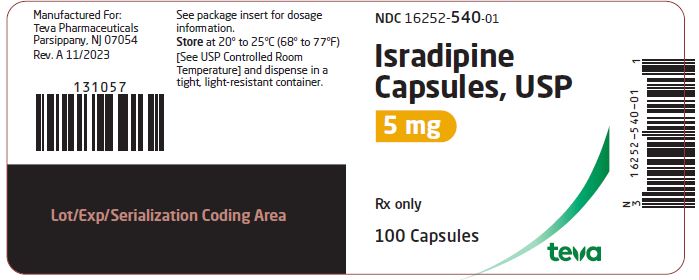
Isradipine 5 mg Capsule, 100-count
🆔 Identity & classification
Where does this data come from?
🏷️ RxNorm drug class
This medicine belongs to the Dihydropyridine Calcium Channel Blocker class.
Where does this data come from?
🏭 Manufacturer & labeler
Where does this data come from?
🩺 Clinical
Isradipine is used to treat high blood pressure. Isradipine is in a class of medications called calcium channel blockers. It works by relaxing the blood vessels so your heart does not have to pump as hard. High blood pressure is a common condition and when not treated, can cause damage to the brain, heart, blood vessels, kidneys and other parts of the body. Damage to these organs may cause heart disease, a heart attack, heart failure, stroke, kidney failure, loss of vision, and other problems. In addition to taking medication, making lifestyle changes will also help to control your blood press...
Read the full MedlinePlus article ↗- Isradipine is prescribed to lower your blood pressure. It works by relaxing and widening your blood vessels so your heart doesn't have to work as hard. You may not feel a dramatic...
- What exactly is isradipine supposed to do for me?
- Either way is fine. Food can delay how quickly the medicine peaks in your bloodstream by about an hour, but it doesn't change the total amount your body absorbs. The most important...
- Should I take it with food or on an empty stomach?
Patient education
Supplement & herbal interactions
Some supplements/herbs that may interact with Isradipine — tap one for details:
Isradipine may be associated with lower levels of 2 nutrients — worth a chat with your pharmacist, not a cause for alarm.
Where does this data come from?
Ask a licensed pharmacist directly — free, answered by our team.
💊 What it looks like
Where does this data come from?
🧪 Inactive Ingredients / Excipients
Inactive ingredients, also called excipients, are components of the drug product other than the active ingredient. They may include fillers, dyes, coatings, preservatives, flavors, or other formulation ingredients.
💡 Tap an ingredient (hover on desktop) to see what it is and why it’s used.
-
UNII 3SY5LH9PMK
Anhydrous lactose is a milk sugar with no water content. It acts as a filler and binder in tablets and capsules, adding bulk and helping ingredients stick together.
-
UNII EX438O2MRT
Ferric oxide yellow is a naturally occurring iron compound used as a colorant in medications. It gives tablets, capsules, and other forms a yellow or golden hue for identification and appearance.
-
UNII XM0M87F357
A dark iron oxide compound that gives medicines their black or dark color. It's used as a colorant in tablets and capsules to help identify the product and make it visually distinctive.
-
UNII 2G86QN327L
Gelatin is a protein derived from animal collagen, commonly used in medicines as a gelling agent and capsule material. It helps create soft or hard capsule shells that hold and release medication, and can also thicken liquid formulations.
-
UNII 70097M6I30
Magnesium stearate is a salt made from magnesium and stearic acid, a fatty substance. It's used in tablets and capsules as a lubricant and glidant to help ingredients flow smoothly during manufacturing and prevent sticking.
-
UNII WZH3C48M4T
Potassium hydroxide is a strong alkaline chemical used in medicines to adjust and maintain the pH level of liquid formulations, helping keep the product stable and the active ingredients effective.
-
UNII 46N107B71O
Shellac is a natural resin secreted by the lac beetle. It's used as a coating on tablets and capsules to control how quickly the medicine dissolves and to improve appearance and stability.
-
UNII ETJ7Z6XBU4
Silicon dioxide is a naturally occurring mineral used as a glidant and anti-caking agent. It helps powder ingredients flow smoothly and prevents clumping during manufacturing and storage.
-
UNII 368GB5141J
A detergent and foaming agent derived from coconut or palm oil. In medications, it helps break down and mix oil and water-based ingredients, aids in tablet disintegration, and improves how the drug dissolves and spreads in the mouth or digestive system.
-
UNII O8232NY3SJ
A plant-based carbohydrate derived from corn kernels. It acts as a filler to add bulk, a binder to hold ingredients together, and a disintegrant to help the tablet break apart in your stomach for absorption.
-
UNII 15FIX9V2JP
Titanium dioxide is a bright white mineral powder commonly used as a colorant and opacifying agent. It makes pills and tablets white or lighter in color and helps make coatings non-transparent.
11 inactive ingredients listed in the exact product block matched to this NDC.
Where does this data come from?
ingredient classCode="IACT" elements from the exact product block matched by this NDC. Label-section narrative from DailyMed / the openFDA label index is shown separately when available.Inactive ingredient FAQ
Are inactive ingredients the same for every manufacturer?
Why might an inactive ingredient be missing?
Can inactive ingredients matter?
💲 Pricing
A drug doesn't have one price. Each row is a different public payment system, and none is what you'd pay at the counter — that depends on your insurance. The ⓘ on each row explains what it measures.
| Price system | Per ea | Per package |
|---|---|---|
| Retail pharmacies payNADAC · weekly | $1.660 | $165.97 / 100 capsules |
| Medicaid paysCMS SDUD · 12 mo | $2.45 | $244.76 / 100 capsules |
| Medicare drug plans payPart D · Q2 2026 | $1.40 | $139.63 / 100 capsules |
Where does this data come from?
🔁 Therapeutic equivalents
| Product | Labeler | Pack | NADAC/unit | TE | Status | Price vs. this |
|---|---|---|---|---|---|---|
| Isradipine 5 mgthis 16252-0540-01 | Teva | 100 capsules | $1.660 | AB | Availability likely | — |
| Isradipine 5 mg 64850-0911-01 | Elite | 100 capsules | $1.660 | AB | Availability likely | — |
Where does this data come from?
⏳ Availability & generic status
This product is an FDA-approved generic. Other versions of the same drug are listed under Therapeutic equivalents, least expensive first.
Where does this data come from?
🗺️ Medicaid utilization & spend
📊 Medicare Part D spend CMS · PART D · 2026 (Q1)
📦 Packaging — all sizes for this product
| Package NDC | Description | Marketing start | Status |
|---|---|---|---|
| 16252-0540-01 You're viewing this | 100 CAPSULE in 1 BOTTLE (16252-540-01) | 2006-01-05 | Active |
📄 Full prescribing information FDA SPL
🎯 Indications and Usage ▾
INDICATIONS AND USAGE Hypertension Isradipine is indicated in the management of hypertension. It may be used alone or concurrently with thiazide-type diuretics.
⏱️ Dosage and Administration ▾
DOSAGE AND ADMINISTRATION The dosage of isradipine should be individualized. The recommended initial dose of isradipine is 2.5 mg b.i.d. alone or in combination with a thiazide diuretic. An antihypertensive response usually occurs within 2 to 3 hours.
Maximal response may require 2 to 4 weeks. If a satisfactory reduction in blood pressure does not occur after this period, the dose may be adjusted in increments of 5 mg/day at 2 to 4 week intervals up to a maximum of 20 mg/day. Most patients, however, show no additional response to doses above 10 mg/day, and adverse effects are increased in frequency above 10 mg/day.
The bioavailability of isradipine (increased AUC) is increased in elderly patients (above 65 years of age), patients with hepatic functional impairment, and patients with mild renal impairment. Ordinarily, the starting dose should still be 2.5 mg b.i.d. in these patients.
⛔ Contraindications ▾
CONTRAINDICATIONS Isradipine is contraindicated in individuals who have shown hypersensitivity to any of the ingredients in the formulation.
⚠️ Warnings ▾
WARNINGS None
🤒 Adverse Reactions ▾
ADVERSE REACTIONS In multiple dose U.S. studies in hypertension, 1228 patients received isradipine alone or in combination with other agents, principally a thiazide diuretic, 934 of them in controlled comparisons with placebo or active agents. An additional 652 patients (which includes 374 normal volunteers) received isradipine in U.S. studies of conditions other than hypertension, and 1321 patients received isradipine in non-U.S. studies. About 500 patients received isradipine in long-term hypertension studies, 410 of them for at least 6 months.
The adverse reaction rates given below are principally based on controlled hypertension studies, but rarer serious events are derived from all exposures to isradipine, including foreign marketing experience. Most adverse reactions were mild and related to the vasodilatory effects of isradipine (dizziness, edema, palpitations, flushing, tachycardia), and many were transient. About 5% of isradipine patients left studies prematurely because of adverse reactions (vs.
3% of placebo patients and 6% of active control patients), principally due to headache, edema, dizziness, palpitations, and gastrointestinal disturbances. The following table shows the most common adverse reactions, volunteered or elicited, considered by the investigator to be at least possibly drug related. The results for the isradipine treated patients are presented for all doses pooled together (reported by 1% or greater of patients receiving any dose of isradipine), and also for the two treatment regimens most applicable to the treatment of hypertension with isradipine: (1) initial and maintenance dose of 2.5 mg b.i.d., and (2) initial dose of 2.5 mg b.i.d. followed by maintenance dose of 5 mg b.i.d.
Isradipine Adverse Experience All Doses N=934 % 2.5 mg b.i.d. 199 % 5 mg b.i.d.† 150 % 10 mg b.i.d.†† 59 % Placebo % Active Controls* 414 % Headache Dizziness Edema Palpitations 13.7 7.3 7.2 4.0 12.6 8.0 3.5 1.0 10.7 5.3 8.7 4.7 22.0 3.4 8.5 5.1 14.1 4.4 3.0 1.4 9.4 8.2 2.9
1.5Fatigue Flushing Chest Pain Nausea 3.9 2.6 2.4 1.8 2.5 3.0 2.5 1.0 2.0 2.0 2.7 2.7 8.5 5.1 1.7 5.1 0.3 0.0 2.4 1.7 6.3 1.2 2.9
3.1Dyspnea Abdominal Discomfort Tachycardia Rash 1.8 1.7 1.5 1.5 0.5 0.0 1.0 1.5 2.7 3.3 1.3 2.0 3.4 1.7 3.4 1.7 1.0 1.7 0.3 0.3 2.2 3.9 0.5
0.7Pollakiuria Weakness Vomiting Diarrhea 1.5 1.2 1.1 1.1 2.0 0.0 1.0 0.0 1.3 0.7 1.3 2.7 3.4 0.0 0.0 3.4 0.0 0.0 0.3 2.0 <1.0 1.2 0.2 1.9 †Initial dose of 2.5 mg b.i.d. followed by maintenance dose of 5 mg b.i.d. †† Initial dose of 2.5 mg b.i.d. followed by sequential titration to 5 mg b.i.d., 7.5 mg b.i.d., and maintenance dose of 10 mg b.i.d. *Propranolol, prazosin, hydrochlorothiazide, enalapril, captopril. Except for headache, which is not clearly drug-related (see previous table), the more frequent adverse reactions listed show little change, or increase slightly, in frequency over time, as shown in the following table: Incidence Rates for Isradipine (All Doses) by Week (%) Week N 1 694 2 906 3 649 4 847 5 432 6 494 Adverse Reaction Headache Dizziness Edema Palpitations Fatigue Flushing 6.5 1.6 1.2 1.2 0.4 1.2 6.1 1.9 2.5 1.3 1.0 1.3 5.2 1.7 3.2 1.4 1.4 2.0 5.2 2.2 3.2 1.9 1.2 1.4 5.8 2.3 5.3 2.1 1.2 2.1 4.5 2.0 5.5 1.4 1.6
1.4Week N 7 153 8 377 9 261 10 362 11 107 12 105 Adverse Reaction Headache Dizziness Edema Palpitations Fatigue Flushing 2.0 2.0 5.9 1.3 2.0 3.3 2.7 1.9 5.0 0.8 2.7 1.3 1.9 2.3 4.6 0.8 1.5 1.1 2.8 3.9 4.7 1.7 1.4 0.8 2.8 4.7 3.8 1.9 0.9 0.0 3.8 3.8 3.8 2.9 1.9
0.0Edema, palpitations, fatigue, and flushing appear to be dose-related, especially at the higher doses of 15 to 20 mg/day. In open-label, long-term studies of up to two years in duration, the adverse events reported were generally the same as those reported in the short-term controlled trials. The overall frequencies of these adverse events were slightly higher in the long-term than in the controlled studies, but as in the controlled trials most adverse reactions were mild and transient.
The following…
🔄 Drug Interactions ▾
Drug Interactions Nitroglycerin: Isradipine has been safely coadministered with nitroglycerin. Hydrochlorothiazide: A study in normal healthy volunteers has shown that concomitant administration of isradipine and hydrochlorothiazide does not result in altered pharmacokinetics of either drug. In a study in hypertensive patients, addition of isradipine to existing hydrochlorothiazide therapy did not result in any unexpected adverse effects, and isradipine had an additional antihypertensive effect.
Propranolol: In a single dose study in normal volunteers, coadministration of propranolol had a small effect on the rate but no effect on the extent of isradipine bioavailability. Significant increases in AUC (27%) and C max (58%) and decreases in t max (23%) of propranolol were noted in this study. However, concomitant administration of 5 mg b.i.d. isradipine and 40 mg b.i.d. propranolol to healthy volunteers under steady-state conditions had no relevant effect on either drug’s bioavailability.
AUC and C max differences were <20% between isradipine given singly and in combination with propranolol, and between propranolol given singly and in combination with isradipine. Cimetidine: In a study in healthy volunteers, a one-week course of cimetidine at 400 mg b.i.d. with a single 5 mg dose of isradipine on the sixth day showed an increase in isradipine mean peak plasma concentrations (36%) and significant increase in area under the curve (50%). If isradipine therapy is initiated in a patient currently receiving cimetidine, careful monitoring for adverse reactions is advised and downward dose adjustment may be required.
Rifampicin: In a study in healthy volunteers, a six-day course of rifampicin at 600 mg/day followed by a single 5 mg dose of isradipine resulted in a reduction in isradipine levels to below detectable limits. If rifampicin therapy is required, isradipine concentrations and therapeutic effects are likely to be markedly reduced or abolished as a consequence of increased metabolism and higher clearance of isradipine. Warfarin: In a study in healthy volunteers, no clinically relevant pharmacokinetic or pharmacodynamic interaction between isradipine and racemic warfarin was seen when two single oral doses of warfarin (0.7 mg/kg body weight) were administered during 11 days of multiple-dose treatment with 5 mg b.i.d. isradipine.
Neither racemic warfarin nor isradipine binding to plasma proteins in vitro was altered by the addition of the other drug. Digoxin: The concomitant administration of isradipine and digoxin in a single-dose pharmacokinetic study did not affect renal, nonrenal and total body clearance of digoxin. Fentanyl Anesthesia: Severe hypotension has been reported during fentanyl anesthesia with concomitant use of a beta blocker and a calcium channel blocker.
Even though such interactions have not been seen in clinical studies with isradipine, an increased volume of circulating fluids might be required if such an interaction were to occur.
🤰 Pregnancy ▾
Pregnancy Pregnancy Category C: Isradipine was administered orally to rats and rabbits during organogenesis. Treatment of pregnant rats with doses of 6, 20, or 60 mg/kg/day produced a significant reduction in maternal weight gain during treatment with the highest dose (150 times the maximum recommended human daily dose) but with no lasting effects on the mother or the offspring. Treatment of pregnant rabbits with doses of 1, 3, or 10 mg/kg/day (2.5, 7.5, and 25 times the maximum recommended human daily dose) produced decrements in maternal body weight gain and increased fetal resorption at the two higher doses.
There was no evidence of embryotoxicity at doses which were not maternotoxic and no evidence of teratogenicity at any dose tested. In a peri/postnatal administration study in rats, reduced maternal body weight gain during late pregnancy at oral doses of 20 and 60 mg/kg/day isradipine was associated with reduced birth weights and decreased peri and postnatal pup survival. There are no adequate and well controlled studies in pregnant women.
The use of isradipine during pregnancy should only be considered if the potential benefit outweighs potential risks.
🧒 Pediatric Use ▾
Pediatric Use Safety and effectiveness in pediatric patients have not been established.
🆘 Overdosage ▾
OVERDOSAGE Minimal empirical data are available on isradipine overdosage. Three individual suicide attempts with dosages of isradipine reported to be from 20 mg up to 100 mg resulted in lethargy, sinus tachycardia and, in the case of the person ingesting 100 mg, transient hypotension which responded to fluid therapy. A foreign report of the ingestion of 200 mg of isradipine with ethanol resulted only in flushing, tachycardia with ST depression on ECG, and hypotension, all of which were reversible.
The ingestion of 5 mg of isradipine by a 22-month old child and the accidental ingestion of 100 mg of isradipine by a 58-year old female did not result in any sequelae. Available data suggest that, as with other dihydropyridines, overdosage with isradipine might result in excessive peripheral vasodilatation with subsequent marked and probably prolonged systemic hypotension, and tachycardia. Emesis, gastric lavage, administration of activated charcoal followed in 30 minutes by a saline cathartic would be reasonable therapy.
Isradipine is highly protein-bound and not removed by hemodialysis. Overdosage characterized by clinically significant hypotension should be treated with active cardiovascular support including monitoring of cardiac and respiratory function, elevation of lower extremities, and attention to circulating fluid volume and urine output. A vasoconstrictor (such as epinephrine, norepinephrine, or levarterenol) may be helpful in restoring a normotensive state, provided that there is no contraindication to its use.
Refractory hypotension or AV conduction disturbances may be treated with intravenous calcium salts, or glucagon. Cimetidine should be withheld in such instances due to the risk of further increasing plasma isradipine levels. Significant lethality was observed in mice given oral doses of over 200 mg/kg and rabbits given about 50 mg/kg of isradipine.
Rats tolerated doses of over 2000 mg/kg without effects on survival.
🧬 Clinical Pharmacology ▾
CLINICAL PHARMACOLOGY Mechanism of Action Isradipine is a dihydropyridine calcium channel blocker. It binds to calcium channels with high affinity and specificity and inhibits calcium flux into cardiac and smooth muscle. The effects observed in mechanistic experiments in vitro and studied in intact animals and man are compatible with this mechanism of action and are typical of the class.
Except for diuretic activity, the mechanism of which is not clearly understood, the pharmacodynamic effects of isradipine observed in whole animals can also be explained by calcium channel blocking activity, especially dilating effects in arterioles which reduce systemic resistance and lower blood pressure, with a small increase in resting heart rate. Although like other dihydropyridine calcium channel blockers, isradipine has negative inotropic effects in vitro, studies conducted in intact anesthetized animals have shown that the vasodilating effect occurs at doses lower than those which affect contractility.
In patients with normal ventricular function, isradipine’s afterload reducing properties lead to some increase in cardiac output. Effects in patients with impaired ventricular function have not been fully studied. Clinical Effects Dose-related reductions in supine and standing blood pressure are achieved within 2 to 3 hours following single oral doses of 2.5 mg, 5 mg, 10 mg, and 20 mg isradipine, with a duration of action (at least 50% of peak response) of more than 12 hours following administration of the highest dose.
Isradipine has been shown in controlled, double-blind clinical trials to be an effective antihypertensive agent when used as monotherapy, or when added to therapy with thiazide-type diuretics. During chronic administration, divided doses (b.i.d.) in the range of 5 to 20 mg daily have been shown to be effective, with response at trough (prior to next dose) over 50% of the peak blood pressure effect. The response is dose-related between 5 to 10 mg daily.
Isradipine is equally effective in reducing supine, sitting, and standing blood pressure. On chronic administration, increases in resting pulse rate averaged about 3 to 5 beats/min. These increases were not dose-related.
Hemodynamics In man, peripheral vasodilation produced by isradipine is reflected by decreased systemic vascular resistance and increased cardiac output. Hemodynamic studies conducted in patients with normal left ventricular function produced, following intravenous isradipine administration, increases in cardiac index, stroke volume index, coronary sinus blood flow, heart rate, and peak positive left ventricular dP/dt. Systemic, coronary, and pulmonary vascular resistance was decreased.
These studies were conducted with doses of isradipine which produced clinically significant decreases in blood pressure. The clinical consequences of these hemodynamic effects, if any, have not been evaluated. Effects on heart rate are variable, dependent upon rate of administration and presence of underlying cardiac condition.
While increases in both peak positive dP/dt and LV ejection fraction are seen when intravenous isradipine is given, it is impossible to conclude that these represent a positive inotropic effect due to simultaneous changes in preload and afterload. In patients with coronary artery disease undergoing atrial pacing during cardiac catheterization, intravenous isradipine diminished abnormalities of systolic performance. In patients with moderate left ventricular dysfunction, oral and intravenous isradipine in doses which reduce blood pressure by 12% to 30%, resulted in improvement in cardiac index without increase in heart rate, and with no change or reduction in pulmonary capillary wedge pressure.
Combination of isradipine and propranolol did not significantly affect left ventricular dP/dt max. The clinical consequences of these effects have not been evaluated. Electrophysiologic Effects In general, no detrimental effects on the cardiac conduction system w…
🧬 Mechanism of Action ▾
Mechanism of Action Isradipine is a dihydropyridine calcium channel blocker. It binds to calcium channels with high affinity and specificity and inhibits calcium flux into cardiac and smooth muscle. The effects observed in mechanistic experiments in vitro and studied in intact animals and man are compatible with this mechanism of action and are typical of the class.
Except for diuretic activity, the mechanism of which is not clearly understood, the pharmacodynamic effects of isradipine observed in whole animals can also be explained by calcium channel blocking activity, especially dilating effects in arterioles which reduce systemic resistance and lower blood pressure, with a small increase in resting heart rate. Although like other dihydropyridine calcium channel blockers, isradipine has negative inotropic effects in vitro, studies conducted in intact anesthetized animals have shown that the vasodilating effect occurs at doses lower than those which affect contractility.
In patients with normal ventricular function, isradipine’s afterload reducing properties lead to some increase in cardiac output. Effects in patients with impaired ventricular function have not been fully studied.
📦 How Supplied / Storage and Handling ▾
HOW SUPPLIED Isradipine Capsules, USP 2.5 mg Brown opaque, imprinted with “ ” IS 2.5. Bottles of 100 capsules (NDC 16252-539-01) 5 mg Caramel opaque, imprinted with “ ” IS 5. Bottles of 100 capsules (NDC 16252-540-01) Store and Dispense Store at 20° to 25°C (68° to 77°F) [See USP Controlled Room Temperature] and dispense in a tight, light-resistant container.
Manufactured For: Teva Pharmaceuticals Parsippany, NJ 07054 Rev. A 11/2023 Cobalt symbol Cobalt symbol
📋 Description ▾
DESCRIPTION Isradipine is a calcium antagonist available for oral administration in capsules containing 2.5 mg or 5 mg. The structural formula of isradipine is: Chemically, isradipine is 3,5-Pyridinedicarboxylic acid, 4-(4-benzofurazanyl)-1,4-dihydro-2,6-dimethyl-, methyl 1-methylethyl ester. Isradipine is a yellow, fine crystalline powder which is odorless or has a faint characteristic odor.
Isradipine is practically insoluble in water (<10 mg/L at 37ºC), but is soluble in ethanol and freely soluble in acetone, chloroform and methylene chloride. Active Ingredient: isradipine Inactive Ingredients: colloidal silicon dioxide, red iron oxide (2.5 mg capsule only), yellow iron oxide, gelatin, anhydrous lactose, magnesium stearate, sodium lauryl sulfate, starch (corn), titanium dioxide, black ink: black iron oxide, shellac, potassium hydroxide and propylene glycol. formula