
Itraconazole 100 mg Capsule, Coated Pellets — NDC 16714-743-01 (Billing 16714-0743-01)
This is a package of Itraconazole 100 mg Capsule, Coated Pellets from NorthStar RxLLC, marketed since Sep 2017 and currently FDA-listed.
NDC database record
One package, one record: these facts belong to NDC 16714-743-01 alone.
- Record
- FDA NDC Directory package listing · Human prescription drug
- Code segments
- 16714 labeler · 743 product · 01 package
- Package marketed since
- Sep 1, 2017
- Sample package
- No — commercial package
- Listing certified through
- Dec 31, 2026
- Barcode (UPC-A, from the NDC)
- 3 1671474301 1
- FDA record last changed
- Jul 24, 2026
Identity & classification
Regulatory identifiers FDA, NLM and CMS codes for this package
Drug-database identifiers Medi-Span GPI and First Databank GCN / HICL / AHFS classification
- GSN (GCN sequence number): 016949
- GCN: 49101
- GPI-14 (Medi-Span): 11407035000120
- HICL (First Databank): 006503
- AHFS class code: 08:14.08.00
- RxCUI (RxNorm): 311204
Where does this data come from?
- FDA openFDA NDC Directory · synced Oct 8, 2026
- FDA label on DailyMed · label index refreshed Oct 8, 2026
- RxNorm (NLM RxNav) · catalog refreshed Oct 1, 2026
- Medi-Span GPI (licensed)
- First Databank (licensed) · refreshed Oct 8, 2026
RxNorm drug class
This medicine belongs to the Azole Antifungal class.
Where does this data come from?
- RxClass (NLM) · catalog refreshed Oct 1, 2026
Clinical
- It treats fungal infections. The capsules treat blastomycosis, histoplasmosis and aspergillosis, and some capsules also treat nail fungus. The oral solution treats thrush in the mo...
- Capsules go down whole with a full meal, since food helps you absorb them. Tolsura also needs food. The oral solution is swished in your mouth and swallowed, ideally without food....
- Nausea, diarrhea, vomiting, stomach pain, rash and headache are the more common ones. Call your doctor if you have trouble breathing, swelling in your legs, yellow skin or eyes, or...
- Not always. Itraconazole raises levels of many drugs, and some, like simvastatin, methadone and quinidine, must never be combined with it. Give me your full list, including over-th...
Patient education
Supplement & herbal interactions
Some supplements/herbs that may interact with Itraconazole — tap one for details:
Where does this data come from?
- MedlinePlus (NLM) · refreshed Oct 8, 2026
- FDA label on DailyMed · label index refreshed Oct 8, 2026
Ask a licensed pharmacist directly — free, answered by our team.
Pricing
A drug doesn't have one price. Each row is a different public payment system, and none is what you'd pay at the counter — that depends on your insurance. The ⓘ on each row explains what it measures.
| Price system | Per each | Per package |
|---|---|---|
| Retail pharmacies payNADAC · weekly | Not in the retail survey — common for institutional, discontinued, or low-volume packs. | |
| Medicaid paysCMS SDUD · 12 mo | No recent Medicaid claims on file for this NDC — rare and low-volume NDCs are suppressed in the public data. | |
| Medicare drug plans payPart D · Q2 2026 | $1.36 | $38.18 / 28 capsules |
Where does this data come from?
- CMS NADAC weekly file
- CMS ASP pricing files · refreshed Sep 20, 2026
- CMS Medicaid State Drug Utilization Data · refreshed Oct 8, 2026
- CMS Part D plan pricing files · refreshed Sep 24, 2026
- VA National Acquisition Center price file
Packaging — all sizes for this product
| Package NDC | Description | Per unit | Per pack | Marketing start | Marketing end | Status |
|---|---|---|---|---|---|---|
| 16714-0743-01 You're viewing this | 7 BLISTER PACK in 1 CARTON / 4 CAPSULE, COATED PELLETS in 1 BLISTER PACK | — | — | 2017-09-01 | — | Active |
| 16714-0743-02 16714-743-02 Main listing | 30 CAPSULE, COATED PELLETS in 1 BOTTLE | $0.9102 / ea | $27.31 | 2017-09-01 | — | Active |
This pack shows little to no recent Medicaid volume — the 30 capsules pack carries most fills. See all packs ↓
Pack size FAQ
What quantity is in this package?
What NDC number is used to bill for this package of Itraconazole 100 mg Capsule, Coated Pellets?
Prices are the latest CMS NADAC pharmacy acquisition cost per NDC; per-pack figures are per-unit × pack quantity, shown only when the pack is denominated in the same measure NADAC prices.
Therapeutic equivalents
| Product | Labeler | Pack | NADAC/unit | TE | Status | Price vs. this |
|---|---|---|---|---|---|---|
| itraconazole 100 mg 10147-1700-03 | Patriot | 30 capsules | $0.910 | AB | Availability likely | — |
| Itraconazole 100 mg 16571-0245-03 | Rising | 30 capsules | $0.910 | AB | Availability likely | — |
| Itraconazole 100 mg 50268-0450-12 | AvPAK | 20 capsules | $0.910 | AB | Availability likely | — |
| Itraconazole 100 mg 60687-0299-25 | American | 30 capsules | $0.910 | AB | Availability likely | — |
| Itraconazole 100 mg 62332-0204-04 | Alembic | 28 capsules | $0.910 | AB | Availability likely | — |
| Itraconazole 100 mg 65162-0630-03 | Amneal | 30 capsules | $0.910 | AB | Availability likely | — |
| Sporanox 100 mg 50458-0290-01 | Janssen | 30 capsules | $28.357 | AB | Availability likely | — |
| Itraconazole 100 mg 13668-0463-05 | Torrent | 500 capsules | — | AB | FDA listed | — |
| Itraconazole 100 mgthis 16714-0743-01 | NorthStar | 4 capsules | — | AB | FDA listed | — |
| Itraconazole 100 mg 46708-0204-04 | Alembic | 28 capsules | — | AB | FDA listed | — |
| Itraconazole 100 mg 67877-0454-05 | Ascend | 500 capsules | — | AB | FDA listed | — |
Where does this data come from?
- FDA openFDA NDC Directory · synced Oct 8, 2026
- FDA Orange Book · refreshed Oct 3, 2026
- CMS NADAC weekly file
Availability & generic status
This product is an FDA-approved generic. Other versions of the same drug are listed under Therapeutic equivalents, least expensive first.
Where does this data come from?
- FDA Orange Book · refreshed Oct 3, 2026
What it looks like
Where does this data come from?
- FDA label on DailyMed · label index refreshed Oct 8, 2026
Inactive Ingredients / Excipients
Inactive ingredients, also called excipients, are components of the drug product other than the active ingredient. They may include fillers, dyes, coatings, preservatives, flavors, or other formulation ingredients.
🧪 Avoiding an ingredient? See Itraconazole inactive ingredients by manufacturer: every current product's list side by side, so you can ask your pharmacy for the version that does not list it.
💡 Tap an ingredient (hover on desktop) to see what it is and why it’s used.
-
UNII 3K9958V90M
A liquid solvent derived from fermentation or chemical synthesis. In medicines, alcohol dissolves active ingredients, helps preserve the product, and improves how the body absorbs certain drugs.
-
UNII 5138Q19F1X
Ammonia is a colorless gas made from nitrogen and hydrogen. It's used in medicines as a pH buffer to maintain the correct acidity level and help keep the product stable.
-
UNII 8PJ61P6TS3
Butyl alcohol is a clear liquid organic solvent derived from petroleum or natural sources. In medicines, it helps dissolve active ingredients and serves as a solvent in liquid formulations and some topical products.
-
UNII H3R47K3TBD
FD&C Blue No. 1 is a synthetic blue dye approved for use in foods and medicines. It serves as a colorant to give the medication its distinctive appearance and help with product identification.
-
UNII PN2ZH5LOQY
A synthetic red dye approved by the FDA for use in foods, medicines, and cosmetics. It serves as a colorant to make tablets, capsules, and liquids visually distinctive for product identification.
-
UNII WZB9127XOA
A synthetic red dye used to color medications and make them easier to identify. It serves as a colorant in tablets, capsules, and liquid formulations.
-
UNII 2G86QN327L
Gelatin is a protein derived from animal collagen, commonly used in medicines as a gelling agent and capsule material. It helps create soft or hard capsule shells that hold and release medication, and can also thicken liquid formulations.
-
UNII R75537T0T4
Hypromellose 2910 is a plant-derived thickening agent made from cellulose. It serves as a binder that holds tablet ingredients together, a film-coating for pills, and a viscosity controller in liquids.
-
UNII ND2M416302
Isopropyl alcohol is a clear liquid solvent derived from petroleum. In medicines, it dissolves active ingredients and other components, helps the product flow smoothly, and aids in sterilization during manufacturing.
-
UNII 588X2YUY0A
Methylene chloride is a volatile organic solvent used in pharmaceutical manufacturing to dissolve and process active ingredients and other substances. It evaporates during production, helping create tablets, capsules, or coatings with uniform quality.
-
UNII LQA7B6G8JG
A synthetic polymer made by combining water-soluble compounds. It acts as a surfactant and solubilizer to help mix oil and water-based ingredients, improving the medicine's texture and how active ingredients dissolve.
-
UNII 5WKN5KL2O8
Polyethylene glycol 20000 is a synthetic polymer derived from petroleum. In medications, it acts as a binder to hold ingredients together, a filler to add bulk, and a lubricant to improve how the medicine flows during manufacturing.
-
UNII WZH3C48M4T
Potassium hydroxide is a strong alkaline chemical used in medicines to adjust and maintain the pH level of liquid formulations, helping keep the product stable and the active ingredients effective.
-
UNII 6DC9Q167V3
Propylene glycol is a clear liquid derived from petroleum or vegetable sources. It acts as a solvent, humectant, and preservative in medicines, helping dissolve active ingredients and maintain product stability.
-
UNII 46N107B71O
Shellac is a natural resin secreted by the lac beetle. It's used as a coating on tablets and capsules to control how quickly the medicine dissolves and to improve appearance and stability.
-
UNII ETJ7Z6XBU4
Silicon dioxide is a naturally occurring mineral used as a glidant and anti-caking agent. It helps powder ingredients flow smoothly and prevents clumping during manufacturing and storage.
-
UNII 368GB5141J
A detergent and foaming agent derived from coconut or palm oil. In medications, it helps break down and mix oil and water-based ingredients, aids in tablet disintegration, and improves how the drug dissolves and spreads in the mouth or digestive system.
-
UNII O8232NY3SJ
A plant-based carbohydrate derived from corn kernels. It acts as a filler to add bulk, a binder to hold ingredients together, and a disintegrant to help the tablet break apart in your stomach for absorption.
-
UNII C151H8M554
A natural sugar derived from sugar cane or sugar beets. It's used as a sweetener, filler, and binder to improve taste, add bulk, and help hold tablet or capsule ingredients together.
-
UNII 7SEV7J4R1U
A powder made from a naturally occurring mineral. In medicines, talc works as a glidant and anti-caking agent, helping tablets and capsules flow smoothly during manufacturing and preventing clumping.
-
UNII 15FIX9V2JP
Titanium dioxide is a bright white mineral powder commonly used as a colorant and opacifying agent. It makes pills and tablets white or lighter in color and helps make coatings non-transparent.
21 inactive ingredients listed in the exact product block matched to this NDC.
Where does this data come from?
ingredient classCode="IACT" elements from the exact product block matched by this NDC. Label-section narrative from DailyMed / the openFDA label index is shown separately when available.- FDA label on DailyMed · label index refreshed Oct 8, 2026
- FDA openFDA NDC Directory · synced Oct 8, 2026
Inactive ingredient FAQ
Are inactive ingredients the same for every manufacturer?
Why might an inactive ingredient be missing?
Can inactive ingredients matter?
Manufacturer & labeler
More NDCs from NorthStar RxLLC labeler code 16714
- Desonide .5 mg/g Cream NDC 16714-729-01
- Celecoxib 50 mg Capsule NDC 16714-731-01
- Celecoxib 100 mg Capsule NDC 16714-732-01
- Celecoxib 200 mg Capsule NDC 16714-733-01
- Celecoxib 400 mg Capsule NDC 16714-734-01
- Doxorubicin Hydrochloride 2 mg/mL Injectable, Liposomal NDC 16714-742-01
- atomoxetine 10 mg Capsule NDC 16714-755-01
- atomoxetine 18 mg Capsule NDC 16714-756-01
- atomoxetine 25 mg Capsule NDC 16714-757-01
- atomoxetine 40 mg Capsule NDC 16714-758-01
- atomoxetine 60 mg Capsule NDC 16714-759-01
- atomoxetine 80 mg Capsule NDC 16714-760-01
Where does this data come from?
- FDA openFDA NDC Directory · synced Oct 8, 2026
- Drugs@FDA
Full prescribing information FDA SPL
🚨 Boxed Warning ▾
BOXED WARNING Congestive Heart Failure, Cardiac Effects and Drug Interactions: Itraconazole capsules should not be administered for the treatment of onychomycosis in patients with evidence of ventricular dysfunction such as congestive heart failure (CHF) or a history of CHF. If signs or symptoms of congestive heart failure occur during administration of itraconazole capsules, discontinue administration. When itraconazole was administered intravenously to dogs and healthy human volunteers, negative inotropic effects were seen.
(See CONTRAINDICATIONS , WARNINGS , PRECAUTIONS . Drug Interactions , ADVERSE REACTIONS : Post-marketing Experience , and CLINICAL PHARMACOLOGY : Special Populations for more information.) Drug Interactions: Coadministration of the following drugs are contraindicated with Itraconazole Capsules: methadone, disopyramide, dofetilide, dronedarone, quinidine, isavuconazole, ergot alkaloids (such as dihydroergotamine, ergometrine (ergonovine), ergotamine, methylergometrine (methylergonovine)), irinotecan, lurasidone, oral midazolam, pimozide, triazolam, felodipine, nisoldipine, ivabradine, ranolazine, eplerenone, cisapride, naloxegol, lomitapide, lovastatin, simvastatin, avanafil, ticagrelor.
In addition, coadministration with colchicine, fesoterodine and solifenacin is contraindicated in subjects with varying degrees of renal or hepatic impairment, and coadministration with eliglustat is contraindicated in subjects that are poor or intermediate metabolizers of CYP2D6 and in subjects taking strong or moderate CYP2D6 inhibitors. Coadministration with venetoclax is contraindicated in patients with chronic lymphocytic leukemia (CLL)/small lymphocytic lymphoma (SLL) during the dose initiation and ramp-up phase of venetoclax.
See PRECAUTIONS : Drug Interactions Section for specific examples. Coadministration with itraconazole can cause elevated plasma concentrations of these drugs and may increase or prolong both the pharmacologic effects and/or adverse reactions to these drugs. For example, increased plasma concentrations of some of these drugs can lead to QT prolongation and ventricular tachyarrhythmias including occurrences of torsades de pointes, a potentially fatal arrhythmia.
See CONTRAINDICATIONS and WARNINGS Sections, and PRECAUTIONS : Drug Interactions Section for specific examples.
🎯 Indications and Usage ▾
INDICATIONS AND USAGE Itraconazole capsules are indicated for the treatment of the following fungal infections in immunocompromised and non-immunocompromised patients: 1. Blastomycosis, pulmonary and extrapulmonary 2. Histoplasmosis, including chronic cavitary pulmonary disease and disseminated, non-meningeal histoplasmosis, and 3.
Aspergillosis, pulmonary and extrapulmonary, in patients who are intolerant of or who are refractory to amphotericin B therapy. Specimens for fungal cultures and other relevant laboratory studies (wet mount, histopathology, serology) should be obtained before therapy to isolate and identify causative organisms. Therapy may be instituted before the results of the cultures and other laboratory studies are known; however, once these results become available, antiinfective therapy should be adjusted accordingly.
Itraconazole capsules are also indicated for the treatment of the following fungal infections in non-immunocompromised patients: 1. Onychomycosis of the toenail, with or without fingernail involvement, due to dermatophytes (tinea unguium), and 2. Onychomycosis of the fingernail due to dermatophytes (tinea unguium).
Prior to initiating treatment, appropriate nail specimens for laboratory testing (KOH preparation, fungal culture, or nail biopsy) should be obtained to confirm the diagnosis of onychomycosis. (See CLINICAL PHARMACOLOGY: Special Populations , CONTRAINDICATIONS , WARNINGS, and ADVERSE REACTIONS: Post-marketing Experience for more information.) Description of Clinical Studies: Blastomycosis: Analyses were conducted on data from two open-label, non-concurrently controlled studies (N=73 combined) in patients with normal or abnormal immune status.
The median dose was 200 mg/day. A response for most signs and symptoms was observed within the first 2 weeks, and all signs and symptoms cleared between 3 and 6 months. Results of these two studies demonstrated substantial evidence of the effectiveness of itraconazole for the treatment of blastomycosis compared with the natural history of untreated cases.
Histoplasmosis: Analyses were conducted on data from two open-label, non-concurrently controlled studies (N=34 combined) in patients with normal or abnormal immune status (not including HIV-infected patients). The median dose was 200 mg/day. A response for most signs and symptoms was observed within the first 2 weeks, and all signs and symptoms cleared between 3 and 12 months.
Results of these two studies demonstrated substantial evidence of the effectiveness of itraconazole for the treatment of histoplasmosis, compared with the natural history of untreated cases. Histoplasmosis in HIV-infected patients: Data from a small number of HIV-infected patients suggested that the response rate of histoplasmosis in HIV-infected patients is similar to that of non-HIV-infected patients. The clinical course of histoplasmosis in HIV-infected patients is more severe and usually requires maintenance therapy to prevent relapse.
Aspergillosis: Analyses were conducted on data from an open-label, "single-patient-use" protocol designed to make itraconazole available in the U.S. for patients who either failed or were intolerant of amphotericin B therapy (N=190). The findings were corroborated by two smaller open-label studies (N=31 combined) in the same patient population. Most adult patients were treated with a daily dose of 200 to 400 mg, with a median duration of 3 months.
Results of these studies demonstrated substantial evidence of effectiveness of itraconazole as a second-line therapy for the treatment of aspergillosis compared with the natural history of the disease in patients who either failed or were intolerant of amphotericin B therapy. Onychomycosis of the toenail: Analyses were conducted on data from three double-blind, placebo-controlled studies (N=214 total;110 given itraconazole capsules) in which patients with onychomycosis of the toenails received 200 mg of itraconazole capsules once daily for 12 c… [Excerpted — this section continues on DailyMed.]
⏱️ Dosage and Administration ▾
DOSAGE & ADMINISTRATION Itraconazole capsules should be taken with a full meal to ensure maximal absorption. Itraconazole capsules must be swallowed whole. Itraconazole capsules is a different preparation than itraconazole oral solution and should not be used interchangeably.
Treatment of Blastomycosis and Histoplasmosis: The recommended dose is 200 mg once daily (2 capsules). If there is no obvious improvement, or there is evidence of progressive fungal disease, the dose should be increased in 100-mg increments to a maximum of 400 mg daily. Doses above 200 mg/day should be given in two divided doses.
Treatment of Aspergillosis: A daily dose of 200 to 400 mg is recommended. Treatment in Life-Threatening Situations: In life-threatening situations, a loading dose should be used. Although clinical studies did not provide for a loading dose, it is recommended, based on pharmacokinetic data, that a loading dose of 200 mg (2 capsules) three times daily (600 mg/day) be given for the first 3 days of treatment.
Treatment should be continued for a minimum of three months and until clinical parameters and laboratory tests indicate that the active fungal infection has subsided. An inadequate period of treatment may lead to recurrence of active infection. Itraconazole capsules and itraconazole oral solution should not be used interchangeably.
Only the oral solution has been demonstrated effective for oral and/or esophageal candidiasis. Treatment of Onychomycosis: Toenails with or without fingernail involvement: The recommended dose is 200 mg (2 capsules) once daily for 12 consecutive weeks. Treatment of Onychomycosis: Fingernails only: The recommended dosing regimen is 2 treatment courses, each consisting of 200 mg (2 capsules) b.i.d.
(400 mg/day) for 1 week. The courses are separated by a 3-week period without itraconazole capsules. Use in Patients with Renal Impairment: Limited data are available on the use of oral itraconazole in patients with renal impairment.
Caution should be exercised when this drug is administered in this patient population. (See CLINICAL PHARMACOLOGY: Special Populations and PRECAUTIONS .) Use in Patients with Hepatic Impairment: Limited data are available on the use of oral itraconazole in patients with hepatic impairment. Caution should be exercised when this drug is administered in this patient population.
(See CLINICAL PHARMACOLOGY: Special Populations , WARNINGS , and PRECAUTIONS .)
⛔ Contraindications ▾
CONTRAINDICATIONS Congestive Heart Failure Itraconazole capsules should not be administered for the treatment of onychomycosis in patients with evidence of ventricular dysfunction such as congestive heart failure (CHF) or a history of CHF. (See BOXED WARNING , WARNINGS , PRECAUTIONS : Drug Interactions -Calcium Channel Blockers, ADVERSE REACTIONS : Post-marketing Experience, and CLINICAL PHARMACOLOGY : Special Populations.) Drug Interactions Coadministration of a number of CYP3A4 substrates are contraindicated with itraconazole capsules.
Plasma concentrations increase for the following drugs: methadone, disopyramide, dofetilide, dronedarone, quinidine, isavuconazole, ergot alkaloids (such as dihydroergotamine, ergometrine (ergonovine), ergotamine, methylergometrine (methylergonovine)), irinotecan, lurasidone, oral midazolam, pimozide, triazolam, felodipine, nisoldipine, ivabradine, ranolazine, eplerenone, cisapride, naloxegol, lomitapide, lovastatin, simvastatin, avanafil, ticagrelor. In addition, coadministration with colchicine, fesoterodine and solifenacin is contraindicated in subjects with varying degrees of renal or hepatic impairment, and coadministration with eliglustat is contraindicated in subjects that are poor or intermediate metabolizers of CYP2D6 and in subjects taking strong or moderate CYP2D6 inhibitors.
(See PRECAUTIONS : Drug Interactions Section for specific examples.) This increase in drug concentrations caused by coadministration with itraconazole may increase or prolong both the pharmacologic effects and/or adverse reactions to these drugs. For example, increased plasma concentrations of some of these drugs can lead to QT prolongation and ventricular tachyarrhythmias including occurrences of torsade de pointes, a potentially fatal arrhythmia. Specific examples are listed in PRECAUTIONS : Drug Interactions.
Coadministration with venetoclax is contraindicated in patients with CLL/SLL during the dose initiation and ramp-up phase of venetoclax due to the potential for an increased risk of tumor lysis syndrome. Itraconazole capsules should not be administered for the treatment of onychomycosis to pregnant patients or to women contemplating pregnancy. Itraconazole capsules are contraindicated for patients who have shown hypersensitivity to itraconazole.
There is limited information regarding cross-hypersensitivity between itraconazole and other azole antifungal agents. Caution should be used when prescribing itraconazole capsules to patients with hypersensitivity to other azoles.
⚠️ Warnings ▾
WARNINGS Hepatic Effects Itraconazole capsules has been associated with rare cases of serious hepatotoxicity, including liver failure and death. Some of these cases had neither pre-existing liver disease nor a serious underlying medical condition, and some of these cases developed within the first week of treatment. If clinical signs or symptoms develop that are consistent with liver disease, treatment should be discontinued and liver function testing performed.
Continued itraconazole capsules use or reinstitution of treatment with itraconazole capsules are strongly discouraged unless there is a serious or life-threatening situation where the expected benefit exceeds the risk. (See PRECAUTIONS : Information for Patients and ADVERSE REACTIONS .) Cardiac Dysrhythmias Life-threatening cardiac dysrhythmias and/or sudden death have occurred in patients using drugs such as cisapride, pimozide, methadone, or quinidine concomitantly with itraconazole capsules and/or other CYP3A4 inhibitors.
Concomitant administration of these drugs with itraconazole capsules are contraindicated. (See BOXED WARNING , CONTRAINDICATIONS , and PRECAUTIONS : Drug Interactions .) Cardiac Disease Itraconazole capsules should not be administered for the treatment of onychomycosis in patients with evidence of ventricular dysfunction such as congestive heart failure (CHF) or a history of CHF. Itraconazole capsules should not be used for other indications in patients with evidence of ventricular dysfunction unless the benefit clearly outweighs the risk.
For patients with risk factors for congestive heart failure, physicians should carefully review the risks and benefits of itraconazole capsules therapy. These risk factors include cardiac disease such as ischemic and valvular disease; significant pulmonary disease such as chronic obstructive pulmonary disease; and renal failure and other edematous disorders. Such patients should be informed of the signs and symptoms of CHF, should be treated with caution, and should be monitored for signs and symptoms of CHF during treatment.
If signs or symptoms of CHF appear during administration of itraconazole capsules, discontinue administration. Itraconazole has been shown to have a negative inotropic effect. When itraconazole was administered intravenously to anesthetized dogs, a dose-related negative inotropic effect was documented.
In a healthy volunteer study of itraconazole intravenous infusion, transient, asymptomatic decreases in left ventricular ejection fraction were observed using gated SPECT imaging; these resolved before the next infusion, 12 hours later. Itraconazole capsules has been associated with reports of congestive heart failure. In post-marketing experience, heart failure was more frequently reported in patients receiving a total daily dose of 400 mg although there were also cases reported among those receiving lower total daily doses.
Calcium channel blockers can have negative inotropic effects which may be additive to those of itraconazole. In addition, itraconazole can inhibit the metabolism of calcium channel blockers. Therefore, caution should be used when co-administering itraconazole and calcium channel blockers due to an increased risk of CHF.
Concomitant administration of itraconazole capsules and felodipine or nisoldipine is contraindicated. Cases of CHF, peripheral edema, and pulmonary edema have been reported in the post-marketing period among patients being treated for onychomycosis and/or systemic fungal infections. (See CLINICAL PHARMACOLOGY : Special Populations , CONTRAINDICATIONS , PRECAUTIONS : Drug Interactions , and ADVERSE REACTIONS : Post-marketing Experience for more information.) Interaction potential: Itraconazole capsules has a potential for clinically important drug interactions.
Coadministration of specific drugs with itraconazole may result in changes in efficacy of itraconazole and/or the coadministered drug, life-threatening effects and/or sudden death. Drugs that are con… [Excerpted — this section continues on DailyMed.]
🤒 Adverse Reactions ▾
ADVERSE REACTIONS Because clinical trials are conducted under widely varying conditions, adverse reaction rates observed in the clinical trials of a drug cannot be directly compared to rates in the clinical trials of another drug and may not reflect the rates observed in clinical practice. Itraconazole capsules has been associated with rare cases of serious hepatotoxicity, including liver failure and death. Some of these cases had neither pre-existing liver disease nor a serious underlying medical condition.
If clinical signs or symptoms develop that are consistent with liver disease, treatment should be discontinued and liver function testing performed. The risks and benefits of itraconazole capsules use should be reassessed. (See WARNINGS: Hepatic Effects and PRECAUTIONS : Hepatotoxicity and Information for Patients .) Adverse Events in the Treatment of Systemic Fungal Infections Adverse event data were derived from 602 patients treated for systemic fungal disease in U.S. clinical trials who were immunocompromised or receiving multiple concomitant medications.
Treatment was discontinued in 10.5% of patients due to adverse events. The median duration before discontinuation of therapy was 81 days (range: 2 to 776 days). The table lists adverse events reported by at least 1% of patients.
Table 3:Clinical Trials of Systemic Fungal Infections : Adverse Events Occurring with an Incidence of Greater than or Equal to 1% Body System/Adverse Event Incidence (%) (N=602 ) Gastrointestinal Nausea Vomiting Diarrhea Abdominal Pain Anorexia 11 5 3 2 1 Body as a Whole Edema Fatigue Fever Malaise 4 3 3 1 Skin and Appendages Rash* Pruritus 9 3 Central/Peripheral Nervous System Headache Dizziness 4 2 Psychiatric Libido Decreased Somnolence 1 1 Cardiovascular Hypertension 3 Metabolic/Nutritional Hypokalemia 2 Urinary System Albuminuria 1 Liver and Biliary System Hepatic Function Abnormal 3 Reproductive System, Male Impotence 1 *Rash tends to occur more frequently in immunocompromised patients receiving immunosuppressive medications.
Adverse events infrequently reported in all studies included constipation, gastritis, depression,insomnia, tinnitus, menstrual disorder, adrenal insufficiency, gynecomastia, and male breast pain. Adverse Events Reported in Toenail Onychomycosis Clinical Trials Patients in these trials were on a continuous dosing regimen of 200 mg once daily for 12 consecutive weeks. The following adverse events led to temporary or permanent discontinuation of therapy.
Table 4: Clinical Trials of Onychomycosis of the Toenail: Adverse Events Leading to Temporary or Permanent Discontinuation of Therapy Adverse Event Incidence (%) Itraconazole (N=112 ) Elevated Liver Enzymes (greater than twice the upper limit of normal) 4 Gastrointestinal Disorders 4 Rash 3 Hypertension 2 Orthostatic Hypotension 1 Headache 1 Malaise 1 Myalgia 1 Vasculitis 1 Vertigo 1 The following adverse events occurred with an incidence of greater than or equal to 1% (N=112):headache: 10%; rhinitis: 9%; upper respiratory tract infection: 8%; sinusitis, injury: 7%; diarrhea,dyspepsia, flatulence, abdominal pain, dizziness, rash: 4%; cystitis, urinary tract infection, liver function abnormality, myalgia, nausea: 3%; appetite increased, constipation, gastritis, gastroenteritis, pharyngitis, asthenia, fever, pain, tremor, herpes zoster, abnormal dreaming: 2%.
Adverse Events Reported in Fingernail Onychomycosis Clinical Trials Patients in these trials were on a course regimen consisting of two 1-week treatment periods of 200 mg twice daily, separated by a 3-week period without drug. The following adverse events led to temporary or permanent discontinuation of therapy. Table 5: Clinical Trials of Onychomycosis of the Fingernail: Adverse Events Leading to Temporary or Permanent Discontinuation of Therapy Adverse Event Incidence (%) Itraconazole (N=37) Rash/Pruritus 3 Hypertriglyceridemia 3 The following adverse events occurred with an incidence of greater than or equal to 1%… [Excerpted — this section continues on DailyMed.]
🔄 Drug Interactions ▾
Drug Interactions: Effect of Itraconazole on Other Drugs Itraconazole and its major metabolite, hydroxy-itraconazole, are potent CYP3A4 inhibitors. Itraconazole is an inhibitor of the drug transporters P-glycoprotein and breast cancer resistance protein (BCRP). Consequently, itraconazole has the potential to interact with many concomitant drugs resulting in either increased or sometimes decreased concentrations of the concomitant drugs.
Increased concentrations may increase the risk of adverse reactions associated with the concomitant drug which can be severe or life-threatening in some cases (e.g., QT prolongation, Torsade de Pointes , respiratory depression, hepatic adverse reactions, hypersensitivity reactions, myelosuppression, hypotension, seizures, angioedema, atrial fibrillation, bradycardia, priapism). Reduced concentrations of concomitant drugs may reduce their efficacy. Table 1 lists examples of drugs that may have their concentrations affected by itraconazole, but is not a comprehensive list.
Refer to the approved product labeling to become familiar with the interaction pathways, risk potential, and specific actions to be taken with regards to each concomitant drug prior to initiating therapy with itraconazole. Although many of the clinical drug interactions in Table 1 are based on information with a similar azole antifungal, ketoconazole, these interactions are expected to occur with itraconazole. Table 1 Drug Interactions with Itraconazole that Affect Concomitant Drug Concentrations Concomitant Drug Within Class Prevention or Management Drug Interactions with Itraconazole that Increase Concomitant Drug Concentrations and May Increase Risk of Adverse Reactions Associated with the Concomitant Drug Alpha Blockers Alfuzosin Silodosin Tamsulosin Not recommended during and 2 weeks after itraconazole treatment.
Analgesics Methadone Contraindicated during and 2 weeks after itraconazole treatment. Fentanyl Not recommended during and 2 weeks after itraconazole treatment. Alfentanil Buprenorphine (IV and sublingual) Oxycodone a Sufentanil Monitor for adverse reactions.
Concomitant drug dose reduction may be necessary. Antiarrhythmics Disopyramide Dofetilide Dronedarone Quinidine a Contraindicated during and 2 weeks after itraconazole treatment. Digoxin a Monitor for adverse reactions.
Concomitant drug dose reduction may be necessary. Antibacterials Bedaquiline b Concomitant itraconazole not recommended for more than 2 weeks at any time during bedaquiline treatment. Rifabutin Not recommended 2 weeks before, during, and 2 weeks after itraconazole treatment.
See also Table 2. Clarithromycin Monitor for adverse reactions. Concomitant drug dose reduction may be necessary.
See also Table 2. Trimetrexate Monitor for adverse reactions. Concomitant drug dose reduction may be necessary.
Anticoagulants and Antiplatelets Ticagrelor Contraindicated during and 2 weeks after itraconazole treatment. Apixaban Rivaroxaban Vorapaxar Not recommended during and 2 weeks after itraconazole treatment. Cilostazol Dabigatran Warfarin Monitor for adverse reactions.
Concomitant drug dose reduction may be necessary. Anticonvulsants Carbamazepine Not recommended 2 weeks before, during, and 2 weeks after itraconazole treatment. See also Table 2.
Antidiabetic Drugs Repaglinide a Saxagliptin Monitor for adverse reactions. Concomitant drug dose reduction may be necessary. Antihelminthics, Antifungals and Antiprotozoals Isavuconazonium Contraindicated during and 2 weeks after itraconazole treatment.
Praziquantel Monitor for adverse reactions. Concomitant drug dose reduction may be necessary. Artemether-lumefantrine Quinine a Monitor for adverse reactions.
Antimigraine Drugs Ergot alkaloids (e.g., dihydroergotamine, ergotamine) Contraindicated during and 2 weeks after itraconazole treatment. dose reduction may be necessary. Eletriptan Monitor for adverse reactions. Concomitant drug dose reduction may be necessary Antineoplastics Irinotecan Contraindicated duri… [Excerpted — this section continues on DailyMed.]
🤰 Pregnancy ▾
Pregnancy: Teratogenic effects: Itraconazole was found to cause a dose-related increase in maternal toxicity, embryotoxicity, and teratogenicity in rats at dosage levels of approximately 40 to 160 mg/kg/day (5 to 20 times the MRHD), and in mice at dosage levels of approximately 80 mg/kg/day (10 times the MRHD). Itraconazole has been shown to cross the placenta in a rat model. In rats, the teratogenicity consisted of major skeletal defects; in mice, it consisted of encephaloceles and/or macroglossia.
There are no studies in pregnant women. Itraconazole capsules should be used for the treatment of systemic fungal infections in pregnancy only if the benefit outweighs the potential risk. Itraconazole capsules should not be administered for the treatment of onychomycosis to pregnant patients or to women contemplating pregnancy.
Itraconazole capsules should not be administered to women of childbearing potential for the treatment of onychomycosis unless they are using effective measures to prevent pregnancy and they begin therapy on the second or third day following the onset of menses. Highly effective contraception should be continued throughout itraconazole capsules therapy and for 2 months following the end of treatment. During post-marketing experience, cases of congenital abnormalities have been reported.
(See ADVERSE REACTIONS: Post-marketing Experience .)
🧒 Pediatric Use ▾
Pediatric Use: The efficacy and safety of itraconazole capsules have not been established in pediatric patients. The long-term effects of itraconazole on bone growth in children are unknown. In three toxicology studies using rats, itraconazole induced bone defects at dosage levels as low as 20 mg/kg/day (2.5 times the MRHD).
The induced defects included reduced bone plate activity, thinning of the zona compacta of the large bones, and increased bone fragility. At a dosage level of 80 mg/kg/day (10 times the MRHD) over 1 year or 160 mg/kg/day (20 times the MRHD) for 6 months, itraconazole induced small tooth pulp with hypocellular appearance in some rats.
🧓 Geriatric Use ▾
Geriatric Use: Clinical studies of itraconazole capsules did not include sufficient numbers of subjects aged 65 years and over to determine whether they respond differently from younger subjects. It is advised to use itraconazole capsules in these patients only if it is determined that the potential benefit outweighs the potential risks. In general, it is recommended that the dose selection for an elderly patient should be taken into consideration, reflecting the greater frequency of decreased hepatic, renal, or cardiac function, and of concomitant disease or other drug therapy.
Transient or permanent hearing loss has been reported in elderly patients receiving treatment with itraconazole. Several of these reports included concurrent administration of quinidine which is contraindicated (See BOXED WARNING : Drug Interactions , CONTRAINDICATIONS : Drug Interactions and PRECAUTIONS: Drug Interactions ).
🆘 Overdosage ▾
OVERDOSAGE Itraconazole is not removed by dialysis. In the event of accidental overdosage, supportive measures should be employed. Contact a certified poison control center for the most up to date information on the management of itraconazole capsules overdosage (1-800-222-1222 or www.poison.org).
In general, adverse events reported with overdose have been consistent with adverse drug reactions already listed in this package insert for itraconazole. (See ADVERSE REACTIONS.)
🧬 Clinical Pharmacology ▾
CLINICAL PHARMACOLOGY Pharmacokinetics and Metabolism General Pharmacokinetic Characteristics Peak plasma concentrations of itraconazole are reached within 2 to 5 hours following oral administration. As a consequence of non-linear pharmacokinetics, itraconazole accumulates in plasma during multiple dosing. Steady-state concentrations are generally reached within about 15 days, with C max values of 0.5 mcg/mL, 1.1 mcg/mL and 2.0 mcg/mL after oral administration of 100 mg once daily, 200 mg once daily and 200 mg b.i.d., respectively.
The terminal half-life of itraconazole generally ranges from 16 to 28 hours after single dose and increases to 34 to 42 hours with repeated dosing. Once treatment is stopped, itraconazole plasma concentrations decrease to an almost undetectable concentration within 7 to 14 days, depending on the dose and duration of treatment. Itraconazole mean total plasma clearance following intravenous administration is 278 mL/min.
Itraconazole clearance decreases at higher doses due to saturable hepatic metabolism. Absorption Itraconazole is rapidly absorbed after oral administration. Peak plasma concentrations of itraconazole are reached within 2 to 5 hours following an oral capsule dose.
The observed absolute oral bioavailability of itraconazole is about 55%. The oral bioavailability of itraconazole is maximal when itraconazole capsules are taken immediately after a full meal. Absorption of itraconazole capsules is reduced in subjects with reduced gastric acidity, such as subjects taking medications known as gastric acid secretion suppressors (e.g., H 2 -receptor antagonists, proton pump inhibitors) or subjects with achlorhydria caused by certain diseases.
(See PRECAUTIONS : Drug Interactions .) Absorption of itraconazole under fasted conditions in these subjects is increased when itraconazole capsules are administered with an acidic beverage (such as a non-diet cola). When itraconazole capsules were administered as a single 200-mg dose under fasted conditions with non-diet cola after ranitidine pretreatment, a H 2 -receptor antagonist, itraconazole absorption was comparable to that observed when itraconazole capsules were administered alone. (See PRECAUTIONS : Drug Interactions .) Itraconazole exposure is lower with the Capsule formulation than with the Oral Solution when the same dose of drug is given.
(See WARNINGS ) Distribution Most of the itraconazole in plasma is bound to protein (99.8%), with albumin being the main binding component (99.6% for the hydroxy-metabolite). It has also a marked affinity for lipids. Only 0.2% of the itraconazole in plasma is present as free drug.
Itraconazole is distributed in a large apparent volume in the body (>700 L), suggesting extensive distribution into tissues. Concentrations in lung, kidney, liver, bone, stomach, spleen and muscle were found to be two to three times higher than corresponding concentrations in plasma, and the uptake into keratinous tissues, skin in particular, up to four times higher. Concentrations in the cerebrospinal fluid are much lower than in plasma.
Metabolism Itraconazole is extensively metabolized by the liver into a large number of metabolites. In vitro studies have shown that CYP3A4 is the major enzyme involved in the metabolism of itraconazole. The main metabolite is hydroxy-itraconazole, which has in vitro antifungal activity comparable to itraconazole; trough plasma concentrations of this metabolite are about twice those of itraconazole.
Excretion Itraconazole is excreted mainly as inactive metabolites in urine (35%) and in feces (54%) within one week of an oral solution dose. Renal excretion of itraconazole and the active metabolite hydroxy-itraconazole account for less than 1% of an intravenous dose. Based on an oral radiolabeled dose, fecal excretion of unchanged drug ranges from 3% to 18% of the dose.
As re-distribution of itraconazole from keratinous tissues appears to be negligible, elimination of itraconazole from these tissues is… [Excerpted — this section continues on DailyMed.]
📦 How Supplied / Storage and Handling ▾
HOW SUPPLIED Itraconazole capsules are available containing 100 mg of itraconazole USP, with a blue opaque cap and pink transparent body hard gelatin capsule imprinted with "ITR" on cap and "100" on body in white ink. The capsules are supplied in unit-dose blister packs of 7X4 capsules (NDC 16714-743-01), bottles of 30 capsules (NDC 16714-743-02). Store at 20° to 25°C (68° to 77°F) [see USP Controlled Room Temperature].
Protect from light and moisture. Keep out of reach of children. Manufactured for: Northstar Rx LLC Memphis, TN 38141 Toll Number: 1-800-206-7821 Manufactured by: Alkem Laboratories Ltd.
Mumbai - 400 013, INDIA Revised : January, 2023
📋 Description ▾
DESCRIPTION Itraconazole, an azole antifungal agent. Itraconazole is a 1:1:1:1 racemic mixture of four diastereomers (two enantiomeric pairs), each possessing three chiral centers. It may be represented by the following structural formula and nomenclature: (±)-1-[(R*)-sec-butyl]-4-[p-[4-[p-[[(2R*,4S*)-2-(2,4-dichlorophenyl)-2-(1H-1,2,4-triazol-1-ylmethyl)-1,3-dioxolan-4-yl]methoxy]phenyl]-1-piperazinyl]phenyl]-Δ 2 -1,2,4-triazolin-5-one mixture with (±)-1-[(R*)-sec-butyl]-4-[p-[4-[p-[[(2S*,4R*)-2-(2,4-dichlorophenyl)-2-(1H-1,2,4-triazol-1-ylmethyl)-1,3-dioxolan-4-yl]methoxy]phenyl]-1-piperazinyl]phenyl]-Δ 2 -1,2,4-triazolin-5-one or (±)-1-[(RS)-sec-butyl]-4-[p-[4-[p-[[(2R,4S)-2-(2,4-dichlorophenyl)-2-(1H-1,2,4-triazol-1-ylmethyl)-1,3-dioxolan-4-yl]methoxy]phenyl]-1-piperazinyl]phenyl]- Δ 2 -1,2,4-triazolin-5-one Itraconazole has a molecular formula of C 35 H 38 Cl 2 N 8 O 4 and a molecular weight of 705.64.
It is a white or almost white powder. Freely soluble in methylene chloride,sparingly soluble in tetrahydrofuran, very slightly soluble in alcohol and practically insoluble in water. It has a pKa of 3.70 (based on extrapolation of values obtained from methanolic solutions) and a log (n-octanol/water) partition coefficient of 5.66 at pH 8.1.
Itraconazole capsules contain 100 mg of itraconazole coated on sugar spheres (composed of sucrose, maize starch and purified water). Inactive ingredients are hard gelatin capsule, hypromellose, poloxamer 188, ethanol absolute, methylene chloride, polyethylene glycol 20000, talc, colloidal silicon dioxide, SLS, titanium dioxide, FD&C blue 1, FD&C red 40, FD&C red 3 and white ink (containing: shellac, dehydrated alcohol, isopropyl alcohol, butyl alcohol, propylene glycol, strong ammonia solution, titanium dioxide and potassium hydroxide).
FDA approved dissolution test specifications differ from USP itraconazole-struct
💬 Information for Patients ▾
Information for Patients: · The topical effects of mucosal exposure may be different between the itraconazole capsules and oral solution. Only the Oral Solution has been demonstrated effective for oral and/or esophageal candidiasis. Itraconazole capsules should not be used interchangeably with itraconazole oral solution. · Instruct patients to take itraconazole capsules with a full meal.
Itraconazole capsules must be swallowed whole. · Instruct patients about the signs and symptoms of congestive heart failure, and if these signs or symptoms occur during itraconazole capsules administration, they should discontinue itraconazole capsules and contact their healthcare provider immediately. · Instruct patients to stop itraconazole capsules treatment immediately and contact their healthcare provider if any signs and symptoms suggestive of liver dysfunction develop. Such signs and symptoms may include unusual fatigue, anorexia, nausea and/or vomiting, jaundice, dark urine, or pale stools. · Instruct patients to contact their physician before taking any concomitant medications with itraconazole to ensure there are no potential drug interactions. · Instruct patients that hearing loss can occur with the use of itraconazole.
The hearing loss usually resolves when treatment is stopped, but can persist in some patients. Advise patients to discontinue therapy and inform their physicians if any hearing loss symptoms occur. · Instruct patients that dizziness or blurred/double vision can sometimes occur with itraconazole. Advise patients that if they experience these events, they should not drive or use machines.
⚠️ Precautions ▾
PRECAUTIONS General Itraconazole capsules should be administered after a full meal. (See CLINICAL PHARMACOLOGY : Pharmacokinetics and Metabolism ). Under fasted conditions, itraconazole absorption was decreased in the presence of decreased gastric acidity.
The absorption of itraconazole may be decreased with the concomitant administration of antacids or gastric acid secretion suppressors. Studies conducted under fasted conditions demonstrated that administration with 8 ounces of a non-diet cola beverage resulted in increased absorption of itraconazole in AIDS patients with relative or absolute achlorhydria. This increase relative to the effects of a full meal is unknown.
(See CLINICAL PHARMACOLOGY : Pharmacokinetics and Metabolism ). Hepatotoxicity: Rare cases of serious hepatotoxicity have been observed with itraconazole capsules treatment, including some cases within the first week. It is recommended that liver function monitoring be considered in all patients receiving itraconazole capsules.
Treatment should be stopped immediately and liver function testing should be conducted in patients who develop signs and symptoms suggestive of liver dysfunction. Neuropathy: If neuropathy occurs that may be attributable to itraconazole capsules, the treatment should be discontinued. Immunocompromised Patients: In some immunocompromised patients (e.g., neutropenic, AIDS or organ transplant patients), the oral bioavailability of itraconazole capsules may be decreased.
Therefore, the dose should be adjusted based on the clinical response in these patients. Cystic Fibrosis: If a cystic fibrosis patient does not respond to itraconazole capsules, consideration should be given to switching to alternative therapy. For more information concerning the use of itraconazole in cystic fibrosis patients see the prescribing information for itraconazole oral solution.
Hearing Loss: Transient or permanent hearing loss has been reported in patients receiving treatment with itraconazole. Several of these reports included concurrent administration of quinidine which is contraindicated (See BOXED WARNING : Drug Interactions, CONTRAINDICATIONS : Drug Interactions and PRECAUTIONS: Drug Interactions). The hearing loss usually resolves when treatment is stopped, but can persist in some patients.
Information for Patients: · The topical effects of mucosal exposure may be different between the itraconazole capsules and oral solution. Only the Oral Solution has been demonstrated effective for oral and/or esophageal candidiasis. Itraconazole capsules should not be used interchangeably with itraconazole oral solution. · Instruct patients to take itraconazole capsules with a full meal.
Itraconazole capsules must be swallowed whole. · Instruct patients about the signs and symptoms of congestive heart failure, and if these signs or symptoms occur during itraconazole capsules administration, they should discontinue itraconazole capsules and contact their healthcare provider immediately. · Instruct patients to stop itraconazole capsules treatment immediately and contact their healthcare provider if any signs and symptoms suggestive of liver dysfunction develop. Such signs and symptoms may include unusual fatigue, anorexia, nausea and/or vomiting, jaundice, dark urine, or pale stools. · Instruct patients to contact their physician before taking any concomitant medications with itraconazole to ensure there are no potential drug interactions. · Instruct patients that hearing loss can occur with the use of itraconazole.
The hearing loss usually resolves when treatment is stopped, but can persist in some patients. Advise patients to discontinue therapy and inform their physicians if any hearing loss symptoms occur. · Instruct patients that dizziness or blurred/double vision can sometimes occur with itraconazole. Advise patients that if they experience these events, they should not drive or use machines.
Drug Interactions: Effect of Itraconazole on Other Drugs Itraconazole and… [Excerpted — this section continues on DailyMed.]
🍼 Nursing Mothers ▾
Nursing Mothers: Itraconazole is excreted in human milk; therefore, the expected benefits of itraconazole capsules therapy for the mother should be weighed against the potential risk from exposure of itraconazole to the infant. The U.S. Public Health Service Centers for Disease Control and Prevention advises HIV-infected women not to breast-feed to avoid potential transmission of HIV to uninfected infants.
📄 Carcinogenesis, Mutagenesis, Impairment of Fertility ▾
Carcinogenesis, Mutagenesis, and Impairment of Fertility: Itraconazole showed no evidence of carcinogenicity potential in mice treated orally for 23 months at dosage levels up to 80 mg/kg/day(approximately 10 times the maximum recommended human dose [MRHD]). Male rats treated with 25 mg/kg/day (3.1 times the MRHD) had a slightly increased incidence of soft tissue sarcoma. These sarcomas may have been a consequence of hypercholesterolemia, which is a response of rats, but not dogs or humans, to chronic itraconazole administration.
Female rats treated with 50 mg/kg/day (6.25 times the MRHD) had an increased incidence of squamous cell carcinoma of the lung (2/50) as compared to the untreated group. Although the occurrence of squamous cell carcinoma in the lung is extremely uncommon in untreated rats, the increase in this study was not statistically significant. Itraconazole produced no mutagenic effects when assayed in DNA repair test (unscheduled DNA synthesis) in primary rat hepatocytes, in Ames tests with Salmonella typhimurium (6 strains) and Escherichia coli, in the mouse lymphoma gene mutation tests, in a sex-linked recessive lethal mutation (Drosophila melanogaster) test, in chromosome aberration tests in human lymphocytes, in a cell transformation test with C3H/10T½ C18 mouse embryo fibroblasts cells, in a dominant lethal mutation test in male and female mice, and in micronucleus tests in mice and rats.
Itraconazole did not affect the fertility of male or female rats treated orally with dosage levels of up to 40 mg/kg/day (5 times the MRHD), even though parental toxicity was present at this dosage level. More severe signs of parental toxicity, including death, were present in the next higher dosage level, 160 mg/kg/day (20 times the MRHD).
📄 Package Label / Principal Display Panel ▾
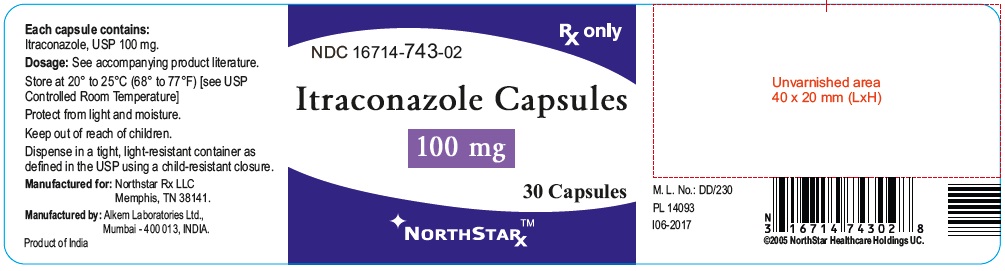
PACKAGE LABEL.PRINCIPAL DISPLAY PANEL NDC 16714-743-02 ITRACONAZOLE CAPSULES 100 mg 30 Capsules Rx Only itraconazole-1
Medicaid utilization by pack size
Medicare Part D spend CMS · PART D · 2026 (Q1)
About this NDC listing & data coverage
What data is (and isn’t) available for this NDC — tap to expand
| NDC identity (package / product / labeler codes) | ✓ Available |
| Labeler | ✓ Available |
| Product & package description | ✓ Available |
| Marketing category & status | ✓ Available |
| Active ingredient / dosage form / route | ✓ Available |
| FDA label (SPL via DailyMed) | ✓ Available |
| Package photos | ✓ Available |
| Inactive ingredients (structured) | ✓ Available |
| NADAC pharmacy acquisition price (CMS) | — Not published for this NDC CMS publishes NADAC only for NDCs reported in its retail-pharmacy survey. |
| Orange Book / therapeutic-equivalence data | ✓ Available |
| HCPCS J-code billing crosswalk | — Not published for this NDC Most self-administered / retail products have no J-code — that is normal. |
| Medicaid utilization (CMS SDUD) | — Not published for this NDC CMS reports utilization only for NDCs with Medicaid claims above its privacy threshold. |