
Felbamate 600 mg/5mL Suspension, 237 mL — NDC 16714-775-01 (Billing 16714-0775-01)
This is a package of 237 mL of Felbamate 600 mg/5mL Suspension from NORTHSTAR RX LLC, marketed since Apr 2018 and currently FDA-listed; retail pharmacies pay about $0.3561 per mL (NADAC). It is the main listing for this product, which comes in 2 package sizes.
NDC database record
One package, one record: these facts belong to NDC 16714-775-01 alone.
- Record
- FDA NDC Directory package listing · Human prescription drug
- Code segments
- 16714 labeler · 775 product · 01 package
- Package marketed since
- Apr 10, 2018
- Sample package
- No — commercial package
- Listing certified through
- Dec 31, 2026
- Billing quantity
- 237 mL per package
- Barcode (UPC-A, from the NDC)
- 3 1671477501 2
- Medicaid fills, this package
- 337 prescriptions in the last four reported quarters
- FDA record last changed
- Jul 24, 2026
Identity & classification
Regulatory identifiers FDA, NLM and CMS codes for this package
Drug-database identifiers Medi-Span GPI and First Databank GCN / HICL / AHFS classification
- GSN (GCN sequence number): 020040
- GCN: 38020
- GPI-14 (Medi-Span): 72120020001810
- HICL (First Databank): 008186
- AHFS class code: 28:12.92.00
- RxCUI (RxNorm): 310285
Where does this data come from?
- FDA openFDA NDC Directory · synced Oct 1, 2026
- FDA label on DailyMed · label index refreshed Oct 5, 2026
- RxNorm (NLM RxNav) · catalog refreshed Oct 1, 2026
- Medi-Span GPI (licensed)
- First Databank (licensed) · refreshed Oct 1, 2026
RxNorm drug class
This medicine belongs to the Anti-epileptic Agent class.
Where does this data come from?
- RxClass (NLM) · catalog refreshed Oct 1, 2026
Clinical
- It treats severe epilepsy when other medicines haven't worked well enough. It's used for partial seizures in adults and for Lennox-Gastaut syndrome in children. It isn't a first-ch...
- You take it by mouth, as tablets or liquid, several times a day. Follow your prescriber's schedule exactly. Never stop it suddenly, because seizures could increase.
- Common ones include poor appetite, nausea, vomiting, trouble sleeping, headache, dizziness and sleepiness. Tell your doctor if they bother you or don't go away.
- Call for signs of infection, unusual bleeding or bruising, or unusual paleness. Also call for yellow skin or eyes, dark urine, a serious rash, or any mood changes or thoughts of se...
Patient education
Supplement & herbal interactions
Some supplements/herbs that may interact with Felbamate — tap one for details:
Felbamate may be associated with lower levels of 1 nutrient — worth a chat with your pharmacist, not a cause for alarm.
Where does this data come from?
- MedlinePlus (NLM) · refreshed Oct 1, 2026
- FDA label on DailyMed · label index refreshed Oct 5, 2026
Ask a licensed pharmacist directly — free, answered by our team.
Pricing
A drug doesn't have one price. Each row is a different public payment system, and none is what you'd pay at the counter — that depends on your insurance. The ⓘ on each row explains what it measures.
| Price system | Per mL | Per package |
|---|---|---|
| Retail pharmacies payNADAC · weekly | $0.356 | $84.40 / 237 ml |
| Medicaid paysCMS SDUD · 12 mo | $0.5043 | $119.52 / 237 ml |
| Medicare drug plans payPart D · Q2 2026 | $0.4633 | $109.80 / 237 ml |
Where does this data come from?
- CMS NADAC weekly file · file of Sep 30, 2026
- CMS ASP pricing files · refreshed Sep 20, 2026
- CMS Medicaid State Drug Utilization Data · through Q1 2026
- CMS Part D plan pricing files · refreshed Sep 24, 2026
- VA National Acquisition Center price file
Packaging — all sizes for this product
| Package NDC | Description | Per unit | Per pack | Marketing start | Marketing end | Status |
|---|---|---|---|---|---|---|
| 16714-0775-01 You're viewing this Main listing | 237 mL in 1 BOTTLE | $0.3561 / mL | $84.40 | 2018-04-10 | — | Active |
| 16714-0775-02 16714-775-02 | 473 mL in 1 BOTTLE | — | — | 2018-04-10 | — | Active |
You're viewing the smallest of 2 pack sizes for this product.
In Medicaid, this is the most-dispensed pack of this product — about 100% of fills over the last four reported quarters. See all packs ↓
Pack size FAQ
What quantity is in this package?
How does this package differ from NDC 16714-0775-02?
What NDC number is used to bill for this package of Felbamate 600 mg/5mL Suspension?
Prices are the latest CMS NADAC pharmacy acquisition cost per NDC; per-pack figures are per-unit × pack quantity, shown only when the pack is denominated in the same measure NADAC prices.
Therapeutic equivalents
| Product | Labeler | Pack | NADAC/unit | TE | Status | Price vs. this |
|---|---|---|---|---|---|---|
| Felbamate 600 mg/5mLthis 16714-0775-01 | NORTHSTAR | 237 ml | $0.356 | AB | Availability likely | — |
| Felbamate 600 mg/5mL 51672-4172-01 | Sun | 237 ml | $0.356 | AB | Availability likely | — |
| Felbamate 600 mg/5mL 70954-0051-10 | Novitium | 237 ml | $0.356 | AB | Availability likely | — |
| Felbamate 600 mg/5mL 65162-0686-88 | Amneal | 237 ml | — | AB | FDA listed | — |
Where does this data come from?
- FDA openFDA NDC Directory · synced Oct 1, 2026
- FDA Orange Book · refreshed Oct 3, 2026
- CMS NADAC weekly file · file of Sep 30, 2026
Availability & generic status
This product is an FDA-approved generic. Other versions of the same drug are listed under Therapeutic equivalents, least expensive first.
Where does this data come from?
- FDA Orange Book · refreshed Oct 3, 2026
What it looks like
Where does this data come from?
- FDA label on DailyMed · label index refreshed Oct 5, 2026
Inactive Ingredients / Excipients
Inactive ingredients, also called excipients, are components of the drug product other than the active ingredient. They may include fillers, dyes, coatings, preservatives, flavors, or other formulation ingredients.
🧪 Avoiding an ingredient? See Felbamate inactive ingredients by manufacturer: every current product's list side by side, so you can ask your pharmacy for the version that does not list it.
Where does this data come from?
IACT rows and label-wide narrative are kept separate; availability and product-level specificity depend on the submitted label.- FDA label on DailyMed · label index refreshed Oct 5, 2026
- FDA openFDA NDC Directory · synced Oct 1, 2026
Inactive ingredient FAQ
Are inactive ingredients the same for every manufacturer?
Why might an inactive ingredient be missing?
Can inactive ingredients matter?
Manufacturer & labeler
More NDCs from NORTHSTAR RX LLC labeler code 16714
- atomoxetine 60 mg Capsule NDC 16714-759-01
- atomoxetine 80 mg Capsule NDC 16714-760-01
- atomoxetine 100 mg Capsule NDC 16714-761-01
- calcipotriene 50 ug/g Cream NDC 16714-763-01
- Rasagiline .5 mg Tablet NDC 16714-770-01
- Rasagiline 1 mg Tablet NDC 16714-771-01
- ezetimibe and simvastatin 10 mg; 10 mg Tablet NDC 16714-778-01
- ezetimibe and simvastatin 10 mg; 20 mg Tablet NDC 16714-779-01
- ezetimibe and simvastatin 10 mg; 40 mg Tablet NDC 16714-780-01
- ezetimibe and simvastatin 10 mg; 80 mg Tablet NDC 16714-781-01
- Clobetasol Propionate .5 mg/g Ointment NDC 16714-782-01
- Terbinafine 250 mg Tablet NDC 16714-795-01
Where does this data come from?
- FDA openFDA NDC Directory · synced Oct 1, 2026
- Drugs@FDA
Full prescribing information FDA SPL
🚨 Boxed Warning ▾
WARNING 1. APLASTIC ANEMIA THE USE OF FELBAMATE ORAL SUSPENSION, USP IS ASSOCIATED WITH A MARKED INCREASE IN THE INCIDENCE OF APLASTIC ANEMIA. ACCORDINGLY, FELBAMATE ORAL SUSPENSION SHOULD ONLY BE USED IN PATIENTS WHOSE EPILEPSY IS SO SEVERE THAT THE RISK OF APLASTIC ANEMIA IS DEEMED ACCEPTABLE IN LIGHT OF THE BENEFITS CONFERRED BY ITS USE (SEE INDICATIONS ).
ORDINARILY, A PATIENT SHOULD NOT BE PLACED ON AND/OR CONTINUED ON FELBAMATE ORAL SUSPENSION WITHOUT CONSIDERATION OF APPROPRIATE EXPERT HEMATOLOGIC CONSULTATION. AMONG FELBAMATE TREATED PATIENTS, APLASTIC ANEMIA (PANCYTOPENIA IN THE PRESENCE OF A BONE MARROW LARGELY DEPLETED OF HEMATOPOIETIC PRECURSORS) OCCURS AT AN INCIDENCE THAT MAY BE MORE THAN A 100 FOLD GREATER THAN THAT SEEN IN THE UNTREATED POPULATION (I.E., 2 TO 5 PER MILLION PERSONS PER YEAR). THE RISK OF DEATH IN PATIENTS WITH APLASTIC ANEMIA GENERALLY VARIES AS A FUNCTION OF ITS SEVERITY AND ETIOLOGY; CURRENT ESTIMATES OF THE OVERALL CASE FATALITY RATE ARE IN THE RANGE OF 20 TO 30%, BUT RATES AS HIGH AS 70% HAVE BEEN REPORTED IN THE PAST.
THERE ARE TOO FEW FELBAMATE ASSOCIATED CASES, AND TOO LITTLE KNOWN ABOUT THEM TO PROVIDE A RELIABLE ESTIMATE OF THE SYNDROME'S INCIDENCE OR ITS CASE FATALITY RATE OR TO IDENTIFY THE FACTORS, IF ANY, THAT MIGHT CONCEIVABLY BE USED TO PREDICT WHO IS AT GREATER OR LESSER RISK. IN MANAGING PATIENTS ON FELBAMATE ORAL SUSPENSION, IT SHOULD BE BORNE IN MIND THAT THE CLINICAL MANIFESTATION OF APLASTIC ANEMIA MAY NOT BE SEEN UNTIL AFTER A PATIENT HAS BEEN ON FELBAMATE ORAL SUSPENSION FOR SEVERAL MONTHS (E.G., ONSET OF APLASTIC ANEMIA AMONG FELBAMATE EXPOSED PATIENTS FOR WHOM DATA ARE AVAILABLE HAS RANGED FROM 5 TO 30 WEEKS).
HOWEVER, THE INJURY TO BONE MARROW STEM CELLS THAT IS HELD TO BE ULTIMATELY RESPONSIBLE FOR THE ANEMIA MAY OCCUR WEEKS TO MONTHS EARLIER. ACCORDINGLY, PATIENTS WHO ARE DISCONTINUED FROM FELBAMATE ORAL SUSPENSION REMAIN AT RISK FOR DEVELOPING ANEMIA FOR A VARIABLE, AND UNKNOWN, PERIOD AFTERWARDS. IT IS NOT KNOWN WHETHER OR NOT THE RISK OF DEVELOPING APLASTIC ANEMIA CHANGES WITH DURATION OF EXPOSURE.
CONSEQUENTLY, IT IS NOT SAFE TO ASSUME THAT A PATIENT WHO HAS BEEN ON FELBAMATE ORAL SUSPENSION WITHOUT SIGNS OF HEMATOLOGIC ABNORMALITY FOR LONG PERIODS OF TIME IS WITHOUT RISK. IT IS NOT KNOWN WHETHER OR NOT THE DOSE OF FELBAMATE ORAL SUSPENSION AFFECTS THE INCIDENCE OF APLASTIC ANEMIA. IT IS NOT KNOWN WHETHER OR NOT CONCOMITANT USE OF ANTIEPILEPTIC DRUGS AND/OR OTHER DRUGS AFFECTS THE INCIDENCE OF APLASTIC ANEMIA.
APLASTIC ANEMIA TYPICALLY DEVELOPS WITHOUT PREMONITORY CLINICAL OR LABORATORY SIGNS, THE FULL BLOWN SYNDROME PRESENTING WITH SIGNS OF INFECTION, BLEEDING, OR ANEMIA. ACCORDINGLY, ROUTINE BLOOD TESTING CANNOT BE RELIABLY USED TO REDUCE THE INCIDENCE OF APLASTIC ANEMIA, BUT, IT WILL, IN SOME CASES, ALLOW THE DETECTION OF THE HEMATOLOGIC CHANGES BEFORE THE SYNDROME DECLARES ITSELF CLINICALLY. FELBAMATE ORAL SUSPENSION SHOULD BE DISCONTINUED IF ANY EVIDENCE OF BONE MARROW DEPRESSION OCCURS.
2. HEPATIC FAILURE EVALUATION OF POSTMARKETING EXPERIENCE SUGGESTS THAT ACUTE LIVER FAILURE IS ASSOCIATED WITH THE USE OF FELBAMATE ORAL SUSPENSION. THE REPORTED RATE IN THE U.S.
HAS BEEN ABOUT 6 CASES OF LIVER FAILURE LEADING TO DEATH OR TRANSPLANT PER 75,000 PATIENT YEARS OF USE. THIS RATE IS AN UNDERESTIMATE BECAUSE OF UNDER REPORTING, AND THE TRUE RATE COULD BE CONSIDERABLY GREATER THAN THIS. FOR EXAMPLE, IF THE REPORTING RATE IS 10%, THE TRUE RATE WOULD BE ONE CASE PER 1,250 PATIENT YEARS OF USE.
OF THE CASES REPORTED, ABOUT 67% RESULTED IN DEATH OR LIVER TRANSPLANTATION, USUALLY WITHIN 5 WEEKS OF THE ONSET OF SIGNS AND SYMPTOMS OF LIVER FAILURE. THE EARLIEST ONSET OF SEVERE HEPATIC DYSFUNCTION FOLLOWED SUBSEQUENTLY BY LIVER FAILURE WAS 3 WEEKS AFTER INITIATION OF FELBAMATE ORAL SUSPENSION. ALTHOUGH SOME REPORTS DESCRIBED DARK URINE AND NONSPECIFIC PRODROMAL SYMPTOMS (E.G., ANOREXIA, MALAISE, AND GASTROINTESTINAL SYMPTOMS), IN OTHER REPORTS IT WAS NOT CLEAR IF ANY PRODRO… [Excerpted — this section continues on DailyMed.]
🎯 Indications and Usage ▾
INDICATIONS AND USAGE Felbamate oral suspension, USP is not indicated as a first line antiepileptic treatment (see Warnings ). Felbamate oral suspension is recommended for use only in those patients who respond inadequately to alternative treatments and whose epilepsy is so severe that a substantial risk of aplastic anemia and/or liver failure is deemed acceptable in light of the benefits conferred by its use. If these criteria are met and the patient has been fully advised of the risk, and has provided written acknowledgement, felbamate can be considered for either monotherapy or adjunctive therapy in the treatment of partial seizures, with and without generalization, in adults with epilepsy and as adjunctive therapy in the treatment of partial and generalized seizures associated with Lennox-Gastaut syndrome in children.
⏱️ Dosage and Administration ▾
DOSAGE AND ADMINISTRATION Felbamate has been studied as monotherapy and adjunctive therapy in adults and as adjunctive therapy in children with seizures associated with Lennox-Gastaut syndrome. As felbamate is added to or substituted for existing AEDs, it is strongly recommended to reduce the dosage of those AEDs in the range of 20 to 33% to minimize side effects (see Drug Interactions subsection). Dosage Adjustment in the Renally Impaired Felbamate should be used with caution in patients with renal dysfunction.
In the renally impaired, starting and maintenance doses should be reduced by one-half (see CLINICAL PHARMACOLOGY / Pharmacokinetics and PRECAUTIONS ). Adjunctive therapy with medications which affect felbamate plasma concentrations, especially AEDs, may warrant further reductions in felbamate daily doses in patients with renal dysfunction. Adults (14 years of age and over) The majority of patients received 3600 mg/day in clinical trials evaluating its use as both monotherapy and adjunctive therapy.
Monotherapy (Initial therapy) felbamate has not been systematically evaluated as initial monotherapy. Initiate felbamate at 1200 mg/day in divided doses three or four times daily. The prescriber is advised to titrate previously untreated patients under close clinical supervision, increasing the dosage in 600-mg increments every 2 weeks to 2400 mg/day based on clinical response and thereafter to 3600 mg/day if clinically indicated.
Conversion to Monotherapy Initiate felbamate at 1200 mg/day in divided doses three or four times daily. Reduce the dosage of concomitant AEDs by one-third at initiation of felbamate therapy. At week 2, increase the felbamate dosage to 2400 mg/day while reducing the dosage of other AEDs up to an additional one-third of their original dosage.
At week 3, increase the felbamate dosage up to 3600 mg/day and continue to reduce the dosage of other AEDs as clinically indicated. Adjunctive Therapy Felbamate should be added at 1200 mg/day in divided doses three or four times daily while reducing present AEDs by 20% in order to control plasma concentrations of concurrent phenytoin, valproic acid, phenobarbital, and carbamazepine and its metabolites. Further reductions of the concomitant AEDs dosage may be necessary to minimize side effects due to drug interactions.
Increase the dosage of felbamate by 1200 mg/day increments at weekly intervals to 3600 mg/day. Most side effects seen during felbamate adjunctive therapy resolve as the dosage of concomitant AEDs is decreased. Table 6 Dosage Table (adults) WEEK 1 WEEK 2 WEEK 3 Dosage reduction of concomitant AEDs REDUCE original dose by 20 to 33% See Adjunctive and Conversion to Monotherapy sections.
REDUCE original dose by up to an additional 1/3 REDUCE as clinically indicated Felbamate Dosage 1200 mg/day Initial dose 2400 mg/day Therapeutic dosage range 3600 mg/day Therapeutic dosage range While the above felbamate conversion guidelines may result in a felbamate 3600 mg/day dose within 3 weeks, in some patients titration to a 3600 mg/day felbamate dose has been achieved in as little as 3 days with appropriate adjustment of other AEDs. Children with Lennox-Gastaut Syndrome (Ages 2 to 14 years) Adjunctive Therapy Felbamate should be added at 15 mg/kg/day in divided doses three or four times daily while reducing present AEDs by 20% in order to control plasma levels of concurrent phenytoin, valproic acid, phenobarbital, and carbamazepine and its metabolites.
Further reductions of the concomitant AEDs dosage may be necessary to minimize side effects due to drug interactions. Increase the dosage of felbamate by 15 mg/kg/day increments at weekly intervals to 45 mg/kg/day. Most side effects seen during felbamate adjunctive therapy resolve as the dosage of concomitant AEDs is decreased.
⛔ Contraindications ▾
CONTRAINDICATIONS Felbamate oral suspension, USP is contraindicated in patients with known hypersensitivity to felbamate oral suspension, its ingredients, or known sensitivity to other carbamates. It should not be used in patients with a history of any blood dyscrasia or hepatic dysfunction.
⚠️ Warnings ▾
WARNINGS See Boxed Warning regarding aplastic anemia and hepatic failure. Antiepileptic drugs should not be suddenly discontinued because of the possibility of increasing seizure frequency. Suicidal Behavior and Ideation Antiepileptic drugs (AEDs) including felbamate oral suspension, increase the risk of suicidal thoughts or behavior in patients taking these drugs for any indication.
Patients treated with any AED for any indication should be monitored for the emergence or worsening of depression, suicidal thoughts or behavior, and/or any unusual changes in mood or behavior. Pooled analyses of 199 placebo-controlled clinical trials (mono- and adjunctive therapy) of 11 different AEDs showed that patients randomized to one of the AEDs had approximately twice the risk (adjusted Relative Risk 1.8, 95% CI:1.2, 2.7) of suicidal thinking or behavior compared to patients randomized to placebo. In these trials, which had a median treatment duration of 12 weeks, the estimated incidence rate of suicidal behavior or ideation among 27,863 AED-treated patients was 0.43%, compared to 0.24% among 16,029 placebo-treated patients, representing an increase of approximately one case of suicidal thinking or behavior for every 530 patients treated.
There were four suicides in drug-treated patients in the trials and none in placebo-treated patients, but the number is too small to allow any conclusion about drug effect on suicide. The increased risk of suicidal thoughts or behavior with AEDs was observed as early as one week after starting drug treatment with AEDs and persisted for the duration of treatment assessed. Because most trials included in the analysis did not extend beyond 24 weeks, the risk of suicidal thoughts or behavior beyond 24 weeks could not be assessed.
The risk of suicidal thoughts or behavior was generally consistent among drugs in the data analyzed. The finding of increased risk with AEDs of varying mechanisms of action and across a range of indications suggests that the risk applies to all AEDs used for any indication. The risk did not vary substantially by age (5 to 100 years) in the clinical trials analyzed.
Table 1 shows absolute and relative risk by indication for all evaluated AEDs. Table 1 Risk by Indication for Antiepileptic Drugs in the Pooled Analysis Indication Placebo Patients with Events Per 1000 Patients Drug Patients with Events Per 1000 Patients Relative Risk: Incidence of Events in Drug Patients/Incidence in Placebo Patients Risk Difference: Additional Drug Patients with Events Per 1000 Patients Epilepsy 1 3.4 3.5
2.4Psychiatric 5.7 8.5 1.5
2.9Other 1 1.8 1.9
0.9Total 2.4 4.3 1.8
1.9The relative risk for suicidal thoughts or behavior was higher in clinical trials for epilepsy than in clinical trials for psychiatric or other conditions, but the absolute risk differences were similar for the epilepsy and psychiatric indications. Anyone considering prescribing felbamate or any other AED must balance the risk of suicidal thoughts or behavior with the risk of untreated illness. Epilepsy and many other illnesses for which AEDs are prescribed are themselves associated with morbidity and mortality and an increased risk of suicidal thoughts and behavior.
Should suicidal thoughts and behavior emerge during treatment, the prescriber needs to consider whether the emergence of these symptoms in any given patient may be related to the illness being treated. Patients, their caregivers, and families should be informed that AEDs increase the risk of suicidal thoughts and behavior and should be advised of the need to be alert for the emergence or worsening of the signs and symptoms of depression, any unusual changes in mood or behavior, or the emergence of suicidal thoughts, behavior, or thoughts about self-harm.
Behaviors of concern should be reported immediately to healthcare providers.
🤒 Adverse Reactions ▾
ADVERSE REACTIONS To report SUSPECTED ADVERSE REACTIONS, contact NorthStar at 1-800-206-7821 or FDA at 1-800-FDA-1088 or www.fda.gov/medwatch. The most common adverse reactions seen in association with felbamate in adults during monotherapy are anorexia, vomiting, insomnia, nausea, and headache. The most common adverse reactions seen in association with felbamate in adults during adjunctive therapy are anorexia, vomiting, insomnia, nausea, dizziness, somnolence, and headache.
The most common adverse reactions seen in association with felbamate in children during adjunctive therapy are anorexia, vomiting, insomnia, headache, and somnolence. The dropout rate because of adverse experiences or intercurrent illnesses among adult felbamate patients was 12 percent (120/977). The dropout rate because of adverse experiences or intercurrent illnesses among pediatric felbamate patients was six percent (22/357).
In adults, the body systems associated with causing these withdrawals in order of frequency were: digestive (4.3%), psychological (2.2%), whole body (1.7%), neurological (1.5%), and dermatological (1.5%). In children, the body systems associated with causing these withdrawals in order of frequency were: digestive (1.7%), neurological (1.4%), dermatological (1.4%), psychological (1.1%), and whole body (1%). In adults, specific events with an incidence of 1% or greater associated with causing these withdrawals, in order of frequency were: anorexia (1.6%), nausea (1.4%), rash (1.2%), and weight decrease (1.1%).
In children, specific events with an incidence of 1% or greater associated with causing these withdrawals, in order of frequency was rash (1.1%). Incidence in Clinical Trials The prescriber should be aware that the figures cited in the following table cannot be used to predict the incidence of side effects in the course of usual medical practice where patient characteristics and other factors differ from those which prevailed in the clinical trials. Similarly, the cited frequencies cannot be compared with figures obtained from other clinical investigations involving different investigators, treatments, and uses including the use of felbamate as adjunctive therapy where the incidence of adverse events may be higher due to drug interactions.
The cited figures, however, do provide the prescribing physician with some basis for estimating the relative contribution of drug and nondrug factors to the side effect incidence rate in the population studied. Adults Incidence in Controlled Clinical Trials--Monotherapy Studies in Adults The table that follows enumerates adverse events that occurred at an incidence of 2% or more among 58 adult patients who received felbamate monotherapy at dosages of 3600 mg/day in double-blind controlled trials. Table 3 presents reported adverse events that were classified using standard WHO-based dictionary terminology.
Table 3 Adults Treatment-Emergent Adverse Event Incidence in Controlled Monotherapy Trials Felbamate 3600 mg/day; (N=58) Low Dose Valproate 15 mg/kg/day (N=50) Body System Event % % Body as a Whole Fatigue 6.9 4 Weight Decrease 3.4 0 Face Edema 3.4 0 Central Nervous System Insomnia 8.6 4 Headache 6.9 18 Anxiety 5.2 2 Dermatological Acne 3.4 0 Rash 3.4 0 Digestive Dyspepsia 8.6 2 Vomiting 8.6 2 Constipation 6.9 2 Diarrhea 5.2 0 SGPT Increased 5.2 2 Metabolic/Nutritional Hypophosphatemia 3.4 0 Respiratory Upper Respiratory Tract Infection 8.6 4 Rhinitis 6.9 0 Special Senses Diplopia 3.4 4 Otitis Media 3.4 0 Urogenital Intramenstrual Bleeding 3.4 0 Urinary Tract Infection 3.4 2 Incidence in Controlled Add-On Clinical Studies in Adults Table 4 enumerates adverse events that occurred at an incidence of 2% or more among 114 adult patients who received felbamate adjunctive therapy in add-on controlled trials at dosages up to 3600 mg/day.
Reported adverse events were classified using standard WHO-based dictionary terminology. Many adverse experiences that occurred during adjunctive therapy may be a… [Excerpted — this section continues on DailyMed.]
🔄 Drug Interactions ▾
Drug Interactions The drug interaction data described in this section were obtained from controlled clinical trials and studies involving otherwise healthy adults with epilepsy. Use in Conjunction with Other Antiepileptic Drugs (see DOSAGE AND ADMINISTRATION ) The addition of felbamate to antiepileptic drugs (AEDs) affects the steady-state plasma concentrations of AEDs. The net effect of these interactions is summarized in Table 2: Table 2 Steady-State Plasma Concentrations of Felbamate When Coadministered With Other AEDs AED Coadministered AED Concentration Felbamate Concentration Phenytoin ↑ ↓ Valproate ↑ ↔ No significant effect.
Carbamazepine (CBZ) Not administered but an active metabolite of carbamazepine. CBZ epoxide ↓ ↑ ↓ Phenobarbital ↑ ↓ Specific Effects of Felbamate on Other Antiepileptic Drugs Phenytoin Felbamate causes an increase in steady-state phenytoin plasma concentrations. In 10 otherwise healthy subjects with epilepsy ingesting phenytoin, the steady-state trough (C min ) phenytoin plasma concentration was 17±5 micrograms/mL.
The steady-state C min increased to 21±5 micrograms/mL when 1200 mg/day of felbamate was coadministered. Increasing the felbamate dose to 1800 mg/day in six of these subjects increased the steady-state phenytoin C min to 25±7 micrograms/mL. In order to maintain phenytoin levels, limit adverse experiences, and achieve the felbamate dose of 3600 mg/day, a phenytoin dose reduction of approximately 40% was necessary for eight of these 10 subjects.
In a controlled clinical trial, a 20% reduction of the phenytoin dose at the initiation of felbamate therapy resulted in phenytoin levels comparable to those prior to felbamate oral suspension administration. Carbamazepine Felbamate causes a decrease in the steady-state carbamazepine plasma concentrations and an increase in the steady-state carbamazepine epoxide plasma concentration. In nine otherwise healthy subjects with epilepsy ingesting carbamazepine, the steady-state trough (C min ) carbamazepine concentration was 8±2 micrograms/mL.
The carbamazepine steady-state C min decreased 31% to 5±1 micrograms/mL when felbamate (3000 mg/day, divided into three doses) was coadministered. Carbamazepine epoxide steady-state C min concentrations increased 57% from 1±0.3 to 1.6±0.4 micrograms/mL with the addition of felbamate. In clinical trials, similar changes in carbamazepine and carbamazepine epoxide were seen.
Valproate Felbamate causes an increase in steady-state valproate concentrations. In four subjects with epilepsy ingesting valproate, the steady-state trough (C min ) valproate plasma concentration was 63±16 micrograms/mL. The steady-state C min increased to 78±14 micrograms/mL when 1200 mg/day of felbamate was coadministered.
Increasing the felbamate dose to 2400 mg/day increased the steady-state valproate C min to 96±25 micrograms/mL. Corresponding values for free valproate C min concentrations were 7±3, 9±4, and 11±6 micrograms/mL for 0, 1200, and 2400 mg/day felbamate, respectively. The ratios of the AUCs of unbound valproate to the AUCs of the total valproate were 11.1%, 13%, and 11.5%, with coadministration of 0, 1200, and 2400 mg/day of felbamate, respectively.
This indicates that the protein binding of valproate did not change appreciably with increasing doses of felbamate. Phenobarbital Coadministration of felbamate with phenobarbital causes an increase in phenobarbital plasma concentrations. In 12 otherwise healthy male volunteers ingesting phenobarbital, the steady-state trough (C min ) phenobarbital concentration was 14.2 micrograms/mL.
The steady-state C min concentration increased to 17.8 micrograms/mL when 2400 mg/day of felbamate was coadministered for one week. Effects of Other Antiepileptic Drugs on Felbamate Phenytoin Phenytoin causes an approximate doubling of the clearance of felbamate at steady-state and, therefore, the addition of phenytoin causes an approximate 45% decrease in the steady-state trough concentrations of felbam… [Excerpted — this section continues on DailyMed.]
🔄 Drug / Laboratory Test Interactions ▾
Drug/Laboratory Test Interactions There are no known interactions of felbamate with commonly used laboratory tests.
🤰 Pregnancy ▾
Pregnancy Patients should be encouraged to enroll in the North American Antiepileptic Drug (NAAED) Pregnancy Registry if they become pregnant. This registry is collecting information about the safety of antiepileptic drugs during pregnancy. To enroll, patients can call the toll free number 1-888-233-2334 (see Pregnancy section).
Pregnancy Pregnancy Category C The incidence of malformations was not increased compared to control in offspring of rats or rabbits given doses up to 13.9 times (rat) and 4.2 times (rabbit) the human daily dose on a mg/kg basis, or 3 times (rat) and less than 2 times (rabbit) the human daily dose on a mg/m 2 basis. However, in rats, there was a decrease in pup weight and an increase in pup deaths during lactation. The cause for these deaths is not known.
The no effect dose for rat pup mortality was 6.9 times the human dose on a mg/kg basis or 1.5 times the human dose on a mg/m 2 basis. Placental transfer of felbamate occurs in rat pups. There are, however, no studies in pregnant women.
Because animal reproduction studies are not always predictive of human response, this drug should be used during pregnancy only if clearly needed. To provide information regarding the effects of in utero exposure to felbamate, physicians are advised to recommend that pregnant patients taking felbamate enroll in the NAAED Pregnancy Registry. This can be done by calling the toll free number 1-888-233-2334, and must be done by patients themselves.
Information on the registry can also be found at the website http://www.aedpregnancyregistry.org/.
🧒 Pediatric Use ▾
Pediatric Use The safety and effectiveness of felbamate in children other than those with Lennox-Gastaut syndrome has not been established.
🧓 Geriatric Use ▾
Geriatric Use No systematic studies in geriatric patients have been conducted. Clinical studies of felbamate did not include sufficient numbers of patients aged 65 and over to determine whether they respond differently from younger patients. Other reported clinical experience has not identified differences in responses between the elderly and younger patients.
In general, dosage selection for an elderly patient should be cautious, usually starting at the low end of the dosing range, reflecting the greater frequency of decreased hepatic, renal, or cardiac function, and of concomitant disease or other drug therapy.
🆘 Overdosage ▾
OVERDOSAGE Four subjects inadvertently received felbamate as adjunctive therapy in dosages ranging from 5400 to 7200 mg/day for durations between 6 and 51 days. One subject who received 5400 mg/day as monotherapy for 1 week reported no adverse experiences. Another subject attempted suicide by ingesting 12,000 mg of felbamate in a 12-hour period.
The only adverse experiences reported were mild gastric distress and a resting heart rate of 100 bpm. No serious adverse reactions have been reported. General supportive measures should be employed if overdosage occurs.
It is not known if felbamate is dialyzable.
🧬 Clinical Pharmacology ▾
CLINICAL PHARMACOLOGY Mechanism of Action The mechanism by which felbamate exerts its anticonvulsant activity is unknown, but in animal test systems designed to detect anticonvulsant activity, felbamate has properties in common with other marketed anticonvulsants. Felbamate is effective in mice and rats in the maximal electroshock test, the subcutaneous pentylenetetrazol seizure test, and the subcutaneous picrotoxin seizure test. Felbamate also exhibits anticonvulsant activity against seizures induced by intracerebroventricular administration of glutamate in rats and N-methyl-D,L-aspartic acid in mice.
Protection against maximal electroshock-induced seizures suggests that felbamate may reduce seizure spread, an effect possibly predictive of efficacy in generalized tonic-clonic or partial seizures. Protection against pentylenetetrazol-induced seizures suggests that felbamate may increase seizure threshold, an effect considered to be predictive of potential efficacy in absence seizures. Receptor-binding studies in vitro indicate that felbamate has weak inhibitory effects on GABA-receptor binding, benzodiazepine receptor binding, and is devoid of activity at the MK-801 receptor binding site of the NMDA receptor-ionophore complex.
However, felbamate does interact as an antagonist at the strychnine-insensitive glycine recognition site of the NMDA receptor-ionophore complex. Felbamate is not effective in protecting chick embryo retina tissue against the neurotoxic effects of the excitatory amino acid agonists NMDA, kainate, or quisqualate in vitro . The monocarbamate, p-hydroxy, and 2-hydroxy metabolites were inactive in the maximal electroshock-induced seizure test in mice.
The monocarbamate and p-hydroxy metabolites had only weak (0.2 to 0.6) activity compared with felbamate in the subcutaneous pentylenetetrazol seizure test. These metabolites did not contribute significantly to the anticonvulsant action of felbamate. Pharmacokinetics The numbers in the pharmacokinetic section are mean ± standard deviation.
Felbamate is well-absorbed after oral administration. Over 90% of the radioactivity after a dose of 1000 mg 14 C felbamate was found in the urine. Absolute bioavailability (oral vs. parenteral) has not been measured.
The tablet and suspension were each shown to be bioequivalent to the capsule used in clinical trials, and pharmacokinetic parameters of the tablet and suspension are similar. There was no effect of food on absorption of the tablet; the effect of food on absorption of the suspension has not been evaluated. Following oral administration, felbamate is the predominant plasma species (about 90% of plasma radioactivity).
About 40 to 50% of absorbed dose appears unchanged in urine, and an additional 40% is present as unidentified metabolites and conjugates. About 15% is present as parahydroxyfelbamate, 2-hydroxyfelbamate, and felbamate monocarbamate, none of which have significant anticonvulsant activity. Binding of felbamate to human plasma protein was independent of felbamate concentrations between 10 and 310 micrograms/mL.
Binding ranged from 22% to 25%, mostly to albumin, and was dependent on the albumin concentration. Felbamate is excreted with a terminal half-life of 20 to 23 hours, which is unaltered after multiple doses. Clearance after a single 1200 mg dose is 26±3 mL/hr/kg, and after multiple daily doses of 3600 mg is 30±8 mL/hr/kg.
The apparent volume of distribution was 756±82 mL/kg after a 1200 mg dose. Felbamate C max and AUC are proportionate to dose after single and multiple doses over a range of 100 to 800 mg single doses and 1200 to 3600 mg daily doses. C min (trough) blood levels are also dose proportional.
Multiple daily doses of 1200, 2400, and 3600 mg gave C min values of 30±5, 55±8, and 83±21 micrograms/mL (N=10 patients). Linear and dose proportional pharmacokinetics were also observed at doses above 3600 mg/day up to the maximum dose studied of 6000 mg/day. Felbamate gave dose proportional steady-… [Excerpted — this section continues on DailyMed.]
🧬 Mechanism of Action ▾
Mechanism of Action The mechanism by which felbamate exerts its anticonvulsant activity is unknown, but in animal test systems designed to detect anticonvulsant activity, felbamate has properties in common with other marketed anticonvulsants. Felbamate is effective in mice and rats in the maximal electroshock test, the subcutaneous pentylenetetrazol seizure test, and the subcutaneous picrotoxin seizure test. Felbamate also exhibits anticonvulsant activity against seizures induced by intracerebroventricular administration of glutamate in rats and N-methyl-D,L-aspartic acid in mice.
Protection against maximal electroshock-induced seizures suggests that felbamate may reduce seizure spread, an effect possibly predictive of efficacy in generalized tonic-clonic or partial seizures. Protection against pentylenetetrazol-induced seizures suggests that felbamate may increase seizure threshold, an effect considered to be predictive of potential efficacy in absence seizures. Receptor-binding studies in vitro indicate that felbamate has weak inhibitory effects on GABA-receptor binding, benzodiazepine receptor binding, and is devoid of activity at the MK-801 receptor binding site of the NMDA receptor-ionophore complex.
However, felbamate does interact as an antagonist at the strychnine-insensitive glycine recognition site of the NMDA receptor-ionophore complex. Felbamate is not effective in protecting chick embryo retina tissue against the neurotoxic effects of the excitatory amino acid agonists NMDA, kainate, or quisqualate in vitro . The monocarbamate, p-hydroxy, and 2-hydroxy metabolites were inactive in the maximal electroshock-induced seizure test in mice.
The monocarbamate and p-hydroxy metabolites had only weak (0.2 to 0.6) activity compared with felbamate in the subcutaneous pentylenetetrazol seizure test. These metabolites did not contribute significantly to the anticonvulsant action of felbamate.
📦 How Supplied / Storage and Handling ▾
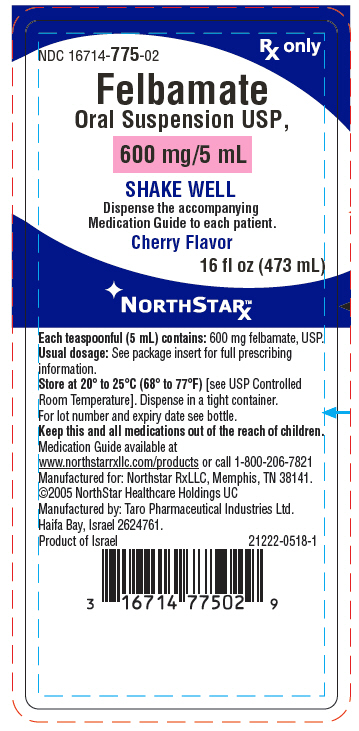
HOW SUPPLIED Felbamate Oral Suspension USP, 600 mg/5 mL, is a pink-colored, cherry flavored suspension; available in: 8 fl oz bottles (NDC 16714-775-01) and 16 fl oz bottles (NDC 16714-775-02). Shake suspension well before using. Store at 20° to 25°C (68° to 77°F) [see USP Controlled Room Temperature]. Dispense in a tight container. To report SUSPECTED ADVERSE REACTIONS, contact NorthStar at 1-800-206-7821 or FDA at 1-800-FDA-1088 or www.fda.gov/medwatch .
📦 Storage and Handling ▾
Shake suspension well before using. Store at 20° to 25°C (68° to 77°F) [see USP Controlled Room Temperature]. Dispense in a tight container. To report SUSPECTED ADVERSE REACTIONS, contact NorthStar at 1-800-206-7821 or FDA at 1-800-FDA-1088 or www.fda.gov/medwatch .
📋 Description ▾
DESCRIPTION Felbamate oral suspension, USP is an antiepileptic available as 600 mg/5 mL suspension for oral administration. Its chemical name is 2-phenyl-1,3-propanediol dicarbamate. Felbamate is a white to off-white crystalline powder with a characteristic odor.
It is very slightly soluble in water, slightly soluble in ethanol, sparingly soluble in methanol, and freely soluble in dimethyl sulfoxide. The molecular weight is 238.24; felbamate's molecular formula is C 11 H 14 N 2 O 4 ; its structural formula is: The inactive ingredients for felbamate oral suspension USP, 600 mg/5 mL are carboxymethylcellulose sodium, citric acid monohydrate, FD&C Yellow No. 6, FD&C Red No.40, flavor (cherry), glycerin, methylparaben, microcrystalline cellulose, polysorbate 80, propylparaben, simethicone emulsion, sorbitol, sucralose and water.
Chemical Structure
💬 Information for Patients ▾
Information for Patients Patients should be informed that the use of felbamate is associated with aplastic anemia and hepatic failure, potentially fatal conditions acutely or over a long term. The physician should obtain written acknowledgement prior to initiation of felbamate therapy (see PATIENT/PHYSICIAN ACKNOWLEDGMENT FORM section). Patients should be instructed to read the Medication Guide supplied as required by law when felbamate oral suspension is dispensed.
The complete text of the Medication Guide is reprinted at the end of this document. Aplastic anemia in the general population is relatively rare. The absolute risk for the individual patient is not known with any degree of reliability, but patients on felbamate may be at more than a 100 fold greater risk for developing the syndrome than the general population.
The long term outlook for patients with aplastic anemia is variable. Although many patients are apparently cured, others require repeated transfusions and other treatments for relapses, and some, although surviving for years, ultimately develop serious complications that sometimes prove fatal (e.g., leukemia). At present there is no way to predict who is likely to get aplastic anemia, nor is there a documented effective means to monitor the patient so as to avoid and/or reduce the risk.
Patients with a history of any blood dyscrasia should not receive felbamate. Patients should be advised to be alert for signs of infection, bleeding, easy bruising, or signs of anemia (fatigue, weakness, lassitude, etc.) and should be advised to report to the physician immediately if any such signs or symptoms appear. Hepatic failure in the general population is relatively rare.
The absolute risk for an individual patient is not known with any degree of reliability but patients on felbamate are at a greater risk for developing hepatic failure than the general population. At present, there is no way to predict who is likely to develop hepatic failure, however, patients with a history of hepatic dysfunction should not be started on felbamate. Patients should be advised to follow their physician's directives for liver function testing both before starting felbamate and at frequent intervals while taking felbamate.
Patients should be advised to be alert for signs of liver dysfunction (jaundice, anorexia, gastrointestinal complaints, malaise, etc.) and to report them to their doctor immediately if they should occur.
💬 Medication Guide ▾
MEDICATION GUIDE Felbamate (fel bam' ate) Oral Suspension, USP Read this Medication Guide before you start taking felbamate oral suspension, USP and each time you get a refill. There may be new information. This information does not take the place of talking to your healthcare provider about your medical condition or treatment.
What is the most important information I should know about felbamate oral suspension, USP? Do not stop taking felbamate oral suspension without first talking to your healthcare provider. Stopping felbamate oral suspension suddenly can cause serious problems.
Felbamate oral suspension can cause serious side effects, including: 1. Felbamate oral suspension may cause serious blood problems that may be life-threatening. Call your healthcare provider right away if you have any of the following symptoms : Fever, sore throat or other infections that come and go or do not go away Frequent infections or an infection that does not go away Easy bruising Red or purple spots on your body Bleeding gums or nose bleeds Severe fatigue or weakness 2.
Liver problems that may be life-threatening. Call your healthcare provider right away if you have any of these symptoms: yellowing of your skin or the whites of your eyes (jaundice) dark urine nausea or vomiting loss of appetite pain on the right side of your stomach (abdomen) 3. Like other antiepileptic drugs, felbamate oral suspension may cause suicidal thoughts or actions in a very small number of people, about 1 in 500.
Call your healthcare provider right away if you have any of these symptoms, especially if they are new, worse, or worry you: thoughts about suicide or dying attempts to commit suicide new or worse depression new or worse anxiety feeling agitated or restless panic attacks trouble sleeping (insomnia) new or worse irritability acting aggressive, being angry, or violent acting on dangerous impulses an extreme increase in activity and talking (mania) other unusual changes in behavior or mood How can I watch for early symptoms of suicidal thoughts and actions?
Pay attention to any changes, especially sudden changes, in mood, behaviors, thoughts, or feelings. Keep all follow-up visits with your healthcare provider as scheduled. Call your healthcare provider between visits as needed, especially if you are worried about symptoms.
Do not stop felbamate oral suspension without first talking to a healthcare provider. Stopping felbamate oral suspension suddenly can cause serious problems. You should talk to your health care provider before stopping.
Stopping a seizure medicine suddenly in a patient who has epilepsy can cause seizures. Suicidal thoughts or actions can be caused by things other than medicines. If you have suicidal thoughts or actions, your healthcare provider may check for other causes.
What is felbamate oral suspension, USP? Felbamate oral suspension is a prescription medicine used when other treatments have failed in: adults alone or with other medicines to treat: partial seizures with and without generalization children with other medicines to treat: seizures associated with Lennox-Gastaut syndrome Who should not take felbamate oral suspension, USP? Do not take felbamate oral suspension if you: are allergic to felbamate, carbamates or any of the ingredients in felbamate oral suspension.
See the end of this Medication Guide for a complete list of ingredients in felbamate oral suspension. have or have had blood problems have or have had liver problems What should I tell my healthcare provider before taking felbamate oral suspension, USP? Before you take felbamate oral suspension, tell your healthcare provider if you: have kidney problems have or have had depression, mood problems, or suicidal thoughts or behavior have any other medical conditions are pregnant or plan to become pregnant. It is not known if felbamate oral suspension can harm your unborn baby.
Tell your healthcare provider right away if you become pregnant while taking felbamate oral susp… [Excerpted — this section continues on DailyMed.]
⚠️ Precautions ▾
PRECAUTIONS Dosage Adjustment in the Renally Impaired A study in otherwise healthy individuals with renal dysfunction indicated that prolonged half-life and reduced clearance of felbamate are associated with diminishing renal function. Felbamate should be used with caution in patients with renal dysfunction (see DOSAGE AND ADMINISTRATION ). Information for Patients Patients should be informed that the use of felbamate is associated with aplastic anemia and hepatic failure, potentially fatal conditions acutely or over a long term.
The physician should obtain written acknowledgement prior to initiation of felbamate therapy (see PATIENT/PHYSICIAN ACKNOWLEDGMENT FORM section). Patients should be instructed to read the Medication Guide supplied as required by law when felbamate oral suspension is dispensed. The complete text of the Medication Guide is reprinted at the end of this document.
Aplastic anemia in the general population is relatively rare. The absolute risk for the individual patient is not known with any degree of reliability, but patients on felbamate may be at more than a 100 fold greater risk for developing the syndrome than the general population. The long term outlook for patients with aplastic anemia is variable.
Although many patients are apparently cured, others require repeated transfusions and other treatments for relapses, and some, although surviving for years, ultimately develop serious complications that sometimes prove fatal (e.g., leukemia). At present there is no way to predict who is likely to get aplastic anemia, nor is there a documented effective means to monitor the patient so as to avoid and/or reduce the risk. Patients with a history of any blood dyscrasia should not receive felbamate.
Patients should be advised to be alert for signs of infection, bleeding, easy bruising, or signs of anemia (fatigue, weakness, lassitude, etc.) and should be advised to report to the physician immediately if any such signs or symptoms appear. Hepatic failure in the general population is relatively rare. The absolute risk for an individual patient is not known with any degree of reliability but patients on felbamate are at a greater risk for developing hepatic failure than the general population.
At present, there is no way to predict who is likely to develop hepatic failure, however, patients with a history of hepatic dysfunction should not be started on felbamate. Patients should be advised to follow their physician's directives for liver function testing both before starting felbamate and at frequent intervals while taking felbamate. Patients should be advised to be alert for signs of liver dysfunction (jaundice, anorexia, gastrointestinal complaints, malaise, etc.) and to report them to their doctor immediately if they should occur.
Laboratory Tests Full hematologic evaluations should be performed before felbamate therapy, frequently during therapy, and for a significant period of time after discontinuation of felbamate therapy. While it might appear prudent to perform frequent CBCs in patients continuing on felbamate, there is no evidence that such monitoring will allow early detection of marrow suppression before aplastic anemia occurs. (see Boxed Warnings ).
Complete pretreatment blood counts, including platelets and reticulocytes should be obtained as a baseline. If any hematologic abnormalities are detected during the course of treatment, immediate consultation with a hematologist is advised. Felbamate should be discontinued if any evidence of bone marrow depression occurs.
See Box Warnings for recommended monitoring of serum transaminases. If significant, confirmed liver abnormalities are detected during the course of felbamate treatment, felbamate should be discontinued immediately with continued liver function monitoring until values return to normal. (see PATIENT/PHYSICIAN ACKNOWLEDGMENT FORM ).
Suicidal Thinking and Behavior Patients, their caregivers, and families should be counseled that AEDs, includ… [Excerpted — this section continues on DailyMed.]
🍼 Nursing Mothers ▾
Nursing Mothers Felbamate has been detected in human milk. The effect on the nursing infant is unknown (see Pregnancy section).
🧬 Pharmacokinetics ▾
Pharmacokinetics The numbers in the pharmacokinetic section are mean ± standard deviation. Felbamate is well-absorbed after oral administration. Over 90% of the radioactivity after a dose of 1000 mg 14 C felbamate was found in the urine.
Absolute bioavailability (oral vs. parenteral) has not been measured. The tablet and suspension were each shown to be bioequivalent to the capsule used in clinical trials, and pharmacokinetic parameters of the tablet and suspension are similar. There was no effect of food on absorption of the tablet; the effect of food on absorption of the suspension has not been evaluated.
Following oral administration, felbamate is the predominant plasma species (about 90% of plasma radioactivity). About 40 to 50% of absorbed dose appears unchanged in urine, and an additional 40% is present as unidentified metabolites and conjugates. About 15% is present as parahydroxyfelbamate, 2-hydroxyfelbamate, and felbamate monocarbamate, none of which have significant anticonvulsant activity.
Binding of felbamate to human plasma protein was independent of felbamate concentrations between 10 and 310 micrograms/mL. Binding ranged from 22% to 25%, mostly to albumin, and was dependent on the albumin concentration. Felbamate is excreted with a terminal half-life of 20 to 23 hours, which is unaltered after multiple doses.
Clearance after a single 1200 mg dose is 26±3 mL/hr/kg, and after multiple daily doses of 3600 mg is 30±8 mL/hr/kg. The apparent volume of distribution was 756±82 mL/kg after a 1200 mg dose. Felbamate C max and AUC are proportionate to dose after single and multiple doses over a range of 100 to 800 mg single doses and 1200 to 3600 mg daily doses.
C min (trough) blood levels are also dose proportional. Multiple daily doses of 1200, 2400, and 3600 mg gave C min values of 30±5, 55±8, and 83±21 micrograms/mL (N=10 patients). Linear and dose proportional pharmacokinetics were also observed at doses above 3600 mg/day up to the maximum dose studied of 6000 mg/day.
Felbamate gave dose proportional steady-state peak plasma concentrations in children age 4 to 12 over a range of 15, 30, and 45 mg/kg/day with peak concentrations of 17, 32, and 49 micrograms/mL. The effects of race and gender on felbamate pharmacokinetics have not been systematically evaluated, but plasma concentrations in males (N=5) and females (N=4) given felbamate have been similar. The effects of felbamate kinetics on hepatic functional impairment have not been evaluated.
Renal Impairment Felbamate's single dose monotherapy pharmacokinetic parameters were evaluated in 12 otherwise healthy individuals with renal impairment. There was a 40 to 50% reduction in total body clearance and 9 to 15 hours prolongation of half-life in renally impaired subjects compared to that in subjects with normal renal function. Reduced felbamate clearance and a longer half-life were associated with diminishing renal function.
🧬 Pharmacodynamics ▾
Pharmacodynamics Typical Physiologic Responses 1.Cardiovascular In adults, there is no effect of felbamate on blood pressure. Small but statistically significant mean increases in heart rate were seen during adjunctive therapy and monotherapy; however, these mean increases of up to 5 bpm were not clinically significant. In children, no clinically relevant changes in blood pressure or heart rate were seen during adjunctive therapy or monotherapy with felbamate.
2. Other Physiologic Effects The only other change in vital signs was a mean decrease of approximately 1 respiration per minute in respiratory rate during adjunctive therapy in children. In adults, statistically significant mean reductions in body weight were observed during felbamate monotherapy and adjunctive therapy.
In children, there were mean decreases in body weight during adjunctive therapy and monotherapy; however, these mean changes were not statistically significant. These mean reductions in adults and children were approximately 5% of the mean weights at baseline.
🔬 Clinical Studies ▾
CLINICAL STUDIES The results of controlled clinical trials established the efficacy of felbamate as monotherapy and adjunctive therapy in adults with partial-onset seizures with or without secondary generalization and in partial and generalized seizures associated with Lennox-Gastaut syndrome in children. Felbamate Monotherapy Trials in Adults Felbamate (3600 mg/day given QID) and low-dose valproate (15 mg/kg/day) were compared as monotherapy during a 112-day treatment period in a multicenter and a single-center double-blind efficacy trial.
Both trials were conducted according to an identical study design. During a 56-day baseline period, all patients had at least four partial-onset seizures per 28 days and were receiving one antiepileptic drug at a therapeutic level, the most common being carbamazepine. In the multicenter trial, baseline seizure frequencies were 12.4 per 28 days in the felbamate group and 21.3 per 28 days in the low-dose valproate group.
In the single-center trial, baseline seizure frequencies were 18.1 per 28 days in the felbamate group and 15.9 per 28 days in the low-dose valproate group. Patients were converted to monotherapy with felbamate or low-dose valproic acid during the first 28 days of the 112-day treatment period. Study endpoints were completion of 112 study days or fulfilling an escape criterion.
Criteria for escape relative to baseline were: (1) twofold increase in monthly seizure frequency, (2) twofold increase in highest 2-day seizure frequency, (3) single generalized tonic-clonic seizure (GTC) if none occurred during baseline, or (4) significant prolongation of GTCs. The primary efficacy variable was the number of patients in each treatment group who met escape criteria. In the multicenter trial, the percentage of patients who met escape criteria was 40% (18/45) in the felbamate group and 78% (39/50) in the low-dose valproate group.
In the single-center trial, the percentage of patients who met escape criteria was 14% (3/21) in the felbamate group and 90% (19/21) in the low-dose valproate group. In both trials, the difference in the percentage of patients meeting escape criteria was statistically significant (P<.001) in favor of felbamate. These two studies by design were intended to demonstrate the effectiveness of felbamate monotherapy.
The studies were not designed or intended to demonstrate comparative efficacy of the two drugs. For example, valproate was not used at the maximally effective dose. Felbamate Adjunctive Therapy Trials in Adults A double-blind, placebo-controlled crossover trial consisted of two 10-week outpatient treatment periods.
Patients with refractory partial-onset seizures who were receiving phenytoin and carbamazepine at therapeutic levels were administered felbamate as add-on therapy at a starting dosage of 1400 mg/day in three divided doses, which was increased to 2600 mg/day in three divided doses. Among the 56 patients who completed the study, the baseline seizure frequency was 20 per month. Patients treated with felbamate had fewer seizures than patients treated with placebo for each treatment sequence.
There was a 23% (P=.018) difference in percentage seizure frequency reduction in favor of felbamate. Felbamate 3600 mg/day given QID and placebo were compared in a 28-day double-blind add-on trial in patients who had their standard antiepileptic drugs reduced while undergoing evaluations for surgery of intractable epilepsy. All patients had confirmed partial-onset seizures with or without generalization, seizure frequency during surgical evaluation not exceeding an average of four partial seizures per day or more than one generalized seizure per day, and a minimum average of one partial or generalized tonic-clonic seizure per day for the last 3 days of the surgical evaluation.
The primary efficacy variable was time to fourth seizure after randomization to treatment with felbamate or placebo. Thirteen (46%) of 28 patients in the felbamate group versus 29 (88%) of 3… [Excerpted — this section continues on DailyMed.]
🔒 Drug Abuse and Dependence ▾
DRUG ABUSE AND DEPENDENCE Abuse Abuse potential was not evaluated in human studies. Dependence Rats administered felbamate orally at doses 8.3 times the recommended human dose 6 days each week for 5 consecutive weeks demonstrated no signs of physical dependence as measured by weight loss following drug withdrawal on day 7 of each week.
📄 Carcinogenesis, Mutagenesis, Impairment of Fertility ▾
Carcinogenesis, Mutagenesis, Impairment of Fertility Carcinogenicity studies were conducted in mice and rats. Mice received felbamate as a feed admixture for 92 weeks at doses of 300, 600, and 1200 mg/kg and rats were also dosed by feed admixture for 104 weeks at doses of 30, 100, and 300 (males) or 10, 30, and 100 (females) mg/kg. The maximum doses in these studies produced steady-state plasma concentrations that were equal to or less than the steady-state plasma concentrations in epileptic patients receiving 3600 mg/day.
There was a statistically significant increase in hepatic cell adenomas in high-dose male and female mice and in high-dose female rats. Hepatic hypertrophy was significantly increased in a dose-related manner in mice, primarily males, but also in females. Hepatic hypertrophy was not found in female rats.
The relationship between the occurrence of benign hepatocellular adenomas and the finding of liver hypertrophy resulting from liver enzyme induction has not been examined. There was a statistically significant increase in benign interstitial cell tumors of the testes in high-dose male rats receiving felbamate. The relevance of these findings to humans is unknown.
As a result of the synthesis process, felbamate could contain small amounts of two known animal carcinogens, the genotoxic compound ethyl carbamate (urethane) and the nongenotoxic compound methyl carbamate. It is theoretically possible that a 50 kg patient receiving 3600 mg of felbamate could be exposed to up to 0.72 micrograms of urethane and 1800 micrograms of methyl carbamate. These daily doses are approximately 1/35,000 (urethane) and 1/5,500 (methyl carbamate) on a mg/kg basis, and 1/10,000 (urethane) and 1/1,600 (methyl carbamate) on a mg/m 2 basis, of the dose levels shown to be carcinogenic in rodents.
Any presence of these two compounds in felbamate used in the lifetime carcinogenicity studies was inadequate to cause tumors. Microbial and mammalian cell assays revealed no evidence of mutagenesis in the Ames Salmonella /microsome plate test, CHO/HGPRT mammalian cell forward gene mutation assay, sister chromatid exchange assay in CHO cells, and bone marrow cytogenetics assay. Reproduction and fertility studies in rats showed no effects on male or female fertility at oral doses of up to 13.9 times the human total daily dose of 3600 mg on a mg/kg basis, or up to 3 times the human total daily dose on a mg/m 2 basis.
📄 Package Label / Principal Display Panel ▾
PRINCIPAL DISPLAY PANEL - 473 mL Bottle Label RX only NDC 16714- 775 -02 Felbamate Oral Suspension USP, 600 mg/5 mL SHAKE WELL Dispense the accompanying Medication Guide to each patient. Cherry Flavor 16 fl oz (473 mL) NORTHSTARX™ Principal Display Panel - 473 mL Bottle Label