
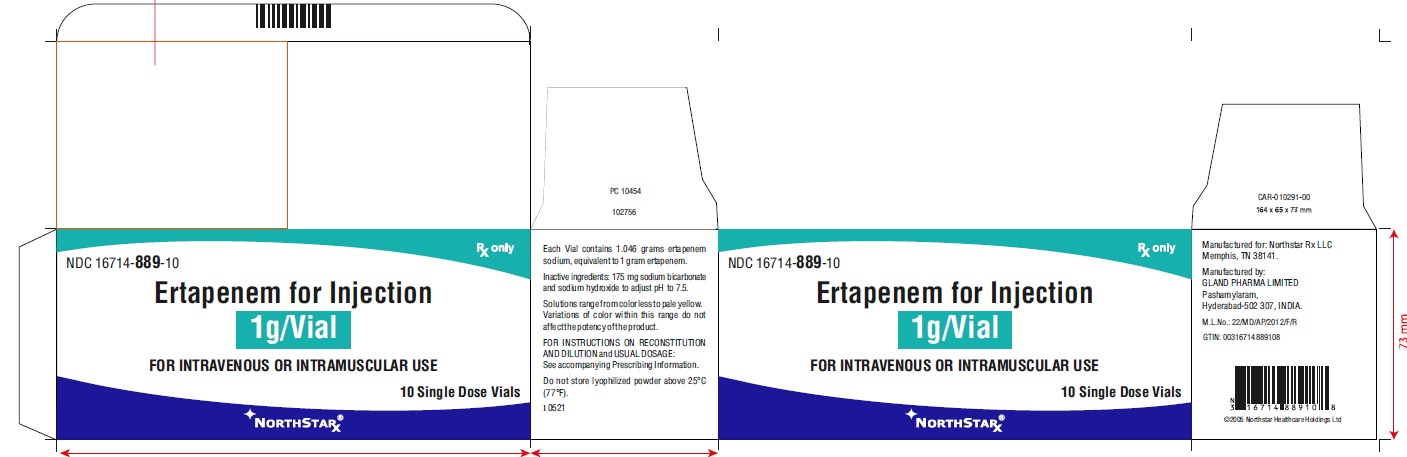
Ertapenem Sodium 1 g Injection, Powder, Lyophilized, For Solution, 10 vials — NDC 16714-889-10 (Billing 16714-0889-10)
This is a package of 10 vials of Ertapenem Sodium 1 g Injection, Powder, Lyophilized, For Solution from NorthStar RxLLC, marketed since Jul 2021 and currently FDA-listed; retail pharmacies pay about $26.63 per vial (NADAC). It is this product's only package size.
NDC database record
One package, one record: these facts belong to NDC 16714-889-10 alone.
- Record
- FDA NDC Directory package listing · Human prescription drug
- Code segments
- 16714 labeler · 889 product · 10 package
- Package marketed since
- Jul 13, 2021
- Sample package
- No — commercial package
- Listing certified through
- Dec 31, 2026
- Billing quantity
- 10 EA per package
- Barcode (UPC)
- 0316714889016
- Medicaid fills, this package
- 1,798 prescriptions in the last four reported quarters
- FDA record last changed
- Jul 24, 2026
Identity & classification
Regulatory identifiers FDA, NLM and CMS codes for this package
Drug-database identifiers Medi-Span GPI and First Databank GCN / HICL / AHFS classification
- GSN (GCN sequence number): 049835
- GCN: 15527
- GPI-14 (Medi-Span): 16150030102130
- HICL (First Databank): 023241
- AHFS class code: 08:12.07.08
- RxCUI (RxNorm): 1734683
Where does this data come from?
- FDA openFDA NDC Directory · synced Oct 1, 2026
- FDA label on DailyMed · label index refreshed Oct 5, 2026
- RxNorm (NLM RxNav) · catalog refreshed Oct 1, 2026
- Medi-Span GPI (licensed)
- First Databank (licensed) · refreshed Oct 1, 2026
RxNorm drug class
This medicine belongs to the Penem Antibacterial class.
Where does this data come from?
- RxClass (NLM) · catalog refreshed Oct 1, 2026
Clinical
Ertapenem injection is used to treat certain serious infections that are caused by bacteria. It is also used for the prevention of infections after colorectal surgery. Ertapenem is in a class of medications called carbapenem antibiotics. It works by killing bacteria. Antibiotics such as ertapenem injection will not work for colds, flu, or other viral infections. Taking antibiotics when they are not needed increases your risk of getting an infection later that resists antibiotic treatment.
Read the full MedlinePlus article ↗- It treats moderate to severe bacterial infections in the abdomen, skin, lungs, urinary tract and pelvis. Adults may also get it before elective colorectal surgery to help prevent i...
- A nurse or other professional gives it, usually once a day in adults and teens. It goes into a vein over 30 minutes or into a muscle. Your prescriber decides how long you need it.
- The most common are diarrhea, nausea, headache and irritation where the IV goes in. Children may also have vomiting. Most were mild to moderate.
- Get help for trouble breathing, swelling or other signs of a severe allergy. Also report seizures, tremors or muscle jerks. Call if you get diarrhea that is severe or doesn't go aw...
Patient education
Supplement & herbal interactions
Some supplements/herbs that may interact with Ertapenem — tap one for details:
Ertapenem may be associated with lower levels of 7 nutrients — worth a chat with your pharmacist, not a cause for alarm.
Where does this data come from?
- MedlinePlus (NLM) · refreshed Oct 1, 2026
- FDA label on DailyMed · label index refreshed Oct 5, 2026
Ask a licensed pharmacist directly — free, answered by our team.
Pricing
A drug doesn't have one price. Each row is a different public payment system, and none is what you'd pay at the counter — that depends on your insurance. The ⓘ on each row explains what it measures.
| Price system | Per ea | Per package |
|---|---|---|
| Retail pharmacies payNADAC · weekly | $26.630 | $266.30 / 10 injection |
| Medicaid paysCMS SDUD · 12 mo | $51.55 | $515.45 / 10 injection |
| Medicare drug plans payPart D · quarterly | No Part D plan price is available for this NDC in our data. | |
| Medicare Part B allowsASP · J1335 | $6.750 / J1335 unit | — |
Where does this data come from?
- CMS NADAC weekly file · file of Sep 30, 2026
- CMS ASP pricing files · refreshed Sep 20, 2026
- CMS Medicaid State Drug Utilization Data · through Q1 2026
- CMS Part D plan pricing files · refreshed Sep 24, 2026
- VA National Acquisition Center price file
Billing & reimbursement
Where does this data come from?
- CMS ASP NDC-HCPCS crosswalk · refreshed Sep 22, 2026
- DMEPDAC NDC-HCPCS crosswalk
- openFDA NSDE billing units · refreshed Sep 7, 2026
Packaging — all sizes for this product
| Package NDC | Description | Marketing start | Marketing end | Status |
|---|---|---|---|---|
| 16714-0889-10 You're viewing this Main listing | 10 VIAL, SINGLE-DOSE in 1 CARTON / 1 INJECTION, POWDER, LYOPHILIZED, FOR SOLUTION in 1 VIAL, SINGLE-DOSE | 2021-07-13 | — | Active |
Therapeutic equivalents
| Product | Labeler | Pack | NADAC/unit | TE | Status | Price vs. this |
|---|---|---|---|---|---|---|
| ertapenem sodium 1 g 00143-9398-10 | Hikma | 10 vials | $26.630 | AP | Availability likely | — |
| Ertapenem 1 g 00409-3510-22 | Hospira, | 10 vials | $26.630 | AP | Availability likely | — |
| Ertapenem Sodium 1 gthis 16714-0889-10 | NorthStar | 10 vials | $26.630 | AP | Availability likely | — |
| Ertapenem 1 g 42023-0221-85 | ENDO | 10 vials | $26.630 | AP | Availability likely | — |
| Ertapenem Sodium 1 g 43598-0901-58 | Dr.Reddys | 10 vials | $26.630 | AP | Availability likely | — |
| ertapenem 1 g 44567-0820-10 | WG | 10 vials | $26.630 | AP | Availability likely | — |
| Ertapenem 1 g 55150-0282-20 | Eugia | 10 vials | $26.630 | AP | Availability likely | — |
| Ertapenem 1 g/20mL 60505-6196-04 | Apotex | 10 vials | $26.630 | AP | Availability likely | — |
| Ertapenem 1 g 63323-0823-20 | Fresenius | 10 vials | $26.630 | AP | Availability likely | — |
| Ertapenem 1 g/20mL 68001-0408-31 | BluePoint | 10 vials | $26.630 | AP | Availability likely | — |
| Ertapenem 1 g 72266-0159-05 | Fosun | 5 vials | $47.206 | AP | Availability likely | +77% |
| Invanz 1 g 00006-3843-71 | Merck | 10 vials | — | AP | FDA listed | — |
| Ertapenem 1 g 00143-9429-10 | Hikma | 10 vials | — | AP | FDA listed | — |
| Ertapenem 1 g 25021-0199-66 | Sagent | 10 vials | — | AP | FDA listed | — |
| Ertapenem 1 g/20mL 44647-0051-10 | Savior | 10 vials | — | AP | FDA listed | — |
| Ertapenem 1 g 51810-0504-02 | Qilu | 10 vials | — | AP | FDA listed | — |
| Ertapenem 1 g 68083-0351-10 | Gland | 10 vials | — | AP | FDA listed | — |
Where does this data come from?
- FDA openFDA NDC Directory · synced Oct 1, 2026
- FDA Orange Book · refreshed Oct 3, 2026
- CMS NADAC weekly file · file of Sep 30, 2026
Availability & generic status
This product is an FDA-approved generic. Other versions of the same drug are listed under Therapeutic equivalents, least expensive first.
Where does this data come from?
- FDA Orange Book · refreshed Oct 3, 2026
Inactive Ingredients / Excipients
Inactive ingredients, also called excipients, are components of the drug product other than the active ingredient. They may include fillers, dyes, coatings, preservatives, flavors, or other formulation ingredients.
🧪 Avoiding an ingredient? See Ertapenem Injection inactive ingredients by manufacturer: every current product's list side by side, so you can ask your pharmacy for the version that does not list it.
💡 Tap an ingredient (hover on desktop) to see what it is and why it’s used.
-
UNII 8MDF5V39QO
A white powder form of baking soda that acts as a buffer and pH regulator in medicines. It helps maintain the right acid-base balance and may aid tablet disintegration.
-
UNII 55X04QC32I
A strong alkaline chemical used to adjust and maintain the pH balance of liquid medicines. It helps keep the medicine stable and ensures it stays effective during storage.
2 inactive ingredients listed in the exact product block matched to this NDC.
Where does this data come from?
ingredient classCode="IACT" elements from the exact product block matched by this NDC. Label-section narrative from DailyMed / the openFDA label index is shown separately when available.- FDA label on DailyMed · label index refreshed Oct 5, 2026
- FDA openFDA NDC Directory · synced Oct 1, 2026
Inactive ingredient FAQ
Are inactive ingredients the same for every manufacturer?
Why might an inactive ingredient be missing?
Can inactive ingredients matter?
Manufacturer & labeler
More NDCs from NorthStar RxLLC labeler code 16714
- Paliperidone 9 mg Tablet, Film Coated, Extended Release NDC 16714-869-01
- lidocaine 50 mg/g Ointment NDC 16714-878-01
- acyclovir 50 mg/g Ointment NDC 16714-885-01
- Bleomycin 15 [USP'U]/1 Powder, For Solution NDC 16714-886-01
- Clobazam 10 mg Tablet NDC 16714-887-01
- Clobazam 20 mg Tablet NDC 16714-888-01
- Sumatriptan and Naproxen Sodium 85 mg; 500 mg Tablet, Film Coated NDC 16714-891-01
- Daptomycin 50 mg/mL Injection, Powder, Lyophilized, For Solution NDC 16714-892-01
- Lamotrigine 250 mg Tablet, Extended Release NDC 16714-893-01
- Glipizide 2.5 mg Tablet, Extended Release NDC 16714-894-01
- Glipizide 5 mg Tablet, Extended Release NDC 16714-895-01
- Glipizide 10 mg Tablet, Extended Release NDC 16714-896-01
Where does this data come from?
- FDA openFDA NDC Directory · synced Oct 1, 2026
- Drugs@FDA
Full prescribing information FDA SPL
🎯 Indications and Usage ▾
1 INDICATIONS AND USAGE Ertapenem for injection is a penem antibacterial indicated in adult patients and pediatric patients (3 months of age and older) for the treatment of the following moderate to severe infections caused by susceptible bacteria: Complicated intra-abdominal infections. ( 1.1 ) Complicated skin and skin structure infections, including diabetic foot infections without osteomyelitis. ( 1.2 ) Community-acquired pneumonia.
( 1.3 ) Complicated urinary tract infections including pyelonephritis. ( 1.4 ) Acute pelvic infections including postpartum endomyometritis, septic abortion and post surgical gynecologic infections. ( 1.5 ) Ertapenem for injection is indicated in adults for the prophylaxis of surgical site infection following elective colorectal surgery.
( 1.6 ) To reduce the development of drug-resistant bacteria and maintain the effectiveness of Ertapenem for injection and other antibacterial drugs, Ertapenem for injection should be used only to treat or prevent infections that are proven or strongly suspected to be caused by susceptible bacteria. (1.7)
1.1Complicated Intra-Abdominal Infections Ertapenem for injection is indicated for the treatment of complicated intra-abdominal infections due to Escherichia coli, Clostridium clostridioforme, Eubacterium lentum, Peptostreptococcus species, Bacteroides fragilis, Bacteroides distasonis, Bacteroides ovatus, Bacteroides thetaiotaomicron, or Bacteroides uniformis .
1.2Complicated Skin and Skin Structure Infections, Including Diabetic Foot Infections without Osteomyelitis Ertapenem for injection is indicated for the treatment of adult patients and pediatric patients (3 months of age and older) with complicated skin and skin structure infections, including diabetic foot infections without osteomyelitis due to Staphylococcus aureus (methicillin susceptible isolates only), Streptococcus agalactiae, Streptococcus pyogenes, Escherichia coli, Klebsiella pneumoniae, Proteus mirabilis, Bacteroides fragilis, Peptostreptococcus species, Porphyromonas asaccharolytica, or Prevotella bivia .
Ertapenem for injection has not been studied in diabetic foot infections with concomitant osteomyelitis [see Clinical Studies ( 14 )].
1.3Community Acquired Pneumonia Ertapenem for injection is indicated for the treatment of adult patients and pediatric patients (3 months of age and older) with community acquired pneumonia due to Streptococcus pneumoniae (penicillin susceptible isolates only) including cases with concurrent bacteremia, Haemophilus influenzae (beta-lactamase negative isolates only), or Moraxella catarrhalis.
1.4Complicated Urinary Tract Infections Including Pyelonephritis Ertapenem for injection is indicated for the treatment of adult patients and pediatric patients (3 months of age and older) with complicated urinary tract infections including pyelonephritis due to Escherichia coli, including cases with concurrent bacteremia, or Klebsiella pneumoniae.
1.5Acute Pelvic Infections Including Postpartum Endomyometritis, Septic Abortion and Post Surgical Gynecologic Infections Ertapenem for injection is indicated for the treatment of adult patients and pediatric patients (3 months of age and older) with acute pelvic infections including postpartum endomyometritis, septic abortion and post surgical gynecological infections due to Streptococcus agalactiae, Escherichia coli, Bacteroides fragilis, Porphyromonas asaccharolytica, Peptostreptococcus species, or Prevotella bivia.
1.6Prophylaxis of Surgical Site Infection Following Elective Colorectal Surgery Ertapenem for injection is in adults indicated for the prevention of surgical site infection following elective colorectal surgery.
1.7Usage To reduce the development of drug-resistant bacteria and maintain the effectiveness of Ertapenem for injection and other antibacterial drugs, Ertapenem for injection should be used only to treat or prevent infections that are proven or strongly suspected to be caused by susceptible bacter… [Excerpted — this section continues on DailyMed.]
⏱️ Dosage and Administration ▾
2 DOSAGE AND ADMINISTRATION Do not mix or co-infuse Ertapenem for injection with other medications. Do not use diluents containing dextrose ( α –D–glucose) . ( 2.1 ) Ertapenem for injection should be infused over 30 minutes in both the Treatment and Prophylactic regimens.
( 2.1 ) Dosing considerations should be made in adults with advanced or end-stage renal impairment and those on hemodialysis. ( 2.4 , 2.5 ) Treatment regimen: Adults and pediatric patients 13 years of age and older. The dosage should be 1 gram once a day intravenously or intramuscularly.
( 2.2 ) Patients 3 months to 12 years of age should be administered 15 mg/kg twice daily (not to exceed 1 g/day intravenously or intramuscularly.) ( 2.2 ) Intravenous infusion may be administered in adults and pediatrics for up to 14 days or intramuscular injection for up to 7 days. ( 2.1 ) Prophylaxis regimen for adults: 1 gram single dose given 1 hour prior to elective colorectal surgery. ( 2.3 )
2.1Instructions for Use in All Patients For Intravenous or Intramuscular Use DO NOT MIX OR CO-INFUSE ERTAPENEM FOR INJECTION WITH OTHER MEDICATIONS. DO NOT USE DILUENTS CONTAINING DEXTROSE ( α -D-GLUCOSE). Ertapenem for injection may be administered by intravenous infusion for up to 14 days or intramuscular injection for up to 7 days.
When administered intravenously, Ertapenem for injection should be infused over a period of 30 minutes. Intramuscular administration of Ertapenem for injection may be used as an alternative to intravenous administration in the treatment of those infections for which intramuscular therapy is appropriate.
2.2Treatment Regimen 13 years of age and older The dose of Ertapenem for injection in patients 13 years of age and older is 1 gram (g) given once a day [see Clinical Pharmacology ( 12.3 )]. 3 months to 12 years of age The dose of Ertapenem for injection in patients 3 months to 12 years of age is 15 mg/kg twice daily (not to exceed 1 g/day).Table 1 presents treatment guidelines for Ertapenem for injection. Table 1Treatment Guidelines for Adults and Pediatric Patients With Normal Renal Function* and Body Weight Infection † Daily Dose (IV or IM) Adults and Pediatric Patients 13 years of age and older Daily Dose (IV or IM) Pediatric Patients 3 months to 12 years of age Recommended Duration of Total Antimicrobial Treatment Complicated intra-abdominal infections 1 g 15 mg/kg twice daily ‡ 5 to 14 days Complicated skin and skin structure infections, including diabetic foot infections§ 1 g 15 mg/kg twice daily ‡ 7 to 14 days ¶ Community acquired pneumonia 1 g 15 mg/kg twice daily ‡ 10 to 14 days # Complicated urinary tract infections, including pyelonephritis 1 g 15 mg/kg twice daily ‡ 10 to 14 days # Acute pelvic infections including postpartum endomyometritis, septic abortion and post surgical gynecologic infections 1 g 15 mg/kg twice daily ‡ 3 to 10 days * defined as creatinine clearance >90 mL/min/1.73 m 2 † due to the designated pathogens [see Indications and Usage ( 1 )] ‡ not to exceed 1 g/day § Ertapenem for injection has not been studied in diabetic foot infections with concomitant osteomyelitis [see Clinical Studies ( 14.1 )]. ¶ adult patients with diabetic foot infections received up to 28 days of treatment (parenteral or parenteral plus oral switch therapy) # duration includes a possible switch to an appropriate oral therapy, after at least 3 days of parenteral therapy, once clinical improvement has been demonstrated.
2.3Prophylactic Regimen in Adults Table 2 presents prophylaxis guidelines for Ertapenem for injection. Table 2Prophylaxis Guidelines for Adults Indication Daily Dose (IV) Adults Recommended Duration of Total Antimicrobial Treatment Prophylaxis of surgical site infection following elective colorectal surgery 1 g Single intravenous dose given 1 hour prior to surgical incision
2.4Patients with Renal Impairment Ertapenem for injection may be used for the treatment of infections in adult patients with renal impairment. In patients whos… [Excerpted — this section continues on DailyMed.]
💊 Dosage Forms and Strengths ▾
3 DOSAGE FORMS AND STRENGTHS For Injection: Vials Ertapenem for injection is a sterile lyophilized powder in a single-dose vial containing 1 g ertapenem equivalent to 1.046 g ertapenem sodium for intravenous infusion or for intramuscular injection after reconstitution. For injection: Single-dose vial 1 gram. (3)
⛔ Contraindications ▾
4 CONTRAINDICATIONS Ertapenem for injection is contraindicated in patients with known hypersensitivity to any component of this product or to other drugs in the same class or in patients who have demonstrated anaphylactic reactions to beta-lactams. Due to the use of lidocaine HCl as a diluent, Ertapenem for injection administered intramuscularly is contraindicated in patients with a known hypersensitivity to local anesthetics of the amide type. Known hypersensitivity to product components or anaphylactic reactions to β-lactams.
( 4 ) Due to the use of lidocaine HCl as a diluent, Ertapenem for injection administered intramuscularly is contraindicated in patients with a known hypersensitivity to local anesthetics of the amide type. ( 4 )
⚠️ Warnings and Cautions ▾
5 WARNINGS AND PRECAUTIONS Serious hypersensitivity (anaphylactic) reactions have been reported in patients receiving β-lactams. ( 5.1 ) Seizures and other central nervous system adverse experiences have been reported during treatment. ( 5.2 ) Co-administration of Ertapenem for injection with valproic acid or divalproex sodium reduces the serum concentration of valproic acid potentially increasing the risk of breakthrough seizures.
( 5.3 ) Clostridioides difficile- associated diarrhea (ranging from mild diarrhea to fatal colitis): Evaluate if diarrhea occurs. ( 5.4 ) Caution should be taken when administering Ertapenem for injection intramuscularly to avoid inadvertent injection into a blood vessel. ( 5.5 )
5.1Hypersensitivity Reactions Serious and occasionally fatal hypersensitivity (anaphylactic) reactions have been reported in patients receiving therapy with beta-lactams. These reactions are more likely to occur in individuals with a history of sensitivity to multiple allergens. There have been reports of individuals with a history of penicillin hypersensitivity who have experienced severe hypersensitivity reactions when treated with another beta-lactam.
Before initiating therapy with Ertapenem for injection, careful inquiry should be made concerning previous hypersensitivity reactions to penicillins, cephalosporins, other beta-lactams and other allergens. If an allergic reaction to Ertapenem for injection occurs, discontinue the drug immediately. Serious anaphylactic reactions require immediate emergency treatment as clinically indicated.
5.2Seizure Potential Seizures and other central nervous system (CNS) adverse experiences have been reported during treatment with Ertapenem for injection [see Adverse Reactions ( 6.1 )]. During clinical investigations in adult patients treated with Ertapenem for injection (1 g once a day), seizures, irrespective of drug relationship, occurred in 0.5% of patients during study therapy plus 14-day follow-up period [see Adverse Reactions ( 6.1 )]. These experiences have occurred most commonly in patients with CNS disorders (e.g., brain lesions or history of seizures) and/or compromised renal function.
Close adherence to the recommended dosage regimen is urged, especially in patients with known factors that predispose to convulsive activity. Anticonvulsant therapy should be continued in patients with known seizure disorders. If focal tremors, myoclonus, or seizures occur, patients should be evaluated neurologically, placed on anticonvulsant therapy if not already instituted, and the dosage of Ertapenem for injection re-examined to determine whether it should be decreased or discontinued.
5.3Interaction with Valproic Acid Case reports in the literature have shown that co-administration of carbapenems, including ertapenem, to patients receiving valproic acid or divalproex sodium results in a reduction in valproic acid concentrations. The valproic acid concentrations may drop below the therapeutic range as a result of this interaction, therefore increasing the risk of breakthrough seizures. Increasing the dose of valproic acid or divalproex sodium may not be sufficient to overcome this interaction.
The concomitant use of ertapenem and valproic acid/divalproex sodium is generally not recommended. Anti-bacterials other than carbapenems should be considered to treat infections in patients whose seizures are well controlled on valproic acid or divalproex sodium. If administration of Ertapenem for injection is necessary, supplemental anti-convulsant therapy should be considered [see Drug Interactions ( 7.2 )].
5.4Clostridioides difficile- Associated Diarrhea (CDAD) CDAD has been reported with use of nearly all antibacterial agents, including ertapenem, and may range in severity from mild diarrhea to fatal colitis. Treatment with antibacterial agents alters the normal flora of the colon leading to overgrowth of Clostridioides difficile . Clostridioides difficile produces toxins A and B which contri… [Excerpted — this section continues on DailyMed.]
🤒 Adverse Reactions ▾
6 ADVERSE REACTIONS The following are described in greater detail in the Warnings and Precautions section Hypersensitivity Reactions [see Warnings and Precautions ( 5.1 )] Seizure Potential [see Warnings and Precautions (5.2)]Interaction with Valproic Acid [see Warnings and Precautions ( 5.3 )] Clostridioides difficile -Associated Diarrhea (CDAD) [see Warnings and Precautions ( 5.4 )] Caution with Intramuscular Administration [see Warnings and Precautions ( 5.5 )] Development of Drug-Resistant Bacteria [see Warnings and Precautions ( 5.6 )] Laboratory Tests [see Warnings and Precautions ( 5.7 )] Adults: The most common adverse reactions (≥5%) in patients treated with Ertapenem for injection, including those who were switched to therapy with an oral antimicrobial, were diarrhea, nausea, headache and infused vein complication.
( 6.1 ) In the prophylaxis indication the overall adverse experience profile was generally comparable to that observed for ertapenem in other clinical trials. ( 6.1 ) Pediatrics: Adverse reactions in this population were comparable to adults. The most common adverse reactions (≥5%) in pediatric patients treated with Ertapenem for injection, including those who were switched to therapy with an oral antimicrobial, were diarrhea, vomiting and infusion site pain.
( 6.1 ) To report SUSPECTED ADVERSE REACTIONS, contact NorthStar Rx LLC at 1-800-206-7821 or FDA at 1-800-FDA-1088 or www.fda.gov/medwatch.
6.1Clinical Trials Experience Because clinical trials are conducted under widely varying conditions, adverse reaction rates observed in the clinical trials of a drug cannot be directly compared to rates in the clinical trials of another drug and may not reflect the rates observed in practice. Adults Receiving Ertapenem for injection as a Treatment Regimen Clinical trials enrolled 1954 patients treated with Ertapenem for injection; in some of the clinical trials, parenteral therapy was followed by a switch to an appropriate oral antimicrobial [see Clinical Studies ( 14 )].
Most adverse experiences reported in these clinical trials were described as mild to moderate in severity. Ertapenem for injection was discontinued due to adverse experiences in 4.7% of patients. Table 3 shows the incidence of adverse experiences reported in ≥2.0% of patients in these trials.
The most common drug-related adverse experiences in patients treated with Ertapenem for injection, including those who were switched to therapy with an oral antimicrobial, were diarrhea (5.5%), infused vein complication (3.7%), nausea (3.1%), headache (2.2%), and vaginitis in females (2.1%). Table 3 Incidence (%) of Adverse Experiences Reported During Study Therapy Plus 14-Day Follow-Up in ≥2.0% of Adult Patients Treated With Ertapenem for injection in Clinical Trials Adverse Events Ertapenem for injection*1 g daily(N=802) Piperacillin/Tazobactam*3.375 g q6h(N=774) Ertapenem for injection † 1 g daily(N=1152) Ceftriaxone † 1 or 2 g daily(N=942) Local: Infused vein complication 7.1 7.9 5.4
6.7Systemic: Death 2.5 1.6 1.3
1.6Edema/swelling 3.4 2.5 2.9
3.3Fever 5.0 6.6 2.3
3.4Abdominal pain 3.6 4.8 4.3
3.9Hypotension 2.0 1.4 1.0
1.2Constipation 4.0 5.4 3.3
3.1Diarrhea 10.3 12.1 9.2
9.8Nausea 8.5 8.7 6.4
7.4Vomiting 3.7 5.3 4.0
4.0Altered mental status ‡ 5.1 3.4 3.3
2.5Dizziness 2.1 3.0 1.5
2.1Headache 5.6 5.4 6.8
6.9Insomnia 3.2 5.2 3.0
4.1Dyspnea 2.6 1.8 1.0
2.4Pruritus 2.0 2.6 1.0
1.9Rash 2.5 3.1 2.3
1.5Vaginitis 1.4 1.0 3.3 3.7 * Includes Phase IIb/III Complicated intra-abdominal infections, Complicated skin and skin structure infections and Acute pelvic infections trials † Includes Phase IIb/III Community acquired pneumonia and Complicated urinary tract infections, and Phase IIa trials ‡ Includes agitation, confusion, disorientation, decreased mental acuity, changed mental status, somnolence, stupor In patients treated for complicated intra-abdominal infections, death occurred in 4.7% (15/316) of patients receiving Ertapenem for injection an… [Excerpted — this section continues on DailyMed.]
🔄 Drug Interactions ▾
7 DRUG INTERACTIONS Co-administration with probenecid inhibits the renal excretion of ertapenem and is therefore not recommended. ( 7.1 ) The concomitant use of ertapenem and valproic acid/divalproex sodium is generally not recommended. Anti-bacterials other than carbapenems should be considered to treat infections in patients whose seizures are well controlled on valproic acid or divalproex sodium. ( 5.2 , 7.2 )
7.1Probenecid Probenecid interferes with the active tubular secretion of ertapenem, resulting in increased plasma concentrations of ertapenem [see Clinical Pharmacology ( 12.3 )]. Co-administration of probenecid with ertapenem is not recommended.
7.2Valproic Acid Case reports in the literature have shown that co-administration of carbapenems, including ertapenem, to patients receiving valproic acid or divalproex sodium results in a reduction of valproic acid concentrations. The valproic acid concentrations may drop below the therapeutic range as a result of this interaction, therefore increasing the risk of breakthrough seizures. Although the mechanism of this interaction is unknown, data from in vitro and animal studies suggest that carbapenems may inhibit the hydrolysis of valproic acid’s glucuronide metabolite (VPA-g) back to valproic acid, thus decreasing the serum concentrations of valproic acid [see Warnings and Precautions ( 5.3 )].
👥 Use in Specific Populations ▾
8 USE IN SPECIFIC POPULATIONS Renal Impairment: Dose adjustment is necessary, if creatinine clearance is ≤30 mL/min/1.73 m 2 . ( 2.4 , 8.6 , 12.3 )
8.1Pregnancy Risk SummaryAvailable data from a small number of postmarketing cases with ertapenem use in pregnancy are insufficient to inform any drug-associated risks for major birth defects, miscarriage, or adverse maternal or fetal outcomes. In animal reproduction studies after intravenous administration of ertapenem during the period of organogenesis, there was no evidence of developmental malformations in rats at systemic exposures (AUC) up to approximately 1.2 times the human exposure at the maximum recommended human dose (MRHD) and in mice at doses up to approximately 3 times the MRHD based on body surface area comparison.
In pregnant rats administered ertapenem during organogenesis through lactation, fetal toxicity, developmental delays, and impaired reproduction did not occur in first generation offspring at systemic exposures (AUC) approximately 1.2 times the human exposure at the MRHD (see Data). The estimated background risk of major birth defects and miscarriage for the indicated population is unknown. All pregnancies have a background risk of birth defect, loss, or other adverse outcomes.
In the U.S. general population, the estimated background risk of major birth defects and miscarriage in clinically recognized pregnancies is 2 to 4% and 15 to 20%, respectively. Data Animal Data In pregnant rats, intravenous administration of ertapenem dosages of up to 700 mg/kg/day (approximately 1.2 times the MRHD based on AUC) during the period of organogenesis (gestation days [GD] 6-20) revealed no maternal or embryofetal effects. Pregnant mice intravenously administered ertapenem dosages of up to 700 mg/kg/day (approximately 3 times the MRHD based on body surface area comparison) during the period of organogenesis (GD 6-15) showed slight decreases in average fetal weight and an associated decrease in the average number of ossified sacrocaudal vertebrae.
There were no maternal effects at any dosage. In a pre-postnatal study in rats, ertapenem administered to pregnant rats at dosages up to 700 mg/kg/day (approximately 1.2 times the MRHD based on AUC) during organogenesis through lactation, (GD 6 until Lactation Day (LD) 20) did not result in fetal toxicity, developmental delays, or impaired reproduction in first generation offspring, and fetal deaths and malformations were not increased in second generation offspring.
8.2Lactation Risk Summary Ertapenem is present in human milk (see Data). There are no data on the effects on the breastfed infant or the effects on milk production. The developmental and health benefits of breastfeeding should be considered along with the mother’s clinical need for ertapenem and any potential adverse effects on the breastfed infant from ertapenem or from the underlying maternal condition.
Data The concentration of ertapenem in breast milk from 5 lactating women with pelvic infections (5 to 14 days postpartum) measured at random time points daily for 5 consecutive days following the last 1 g dose of intravenous therapy (3 to 10 days of therapy) showed low levels. The concentration of ertapenem in breast milk within 24 hours of the last dose of therapy in all 5 women ranged from (<0.13 (lower limit of quantitation) to 0.38 mcg/ml), although peak concentrations were not assessed. By day 5 after discontinuation of therapy, the level of ertapenem was undetectable in the breast milk of 4 women and below the lower limit of quantitation (<0.13 mcg/mL) in 1 woman.
The concentration of ertapenem in transitional milk observed in this study may not reflect the concentration of ertapenem in mature milk.
8.4Pediatric Use Safety and effectiveness of Ertapenem for injection in pediatric patients 3 months to 17 years of age are supported by evidence from adequate and well-controlled trials in adults, pharmacokinetic data in pediatric patients, and additional data… [Excerpted — this section continues on DailyMed.]
🤰 Pregnancy ▾
8.1Pregnancy Risk SummaryAvailable data from a small number of postmarketing cases with ertapenem use in pregnancy are insufficient to inform any drug-associated risks for major birth defects, miscarriage, or adverse maternal or fetal outcomes. In animal reproduction studies after intravenous administration of ertapenem during the period of organogenesis, there was no evidence of developmental malformations in rats at systemic exposures (AUC) up to approximately 1.2 times the human exposure at the maximum recommended human dose (MRHD) and in mice at doses up to approximately 3 times the MRHD based on body surface area comparison.
In pregnant rats administered ertapenem during organogenesis through lactation, fetal toxicity, developmental delays, and impaired reproduction did not occur in first generation offspring at systemic exposures (AUC) approximately 1.2 times the human exposure at the MRHD (see Data). The estimated background risk of major birth defects and miscarriage for the indicated population is unknown. All pregnancies have a background risk of birth defect, loss, or other adverse outcomes.
In the U.S. general population, the estimated background risk of major birth defects and miscarriage in clinically recognized pregnancies is 2 to 4% and 15 to 20%, respectively. Data Animal Data In pregnant rats, intravenous administration of ertapenem dosages of up to 700 mg/kg/day (approximately 1.2 times the MRHD based on AUC) during the period of organogenesis (gestation days [GD] 6-20) revealed no maternal or embryofetal effects. Pregnant mice intravenously administered ertapenem dosages of up to 700 mg/kg/day (approximately 3 times the MRHD based on body surface area comparison) during the period of organogenesis (GD 6-15) showed slight decreases in average fetal weight and an associated decrease in the average number of ossified sacrocaudal vertebrae.
There were no maternal effects at any dosage. In a pre-postnatal study in rats, ertapenem administered to pregnant rats at dosages up to 700 mg/kg/day (approximately 1.2 times the MRHD based on AUC) during organogenesis through lactation, (GD 6 until Lactation Day (LD) 20) did not result in fetal toxicity, developmental delays, or impaired reproduction in first generation offspring, and fetal deaths and malformations were not increased in second generation offspring.
🧒 Pediatric Use ▾
8.4Pediatric Use Safety and effectiveness of Ertapenem for injection in pediatric patients 3 months to 17 years of age are supported by evidence from adequate and well-controlled trials in adults, pharmacokinetic data in pediatric patients, and additional data from comparator-controlled trials in pediatric patients 3 months to 17 years of age [see Indications and Usage ( 1.1 ), ( 1.2 ), ( 1.3 ), ( 1.4 ) and ( 1.5 ) and Clinical Studies ( 14.2 )]. Ertapenem for injection is not recommended in infants under 3 months of age as no data are available.
Ertapenem for injection is not recommended in the treatment of meningitis in the pediatric population due to lack of sufficient CSF penetration.
🧓 Geriatric Use ▾
8.5Geriatric Use Of the 1,835 patients in Phase 2b/3 trials treated with Ertapenem for injection, approximately 26 percent were 65 and over, while approximately 12 percent were 75 and over. No overall differences in safety or effectiveness were observed between these patients and younger patients. Other reported clinical experience has not identified differences in responses between the elderly and younger patients, but greater sensitivity of some older individuals cannot be ruled out.
This drug is known to be substantially excreted by the kidney, and the risk of toxic reactions to this drug may be greater in patients with impaired renal function. Because elderly patients are more likely to have decreased renal function, care should be taken in dose selection, and it may be useful to monitor renal function [see Dosage and Administration ( 2.2 )].
🆘 Overdosage ▾
10 OVERDOSAGE No specific information is available on the treatment of overdosage with Ertapenem for injection. Intentional overdosing of Ertapenem for injection is unlikely. Intravenous administration of Ertapenem for injection at a dose of 2 g over 30 min or 3 g over 1-2h in healthy adult volunteers resulted in an increased incidence of nausea.
In clinical trials in adults, inadvertent administration of three 1 g doses of Ertapenem for injection in a 24 hour period resulted in diarrhea and transient dizziness in one patient. In pediatric clinical trials, a single intravenous dose of 40 mg/kg up to a maximum of 2 g did not result in toxicity. In the event of an overdose, Ertapenem for injection should be discontinued and general supportive treatment given until renal elimination takes place.
Ertapenem for injection can be removed by hemodialysis; the plasma clearance of the total fraction of ertapenem was increased 30% in subjects with end-stage renal disease when hemodialysis (4 hour session) was performed immediately following administration. However, no information is available on the use of hemodialysis to treat overdosage.
🧬 Clinical Pharmacology ▾
12 CLINICAL PHARMACOLOGY
12.1Mechanism of Action Ertapenem sodium is a carbapenem antibiotic [see Clinical Pharmacology ( 12.4 )].
12.3Pharmacokinetics Average plasma concentrations (mcg/mL) of ertapenem following a single 30-minute infusion of a 1 g intravenous (IV) dose and administration of a single 1 g intramuscular (IM) dose in healthy young adults are presented in Table 8. Table 8Plasma Concentrations of Ertapenem in Adults After Single Dose Administration Average Plasma Concentrations (mcg/mL) Dose/Route 0.5 hr 1 hr 2 hr 4 hr 6 hr 8 hr 12 hr 18 hr 24 hr 1 g IV* 155 115 83 48 31 20 9 3 1 1 g IM 33 53 67 57 40 27 13 4 2 *Infused at a constant rate over 30 minutes The area under the plasma concentration-time curve (AUC) of ertapenem in adults increased less-than dose-proportional based on total ertapenem concentrations over the 0.5 to 2 g dose range, whereas the AUC increased greater-than dose-proportional based on unbound ertapenem concentrations.
Ertapenem exhibits non-linear pharmacokinetics due to concentration-dependent plasma protein binding at the proposed therapeutic dose [see Clinical Pharmacology ( 12.3 )]. There is no accumulation of ertapenem following multiple IV or IM 1 g daily doses in healthy adults. Average plasma concentrations (mcg/mL) of ertapenem in pediatric patients are presented in Table 9.
Table 9Plasma Concentrations of Ertapenem in Pediatric Patients After Single IV * Dose Administration Age Group Dose Average Plasma Concentrations (mcg/mL) 0.5 hr 1 hr 2 hr 4 hr 6 hr 8 hr 12 hr 24 hr 3 to 23 months 15 mg/kg † 103.8 57.3 43.6 23.7 13.5 8.2 2.5 - 20 mg/kg † 126.8 87.6 58.7 28.4 - 12.0 3.4 0.4 40 mg/kg ‡ 199.1 144.1 95.7 58.0 - 20.2 7.7 0.6 2 to 12 years 15 mg/kg † 113.2 63.9 42.1 21.9 12.8 7.6 3.0 - 20 mg/kg † 147.6 97.6 63.2 34.5 - 12.3 4.9 0.5 40 mg/kg ‡ 241.7 152.7 96.3 55.6 - 18.8 7.2 0.6 13 to 17 years 20 mg/kg † 170.4 98.3 67.8 40.4 - 16.0 7.0 1.1 1 g § 155.9 110.9 74.8 - 24.0 - 6.2 - 40 mg/kg ‡ 255.0 188.7 127.9 76.2 - 31.0 15.3 2.1 *Infused at a constant rate over 30 minutes †up to a maximum dose of 1 g/day ‡up to a maximum dose of 2 g/day § Based on three patients receiving 1 g ertapenem who volunteered for pharmacokinetic assessment in one of the two safety and efficacy trials Absorption Ertapenem, reconstituted with 1% lidocaine HCl injection, USP (in saline without epinephrine), is almost completely absorbed following intramuscular (IM) administration at the recommended dose of 1 g.
The mean bioavailability is approximately 90%. Following 1 g daily IM administration, mean peak plasma concentrations (C max ) are achieved in approximately 2.3 hours (T max ). Distribution Ertapenem is highly bound to human plasma proteins, primarily albumin.
In healthy young adults, the protein binding of ertapenem decreases as plasma concentrations increase, from approximately 95% bound at an approximate plasma concentration of <100 micrograms (mcg)/mL to approximately 85% bound at an approximate plasma concentration of 300 mcg/mL.The apparent volume of distribution at steady state (V ss ) of ertapenem in adults is approximately 0.12 liter/kg, approximately 0.2 liter/kg in pediatric patients 3 months to 12 years of age and approximately 0.16 liter/kg in pediatric patients 13 to 17 years of age.The concentrations of ertapenem achieved in suction-induced skin blister fluid at each sampling point on the third day of 1 g once daily IV doses are presented in Table 10.
The ratio of AUC 0-24 in skin blister fluid/AUC 0-24 in plasma is 0.61. Table 10Concentrations (mcg/mL) of Ertapenem in Adult Skin Blister Fluid at each Sampling Point on the Third Day of 1-g Once Daily IV Doses 0.5 hr 1 hr 2 hr 4 hr 8 hr 12 hr 24 hr 7 12 17 24 24 21 8 Metabolism In healthy young adults, after infusion of 1 g IV radiolabeled ertapenem, the plasma radioactivity consists predominantly (94%) of ertapenem. The major metabolite of ertapenem is the inactive ring-opened derivative formed by hydrolysis of the beta-lactam ring.
Eliminat… [Excerpted — this section continues on DailyMed.]
🧬 Mechanism of Action ▾
12.1Mechanism of Action Ertapenem sodium is a carbapenem antibiotic [see Clinical Pharmacology ( 12.4 )].
📦 How Supplied / Storage and Handling ▾
16 HOW SUPPLIED/STORAGE AND HANDLING
16.1How Supplied Ertapenem for injection is supplied as a sterile lyophilized powder in single dose vials containing ertapenem for intravenous infusion or for intramuscular injection as follows: NDC Ertapenem For Injection Package Factor 16714-889-10 1g Single Dose Vial 10 vials per carton
16.2Storage and Handling Before reconstitutionDo not store lyophilized powder above 25°C (77°F). Reconstituted and infusion solutions The reconstituted solution, immediately diluted in 0.9% Sodium Chloride Injection [see Dosage and Administration (2.7)], may be stored at room temperature (25°C) and used within 6 hours or stored for 24 hours under refrigeration (5°C) and used within 4 hours after removal from refrigeration. Solutions of Ertapenem for injection should not be frozen.
📋 Description ▾
11 DESCRIPTION Ertapenem for injection is a sterile, synthetic, parenteral, 1-β methyl-carbapenem that is structurally related to beta-lactam antibiotics. Chemically, Ertapenem for injection is described as [4R-[3(3S*,5S*),4α,5β,6β(R*)]]-3-[[5-[[(3-carboxyphenyl)amino]carbonyl]-3-pyrrolidinyl]thio]-6-(1-hydroxyethyl)-4-methyl-7-oxo-1-azabicyclo[3.2.0]hept-2-ene-2-carboxylic acid monosodium salt. Its molecular weight is 497.50.
The empirical formula is C 22 H 24 N 3 O 7 SNa, and its structural formula is: Ertapenem sodium is a white to off-white hygroscopic, weakly crystalline powder. It is soluble in water and 0.9% sodium chloride solution, practically insoluble in ethanol, and insoluble in isopropyl acetate and tetrahydrofuran. Ertapenem for Injection is supplied as sterile lyophilized powder for intravenous infusion after reconstitution with appropriate diluent [see Dosage and Administration ( 2.7 )] and transfer to 50 mL 0.9% Sodium Chloride Injection or for intramuscular injection following reconstitution with 1% lidocaine hydrochloride.
Each single-dose vial contains 1 gram ertapenem, equivalent to 1.046 grams ertapenem sodium. The sodium content is approximately 137 mg (approximately 6.0 mEq). Each vial of Ertapenem for Injection contains the following inactive ingredients: 175 mg sodium bicarbonate and sodium hydroxide to adjust pH to 7.5.
💬 Information for Patients ▾
17 PATIENT COUNSELING INFORMATION
17.1Instructions for Patients Patients should be advised that allergic reactions, including serious allergic reactions could occur and that serious reactions may require immediate treatment. Advise patients to report any previous hypersensitivity reactions to Ertapenem for injection, other beta-lactams or other allergens. Patients should be counseled to inform their physician if they are taking valproic acid or divalproex sodium.
Valproic acid concentrations in the blood may drop below the therapeutic range upon co-administration with Ertapenem for injection. If treatment with Ertapenem for injection is necessary and continued, alternative or supplemental anti-convulsant medication to prevent and/or treat seizures may be needed. Patients should be counseled that antibacterial drugs including Ertapenem for injection should only be used to treat bacterial infections.
They do not treat viral infections (e.g., the common cold). When Ertapenem for injection is prescribed to treat a bacterial infection, patients should be told that although it is common to feel better early in the course of therapy, the medication should be taken exactly as directed. Skipping doses or not completing the full course of therapy may (1) decrease the effectiveness of the immediate treatment and (2) increase the likelihood that bacteria will develop resistance and will not be treatable by Ertapenem for injection or other antibacterial drugs in the future.
Diarrhea is a common problem caused by antibiotics which usually ends when the antibiotic is discontinued. Sometimes after starting treatment with antibiotics, patients can develop watery and bloody stools (with or without stomach cramps and fever) even as late as two or more months after having taken the last dose of the antibiotic. If this occurs, patients should contact their physician as soon as possible.
Rx Only Manufactured for: NorthStar Rx LLC Memphis, TN 38141. Manufactured by: GLAND PHARMA LIMITED Pashamylaram, Hyderabad-502 307, INDIA Revised: 04/2022
🧬 Pharmacokinetics ▾
12.3Pharmacokinetics Average plasma concentrations (mcg/mL) of ertapenem following a single 30-minute infusion of a 1 g intravenous (IV) dose and administration of a single 1 g intramuscular (IM) dose in healthy young adults are presented in Table 8. Table 8Plasma Concentrations of Ertapenem in Adults After Single Dose Administration Average Plasma Concentrations (mcg/mL) Dose/Route 0.5 hr 1 hr 2 hr 4 hr 6 hr 8 hr 12 hr 18 hr 24 hr 1 g IV* 155 115 83 48 31 20 9 3 1 1 g IM 33 53 67 57 40 27 13 4 2 *Infused at a constant rate over 30 minutes The area under the plasma concentration-time curve (AUC) of ertapenem in adults increased less-than dose-proportional based on total ertapenem concentrations over the 0.5 to 2 g dose range, whereas the AUC increased greater-than dose-proportional based on unbound ertapenem concentrations.
Ertapenem exhibits non-linear pharmacokinetics due to concentration-dependent plasma protein binding at the proposed therapeutic dose [see Clinical Pharmacology ( 12.3 )]. There is no accumulation of ertapenem following multiple IV or IM 1 g daily doses in healthy adults. Average plasma concentrations (mcg/mL) of ertapenem in pediatric patients are presented in Table 9.
Table 9Plasma Concentrations of Ertapenem in Pediatric Patients After Single IV * Dose Administration Age Group Dose Average Plasma Concentrations (mcg/mL) 0.5 hr 1 hr 2 hr 4 hr 6 hr 8 hr 12 hr 24 hr 3 to 23 months 15 mg/kg † 103.8 57.3 43.6 23.7 13.5 8.2 2.5 - 20 mg/kg † 126.8 87.6 58.7 28.4 - 12.0 3.4 0.4 40 mg/kg ‡ 199.1 144.1 95.7 58.0 - 20.2 7.7 0.6 2 to 12 years 15 mg/kg † 113.2 63.9 42.1 21.9 12.8 7.6 3.0 - 20 mg/kg † 147.6 97.6 63.2 34.5 - 12.3 4.9 0.5 40 mg/kg ‡ 241.7 152.7 96.3 55.6 - 18.8 7.2 0.6 13 to 17 years 20 mg/kg † 170.4 98.3 67.8 40.4 - 16.0 7.0 1.1 1 g § 155.9 110.9 74.8 - 24.0 - 6.2 - 40 mg/kg ‡ 255.0 188.7 127.9 76.2 - 31.0 15.3 2.1 *Infused at a constant rate over 30 minutes †up to a maximum dose of 1 g/day ‡up to a maximum dose of 2 g/day § Based on three patients receiving 1 g ertapenem who volunteered for pharmacokinetic assessment in one of the two safety and efficacy trials Absorption Ertapenem, reconstituted with 1% lidocaine HCl injection, USP (in saline without epinephrine), is almost completely absorbed following intramuscular (IM) administration at the recommended dose of 1 g.
The mean bioavailability is approximately 90%. Following 1 g daily IM administration, mean peak plasma concentrations (C max ) are achieved in approximately 2.3 hours (T max ). Distribution Ertapenem is highly bound to human plasma proteins, primarily albumin.
In healthy young adults, the protein binding of ertapenem decreases as plasma concentrations increase, from approximately 95% bound at an approximate plasma concentration of <100 micrograms (mcg)/mL to approximately 85% bound at an approximate plasma concentration of 300 mcg/mL.The apparent volume of distribution at steady state (V ss ) of ertapenem in adults is approximately 0.12 liter/kg, approximately 0.2 liter/kg in pediatric patients 3 months to 12 years of age and approximately 0.16 liter/kg in pediatric patients 13 to 17 years of age.The concentrations of ertapenem achieved in suction-induced skin blister fluid at each sampling point on the third day of 1 g once daily IV doses are presented in Table 10.
The ratio of AUC 0-24 in skin blister fluid/AUC 0-24 in plasma is 0.61. Table 10Concentrations (mcg/mL) of Ertapenem in Adult Skin Blister Fluid at each Sampling Point on the Third Day of 1-g Once Daily IV Doses 0.5 hr 1 hr 2 hr 4 hr 8 hr 12 hr 24 hr 7 12 17 24 24 21 8 Metabolism In healthy young adults, after infusion of 1 g IV radiolabeled ertapenem, the plasma radioactivity consists predominantly (94%) of ertapenem. The major metabolite of ertapenem is the inactive ring-opened derivative formed by hydrolysis of the beta-lactam ring.
Elimination Ertapenem is eliminated primarily by the kidneys. The mean plasma half-life in healthy young adults is approximately 4 hours and… [Excerpted — this section continues on DailyMed.]
🔬 Clinical Studies ▾
14 CLINICAL STUDIES
14.1Adults Complicated Intra-Abdominal Infections Ertapenem was evaluated in adults for the treatment of complicated intra-abdominal infections in a randomized, double-blind, non-inferiority clinical trial. This trial compared ertapenem (1 g intravenously once a day) with piperacillin/tazobactam (3.375 g intravenously every 6 hours) for 5 to 14 days and enrolled 665 patients with localized complicated appendicitis, and any other complicated intra-abdominal infection including colonic, small intestinal, and biliary infections and generalized peritonitis.
The combined clinical and microbiologic success rates in the microbiologically evaluable population at 4 to 6 weeks posttherapy (test-of-cure) were 83.6% (163/195) for ertapenem and 80.4% (152/189) for piperacillin/tazobactam. Complicated Skin and Skin Structure Infections Ertapenem was evaluated in adults for the treatment of complicated skin and skin structure infections in a randomized, double-blind, non-inferiority clinical trial. This trial compared ertapenem (1 g intravenously once a day) with piperacillin/tazobactam (3.375 g intravenously every 6 hours) for 7 to 14 days and enrolled 540 patients including patients with deep soft tissue abscess, posttraumatic wound infection and cellulitis with purulent drainage.
The clinical success rates at 10 to 21 days posttherapy (test-of-cure) were 83.9% (141/168) for ertapenem and 85.3% (145/170) for piperacillin/tazobactam. Diabetic Foot Infections Ertapenem was evaluated in adults for the treatment of diabetic foot infections without concomitant osteomyelitis in a multicenter, randomized, double-blind, non-inferiority clinical trial. This trial compared ertapenem (1 g intravenously once a day) with piperacillin/tazobactam (3.375 g intravenously every 6 hours).
Test-of-cure was defined as clinical response between treatment groups in the clinically evaluable population at the 10-day posttherapy follow-up visit. The trial included 295 patients randomized to ertapenem and 291 patients to piperacillin/tazobactam. Both regimens allowed the option to switch to oral amoxicillin/clavulanate for a total of 5 to 28 days of treatment (parenteral and oral).
All patients were eligible to receive appropriate adjunctive treatment methods, such as debridement, as is typically required in the treatment of diabetic foot infections, and most patients received these treatments. Patients with suspected osteomyelitis could be enrolled if all the infected bone was removed within 2 days of initiation of study therapy, and preferably within the prestudy period. Investigators had the option to add open-label vancomycin if enterococci or methicillin-resistant Staphylococcus aureus (MRSA) were among the pathogens isolated or if patients had a history of MRSA infection and additional therapy was indicated in the opinion of the investigator.
Two hundred and four (204) patients randomized to ertapenem and 202 patients randomized to piperacillin/tazobactam were clinically evaluable. The clinical success rates at 10 days posttherapy were 75.0% (153/204) for ertapenem and 70.8% (143/202) for piperacillin/tazobactam. Community Acquired Pneumonia Ertapenem was evaluated in adults for the treatment of community acquired pneumonia in two randomized, double-blind, non-inferiority clinical trials.
Both trials compared ertapenem (1 g parenterally once a day) with ceftriaxone (1 g parenterally once a day) and enrolled a total of 866 patients. Both regimens allowed the option to switch to oral amoxicillin/clavulanate for a total of 10 to 14 days of treatment (parenteral and oral). In the first trial the primary efficacy parameter was the clinical success rate in the clinically evaluable population and success rates were 92.3% (168/182) for ertapenem and 91.0% (183/201) for ceftriaxone at 7 to 14 days posttherapy (test-of-cure).
In the second trial the primary efficacy parameter was the clinical success rate in the microbiologically evaluable populatio… [Excerpted — this section continues on DailyMed.]
🧪 Nonclinical Toxicology ▾
13 NONCLINICAL TOXICOLOGY
13.1Carcinogenesis, Mutagenesis, Impairment Of Fertility Carcinogenesis and Mutagenesis No long-term studies in animals have been performed to evaluate the carcinogenic potential of ertapenem. Ertapenem was not genotoxic in in vitro or in vivo assays, including: an alkaline elution/rat hepatocyte assay, a chromosomal aberration assay in Chinese hamster ovary cells, a TK6 human lymphoblastoid cell mutagenesis assay and a mouse micronucleus assay. Impairment of Fertility In rats, intravenous dosages up to 700 mg/kg/day (approximately 1.2 times the human exposure at the recommended human dose of 1 g based on plasma AUC) did not impair fertility.
13.2Animal Toxicology and/or Pharmacology In repeat-dose studies in rats, treatment-related neutropenia occurred at every dose-level tested, including the lowest dose of 2 mg/kg (approximately 2% of the human dose on a body surface area basis). Studies in rabbits and Rhesus monkeys were inconclusive with regard to the effect on neutrophil counts.
📄 Carcinogenesis, Mutagenesis, Impairment of Fertility ▾
13.1Carcinogenesis, Mutagenesis, Impairment Of Fertility Carcinogenesis and Mutagenesis No long-term studies in animals have been performed to evaluate the carcinogenic potential of ertapenem. Ertapenem was not genotoxic in in vitro or in vivo assays, including: an alkaline elution/rat hepatocyte assay, a chromosomal aberration assay in Chinese hamster ovary cells, a TK6 human lymphoblastoid cell mutagenesis assay and a mouse micronucleus assay. Impairment of Fertility In rats, intravenous dosages up to 700 mg/kg/day (approximately 1.2 times the human exposure at the recommended human dose of 1 g based on plasma AUC) did not impair fertility.
📄 Package Label / Principal Display Panel ▾
vial label