
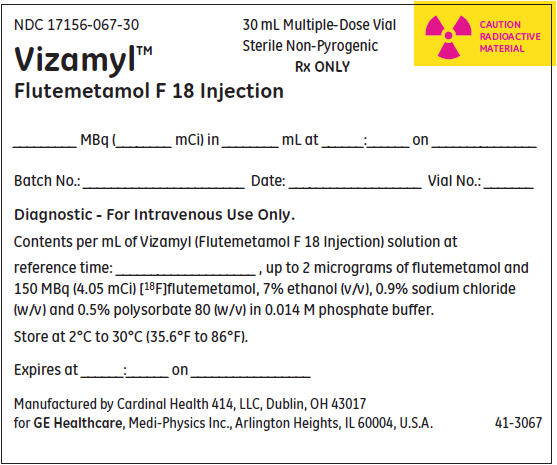
Vizamyl Flutemetamol F-18 4.05 mCi/mL Solution
🆔 Identity & classification
Where does this data come from?
🏭 Manufacturer & labeler
Where does this data come from?
🩺 Clinical
Patient education
Supplement & herbal interactions
Where does this data come from?
Ask a licensed pharmacist directly — free, answered by our team.
💊 What it looks like
Where does this data come from?
🧪 Inactive Ingredients / Excipients
Inactive ingredients, also called excipients, are components of the drug product other than the active ingredient. They may include fillers, dyes, coatings, preservatives, flavors, or other formulation ingredients.
💡 Tap an ingredient (hover on desktop) to see what it is and why it’s used.
-
70 uL / 1 mL
UNII 3K9958V90M
A liquid solvent derived from fermentation or chemical synthesis. In medicines, alcohol dissolves active ingredients, helps preserve the product, and improves how the body absorbs certain drugs.
-
UNII 6OZP39ZG8H
Polysorbate 80 is a synthetic emulsifier derived from sorbitol and oleic acid. It helps mix oil and water-based ingredients together in medications and improves how the product disperses in the body.
-
UNII 451W47IQ8X
Sodium chloride is common table salt. It's used in medicines as a buffer to maintain proper pH, as a filler to add bulk, or to adjust the osmotic balance in liquid formulations.
3 inactive ingredients listed in the exact product block matched to this NDC.
Where does this data come from?
ingredient classCode="IACT" elements from the exact product block matched by this NDC. Label-section narrative from DailyMed / the openFDA label index is shown separately when available.Inactive ingredient FAQ
Are inactive ingredients the same for every manufacturer?
Why might an inactive ingredient be missing?
Can inactive ingredients matter?
💲 Pricing
A drug doesn't have one price. Each row is a different public payment system, and none is what you'd pay at the counter — that depends on your insurance. The ⓘ on each row explains what it measures.
| Price system | Per mL | Per package |
|---|---|---|
| Retail pharmacies payNADAC · weekly | Not in the retail survey — common for institutional, discontinued, or low-volume packs. | |
| Medicaid paysCMS SDUD · 12 mo | No recent Medicaid claims on file for this NDC — rare and low-volume NDCs are suppressed in the public data. | |
| Medicare drug plans payPart D · quarterly | No Part D plan price is available for this NDC in our data. | |
Where does this data come from?
🔁 Therapeutic equivalents
| Product | Labeler | Pack | NADAC/unit | TE | Status | Price vs. this |
|---|---|---|---|---|---|---|
| Vizamyl 4.05 mCi/mLthis 17156-0067-30 | GE | 1 vial | — | — | FDA listed | — |
Where does this data come from?
⏳ Availability & generic status
We did not find an FDA-approved generic match for this exact strength, form and route. Patent/protection dates below may affect future generic timing.
Why the date isn’t exact: Generic timing can change because patents may be challenged, settled, licensed, added, removed, or worked around with a narrower label — and FDA approval does not always mean a pharmacy can get the generic today.
🛈 What do these terms mean?
- Patent
- Legal protection listed in the Orange Book that may delay generic approval or launch. Issued by the U.S. Patent & Trademark Office.
- Substance patent
- Covers the active drug molecule itself — the hardest to design around. A generic generally can’t launch until it expires.
- Formulation (product) patent
- Covers a specific formulation or dosage form. A generic can sometimes work around it with a different formulation.
- Method-of-use patent
- A patent covering one specific approved use of the drug — not necessarily the whole molecule. A generic can sometimes launch with a “skinny label” that carves out the protected use and keeps the others.
- Skinny label
- A generic label that omits a still-patented use when the FDA allows it — letting a generic reach the market for the unprotected uses.
- Exclusivity
- FDA-granted marketing protection, separate from patents — e.g. 5-yr new chemical entity, 7-yr orphan drug, or a +6-month pediatric extension.
- Paragraph IV
- A generic applicant’s formal challenge to a listed patent. It can potentially lead to earlier generic entry, but often involves litigation or a settlement.
- RLD / RS
- Reference Listed Drug — the brand product the FDA uses as the reference for generic applications. Reference Standard — the product the FDA expects generics to compare against in bioequivalence testing.
- TE / AB rating
- FDA therapeutic-equivalence rating. An AB rating generally means the FDA considers a generic therapeutically equivalent to — and substitutable for — the brand.
- LOE (loss of exclusivity)
- The latest patent or exclusivity currently listed — the loss-of-exclusivity / latest-listed-protection date shown on this page. Paragraph-IV challenges and settlements can move the real date earlier; FDA approval and a manufacturer’s decision to market can move it later.
Built from the FDA Orange Book. The bars above are scaled to each protection’s expiry; the red LOE marker is the last one to lapse.
| Patent | Type | Use code | Expires |
|---|---|---|---|
| US 8916131 ↗ | Drug product | — | Sep 16, 2028 |
| US 8916131 ↗ | Drug product | — | Sep 16, 2028 |
Is there a generic version of VIZAMYL VIAL?
The FDA approved a generic — why can’t I get it at my pharmacy yet?
Why do different websites show different generic release dates?
What does “FDA listed” mean?
What does a patent or protection date mean here?
What does “current Orange Book estimate” mean?
Can a generic come out before the last patent expires?
Can a generic come out after the listed dates?
What is the difference between patents and exclusivity?
Why are there multiple patent dates?
Where does this data come from?
🔬 Reported adverse events (FAERS)
Top reported reactions
Reporter sex
Serious outcomes
Where does this data come from?
📦 Packaging — all sizes for this product
| Package NDC | Description | Marketing start | Status |
|---|---|---|---|
| 17156-0067-30 You're viewing this | 1 VIAL, MULTI-DOSE in 1 CONTAINER (17156-067-30) / 30 mL in 1 VIAL, MULTI-DOSE | 2014-03-01 | Active |
🧭 About this NDC listing & data coverage
What data is (and isn’t) available for this NDC — tap to expand
| NDC identity (package / product / labeler codes) | ✓ Available |
| Labeler | ✓ Available |
| Product & package description | ✓ Available |
| Marketing category & status | ✓ Available |
| Active ingredient / dosage form / route | ✓ Available |
| FDA label (SPL via DailyMed) | ✓ Available |
| Package photos | ✓ Available |
| Inactive ingredients (structured) | ✓ Available |
| NADAC pharmacy acquisition price (CMS) | — Not published for this NDC CMS publishes NADAC only for NDCs reported in its retail-pharmacy survey. |
| Orange Book / therapeutic-equivalence data | ✓ Available |
| HCPCS J-code billing crosswalk | — Not published for this NDC Most self-administered / retail products have no J-code — that is normal. |
| Medicaid utilization (CMS SDUD) | — Not published for this NDC CMS reports utilization only for NDCs with Medicaid claims above its privacy threshold. |
Questions about this listing
Why is there no price listed?
Is the NDC printed on the package the same as the 11-digit billing NDC?
What do the three segments of this NDC mean?
Is this package still being marketed?
Who lists this product with the FDA?
Do I need a prescription for this product?
Where does this data come from?
📄 Full prescribing information FDA SPL
🎯 Indications and Usage ▾
1 INDICATIONS AND USAGE VIZAMYL is indicated for positron emission tomography (PET) of the brain to estimate amyloid beta neuritic plaque density in adults with cognitive impairment for: Evaluation of Alzheimer's disease (AD) and other causes of cognitive decline Selection of patients who are indicated for amyloid beta-directed therapy as described in the prescribing information of the therapeutic products VIZAMYL is a radioactive diagnostic drug indicated for positron emission tomography (PET) of the brain to estimate amyloid beta neuritic plaque density in adults with cognitive impairment for: Evaluation of Alzheimer's disease (AD) and other causes of cognitive decline Selection of patients who are indicated for amyloid beta-directed therapy as described in the prescribing information of the therapeutic products ( 1 )
⏱️ Dosage and Administration ▾
2 DOSAGE AND ADMINISTRATION The recommended amount of radioactivity is 185 MBq (5 mCi) administered as a single intravenous bolus within 40 seconds in a total volume of up to 10 mL. ( 2.2 ) Follow injection with an intravenous flush of 5 mL to 15 mL of 0.9% sodium chloride injection. ( 2.2 ) Obtain 10-minute to 20-minute PET images starting approximately 60 minutes to 120 minutes after drug administration.
( 2.3 ) See full prescribing information for image interpretation and radiation dosimetry. ( 2.4 , 2.5 , 2.6 )
2.1Radiation Safety - Drug Handling Handle VIZAMYL with appropriate safety measures to minimize radiation exposure during administration [see Warnings and Precautions (5.3) ] . Use waterproof gloves and effective radiation shielding, including lead-glass syringe shields when handling and administering VIZAMYL. Radiopharmaceuticals, including VIZAMYL, should be used by or under the control of healthcare providers who are qualified by specific training and experience in the safe use and handling of radionuclides, and whose experience and training have been approved by the appropriate governmental agency authorized to license the use of radionuclides.
2.2Recommended Dosage and Administration Instructions Recommended Dosage The recommended amount of activity of VIZAMYL is 185 MBq (5 mCi) in a total volume of up to 10 mL, administered as a single intravenous bolus within 40 seconds. The maximum mass dose is 20 mcg. Follow the injection with an intravenous flush of 5 mL to 15 mL of 0.9% sodium chloride injection.
Patient Preparation Instruct patients to hydrate before and after VIZAMYL administration and to void frequently following VIZAMYL administration to reduce radiation exposure [see Warnings and Precautions (5.3) ] . Administration Use aseptic technique and radiation shielding to withdraw and administer VIZAMYL. Visually inspect VIZAMYL for particulate matter and discoloration prior to administration.
Do not use VIZAMYL if it contains particulate matter or if it is discolored. Do not dilute VIZAMYL. Calculate the necessary volume to administer based on calibration time and required dose.
Measure the activity of VIZAMYL with a dose calibrator immediately prior to administration to the patient. Dispose of unused product in a safe manner in compliance with applicable regulations.
2.3Image Acquisition Instructions Position the patient supine with the head positioned to center the brain, including the cerebellum, within a single field of view. The patient's head should be tilted so that the anterior commissure-posterior commissure (AC-PC) plane is at right angles to the bore-axis of the PET scanner, with the head positioned in a suitable head support. Tape or other flexible head restraints may be employed to reduce head movement.
Acquire 10-minute to 20-minute PET images starting 60 minutes to 120 minutes after VIZAMYL administration using a PET scanner in 3-D mode with appropriate data corrections. Iterative or filtered back-projection reconstruction is recommended with a slice thickness of 2 mm to 4 mm, and matrix size of 128 × 128 with pixel sizes of approximately 2 mm. Where a post-smoothing filter is applied, full width at half maximum (FWHM) of not more than 5 mm is recommended; filter FWHM should be chosen to optimize the signal-to-noise ratio while preserving the sharpness of the reconstructed image.
2.4Image Orientation and Display Image Orientation Orient axial and coronal images to show symmetry of brain structures, with equal heights of structures bilaterally. Orient sagittal images so that the head and neck are neither flexed nor extended; the anterior and posterior aspects of the corpus callosum should be parallel to the AC-PC line as shown in Figure 2. Image Display Display images with all planes (axial, sagittal, and coronal planes) linked by crosshairs.
Select a color scale that provides a progression of low through high intensity (e.g., rainbow or Sokoloff). The selected color scale should: (1) prov…
💊 Dosage Forms and Strengths ▾
3 DOSAGE FORMS AND STRENGTHS Injection: 150 MBq/mL (4.05 mCi/mL) of flutemetamol F 18 in up to 30 mL volume at reference date and time as a clear, colorless to slightly yellow solution in a multiple-dose vial. Injection: 150 MBq/mL (4.05 mCi/mL) of flutemetamol F 18 in up to 30 mL volume at reference date and time in a multiple-dose vial ( 3 )
⛔ Contraindications ▾
4 CONTRAINDICATIONS VIZAMYL is contraindicated in patients with a history of hypersensitivity reaction to VIZAMYL or polysorbate 80 [see Warnings and Precautions (5.1) ] . Known hypersensitivity to VIZAMYL or polysorbate 80 ( 4 )
⚠️ Warnings and Cautions ▾
5 WARNINGS AND PRECAUTIONS Anaphylaxis and Other Serious Hypersensitivity Reactions: Always have emergency resuscitation equipment and trained personnel available at the time of VIZAMYL administration. ( 5.1 ) Risk of Image Misinterpretation and Other Errors: Image interpretation errors have been observed. ( 5.2 ) Radiation Risk: VIZAMYL contributes to a patient's long-term cumulative radiation exposure.
Ensure safe drug handling to protect patients and health care providers from unintentional radiation exposure. Advise patients to hydrate before and after administration and to void frequently after administration. ( 2.1 , 2.2 , 5.3 )
5.1Anaphylaxis and Other Serious Hypersensitivity Reactions Serious hypersensitivity reactions including anaphylaxis, presenting with flushing, dyspnea, and hypotension, have been observed within minutes following VIZAMYL administration. These reactions may occur in patients with no history of exposure to VIZAMYL [see Adverse Reactions (6.1 , 6.2) ] . Obtain a history of allergy or hypersensitivity reactions.
Always have resuscitation equipment and trained personnel immediately available at the time of VIZAMYL administration. If a hypersensitivity reaction is suspected, immediately discontinue the injection and initiate appropriate therapy. VIZAMYL is contraindicated in patients with a history of hypersensitivity to VIZAMYL or polysorbate 80 [see Contraindications (4) ] .
5.2Risk of Image Misinterpretation and Other Errors Errors may occur in the estimation of amyloid beta neuritic plaque density during VIZAMYL image interpretation [see Clinical Studies (14) ] . The use of clinical information in the interpretation of VIZAMYL images has not been evaluated and may lead to an inaccurate assessment. Extensive brain atrophy and motion artifacts that distort the image may limit the ability to distinguish gray and white matter on a VIZAMYL scan.
Perform image interpretation independently of the patient's clinical information. For cases where there is uncertainty as to the location of cortical signal, use co-registered anatomical imaging to improve localization of signal or examine the striatum for VIZAMYL signal as it is less affected by atrophy [see Dosage and Administration (2.5) ] .
5.3Radiation Risk VIZAMYL contributes to a patient's overall long-term cumulative radiation exposure. Long-term cumulative radiation exposure is associated with an increased risk of cancer. Ensure safe drug handling to protect patients and health care providers from unintentional radiation exposure. Advise patients to hydrate before and after administration and to void frequently after administration [see Dosage and Administration (2.1 , 2.2) ] .
🤒 Adverse Reactions ▾
6 ADVERSE REACTIONS The following clinically significant adverse reaction is described elsewhere in the labeling: Hypersensitivity Reactions [see Warnings and Precautions (5.1) ] Most common adverse reactions (incidence ≥ 1%) were flushing, increased blood pressure, headache, nausea, and dizziness. ( 6.1 ) To report SUSPECTED ADVERSE REACTIONS, contact GE HealthCare at 1-800-654-0118 or FDA at 1-800-FDA-1088 or www.fda.gov/medwatch.
6.1Clinical Trials Experience Because clinical trials are conducted under widely varying conditions, adverse reaction rates observed in the clinical trials of a drug cannot be directly compared to rates in the clinical trials of another drug and may not reflect the rates observed in clinical practice. The safety of VIZAMYL was evaluated in 761 adult subjects who received VIZAMYL by intravenous injection in clinical trials. Most subjects (70%) received a dose of 185 MBq (5 mCi).
The subjects had a mean age of 62 years (range 18 years to 93 years); 45% of the subjects were male and 91% were White. A serious hypersensitivity reaction characterized by flushing, dyspnea, and chest pressure was reported within minutes following VIZAMYL administration in one subject who recovered with treatment. Adverse reactions reported in ≥ 1% of subjects from the clinical trials are shown in Table 2.
Table 2: Adverse Reactions Reported in ≥ 1% of Adult Subjects Who Received VIZAMYL in Clinical Trials Adverse Reaction VIZAMYL N=761 % Flushing 2 Increased blood pressure 2 Headache 1 Nausea 1 Dizziness 1
6.2Postmarketing Experience The following adverse reactions have been identified during postapproval use of VIZAMYL. Because these reactions are reported voluntarily from a population of uncertain size, it is not always possible to reliably estimate their frequency or establish a causal relationship to drug exposure. Immune system disorders : anaphylactic reactions
👥 Use in Specific Populations ▾
8 USE IN SPECIFIC POPULATIONS Lactation: Temporarily discontinue breastfeeding. A lactating woman should pump and discard breast milk for 24 hours after VIZAMYL administration. ( 8.2 )
8.1Pregnancy Risk Summary There are no available data on VIZAMYL use in pregnant women to evaluate for a drug-associated risk of major birth defects, miscarriage, or adverse maternal or fetal outcomes. Animal reproduction studies have not been conducted with flutemetamol F 18 to evaluate its effect on female reproduction and embryo-fetal development. All radiopharmaceuticals, including VIZAMYL, have the potential to cause fetal harm depending on the stage of fetal development and the magnitude of the radiation dose.
If considering VIZAMYL administration to a pregnant woman, inform the patient about the potential for adverse pregnancy outcomes based on the radiation dose from the drug and the gestational timing of exposure. The background risk of major birth defects and miscarriage for the indicated population is unknown. All pregnancies have a background risk of birth defect, loss, or other adverse outcomes.
In the U.S. general population, the estimated background risk of major birth defects and miscarriage in clinically recognized pregnancies is 2% to 4% and 15% to 20%, respectively.
8.2Lactation Risk Summary There are no data on the presence of flutemetamol F 18 or metabolites in human milk or its effects on the breastfed infant or milk production. Exposure of VIZAMYL to a breastfed infant can be minimized by temporary discontinuation of breastfeeding (see Clinical Considerations ). The developmental and health benefits of breastfeeding should be considered along with the mother's clinical need for VIZAMYL and any potential adverse effects on the breastfed child from VIZAMYL or from the underlying maternal condition.
Clinical Considerations To decrease radiation exposure to the breastfed infant, advise a lactating woman to interrupt breastfeeding, and pump and discard breast milk for 24 hours after administration of VIZAMYL.
8.4Pediatric Use The safety and effectiveness of VIZAMYL have not been established in pediatric patients.
8.5Geriatric Use Of the 761 subjects in clinical studies of VIZAMYL, 447 (59%) subjects were 65 years of age and older, while 246 (32%) subjects were 75 years of age and older. No overall differences in safety or effectiveness were observed between subjects 65 years of age and older and younger adult subjects.
🤰 Pregnancy ▾
8.1Pregnancy Risk Summary There are no available data on VIZAMYL use in pregnant women to evaluate for a drug-associated risk of major birth defects, miscarriage, or adverse maternal or fetal outcomes. Animal reproduction studies have not been conducted with flutemetamol F 18 to evaluate its effect on female reproduction and embryo-fetal development. All radiopharmaceuticals, including VIZAMYL, have the potential to cause fetal harm depending on the stage of fetal development and the magnitude of the radiation dose.
If considering VIZAMYL administration to a pregnant woman, inform the patient about the potential for adverse pregnancy outcomes based on the radiation dose from the drug and the gestational timing of exposure. The background risk of major birth defects and miscarriage for the indicated population is unknown. All pregnancies have a background risk of birth defect, loss, or other adverse outcomes.
In the U.S. general population, the estimated background risk of major birth defects and miscarriage in clinically recognized pregnancies is 2% to 4% and 15% to 20%, respectively.
🧒 Pediatric Use ▾
8.4Pediatric Use The safety and effectiveness of VIZAMYL have not been established in pediatric patients.
🧓 Geriatric Use ▾
8.5Geriatric Use Of the 761 subjects in clinical studies of VIZAMYL, 447 (59%) subjects were 65 years of age and older, while 246 (32%) subjects were 75 years of age and older. No overall differences in safety or effectiveness were observed between subjects 65 years of age and older and younger adult subjects.
🆘 Overdosage ▾
10 OVERDOSAGE The major risks of overdose relate predominantly to increased radiation exposure, with long-term risks for neoplasia. In the event of administration of a radiation overdose with VIZAMYL, hydration and frequent urination should be encouraged to minimize radiation exposure to the subject. It is unknown whether or not flutemetamol is dialyzable.
🧬 Clinical Pharmacology ▾
12 CLINICAL PHARMACOLOGY
12.1Mechanism of Action Flutemetamol F 18 binds to amyloid beta plaques in the brain and the F 18 isotope produces a positron signal that is detected by a PET scanner. In in vitro binding studies using postmortem human brain homogenates containing fibrillar amyloid beta, the dissociation constant (Kd) for flutemetamol was 6.7 nM. Selectivity of 3 H-flutemetamol binding in postmortem human brain sections was demonstrated using autoradiography, silver-stained protein, and immunohistochemistry (monoclonal antibody to amyloid beta) correlation studies.
12.2Pharmacodynamics Following intravenous injection, flutemetamol F 18 diffuses across the human blood-brain barrier and produces a radioactivity signal detectable throughout the brain. Subsequently, cerebral perfusion decreases the brain flutemetamol F 18 content, with differential retention of the drug in cortical areas that contain amyloid beta aggregates compared to areas that lack the aggregates. The time-activity curves for flutemetamol F 18 in the brain of subjects with positive scans shows continual signal increases from time zero through 30 minutes post administration, with stable values thereafter up to at least 120 minutes post-injection.
Differences in signal intensity between brain regions showing specific and non-specific flutemetamol F 18 uptake form the basis for the image interpretation method [see Dosage and Administration (2.5) ] . The test-retest distribution of flutemetamol F 18 was evaluated in five subjects with probable AD who underwent two administrations of flutemetamol F 18 (followed by PET scans) separated by a time period of 1 to 4 weeks. Images were shown to maintain signal distribution reproducibility when evaluated semi-quantitatively using an automated assessment of SUVR in pre-specified cortical regions.
12.3Pharmacokinetics Following intravenous administration of 185 MBq (5 mCi) of VIZAMYL in healthy subjects, flutemetamol F 18 plasma concentrations declined by approximately 75% in the first 20 minutes post-injection, and by approximately 90% in the first 180 minutes. The F 18 in circulation during the 30-minute to 120-minute imaging window was principally in the form of flutemetamol metabolites. Excretion was approximately 37% renal (28% to 45%; n=6) and 52% hepatobiliary (40% to 65%; n=6).
Drug Interactions Clinical Study In patients with a range of cognitive impairment, mean cortical SUVR did not differ between patients taking or not taking donepezil, galantamine, memantine, or rivastigmine.
🧬 Mechanism of Action ▾
12.1Mechanism of Action Flutemetamol F 18 binds to amyloid beta plaques in the brain and the F 18 isotope produces a positron signal that is detected by a PET scanner. In in vitro binding studies using postmortem human brain homogenates containing fibrillar amyloid beta, the dissociation constant (Kd) for flutemetamol was 6.7 nM. Selectivity of 3 H-flutemetamol binding in postmortem human brain sections was demonstrated using autoradiography, silver-stained protein, and immunohistochemistry (monoclonal antibody to amyloid beta) correlation studies.
📦 How Supplied / Storage and Handling ▾
16 HOW SUPPLIED/STORAGE AND HANDLING How Supplied VIZAMYL (flutemetamol F 18 injection) is a clear, colorless to slightly yellow solution supplied at a concentration of 150 MBq/mL (4.05 mCi/mL) of flutemetamol F 18 in up to 30 mL volume at reference date and time in a shielded multiple-dose glass vial (NDC 17156-067-30). Storage and Handling Store VIZAMYL in the original container within radiation shielding at 2°C to 30°C (36°F to 86°F). VIZAMYL does not contain a preservative.
Do not use after the expiry date and time stated on the label. VIZAMYL multiple-dose vial expires 10 hours after end of synthesis (EOS). Dispose of any unused product in accordance with all federal, state, and local laws and institutional requirements.
This preparation is for use by persons licensed by the Nuclear Regulatory Commission or the relevant regulatory authority of an Agreement State.
📦 Storage and Handling ▾
Storage and Handling Store VIZAMYL in the original container within radiation shielding at 2°C to 30°C (36°F to 86°F). VIZAMYL does not contain a preservative. Do not use after the expiry date and time stated on the label.
VIZAMYL multiple-dose vial expires 10 hours after end of synthesis (EOS). Dispose of any unused product in accordance with all federal, state, and local laws and institutional requirements. This preparation is for use by persons licensed by the Nuclear Regulatory Commission or the relevant regulatory authority of an Agreement State.
📋 Description ▾
11 DESCRIPTION
11.1Drug Characteristics VIZAMYL (flutemetamol F 18 injection) is a radioactive diagnostic drug for intravenous use. Chemically, flutemetamol F 18 is 2-[3-[ 18 F]fluoro-4-(methylamino) phenyl]-6-benzothiazolol. It has the molecular formula C 14 H 11 18 FN 2 OS, the molecular weight 273.32, and the following structural formula: VIZAMYL is a sterile, non-pyrogenic, clear, colorless to slightly yellow solution.
Each mL contains up to 2 mcg of flutemetamol and 150 MBq (4.05 mCi) of flutemetamol F 18 at reference date and time with the following inactive ingredients: 70 microL ethanol, 9 mg sodium chloride, and 4.98 mg polysorbate 80 (w/v) in 0.014 M aqueous phosphate buffer. The pH of the solution is between 6 and 8.5. Chemical Structure
11.2Nuclear Physical Characteristics Fluorine-18 (F 18) decays by positron emission (ß+ decay, 96.7%) and orbital electron capture (3.3%) to stable oxygen-18 and has a physical half-life of 109.8 minutes. The principal photons useful for diagnostic imaging are the coincident pair of 511 keV gamma photons, resulting from the interaction of the emitted positron with an electron (Table 3). Table 3: Principal Radiation Produced from Decay of Fluorine-18 Radiation Energy Level (keV) Abundance (%) Positron 249.8
96.7Gamma 511 193.4 The point source air-kerma rate constant for F 18 is 3.74E -17 Gy m 2 /(Bq s); this coefficient was formerly defined as the specific gamma-ray constant of
5.7R/hr/mCi at 1 cm. The first half-value thickness of lead (Pb) for F 18 gamma rays is approximately 6 mm. The relative reduction of radiation emitted by F 18 that results from various thicknesses of lead shielding is shown in Table 4.
The use of ~8 cm of Pb will decrease the radiation transmission (i.e., exposure) by a factor of about 10,000. Table 4: Radiation Attenuation of 511 keV Gamma Rays by Lead Shielding Shield Thickness cm of Lead (Pb) Coefficient of Attenuation 0.6 0.5 2 0.1 4 0.01 6 0.001 8 0.0001 For use in correcting for physical decay of this radionuclide, the fractions remaining at selected intervals after calibration are shown in Table 5. Table 5: Physical Decay Chart for Fluorine-18 Minutes Fraction Remaining 0 1.00 15 0.909 30 0.826 60 0.683 110 0.500 220 0.250 440 0.060
💬 Information for Patients ▾
17 PATIENT COUNSELING INFORMATION Anaphylaxis and Other Serious Hypersensitivity Reactions Inform patients of the risk of hypersensitivity reactions, including anaphylaxis, and instruct them to alert healthcare providers immediately if they experience signs and symptoms of a hypersensitivity reaction [see Warnings and Precautions (5.1) ]. Radiation Risk Advise patients of the radiation risk of VIZAMYL. Instruct patients to increase their level of hydration before and after receiving VIZAMYL and to void frequently following administration [see Warnings and Precautions (5.3) ] .
Pregnancy Inform pregnant women of the potential risks of fetal exposure to radiation doses with VIZAMYL [see Use in Specific Populations (8.1) ] . Lactation Advise a lactating woman to temporarily discontinue breastfeeding and to pump and discard breast milk for 24 hours after VIZAMYL administration to minimize radiation exposure to the breastfed infant [see Use in Specific Populations (8.2) ] .