
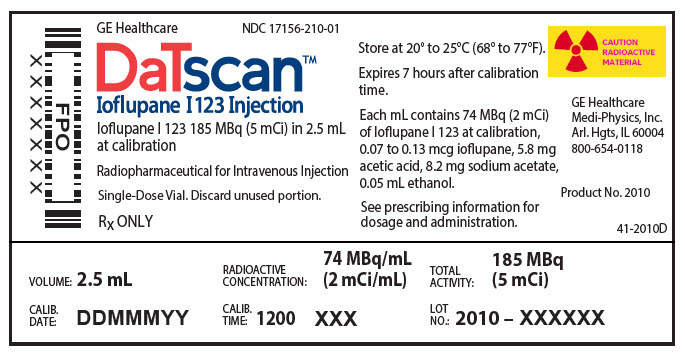
DaTscan Ioflupane I-123 2 mCi/mL Injection, Solution, 1 vial
🆔 Identity & classification
Where does this data come from?
🏭 Manufacturer & labeler
Where does this data come from?
🩺 Clinical
Patient education
Supplement & herbal interactions
Where does this data come from?
Ask a licensed pharmacist directly — free, answered by our team.
🧪 Inactive Ingredients / Excipients
Inactive ingredients, also called excipients, are components of the drug product other than the active ingredient. They may include fillers, dyes, coatings, preservatives, flavors, or other formulation ingredients.
💡 Tap an ingredient (hover on desktop) to see what it is and why it’s used.
-
5.8 mg / 1 mL
UNII Q40Q9N063P
Acetic acid is a weak organic acid commonly used in medicines as a buffer and pH adjuster. It helps maintain the proper acidity level to ensure the drug remains stable and effective in its formulation.
-
0.05 mg / 1 mL
UNII 3K9958V90M
A liquid solvent derived from fermentation or chemical synthesis. In medicines, alcohol dissolves active ingredients, helps preserve the product, and improves how the body absorbs certain drugs.
-
8.2 mg / 1 mL
UNII 4550K0SC9B
Sodium acetate is a salt derived from acetic acid. It acts as a buffer to help maintain the medicine's pH stability and may serve as a preservative or solubilizer in liquid formulations.
3 inactive ingredients listed in the exact product block matched to this NDC.
Where does this data come from?
ingredient classCode="IACT" elements from the exact product block matched by this NDC. Label-section narrative from DailyMed / the openFDA label index is shown separately when available.Inactive ingredient FAQ
Are inactive ingredients the same for every manufacturer?
Why might an inactive ingredient be missing?
Can inactive ingredients matter?
💲 Pricing
A drug doesn't have one price. Each row is a different public payment system, and none is what you'd pay at the counter — that depends on your insurance. The ⓘ on each row explains what it measures.
| Price system | Per mL | Per package |
|---|---|---|
| Retail pharmacies payNADAC · weekly | Not in the retail survey — common for institutional, discontinued, or low-volume packs. | |
| Medicaid paysCMS SDUD · 12 mo | No recent Medicaid claims on file for this NDC — rare and low-volume NDCs are suppressed in the public data. | |
| Medicare drug plans payPart D · quarterly | No Part D plan price is available for this NDC in our data. | |
Where does this data come from?
🔁 Therapeutic equivalents
| Product | Labeler | Pack | NADAC/unit | TE | Status | Price vs. this |
|---|---|---|---|---|---|---|
| Ioflupane I 123 2 mCi/mL 69945-0166-05 | Curium | 2.5 ml | — | AP | FDA listed | — |
| DaTscan 2 mCi/mLthis 17156-0210-01 | Medi-Physics | 1 vial | — | AP | FDA listed | — |
Where does this data come from?
⏳ Availability & generic status
The FDA lists approved generic versions of this medicine, but that does not always mean a pharmacy can get one today. Patent rules, launch agreements, supply and pricing can affect when generics actually arrive.
Where does this data come from?
📦 Packaging — all sizes for this product
| Package NDC | Description | Marketing start | Status |
|---|---|---|---|
| 17156-0210-01 You're viewing this | 1 VIAL, GLASS in 1 CONTAINER (17156-210-01) / 2.5 mL in 1 VIAL, GLASS | 2011-03-01 | Active |
🧭 About this NDC listing & data coverage
What data is (and isn’t) available for this NDC — tap to expand
| NDC identity (package / product / labeler codes) | ✓ Available |
| Labeler | ✓ Available |
| Product & package description | ✓ Available |
| Marketing category & status | ✓ Available |
| Active ingredient / dosage form / route | ✓ Available |
| FDA label (SPL via DailyMed) | ✓ Available |
| Package photos | ✓ Available |
| Inactive ingredients (structured) | ✓ Available |
| NADAC pharmacy acquisition price (CMS) | — Not published for this NDC CMS publishes NADAC only for NDCs reported in its retail-pharmacy survey. |
| Orange Book / therapeutic-equivalence data | ✓ Available |
| HCPCS J-code billing crosswalk | — Not published for this NDC Most self-administered / retail products have no J-code — that is normal. |
| Medicaid utilization (CMS SDUD) | — Not published for this NDC CMS reports utilization only for NDCs with Medicaid claims above its privacy threshold. |
Questions about this listing
Why is there no price listed?
Is the NDC printed on the package the same as the 11-digit billing NDC?
What do the three segments of this NDC mean?
Is this package still being marketed?
Who lists this product with the FDA?
Do I need a prescription for this product?
Where does this data come from?
📄 Full prescribing information FDA SPL
🎯 Indications and Usage ▾
1 INDICATIONS AND USAGE DATSCAN is indicated as an adjunct to other diagnostic evaluations for striatal dopamine transporter visualization using single photon emission computed tomography (SPECT) brain imaging in adult patients with: suspected Parkinsonian syndromes (PS) or suspected dementia with Lewy bodies (DLB). DATSCAN is a radioactive diagnostic agent indicated as an adjunct to other diagnostic evaluations for striatal dopamine transporter visualization using single photon emission computed tomography (SPECT) brain imaging in adult patients with: suspected Parkinsonian syndromes (PS) or suspected dementia with Lewy bodies (DLB).
( 1 )
⏱️ Dosage and Administration ▾
2 DOSAGE AND ADMINISTRATION The recommended dose of DATSCAN in adult patients is 111 MBq to 185 MBq (3 mCi to 5 mCi) administered intravenously over at least 20 seconds. ( 2.2 ) Administer a thyroid blocking agent at least one hour before the dose of DATSCAN. ( 2.3 ) Begin SPECT imaging between 3 hours and 6 hours post injection. ( 2.4 ) See full prescribing information for image interpretation and radiation dosimetry. ( 2.5 , 2.6 )
2.1Radiation Safety - Drug Handling Handle DATSCAN with safety measures to minimize radiation exposure to healthcare providers and patients [see Warnings and Precautions (5.3) ] . Use waterproof gloves and effective radiation shielding, including lead-glass syringe shields when handling and administering DATSCAN. Radiopharmaceuticals should be used by or under the control of healthcare providers who are qualified by specific training and experienced in the safe use and handling of radionuclides, and whose experience and training have been approved by the appropriate government agency authorized to license the use of radionuclides.
2.2Recommended Dosage The recommended dose of DATSCAN in adult patients is 111 MBq to 185 MBq (3 mCi to 5 mCi), administered intravenously over at least 20 seconds, 3 hours to 6 hours before imaging.
2.3Patient Preparation and Administration Thyroid Blockade Before DATSCAN Administration Administer Potassium Iodide Oral Solution or Strong Iodine Solution (e.g., Lugol's Solution) equivalent to 100 mg iodide to block uptake of iodine-123 by the patient's thyroid at least one hour before the dose of DATSCAN [see Warnings and Precautions (5.2) ] . Assessment of Drug Interactions Consider discontinuing drugs that have the potential to impact DATSCAN image interpretation for at least 5 biological half-lives before administration of DATSCAN if use of these drugs can be safely suspended [see Drug Interactions (7) ] .
Patient Hydration and Voiding To minimize radiation exposure, encourage hydration prior to and following DATSCAN administration in order to permit frequent voiding. Encourage the patient to void frequently for the first 48 hours following DATSCAN administration [see Warnings and Precautions (5.3) ] . Pregnancy Status Assess pregnancy status before administering DATSCAN to a female of reproductive potential [see Use in Specific Populations (8.1) ].
Administration Use aseptic procedures and radiation shielding during preparation and administration. Inspect the DATSCAN vial for particulate matter and discoloration prior to administration and do not use it if the vial contains particulate matter or discoloration. Measure patient dose using a dose calibrator immediately prior to administration.
Discard unused portion.
2.4Imaging Instructions Begin SPECT imaging 3 hours to 6 hours following DATSCAN administration. Use a gamma camera fitted with high-resolution collimators and set to a photopeak of 159 keV with a ± 10% energy window. Angular sampling should be at least 120 views over 360 degrees.
Position the patient supine with the head on an off-the-table headrest, use a flexible head restraint such as a strip of tape across the chin or forehead if necessary to help avoid movement, and set a circular orbit for the detector heads with the radius as small as possible (typically 11 cm to 15 cm). Obtain images with matrix size and zoom factors selected to give a pixel size of 3.5 mm to 4.5 mm. Collect a minimum of 1.5 million counts for optimal images.
2.5Image Interpretation Interpret DATSCAN images visually, based upon the appearance of the striata. Reconstructed pixel size should be between 3.5 mm and 4.5 mm with slices 1 pixel thick. Optimum presentation of the reconstructed images for visual interpretation is transaxial slices parallel to the anterior commissure-posterior commissure (AC-PC) line.
Determine whether an image is normal or abnormal by assessing the extent (as indicated by shape) and intensity of the striatal signal. Image interpretation does not involve…
💊 Dosage Forms and Strengths ▾
3 DOSAGE FORMS AND STRENGTHS Injection: clear, colorless solution containing 185 MBq (5 mCi) in 2.5 mL at a concentration of 74 MBq/mL (2 mCi/mL) of ioflupane I 123 at calibration date and time supplied in single-dose vials. Injection: 185 MBq (5 mCi) in 2.5 mL at a concentration of 74 MBq/mL (2 mCi/mL) of ioflupane I 123 at calibration date and time supplied in single-dose vials. ( 3 )
⛔ Contraindications ▾
4 CONTRAINDICATIONS DATSCAN is contraindicated in patients with known serious hypersensitivity to ioflupane I 123 [see Warnings and Precautions (5.1) ] . Known serious hypersensitivity to ioflupane I 123 ( 4 )
⚠️ Warnings and Cautions ▾
5 WARNINGS AND PRECAUTIONS Hypersensitivity Reactions: Hypersensitivity reactions including dyspnea, edema, rash, erythema, and pruritus have been reported. Have treatment measures available prior to DATSCAN administration. ( 5.1 ) Thyroid Accumulation of Iodine-123: Thyroid uptake of iodine-123 may result in an increased long-term risk for thyroid neoplasia.
( 2.3 , 5.2 ) Radiation Risk: Ensure safe handling to minimize radiation exposure to the patient and healthcare providers. Advise patients to hydrate before and after administration and to void frequently after administration. ( 2.1 , 2.3 , 5.3 )
5.1Hypersensitivity Reactions Hypersensitivity reactions, including dyspnea, edema, rash, erythema, and pruritus, have been reported following DATSCAN administration [see Adverse Reactions (6.2) ] . The reactions have generally occurred within minutes of DATSCAN administration and have either resolved spontaneously or following the administration of corticosteroids and antihistamines. DATSCAN is contraindicated in patients with known serious hypersensitivity to ioflupane I 123 [see Contraindications (4) ].
Have treatment measures available and monitor patients for symptoms or signs of a hypersensitivity reaction.
5.2Thyroid Accumulation of Iodine-123 DATSCAN may contain up to 6% of free iodide (iodine-123). Thyroid uptake of iodine-123 may result in an increased long-term risk for thyroid neoplasia. To decrease thyroid accumulation of iodine-123, block the thyroid gland before administration of DATSCAN [see Dosage and Administration (2.3) ] .
5.3Radiation Risk DATSCAN contributes to a patient's overall long-term cumulative radiation exposure. Long-term cumulative radiation exposure is associated with an increased risk for cancer. Ensure safe handling to minimize radiation exposure to patients and healthcare providers. Advise patients to hydrate before and after administration and to void frequently after administration [see Dosage and Administration (2.1 , 2.3) ] .
🤒 Adverse Reactions ▾
6 ADVERSE REACTIONS The following clinically significant adverse reaction is described elsewhere in the labeling: Hypersensitivity Reactions [see Warnings and Precautions (5.1) ] The following adverse reactions were reported at ≤1%: headache, nausea, vertigo, dry mouth and dizziness. ( 6.1 ) To report SUSPECTED ADVERSE REACTIONS, contact GE HealthCare at 1-800-654-0118 or FDA at 1-800-FDA-1088 or www.fda.gov/medwatch.
6.1Clinical Trials Experience Because clinical trials are conducted under widely varying conditions, adverse reaction rates observed in the clinical trials of DATSCAN cannot be directly compared to rates in the clinical trials of another drug and may not reflect the rates observed in practice. The data from clinical trials reflect exposure to DATSCAN in 942 subjects with a mean age of 66 years (range 25 years to 90 years). Among these subjects, 42% were female and 99% White.
Subjects received 88 MBq to 287 MBq (2 mCi to 8 mCi) [median 173 MBq (4.7 mCi)] intravenously as a single dose. The recommended dose of DATSCAN is 111 MBq to 185 MBq (3 mCi to 5 mCi) [see Dosage and Administration (2.2) ]. The following adverse reactions were reported at a rate of 1% or less: headache, nausea, vertigo, dry mouth, and dizziness.
6.2Postmarketing Experience The following adverse reactions have been identified during postapproval use of DATSCAN. Because these reactions are reported voluntarily from a population of uncertain size, it is not always possible to reliably estimate their frequency or establish a causal relationship to drug exposure. Immune system disorders : Hypersensitivity, including dyspnea, edema, rash, erythema, and pruritus General disorders and administration site conditions : Injection site pain
🔄 Drug Interactions ▾
7 DRUG INTERACTIONS Ioflupane I 123 binds to the dopamine transporter [see Clinical Pharmacology (12.1) ] . Drugs that bind to the dopamine transporter with high affinity have the potential to impact DATSCAN image interpretation. These potentially interfering drugs include: amoxapine, amphetamine, armodafinil, benztropine, bupropion, buspirone, cocaine, mazindol, methamphetamine, methylphenidate, modafinil, norephedrine, phentermine, selegiline, and sertraline.
Selective serotonin reuptake inhibitors (paroxetine and citalopram) may increase or decrease ioflupane binding to the dopamine transporter. In patients taking venlafaxine or desvenlafaxine prior to DATSCAN administration, there have been cases of altered DATSCAN uptake that impacted image interpretation. The mechanism of interference of these drugs with DATSCAN imaging is not known.
Whether discontinuation of any of the above drugs prior to DATSCAN administration may minimize the impact on image interpretation is unknown; however, if use of these drugs can be safely suspended, consider discontinuing for at least 5 biological half-lives before administration of DATSCAN [see Dosage and Administration (2.3) ]. The impact of dopamine agonists and antagonists upon DATSCAN imaging results has not been established. Amoxapine, amphetamine, armodafinil, benztropine, bupropion, buspirone, cocaine, mazindol, methamphetamine, methylphenidate, modafinil norephedrine, phentermine, selegiline, sertraline, citalopram, paroxetine, venlafaxine, and desvenlafaxine may impact DATSCAN image interpretation.
Consider discontinuing drugs that may interfere with DATSCAN images for at least 5 biological half-lives before administration of DATSCAN if use of these drugs can be safely suspended. ( 2.3 , 7 )
👥 Use in Specific Populations ▾
8 USE IN SPECIFIC POPULATIONS Pregnancy: May cause fetal harm. ( 8.1 ) Lactation: Advise a lactating woman to interrupt breastfeeding and pump and discard breastmilk for at least 6 days after DATSCAN administration. ( 8.2 )
8.1Pregnancy Risk Summary Radioactive iodine products cross the placenta and can permanently impair fetal thyroid function. Administration of an appropriate thyroid blocking agent is recommended before use of DATSCAN in a pregnant woman to protect the woman and fetus from accumulation of iodine-123 [see Dosage and Administration (2.3) ] . There are no available data on DATSCAN use in pregnant women to evaluate for a drug-associated risk of major birth defects, miscarriage or adverse maternal or fetal outcomes.
Animal reproduction studies have not been conducted with ioflupane I 123. All radiopharmaceuticals have the potential to cause fetal harm depending on the fetal stage of development and the magnitude of the radiation dose. Administration of DATSCAN at a dose of 185 MBq (5 mCi) results in an absorbed radiation dose to the uterus of 0.3 rad (3.0 mGy).
Radiation doses greater than 15 rad (150 mGy) have been associated with congenital anomalies but doses under 5 rad (50 mGy) generally have not. Advise pregnant women of the potential risks of fetal exposure to radiation doses with administration of DATSCAN. The estimated background risk of major birth defects and miscarriage for the indicated population(s) is unknown.
All pregnancies have a background risk of birth defect, loss, or other adverse outcomes. In the U.S. general population, the estimated background risk of major birth defects and miscarriage in clinically recognized pregnancies is 2% to 4% and 15% to 20%, respectively.
8.2Lactation Risk Summary Iodine-123, the radionuclide in DATSCAN, is present in human milk. There is no information on the effects on the breastfed infant or on milk production. Advise a lactating woman to interrupt breastfeeding and pump and discard breastmilk for at least 6 days (>10 physical half-lives) after DATSCAN administration in order to minimize radiation exposure to a breastfed infant.
8.4Pediatric Use The safety and efficacy of DATSCAN have not been established in pediatric patients.
8.5Geriatric Use In the two principal clinical studies of DATSCAN for suspected Parkinsonian syndromes, 45% of the subjects were aged 65 and over, while 10% were 75 and over [see Clinical Studies (14.1) ] . No overall differences in safety or effectiveness were observed between these subjects and younger subjects. Other reported clinical experience has not identified differences in responses between the elderly and younger patients.
8.6Renal Impairment DATSCAN is excreted by the kidney and patients with severe renal impairment may have increased radiation exposure and altered DATSCAN images.
🤰 Pregnancy ▾
8.1Pregnancy Risk Summary Radioactive iodine products cross the placenta and can permanently impair fetal thyroid function. Administration of an appropriate thyroid blocking agent is recommended before use of DATSCAN in a pregnant woman to protect the woman and fetus from accumulation of iodine-123 [see Dosage and Administration (2.3) ] . There are no available data on DATSCAN use in pregnant women to evaluate for a drug-associated risk of major birth defects, miscarriage or adverse maternal or fetal outcomes.
Animal reproduction studies have not been conducted with ioflupane I 123. All radiopharmaceuticals have the potential to cause fetal harm depending on the fetal stage of development and the magnitude of the radiation dose. Administration of DATSCAN at a dose of 185 MBq (5 mCi) results in an absorbed radiation dose to the uterus of 0.3 rad (3.0 mGy).
Radiation doses greater than 15 rad (150 mGy) have been associated with congenital anomalies but doses under 5 rad (50 mGy) generally have not. Advise pregnant women of the potential risks of fetal exposure to radiation doses with administration of DATSCAN. The estimated background risk of major birth defects and miscarriage for the indicated population(s) is unknown.
All pregnancies have a background risk of birth defect, loss, or other adverse outcomes. In the U.S. general population, the estimated background risk of major birth defects and miscarriage in clinically recognized pregnancies is 2% to 4% and 15% to 20%, respectively.
🧒 Pediatric Use ▾
8.4Pediatric Use The safety and efficacy of DATSCAN have not been established in pediatric patients.
🧓 Geriatric Use ▾
8.5Geriatric Use In the two principal clinical studies of DATSCAN for suspected Parkinsonian syndromes, 45% of the subjects were aged 65 and over, while 10% were 75 and over [see Clinical Studies (14.1) ] . No overall differences in safety or effectiveness were observed between these subjects and younger subjects. Other reported clinical experience has not identified differences in responses between the elderly and younger patients.
🆘 Overdosage ▾
10 OVERDOSAGE The risks of overdose relate predominantly to increased radiation exposure, with the long-term risks for neoplasia. In case of overdosage of radioactivity, frequent urination and defecation should be encouraged to minimize radiation exposure to the patient.
🧬 Clinical Pharmacology ▾
12 CLINICAL PHARMACOLOGY
12.1Mechanism of Action The active drug substance in DATSCAN is N-ω-fluoropropyl-2β-carbomethoxy-3β-(4-[ 123 I]iodophenyl)nortropane or ioflupane I 123. In vitro , ioflupane binds reversibly to the human dopamine transporter (DaT) (Ki = 0.62 nM; IC 50 = 0.71 nM). Autoradiography of post-mortem human brain slices exposed to radiolabeled ioflupane shows concentration of the radiolabel in striatum (caudate nucleus and putamen).
The specificity of the binding of ioflupane I 125 to dopamine transporter was demonstrated by competition studies with the DaT inhibitor GBR 12909 (a dopamine reuptake inhibitor), the serotonin reuptake inhibitor citalopram, and the norepinephrine reuptake inhibitor desipramine in post-mortem human brain slices exposed to radiolabeled ioflupane. Citalopram reduced binding in the neocortex and thalamus with only minor effects in the striatum. This indicated that the binding in the cortex and thalamus is mainly to the serotonin reuptake sites.
Desipramine showed no effect on the level of striatal binding of ioflupane I 125, but reduced extrastriatal binding by 60 to 85%. The binding of ioflupane I 125 to the striatum was abolished in the presence of high concentrations of GBR 12909, indicating selectivity of ioflupane binding for the pre-synaptic DaT. Following administration of DATSCAN to humans, radioactive decay of the iodine-123 emits gamma radiation which can be detected externally using gamma detectors, allowing visualization of the brain striata through SPECT imaging [see Clinical Pharmacology (12.3) ].
12.2Pharmacodynamics As DATSCAN contains a very small quantity of ioflupane, no ioflupane pharmacologic effects are expected [see Description (11) ].
12.3Pharmacokinetics The pharmacokinetics of ioflupane I 123 were studied by monitoring radioactivity following intravenous injection; only 5% of the administered radioactivity remained in whole blood at 5 minutes post-injection. Uptake in the brain reached approximately 7% of injected radioactivity at 10 minutes post-injection and decreased to 3% after 5 hours; striata to background ratios were relatively constant between 3 hours and 6 hours post-injection. About 30% of the whole brain radioactivity was attributed to striatal uptake.
By 48 hours post-injection, approximately 60% of the injected radioactivity has been excreted in the urine, with fecal excretion estimated to be approximately 14%.
🧬 Mechanism of Action ▾
12.1Mechanism of Action The active drug substance in DATSCAN is N-ω-fluoropropyl-2β-carbomethoxy-3β-(4-[ 123 I]iodophenyl)nortropane or ioflupane I 123. In vitro , ioflupane binds reversibly to the human dopamine transporter (DaT) (Ki = 0.62 nM; IC 50 = 0.71 nM). Autoradiography of post-mortem human brain slices exposed to radiolabeled ioflupane shows concentration of the radiolabel in striatum (caudate nucleus and putamen).
The specificity of the binding of ioflupane I 125 to dopamine transporter was demonstrated by competition studies with the DaT inhibitor GBR 12909 (a dopamine reuptake inhibitor), the serotonin reuptake inhibitor citalopram, and the norepinephrine reuptake inhibitor desipramine in post-mortem human brain slices exposed to radiolabeled ioflupane. Citalopram reduced binding in the neocortex and thalamus with only minor effects in the striatum. This indicated that the binding in the cortex and thalamus is mainly to the serotonin reuptake sites.
Desipramine showed no effect on the level of striatal binding of ioflupane I 125, but reduced extrastriatal binding by 60 to 85%. The binding of ioflupane I 125 to the striatum was abolished in the presence of high concentrations of GBR 12909, indicating selectivity of ioflupane binding for the pre-synaptic DaT. Following administration of DATSCAN to humans, radioactive decay of the iodine-123 emits gamma radiation which can be detected externally using gamma detectors, allowing visualization of the brain striata through SPECT imaging [see Clinical Pharmacology (12.3) ].
📦 How Supplied / Storage and Handling ▾
16 HOW SUPPLIED/STORAGE AND HANDLING How Supplied DATSCAN (ioflupane I 123 injection) is a clear, colorless solution supplied in single-dose glass vials containing 185 MBq (5 mCi) in 2.5 mL at a concentration of 74 MBq/mL (2 mCi/mL) of ioflupane I 123 at calibration date and time. Each vial is enclosed in a lead container of appropriate thickness. NDC 17156-210-01 Storage and Handling Store DATSCAN at 20° to 25°C (68° to 77°F).
This product does not contain a preservative. Store DATSCAN within the original lead container or equivalent radiation shielding. Do not use DATSCAN preparations after the expiration date and time stated on the label.
This preparation is approved for use by persons licensed by the Illinois Emergency Management Agency pursuant to 32 IL. Adm. Code Section 330.260(a) and 335.4010 or equivalent licenses of the Nuclear Regulatory Commission or the relevant regulatory authority of an Agreement State.
📦 Storage and Handling ▾
Storage and Handling Store DATSCAN at 20° to 25°C (68° to 77°F). This product does not contain a preservative. Store DATSCAN within the original lead container or equivalent radiation shielding.
Do not use DATSCAN preparations after the expiration date and time stated on the label. This preparation is approved for use by persons licensed by the Illinois Emergency Management Agency pursuant to 32 IL. Adm.
Code Section 330.260(a) and 335.4010 or equivalent licenses of the Nuclear Regulatory Commission or the relevant regulatory authority of an Agreement State.
📋 Description ▾
11 DESCRIPTION
11.1Chemical Characteristics DATSCAN (ioflupane I 123 injection) is a sterile, pyrogen-free radioactive diagnostic agent for intravenous use. DATSCAN is a clear and colorless solution supplied in single-dose vials. Each milliliter contains 0.07 to 0.13 mcg ioflupane, 74 MBq (2 mCi) of iodine-123 (as ioflupane I 123) at calibration time, 5.8 mg acetic acid, 8.2 mg sodium acetate and 0.05 mL (5%) ethanol.
The pH of the solution is between 4.2 and 5.2. The chemical name for ioflupane I 123 is N-ω-fluoropropyl-2β-carbomethoxy-3β-(4-[ 123 I]iodophenyl)nortropane and it has the following structural formula: Chemical Structure
11.2Physical Characteristics Iodine-123 is a cyclotron-produced radionuclide that decays to tellurium-123 by electron capture and has a physical half-life of 13.2 hours. The photon that is useful for detection and imaging studies is listed in Table 2. Table 2 Principal Radiation Emission Data – Iodine-123 Radiation Energy Level (keV) Abundance (%) Gamma 159 83
11.3 External Radiation The specific gamma-ray constant for iodine-123 is
1.6R/mCi-hr at 1 cm. The first half-value thickness of lead (Pb) for iodine-123 is 0.04 cm. The relative transmission of radiation emitted by the radionuclide that results from interposition of various thicknesses of Pb is shown in Table 3 (e.g., the use of 2.16 cm Pb will decrease the external radiation exposure by a factor of about 1,000).
Table 3 Reduction in In-air Collision Kerma Caused by Lead Shielding Calculation based on attenuation and energy-transfer coefficients obtained from National Institute of Standards & Technology Internal Report NISTIR 5632. Shield Thickness cm of lead (Pb) Reduction in In-air Collision Kerma 0.04 0.5 0.13 10 -1 0.77 10 -2 2.16 10 -3 3.67 10 -4
💬 Information for Patients ▾
17 PATIENT COUNSELING INFORMATION Hypersensitivity Reactions Inform the patient that hypersensitivity reactions, including dyspnea, edema, rash, erythema and pruritus, have been reported following DATSCAN administration [see Warnings and Precautions (5.1) ]. Adequate Hydration Instruct patients to drink a sufficient amount of water prior to and after receiving DATSCAN and to void frequently for the first 48 hours following DATSCAN administration [see Dosage and Administration (2.3) ] . Lactation Advise a lactating woman to interrupt breastfeeding and pump and discard breastmilk for at least 6 days (>10 physical half-lives) after DATSCAN administration in order to minimize radiation exposure to a breastfed infant [see Use in Specific Populations (8.2) ] .
Pregnancy Advise a pregnant woman of the potential risks of fetal exposure to radiation doses with DATSCAN [see Use in Specific Populations (8.1) ].