
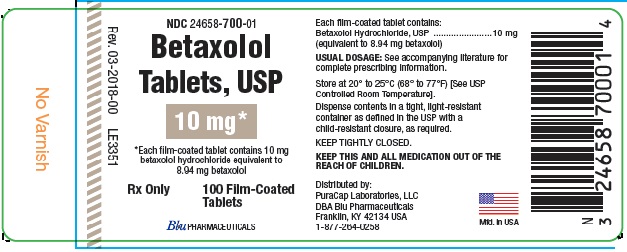
Betaxolol 10 mg Tablet, Film Coated, 100-count — NDC 24658-700-01 (Billing 24658-0700-01)
This is a package of 100 tablets of Betaxolol 10 mg Tablet, Film Coated from PuraCap Laboratories LLC, marketed since Aug 2016 and currently FDA-listed; retail pharmacies pay about $0.5831 per tablet (NADAC). It is this product's only package size.
NDC database record
One package, one record: these facts belong to NDC 24658-700-01 alone.
- Record
- FDA NDC Directory package listing · Human prescription drug
- Code segments
- 24658 labeler · 700 product · 01 package
- Package marketed since
- Dec 15, 2016
- Sample package
- No — commercial package
- Listing certified through
- Dec 31, 2026
- Billing quantity
- 100 EA per package
- Barcode (UPC)
- 0324658701011
- FDA record last changed
- Jul 24, 2026
Identity & classification
Regulatory identifiers FDA, NLM and CMS codes for this package
Drug-database identifiers Medi-Span GPI and First Databank GCN / HICL / AHFS classification
- GSN (GCN sequence number): 014188
- GCN: 12791
- GPI-14 (Medi-Span): 33200021100310
- HICL (First Databank): 005168
- AHFS class code: 12:16.08.08
- RxCUI (RxNorm): 1297753
Where does this data come from?
- FDA openFDA NDC Directory · synced Oct 8, 2026
- FDA label on DailyMed · label index refreshed Oct 6, 2026
- RxNorm (NLM RxNav) · catalog refreshed Oct 1, 2026
- Medi-Span GPI (licensed)
- First Databank (licensed) · refreshed Oct 8, 2026
RxNorm drug class
This medicine belongs to the beta-Adrenergic Blocker class.
Where does this data come from?
- RxClass (NLM) · catalog refreshed Oct 1, 2026
Clinical
Betaxolol is used alone or with other medications to control high blood pressure. Betaxolol is in a class of medications called beta blockers. It works by relaxing blood vessels and slowing heart rate to improve blood flow and decrease blood pressure. High blood pressure is a common condition and when not treated, can cause damage to the brain, heart, blood vessels, kidneys and other parts of the body. Damage to these organs may cause heart disease, a heart attack, heart failure, stroke, kidney failure, loss of vision, and other problems. In addition to taking medication, making lifestyle chan...
Read the full MedlinePlus article ↗- It depends on the form. The tablets treat high blood pressure. The eye drops lower pressure in the eye for ocular hypertension and chronic open-angle glaucoma.
- Tablets are taken by mouth, usually once a day, and food does not change absorption. Eye drops go into the affected eye(s), usually twice a day. Betoptic S needs a good shake first...
- Please don’t stop on your own. Stopping suddenly can make chest pain worse and has been linked to heart attacks. If you need to stop, your doctor will taper you off over about 2 we...
- Most are mild, like a slow heartbeat, tiredness, dizziness, headache or shortness of breath. Call your doctor for wheezing, swelling, fainting or worsening breathlessness.
Patient education
Supplement & herbal interactions
Some supplements/herbs that may interact with Betaxolol — tap one for details:
Betaxolol may be associated with lower levels of 1 nutrient — worth a chat with your pharmacist, not a cause for alarm.
Where does this data come from?
- MedlinePlus (NLM) · refreshed Oct 1, 2026
- FDA label on DailyMed · label index refreshed Oct 6, 2026
Ask a licensed pharmacist directly — free, answered by our team.
Pricing
A drug doesn't have one price. Each row is a different public payment system, and none is what you'd pay at the counter — that depends on your insurance. The ⓘ on each row explains what it measures.
| Price system | Per ea | Per package |
|---|---|---|
| Retail pharmacies payNADAC · weekly | $0.583 | $58.31 / 100 tablets |
| Medicaid paysCMS SDUD · 12 mo | No recent Medicaid claims on file for this NDC — rare and low-volume NDCs are suppressed in the public data. | |
| Medicare drug plans payPart D · Q2 2026 | $0.8080 | $80.80 / 100 tablets |
Where does this data come from?
- CMS NADAC weekly file · file of Nov 23, 2022
- CMS ASP pricing files · refreshed Sep 20, 2026
- CMS Medicaid State Drug Utilization Data · refreshed Oct 8, 2026
- CMS Part D plan pricing files · refreshed Sep 24, 2026
- VA National Acquisition Center price file
Packaging — all sizes for this product
| Package NDC | Description | Marketing start | Marketing end | Status |
|---|---|---|---|---|
| 24658-0700-01 You're viewing this Main listing | 100 TABLET, FILM COATED in 1 BOTTLE | 2016-12-15 | — | Active |
Therapeutic equivalents
| Product | Labeler | Pack | NADAC/unit | TE | Status | Price vs. this |
|---|---|---|---|---|---|---|
| Betaxolol 10 mgthis 24658-0700-01 | PuraCap | 100 tablets | $0.583 | AB | FDA listed | — |
| Betaxolol Hydrochloride 10 mg 10702-0013-01 | KVK-TECH, | 100 tablets | $0.591 | AB | Availability likely | +1% |
| Betaxolol 10 mg 42806-0038-01 | Epic | 100 tablets | $0.607 | AB | Availability likely | +4% |
Where does this data come from?
- FDA openFDA NDC Directory · synced Oct 8, 2026
- FDA Orange Book · refreshed Oct 3, 2026
- CMS NADAC weekly file · file of Nov 23, 2022
Availability & generic status
This product is an FDA-approved generic. Other versions of the same drug are listed under Therapeutic equivalents, least expensive first.
Where does this data come from?
- FDA Orange Book · refreshed Oct 3, 2026
What it looks like
Where does this data come from?
- FDA label on DailyMed · label index refreshed Oct 6, 2026
Inactive Ingredients / Excipients
Inactive ingredients, also called excipients, are components of the drug product other than the active ingredient. They may include fillers, dyes, coatings, preservatives, flavors, or other formulation ingredients.
🧪 Avoiding an ingredient? See Betaxolol inactive ingredients by manufacturer: every current product's list side by side, so you can ask your pharmacy for the version that does not list it.
💡 Tap an ingredient (hover on desktop) to see what it is and why it’s used.
-
UNII 3SY5LH9PMK
Anhydrous lactose is a milk sugar with no water content. It acts as a filler and binder in tablets and capsules, adding bulk and helping ingredients stick together.
-
UNII R12CBM0EIZ
A natural wax derived from a Brazilian palm tree, used as a coating and polish on tablets and capsules. It creates a smooth, shiny finish that protects the medicine and improves appearance.
-
UNII B1QE5P712K
Hypromellose 2208 is a plant-derived thickening agent that dissolves in water. It's used as a binder to help hold tablet ingredients together and as a coating on pills to control how quickly the medicine releases in your body.
-
UNII OP1R32D61U
Microcrystalline cellulose is a purified form of cellulose, a natural fiber from plant sources. It acts as a binder and filler in tablets and capsules, helping hold ingredients together and give the medicine its shape and size.
-
UNII 3WJQ0SDW1A
Polyethylene glycol is a synthetic liquid or solid polymer used in medicines as a solvent, lubricant, and humectant. It helps dissolve active ingredients, reduces friction during manufacturing, and retains moisture in the final product.
-
UNII 6OZP39ZG8H
Polysorbate 80 is a synthetic emulsifier derived from sorbitol and oleic acid. It helps mix oil and water-based ingredients together in medications and improves how the product disperses in the body.
-
UNII 5856J3G2A2
A starch-based powder made from potatoes and processed with sodium. It acts as a disintegrant, helping the tablet or capsule break apart quickly in the stomach so the medicine can be absorbed.
-
UNII O8232NY3SJ
A plant-based carbohydrate derived from corn kernels. It acts as a filler to add bulk, a binder to hold ingredients together, and a disintegrant to help the tablet break apart in your stomach for absorption.
-
UNII 4ELV7Z65AP
Stearic acid is a fatty acid derived from plant or animal sources. It acts as a binder and lubricant in tablets and capsules, helping them hold together and flow smoothly during manufacturing.
-
UNII 15FIX9V2JP
Titanium dioxide is a bright white mineral powder commonly used as a colorant and opacifying agent. It makes pills and tablets white or lighter in color and helps make coatings non-transparent.
10 inactive ingredients listed in the exact product block matched to this NDC.
Where does this data come from?
ingredient classCode="IACT" elements from the exact product block matched by this NDC. Label-section narrative from DailyMed / the openFDA label index is shown separately when available.- FDA label on DailyMed · label index refreshed Oct 6, 2026
- FDA openFDA NDC Directory · synced Oct 8, 2026
Inactive ingredient FAQ
Are inactive ingredients the same for every manufacturer?
Why might an inactive ingredient be missing?
Can inactive ingredients matter?
Manufacturer & labeler
More NDCs from PuraCap Laboratories LLC labeler code 24658
- Rosuvastatin Calcium 40 mg Tablet NDC 24658-264-30
- Cholestyramine 4 g/9g Powder, For Suspension NDC 24658-266-93
- Cholestyramine Light 4 g/5.7g Powder, For Suspension NDC 24658-270-95
- Cholestyramine Light 4 g/5.7g Powder, For Suspension NDC 24658-271-93
- Doxycycline Hyclate 100 mg Tablet, Film Coated NDC 24658-310-01
- OMEGA-3-ACID Ethyl Esters 1 g Capsule, Liquid Filled NDC 24658-350-12
- Betaxolol 20 mg Tablet, Film Coated NDC 24658-701-01
- Estradiol .5 mg Tablet NDC 24658-702-01
- Estradiol 1 mg Tablet NDC 24658-703-01
- Estradiol 2 mg Tablet NDC 24658-704-01
- AZITHROMYCIN 200 mg/5mL Powder, For Suspension NDC 24658-706-32
- AZITHROMYCIN 200 mg/5mL Powder, For Suspension NDC 24658-707-33
Where does this data come from?
- FDA openFDA NDC Directory · synced Oct 8, 2026
- Drugs@FDA
Full prescribing information FDA SPL
🎯 Indications and Usage ▾
INDICATIONS AND USAGE Betaxolol is indicated in the management of hypertension. It may be used alone or concomitantly with other antihypertensive agents, particularly thiazide-type diuretics.
⏱️ Dosage and Administration ▾
DOSAGE AND ADMINISTRATION The initial dose of betaxolol in hypertension is ordinarily 10 mg once daily either alone or added to diuretic therapy. The full antihypertensive effect is usually seen within 7 to 14 days. If the desired response is not achieved the dose can be doubled after 7 to 14 days.
Increasing the dose beyond 20 mg has not been shown to produce a statistically significant additional antihypertensive effect; but the 40-mg dose has been studied and is well tolerated. An increased effect (reduction) on heart rate should be anticipated with increasing dosage. If monotherapy with betaxolol does not produce the desired response, the addition of a diuretic agent or other antihypertensive should be considered (see, Drug Interactions ).
Dosage Adjustments for Specific Patients Patients with renal failure In patients with renal impairment, clearance of betaxolol declines with decreasing renal function. In patients with severe renal impairment and those undergoing dialysis the initial dose of betaxolol is 5 mg once daily. If the desired response is not achieved, dosage may be increased by 5 mg/day increments every 2 weeks to a maximum dose of 20 mg/day.
Patients with hepatic disease Patients with hepatic disease do not have significantly altered clearance. Dosage adjustments are not routinely needed. Elderly patients Consideration should be given to reduction in the starting dose to 5 mg in elderly patients.
These patients are especially prone to beta-blocker-induced bradycardia, which appears to be dose related and sometimes responds to reductions in dose. Cessation of therapy If withdrawal of betaxolol therapy is planned, it should be achieved gradually over a period of about 2 weeks. Patients should be carefully observed and advised to limit physical activity to a minimum.
⛔ Contraindications ▾
CONTRAINDICATIONS Betaxolol is contraindicated in patients with known hypersensitivity to the drug. Betaxolol is contraindicated in patients with sinus bradycardia, heart block greater than first degree, cardiogenic shock, and overt cardiac failure. (see Warnings ).
⚠️ Warnings ▾
WARNINGS Cardiac Failure Sympathetic stimulation may be a vital component supporting circulatory function in congestive heart failure, and beta-adrenergic receptor blockade carries the potential hazard of further depressing myocardial contractility and precipitating more severe heart failure. In hypertensive patients who have congestive heart failure controlled by digitalis and diuretics, beta-blockers should be administered cautiously. Both digitalis and beta-adrenergic receptor blocking agents slow AV conduction.
In Patients Without a History of Cardiac Failure Continued depression of the myocardium with beta-blocking agents over a period of time can, in some cases, lead to cardiac failure. Therefore at the first sign or symptom of cardiac failure, discontinuation of betaxolol should be considered. In some cases beta-blocker therapy can be continued while cardiac failure is treated with cardiac glycosides, diuretics, and other agents, as appropriate.
Exacerbation of Angina Pectoris Upon Withdrawal Abrupt cessation of therapy with certain beta-blocking agents in patients with coronary artery disease has been followed by exacerbations of angina pectoris and, in some cases, myocardial infarction has been reported. Therefore, such patients should be warned against interruption of therapy without the physician's advice. Even in the absence of overt angina pectoris, when discontinuation of betaxolol is planned, the patient should be carefully observed and therapy should be reinstituted, at least temporarily, if withdrawal symptoms occur.
Bronchospastic diseases PATIENTS WITH BRONCHOSPASTIC DISEASE SHOULD NOT IN GENERAL RECEIVE BETA-BLOCKERS. Because of its relative β 1 -selectivity (cardioselectivity), low doses of betaxolol may be used with caution in patients with bronchospastic disease who do not respond to or cannot tolerate alternative treatment. Since β 1 -selectivity is not absolute and is inversely related to dose, the lowest possible dose of betaxolol should be used (5 to 10 mg once daily) and a bronchodilator should be made available.
If dosage must be increased, divided dosage should be considered to avoid the higher peak blood levels associated with once-daily dosing. Major Surgery Chronically administered beta-blocking therapy should not be routinely withdrawn prior to major surgery, however the impaired ability of the heart to respond to reflex adrenergic stimuli may augment the risks of general anesthesia and surgical procedures (see Precautions, Drug Interactions ). Titrate betaxolol dose to maintain effective heart rate control while avoiding frank hypotension and bradycardia.
Diabetes and Hypoglycemia Beta-blockers should be used with caution in diabetic patients. Beta-blockers may mask tachycardia occurring with hypoglycemia (patients should be warned of this), although other manifestations such as dizziness and sweating may not be significantly affected. Unlike nonselective beta-blockers, betaxolol does not prolong insulin-induced hypoglycemia.
Thyrotoxicosis Beta-adrenergic blockade may mask certain clinical signs of hyperthyroidism (eg, tachycardia). Abrupt withdrawal of beta-blockade might precipitate a thyroid storm; therefore, patients known or suspected of being thyrotoxic from whom betaxolol is to be withdrawn should be monitored closely (See Dosage and Administration, Cessation of Therapy ). Betaxolol should not be given to patients with untreated pheochromocytoma.
🤒 Adverse Reactions ▾
ADVERSE REACTIONS Most adverse reactions have been mild and transient and are typical of beta-adrenergic blocking agents, eg, bradycardia, fatigue, dyspnea, and lethargy. Withdrawal of therapy in U.S. and European controlled clinical trials has been necessary in about 3.5% of patients, principally because of bradycardia, fatigue, dizziness, headache, and impotence. Frequency estimates of adverse events were derived from controlled studies in which adverse reactions were volunteered and elicited in U.S. studies and volunteered and/or elicited in European studies.
In the U.S., the placebo-controlled hypertension studies lasted for 4 weeks, while the active-controlled hypertension studies had a 22- to 24-week double-blind phase. The following doses were studied: betaxolol—5, 10, 20, and 40 mg once daily; atenolol—25, 50, and 100 mg once daily; and propranolol—40, 80, and 160 mg b.i.d. Betaxolol, like other beta-blockers, has been associated with the development of antinuclear antibodies (ANA) (e.g., lupus erythematosus).
In controlled clinical studies, conversion of ANA from negative to positive occurred in 5.3% of the patients treated with betaxolol, 6.3% of the patients treated with atenolol, 4.9% of the patients treated with propranolol, and 3.2% of the patients treated with placebo. Betaxolol adverse events reported with a 2% or greater frequency, and selected events with lower frequency, in U.S. controlled studies are: Dose Range Body System/Adverse Reaction Betaxolol (N=509) 5-40 mg q.d.* (%) Propranolol (N=73) 40-160 mg b.i.d.
(%) Atenolol (N=75) 25-100 mg q.d. (%) Placebo (N=109) (%) Cardiovascular Bradycardia (heart rate <50 BPM) Symptomatic bradycardia Edema 8.1 0.8 1.8 4.1 1.4 0 12.0 0 0 0 0
1.8Central Nervous System Headache Dizziness Fatigue Lethargy 6.5 4.5 2.9 2.8 4.1 11.0 9.6 4.1 5.3 2.7 4.0 2.7 15.6 5.5 0
0.9Psychiatric Insomnia Nervousness Bizarre dreams Depression 1.2 0.8 1.0 0.8 8.2 1.4 2.7 2.7 2.7 2.7 1.3 4.0 0 0 0 0 Autonomic Impotence 1.2† 0 0 0 Respiratory Dyspnea Pharyngitis Rhinitis Upper respiratory infection 2.4 2.0 1.4 2.6 2.7 0 0 0 1.3 4.0 4.0 0 0.9 0.9 0.9
5.5Gastrointestinal Dyspepsia Nausea Diarrhea 4.7 1.6 2.0 6.8 1.4 6.8 2.7 4.0 8.0 0.9 0
0.9Musculoskeletal Chest pain Arthralgia 2.4 3.1 1.4 0 2.7 4.0 0.9
1.8Skin Rash 1.2 0 0 0 *Five patients received 80 mg q.d. †N=336 males; impotence is a known possible adverse effect of this pharmacological class. Of the above adverse reactions associated with the use of betaxolol, only bradycardia was clearly dose related, but there was a suggestion of dose relatedness for fatigue, lethargy, and dyspepsia. In Europe, the placebo-controlled study lasted for 4 weeks, while the comparative studies had a 4-52-week double-blind phase.
The following doses were studied: betaxolol 20 and 40 mg once daily and atenolol 100 mg once daily. From European controlled hypertension clinical trials, the following adverse events reported by 2% or more patients and selected events with lower frequency are presented: Dose Range Body System/Adverse Reaction Betaxolol (N=155) 20-40 mg q.d. (%) Atenolol (N=81) 100 mg q.d.
(%) Placebo (N=60) (%) Cardiovascular Bradycardia (heartrate <50 BPM) Symptomatic bradycardia Palpitation Edema Cold extremities 5.8 1.9 1.9 1.3 1.9 5.0 2.5 3.7 1.2 0 0 0 1.7 0 0 Central Nervous System Headache Dizziness Fatigue Asthenia Insomnia Paresthesia 14.8 14.8 9.7 7.1 5.0 1.9 9.9 17.3 18.5 0 3.7 2.5 23.3 15.0 0 16.7 3.3 0 Gastrointestinal Nausea Dyspepsia Diarrhea 5.8 3.9 1.9 1.2 7.4 3.7 0 3.3 0 Musculoskeletal Chest pain Joint pain Myalgia 7.1 5.2 3.2 6.2 4.9 3.7 5.0 1.7
3.3The only adverse event whose frequency clearly rose with increasing dose was bradycardia. Elderly patients were especially susceptible to bradycardia, which in some cases responded to dose-reduction (see Precautions ). The following selected (potentially important) adverse events have been reported at an incidence of less than 2% in U.S. controlled and open, long-term clinical stu… [Excerpted — this section continues on DailyMed.]
🔄 Drug Interactions ▾
Drug Interactions The following drugs have been coadministered with betaxolol and have not altered its pharmacokinetics: cimetidine, nifedipine, chlorthalidone, and hydrochlorothiazide. Concomitant administration of betaxolol with the oral anticoagulant warfarin has been shown not to potentiate the anticoagulant effect of warfarin. Catecholamine-depleting drugs (eg, reserpine) may have an additive effect when given with beta-blocking agents.
Patients treated with a beta-adrenergic receptor blocking agent plus a catecholamine depletor should therefore be closely observed for evidence of hypotension or marked bradycardia, which may produce vertigo, syncope, or postural hypotension. Should it be decided to discontinue therapy in patients receiving beta-blockers and clonidine concurrently, the beta-blocker should be discontinued slowly over several days before the gradual withdrawal of clonidine. Literature reports suggest that oral calcium antagonists may be used in combination with beta-adrenergic blocking agents when heart function is normal, but should be avoided in patients with impaired cardiac function.
Hypotension, AV conduction disturbances, and left ventricular failure have been reported in some patients receiving beta-adrenergic blocking agents when an oral calcium antagonist was added to the treatment regimen. Hypotension was more likely to occur if the calcium antagonist were a dihydropyridine derivative, eg, nifedipine, while left ventricular failure and AV conduction disturbances, including complete heart block, were more likely to occur with either verapamil or diltiazem. Both digitalis glycosides and beta-blockers slow atrioventricular conduction and decrease heart rate.
Concomitant use can increase the risk of bradycardia. Amiodarone is an antiarrhythmic agent with negative chronotropic properties that may be additive to those seen with beta blockers. Disopyramide is a Type I antiarrhythmic drug with potent negative inotropic and chronotropic effects.
Disopyramide has been associated with severe bradycardia, asystole and heart failure when administered with beta blockers. Particular care should be taken when using anesthetic agents which depress the myocardium, such as ether, cyclopropane, and trichloroethylene (see Warnings, Major surgery ).
🤰 Pregnancy ▾
Pregnancy Pregnancy Category C In a study in which pregnant rats received betaxolol at doses of 4, 40, or 400 mg/kg/day, the highest dose (600 × MRHD) was associated with increased postimplantation loss, reduced litter size and weight, and an increased incidence of skeletal and visceral abnormalities, which may have been a consequence of drug-related maternal toxicity. Other than a possible increased incidence of incomplete descent of testes and sternebral reductions, betaxolol at 4 mg/kg/day and 40 mg/kg/day (6 × MRHD and 60 × MRHD) caused no fetal abnormalities.
In a second study with a different strain of rat, 200 mg betaxolol/kg/day (300 × MRHD) was associated with maternal toxicity and an increase in resorptions, but no teratogenicity. In a study in which pregnant rabbits received doses of 1, 4, 12, or 36 mg betaxolol/kg/day (54 × MRHD), a marked increase in post-implantation loss occurred at the highest dose, but no drug-related teratogenicity was observed. The rabbit is more sensitive to betaxolol than other species because of higher bioavailability resulting from saturation of the first-pass effect.
In a peri- and postnatal study in rats at doses of 4, 32, and 256 mg betaxolol/kg/day (380 × MRHD), the highest dose was associated with a marked increase in total litter loss within 4 days postpartum. In surviving offspring, growth and development were also affected. There are no adequate and well-controlled studies in pregnant women.
Betaxolol should be used during pregnancy only if the potential benefit justifies the potential risk to the fetus. Beta-blockers reduce placental perfusion, which may result in intrauterine fetal death, immature and premature deliveries. In addition, adverse effects (especially hypoglycemia and bradycardia) may occur in fetus.
🆘 Overdosage ▾
OVERDOSAGE No specific information on emergency treatment of overdosage with betaxolol is available. The most common effects expected are bradycardia, congestive heart failure, hypotension, bronchospasm, and hypoglycemia. In one acute overdosage of betaxolol, a 16-year-old female recovered fully after ingesting 460 mg.
Oral LD 50 s are 350 to 400 mg betaxolol/kg in mice and 860 to 980 mg/kg in rats. In the case of overdosage, treatment with betaxolol should be stopped and the patient carefully observed. Hemodialysis or peritoneal dialysis does not remove substantial amounts of the drug.
In addition to gastric lavage, the following therapeutic measures are suggested if warranted: Hypotension Use sympathomimetic pressor drug therapy, such as dopamine, dobutamine, or norepinephrine. In refractory cases of overdosage of other beta-blockers, the use of glucagon hydrochloride has been reported to be useful. Bradycardia Atropine should be administered.
If there is no response to vagal blockade, isoproterenol should be administered cautiously (See Warnings: Major Surgery ). In refractory cases the use of a transvenous cardiac pacemaker may be considered. Acute cardiac failure Conventional therapy including digitalis, diuretics, and oxygen should be instituted immediately.
Bronchospasm Use a β 2 -agonist. Additional therapy with aminophylline may be considered. Heart block (2nd- or 3rd-degree) Use isoproterenol or a transvenous cardiac pacemaker.
🧬 Clinical Pharmacology ▾
CLINICAL PHARMACOLOGY Betaxolol is a β 1 -selective (cardioselective) adrenergic receptor blocking agent that has weak membrane-stabilizing activity and no intrinsic sympathomimetic (partial agonist) activity. The preferential effect on β 1 receptors is not absolute, however, and some inhibitory effects on β 2 receptors (found chiefly in the bronchial and vascular musculature) can be expected at higher doses. Pharmacokinetics and Metabolism In man, absorption of an oral dose is complete.
There is a small and consistent first-pass effect resulting in an absolute bioavailability of 89% ± 5% that is unaffected by the concomitant ingestion of food or alcohol. Mean peak blood concentrations of 21.6 ng/ml (range 16.3 to 27.9 ng/ml) are reached between 1.5 and 6 (mean about 3) hours after a single oral dose, in healthy volunteers, of 10 mg of betaxolol. Peak concentrations for 20-mg and 40-mg doses are 2 and 4 times that of a 10-mg dose and have been shown to be linear over the dose range of 5 to 40 mg.
The peak to trough ratio of plasma concentrations over 24 hours is 2.7. The mean elimination half-life in various studies in normal volunteers ranged from about 14 to 22 hours after single oral doses and is similar in chronic dosing. Steady state plasma concentrations are attained after 5 to 7 days with once-daily dosing in persons with normal renal function.
Betaxolol is approximately 50% bound to plasma proteins. It is eliminated primarily by liver metabolism and secondarily by renal excretion. Following oral administration, greater than 80% of a dose is recovered in the urine as betaxolol and its metabolites.
Approximately 15% of the dose administered is excreted as unchanged drug, the remainder being metabolites whose contribution to the clinical effect is negligible. Steady state studies in normal volunteers and hypertensive patients found no important differences in kinetics. In patients with hepatic disease, elimination half-life was prolonged by about 33%, but clearance was unchanged, leading to little change in AUC.
Dosage reductions have not routinely been necessary in these patients. In patients with chronic renal failure undergoing dialysis, mean elimination half-life was approximately doubled, as was AUC, indicating the need for a lower initial dosage (5 mg) in these patients. The clearance of betaxolol by hemodialysis was 0.015 L/h/kg and by peritoneal dialysis, 0.010 L/h/kg.
In one study (n=8), patients with stable renal failure, not on dialysis, with mean creatinine clearance of 27 ml/min showed slight increases in elimination half-life and AUC, but no change in Cmax. In a second study of 30 hypertensive patients with mild to severe renal impairment, there was a reduction in clearance of betaxolol with increasing degrees of renal insufficiency. Inulin clearance (mL/min/1.73 m 2 ) ranged from 70 to 107 in 7 patients with mild impairment, 41 to 69 in 14 patients with moderate impairment, and 8 to 37 in 9 patients with severe impairment.
Clearance following oral dosing was reduced significantly in patients with moderate and severe renal impairment (26% and 35%, respectively) when compared with those with mildly impaired renal function. In the severely impaired group, the mean Cmax and the mean elimination half-life tended to increase (28% and 24%, respectively) when compared with the mildly impaired group. A starting dose of 5 mg is recommended in patients with severe renal impairment (See Dosage and Administration ).
Studies in elderly patients (n=10) gave inconsistent results but suggest some impairment of elimination, with one small study (n=4) finding a mean half-life of 30 hours. A starting dose of 5 mg is suggested in older patients. Pharmacodynamics Clinical pharmacology studies have demonstrated the beta-adrenergic receptor blocking activity of betaxolol by (1) reduction in resting and exercise heart rate, cardiac output, and cardiac work load, (2) reduction of systolic and diastolic blood pressure at rest and dur… [Excerpted — this section continues on DailyMed.]
📦 How Supplied / Storage and Handling ▾
HOW SUPPLIED Betaxolol Tablets USP, 10 mg* contains 10 mg betaxolol hydrochloride (equivalent to 8.94 mg betaxolol) are white, round biconvex, film-coated tablets, debossed “ Є ” above and “38” below bisect on one side and plain on the other side. They are supplied as: NDC 24658-700-01 Bottles of 100 Tablets Betaxolol Tablets USP, 20 mg* contains 20 mg betaxolol hydrochloride (equivalent to 17.88 mg betaxolol) are white, round biconvex, film-coated tablets, debossed “ Є ” above “39” on one side and plain on the other side.
They are supplied as: NDC 24658-701-01 Bottles of 100 Tablets Store at 20°–25°C (68°–77°F) [See USP Controlled Room Temperature]. Distributed by: PuraCap Laboratories, LLC DBA Blu Pharmaceuticals Franklin, KY 42134 USA 1-877-264-0258 Manufactured in USA Issued August 2016 MF038ISS08/16 OE2568
📋 Description ▾
DESCRIPTION Betaxolol is a β 1 -selective (cardioselective) adrenergic receptor blocking agent available as 10-mg and 20-mg tablets for oral administration. Betaxolol is chemically described as 2-propanol,1-[4-[2-(cyclopropylmethoxy)ethyl]phenoxy]-3-[(1-methylethyl)amino]-,hydrochloride,(±). It has the following chemical structure: Betaxolol hydrochloride is a water-soluble white crystalline powder with a molecular formula of C 18 H 29 NO 3 •HCl and a molecular weight of 343.9.
It is freely soluble in water, ethanol, chloroform, and methanol, and has a pKa of 9.4. The inactive ingredients are anhydrous lactose, carnauba wax, hypromellose, microcrystalline cellulose, polyethylene glycol, polysorbate 80, pregelatanized starch (corn), sodium starch glycolate, stearic acid and titanium dioxide. Molecular Weight 343.9
💬 Information for Patients ▾
Information for Patients Patients, especially those with evidence of coronary artery insufficiency, should be warned against interruption or discontinuation of betaxolol therapy without the physician's advice. Although cardiac failure rarely occurs in appropriately selected patients, patients being treated with beta-adrenergic blocking agents should be advised to consult a physician at the first sign or symptom of failure. Patients should know how they react to this medicine before they operate automobiles and machinery or engage in other tasks requiring alertness.
Patients should contact their physician if any difficulty in breathing occurs, and before surgery of any type. Patients should inform their physicians, ophthalmologists, or dentists that they are taking betaxolol. Patients with diabetes should be warned that beta-blockers may mask tachycardia occurring with hypoglycemia.
Drug Interactions The following drugs have been coadministered with betaxolol and have not altered its pharmacokinetics: cimetidine, nifedipine, chlorthalidone, and hydrochlorothiazide. Concomitant administration of betaxolol with the oral anticoagulant warfarin has been shown not to potentiate the anticoagulant effect of warfarin. Catecholamine-depleting drugs (eg, reserpine) may have an additive effect when given with beta-blocking agents.
Patients treated with a beta-adrenergic receptor blocking agent plus a catecholamine depletor should therefore be closely observed for evidence of hypotension or marked bradycardia, which may produce vertigo, syncope, or postural hypotension. Should it be decided to discontinue therapy in patients receiving beta-blockers and clonidine concurrently, the beta-blocker should be discontinued slowly over several days before the gradual withdrawal of clonidine. Literature reports suggest that oral calcium antagonists may be used in combination with beta-adrenergic blocking agents when heart function is normal, but should be avoided in patients with impaired cardiac function.
Hypotension, AV conduction disturbances, and left ventricular failure have been reported in some patients receiving beta-adrenergic blocking agents when an oral calcium antagonist was added to the treatment regimen. Hypotension was more likely to occur if the calcium antagonist were a dihydropyridine derivative, eg, nifedipine, while left ventricular failure and AV conduction disturbances, including complete heart block, were more likely to occur with either verapamil or diltiazem. Both digitalis glycosides and beta-blockers slow atrioventricular conduction and decrease heart rate.
Concomitant use can increase the risk of bradycardia. Amiodarone is an antiarrhythmic agent with negative chronotropic properties that may be additive to those seen with beta blockers. Disopyramide is a Type I antiarrhythmic drug with potent negative inotropic and chronotropic effects.
Disopyramide has been associated with severe bradycardia, asystole and heart failure when administered with beta blockers. Particular care should be taken when using anesthetic agents which depress the myocardium, such as ether, cyclopropane, and trichloroethylene (see Warnings, Major surgery ).
⚠️ Precautions ▾
PRECAUTIONS General Beta-adrenoceptor blockade can cause reduction of intraocular pressure. Since betaxolol hydrochloride is marketed as an ophthalmic solution for treatment of glaucoma, patients should be told that betaxolol may interfere with the glaucoma-screening test. Withdrawal may lead to a return of increased intraocular pressure.
Patients receiving beta-adrenergic blocking agents orally and beta-blocking ophthalmic solutions should be observed for potential additive effects either on the intraocular pressure or on the known systemic effects of beta-blockade. The value of using beta-blockers in psoriatic patients should be carefully weighed since they have been reported to cause an aggravation in psoriasis. Impaired Hepatic or Renal Function Betaxolol is primarily metabolized in the liver to metabolites that are inactive and then excreted by the kidneys; clearance is somewhat reduced in patients with renal failure but little changed in patients with hepatic disease.
Dosage reductions have not routinely been necessary when hepatic insufficiency is present (see Dosage and Administration ) but patients should be observed. Patients with severe renal impairment and those on dialysis require a reduced dose. (See Dosage and Administration ).
Information for Patients Patients, especially those with evidence of coronary artery insufficiency, should be warned against interruption or discontinuation of betaxolol therapy without the physician's advice. Although cardiac failure rarely occurs in appropriately selected patients, patients being treated with beta-adrenergic blocking agents should be advised to consult a physician at the first sign or symptom of failure. Patients should know how they react to this medicine before they operate automobiles and machinery or engage in other tasks requiring alertness.
Patients should contact their physician if any difficulty in breathing occurs, and before surgery of any type. Patients should inform their physicians, ophthalmologists, or dentists that they are taking betaxolol. Patients with diabetes should be warned that beta-blockers may mask tachycardia occurring with hypoglycemia.
Drug Interactions The following drugs have been coadministered with betaxolol and have not altered its pharmacokinetics: cimetidine, nifedipine, chlorthalidone, and hydrochlorothiazide. Concomitant administration of betaxolol with the oral anticoagulant warfarin has been shown not to potentiate the anticoagulant effect of warfarin. Catecholamine-depleting drugs (eg, reserpine) may have an additive effect when given with beta-blocking agents.
Patients treated with a beta-adrenergic receptor blocking agent plus a catecholamine depletor should therefore be closely observed for evidence of hypotension or marked bradycardia, which may produce vertigo, syncope, or postural hypotension. Should it be decided to discontinue therapy in patients receiving beta-blockers and clonidine concurrently, the beta-blocker should be discontinued slowly over several days before the gradual withdrawal of clonidine. Literature reports suggest that oral calcium antagonists may be used in combination with beta-adrenergic blocking agents when heart function is normal, but should be avoided in patients with impaired cardiac function.
Hypotension, AV conduction disturbances, and left ventricular failure have been reported in some patients receiving beta-adrenergic blocking agents when an oral calcium antagonist was added to the treatment regimen. Hypotension was more likely to occur if the calcium antagonist were a dihydropyridine derivative, eg, nifedipine, while left ventricular failure and AV conduction disturbances, including complete heart block, were more likely to occur with either verapamil or diltiazem. Both digitalis glycosides and beta-blockers slow atrioventricular conduction and decrease heart rate.
Concomitant use can increase the risk of bradycardia. Amiodarone is an antiarrhythmic agent with negative chronotropic properties… [Excerpted — this section continues on DailyMed.]
📄 Carcinogenesis, Mutagenesis, Impairment of Fertility ▾
Carcinogenesis, Mutagenesis, Impairment of Fertility Lifetime studies with betaxolol HCl in mice at oral dosages of 6, 20, and 60 mg/kg/day (up to 90 × the maximum recommended human dose [MRHD] based on 60-kg body weight) and in rats at 3, 12, or 48 mg/kg/day (up to 72 × MRHD) showed no evidence of a carcinogenic effect. In a variety of in vitro and in vivo bacterial and mammalian cell assays, betaxolol HCl was nonmutagenic. Betaxolol did not adversely affect fertility or mating performance of male or female rats at doses up to 256 mg/kg/day (380 × MRHD).
📄 Package Label / Principal Display Panel ▾
PACKAGE/LABEL PRINCIPAL DISPLAY PANEL - 10 MG Betaxolol Tablets USP, 10 mg 100 Film-Coated Tablets Rx Only labels-10mg.jpg
PACKAGE/LABEL PRINCIPAL DISPLAY PANEL - 20 MG Betaxolol Tablets USP, 20 mg 100 Film-Coated Tablets Rx Only labels-20mg.jpg