
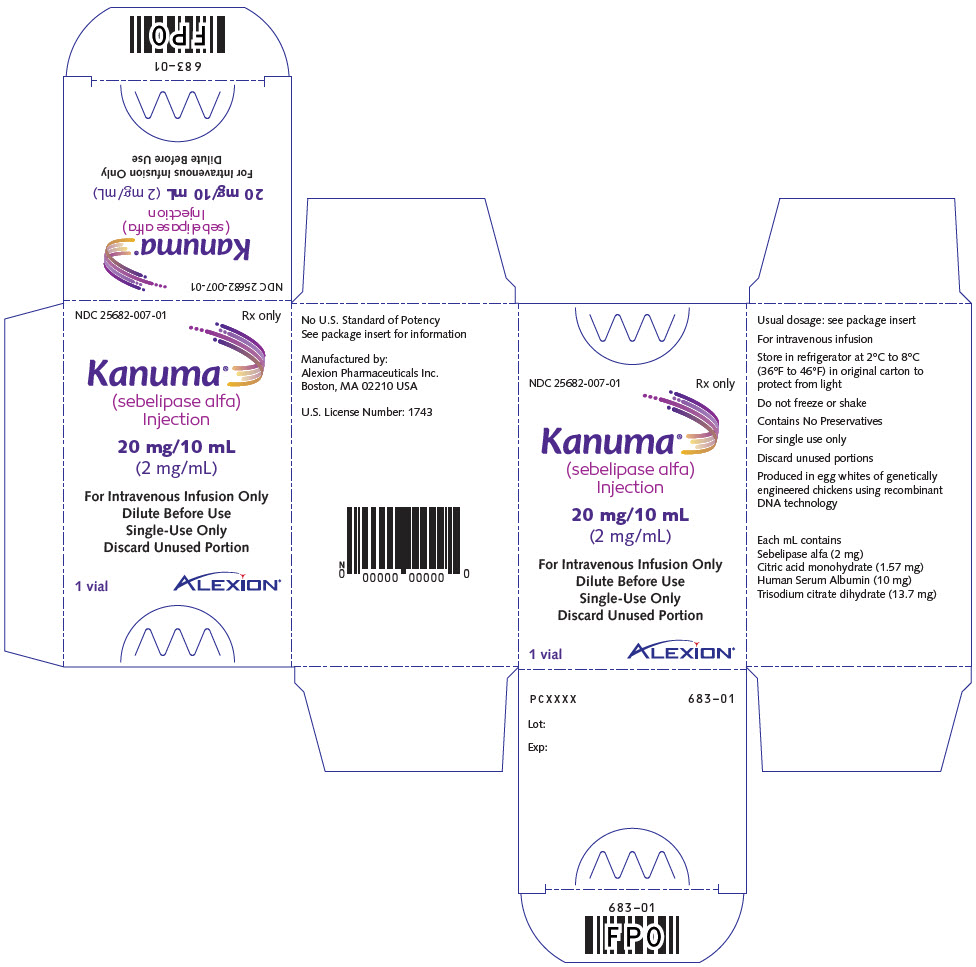
KANUMA Sebelipase alfa 2 mg/mL Injection, Solution, Concentrate — NDC 25682-007-01 (Billing 25682-0007-01)
This is a package of KANUMA Sebelipase alfa 2 mg/mL Injection, Solution, Concentrate from Alexion Pharmaceuticals, Inc., no longer marketed (first marketed Dec 2015), no longer in the FDA NDC Directory. It is this product's only package size.
NDC database record
One package, one record: these facts belong to NDC 25682-007-01 alone.
- Record
- FDA NDC Directory package listing · Human prescription drug
- Code segments
- 25682 labeler · 007 product · 01 package
- Package marketed since
- Dec 8, 2015
- Sample package
- No — commercial package
- Listing certified through
- Dec 31, 2026
- Barcode (UPC-A, from the NDC)
- 3 2568200701 8
- Medicaid fills, this package
- 149 prescriptions in the last four reported quarters
- FDA record last changed
- Jul 24, 2026
Identity & classification
Regulatory identifiers FDA, NLM and CMS codes for this package
Drug-database identifiers Medi-Span GPI and First Databank GCN / HICL / AHFS classification
- GSN (GCN sequence number): 075069
- GCN: 39994
- GPI-14 (Medi-Span): 30906360002020
- HICL (First Databank): 042747
- AHFS class code: 44:00.00.00
- RxCUI (RxNorm): 1726979
Where does this data come from?
- FDA openFDA NDC Directory · synced Oct 8, 2026
- FDA label on DailyMed · label index refreshed Oct 6, 2026
- RxNorm (NLM RxNav) · catalog refreshed Oct 1, 2026
- Medi-Span GPI (licensed)
- First Databank (licensed) · refreshed Oct 8, 2026
RxNorm drug class
This medicine belongs to the Hydrolytic Lysosomal Cholesteryl Ester-specific Enzyme class.
Where does this data come from?
- RxClass (NLM) · catalog refreshed Oct 1, 2026
Clinical
Patient education
Supplement & herbal interactions
Where does this data come from?
- MedlinePlus (NLM) · refreshed Oct 1, 2026
- FDA label on DailyMed · label index refreshed Oct 6, 2026
Ask a licensed pharmacist directly — free, answered by our team.
Pricing
A drug doesn't have one price. Each row is a different public payment system, and none is what you'd pay at the counter — that depends on your insurance. The ⓘ on each row explains what it measures.
| Price system | Per mL | Per package |
|---|---|---|
| Retail pharmacies payNADAC · weekly | Not in the retail survey — common for institutional, discontinued, or low-volume packs. | |
| Medicaid paysCMS SDUD · 12 mo | $1,008.03 | $10,080.29 / 10 ml |
| Medicare drug plans payPart D · quarterly | No Part D plan price is available for this NDC in our data. | |
Where does this data come from?
- CMS NADAC weekly file
- CMS ASP pricing files · refreshed Sep 20, 2026
- CMS Medicaid State Drug Utilization Data · through Q1 2026
- CMS Part D plan pricing files · refreshed Sep 24, 2026
- VA National Acquisition Center price file
Packaging — all sizes for this product
| Package NDC | Description | Marketing start | Marketing end | Status |
|---|---|---|---|---|
| 25682-0007-01 You're viewing this Main listing | 1 VIAL, GLASS in 1 CARTON / 10 mL in 1 VIAL, GLASS | 2015-12-08 | — | Inactivated by FDA |
Therapeutic equivalents
| Product | Labeler | Pack | NADAC/unit | TE | Status | Price vs. this |
|---|---|---|---|---|---|---|
| Kanuma 2 mg/mLthis 25682-0007-01 | Alexion | 1 vial | — | — | Discontinued | — |
Where does this data come from?
- FDA openFDA NDC Directory · synced Oct 8, 2026
- FDA Purple Book · refreshed Oct 5, 2026
- CMS NADAC weekly file
Availability & biosimilar status
Biologics have no small-molecule generics; biosimilar competition is tracked in the FDA Purple Book.
Why the date isn’t exact: Biosimilar timing can change because patents may be challenged, settled, licensed, added or removed, and litigation can move the real date earlier or later.
🛈 What do these terms mean?
- Biologic patent
- A patent the reference product’s maker has publicly listed. A biosimilar generally can’t launch until these expire — unless they’re invalidated or resolved in a settlement.
- Reference-product exclusivity
- A flat 12 years of FDA market protection from the biologic’s first licensure (the BPCIA). No biosimilar can be licensed before it ends, regardless of patents.
- Interchangeable exclusivity
- The first interchangeable biosimilar can earn a period as the only interchangeable version (pharmacists can substitute it without the prescriber).
- Earliest biosimilar (LOE)
- The latest of all the dates above — the soonest a biosimilar can realistically reach the market. Litigation and settlements can move it earlier.
Biologics have no small-molecule “generics” — competition comes from FDA-licensed biosimilars, tracked in the FDA Purple Book.
| Code | What it grants | Expires |
|---|---|---|
| RefProduct | Reference-product exclusivity (12-year, BPCIA) — no biosimilar can be licensed before this date | Dec 8, 2027 |
Is there a biosimilar for KANUMA 20 MG/10 ML VIAL?
Why do different websites show different biosimilar dates?
Can a biosimilar launch before the last patent expires?
What does “current Purple Book estimate” mean?
What does “FDA listed” mean?
What does a patent or protection date mean here?
Where does this data come from?
- FDA Purple Book · refreshed Oct 5, 2026
Inactive Ingredients / Excipients
Inactive ingredients, also called excipients, are components of the drug product other than the active ingredient. They may include fillers, dyes, coatings, preservatives, flavors, or other formulation ingredients.
💡 Tap an ingredient (hover on desktop) to see what it is and why it’s used.
-
UNII ZIF514RVZR
A protein derived from human blood plasma. In medicines, it acts as a stabilizer and binder, helping maintain drug potency and form, and may improve how the medication disperses or dissolves in the body.
-
UNII 2968PHW8QP
A weak organic acid derived from citrus fruits or made through fermentation. It works as a buffer to control pH, a preservative to extend shelf life, and a flavoring agent in medications.
-
UNII B22547B95K
A salt derived from citric acid that helps maintain the proper acid-base balance in the medicine. It's used as a buffer to keep the product stable and at the right pH level.
3 inactive ingredients listed in the exact product block matched to this NDC.
Where does this data come from?
ingredient classCode="IACT" elements from the exact product block matched by this NDC. Label-section narrative from DailyMed / the openFDA label index is shown separately when available.- FDA label on DailyMed · label index refreshed Oct 6, 2026
- FDA openFDA NDC Directory · synced Oct 8, 2026
Inactive ingredient FAQ
Are inactive ingredients the same for every manufacturer?
Why might an inactive ingredient be missing?
Can inactive ingredients matter?
Manufacturer & labeler
More NDCs from Alexion Pharmaceuticals, Inc. labeler code 25682
- SOLIRIS ECULIZUMAB 300 mg/30mL Injection, Solution, Concentrate NDC 25682-001-01
- STRENSIQ ASFOTASE ALFA 18 mg/.45mL Solution NDC 25682-010-12
- STRENSIQ ASFOTASE ALFA 28 mg/.7mL Solution NDC 25682-013-12
- STRENSIQ ASFOTASE ALFA 40 mg/mL Solution NDC 25682-016-12
- STRENSIQ ASFOTASE ALFA 80 mg/.8mL Solution NDC 25682-019-12
- Ultomiris ravulizumab 300 mg/30mL Solution, Concentrate NDC 25682-022-01
- Ultomiris ravulizumab 300 mg/3mL Solution, Concentrate NDC 25682-025-01
Where does this data come from?
- FDA openFDA NDC Directory · synced Oct 8, 2026
- Drugs@FDA
Full prescribing information FDA SPL
🚨 Boxed Warning ▾
WARNING: HYPERSENSITIVITY REACTIONS INCLUDING ANAPHYLAXIS Patients treated with enzyme replacement therapies have experienced life-threatening hypersensitivity reactions, including anaphylaxis. Anaphylaxis has occurred during the early course of enzyme replacement therapy and after extended duration of therapy. Initiate KANUMA in a healthcare setting with appropriate medical monitoring and support measures, including access to cardiopulmonary resuscitation equipment.
If a severe hypersensitivity reaction (e.g., anaphylaxis) occurs, discontinue KANUMA and immediately initiate appropriate medical treatment, including use of epinephrine. Inform patients of the symptoms of life-threatening hypersensitivity reactions, including anaphylaxis and to seek immediate medical care should symptoms occur [see Warnings and Precautions (5.1) ]. WARNING: HYPERSENSITIVITY REACTIONS INCLUDING ANAPHYLAXIS See full prescribing information for complete boxed warning.
Anaphylaxis has occurred during the early course of enzyme replacement therapy and after extended duration of therapy. ( 5.1 ) Initiate KANUMA in a healthcare setting with appropriate medical monitoring and support measures, including access to cardiopulmonary resuscitation. ( 5.1 ) If a severe hypersensitivity reaction (e.g., anaphylaxis) occurs, discontinue KANUMA and immediately initiate appropriate medical treatment, including use of epinephrine.
( 5.1 )
🎯 Indications and Usage ▾
1 INDICATIONS AND USAGE KANUMA ® is indicated for the treatment of patients with a diagnosis of Lysosomal Acid Lipase (LAL) deficiency. KANUMA ® is a hydrolytic lysosomal cholesteryl ester and triacylglycerol-specific enzyme indicated for the treatment of patients with a diagnosis of Lysosomal Acid Lipase (LAL) deficiency. ( 1 )
⏱️ Dosage and Administration ▾
2 DOSAGE AND ADMINISTRATION Administration of KANUMA should be supervised by a healthcare provider knowledgeable in the management of hypersensitivity reactions including anaphylaxis. ( 2.1 ) Infants with Rapidly Progressive LAL Deficiency Presenting within the First 6 Months of Life: The recommended starting dosage is 1 mg/kg as an intravenous infusion once weekly. ( 2.2 ) For patients with a suboptimal clinical response, increase the dosage to 3 mg/kg once weekly.
( 2.2 ) For patients with continued suboptimal clinical response, further increase the dosage to 5 mg/kg once weekly. ( 2.2 ) Pediatric and Adult Patients with LAL Deficiency: The recommended dosage is 1 mg/kg as an intravenous infusion once every other week. ( 2.2 ) For patients with a suboptimal clinical response, increase the dosage to 3 mg/kg once every other week.
( 2.2 ) See Full Prescribing Information for complete Dosage and Administration Information. Administration Instructions Infuse over at least 2 hours. ( 2.4 ) Consider further prolonging the infusion time for patients receiving dosages greater than 1 mg/kg or for those who have experienced a hypersensitivity reaction.
( 2.4 ) Consider a 1-hour infusion for the 1 mg/kg dose in patients who tolerate the infusion. ( 2.4 )
2.1Recommendations Prior to KANUMA Treatment Administration of KANUMA should be supervised by a healthcare provider knowledgeable in the management of hypersensitivity reactions including anaphylaxis [see Warnings and Precautions (5.1) ]. Initiate KANUMA in a healthcare setting with appropriate medical monitoring and support measures, including access to cardiopulmonary resuscitation equipment [see Warnings and Precautions (5.1) ].
2.2Recommended Dosage Infants with Rapidly Progressive LAL Deficiency Presenting within the First 6 Months of Life: The recommended starting dosage is 1 mg/kg administered as an intravenous infusion once weekly. For patients with a suboptimal clinical response, increase the dosage to 3 mg/kg once weekly. For patients with continued suboptimal clinical response on the 3 mg/kg once weekly dosage, further increase the dosage to 5 mg/kg once weekly.
A suboptimal clinical response is defined as any of the following: poor growth, deteriorating biochemical markers, or persistent or worsening organomegaly. Pediatric and Adult Patients with LAL Deficiency: The recommended dosage is 1 mg/kg administered as an intravenous infusion once every other week. For patients with a suboptimal clinical response, increase the dosage to 3 mg/kg once every other week.
A suboptimal clinical response is defined as any of the following: poor growth, deteriorating biochemical markers [e.g., alanine aminotransferase (ALT), aspartate aminotransferase (AST)], and/or parameters of lipid metabolism [e.g., low-density lipoprotein cholesterol (LDL-c), triglycerides (TG)].
2.3Preparation Instructions KANUMA is for intravenous infusion only. Prepare KANUMA using the following steps. Determine the number of vials needed based on the patient's weight and the recommended dose of 1 mg/kg, 3 mg/kg, or 5 mg/kg using the following calculations (a-b): Total dose (mg) = Patient's weight (kg) × Recommended dose (mg/kg) Total number of vials = Total dose (mg) divided by 20 mg/vial Round to the next whole vial and remove the required number of vials from the refrigerator to allow them to reach room temperature.
Volume (mL) of calculated total dose = Total dose (mg) divided by the 2 mg/mL concentration Volume (mL) of 0.9% Sodium Chloride for dilution = Total infusion volume (mL) for patient's weight (see Table 1 ) - Volume (mL) of calculated total dose Table 1: Total Infusion Volumes The infusion volume should be based on the prescribed dose and should be prepared to a final KANUMA concentration of 0.1 mg/mL to 1.5 mg/mL. Weight Range (kg) 1 mg/kg dose 3 mg/kg dose 5 mg/kg dose Total Infusion Volume (mL) Total Infusion Volume (mL) Total Infusion Volume (mL) 1 to 2.9 4 8 12 3 to 5.9 6 12 20 6 to 10.9 10 2… [Excerpted — this section continues on DailyMed.]
💊 Dosage Forms and Strengths ▾
3 DOSAGE FORMS AND STRENGTHS Injection: 20 mg/10 mL (2 mg/mL) clear to slightly opalescent, colorless to slightly colored solution in single-dose vials. Injection: 20 mg/10 mL (2 mg/mL) solution in single-dose vials. ( 3 )
⛔ Contraindications ▾
4 CONTRAINDICATIONS None. None. ( 4 )
⚠️ Warnings and Cautions ▾
5 WARNINGS AND PRECAUTIONS Hypersensitivity to Eggs or Egg Products: Consider the risks and benefits of treatment in patients with known systemic hypersensitivity reactions to eggs or egg products. ( 5.2 )
5.1Hypersensitivity Reactions Including Anaphylaxis Life-threatening hypersensitivity reactions, including anaphylaxis, have been reported in patients treated with enzyme replacement therapies, including KANUMA. These reactions in KANUMA-treated patients were based on application of Sampson criteria to identify signs/symptoms consistent with anaphylaxis. In clinical trials, 3 (infants) of 106 (3%) patients treated with KANUMA experienced signs and symptoms consistent with anaphylaxis.
These patients experienced reactions during infusion with signs and symptoms including chest discomfort, conjunctival injection, dyspnea, generalized and itchy rash, hyperemia, swelling of eyelids, rhinorrhea, severe respiratory distress, tachycardia, tachypnea, and urticaria. In clinical trials, 21 of 106 (20%) KANUMA-treated patients, including 9 of 14 (64%) infants and 12 of 92 (13%) pediatric patients who were 4 years and older and adults, experienced signs and symptoms either consistent with or that may be related to a hypersensitivity reaction.
Signs and symptoms of hypersensitivity reactions, occurring in two or more patients, included abdominal pain, agitation, fever, chills, diarrhea, eczema, edema, hypertension, irritability, laryngeal edema, nausea, pallor, pruritus, rash, and vomiting. The majority of reactions occurred during or within 4 hours of the completion of the infusion. Patients were not routinely pre-medicated prior to infusion of KANUMA in these clinical trials.
Anaphylaxis has occurred during the early course of enzyme replacement therapy and after extended duration of therapy. Administration of KANUMA should be supervised by a healthcare provider knowledgeable in the management of hypersensitivity reactions including anaphylaxis. Initiate KANUMA in a healthcare setting with appropriate medical monitoring and support measures, including access to cardiopulmonary resuscitation equipment.
Observe patients closely during and after the infusion. The management of hypersensitivity reactions should be based on the severity of the reaction and may include temporarily interrupting the infusion, lowering the infusion rate, and/or treatment with antihistamines, antipyretics, and/or corticosteroids. If a severe hypersensitivity reaction (e.g., anaphylaxis) occurs, discontinue KANUMA and immediately initiate appropriate medical treatment, including use of epinephrine.
If interrupted, the infusion may be resumed at a slower rate with increases as tolerated. Pre-treatment with antipyretics and/or antihistamines may prevent subsequent reactions in those cases where symptomatic treatment was required. Inform patients of the symptoms of life-threatening hypersensitivity reactions, including anaphylaxis and to seek immediate medical care should symptoms occur.
Consider the risks and benefits of re-administering KANUMA following a severe reaction. Monitor patients, with appropriate resuscitation measures available, if the decision is made to re-administer the product.
5.2Hypersensitivity to Eggs or Egg Products KANUMA is produced in the egg whites of genetically engineered chickens. Patients with a known history of egg allergies were excluded from the clinical trials. Consider the risks and benefits of treatment with KANUMA in patients with known systemic hypersensitivity reactions to eggs or egg products.
🤒 Adverse Reactions ▾
6 ADVERSE REACTIONS The most common adverse reactions are: Infants with Rapidly Progressive LAL Deficiency Presenting within the First 6 Months of Life (≥30%): diarrhea, vomiting, fever, rhinitis, anemia, cough, nasopharyngitis, and urticaria. ( 6.1 ) Pediatric and Adult Patients with LAL Deficiency (≥8%): headache, fever, oropharyngeal pain, nasopharyngitis, asthenia, constipation, and nausea. ( 6.1 ) To report SUSPECTED ADVERSE REACTIONS, contact Alexion at 1-844-259-6783 or FDA at 1-800-FDA-1088 or www.fda.gov/medwatch
6.1Clinical Trials Experience Because clinical trials are conducted under widely varying conditions, adverse reaction rates observed in the clinical trials of a drug cannot be directly compared to rates in the clinical trials of another drug and may not reflect the rates observed in clinical practice. In clinical trials, a total of 106 patients received treatment with KANUMA. The data described below reflect exposure to KANUMA in 75 patients who received KANUMA at dosages up to 3 mg/kg once weekly in clinical trials: Nine patients (5 males, 4 females) who had growth failure or other evidence of rapidly progressive LAL deficiency presenting within the first 6 months of life received KANUMA for up to 165 weeks (median 60 weeks) at escalating doses ranging between 0.35 mg/kg and 5 mg/kg once weekly [see Clinical Studies (14.1) ] .
66 pediatric and adult patients with LAL deficiency aged 4 to 58 years (33 males, 33 females) received KANUMA 1 mg/kg every other week for up to 36 weeks. Table 2 summarizes the most common adverse reactions occurring in >30% of patients with rapidly progressive LAL deficiency presenting within the first 6 months of life receiving KANUMA in Study 1. Table 2: Adverse Reactions in ≥30% of Infants with Rapidly Progressive LAL Deficiency Presenting within the First 6 Months of Life Receiving KANUMA Adverse Reactions KANUMA N=9 n (%) Diarrhea 6 (67) Vomiting 6 (67) Fever 5 (56) Rhinitis 5 (56) Anemia 4 (44) Cough 3 (33) Nasopharyngitis 3 (33) Urticaria 3 (33) Other less common adverse reactions reported in patients with rapidly progressive disease presenting within the first 6 months of life who received KANUMA included hypotonia, decreased oxygen saturation, retching, sneezing, and tachycardia.
For infant patients within Study 1 and Study 3 (n = 19), the following additional adverse reactions were reported in ≥ 30% of infants who received KANUMA since the time of marketing authorization, including patients who received an escalated dose to 5 mg/kg qw: hypersensitivity, respiratory distress, and tachycardia. Table 3 summarizes the most common adverse reactions that occurred in ≥8% of pediatric and adult patients with LAL deficiency receiving KANUMA in Study 2. Table 3: Adverse Reactions in ≥8% of Pediatric and Adult Patients with LAL Deficiency Receiving KANUMA Adverse Reactions KANUMA N = 36 Placebo N = 30 n (%) n (%) Headache 10 (28) 6 (20) Fever 9 (25) 7 (23) Oropharyngeal pain 6 (17) 1 (3) Nasopharyngitis 4 (11) 3 (10) Asthenia 3 (8) 1 (3) Constipation 3 (8) 1 (3) Nausea 3 (8) 2 (7) Other less common adverse reactions reported in pediatric and adult patients who received KANUMA included anxiety and chest discomfort.
For pediatric and adult patients (n = 106), the following additional adverse reactions were reported in ≥ 8% of pediatric and adult patients who received KANUMA since the time of marketing authorization, including patients who received an escalated dose to 3 mg/kg qw: hypersensitivity, diarrhea, abdominal pain, and dizziness. Hyperlipidemia Increases in circulating LDL-cholesterol (LDL-c) and triglycerides above pre-treatment values were observed in 29 of 36 (81%) and 21 of 36 (58%) patients, respectively, at 2 and 4 weeks following initiation of KANUMA [see Clinical Pharmacology (12.2) ] .
The maximum mean percentage increase was 18% for LDL-c at Week 2 and 5% for triglycerides at Week 4.
6.2Immunogenicity As with all therapeutic proteins, there is potential for immunogen… [Excerpted — this section continues on DailyMed.]
👥 Use in Specific Populations ▾
8 USE IN SPECIFIC POPULATIONS
8.1Pregnancy Risk Summary Available data with KANUMA use in pregnant women are insufficient to identify a drug-associated risk of major birth defects, miscarriage or other adverse maternal or fetal outcomes. Animal reproductive studies conducted with sebelipase alfa showed no evidence of embryolethality, fetotoxicity, teratogenicity, or abnormal early embryonic development at dosages up to 164 and 526 times the human dosage of 1 mg/kg every other week (based on AUC) in rats and rabbits, respectively. The background risk of major birth defects and miscarriage for the indicated population is unknown.
In the U.S. general population, the estimated background risk of major birth defects and miscarriage in clinically recognized pregnancies is 2 to 4% and 15 to 20%, respectively. Animal Data Sebelipase alfa administered during the period of organogenesis to rats (on gestation days 6, 9, 12, 15 and 17) and rabbits (on gestation days 7, 10, 13, 16 and 19) at intravenous doses up to 60 and 50 mg/kg, respectively, (approximately 164 and 526 times the human AUC of 1387 ng.h/mL at 1 mg/kg dose administered once every other week, respectively) did not cause any adverse effects on embryofetal development.
A pre- and post-natal development study in rats showed no evidence of adverse effects on pre- and postnatal development at intravenous doses (administered on gestation days 6, 9, 12, 15, 18, and 20 and days 4, 7, 10, 14, and 17 postpartum) of sebelipase alfa up to 60 mg/kg/day (approximately 164 times the human AUC of 1387 ng.h/mL at 1 mg/kg dose administered once every other week).
8.2Lactation Risk Summary There are no data on the presence of sebelipase alfa in human milk, the effects on the breastfed infant, or the effects on milk production. It is not known if sebelipase alfa is present in animal milk. The developmental and health benefits of breastfeeding should be considered along with the mother's clinical need for KANUMA and any potential adverse effects on the breastfed infant from sebelipase alfa or from the underlying maternal condition.
8.4Pediatric Use Safety and effectiveness of KANUMA have been established in pediatric patients aged 1 month and older. Clinical trials with KANUMA were conducted in 56 pediatric patients (range 1 month to <18 years old) [see Clinical Studies (14) ] .
8.5Geriatric Use Clinical trials of KANUMA did not include any patients aged 65 years old and older. It is not known whether they respond differently than younger patients.
🤰 Pregnancy ▾
8.1Pregnancy Risk Summary Available data with KANUMA use in pregnant women are insufficient to identify a drug-associated risk of major birth defects, miscarriage or other adverse maternal or fetal outcomes. Animal reproductive studies conducted with sebelipase alfa showed no evidence of embryolethality, fetotoxicity, teratogenicity, or abnormal early embryonic development at dosages up to 164 and 526 times the human dosage of 1 mg/kg every other week (based on AUC) in rats and rabbits, respectively. The background risk of major birth defects and miscarriage for the indicated population is unknown.
In the U.S. general population, the estimated background risk of major birth defects and miscarriage in clinically recognized pregnancies is 2 to 4% and 15 to 20%, respectively. Animal Data Sebelipase alfa administered during the period of organogenesis to rats (on gestation days 6, 9, 12, 15 and 17) and rabbits (on gestation days 7, 10, 13, 16 and 19) at intravenous doses up to 60 and 50 mg/kg, respectively, (approximately 164 and 526 times the human AUC of 1387 ng.h/mL at 1 mg/kg dose administered once every other week, respectively) did not cause any adverse effects on embryofetal development.
A pre- and post-natal development study in rats showed no evidence of adverse effects on pre- and postnatal development at intravenous doses (administered on gestation days 6, 9, 12, 15, 18, and 20 and days 4, 7, 10, 14, and 17 postpartum) of sebelipase alfa up to 60 mg/kg/day (approximately 164 times the human AUC of 1387 ng.h/mL at 1 mg/kg dose administered once every other week).
🧒 Pediatric Use ▾
8.4Pediatric Use Safety and effectiveness of KANUMA have been established in pediatric patients aged 1 month and older. Clinical trials with KANUMA were conducted in 56 pediatric patients (range 1 month to <18 years old) [see Clinical Studies (14) ] .
🧓 Geriatric Use ▾
8.5Geriatric Use Clinical trials of KANUMA did not include any patients aged 65 years old and older. It is not known whether they respond differently than younger patients.
🧬 Clinical Pharmacology ▾
12 CLINICAL PHARMACOLOGY
12.1Mechanism of Action LAL deficiency is an autosomal recessive lysosomal storage disorder characterized by a genetic defect resulting in a marked decrease or loss in activity of the lysosomal acid lipase (LAL) enzyme. The primary site of action of the LAL enzyme is the lysosome, where the enzyme normally causes the breakdown of lipid particles, including LDL-c and triglycerides. Deficient LAL enzyme activity results in progressive complications due to the lysosomal accumulation of cholesteryl esters and triglycerides in multiple organs, including the liver, spleen, intestine, and the walls of blood vessels.
The resulting lipid accumulation in the liver may lead to increased liver fat content and progression of liver disease, including fibrosis and cirrhosis. Lipid accumulation in the intestinal wall leads to malabsorption and growth failure. In parallel, dyslipidemia due to impaired degradation of lysosomal lipid is common with elevated LDL-c and triglycerides and low HDL-cholesterol (HDL-c).
Sebelipase alfa binds to cell surface receptors via glycans expressed on the protein and is subsequently internalized into lysosomes. Sebelipase alfa catalyzes the lysosomal hydrolysis of cholesteryl esters and triglycerides to free cholesterol, glycerol and free fatty acids.
12.2Pharmacodynamics In clinical trials, after initiation of dosing with KANUMA, breakdown of accumulated lysosomal lipid led to initial increases in LDL-c and triglycerides within the first 2 to 4 weeks of treatment. In general, following increases in LDL-c and triglycerides, these parameters decreased to below pre-treatment values within 8 weeks of treatment with KANUMA. In all patients with elevated alanine aminotransferase (ALT) values at baseline (82 of 84 patients in clinical trials), reductions in ALT values were observed, generally within 2 weeks after initiation of treatment with KANUMA.
Treatment interruption resulted in increases in LDL-c and ALT values and decreases in HDL-c.
12.3Pharmacokinetics The pharmacokinetic profile of sebelipase alfa was nonlinear with a greater than dose-proportional increase in exposure between 1 and 3 mg/kg based on non-compartmental analysis of data from 26 adults. No accumulation was observed following once weekly or once every other week dosing. Using a population pharmacokinetic model, sebelipase alfa pharmacokinetic parameters were estimated for 65 pediatric and adult patients who received intravenous infusions of KANUMA at 1 mg/kg at Week 22 (Table 4); 24 patients were 4 to 11 years old, 23 were 12 to 17 years old, and 18 were adults.
The pharmacokinetic profiles of sebelipase alfa were similar between adolescents and adults. The T max and T 1/2 were similar across all age groups. Table 4: Mean (SD) Pharmacokinetics Parameters at Week 22 in Pediatric and Adult Patients Receiving 1 mg/kg Once Every Other Week Parameter 4-11 years old 12-17 years old ≥18 years old N=24 N=23 N=18 Parameter values were estimated using a population pharmacokinetic model.
AUC = Area under the plasma concentration time curve. C max = Maximum concentration. T max = Time to maximum concentration.
CL = Clearance. V c = Central volume of distribution. T 1/2 = Half-life.
AUC (ng∙hr/mL) 942 (388) 1454 (699) 1861 (599) C max (ng/mL) 490 (205) 784 (480) 957 (303) T max (hr) 1.3 (0.6) 1.1 (0.3) 1.3 (0.6) CL (L/hr) 31.1 (7.1) 37.4 (12.4) 38.2 (12.5) V c (L) 3.6 (3.0) 5.4 (2.4) 5.3 (1.6) T 1/2 (min) 5.4 (4.3) 6.6 (3.7) 6.6 (3.7)
🧬 Mechanism of Action ▾
12.1Mechanism of Action LAL deficiency is an autosomal recessive lysosomal storage disorder characterized by a genetic defect resulting in a marked decrease or loss in activity of the lysosomal acid lipase (LAL) enzyme. The primary site of action of the LAL enzyme is the lysosome, where the enzyme normally causes the breakdown of lipid particles, including LDL-c and triglycerides. Deficient LAL enzyme activity results in progressive complications due to the lysosomal accumulation of cholesteryl esters and triglycerides in multiple organs, including the liver, spleen, intestine, and the walls of blood vessels.
The resulting lipid accumulation in the liver may lead to increased liver fat content and progression of liver disease, including fibrosis and cirrhosis. Lipid accumulation in the intestinal wall leads to malabsorption and growth failure. In parallel, dyslipidemia due to impaired degradation of lysosomal lipid is common with elevated LDL-c and triglycerides and low HDL-cholesterol (HDL-c).
Sebelipase alfa binds to cell surface receptors via glycans expressed on the protein and is subsequently internalized into lysosomes. Sebelipase alfa catalyzes the lysosomal hydrolysis of cholesteryl esters and triglycerides to free cholesterol, glycerol and free fatty acids.
📦 How Supplied / Storage and Handling ▾
16 HOW SUPPLIED/STORAGE AND HANDLING KANUMA (sebelipase alfa) injection is a preservative-free, clear to slightly opalescent, colorless to slightly colored, nonpyrogenic solution supplied as 20 mg/10 mL (2 mg/mL) in single-dose, glass vials. NDC 25682-007-01: 20 mg/10 mL vial Store KANUMA refrigerated at 2°C to 8°C (36°F to 46°F) in original carton to protect from light. Do not shake or freeze the vials.
📦 Storage and Handling ▾
Store KANUMA refrigerated at 2°C to 8°C (36°F to 46°F) in original carton to protect from light. Do not shake or freeze the vials.
📋 Description ▾
11 DESCRIPTION Sebelipase alfa is a recombinant human lysosomal acid lipase (rhLAL) that is a lysosomal glycoprotein enzyme produced by recombinant DNA technology in the egg white of eggs laid by genetically engineered chickens. Purified sebelipase alfa is a monomeric glycoprotein containing 6 N-linked glycosylation sites and has a molecular mass of approximately 55 kDa. The amino acid sequence for sebelipase alfa is the same as the amino acid sequence for human LAL.
The specific activity of sebelipase alfa is 195 to 345 units/mg. One unit is the amount of enzyme activity that catalyzes the hydrolysis of 1 micromole of the synthetic substrate 4-methylumbelliferyl oleate per minute at 37°C under specified assay conditions. KANUMA (sebelipase alfa) injection is supplied as a sterile, preservative-free, non-pyrogenic clear to slightly opalescent, colorless to slightly colored aqueous solution in single-dose vials for intravenous infusion.
Each vial contains sebelipase alfa 20 mg/10 mL. Each mL of solution contains sebelipase alfa (2 mg), citric acid monohydrate (1.57 mg), Human Serum Albumin (10 mg), and trisodium citrate dihydrate (13.7 mg) at pH 5.9.
💬 Information for Patients ▾
17 PATIENT COUNSELING INFORMATION Hypersensitivity Reactions Including Anaphylaxis Advise patients and caregivers that life-threatening hypersensitivity reactions, including anaphylaxis may occur with KANUMA treatment. Advise patients and caregivers that anaphylaxis has occurred during the early course of enzyme replacement therapy and after extended duration of therapy. Inform patients and caregivers of the symptoms of life-threatening hypersensitivity reactions, including anaphylaxis and to seek immediate medical care should symptoms occur [see Warnings and Precautions (5.1) ] .
Hypersensitivity to Eggs or Egg Products KANUMA is produced in the egg whites of genetically engineered chickens. Patients with a known history of egg allergies were excluded from the clinical trials. Consider the risks and benefits of treatment with KANUMA in patients with known systemic hypersensitivity reactions to eggs or egg products [see Warnings and Precautions (5.2) ].
🧬 Pharmacokinetics ▾
12.3Pharmacokinetics The pharmacokinetic profile of sebelipase alfa was nonlinear with a greater than dose-proportional increase in exposure between 1 and 3 mg/kg based on non-compartmental analysis of data from 26 adults. No accumulation was observed following once weekly or once every other week dosing. Using a population pharmacokinetic model, sebelipase alfa pharmacokinetic parameters were estimated for 65 pediatric and adult patients who received intravenous infusions of KANUMA at 1 mg/kg at Week 22 (Table 4); 24 patients were 4 to 11 years old, 23 were 12 to 17 years old, and 18 were adults.
The pharmacokinetic profiles of sebelipase alfa were similar between adolescents and adults. The T max and T 1/2 were similar across all age groups. Table 4: Mean (SD) Pharmacokinetics Parameters at Week 22 in Pediatric and Adult Patients Receiving 1 mg/kg Once Every Other Week Parameter 4-11 years old 12-17 years old ≥18 years old N=24 N=23 N=18 Parameter values were estimated using a population pharmacokinetic model.
AUC = Area under the plasma concentration time curve. C max = Maximum concentration. T max = Time to maximum concentration.
CL = Clearance. V c = Central volume of distribution. T 1/2 = Half-life.
AUC (ng∙hr/mL) 942 (388) 1454 (699) 1861 (599) C max (ng/mL) 490 (205) 784 (480) 957 (303) T max (hr) 1.3 (0.6) 1.1 (0.3) 1.3 (0.6) CL (L/hr) 31.1 (7.1) 37.4 (12.4) 38.2 (12.5) V c (L) 3.6 (3.0) 5.4 (2.4) 5.3 (1.6) T 1/2 (min) 5.4 (4.3) 6.6 (3.7) 6.6 (3.7)
🧬 Pharmacodynamics ▾
12.2Pharmacodynamics In clinical trials, after initiation of dosing with KANUMA, breakdown of accumulated lysosomal lipid led to initial increases in LDL-c and triglycerides within the first 2 to 4 weeks of treatment. In general, following increases in LDL-c and triglycerides, these parameters decreased to below pre-treatment values within 8 weeks of treatment with KANUMA. In all patients with elevated alanine aminotransferase (ALT) values at baseline (82 of 84 patients in clinical trials), reductions in ALT values were observed, generally within 2 weeks after initiation of treatment with KANUMA.
Treatment interruption resulted in increases in LDL-c and ALT values and decreases in HDL-c.
🔬 Clinical Studies ▾
14 CLINICAL STUDIES
14.1Infants with Rapidly Progressive LAL Deficiency Presenting within the First 6 Months of Life A multicenter, open-label, single-arm clinical study of KANUMA was conducted in 9 infants with LAL deficiency who had growth failure or other evidence of rapidly progressive disease prior to 6 months of age. The age range at entry was 1 to 6 months. Patients received KANUMA at 0.35 mg/kg once weekly for the first 2 weeks and then 1 mg/kg once weekly.
Due to suboptimal clinical response, doses in all 6 surviving patients were escalated to 3 mg/kg once weekly, between 4 and 88 weeks (median 11 weeks) after starting treatment at 1 mg/kg. The efficacy of KANUMA was assessed by comparing the survival of the 9 KANUMA-treated patients (followed in the open-label, single-arm trial) at 12 months of age to the survival in an untreated, historical cohort of 21 patients with a similar age at disease presentation and clinical characteristics. Of the 9 KANUMA-treated patients, 6 patients survived beyond 12 months of age, compared to 0 of 21 patients who survived in the historical cohort, all of whom had died by 8 months of age.
The median age of the 6 surviving KANUMA-treated patients was 18.1 months (range 12 to 42.2 months). Following initiation of treatment with KANUMA 1 mg/kg once weekly, weight-for-age (WFA) z-scores improved in 3 of 5 surviving patients with growth failure, and all 6 surviving patients demonstrated improvements in WFA z-scores following dose escalation to 3 mg/kg once weekly. Continuation Treatment Across Study 1 and another study, Study 3, in infants with rapidly progressive LAL Deficiency, 9 patients received successive dose escalations up to 5 mg/kg once weekly due to suboptimal clinical response [see Recommended Dosage (2.2) ] .
The median duration of exposure to 5 mg/kg for the 9 patients whose doses were escalated to 5 mg/kg once weekly was 33 months (range 27 to 39 months) for patients in Study 1 and 15 months (range 5 to 24 months) in Study 3. Of the 9 patients whose KANUMA dose was escalated to 5 mg/kg once weekly, 6 were alive at their last follow up at 3 years, and 2 were alive at their last follow up at 5 years. Of these 9 patients, 6 experienced normalization of ALT and/or AST which had remained abnormal on the lower KANUMA dose.
14.2Pediatric and Adult Patients with LAL Deficiency The safety and efficacy of KANUMA were assessed in 66 pediatric and adult patients with LAL deficiency, aged 4 to 58 years (71% were less than 18 years old), in a multicenter, double-blind, placebo-controlled trial. Patients were randomized to receive KANUMA at a dosage of 1 mg/kg (n=36) or placebo (n=30) once every other week for 20 weeks in the double-blind period. Sixty-two of the 66 (94%) patients had LDL-c of 130 mg/dL or greater at study entry.
The majority of patients (58%) had LDL-c above 190 mg/dL at study entry, and 24% of patients with LDL-c above 190 mg/dL remained on lipid lowering medications. At the completion of the 20-week double-blind period of the trial, a statistically significant improvement in percent change from baseline in LDL-c was observed in the KANUMA-treated group as compared to the placebo group (mean difference and 95% C.I.: -22%, [-33%, -15%]; p<0.0001). LDL-c of less than 130 mg/dL was achieved in 13 of 32 (41%; 95% C.I.: [24%, 58%]) KANUMA-treated patients and in only 2 of 30 (7%; 95% C.I.: [0%, 16%]) placebo-treated patients with baseline LDL-c of 130 mg/dL or greater.
A statistically significant improvement in percent change from baseline at 20 weeks was also observed in the KANUMA-treated group compared to the placebo group for other parameters related to LAL deficiency, including decreases in non-HDL-c (mean difference and 95% C.I.: -21%, [-30%, -15%]; p<0.0001) and triglycerides (mean difference and 95% C.I.: -14%, [-28%, -1%]; p=0.0375), and increases in HDL-c (mean difference and 95% C.I.: 20%, [12%, 26%]; p<0.0001). The effect of KANUMA on cardiovascular morbidity and m… [Excerpted — this section continues on DailyMed.]
🧪 Nonclinical Toxicology ▾
13 NONCLINICAL TOXICOLOGY
13.1Carcinogenesis, Mutagenesis, Impairment of Fertility Long-term studies in animals to evaluate carcinogenic potential or studies to evaluate mutagenic potential have not been performed with sebelipase alfa. Sebelipase alfa at intravenous doses up to 60 mg/kg administered twice weekly (approximately 164 times the human AUC of 1387 ng.h/mL at 1 mg/kg dose administered once every other week) was found to have no adverse effect on fertility and reproductive performance of male and female rats.
13.2Animal Toxicology and/or Pharmacology In a rat disease model of LAL deficiency that exhibits several abnormalities analogous to the human disease, sebelipase alfa administered intravenously at dosages up to 3 mg/kg once weekly showed improvements in survival, body weight gain, organ weight reduction, reduction in serum transaminases (ALT and aspartate aminotransferase [AST]), reduction in serum and hepatic lipids, and improvement in liver histopathology.
📄 Carcinogenesis, Mutagenesis, Impairment of Fertility ▾
13.1Carcinogenesis, Mutagenesis, Impairment of Fertility Long-term studies in animals to evaluate carcinogenic potential or studies to evaluate mutagenic potential have not been performed with sebelipase alfa. Sebelipase alfa at intravenous doses up to 60 mg/kg administered twice weekly (approximately 164 times the human AUC of 1387 ng.h/mL at 1 mg/kg dose administered once every other week) was found to have no adverse effect on fertility and reproductive performance of male and female rats.
📄 Recent Major Changes ▾
Boxed Warning 7/2024 Dosage and Administration ( 2.1 ) 7/2024 Warnings and Precautions ( 5.1 ) 7/2024
📄 Package Label / Principal Display Panel ▾
PRINCIPAL DISPLAY PANEL - 20 mg/10 mL Vial Carton NDC 25682-007-01 Rx only Kanuma ® (sebelipase alfa) Injection 20 mg/10 mL (2 mg/mL) For Intravenous Infusion Only Dilute Before Use Single-Use Only Discard Unused Portion 1 vial ALEXION ® PRINCIPAL DISPLAY PANEL - 20 mg/10 mL Vial Carton
Medicaid utilization & spend
Medicare Part D spend CMS · PART D · 2025 (Q1-Q4)
About this NDC listing & data coverage
What data is (and isn’t) available for this NDC — tap to expand
| NDC identity (package / product / labeler codes) | ✓ Available |
| Labeler | ✓ Available |
| Product & package description | ✓ Available |
| Marketing category & status | ✓ Available |
| Active ingredient / dosage form / route | ✓ Available |
| FDA label (SPL via DailyMed) | ✓ Available |
| Package photos | ✓ Available |
| Inactive ingredients (structured) | ✓ Available |
| NADAC pharmacy acquisition price (CMS) | — Not published for this NDC CMS publishes NADAC only for NDCs reported in its retail-pharmacy survey. |
| Orange Book / therapeutic-equivalence data | ✓ Available |
| HCPCS J-code billing crosswalk | — Not published for this NDC Most self-administered / retail products have no J-code — that is normal. |
| Medicaid utilization (CMS SDUD) | ✓ Available |