
Nevirapine 200 mg Tablet, 120-count — NDC 33342-004-25 (Billing 33342-0004-25)
This is a package of 120 tablets of Nevirapine 200 mg Tablet from Macleods Pharmaceuticals Limited, marketed since Jan 2019 and currently FDA-listed.
NDC database record
One package, one record: these facts belong to NDC 33342-004-25 alone.
- Record
- FDA NDC Directory package listing · Human prescription drug
- Code segments
- 33342 labeler · 004 product · 25 package
- Listing certified through
- Dec 31, 2027
- Barcode (UPC-A, from the NDC)
- 3 3334200425 3
- FDA record last changed
- Oct 8, 2026
Identity & classification
Regulatory identifiers FDA, NLM and CMS codes for this package
Where does this data come from?
- FDA openFDA NDC Directory · synced Oct 8, 2026
- FDA label on DailyMed · label index refreshed Oct 8, 2026
- RxNorm (NLM RxNav) · catalog refreshed Oct 1, 2026
- Medi-Span GPI (licensed)
- First Databank (licensed) · refreshed Oct 8, 2026
Clinical
Nevirapine is used to treat human immunodeficiency virus (HIV) infection. Nevirapine is in a class of medications called non-nucleoside reverse transcriptase inhibitors (NNRTIs). It works by decreasing the amount of HIV in the blood. Although nevirapine does not cure HIV, it may decrease your chance of developing acquired immunodeficiency syndrome (AIDS) and HIV-related illnesses. Taking these medications and making other life-style changes may decrease the risk of giving the HIV virus to other people.
Read the full MedlinePlus article ↗- It treats HIV-1 infection and is always used with other HIV medicines. It helps slow the virus by blocking an enzyme it needs to copy itself.
- The first two weeks use a lower once-daily dose because this lowers the chance of rash. Please don't skip it. If you miss more than 7 days of doses, you restart the lead-in.
- Why is there a 14-day lead-in at the start?
- Rash is the most common, along with diarrhea, headache, belly pain, nausea and tiredness. Mild symptoms still need to be mentioned to us or your doctor, because rash can be an earl...
Patient education
Supplement & herbal interactions
Some supplements/herbs that may interact with Nevirapine — tap one for details:
Where does this data come from?
- MedlinePlus (NLM) · refreshed Oct 8, 2026
- FDA label on DailyMed · label index refreshed Oct 8, 2026
Ask a licensed pharmacist directly — free, answered by our team.
Pricing
A drug doesn't have one price. Each row is a different public payment system, and none is what you'd pay at the counter — that depends on your insurance. The ⓘ on each row explains what it measures.
| Price system | Per each | Per package |
|---|---|---|
| Retail pharmacies payNADAC · weekly | Not in the retail survey — common for institutional, discontinued, or low-volume packs. | |
| Medicaid paysCMS SDUD · 12 mo | No recent Medicaid claims on file for this NDC — rare and low-volume NDCs are suppressed in the public data. | |
| Medicare drug plans payPart D · quarterly | No Part D plan price is available for this NDC in our data. | |
Where does this data come from?
- CMS NADAC weekly file
- CMS ASP pricing files · refreshed Sep 20, 2026
- CMS Medicaid State Drug Utilization Data · refreshed Oct 8, 2026
- CMS Part D plan pricing files · refreshed Sep 24, 2026
- VA National Acquisition Center price file
Packaging — all sizes for this product
| Package NDC | Description | Per unit | Per pack | Marketing start | Marketing end | Status |
|---|---|---|---|---|---|---|
| 33342-0004-09 33342-004-09 Main listing | 60 TABLET in 1 BOTTLE | $0.1472 / ea | $8.83 | 2019-01-28 | — | Active |
| 33342-0004-24 33342-004-24 | 6 BLISTER PACK in 1 CARTON / 10 TABLET in 1 BLISTER PACK | — | — | 2019-01-28 | — | Active |
| 33342-0004-25 You're viewing this | 12 BLISTER PACK in 1 CARTON / 10 TABLET in 1 BLISTER PACK | — | — | 2019-01-28 | — | Active |
Pack size FAQ
What quantity is in this package?
How does this package differ from NDC 33342-0004-09?
What NDC number is used to bill for this package of Nevirapine 200 mg Tablet?
Prices are the latest CMS NADAC pharmacy acquisition cost per NDC; per-pack figures are per-unit × pack quantity, shown only when the pack is denominated in the same measure NADAC prices.
Therapeutic equivalents
| Product | Labeler | Pack | NADAC/unit | TE | Status | Price vs. this |
|---|---|---|---|---|---|---|
| Nevirapine 200 mg 00378-4050-91 | Mylan | 60 tablets | $0.147 | AB | Availability likely | — |
| Nevirapine 200 mg 31722-0505-01 | Camber | 100 tablets | — | AB | FDA listed | — |
| Nevirapine 200 mgthis 33342-0004-25 | Macleods | 120 tablets | — | AB | FDA listed | — |
| Nevirapine 200 mg 42571-0131-29 | Micro | 60 tablets | — | AB | FDA listed | — |
| Nevirapine 200 mg 65162-0209-06 | Amneal | 60 tablets | — | — | FDA listed | — |
| Nevirapine 200 mg 65862-0027-10 | Aurobindo | 60 tablets | — | — | FDA listed | — |
Where does this data come from?
- FDA openFDA NDC Directory · synced Oct 8, 2026
- FDA Orange Book · refreshed Oct 3, 2026
- CMS NADAC weekly file
Availability & generic status
This product is an FDA-approved generic. Other versions of the same drug are listed under Therapeutic equivalents, least expensive first.
Where does this data come from?
- FDA Orange Book · refreshed Oct 3, 2026
What it looks like
Where does this data come from?
- FDA label on DailyMed · label index refreshed Oct 8, 2026
Inactive Ingredients / Excipients
Inactive ingredients, also called excipients, are components of the drug product other than the active ingredient. They may include fillers, dyes, coatings, preservatives, flavors, or other formulation ingredients.
🧪 Avoiding an ingredient? See Nevirapine inactive ingredients by manufacturer: every current product's list side by side, so you can ask your pharmacy for the version that does not list it.
💡 Tap an ingredient (hover on desktop) to see what it is and why it’s used.
-
UNII OP1R32D61U
Microcrystalline cellulose is a purified form of cellulose, a natural fiber from plant sources. It acts as a binder and filler in tablets and capsules, helping hold ingredients together and give the medicine its shape and size.
-
UNII EWQ57Q8I5X
Lactose monohydrate is a natural sugar derived from milk. It serves as a filler and binder in tablets and capsules, helping create the proper size, texture, and consistency of the medicine.
-
UNII 70097M6I30
Magnesium stearate is a salt made from magnesium and stearic acid, a fatty substance. It's used in tablets and capsules as a lubricant and glidant to help ingredients flow smoothly during manufacturing and prevent sticking.
-
UNII FZ989GH94E
Povidone is a synthetic polymer made from a plastic-like material. It acts as a binder to hold tablet ingredients together and as a disintegrant to help the tablet break apart in your stomach so the medicine can be absorbed.
-
UNII ETJ7Z6XBU4
Silicon dioxide is a naturally occurring mineral used as a glidant and anti-caking agent. It helps powder ingredients flow smoothly and prevents clumping during manufacturing and storage.
-
UNII 5856J3G2A2
A starch-based powder made from potatoes and processed with sodium. It acts as a disintegrant, helping the tablet or capsule break apart quickly in the stomach so the medicine can be absorbed.
6 inactive ingredients listed in the exact product block matched to this NDC.
Where does this data come from?
ingredient classCode="IACT" elements from the exact product block matched by this NDC. Label-section narrative from DailyMed / the openFDA label index is shown separately when available.- FDA label on DailyMed · label index refreshed Oct 8, 2026
- FDA openFDA NDC Directory · synced Oct 8, 2026
Inactive ingredient FAQ
Are inactive ingredients the same for every manufacturer?
Why might an inactive ingredient be missing?
Can inactive ingredients matter?
Manufacturer & labeler
More NDCs from Macleods Pharmaceuticals Limited labeler code 33342
- Lamivudine 150 mg Tablet, Film Coated NDC 33342-001-09
- Lamivudine 300 mg Tablet, Film Coated NDC 33342-002-07
- Lamivudine and Zidovudine 150 mg; 300 mg Tablet NDC 33342-003-09
- Efavirenz 600 mg Tablet NDC 33342-013-07
- Famciclovir 125 mg Tablet, Film Coated NDC 33342-024-07
- Famciclovir 250 mg Tablet, Film Coated NDC 33342-025-07
- Famciclovir 500 mg Tablet, Film Coated NDC 33342-026-07
- Donepezil Hydrochloride 5 mg Tablet, Film Coated NDC 33342-027-07
- Donepezil Hydrochloride 10 mg Tablet, Film Coated NDC 33342-028-07
Where does this data come from?
- FDA openFDA NDC Directory · synced Oct 8, 2026
- Drugs@FDA
Full prescribing information FDA SPL
🚨 Boxed Warning ▾
WARNING: LIFE-THREATENING (INCLUDING FATAL) HEPATOTOXICITY and SKIN REACTIONS WARNING: LIFE-THREATENING (INCLUDING FATAL) HEPATOTOXICITY and SKIN REACTIONS HEPATOTOXICITY: Severe, life-threatening, and in some cases fatal hepatotoxicity, particularly in the first 18 weeks, has been reported in patients treated with nevirapine. In some cases, patients presented with non-specific prodromal signs or symptoms of hepatitis and progressed to hepatic failure. These events are often associated with rash.
Female gender and higher CD4 + cell counts at initiation of therapy place patients at increased risk; women with CD4 + cell counts greater than 250 cells/mm3, including pregnant women receiving nevirapine tablets in combination with other antiretrovirals for the treatment of HIV-1 infection, are at the greatest risk. However, hepatotoxicity associated with nevirapine use can occur in both genders, all CD4 + cell counts and at any time during treatment. Hepatic failure has also been reported in patients without HIV taking nevirapine for post-exposure prophylaxis (PEP).
Use of nevirapine for occupational and non-occupational PEP is contraindicated [see Contraindications ( 4 )]. Patients with signs or symptoms of hepatitis, or with increased transaminases combined with rash or other systemic symptoms, must discontinue nevirapine and seek medical evaluation immediately [see Warnings and Precautions ( 5.1 )]. SKIN REACTIONS: Severe, life-threatening skin reactions, including fatal cases, have occurred in patients treated with nevirapine.
These have included cases of Stevens-Johnson syndrome, toxic epidermal necrolysis, and hypersensitivity reactions characterized by rash, constitutional findings, and organ dysfunction. Patients developing signs or symptoms of severe skin reactions or hypersensitivity reactions must discontinue nevirapine and seek medical evaluation immediately. Transaminase levels should be checked immediately for all patients who develop a rash in the first 18 weeks of treatment.
The 14-day lead-in period with nevirapine 200 mg daily dosing has been observed to decrease the incidence of rash and must be followed [see Warnings and Precautions ( 5.2 )]. MONITORING FOR HEPATOTOXICITY AND SKIN REACTIONS: Patients must be monitored intensively during the first 18 weeks of therapy with nevirapine to detect potentially life-threatening hepatotoxicity or skin reactions. Extra vigilance is warranted during the first 6 weeks of therapy, which is the period of greatest risk of these events.
Do not restart nevirapine following clinical hepatitis, or transaminase elevations combined with rash or other systemic symptoms, or following severe skin rash or hypersensitivity reactions. In some cases, hepatic injury has progressed despite discontinuation of treatment. WARNING: LIFE-THREATENING (INCLUDING FATAL) HEPATOTOXICITY and SKIN REACTIONS See full prescribing information for complete boxed warning. • Fatal and non-fatal hepatotoxicity have been reported in patients taking nevirapine tablets.
Discontinue immediately if clinical hepatitis or transaminase elevations combined with rash or other systemic symptoms occur. Do not restart nevirapine tablets after recovery. ( 5.1 ) • Fatal and non-fatal skin reactions, including Stevens-Johnson syndrome, toxic epidermal necrolysis, and hypersensitivity reactions, have been reported.
Discontinue immediately if severe skin reactions, hypersensitivity reactions, or any rash with systemic symptoms occur. Check transaminase levels immediately for all patients who develop a rash in the first 18 weeks of treatment. Do not restart nevirapine tablets after recovery.
( 5.2 ) • Monitoring during the first 18 weeks of therapy is essential. Extra vigilance is warranted during the first 6 weeks of therapy, which is the period of greatest risk of these events. ( 5.1 , 5.2 )
🎯 Indications and Usage ▾
1 INDICATIONS & USAGE Nevirapine tablets are indicated in combination with other antiretroviral agents for the treatment of human immunodeficiency virus (HIV-1) infection in adults and pediatric patients 15 days and older [see Clinical Studies ( 14.1 , 14.2 )]. Limitations of Use: Based on serious and life-threatening hepatotoxicity observed in controlled and uncontrolled trials, nevirapine tablets is not recommended to be initiated, unless the benefit outweighs the risk, in: • adult females with CD4 + cell counts greater than 250 cells/mm 3 or • adult males with CD4 + cell counts greater than 400 cells/mm 3 [see Warnings and Precautions ( 5.1 )]. •Nevirapine tablets are an NNRTI indicated in combination with other antiretroviral agents for the treatment of human immunodeficiency virus (HIV-1) infection in adults and pediatric patients 15 days and older.
( 1 ) Limitations of Use: Based on serious and life-threatening hepatotoxicity observed in controlled and uncontrolled trials, nevirapine tablets is not recommended to be initiated, unless the benefit outweighs the risk, in: • adult females with CD4 + cell counts greater than 250 cells/mm 3 • adult males with CD4 + cell counts greater than 400 cells/mm 3 ( 1 , 5.1 )
⏱️ Dosage and Administration ▾
2 DOSAGE & ADMINISTRATION • The 14-day lead-in period must be strictly followed; it has been demonstrated to reduce the frequency of rash. ( 2.4 , 5.2 ) • If any patient experiences rash during the 14-day lead-in period, do not increase dose until the rash has resolved. Do not continue the lead-in dosing regimen beyond 28 days.
( 2.4 ) • If dosing is interrupted for greater than 7 days, restart 14-day lead-in dosing. ( 2.4 ) Adults Pediatric Patients* (≥16 yrs) (≥15 days) First 14 days 200 mg once daily 150 mg/m 2 once daily After 14 days 200 mg twice daily 150 mg/m 2 twice daily *Total daily dose should not exceed 400 mg for any patient.
2.1Adult Patients The recommended dose for nevirapine tablets is one 200 mg tablet daily for the first 14 days, followed by one 200 mg tablet twice daily, in combination with other antiretroviral agents. The 14-day lead-in period with nevirapine tablets 200 mg daily dosing must be strictly followed as the lead-in period has been observed to decrease the incidence of rash [see Dosage and Administration ( 2.4 ) and Warnings and Precautions ( 5.2 )]. If rash persists beyond the 14-day lead-in period, do not dose escalate to 200 mg twice daily.
The 200 mg once-daily dosing regimen should not be continued beyond 28 days, at which point, an alternative regimen should be sought. For concomitantly administered antiretroviral therapy, the manufacturer’s recommended dosage and monitoring should be followed.
2.3Monitoring of Patients Intensive clinical and laboratory monitoring, including liver enzyme tests, is essential at baseline and during the first 18 weeks of treatment with nevirapine tablets. The optimal frequency of monitoring during this period has not been established. Some experts recommend clinical and laboratory monitoring more often than once per month, and in particular, would include monitoring of liver enzyme tests at baseline, prior to dose escalation, and at two weeks post-dose escalation.
After the initial 18-week period, frequent clinical and laboratory monitoring should continue throughout nevirapine tablets treatment [see Warnings and Precautions ( 5 )] . In some cases, hepatic injury has progressed despite discontinuation of treatment.
2.4Dosage Adjustment Patients with Rash Discontinue nevirapine tablets if a patient experiences severe rash or any rash accompanied by constitutional findings [see Warnings and Precautions ( 5.2 )]. Do not increase nevirapine tablets dose if a patient experiences mild to moderate rash without constitutional symptoms during the 14-day lead-in period of 200 mg/day (150 mg/m 2 /day in pediatric patients) until the rash has resolved [see Warnings and Precautions ( 5.2 )]. The total duration of the once daily lead-in dosing period should not exceed 28 days at which point an alternative regimen should be sought.
Patients with Hepatic Events If a clinical (symptomatic) hepatic event occurs, permanently discontinue nevirapine tablets. Do not restart nevirapine after recovery [see Warnings and Precautions ( 5.1 )]. Patients with Dose Interruption For patients who interrupt nevirapine dosing for more than 7 days, restart the recommended dosing, using one 200 mg tablet daily (150 mg/m 2 /day in pediatric patients) for the first 14 days (lead-in) followed by one 200 mg tablet twice daily (150 mg/m 2 twice daily for pediatric patients).
Patients with Renal Impairment Patients with CrCl greater than or equal to 20 mL per min do not require an adjustment in nevirapine dosing. The pharmacokinetics of nevirapine have not been evaluated in patients with CrCl less than 20 mL per min. An additional 200 mg dose of nevirapine following each dialysis treatment is indicated in patients requiring dialysis.
Nevirapine metabolites may accumulate in patients receiving dialysis; however, the clinical significance of this accumulation is not known [see Clinical Pharmacology ( 12.3 )].
💊 Dosage Forms and Strengths ▾
3 DOSAGE FORMS & STRENGTHS Nevirapine Tablets, USP : 200 mg,white to off white, oval, biconvex, uncoated tablets having “M” and “L” debossed on one side, with a deep score separating the “M” & “L” and “1”and“1” debossed on the other side with a breakline separating “1” and “1”. • 200 mg tablets ( 3 )
⛔ Contraindications ▾
4 CONTRAINDICATIONS Nevirapine is contraindicated: • in patients with moderate or severe (Child-Pugh Class B or C, respectively) hepatic impairment [see Warnings and Precautions ( 5.1 ) and Use in Specific Populations ( 8.7 )]. • for use as part of occupational and non-occupational post-exposure prophylaxis (PEP) regimens [see Warnings and Precautions ( 5.1 )]. • Patients with moderate or severe (Child-Pugh Class B or C, respectively) hepatic impairment. ( 4 , 5.1 , 8.7 ) • Use as part of occupational and non-occupational post-exposure prophylaxis (PEP) regimens, an unapproved use.
( 4 , 5.1 )
⚠️ Warnings and Cautions ▾
5 WARNINGS AND PRECAUTIONS • Monitor patients for immune reconstitution syndrome and fat redistribution. ( 5.5 , 5.6 )
5.1Hepatotoxicity and Hepatic Impairment Severe, life-threatening, and in some cases fatal hepatotoxicity, including fulminant and cholestatic hepatitis, hepatic necrosis and hepatic failure, have been reported in patients treated with nevirapine tablets. In controlled clinical trials, symptomatic hepatic events regardless of severity occurred in 4% (range 0% to 11%) of subjects who received nevirapine and 1% of subjects in control groups. The risk of symptomatic hepatic events regardless of severity was greatest in the first 6 weeks of therapy.
The risk continued to be greater in the nevirapine groups compared to controls through 18 weeks of treatment. However, hepatic events may occur at any time during treatment. In some cases, subjects presented with nonspecific, prodromal signs or symptoms of fatigue, malaise, anorexia, nausea, jaundice, liver tenderness or hepatomegaly, with or without initially abnormal serum transaminase levels.
Rash was observed in approximately half of the subjects with symptomatic hepatic adverse events. Fever and flu-like symptoms accompanied some of these hepatic events. Some events, particularly those with rash and other symptoms, have progressed to hepatic failure with transaminase elevation, with or without hyperbilirubinemia, hepatic encephalopathy, prolonged partial thromboplastin time, or eosinophilia.
Rhabdomyolysis has been observed in some patients experiencing skin and/or liver reactions associated with nevirapine use. Hepatitis/hepatic failure may be associated with signs of hypersensitivity which can include severe rash or rash accompanied by fever, general malaise, fatigue, muscle or joint aches, blisters, oral lesions, conjunctivitis, facial edema, eosinophilia, granulocytopenia, lymphadenopathy, or renal dysfunction. Patients with signs or symptoms of hepatitis must be advised to discontinue nevirapine and immediately seek medical evaluation, which should include liver enzyme tests.
The first 18 weeks of therapy with nevirapine are a critical period during which intensive clinical and laboratory monitoring of patients is required to detect potentially life-threatening hepatic events. The optimal frequency of monitoring during this time period has not been established. Some experts recommend clinical and laboratory monitoring more often than once per month, and in particular, include monitoring of liver enzyme tests at baseline, prior to dose escalation and at two weeks post-dose escalation.
After the initial 18-week period, frequent clinical and laboratory monitoring should continue throughout nevirapine treatment. Transaminases should be checked immediately if a patient experiences signs or symptoms suggestive of hepatitis and/or hypersensitivity reaction. Transaminases should also be checked immediately for all patients who develop a rash in the first 18 weeks of treatment.
Physicians and patients should be vigilant for the appearance of signs or symptoms of hepatitis, such as fatigue, malaise, anorexia, nausea, jaundice, bilirubinuria, acholic stools, liver tenderness or hepatomegaly. The diagnosis of hepatotoxicity should be considered in this setting, even if transaminases are initially normal or alternative diagnoses are possible [see Dosage and Administration ( 2.3 )]. If clinical hepatitis or transaminase elevations combined with rash or other systemic symptoms occur, permanently discontinue nevirapine.
Do not restart nevirapine after recovery. In some cases, hepatic injury progresses despite discontinuation of treatment. The patients at greatest risk of hepatic events, including potentially fatal events, are women with high CD4 + cell counts.
In general, during the first 6 weeks of treatment, women have a 3-fold higher risk than men for symptomatic, often rash-associated, hepatic events (6% versus 2%), and patients with higher CD4 + cell counts at initiati… [Excerpted — this section continues on DailyMed.]
🤒 Adverse Reactions ▾
6 ADVERSE REACTIONS • The most common adverse reaction is rash. In adults, the incidence of rash is 15% versus 6% with placebo, with Grade 3/4 rash occurring in 2% of subjects. ( 6.1 ) • In pediatric subjects the incidence of rash (all causality) was 21%. ( 6.1 ) To report SUSPECTED ADVERSE REACTIONS, contact Macleods Pharma USA, Inc. at 1-888-943-3210 or 1-855-926-3384 or FDA at 1-800-FDA-1088 or www.fda.gov/medwatch .
6.1Clinical Trials Experience Because clinical trials are conducted under widely varying conditions, adverse reaction rates observed in the clinical trials of a drug cannot be directly compared to rates in the clinical trials of another drug and may not reflect the rates observed in clinical practice. Clinical Trial Experience in Adult Patients The most serious adverse reactions associated with nevirapine are hepatitis, hepatic failure, Stevens-Johnson syndrome, toxic epidermal necrolysis, and hypersensitivity reactions.
Hepatitis/hepatic failure may be isolated or associated with signs of hypersensitivity which may include severe rash or rash accompanied by fever, general malaise, fatigue, muscle or joint aches, blisters, oral lesions, conjunctivitis, facial edema, eosinophilia, granulocytopenia, lymphadenopathy, or renal dysfunction [see Boxed Warning and Warnings and Precautions ( 5.1 , 5.2 )]. Hepatic Reaction In controlled clinical trials, symptomatic hepatic events regardless of severity occurred in 4% (range 0% to 11%) of subjects who received nevirapine and 1% of subjects in control groups.
Female gender and higher CD4 + cell counts (greater than 250 cells/mm 3 in women and greater than 400 cells/mm 3 in men) place patients at increased risk of these events [see Boxed Warning and Warnings and Precautions ( 5.1 )]. Asymptomatic transaminase elevations (AST or ALT greater than 5X ULN) were observed in 6% (range 0% to 9%) of subjects who received nevirapine and 6% of subjects in control groups. Co-infection with hepatitis B or C and/or increased transaminase elevations at the start of therapy with nevirapine are associated with a greater risk of later symptomatic events (6 weeks or more after starting nevirapine) and asymptomatic increases in AST or ALT.
Liver enzyme abnormalities (AST, ALT, GGT) were observed more frequently in subjects receiving nevirapine than in controls (see Table 3). Skin Reaction The most common clinical toxicity of nevirapine is rash, which can be severe or life-threatening [see Boxed Warning and Warnings and Precautions ( 5.2 )]. Rash occurs most frequently within the first 6 weeks of therapy.
Rashes are usually mild to moderate, maculopapular erythematous cutaneous eruptions, with or without pruritus, located on the trunk, face and extremities. In controlled clinical trials (Trials 1037, 1038, 1046, and 1090), Grade 1 and 2 rashes were reported in 13% of subjects receiving nevirapine compared to 6% receiving placebo during the first 6 weeks of therapy. Grade 3 and 4 rashes were reported in 2% of nevirapine recipients compared to less than 1% of subjects receiving placebo.
Women tend to be at higher risk for development of nevirapine-associated rash [see Boxed Warning and Warnings and Precautions ( 5.2 )]. Treatment-related, adverse experiences of moderate or severe intensity observed in greater than 2% of subjects receiving nevirapine in placebo-controlled trials are shown in Table 2. Table 2 Percentage of Subjects with Moderate or Severe Drug-Related Events in Adult Placebo-Controlled Trials Trial 1090 1 Trials 1037, 1038, 1046 2 Nevirapine Placebo Nevirapine Placebo (n=1121) (n=1128) (n=253) (n=203) Median exposure (weeks) 58 52 28 28 Any adverse event 15% 11% 32% 13% Rash 5 2 7 2 Nausea 1 1 9 4 Granulocytopenia 2 3 <1 0 Headache 1 <1 4 1 Fatigue <1 <1 5 4 Diarrhea <1 1 2 1 Abdominal pain <1 <1 2 0 Myalgia <1 0 1 2 1 Background therapy included 3TC for all subjects and combinations of NRTIs and PIs.
Subjects had CD4 + cell counts less than 200 cells/mm 3 . 2 Background therapy… [Excerpted — this section continues on DailyMed.]
🔄 Drug Interactions ▾
7 DRUG INTERACTIONS Nevirapine is principally metabolized by the liver via the cytochrome P450 isoenzymes, 3A and 2B6. Nevirapine is known to be an inducer of these enzymes. As a result, drugs that are metabolized by these enzyme systems may have lower than expected plasma levels when co-administered with nevirapine.
The specific pharmacokinetic changes that occur with co-administration of nevirapine and other drugs are listed in Clinical Pharmacology , Table 5. Clinical comments about possible dosage modifications based on established drug interactions are listed in Table 4. The data in Tables 4 and 5 are based on the results of drug interaction trials conducted in HIV-1 seropositive subjects unless otherwise indicated.
In addition to established drug interactions, there may be potential pharmacokinetic interactions between nevirapine and other drug classes that are metabolized by the cytochrome P450 system. These potential drug interactions are also listed in Table 4. Although specific drug interaction trials in HIV-1 seropositive subjects have not been conducted for some classes of drugs listed in Table 4, additional clinical monitoring may be warranted when co-administering these drugs.
The in vitro interaction between nevirapine and the antithrombotic agent warfarin is complex. As a result, when giving these drugs concomitantly, plasma warfarin levels may change with the potential for increases in coagulation time. When warfarin is co-administered with nevirapine, anticoagulation levels should be monitored frequently.
Table 4 Established and Potential Drug Interactions: Use with Caution, Alteration in Dose or Regimen May Be Needed Due to Drug Interaction Established Drug Interactions: See Clinical Pharmacology ( 12.3 ), Table 5 for Magnitude of Interaction. Drug Name Effect on Concentration of Nevirapine or Concomitant Drug Clinical Comment HIV Antiviral Agents: Protease Inhibitors (PIs) Atazanavir/Ritonavir* ↓ Atazanavir ↑ Nevirapine Do not co-administer nevirapine with atazanavir because nevirapine substantially decreases atazanavir exposure and there is a potential risk for nevirapine-associated toxicity due to increased nevirapine exposures.
Fosamprenavir* ↓ Amprenavir ↑ Nevirapine Co-administration of nevirapine and fosamprenavir without ritonavir is not recommended. Fosamprenavir/Ritonavir* ↓ Amprenavir ↑ Nevirapine No dosing adjustments are required when nevirapine is co-administered with 700/100 mg of fosamprenavir/ritonavir twice daily. The combination of nevirapine administered with fosamprenavir/ritonavir once daily has not been studied.
Indinavir* ↓ Indinavir The appropriate doses of this combination of indinavir and nevirapine with respect to efficacy and safety have not been established. Lopinavir/Ritonavir* ↓Lopinavir Dosing in adult patients: A dose adjustment of lopinavir/ritonavir to 500/125 mg tablets twice daily or 533/133 mg (6.5 mL) oral solution twice daily is recommended when used in combination with nevirapine. Neither lopinavir/ritonavir tablets nor oral solution should be administered once daily in combination with nevirapine.
Dosing in pediatric patients: Please refer to the Kaletra® prescribing information for dosing recommendations based on body surface area and body weight. Neither lopinavir/ritonavir tablets nor oral solution should be administered once daily in combination with nevirapine. Nelfinavir* ↓Nelfinavir M8 Metabolite ↓Nelfinavir Cmin The appropriate doses of the combination of nevirapine and nelfinavir with respect to safety and efficacy have not been established.
Saquinavir/Ritonavir The interaction between nevirapine and saquinavir/ritonavir has not been evaluated The appropriate doses of the combination of nevirapine and saquinavir/ritonavir with respect to safety and efficacy have not been established. HIV Antiviral Agents: Non-Nucleoside Reverse Transcriptase Inhibitors (NNRTIs) Efavirenz* ↓ Efavirenz The appropriate doses of these combinations with respect to safety and eff… [Excerpted — this section continues on DailyMed.]
👥 Use in Specific Populations ▾
8 USE IN SPECIFIC POPULATIONS • Lactation: Women infected with HIV-1 should be instructed not to breastfeed due to the potential for HIV-1 transmission. ( 8.2 ) • No dose adjustment is required for patients with renal impairment with a creatinine clearance greater than or equal to 20 mL per min. Patients on dialysis receive an additional dose of 200 mg following each dialysis treatment.
( 2.4 , 8.6 ) • Monitor patients with hepatic fibrosis or cirrhosis carefully for evidence of drug-induced toxicity. Do not administer nevirapine tablets to patients with Child-Pugh B or C. ( 5.1 , 8.7 )
8.1Pregnancy Pregnancy Exposure Registry There is a pregnancy exposure registry that monitors pregnancy outcomes in women exposed to nevirapine during pregnancy. Healthcare providers are encouraged to register patients by calling the Antiretroviral Pregnancy Registry (APR) at 1-800-258-4263. Risk Summary Available data from the APR show no difference in the risk of overall major birth defects for nevirapine compared with the background rate for major birth defects of 2.7% in the U.S. reference population of the Metropolitan Atlanta Congenital Defects Program (MACDP) [see Data].
The rate of miscarriage is not reported in the APR. The estimated background rate of miscarriage in clinically recognized pregnancies in the U.S. general population is 15-20%. The background risk of birth defects and miscarriage for the indicated population is unknown.
Methodological limitations of the APR include the use of MACDP as the external comparator group. The MACDP population is not disease-specific, evaluates women and infants from a limited geographic area, and does not include outcomes for births that occurred at <20 weeks gestation. In literature reports, immediate-release nevirapine exposure (C min ) can be up to 29% lower during pregnancy.
However, as this reduction was not found to be clinically meaningful, dose adjustment is not necessary [see Data]. There is a risk for severe hepatic events in pregnant women exposed to nevirapine [see Clinical Considerations]. In animal reproduction studies, no evidence of adverse developmental outcomes was observed following oral administration of nevirapine during organogenesis in the rat and rabbit, at systemic exposures (AUC) to nevirapine approximately equal (rats) and 50% higher (rabbits) than the exposure in humans at the recommended 400 mg daily dose [see Data].
Clinical Considerations Maternal adverse reactions Severe hepatic events, including fatalities, have been reported in pregnant women receiving chronic nevirapine therapy as part of combination treatment of HIV-1 infection. Regardless of pregnancy status, women with CD4 + cell counts greater than 250 cells/mm 3 should not initiate nevirapine unless the benefit outweighs the risk. It is unclear if pregnancy augments the risk observed in non-pregnant women [see Warnings and Precautions ( 5.1 )].
Data Human Data Based on prospective reports to the APR of exposures to nevirapine during pregnancy resulting in live births (including over 1100 exposed in the first trimester and over 1500 exposed in the second/third trimester), the prevalence of birth defects in live births was 3.0% (95% CI: 2.1%, 4.1%) and 3.3% (95% CI: 2.4%, 4.3%) following first and second/third trimester exposure, respectively, to nevirapine-containing regimens,compared with the background birth defect rate of 2.7% in a U.S. reference population of the MACDP.
There are several literature reports of chronic administration of immediate-release nevirapine during pregnancy, in which nevirapine pharmacokinetics were compared between pregnancy and postpartum. In these studies, the mean difference in nevirapine C min during pregnancy as compared to postpartum ranged from no difference to approximately 29% lower. Animal Data Nevirapine was administered orally to pregnant rats (at 0, 12.5, 25, and 50 mg per kg per day) and rabbits (at 0, 30, 100, and 300 mg per kg per day) through organogenesis (on… [Excerpted — this section continues on DailyMed.]
🤰 Pregnancy ▾
8.1Pregnancy Pregnancy Exposure Registry There is a pregnancy exposure registry that monitors pregnancy outcomes in women exposed to nevirapine during pregnancy. Healthcare providers are encouraged to register patients by calling the Antiretroviral Pregnancy Registry (APR) at 1-800-258-4263. Risk Summary Available data from the APR show no difference in the risk of overall major birth defects for nevirapine compared with the background rate for major birth defects of 2.7% in the U.S. reference population of the Metropolitan Atlanta Congenital Defects Program (MACDP) [see Data].
The rate of miscarriage is not reported in the APR. The estimated background rate of miscarriage in clinically recognized pregnancies in the U.S. general population is 15-20%. The background risk of birth defects and miscarriage for the indicated population is unknown.
Methodological limitations of the APR include the use of MACDP as the external comparator group. The MACDP population is not disease-specific, evaluates women and infants from a limited geographic area, and does not include outcomes for births that occurred at <20 weeks gestation. In literature reports, immediate-release nevirapine exposure (C min ) can be up to 29% lower during pregnancy.
However, as this reduction was not found to be clinically meaningful, dose adjustment is not necessary [see Data]. There is a risk for severe hepatic events in pregnant women exposed to nevirapine [see Clinical Considerations]. In animal reproduction studies, no evidence of adverse developmental outcomes was observed following oral administration of nevirapine during organogenesis in the rat and rabbit, at systemic exposures (AUC) to nevirapine approximately equal (rats) and 50% higher (rabbits) than the exposure in humans at the recommended 400 mg daily dose [see Data].
Clinical Considerations Maternal adverse reactions Severe hepatic events, including fatalities, have been reported in pregnant women receiving chronic nevirapine therapy as part of combination treatment of HIV-1 infection. Regardless of pregnancy status, women with CD4 + cell counts greater than 250 cells/mm 3 should not initiate nevirapine unless the benefit outweighs the risk. It is unclear if pregnancy augments the risk observed in non-pregnant women [see Warnings and Precautions ( 5.1 )].
Data Human Data Based on prospective reports to the APR of exposures to nevirapine during pregnancy resulting in live births (including over 1100 exposed in the first trimester and over 1500 exposed in the second/third trimester), the prevalence of birth defects in live births was 3.0% (95% CI: 2.1%, 4.1%) and 3.3% (95% CI: 2.4%, 4.3%) following first and second/third trimester exposure, respectively, to nevirapine-containing regimens,compared with the background birth defect rate of 2.7% in a U.S. reference population of the MACDP.
There are several literature reports of chronic administration of immediate-release nevirapine during pregnancy, in which nevirapine pharmacokinetics were compared between pregnancy and postpartum. In these studies, the mean difference in nevirapine C min during pregnancy as compared to postpartum ranged from no difference to approximately 29% lower. Animal Data Nevirapine was administered orally to pregnant rats (at 0, 12.5, 25, and 50 mg per kg per day) and rabbits (at 0, 30, 100, and 300 mg per kg per day) through organogenesis (on gestation days 7 through 16, and 6 through 18, respectively).
No adverse developmental effects were observed at doses producing systemic exposures (AUC) approximately equivalent to (rats) or approximately 50% higher (rabbits) than human exposure at the recommended daily dose. In rats, decreased fetal body weights were observed at a maternally toxic dose at an exposure approximately 50% higher than the recommended daily dose.
🧒 Pediatric Use ▾
8.4Pediatric Use The safety, pharmacokinetic profile, and virologic and immunologic responses of nevirapine have been evaluated in HIV-1 infected pediatric subjects aged 3 months to 18 years [see Adverse Reactions ( 6.1 ) and Clinical Studies ( 14.2 )]. The safety and pharmacokinetic profile of nevirapine has been evaluated in HIV-1 infected pediatric subjects aged 15 days to less than 3 months [see Adverse Reactions ( 6.1 ) and Clinical Studies ( 14.2 )]. The most frequently reported adverse events related to nevirapine in pediatric subjects were similar to those observed in adults, with the exception of granulocytopenia, which was more commonly observed in children receiving both zidovudine and nevirapine [see Adverse Reactions ( 6.1 ) and Clinical Studies ( 14.2 )].
🧓 Geriatric Use ▾
8.5Geriatric Use Clinical trials of nevirapine did not include sufficient numbers of subjects aged 65 and older to determine whether elderly subjects respond differently from younger subjects. In general, dose selection for an elderly patient should be cautious, reflecting the greater frequency of decreased hepatic, renal or cardiac function, and of concomitant disease or other drug therapy.
🆘 Overdosage ▾
10 OVERDOSAGE There is no known antidote for nevirapine overdosage. Cases of nevirapine overdose at doses ranging from 800 to 1800 mg per day for up to 15 days have been reported. Patients have experienced events including edema, erythema nodosum, fatigue, fever, headache, insomnia, nausea, pulmonary infiltrates, rash, vertigo, vomiting, and weight decrease. All events subsided following discontinuation of nevirapine.
🧬 Clinical Pharmacology ▾
12 CLINICAL PHARMACOLOGY
12.1Mechanism of Action Nevirapine is an antiretroviral drug [see Microbiology ( 12.4 )].
12.3Pharmacokinetics Adults Absorption and Bioavailability Nevirapine is readily absorbed (greater than 90%) after oral administration in healthy volunteers and in adults with HIV-1 infection. Absolute bioavailability in 12 healthy adults following single-dose administration was 93 ± 9% (mean ± SD) for a 50 mg tablet and 91 ± 8% for an oral solution. Peak plasma nevirapine concentrations of 2 ± 0.4 mcg/mL (7.5 micromolar) were attained by 4 hours following a single 200 mg dose.
Following multiple doses, nevirapine peak concentrations appear to increase linearly in the dose range of 200 to 400 mg/day. Steady-state trough nevirapine concentrations of 4.5 ± 1.9 mcg/mL (17 ± 7 micromolar), (n=242) were attained at 400 mg per day. Nevirapine tablets and suspension have been shown to be comparably bioavailable and interchangeable at doses up to 200 mg.
When nevirapine (200 mg) was administered to 24 healthy adults (12 female, 12 male), with either a high-fat breakfast (857 kcal, 50 g fat, 53% of calories from fat) or antacid (Maalox ® 30 mL), the extent of nevirapine absorption (AUC) was comparable to that observed under fasting conditions. In a separate trial in HIV-1 infected subjects (n=6), nevirapine steady-state systemic exposure (AUC τ ) was not significantly altered by didanosine, which is formulated with an alkaline buffering agent. Nevirapine may be administered with or without food, antacid or didanosine.
Distribution Nevirapine is highly lipophilic and is essentially nonionized at physiologic pH. Following intravenous administration to healthy adults, the apparent volume of distribution (Vdss) of nevirapine was 1.21 ±
0.09L/kg, suggesting that nevirapine is widely distributed in humans. Nevirapine readily crosses the placenta and is also found in breast milk [see Use in Specific Populations ( 8.2) ]. Nevirapine is about 60% bound to plasma proteins in the plasma concentration range of 1-10 mcg per mL.
Nevirapine concentrations in human cerebrospinal fluid (n=6) were 45% (±5%) of the concentrations in plasma; this ratio is approximately equal to the fraction not bound to plasma protein. Metabolism/Elimination In vivo trials in humans and in vitro studies with human liver microsomes have shown that nevirapine is extensively biotransformed via cytochrome P450 (oxidative) metabolism to several hydroxylated metabolites. In vitro studies with human liver microsomes suggest that oxidative metabolism of nevirapine is mediated primarily by cytochrome P450 (CYP) isozymes from the CYP3A and CYP2B6 families, although other isozymes may have a secondary role.
In a mass balance/excretion trial in eight healthy male volunteers dosed to steady state with nevirapine 200 mg given twice daily followed by a single 50 mg dose of 14 C-nevirapine, approximately 91.4 ± 10.5% of the radiolabeled dose was recovered, with urine (81.3 ± 11.1%) representing the primary route of excretion compared to feces (10.1 ± 1.5%). Greater than 80% of the radioactivity in urine was made up of glucuronide conjugates of hydroxylated metabolites. Thus cytochrome P450 metabolism, glucuronide conjugation, and urinary excretion of glucuronidated metabolites represent the primary route of nevirapine biotransformation and elimination in humans.
Only a small fraction (less than 5%) of the radioactivity in urine (representing less than 3% of the total dose) was made up of parent compound; therefore, renal excretion plays a minor role in elimination of the parent compound. Nevirapine is an inducer of hepatic cytochrome P450 (CYP) metabolic enzymes 3A and 2B6. Nevirapine induces CYP3A and CYP2B6 by approximately 20-25%, as indicated by erythromycin breath test results and urine metabolites.
Autoinduction of CYP3A and CYP2B6 mediated metabolism leads to an approximately 1.5- to 2-fold increase in the apparent oral clearance of nevirapine as treatment continue… [Excerpted — this section continues on DailyMed.]
🧬 Mechanism of Action ▾
12.1Mechanism of Action Nevirapine is an antiretroviral drug [see Microbiology ( 12.4 )].
📦 How Supplied / Storage and Handling ▾
16 HOW SUPPLIED/STORAGE AND HANDLING Nevirapine tablets USP, 200 mg, are white to off white, oval, biconvex, uncoated tablets having “M” and “L” debossed on one side, with a deep score separating the “M” & “L” and “1” and “1” debossed on the other side with a breakline separating “1” and “1”. Nevirapine tablets are supplied in Bottles of 60 tablets (NDC 33342-004-09). Nevirapine tablets are supplied in unit dose packages of 60 (6x10) Unit of use tablets (NDC 33342-004-24).
Nevirapine tablets are supplied in unit dose packages of 120 (12x10) Unit of use tablets (NDC 33342-004-25). Dispense in tight container as defined in the USP/NF. Storage Store between 20º to 25°C (68°F to 77°F); excursions permitted to 15°to 30°C (59° to 86°F).
Store in a safe place out of the reach of children.
📋 Description ▾
11 DESCRIPTION Nevirapine Tablets USP is the brand name for nevirapine, a non-nucleoside reverse transcriptase inhibitor (NNRTI) with activity against Human Immunodeficiency Virus Type 1 (HIV-1). Nevirapine is structurally a member of the dipyridodiazepinone chemical class of compounds. The chemical name of nevirapine is 11-cyclopropyl-5,11-dihydro-4-methyl-6H-dipyrido [3,2-b:2',3'-e][1,4] diazepin-6-one.
Nevirapine is a white to off-white crystalline powder with the molecular weight of 266.30 and the molecular formula C 15 H 14 N 4 O. Nevirapine has the following structural formula: Nevirapine Tablets, USP are for oral administration. Each tablet contains 200 mg of nevirapine and the inactive ingredients microcrystalline cellulose, lactose monohydrate, povidone, sodium starch glycolate, colloidal silicon dioxide and magnesium stearate str
💬 Information for Patients ▾
17 PATIENT COUNSELING INFORMATION Advise the patient to read the FDA-approved patient labeling (Medication Guide). Hepatotoxicity and Skin Reactions Inform patients of the possibility of severe liver disease or skin reactions associated with nevirapine that may result in death. Instruct patients developing signs or symptoms of liver disease or severe skin reactions to discontinue nevirapine and seek medical attention immediately, including performance of laboratory monitoring.
Symptoms of liver disease include fatigue, malaise, anorexia, nausea, jaundice, acholic stools, liver tenderness or hepatomegaly. Symptoms of severe skin or hypersensitivity reactions include rash accompanied by fever, general malaise, fatigue, muscle or joint aches, blisters, oral lesions, conjunctivitis, facial edema, and/or hepatitis. Intensive clinical and laboratory monitoring, including liver enzymes, is essential during the first 18 weeks of therapy with nevirapine to detect potentially life-threatening hepatotoxicity and skin reactions.
However, liver disease can occur after this period; therefore, monitoring should continue at frequent intervals throughout nevirapine treatment. Extra vigilance is warranted during the first 6 weeks of therapy, which is the period of greatest risk of hepatic events. Advise patients with signs and symptoms of hepatitis to discontinue nevirapine and seek medical evaluation immediately.
If nevirapine is discontinued due to hepatotoxicity, do not restart it. Patients, particularly women, with increased CD4 + cell count at initiation of nevirapine therapy (greater than 250 cells/mm 3 in women and greater than 400 cells/mm 3 in men) are at substantially higher risk for development of symptomatic hepatic events, often associated with rash. Advise patients that co-infection with hepatitis B or C and/or increased transaminases at the start of therapy with nevirapine are associated with a greater risk of later symptomatic events (6 weeks or more after starting nevirapine) and asymptomatic increases in AST or ALT [see Warnings and Precautions ( 5.1 )].
The majority of rashes associated with nevirapine occur within the first 6 weeks of initiation of therapy. Instruct patients that if any rash occurs during the two-week lead-in period, do not escalate the nevirapine dose until the rash resolves. The total duration of the once-daily lead-in dosing period should not exceed 28 days, at which point an alternative regimen may need to be started.
Any patient experiencing a rash should have their liver enzymes (AST, ALT) evaluated immediately. Patients with severe rash or hypersensitivity reactions should discontinue nevirapine immediately and consult a physician. nevirapine should not be restarted following severe skin rash or hypersensitivity reaction. Women tend to be at higher risk for development of nevirapine-associated rash [see Warnings and Precautions ( 5.2 )].
Administration and Missed Dosage Inform patients to take nevirapine every day as prescribed. Advise patients not to alter the dose without consulting their doctor. If a dose is missed, patients should take the next dose as soon as possible.
However, if a dose is skipped, the patient should not double the next dose. To avoid overdose, inform patients that they should never take immediate-release nevirapine and extended-release nevirapine concomitantly. Drug Interactions Nevirapine may interact with some drugs; therefore, advise patients to report to their doctor the use of any other prescription, non-prescription medication or herbal products, particularly St.
John's wort [see Warnings and Precautions ( 5.4 ) and Drug Interactions ( 7 )]. Immune Reconstitution Syndrome Advise patients to inform their healthcare provider immediately of any signs or symptoms of infection, as inflammation from previous infection may occur soon after combination antiretroviral therapy, including when nevirapine is started [see Warnings and Precautions ( 5.5 )]. Fat Redistribution Inform pa… [Excerpted — this section continues on DailyMed.]
💬 Medication Guide ▾
SPL MEDGUIDE SECTION Nevirapine Tablets (ne vir' a peen) What is the most important information I should know about nevirapine tablets? Nevirapine tablets can cause severe liver and skin problems that may lead to death. These problems can happen at any time during treatment, but your risk is higher during the first 18 weeks of treatment.
Nevirapine tablets can cause serious side effects, including: • Severe liver problems. Some people taking nevirapine tablets may develop severe liver problems that can lead to liver failure and the need for a liver transplant, or death. If you have liver problems, you may get a rash. o Women have a higher risk of developing liver problems during treatment with nevirapine tablets than men. o People who have abnormal liver test results before starting nevirapine tablets and people with hepatitis B or C also have a greater risk of getting liver problems.
People who have higher CD4+ cell counts when they begin nevirapine tablets have a higher risk of liver problems, especially: o Women with CD4+ counts higher than 250 cells/mm 3 . This group has the highest risk. o Men with CD4+ counts higher than 400 cells/mm 3 . Stop taking nevirapine tablets and call your doctor right away if you have any of the following symptoms of liver problems with or without a skin rash: • dark (tea colored) urine • yellowing of your skin or whites of your eyes • light-colored bowel movements (stools) • fever • feeling sick to your stomach (nausea) • feel unwell or like you have the flu • pain or tenderness on your right side below your ribs • tiredness • loss of appetite • Severe skin reactions and rash.
Some skin reactions and rashes may be severe, life-threatening, and in some people, may lead to death. Most severe skin reactions and rashes happen in the first 6 weeks of treatment with nevirapine tablets. o Women have a higher risk of developing a rash during treatment with nevirapine tablets than men. Stop taking nevirapine tablets and call your doctor right away if you get a rash with any of the following symptoms: • blisters • muscle or joint aches • red or inflamed eyes, like “pink eye” (conjunctivitis) • mouth sores • swelling of your face • fever • feel unwell or like you have the flu • tiredness • Your doctor should do blood tests often to check your liver function and check for severe skin reactions during the first 18 weeks of treatment with nevirapine tablets.
You should continue to see your doctor and have your liver checked regularly during your treatment with nevirapine tablets. It is important for you to keep all of your doctor appointments. ● If your doctor tells you to stop treatment with nevirapine tablets because you have had any of the severe liver or skin symptoms listed above, you should never take nevirapine tablets again. See "What are the possible side effects of nevirapine tablets?" for more information about side effects.
What are nevirapine tablets? Nevirapine tablets and nevirapine oral solution are prescription HIV-1 medicines used with other HIV-1 medicines to treat HIV-1 (Human Immunodeficiency Virus 1) in adults and in children 15 days of age or older. HIV-1 is the virus that causes AIDS (Acquired Immune Deficiency Syndrome).
Nevirapine extended-release tablets are a prescription medicine used with other HIV-1 medicines to treat HIV-1 (Human Immunodeficiency Virus 1) in adults and in children 6 years of age or older based on the child's weight and height. • If you are a woman with CD4+ counts higher than 250 cells/mm3 or a man with CD4+ counts higher than 400 cells/mm 3 , you and your doctor will decide if starting nevirapine tablets is right for you. • Nevirapine extended-release tablets are not recommended for use in children less than 6 years of age.
Do not take nevirapine tablets: • if you have liver problems. • as part of occupational and non-occupational post-exposure prophylaxis (PEP) regimens. Nevirapine tablets are only for people diagnosed with HIV-1. If you have not been diagn… [Excerpted — this section continues on DailyMed.]
🧬 Pharmacokinetics ▾
12.3Pharmacokinetics Adults Absorption and Bioavailability Nevirapine is readily absorbed (greater than 90%) after oral administration in healthy volunteers and in adults with HIV-1 infection. Absolute bioavailability in 12 healthy adults following single-dose administration was 93 ± 9% (mean ± SD) for a 50 mg tablet and 91 ± 8% for an oral solution. Peak plasma nevirapine concentrations of 2 ± 0.4 mcg/mL (7.5 micromolar) were attained by 4 hours following a single 200 mg dose.
Following multiple doses, nevirapine peak concentrations appear to increase linearly in the dose range of 200 to 400 mg/day. Steady-state trough nevirapine concentrations of 4.5 ± 1.9 mcg/mL (17 ± 7 micromolar), (n=242) were attained at 400 mg per day. Nevirapine tablets and suspension have been shown to be comparably bioavailable and interchangeable at doses up to 200 mg.
When nevirapine (200 mg) was administered to 24 healthy adults (12 female, 12 male), with either a high-fat breakfast (857 kcal, 50 g fat, 53% of calories from fat) or antacid (Maalox ® 30 mL), the extent of nevirapine absorption (AUC) was comparable to that observed under fasting conditions. In a separate trial in HIV-1 infected subjects (n=6), nevirapine steady-state systemic exposure (AUC τ ) was not significantly altered by didanosine, which is formulated with an alkaline buffering agent. Nevirapine may be administered with or without food, antacid or didanosine.
Distribution Nevirapine is highly lipophilic and is essentially nonionized at physiologic pH. Following intravenous administration to healthy adults, the apparent volume of distribution (Vdss) of nevirapine was 1.21 ±
0.09L/kg, suggesting that nevirapine is widely distributed in humans. Nevirapine readily crosses the placenta and is also found in breast milk [see Use in Specific Populations ( 8.2) ]. Nevirapine is about 60% bound to plasma proteins in the plasma concentration range of 1-10 mcg per mL.
Nevirapine concentrations in human cerebrospinal fluid (n=6) were 45% (±5%) of the concentrations in plasma; this ratio is approximately equal to the fraction not bound to plasma protein. Metabolism/Elimination In vivo trials in humans and in vitro studies with human liver microsomes have shown that nevirapine is extensively biotransformed via cytochrome P450 (oxidative) metabolism to several hydroxylated metabolites. In vitro studies with human liver microsomes suggest that oxidative metabolism of nevirapine is mediated primarily by cytochrome P450 (CYP) isozymes from the CYP3A and CYP2B6 families, although other isozymes may have a secondary role.
In a mass balance/excretion trial in eight healthy male volunteers dosed to steady state with nevirapine 200 mg given twice daily followed by a single 50 mg dose of 14 C-nevirapine, approximately 91.4 ± 10.5% of the radiolabeled dose was recovered, with urine (81.3 ± 11.1%) representing the primary route of excretion compared to feces (10.1 ± 1.5%). Greater than 80% of the radioactivity in urine was made up of glucuronide conjugates of hydroxylated metabolites. Thus cytochrome P450 metabolism, glucuronide conjugation, and urinary excretion of glucuronidated metabolites represent the primary route of nevirapine biotransformation and elimination in humans.
Only a small fraction (less than 5%) of the radioactivity in urine (representing less than 3% of the total dose) was made up of parent compound; therefore, renal excretion plays a minor role in elimination of the parent compound. Nevirapine is an inducer of hepatic cytochrome P450 (CYP) metabolic enzymes 3A and 2B6. Nevirapine induces CYP3A and CYP2B6 by approximately 20-25%, as indicated by erythromycin breath test results and urine metabolites.
Autoinduction of CYP3A and CYP2B6 mediated metabolism leads to an approximately 1.5- to 2-fold increase in the apparent oral clearance of nevirapine as treatment continues from a single dose to two-to-four weeks of dosing with 200-400 mg per day. Autoinduction also results in a corresp… [Excerpted — this section continues on DailyMed.]
🔬 Clinical Studies ▾
14 CLINICAL STUDIES
14.1Adult Patients Trial BI 1090 was a placebo-controlled, double-blind, randomized trial in 2249 HIV-1 infected subjects with less than 200 CD4 + cells/mm 3 at screening. Initiated in 1995, BI 1090 compared treatment with nevirapine + lamivudine + background therapy versus lamivudine + background therapy in NNRTI-naïve subjects. Treatment doses were nevirapine, 200 mg daily for two weeks followed by 200 mg twice daily or placebo, and lamivudine, 150 mg twice daily.
Other antiretroviral agents were given at approved doses. Initial background therapy (in addition to lamivudine) was one NRTI in 1309 subjects (58%), two or more NRTIs in 771 (34%), and PIs and NRTIs in 169 (8%). The subjects (median age 36.5 years, 70% Caucasian, 79% male) had advanced HIV-1 infection, with a median baseline CD4 + cell count of 96 cells/mm 3 and a baseline HIV-1 RNA of 4.58 log10 copies per mL (38,291 copies per mL).
Prior to entering the trial, 45% had previously experienced an AIDS-defining clinical event. Eighty-nine percent had antiretroviral treatment prior to entering the trial. BI 1090 was originally designed as a clinical endpoint trial.
Prior to unblinding the trial, the primary endpoint was changed to proportion of subjects with HIV-1 RNA less than 50 copies per mL and not previously failed at 48 weeks. Treatment response and outcomes are shown in Table 6. Table 6 BI 1090 Outcomes Through 48 Weeks Outcome Nevirapine (N=1121) % Placebo (N=1128) % Responders at 48 weeks: HIV-1 RNA <50 copies/mL 18 2 Treatment Failure 82 98 Never suppressed viral load 45 66 Virologic failure after response 7 4 CDC category C event or death 10 11 Added antiretroviral therapy 1 while <50 copies/mL 5 1 Discontinued trial therapy due to AE 7 6 Discontinued trial <48 weeks 2 9 10 1 including change to open-label nevirapine 2 includes withdrawal of consent, lost to follow-up, non-compliance with protocol, other administrative reasons The change from baseline in CD4 + cell count through one year of therapy was significantly greater for the nevirapine group compared to the placebo group for the overall trial population (64 cells/mm 3 versus 22 cells/mm 3 , respectively), as well as for subjects who entered the trial as treatment-naïve or having received only ZDV (85 cells/mm 3 versus 25 cells/mm 3 , respectively).
At two years into the trial, 16% of subjects on nevirapine had experienced class C CDC events as compared to 21% of subjects on the control arm. Trial BI 1046 (INCAS) was a double-blind, placebo-controlled, randomized, three-arm trial with 151 HIV-1 infected subjects with CD4 + cell counts of 200-600 cells/mm 3 at baseline. BI 1046 compared treatment with nevirapine+zidovudine+didanosine to nevirapine +zidovudine and zidovudine+didanosine.
Treatment doses were nevirapine at 200 mg daily for two weeks followed by 200 mg twice daily or placebo, zidovudine at 200 mg three times daily, and didanosine at 125 or 200 mg twice daily (depending on body weight). The subjects had mean baseline HIV-1 RNA of 4.41 log10 copies/mL (25,704 copies per mL) and mean baseline CD4 + cell count of 376 cells/mm 3 . The primary endpoint was the proportion of subjects with HIV-1 RNA less than 400 copies per mL and not previously failed at 48 weeks.
The virologic responder rates at 48 weeks were 45% for subjects treated with nevirapine+zidovudine+didanosine, 19% for subjects treated with zidovudine+didanosine, and 0% for subjects treated with nevirapine +zidovudine. CD4 + cell counts in the nevirapine +ZDV+ddI group increased above baseline by a mean of 139 cells/mm 3 at one year, significantly greater than the increase of 87 cells/mm 3 in the ZDV+ddI subjects. The nevirapine +ZDV group mean decreased by 6 cells/mm 3 below baseline.
14.2Pediatric Patients The pediatric safety and efficacy of nevirapine was examined in BI Trial 1100.1368, an open-label, randomized clinical trial performed in South Africa in which 123 HIV-1 infected treatment-naïve subjects bet… [Excerpted — this section continues on DailyMed.]
🧪 Nonclinical Toxicology ▾
13 NONCLINICAL TOXICOLOGY
13.1Carcinogenesis & Mutagenesis & Impairment Of Fertility Carcinogenesis Long-term carcinogenicity studies in mice and rats were carried out with nevirapine. Mice were dosed with 0, 50, 375 or 750 mg/kg/day for two years. Hepatocellular adenomas and carcinomas were increased at all doses in males and at the two high doses in females.
In studies in which rats were administered nevirapine at doses of 0, 3.5, 17.5 or 35 mg/kg/day for two years, an increase in hepatocellular adenomas was seen in males at all doses and in females at the high dose. The systemic exposure (based on AUCs) at all doses in the two animal studies was lower than that measured in humans at the 200 mg twice daily dose. The mechanism of the carcinogenic potential is unknown.
Mutagenesis However, in genetic toxicology assays, nevirapine showed no evidence of mutagenic or clastogenic activity in a battery of in vitro and in vivo studies. These included microbial assays for gene mutation (Ames: Salmonella strains and E. coli ), mammalian cell gene mutation assay (CHO/HGPRT), cytogenetic assays using a Chinese hamster ovary cell line and a mouse bone marrow micronucleus assay following oral administration. Given the lack of genotoxic activity of nevirapine, the relevance to humans of hepatocellular neoplasms in nevirapine-treated mice and rats is not known.
Impairment of Fertility In reproductive toxicology studies, evidence of impaired fertility was seen in female rats at doses providing systemic exposure, based on AUC, approximately equivalent to that provided with the recommended clinical dose of nevirapine.
13.2Animal Pharmacology & OR Toxicology Animal studies have shown that nevirapine is widely distributed to nearly all tissues and readily crosses the blood-brain barrier.
📄 Carcinogenesis, Mutagenesis, Impairment of Fertility ▾
13.1Carcinogenesis & Mutagenesis & Impairment Of Fertility Carcinogenesis Long-term carcinogenicity studies in mice and rats were carried out with nevirapine. Mice were dosed with 0, 50, 375 or 750 mg/kg/day for two years. Hepatocellular adenomas and carcinomas were increased at all doses in males and at the two high doses in females.
In studies in which rats were administered nevirapine at doses of 0, 3.5, 17.5 or 35 mg/kg/day for two years, an increase in hepatocellular adenomas was seen in males at all doses and in females at the high dose. The systemic exposure (based on AUCs) at all doses in the two animal studies was lower than that measured in humans at the 200 mg twice daily dose. The mechanism of the carcinogenic potential is unknown.
Mutagenesis However, in genetic toxicology assays, nevirapine showed no evidence of mutagenic or clastogenic activity in a battery of in vitro and in vivo studies. These included microbial assays for gene mutation (Ames: Salmonella strains and E. coli ), mammalian cell gene mutation assay (CHO/HGPRT), cytogenetic assays using a Chinese hamster ovary cell line and a mouse bone marrow micronucleus assay following oral administration. Given the lack of genotoxic activity of nevirapine, the relevance to humans of hepatocellular neoplasms in nevirapine-treated mice and rats is not known.
Impairment of Fertility In reproductive toxicology studies, evidence of impaired fertility was seen in female rats at doses providing systemic exposure, based on AUC, approximately equivalent to that provided with the recommended clinical dose of nevirapine.
📄 Package Label / Principal Display Panel ▾
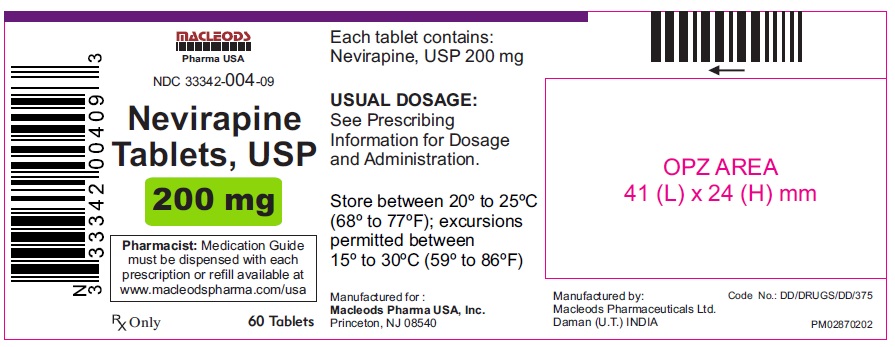
PACKAGE LABEL.PRINCIPAL DISPLAY PANEL Nevirapine Tablets, USP 200 mg Pack Count:60's Bottle Pack NDC:33342-004-09 Nevirapine Tablets, USP 200 mg Pack Count:6 x 10's Carton NDC:33342-004-24 Nevirapine Tablets, USP 200 mg Pack Count:12 x 10's Carton Pack NDC:33342-004-25 505 505 505
Medicaid utilization by pack size
Medicare Part D spend CMS · PART D · 2026 (Q1)
About this NDC listing & data coverage
What data is (and isn’t) available for this NDC — tap to expand
| NDC identity (package / product / labeler codes) | ✓ Available |
| Labeler | ✓ Available |
| Product & package description | ✓ Available |
| Marketing category & status | ✓ Available |
| Active ingredient / dosage form / route | ✓ Available |
| FDA label (SPL via DailyMed) | ✓ Available |
| Package photos | ✓ Available |
| Inactive ingredients (structured) | ✓ Available |
| NADAC pharmacy acquisition price (CMS) | — Not published for this NDC CMS publishes NADAC only for NDCs reported in its retail-pharmacy survey. |
| Orange Book / therapeutic-equivalence data | ✓ Available |
| HCPCS J-code billing crosswalk | — Not published for this NDC Most self-administered / retail products have no J-code — that is normal. |
| Medicaid utilization (CMS SDUD) | — Not published for this NDC CMS reports utilization only for NDCs with Medicaid claims above its privacy threshold. |