
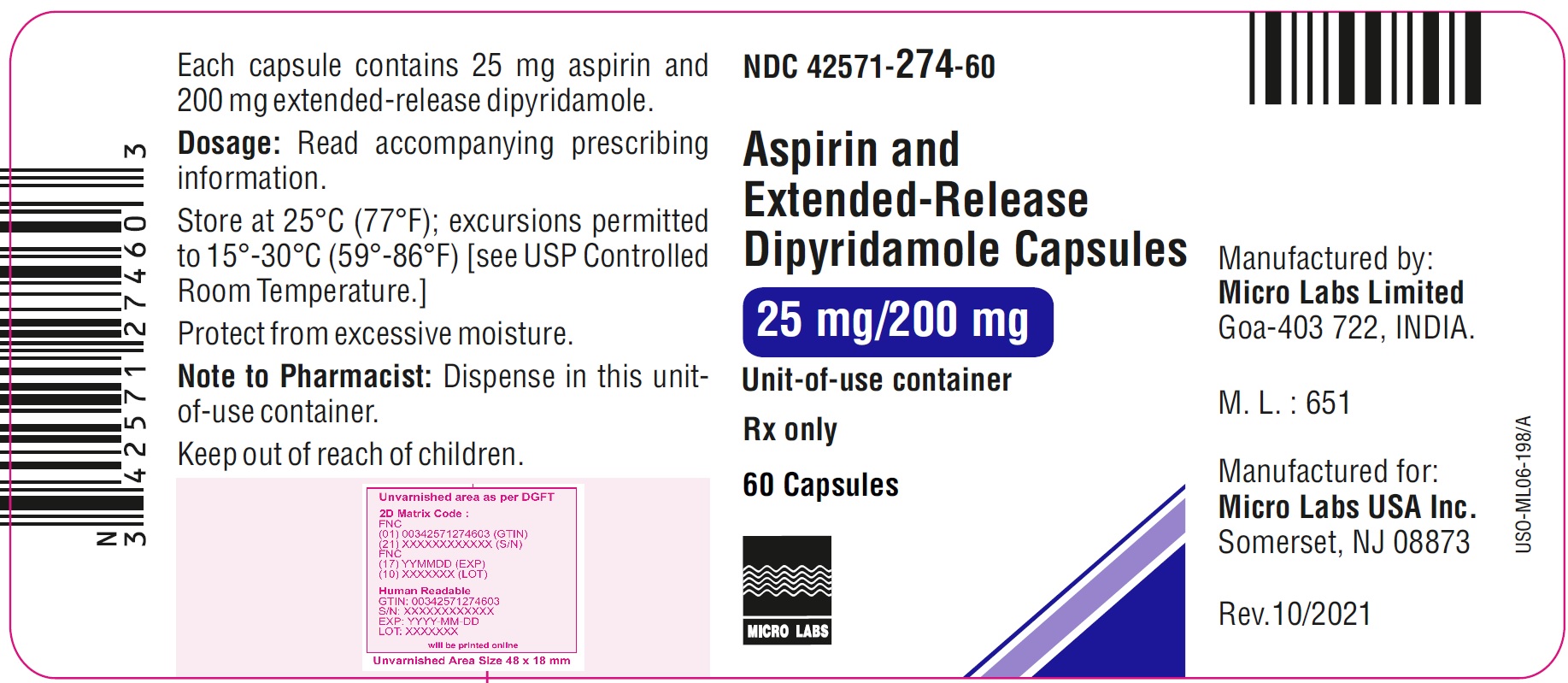
Aspirin and Extended-Release Dipyridamole 25 mg; 200 mg Capsule, Extended Release, 60-count — NDC 42571-274-60 (Billing 42571-0274-60)
This is a package of 60 capsules of Aspirin and Extended-Release Dipyridamole 25 mg; 200 mg Capsule, Extended Release from Micro Labs Limited, marketed since Aug 2021 and currently FDA-listed; retail pharmacies pay about $0.5586 per capsule (NADAC). It is this product's only package size.
Identity & classification
Regulatory identifiers FDA, NLM and CMS codes for this package
Drug-database identifiers Medi-Span GPI and First Databank GCN / HICL / AHFS classification
- GSN (GCN sequence number): 040303
- GCN: 95347
- GPI-14 (Medi-Span): 85159902206920
- HICL (First Databank): 012474
- AHFS class code: 20:12.18.00
- RxCUI (RxNorm): 259081
Where does this data come from?
- FDA openFDA NDC Directory · synced Oct 1, 2026
- FDA label on DailyMed · label index refreshed Oct 1, 2026
- RxNorm (NLM RxNav) · catalog refreshed Oct 1, 2026
- Medi-Span GPI (licensed)
- First Databank (licensed) · refreshed Oct 1, 2026
RxNorm drug class
This medicine belongs to the Platelet Aggregation Inhibitor class.
Where does this data come from?
- RxClass (NLM) · catalog refreshed Oct 1, 2026
Clinical
The combination of aspirin and extended-release dipyridamole is used to reduce the risk of stroke in patients who have had or are at risk of stroke. It is in a class of drugs called antiplatelet agents. It works by preventing excessive blood clotting.
Read the full MedlinePlus article ↗- It lowers your chance of having another stroke. It is for people who have had a TIA (mini-stroke) or an ischemic stroke caused by a clot. It combines two antiplatelet medicines tha...
- Take one capsule in the morning and one in the evening. Swallow it whole and do not chew it. You can take it with or without food.
- Headache is the most common side effect, and it often eases as treatment continues. If it is too much, call your prescriber. They may have you take one capsule at bedtime with low-...
- I get bad headaches since starting. What should I do?
Patient education
Supplement & herbal interactions
Where does this data come from?
- MedlinePlus (NLM) · refreshed Oct 1, 2026
- FDA label on DailyMed · label index refreshed Oct 1, 2026
Ask a licensed pharmacist directly — free, answered by our team.
Pricing
A drug doesn't have one price. Each row is a different public payment system, and none is what you'd pay at the counter — that depends on your insurance. The ⓘ on each row explains what it measures.
| Price system | Per ea | Per package |
|---|---|---|
| Retail pharmacies payNADAC · weekly | $0.559 | $33.52 / 60 capsules |
| Medicaid paysCMS SDUD · 12 mo | $1.00 | $60.09 / 60 capsules |
| Medicare drug plans payPart D · Q2 2026 | $1.20 | $71.98 / 60 capsules |
Where does this data come from?
- CMS NADAC weekly file · file of Sep 30, 2026
- CMS ASP pricing files · refreshed Sep 20, 2026
- CMS Medicaid State Drug Utilization Data · through Q1 2026
- CMS Part D plan pricing files · refreshed Sep 24, 2026
- VA National Acquisition Center price file
Packaging — all sizes for this product
| Package NDC | Description | Marketing start | Marketing end | Status |
|---|---|---|---|---|
| 42571-0274-60 You're viewing this Main listing | 60 CAPSULE, EXTENDED RELEASE in 1 BOTTLE | 2021-08-16 | — | Active |
Therapeutic equivalents
| Product | Labeler | Pack | NADAC/unit | TE | Status | Price vs. this |
|---|---|---|---|---|---|---|
| Aspirin and Extended - Release Dipyridamole Capsules, 25 mg / 200 mg 25 mg/1; 200 mg 00904-7056-99 | Major | 20 capsules | $0.559 | AB | Availability likely | — |
| Aspirin and Dipyridamole 25 mg/1; 200 mg 16714-0964-01 | NorthStar | 60 capsules | $0.559 | AB | Availability likely | — |
| Aspirin And Extended-Release Dipyridamole 25 mg/1; 200 mgthis 42571-0274-60 | Micro | 60 capsules | $0.559 | AB | Availability likely | — |
| Aspirin and Dipyridamole 25 mg/1; 200 mg 43598-0339-60 | Dr. | 60 capsules | $0.559 | AB | Availability likely | — |
| Aspirin and Extended - Release Dipyridamole Capsules, 25 mg / 200 mg 25 mg/1; 200 mg 49884-0007-02 | Par | 60 capsules | $0.559 | AB | Availability likely | — |
| Aspirin and Extended-Release Dipyridamole 25 mg/1; 200 mg 65162-0596-06 | Amneal | 60 capsules | $0.559 | AB | Availability likely | — |
| Aspirin and Extended-Release Dipyridamole 25 mg/1; 200 mg 42291-0116-60 | AvKARE | 60 capsules | — | AB | FDA listed | — |
| Aspirin And Extended-Release Dipyridamole 25 mg/1; 200 mg 63629-5045-01 | Bryant | 90 capsules | — | AB | FDA listed | — |
| Asprin And Extended-Release Dipyridamole 25 mg/1; 200 mg 68462-0405-30 | Glenmark | 30 capsules | — | AB | FDA listed | — |
Where does this data come from?
- FDA openFDA NDC Directory · synced Oct 1, 2026
- FDA Orange Book · refreshed Sep 3, 2026
- CMS NADAC weekly file · file of Sep 30, 2026
Availability & generic status
This product is an FDA-approved generic. Other versions of the same drug are listed under Therapeutic equivalents, least expensive first.
Where does this data come from?
- FDA Orange Book · refreshed Sep 3, 2026
Inactive Ingredients / Excipients
Inactive ingredients, also called excipients, are components of the drug product other than the active ingredient. They may include fillers, dyes, coatings, preservatives, flavors, or other formulation ingredients.
Where does this data come from?
IACT rows and label-wide narrative are kept separate; availability and product-level specificity depend on the submitted label.- FDA label on DailyMed · label index refreshed Oct 1, 2026
- FDA openFDA NDC Directory · synced Oct 1, 2026
Inactive ingredient FAQ
Are inactive ingredients the same for every manufacturer?
Why might an inactive ingredient be missing?
Can inactive ingredients matter?
Manufacturer & labeler
Where does this data come from?
- FDA openFDA NDC Directory · synced Oct 1, 2026
- Drugs@FDA
Full prescribing information FDA SPL
🎯 Indications and Usage ▾
1 INDICATIONS AND USAGE Aspirin and extended-release dipyridamole capsule is indicated to reduce the risk of stroke in patients who have had transient ischemia of the brain or completed ischemic stroke due to thrombosis. Aspirin and extended-release dipyridamole capsule is a combination of aspirin and dipyridamole, antiplatelet agents, indicated to reduce the risk of stroke in patients who have had transient ischemia of the brain or completed ischemic stroke due to thrombosis ( 1 )
⏱️ Dosage and Administration ▾
2 DOSAGE AND ADMINISTRATION Aspirin and extended-release dipyridamole capsule is not interchangeable with the individual components of aspirin and dipyridamole tablets. The recommended dose of aspirin and extended-release dipyridamole capsules is one capsule given orally twice daily, one in the morning and one in the evening. Swallow capsules whole without chewing.
Aspirin and extended-release dipyridamole capsules can be administered with or without food. One capsule twice daily (morning and evening) with or without food (2) In case of intolerable headaches during initial treatment, switch to one capsule at bedtime and low-dose aspirin in the morning; resume BID dosing within one week (2.1) Do not chew capsule (2) Not interchangeable with the individual components of aspirin and dipyridamole tablets ( 2 ) Dispense in this unit-of-use container (16)
2.1Alternative Regimen in Case of Intolerable Headaches In the event of intolerable headaches during initial treatment, switch to one capsule at bedtime and low-dose aspirin in the morning. Because there are no outcome data with this regimen and headaches become less of a problem as treatment continues, patients should return to the usual regimen as soon as possible, usually within one week.
💊 Dosage Forms and Strengths ▾
3 DOSAGE FORMS AND STRENGTHS Aspirin and extended-release Dipyridamole 25 mg/200 mg capsules are available as a hard gelatin capsule, with red opaque colored cap and ivory opaque colored body, size ‘0 Xel’ hard gelatin capsule imprinted with ‘M’ on cap and ‘25’ on body in black ink, containing yellow colored extended-release pellets of Dipyridamole and a yellow colored immediate release pellets of Aspirin. Capsule: 25 mg aspirin/200 mg extended-release dipyridamole (3)
⛔ Contraindications ▾
4 CONTRAINDICATIONS Hypersensitivity to any product ingredients (4.1) Patients with known allergy to NSAIDs (4.2) Patients with the syndrome of asthma, rhinitis, and nasal polyps (4.2)
4.1Hypersensitivity Aspirin and extended-release dipyridamole capsule is contraindicated in patients with known hypersensitivity to any of the product components.
4.2Allergy Aspirin is contraindicated in patients with known allergy to nonsteroidal anti-inflammatory drug (NSAID) products and in patients with the syndrome of asthma, rhinitis, and nasal polyps. Aspirin may cause severe urticaria, angioedema or bronchospasm.
4.3Reye Syndrome Do not use aspirin in children or teenagers with viral infections because of the risk of Reye syndrome.
⚠️ Warnings and Cautions ▾
5 WARNINGS AND PRECAUTIONS Aspirin and extended-release dipyridamole capsules increases the risk of bleeding ( 5.1 ) Avoid use in patients with severe hepatic or renal insufficiency ( 5.2 , 5.3 ) Interrupt aspirin and extended-release dipyridamole capsules 48 hours before using intravenous dipyridamole or other adenosinergic agents for stress testing ( 5.6 , 7.1 )
5.1Risk of Bleeding Aspirin and extended-release dipyridamole increases the risk of bleeding. Risk factors for bleeding include the use of other drugs that increase the risk of bleeding (e.g., anticoagulants, antiplatelet agents, heparin, anagrelide, fibrinolytic therapy, and chronic use of NSAIDs) [ see Drug Interactions (7.1) ]. Intracranial Hemorrhage In European Stroke Prevention Study-2 (ESPS2), the annualized event rate for intracranial hemorrhage was 0.39%/year in the aspirin and extended-release dipyridamole capsules group, 0.26%/year in the extended-release dipyridamole (ER-DP) group, 0.24%/year in the aspirin (ASA) group, and 0.29%/year in the placebo groups.
Gastrointestinal (GI) Side Effects GI side effects include stomach pain, heartburn, nausea, vomiting, and gross GI bleeding. Although minor upper GI symptoms, such as dyspepsia, are common and can occur anytime during therapy, physicians should remain alert for signs of ulceration and bleeding, even in the absence of previous GI symptoms. Inform patients about the signs and symptoms of GI side effects and what steps to take if they occur .
In ESPS2, the annualized event rate for gastrointestinal bleeding was 2.97%/year in the aspirin and extended-release dipyridamole capsules group, 1.58%/year in the extended-release dipyridamole group, 2.06%/year in the aspirin group, and 1.40%/year in the placebo groups. Peptic Ulcer Disease Avoid using aspirin in patients with a history of active peptic ulcer disease, which can cause gastric mucosal irritation and bleeding. Alcohol Warning Because aspirin and extended-release dipyridamole capsules contains aspirin, counsel patients who consume three or more alcoholic drinks every day about the bleeding risks involved with chronic, heavy alcohol use while taking aspirin.
5.2Renal Failure Avoid aspirin in patients with severe renal failure (glomerular filtration rate less than 10 mL/minute) [ see Use in Specific Populations (8.6) and Clinical Pharmacology (12.3) ].
5.3Hepatic Insufficiency Elevations of hepatic enzymes and hepatic failure have been reported in association with dipyridamole administration [ see Use in Specific Populations (8.6) and Clinical Pharmacology (12.3) ].
5.4Coronary Artery Disease Dipyridamole has a vasodilatory effect. Chest pain may be precipitated or aggravated in patients with underlying coronary artery disease who are receiving dipyridamole. For stroke or TIA patients for whom aspirin is indicated to prevent recurrent myocardial infarction (MI) or angina pectoris, the aspirin in this product may not provide adequate treatment for the cardiac indications.
5.5Hypotension Dipyridamole produces peripheral vasodilation, which can exacerbate pre-existing hypotension.
5.6Stress Testing with Intravenous Dipyridamole and Other Adenosinergic Agents Clinicalexperience suggests that patients being treated with aspirin and extended-release dipyridamole capsules who also require pharmacological stress testing with intravenous dipyridamole or other adenosinergic agents (e.g. adenosine, regadenoson) should interrupt aspirin and extended-release dipyridamole capsules for 48 hours prior to stress testing [see Drug Interactions (7.1) ]. Intakeof aspirin and extended-release dipyridamole capsules within 48 hours prior to stress testing with intravenous dipyridamole or other adenosinergic agents may increase the risk for cardiovascular side effects of these agents and may impair the sensitivity of the test.
5.7General Aspirin and extended-release dipyridamole capsules are not interchangeable with the individual components of aspirin and dipyridamole ta… [Excerpted — this section continues on DailyMed.]
🤒 Adverse Reactions ▾
6 ADVERSE REACTIONS The following adverse reactions are discussed elsewhere in the labeling: Hypersensitivity [ see Contraindications (4.1) ] Allergy [ see Contraindications (4.2) ] Risk of Bleeding [ see Warnings and Precautions (5.1) ] The most frequently reported adverse reactions (>10% and greater than placebo) were headache, dyspepsia, abdominal pain, nausea, and diarrhea (6.1) To report SUSPECTED ADVERSE REACTIONS, contact Micro Labs USA, Inc. at 1-855-839-8195 or FDA at 1-800-FDA-1088 or www.fda.gov/medwatch .
6.1Clinical Trials Experience Because clinical trials are conducted under widely varying conditions, adverse reaction rates observed in the clinical trials of a drug cannot be directly compared to rates in the clinical trials of another drug and may not reflect the rates observed in practice. The efficacy and safety of aspirin and extended-release dipyridamole was established in the European Stroke Prevention Study-2 (ESPS2). ESPS2 was a double-blind, placebo-controlled study that evaluated 6602 patients over the age of 18 years who had a previous ischemic stroke or transient ischemic attack within ninety days prior to entry.
Patients were randomized to either aspirin and extended-release dipyridamole capsules, aspirin, ER-DP, or placebo [ see Clinical Studies (14) ]; primary endpoints included stroke (fatal or nonfatal) and death from all causes. This 24-month, multicenter, double-blind, randomized study (ESPS2) was conducted to compare the efficacy and safety of aspirin and extended-release dipyridamole capsules with placebo, extended-release dipyridamole alone and aspirin alone. The study was conducted in a total of 6602 male and female patients who had experienced a previous ischemic stroke or transient ischemia of the brain within three months prior to randomization.
Table 1 presents the annualized event rate for adverse events that occurred in 1%/year or more of patients treated with aspirin and extended-release dipyridamole capsules where the incidence was also at least 1%/year greater than in those patients treated with placebo. There is no clear benefit of the dipyridamole/aspirin combination over aspirin with respect to safety. Table 1 Incidence of Adverse Events in ESPS2 a Individual Treatment Group Body System/Preferred Term Aspirin And Extended-Release Dipyridamole n (%/year) b ER-DP Alone n (%/year) b ASA Alone n (%/year) b Placebo n (%/year) b Total Number of Patients 1650 1654 1649 1649 Central and Peripheral Nervous System Disorders Headache 647(28.25) 634 (27.91) 558 (22.10) 543 (22.29) Gastrointestinal System Disorders Dyspepsia 303 (13.23) 288 (12.68) 299 (11.84) 275 (11.29) Abdominal Pain 289 (12.62) 255 (11.22) 262 (10.38) 239 (9.81) Nausea 264 (11.53) 254 (11.18) 210 (8.32) 232 (9.53) Diarrhea 210 (9.17) 257 (11.31) 112 (4.44) 161 (6.61) Vomiting 138 (6.03) 129 (5.68) 101 (4.00) 118 (4.84) Platelet, Bleeding and Clotting Disorders Hemorrhage NOS 52 (2.27) 24 (1.06) 46 (1.82) 24 (0.99) a Reported by ≥1%/year of patients during aspirin and extended-release dipyridamole capsules treatment where the incidence was at least 1%/year greater than in those treated with placebo. b Annual event rate per 100 pt-years = 100* number of subjects with event/subject-years.
Subject-years is defined as cumulative number of days on treatment divided by 365.25. Note: ER-DP = extended-release dipyridamole 200 mg; ASA = aspirin 25 mg. The dosage regimen for all treatment groups is BID.
NOS = not otherwise specified. Discontinuation due to adverse events in ESPS2 was 25% for aspirin and extended-release dipyridamole, 25% for extended-release dipyridamole, 19% for aspirin, and 21% for placebo (refer to Table 2). Table 2 Incidence of Adverse Events that Led to the Discontinuation of Treatment a Treatment Groups Aspirin And Extended-Release Dipyridamole n (%/year) b ER-DP n (%/year) b ASA n (%/year) b Placebo n (%/year) b Total Number of Patients 1650 1654 1649 1649 Patients with at least one Adverse Event that led t… [Excerpted — this section continues on DailyMed.]
🔄 Drug Interactions ▾
7 DRUG INTERACTIONS Co-administration with anticoagulants, antiplatelets, or NSAIDs can increase risk of bleeding (7.1) Decreased renal function can occur with co-administration with NSAIDs (7.1)
7.1Drug Interaction Study Information Obtained From Literature Adenosinergic agents (e.g. adenosine, regadenoson) Dipyridamole has been reported to increase the plasma levels and cardiovascular effects of adenosine. Adjustment of adenosine dosage may be necessary. Dipyridamole also increases the cardiovascular effects of regadenoson, an adenosine A 2A -receptor agonist.
The potential risk of cardiovascular side effects with intravenous adenosinergic agents may be increased during the testing period when dipyridamole is not held 48 hours prior to stress testing. Angiotensin Converting Enzyme (ACE) Inhibitors Because of the indirect effect of aspirin on the renin-angiotensin conversion pathway, the hyponatremic and hypotensive effects of ACE inhibitors may be diminished by concomitant administration of aspirin. Acetazolamide Concurrent use of aspirin and acetazolamide can lead to high serum concentrations of acetazolamide (and toxicity) due to competition at the renal tubule for secretion.
Anticoagulants and Antiplatelets Patients taking aspirin and extended-release dipyridamole capsules in combination with anticoagulants, antiplatelets, or any substance impacting coagulation are at increased risk for bleeding. Aspirin can displace warfarin from protein binding sites, leading to prolongation of both the prothrombin time and the bleeding time. Aspirin can increase the anticoagulant activity of heparin, increasing bleeding risk.
Anagrelide Patients taking aspirin in combination with anagrelide are at an increased risk of bleeding. Anticonvulsants Salicylic acid can displace protein-bound phenytoin and valproic acid, leading to a decrease in the total concentration of phenytoin and an increase in serum valproic acid levels. Beta Blockers The hypotensive effects of beta blockers may be diminished by the concomitant administration of aspirin due to inhibition of renal prostaglandins, leading to decreased renal blood flow and salt and fluid retention.
Cholinesterase Inhibitors Dipyridamole may counteract the anticholinesterase effect of cholinesterase inhibitors, thereby potentially aggravating myasthenia gravis. Diuretics The effectiveness of diuretics in patients with underlying renal or cardiovascular disease may be diminished by the concomitant administration of aspirin due to inhibition of renal prostaglandins, leading to decreased renal blood flow and salt and fluid retention. Methotrexate Salicylate can inhibit renal clearance of methotrexate, leading to bone marrow toxicity, especially in the elderly or renal impaired.
Nonsteroidal Anti-Inflammatory Drugs (NSAIDs) The concurrent use of aspirin with other NSAIDs may increase bleeding or lead to decreased renal function. Oral Hypoglycemics Moderate doses of aspirin may increase the effectiveness of oral hypoglycemic drugs, leading to hypoglycemia. Uricosuric Agents (probenecid and sulfinpyrazone) Salicylates antagonize the uricosuric action of uricosuric agents.
👥 Use in Specific Populations ▾
8 USE IN SPECIFIC POPULATIONS
8.1Pregnancy Risk Summary Available data from published studies and postmarketing experience with aspirin and extended-release dipyridamole capsules use during pregnancy have not identified a clear association between aspirin and extended-release dipyridamole capsules use and major birth defects, miscarriage, or adverse maternal or fetal outcomes (see Data). Aspirin and extended-release dipyridamole capsule contains low-dose aspirin which is an NSAID (see Clinical Considerations). In animal reproduction studies, there were adverse developmental effects with administration of aspirin in rats and rabbits at doses about 66 and 44 times, respectively, the human exposure at the maximum recommended daily dose of aspirin-dipyridamole.
Reproduction studies with dipyridamole in mice, rabbits, and rats have revealed no evidence of harm to the fetus up to doses about 25 times the maximum recommended daily human dose of aspirin-dipyridamole. Nonclinical data are suggestive of a possible potentiation of aspirin-related fetal toxicity when combined with dipyridamole (see Data). The estimated background risk of major birth defects and miscarriage for the indicated population is unknown.
All pregnancies have a background risk of birth defect, loss, or other adverse outcomes. In the U.S. general population, the estimated background risk of major birth defects and miscarriage in clinically recognized pregnancies is 2 to 4 and 15 to 20%, respectively. Clinical Considerations Labor and Delivery Aspirin and extended-release dipyridamole capsules, which contains dipyridamole and low-dose aspirin, increases the risk for bleeding [see Warnings and Precautions (5.1) ].
Maternal use of high-dose aspirin can result in excessive blood loss at delivery, prolonged gestation, prolonged labor, intracranial hemorrhage in premature infants, low birth weight, stillbirth, and neonatal death. Data Human Data Published data from clinical trials, observational studies, case series, and case reports over several decades have not identified a clear association between aspirin dipyridamole use in pregnancy and major birth defects, miscarriage, or adverse maternal or fetal outcomes. However, these studies cannot definitively establish the absence of any aspirin-dipyridamole associated risks.
Methodological limitations of these studies include variability in the timing and dose of drug exposure (e.g., most exposures occurred beyond the first trimester) and the small sample sizes of individual studies. Animal Data Aspirin has been shown to be teratogenic in rats (spina bifida, exencephaly, microphthalmia and coelosomia) and rabbits (congested fetuses, agenesis of skull and upper jaw, generalized edema with malformation of the head, and diaphanous skin) at oral doses of 330 mg/kg/day and 110 mg/kg/day, respectively.
These doses, which also resulted in a high resorption rate in rats (63% of implantations versus 5% in controls), are, on a mg/m2 basis, about 66 and 44 times, respectively, the dose of aspirin contained in the maximum recommended daily human dose of aspirin-dipyridamole. Reproduction studies with dipyridamole have been performed in mice, rabbits and rats at oral doses of up to 125 mg/kg, 40 mg/kg, and 1000 mg/kg, respectively (about 1½, 2, and 25 times the maximum recommended daily human oral dose, respectively, on a mg/m 2 basis) and have revealed no evidence of harm to the fetus due to dipyridamole.
When 330 mg aspirin/kg/day was combined with 75 mg dipyridamole/kg/day in the rat at doses about 66 and 2 times, respectively, the maximum recommended daily human dose, the resorption rate approached 100%.
8.2Lactation Risk Summary Based on data from a clinical lactation study in breastfeeding women taking low-dose aspirin, the metabolite salicylic acid is present in human milk in low levels (see Data) . Dipyridamole is also present in human milk. There is no information on the effects of aspirin and extended-release dipyridamole… [Excerpted — this section continues on DailyMed.]
🤰 Pregnancy ▾
8.1Pregnancy Risk Summary Available data from published studies and postmarketing experience with aspirin and extended-release dipyridamole capsules use during pregnancy have not identified a clear association between aspirin and extended-release dipyridamole capsules use and major birth defects, miscarriage, or adverse maternal or fetal outcomes (see Data). Aspirin and extended-release dipyridamole capsule contains low-dose aspirin which is an NSAID (see Clinical Considerations). In animal reproduction studies, there were adverse developmental effects with administration of aspirin in rats and rabbits at doses about 66 and 44 times, respectively, the human exposure at the maximum recommended daily dose of aspirin-dipyridamole.
Reproduction studies with dipyridamole in mice, rabbits, and rats have revealed no evidence of harm to the fetus up to doses about 25 times the maximum recommended daily human dose of aspirin-dipyridamole. Nonclinical data are suggestive of a possible potentiation of aspirin-related fetal toxicity when combined with dipyridamole (see Data). The estimated background risk of major birth defects and miscarriage for the indicated population is unknown.
All pregnancies have a background risk of birth defect, loss, or other adverse outcomes. In the U.S. general population, the estimated background risk of major birth defects and miscarriage in clinically recognized pregnancies is 2 to 4 and 15 to 20%, respectively. Clinical Considerations Labor and Delivery Aspirin and extended-release dipyridamole capsules, which contains dipyridamole and low-dose aspirin, increases the risk for bleeding [see Warnings and Precautions (5.1) ].
Maternal use of high-dose aspirin can result in excessive blood loss at delivery, prolonged gestation, prolonged labor, intracranial hemorrhage in premature infants, low birth weight, stillbirth, and neonatal death. Data Human Data Published data from clinical trials, observational studies, case series, and case reports over several decades have not identified a clear association between aspirin dipyridamole use in pregnancy and major birth defects, miscarriage, or adverse maternal or fetal outcomes. However, these studies cannot definitively establish the absence of any aspirin-dipyridamole associated risks.
Methodological limitations of these studies include variability in the timing and dose of drug exposure (e.g., most exposures occurred beyond the first trimester) and the small sample sizes of individual studies. Animal Data Aspirin has been shown to be teratogenic in rats (spina bifida, exencephaly, microphthalmia and coelosomia) and rabbits (congested fetuses, agenesis of skull and upper jaw, generalized edema with malformation of the head, and diaphanous skin) at oral doses of 330 mg/kg/day and 110 mg/kg/day, respectively.
These doses, which also resulted in a high resorption rate in rats (63% of implantations versus 5% in controls), are, on a mg/m2 basis, about 66 and 44 times, respectively, the dose of aspirin contained in the maximum recommended daily human dose of aspirin-dipyridamole. Reproduction studies with dipyridamole have been performed in mice, rabbits and rats at oral doses of up to 125 mg/kg, 40 mg/kg, and 1000 mg/kg, respectively (about 1½, 2, and 25 times the maximum recommended daily human oral dose, respectively, on a mg/m 2 basis) and have revealed no evidence of harm to the fetus due to dipyridamole.
When 330 mg aspirin/kg/day was combined with 75 mg dipyridamole/kg/day in the rat at doses about 66 and 2 times, respectively, the maximum recommended daily human dose, the resorption rate approached 100%.
🧒 Pediatric Use ▾
8.4Pediatric Use Safety and effectiveness of aspirin and extended-release dipyridamole in pediatric patients have not been studied. Because of the aspirin component, use of this product in the pediatric population is not recommended [ see Contraindications (4.3) ].
🧓 Geriatric Use ▾
8.5Geriatric Use Of the total number of subjects in ESPS2, 61% were 65 and over, while 27% were 75 and over. No overall differences in safety or effectiveness were observed between these subjects and younger subjects, and other reported clinical experience has not identified differences in responses between the elderly and younger patients, but greater sensitivity of some older individuals cannot be ruled out [ see Clinical Pharmacology (12.3) ].
🆘 Overdosage ▾
10 OVERDOSAGE Because of the dose ratio of dipyridamole to aspirin, overdosage of aspirin and extended-release dipyridamole capsule is likely to be dominated by signs and symptoms of dipyridamole overdose. In case of real or suspected overdose, seek medical attention or contact a Poison Control Center immediately. Careful medical management is essential.
Based upon the known hemodynamic effects of dipyridamole, symptoms such as warm feeling, flushes, sweating, restlessness, feeling of weakness, and dizziness may occur. A drop in blood pressure and tachycardia might also be observed. Salicylate toxicity may result from acute ingestion (overdose) or chronic intoxication.
Severity of aspirin intoxication is determined by measuring the blood salicylate level. The early signs of salicylic overdose (salicylism), including tinnitus (ringing in the ears), occur at plasma concentrations approaching 200 mcg/mL. In severe cases, hyperthermia and hypovolemia are the major immediate threats to life.
Plasma concentrations of aspirin above 300 mcg/mL are clearly toxic. Severe toxic effects are associated with levels above 400 mcg/mL. A single lethal dose of aspirin in adults is not known with certainty but death may be expected at 30 g.
Treatment of overdose consists primarily of supporting vital functions, increasing drug elimination, and correcting acid-base disturbances. Consider gastric emptying and/or lavage as soon as possible after ingestion, even if the patient has vomited spontaneously. After lavage and/or emesis, administration of activated charcoal as a slurry may be beneficial if less than 3 hours have passed since ingestion.
Charcoal absorption should not be employed prior to emesis and lavage. Follow acid-base status closely with serial blood gas and serum pH measurements. Maintain fluid and electrolyte balance.
Administer replacement fluid intravenously and augment with correction of acidosis. Treatment may require the use of a vasopressor. Infusion of glucose may be required to control hypoglycemia.
Administration of xanthine derivatives (e.g., aminophylline) may reverse the vasodilatory effects of dipyridamole overdose. Plasma electrolytes and pH should be monitored serially to promote alkaline diuresis of salicylate if renal function is normal. In patients with renal insufficiency or in cases of life-threatening intoxication, dialysis is usually required to treat salicylic overdose; however, since dipyridamole is highly protein bound, dialysis is not likely to remove dipyridamole.
Exchange transfusion may be indicated in infants and young children.
🧬 Clinical Pharmacology ▾
12 CLINICAL PHARMACOLOGY
12.1Mechanism of Action The antithrombotic action of aspirin and extended-release dipyridamole capsule is the result of the additive antiplatelet effects of dipyridamole and aspirin. Dipyridamole Dipyridamole inhibits the uptake of adenosine into platelets, endothelial cells and erythrocytes in vitro and in vivo ; the inhibition occurs in a dose-dependent manner at therapeutic concentrations (0.5 to 1.9 mcg/mL). This inhibition results in an increase in local concentrations of adenosine which acts on the platelet A 2 -receptor thereby stimulating platelet adenylate cyclase and increasing platelet cyclic-3',5'-adenosine monophosphate (cAMP) levels.
Via this mechanism, platelet aggregation is inhibited in response to various stimuli such as platelet activating factor (PAF), collagen and adenosine diphosphate (ADP). Dipyridamole inhibits phosphodiesterase (PDE) in various tissues. While the inhibition of cAMP-PDE is weak, therapeutic levels of dipyridamole inhibit cyclic-3',5'guanosine monophosphate-PDE (cGMP-PDE), thereby augmenting the increase in cGMP produced by EDRF (endothelium-derived relaxing factor, now identified as nitric oxide).
Aspirin Aspirin inhibits platelet aggregation by irreversible inhibition of platelet cyclooxygenase and thus inhibits the generation of thromboxane A 2 , a powerful inducer of platelet aggregation and vasoconstriction.
12.2Pharmacodynamics The effect of either agent on the other's inhibition of platelet reactivity has not been evaluated.
12.3Pharmacokinetics There are no significant interactions between aspirin and dipyridamole. The kinetics of the components are unchanged by their co-administration as aspirin and extended-release dipyridamole capsules. Absorption Dipyridamole: Peak plasma levels of dipyridamole are achieved 2 hours (range 1 to 6 hours) after administration of a daily dose of 400 mg aspirin and extended-release dipyridamole capsules (given as 200 mg BID).
The peak plasma concentration at steady-state is 1.98 mcg/mL (1.01 to 3.99 mcg/mL) and the steady-state trough concentration is 0.53 mcg/mL (0.18 to 1.01 mcg/mL). Aspirin: Peak plasma levels of aspirin are achieved 0.63 hours (0.5 to 1 hour) after administration of a 50 mg aspirin daily dose from aspirin and extended-release dipyridamole capsules (given as 25 mg BID). The peak plasma concentration at steady-state is 319 ng/mL (175 to 463 ng/mL).
Aspirin undergoes moderate hydrolysis to salicylic acid in the liver and the gastrointestinal wall, with 50% to 75% of an administered dose reaching the systemic circulation as intact aspirin. Effect of Food Dipyridamole: When aspirin and extended-release dipyridamole capsules were taken with a high fat meal, dipyridamole peak plasma levels (C max ) and total absorption (AUC) were decreased at steady-state by 20 to 30% compared to fasting. Due to the similar degree of inhibition of adenosine uptake at these plasma concentrations, this food effect is not considered clinically relevant.
Aspirin: When aspirin and extended-release dipyridamole capsules were taken with a high fat meal, there was no difference for aspirin in AUC at steady-state, and the approximately 50% decrease in C max was not considered clinically relevant based on a similar degree of cyclooxygenase inhibition comparing the fed and fasted state. Distribution Dipyridamole: Dipyridamole is highly lipophilic (log P=3.71, pH=7); however, it has been shown that the drug does not cross the blood-brain barrier to any significant extent in animals.
The steady-state volume of distribution of dipyridamole is about 92 L. Approximately 99% of dipyridamole is bound to plasma proteins, predominantly to alpha 1-acid glycoprotein and albumin. Aspirin: Aspirin is poorly bound to plasma proteins and its apparent volume of distribution is low (10 L).
Its metabolite, salicylic acid, is highly bound to plasma proteins, but its binding is concentration-dependent (nonlinear). At low concentrations (<100 mcg/mL), a… [Excerpted — this section continues on DailyMed.]
🧬 Mechanism of Action ▾
12.1Mechanism of Action The antithrombotic action of aspirin and extended-release dipyridamole capsule is the result of the additive antiplatelet effects of dipyridamole and aspirin. Dipyridamole Dipyridamole inhibits the uptake of adenosine into platelets, endothelial cells and erythrocytes in vitro and in vivo ; the inhibition occurs in a dose-dependent manner at therapeutic concentrations (0.5 to 1.9 mcg/mL). This inhibition results in an increase in local concentrations of adenosine which acts on the platelet A 2 -receptor thereby stimulating platelet adenylate cyclase and increasing platelet cyclic-3',5'-adenosine monophosphate (cAMP) levels.
Via this mechanism, platelet aggregation is inhibited in response to various stimuli such as platelet activating factor (PAF), collagen and adenosine diphosphate (ADP). Dipyridamole inhibits phosphodiesterase (PDE) in various tissues. While the inhibition of cAMP-PDE is weak, therapeutic levels of dipyridamole inhibit cyclic-3',5'guanosine monophosphate-PDE (cGMP-PDE), thereby augmenting the increase in cGMP produced by EDRF (endothelium-derived relaxing factor, now identified as nitric oxide).
Aspirin Aspirin inhibits platelet aggregation by irreversible inhibition of platelet cyclooxygenase and thus inhibits the generation of thromboxane A 2 , a powerful inducer of platelet aggregation and vasoconstriction.
📦 How Supplied / Storage and Handling ▾
16 HOW SUPPLIED/STORAGE AND HANDLING Aspirin and extended-release Dipyridamole 25 mg/200 mg capsules are available as a hard gelatin capsule, with red opaque colored cap and ivory opaque colored body, size ‘0 Xel’ hard gelatin capsule imprinted with ‘M’ on cap and ‘25’ on body in black ink, containing yellow colored extended-release pellets of Dipyridamole and a yellow colored immediate release pellets of Aspirin. Bottles of 60 NDC 42571-274-60 Store at 25 ° C (77 ° F); excursions permitted to 15 ° to 30 ° C (59 ° to 86 ° F) [see USP Controlled Room Temperature].
Protect from excessive moisture.
📋 Description ▾
11 DESCRIPTION Aspirin and extended-release dipyridamole capsule is a combination antiplatelet agent intended for oral administration. Each hard gelatin capsule contains 200 mg dipyridamole in an extended-release form and 25 mg aspirin, as an immediate-release. In addition, each capsule contains the following inactive ingredients: caprylic/capric mono/diglycerides, D&C yellow #10 Aluminum Lake, FD&C blue #1/brilliant blue FCF Aluminum Lake, glyceryl monostearate, hypromellose, methacrylic acid and methacrylate copolymer, microcrystalline cellulose, povidone K30, polyethylene glycol, polyvinyl alcohol, sodium lauryl sulfate, talc, tartaric acid, titanium dioxide, triacetin and triethyl citrate.
Each capsule shell contains gelatin, ferric oxide red, ferric oxide yellow, titanium dioxide and water. Black imprint ink composition contains ferrosoferric oxide, potassium hydroxide, propylene glycol, shellac and strong ammonia solution. Dipyridamole USP Dipyridamole USP is an antiplatelet agent chemically described as 2,2',2'',2'''-[(4,8-Dipiperidinopyrimido[5,4- d ]pyrimidine-2,6-diyl)dinitrilo]-tetraethanol.
It has the following structural formula: Dipyridamole is an odorless yellow crystalline substance, having a bitter taste. It is soluble in dilute acids, methanol and chloroform, and is practically insoluble in water. Aspirin USP The antiplatelet agent aspirin (acetylsalicylic acid) is chemically known as benzoic acid, 2-(acetyloxy)-, and has the following structural formula: Aspirin is an odorless white needle-like crystalline or powdery substance.
When exposed to moisture, aspirin hydrolyzes into salicylic and acetic acids, and gives off a vinegary odor. It is highly lipid soluble and slightly soluble in water. Aspirin Structure
💬 Information for Patients ▾
17 PATIENT COUNSELING INFORMATION Advise the patient to read the FDA-approved patient labeling (Patient Information). Risk of Bleeding Inform patients that as with other antiplatelet agents, there is a general risk of bleeding including intracranial and gastrointestinal bleeding. Inform patients about the signs and symptoms of bleeding, including occult bleeding.
Tell patients to notify their physician if they are prescribed any drug which may increase risk of bleeding. Counsel patients who consume three or more alcoholic drinks daily about the bleeding risks involved with chronic, heavy alcohol use while taking aspirin. Pregnancy Advise patients to notify their healthcare provider if they become pregnant or intend to become pregnant during treatment with aspirin and extended-release dipyridamole capsules [see Use in Specific Populations (8.1) ] .
Headaches Some patients may experience headaches upon treatment initiation; these are usually transient. In case of intolerable headaches, tell patients to contact their physician. Stress Test Instruct patients who are scheduled to undergo a pharmacologic stress test to tell their healthcare provider that they are taking aspirin and extended-release dipyridamole capsules.
Dosage and Administration Tell patients that aspirin and extended-release dipyridamole capsules should be swallowed whole, and not chewed or crushed. If you miss a dose, continue with your next dose on your regular schedule. Do not take a double dose.
Storage Inform patients to protect aspirin and extended-release dipyridamole from moisture. Manufactured by: Micro Labs Limited Goa-403 722, INDIA. Manufactured for: Micro Labs USA Inc.
Somerset, NJ 08873 Rev.10/2021
🧬 Pharmacokinetics ▾
12.3Pharmacokinetics There are no significant interactions between aspirin and dipyridamole. The kinetics of the components are unchanged by their co-administration as aspirin and extended-release dipyridamole capsules. Absorption Dipyridamole: Peak plasma levels of dipyridamole are achieved 2 hours (range 1 to 6 hours) after administration of a daily dose of 400 mg aspirin and extended-release dipyridamole capsules (given as 200 mg BID).
The peak plasma concentration at steady-state is 1.98 mcg/mL (1.01 to 3.99 mcg/mL) and the steady-state trough concentration is 0.53 mcg/mL (0.18 to 1.01 mcg/mL). Aspirin: Peak plasma levels of aspirin are achieved 0.63 hours (0.5 to 1 hour) after administration of a 50 mg aspirin daily dose from aspirin and extended-release dipyridamole capsules (given as 25 mg BID). The peak plasma concentration at steady-state is 319 ng/mL (175 to 463 ng/mL).
Aspirin undergoes moderate hydrolysis to salicylic acid in the liver and the gastrointestinal wall, with 50% to 75% of an administered dose reaching the systemic circulation as intact aspirin. Effect of Food Dipyridamole: When aspirin and extended-release dipyridamole capsules were taken with a high fat meal, dipyridamole peak plasma levels (C max ) and total absorption (AUC) were decreased at steady-state by 20 to 30% compared to fasting. Due to the similar degree of inhibition of adenosine uptake at these plasma concentrations, this food effect is not considered clinically relevant.
Aspirin: When aspirin and extended-release dipyridamole capsules were taken with a high fat meal, there was no difference for aspirin in AUC at steady-state, and the approximately 50% decrease in C max was not considered clinically relevant based on a similar degree of cyclooxygenase inhibition comparing the fed and fasted state. Distribution Dipyridamole: Dipyridamole is highly lipophilic (log P=3.71, pH=7); however, it has been shown that the drug does not cross the blood-brain barrier to any significant extent in animals.
The steady-state volume of distribution of dipyridamole is about 92 L. Approximately 99% of dipyridamole is bound to plasma proteins, predominantly to alpha 1-acid glycoprotein and albumin. Aspirin: Aspirin is poorly bound to plasma proteins and its apparent volume of distribution is low (10 L).
Its metabolite, salicylic acid, is highly bound to plasma proteins, but its binding is concentration-dependent (nonlinear). At low concentrations (<100 mcg/mL), approximately 90% of salicylic acid is bound to albumin. Salicylic acid is widely distributed to all tissues and fluids in the body, including the central nervous system, breast milk, and fetal tissues.
Early signs of salicylate overdose (salicylism), including tinnitus (ringing in the ears), occur at plasma concentrations approximating 200 mcg/mL [see Overdosage (10) ] . Metabolism and Elimination Dipyridamole: Dipyridamole is metabolized in the liver, primarily by conjugation with glucuronic acid, of which monoglucuronide which has low pharmacodynamic activity is the primary metabolite. In plasma, about 80% of the total amount is present as parent compound and 20% as monoglucuronide.
Most of the glucuronide metabolite (about 95%) is excreted via bile into the feces, with some evidence of enterohepatic circulation. Renal excretion of parent compound is negligible and urinary excretion of the glucuronide metabolite is low (about 5%). With intravenous (i.v.) treatment of dipyridamole, a triphasic profile is obtained: a rapid alpha phase, with a half-life of about 3.4 minutes, a beta phase, with a half-life of about 39 minutes, (which, together with the alpha phase accounts for about 70% of the total area under the curve, AUC) and a prolonged elimination phase λ z with a half-life of about 15.5 hours.
Because of the extended absorption phase of the dipyridamole component, only the terminal phase is apparent from oral treatment with aspirin and extended-release dipyridamole capsules which was 13.6 hours… [Excerpted — this section continues on DailyMed.]
🧬 Pharmacodynamics ▾
12.2Pharmacodynamics The effect of either agent on the other's inhibition of platelet reactivity has not been evaluated.
🔬 Clinical Studies ▾
14 CLINICAL STUDIES ESPS2 (European Stroke Prevention Study-2) was a double-blind, placebo-controlled, 24-month study in which 6602 patients over the age of 18 years had an ischemic stroke (76%) or transient ischemic attack (TIA, 24%) within three months prior to entry. Patients were enrolled in 13 European countries between February 1989 and May 1995 and were randomized to one of four treatment groups: aspirin and extended-release dipyridamole 25 mg/200 mg; extended-release dipyridamole (ER-DP) 200 mg alone; aspirin (ASA) 25 mg alone; or placebo.
The mean age in this population was 66.7 years with 58% of them being males. Patients received one capsule twice daily (morning and evening). Efficacy assessments included analyses of stroke (fatal or nonfatal) and death (from all causes) as confirmed by a blinded morbidity and mortality assessment group.
There were no differences with regard to efficacy based on age or gender; patients who were older had a trend towards more events. Stroke Endpoint Aspirin and extended-release dipyridamole capsules reduced the risk of stroke by 22.1% compared to aspirin 50 mg/day alone (p = 0.008) and reduced the risk of stroke by 24.4% compared to extended-release dipyridamole 400 mg/day alone (p = 0.002) (Table 3). Aspirin and extended-release dipyridamole capsules reduced the risk of stroke by 36.8% compared to placebo (p <0.001).
Table 3 Summary of First Stroke (Fatal or Nonfatal): ESPS2: Intent-to-Treat Population Total Number of Patients n Number of Patients With Stroke Within 2 Years n (%) Kaplan-Meier Estimate of Survival at 2 Years (95% C.I.) Gehan-Wilcoxon Test P-value Risk Reduction at 2 Years Odds Ratio (95% C.I.) Individual Treatment Group Aspirin and extended-release dipyridamole 1650 157 (9.5%) 89.9% (88.4%, 91.4%) - - - ER-DP 1654 211(12.8%) 86.7% (85%, 88.4%) - - - ASA 1649 206(12.5%) 87.1% (85.4%, 88.7%) - - - Placebo 1649 250(15.2%) 84.1% (82.2%, 85.9%) - - - Pairwise Treatment Group Comparisons Aspirin and extended-release dipyridamole vs.
ER-DP - - - 0.002 b 24.4% 0.72 (0.58, 0.90) Aspirin and extended-release dipyridamole vs. ASA - - - 0.008 b 22.1% 0.74 (0.59, 0.92) Aspirin and extended-release dipyridamole vs. Placebo - - - <0.001 b 36.8% 0.59 (0.48, 0.73) ER-DP vs.
Placebo - - - 0.036 a 16.5% 0.82 (0.67, 1.00) ASA vs. Placebo - - - 0.009 b 18.9% 0.80 (0.66, 0.97) a 0.010 <p-value ≤0.050; b p-value ≤0.010. Note: ER-DP = extended-release dipyridamole 200 mg; ASA = aspirin 25 mg.
The dosage regimen for all treatment groups is BID. Figure 1 ESPS2: Cumulative Stroke Rate (Fatal or Nonfatal) Over 24 months of Follow-Up Combined Stroke or Death Endpoint In ESPS2, aspirin and extended-release dipyridamole capsule reduced the risk of stroke or death by 24.2% compared to placebo. Aspirin and extended-release dipyridamole capsule reduced the risk of stroke or death by 12.1% compared to aspirin alone and by 10.3% compared to extended-release dipyridamole alone.
These results were not statistically significant. Death Endpoint The incidence rate of all-cause mortality was 11.3% for aspirin and extended-release dipyridamole, 11% for aspirin alone, 11.4% for extended-release dipyridamole alone and 12.3% for placebo alone. The differences between the aspirin and extended-release dipyridamole, aspirin alone and extended-release dipyridamole alone treatment groups were not statistically significant.
These incidence rates for aspirin and extended-release dipyridamole and aspirin alone are consistent with previous aspirin studies in stroke and TIA patients. Cumulative stroke rate figure
🧪 Nonclinical Toxicology ▾
13 NONCLINICAL TOXICOLOGY
13.1Carcinogenesis, Mutagenesis, Impairment of Fertility In studies in which dipyridamole was administered in the feed to mice (up to 111 weeks in males and females) and rats (up to 128 weeks in males and up to 142 weeks in females), there was no evidence of drug-related carcinogenesis. The highest dose administered in these studies (75 mg/kg/day) was, on a mg/m 2 basis, about equivalent to the maximum recommended daily human oral dose (MRHD) in mice and about twice the MRHD in rats. Combinations of dipyridamole and aspirin (1:5 ratio) tested negative in the Ames test, in vivo chromosome aberration tests (in mice and hamsters), oral micronucleus tests (in mice and hamsters) and oral dominant lethal test (in mice).
Aspirin, alone, induced chromosome aberrations in cultured human fibroblasts. Mutagenicity tests of dipyridamole alone with bacterial and mammalian cell systems were negative. Combinations of dipyridamole and aspirin have not been evaluated for effects on fertility and reproductive performance.
There was no evidence of impaired fertility when dipyridamole was administered to male and female rats at oral doses up to 500 mg/kg/day (about 12 times the MRHD on a mg/m 2 basis). A significant reduction in number of corpora lutea with consequent reduction in implantations and live fetuses was, however, observed at 1250 mg/kg (more than 30 times the MRHD on a mg/m 2 basis). Aspirin inhibits ovulation in rats.
📄 Carcinogenesis, Mutagenesis, Impairment of Fertility ▾
13.1Carcinogenesis, Mutagenesis, Impairment of Fertility In studies in which dipyridamole was administered in the feed to mice (up to 111 weeks in males and females) and rats (up to 128 weeks in males and up to 142 weeks in females), there was no evidence of drug-related carcinogenesis. The highest dose administered in these studies (75 mg/kg/day) was, on a mg/m 2 basis, about equivalent to the maximum recommended daily human oral dose (MRHD) in mice and about twice the MRHD in rats. Combinations of dipyridamole and aspirin (1:5 ratio) tested negative in the Ames test, in vivo chromosome aberration tests (in mice and hamsters), oral micronucleus tests (in mice and hamsters) and oral dominant lethal test (in mice).
Aspirin, alone, induced chromosome aberrations in cultured human fibroblasts. Mutagenicity tests of dipyridamole alone with bacterial and mammalian cell systems were negative. Combinations of dipyridamole and aspirin have not been evaluated for effects on fertility and reproductive performance.
There was no evidence of impaired fertility when dipyridamole was administered to male and female rats at oral doses up to 500 mg/kg/day (about 12 times the MRHD on a mg/m 2 basis). A significant reduction in number of corpora lutea with consequent reduction in implantations and live fetuses was, however, observed at 1250 mg/kg (more than 30 times the MRHD on a mg/m 2 basis). Aspirin inhibits ovulation in rats.
📄 Patient Package Insert ▾
Patient Information Aspirin (AS-pir-in) and extended-release dipyridamole ( dye-pir-id-a-mole ) Capsules Read this Patient Information before you start taking aspirin and extended-release dipyridamole capsule and each time you get a refill. There may be new information. This information does not take the place of talking to your healthcare provider about your medical condition or your treatment.
What is Aspirin and extended-release dipyridamole capsule ? Aspirin and extended-release dipyridamole capsule is a prescription medicine that contains aspirin and a medicine that is slowly released in your body, called dipyridamole. Aspirin and extended-release dipyridamole capsule is used to lower the risk of stroke in people who have had a “mini-stroke” (transient ischemic attack or TIA) or stroke due to a blood clot.
It is not known if aspirin and extended-release dipyridamole capsule is safe and effective in children. See “Who should not take aspirin and extended-release dipyridamole capsule?” Who should not take Aspirin and extended-release dipyridamole capsule ? Do not take Aspirin and extended-release dipyridamole capsule if you: are allergic to any of the ingredients in aspirin and extended-release dipyridamole capsule.
See the end of this leaflet for a list of ingredients in aspirin and extended-release dipyridamole capsule. are allergic to non-steroidal anti-inflammatory drugs (NSAIDs) have asthma in combination with runny nose and nasal polyps Do not give aspirin and extended-release dipyridamole capsule to a child or teenager with a viral illness. Reye syndrome, a life-threatening condition, can happen when aspirin (an ingredient in aspirin and extended-release dipyridamole capsule) is used in children and teenagers who have certain viral illnesses.
What should I tell my doctor before using aspirin and extended-release dipyridamole capsule? Before taking aspirin and extended-release dipyridamole capsule, tell your healthcare provider if you: have stomach ulcers have a history of bleeding problems have heart problems have kidney or liver problems have low blood pressure have myasthenia gravis have any other medical conditions are pregnant or plan to become pregnant.You should not take aspirin and extended-release dipyridamole capsule during pregnancy without first talking to your healthcare provider.
Tell your healthcare provider right away if you become pregnant while taking aspirin and extended-release dipyridamole capsule. are breast-feeding or plan to breast-feed. Aspirin and extended-release dipyridamole capsule can pass into your milk. Talk to your healthcare provider about the best way to feed your baby if you take aspirin and extended-release dipyridamole capsule.
Tell your doctor you are taking aspirin and extended-release dipyridamole capsules if you are scheduled to have a stress test for your heart. Tell your doctor about all the medicines you take , including prescription and non-prescription medicines, vitamins and herbal supplements. Aspirin and extended-release dipyridamole capsule and other medicines may affect each other causing side effects.
Aspirin and extended-release dipyridamole capsule may affect the way other medicines work, and other medicines may affect how aspirin and extended-release dipyridamole capsule works. Especially tell your healthcare provider if you take: a medicine for high blood pressure, irregular heart beat, or heart failure acetazolamide [Diamox ® ] any blood thinner medicines warfarin sodium [Coumadin ® , Jantoven ® ] a heparin medicine anagrelide [Agrylin ® ] a seizure medicine a medicine for Alzheimer’s disease a water pill methotrexate sodium [Trexall ® ] aspirin or a non-steroidal anti-inflammatory drug (NSAIDs).
You should not take NSAIDs during treatment with aspirin and extended-release dipyridamole capsule. Using these medicines with aspirin and extended-release dipyridamole capsule can increase your risk of bleeding. a medicine for diabetes probenecid [Probalan ® , Col-Pro… [Excerpted — this section continues on DailyMed.]
📄 Package Label / Principal Display Panel ▾
PACKAGE LABEL.PRINCIPAL DISPLAY PANEL NDC 42571-274-60 Aspirin and Extended-Release Dipyridamole Capsules 25 mg/200 mg Unit-of-use Container Rx only 60 Capsules MICRO LABS LIMITED aspirindipyridamole-lbl.jpg