
Molindone Hydrochloride 10 mg Tablet, 100-count — NDC 42806-337-01 (Billing 42806-0337-01)
This is a package of 100 tablets of Molindone Hydrochloride 10 mg Tablet from EPIC PHARMA, LLC, marketed since Oct 2018 and currently FDA-listed. It is this product's only package size.
NDC database record
One package, one record: these facts belong to NDC 42806-337-01 alone.
- Record
- FDA NDC Directory package listing · Human prescription drug
- Code segments
- 42806 labeler · 337 product · 01 package
- Package marketed since
- Oct 17, 2018
- Sample package
- No — commercial package
- Listing certified through
- Dec 31, 2026
- Billing quantity
- 100 EA per package
- Barcode (UPC)
- 0342806337011
- FDA record last changed
- Jul 24, 2026
Identity & classification
Regulatory identifiers FDA, NLM and CMS codes for this package
Drug-database identifiers Medi-Span GPI and First Databank GCN / HICL / AHFS classification
- GSN (GCN sequence number): 003987
- GCN: 15650
- GPI-14 (Medi-Span): 59160050100310
- HICL (First Databank): 001666
- AHFS class code: 28:16.08.28
- RxCUI (RxNorm): 1298816
Where does this data come from?
- FDA openFDA NDC Directory · synced Oct 8, 2026
- FDA label on DailyMed · label index refreshed Oct 8, 2026
- RxNorm (NLM RxNav) · catalog refreshed Oct 1, 2026
- Medi-Span GPI (licensed)
- First Databank (licensed) · refreshed Oct 8, 2026
RxNorm drug class
This medicine belongs to the Typical Antipsychotic class.
Where does this data come from?
- RxClass (NLM) · catalog refreshed Oct 1, 2026
Clinical
- Molindone Hydrochloride Tablets are used to manage schizophrenia. It is an antipsychotic. It is not approved for dementia-related psychosis.
- You swallow the tablets by mouth, usually several times a day. Your prescriber will start you low and adjust the dose based on how you respond. Take it exactly as your label says.
- Drowsiness is the most common effect, especially at first. It often fades as your body adjusts or if the dose is lowered. Be careful standing up quickly, since dizziness can cause...
- Call right away for fever with stiff muscles and confusion, neck or throat spasms, trouble swallowing or breathing, or a painful erection that will not go away. Also tell your doct...
Patient education
Supplement & herbal interactions
Where does this data come from?
- MedlinePlus (NLM) · refreshed Oct 8, 2026
- FDA label on DailyMed · label index refreshed Oct 8, 2026
Ask a licensed pharmacist directly — free, answered by our team.
Pricing
A drug doesn't have one price. Each row is a different public payment system, and none is what you'd pay at the counter — that depends on your insurance. The ⓘ on each row explains what it measures.
| Price system | Per each | Per package |
|---|---|---|
| Retail pharmacies payNADAC · weekly | Not in the retail survey — common for institutional, discontinued, or low-volume packs. | |
| Medicaid paysCMS SDUD · 12 mo | No recent Medicaid claims on file for this NDC — rare and low-volume NDCs are suppressed in the public data. | |
| Medicare drug plans payPart D · Q2 2026 | $9.72 | $972.44 / 100 tablets |
Where does this data come from?
- CMS NADAC weekly file
- CMS ASP pricing files · refreshed Sep 20, 2026
- CMS Medicaid State Drug Utilization Data · refreshed Oct 8, 2026
- CMS Part D plan pricing files · refreshed Sep 24, 2026
- VA National Acquisition Center price file
Packaging — all sizes for this product
| Package NDC | Description | Marketing start | Marketing end | Status |
|---|---|---|---|---|
| 42806-0337-01 You're viewing this Main listing | 100 TABLET in 1 BOTTLE | 2018-10-17 | — | Active |
Therapeutic equivalents
| Product | Labeler | Pack | NADAC/unit | TE | Status | Price vs. this |
|---|---|---|---|---|---|---|
| Molindone Hydrochloride 10 mgthis 42806-0337-01 | EPIC | 100 tablets | — | — | FDA listed | — |
Where does this data come from?
- FDA openFDA NDC Directory · synced Oct 8, 2026
- FDA Orange Book · refreshed Oct 3, 2026
- CMS NADAC weekly file
Availability & generic status
This product is an FDA-approved generic. Other versions of the same drug are listed under Therapeutic equivalents, least expensive first.
Where does this data come from?
- FDA Orange Book · refreshed Oct 3, 2026
What it looks like
Where does this data come from?
- FDA label on DailyMed · label index refreshed Oct 8, 2026
Inactive Ingredients / Excipients
Inactive ingredients, also called excipients, are components of the drug product other than the active ingredient. They may include fillers, dyes, coatings, preservatives, flavors, or other formulation ingredients.
🧪 Avoiding an ingredient? See Molindone inactive ingredients by manufacturer: every current product's list side by side, so you can ask your pharmacy for the version that does not list it.
💡 Tap an ingredient (hover on desktop) to see what it is and why it’s used.
-
UNII 8C3Z4148WZ
Alginic acid is a natural polymer extracted from brown seaweed. In medicines, it acts as a thickener, binder, and disintegrant to help form tablets and control how quickly the medicine dissolves.
-
UNII WAT0DDB505
Calcium sulfate is a mineral compound used as a filler and binder in tablets and capsules. It helps give the medicine its solid structure and ensures consistent dosing.
-
UNII L06K8R7DQK
A synthetic blue dye approved by the FDA for use in medications and foods. It serves as a colorant to make pills and liquids visually distinct and easier to identify.
-
UNII EWQ57Q8I5X
Lactose monohydrate is a natural sugar derived from milk. It serves as a filler and binder in tablets and capsules, helping create the proper size, texture, and consistency of the medicine.
-
UNII 70097M6I30
Magnesium stearate is a salt made from magnesium and stearic acid, a fatty substance. It's used in tablets and capsules as a lubricant and glidant to help ingredients flow smoothly during manufacturing and prevent sticking.
-
UNII OP1R32D61U
Microcrystalline cellulose is a purified form of cellulose, a natural fiber from plant sources. It acts as a binder and filler in tablets and capsules, helping hold ingredients together and give the medicine its shape and size.
-
UNII FZ989GH94E
Povidone is a synthetic polymer made from a plastic-like material. It acts as a binder to hold tablet ingredients together and as a disintegrant to help the tablet break apart in your stomach so the medicine can be absorbed.
-
UNII ETJ7Z6XBU4
Silicon dioxide is a naturally occurring mineral used as a glidant and anti-caking agent. It helps powder ingredients flow smoothly and prevents clumping during manufacturing and storage.
-
UNII 5856J3G2A2
A starch-based powder made from potatoes and processed with sodium. It acts as a disintegrant, helping the tablet or capsule break apart quickly in the stomach so the medicine can be absorbed.
9 inactive ingredients listed in the exact product block matched to this NDC.
Where does this data come from?
ingredient classCode="IACT" elements from the exact product block matched by this NDC. Label-section narrative from DailyMed / the openFDA label index is shown separately when available.- FDA label on DailyMed · label index refreshed Oct 8, 2026
- FDA openFDA NDC Directory · synced Oct 8, 2026
Inactive ingredient FAQ
Are inactive ingredients the same for every manufacturer?
Why might an inactive ingredient be missing?
Can inactive ingredients matter?
Manufacturer & labeler
More NDCs from EPIC PHARMA, LLC labeler code 42806
- Labetalol Hydrochloride 100 mg Tablet NDC 42806-327-01
- Labetalol Hydrochloride 200 mg Tablet NDC 42806-328-01
- Labetalol Hydrochloride 300 mg Tablet NDC 42806-329-01
- Oxymorphone Hydrochloride 5 mg Tablet NDC 42806-330-01
- Oxymorphone Hydrochloride 10 mg Tablet NDC 42806-331-01
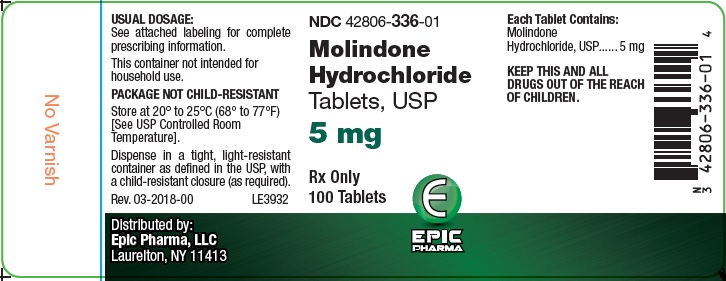
- Molindone Hydrochloride 5 mg Tablet NDC 42806-336-01
- Molindone Hydrochloride 25 mg Tablet NDC 42806-338-01
- Dextroamphetamine Saccharate, Amphetamine Aspartate, Dextroamphetamine Sulfate and 1.25 mg; 1.25 mg; 1.25 mg; 1.25 mg Tablet NDC 42806-339-01
- Dextroamphetamine Saccharate, Amphetamine Aspartate, Dextroamphetamine Sulfate and 2.5 mg; 2.5 mg; 2.5 mg; 2.5 mg Tablet NDC 42806-341-01
- Dextroamphetamine Saccharate, Amphetamine Aspartate, Dextroamphetamine Sulfate and 3.75 mg; 3.75 mg; 3.75 mg; 3.75 mg Tablet NDC 42806-343-01
- Dextroamphetamine Saccharate, Amphetamine Aspartate, Dextroamphetamine Sulfate and 5 mg; 5 mg; 5 mg; 5 mg Tablet NDC 42806-344-01
- Dextroamphetamine Saccharate, Amphetamine Aspartate, Dextroamphetamine Sulfate and 7.5 mg; 7.5 mg; 7.5 mg; 7.5 mg Tablet NDC 42806-345-01
Where does this data come from?
- FDA openFDA NDC Directory · synced Oct 8, 2026
- Drugs@FDA
Full prescribing information FDA SPL
🚨 Boxed Warning ▾
WARNING Increased Mortality in Elderly Patients with Dementia-Related Psychosis – Elderly patients with dementia-related psychosis treated with antipsychotic drugs are at an increased risk of death. Analyses of seventeen placebo-controlled trials (modal duration of 10 weeks), largely in patients taking atypical antipsychotic drugs, revealed a risk of death in drug-treated patients of between 1.6 to 1.7 times the risk of death in placebo-treated patients. Over the course of a typical 10-week controlled trial, the rate of death in drug-treated patients was about 4.5%, compared to a rate of about 2.6% in the placebo group.
Although the causes of death were varied, most of the deaths appeared to be either cardiovascular (e.g., heart failure, sudden death) or infectious (e.g., pneumonia) in nature. Observational studies suggest that, similar to atypical antipsychotic drugs, treatment with conventional antipsychotic drugs may increase mortality. The extent to which the findings of increased mortality in observational studies may be attributed to the antipsychotic drug as opposed to some characteristic(s) of the patients is not clear.
Molindone Hydrochloride Tablets, USP are not approved for the treatment of patients with dementia-related psychosis (see WARNINGS ).
🎯 Indications and Usage ▾
INDICATIONS AND USAGE Molindone Hydrochloride Tablets, USP are indicated for the management of schizophrenia. The efficacy of Molindone Hydrochloride Tablets, USP in schizophrenia was established in clinical studies which enrolled newly hospitalized and chronically hospitalized, acutely ill, schizophrenic patients as subjects.
⏱️ Dosage and Administration ▾
DOSAGE AND ADMINISTRATION Initial and maintenance doses of Molindone Hydrochloride Tablets should be individualized. Initial Dosage Schedule The usual starting dosage is 50 to 75 mg/day. —Increase to 100 mg/day in 3 or 4 days. —Based on severity of symptomatology, dosage may be titrated up or down depending on individual patient response. —An increase to 225 mg/day may be required in patients with severe symptomatology. Elderly and debilitated patients should be started on lower dosage.
Maintenance Dosage Schedule 1. Mild-5 mg to 15 mg three or four times a day. 2.
Moderate-10 mg to 25 mg three or four times a day. Severe-225 mg/day may be required.
⛔ Contraindications ▾
CONTRAINDICATIONS Molindone Hydrochloride Tablets are contraindicated in severe central nervous system depression (alcohol, barbiturates, narcotics, etc.) or comatose states, and in patients with known hypersensitivity to the drug.
⚠️ Warnings ▾
WARNINGS Increased Mortality in Elderly Patients with Dementia-Related Psychosis — Elderly patients with dementia-related psychosis treated with antipsychotic drugs are at an increased risk of death. Molindone Hydrochloride Tablets are not approved for the treatment of patients with dementia-related psychosis (see BOXED WARNING ). Tardive Dyskinesia Tardive dyskinesia, a syndrome consisting of potentially irreversible, involuntary, dyskinetic movements may develop in patients treated with antipsychotic drugs.
Although the prevalence of the syndrome appears to be highest among the elderly, especially elderly women, it is impossible to rely upon prevalence estimates to predict, at the inception of antipsychotic treatment, which patients are likely to develop the syndrome. Whether antipsychotic drug products differ in their potential to cause tardive dyskinesia is unknown. Both the risk of developing the syndrome and the likelihood that it will become irreversible are believed to increase as the duration of treatment and the total cumulative dose of antipsychotic drugs administered to the patient increase.
However, the syndrome can develop, although much less commonly, after relatively brief treatment periods at low doses. There is no known treatment for established cases of tardive dyskinesia, although the syndrome may remit, partially or completely, if antipsychotic treatment is withdrawn. Antipsychotic treatment, itself, however, may suppress (or partially suppress) the signs and symptoms of the syndrome and thereby may possibly mask the underlying disease process.
The effect that symptomatic suppression has upon the long-term course of the syndrome is unknown. Given these considerations, antipsychotics should be prescribed in a manner that is most likely to minimize the occurrence of tardive dyskinesia. Chronic antipsychotic treatment should generally be reserved for patients who suffer from a chronic illness that, 1) is known to respond to antipsychotic drugs, and 2) for whom alternative, equally effective, but potentially less harmful treatments are not available or appropriate.
In patients who do require chronic treatment, the smallest dose and the shortest duration of treatment producing a satisfactory clinical response should be sought. The need for continued treatment should be reassessed periodically. If signs and symptoms of tardive dyskinesia appear in a patient on antipsychotics, drug discontinuation should be considered.
However, some patients may require treatment despite the presence of the syndrome. (For further information about the description of tardive dyskinesia and its clinical detection, please refer to the section on ADVERSE REACTIONS .) Falls Molindone Hydrochloride may cause somnolence, postural hypotension, motor and sensory instability, which may lead to falls and, consequently, fractures or other injuries. For patients with diseases, conditions, or medications that could exacerbate these effects, complete fall risk assessments when initiating antipsychotic treatment and recurrently for patients on long-term antipsychotic therapy.
Neuroleptic Malignant Syndrome (NMS) A potentially fatal symptom complex sometimes referred to as Neuroleptic Malignant Syndrome (NMS) has been reported in association with antipsychotic drugs. Clinical manifestations of NMS are hyperpyrexia, muscle rigidity, altered mental status and evidence of autonomic instability (irregular pulse or blood pressure, tachycardia, diaphoresis, and cardiac dysrhythmias). The diagnostic evaluation of patients with this syndrome is complicated.
In arriving at a diagnosis, it is important to identify cases where the clinical presentation includes both serious medical illness (e.g., pneumonia, systemic infection, etc.) and untreated or inadequately treated extrapyramidal signs and symptoms (EPS). Other important considerations in the differential diagnosis include central anticholinergic toxicity, heat stroke, drug fever and primary central ne… [Excerpted — this section continues on DailyMed.]
🤒 Adverse Reactions ▾
ADVERSE REACTIONS CNS Effects The most frequently occurring effect is initial drowsiness that generally subsides with continued usage of the drug or lowering of the dose. Noted less frequently were depression, hyperactivity and euphoria. Neurological Extrapyramidal Symptoms Extrapyramidal symptoms noted below may occur in susceptible individuals and are usually reversible with appropriate management.
Akathisia Motor restlessness may occur early. Parkinson Syndrome Akinesia, characterized by rigidity, immobility and reduction of voluntary movements and tremor, have been observed. Occurrence is less frequent than akathisia.
Dystonia Class effect: Symptoms of dystonia, prolonged abnormal contractions of muscle groups, may occur in susceptible individuals during the first few days of treatment. Dystonic symptoms include: spasm of the neck muscles, sometimes progressing to tightness of the throat, swallowing difficulty, difficulty breathing, and/or protrusion of the tongue. While these symptoms can occur at low doses, they occur more frequently and with greater severity with high potency and at higher doses of first generation antipsychotic drugs.
An elevated risk of acute dystonia is observed in males and younger age groups. Tardive Dyskinesia Antipsychotic drugs are known to cause a syndrome of dyskinetic movements commonly referred to as tardive dyskinesia. The movements may appear during treatment or upon withdrawal of treatment and may be either reversible or irreversible (i.e., persistent) upon cessation of further antipsychotic administration.
The syndrome is known to have a variable latency for development and the duration of the latency cannot be determined reliably. It is thus wise to assume that any antipsychotic agent has the capacity to induce the syndrome and act accordingly until sufficient data has been collected to settle the issue definitively for a specific drug product. In the case of antipsychotics known to produce the irreversible syndrome, the following has been observed.
Tardive dyskinesia has appeared in some patients on long-term therapy and has also appeared after drug therapy has been discontinued. The risk appears to be greater in elderly patients on high-dose therapy, especially females. The symptoms are persistent and in some patients appear to be irreversible.
The syndrome is characterized by rhythmical involuntary movements of the tongue, face, mouth or jaw (e.g., protrusion of tongue, puffing of cheeks, puckering of mouth, chewing movements). There may be involuntary movements of extremities. There is no known effective treatment of tardive dyskinesia; antiparkinsonism agents usually do not alleviate the symptoms of this syndrome.
It is suggested that all antipsychotic agents be discontinued if these symptoms appear. Should it be necessary to reinstitute treatment, or increase the dosage of the agent, or switch to a different antipsychotic agent, the syndrome may be masked. It has been reported that fine vermicular movements of the tongue may be an early sign of the syndrome and if the medication is stopped at that time the syndrome may not develop (See WARNINGS ).
Autonomic Nervous System Occasionally blurring of vision, tachycardia, nausea, dry mouth and salivation have been reported. Urinary retention and constipation may occur particularly if anticholinergic drugs are used to treat extrapyramidal symptoms. One patient being treated with Molindone Hydrochloride experienced priapism which required surgical intervention, apparently resulting in residual impairment of erectile function.
Laboratory Tests There have been rare reports of leucopenia and leucocytosis. If such reactions occur, treatment with Molindone Hydrochloride may continue if clinical symptoms are absent. Alterations of blood glucose, B.U.N., and red blood cells have not been considered clinically significant.
Metabolic and Endocrine Effects Alteration of thyroid function has not been significant. Amenorrhea has been reported infreq… [Excerpted — this section continues on DailyMed.]
🔄 Drug Interactions ▾
Drug Interactions Potentiation of drugs administered concurrently with Molindone Hydrochloride has not been reported. Additionally, animal studies have not shown increased toxicity when Molindone Hydrochloride is given concurrently with representative members of three classes of drugs (i.e., barbiturates, chloral hydrate and antiparkinson drugs).
🤰 Pregnancy ▾
Pregnancy Studies in pregnant patients have not been carried out. Reproduction studies have been performed in the following animals: Pregnant Rats oral dose— no adverse effect 20 mg/kg/day - 10 days no adverse effect 40 mg/kg/day - 10 days Pregnant Mice oral dose— slight increase resorptions 20 mg/kg/day - 10 days slight increase resorptions 40 mg/kg/day - 10 days Pregnant Rabbits oral dose— no adverse effect 5 mg/kg/day - 12 days no adverse effect 10 mg/kg/day - 12 days no adverse effect 20 mg/kg/day - 12 days Animal reproductive studies have not demonstrated a teratogenic potential.
The anticipated benefits must be weighed against the unknown risks to the fetus if used in pregnant patients. Non-teratogenic Effects Neonates exposed to antipsychotic drugs, during the third trimester of pregnancy are at risk for extrapyramidal and/or withdrawal symptoms following delivery. There have been reports of agitation, hypertonia, hypotonia, tremor, somnolence, respiratory distress and feeding disorder in these neonates.
These complications have varied in severity; while in some cases symptoms have been self-limited, in other cases neonates have required intensive care unit support and prolonged hospitalization. Molindone Hydrochloride should be used during pregnancy only if the potential benefit justifies the potential risk to the fetus.
🧒 Pediatric Use ▾
Pediatric Use Use of Molindone Hydrochloride in pediatric patients below the age of twelve years is not recommended because safe and effective conditions for its usage have not been established.
🆘 Overdosage ▾
OVERDOSAGE Symptomatic, supportive therapy should be the rule. Gastric lavage is indicated for the reduction of absorption of Molindone Hydrochloride which is freely soluble in water. Since the adsorption of Molindone Hydrochloride by activated charcoal has not been determined, the use of this antidote must be considered of theoretical value.
Emesis in a comatose patient is contraindicated. Additionally, while the emetic effect of apomorphine is blocked by Molindone Hydrochloride in animals, this blocking effect has not been determined in humans. A significant increase in the rate of removal of unmetabolized Molindone Hydrochloride from the body by forced diuresis, peritoneal or renal dialysis would not be expected.
(Only 2% of a single ingested dose of Molindone Hydrochloride is excreted unmetabolized in the urine). However, poor response of the patient may justify use of these procedures. While the use of laxatives or enemas might be based on general principles, the amount of unmetabolized Molindone Hydrochloride in feces is less than 1%.
Extrapyramidal symptoms have responded to the use of Diphenhydramine (Benadryl ® ) * , Amantadine HCl (Symmetrel ® ) † and the synthetic anticholinergic antiparkinson agents, (i.e., Artane ®‡ , Cogentin ®§ , Akineton ®¶ ).
🧬 Clinical Pharmacology ▾
CLINICAL PHARMACOLOGY Molindone Hydrochloride has a pharmacological profile in laboratory animals which predominantly resembles that of other antipsychotic agents causing reduction of spontaneous locomotion and aggressiveness, suppression of a conditioned response and antagonism of the bizarre stereotyped behavior and hyperactivity induced by amphetamines. In addition, Molindone Hydrochloride antagonizes the depression caused by the tranquilizing agent tetrabenazine. In human clinical studies an antipsychotic effect is achieved in the absence of muscle relaxing or incoordinating effects.
Based on EEG studies, Molindone Hydrochloride exerts its effect on the ascending reticular activating system. Human metabolic studies show Molindone Hydrochloride Tablets to be rapidly absorbed and metabolized when given orally. Unmetabolized drug reached a peak blood level at 1.5 hours.
Pharmacological effect from a single oral dose persists for 24 to 36 hours. There are 36 recognized metabolites with less than 2 to 3% unmetabolized Molindone Hydrochloride Tablets being excreted in urine and feces.
📦 How Supplied / Storage and Handling ▾
HOW SUPPLIED Molindone Hydrochloride Tablets USP, 5 mg are light orange to orange, oval-shaped tablets, debossed " Є336 " on one side and plain on the other side. They are supplied as follows: Bottles of 100 NDC 42806-336-01 Molindone Hydrochloride Tablets USP, 10 mg are light blue to blue, oval-shaped tablets, debossed " Є337 " on one side and plain on the other side. They are supplied as follows: Bottles of 100 NDC 42806-337-01 Molindone Hydrochloride Tablets USP, 25 mg are light green to green, oval-shaped tablet, debossed " Є338 " on one side and bisect on the other side.
They are supplied as follows: Bottles of 100 NDC 42806-338-01 Store at 20° to 25°C (68° to 77°F) [See USP Controlled Room Temperature]. Dispense in a tight, light-resistant container as defined in the USP, with a child-resistant closure (as required). KEEP TIGHTLY CLOSED * Benadryl is a registered trademark of Warner-Lambert. † Symmetrel is a registered trademark of Endo Pharmaceuticals Inc. ‡ Artane is a registered trademark of Lederle Laboratories. § Cogentin is a registered trademark of Merck & Co., Inc. ¶ Akineton is a registered trademark of Knoll Laboratories.
Distributed by: Epic Pharma, LLC Laurelton NY, 11413 Rev. 11-2024-00 MF336REV11/24 OE2798
📋 Description ▾
DESCRIPTION Molindone Hydrochloride is a dihydroindolone compound which is not structurally related to the phenothiazines, the butyrophenones or the thioxanthenes. Molindone Hydrochloride is 3-ethyl-6, 7-dihydro-2-methyl-5-(morpholinomethyl) indol-4(5H)-one hydrochloride. It is a white to off-white or pale-pink crystalline powder, freely soluble in water and alcohol.
Molindone Hydrochloride Tablets, USP contain the following inactive ingredients: alginic acid, calcium sulfate, colloidal silicon dioxide, lactose monohydrate, magnesium stearate, microcrystalline cellulose, povidone and sodium starch glycolate. Colors: 5 mg contains FD&C Yellow #6 Aluminum Lake 10 mg contains FD&C Blue #2 Aluminum Lake 25 mg contains FD&C Blue #2 Aluminum Lake, FD&C Yellow #6, Aluminum Lake and D&C Yellow #10 Aluminum Lake Molindone Hydrochloride is represented by the following structural formula: The empirical formula is C 16 H 24 N 2 O 2 •HCl representing a molecular weight of 312.83. structure formula.jpg
⚠️ Precautions ▾
PRECAUTIONS General Some patients receiving Molindone Hydrochloride may note drowsiness initially and they should be advised against activities requiring mental alertness until their response to the drug has been established. Increased activity has been noted in patients receiving Molindone Hydrochloride. Caution should be exercised where increased activity may be harmful.
Molindone Hydrochloride does not lower the seizure threshold in experimental animals to the degree noted with more sedating antipsychotic drugs. However, in humans convulsive seizures have been reported in a few instances. The physician should be aware that this tablet preparation contains calcium sulfate as an excipient and that calcium ions may interfere with the absorption of preparations containing phenytoin sodium and tetracyclines.
Molindone Hydrochloride has an antiemetic effect in animals. A similar effect may occur in humans and may obscure signs of intestinal obstruction or brain tumor. Antipsychotic drugs elevate prolactin levels; the elevation persists during chronic administration.
Tissue culture experiments indicate that approximately one-third of human breast cancers are prolactin dependent in vitro, a factor of potential importance if the prescription of these drugs is contemplated in a patient with a previously detected breast cancer. Although disturbances such as galactorrhea, amenorrhea, gynecomastia, and impotence have been reported, the clinical significance of elevated serum prolactin levels is unknown for most patients. An increase in mammary neoplasms has been found in rodents after chronic administration of antipsychotic drugs.
Some epidemiologic studies have indicated a potential association between chronic administration of prolactin- increasing antipsychotics and breast cancer. Molindone Hydrochloride has not been shown effective in the management of behavioral complications in patients with mental retardation. Leukopenia, Neutropenia and Agranulocytosis Some patients receiving Molindone Hydrochloride may note drowsiness initially and they should be advised against activities requiring mental alertness until their response to the drug has been established.
Increased activity has been noted in patients receiving Molindone Hydrochloride. Caution should be exercised where increased activity may be harmful. Molindone Hydrochloride does not lower the seizure threshold in experimental animals to the degree noted with more sedating antipsychotic drugs.
However, in humans convulsive seizures have been reported in a few instances. The physician should be aware that this tablet preparation contains calcium sulfate as an excipient and that calcium ions may interfere with the absorption of preparations containing phenytoin sodium and tetracyclines. Molindone Hydrochloride has an antiemetic effect in animals.
A similar effect may occur in humans and may obscure signs of intestinal obstruction or brain tumor. Antipsychotic drugs elevate prolactin levels; the elevation persists during chronic administration. Tissue culture experiments indicate that approximately one-third of human breast cancers are prolactin dependent in vitro, a factor of potential importance if the prescription of these drugs is contemplated in a patient with a previously detected breast cancer.
Although disturbances such as galactorrhea, amenorrhea, gynecomastia, and impotence have been reported, the clinical significance of elevated serum prolactin levels is unknown for most patients. An increase in mammary neoplasms has been found in rodents after chronic administration of antipsychotic drugs. Neither clinical studies nor epidemiologic studies conducted to date, however, have shown an association between chronic administration of these drugs and mammary tumorigenesis; the available evidence is considered too limited to be conclusive at this time.
Some epidemiologic studies have indicated a potential association between chronic administration of prolactin-increasing antipsy… [Excerpted — this section continues on DailyMed.]
🍼 Nursing Mothers ▾
Nursing Mothers Data are not available on the content of Molindone Hydrochloride in the milk of nursing mothers.
📄 Package Label / Principal Display Panel ▾
PACKAGE/LABEL PRINCIPAL DISPLAY PANEL – Molindone 5 mg 100ct Molindone 5 mg 100ct.jpg
PACKAGE/LABEL PRINCIPAL DISPLAY PANEL – Molindone 10 mg 100ct Molindone 10 mg 100ct.jpg
PACKAGE/LABEL PRINCIPAL DISPLAY PANEL – Molindone 25 mg 100ct Molindone 25 mg 100ct.jpg
Reported adverse events (FAERS)
Top reported reactions
Reporter sex
Serious outcomes
Where does this data come from?
About this NDC listing & data coverage
What data is (and isn’t) available for this NDC — tap to expand
| NDC identity (package / product / labeler codes) | ✓ Available |
| Labeler | ✓ Available |
| Product & package description | ✓ Available |
| Marketing category & status | ✓ Available |
| Active ingredient / dosage form / route | ✓ Available |
| FDA label (SPL via DailyMed) | ✓ Available |
| Package photos | ✓ Available |
| Inactive ingredients (structured) | ✓ Available |
| NADAC pharmacy acquisition price (CMS) | — Not published for this NDC CMS publishes NADAC only for NDCs reported in its retail-pharmacy survey. |
| Orange Book / therapeutic-equivalence data | — Not published for this NDC Applies only to products approved under an NDA/ANDA; many listings are out of scope. |
| HCPCS J-code billing crosswalk | — Not published for this NDC Most self-administered / retail products have no J-code — that is normal. |
| Medicaid utilization (CMS SDUD) | — Not published for this NDC CMS reports utilization only for NDCs with Medicaid claims above its privacy threshold. |