
Silenor doxepin hydrochloride 6 mg Tablet, 500-count — NDC 42847-106-50 (Billing 42847-0106-50)
This is a package of 500 tablets of Silenor doxepin hydrochloride 6 mg Tablet from Currax Pharmaceuticals LLC, marketed since Aug 2010 and currently FDA-listed.
NDC database record
One package, one record: these facts belong to NDC 42847-106-50 alone.
- Record
- FDA NDC Directory package listing · Human prescription drug
- Code segments
- 42847 labeler · 106 product · 50 package
- Package marketed since
- Aug 1, 2010
- Sample package
- No — commercial package
- Listing certified through
- Dec 31, 2027
- Barcode (UPC)
- 0342847103309, 0342847106300
- FDA record last changed
- Jul 24, 2026
Other active recalls for Doxepin Hydrochloride (different manufacturers) — 1 · tap to view
Identity & classification
Regulatory identifiers FDA, NLM and CMS codes for this package
Drug-database identifiers Medi-Span GPI and First Databank GCN / HICL / AHFS classification
- GSN (GCN sequence number): 066592
- GCN: 28915
- GPI-14 (Medi-Span): 60400030100330
- HICL (First Databank): 001650
- AHFS class code: 28:16.04.28
- RxCUI (RxNorm): 966787
Where does this data come from?
- FDA openFDA NDC Directory · synced Oct 8, 2026
- FDA label on DailyMed · label index refreshed Oct 6, 2026
- RxNorm (NLM RxNav) · catalog refreshed Oct 1, 2026
- Medi-Span GPI (licensed)
- First Databank (licensed) · refreshed Oct 8, 2026
RxNorm drug class
This medicine belongs to the Tricyclic Antidepressant class.
Where does this data come from?
- RxClass (NLM) · catalog refreshed Oct 1, 2026
Clinical
- It depends on the product. Capsules treat depression and anxiety, the oral solution treats major depressive disorder in adults, tablets such as Silenor treat trouble staying asleep...
- Take it within 30 minutes of bedtime. Do not take it within 3 hours of a meal. A meal can slow absorption and may cause more next-day effects.
- Sleepiness is the most common, along with nausea, cold-like symptoms and dizziness. Dry mouth, blurred vision and constipation can also happen. Call me or your doctor if anything b...
- Avoid it. Doxepin can make alcohol’s sedating effects stronger. Also avoid driving until you know how it affects you.
Patient education
Supplement & herbal interactions
Doxepin may be associated with lower levels of 1 nutrient — worth a chat with your pharmacist, not a cause for alarm.
Where does this data come from?
- MedlinePlus (NLM) · refreshed Oct 1, 2026
- FDA label on DailyMed · label index refreshed Oct 6, 2026
Ask a licensed pharmacist directly — free, answered by our team.
Pricing
A drug doesn't have one price. Each row is a different public payment system, and none is what you'd pay at the counter — that depends on your insurance. The ⓘ on each row explains what it measures.
| Price system | Per each | Per package |
|---|---|---|
| Retail pharmacies payNADAC · weekly | Not in the retail survey — common for institutional, discontinued, or low-volume packs. | |
| Medicaid paysCMS SDUD · 12 mo | No recent Medicaid claims on file for this NDC — rare and low-volume NDCs are suppressed in the public data. | |
| Medicare drug plans payPart D · Q2 2026 | $17.53 | $8,762.80 / 500 tablets |
Where does this data come from?
- CMS NADAC weekly file
- CMS ASP pricing files · refreshed Sep 20, 2026
- CMS Medicaid State Drug Utilization Data · refreshed Oct 8, 2026
- CMS Part D plan pricing files · refreshed Sep 24, 2026
- VA National Acquisition Center price file
Packaging — all sizes for this product
| Package NDC | Description | Per unit | Per pack | Marketing start | Marketing end | Status |
|---|---|---|---|---|---|---|
| 42847-0106-03 42847-106-03 | 30 TABLET in 1 BLISTER PACK | — | — | 2010-08-01 | — | Active |
| 42847-0106-10 42847-106-10 | 100 TABLET in 1 BOTTLE | — | — | 2010-08-01 | — | Active |
| 42847-0106-30 42847-106-30 Main listing | 30 TABLET in 1 BOTTLE | $17.32 / ea | $519.68 | 2010-08-01 | — | Active |
| 42847-0106-50 You're viewing this | 500 TABLET in 1 BOTTLE | — | — | 2010-08-01 | — | Active |
Pack size FAQ
What quantity is in this package?
How does this package differ from NDC 42847-0106-03?
What NDC number is used to bill for this package of Silenor doxepin hydrochloride 6 mg Tablet?
Prices are the latest CMS NADAC pharmacy acquisition cost per NDC; per-pack figures are per-unit × pack quantity, shown only when the pack is denominated in the same measure NADAC prices.
Therapeutic equivalents
| Product | Labeler | Pack | NADAC/unit | TE | Status | Price vs. this |
|---|---|---|---|---|---|---|
| Doxepin 6 mg 00228-3316-03 | Actavis | 30 tablets | $1.372 | AB | Availability likely | — |
| Doxepin 6 mg 27241-0281-30 | Ajanta | 30 tablets | $1.372 | AB | Availability likely | — |
| doxepin hydrochloride 6 mg 51672-4247-02 | Sun | 30 tablets | $1.372 | AB | Availability likely | — |
| Doxepin 6 mg 59651-0845-30 | Aurobindo | 30 tablets | $1.372 | AB | Availability likely | — |
| Doxepin 6 mg 64380-0204-01 | Strides | 30 tablets | $1.372 | AB | Availability likely | — |
| Doxepin 6 mg 72603-0223-01 | North | 30 tablets | $1.372 | AB | Availability likely | — |
| Doxepin 6 mg 72819-0162-03 | Archis | 30 tablets | $1.372 | AB | Availability likely | — |
| doxepin hydrochloride 6 mg 44183-0106-30 | Currax | 30 tablets | $8.559 | AB | FDA listed | — |
| Doxepin 6 mg 10135-0764-30 | Marlex | 30 tablets | — | AB | FDA listed | — |
| Silenor 6 mgthis 42847-0106-50 | Currax | 500 tablets | — | AB | FDA listed | — |
| Doxepin hydrochloride 6 mg 51407-0812-30 | Golden | 30 tablets | — | BX | FDA listed | — |
| Doxepin hydrochloride 6 mg 70518-4297-00 | REMEDYREPACK | 30 tablets | — | BX | FDA listed | — |
| Doxepin 6 mg 70518-4327-00 | REMEDYREPACK | 30 tablets | — | AB | FDA listed | — |
| doxepin 6 mg 70771-1529-00 | Zydus | 1000 tablets | — | AB | FDA listed | — |
| Doxepin 6 mg 72162-2475-03 | Bryant | 30 tablets | — | AB | FDA listed | — |
| Doxepin hydrochloride 6 mg 72205-0053-05 | Novadoz | 500 tablets | — | BX | FDA listed | — |
| doxepin 6 mg 72578-0182-01 | Viona | 100 tablets | — | AB | FDA listed | — |
| doxepin hydrochloride 6 mg 51407-0728-30 | Golden | 30 tablets | — | AB | FDA listed | — |
| Doxepin 6 mg 71335-3177-01 | Bryant | 100 tablets | — | AB | FDA listed | — |
Where does this data come from?
- FDA openFDA NDC Directory · synced Oct 8, 2026
- FDA Orange Book · refreshed Oct 3, 2026
- CMS NADAC weekly file
Availability & generic status
FDA-approved generic versions are listed, and recent pricing/market data suggests they may be available — see Therapeutic equivalents.
Why the date isn’t exact: Generic timing can change because patents may be challenged, settled, licensed, added, removed, or worked around with a narrower label — and FDA approval does not always mean a pharmacy can get the generic today.
🛈 What do these terms mean?
- Patent
- Legal protection listed in the Orange Book that may delay generic approval or launch. Issued by the U.S. Patent & Trademark Office.
- Substance patent
- Covers the active drug molecule itself — the hardest to design around. A generic generally can’t launch until it expires.
- Formulation (product) patent
- Covers a specific formulation or dosage form. A generic can sometimes work around it with a different formulation.
- Method-of-use patent
- A patent covering one specific approved use of the drug — not necessarily the whole molecule. A generic can sometimes launch with a “skinny label” that carves out the protected use and keeps the others.
- Skinny label
- A generic label that omits a still-patented use when the FDA allows it — letting a generic reach the market for the unprotected uses.
- Exclusivity
- FDA-granted marketing protection, separate from patents — e.g. 5-yr new chemical entity, 7-yr orphan drug, or a +6-month pediatric extension.
- Paragraph IV
- A generic applicant’s formal challenge to a listed patent. It can potentially lead to earlier generic entry, but often involves litigation or a settlement.
- RLD / RS
- Reference Listed Drug — the brand product the FDA uses as the reference for generic applications. Reference Standard — the product the FDA expects generics to compare against in bioequivalence testing.
- TE / AB rating
- FDA therapeutic-equivalence rating. An AB rating generally means the FDA considers a generic therapeutically equivalent to — and substitutable for — the brand.
- LOE (loss of exclusivity)
- The latest patent or exclusivity currently listed — the loss-of-exclusivity / latest-listed-protection date shown on this page. Paragraph-IV challenges and settlements can move the real date earlier; FDA approval and a manufacturer’s decision to market can move it later.
Built from the FDA Orange Book. The bars above are scaled to each protection’s expiry; the red LOE marker is the last one to lapse.
| Patent | Type | Use code | Expires |
|---|---|---|---|
| US 9107898 ↗ | Method of use | U-620 | May 1, 2028 |
| US 9486437 ↗ | Method of use | U-620 | May 18, 2027 |
| US 9861607 ↗ | Method of use | U-620 | May 18, 2027 |
| US 10238620 ↗ | Method of use | U-620 | May 18, 2027 |
| US 7915307 ↗ | Method of use | U-620 | Aug 24, 2027 |
| US 8513299 ↗ | Method of use | U-620 | Sep 7, 2030 |
| US 9572814 ↗ | Method of use | U-620 | Jul 20, 2027 |
| US 9572814 ↗ | Method of use | U-620 | Jul 20, 2027 |
| US 7915307 ↗ | Method of use | U-620 | Aug 24, 2027 |
| US 8513299 ↗ | Method of use | U-620 | Sep 7, 2030 |
| US 12083090 ↗ | Method of use | U-620 | May 18, 2027 |
| US 12083090 ↗ | Method of use | U-620 | May 18, 2027 |
| US 9861607 ↗ | Method of use | U-620 | May 18, 2027 |
| US 9486437 ↗ | Method of use | U-620 | May 18, 2027 |
| US 10238620 ↗ | Method of use | U-620 | May 18, 2027 |
| US 10548871 ↗ | Method of use | U-620 | Apr 11, 2028 |
| US 10548871 ↗ | Method of use | U-620 | Apr 11, 2028 |
| US 10653660 ↗ | Method of use | U-620 | Jul 20, 2027 |
| US 10653662 ↗ | Method of use | U-620 | May 18, 2027 |
| US 10653662 ↗ | Method of use | U-620 | May 18, 2027 |
| US 10653660 ↗ | Method of use | U-620 | Jul 20, 2027 |
| US 11110074 ↗ | Method of use | U-620 | Jul 20, 2027 |
| US 11110074 ↗ | Method of use | U-620 | Jul 20, 2027 |
| US 11096920 ↗ | Method of use | U-620 | Apr 11, 2028 |
| US 11096920 ↗ | Method of use | U-620 | Apr 11, 2028 |
| US 11234954 ↗ | Method of use | U-620 | Jan 18, 2028 |
| US 11234954 ↗ | Method of use | U-620 | Jan 18, 2028 |
| US 9107898 ↗ | Method of use | U-620 | May 1, 2028 |
| US 9907780 ↗ | Drug product | — | Apr 11, 2028 |
| US 9907780 ↗ | Drug product | — | Apr 11, 2028 |
| US 9532971 ↗ | Drug product | — | Jun 1, 2029 |
| US 9532971 ↗ | Drug product | — | Jun 1, 2029 |
Is there a generic version of SILENOR 6 MG TABLET?
The FDA approved a generic — why can’t I get it at my pharmacy yet?
Why do different websites show different generic release dates?
What does “FDA listed” mean?
What does a patent or protection date mean here?
What does “current Orange Book estimate” mean?
Can a generic come out before the last patent expires?
Can a generic come out after the listed dates?
What is the difference between patents and exclusivity?
Why are there multiple patent dates?
Where does this data come from?
- FDA Orange Book · refreshed Oct 3, 2026
What it looks like
Where does this data come from?
- FDA label on DailyMed · label index refreshed Oct 6, 2026
Inactive Ingredients / Excipients
Inactive ingredients, also called excipients, are components of the drug product other than the active ingredient. They may include fillers, dyes, coatings, preservatives, flavors, or other formulation ingredients.
🧪 Avoiding an ingredient? See Doxepin inactive ingredients by manufacturer: every current product's list side by side, so you can ask your pharmacy for the version that does not list it.
💡 Tap an ingredient (hover on desktop) to see what it is and why it’s used.
-
UNII 35SW5USQ3G
A synthetic yellow dye used to color medicines. It helps make tablets, capsules, and liquids visually distinct so patients can easily identify their medication.
-
UNII H3R47K3TBD
FD&C Blue No. 1 is a synthetic blue dye approved for use in foods and medicines. It serves as a colorant to give the medication its distinctive appearance and help with product identification.
-
UNII 70097M6I30
Magnesium stearate is a salt made from magnesium and stearic acid, a fatty substance. It's used in tablets and capsules as a lubricant and glidant to help ingredients flow smoothly during manufacturing and prevent sticking.
-
UNII OP1R32D61U
Microcrystalline cellulose is a purified form of cellulose, a natural fiber from plant sources. It acts as a binder and filler in tablets and capsules, helping hold ingredients together and give the medicine its shape and size.
-
UNII ETJ7Z6XBU4
Silicon dioxide is a naturally occurring mineral used as a glidant and anti-caking agent. It helps powder ingredients flow smoothly and prevents clumping during manufacturing and storage.
5 inactive ingredients listed in the exact product block matched to this NDC.
Where does this data come from?
ingredient classCode="IACT" elements from the exact product block matched by this NDC. Label-section narrative from DailyMed / the openFDA label index is shown separately when available.- FDA label on DailyMed · label index refreshed Oct 6, 2026
- FDA openFDA NDC Directory · synced Oct 8, 2026
Inactive ingredient FAQ
Are inactive ingredients the same for every manufacturer?
Why might an inactive ingredient be missing?
Can inactive ingredients matter?
Manufacturer & labeler
More NDCs from Currax Pharmaceuticals LLC labeler code 42847
Where does this data come from?
- FDA openFDA NDC Directory · synced Oct 8, 2026
- Drugs@FDA
Full prescribing information FDA SPL
🎯 Indications and Usage ▾
1. INDICATIONS AND USAGE SILENOR is indicated for the treatment of insomnia characterized by difficulty with sleep maintenance. The clinical trials performed in support of efficacy were up to 3 months in duration . SILENOR (doxepin) tablets are indicated for the treatment of insomnia characterized by difficulties with sleep maintenance. ( 1 , 14 )
⏱️ Dosage and Administration ▾
2. DOSAGE AND ADMINISTRATION The dose of SILENOR should be individualized. Initial dose: 6 mg, once daily for adults ( 2.1 ) and 3 mg, once daily for the elderly.
( 2.1 , 2.2 ) Take within 30 minutes of bedtime. Total daily dose should not exceed 6 mg. ( 2.3 ) Should not be taken within 3 hours of a meal.
( 2.3 , 12.3 ) 2.1. Dosing in Adults The recommended dose of SILENOR for adults is 6 mg once daily. A 3 mg once daily dose may be appropriate for some patients, if clinically indicated.
2.2. Dosing in the Elderly The recommended starting dose of SILENOR in elderly patients (≥ 65 years old) is 3 mg once daily. The daily dose can be increased to 6 mg, if clinically indicated.
2.3. Administration SILENOR should be taken within 30 minutes of bedtime. To minimize the potential for next day effects, SILENOR should not be taken within 3 hours of a meal [ see Clinical Pharmacology (12.3) ] .
The total SILENOR dose should not exceed 6 mg per day.
💊 Dosage Forms and Strengths ▾
3. DOSAGE FORMS AND STRENGTHS SILENOR is an immediate-release, oval-shaped, tablet for oral administration available in strengths of 3 mg and 6 mg. The tablets are blue (3 mg) or green (6 mg) and are debossed with 3 or 6, respectively, on one side and SP on the other. SILENOR tablets are not scored. 3 mg and 6 mg tablets. Tablets not scored. ( 3 )
⛔ Contraindications ▾
4. CONTRAINDICATIONS Hypersensitivity to doxepin hydrochloride, inactive ingredients, or other dibenzoxepines. ( 4.1 ) Co-administration with Monoamine Oxidase Inhibitors (MAOIs): Do not administer if patient is taking MAOIs or has used MAOIs within the past two weeks.
( 4.2 ) Untreated narrow angle glaucoma or severe urinary retention. ( 4.3 ) 4.1. Hypersensitivity SILENOR is contraindicated in individuals who have shown hypersensitivity to doxepin HCl, any of its inactive ingredients, or other dibenzoxepines.
4.2. Co-administration with Monoamine Oxidase Inhibitors (MAOIs) Serious side effects and even death have been reported following the concomitant use of certain drugs with MAO inhibitors. Do not administer SILENOR if patient is currently on MAOIs or has used MAOIs within the past two weeks.
The exact length of time may vary depending on the particular MAOI dosage and duration of treatment. 4.3. Glaucoma and Urinary Retention SILENOR is contraindicated in individuals with untreated narrow angle glaucoma or severe urinary retention.
⚠️ Warnings and Cautions ▾
5. WARNINGS AND PRECAUTIONS Need to Evaluate for Co-morbid Diagnoses: Reevaluate if insomnia persists after 7 to 10 days of use. ( 5.1 ) Abnormal thinking, behavioral changes, complex behaviors: May include "Sleep-driving" and hallucinations.
Immediately evaluate any new onset behavioral changes. ( 5.2 ) Depression: Worsening of depression or suicidal thinking may occur. Prescribe the least amount feasible to avoid intentional overdose.
( 5.3 ) CNS-depressant effects: Use can impair alertness and motor coordination. Avoid engaging in hazardous activities such as operating a motor vehicle or heavy machinery after taking drug. (5.4) Do not use with alcohol.
( 5.4 , 7.3 ) Potential additive effects when used in combination with CNS depressants or sedating antihistamines. Dose reduction may be needed. ( 5.4 , 7.4 ) Patients with severe sleep apnea: SILENOR is ordinarily not recommended for use in this population.
( 8.7 ) 5.1. Need to Evaluate for Comorbid Diagnoses Because sleep disturbances may be the presenting manifestation of a physical and/or psychiatric disorder, symptomatic treatment of insomnia should be initiated only after careful evaluation of the patient. The failure of insomnia to remit after 7 to 10 days of treatment may indicate the presence of a primary psychiatric and/or medical illness that should be evaluated.
Exacerbation of insomnia or the emergence of new cognitive or behavioral abnormalities may be the consequence of an unrecognized psychiatric or physical disorder. Such findings have emerged during the course of treatment with hypnotic drugs. 5.2.
Abnormal Thinking and Behavioral Changes Complex behaviors such as "sleep-driving" (i.e., driving while not fully awake after ingestion of a hypnotic, with amnesia for the event) have been reported with hypnotics. These events can occur in hypnotic-naive as well as in hypnotic-experienced persons. Although behaviors such as "sleep-driving" may occur with hypnotics alone at therapeutic doses, the use of alcohol and other CNS depressants with hypnotics appears to increase the risk of such behaviors, as does the use of hypnotics at doses exceeding the maximum recommended dose.
Due to the risk to the patient and the community, discontinuation of SILENOR should be strongly considered for patients who report a "sleep-driving" episode. Other complex behaviors (e.g., preparing and eating food, making phone calls, or having sex) have been reported in patients who are not fully awake after taking a hypnotic. As with "sleep-driving", patients usually do not remember these events.
Amnesia, anxiety and other neuro-psychiatric symptoms may occur unpredictably. 5.3. Suicide Risk and Worsening of Depression In primarily depressed patients, worsening of depression, including suicidal thoughts and actions (including completed suicides), has been reported in association with the use of hypnotics.
Doxepin, the active ingredient in SILENOR, is an antidepressant at doses 10- to 100-fold higher than in SILENOR. Antidepressants increased the risk compared to placebo of suicidal thinking and behavior (suicidality) in children, adolescents, and young adults in short-term studies of major depressive disorder (MDD) and other psychiatric disorders. Risk from the lower dose of doxepin in SILENOR can not be excluded.
It can rarely be determined with certainty whether a particular instance of the abnormal behaviors listed above is drug induced, spontaneous in origin, or a result of an underlying psychiatric or physical disorder. Nonetheless, the emergence of any new behavioral sign or symptom of concern requires careful and immediate evaluation. 5.4.
CNS Depressant Effects After taking SILENOR, patients should confine their activities to those necessary to prepare for bed. Patients should avoid engaging in hazardous activities, such as operating a motor vehicle or heavy machinery, at night after taking SILENOR, and should be cautioned about potential impairment in the performance of such activit… [Excerpted — this section continues on DailyMed.]
🤒 Adverse Reactions ▾
6. ADVERSE REACTIONS The following serious adverse reactions are discussed in greater detail in other sections of labeling: Abnormal thinking and behavioral changes [see Warnings and Precautions (5.2) ]. Suicide risk and worsening of depression [see Warnings and Precautions (5.3) ].
CNS Depressant effects [see Warnings and Precautions (5.4) ]. The most common treatment-emergent adverse reactions, reported in ≥ 2% of patients treated with SILENOR, and more commonly than in patients treated with placebo, were somnolence/sedation, nausea, and upper respiratory tract infection. ( 6.1 ) To report SUSPECTED ADVERSE REACTIONS, contact Currax Pharmaceuticals LLC at 1-800-793-2145 and or FDA at 1-800-FDA-1088 or www.fda.gov/medwatch.
6.1. Clinical Trials Experience The pre-marketing development program for SILENOR included doxepin HCl exposures in 1017 subjects (580 insomnia patients and 437 healthy subjects) from 12 studies conducted in the United States. 863 of these subjects (580 insomnia patients and 283 healthy subjects) participated in six randomized, placebo-controlled efficacy studies with SILENOR doses of 1 mg, 3 mg, and 6 mg for up to 3-months in duration.
Because clinical studies are conducted under widely varying conditions, adverse reaction rates observed in the clinical trials of a drug cannot be directly compared to rates in the clinical trials of another drug and may not reflect the rates observed in practice. However, data from the SILENOR studies provide the physician with a basis for estimating the relative contributions of drug and non-drug factors to adverse reaction incidence rates in the populations studied. Associated with Discontinuation of Treatment The percentage of subjects discontinuing Phase 1, 2, and 3 trials for an adverse reaction was 0.6% in the placebo group compared to 0.4%, 1.0%, and 0.7% in the SILENOR 1 mg, 3 mg, and 6 mg groups, respectively.
No reaction that resulted in discontinuation occurred at a rate greater than 0.5%. Adverse Reactions Observed at an Incidence of ≥ 2% in Controlled Trials Table 1 shows the incidence of treatment-emergent adverse reactions from three long-term (28 to 85 days) placebo-controlled studies of SILENOR in adult (N=221) and elderly (N=494) subjects with chronic insomnia. Reactions reported by Investigators were classified using a modified MedDRA dictionary of preferred terms for purposes of establishing incidence.
The table includes only reactions that occurred in 2% or more of subjects who received SILENOR 3 mg or 6 mg in which the incidence in subjects treated with SILENOR was greater than the incidence in placebo-treated subjects. Table 1 Incidence (%) of Treatment-Emergent Adverse Reactions in Long-term Placebo-Controlled Clinical Trials System Organ Class Preferred Term Includes reactions that occurred at a rate of ≥ 2% in any SILENOR-treated group and at a higher rate than placebo. Placebo (N=278) SILENOR 3 mg (N=157) SILENOR 6 mg (N=203) Nervous System Disorders Somnolence/Sedation 4 6 9 Infections and Infestations Upper Respiratory Tract Infection/Nasopharyngitis 2 4 2 Gastroenteritis 0 2 0 Gastrointestinal Disorders Nausea 1 2 2 Vascular Disorders Hypertension 0 3 < 1 The most common treatment-emergent adverse reaction in the placebo and each of the SILENOR dose groups was somnolence/sedation.
6.2. Studies Pertinent to Safety Concerns for Sleep-promoting Drugs Residual Pharmacological Effect in Insomnia Trials Five randomized, placebo-controlled studies in adults and the elderly assessed next-day psychomotor function within 1 hour of awakening utilizing the digit-symbol substitution test (DSST), symbol copying test (SCT), and visual analog scale (VAS) for sleepiness, following night time administration of SILENOR. In a one-night, double-blind study conducted in 565 healthy adult subjects experiencing transient insomnia, SILENOR 6 mg showed modest negative changes in SCT and VAS.
In a 35-day, double-blind, placebo-controlled, parallel group study of SILENOR… [Excerpted — this section continues on DailyMed.]
🔄 Drug Interactions ▾
7. DRUG INTERACTIONS MAO inhibitors: SILENOR should not be administered in patients on MAOIs within the past two weeks. ( 4.2 ) Cimetidine: Increases exposure to doxepin.
( 7.2 ) Alcohol: Sedative effects may be increased with doxepin. ( 7.3 , 5.4 ) CNS Depressants and Sedating Antihistamines: Sedative effects may be increased with doxepin. ( 7.4 , 5.4 ) Tolazamide: A case of severe hypoglycemia has been reported.
( 7.5 ) 7.1. Cytochrome P450 Isozymes SILENOR is primarily metabolized by hepatic cytochrome P450 isozymes CYP2C19 and CYP2D6, and to a lesser extent, by CYP1A2 and CYP2C9. Inhibitors of these isozymes may increase the exposure of doxepin.
SILENOR is not an inhibitor of any CYP isozymes at therapeutically relevant concentrations. The ability of SILENOR to induce CYP isozymes is not known. 7.2.
Cimetidine SILENOR exposure is doubled with concomitant administration of cimetidine, a nonspecific inhibitor of CYP isozymes. A maximum dose of 3 mg is recommended in adults and elderly when cimetidine is co-administered with SILENOR [see Clinical Pharmacology (12.3) ] 7.3. Alcohol When taken with SILENOR, the sedative effects of alcohol may be potentiated [ see Warnings and Precautions (5.2 , 5.4) ] .
7.4. CNS Depressants and Sedating Antihistamines When taken with SILENOR, the sedative effects of sedating antihistamines and CNS depressants may be potentiated [ see Warnings and Precautions (5.2 , 5.4) ] . 7.5.
Tolazamide A case of severe hypoglycemia has been reported in a type II diabetic patient maintained on tolazamide (1 g/day) 11 days after the addition of oral doxepin (75 mg/day).
👥 Use in Specific Populations ▾
8. USE IN SPECIFIC POPULATIONS Pregnancy: Third trimester use may increase the risk for symptoms of poor adaptation (respiratory distress, temperature instability, feeding difficulties, hypotonia, tremor, irritability) in the neonate. ( 8.1 ) Lactation: Breastfeeding not recommended.
( 8.2 ) Pediatric Use: Safety and effectiveness have not been evaluated. ( 8.4 ) Geriatric Use: The recommended starting dose is 3 mg. Monitor prior to considering dose escalation.
( 2.2 , 8.5 ) Use in Patients with Comorbid Illness: Initiate treatment with 3 mg in patients with hepatic impairment or tendency to urinary retention. ( 8.6 , 4.3 ) 8.1. Pregnancy Risk Summary Available data from published epidemiologic studies and postmarketing reports have not established an increased risk of major birth defects or miscarriage (see Data ) .
There are risks of poor neonatal adaptation with exposure to tricyclic antidepressants (TCAs), including doxepin, during pregnancy (see Clinical Considerations ) . In animal reproduction studies, oral administration of doxepin to rats and rabbits during the period of organogenesis caused adverse developmental effects at doses 65 and 23 times the maximum recommended human dose (MRHD) of 6 mg/day based on AUC, respectively. Oral administration of doxepin to pregnant rats during pregnancy and lactation resulted in decreased pup survival and a delay in pup growth at doses 60 times the MRHD based on AUC (see Data ) .
The estimated background risk of major birth defects and miscarriage for the indicated population is unknown. All pregnancies have a background risk of major birth defect, loss, or other adverse outcomes. In the U.S. general population, the estimated background risk of major birth defects and miscarriage in clinically recognized pregnancies is 2 to 4% and 15 to 20%, respectively.
Clinical Considerations Fetal/Neonatal adverse reactions Neonates exposed to TCAs, including doxepin, late in the third trimester have developed complications requiring prolonged hospitalization, respiratory support, and tube feeding. Such complications can arise immediately upon delivery. Reported clinical findings have included respiratory distress, cyanosis, apnea, seizures, temperature instability, feeding difficulty, vomiting, hypoglycemia, hypotonia, hyperreflexia, tremor, jitteriness, irritability and constant crying.
These findings are consistent with either direct toxic effects of TCAs or possibly a drug discontinuation syndrome. Monitor neonates who were exposed to SILENOR in the third trimester of pregnancy for poor neonatal adaptation syndrome . Data Human Data Published epidemiologic studies of pregnant women exposed to TCAs, including doxepin, have not established an association with major birth defects, miscarriage or adverse maternal outcomes.
Methodological limitations of these observational studies include small sample size and lack of adequate controls. Animal Data When doxepin (30, 100, and 150 mg/kg/day) was administered orally to pregnant rats during the period of organogenesis, developmental toxicity (increased incidences of fetal structural abnormalities consisting of non-ossified bones in the skull and sternum and decreased fetal body weights) and maternal toxicity were noted at ≥100 mg/kg/day, which produced plasma exposures (AUCs) of doxepin and nordoxepin (the primary metabolite in humans) approximately 65 and 53 times, respectively, the plasma AUCs at the MRHD.
The plasma exposures at the no-effect dose for embryo-fetal developmental toxicity in rats (30 mg/kg/day) are approximately 6 and 5 times the plasma AUCs for doxepin and nordoxepin, respectively, at the MRHD. When doxepin (10, 30, and 60 mg/kg/day) was administered orally to pregnant rabbits during the period of organogenesis, fetal body weights were reduced at the highest dose in the absence of maternal toxicity, which produced plasma AUCs of doxepin and nordoxepin approximately 23 and 56 times, respectively, the plasma AUCs at the MRHD.
The pl… [Excerpted — this section continues on DailyMed.]
🤰 Pregnancy ▾
8.1. Pregnancy Risk Summary Available data from published epidemiologic studies and postmarketing reports have not established an increased risk of major birth defects or miscarriage (see Data ) . There are risks of poor neonatal adaptation with exposure to tricyclic antidepressants (TCAs), including doxepin, during pregnancy (see Clinical Considerations ) .
In animal reproduction studies, oral administration of doxepin to rats and rabbits during the period of organogenesis caused adverse developmental effects at doses 65 and 23 times the maximum recommended human dose (MRHD) of 6 mg/day based on AUC, respectively. Oral administration of doxepin to pregnant rats during pregnancy and lactation resulted in decreased pup survival and a delay in pup growth at doses 60 times the MRHD based on AUC (see Data ) . The estimated background risk of major birth defects and miscarriage for the indicated population is unknown.
All pregnancies have a background risk of major birth defect, loss, or other adverse outcomes. In the U.S. general population, the estimated background risk of major birth defects and miscarriage in clinically recognized pregnancies is 2 to 4% and 15 to 20%, respectively. Clinical Considerations Fetal/Neonatal adverse reactions Neonates exposed to TCAs, including doxepin, late in the third trimester have developed complications requiring prolonged hospitalization, respiratory support, and tube feeding.
Such complications can arise immediately upon delivery. Reported clinical findings have included respiratory distress, cyanosis, apnea, seizures, temperature instability, feeding difficulty, vomiting, hypoglycemia, hypotonia, hyperreflexia, tremor, jitteriness, irritability and constant crying. These findings are consistent with either direct toxic effects of TCAs or possibly a drug discontinuation syndrome.
Monitor neonates who were exposed to SILENOR in the third trimester of pregnancy for poor neonatal adaptation syndrome . Data Human Data Published epidemiologic studies of pregnant women exposed to TCAs, including doxepin, have not established an association with major birth defects, miscarriage or adverse maternal outcomes. Methodological limitations of these observational studies include small sample size and lack of adequate controls.
Animal Data When doxepin (30, 100, and 150 mg/kg/day) was administered orally to pregnant rats during the period of organogenesis, developmental toxicity (increased incidences of fetal structural abnormalities consisting of non-ossified bones in the skull and sternum and decreased fetal body weights) and maternal toxicity were noted at ≥100 mg/kg/day, which produced plasma exposures (AUCs) of doxepin and nordoxepin (the primary metabolite in humans) approximately 65 and 53 times, respectively, the plasma AUCs at the MRHD.
The plasma exposures at the no-effect dose for embryo-fetal developmental toxicity in rats (30 mg/kg/day) are approximately 6 and 5 times the plasma AUCs for doxepin and nordoxepin, respectively, at the MRHD. When doxepin (10, 30, and 60 mg/kg/day) was administered orally to pregnant rabbits during the period of organogenesis, fetal body weights were reduced at the highest dose in the absence of maternal toxicity, which produced plasma AUCs of doxepin and nordoxepin approximately 23 and 56 times, respectively, the plasma AUCs at the MRHD.
The plasma exposures at the no-effect dose for developmental effects (30 mg/kg/day) are approximately 8 and 25 times the plasma AUCs for doxepin and nordoxepin, respectively, at the MRHD. Oral administration of doxepin (10, 30, and 100 mg/kg/day) to rats throughout pregnancy and lactation resulted in decreased pup survival and transient growth delay at the highest dose, which produced plasma AUCs of doxepin and nordoxepin approximately 60 and 39 times, respectively, the plasma AUCs at the MRHD. The plasma exposures at the no-effect dose for adverse effects on pre- and postnatal development in rats (30 mg/kg/day) are approximately… [Excerpted — this section continues on DailyMed.]
🧒 Pediatric Use ▾
8.4. Pediatric Use The safety and effectiveness of SILENOR in pediatric patients have not been evaluated .
🧓 Geriatric Use ▾
8.5. Geriatric Use A total of 362 subjects who were ≥ 65 years and 86 subjects who were ≥ 75 years received SILENOR in controlled clinical studies. No overall differences in safety or effectiveness were observed between these subjects and younger adult subjects.
Greater sensitivity of some older individuals cannot be ruled out. Sleep-promoting drugs may cause confusion and over-sedation in the elderly. A starting dose of 3 mg is recommended in this population and evaluation prior to considering dose escalation is recommended [see Dosage and Administration (2.2) ].
🆘 Overdosage ▾
10. OVERDOSAGE Doxepin is routinely administered for indications other than insomnia at doses 10- to 50-fold higher than the highest recommended dose of SILENOR. The signs and symptoms associated with doxepin use at doses several-fold higher than the maximum recommended dose (Excessive dose) of SILENOR for the treatment of insomnia are described [see Overdosage (10.1) ] , as are signs and symptoms associated with higher multiples of the maximum recommended dose (Critical overdose) [see Overdosage (10.2) ] .
10.1. Signs and Symptoms of Excessive Doses The following adverse effects have been associated with use of doxepin at doses higher than 6 mg. Anticholinergic Effects: constipation and urinary retention.
Central Nervous System: disorientation, hallucinations, numbness, paresthesias, extrapyramidal symptoms, seizures, tardive dyskinesia. Cardiovascular: hypotension. Gastrointestinal: aphthous stomatitis, indigestion.
Endocrine: raised libido, testicular swelling, gynecomastia in males, enlargement of breasts and galactorrhea in the female, raising or lowering of blood sugar levels, and syndrome of inappropriate antidiuretic hormone secretion. Other: tinnitus, weight gain, sweating, flushing, jaundice, alopecia, exacerbation of asthma, and hyperpyrexia (in association with chlorpromazine). 10.2.
Signs and Symptoms of Critical Overdose Manifestations of doxepin critical overdose include: cardiac dysrhythmias, severe hypotension, convulsions, and CNS depression including coma. Electrocardiogram changes, particularly in QRS axis or width, are clinically significant indicators of tricyclic compound toxicity. Other signs of overdose may include, but are not limited to: confusion, disturbed concentration, transient visual hallucinations, dilated pupils, agitation, hyperactive reflexes, stupor, drowsiness, muscle rigidity, vomiting, hypothermia, hyperpyrexia.
10.3Recommended Management As management of overdose is complex and changing, it is recommended that the physician contact a poison control center for current information on treatment. In addition, the possibility of a multiple drug ingestion should be considered. If an overdose is suspected, an ECG should be obtained and cardiac monitoring should be initiated immediately.
The patient's airway should be protected, an intravenous line should be established, and gastric decontamination should be initiated. A minimum of six hours of observation with cardiac monitoring and observation for signs of CNS or respiratory depression, hypotension, cardiac dysrhythmias and/or conduction blocks, and seizures is strongly advised. If signs of toxicity occur at any time during this period, extended monitoring is recommended.
There are case reports of patients succumbing to fatal dysrhythmias late after overdose; these patients had clinical evidence of significant poisoning prior to death and most received inadequate gastrointestinal decontamination. Monitoring of plasma drug levels should not guide management of the patient. Gastrointestinal Decontamination All patients suspected of overdose should receive gastrointestinal decontamination.
This should include large volume gastric lavage followed by administration of activated charcoal. If consciousness is impaired, the airway should be secured prior to lavage. Emesis is contraindicated.
Cardiovascular A maximal limb-lead QRS duration of ≥0.10 seconds may be the best indication of the severity of an overdose. Serum alkalinization, using intravenous sodium bicarbonate should be used to maintain the serum pH in the range of 7.45 to 7.55 for patients with dysrhythmias and/or QRS widening. If the pH response is inadequate, hyperventilation may also be used.
Concomitant use of hyperventilation and sodium bicarbonate should be done with extreme caution, with frequent pH monitoring. A pH >7.60 or a pCO 2 <20 mm Hg is undesirable. Dysrhythmias unresponsive to sodium bicarbonate therapy/hyperventilation may respond to lidocaine or phenytoin.
Type 1A and… [Excerpted — this section continues on DailyMed.]
🧬 Clinical Pharmacology ▾
12. CLINICAL PHARMACOLOGY 12.1. Mechanism of Action The mechanism of action of doxepin in sleep maintenance is unclear; however, doxepin's effect could be mediated through antagonism of the H 1 receptor .
12.2. Pharmacodynamics Doxepin has high binding affinity to the H 1 receptor (Ki < 1 nM). Cardiac Electrophysiology In a thorough QTc prolongation clinical study in healthy subjects, doxepin had no effect on QT intervals or other electrocardiographic parameters after multiple daily doses up to 50 mg.
12.3. Pharmacokinetics Absorption The median time to peak concentrations (Tmax) of doxepin occurred at 3.5 hours postdose after oral administration of a 6 mg dose to fasted healthy subjects. Peak plasma concentrations (Cmax) of SILENOR increased in approximately a dose-proportional manner for 3 mg and 6 mg doses.
The AUC was increased by 41% and C max by 15% when 6 mg SILENOR was administered with a high fat meal. Additionally, compared to the fasted state, T max was delayed by approximately 3 hours. Therefore, for faster onset and to minimize the potential for next day effects, it is recommended that SILENOR not be taken within 3 hours of a meal [see Dosage and Administration (2.3) ] .
Distribution SILENOR is widely distributed throughout the body tissues. The mean apparent volume of distribution following a single 6 mg oral dose of SILENOR to healthy subjects was 11,930 liters. SILENOR is approximately 80% bound to plasma proteins.
Metabolism Following oral administration, SILENOR is extensively metabolized by oxidation and demethylation. The primary metabolite is N-desmethyldoxepin (nordoxepin). The primary metabolite undergoes further biotransformation to glucuronide conjugates.
In vitro studies have shown that CYP2C19 and CYP2D6 are the major enzymes involved in doxepin metabolism, and that CYP1A2 and CYP2C9 are involved to a lesser extent. Doxepin appears not to have inhibitory effects on human CYP enzymes at therapeutic concentrations. The potential of doxepin to induce metabolizing enzymes is not known.
Doxepin is not a Pgp substrate. Excretion Doxepin is excreted in the urine mainly in the form of glucuronide conjugates. Less than 3% of a doxepin dose is excreted in the urine as parent compound or nordoxepin.
The apparent terminal half-life (t ½) of doxepin was 15.3 hours and for nordoxepin was 31 hours. Drug Interactions Since doxepin is metabolized by CYP2C19 and CYP2D6, inhibitors of these CYP isozymes may increase the exposure of doxepin. Cimetidine The effect of cimetidine, a non-specific inhibitor of CYP1A2, 2C19, 2D6, and 3A4, on SILENOR plasma concentrations was evaluated in healthy subjects.
When cimetidine 300 mg BID was co-administered with a single dose of SILENOR 6 mg, there was approximately a 2-fold increase in SILENOR Cmax and AUC compared to SILENOR given alone. A maximum dose of doxepin in adults and elderly should be 3 mg, when doxepin is co-administered with cimetidine. Sertraline The effect of sertraline HCl, a selective serotonin reuptake inhibitor, on doxepin plasma concentrations was evaluated in a daytime study conducted with 24 healthy subjects.
Following co-administration of doxepin 6 mg with sertraline 50 mg (at steady-state), the doxepin mean AUC and Cmax estimates were approximately 21% and 32% higher, respectively, than those obtained following administration of doxepin alone. Psychomotor function as measured by the digit symbol substitution test and symbol copy test performance was decreased more at 2-4 hours post dosing for the combination of sertraline and doxepin as compared to doxepin alone, but subjective measures of alertness were comparable for the two treatments.
Special Populations Renal Impairment The effects of renal impairment on doxepin pharmacokinetics have not been studied. Because only small amounts of doxepin and nordoxepin are eliminated in the urine, renal impairment would not be expected to result in significantly altered doxepin concentrations. Hepatic Impairment The e… [Excerpted — this section continues on DailyMed.]
🧬 Mechanism of Action ▾
12.1. Mechanism of Action The mechanism of action of doxepin in sleep maintenance is unclear; however, doxepin's effect could be mediated through antagonism of the H 1 receptor .
📦 How Supplied / Storage and Handling ▾
16. HOW SUPPLIED/STORAGE AND HANDLING 16.1. How Supplied SILENOR 3 mg tablets are oval shaped, blue, identified with debossed markings of "3" on one side and "SP" on the other, and are supplied as: NDC 42847-103-30 Bottle of 30 SILENOR 6 mg tablets are oval shaped, green, identified with debossed markings of "6" on one side and "SP" on the other, and are supplied as: NDC 42847-106-30 Bottle of 30 16.2.
Storage and Handling Store at controlled room temperature 20° - 25°C (68° - 77°F), protected from light.
16.1. How Supplied SILENOR 3 mg tablets are oval shaped, blue, identified with debossed markings of "3" on one side and "SP" on the other, and are supplied as: NDC 42847-103-30 Bottle of 30 SILENOR 6 mg tablets are oval shaped, green, identified with debossed markings of "6" on one side and "SP" on the other, and are supplied as: NDC 42847-106-30 Bottle of 30
📦 Storage and Handling ▾
16.2. Storage and Handling Store at controlled room temperature 20° - 25°C (68° - 77°F), protected from light.
📋 Description ▾
11. DESCRIPTION SILENOR (doxepin) is available in 3 mg and 6 mg strength tablets for oral administration. Each tablet contains 3.39 mg or 6.78 mg doxepin hydrochloride, equivalent to 3 mg and 6mg of doxepin, respectively.
Chemically, doxepin hydrochloride is an (E) and (Z) geometric, isomeric mixture of 1 propanamine, 3-dibenz[ b,e ]oxepin-11(6 H )ylidene- N,N -dimethyl-hydrochloride. It has the following structure: Doxepin hydrochloride is a white crystalline powder, with a slight amine-like odor, that is readily soluble in water. It has a molecular weight of 315.84 and molecular formula of C 19 H 21 NO∙HCl.
Each SILENOR tablet includes the following inactive ingredients: microcrystalline cellulose, colloidal silicon dioxide, and magnesium stearate. The 3 mg tablet also contains FD&C Blue No.1. The 6 mg tablet also contains D&C Yellow No.
10 and FD&C Blue No. 1. Chemical Structure
💬 Information for Patients ▾
17. PATIENT COUNSELING INFORMATION Advise the patient to read the FDA-approved patient labeling (Medication Guide). Sleep-driving and Other Complex Behaviors There have been reports of people getting out of bed after taking a hypnotic and driving their cars while not fully awake, often with no memory of the event.
If a patient experiences such an episode, it should be reported to his or her doctor immediately, since "sleep-driving" can be dangerous. This behavior is more likely to occur when a hypnotic is taken with alcohol or other central nervous system depressants [ see Warnings and Precautions (5.2 , 5.4) and Drug Interactions (7.3 , 7.4) ]. Other complex behaviors (e.g., preparing and eating food, making phone calls, or having sex) have been reported in patients who are not fully awake after taking a hypnotic.
As with "sleep-driving", patients usually do not remember these events. In addition, patients should be advised to report all concomitant medications to the prescriber. Patients should be instructed to report events such as "sleep-driving" and other complex behaviors immediately to the prescriber.
Suicide risk and Worsening of Depression Patients, their families, and their caregivers should be encouraged to be alert to worsening of depression, including suicidal thoughts and actions. Such symptoms should be reported to the patient's prescriber or health professional. Administration Instructions Patients should be counseled to take SILENOR within 30 minutes of bedtime and should confine their activities to those necessary to prepare for bed.
SILENOR tablets should not be taken with or immediately after a meal [ see Dosage and Administration (2.3) ]. Advise patients NOT to take SILENOR when drinking alcohol [ see Warnings and Precautions (5.2 , 5.4) and Drug Interactions (7.3) ]. Pregnancy Advise patients that SILENOR use late in pregnancy may increase the risk for neonatal complications requiring prolonged hospitalization, respiratory support or tube feeding [see Use in Specific Populations (8.1) ].
Lactation Advise patients that breastfeeding is not recommended during treatment with SILENOR [see Use in Specific Populations (8.2) ]. Infertility Inform patients that SILENOR may cause reduced fertility. It is not known whether these effects on fertility are reversible [see Use in Specific Populations (8.3) and Nonclinical Toxicology (13.1) ].
💬 Medication Guide ▾
This Medication Guide has been approved by the U.S. Food and Drug Administration. Revised: 12/2022 MEDICATION GUIDE SILENOR ® [si-leh-nor] (doxepin) tablets What is the most important information I should know about SILENOR?
SILENOR can cause serious side effects including: After taking SILENOR, you may get up out of bed while not being fully awake and do an activity that you do not know you are doing. The next morning, you may not remember that you did anything during the night. You have a higher chance for doing these activities if you drink alcohol or take other medicines that make you sleepy with SILENOR.
Reported activities include: driving a car ("sleep-driving") making and eating food talking on the phone having sex sleep-walking Stop taking SILENOR and call your healthcare provider right away if you find out that you have done any of the above activities after taking SILENOR. Important: Take SILENOR exactly as prescribed Do not take more SILENOR than prescribed. Take SILENOR 30 minutes before bedtime.
After taking SILENOR, you should only do activities needed to get ready for bed. What is SILENOR? SILENOR is a prescription medicine used to treat adults who have trouble staying asleep.
It is not known if SILENOR is safe and effective in children. Do not take SILENOR if you : are allergic to any of the ingredients in SILENOR. See the end of this Medication Guide for a complete list of ingredients in SILENOR. take a monoamine oxidase inhibitor (MAOI) medicine or have taken an MAOI in the last 14 days (2 weeks).
Ask your healthcare provider if you are not sure if your medicine is an MAOI. have an eye problem called narrow angle glaucoma that is not being treated or have trouble urinating that is severe. Before taking SILENOR, tell your healthcare provider about all of your medical conditions, including if you: have a history of depression, mental illness, or suicidal thoughts have severe sleep apnea have kidney or liver problems have a history of drug or alcohol abuse or addiction have a history of glaucoma or trouble urinating that is severe are pregnant or plan to become pregnant.
Taking SILENOR in the third trimester of pregnancy may harm your unborn baby. Talk to your healthcare provider if you are pregnant or plan to become pregnant during treatment with SILENOR. Babies born to mothers who take certain medicines, including SILENOR, during the third trimester of pregnancy may have symptoms of sedation, such as breathing problems, sluggishness, low muscle tone, feeding problems, and withdrawal symptoms. are breastfeeding or plan to breastfeed.
SILENOR can pass into your breast milk and may harm your baby. You should not breastfeed during treatment with SILENOR. Talk to your healthcare provider about the best way to feed your baby during treatment with SILENOR.
Tell your healthcare provider about all of the medicines you take including prescription and over-the-counter medicines, vitamins and herbal supplements. SILENOR and other medicines may affect each other causing side effects. SILENOR may affect the way other medicines work, and other medicines may affect how SILENOR works.
Especially tell your healthcare provider if you take: certain allergy medicines (antihistamines) or other medicines that can make you sleepy or affect your breathing Know the medicines you take. Keep a list of your medicines with you to show your healthcare provider and pharmacist each time you get a new medicine. How should I take SILENOR?
Take SILENOR exactly as your healthcare provider tells you to take it. Your healthcare provider may change your dose if needed. Take SILENOR within 30 minutes of bedtime.
After taking SILENOR, you should only do activities to get ready for bed. Do not take SILENOR within 3 hours of a meal. SILENOR may make you sleepy the next day if taken with or right after a meal.
Call your healthcare provider if your sleep problems get worse or do not get better within 7 to 10 days. This may mean that there is another cond… [Excerpted — this section continues on DailyMed.]
🧬 Pharmacokinetics ▾
12.3. Pharmacokinetics Absorption The median time to peak concentrations (Tmax) of doxepin occurred at 3.5 hours postdose after oral administration of a 6 mg dose to fasted healthy subjects. Peak plasma concentrations (Cmax) of SILENOR increased in approximately a dose-proportional manner for 3 mg and 6 mg doses.
The AUC was increased by 41% and C max by 15% when 6 mg SILENOR was administered with a high fat meal. Additionally, compared to the fasted state, T max was delayed by approximately 3 hours. Therefore, for faster onset and to minimize the potential for next day effects, it is recommended that SILENOR not be taken within 3 hours of a meal [see Dosage and Administration (2.3) ] .
Distribution SILENOR is widely distributed throughout the body tissues. The mean apparent volume of distribution following a single 6 mg oral dose of SILENOR to healthy subjects was 11,930 liters. SILENOR is approximately 80% bound to plasma proteins.
Metabolism Following oral administration, SILENOR is extensively metabolized by oxidation and demethylation. The primary metabolite is N-desmethyldoxepin (nordoxepin). The primary metabolite undergoes further biotransformation to glucuronide conjugates.
In vitro studies have shown that CYP2C19 and CYP2D6 are the major enzymes involved in doxepin metabolism, and that CYP1A2 and CYP2C9 are involved to a lesser extent. Doxepin appears not to have inhibitory effects on human CYP enzymes at therapeutic concentrations. The potential of doxepin to induce metabolizing enzymes is not known.
Doxepin is not a Pgp substrate. Excretion Doxepin is excreted in the urine mainly in the form of glucuronide conjugates. Less than 3% of a doxepin dose is excreted in the urine as parent compound or nordoxepin.
The apparent terminal half-life (t ½) of doxepin was 15.3 hours and for nordoxepin was 31 hours. Drug Interactions Since doxepin is metabolized by CYP2C19 and CYP2D6, inhibitors of these CYP isozymes may increase the exposure of doxepin. Cimetidine The effect of cimetidine, a non-specific inhibitor of CYP1A2, 2C19, 2D6, and 3A4, on SILENOR plasma concentrations was evaluated in healthy subjects.
When cimetidine 300 mg BID was co-administered with a single dose of SILENOR 6 mg, there was approximately a 2-fold increase in SILENOR Cmax and AUC compared to SILENOR given alone. A maximum dose of doxepin in adults and elderly should be 3 mg, when doxepin is co-administered with cimetidine. Sertraline The effect of sertraline HCl, a selective serotonin reuptake inhibitor, on doxepin plasma concentrations was evaluated in a daytime study conducted with 24 healthy subjects.
Following co-administration of doxepin 6 mg with sertraline 50 mg (at steady-state), the doxepin mean AUC and Cmax estimates were approximately 21% and 32% higher, respectively, than those obtained following administration of doxepin alone. Psychomotor function as measured by the digit symbol substitution test and symbol copy test performance was decreased more at 2-4 hours post dosing for the combination of sertraline and doxepin as compared to doxepin alone, but subjective measures of alertness were comparable for the two treatments.
Special Populations Renal Impairment The effects of renal impairment on doxepin pharmacokinetics have not been studied. Because only small amounts of doxepin and nordoxepin are eliminated in the urine, renal impairment would not be expected to result in significantly altered doxepin concentrations. Hepatic Impairment The effects of SILENOR in patients with hepatic impairment have not been studied.
Because doxepin is extensively metabolized by hepatic enzymes, patients with hepatic impairment may display higher doxepin concentrations than healthy individuals. Poor Metabolizers of CYPs Poor metabolizers of CYP2C19 and CYP2D6 may have higher doxepin plasma levels than normal subjects.
🧬 Pharmacodynamics ▾
12.2. Pharmacodynamics Doxepin has high binding affinity to the H 1 receptor (Ki < 1 nM). Cardiac Electrophysiology In a thorough QTc prolongation clinical study in healthy subjects, doxepin had no effect on QT intervals or other electrocardiographic parameters after multiple daily doses up to 50 mg.
🔬 Clinical Studies ▾
14. CLINICAL STUDIES 14.1. Controlled Clinical Trials The efficacy of SILENOR for improving sleep maintenance was supported by six randomized, double-blind studies up to 3 months in duration that included 1,423 subjects, 18 to 93 years of age, with chronic (N=858) or transient (N=565) insomnia.
SILENOR was evaluated at doses of 1 mg, 3 mg, and 6 mg relative to placebo in inpatient (sleep laboratory) and outpatient settings. The primary efficacy measures for assessment of sleep maintenance were the objective and subjective time spent awake after sleep onset (respectively, objective Wake After Sleep Onset [WASO] and subjective WASO). Subjects in studies of chronic insomnia were required to have at least a 3-month history of insomnia.
Chronic Insomnia Adults A randomized, double-blind, parallel-group study was conducted in adults (N = 221) with chronic insomnia. SILENOR 3 mg and 6 mg was compared to placebo out to 30 days. SILENOR 3 mg and 6 mg were superior to placebo on objective WASO.
SILENOR 3 mg was superior to placebo on subjective WASO at night 1 only. SILENOR 6 mg was superior to placebo on subjective WASO at night 1, and nominally superior at some later time points out to Day 30. Elderly Elderly subjects with chronic insomnia were assessed in two parallel-group studies.
The first randomized, double-blind study assessed SILENOR 1 mg and 3 mg relative to placebo for 3 months in inpatient and outpatient settings in elderly subjects (N=240) with chronic insomnia. SILENOR 3 mg was superior to placebo on objective WASO. The second randomized, double-blind study assessed SILENOR 6 mg relative to placebo for 4 weeks in an outpatient setting in elderly subjects (N=254) with chronic insomnia.
On subjective WASO, SILENOR 6 mg was superior to placebo. Transient Insomnia Healthy adult subjects (N=565) experiencing transient insomnia during the first night in a sleep laboratory were evaluated in a randomized, double-blind, parallel-group, single-dose study of SILENOR 6 mg relative to placebo. SILENOR 6 mg was superior to placebo on objective WASO and subjective WASO.
Withdrawal Effects Potential withdrawal effects were assessed in a 35-day double blind study of adults with chronic insomnia who were randomized to placebo, SILENOR 3 mg, or SILENOR 6 mg. There was no indication of a withdrawal syndrome after discontinuation of SILENOR treatment (3 mg or 6 mg), as measured by the Tyrer's Symptom Checklist. Discontinuation-period emergent nausea and vomiting occurred in 5% of subjects treated with 6 mg SILENOR, versus 0% in 3 mg and placebo subjects.
Rebound Insomnia Effects Rebound insomnia, defined as a worsening in WASO compared with baseline following discontinuation of treatment, was assessed in a double-blind, 35-day study in adults with chronic insomnia. SILENOR 3 mg and 6 mg showed no evidence of rebound insomnia.
🔒 Drug Abuse and Dependence ▾
9. DRUG ABUSE AND DEPENDENCE 9.1. Controlled Substance Doxepin is not a controlled substance.
9.2. Abuse Doxepin is not associated with abuse potential in animals or in humans. Physicians should carefully evaluate patients for history of drug abuse and follow such patients closely, observing them for signs of misuse or abuse of doxepin (e.g., incrementation of dose, drug-seeking behavior).
9.3. Dependence In a brief assessment of adverse events observed during discontinuation of doxepin following chronic administration, no symptoms indicative of a withdrawal syndrome were observed. Thus, doxepin does not appear to produce physical dependence.
🔒 Controlled Substance ▾
9.1. Controlled Substance Doxepin is not a controlled substance.
🧪 Nonclinical Toxicology ▾
13. NONCLINICAL TOXICOLOGY 13.1. Carcinogenesis, Mutagenesis, Impairment of Fertility Carcinogenesis No evidence of carcinogenic potential was observed when doxepin was administered orally to hemizygous Tg.rasH2 mice for 26 weeks at doses of 25, 50, 75, and 100 mg/kg/day.
Mutagenesis Doxepin was negative in in vitro (bacterial reverse mutation, chromosomal aberration in human lymphocytes) and in vivo (rat micronucleus) assays. Impairment of Fertility When doxepin (10, 30, and 100 mg/kg/day) was orally administered to male and female rats prior to, during and after mating, adverse effects on fertility (increased copulatory interval and decreased corpora lutea, implantation, viable embryos and litter size) and sperm parameters (increased percentages of abnormal sperm and decreased sperm motility) were observed.
The plasma exposures (AUC) for doxepin and nordoxepin at the no-effect dose for adverse effects on reproductive performance and fertility in rats (10 mg/kg/day) are less than those in humans at the maximum recommended human dose of 6 mg/day.
📄 Carcinogenesis, Mutagenesis, Impairment of Fertility ▾
13.1. Carcinogenesis, Mutagenesis, Impairment of Fertility Carcinogenesis No evidence of carcinogenic potential was observed when doxepin was administered orally to hemizygous Tg.rasH2 mice for 26 weeks at doses of 25, 50, 75, and 100 mg/kg/day. Mutagenesis Doxepin was negative in in vitro (bacterial reverse mutation, chromosomal aberration in human lymphocytes) and in vivo (rat micronucleus) assays.
Impairment of Fertility When doxepin (10, 30, and 100 mg/kg/day) was orally administered to male and female rats prior to, during and after mating, adverse effects on fertility (increased copulatory interval and decreased corpora lutea, implantation, viable embryos and litter size) and sperm parameters (increased percentages of abnormal sperm and decreased sperm motility) were observed. The plasma exposures (AUC) for doxepin and nordoxepin at the no-effect dose for adverse effects on reproductive performance and fertility in rats (10 mg/kg/day) are less than those in humans at the maximum recommended human dose of 6 mg/day.
📄 Package Label / Principal Display Panel ▾
PRINCIPAL DISPLAY PANEL - 3 mg Tablet Bottle Label 3 mg 30 tablets Rx Only silenor ® doxepin tablets NDC 42847-103-30 PRINCIPAL DISPLAY PANEL - 3 mg Tablet Bottle Label
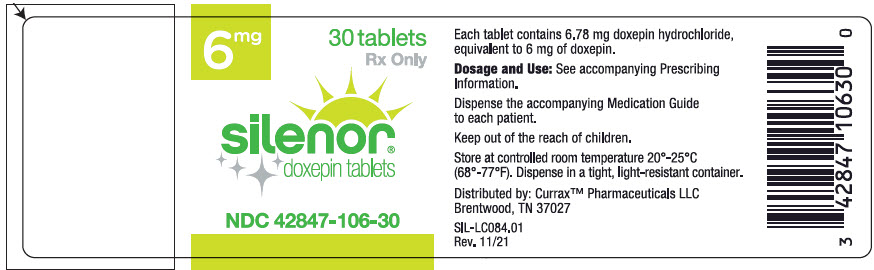
PRINCIPAL DISPLAY PANEL - 6 mg Tablet Bottle Label 6 mg 30 tablets Rx Only silenor ® doxepin tablets NDC 42847-106-30 PRINCIPAL DISPLAY PANEL - 6 mg Tablet Bottle Label
Medicare Part D spend CMS · PART D · 2026 (Q1)
Reported adverse events (FAERS)
Top reported reactions
Age at onset
Reporter sex
Serious outcomes
Where does this data come from?
About this NDC listing & data coverage
What data is (and isn’t) available for this NDC — tap to expand
| NDC identity (package / product / labeler codes) | ✓ Available |
| Labeler | ✓ Available |
| Product & package description | ✓ Available |
| Marketing category & status | ✓ Available |
| Active ingredient / dosage form / route | ✓ Available |
| FDA label (SPL via DailyMed) | ✓ Available |
| Package photos | ✓ Available |
| Inactive ingredients (structured) | ✓ Available |
| NADAC pharmacy acquisition price (CMS) | — Not published for this NDC CMS publishes NADAC only for NDCs reported in its retail-pharmacy survey. |
| Orange Book / therapeutic-equivalence data | ✓ Available |
| HCPCS J-code billing crosswalk | — Not published for this NDC Most self-administered / retail products have no J-code — that is normal. |
| Medicaid utilization (CMS SDUD) | — Not published for this NDC CMS reports utilization only for NDCs with Medicaid claims above its privacy threshold. |