
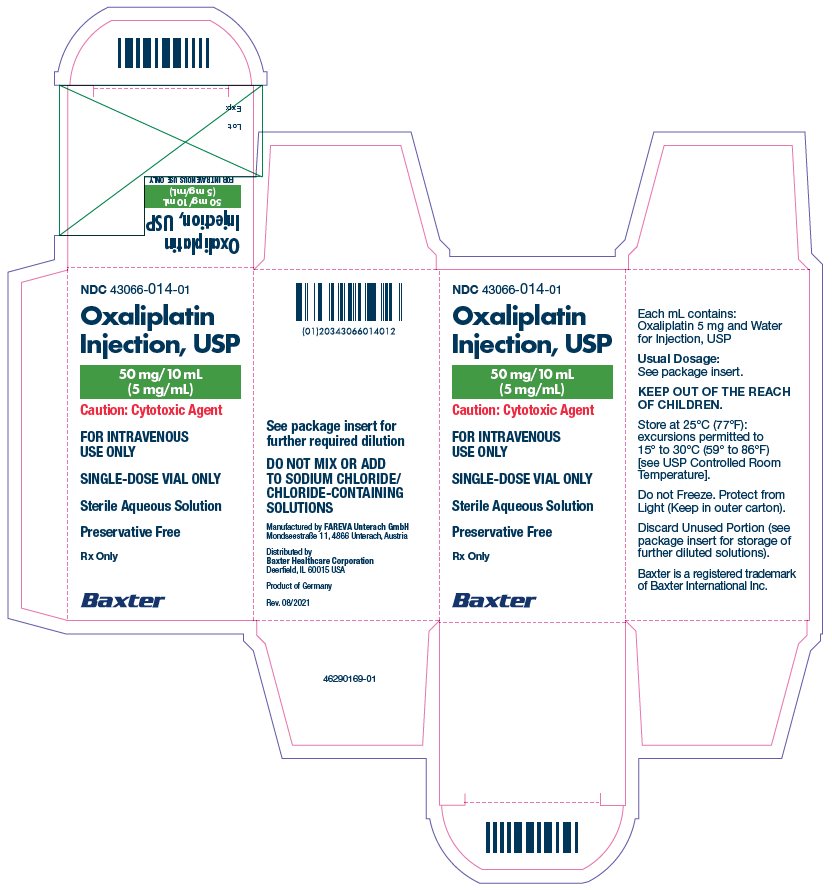
Oxaliplatin 5 mg/mL Injection, Solution — NDC 43066-014-01 (Billing 43066-0014-01)
This is a package of Oxaliplatin 5 mg/mL Injection, Solution from Baxter Healthcare Corporation, marketed since Feb 2018 and currently FDA-listed. It is this product's only package size.
NDC database record
One package, one record: these facts belong to NDC 43066-014-01 alone.
- Record
- FDA NDC Directory package listing · Human prescription drug
- Code segments
- 43066 labeler · 014 product · 01 package
- Package marketed since
- Feb 19, 2018
- Sample package
- No — commercial package
- Listing certified through
- Dec 31, 2026
- Barcode (UPC-A, from the NDC)
- 3 4306601401 8
- FDA record last changed
- Jul 24, 2026
Identity & classification
Regulatory identifiers FDA, NLM and CMS codes for this package
Drug-database identifiers Medi-Span GPI and First Databank GCN / HICL / AHFS classification
- GSN (GCN sequence number): 059162
- GCN: 24699
- GPI-14 (Medi-Span): 21100028002025
- HICL (First Databank): 016687
- AHFS class code: 10:00.00.00
- RxCUI (RxNorm): 1736776
Where does this data come from?
- FDA openFDA NDC Directory · synced Oct 8, 2026
- FDA label on DailyMed · label index refreshed Oct 8, 2026
- RxNorm (NLM RxNav) · catalog refreshed Oct 1, 2026
- Medi-Span GPI (licensed)
- First Databank (licensed) · refreshed Oct 8, 2026
RxNorm drug class
This medicine belongs to the Platinum-based Drug class.
Where does this data come from?
- RxClass (NLM) · catalog refreshed Oct 1, 2026
Clinical
- Oxaliplatin Injection is a chemotherapy used with fluorouracil and leucovorin. It treats stage III colon cancer after the tumor has been surgically removed, and it treats advanced...
- A healthcare professional gives it through a vein over about 2 hours, along with leucovorin, followed by fluorouracil. This repeats every 2 weeks. Your team will decide how long yo...
- Nerve irritation is very common with oxaliplatin and cold can trigger or worsen it, often in the hands, feet, mouth or throat. Avoid ice and cold objects, and tell your team if it...
- Why do I get tingling when I touch something cold?
Patient education
Supplement & herbal interactions
Some supplements/herbs that may interact with Oxaliplatin — tap one for details:
Oxaliplatin may be associated with lower levels of 1 nutrient — worth a chat with your pharmacist, not a cause for alarm.
Where does this data come from?
- MedlinePlus (NLM) · refreshed Oct 8, 2026
- FDA label on DailyMed · label index refreshed Oct 8, 2026
Ask a licensed pharmacist directly — free, answered by our team.
Pricing
A drug doesn't have one price. Each row is a different public payment system, and none is what you'd pay at the counter — that depends on your insurance. The ⓘ on each row explains what it measures.
| Price system | Per mL | Per package |
|---|---|---|
| Retail pharmacies payNADAC · weekly | Not in the retail survey — common for institutional, discontinued, or low-volume packs. | |
| Medicaid paysCMS SDUD · 12 mo | No recent Medicaid claims on file for this NDC — rare and low-volume NDCs are suppressed in the public data. | |
| Medicare drug plans payPart D · quarterly | No Part D plan price is available for this NDC in our data. | |
| Medicare Part B allowsASP · J9263 | $0.055 / J9263 unit | — |
Where does this data come from?
- CMS NADAC weekly file
- CMS ASP pricing files · refreshed Sep 20, 2026
- CMS Medicaid State Drug Utilization Data · refreshed Oct 8, 2026
- CMS Part D plan pricing files · refreshed Sep 24, 2026
- VA National Acquisition Center price file
Billing & reimbursement
Where does this data come from?
- CMS ASP NDC-HCPCS crosswalk · refreshed Sep 22, 2026
- DMEPDAC NDC-HCPCS crosswalk
- openFDA NSDE billing units · refreshed Oct 7, 2026
Packaging — all sizes for this product
| Package NDC | Description | Marketing start | Marketing end | Status |
|---|---|---|---|---|
| 43066-0014-01 You're viewing this Main listing | 1 VIAL, SINGLE-USE in 1 CARTON / 10 mL in 1 VIAL, SINGLE-USE | 2018-02-19 | — | Active |
Therapeutic equivalents
| Product | Labeler | Pack | NADAC/unit | TE | Status | Price vs. this |
|---|---|---|---|---|---|---|
| Oxaliplatin 5 mg/mL 00781-3315-70 | Sandoz | 1 vial | — | AP | FDA listed | — |
| Oxaliplatin 5 mg/mL 00781-9315-70 | Sandoz | 1 vial | — | AP | FDA listed | — |
| Oxaliplatin 5 mg/mL 00955-1731-10 | Winthrop | 1 vial | — | — | Discontinued | — |
| oxaliplatin 5 mg/mL 16729-0332-03 | Accord | 1 vial | — | AP | FDA listed | — |
| oxaliplatin 5 mg/mL 25021-0233-10 | Sagent | 1 vial | — | — | FDA listed | — |
| Oxaliplatin 50 mg/10mL 31722-0357-10 | Camber | 1 vial | — | AP | FDA listed | — |
| oxaliplatin 5 mg/mL 42677-0336-10 | Shandong | 10 vials | — | AP | FDA listed | — |
| Oxaliplatin 5 mg/mLthis 43066-0014-01 | Baxter | 1 vial | — | AP | FDA listed | — |
| Oxaliplatin 5 mg/mL 55150-0331-01 | Eugia | 1 vial | — | — | FDA listed | — |
| Oxaliplatin 5 mg/mL 60505-6132-06 | Apotex | 1 vial | — | — | FDA listed | — |
| Oxaliplatin 5 mg/mL 60505-6287-02 | Apotex | 1 vial | — | — | FDA listed | — |
| Oxaliplatin 5 mg/mL 61703-0363-18 | Hospira, | 1 vial | — | AP | Discontinued | — |
| Oxaliplatin 50 mg/10mL 67184-0508-01 | Qilu | 1 vial | — | — | FDA listed | — |
| Oxaliplatin 5 mg/mL 67457-0469-10 | Mylan | 1 vial | — | AP | FDA listed | — |
| Oxaliplatin 5 mg/mL 68001-0468-36 | BluePoint | 1 vial | — | — | FDA listed | — |
| Oxaliplatin 5 mg/mL 68083-0176-01 | Gland | 1 vial | — | AP | FDA listed | — |
| Oxaliplatin 5 mg/mL 71288-0101-10 | Meitheal | 1 vial | — | AP | FDA listed | — |
| Oxaliplatin 5 mg/mL 71288-0149-95 | Meitheal | 1 vial | — | AP | FDA listed | — |
| Oxaliplatin 5 mg/mL 71288-0171-11 | Meitheal | 1 vial | — | AP | FDA listed | — |
| Oxaliplatin 5 mg/mL 72266-0161-01 | FOSUN | 1 vial | — | AP | FDA listed | — |
| Oxaliplatin 5 mg/mL 72603-0301-01 | NorthStar | 1 vial | — | AP | FDA listed | — |
| Oxaliplatin 5 mg/mL 72603-0420-01 | Northstar | 1 vial | — | AP | FDA listed | — |
| Oxaliplatin 5 mg/mL 00955-1733-20 | Winthrop | 1 vial | — | — | Discontinued | — |
| Oxaliplatin 5 mg/mL 68083-0177-01 | Gland | 1 vial | — | AP | FDA listed | — |
| Oxaliplatin 5 mg/mL 68083-0314-01 | Gland | 1 vial | — | AP | FDA listed | — |
| Oxaliplatin 5 mg/mL 00781-3317-80 | Sandoz | 1 vial | — | AP | FDA listed | — |
| Oxaliplatin 5 mg/mL 72266-0162-01 | FOSUN | 1 vial | — | AP | FDA listed | — |
| Oxaliplatin 5 mg/mL 00781-9317-80 | Sandoz | 1 vial | — | AP | FDA listed | — |
| Oxaliplatin 5 mg/mL 72603-0320-01 | Northstar | 1 vial | — | AP | FDA listed | — |
| Oxaliplatin 5 mg/mL 55150-0332-01 | Eugia | 1 vial | — | — | FDA listed | — |
| Oxaliplatin 5 mg/mL 71288-0172-21 | Meitheal | 1 vial | — | AP | FDA listed | — |
| Oxaliplatin 5 mg/mL 72603-0101-01 | NorthStar | 1 vial | — | AP | FDA listed | — |
| oxaliplatin 5 mg/mL 42677-0337-10 | Shandong | 10 vials | — | AP | FDA listed | — |
| Oxaliplatin 5 mg/mL 67457-0442-20 | Mylan | 1 vial | — | AP | FDA listed | — |
| Oxaliplatin 5 mg/mL 63323-0750-10 | Fresenius | 1 vial | — | AP | Discontinued | — |
| Oxaliplatin 5 mg/mL 43066-0018-01 | Baxter | 1 vial | — | AP | FDA listed | — |
Where does this data come from?
- FDA openFDA NDC Directory · synced Oct 8, 2026
- FDA Orange Book · refreshed Oct 3, 2026
- CMS NADAC weekly file
Availability & generic status
This product is an FDA-approved generic. Other versions of the same drug are listed under Therapeutic equivalents, least expensive first.
Where does this data come from?
- FDA Orange Book · refreshed Oct 3, 2026
Inactive Ingredients / Excipients
Inactive ingredients, also called excipients, are components of the drug product other than the active ingredient. They may include fillers, dyes, coatings, preservatives, flavors, or other formulation ingredients.
🧪 Avoiding an ingredient? See Oxaliplatin Injection inactive ingredients by manufacturer: every current product's list side by side, so you can ask your pharmacy for the version that does not list it.
💡 Tap an ingredient (hover on desktop) to see what it is and why it’s used.
-
UNII 059QF0KO0R
Water is a liquid solvent that dissolves and mixes ingredients together in liquid medicines, syrups, and injections. It helps distribute the active drug evenly throughout the product.
1 inactive ingredient listed in the exact product block matched to this NDC.
Where does this data come from?
ingredient classCode="IACT" elements from the exact product block matched by this NDC. Label-section narrative from DailyMed / the openFDA label index is shown separately when available.- FDA label on DailyMed · label index refreshed Oct 8, 2026
- FDA openFDA NDC Directory · synced Oct 8, 2026
Inactive ingredient FAQ
Are inactive ingredients the same for every manufacturer?
Why might an inactive ingredient be missing?
Can inactive ingredients matter?
Manufacturer & labeler
More NDCs from Baxter Healthcare Corporation labeler code 43066
- Docetaxel 10 mg/mL Injection, Solution NDC 43066-006-01
- Rocuronium Bromide 50 mg/5mL Injection NDC 43066-007-10
- TRANEXAMIC ACID 100 mg/mL Injection NDC 43066-008-10
- CARDENE IV nicardipine hydrochloride .1 mg/mL Injection, Solution NDC 43066-009-10
- Docetaxel 10 mg/mL Injection, Solution NDC 43066-010-01
- Rocuronium Bromide 100 mg/10mL Injection NDC 43066-013-10
- ROPIVACAINE HYDROCHLORIDE 2 mg/mL Injection NDC 43066-015-10
- CARDENE IV nicardipine hydrochloride .2 mg/mL Injection, Solution NDC 43066-016-10
- Oxaliplatin 5 mg/mL Injection, Solution NDC 43066-018-01
- ROPIVACAINE HYDROCHLORIDE 5 mg/mL Injection NDC 43066-019-10
- Cardene IV nicardipine hydrochloride .1 mg/mL Injection, Solution NDC 43066-021-10
- ROPIVACAINE HYDROCHLORIDE 5 mg/mL Injection NDC 43066-023-10
Where does this data come from?
- FDA openFDA NDC Directory · synced Oct 8, 2026
- Drugs@FDA
Full prescribing information FDA SPL
🚨 Boxed Warning ▾
WARNING: HYPERSENSITIVITY REACTIONS, INCLUDING ANAPHYLAXIS Serious and fatal hypersensitivity adverse reactions, including anaphylaxis, can occur with oxaliplatin within minutes of administration and during any cycle. Oxaliplatin is contraindicated in patients with hypersensitivity reactions to oxaliplatin and other platinum-based drugs [see Contraindications ( 4 )] . Immediately and permanently discontinue oxaliplatin for hypersensitivity reactions and administer appropriate treatment for management of the hypersensitivity reaction [see Warnings and Precautions ( 5.1 )].
WARNING: HYPERSENSITIVITY REACTIONS, INCLUDING ANAPHYLAXIS See full prescribing information for complete boxed warning. Serious and fatal hypersensitivity adverse reactions, including anaphylaxis, can occur with oxaliplatin within minutes of administration and during any cycle. Oxaliplatin is contraindicated in patients with hypersensitivity reactions to oxaliplatin and other platinum-based drugs.
Immediately and permanently discontinue oxaliplatin for hypersensitivity reactions and administer appropriate treatment. ( 4 , 5.1 )
🎯 Indications and Usage ▾
1 INDICATIONS AND USAGE Oxaliplatin injection, in combination with infusional fluorouracil and leucovorin, is indicated for: • adjuvant treatment of stage III colon cancer in patients who have undergone complete resection of the primary tumor. • treatment of advanced colorectal cancer. Oxaliplatin injection is a platinum-based drug used in combination with infusional fluorouracil and leucovorin, which is indicated for: • adjuvant treatment of stage III colon cancer in patients who have undergone complete resection of the primary tumor.
( 1 ) • treatment of advanced colorectal cancer. ( 1 )
⏱️ Dosage and Administration ▾
2 DOSAGE AND ADMINISTRATION • Administer oxaliplatin injection 85 mg/m 2 as an intravenous infusion over 120 minutes concurrently with leucovorin over 120 minutes in separate bags, followed by fluorouracil on Day 1 of each 14-day cycle. Administer fluorouracil and leucovorin on Day 2 as recommended. ( 2.1 ) • Adjuvant Treatment : Continue treatment for up to 12 cycles or unacceptable toxicity.
( 2.1 ) • Advanced Colorectal Cancer : Continue treatment until disease progression or unacceptable toxicity. ( 2.1 )
2.1Recommended Dosage Administer oxaliplatin injection in combination with fluorouracil and leucovorin every 2 weeks. • For adjuvant treatment, continue treatment for up to 12 cycles or unacceptable toxicity. • For advanced colorectal cancer, continue treatment until disease progression or unacceptable toxicity. Day 1 Administer oxaliplatin injection 85 mg/m 2 as an intravenous infusion over 120 minutes and leucovorin 200 mg/m 2 as an intravenous infusion over 120 minutes at the same time in separate bags, followed by fluorouracil 400 mg/m 2 as intravenous bolus over 2 to 4 minutes, followed by fluorouracil 600 mg/m 2 as a 22-hour continuous infusion.
Day 2 Administer leucovorin 200 mg/m 2 as an intravenous infusion over 120 minutes, followed by fluorouracil 400 mg/m 2 as intravenous bolus over 2 to 4 minutes, followed by fluorouracil 600 mg/m 2 as a 22-hour continuous infusion. Refer to the prescribing information for fluorouracil and leucovorin for additional information.
2.2Dose Modifications for Adverse Reactions Prolongation of infusion time for oxaliplatin injection from 2 hours to 6 hours may mitigate acute toxicities, such as non-life-threatening infusion-related reactions. Permanently discontinue oxaliplatin injection for any of the following: • Hypersensitivity Reactions [see Warnings and Precautions ( 5.1 )] • Posterior reversible encephalopathy syndrome (PRES) [see Warnings and Precautions ( 5.4 )] • Confirmed interstitial lung disease or pulmonary fibrosis [see Warnings and Precautions ( 5.5 )] • Rhabdomyolysis [see Warnings and Precautions ( 5.8 )] Refer to the fluorouracil and leucovorin prescribing information for dosage modifications for adverse reactions.
Dosage Modifications for Adjuvant Treatment Dosage modifications for adverse reactions for adjuvant treatment are presented in Table 1 . Table 1: Dosage Modifications for Adjuvant Treatment in Patients with Stage III Colon Cancer Adverse Reactions Severity Oxaliplatin Dosage Modifications Peripheral Sensory Neuropathy [see Warnings and Precautions ( 5.2 )] Persistent Grade 2 Consider reducing oxaliplatin dose to 75 mg/m 2 . Persistent Grade 3 Consider discontinuing oxaliplatin.
Grade 4 Discontinue oxaliplatin. Myelosuppression [see Warnings and Precautions ( 5.3 ), Adverse Reactions ( 6.1 )]. Grade 4 neutropenia or febrile neutropenia Delay the next dose until neutrophils greater than or equal to 1.5 × 10 9 /L and platelets greater than or equal to 75 × 10 9 /L.
Reduce oxaliplatin dose to 75 mg/m 2 . Grade 3-4 thrombocytopenia Gastrointestinal Adverse Reactions [see Adverse Reactions ( 6.1 )] Grade 3-4 After recovery, reduce oxaliplatin dose to 75 mg/m 2 along with a dose reduction of fluorouracil to 300 mg/m 2 as an intravenous bolus and 500 mg/m 2 as a 22-hour continuous infusion. Dosage Modifications for Advanced Colorectal Cancer Dosage modifications for adverse reactions for advanced colorectal cancer are presented in Table 2 .
Table 2: Dosage Modifications for Advanced Colorectal Cancer Adverse Reactions Severity Oxaliplatin Dosage Modifications Neuropathy [see Warnings and Precautions ( 5.2 )] Persistent Grade 2 Consider reducing oxaliplatin dose to 65 mg/m 2 . Persistent Grade 3 Consider discontinuing oxaliplatin. Grade 4 Discontinue oxaliplatin.
Myelosuppression [see Warnings and Precautions ( 5.3 ), Adverse Reactions ( 6.1 )] Grade 4 neutropenia or febrile neutropenia Delay the next dose until neutrophils greater than or equal to 1.5 × 10 9… [Excerpted — this section continues on DailyMed.]
💊 Dosage Forms and Strengths ▾
3 DOSAGE FORMS AND STRENGTHS Injection: 50 mg (5 mg/mL) or 100 mg (5 mg/mL) clear, colorless solution in a single-dose vial. Injection: 50 mg (5 mg/mL) or 100 mg (5 mg/mL) in a single-dose vial. ( 3 )
⛔ Contraindications ▾
4 CONTRAINDICATIONS Oxaliplatin is contraindicated in patients with a history of a hypersensitivity reaction to oxaliplatin or other platinum-based drugs. Reactions have included anaphylaxis [see Warnings and Precautions ( 5.1 )]. • History of hypersensitivity reaction to oxaliplatin or other platinum-based drugs. ( 4 , 5.1 )
⚠️ Warnings and Cautions ▾
5 WARNINGS AND PRECAUTIONS • Peripheral Sensory Neuropathy : Acute and delayed neuropathy can occur. Avoid topical application of ice. Reduce the dose or permanently discontinue oxaliplatin as recommended.
( 5.2 ) • Severe Myelosuppression : Delay oxaliplatin until neutrophils are greater than or equal to 1.5 x 10 9 /L and platelets are greater than or equal to 75 x 10 9 /L. Withhold oxaliplatin for sepsis or septic shock. Dose reduce after recovery from grade 4 neutropenia, febrile neutropenia, or grade 3 to 4 thrombocytopenia as recommended.
( 5.3 ) • Posterior Reversible Encephalopathy Syndrome (PRES) : Permanently discontinue oxaliplatin in patients who develop PRES. ( 5.4 ) • Pulmonary Toxicity : Withhold oxaliplatin until investigation excludes interstitial lung disease or pulmonary fibrosis. ( 5.5 ) • Hepatotoxicity : Monitor liver function tests at baseline, before each subsequent cycle, and as clinically indicated.
( 5.6 ) • QT Interval Prolongation : Avoid in patients with congenital long QT syndrome. Monitor electrocardiograms in patients with congestive heart failure, bradyarrhythmias, and electrolyte abnormalities, and in patients taking drugs known to prolong the QT interval. Correct electrolyte abnormalities prior to initiating oxaliplatin and periodically during treatment.
( 5.7 ) • Rhabdomyolysis : Permanently discontinue oxaliplatin if rhabdomyolysis occurs. ( 5.8 ) • Hemorrhage : Increase frequency of monitoring in patients who are receiving oxaliplatin with fluorouracil/leucovorin and oral anticoagulants. ( 5.9 ) • Embryo-Fetal Toxicity : Can cause fetal harm.
Advise pregnant women of the potential risk to a fetus. Advise males and females of reproductive potential to use an effective method of contraception. ( 5.10 , 8.1 , 8.3 )
5.1Hypersensitivity Reactions Serious and fatal hypersensitivity reactions, including anaphylaxis, can occur with oxaliplatin within minutes of administration and during any cycle. Grade 3-4 hypersensitivity reactions, including anaphylaxis, occurred in 2% to 3% of patients with colon cancer who received oxaliplatin. Hypersensitivity reactions, including rash, urticaria, erythema, pruritus, and rarely, bronchospasm and hypotension, were similar in nature and severity to those reported with other platinum-based drugs.
Oxaliplatin is contraindicated in patients with hypersensitivity reactions to platinum-based drugs [see Contraindications ( 4 )]. Immediately and permanently discontinue oxaliplatin for hypersensitivity reactions and administer appropriate treatment for management of hypersensitivity reactions.
5.2Peripheral Sensory Neuropathy Oxaliplatin can cause acute and delayed neuropathy. Reduce the dose or permanently discontinue oxaliplatin for persistent neurosensory reactions based on the severity of the adverse reaction [see Dosage and Administration ( 2.2 )]. Acute Neuropathy Acute neuropathy typically presents as a reversible, primarily peripheral sensory neuropathy that occurs within hours or 2 days following a dose, resolves within 14 days, and frequently recurs with further dosing.
The symptoms can be precipitated or exacerbated by exposure to cold temperature or cold objects and they usually present as transient paresthesia, dysesthesia and hypoesthesia in the hands, feet, perioral area, or throat. Jaw spasm, abnormal tongue sensation, dysarthria, eye pain, and a feeling of chest pressure have also been observed. The acute, reversible pattern of sensory neuropathy was observed in about 56% of patients who received oxaliplatin with fluorouracil/leucovorin.
In any individual cycle, acute neuropathy occurred in approximately 30% of patients. For grade 3 peripheral sensory neuropathy, the median time to onset was 9 cycles for adjuvant treatment and 6 cycles for previously treated advanced colorectal cancer. An acute syndrome of pharyngolaryngeal dysesthesia occurred in 1% to 2% (grade 3-4) of patients previously untreated for advanced colorectal cancer.
Subjective sensat… [Excerpted — this section continues on DailyMed.]
🤒 Adverse Reactions ▾
6 ADVERSE REACTIONS The following clinically significant adverse reactions are described elsewhere in labeling: • Hypersensitivity Reactions [see Warnings and Precautions ( 5.1 )] • Peripheral Sensory Neuropathy [see Warnings and Precautions ( 5.2 )] • Severe Myelosuppression [see Warnings and Precautions ( 5.3 )] • Reversible Posterior Leukoencephalopathy Syndrome [see Warnings and Precautions ( 5.4 )] • Pulmonary Toxicity [see Warnings and Precautions ( 5.5 )] • Hepatotoxicity [see Warnings and Precautions ( 5.6 )] • QT Interval Prolongation and Ventricular Arrhythmias [see Warnings and Precautions ( 5.7 )] • Rhabdomyolysis [see Warnings and Precautions ( 5.8 )] • Hemorrhage [see Warnings and Precautions ( 5.9 )] Most common adverse reactions (incidence greater than or equal to 40%) were peripheral sensory neuropathy, neutropenia, thrombocytopenia, anemia, nausea, increase in transaminases and alkaline phosphatase, diarrhea, emesis, fatigue, and stomatitis.
( 6.1 ) To report SUSPECTED ADVERSE REACTIONS, contact Sandoz Inc., at 1-800-525-8747 or FDA at 1-800-FDA-1088 or www.fda.gov/medwatch .
6.1Clinical Trials Experience Because clinical trials are conducted under widely varying conditions, adverse reaction rates observed in the clinical trials of a drug cannot be directly compared to rates in the clinical trials of another drug and may not reflect the rates observed in practice. More than 1100 patients with stage II or III colon cancer and more than 4,000 patients with advanced colorectal cancer were treated in trials with oxaliplatin. The most common adverse reactions in patients with stage II or III colon cancer receiving adjuvant treatment were peripheral sensory neuropathy, neutropenia, thrombocytopenia, anemia, nausea, increase in transaminases and alkaline phosphatase, diarrhea, emesis, fatigue and stomatitis.
The most common adverse reactions in previously untreated and treated patients with advanced colorectal cancer were peripheral sensory neuropathies, fatigue, neutropenia, nausea, emesis, and diarrhea. Adjuvant Treatment The safety of oxaliplatin in combination with fluorouracil (FU)/leucovorin (LV) was evaluated in patients with stage II or III colon cancer, who had undergone complete resection of the primary tumor in the adjuvant treatment trial [see Clinical Studies ( 14.1 )]. Fatal adverse reactions in patients who received oxaliplatin in the combination arm included sepsis/neutropenic sepsis (n=3), intracerebral hemorrhage (n=2), and eosinophilic pneumonia (n=1).
Thromboembolic events occurred in 6% (grade 3-4, 1.2%) of patients in the oxaliplatin arm. Grade 3 or 4 adverse reactions occurred in 70% of patients in the oxaliplatin arm. Grade 3-4 gastrointestinal bleeding occurred in 0.2% of patients.
Febrile neutropenia occurred in 0.7% and documented infection with concomitant grade 3-4 neutropenia occurred in 1.1%. Discontinuation due to an adverse reaction occurred in 15% of the patients in the oxaliplatin arm. Tables 5, 6, and 7 summarize the adverse reactions reported in patients with colon cancer receiving adjuvant treatment.
Table 5: Adverse Reactions Reported in Patients with Colon Cancer Receiving Adjuvant Treatment (greater than or equal to 5% of all patients and with greater than or equal to 1% grade 3-4) Adverse Reaction Event coded in WHO-ART dictionary. Oxaliplatin + FU/LV N=1108 FU/LV N=1111 All Grades (%) Grade 3-4 (%) All Grades (%) Grade 3-4 (%) Neurology Peripheral Sensory Neuropathy 92 12 16 <1 Gastrointestinal Nausea 74 5 61 2 Diarrhea 56 11 48 7 Vomiting 47 6 24 1 Stomatitis 42 3 40 2 Anorexia 13 1 8 <1 Constitutional Symptoms/Pain Fatigue 44 4 38 1 Abdominal Pain 18 1 17 2 Dermatology/Skin Skin Disorder 32 2 36 2 Injection Site Reaction Includes thrombosis related to the catheter.
11 3 10 3 Fever/Infection Fever 27 1 12 1 Infection 25 4 25 3 Allergy/Immunology Allergic Reaction 10 3 2 <1 Table 6: Adverse Reactions Reported in Patients with Colon Cancer Receiving Adjuvant Treatment (grea… [Excerpted — this section continues on DailyMed.]
🔄 Drug Interactions ▾
7 DRUG INTERACTIONS
7.1Drugs that Prolong the QT Interval QT interval prolongation and ventricular arrhythmias can occur with oxaliplatin [see Warnings and Precautions ( 5.7 )] . Avoid coadministration of oxaliplatin with medicinal products with a known potential to prolong the QT interval.
7.2Use with Nephrotoxic Products Because platinum-containing species are eliminated primarily through the kidney, clearance of these products may be decreased by coadministration of potentially nephrotoxic compounds [see Clinical Pharmacology ( 12.3 )] . Avoid coadministration of oxaliplatin with medicinal products known to cause nephrotoxicity.
7.3Use with Anticoagulants Prolonged prothrombin time and INR occasionally associated with hemorrhage have been reported in patients who received oxaliplatin with fluorouracil/leucovorin while on anticoagulants [see Warnings and Precautions ( 5.9 ), Adverse Reactions ( 6.2 )] . Increase frequency of monitoring in patients who are receiving oxaliplatin with fluorouracil/leucovorin and oral anticoagulants.
👥 Use in Specific Populations ▾
8 USE IN SPECIFIC POPULATIONS • Females: Advise female patients of reproductive potential to use effective contraception while receiving oxaliplatin and for 9 months after the final dose. ( 8.3 ) • Males: Based on its mechanism action as a genotoxic drug, advise males with female partners of reproductive potential to use effective contraception while receiving oxaliplatin and for 6 months after the final dose [see Nonclinical Toxicology ( 13.1 )].
8.1Pregnancy Risk Summary Based on its direct interaction with DNA, oxaliplatin can cause fetal harm when administered to a pregnant woman. The available human data do not establish the presence or absence of major birth defects or miscarriage related to the use of oxaliplatin. Reproductive toxicity studies demonstrated adverse effects on embryo-fetal development in rats at maternal doses that were below the recommended human dose based on body surface area (see Data) .
Advise a pregnant woman of the potential risk to a fetus. In the U.S. general population, the estimated background risk of major birth defects and miscarriage in clinically recognized pregnancies is 2% to 4% and 15% to 20%, respectively. Data Animal Data Pregnant rats were administered oxaliplatin at less than one-tenth the recommended human dose based on body surface area during gestation days (GD) 1 to 5 (preimplantation), GD 6 to 10, or GD 11 to 16 (during organogenesis).
Oxaliplatin caused developmental mortality (increased early resorptions) when administered on days GD 6 to 10 and GD 11 to 16 and adversely affected fetal growth (decreased fetal weight, delayed ossification) when administered on days GD 6 to 10.
8.2Lactation Risk Summary There are no data on the presence of oxaliplatin or its metabolites in human or animal milk or its effects on the breastfed infant or on milk production. Because of the potential for serious adverse reactions in breastfed infants, advise women not to breastfeed during treatment with oxaliplatin and for 3 months after the final dose.
8.3Females and Males of Reproductive Potential Pregnancy Testing Verify pregnancy status in females of reproductive potential prior to initiating oxaliplatin [see Use in Specific Populations ( 8.1 )] . Contraception Oxaliplatin can cause embryo-fetal harm when administered to a pregnant woman [see Use in Specific Populations ( 8.1 )] . Females Advise female patients of reproductive potential to use effective contraception while receiving oxaliplatin and for 9 months after the final dose.
Males Based on its mechanism action as a genotoxic drug, advise males with female partners of reproductive potential to use effective contraception while receiving oxaliplatin and for 6 months after the final dose [see Nonclinical Toxicology ( 13.1 )] . Infertility Based on animal studies, oxaliplatin may impair fertility in males and females [see Nonclinical Toxicology ( 13.1 )] .
8.4Pediatric Use The safety and effectiveness of oxaliplatin in pediatrics have not been established. Safety and effectiveness were assessed across 4 open-label studies in 235 patients aged 7 months to 22 years with solid tumors. In a multicenter, open-label, non-comparative, non-randomized study (ARD5531), oxaliplatin was administered to 43 patients with refractory or relapsed malignant solid tumors, mainly neuroblastoma and osteosarcoma.
The dose limiting toxicity (DLT) was sensory neuropathy at a dose of 110 mg/m 2 . The main adverse reactions were: paresthesia (60%, grade 3-4: 7%), fever (40%, grade 3-4: 7%), and thrombocytopenia (40%, grade 3-4: 27%). No responses were observed.
In an open-label non-randomized study (DFI7434), oxaliplatin was administered to 26 pediatric patients with metastatic or unresectable solid tumors, mainly neuroblastoma and ganglioneuroblastoma. The DLT was sensory neuropathy at a dose of 160 mg/m 2 . No responses were observed.
In an open-label, single-agent study (ARD5021), oxaliplatin was administered to 43 pediatric patients with recurrent or refractor… [Excerpted — this section continues on DailyMed.]
🤰 Pregnancy ▾
8.1Pregnancy Risk Summary Based on its direct interaction with DNA, oxaliplatin can cause fetal harm when administered to a pregnant woman. The available human data do not establish the presence or absence of major birth defects or miscarriage related to the use of oxaliplatin. Reproductive toxicity studies demonstrated adverse effects on embryo-fetal development in rats at maternal doses that were below the recommended human dose based on body surface area (see Data) .
Advise a pregnant woman of the potential risk to a fetus. In the U.S. general population, the estimated background risk of major birth defects and miscarriage in clinically recognized pregnancies is 2% to 4% and 15% to 20%, respectively. Data Animal Data Pregnant rats were administered oxaliplatin at less than one-tenth the recommended human dose based on body surface area during gestation days (GD) 1 to 5 (preimplantation), GD 6 to 10, or GD 11 to 16 (during organogenesis).
Oxaliplatin caused developmental mortality (increased early resorptions) when administered on days GD 6 to 10 and GD 11 to 16 and adversely affected fetal growth (decreased fetal weight, delayed ossification) when administered on days GD 6 to 10.
🧒 Pediatric Use ▾
8.4Pediatric Use The safety and effectiveness of oxaliplatin in pediatrics have not been established. Safety and effectiveness were assessed across 4 open-label studies in 235 patients aged 7 months to 22 years with solid tumors. In a multicenter, open-label, non-comparative, non-randomized study (ARD5531), oxaliplatin was administered to 43 patients with refractory or relapsed malignant solid tumors, mainly neuroblastoma and osteosarcoma.
The dose limiting toxicity (DLT) was sensory neuropathy at a dose of 110 mg/m 2 . The main adverse reactions were: paresthesia (60%, grade 3-4: 7%), fever (40%, grade 3-4: 7%), and thrombocytopenia (40%, grade 3-4: 27%). No responses were observed.
In an open-label non-randomized study (DFI7434), oxaliplatin was administered to 26 pediatric patients with metastatic or unresectable solid tumors, mainly neuroblastoma and ganglioneuroblastoma. The DLT was sensory neuropathy at a dose of 160 mg/m 2 . No responses were observed.
In an open-label, single-agent study (ARD5021), oxaliplatin was administered to 43 pediatric patients with recurrent or refractory embryonal CNS tumors. The most common adverse reactions reported were: leukopenia (67%, grade 3-4: 12%), anemia (65%, grade 3-4: 5%), thrombocytopenia (65%, grade 3-4: 26%), vomiting (65%, grade 3-4: 7%), neutropenia (58%, grade 3-4: 16%), and sensory neuropathy (40%, grade 3-4: 5%). In an open-label single-agent study (ARD5530), oxaliplatin was administered to 123 pediatric patients with recurrent solid tumors, including neuroblastoma, osteosarcoma, Ewing sarcoma or peripheral PNET, ependymoma, rhabdomyosarcoma, hepatoblastoma, high grade astrocytoma, brain stem glioma, low grade astrocytoma, malignant germ cell tumor and other tumors.
The most common adverse reactions reported were: sensory neuropathy (52%, grade 3-4: 12%), thrombocytopenia (37%, grade 3-4: 17%), anemia (37%, grade 3-4: 9%), vomiting (26%, grade 3-4: 4%), increased ALT (24%, grade 3-4: 6%), increased AST (24%, grade 3-4: 2%), and nausea (23%, grade 3-4: 3%). The pharmacokinetic parameters of ultrafiltrable platinum were evaluated in 105 pediatric patients during the first cycle. The mean clearance in pediatric patients estimated by the population pharmacokinetic analysis was
4.7L/h (%CV, 41%). Mean platinum pharmacokinetic parameters in ultrafiltrate were C max of 0.75 ± 0.24 mcg/mL, AUC 0-48h of 7.52 ± 5.07 mcg∙h/mL and AUC inf of 8.83 ± 1.57 mcg·h/mL at 85 mg/m 2 of oxaliplatin and C max of 1.10 ± 0.43 mcg/mL, AUC 0–48h of 9.74 ± 2.52 mcg·h/mL and AUC inf of 17.3 ± 5.34 mcg·h/mL at 130 mg/m 2 of oxaliplatin.
🧓 Geriatric Use ▾
8.5Geriatric Use In the adjuvant treatment trial [see Clinical Studies ( 14.1 )] , 400 patients who received oxaliplatin with fluorouracil/leucovorin were greater than or equal to 65 years. The effect of oxaliplatin in patients greater than or equal to 65 years was not conclusive. Patients greater than or equal to 65 years receiving oxaliplatin experienced more diarrhea and grade 3-4 neutropenia (45% vs 39%) compared to patients less than 65 years.
In the previously untreated advanced colorectal cancer trial [see Clinical Studies ( 14.2 )] , 99 patients who received oxaliplatin with fluorouracil and leucovorin were greater than or equal to 65 years. The same efficacy improvements in response rate, time to tumor progression, and overall survival were observed in the greater than or equal to 65 years patients as in the overall study population. Adverse reactions were similar in patients less than 65 and greater than or equal to 65 years, but older patients may have been more susceptible to diarrhea, dehydration, hypokalemia, leukopenia, fatigue, and syncope.
In the previously treated advanced colorectal cancer trial [see Clinical Studies ( 14.3 )] , 55 patients who received oxaliplatin with fluorouracil and leucovorin were greater than or equal to 65 years. No overall differences in effectiveness were observed between these patients and younger adults. Adverse reactions were similar in patients less than 65 and greater than or equal to 65 years, but older patients may have been more susceptible to diarrhea, dehydration, hypokalemia, and fatigue.
No significant effect of age on the clearance of ultrafiltrable platinum has been observed [see Clinical Pharmacology ( 12.3 )] .
🆘 Overdosage ▾
10 OVERDOSAGE The maximum dose of oxaliplatin that has been administered in a single infusion is 825 mg. Several cases of overdoses have been reported with oxaliplatin. Adverse reactions observed following an overdosage were grade 4 thrombocytopenia (less than 25,000/mm 3 ) without bleeding, anemia, sensory neuropathy (including paresthesia, dysesthesia, laryngospasm and facial muscle spasms), gastrointestinal disorders (including nausea, vomiting, stomatitis, flatulence, abdomen enlarged and grade 4 intestinal obstruction), grade 4 dehydration, dyspnea, wheezing, chest pain, respiratory failure, severe bradycardia, and death.
Closely monitor patients suspected of receiving an overdose, including for the adverse reactions described above and administer appropriate supportive treatment.
🧬 Clinical Pharmacology ▾
12 CLINICAL PHARMACOLOGY
12.1Mechanism of Action Oxaliplatin undergoes nonenzymatic conversion in physiologic solutions to active derivatives via displacement of the labile oxalate ligand. Several transient reactive species are formed, including monoaquo and diaquo DACH platinum, which covalently bind with macromolecules. Both inter- and intrastrand Pt-DNA crosslinks are formed.
Crosslinks are formed between the N7 positions of two adjacent guanines (GG), adjacent adenine-guanines (AG), and guanines separated by an intervening nucleotide (GNG). These crosslinks inhibit DNA replication and transcription. Cytotoxicity is cell-cycle nonspecific.
In vivo studies have shown antitumor activity of oxaliplatin against colon carcinoma. In combination with fluorouracil, oxaliplatin exhibits in vitro and in vivo antiproliferative activity greater than either compound alone in several tumor models (HT29 [colon], GR [mammary], and L1210 [leukemia]).
12.2Pharmacodynamics A pharmacodynamic relationship between platinum ultrafiltrate levels and clinical safety and effectiveness has not been established.
12.3Pharmacokinetics The reactive oxaliplatin derivatives are present as a fraction of the unbound platinum in plasma ultrafiltrate. After a single 2-hour intravenous infusion of oxaliplatin at a dose of 85 mg/m 2 , pharmacokinetic parameters expressed as ultrafiltrable platinum were C max of 0.814 mcg/mL and volume of distribution of 440 L. Interpatient and intrapatient variability in ultrafiltrable platinum exposure (AUC 0–48hr ) assessed over 3 cycles was 23% and 6%, respectively.
Distribution At the end of a 2-hour infusion of oxaliplatin, approximately 15% of the administered platinum is present in the systemic circulation. The remaining 85% is rapidly distributed into tissues or eliminated in the urine. The decline of ultrafiltrable platinum levels following oxaliplatin administration is triphasic, including two distribution phases (t 1/2α ; 0.43 hours and t 1/2β ; 16.8 hours).
In patients, plasma protein binding of platinum is irreversible and is greater than 90%. The main binding proteins are albumin and gamma-globulins. Platinum also binds irreversibly and accumulates (approximately 2-fold) in erythrocytes, where it appears to have no relevant activity.
No platinum accumulation was observed in plasma ultrafiltrate following 85 mg/m 2 every two weeks. Elimination The decline of ultrafiltrable platinum concentrations from plasma is characterized by a long terminal elimination phase (t 1/2γ ; 391 hour). Metabolism Oxaliplatin undergoes rapid and extensive nonenzymatic biotransformation.
There is no evidence of cytochrome P450-mediated metabolism in vitro . Up to 17 platinum-containing derivatives have been observed in plasma ultrafiltrate samples from patients, including several cytotoxic species (monochloro DACH platinum, dichloro DACH platinum, and monoaquo and diaquo DACH platinum) and a number of noncytotoxic, conjugated species. Excretion The major route of platinum elimination is renal excretion.
At five days after a single 2-hour infusion of oxaliplatin, urinary elimination accounted for about 54% of the platinum eliminated, with fecal excretion accounting for only about 2%. Platinum was cleared from plasma at a rate (10 to 17 L/h) that was similar to or exceeded the average human glomerular filtration rate (GFR;
7.5L/h). The renal clearance of ultrafiltrable platinum is significantly correlated with GFR. Special Populations Sex There was no significant effect of sex on the clearance of ultrafiltrable platinum.
Patients with Renal Impairment Patients with normal function (CLcr greater than 80 mL/min) and patients with mild (CLcr=50-80 mL/min) and moderate (CLcr equal to 30-49 mL/min) renal impairment received oxaliplatin 85 mg/m 2 and those with severe (CLcr less than 30 mL/min) renal impairment received oxaliplatin 65 mg/m 2 . Mean dose adjusted AUC of unbound platinum was 40%, 95%, and 342% higher for patients with mild, mod… [Excerpted — this section continues on DailyMed.]
🧬 Mechanism of Action ▾
12.1Mechanism of Action Oxaliplatin undergoes nonenzymatic conversion in physiologic solutions to active derivatives via displacement of the labile oxalate ligand. Several transient reactive species are formed, including monoaquo and diaquo DACH platinum, which covalently bind with macromolecules. Both inter- and intrastrand Pt-DNA crosslinks are formed.
Crosslinks are formed between the N7 positions of two adjacent guanines (GG), adjacent adenine-guanines (AG), and guanines separated by an intervening nucleotide (GNG). These crosslinks inhibit DNA replication and transcription. Cytotoxicity is cell-cycle nonspecific.
In vivo studies have shown antitumor activity of oxaliplatin against colon carcinoma. In combination with fluorouracil, oxaliplatin exhibits in vitro and in vivo antiproliferative activity greater than either compound alone in several tumor models (HT29 [colon], GR [mammary], and L1210 [leukemia]).
📦 How Supplied / Storage and Handling ▾
16 HOW SUPPLIED/STORAGE AND HANDLING Oxaliplatin injection, USP is supplied in clear, glass, single-dose vials with grey rubber stoppers and aluminum flip-off seals containing 50 mg/10 mL or 100 mg/20 mL of oxaliplatin as a sterile, clear, colorless, preservative-free, aqueous solution at a concentration of 5 mg/mL. NDC 43066-014-01: 50 mg single-dose vial with green flip-off seal individually packaged in a carton. NDC 43066-018-01: 100 mg single-dose vial with dark blue flip-off seal individually packaged in a carton.
Store at 25°C (77°F); excursions permitted to 15°C to 30°C (59°F to 86°F) [see USP Controlled Room Temperature]. Do not freeze and protect from light (keep in original outer carton). Discard unused portion.
Oxaliplatin injection is a cytotoxic drug. Follow applicable special handling and disposal procedures. 1 The use of gloves is recommended.
If a solution of oxaliplatin injection contacts the skin, wash the skin immediately and thoroughly with soap and water. If oxaliplatin injection contacts the mucous membranes, flush thoroughly with water.
📋 Description ▾
11 DESCRIPTION Oxaliplatin is a platinum-based drug with the molecular formula C 8 H 14 N 2 O 4 Pt and the chemical name of cis -[(1 R ,2 R )-1,2-cyclohexanediamine- N , N '] [oxalato(2-)- O , O '] platinum. Oxaliplatin is an organoplatinum complex in which the platinum atom is complexed with 1,2-diaminocyclohexane(DACH) and with an oxalate ligand as a leaving group. The molecular weight is 397.3.
Oxaliplatin is slightly soluble in water at 6 mg/mL, very slightly soluble in methanol, and practically insoluble in ethanol and acetone. Oxaliplatin injection, USP for intravenous use is supplied in vials containing 50 mg or 100 mg of oxaliplatin as a sterile, clear, colorless, preservative-free, aqueous solution at a concentration of 5 mg/mL. Water for Injection, USP is present as an inactive ingredient. chemical-structure
💬 Information for Patients ▾
17 PATIENT COUNSELING INFORMATION Hypersensitivity Reactions Advise patients of the potential risk of hypersensitivity and that oxaliplatin is contraindicated in patients with a history of hypersensitivity reactions to oxaliplatin and other platinum-based drugs. Instruct patients to seek immediate medical attention for signs of severe hypersensitivity reaction such as chest tightness; shortness of breath; wheezing; dizziness or faintness; or swelling of the face, eyelids, or lips [see Warnings and Precautions ( 5.1 )].
Peripheral Sensory Neuropathy Advise patients of the risk of acute reversible or persistent-type neurosensory toxicity. Advise patients to avoid cold drinks, use of ice, and exposure of skin to cold temperature or cold objects [see Warnings and Precautions ( 5.2 )] . Myelosuppression Inform patients that oxaliplatin can cause low blood cell counts and the need for frequent monitoring of blood cell counts.
Advise patients to contact their healthcare provider immediately for bleeding, fever, particularly if associated with persistent diarrhea, or symptoms of infection develop [see Warnings and Precautions ( 5.3 )] . Posterior Reversible Encephalopathy Syndrome Advise patients of the potential effects of vision abnormalities, in particular transient vision loss (reversible following therapy discontinuation), which may affect the patients' ability to drive and use machines [see Warnings and Precautions ( 5.4 )] . Pulmonary Toxicity Advise patients to report immediately to their healthcare provider any persistent or recurrent respiratory symptoms, such as non-productive cough and dyspnea [see Warnings and Precautions ( 5.5 )] .
Hepatotoxicity Advise patients to report signs or symptoms of hepatic toxicity to their healthcare provider [see Warnings and Precautions ( 5.6 )]. QT Interval Prolongation Advise patients that oxaliplatin can cause QTc interval prolongation and to inform their physician if they have any symptoms, such as syncope [see Warnings and Precautions ( 5.7 )] . Rhabdomyolysis Advise patients to contact their healthcare provider immediately for new or worsening signs or symptoms of muscle toxicity, dark urine, decreased urine output, or the inability to urinate [see Warnings and Precautions ( 5.8 )].
Hemorrhage Advise patients that oxaliplatin may increase the risk of bleeding and to promptly inform their healthcare provider of any bleeding episodes [see Warnings and Precautions ( 5.9 )]. Embryo-Fetal Toxicity Advise females of reproductive potential of the potential risk to a fetus. Advise females to inform their healthcare provider of a known or suspected pregnancy [see Warnings and Precautions ( 5.10 ), Use in Specific Populations ( 8.1 )] .
Advise females of reproductive potential to use effective contraception during treatment with oxaliplatin and for 9 months after the final dose [see Use in Specific Populations ( 8.3 )] . Advise male patients with female partners of reproductive potential to use effective contraception during treatment with oxaliplatin and for 6 months after the final dose [see Use in Specific Populations ( 8.3 ), Nonclinical Toxicology ( 13.1 )] . Lactation Advise women not to breastfeed during treatment with oxaliplatin and for 3 months after the final dose [see Use in Specific Populations ( 8.2 )] .
Infertility Advise females and males of reproductive potential that oxaliplatin may impair fertility [see Use in Specific Populations ( 8.3 ), Nonclinical Toxicology ( 13.1 )] . Gastrointestinal Advise patients to contact their healthcare provider for persistent vomiting, diarrhea, or signs of dehydration [see Adverse Reactions ( 6.1 )] . Drug Interactions Inform patients about the risk of drug interactions and the importance of providing a list of prescription and nonprescription drugs to their healthcare provider [see Drug Interactions ( 7 )] .
Manufactured by: FAREVA Unterach GmbH for Sandoz Inc., Princeton, NJ 08540 Distributed by: Baxter Healthcare Corporation Deerfield, IL 6… [Excerpted — this section continues on DailyMed.]
🧬 Pharmacokinetics ▾
12.3Pharmacokinetics The reactive oxaliplatin derivatives are present as a fraction of the unbound platinum in plasma ultrafiltrate. After a single 2-hour intravenous infusion of oxaliplatin at a dose of 85 mg/m 2 , pharmacokinetic parameters expressed as ultrafiltrable platinum were C max of 0.814 mcg/mL and volume of distribution of 440 L. Interpatient and intrapatient variability in ultrafiltrable platinum exposure (AUC 0–48hr ) assessed over 3 cycles was 23% and 6%, respectively.
Distribution At the end of a 2-hour infusion of oxaliplatin, approximately 15% of the administered platinum is present in the systemic circulation. The remaining 85% is rapidly distributed into tissues or eliminated in the urine. The decline of ultrafiltrable platinum levels following oxaliplatin administration is triphasic, including two distribution phases (t 1/2α ; 0.43 hours and t 1/2β ; 16.8 hours).
In patients, plasma protein binding of platinum is irreversible and is greater than 90%. The main binding proteins are albumin and gamma-globulins. Platinum also binds irreversibly and accumulates (approximately 2-fold) in erythrocytes, where it appears to have no relevant activity.
No platinum accumulation was observed in plasma ultrafiltrate following 85 mg/m 2 every two weeks. Elimination The decline of ultrafiltrable platinum concentrations from plasma is characterized by a long terminal elimination phase (t 1/2γ ; 391 hour). Metabolism Oxaliplatin undergoes rapid and extensive nonenzymatic biotransformation.
There is no evidence of cytochrome P450-mediated metabolism in vitro . Up to 17 platinum-containing derivatives have been observed in plasma ultrafiltrate samples from patients, including several cytotoxic species (monochloro DACH platinum, dichloro DACH platinum, and monoaquo and diaquo DACH platinum) and a number of noncytotoxic, conjugated species. Excretion The major route of platinum elimination is renal excretion.
At five days after a single 2-hour infusion of oxaliplatin, urinary elimination accounted for about 54% of the platinum eliminated, with fecal excretion accounting for only about 2%. Platinum was cleared from plasma at a rate (10 to 17 L/h) that was similar to or exceeded the average human glomerular filtration rate (GFR;
7.5L/h). The renal clearance of ultrafiltrable platinum is significantly correlated with GFR. Special Populations Sex There was no significant effect of sex on the clearance of ultrafiltrable platinum.
Patients with Renal Impairment Patients with normal function (CLcr greater than 80 mL/min) and patients with mild (CLcr=50-80 mL/min) and moderate (CLcr equal to 30-49 mL/min) renal impairment received oxaliplatin 85 mg/m 2 and those with severe (CLcr less than 30 mL/min) renal impairment received oxaliplatin 65 mg/m 2 . Mean dose adjusted AUC of unbound platinum was 40%, 95%, and 342% higher for patients with mild, moderate, and severe renal impairment, respectively, compared to patients with normal renal function.
Mean dose adjusted Cmax of unbound platinum appeared to be similar among the normal, mild and moderate renal function groups, but was 38% higher in the severe group than in the normal group [see Dosage and Administration ( 2.3 )] . Drug Interaction Studies No pharmacokinetic interaction between oxaliplatin 85 mg/m 2 and infusional fluorouracil has been observed in patients treated every 2 weeks, but increases of fluorouracil plasma concentrations by approximately 20% have been observed with doses of 130 mg/m 2 of oxaliplatin administered every 3 weeks.
In vitro platinum was not displaced from plasma proteins by the following medications: erythromycin, salicylate, sodium valproate, granisetron, and paclitaxel. In vitro oxaliplatin does not inhibit human cytochrome P450 isoenzymes.
🔬 Clinical Studies ▾
14 CLINICAL STUDIES
14.1Adjuvant Treatment with Oxaliplatin in Combination with Fluorouracil and Leucovorin The efficacy of oxaliplatin in combination with fluorouracil (FU)/leucovorin (LV) was evaluated in an international, multicenter, randomized (1:1) trial (The Multicenter International Study of Oxaliplatin/5-Fluorouracil/Leucovorin in the Adjuvant Treatment of Colon Cancer [MOSAIC], NCT00275210) in patients with stage II (Dukes’ B2) or III (Dukes’ C) colon cancer who had undergone complete resection of the primary tumor. Patients were randomized to receive oxaliplatin with fluorouracil/leucovorin or fluorouracil/leucovorin alone for a total of 6 months (i.e., 12 cycles).
Table 14 shows the dosing regimens for the two arms. Eligible patients were between 18 and 75 years of age, had histologically proven stage II (T 3 -T 4 N0 M0; Dukes’ B2) or III (any T N 1-2 M0; Dukes’ C) colon carcinoma (with the inferior pole of the tumor above the peritoneal reflection, i.e., greater than or equal to 15 cm from the anal margin) and had undergone (within 7 weeks prior to randomization) complete resection of the primary tumor without gross or microscopic evidence of residual disease and carcino-embyrogenic antigen (CEA) less than 10 ng/mL.
Additional eligibility criteria were no prior chemotherapy, immunotherapy or radiotherapy; Eastern Cooperative Oncology Group performance status of 0, 1, or 2 (Karnofsky Performance Status greater than or equal to 60%); no pre-existing neuropathy; and absolute neutrophil count (ANC) greater than or equal to 1.5 × 10 9 /L, platelets greater than or equal to 100 × 10 9 /L, serum creatinine less than or equal to 1.25 × upper limit normal (ULN), total bilirubin less than 2 × ULN, and aspartate transaminase (AST)/alanine transaminase (ALT) less than 2 × ULN.
The major efficacy outcome was 3-year disease-free survival (DFS). Table 14: Dosing Regimens in Adjuvant Treatment Study Treatment Arm Dose Regimen Oxaliplatin + FU/LV(FOLFOX4) (N =1123) Day 1: Oxaliplatin: 85 mg/m 2 (2-hour infusion) + LV: 200 mg/m 2 (2-hour infusion), followed by FU: 400 mg/m 2 (bolus), 600 mg/m 2 (22-hour infusion) Day 2: LV: 200 mg/m 2 (2-hour infusion), followed by FU: 400 mg/m 2 (bolus), 600 mg/m 2 (22-hour infusion) every 2 weeks 12 cycles FU/LV (N=1123) Day 1: LV: 200 mg/m 2 (2-hour infusion), followed by FU: 400 mg/m 2 (bolus), 600 mg/m 2 (22-hour infusion) Day 2: LV: 200 mg/m 2 (2-hour infusion), followed by FU: 400 mg/m 2 (bolus), 600 mg/m 2 (22-hour infusion) every 2 weeks 12 cycles There were 2246 patients enrolled, of whom 1347 (60%) had Stage III disease.
Tables 15 and 16 show the baseline characteristics and exposure to oxaliplatin. Table 15: Baseline Characteristics in Adjuvant Treatment Study Oxaliplatin + Infusional FU/LV N=1123 Infusional FU/LV N=1123 Sex: Male (%) 56.1
52.4Female (%) 43.9
47.6Median age (years) 61 60 <65 years of age (%) 64.4 66.2 ≥65 years of age (%) 35.6
33.8KPS (%) 100 29.7 30.5 90 52.2 53.9 80 4.4 3.3 70 13.2 11.9 ≤60 0.6
0.4Primary site (%) Colon including cecum 54.6
54.4Sigmoid 31.9
33.8Recto sigmoid 12.9
10.9Other including rectum 0.6
0.9Bowel obstruction (%) Yes 17.9
19.3Perforation (%) Yes 6.9
6.9Stage at Randomization (%) II (T=3,4 N=0, M=0) 40.1
39.9III (T=any, N=1,2, M=0) 59.6
59.3IV (T=any, N=any, M=1) 0.4
0.8Staging – T (%) T1 0.5
0.7T2 4.5
4.8 T3 76
75.9 T4 19
18.5Staging – N (%) N0 40.2
39.9N1 39.4
39.4N2 20.4
20.7Staging – M (%) M1 0.4
0.8Table 16: Exposure to Oxaliplatin in Adjuvant Treatment Study Oxaliplatin + Infusional FU/LV N=1108 Infusional FU/LV N=1111 Median Relative Dose Intensity (%) FU 84.4
97.7 Oxaliplatin
80.5N/A Median Number of Cycles 12 12 Median Number of Cycles with Oxaliplatin 11 N/A The median duration of follow-up was approximately 77 months. In the overall and the stage III colon cancer populations, DFS was statistically significantly improved in the oxaliplatin-containing arm compared to fluorouracil/leucovorin alone; however, a statistic… [Excerpted — this section continues on DailyMed.]
🧪 Nonclinical Toxicology ▾
13 NONCLINICAL TOXICOLOGY
13.1Carcinogenesis, Mutagenesis, Impairment of Fertility Long-term animal studies have not been performed to evaluate the carcinogenic potential of oxaliplatin. Oxaliplatin was not mutagenic to bacteria (Ames test) but was mutagenic to mammalian cells in vitro (L5178Y mouse lymphoma assay). Oxaliplatin was clastogenic both in vitro (chromosome aberration in human lymphocytes) and in vivo (mouse bone marrow micronucleus assay).
In a fertility study, male rats were given oxaliplatin at 0, 0.5, 1, or 2 mg/kg/day for five days every 21 days for a total of three cycles prior to mating with females that received two cycles of oxaliplatin on the same schedule. A dose of 2 mg/kg/day (less than one-seventh the recommended human dose on a body surface area basis) did not affect pregnancy rate, but resulted in 97% postimplantation loss (increased early resorptions, decreased live fetuses, decreased live births), and delayed growth (decreased fetal weight).
Testicular damage, characterized by degeneration, hypoplasia, and atrophy, was observed in dogs administered oxaliplatin at 0.75 mg/kg/day (approximately one-sixth of the recommended human dose on a body surface area basis) × 5 days every 28 days for three cycles. A no effect level was not identified.
📄 Carcinogenesis, Mutagenesis, Impairment of Fertility ▾
13.1Carcinogenesis, Mutagenesis, Impairment of Fertility Long-term animal studies have not been performed to evaluate the carcinogenic potential of oxaliplatin. Oxaliplatin was not mutagenic to bacteria (Ames test) but was mutagenic to mammalian cells in vitro (L5178Y mouse lymphoma assay). Oxaliplatin was clastogenic both in vitro (chromosome aberration in human lymphocytes) and in vivo (mouse bone marrow micronucleus assay).
In a fertility study, male rats were given oxaliplatin at 0, 0.5, 1, or 2 mg/kg/day for five days every 21 days for a total of three cycles prior to mating with females that received two cycles of oxaliplatin on the same schedule. A dose of 2 mg/kg/day (less than one-seventh the recommended human dose on a body surface area basis) did not affect pregnancy rate, but resulted in 97% postimplantation loss (increased early resorptions, decreased live fetuses, decreased live births), and delayed growth (decreased fetal weight).
Testicular damage, characterized by degeneration, hypoplasia, and atrophy, was observed in dogs administered oxaliplatin at 0.75 mg/kg/day (approximately one-sixth of the recommended human dose on a body surface area basis) × 5 days every 28 days for three cycles. A no effect level was not identified.
📚 References ▾
15 REFERENCES 1. “OSHA Hazardous Drugs.” OSHA. http://www.osha.gov/SLTC/hazardousdrugs/index.html.
📄 Patient Package Insert ▾
Patient Information Oxaliplatin Injection, USP Injection for Intravenous Use (ox-Al-ah-platin) What is the most important information I should know about oxaliplatin injection? Oxaliplatin injection can cause serious allergic reactions, including allergic reactions that can lead to death. Oxaliplatin injection is a platinum-based medicine.
Serious allergic reactions including death can happen in people who take oxaliplatin injection and who have had previous allergic reactions to platinum-based medicines. Serious allergic reactions can happen within a few minutes of your oxaliplatin injection infusion or any time during your treatment with oxaliplatin injection. Get emergency help right away if you: • have trouble breathing • feel like your throat is closing up • chest tightness Call your doctor right away if you have any of the following signs or symptoms of an allergic reaction: • rash • flushed face • hives • itching • swelling of your lips or tongue, face or eyelids • wheezing • sudden cough • dizziness or feel faint • sweating • chest pain See “What are the possible side effects of oxaliplatin injection?” for information about other serious side effects.
What is oxaliplatin injection? Oxaliplatin injection is an anti-cancer (chemotherapy) medicine that is used with other anti-cancer medicines called fluorouracil and leucovorin to treat people with: • stage III colon cancer after surgery to remove the tumor • advanced colon or rectal cancer (colorectal cancer) It is not known if oxaliplatin injection is safe and effective in children. Do not receive oxaliplatin injection if you are allergic to oxaliplatin or any of the ingredients in oxaliplatin injection or if you are allergic to other platinum-based medicines.
See the end of this leaflet for a complete list of the ingredients in oxaliplatin injection. Ask your doctor if you are not sure if you have taken a platinum-based medicine. Before receiving oxaliplatin injection, tell your doctor about all of your medical conditions, including if you: • have an infection • have lung, liver, or kidney problems • have bleeding problems • have or had heart problems such as an abnormal heart test called an electrocardiogram (ECG or EKG), a condition called long QT syndrome, an irregular or slow heartbeat, or a family history of heart problems. • have had changes in the level of certain blood salt (electrolytes) levels, including potassium, magnesium, and calcium. • are pregnant or plan to become pregnant.
Oxaliplatin injection can harm your unborn baby. Tell your doctor right away if you become pregnant or think you may be pregnant during treatment with oxaliplatin injection. Females who are able to become pregnant: o Your doctor will do a pregnancy test before you start treatment with oxaliplatin injection. o You should use effective birth control (contraception) during treatment with oxaliplatin injection and for 9 months after the final dose.
Talk to your doctor about forms of birth control that may be right for you. Males with female partners who are able to become pregnant should use effective birth control during treatment with oxaliplatin injection and for 6 months after the final dose. • are breastfeeding or plan to breastfeed. It is not known if oxaliplatin passes into your breast milk.
Do not breastfeed during treatment with oxaliplatin injection and for 3 months after the final dose. Tell your doctor about all the medicines you take, including prescription and over-the-counter medicines, vitamins, and herbal supplements. Know the medicines you take.
Keep a list of them and show it to your doctor and pharmacist when you get a new medicine. How will I receive oxaliplatin injection? • Oxaliplatin is given to you into your vein through an intravenous (IV) tube. • Your doctor will prescribe oxaliplatin injection in a dose that is right for you. • Your doctor may change how often you receive oxaliplatin injection, your dose, or how long your infusion will take. • You and your doc… [Excerpted — this section continues on DailyMed.]
📄 Package Label / Principal Display Panel ▾
PRINCIPAL DISPLAY PANEL - 50 MG CARTON NDC 43066-014-01 Oxaliplatin Injection, USP 50 mg/10 mL (5 mg/mL) Caution: Cytotoxic Agent FOR INRAVENOUS USE ONLY SINGLE-DOSE VIAL ONLY Sterile Aqueous Solution Preservative Free Rx only Baxter 50mg-carton
PRINCIPAL DISPLAY PANEL - 100 MG CARTON NDC 43066-018-01 Oxaliplatin Injection, USP 100 mg/20 mL (5 mg/mL) Caution: Cytotoxic Agent FOR INRAVENOUS USE ONLY SINGLE-DOSE VIAL ONLY Sterile Aqueous Solution Preservative Free Rx only Baxter 100mg-carton
Medicare Part D spend CMS · PART D · 2026 (Q1)
About this NDC listing & data coverage
What data is (and isn’t) available for this NDC — tap to expand
| NDC identity (package / product / labeler codes) | ✓ Available |
| Labeler | ✓ Available |
| Product & package description | ✓ Available |
| Marketing category & status | ✓ Available |
| Active ingredient / dosage form / route | ✓ Available |
| FDA label (SPL via DailyMed) | ✓ Available |
| Package photos | ✓ Available |
| Inactive ingredients (structured) | ✓ Available |
| NADAC pharmacy acquisition price (CMS) | — Not published for this NDC CMS publishes NADAC only for NDCs reported in its retail-pharmacy survey. |
| Orange Book / therapeutic-equivalence data | ✓ Available |
| HCPCS J-code billing crosswalk | ✓ Available |
| Medicaid utilization (CMS SDUD) | — Not published for this NDC CMS reports utilization only for NDCs with Medicaid claims above its privacy threshold. |