
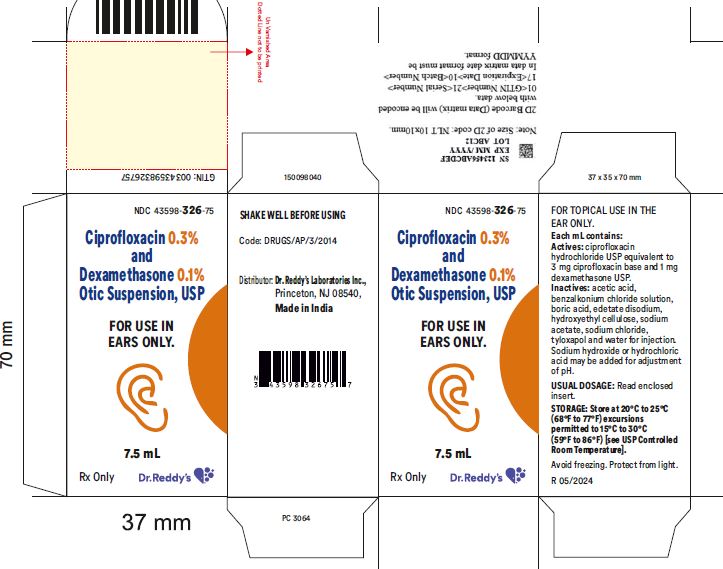
Ciprofloxacin and Dexamethasone 3 mg/mL; 1 mg/mL Suspension/ Drops, 1 bottle — NDC 43598-326-75 (Billing 43598-0326-75)
This is a package of 1 bottle of Ciprofloxacin and Dexamethasone 3 mg/mL; 1 mg/mL Suspension/ Drops from Dr. Reddy's Laboratories, Inc., marketed since Aug 2020 and currently FDA-listed; retail pharmacies pay about $7.12 per mL (NADAC). It is this product's only package size.
NDC database record
One package, one record: these facts belong to NDC 43598-326-75 alone.
- Record
- FDA NDC Directory package listing · Human prescription drug
- Code segments
- 43598 labeler · 326 product · 75 package
- Package marketed since
- Aug 10, 2020
- Sample package
- No — commercial package
- Listing certified through
- Dec 31, 2026
- Barcode (UPC-A, from the NDC)
- 3 4359832675 7
- Medicaid fills, this package
- 122,472 prescriptions in the last four reported quarters
- FDA record last changed
- Jul 24, 2026
Other active recalls for Ciprofloxacin And Dexamethasone (different manufacturers) — 1 · tap to view
Identity & classification
Regulatory identifiers FDA, NLM and CMS codes for this package
Drug-database identifiers Medi-Span GPI and First Databank GCN / HICL / AHFS classification
- GSN (GCN sequence number): 052911
- GCN: 20188
- GPI-14 (Medi-Span): 87991002361820
- HICL (First Databank): 025488
- AHFS class code: 08:12.18.00
- RxCUI (RxNorm): 403908
Where does this data come from?
- FDA openFDA NDC Directory · synced Oct 8, 2026
- FDA label on DailyMed · label index refreshed Oct 8, 2026
- RxNorm (NLM RxNav) · catalog refreshed Oct 1, 2026
- Medi-Span GPI (licensed)
- First Databank (licensed) · refreshed Oct 8, 2026
RxNorm drug class
This medicine belongs to the Fluoroquinolone Antibacterial class.
Where does this data come from?
- RxClass (NLM) · catalog refreshed Oct 1, 2026
Clinical
Ciprofloxacin and dexamethasone otic is used to treat outer ear infections in adults and children and acute (suddenly occurring) middle ear infections in children with ear tubes. Ciprofloxacin is in a class of medications called quinolone antibiotics. Dexamethasone is in a class of medications called corticosteroids. The combination of ciprofloxacin and dexamethasone works by killing the bacteria that cause infection and reducing swelling in the ear.
Read the full MedlinePlus article ↗Patient education
Supplement & herbal interactions
Where does this data come from?
- MedlinePlus (NLM) · refreshed Oct 8, 2026
- FDA label on DailyMed · label index refreshed Oct 8, 2026
Ask a licensed pharmacist directly — free, answered by our team.
Pricing
A drug doesn't have one price. Each row is a different public payment system, and none is what you'd pay at the counter — that depends on your insurance. The ⓘ on each row explains what it measures.
| Price system | Per mL | Per package |
|---|---|---|
| Retail pharmacies payNADAC · weekly | $7.124 | $53.43 / 7.5 ml |
| Medicaid paysCMS SDUD · 12 mo | $11.53 | $86.48 / 7.5 ml |
| Medicare drug plans payPart D · Q2 2026 | $13.23 | $99.21 / 7.5 ml |
Where does this data come from?
- CMS NADAC weekly file · file of Oct 7, 2026
- CMS ASP pricing files · refreshed Sep 20, 2026
- CMS Medicaid State Drug Utilization Data · through Q4 2025
- CMS Part D plan pricing files · refreshed Sep 24, 2026
- VA National Acquisition Center price file
Packaging — all sizes for this product
| Package NDC | Description | Marketing start | Marketing end | Status |
|---|---|---|---|---|
| 43598-0326-75 You're viewing this Main listing | 1 BOTTLE, DROPPER in 1 CARTON / 7.5 mL in 1 BOTTLE, DROPPER | 2020-08-10 | — | Active |
Therapeutic equivalents
| Product | Labeler | Pack | NADAC/unit | TE | Status | Price vs. this |
|---|---|---|---|---|---|---|
| Ciprofloxacin and Dexamethasone 3 mg/mL; 1 mg/mL 00781-6186-67 | Sandoz | 1 bottle | $7.124 | AB | Availability likely | — |
| Ciprofloxacin and Dexamethasone 3 mg/mL; 1 mg/mL 00832-1430-75 | Upsher-Smith | 1 bottle | $7.124 | AB | Availability likely | — |
| Ciprofloxacin and Dexamethasone 3 mg/mL; 1 mg/mL 16714-0628-01 | NorthStar | 1 bottle | $7.124 | AB | Availability likely | — |
| Ciprofloxacin and Dexamethasone 3 mg/mL; 1 mg/mLthis 43598-0326-75 | Dr. | 1 bottle | $7.124 | AB | Availability likely | — |
| Ciprofloxacin and Dexamethasone 3 mg/mL; 1 mg/mL 53746-0831-53 | Amneal | 1 bottle | $7.124 | AB | Availability likely | — |
| Ciprofloxacin and dexamethasone 3 mg/mL; 1 mg/mL 62756-0427-90 | Sun | 1 bottle | $7.124 | AB | Availability likely | — |
| Ciprofloxacin and dexamethasone 3 mg/mL; 1 mg/mL 70244-0033-01 | Sentiss | 1 bottle | $7.124 | AB | Availability likely | — |
| Ciprofloxacin and dexamethasone 3 mg/mL; 1 mg/mL 72485-0625-13 | ARMAS | 1 bottle | $7.124 | AB | Availability likely | — |
| Ciprofloxacin and dexamethasone 3 mg/mL; 1 mg/mL 67296-1943-08 | Redpharm | 1 bottle | — | AB | FDA listed | — |
| Ciprofloxacin and Dexamethasone 3 mg/mL; 1 mg/mL 67296-2257-08 | Redpharm | 1 bottle | — | AB | FDA listed | — |
| Ciprofloxacin and Dexamethasone 3 mg/mL; 1 mg/mL 68071-3804-07 | NuCare | 1 bottle | — | AB | FDA listed | — |
| Ciprofloxacin and dexamethasone 3 mg/mL; 1 mg/mL 68071-3977-07 | NuCare | 1 bottle | — | AB | FDA listed | — |
| Ciprofloxacin and Dexamethasone 3 mg/mL; 1 mg/mL 85766-0245-75 | Sportpharm | 1 bottle | — | AB | FDA listed | — |
Where does this data come from?
- FDA openFDA NDC Directory · synced Oct 8, 2026
- FDA Orange Book · refreshed Oct 3, 2026
- CMS NADAC weekly file · file of Oct 7, 2026
Availability & generic status
This product is an FDA-approved generic. Other versions of the same drug are listed under Therapeutic equivalents, least expensive first.
Where does this data come from?
- FDA Orange Book · refreshed Oct 3, 2026
Inactive Ingredients / Excipients
Inactive ingredients, also called excipients, are components of the drug product other than the active ingredient. They may include fillers, dyes, coatings, preservatives, flavors, or other formulation ingredients.
💡 Tap an ingredient (hover on desktop) to see what it is and why it’s used.
-
UNII Q40Q9N063P
Acetic acid is a weak organic acid commonly used in medicines as a buffer and pH adjuster. It helps maintain the proper acidity level to ensure the drug remains stable and effective in its formulation.
-
UNII F5UM2KM3W7
Benzalkonium chloride is a chemical compound that works as a preservative and antimicrobial agent in medications. It prevents bacterial and fungal growth in liquid formulations to keep the product safe during storage and use.
-
UNII R57ZHV85D4
Boric acid is a weak acid derived from boron. In medicines, it typically serves as a buffer to help maintain the product's pH level and may act as a preservative in certain formulations.
-
UNII 7FLD91C86K
Edetate disodium is a chemical compound that binds and removes certain metal ions. In medicines, it acts as a preservative and stabilizer by preventing metals like calcium from interfering with the product's shelf life and consistency.
-
UNII QTT17582CB
A strong acid used to adjust and maintain the proper pH level in liquid medicines, ensuring stability and preventing breakdown of active ingredients.
-
UNII 7Q6P4JN1QT
Hydroxyethyl cellulose is a plant-derived thickening agent made from cellulose, a natural fiber. In medications, it acts as a binder and thickener to hold ingredients together and control the product's consistency and flow.
-
UNII 4550K0SC9B
Sodium acetate is a salt derived from acetic acid. It acts as a buffer to help maintain the medicine's pH stability and may serve as a preservative or solubilizer in liquid formulations.
-
UNII 451W47IQ8X
Sodium chloride is common table salt. It's used in medicines as a buffer to maintain proper pH, as a filler to add bulk, or to adjust the osmotic balance in liquid formulations.
-
UNII 55X04QC32I
A strong alkaline chemical used to adjust and maintain the pH balance of liquid medicines. It helps keep the medicine stable and ensures it stays effective during storage.
-
UNII Y27PUL9H56
Tyloxapol is a synthetic detergent and surfactant used in medications as a solubilizer and emulsifier. It helps dissolve or blend ingredients that don't naturally mix well, improving how the medicine disperses in liquid formulations.
-
UNII 059QF0KO0R
Water is a liquid solvent that dissolves and mixes ingredients together in liquid medicines, syrups, and injections. It helps distribute the active drug evenly throughout the product.
11 inactive ingredients listed in the exact product block matched to this NDC.
Where does this data come from?
ingredient classCode="IACT" elements from the exact product block matched by this NDC. Label-section narrative from DailyMed / the openFDA label index is shown separately when available.- FDA label on DailyMed · label index refreshed Oct 8, 2026
- FDA openFDA NDC Directory · synced Oct 8, 2026
Inactive ingredient FAQ
Are inactive ingredients the same for every manufacturer?
Why might an inactive ingredient be missing?
Can inactive ingredients matter?
Manufacturer & labeler
More NDCs from Dr. Reddy's Laboratories, Inc. labeler code 43598
- Amlodipine besylate and Atorvastatin calcium 10 mg; 20 mg Tablet, Film Coated NDC 43598-318-05
- Amlodipine besylate and Atorvastatin calcium 5 mg; 20 mg Tablet, Film Coated NDC 43598-319-05
- Amlodipine besylate and Atorvastatin calcium 2.5 mg; 20 mg Tablet, Film Coated NDC 43598-320-05
- Amlodipine besylate and Atorvastatin calcium 10 mg; 10 mg Tablet, Film Coated NDC 43598-321-05
- Amlodipine besylate and Atorvastatin calcium 5 mg; 10 mg Tablet, Film Coated NDC 43598-322-05
- Amlodipine besylate and Atorvastatin calcium 2.5 mg; 10 mg Tablet, Film Coated NDC 43598-323-05
- Esomeprazole Magnesium 20 mg Capsule, Delayed Release NDC 43598-327-27
- Zoledronic Acid 4 mg/5mL Injection, Solution, Concentrate NDC 43598-330-11
- Zoledronic Acid 5 mg/100mL Injection, Solution NDC 43598-331-11
- Aspirin and Dipyridamole 25 mg; 200 mg Capsule, Extended Release NDC 43598-339-60
- Pralatrexate 20 mg/mL Injection NDC 43598-342-11
- Pralatrexate 40 mg/2mL Injection NDC 43598-343-23
Where does this data come from?
- FDA openFDA NDC Directory · synced Oct 8, 2026
- Drugs@FDA
Full prescribing information FDA SPL
🎯 Indications and Usage ▾
1 INDICATIONS AND USAGE Ciprofloxacin 0.3% and dexamethasone 0.1% otic suspension is indicated for the treatment of infections caused by susceptible isolates of the designated microorganisms in the specific conditions listed below: Acute Otitis Media (AOM) in pediatric patients (age 6 months and older) with tympanostomy tubes due to Staphylococcus aureus, Streptococcus pneumoniae, Haemophilus influenzae, Moraxella catarrhalis , and Pseudomonas aeruginosa. Acute Otitis Externa (AOE) in pediatric (age 6 months and older), adult, and elderly patients due to Staphylococcus aureus and Pseudomonas aeruginosa .
Ciprofloxacin 0.3% and dexamethasone 0.1% otic suspension is a combination of ciprofloxacin, a fluoroquinolone antibacterial and dexamethasone, a corticosteroid, indicated for the treatment of infections caused by susceptible isolates of the designated microorganisms in the specific conditions listed below: • Acute Otitis Media (AOM) in pediatric patients (age 6 months and older) with tympanostomy tubes due to Staphylococcus aureus, Streptococcus pneumoniae, Haemophilus influenzae, Moraxella catarrhalis , and Pseudomonas aeruginosa.
( 1 ) • Acute Otitis Externa (AOE) in pediatric (age 6 months and older), adult and elderly patients due to Staphylococcus aureus and Pseudomonas aeruginosa . ( 1 )
⏱️ Dosage and Administration ▾
2 DOSAGE AND ADMINISTRATION Ciprofloxacin 0.3% and dexamethasone 0.1% otic suspension is for otic use (ears) only, not for ophthalmic use, or for injection. ( 2.1 ) • Shake well immediately before use. (2.1 ) • Instill four drops into the affected ear twice daily, for seven days. ( 2 )
2.1Important Administration Instructions • Ciprofloxacin 0.3% and dexamethasone 0.1% otic suspension is for otic use (ears) only, and not for ophthalmic use, or for injection. • Shake well immediately before use.
2.2Dosage For the Treatment of Acute Otitis Media in Pediatric Patients (age 6 months and older) With Tympanostomy Tubes The recommended dosage regimen through tympanostomy tubes is as follows: • Four drops [equivalent to 0.14 mL of ciprofloxacin 0.3% and dexamethasone 0.1% otic suspension, (consisting of 0.42 mg of ciprofloxacin and 0.14 mg of dexamethasone)] instilled into the affected ear twice daily for seven days. • The suspension should be warmed by holding the bottle in the hand for one or two minutes to avoid dizziness, which may result from the instillation of a cold suspension. • The patient should lie with the affected ear upward, and then the drops should be instilled. • The tragus should then be pumped 5 times by pushing inward to facilitate penetration of the drops into the middle ear. • This position should be maintained for 60 seconds.
Repeat, if necessary, for the opposite ear. • Discard unused portion after therapy is completed. For the Treatment of Acute Otitis Externa (age 6 months and older) The recommended dosage regimen is as follows: • Four drops [equivalent to 0.14 mL of ciprofloxacin 0.3% and dexamethasone 0.1% otic suspension, (consisting of 0.42 mg ciprofloxacin and 0.14 mg dexamethasone)] instilled into the affected ear twice daily for seven days. • The suspension should be warmed by holding the bottle in the hand for one or two minutes to avoid dizziness, which may result from the instillation of a cold suspension. • The patient should lie with the affected ear upward, and then the drops should be instilled. • This position should be maintained for 60 seconds to facilitate penetration of the drops into the ear canal.
Repeat, if necessary, for the opposite ear. • Discard unused portion after therapy is completed.
💊 Dosage Forms and Strengths ▾
3 DOSAGE FORMS AND STRENGTHS Otic Suspension: Each mL of ciprofloxacin and dexamethasone otic suspension USP, contains ciprofloxacin hydrochloride USP 0.3% (equivalent to 3 mg ciprofloxacin base) and dexamethasone USP, 0.1% equivalent to 1 mg dexamethasone. Otic Suspension: Each mL of ciprofloxacin and dexamethasone otic suspension contains ciprofloxacin hydrochloride 0.3% (equivalent to 3 mg ciprofloxacin base) and dexamethasone 0.1% (equivalent to 1 mg dexamethasone). (3)
⛔ Contraindications ▾
4 CONTRAINDICATIONS Ciprofloxacin 0.3% and dexamethasone 0.1% otic suspension is contraindicated in patients with a history of hypersensitivity to ciprofloxacin, to other quinolones, or to any of the components in this medication. Use of this product is contraindicated in viral infections of the external canal, including herpes simplex infections and fungal otic infections. • Ciprofloxacin 0.3% and dexamethasone 0.1% otic suspension is contraindicated in patients with a history of hypersensitivity to ciprofloxacin, to other quinolones, or to any of the components in this medication.
( 4 ) • Use of this product is contraindicated in viral infections of the external canal, including herpes simplex infections and fungal otic infections. (4)
⚠️ Warnings and Cautions ▾
5 WARNINGS AND PRECAUTIONS • Hypersensitivity and anaphylaxis have been reported with systemic use of quinolones. Discontinue use if this occurs with use of ciprofloxacin 0.3% and dexamethasone 0.1% otic suspension. ( 5.1) • Prolonged use may result in overgrowth of non-susceptible bacteria and fungi. ( 5.2)
5.1Hypersensitivity Reactions Ciprofloxacin 0.3% and dexamethasone 0.1% otic suspension should be discontinued at the first appearance of a skin rash or any other sign of hypersensitivity. Serious and occasionally fatal hypersensitivity (anaphylactic) reactions, some following the first dose, have been reported in patients receiving systemic quinolones. Some reactions were accompanied by cardiovascular collapse, loss of consciousness, angioedema (including laryngeal, pharyngeal, or facial edema), airway obstruction, dyspnea, urticaria, and itching.
5.2Potential for Microbial Overgrowth with Prolonged Use Prolonged use of ciprofloxacin 0.3% and dexamethasone 0.1% otic suspension may result in overgrowth of non-susceptible, bacteria and fungi. If the infection is not improved after one week of treatment, cultures should be obtained to guide further treatment. If such infections occur, discontinue use and institute alternative therapy.
5.3Continued or Recurrent Otorrhea If otorrhea persists after a full course of therapy, or if two or more episodes of otorrhea occur within six months, further evaluation is recommended to exclude an underlying condition, such as cholesteatoma, foreign body, or a tumor.
🤒 Adverse Reactions ▾
6 ADVERSE REACTIONS The following serious adverse reactions are described elsewhere in the labeling: • Hypersensitivity Reactions [see Warnings and Precautions ( 5.1 )] • Potential for Microbial Overgrowth with Prolonged Use [see Warnings and Precautions ( 5.2)] Most common adverse reactions were ear discomfort (3%), ear pain (2.3%), and ear pruritus (1.5%). (6) To report SUSPECTED ADVERSE REACTIONS, contact Dr. REDDY’S LABORATORIES Inc., at 1-888-375-3784 or FDA at 1-800-FDA-1088 or www.fda.gov/medwatch .
6.1Clinical Trials Experience Because clinical trials are conducted under widely varying conditions, adverse reaction rates observed in the clinical trials of a drug cannot be directly compared to the rates in the clinical trials of another drug and may not reflect the rates observed in practice. In Phases II and III clinical trials, a total of 937 patients were treated with ciprofloxacin 0.3% and dexamethasone 0.1% otic suspension. This included 400 patients with acute otitis media with tympanostomy tubes (AOMT) and 537 patients with AOE.
The reported adverse reactions are listed below: Acute Otitis Media in Pediatric Patients with Tympanostomy Tubes The following adverse reactions occurred in 0.5% or more of the patients with non-intact tympanic membranes. Ad v erse Reactions In cidence (N=400) Ear discomfort 3.0% Ear pain 2.3% Ear precipitate (residue) 0.5% Irritability 0.5% Taste Perversion 0.5% The following adverse reactions were each reported in a single patient: tympanostomy tube blockage; ear pruritus; tinnitus; oral moniliasis; crying; dizziness; and erythema.
Acute Otitis Externa The following adverse reactions occurred in 0.4% or more of the patients with intact tympanic membranes. Ad v erse Reactions In cidence (N=537) Ear pruritus 1.5% Ear debris 0.6% Superimposed ear infection 0.6% Ear congestion 0.4% Ear pain 0.4% Erythema 0.4% The following adverse reactions were each reported in a single patient: ear discomfort; decreased hearing; and ear disorder (tingling).
6.2Postmarketing Experience The following adverse reactions have been identified during post approval use of ciprofloxacin 0.3% and dexamethasone 0.1% otic suspension. Because these reactions are reported voluntarily from a population of unknown size, it is not always possible to reliably estimate their frequency or establish a causal relationship to drug exposure. These reactions include: auricular swelling, headache, hypersensitivity, otorrhea, skin exfoliation, rash erythematous, and vomiting.
👥 Use in Specific Populations ▾
8 USE IN SPECIFIC POPULATIONS
8.1Pregnancy Risk Summary There are no available data on ciprofloxacin 0.3% and dexamethasone 0.1% otic suspension use in pregnant women to evaluate for a drug-associated risk of major birth defects, miscarriage or adverse maternal or fetal outcomes. Because of the minimal systemic absorption of ciprofloxacin and dexamethasone following topical otic administration of ciprofloxacin 0.3% and dexamethasone 0.1% otic suspension, this product is expected to be of minimal risk for maternal and fetal toxicity when administered to pregnant women [see Clinical Pharmacology ( 12.3 )].
Animal reproduction studies have not been conducted with ciprofloxacin 0.3% and dexamethasone 0.1% otic suspension. Oral administration of ciprofloxacin during organogenesis at doses up to 100 mg/kg to pregnant mice and rats, and up to 30 mg/kg to pregnant rabbits did not cause fetal malformations (see Data). These doses were at least 200 times the recommended otic human dose (ROHD in mice, rats, and rabbits, respectively, based on body surface area (BSA).
With dexamethasone, malformations have been observed in animal studies after ocular and systemic administration. The estimated background risk of major birth defects and miscarriage for the indicated population is unknown. All pregnancies have a background risk of birth defect, loss, or other adverse outcomes.
In the U.S. general population, the estimated background risk of major birth defects and miscarriage in clinically recognized pregnancies is 2% to 4% and of miscarriage is 15% to 20% respectively. Data Animal Data Ciprofloxacin Developmental toxicology studies have been performed with ciprofloxacin in rats, mice, and rabbits. The doses used in these studies are, at a minimum, approximately 200 times greater than the recommended otic human dose based on body surface area.
In rats and mice, oral doses up to 100 mg/kg administered during organogenesis (Gestation Days (GD), 6-17) were not associated with adverse developmental outcomes, including embryofetal toxicity or malformations. A 30 mg/kg oral dose was associated with suppression of maternal and fetal body weight gain, but fetal malformations were not observed. Intravenous administration of doses up to 20 mg/kg to pregnant rabbits was not maternally toxic and neither embryofetal toxicity nor fetal malformations were observed.
To mitigate maternal toxicity in these studies, groups of rabbits received ciprofloxacin for a different 5 day dosing period covering organogenesis (GD 6-18). Dexamethasone Dexamethasone has been shown to be teratogenic in mice and rabbits following topical ophthalmic application. In a rat oral developmental toxicity study, no adverse effects were observed at 0.01 mg/kg/day (0.1 times the ROHD based on BSA), although embryotoxicity was observed at higher doses.
8.2Lactation Risk Summary It is not known whether ciprofloxacin and dexamethasone are present in human milk following topical otic administration. Published literature reports the presence of ciprofloxacin in human milk after oral administration to lactating women. However, because of the minimal systemic absorption of ciprofloxacin following topical otic administration of ciprofloxacin 0.3% and dexamethasone 0.1% otic suspension, breastfeeding is not expected to result in the exposure of the infant to ciprofloxacin [see Clinical Pharmacology ( 12.3 )].
Systemically administered corticosteroids appear in human milk. Dexamethasone in breast milk could suppress growth, interfere with endogenous corticosteroid production, or cause other untoward effects. However, it is not known whether topical otic administration of ciprofloxacin 0.3% and dexamethasone 0.1% otic suspension could result in systemic absorption that is sufficient to produce detectable quantities of dexamethasone in human milk.
There are no data on the effects of ciprofloxacin or dexamethasone on milk production. The developmental and health benefits of breastfeeding should b… [Excerpted — this section continues on DailyMed.]
🤰 Pregnancy ▾
8.1Pregnancy Risk Summary There are no available data on ciprofloxacin 0.3% and dexamethasone 0.1% otic suspension use in pregnant women to evaluate for a drug-associated risk of major birth defects, miscarriage or adverse maternal or fetal outcomes. Because of the minimal systemic absorption of ciprofloxacin and dexamethasone following topical otic administration of ciprofloxacin 0.3% and dexamethasone 0.1% otic suspension, this product is expected to be of minimal risk for maternal and fetal toxicity when administered to pregnant women [see Clinical Pharmacology ( 12.3 )].
Animal reproduction studies have not been conducted with ciprofloxacin 0.3% and dexamethasone 0.1% otic suspension. Oral administration of ciprofloxacin during organogenesis at doses up to 100 mg/kg to pregnant mice and rats, and up to 30 mg/kg to pregnant rabbits did not cause fetal malformations (see Data). These doses were at least 200 times the recommended otic human dose (ROHD in mice, rats, and rabbits, respectively, based on body surface area (BSA).
With dexamethasone, malformations have been observed in animal studies after ocular and systemic administration. The estimated background risk of major birth defects and miscarriage for the indicated population is unknown. All pregnancies have a background risk of birth defect, loss, or other adverse outcomes.
In the U.S. general population, the estimated background risk of major birth defects and miscarriage in clinically recognized pregnancies is 2% to 4% and of miscarriage is 15% to 20% respectively. Data Animal Data Ciprofloxacin Developmental toxicology studies have been performed with ciprofloxacin in rats, mice, and rabbits. The doses used in these studies are, at a minimum, approximately 200 times greater than the recommended otic human dose based on body surface area.
In rats and mice, oral doses up to 100 mg/kg administered during organogenesis (Gestation Days (GD), 6-17) were not associated with adverse developmental outcomes, including embryofetal toxicity or malformations. A 30 mg/kg oral dose was associated with suppression of maternal and fetal body weight gain, but fetal malformations were not observed. Intravenous administration of doses up to 20 mg/kg to pregnant rabbits was not maternally toxic and neither embryofetal toxicity nor fetal malformations were observed.
To mitigate maternal toxicity in these studies, groups of rabbits received ciprofloxacin for a different 5 day dosing period covering organogenesis (GD 6-18). Dexamethasone Dexamethasone has been shown to be teratogenic in mice and rabbits following topical ophthalmic application. In a rat oral developmental toxicity study, no adverse effects were observed at 0.01 mg/kg/day (0.1 times the ROHD based on BSA), although embryotoxicity was observed at higher doses.
🧒 Pediatric Use ▾
8.4Pediatric Use The safety and efficacy of ciprofloxacin 0.3% and dexamethasone 0.1% otic suspension have been established in pediatric patients 6 months and older (937 patients) in adequate and well-controlled clinical trials. No clinically relevant changes in hearing function were observed in 69 pediatric patients (age 4 to 12 years) treated with ciprofloxacin 0.3% and dexamethasone 0.1% otic suspension and tested for audiometric parameters.
🆘 Overdosage ▾
10 OVERDOSAGE Due to the characteristics of this preparation, no toxic effects are to be expected with an otic overdose of this product.
🧬 Clinical Pharmacology ▾
12 CLINICAL PHARMACOLOGY
12.1Mechanism of Action Ciprofloxacin is a fluoroquinolone antibacterial [see Microbiology ( 12.4 )]. Dexamethasone, a corticosteroid, has been shown to suppress inflammation by inhibiting multiple inflammatory cytokines resulting in decreased edema, fibrin deposition, capillary leakage and migration of inflammatory cells.
12.3Pharmacokinetics Following a single bilateral 4-drop (total dose = 0.28 mL, 0.84 mg ciprofloxacin, 0.28 mg dexamethasone) topical otic dose of ciprofloxacin 0.3% and dexamethasone 0.1% otic suspension to pediatric patients after tympanostomy tube insertion, measurable plasma concentrations of ciprofloxacin and dexamethasone were observed at 6 hours following administration in 2 of 9 patients and 5 of 9 patients, respectively. Mean ± SD peak plasma concentrations of ciprofloxacin were 1.39 ± 0.880 ng/mL (n=9). Peak plasma concentrations ranged from 0.543 ng/mL to 3.45 ng/mL and were on average approximately 0.1% of peak plasma concentrations achieved with an oral dose of 250-mg.
Peak plasma concentrations of ciprofloxacin were observed within 15 minutes to 2 hours post dose application. Mean ± SD peak plasma concentrations of dexamethasone were 1.14 ± 1.54 ng/mL (n=9). Peak plasma concentrations ranged from 0.135 ng/mL to 5.10 ng/mL and were on average approximately 14% of peak concentrations reported in the literature following an oral 0.5-mg tablet dose.
Peak plasma concentrations of dexamethasone were observed within 15 minutes to 2 hours post dose application. Dexamethasone has been added to aid in the resolution of the inflammatory response accompanying bacterial infection (such as otorrhea in pediatric patients with AOMT).
12.4Microbiology Mechanism of Action The bactericidal action of ciprofloxacin results from interference with the enzyme, DNA gyrase, which is needed for the synthesis of bacterial DNA. Resistance Cross-resistance has been observed between ciprofloxacin and other fluoroquinolones. There is generally no cross-resistance between ciprofloxacin and other classes of anti-bacterial agents, such as beta-lactams or aminoglycosides.
Antimicrobial Activity Ciprofloxacin has been shown to be active against most isolates of the following microorganisms, both in vitro and clinically in otic infections [see Indications and Usage (1 )]. Aerobic Bacteria Gram-positive Bacteria • Staphylococcus aureus • Streptococcus pneumoniae Gram-negative Bacteria • Haemophilus influenzae • Moraxella catarrhalis • Pseudomonas aeruginosa
🧬 Mechanism of Action ▾
12.1Mechanism of Action Ciprofloxacin is a fluoroquinolone antibacterial [see Microbiology ( 12.4 )]. Dexamethasone, a corticosteroid, has been shown to suppress inflammation by inhibiting multiple inflammatory cytokines resulting in decreased edema, fibrin deposition, capillary leakage and migration of inflammatory cells.
📦 How Supplied / Storage and Handling ▾
16 HOW SUPPLIED/STORAGE AND HANDLING How Supplied: Ciprofloxacin 0.3% and Dexamethasone 0.1% Otic Suspension USP, is white to off-white suspension supplied as follows: 7.5 mL fill in 10 mL low density polyethylene bottle. The packaging system consists of a 10 mL low density polyethylene plastic squeeze bottle, a natural low density polyethylene dropper tip and a high density polyethylene tamper evident screw cap for dropper bottle. 7.5 mL fill, NDC 43598-326-75 Storage: Store at 20°C to 25°C (68°F to 77°F); excursions permitted to 15°C to 30°C (59°F to 86°F). [see USP Controlled Room Temperature].
Avoid freezing. Protect from light.
📋 Description ▾
11 DESCRIPTION Ciprofloxacin 0.3% and dexamethasone 0.1% otic suspension USP, contains the quinolone antimicrobial, ciprofloxacin hydrochloride USP, combined with the corticosteroid, dexamethasone USP, in a sterile, preserved suspension for otic use. Each mL of ciprofloxacin 0.3% and dexamethasone 0.1% otic suspension contains ciprofloxacin hydrochloride USP (equivalent to 3 mg ciprofloxacin base), 1 mg dexamethasone USP, and 0.1 mg benzalkonium chloride as a preservative. The inactive ingredients are acetic acid, boric acid, edetate disodium, hydroxyethyl cellulose, sodium acetate, sodium chloride, tyloxapol and water for injection.
Sodium hydroxide or hydrochloric acid may be added for adjustment of pH. Ciprofloxacin, a quinolone antimicrobial is available as the monohydrochloride monohydrate salt of 1-cyclopropyl-6-fluoro-1,4-dihydro-4-oxo-7-(1-piperazinyl)-3-quinoline carboxylic acid. The empirical formula is C 17 H 18 FN 3 O 3 ·HCl·H 2 O.
The molecular weight is 385.82 g/mol and the structural formula is: Figure 1: Structure of Ciprofloxacin Dexamethasone, 9-fluoro-11(beta),17,21-trihydroxy-16(alpha)-methylpregna-1,4-diene-3,20-dione, is a corticosteroid. The empirical formula is C 22 H 29 FO 5 . The molecular weight is 392.46 g/mol and the structural formula is: Figure 2: Structure of Dexamethasone
💬 Information for Patients ▾
17 PATIENT COUNSELING INFORMATION Advise the patient to read the FDA-approved patient labeling (Patient Information and Instructions for Use). For Otic Use Only Advise patients that ciprofloxacin 0.3% and dexamethasone 0.1% otic suspension is for otic use (ears) only. This product must not be used in the eye [see Dosage and Administration ( 2.2 )].
Administration Instructions Instruct patients to warm the bottle in their hand for one to two minutes prior to use and shake well immediately before using [see Dosage and Administration ( 2.1 , 2.2 )]. Allergic Reactions Advise patients to discontinue use immediately and contact their physician, if rash or allergic reaction occurs [ see Warnings and Precautions ( 5.1 )]. Avoid Contamination of the Product Advise patients to avoid contaminating the tip with material from the ear, fingers, or other sources [see Instructions for Use].
Duration of Use Advise patients that it is very important to use the eardrops for as long as their doctor has instructed, even if the symptoms improve [see Patient Information]. Protect from Light Advise patients to protect the product from light [see How Supplied/Storage and Handling ( 16 )]. Unused Product Advise patients to discard unused portion after therapy is completed [see Dosage and Administration ( 2.2 )].
🍼 Nursing Mothers ▾
8.2Lactation Risk Summary It is not known whether ciprofloxacin and dexamethasone are present in human milk following topical otic administration. Published literature reports the presence of ciprofloxacin in human milk after oral administration to lactating women. However, because of the minimal systemic absorption of ciprofloxacin following topical otic administration of ciprofloxacin 0.3% and dexamethasone 0.1% otic suspension, breastfeeding is not expected to result in the exposure of the infant to ciprofloxacin [see Clinical Pharmacology ( 12.3 )].
Systemically administered corticosteroids appear in human milk. Dexamethasone in breast milk could suppress growth, interfere with endogenous corticosteroid production, or cause other untoward effects. However, it is not known whether topical otic administration of ciprofloxacin 0.3% and dexamethasone 0.1% otic suspension could result in systemic absorption that is sufficient to produce detectable quantities of dexamethasone in human milk.
There are no data on the effects of ciprofloxacin or dexamethasone on milk production. The developmental and health benefits of breastfeeding should be considered along with the mother’s clinical need for ciprofloxacin 0.3% and dexamethasone 0.1% otic suspension and any potential adverse effects on the breast-fed child from ciprofloxacin 0.3% and dexamethasone 0.1% otic suspension.
🧬 Pharmacokinetics ▾
12.3Pharmacokinetics Following a single bilateral 4-drop (total dose = 0.28 mL, 0.84 mg ciprofloxacin, 0.28 mg dexamethasone) topical otic dose of ciprofloxacin 0.3% and dexamethasone 0.1% otic suspension to pediatric patients after tympanostomy tube insertion, measurable plasma concentrations of ciprofloxacin and dexamethasone were observed at 6 hours following administration in 2 of 9 patients and 5 of 9 patients, respectively. Mean ± SD peak plasma concentrations of ciprofloxacin were 1.39 ± 0.880 ng/mL (n=9). Peak plasma concentrations ranged from 0.543 ng/mL to 3.45 ng/mL and were on average approximately 0.1% of peak plasma concentrations achieved with an oral dose of 250-mg.
Peak plasma concentrations of ciprofloxacin were observed within 15 minutes to 2 hours post dose application. Mean ± SD peak plasma concentrations of dexamethasone were 1.14 ± 1.54 ng/mL (n=9). Peak plasma concentrations ranged from 0.135 ng/mL to 5.10 ng/mL and were on average approximately 14% of peak concentrations reported in the literature following an oral 0.5-mg tablet dose.
Peak plasma concentrations of dexamethasone were observed within 15 minutes to 2 hours post dose application. Dexamethasone has been added to aid in the resolution of the inflammatory response accompanying bacterial infection (such as otorrhea in pediatric patients with AOMT).
🔬 Clinical Studies ▾
14 CLINICAL STUDIES In a randomized, multicenter, controlled clinical trial, ciprofloxacin 0.3% and dexamethasone 0.1% otic suspension dosed 2 times per day for 7 days demonstrated clinical cures in the per protocol analysis in 86% of AOMT patients compared to 79% for ofloxacin solution, 0.3%, dosed 2 times per day for 10 days. Among culture positive patients, clinical cures were 90% for ciprofloxacin 0.3% and dexamethasone 0.1% otic suspension compared to 79% for ofloxacin solution, 0.3%. Microbiological eradication rates for these patients in the same clinical trial were 91% for ciprofloxacin 0.3% and dexamethasone 0.1% otic suspension compared to 82% for ofloxacin solution, 0.3%.
In 2 randomized multicenter, controlled clinical trials, ciprofloxacin 0.3% and dexamethasone 0.1% otic suspension dosed 2 times per day for 7 days demonstrated clinical cures in 87% and 94% of per protocol evaluable AOE patients, respectively, compared to 84% and 89%, respectively, for otic suspension containing neomycin 0.35%, polymyxin B 10,000 units/mL, and hydrocortisone 1.0% (neo/poly/HC). Among culture positive patients clinical cures were 86% and 92% for ciprofloxacin 0.3% and dexamethasone 0.1% otic suspension compared to 84% and 89%, respectively, for neo/poly/HC.
Microbiological eradication rates for these patients in the same clinical trials were 86% and 92% for ciprofloxacin 0.3% and dexamethasone 0.1% otic suspension compared to 85% and 85%, respectively, for neo/poly/HC.
🧪 Nonclinical Toxicology ▾
13 NONCLINICAL TOXICOLOGY
13.1Carcinogenesis, Mutagenesis, Impairment of Fertility Carcinogenesis Long-term carcinogenicity studies in mice and rats have been completed for ciprofloxacin. After daily oral doses of 750 mg/kg (mice) and 250 mg/kg (rats) were administered for up to 2 years, there was no evidence that ciprofloxacin had any carcinogenic or tumorigenic effects in these species. No long-term studies of ciprofloxacin 0.3% and dexamethasone 0.1% otic suspension have been performed to evaluate carcinogenic potential.
Long-term studies have not been performed to evaluate the carcinogenic potential of topical otic dexamethasone. Mutagenesis Eight in vitro mutagenicity tests have been conducted with ciprofloxacin, and the test results are listed below: Salmonella /Microsome Test (Negative) E. coli DNA Repair Assay (Negative) Mouse Lymphoma Cell Forward Mutation Assay (Positive) Chinese Hamster V79 Cell HGPRT Test (Negative) Syrian Hamster Embryo Cell Transformation Assay (Negative) Saccharomyces cerevisiae Point Mutation Assay (Negative) Saccharomyces cerevisiae Mitotic Crossover and Gene Conversion Assay (Negative) Rat Hepatocyte DNA Repair Assay (Positive) Thus, 2 of the 8 tests were positive, but results of the following 3 in vivo test systems gave negative results: Rat Hepatocyte DNA Repair Assay Micronucleus Test (Mice) Dominant Lethal Test (Mice) Dexamethasone has been tested for in vitro and in vivo genotoxic potential and shown to be positive in the following assays: chromosomal aberrations, sister-chromatid exchange in human lymphocytes, and micronuclei and sister-chromatid exchanges in mouse bone marrow.
However, the Ames/Salmonella assay, both with and without S9 mix, did not show any increase in His+ revertants. Impairment of Fertility Fertility studies performed in male and female rats at oral doses of ciprofloxacin up to 100 mg/kg (approximately 482 times the ROHD of ciprofloxacin based on BSA) revealed no evidence of impairment. Male rats received oral ciprofloxacin for 10 weeks prior to mating and females were dosed for 3 weeks prior to mating through GD 7.
The effect of dexamethasone on fertility has not been investigated following topical otic application. However, the lowest toxic dose of dexamethasone identified following topical dermal application was 1.802 mg/kg in a 26-week study in male rats and resulted in changes to the testes, epididymis, sperm duct, prostate, seminal vesicle, Cowper's gland, and accessory glands. The relevance of this study for short-term topical otic use is unknown.
13.2Animal Toxicology and/or Pharmacology Guinea pigs dosed in the middle ear with ciprofloxacin 0.3% and dexamethasone 0.1% otic suspension for one month exhibited no drug-related structural or functional changes of the cochlear hair cells and no lesions in the ossicles.
13.2Animal Toxicology and/or Pharmacology Guinea pigs dosed in the middle ear with ciprofloxacin 0.3% and dexamethasone 0.1% otic suspension for one month exhibited no drug-related structural or functional changes of the cochlear hair cells and no lesions in the ossicles.
📄 Carcinogenesis, Mutagenesis, Impairment of Fertility ▾
13.1Carcinogenesis, Mutagenesis, Impairment of Fertility Carcinogenesis Long-term carcinogenicity studies in mice and rats have been completed for ciprofloxacin. After daily oral doses of 750 mg/kg (mice) and 250 mg/kg (rats) were administered for up to 2 years, there was no evidence that ciprofloxacin had any carcinogenic or tumorigenic effects in these species. No long-term studies of ciprofloxacin 0.3% and dexamethasone 0.1% otic suspension have been performed to evaluate carcinogenic potential.
Long-term studies have not been performed to evaluate the carcinogenic potential of topical otic dexamethasone. Mutagenesis Eight in vitro mutagenicity tests have been conducted with ciprofloxacin, and the test results are listed below: Salmonella /Microsome Test (Negative) E. coli DNA Repair Assay (Negative) Mouse Lymphoma Cell Forward Mutation Assay (Positive) Chinese Hamster V79 Cell HGPRT Test (Negative) Syrian Hamster Embryo Cell Transformation Assay (Negative) Saccharomyces cerevisiae Point Mutation Assay (Negative) Saccharomyces cerevisiae Mitotic Crossover and Gene Conversion Assay (Negative) Rat Hepatocyte DNA Repair Assay (Positive) Thus, 2 of the 8 tests were positive, but results of the following 3 in vivo test systems gave negative results: Rat Hepatocyte DNA Repair Assay Micronucleus Test (Mice) Dominant Lethal Test (Mice) Dexamethasone has been tested for in vitro and in vivo genotoxic potential and shown to be positive in the following assays: chromosomal aberrations, sister-chromatid exchange in human lymphocytes, and micronuclei and sister-chromatid exchanges in mouse bone marrow.
However, the Ames/Salmonella assay, both with and without S9 mix, did not show any increase in His+ revertants. Impairment of Fertility Fertility studies performed in male and female rats at oral doses of ciprofloxacin up to 100 mg/kg (approximately 482 times the ROHD of ciprofloxacin based on BSA) revealed no evidence of impairment. Male rats received oral ciprofloxacin for 10 weeks prior to mating and females were dosed for 3 weeks prior to mating through GD 7.
The effect of dexamethasone on fertility has not been investigated following topical otic application. However, the lowest toxic dose of dexamethasone identified following topical dermal application was 1.802 mg/kg in a 26-week study in male rats and resulted in changes to the testes, epididymis, sperm duct, prostate, seminal vesicle, Cowper's gland, and accessory glands. The relevance of this study for short-term topical otic use is unknown.
📄 Patient Package Insert ▾
P A T I E NT INFORMATION Ciprofloxacin 0.3% and Dexamethasone 0.1% Otic Suspension What is ciprofloxacin 0.3% and dexamethasone 0.1% otic suspension? Ciprofloxacin 0.3% and dexamethasone 0.1% otic suspension is a prescription medicine used in the ear only (otic use) that contains 2 medicines, a quinolone antibiotic medicine called ciprofloxacin and a corticosteroid medicine called dexamethasone. Ciprofloxacin 0.3% and dexamethasone 0.1% otic suspension is used in adults and children 6 months of age or older to treat certain types of infections caused by certain germs called bacteria.
These bacterial infections include: middle ear infection (known as acute otitis media or AOM) in people who have a tube in their eardrum known as a tympanostomy to prevent having too much fluid in the middle ear outer ear canal infection (known as acute otitis externa or AOE) It is not known if ciprofloxacin 0.3% and dexamethasone 0.1% otic suspension is safe and effective in children under 6 months of age. W ho should not use ciprofloxacin 0.3% and dexamethasone 0.1% otic suspension? Do not use ciprofloxacin 0.3% and dexamethasone 0.1% otic suspension if you: are allergic to ciprofloxacin, quinolones, or any of the ingredients in ciprofloxacin 0.3% and dexamethasone 0.1% otic suspension.
See the end of this Patient Information leaflet for a complete list of ingredients in ciprofloxacin 0.3% and dexamethasone 0.1% otic suspension. have an outer ear canal infection caused by certain viruses, including the herpes simplex virus have an ear infection caused by a fungus W hat should I tell my doctor before using ciprofloxacin 0.3% and dexamethasone 0.1% otic suspension? Before using ciprofloxacin 0.3% and dexamethasone 0.1% otic suspension, tell your doctor about all of your medical conditions, including if you: are pregnant or plan to become pregnant.
It is not known if ciprofloxacin 0.3% and dexamethasone 0.1% otic suspension will harm your unborn baby. are breastfeeding or plan to breastfeed. It is not known if ciprofloxacin 0.3% and dexamethasone 0.1% otic suspension passes into your breast milk. Talk to your doctor about the best way to feed your baby during treatment with ciprofloxacin 0.3% and dexamethasone 0.1% otic suspension.
Tell your doctor about all the medicines you take, including prescription and over-the-counter medicines, vitamins, and herbal supplements. How should I use ciprofloxacin 0.3% and dexamethasone 0.1% otic suspension? Read the detailed Instructions for Use that come with ciprofloxacin 0.3% and dexamethasone 0.1% otic suspension.
Use ciprofloxacin 0.3% and dexamethasone 0.1% otic suspension exactly as your doctor tells you to. Ciprofloxacin 0.3% and dexamethasone 0.1% otic suspension is for use in the ear only (otic use). Do not use ciprofloxacin 0.3% and dexamethasone 0.1% otic suspension in the eye or inject ciprofloxacin 0.3% and dexamethasone 0.1% otic suspension Apply 4 drops of ciprofloxacin 0.3% and dexamethasone 0.1% otic suspension into the affected ear 2 times a day for 7 days.
Do not stop using ciprofloxacin 0.3% and dexamethasone 0.1% otic suspension unless your doctor tells you to, even if your symptoms improve. If your symptoms do not improve after 7 days of treatment with ciprofloxacin 0.3% and dexamethasone 0.1% otic suspension, call your doctor. Call your doctor right away if: you have fluid that continues to drain from your ear (otorrhea) after you have finished your treatment with ciprofloxacin 0.3% and dexamethasone 0.1% otic suspension you have fluid that drains from your ear 2 or more times within 6 months after you stop treatment with ciprofloxacin 0.3% and dexamethasone 0.1% otic suspension What are the possible side effects of ciprofloxacin 0.3% and dexamethasone 0.1% otic suspension?
Ciprofloxacin 0.3% and dexamethasone 0.1% otic suspension may cause serious side effects, including : allergic reactions . Stop using ciprofloxacin 0.3% and dexamethasone 0.1% otic suspension and call your doctor or go… [Excerpted — this section continues on DailyMed.]
📄 Package Label / Principal Display Panel ▾
PACKAGE LABEL PRINCIPAL DISPLAY PANEL SECTION Bottle Label
Carton Label: Unvarnished Area Consists of: 2D Barcode, Lot Number, Expiry Date and Serial Number