
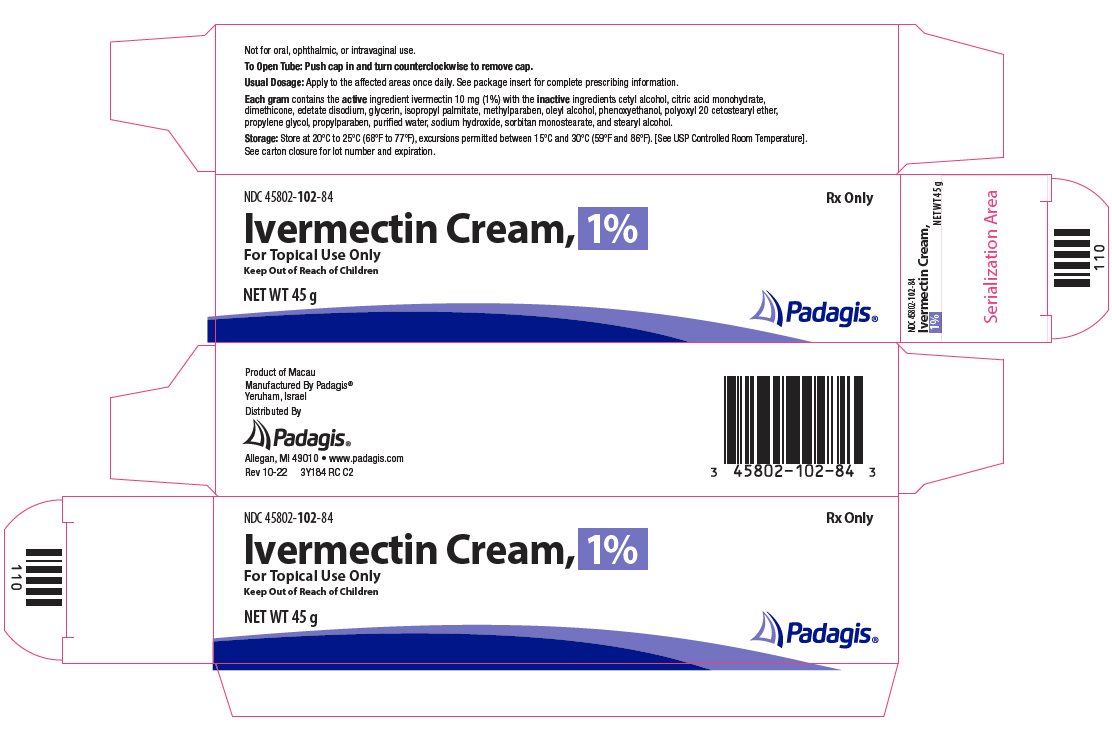
Ivermectin 10 mg/g Cream — NDC 45802-102-84 (Billing 45802-0102-84)
This is a package of Ivermectin 10 mg/g Cream from Padagis Israel Pharmaceuticals Ltd, marketed since Jan 2024 and currently FDA-listed; retail pharmacies pay about $2.75 per g (NADAC). It is this product's only package size.
Identity & classification
Regulatory identifiers FDA, NLM and CMS codes for this package
Drug-database identifiers Medi-Span GPI and First Databank GCN / HICL / AHFS classification
- GSN (GCN sequence number): 073235
- GCN: 37612
- GPI-14 (Medi-Span): 90060030003720
- HICL (First Databank): 010933
- AHFS class code: 84:92.00.00
- RxCUI (RxNorm): 1598068
Where does this data come from?
- FDA openFDA NDC Directory · synced Oct 1, 2026
- FDA label on DailyMed · label index refreshed Oct 1, 2026
- RxNorm (NLM RxNav) · catalog refreshed Oct 1, 2026
- Medi-Span GPI (licensed)
- First Databank (licensed) · refreshed Oct 1, 2026
RxNorm drug class
This medicine belongs to the Antiparasitic class.
Where does this data come from?
- RxClass (NLM) · catalog refreshed Oct 1, 2026
Clinical
- It depends on the product. Tablets treat intestinal strongyloidiasis and onchocerciasis. Lotions treat head lice, and the cream treats the bumps and pimples of rosacea.
- Stromectol and ivermectin tablets are usually a single dose based on your weight. Take it on an empty stomach with water. Your doctor may order follow-up stool tests to confirm the...
- Apply it to dry hair and scalp, covering everything from the scalp outward. Leave it on for 10 minutes, then rinse with water only. Wait 24 hours before shampooing, and don't reuse...
- Dizziness, itching, rash, nausea, diarrhea, and tiredness were reported. If you're treated for onchocerciasis, fever, swollen glands, and joint pain can happen as the parasites die...
Patient education
Supplement & herbal interactions
Some supplements/herbs that may interact with Ivermectin — tap one for details:
Where does this data come from?
- MedlinePlus (NLM) · refreshed Oct 1, 2026
- FDA label on DailyMed · label index refreshed Oct 1, 2026
Ask a licensed pharmacist directly — free, answered by our team.
Pricing
A drug doesn't have one price. Each row is a different public payment system, and none is what you'd pay at the counter — that depends on your insurance. The ⓘ on each row explains what it measures.
| Price system | Per g | Per package |
|---|---|---|
| Retail pharmacies payNADAC · weekly | $2.746 | $123.57 / 45 g |
| Medicaid paysCMS SDUD · 12 mo | $3.73 | $168.00 / 45 g |
| Medicare drug plans payPart D · Q2 2026 | $7.33 | $329.83 / 45 g |
Where does this data come from?
- CMS NADAC weekly file · file of Sep 30, 2026
- CMS ASP pricing files · refreshed Sep 20, 2026
- CMS Medicaid State Drug Utilization Data · through Q1 2026
- CMS Part D plan pricing files · refreshed Sep 24, 2026
- VA National Acquisition Center price file
Packaging — all sizes for this product
| Package NDC | Description | Marketing start | Marketing end | Status |
|---|---|---|---|---|
| 45802-0102-84 You're viewing this Main listing | 1 TUBE in 1 CARTON / 45 g in 1 TUBE | 2024-01-08 | — | Active |
Therapeutic equivalents
| Product | Labeler | Pack | NADAC/unit | TE | Status | Price vs. this |
|---|---|---|---|---|---|---|
| Ivermectin 10 mg/g 00591-4052-89 | Actavis | 1 tube | $2.746 | AB | Availability likely | — |
| Ivermectin 10 mg/gthis 45802-0102-84 | Padagis | 1 tube | $2.746 | AB | Availability likely | — |
| Ivermectin 10 mg/g 68308-0701-45 | Mayne | 1 tube | $2.746 | AB | Availability likely | — |
| Soolantra 10 mg/g 00299-3823-00 | Galderma | 2 g | — | AB | FDA listed | — |
| Ivermectin 10 mg/g 63629-8754-01 | Bryant | 1 tube | — | AB | FDA listed | — |
| ivermectin 10 mg/g 70771-1728-02 | Zydus | 1 tube | — | AB | FDA listed | — |
| Ivermectin 10 mg/g 71335-2946-01 | Bryant | 1 tube | — | AB | FDA listed | — |
| Ivermectin 10 mg/g 72162-2294-02 | Bryant | 1 tube | — | AB | FDA listed | — |
| ivermectin 10 mg/g 72578-0120-02 | Viona | 1 tube | — | AB | FDA listed | — |
Where does this data come from?
- FDA openFDA NDC Directory · synced Oct 1, 2026
- FDA Orange Book · refreshed Sep 3, 2026
- CMS NADAC weekly file · file of Sep 30, 2026
Availability & generic status
This product is an FDA-approved generic. Other versions of the same drug are listed under Therapeutic equivalents, least expensive first.
Where does this data come from?
- FDA Orange Book · refreshed Sep 3, 2026
What it looks like
Where does this data come from?
- FDA label on DailyMed · label index refreshed Oct 1, 2026
Inactive Ingredients / Excipients
Inactive ingredients, also called excipients, are components of the drug product other than the active ingredient. They may include fillers, dyes, coatings, preservatives, flavors, or other formulation ingredients.
💡 Tap an ingredient (hover on desktop) to see what it is and why it’s used.
-
UNII 936JST6JCN
Cetyl alcohol is a waxy, fatty substance derived from plant or animal sources. It acts as an emulsifier and thickener in medicines, helping blend oil and water components and giving products a smooth, creamy texture.
-
UNII 2968PHW8QP
A weak organic acid derived from citrus fruits or made through fermentation. It works as a buffer to control pH, a preservative to extend shelf life, and a flavoring agent in medications.
-
UNII 92RU3N3Y1O
Dimethicone is a silicone-based oil that acts as an anti-foaming agent and lubricant in medicines. It reduces gas bubbles in liquid formulations and helps coat and protect the stomach lining when ingested.
-
UNII 7FLD91C86K
Edetate disodium is a chemical compound that binds and removes certain metal ions. In medicines, it acts as a preservative and stabilizer by preventing metals like calcium from interfering with the product's shelf life and consistency.
-
UNII PDC6A3C0OX
Glycerin is a clear, thick liquid derived from plant oils or fats. It acts as a humectant to retain moisture, a sweetener, and a solvent in medications.
-
UNII 8CRQ2TH63M
Isopropyl palmitate is an oily liquid derived from palm oil. It acts as an emollient and lubricant in medicines, helping soften the skin or improve how the product spreads and flows.
-
UNII A2I8C7HI9T
Methylparaben is a preservative derived from benzoic acid that prevents growth of bacteria, fungi, and mold in medicines. It extends the product's shelf life and maintains safety during storage.
-
UNII 172F2WN8DV
A fatty alcohol derived from animal or plant oils. It acts as an emollient and helps stabilize emulsions, allowing oil and water to mix evenly in the medication.
-
UNII HIE492ZZ3T
Phenoxyethanol is a synthetic preservative and antimicrobial agent used to prevent bacterial and fungal growth in medicines and cosmetic products, extending shelf life and maintaining product safety.
-
UNII YRC528SWUY
A waxy emulsifier made from plant-derived fatty alcohols. It helps blend oil and water-based ingredients together and improves how the medicine spreads and absorbs.
-
UNII 6DC9Q167V3
Propylene glycol is a clear liquid derived from petroleum or vegetable sources. It acts as a solvent, humectant, and preservative in medicines, helping dissolve active ingredients and maintain product stability.
-
UNII Z8IX2SC1OH
Propylparaben is a chemical preservative used to prevent bacterial and fungal growth in medicines and personal care products. It helps extend shelf life and maintain product safety during storage.
-
UNII 55X04QC32I
A strong alkaline chemical used to adjust and maintain the pH balance of liquid medicines. It helps keep the medicine stable and ensures it stays effective during storage.
-
UNII NVZ4I0H58X
A waxy substance made from sorbitol and stearic acid. It acts as an emulsifier and stabilizer, helping keep oil and water mixed together and preventing separation in the medicine.
-
UNII 2KR89I4H1Y
Stearyl alcohol is a waxy, fatty substance derived from natural oils or made synthetically. It acts as an emulsifier and thickener in medicines, helping mix ingredients together and give the product the right texture.
-
UNII 059QF0KO0R
Water is a liquid solvent that dissolves and mixes ingredients together in liquid medicines, syrups, and injections. It helps distribute the active drug evenly throughout the product.
16 inactive ingredients listed in the exact product block matched to this NDC.
Where does this data come from?
ingredient classCode="IACT" elements from the exact product block matched by this NDC. Label-section narrative from DailyMed / the openFDA label index is shown separately when available.- FDA label on DailyMed · label index refreshed Oct 1, 2026
- FDA openFDA NDC Directory · synced Oct 1, 2026
Inactive ingredient FAQ
Are inactive ingredients the same for every manufacturer?
Why might an inactive ingredient be missing?
Can inactive ingredients matter?
Manufacturer & labeler
Where does this data come from?
- FDA openFDA NDC Directory · synced Oct 1, 2026
- Drugs@FDA
Full prescribing information FDA SPL
🎯 Indications and Usage ▾
1 INDICATIONS AND USAGE Ivermectin cream is indicated for the treatment of inflammatory lesions of rosacea. Ivermectin cream is indicated for the treatment of inflammatory lesions of rosacea. ( 1 )
⏱️ Dosage and Administration ▾
2 DOSAGE AND ADMINISTRATION Apply to the affected areas of the face once daily. Use a pea-size amount for each area of the face (forehead, chin, nose, each cheek) that is affected. Spread as a thin layer, avoiding the eyes and lips. Ivermectin cream is not for oral, ophthalmic, or intravaginal use. • Apply to the affected areas once daily. ( 2 ) • Not for oral, ophthalmic or intravaginal use. ( 2 )
💊 Dosage Forms and Strengths ▾
3 DOSAGE FORMS AND STRENGTHS Cream, 1%. Each gram of ivermectin cream contains 10 mg of ivermectin in a white to pale yellow cream base. Ivermectin cream is supplied in tubes of 30 g, 45 g and 60 g. Cream, 1% ( 3 )
⛔ Contraindications ▾
4 CONTRAINDICATIONS None. None. ( 4 )
🤒 Adverse Reactions ▾
6 ADVERSE REACTIONS In controlled clinical trials with ivermectin cream the most common adverse reactions (incidence ≤ 1%) included skin burning sensation and skin irritation. ( 6.1 ) To report SUSPECTED ADVERSE REACTIONS, contact Padagis ® at 1-866-634-9120 or FDA at 1-800-FDA-1088 or www.fda.gov/medwatch.
6.1Clinical Trials Experience Because clinical trials are conducted under widely varying conditions, adverse reaction rates observed in the clinical trials of a drug cannot be directly compared to rates in the clinical trials of another drug and may not reflect the rates observed in practice. During clinical trials, 2047 subjects with inflammatory lesions of rosacea received ivermectin cream once daily. A total of 1555 subjects were treated once daily for more than 12 weeks, and 519 for approximately one year.
Adverse reactions, reported in ≤ 1% of subjects treated with ivermectin cream for at least 3 months in vehicle-controlled clinical trials, included skin burning sensation and skin irritation.
6.2Postmarketing Experience Because adverse reactions are reported voluntarily from a population of uncertain size, it is not always possible to reliably estimate their frequency or establish a causal relationship to drug exposure. Local adverse reactions: contact dermatitis and allergic dermatitis.
🔄 Drug Interactions ▾
7 DRUG INTERACTIONS In vitro studies have shown that ivermectin cream, at therapeutic concentrations, neither inhibits nor induces cytochrome P450 (CYP450) enzymes.
👥 Use in Specific Populations ▾
8 USE IN SPECIFIC POPULATIONS
8.1Pregnancy Risk Summary The available data on the use of ivermectin, including ivermectin cream, in pregnant women are insufficient to establish a drug-associated risk of major birth defects, miscarriage, or adverse maternal or fetal outcomes. In animal reproduction studies, ivermectin induced adverse developmental outcomes when orally administered to pregnant rats and rabbits during the period of organogenesis at doses 1909 or 354 times the maximum recommended human dose (MRHD), respectively. These orally administered doses were maternally toxic to pregnant rats and rabbits.
In a pre-and postnatal developmental study in rats, neonatal toxicity and adverse effects on behavioral development were observed when ivermectin was orally administered to pregnant females during gestation and lactation ( see Data ). The background risk of major birth defects and miscarriage for the indicated population is unknown. All pregnancies have a background risk of birth defect, loss, or other adverse outcomes.
In the U.S. general population, the estimated background risk of major birth defects and miscarriage in clinically recognized pregnancies is 2 to 4% and 15 to 20%, respectively. Data Human Data No adequate and well-controlled trials of ivermectin cream have been conducted in pregnant women. Retrospective observational studies evaluated pregnancy outcomes in over 700 women in various stages of pregnancy who received oral ivermectin for the treatment of soil-transmitted helminths in rural Africa.
In an additional, randomized open-label trial, 397 pregnant women in their second trimester received a single dose of oral ivermectin, or ivermectin plus albendazole, for soil-transmitted helminths. When compared with a pregnant, untreated population, no differences in pregnancy outcomes were observed between the treated and untreated populations. These studies cannot definitively establish or exclude any drug-associated risk during pregnancy, because either the timing of administration during gestation was not accurately ascertained or the administration occurred only during the second trimester.
Animal Data Systemic embryofetal development studies were conducted in rats and rabbits. Oral doses of 1.5, 4, and 12 mg/kg/day ivermectin were administered during the period of organogenesis to pregnant female rats. Maternal death occurred at 12 mg/kg/day [1909 times the MRHD based on area under the curve (AUC) comparison].
Cleft palate occurred in the fetuses from the 12 mg/kg/day (1909 times the MRHD based on AUC comparison) group. No treatment related embryofetal toxicity or malformations were noted at 4 mg/kg/day (708 times the MRHD based on AUC comparison). Oral doses of 0.5, 1.5, 2.5, 3.5 and 4.5 mg/kg/day ivermectin were administered during the period of organogenesis to pregnant female rabbits.
Maternal death occurred at doses ≥ 2.5 mg/kg/day (72 times the MRHD based on AUC comparison). Carpal flexure occurred in the fetuses from the 4.5 mg/kg/day (354 times the MRHD based on AUC comparison) group. Fetal weight decrease was noted at 3.5 mg/kg/day (146 times the MRHD based on AUC comparison).
No treatment related embryofetal toxicity or malformations were noted at 2.5 mg/kg/day (72 times the MRHD based on AUC comparison). A pre- and postnatal development study was conducted in rats. Oral doses of 1, 2 and 4 mg/kg/day ivermectin were administered to pregnant female rats during gestational days 6-20 and lactation days 2-20.
Neonatal death occurred at doses ≥ 2 mg/kg/day. Behavior development of newborn rats was adversely affected at all doses.
8.2Lactation Risk Summary The presence of ivermectin in human milk following topical administration of ivermectin has not been evaluated. There are no data available regarding the effects of ivermectin on milk production. Published literature suggests that ivermectin was detectable in human milk in 4 lactating women after a single 150 mcg/kg oral dose of ivermectin. However, th… [Excerpted — this section continues on DailyMed.]
🤰 Pregnancy ▾
8.1Pregnancy Risk Summary The available data on the use of ivermectin, including ivermectin cream, in pregnant women are insufficient to establish a drug-associated risk of major birth defects, miscarriage, or adverse maternal or fetal outcomes. In animal reproduction studies, ivermectin induced adverse developmental outcomes when orally administered to pregnant rats and rabbits during the period of organogenesis at doses 1909 or 354 times the maximum recommended human dose (MRHD), respectively. These orally administered doses were maternally toxic to pregnant rats and rabbits.
In a pre-and postnatal developmental study in rats, neonatal toxicity and adverse effects on behavioral development were observed when ivermectin was orally administered to pregnant females during gestation and lactation ( see Data ). The background risk of major birth defects and miscarriage for the indicated population is unknown. All pregnancies have a background risk of birth defect, loss, or other adverse outcomes.
In the U.S. general population, the estimated background risk of major birth defects and miscarriage in clinically recognized pregnancies is 2 to 4% and 15 to 20%, respectively. Data Human Data No adequate and well-controlled trials of ivermectin cream have been conducted in pregnant women. Retrospective observational studies evaluated pregnancy outcomes in over 700 women in various stages of pregnancy who received oral ivermectin for the treatment of soil-transmitted helminths in rural Africa.
In an additional, randomized open-label trial, 397 pregnant women in their second trimester received a single dose of oral ivermectin, or ivermectin plus albendazole, for soil-transmitted helminths. When compared with a pregnant, untreated population, no differences in pregnancy outcomes were observed between the treated and untreated populations. These studies cannot definitively establish or exclude any drug-associated risk during pregnancy, because either the timing of administration during gestation was not accurately ascertained or the administration occurred only during the second trimester.
Animal Data Systemic embryofetal development studies were conducted in rats and rabbits. Oral doses of 1.5, 4, and 12 mg/kg/day ivermectin were administered during the period of organogenesis to pregnant female rats. Maternal death occurred at 12 mg/kg/day [1909 times the MRHD based on area under the curve (AUC) comparison].
Cleft palate occurred in the fetuses from the 12 mg/kg/day (1909 times the MRHD based on AUC comparison) group. No treatment related embryofetal toxicity or malformations were noted at 4 mg/kg/day (708 times the MRHD based on AUC comparison). Oral doses of 0.5, 1.5, 2.5, 3.5 and 4.5 mg/kg/day ivermectin were administered during the period of organogenesis to pregnant female rabbits.
Maternal death occurred at doses ≥ 2.5 mg/kg/day (72 times the MRHD based on AUC comparison). Carpal flexure occurred in the fetuses from the 4.5 mg/kg/day (354 times the MRHD based on AUC comparison) group. Fetal weight decrease was noted at 3.5 mg/kg/day (146 times the MRHD based on AUC comparison).
No treatment related embryofetal toxicity or malformations were noted at 2.5 mg/kg/day (72 times the MRHD based on AUC comparison). A pre- and postnatal development study was conducted in rats. Oral doses of 1, 2 and 4 mg/kg/day ivermectin were administered to pregnant female rats during gestational days 6-20 and lactation days 2-20.
Neonatal death occurred at doses ≥ 2 mg/kg/day. Behavior development of newborn rats was adversely affected at all doses.
🧒 Pediatric Use ▾
8.4Pediatric Use Safety and effectiveness of ivermectin cream in pediatric patients have not been established.
🧓 Geriatric Use ▾
8.5Geriatric Use Of the 1371 subjects in the two pivotal clinical studies of ivermectin cream, 170 (12.4%) were 65 and over, while 37 (2.7%) were 75 and over. No overall differences in safety or effectiveness were observed between these subjects and younger subjects, and other reported clinical experience has not identified differences in responses between the elderly and younger patients, but greater sensitivity of some older individuals cannot be ruled out.
🆘 Overdosage ▾
10 OVERDOSAGE In accidental or significant exposure to unknown quantities of veterinary formulations of ivermectin in humans, either by ingestion, inhalation, injection, or exposure to body surfaces, the following adverse effects have been reported most frequently: rash, edema, headache, dizziness, asthenia, nausea, vomiting, and diarrhea. Other adverse effects that have been reported include: seizure, ataxia, dyspnea, abdominal pain, paresthesia, urticaria, and contact dermatitis. In case of accidental ingestion, supportive therapy, if indicated, should include parenteral fluids and electrolytes, respiratory support (oxygen and mechanical ventilation if necessary) and pressor agents if clinically significant hypotension is present.
Induction of emesis and/or gastric lavage as soon as possible, followed by purgatives and other routine anti-poison measures, may be indicated if needed to prevent absorption of ingested material.
🧬 Clinical Pharmacology ▾
12 CLINICAL PHARMACOLOGY
12.1Mechanism of Action The mechanism of action of ivermectin cream in treating rosacea lesions is unknown.
12.2Pharmacodynamics Cardiac Electrophysiology At therapeutic doses, ivermectin cream is not expected to prolong QTc interval.
12.3Pharmacokinetics Absorption The absorption of ivermectin from ivermectin cream was evaluated in a clinical trial in 15 adult male and female subjects with severe papulopustular rosacea applying 1 g ivermectin cream, 1% once daily. At steady state (after 2 weeks of treatment), the highest mean ± standard deviation plasma concentrations of ivermectin peaked (T max ) at 10 ± 8 hours post-dose, the maximum concentration (C max ) was 2.10 ± 1.04 ng/mL (range: 0.69 - 4.02 ng/mL) and the area under the concentration curve (AUC 0-24hr ) was 36.14 ± 15.56 ng.hr/mL (range: 13.69-75.16 ng.hr/mL).
In addition, systemic exposure assessment in longer treatment duration (Phase 3 studies) showed that there was no plasma accumulation of ivermectin over the 52-week treatment period. Distribution An in vitro study demonstrated that ivermectin is greater than 99% bound to plasma proteins and is bound primarily to human serum albumin. No significant binding of ivermectin to erythrocytes was observed.
Metabolism In vitro studies using human hepatic microsomes and recombinant CYP450 enzymes have shown that ivermectin is primarily metabolized by CYP3A4. In vitro studies show that ivermectin at therapeutic concentrations does not inhibit the CYP450 isoenzymes 1A2, 2A6, 2B6, 2C8, 2C9, 2C19, 2D6, 2E1, 3A4 or 4A11, or induce 1A2, 2B6, 2C9 or 3A4. Excretion The apparent terminal half-life averaged 6.5 days (mean ± standard deviation: 155 ± 40 hours, range 92-238 hours) in patients receiving a once daily cutaneous application of ivermectin cream for 28 days.
🧬 Mechanism of Action ▾
12.1Mechanism of Action The mechanism of action of ivermectin cream in treating rosacea lesions is unknown.
📦 How Supplied / Storage and Handling ▾
16 HOW SUPPLIED/STORAGE AND HANDLING Ivermectin Cream, 1% is a white to pale yellow cream, supplied in a laminated tube with a child resistant cap in the following sizes: 30 gram NDC 45802-102-94 45 gram NDC 45802-102-84 60 gram NDC 45802-102-96 Storage Store at 20°C to 25°C (68°F to 77°F), excursions permitted between 15°C and 30°C (59°F and 86°F) [See USP Controlled Room Temperature].
📋 Description ▾
11 DESCRIPTION Ivermectin Cream, 1% is a white to pale yellow hydrophilic cream intended for topical use. Each gram of ivermectin cream contains 10 mg of ivermectin. Ivermectin is a semi-synthetic derivative isolated from the fermentation of Streptomyces avermitilis that belongs to the avermectin family of macrocyclic lactones.
Ivermectin is a mixture containing not less than 95.0 % and not more than 102.0 % of 5-O-demethyl-22,23-dihydroavermectin A 1a plus 5-O-demethyl-25-de(1-methylpropyl)-25-(1-methylethyl)-22,23-dihydroavermectin A 1a , generally referred to as 22,23-dihydroavermectin B 1a and B 1b or H 2 B 1a and H 2 B 1b , respectively; and the ratio (calculated by area percentage) of component H 2 B 1a /(H 2 B 1a + H 2 B 1b ) is not less than 90.0 %. The respective empirical formulas of H 2 B 1a and H 2 B 1b are C 48 H 74 O 14 and C 47 H 72 O 14 with molecular weights of 875.10 and 861.07 respectively.
The structural formulas are: Component H 2 B 1a : R = C 2 H 5 , Component H 2 B 1b : R = CH 3 . Ivermectin cream contains the following inactive ingredients: cetyl alcohol, citric acid monohydrate, dimethicone, edetate disodium, glycerin, isopropyl palmitate, methylparaben, oleyl alcohol, phenoxyethanol, polyoxyl 20 cetostearyl ether, propylene glycol, propylparaben, purified water, sodium hydroxide, sorbitan monostearate, and stearyl alcohol. formula
💬 Information for Patients ▾
17 PATIENT COUNSELING INFORMATION Advise the patient to read the FDA-approved patient labeling (Instructions for Use). Patients using ivermectin cream should receive the following instruction: Keep out of reach of children. Manufactured by Padagis ® , Yeruham, Israel www.padagis.com Rev 03-24 3Y100 RC PH4
🧬 Pharmacokinetics ▾
12.3Pharmacokinetics Absorption The absorption of ivermectin from ivermectin cream was evaluated in a clinical trial in 15 adult male and female subjects with severe papulopustular rosacea applying 1 g ivermectin cream, 1% once daily. At steady state (after 2 weeks of treatment), the highest mean ± standard deviation plasma concentrations of ivermectin peaked (T max ) at 10 ± 8 hours post-dose, the maximum concentration (C max ) was 2.10 ± 1.04 ng/mL (range: 0.69 - 4.02 ng/mL) and the area under the concentration curve (AUC 0-24hr ) was 36.14 ± 15.56 ng.hr/mL (range: 13.69-75.16 ng.hr/mL).
In addition, systemic exposure assessment in longer treatment duration (Phase 3 studies) showed that there was no plasma accumulation of ivermectin over the 52-week treatment period. Distribution An in vitro study demonstrated that ivermectin is greater than 99% bound to plasma proteins and is bound primarily to human serum albumin. No significant binding of ivermectin to erythrocytes was observed.
Metabolism In vitro studies using human hepatic microsomes and recombinant CYP450 enzymes have shown that ivermectin is primarily metabolized by CYP3A4. In vitro studies show that ivermectin at therapeutic concentrations does not inhibit the CYP450 isoenzymes 1A2, 2A6, 2B6, 2C8, 2C9, 2C19, 2D6, 2E1, 3A4 or 4A11, or induce 1A2, 2B6, 2C9 or 3A4. Excretion The apparent terminal half-life averaged 6.5 days (mean ± standard deviation: 155 ± 40 hours, range 92-238 hours) in patients receiving a once daily cutaneous application of ivermectin cream for 28 days.
🧬 Pharmacodynamics ▾
12.2Pharmacodynamics Cardiac Electrophysiology At therapeutic doses, ivermectin cream is not expected to prolong QTc interval.
🔬 Clinical Studies ▾
14 CLINICAL STUDIES Ivermectin cream applied once daily at bedtime was evaluated in the treatment of inflammatory lesions of rosacea in two randomized, double-blind, vehicle-controlled clinical trials, which were identical in design. The trials were conducted in 1371 subjects aged 18 years and older who were treated once daily for 12 weeks with either ivermectin cream or vehicle cream. Overall, 96% of subjects were Caucasian and 67% were female.
Using the 5-point Investigator Global Assessment (IGA) scale (0=clear, 1=almost clear, 2=mild, 3=moderate, 4=severe), 79% of subjects were scored as moderate (IGA=3) and 21% scored as severe (IGA= 4) at baseline. The co-primary efficacy endpoints in both pivotal trials were the success rate based on the IGA outcome (percentage of subjects “clear” and “almost clear”) and absolute change from baseline in inflammatory lesion counts at Week 12. Table 1 presents the co-primary efficacy results at Week 12.
Ivermectin cream was more effective than vehicle cream on the co-primary efficacy endpoints starting from 4 weeks of treatment in both studies, see Figures 1 through 4. Table 1: Co-Primary Efficacy Results at Week 12 Study 1 Study 2 Ivermectin Cream (N=451) Vehicle Cream (N=232) Ivermectin Cream (N=459) Vehicle Cream (N=229) Investigator Global Assessment: Number (%) of Subjects Clear or Almost Clear 173 (38.4%) 27 (11.6%) 184 (40.1%) 43 (18.8%) Inflammatory Lesion Counts: Mean Absolute (%) Change from Baseline 20.5 (64.9%) 12.0 (41.6%) 22.2 (65.7%) 13.4 (43.4%) figures 1 and 2 figures 3 and 4
🧪 Nonclinical Toxicology ▾
13 NONCLINICAL TOXICOLOGY
13.1Carcinogenesis, Mutagenesis, Impairment of Fertility In a 2-year dermal mouse carcinogenicity study, ivermectin was administered to CD-1 mice at topical doses of 1, 3, and 10 mg/kg/day (0.1%, 0.3% and 1% ivermectin cream applied at 2 ml/kg/day). No drug-related tumors were noted in this study up to the highest dose evaluated in this study of 10 mg/kg/day (747 times the MRHD based on AUC comparison). In a 2-year oral rat carcinogenicity study, ivermectin was administered to Wistar rats at gavage doses of 1, 3, and 9 mg/kg/day.
A statistically significant increase in the incidence of hepatocellular adenoma was noted in males treated with 9 mg/kg/day (1766 times the MRHD based on AUC comparison) ivermectin. The clinical relevance of this finding is unknown. No drug-related tumors were noted in females up to the highest dose evaluated in this study of 9 mg/kg/day (1959 times the MRHD based on AUC comparison).
No drug-related tumors were noted in males at doses ≤ 3 mg/kg/day (599 times the MRHD based on AUC comparison). Ivermectin revealed no evidence of genotoxic potential based on the results of two in vitro genotoxicity tests (the Ames test and the L5178Y/TK +/- mouse lymphoma assay) and one in vivo genotoxicity test (rat micronucleus assay). In a fertility study, oral doses of 0.1, 1 and 9 mg/kg/day ivermectin were administered to male and female rats.
Mortality occurred at 9 mg/kg/day (1027 times the MRHD based on AUC comparison). The precoital period was generally prolonged at 9 mg/kg/day. No treatment related effects on fertility or mating performance were noted at doses ≤ 1 mg/kg/day (68 times the MRHD based on AUC comparison).
📄 Carcinogenesis, Mutagenesis, Impairment of Fertility ▾
13.1Carcinogenesis, Mutagenesis, Impairment of Fertility In a 2-year dermal mouse carcinogenicity study, ivermectin was administered to CD-1 mice at topical doses of 1, 3, and 10 mg/kg/day (0.1%, 0.3% and 1% ivermectin cream applied at 2 ml/kg/day). No drug-related tumors were noted in this study up to the highest dose evaluated in this study of 10 mg/kg/day (747 times the MRHD based on AUC comparison). In a 2-year oral rat carcinogenicity study, ivermectin was administered to Wistar rats at gavage doses of 1, 3, and 9 mg/kg/day.
A statistically significant increase in the incidence of hepatocellular adenoma was noted in males treated with 9 mg/kg/day (1766 times the MRHD based on AUC comparison) ivermectin. The clinical relevance of this finding is unknown. No drug-related tumors were noted in females up to the highest dose evaluated in this study of 9 mg/kg/day (1959 times the MRHD based on AUC comparison).
No drug-related tumors were noted in males at doses ≤ 3 mg/kg/day (599 times the MRHD based on AUC comparison). Ivermectin revealed no evidence of genotoxic potential based on the results of two in vitro genotoxicity tests (the Ames test and the L5178Y/TK +/- mouse lymphoma assay) and one in vivo genotoxicity test (rat micronucleus assay). In a fertility study, oral doses of 0.1, 1 and 9 mg/kg/day ivermectin were administered to male and female rats.
Mortality occurred at 9 mg/kg/day (1027 times the MRHD based on AUC comparison). The precoital period was generally prolonged at 9 mg/kg/day. No treatment related effects on fertility or mating performance were noted at doses ≤ 1 mg/kg/day (68 times the MRHD based on AUC comparison).
📄 Patient Package Insert ▾
Patient Information PATIENT INFORMATION Ivermectin (eye-ver-MEK-tin) Cream, 1% Important: Ivermectin cream is for use on the skin only (topical use) . Do not use ivermectin cream in your mouth, eyes, or vagina. What is ivermectin cream?
Ivermectin cream is a prescription medicine used on the skin (topical) to treat pimples and bumps (inflammatory lesions) caused by a condition called rosacea. It is not known if ivermectin cream is safe and effective in children. Before using ivermectin cream, tell your healthcare provider about all your medical conditions, including if you: • are pregnant or plan to become pregnant.
It is not known if ivermectin cream will harm your unborn baby. • are breastfeeding or plan to breastfeed. It is not known if ivermectin passes into your breast milk. Talk to your healthcare provider about the best way to feed your baby if you use ivermectin cream. are breastfeeding or plan to breastfeed.
It is not known if ivermectin passes into your breast milk. Talk to your healthcare provider about the best way to feed your baby if you use ivermectin cream. Tell your healthcare provider about all of the medicines you take, including prescription and over-the-counter medicines, vitamins, and herbal supplements.
How should I use ivermectin cream? See the detailed “Instructions for Use” that comes with ivermectin cream for information on how to apply ivermectin cream. • Use ivermectin cream exactly as your healthcare provider tells you to. • Apply ivermectin cream to the affected areas of your face 1 time a day. • Avoid contact with your eyes and lips. • If ivermectin cream is accidentally swallowed (ingested), call your healthcare provider or go to the nearest hospital emergency room right away. Apply ivermectin cream to the affected areas of your face 1 time a day.
Avoid contact with your eyes and lips. If ivermectin cream is accidentally swallowed (ingested), call your healthcare provider or go to the nearest hospital emergency room right away. What are the possible side effects of ivermectin cream?
The most common side effects of ivermectin cream include skin burning sensation and skin irritation. These are not all of the possible side effects of ivermectin cream. Call your doctor for medical advice about side effects.
You may report side effects to FDA at 1-800-FDA-1088. You may also report side effects to Padagis ® at 1-866-634-9120. How should I store ivermectin cream? • Store ivermectin cream at room temperature between 68°F to 77°F (20°C to 25°C).
Keep ivermectin cream and all medicines out of the reach of children. General information about the safe and effective use of ivermectin cream. Medicines are sometimes prescribed for purposes other than those listed in a Patient Information leaflet.
Do not use ivermectin cream for a condition for which it was not prescribed. Do not give ivermectin cream to other people, even if they have the same symptoms that you have. It may harm them.
You can ask your pharmacist or healthcare provider for information about ivermectin cream that is written for health professionals. What are the ingredients in ivermectin cream? Active ingredient: ivermectin Inactive ingredients: cetyl alcohol, citric acid monohydrate, dimethicone, edetate disodium, glycerin, isopropyl palmitate, methylparaben, oleyl alcohol, phenoxyethanol, polyoxyl 20 cetostearyl ether, propylene glycol, propylparaben, purified water, sodium hydroxide, sorbitan monostearate, and stearyl alcohol.
Manufactured by Padagis ® Yeruham, Israel www.padagis.com Rev 03-24 For more information about ivermectin cream call 1-866-634-9120. This Patient Information has been approved by the U.S. Food and Drug Administration.
📄 Package Label / Principal Display Panel ▾
PACKAGE/LABEL PRINCIPAL DISPLAY PANEL Rx Only Ivermectin Cream, 1% For Topical Use Only Keep Out of Reach of Children NET WT 45 g carton