
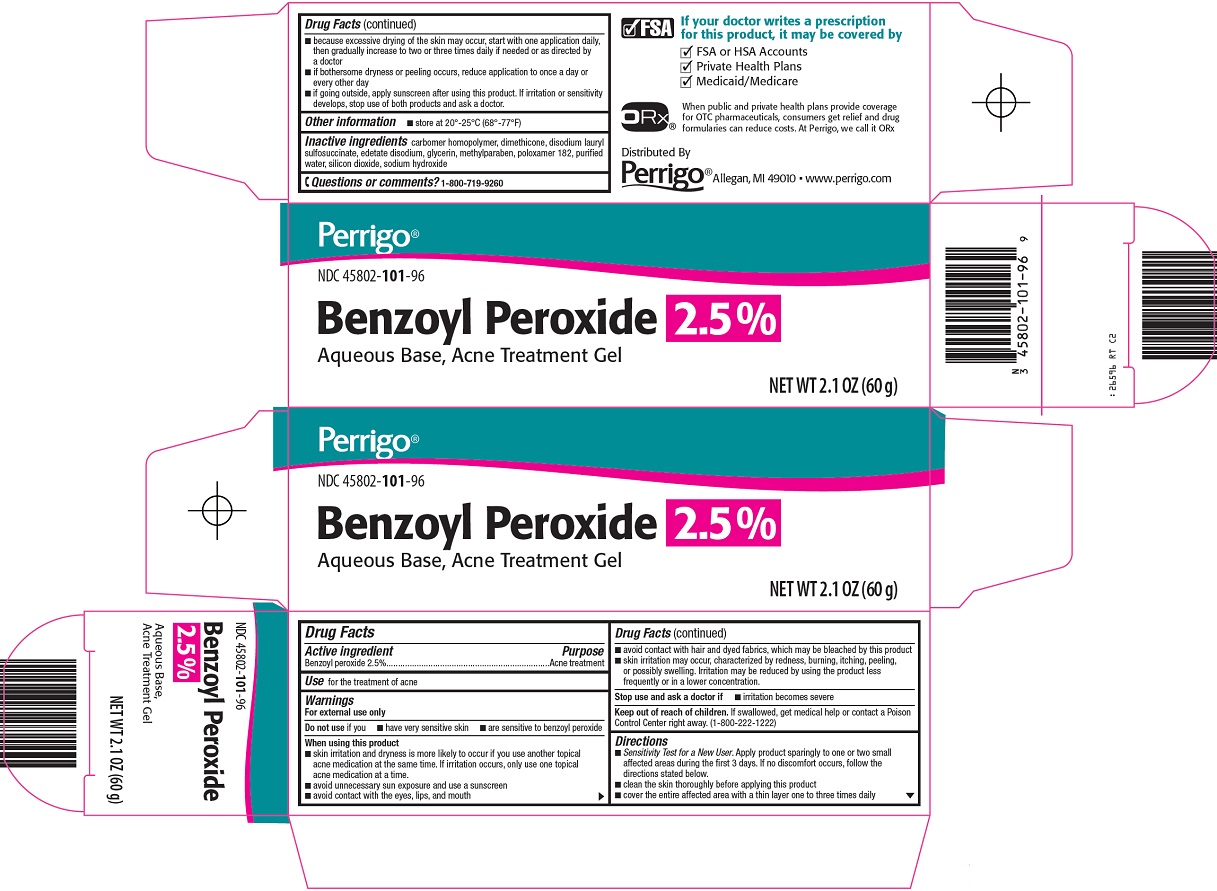
benzoyl peroxide 2.5 g/100g Gel — NDC 45802-101-96 (Billing 45802-0101-96)
This is a package of benzoyl peroxide 2.5 g/100g Gel from Padagis Israel Pharmaceuticals Ltd, marketed since Mar 2012 and currently FDA-listed; retail pharmacies pay about $0.2009 per g (NADAC). It is this product's only package size.
Other active recalls for Benzoyl Peroxide (different manufacturers) — 1 · tap to view
Identity & classification
Regulatory identifiers FDA, NLM and CMS codes for this package
Drug-database identifiers Medi-Span GPI and First Databank GCN / HICL / AHFS classification
- GSN (GCN sequence number): 005811
- GCN: 22932
- GPI-14 (Medi-Span): 90050010004005
- HICL (First Databank): 002470
- AHFS class code: 84:28.00.00
- RxCUI (RxNorm): 308689
Where does this data come from?
- FDA openFDA NDC Directory · synced Oct 1, 2026
- FDA label on DailyMed · label index refreshed Oct 1, 2026
- RxNorm (NLM RxNav) · catalog refreshed Oct 1, 2026
- Medi-Span GPI (licensed)
- First Databank (licensed) · refreshed Oct 1, 2026
RxNorm drug class
This medicine belongs to the Peroxides class.
Where does this data come from?
- RxClass (NLM) · catalog refreshed Oct 1, 2026
Clinical
Benzoyl peroxide is used to treat mild to moderate acne.
Read the full MedlinePlus article ↗- Most products are for acne. They dry up pimples and help prevent new ones. Epsolay is a prescription cream for rosacea bumps in adults. The Folliculitis Treatment Cream products ar...
- For many acne products, start with once a day. You can move up to two or three times daily if your skin tolerates it. If you get dryness or peeling, cut back to once daily or every...
- Redness, dryness, peeling, itching, and stinging or burning are the usual ones. Using less often can help. Using another acne product at the same time makes irritation more likely.
- Stop if irritation gets severe. Stop right away and get help if you have hives, swelling or trouble breathing. Those can be signs of a serious allergic reaction.
Patient education
Supplement & herbal interactions
Some supplements/herbs that may interact with Benzoyl Peroxide — tap one for details:
Where does this data come from?
- MedlinePlus (NLM) · refreshed Oct 1, 2026
- FDA label on DailyMed · label index refreshed Oct 1, 2026
Ask a licensed pharmacist directly — free, answered by our team.
Pricing
A drug doesn't have one price. Each row is a different public payment system, and none is what you'd pay at the counter — that depends on your insurance. The ⓘ on each row explains what it measures.
| Price system | Per g | Per package |
|---|---|---|
| Retail pharmacies payNADAC · weekly | $0.201 | $12.05 / 60 g |
| Medicaid paysCMS SDUD · 12 mo | $0.2945 | $17.67 / 60 g |
| Medicare drug plans payPart D · quarterly | No Part D plan price is available for this NDC in our data. | |
Where does this data come from?
- CMS NADAC weekly file · file of Sep 30, 2026
- CMS ASP pricing files · refreshed Sep 20, 2026
- CMS Medicaid State Drug Utilization Data · through Q1 2026
- CMS Part D plan pricing files · refreshed Sep 24, 2026
- VA National Acquisition Center price file
Packaging — all sizes for this product
| Package NDC | Description | Marketing start | Marketing end | Status |
|---|---|---|---|---|
| 45802-0101-96 You're viewing this Main listing | 1 TUBE in 1 CARTON / 60 g in 1 TUBE | 2012-03-13 | — | Active |
Therapeutic equivalents
| Product | Labeler | Pack | NADAC/unit | TE | Status | Price vs. this |
|---|---|---|---|---|---|---|
| Rugby Benzoyl Peroxide Acne Medication 25 mg/g 00536-1466-25 | Rugby | 1 tube | $0.201 | — | Availability likely | — |
| benzoyl peroxide 2.5 g/100gthis 45802-0101-96 | Padagis | 1 tube | $0.201 | — | Availability likely | — |
| Proactiv plus Pore Targeting Treatment 2.5 g/100mL 11410-0046-00 | Alchemee, | 1 bottle | — | — | FDA listed | — |
| Neutrogena Stubborn Acne AM Treatment 25 mg/g 69968-0653-01 | Kenvue | 12 tubes | — | — | FDA listed | — |
| 2.5 Acne Med 25 mg/mL 70707-0152-15 | Face | 1 tube | — | — | FDA listed | — |
| Acne Med 2.5% 25 mg/mL 70707-0200-15 | Face | 1 bottle | — | — | FDA listed | — |
| Touch Acne Treatment Benzoyl Peroxide 25 mg/g 73246-0001-01 | Diractions | 227 g | — | — | FDA listed | — |
| Rugby Benzoyl Peroxide Acne Medication 25 mg/g 75376-0466-25 | Guangzhou | 1 tube | — | — | FDA listed | — |
| Biba Acne 2.5 g/100mL 83834-0001-01 | Esthetic | 30 ml | — | — | Discontinued | — |
| Spot Acne Treatment 0.75Oz 2.5 g/100g 57337-0149-01 | Rejoice | 1 tube | — | — | FDA listed | — |
| Spot Acne Treatment 0.75Oz 2.5 g/100g 58503-0168-01 | China | 1 tube | — | — | FDA listed | — |
| Clearogen 3 2.5 g/100g 62742-4238-01 | Allure | 55 g | — | — | FDA listed | — |
Where does this data come from?
- FDA openFDA NDC Directory · synced Oct 1, 2026
- FDA Orange Book · refreshed Sep 3, 2026
- CMS NADAC weekly file · file of Sep 30, 2026
Availability & generic status
We did not find an FDA-approved generic match for this exact strength, form and route.
Where does this data come from?
- FDA Orange Book · refreshed Sep 3, 2026
Inactive Ingredients / Excipients
Inactive ingredients, also called excipients, are components of the drug product other than the active ingredient. They may include fillers, dyes, coatings, preservatives, flavors, or other formulation ingredients.
💡 Tap an ingredient (hover on desktop) to see what it is and why it’s used.
-
UNII 92RU3N3Y1O
Dimethicone is a silicone-based oil that acts as an anti-foaming agent and lubricant in medicines. It reduces gas bubbles in liquid formulations and helps coat and protect the stomach lining when ingested.
-
UNII P160Q81342
A synthetic cleaning agent derived from lauryl alcohol and succinic acid. It acts as a surfactant and emulsifier to help blend oil and water components, and may aid in drug dissolution and absorption in liquid or semi-solid formulations.
-
UNII 7FLD91C86K
Edetate disodium is a chemical compound that binds and removes certain metal ions. In medicines, it acts as a preservative and stabilizer by preventing metals like calcium from interfering with the product's shelf life and consistency.
-
UNII PDC6A3C0OX
Glycerin is a clear, thick liquid derived from plant oils or fats. It acts as a humectant to retain moisture, a sweetener, and a solvent in medications.
-
UNII A2I8C7HI9T
Methylparaben is a preservative derived from benzoic acid that prevents growth of bacteria, fungi, and mold in medicines. It extends the product's shelf life and maintains safety during storage.
-
UNII JX0HIX6OAG
Poloxamer 182 is a synthetic polymer made from ethylene oxide and propylene oxide. It acts as a solubilizer and emulsifier, helping mix water and oil-based ingredients together in liquid medications.
-
UNII ETJ7Z6XBU4
Silicon dioxide is a naturally occurring mineral used as a glidant and anti-caking agent. It helps powder ingredients flow smoothly and prevents clumping during manufacturing and storage.
-
UNII 55X04QC32I
A strong alkaline chemical used to adjust and maintain the pH balance of liquid medicines. It helps keep the medicine stable and ensures it stays effective during storage.
-
UNII 059QF0KO0R
Water is a liquid solvent that dissolves and mixes ingredients together in liquid medicines, syrups, and injections. It helps distribute the active drug evenly throughout the product.
9 inactive ingredients listed in the exact product block matched to this NDC.
Label-section wording can be broader than the structured product block and may mention additional formulation ingredients.
Where does this data come from?
ingredient classCode="IACT" elements from the exact product block matched by this NDC. Label-section narrative from DailyMed / the openFDA label index is shown separately when available.- FDA label on DailyMed · label index refreshed Oct 1, 2026
- FDA openFDA NDC Directory · synced Oct 1, 2026
Inactive ingredient FAQ
Are inactive ingredients the same for every manufacturer?
Why might an inactive ingredient be missing?
Can inactive ingredients matter?
Manufacturer & labeler
Where does this data come from?
- FDA openFDA NDC Directory · synced Oct 1, 2026
- Drugs@FDA
FDA label — Drug Facts FDA SPL
🎯 Indications and Usage ▾
Use for the treatment of acne
⏱️ Dosage and Administration ▾
Directions • Sensitivity Test for a New User. Apply product sparingly to one or two small affected areas during the first 3 days. If no discomfort occurs, follow the directions stated below. • clean the skin thoroughly before applying this product • cover the entire affected area with a thin layer one to three times daily • because excessive drying of the skin may occur, start with one application daily, then gradually increase to two or three times daily if needed or as directed by a doctor • if bothersome dryness or peeling occurs, reduce application to once a day or every other day • if going outside, apply sunscreen after using this product.
If irritation or sensitivity develops, stop use of both products and ask a doctor.
⚠️ Warnings ▾
Warnings For external use only Do not use if you • have very sensitive skin • are sensitive to benzoyl peroxide When using this product • skin irritation and dryness is more likely to occur if you use another topical acne medication at the same time. If irritation occurs, only use one topical acne medication at a time. • avoid unnecessary sun exposure and use a sunscreen • avoid contact with the eyes, lips, and mouth • avoid contact with hair and dyed fabrics, which may be bleached by this product • skin irritation may occur, characterized by redness, burning, itching, peeling, or possibly swelling.
Irritation may be reduced by using the product less frequently or in a lower concentration. Stop use and ask a doctor if • irritation becomes severe Keep out of reach of children. If swallowed, get medical help or contact a Poison Control Center right away.
(1-800-222-1222)
📦 Storage and Handling ▾
Other information • store at 20°-25° (68°-77°F)
🧪 Active Ingredient ▾
Active ingredient Benzoyl peroxide 2.5%
🧪 Inactive Ingredients ▾
Inactive ingredients carbomer homopolymer, dimethicone, disodium lauryl sulfosuccinate, edetate disodium, glycerin, methylparaben, poloxamer 182, purified water, silicon dioxide, sodium hydroxide
🎯 Purpose ▾
Purpose Acne treatment
📄 Do Not Use ▾
Do not use if you • have very sensitive skin • are sensitive to benzoyl peroxide
📄 Ask a Doctor Before Use If ▾
Stop use and ask a doctor if • irritation becomes severe
📄 When Using This Product ▾
When using this product • skin irritation and dryness is more likely to occur if you use another topical acne medication at the same time. If irritation occurs, only use one topical acne medication at a time. • avoid unnecessary sun exposure and use a sunscreen • avoid contact with the eyes, lips, and mouth • avoid contact with hair and dyed fabrics, which may be bleached by this product • skin irritation may occur, characterized by redness, burning, itching, peeling, or possibly swelling. Irritation may be reduced by using the product less frequently or in a lower concentration.
📄 Keep Out of Reach of Children ▾
Keep out of reach of children. If swallowed, get medical help or contact a Poison Control Center right away. (1-800-222-1222)
📄 Questions or Comments ▾
Questions or comments? 1-866-634-9120
📄 Package Label / Principal Display Panel ▾
Package/Label Principal Display Panel NDC 45802-101-96 Benzoyl Peroxide 2.5% Aqueous Base, Acne Treatment Gel NET WT