
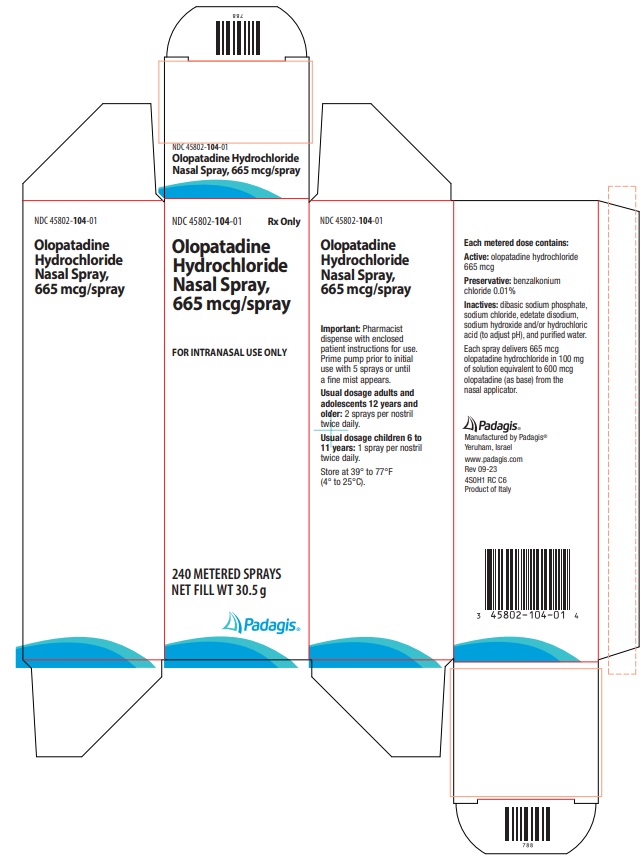
olopatadine hydrochloride 665 ug Spray — NDC 45802-104-01 (Billing 45802-0104-01)
This is a package of olopatadine hydrochloride 665 ug Spray from Padagis Israel Pharmaceuticals Ltd, marketed since Jun 2017 and currently FDA-listed; retail pharmacies pay about $0.8495 per g (NADAC). It is this product's only package size.
Identity & classification
Regulatory identifiers FDA, NLM and CMS codes for this package
Drug-database identifiers Medi-Span GPI and First Databank GCN / HICL / AHFS classification
- GSN (GCN sequence number): 063890
- GCN: 99602
- GPI-14 (Medi-Span): 42401060102020
- HICL (First Databank): 012815
- AHFS class code: 52:02.00.00
- RxCUI (RxNorm): 1797895
Where does this data come from?
- FDA openFDA NDC Directory · synced Oct 1, 2026
- FDA label on DailyMed · label index refreshed Oct 1, 2026
- RxNorm (NLM RxNav) · catalog refreshed Oct 1, 2026
- Medi-Span GPI (licensed)
- First Databank (licensed) · refreshed Oct 1, 2026
RxNorm drug class
This medicine belongs to the Histamine-1 Receptor Inhibitor class.
Where does this data come from?
- RxClass (NLM) · catalog refreshed Oct 1, 2026
Clinical
Olopatadine nasal spray is used to relieve sneezing and a stuffy, runny or itchy nose caused by allergic rhinitis (hay fever). Olopatadine is in a class of medications called antihistamines. It works by blocking the effects of histamine, a substance in the body that causes allergy symptoms.
Read the full MedlinePlus article ↗- It relieves the symptoms of seasonal allergic rhinitis, or hay fever. It is approved for adults and children 6 and older. It is not meant for year-round allergies.
- Spray it in your nose only, twice a day, using the number of sprays your prescriber gave you. Prime it before first use. Prime it again if you haven't used it in over 7 days. Keep...
- A bitter taste is the most common. Headache, nosebleeds, sore throat, post-nasal drip and cough also happen. Call your doctor if nosebleeds are frequent or you notice sores in your...
- It can for some people. Be careful with driving or machinery until you know how it affects you. Avoid alcohol and other sedating medicines because they can add to the effect.
Patient education
Supplement & herbal interactions
Some supplements/herbs that may interact with Olopatadine Hydrochloride — tap one for details:
Where does this data come from?
- MedlinePlus (NLM) · refreshed Oct 1, 2026
- FDA label on DailyMed · label index refreshed Oct 1, 2026
Ask a licensed pharmacist directly — free, answered by our team.
Pricing
A drug doesn't have one price. Each row is a different public payment system, and none is what you'd pay at the counter — that depends on your insurance. The ⓘ on each row explains what it measures.
| Price system | Per g | Per package |
|---|---|---|
| Retail pharmacies payNADAC · weekly | $0.850 | — |
| Medicaid paysCMS SDUD · 12 mo | $1.14 | — |
| Medicare drug plans payPart D · Q2 2026 | $2.07 | — |
Where does this data come from?
- CMS NADAC weekly file · file of Sep 30, 2026
- CMS ASP pricing files · refreshed Sep 20, 2026
- CMS Medicaid State Drug Utilization Data · through Q1 2026
- CMS Part D plan pricing files · refreshed Sep 24, 2026
- VA National Acquisition Center price file
Packaging — all sizes for this product
| Package NDC | Description | Marketing start | Marketing end | Status |
|---|---|---|---|---|
| 45802-0104-01 You're viewing this Main listing | 1 BOTTLE in 1 CARTON / 240 SPRAY in 1 BOTTLE | 2017-06-14 | — | Active |
Therapeutic equivalents
| Product | Labeler | Pack | NADAC/unit | TE | Status | Price vs. this |
|---|---|---|---|---|---|---|
| olopatadine hydrochloride 665 ugthis 45802-0104-01 | Padagis | 1 bottle | $0.850 | AB | Availability likely | — |
| Olopatadine Hydrochloride 665 ug 60505-0845-05 | Apotex | 1 bottle | $0.850 | AB | Availability likely | — |
| Olopatadine Hydrochloride 665 ug 65162-0890-23 | Amneal | 1 bottle | $0.850 | AB | Availability likely | — |
| olopatadine hydrochloride 665 ug 63629-8434-01 | Bryant | 1 bottle | — | AB | FDA listed | — |
| olopatadine hydrochloride 665 ug 72162-1390-02 | Bryant | 1 bottle | — | AB | FDA listed | — |
Where does this data come from?
- FDA openFDA NDC Directory · synced Oct 1, 2026
- FDA Orange Book · refreshed Sep 3, 2026
- CMS NADAC weekly file · file of Sep 30, 2026
Availability & generic status
This product is an FDA-approved generic. Other versions of the same drug are listed under Therapeutic equivalents, least expensive first.
Where does this data come from?
- FDA Orange Book · refreshed Sep 3, 2026
Inactive Ingredients / Excipients
Inactive ingredients, also called excipients, are components of the drug product other than the active ingredient. They may include fillers, dyes, coatings, preservatives, flavors, or other formulation ingredients.
💡 Tap an ingredient (hover on desktop) to see what it is and why it’s used.
-
UNII F5UM2KM3W7
Benzalkonium chloride is a chemical compound that works as a preservative and antimicrobial agent in medications. It prevents bacterial and fungal growth in liquid formulations to keep the product safe during storage and use.
-
UNII 7FLD91C86K
Edetate disodium is a chemical compound that binds and removes certain metal ions. In medicines, it acts as a preservative and stabilizer by preventing metals like calcium from interfering with the product's shelf life and consistency.
-
UNII QTT17582CB
A strong acid used to adjust and maintain the proper pH level in liquid medicines, ensuring stability and preventing breakdown of active ingredients.
-
UNII 451W47IQ8X
Sodium chloride is common table salt. It's used in medicines as a buffer to maintain proper pH, as a filler to add bulk, or to adjust the osmotic balance in liquid formulations.
-
UNII 55X04QC32I
A strong alkaline chemical used to adjust and maintain the pH balance of liquid medicines. It helps keep the medicine stable and ensures it stays effective during storage.
-
UNII GR686LBA74
Sodium phosphate, dibasic is a salt derived from phosphoric acid. It acts as a buffer to help maintain the medicine's pH balance and may serve as a binder or filler in tablets and capsules.
-
UNII 059QF0KO0R
Water is a liquid solvent that dissolves and mixes ingredients together in liquid medicines, syrups, and injections. It helps distribute the active drug evenly throughout the product.
7 inactive ingredients listed in the exact product block matched to this NDC.
Where does this data come from?
ingredient classCode="IACT" elements from the exact product block matched by this NDC. Label-section narrative from DailyMed / the openFDA label index is shown separately when available.- FDA label on DailyMed · label index refreshed Oct 1, 2026
- FDA openFDA NDC Directory · synced Oct 1, 2026
Inactive ingredient FAQ
Are inactive ingredients the same for every manufacturer?
Why might an inactive ingredient be missing?
Can inactive ingredients matter?
Manufacturer & labeler
Where does this data come from?
- FDA openFDA NDC Directory · synced Oct 1, 2026
- Drugs@FDA
Full prescribing information FDA SPL
🎯 Indications and Usage ▾
1 INDICATIONS AND USAGE Olopatadine hydrochloride nasal spray is indicated for the relief of the symptoms of seasonal allergic rhinitis in adults and pediatric patients 6 years of age and older. Olopatadine hydrochloride nasal spray is an H 1 receptor antagonist indicated for the relief of the symptoms of seasonal allergic rhinitis in adults and pediatric patients 6 years of age and older ( 1 ).
⏱️ Dosage and Administration ▾
2 DOSAGE AND ADMINISTRATION For nasal use only. Recommended dosages: • Adults and Adolescents ≥ 12 Years : Two sprays per nostril (665 mcg per spray) twice daily ( 2.1 ). • Pediatric Patients 6 to 11 Years : One spray per nostril (665 mcg per spray) twice daily ( 2.2 ). • Priming Information : Prime olopatadine hydrochloride nasal spray before initial use and when olopatadine hydrochloride nasal spray has not been used for more than 7 days ( 2.3 ).
2.1Adults and Adolescents Twelve Years of Age and Older The recommended dosage is two sprays per nostril twice daily.
2.2Pediatric Patients Six to Eleven Years of Age The recommended dosage is one spray per nostril twice daily.
2.3Administration Information Administer olopatadine hydrochloride nasal spray by the nasal route only. Priming : Before initial use, prime olopatadine hydrochloride nasal spray by releasing 5 sprays or until a fine mist appears. The correct amount of medication cannot be assured before the initial priming.
Re-priming (as needed): When olopatadine hydrochloride nasal spray has not been used for more than 7 days, re-prime by releasing 2 sprays. Avoid spraying olopatadine hydrochloride nasal spray into the eyes. Discard Instructions : Discard nasal device after 240 sprays (enough for 30 days of dosing) have been used even though the bottle is not completely empty.
The correct amount of medication cannot be assured after 240 sprays have been used.
💊 Dosage Forms and Strengths ▾
3 DOSAGE FORMS AND STRENGTHS Nasal spray: 665 mcg olopatadine hydrochloride per spray supplied in a white plastic bottle with a metered-dose manual spray pump, a white nasal applicator, a blue overcap and a blue clip. Nasal spray: 665 mcg of olopatadine hydrochloride in each spray ( 3 ).
⛔ Contraindications ▾
4 CONTRAINDICATIONS None. None ( 4 ).
⚠️ Warnings and Cautions ▾
5 WARNINGS AND PRECAUTIONS • Epistaxis, Nasal Ulceration, and Nasal Septal Perforation : Monitor patients periodically for signs of adverse effects on the nasal mucosa. Discontinue if ulcerations or perforations occur. Avoid use in patients with nasal disease other than allergic rhinitis ( 5.1 ). • Avoid engaging in hazardous occupations requiring complete mental alertness and coordination, such as driving or operating machinery when taking olopatadine hydrochloride nasal spray ( 5.2 ). • Avoid concurrent use of alcohol or other central nervous system depressants with olopatadine hydrochloride nasal spray ( 5.2 ).
5.1Local Nasal Effects Epistaxis and Nasal Ulceration In placebo-controlled clinical trials (vehicle nasal spray) of 2 weeks to 12 months duration, epistaxis and nasal ulcerations were reported [ see Adverse Reactions ( 6.1 ) ]. Nasal Septal Perforation Three placebo-controlled long term (12 months) safety trials (vehicle nasal spray) were conducted. In the first safety trial, patients were treated with an investigational formulation of olopatadine hydrochloride nasal spray containing povidone (not the commercially marketed formulation) or a vehicle nasal spray containing povidone.
Nasal septal perforations were reported in one patient treated with the investigational formulation of olopatadine hydrochloride nasal spray and 2 patients treated with the vehicle nasal spray. In the second safety trial with olopatadine hydrochloride nasal spray, which does not contain povidone, there were no reports of nasal septal perforation. In the third safety trial, one patient exposed to the 3.7 pH vehicle nasal spray (containing no povidone) reported a nasal septal perforation [ see Adverse Reactions ( 6.1 ) ].
Before starting olopatadine hydrochloride nasal spray, conduct a nasal examination to ensure that patients are free of nasal disease other than allergic rhinitis. Perform nasal examinations periodically for signs of adverse effects on the nasal mucosa and consider stopping olopatadine hydrochloride nasal spray if patients develop nasal ulcerations.
5.2Somnolence and Impaired Mental Alertness In clinical trials, the occurrence of somnolence has been reported in some patients taking olopatadine hydrochloride nasal spray [ see Adverse Reactions 6.1 ]. Patients should be cautioned against engaging in hazardous occupations requiring complete mental alertness and motor coordination such as driving or operating machinery after administration of olopatadine hydrochloride nasal spray. Concurrent use of olopatadine hydrochloride nasal spray with alcohol or other central nervous system depressants should be avoided because additional reductions in alertness and additional impairment of central nervous system performance may occur.
🤒 Adverse Reactions ▾
6 ADVERSE REACTIONS The most clinically significant adverse reactions described in other sections of labeling include: • Epistaxis, Nasal Ulceration, and Nasal Septal Perforation [ see Warnings and Precautions ( 5.1 ) ] • Somnolence and Impaired Mental Alertness [ see Warnings and Precautions ( 5.2 ) ] The most common (>1%) adverse reactions, included bitter taste, headache, epistaxis, pharyngolaryngeal pain, post-nasal drip, cough, and urinary tract infection in patients 12 years of age and older and epistaxis, headache, upper respiratory tract infection, bitter taste, pyrexia, and rash in patients 6 to 11 years of age ( 6.1 ).
To report SUSPECTED ADVERSE REACTIONS, contact Padagis ® at 1-866-634-9120 or FDA at 1-800-FDA-1088 or www.fda.gov/medwatch .
6.1Clinical Trials Experience Because clinical trials are conducted under widely varying conditions, adverse reaction rates observed in the clinical trials of a drug cannot be directly compared to rates in the clinical trials of another drug and may not reflect the rates observed in practice. The safety data described below reflect exposure to olopatadine hydrochloride nasal spray in 2770 patients with seasonal or perennial allergic rhinitis in 10 controlled clinical trials of 2 weeks to 12 months duration. Olopatadine hydrochloride nasal spray is not indicated for use in patients with perennial allergic rhinitis.
The safety data from adults and adolescents are based upon 6 placebo-controlled clinical trials (3.7 pH vehicle nasal spray or 7.0 pH vehicle nasal spray) in which 1834 patients with seasonal or perennial allergic rhinitis (652 males and 1182 females) 12 years of age and older were treated with olopatadine hydrochloride nasal spray two sprays per nostril twice daily. There were 1180 patients (olopatadine hydrochloride nasal spray, 587; vehicle nasal spray, 593) that participated in 3 efficacy and safety trials of 2 weeks duration.
There were 2840 patients (olopatadine hydrochloride nasal spray, 1247; 3.7 pH vehicle nasal spray, 1251; 7.0 pH vehicle nasal spray, 342) that participated in 3 long-term clinical trials of 1-year duration. The racial distribution of adult and adolescent patients receiving olopatadine hydrochloride nasal spray was 77% white, 9% black, and 14% other. The incidence of discontinuation due to adverse reactions in these controlled clinical trials was comparable for olopatadine hydrochloride nasal spray and vehicle nasal spray.
Overall, 4.7% of the 1834 adult and adolescent patients across all 6 studies treated with olopatadine hydrochloride nasal spray, 3.5% of the 1844 patients treated with 3.7 pH vehicle nasal spray discontinued due to adverse reactions, and 2.9% of the 342 patients treated with 7.0 pH vehicle nasal spray discontinued due to adverse reactions. The safety data from pediatric patients 6 to 11 years of age are based upon 3 clinical trials in which 870 children with seasonal allergic rhinitis (376 females and 494 males) were treated with olopatadine hydrochloride nasal spray one or two sprays per nostril twice daily for 2 weeks.
The racial distribution of pediatric patients receiving olopatadine hydrochloride nasal spray was 68.6% white, 16.6% black, and 14.8% other. The incidence of discontinuation due to adverse reactions in these controlled clinical trials was comparable for olopatadine hydrochloride nasal spray and vehicle nasal spray. Overall, 1.4% of the 870 pediatric patients across all 3 studies treated with olopatadine hydrochloride nasal spray and 1.3% of the 872 pediatric patients treated with vehicle nasal spray discontinued due to adverse reactions.
Adults and Adolescents 12 Years of Age and Older in Short-Term (2-week) Trials There were 1180 patients 12 years of age and older (olopatadine hydrochloride nasal spray, 587; vehicle nasal spray, 593) that participated in 3 efficacy and safety trials of 2 weeks duration. Table 1 presents the most common adverse reactions (0.9% or greater in patients treated with olopatadine… [Excerpted — this section continues on DailyMed.]
🔄 Drug Interactions ▾
7 DRUG INTERACTIONS Formal drug-drug interaction studies were not conducted for olopatadine hydrochloride nasal spray. Drug interactions with inhibitors of liver enzymes are not anticipated because olopatadine is eliminated predominantly by renal excretion. Drug interactions involving P450 inhibition and plasma protein binding are also not expected [ See Clinical Pharmacology ( 12.3 ) ].
👥 Use in Specific Populations ▾
8 USE IN SPECIFIC POPULATIONS
8.1Pregnancy Risk Summary Published data from postmarketing experience with antihistamines, with similar mechanism of action to olopatadine hydrochloride nasal spray, have not identified a drug-associated risk of major birth defects, miscarriage, or adverse maternal or fetal outcomes. However, there are no published human data specific to olopatadine hydrochloride nasal spray. In animal reproductive studies, oral administration of olopatadine hydrochloride to pregnant rats and rabbits caused a decrease in the number of live fetuses at maternal doses approximately 110 and 1460 times the maximum recommended human daily intranasal dose (MRHDID) on a mg/m 2 basis, respectively (see Data) .
The estimated background risk of major birth defects and miscarriage for the indicated population is unknown. All pregnancies have a background risk of birth defect, loss or other adverse outcomes. In the U.S. general population, the background risk of major birth defects and miscarriage in clinically recognized pregnancies is 2% to 4%, and 15% to 20%, respectively.
Data Animal Data In an oral embryo-fetal development study, pregnant rabbits were dosed throughout the period of organogenesis at doses up to 400 mg/kg/day. A decrease in the number of live fetuses was observed at 400 mg/kg/day (1460 times the MRHDID, on a mg/m 2 basis). In an oral embryo-fetal development study, pregnant rats were dosed throughout the period of organogenesis at doses up to 600 mg/kg/day.
Maternal toxicity, producing death and reduced maternal body weight gain was observed at 600 mg/kg/day (approximately 1100 times the MRHDID on a mg/m 2 basis). Olopatadine produced cleft palate at 60 mg/kg/day (approximately 110 times the MRHDID on a mg/m 2 basis) and decreased embryo-fetal viability and reduced fetal weight in rats at 600 mg/kg/day (approximately 1100 times the MRHDID on a mg/m 2 basis). In peri-/postnatal toxicity studies, pregnant rats received oral doses of olopatadine up to 600 mg/kg/day during late gestation and throughout the lactation period.
Olopatadine produced decreased neonatal survival at 60 mg/kg/day (approximately 110 times the MRHDID on a mg/m 2 basis) and reduced body weight gain in pups at 4 mg/kg/day (approximately 7 times the MRHDID on a mg/m 2 basis). These effects appeared attributable to exposure of pups via the milk as demonstrated in a cross-fostered study in which pups of untreated dams cross-fostered to dams treated with 60 mg/kg/day olopatadine orally during the lactation period exhibited decreased body weight gain.
8.2Lactation Risk Summary There are no data on the presence of olopatadine in human milk, the effects on the breastfed infant, or the effects on milk production. Although orally administered olopatadine is present in rat milk, there is no information about nasally administered olopatadine. It is not known whether topical nasal administration could result in sufficient systemic absorption to produce detectable quantities in human breast milk.
The developmental and health benefits of breastfeeding should be considered along with the mother’s clinical need for olopatadine hydrochloride nasal spray and any potential adverse effects on the breast fed infant from olopatadine hydrochloride nasal spray or from the underlying maternal condition.
8.4Pediatric Use The safety and effectiveness of olopatadine hydrochloride nasal spray for the relief of symptoms of seasonal allergic rhinitis have been established in pediatric patients aged 6 years and older. The safety and effectiveness of olopatadine hydrochloride nasal spray in pediatric patients 6 to 11 years of age are supported by 3 vehicle-controlled 2-week studies in 870 patients [ see Adverse Reactions ( 6.1 ) ]. Doses studied included one and two sprays per nostril twice daily.
One of these studies evaluated the safety of olopatadine hydrochloride nasal spray at doses of one and two sprays per nostril twice daily in 1,188 patients, of which 298 pati… [Excerpted — this section continues on DailyMed.]
🤰 Pregnancy ▾
8.1Pregnancy Risk Summary Published data from postmarketing experience with antihistamines, with similar mechanism of action to olopatadine hydrochloride nasal spray, have not identified a drug-associated risk of major birth defects, miscarriage, or adverse maternal or fetal outcomes. However, there are no published human data specific to olopatadine hydrochloride nasal spray. In animal reproductive studies, oral administration of olopatadine hydrochloride to pregnant rats and rabbits caused a decrease in the number of live fetuses at maternal doses approximately 110 and 1460 times the maximum recommended human daily intranasal dose (MRHDID) on a mg/m 2 basis, respectively (see Data) .
The estimated background risk of major birth defects and miscarriage for the indicated population is unknown. All pregnancies have a background risk of birth defect, loss or other adverse outcomes. In the U.S. general population, the background risk of major birth defects and miscarriage in clinically recognized pregnancies is 2% to 4%, and 15% to 20%, respectively.
Data Animal Data In an oral embryo-fetal development study, pregnant rabbits were dosed throughout the period of organogenesis at doses up to 400 mg/kg/day. A decrease in the number of live fetuses was observed at 400 mg/kg/day (1460 times the MRHDID, on a mg/m 2 basis). In an oral embryo-fetal development study, pregnant rats were dosed throughout the period of organogenesis at doses up to 600 mg/kg/day.
Maternal toxicity, producing death and reduced maternal body weight gain was observed at 600 mg/kg/day (approximately 1100 times the MRHDID on a mg/m 2 basis). Olopatadine produced cleft palate at 60 mg/kg/day (approximately 110 times the MRHDID on a mg/m 2 basis) and decreased embryo-fetal viability and reduced fetal weight in rats at 600 mg/kg/day (approximately 1100 times the MRHDID on a mg/m 2 basis). In peri-/postnatal toxicity studies, pregnant rats received oral doses of olopatadine up to 600 mg/kg/day during late gestation and throughout the lactation period.
Olopatadine produced decreased neonatal survival at 60 mg/kg/day (approximately 110 times the MRHDID on a mg/m 2 basis) and reduced body weight gain in pups at 4 mg/kg/day (approximately 7 times the MRHDID on a mg/m 2 basis). These effects appeared attributable to exposure of pups via the milk as demonstrated in a cross-fostered study in which pups of untreated dams cross-fostered to dams treated with 60 mg/kg/day olopatadine orally during the lactation period exhibited decreased body weight gain.
🧒 Pediatric Use ▾
8.4Pediatric Use The safety and effectiveness of olopatadine hydrochloride nasal spray for the relief of symptoms of seasonal allergic rhinitis have been established in pediatric patients aged 6 years and older. The safety and effectiveness of olopatadine hydrochloride nasal spray in pediatric patients 6 to 11 years of age are supported by 3 vehicle-controlled 2-week studies in 870 patients [ see Adverse Reactions ( 6.1 ) ]. Doses studied included one and two sprays per nostril twice daily.
One of these studies evaluated the safety of olopatadine hydrochloride nasal spray at doses of one and two sprays per nostril twice daily in 1,188 patients, of which 298 patients were exposed to olopatadine hydrochloride nasal spray 1 spray and 297 patients were exposed to vehicle 1 spray. In this study, the incidence of epistaxis with olopatadine hydrochloride nasal spray use was 5.7% [see Adverse Reactions ( 6.1 ), Clinical Studies ( 14 )]. The safety and effectiveness of olopatadine hydrochloride nasal spray in pediatric patients aged 12 years and older are supported by 3 randomized, double blind, parallel group, multicenter, placebo-controlled clinical trials of 2 weeks duration in adult and adolescent patients [see Clinical Studies ( 14 )] .
In these studies, the incidence of epistaxis with olopatadine hydrochloride nasal spray use in 587 patients was 3.2% [see Adverse Reactions ( 6.1 )] . The safety and effectiveness of olopatadine hydrochloride nasal spray have not been established in pediatric patients under 6 years of age. The safety of olopatadine hydrochloride nasal spray at a dose of one spray per nostril twice daily was evaluated in one 2-week vehicle-controlled study in 132 pediatric patients 2 to 5 years of age with allergic rhinitis.
In this trial, 66 patients were exposed to olopatadine hydrochloride nasal spray. The most common (greater than 1.0%) adverse reactions reported were diarrhea (9.1%), epistaxis (6.1%), rhinorrhea (4.5%), bitter taste (3.0%) and wheezing (3.0%). Diarrhea was reported more frequently (9.1%) in patients 2 to 5 years of age than 6 to 11 year old age group (< 1%).
🧓 Geriatric Use ▾
8.5Geriatric Use Clinical studies of olopatadine hydrochloride nasal spray did not include sufficient numbers of patients aged 65 years and older to determine whether they respond differently from younger patients. Other reported clinical experience has not identified differences in responses between the elderly and younger patients. In general, dose selection for an elderly patient should be cautious, reflecting the greater frequency of decreased hepatic, renal, or cardiac function and of concomitant disease or other drug therapy.
🆘 Overdosage ▾
10 OVERDOSAGE Symptoms of antihistamine overdose may include drowsiness in both adults and children. Agitation and restlessness followed by drowsiness may also occur in children. There is no known specific antidote to olopatadine hydrochloride nasal spray.
Should overdose occur, symptomatic or supportive treatment is recommended, taking into account any concomitantly ingested medications. For additional information about overdose treatment, call a poison control center (1-800-222-1222).
🧬 Clinical Pharmacology ▾
12 CLINICAL PHARMACOLOGY
12.1Mechanism of Action Olopatadine is a histamine H 1 receptor antagonist. The antihistaminic activity of olopatadine has been documented in isolated tissues, animal models, and humans.
12.2Pharmacodynamics Cardiac Electrophysiology In a placebo-controlled cardiovascular safety study, 32 healthy volunteers received 20 mg oral solution of olopatadine twice daily for 14 days (8-fold greater daily dose than the recommended daily nasal dose). The mean QTcF (QT corrected by Fridericia’s correction method for heart rate) change from baseline was -2.7 msec and -3.8 msec for olopatadine, and placebo, respectively. In this study, 8 subjects treated with olopatadine had a QTcF change from baseline of 30-60 msec, 1 subject had a QTcF change from baseline greater than 60 msec, and no subjects had QTcF values greater than 500 msec.
Eight subjects treated with placebo had a QTcF change from baseline of 30-60 msec, no subjects had a QTcF change from baseline greater than 60 msec, and no subjects had QTcF values greater than 500 msec. In a 12-month study in 429 perennial allergic rhinitis patients treated with olopatadine hydrochloride nasal spray two sprays per nostril twice daily, no evidence of any effect of olopatadine hydrochloride on QT prolongation was observed.
12.3Pharmacokinetics The pharmacokinetic properties of olopatadine were studied after administration by the nasal, oral, intravenous, and topical ocular routes. Olopatadine exhibited linear pharmacokinetics across the routes studied over a large dose range. Absorption Healthy Subjects: Olopatadine was absorbed with individual peak plasma concentrations observed between 30 minutes and 1 hour after twice daily intranasal administration of olopatadine hydrochloride nasal spray.
The mean ( ± SD) steady-state peak plasma concentration (C max ) of olopatadine was 16.0 ± 8.99 ng/mL. Systemic exposure as indexed by area under the curve (AUC 0-12 ) averaged 66.0 ± 26.8 ng·h/mL. The average absolute bioavailability of intranasal olopatadine is 57%.
The mean accumulation ratio following multiple intranasal administration of olopatadine hydrochloride nasal spray was about 1.3. Seasonal Allergic Rhinitis Patients: Systemic exposure of olopatadine in seasonal allergic rhinitis (SAR) patients after twice daily intranasal administration of olopatadine hydrochloride nasal spray was comparable to that observed in healthy subjects. Olopatadine was absorbed with peak plasma concentrations observed between 15 minutes and 2 hours.
The mean steady-state C max was 23.3 ± 6.2 ng/mL and AUC 0-12 averaged 78.0 ± 13.9 ng·h/mL. Distribution The protein binding of olopatadine was moderate at approximately 55% in human serum, and independent of drug concentration over the range of 0.1 to 1000 ng/mL. Olopatadine was bound predominately to human serum albumin.
Elimination The plasma elimination half-life of olopatadine is 8 to 12 hours. Olopatadine is mainly eliminated through urinary excretion. Approximately 70% of a [ 14 C] olopatadine hydrochloride oral dose was recovered in urine with 17% in the feces.
Of the drug-related material recovered within the first 24 hours in the urine, 86% was unchanged olopatadine with the balance comprised of olopatadine N-oxide and N-desmethyl olopatadine. Metabolism Olopatadine is not extensively metabolized. Based on plasma metabolite profiles following oral administration of [ 14 C] olopatadine, at least six minor metabolites circulate in human plasma.
Olopatadine accounts for 77% of peak plasma total radioactivity and all metabolites amounted to < 6% combined. Two of these have been identified as the olopatadine N-oxide and N-desmethyl olopatadine. In in vitro studies with cDNA-expressed human cytochrome P450 isoenzymes (CYP) and flavin-containing monooxygenases (FMO), N-desmethyl olopatadine (Ml) formation was catalyzed mainly by CYP3A4, while olopatadine N-oxide (M3) was primarily catalyzed by FMO1 and FMO3.
Olopatadine at concentrations up… [Excerpted — this section continues on DailyMed.]
🧬 Mechanism of Action ▾
12.1Mechanism of Action Olopatadine is a histamine H 1 receptor antagonist. The antihistaminic activity of olopatadine has been documented in isolated tissues, animal models, and humans.
📦 How Supplied / Storage and Handling ▾
16 HOW SUPPLIED/STORAGE AND HANDLING How Supplied Olopatadine Hydrochloride Nasal Spray, 665 mcg is supplied in a white plastic bottle with a metered-dose manual spray pump, a white nasal applicator, a blue overcap and a blue clip in a box of 1 (NDC 45802- 104 -01). Each trade size bottle contains 30.5 g of clear, colorless liquid and will provide 240 metered sprays. After priming [ see Dosage and Administration ( 2.3 ) ], each spray delivers a fine mist containing 665 mcg of olopatadine hydrochloride in 100 µL of formulation through the nozzle.
Net content 30.5 g, 240 sprays: NDC 45802- 104 -01 (trade size) Storage Store olopatadine hydrochloride nasal spray at room temperature between 4°C to 25°C (39°F to 77°F).
📋 Description ▾
11 DESCRIPTION Olopatadine hydrochloride nasal spray, 665 mcg is a metered-spray solution for nasal administration. Olopatadine hydrochloride, the active component of olopatadine hydrochloride nasal spray, is a white, water-soluble crystalline powder. The chemical name for olopatadine hydrochloride is (Z)-11-[3-(dimethylamino)propylidene]-6,11-dihydrodibenz[b,e]oxepin-2-acetic acid hydrochloride.
It has a molecular weight of 373.88 g/mol, and its molecular formula is C 21 H 23 NO 3 • HCl with the following chemical structure: Olopatadine hydrochloride nasal spray contains 0.6% w/v olopatadine (base) in a nonsterile aqueous solution with pH of approximately 3.7. After initial priming (5 sprays), each metered spray from the nasal applicator delivers 100 µL of the aqueous solution containing 665 mcg of olopatadine hydrochloride, which is equivalent to 600 mcg of olopatadine (base) [ see Dosage Forms and Strengths ( 3 ) ] .
Olopatadine hydrochloride nasal spray also contains benzalkonium chloride (0.01%), dibasic sodium phosphate, edetate disodium, hydrochloric acid and/or sodium hydroxide (to adjust pH), purified water and sodium chloride. structural
💬 Information for Patients ▾
17 PATIENT COUNSELING INFORMATION Advise the patient to read the FDA-approved patient labeling (Patient Information and Instructions for Use). Local Nasal Effects and Other Common Adverse Reactions Inform patients that treatment with olopatadine hydrochloride nasal spray may lead to adverse reactions, which include epistaxis and nasal ulcerations [ see Warnings and Precautions ( 5.1 ) ]. Other common adverse reactions reported with use of olopatadine hydrochloride nasal spray include bitter taste, headache, and pharyngolaryngeal pain [ see Adverse Reactions ( 6 ) ].
Somnolence and Impaired Mental Alertness Somnolence has been reported in some patients taking olopatadine hydrochloride nasal spray. Caution patients against engaging in hazardous occupations requiring complete mental alertness and motor coordination, such as driving or operating machinery after administration of olopatadine hydrochloride nasal spray [ see Warnings and Precautions ( 5.2 ) ]. Concurrent Use of Alcohol and Other Central Nervous System Depressants Advise patients that concurrent use of olopatadine hydrochloride nasal spray with alcohol or other central nervous system depressants should be avoided because additional reductions in alertness and additional impairment of central nervous system performance may occur [ see Warnings and Precautions ( 5.2 ) ].
Keep Spray Out of Eyes Inform patients to avoid spraying olopatadine hydrochloride nasal spray in their eyes [ see Dosage and Administration ( 2.3 ) ]. Manufactured by Padagis ® Yeruham, Israel www.padagis.com Rev 09-23 4S000 RC PH6
🧬 Pharmacokinetics ▾
12.3Pharmacokinetics The pharmacokinetic properties of olopatadine were studied after administration by the nasal, oral, intravenous, and topical ocular routes. Olopatadine exhibited linear pharmacokinetics across the routes studied over a large dose range. Absorption Healthy Subjects: Olopatadine was absorbed with individual peak plasma concentrations observed between 30 minutes and 1 hour after twice daily intranasal administration of olopatadine hydrochloride nasal spray.
The mean ( ± SD) steady-state peak plasma concentration (C max ) of olopatadine was 16.0 ± 8.99 ng/mL. Systemic exposure as indexed by area under the curve (AUC 0-12 ) averaged 66.0 ± 26.8 ng·h/mL. The average absolute bioavailability of intranasal olopatadine is 57%.
The mean accumulation ratio following multiple intranasal administration of olopatadine hydrochloride nasal spray was about 1.3. Seasonal Allergic Rhinitis Patients: Systemic exposure of olopatadine in seasonal allergic rhinitis (SAR) patients after twice daily intranasal administration of olopatadine hydrochloride nasal spray was comparable to that observed in healthy subjects. Olopatadine was absorbed with peak plasma concentrations observed between 15 minutes and 2 hours.
The mean steady-state C max was 23.3 ± 6.2 ng/mL and AUC 0-12 averaged 78.0 ± 13.9 ng·h/mL. Distribution The protein binding of olopatadine was moderate at approximately 55% in human serum, and independent of drug concentration over the range of 0.1 to 1000 ng/mL. Olopatadine was bound predominately to human serum albumin.
Elimination The plasma elimination half-life of olopatadine is 8 to 12 hours. Olopatadine is mainly eliminated through urinary excretion. Approximately 70% of a [ 14 C] olopatadine hydrochloride oral dose was recovered in urine with 17% in the feces.
Of the drug-related material recovered within the first 24 hours in the urine, 86% was unchanged olopatadine with the balance comprised of olopatadine N-oxide and N-desmethyl olopatadine. Metabolism Olopatadine is not extensively metabolized. Based on plasma metabolite profiles following oral administration of [ 14 C] olopatadine, at least six minor metabolites circulate in human plasma.
Olopatadine accounts for 77% of peak plasma total radioactivity and all metabolites amounted to < 6% combined. Two of these have been identified as the olopatadine N-oxide and N-desmethyl olopatadine. In in vitro studies with cDNA-expressed human cytochrome P450 isoenzymes (CYP) and flavin-containing monooxygenases (FMO), N-desmethyl olopatadine (Ml) formation was catalyzed mainly by CYP3A4, while olopatadine N-oxide (M3) was primarily catalyzed by FMO1 and FMO3.
Olopatadine at concentrations up to 33,900 ng/mL did not inhibit the in vitro metabolism of specific substrates for CYP1A2, CYP2C9, CYP2C19, CYP2D6, CYP2E1 and CYP3A4. The potential for olopatadine and its metabolites to act as inducers of CYP enzymes has not been evaluated. Specific Populations Patients with Hepatic Impairment No specific pharmacokinetic study examining the effect of hepatic impairment was conducted.
Since metabolism of olopatadine is a minor route of elimination, no adjustment of the dosing regimen of olopatadine hydrochloride nasal spray is warranted in patients with hepatic impairment. Patients with Renal Impairment The mean C max values for olopatadine following single nasal doses were not markedly different between healthy subjects (18.1 ng/mL) and patients with mild, moderate and severe renal impairment (range 15.5 to 21.6 ng/mL). The mean plasma AUC 0-12 was 2-fold higher in patients with severe impairment (creatinine clearance < 30 mL/min/1.73 m 2 ).
In these patients, peak steady-state plasma concentrations of olopatadine are approximately 10-fold lower than those observed after higher 20 mg oral doses, twice daily, which were well-tolerated. These findings indicate that no adjustment of the dosing regimen of olopatadine hydrochloride nasal spray is warranted in patients with renal impai… [Excerpted — this section continues on DailyMed.]
🧬 Pharmacodynamics ▾
12.2Pharmacodynamics Cardiac Electrophysiology In a placebo-controlled cardiovascular safety study, 32 healthy volunteers received 20 mg oral solution of olopatadine twice daily for 14 days (8-fold greater daily dose than the recommended daily nasal dose). The mean QTcF (QT corrected by Fridericia’s correction method for heart rate) change from baseline was -2.7 msec and -3.8 msec for olopatadine, and placebo, respectively. In this study, 8 subjects treated with olopatadine had a QTcF change from baseline of 30-60 msec, 1 subject had a QTcF change from baseline greater than 60 msec, and no subjects had QTcF values greater than 500 msec.
Eight subjects treated with placebo had a QTcF change from baseline of 30-60 msec, no subjects had a QTcF change from baseline greater than 60 msec, and no subjects had QTcF values greater than 500 msec. In a 12-month study in 429 perennial allergic rhinitis patients treated with olopatadine hydrochloride nasal spray two sprays per nostril twice daily, no evidence of any effect of olopatadine hydrochloride on QT prolongation was observed.
🔬 Clinical Studies ▾
14 CLINICAL STUDIES Adult and Adolescent Patients 12 Years of Age and Older The efficacy and safety of olopatadine hydrochloride nasal spray were evaluated in 3 randomized, double blind, parallel group, multicenter, placebo-controlled clinical trials (vehicle nasal spray) of 2 weeks duration in adult and adolescent patients, 12 years of age and older with symptoms of seasonal allergic rhinitis. The 3 clinical trials were conducted in the United States and included 1598 patients (556 males, and 1042 females) 12 years of age and older.
In these 3 trials, 587 patients were treated with olopatadine hydrochloride nasal spray 0.6%, 418 patients were treated with olopatadine hydrochloride nasal spray 0.4%, and 593 patients were treated with vehicle nasal spray. Assessment of efficacy was based on patient recording of 4 individual nasal symptoms (nasal congestion, rhinorrhea, itchy nose, and sneezing) on a 0 to 3 categorical severity scale (0 = absent, 1 = mild, 2 = moderate, 3 = severe) as reflective or instantaneous scores. Reflective scoring required patients to record symptom severity over the previous 12 hours; the instantaneous scoring required patients to record symptom severity at the time of recording.
The primary efficacy endpoint was the difference from placebo in the percent change from baseline in the average of morning and evening reflective total nasal symptom score (rTNSS) averaged for the 2-week treatment period. In all 3 trials, patients treated with olopatadine hydrochloride nasal spray, two sprays per nostril, twice-daily, exhibited statistically significantly greater decreases in rTNSS compared to vehicle nasal spray. Results for the rTNSS from 2 representative trials are shown in Table 3.
Table 3: Mean Reflective Total Nasal Symptom Score (rTNSS) in Adult and Adolescent Patients With Seasonal Allergic Rhinitis Study No. Treatment N Baseline Change from Baseline Difference from Placebo Estimate 95% CI p-value Study 1 Olopatadine Hydrochloride Nasal Spray 0.6% 183 8.71 -3.63 -0.96 (-1.42, -0.51) <0.0001 Olopatadine Hydrochloride Nasal Spray 0.4% 188 8.90 -3.38 -0.71 (-1.17, -0.26) 0.0023 Vehicle Nasal Spray 191 8.75 -2.67 Study 2 Olopatadine Hydrochloride Nasal Spray 0.6% 220 9.17 -2.90 -0.98 (-1.37, -0.59) <0.0001 Olopatadine Hydrochloride Nasal Spray 0.4% 228 9.26 -2.63 -0.72 (-1.11, -0.33) 0.0003 Vehicle Nasal Spray 223 9.07 -1.92 Abbreviation: CI, confidence interval.
Itchy eyes and watery eyes were evaluated as secondary endpoints but eye redness was not evaluated. In 2 of the studies, patients treated with olopatadine hydrochloride nasal spray had significantly greater decreases in reflective symptom scores for itchy eyes and watery eyes, compared to vehicle nasal spray. In the 2-week seasonal allergy trials, onset of action was also evaluated by instantaneous TNSS assessments twice-daily after the first dose of study medication.
In these trials, onset of action was seen after 1 day of dosing. Onset of action was evaluated in 3 environmental exposure unit studies with single doses of olopatadine hydrochloride nasal spray. In these studies, patients with seasonal allergic rhinitis were exposed to high levels of pollen in the environmental exposure unit and then treated with either olopatadine hydrochloride nasal spray or vehicle nasal spray, two sprays in each nostril, after which they self-reported their allergy symptoms hourly as instantaneous scores for the subsequent 12 hours.
Olopatadine hydrochloride nasal spray 0.6% was found to have an onset of action of 30 minutes after dosing in the environmental exposure unit. Pediatric Patients 6 to 11 Years of Age There were 3 clinical trials of 2 weeks duration with olopatadine nasal spray in patients 6 to 11 years of age with seasonal allergic rhinitis. Efficacy of olopatadine hydrochloride nasal spray was evaluated in 2 of the 3 trials.
One of the 2 trials that showed efficacy was a randomized, double blind, parallel group, multicenter, placebo (vehicle nasal s… [Excerpted — this section continues on DailyMed.]
🧪 Nonclinical Toxicology ▾
13 NONCLINICAL TOXICOLOGY
13.1Carcinogenesis, Mutagenesis, Impairment of Fertility Carcinogenicity Olopatadine demonstrated no tumorigenic potential in mice at oral doses up to 500 mg/kg/day (approximately 460 times the MRHDID on a mg/m 2 basis) for 78 weeks or in rats at oral doses up to 200 mg/kg/day (approximately 370 times the MRHDID on a mg/m 2 basis) for 104 weeks. Mutagenesis No mutagenic potential was observed when olopatadine was tested in an in vitro bacterial reverse mutation (Ames) test, an in vitro mammalian chromosome aberration assay or an in vivo mouse micronucleus test.
Impairment of Fertility Olopatadine administered at an oral dose of 400 mg/kg/day, (approximately 730 times the MRHDID for adults on an mg/m 2 basis) produced toxicity in male and female rats, and resulted in a decrease in the fertility index and reduced implantation rate. No effects on reproductive function were observed at 50 mg/kg/day (approximately 90 times the MRHDID on a mg/m 2 basis).
📄 Carcinogenesis, Mutagenesis, Impairment of Fertility ▾
13.1Carcinogenesis, Mutagenesis, Impairment of Fertility Carcinogenicity Olopatadine demonstrated no tumorigenic potential in mice at oral doses up to 500 mg/kg/day (approximately 460 times the MRHDID on a mg/m 2 basis) for 78 weeks or in rats at oral doses up to 200 mg/kg/day (approximately 370 times the MRHDID on a mg/m 2 basis) for 104 weeks. Mutagenesis No mutagenic potential was observed when olopatadine was tested in an in vitro bacterial reverse mutation (Ames) test, an in vitro mammalian chromosome aberration assay or an in vivo mouse micronucleus test.
Impairment of Fertility Olopatadine administered at an oral dose of 400 mg/kg/day, (approximately 730 times the MRHDID for adults on an mg/m 2 basis) produced toxicity in male and female rats, and resulted in a decrease in the fertility index and reduced implantation rate. No effects on reproductive function were observed at 50 mg/kg/day (approximately 90 times the MRHDID on a mg/m 2 basis).
📄 Patient Package Insert ▾
Patient Package Insert PATIENT INFORMATION Olopatadine Hydrochloride (oh-loe-PA-ta-deen HYE-droe-KLOR-ide) Nasal Spray, 665mcg/spray for intranasal use What is olopatadine hydrochloride nasal spray? Olopatadine hydrochloride nasal spray is a prescription nasal spray that contains an antihistamine. Olopatadine hydrochloride nasal spray is used to treat seasonal allergy symptoms in adults and children 6 years of age and older.
It is not known if olopatadine hydrochloride nasal spray is safe and effective in children under 6 years of age. Before using olopatadine hydrochloride nasal spray, tell your healthcare provider about all of your medical conditions, including if you: • have nose problems, such as nose bleeds, or sores in the nose. • are pregnant or planning to become pregnant. It is not known if olopatadine hydrochloride nasal spray will harm your unborn baby. • are breastfeeding or plan to breastfeed.
It is not known if olopatadine passes into your breast milk. You and your healthcare provider should decide if you will use olopatadine hydrochloride nasal spray if you plan to breastfeed. are pregnant or planning to become pregnant. It is not known if olopatadine hydrochloride nasal spray will harm your unborn baby. are breastfeeding or plan to breastfeed.
It is not known if olopatadine passes into your breast milk. You and your healthcare provider should decide if you will use olopatadine hydrochloride nasal spray if you plan to breastfeed. Tell your healthcare provider about all the medicines you take, including prescription and over-the-counter medicines, vitamins, and herbal supplements.
Olopatadine hydrochloride nasal spray and other medicines may affect each other and cause side effects. Know the medicines you take. Keep a list of your medicines and show it to your healthcare provider or pharmacist when you get a new medicine.
How should I use olopatadine hydrochloride nasal spray? • See the “Instructions for Use” at the end of this Patient Information leaflet for information about the right way to use olopatadine hydrochloride nasal spray. • Olopatadine hydrochloride nasal spray is for use in your nose only. Do not spray it in your eyes or mouth. • Use olopatadine hydrochloride nasal spray exactly as your healthcare provider tells you to use it. • Do not use more than your healthcare provider tells you. • If you use too much olopatadine hydrochloride nasal spray, call your healthcare provider or pharmacist right away • Throw away olopatadine hydrochloride nasal spray after 240 sprays (about 30 days) after the first priming.
Even though the bottle may not be completely empty, you may not get the correct dose of medicine if you continue to use it. Olopatadine hydrochloride nasal spray is for use in your nose only. Do not spray it in your eyes or mouth.
Use olopatadine hydrochloride nasal spray exactly as your healthcare provider tells you to use it. Do not use more than your healthcare provider tells you. If you use too much olopatadine hydrochloride nasal spray, call your healthcare provider or pharmacist right away Throw away olopatadine hydrochloride nasal spray after 240 sprays (about 30 days) after the first priming.
Even though the bottle may not be completely empty, you may not get the correct dose of medicine if you continue to use it. What should I avoid while using olopatadine hydrochloride nasal spray? • Olopatadine hydrochloride nasal spray can cause sleepiness or drowsiness. Do not drive, operate machinery, or do anything that needs you to be alert until you know how olopatadine hydrochloride nasal spray affects you. • Do not drink alcohol or take any medicines that may cause you to feel sleepy while using olopatadine hydrochloride nasal spray.
It may make your sleepiness worse. Do not drink alcohol or take any medicines that may cause you to feel sleepy while using olopatadine hydrochloride nasal spray. It may make your sleepiness worse.
What are the possible side effects of olopatadine hydrochloride nasa… [Excerpted — this section continues on DailyMed.]
📖 Instructions for Use ▾
Instructions for Use INSTRUCTIONS FOR USE Olopatadine Hydrochloride (oh-loe-PA-ta-deen HYE-droe-KLOR-ide) Nasal spray, 665mcg/Spray for intranasal use This Instructions for Use contains information on how to use olopatadine hydrochloride nasal spray. Read this Instructions for Use that comes with olopatadine hydrochloride nasal spray before you start using it and each time you get a refill. There may be new information.
This information does not take the place of talking with your healthcare provider about your medical condition or treatment. Olopatadine hydrochloride nasal spray is for use in your nose only. Do not spray olopatadine hydrochloride nasal spray in your eyes or mouth.
Important information you need to know before using olopatadine hydrochloride nasal spray • Use olopatadine hydrochloride nasal spray exactly how your healthcare provider tells you to use it. • Your olopatadine hydrochloride nasal spray bottle must be shaken and primed before you use it for the first time and when you have not used it for more than 7 days. • Throw away olopatadine hydrochloride nasal spray after 240 sprays after the first priming. Even though the bottle may not be completely empty, you may not get the correct dose of medicine if you continue to use it.
Your olopatadine hydrochloride nasal spray bottle must be shaken and primed before you use it for the first time and when you have not used it for more than 7 days. Throw away olopatadine hydrochloride nasal spray after 240 sprays after the first priming. Even though the bottle may not be completely empty, you may not get the correct dose of medicine if you continue to use it.
Using olopatadine hydrochloride nasal spray Step 1. Remove the blue plastic cap and the blue clip (see Figure A ). Figure A Step 2.
Hold the bottle and press down on the shoulders of the nasal applicator with your forefinger and middle finger. • Support the bottom of the bottle with your thumb (see Figure B ). Prime the bottle by pressing and releasing the shoulders of the bottle down firmly 5 times or until you see a fine mist come out of the nasal applicator. • Now your pump is primed and ready to use. • If you do not use olopatadine hydrochloride nasal spray for more than 7 days, you will need to prime the bottle again by pressing and releasing the shoulders of the bottle down firmly 2 times or until you see a fine mist come out of the nasal applicator.
Now your pump is primed and ready to use. If you do not use olopatadine hydrochloride nasal spray for more than 7 days, you will need to prime the bottle again by pressing and releasing the shoulders of the bottle down firmly 2 times or until you see a fine mist come out of the nasal applicator. Figure B Step 3.
Gently blow your nose to clear your nostrils. Hold 1 nostril closed with a finger. Tilt your head down (chin toward chest) and insert the nasal applicator into a nostril.
Hold the bottle upright with the nasal applicator tip pointing away from the center of the nose (see Figure C ). Step 4. Breathe in gently through your nose.
While breathing in, press firmly and quickly on the nasal applicator shoulders to release the spray into your nostril (see Figure C ). Step 5. Breathe out through your mouth.
Do not tilt your head back or blow your nose right after using olopatadine hydrochloride nasal spray. This may cause you to get a bitter taste in your mouth. Step 6.
Repeat Steps 3 through 5 above to deliver a spray in your other nostril. Step 7. If your healthcare provider tells you to use 2 sprays in each nostril, repeat Steps 3 through 5 for the second spray in each nostril.
Figure C Step 8. Wipe the nasal applicator with a clean tissue and replace the plastic cap and clip (see Figure D ). Figure D Cleaning the olopatadine hydrochloride nasal spray nasal applicator Step 9.
To clean the nasal applicator, remove the plastic cap and clip (see Figure E ). If the nasal applicator becomes clogged, do not try to clear it using a pointed object. Figure E Step 10.… [Excerpted — this section continues on DailyMed.]
📄 Package Label / Principal Display Panel ▾
Package/Label Display Panel NDC 45802-104-01 Rx Only Olopatadine Hydrochloride Nasal spray, 665 mcg/spray FOR INTRANASAL USE ONLY 240 METERED SPRAYS NET FILL WT 30.5 g The following image is a placeholder representing the product identifier that is either affixed or imprinted on the drug package label during the packaging operation. carton serialization-template.jpg