
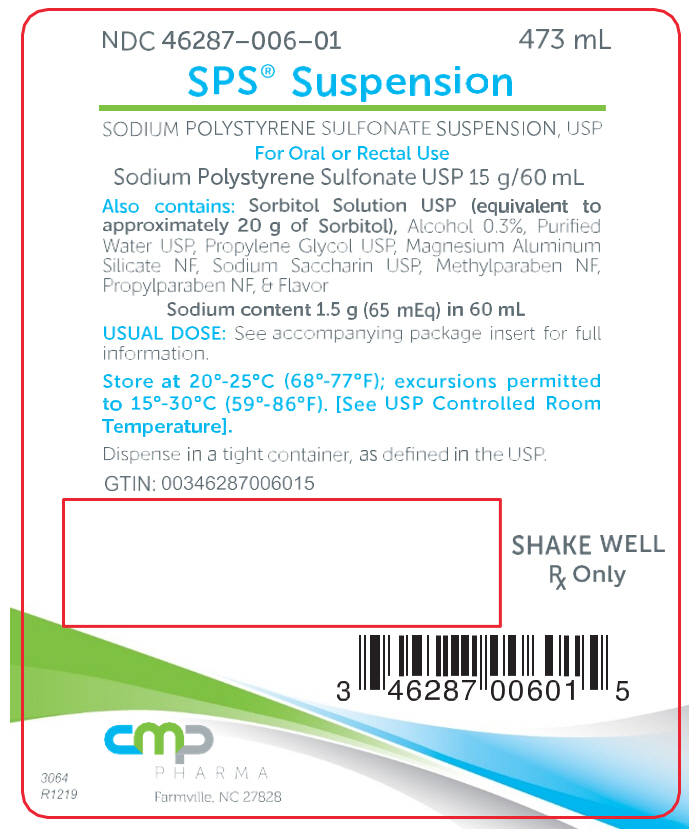
Sodium Polystyrene Sulfonate 15 g/60mL Suspension, 120 mL
🆔 Identity & classification
Where does this data come from?
🏭 Manufacturer & labeler
Where does this data come from?
🩺 Clinical
- Think of it as a tiny sponge that travels through your intestines. It grabs onto extra potassium in your gut and carries it out of your body in your stool — it never actually enter...
- What exactly is sodium polystyrene sulfonate doing in my body?
- It can take anywhere from several hours to a few days to meaningfully lower your potassium levels — so it's definitely not a quick fix. If your potassium is dangerously high right...
- How long does it take to work, and do I need to take it long-term?
Patient education
Supplement & herbal interactions
Where does this data come from?
Ask a licensed pharmacist directly — free, answered by our team.
💊 What it looks like
Where does this data come from?
🧪 Inactive Ingredients / Excipients
Inactive ingredients, also called excipients, are components of the drug product other than the active ingredient. They may include fillers, dyes, coatings, preservatives, flavors, or other formulation ingredients.
💡 Tap an ingredient (hover on desktop) to see what it is and why it’s used.
-
0.18 mL / 60 mL
UNII 3K9958V90M
A liquid solvent derived from fermentation or chemical synthesis. In medicines, alcohol dissolves active ingredients, helps preserve the product, and improves how the body absorbs certain drugs.
-
UNII 6M3P64V0NC
A fine powder made from magnesium, aluminum, and silicon compounds. It absorbs moisture and helps keep medicine ingredients from clumping or separating, so the product stays stable and flows smoothly during manufacturing.
-
UNII A2I8C7HI9T
Methylparaben is a preservative derived from benzoic acid that prevents growth of bacteria, fungi, and mold in medicines. It extends the product's shelf life and maintains safety during storage.
-
UNII 6DC9Q167V3
Propylene glycol is a clear liquid derived from petroleum or vegetable sources. It acts as a solvent, humectant, and preservative in medicines, helping dissolve active ingredients and maintain product stability.
-
UNII Z8IX2SC1OH
Propylparaben is a chemical preservative used to prevent bacterial and fungal growth in medicines and personal care products. It helps extend shelf life and maintain product safety during storage.
-
UNII SB8ZUX40TY
Saccharin sodium is an artificial sweetener made from saccharin salt. It's added to medicines to improve taste, especially in liquid formulations for children or bitter drugs.
-
21.5 mL / 60 mL
UNII 506T60A25R
Sorbitol is a natural sugar alcohol derived from glucose. It serves as a sweetener, humectant, and bulking agent in medications to improve taste and help maintain moisture in the product.
-
UNII 059QF0KO0R
Water is a liquid solvent that dissolves and mixes ingredients together in liquid medicines, syrups, and injections. It helps distribute the active drug evenly throughout the product.
8 inactive ingredients listed in the exact product block matched to this NDC.
Where does this data come from?
ingredient classCode="IACT" elements from the exact product block matched by this NDC. Label-section narrative from DailyMed / the openFDA label index is shown separately when available.Inactive ingredient FAQ
Are inactive ingredients the same for every manufacturer?
Why might an inactive ingredient be missing?
Can inactive ingredients matter?
💲 Pricing
A drug doesn't have one price. Each row is a different public payment system, and none is what you'd pay at the counter — that depends on your insurance. The ⓘ on each row explains what it measures.
| Price system | Per mL | Per package |
|---|---|---|
| Retail pharmacies payNADAC · weekly | Not in the retail survey — common for institutional, discontinued, or low-volume packs. | |
| Medicaid paysCMS SDUD · 12 mo | $0.7273 | $87.28 / 120 ml |
| Medicare drug plans payPart D · Q2 2026 | $0.3875 | $46.50 / 120 ml |
Where does this data come from?
🔁 Therapeutic equivalents
| Product | Labeler | Pack | NADAC/unit | TE | Status | Price vs. this |
|---|---|---|---|---|---|---|
| Sodium Polystyrene Sulfonate 15 g/60mLthis 46287-0006-04 | CMP | 120 ml | — | AA | FDA listed | — |
| Sodium Polystyrene Sulfonate 15 g/60mL 35573-0108-14 | Burel | 10 bottles | — | AA | FDA listed | — |
| Sodium Polystyrene Sulfonate 15 g/60mL 55154-7353-02 | Cardinal | 2 bottles | — | AA | FDA listed | — |
Where does this data come from?
⏳ Availability & generic status
This product is an FDA-approved generic. Other versions of the same drug are listed under Therapeutic equivalents, least expensive first.
Where does this data come from?
🗺️ Medicaid utilization & spend
💊 Medicaid utilization by pack size
📊 Medicare Part D spend CMS · PART D · 2026 (Q1)
🔬 Reported adverse events (FAERS)
Top reported reactions
Age at onset
Reporter sex
Serious outcomes
Where does this data come from?
📦 Packaging — all sizes for this product
| Package NDC | Description | Per unit | Per pack | Marketing start | Status |
|---|---|---|---|---|---|
| 46287-0006-01 | 473 mL in 1 BOTTLE (46287-006-01) | $0.4366 / mL | $206.51 | 1982-12-08 | Active |
| 46287-0006-04 You're viewing this | 120 mL in 1 BOTTLE (46287-006-04) | — | — | 1987-07-16 | Active |
| 46287-0006-60 | 10 BOTTLE, UNIT-DOSE in 1 CARTON (46287-006-60) / 60 mL in 1 BOTTLE, UNIT-DOSE | $0.3851 / mL | $231.07 | 1985-12-12 | Active |
Pack size FAQ
What quantity is in NDC 46287-0006-04?
What is the difference between NDC 46287-0006-04 and NDC 46287-0006-01?
What NDC number is used to bill for this package of Sodium Polystyrene Sulfonate 15 g/60mL Suspension?
Prices are the latest CMS NADAC pharmacy acquisition cost per NDC; per-pack figures are per-unit × pack quantity, shown only when the pack is denominated in the same measure NADAC prices.
🧭 About this NDC listing & data coverage
What data is (and isn’t) available for this NDC — tap to expand
| NDC identity (package / product / labeler codes) | ✓ Available |
| Labeler | ✓ Available |
| Product & package description | ✓ Available |
| Marketing category & status | ✓ Available |
| Active ingredient / dosage form / route | ✓ Available |
| FDA label (SPL via DailyMed) | ✓ Available |
| Package photos | ✓ Available |
| Inactive ingredients (structured) | ✓ Available |
| NADAC pharmacy acquisition price (CMS) | — Not published for this NDC CMS publishes NADAC only for NDCs reported in its retail-pharmacy survey. |
| Orange Book / therapeutic-equivalence data | ✓ Available |
| HCPCS J-code billing crosswalk | — Not published for this NDC Most self-administered / retail products have no J-code — that is normal. |
| Medicaid utilization (CMS SDUD) | ✓ Available |
Questions about this listing
Why is there no price listed?
Is the NDC printed on the package the same as the 11-digit billing NDC?
What do the three segments of this NDC mean?
Is this package still being marketed?
Does this product come in other package sizes?
Who lists this product with the FDA?
Do I need a prescription for this product?
Where does this data come from?
📄 Full prescribing information FDA SPL
🎯 Indications and Usage ▾
INDICATION AND USAGE SPS ® Suspension is indicated for the treatment of hyperkalemia.
⏱️ Dosage and Administration ▾
DOSAGE AND ADMINISTRATION Administer sodium polystyrene sulfonate suspension at least 3 hours before or 3 hours after other oral medications. Patients with gastroparesis may require a 6 hour separation (see WARNINGS and PRECAUTIONS, Drug Interactions ). The average daily adult dose is 15 g (60 mL) to 60 g (240 mL) of suspension.
This is best provided by administering 15 g (60 mL) of SPS ® Suspension one to four times daily. Each 60 mL of SPS ® Suspension contains 1500 mg (65 mEq) of sodium. Since the in-vivo efficiency of sodium-potassium exchange resins is approximately 33%, about one-third of the resin's actual sodium content is being delivered to the body.
In smaller children and infants, lower doses should be employed by using as a guide a rate of 1 mEq of potassium per gram of resin as the basis for calculation. Administer with patient in an upright position (see WARNINGS ). SPS ® Suspension may be introduced into the stomach through a plastic tube and, if desired, given with a diet appropriate for a patient in renal failure.
SPS ® Suspension may also be given, although with less effective results, as an enema consisting (for adults) of 30 g (120 mL) to 50 g (200 mL) every six hours. The enema should be retained as long as possible and followed by a cleansing enema. After an initial cleansing enema, a soft, large size (French 28) rubber tube is inserted into the rectum for a distance of about 20 cm, with the tip well into the sigmoid colon, and taped into place.
The suspension is introduced at body temperature by gravity. The suspension is flushed with 50 or 100 mL of fluid, following which the tube is clamped and left in place. If back leakage occurs, the hips are elevated on pillows or a knee-chest position is taken temporarily.
The suspension is kept in the sigmoid colon for several hours, if possible. Then the colon is irrigated with a sodium-free cleansing enema at body temperature in order to remove the resin. Two quarts of flushing solution may be necessary.
The returns are drained constantly through a Y tube connection. Particular attention should be paid to this cleansing enema, because sorbitol is present in the vehicle. The intensity and duration of therapy depend upon the severity and resistance of hyperkalemia.
SPS ® Suspension should not be heated for to do so may alter the exchange properties of the resin.
⛔ Contraindications ▾
CONTRAINDICATIONS SPS ® Suspension is contraindicated in the following conditions: patients with hypokalemia, patients with a history of hypersensitivity to polystyrene sulfonate resins, obstructive bowel disease, oral or rectal administration in neonates (See PRECAUTIONS ).
⚠️ Warnings ▾
WARNINGS Intestinal Necrosis Cases of intestinal necrosis, which may be fatal, and other serious gastrointestinal adverse events (bleeding, ischemic colitis, perforation) have been reported in association with sodium polystyrene sulfonate use. The majority of these cases reported the concomitant use of sorbitol. Risk factors for gastrointestinal adverse events were present in many of the cases including prematurity, history of intestinal disease or surgery, hypovolemia, and renal insufficiency and failure.
Concomitant administration of additional sorbitol is not recommended (see PRECAUTIONS, Drug Interactions ). Use only in patients who have normal bowel function. Avoid use in patients who have not had a bowel movement post-surgery.
Avoid use in patients who are at risk for developing constipation or impaction (including those with history of impaction, chronic constipation, inflammatory bowel disease, ischemic colitis, vascular intestinal atherosclerosis, previous bowel resection, or bowel obstruction). Discontinue use in patients who develop constipation. Alternative Therapy in Severe Hyperkalemia Since the effective lowering of serum potassium with sodium polystyrene sulfonate may take hours to days, treatment with this drug alone may be insufficient to rapidly correct severe hyperkalemia associated with states of rapid tissue breakdown (e.g., burns and renal failure) or hyperkalemia so marked as to constitute a medical emergency.
Therefore, other definitive measures, including dialysis, should always be considered and may be imperative. Hypokalemia Serious potassium deficiency can occur from sodium polystyrene sulfonate therapy. The effect must be carefully controlled by frequent serum potassium determinations within each 24 hour period.
Since intracellular potassium deficiency is not always reflected by serum potassium levels, the level at which treatment with sodium polystyrene sulfonate should be discontinued must be determined individually for each patient. Important aids in making this determination are the patient's clinical condition and electrocardiogram. Early clinical signs of severe hypokalemia include a pattern of irritable confusion and delayed thought processes.
Electrocardiographically, severe hypokalemia is often associated with a lengthened Q-T interval, widening, flattening, or inversion of the T wave, and prominent U waves. Also, cardiac arrhythmias may occur, such as premature atrial, nodal, and ventricular contractions, and supraventricular and ventricular tachycardias. The toxic effects of digitalis are likely to be exaggerated.
Marked hypokalemia can also be manifested by severe muscle weakness, at times extending into frank paralysis. Electrolyte Disturbances Like all cation-exchange resins, sodium polystyrene sulfonate is not totally selective (for potassium) in its actions, and small amounts of other cations such as magnesium and calcium can also be lost during treatment. Accordingly, patients receiving sodium polystyrene sulfonate should be monitored for all applicable electrolyte disturbances.
Systemic Alkalosis Systemic alkalosis has been reported after cation-exchange resins were administered orally in combination with nonabsorbable cation-donating antacids and laxatives such as magnesium hydroxide and aluminum carbonate. Magnesium hydroxide should not be administered with sodium polystyrene sulfonate. One case of grand mal seizure has been reported in a patient with chronic hypocalcemia of renal failure who was given sodium polystyrene sulfonate with magnesium hydroxide as a laxative (See PRECAUTIONS, Drug Interactions ).
Risk of Aspiration Cases of acute bronchitis or bronchopneumonia caused by inhalation of sodium polystyrene sulfonate particles has been reported. Patients with impaired gag reflex, altered level of consciousness, or patients prone to regurgitation may be at increased risk. Administer sodium polystyrene sulfonate suspension with the patient in an upright position.
Binding to…
🤒 Adverse Reactions ▾
ADVERSE REACTIONS SPS ® Suspension may cause some degree of gastric irritation. Anorexia, nausea, vomiting, and constipation may occur especially if high doses are given. Also, hypokalemia, hypocalcemia, hypomagnesemia and significant sodium retention, and their related clinical manifestations, may occur (See WARNINGS ).
Occasionally diarrhea develops. Large doses in elderly individuals may cause fecal impaction (See PRECAUTIONS ). Rare instances of intestinal necrosis have been reported.
Intestinal obstruction due to concretions of aluminum hydroxide, when used in combination with sodium polystyrene sulfonate, has been reported. The following events have been reported from worldwide post marketing experience: Fecal impaction following rectal administration, particularly in children; Gastrointestinal concretions (bezoars) following oral administration; Ischemic colitis, gastrointestinal tract ulceration or necrosis which could lead to intestinal perforation; and Rare cases of acute bronchitis and/or bronchopneumonia associated with inhalation of particles of polystyrene sulfonate (see WARNINGS ).
To report suspected adverse reactions, contact CMP Pharma, Inc., toll free at 1-844-321-1443 or the FDA at 1-800-FDA-1088 or www.fda.gov/medwatch.
🔄 Drug Interactions ▾
Drug Interactions General Interactions No formal drug interaction studies have been conducted in humans. Sodium polystyrene sulfonate suspension has the potential to bind other drugs. In in-vitro binding studies, sodium polystyrene sulfonate was shown to significantly bind the oral medications (n=6) that were tested.
Decreased absorption of lithium and thyroxine have also been reported with co-administration of sodium polystyrene sulfonate. Binding of sodium polystyrene sulfonate suspension to other oral medications could cause decreased gastrointestinal absorption and loss of efficacy when taken close to the time sodium polystyrene sulfonate suspension is administered. Administer sodium polystyrene sulfonate suspension at least 3 hours before or 3 hours after other oral medications.
Patients with gastroparesis may require a 6 hour separation. Monitor for clinical response and/or blood levels where possible. Antacids The simultaneous oral administration of sodium polystyrene sulfonate with nonabsorbable cation-donating antacids and laxatives may reduce the resin's potassium exchange capability.
Nonabsorbable cation-donating antacids and laxatives Systemic alkalosis has been reported after cation exchange resins were administered orally in combination with nonabsorbable cation-donating antacids and laxatives such as magnesium hydroxide and aluminum carbonate. Magnesium hydroxide should not be administered with sodium polystyrene sulfonate. One case of grand mal seizure has been reported in a patient with chronic hypocalcemia of renal failure who was given sodium polystyrene sulfonate with magnesium hydroxide as a laxative.
Intestinal obstruction due to concretions of aluminum hydroxide when used in combination with sodium polystyrene sulfonate has been reported. Digitalis The toxic effects of digitalis on the heart, especially various ventricular arrhythmias and A-V nodal dissociation, are likely to be exaggerated by hypokalemia, even in the face of serum digoxin concentrations in the "normal range" (See WARNINGS ). Sorbitol Concomitant use of sorbitol with sodium polystyrene sulfonate has been implicated in cases of intestinal necrosis, which may be fatal (See WARNINGS ).
Lithium SPS ® Suspension may decrease absorption of lithium. Thyroxine SPS ® Suspension may decrease absorption of thyroxine.
🤰 Pregnancy ▾
Pregnancy Category C Animal reproduction studies have not been conducted with sodium polystyrene sulfonate. It is also not known whether sodium polystyrene sulfonate can cause fetal harm when administered to a pregnant woman or can affect reproduction capacity. Sodium polystyrene sulfonate should be given to a pregnant woman only if clearly needed.
🧒 Pediatric Use ▾
Pediatric Use The effectiveness of SPS ® Suspension in pediatric patients has not been established. The use of SPS ® Suspension is contraindicated in neonates and especially in premature infants. In children and neonates, particular care should be observed with rectal administration, as excessive dosage could result in impaction of the resin.
Precautions should be taken to ensure the use of adequate volumes of sodium-free cleansing enemas after rectal administration.
🆘 Overdosage ▾
OVERDOSAGE Overdosage may result in electrolyte disturbances including hypokalemia, hypocalcemia, and hypomagnesemia. Biochemical disturbances resulting from overdosage may give rise to clinical signs and symptoms of hypokalemia, including: irritability, confusion, delayed thought processes, muscle weakness, hyporeflexia, which may progress to frank paralysis and/or apnea. Tetany may occur.
Electrocardiographic changes may be consistent with hypokalemia or hypocalcemia; cardiac arrhythmias may occur. Appropriate measures should be taken to correct serum electrolytes (potassium, calcium, magnesium), and the resin should be removed from the alimentary tract by appropriate use of laxatives or enemas.
🧬 Clinical Pharmacology ▾
CLINICAL PHARMACOLOGY As the resin passes along the intestine or is retained in the colon after administration by enema, the sodium ions are partially released and are replaced by potassium ions. For the most part, this action occurs in the large intestine, which excretes potassium ions to a greater degree than does the small intestine. The efficiency of this process is limited and unpredictably variable.
It commonly approximates the order of 33%, but the range is so large that definitive indices of electrolyte balance must be clearly monitored. Metabolic data are unavailable.
📦 How Supplied / Storage and Handling ▾
HOW SUPPLIED SPS ® Suspension is a light brown, cherry-flavored suspension supplied in pint (473 mL) bottles (NDC 46287-006-01), 120 mL bottles (NDC 46287-006-04), and 60 mL unit dose bottles, 10 bottles per carton (NDC 46287-006-60). Dispense in a tight container, as defined in the USP. If repackaging into other containers, store in refrigerator and use within 14 days of packaging.
SHAKE WELL BEFORE USING. Store at 20°-25°C (68°-77°F); excursions permitted to 15°-30°C (59°-86°F). [See USP Controlled Room Temperature]. CMP Pharma, Inc.
P.O. Box 147 Farmville, North Carolina 27828 Revised August 2021 3081 R0821
📋 Description ▾
DESCRIPTION Sodium Polystyrene Sulfonate Suspension USP (SPS ® Suspension) can be administered orally or in an enema. It is a cherry-flavored suspension containing 15 grams of cation-exchange resin (Sodium Polystyrene Sulfonate USP); 21.5 mL of Sorbitol Solution USP (equivalent to approximately 20 grams of Sorbitol) ; 0.18 mL (0.3%) of Alcohol per 60 mL of suspension. Also contains Purified Water USP; Propylene Glycol USP; Magnesium Aluminum Silicate NF; Sodium Saccharin USP; Methylparaben NF; Propylparaben NF; and flavor.
Sodium polystyrene sulfonate is a benzene, diethenyl-, polymer with ethenylbenzene, sulfonated, sodium salt and has the following structural formula: The sodium content of the suspension is 1500 mg (65 mEq) per 60 mL. It is a brown, slightly viscous suspension with an in‑vitro exchange capacity of approximately 3.1 mEq ( in-vivo approximately 1 mEq) of potassium per 4 mL (1 gram) of suspension. It can be administered orally or in an enema.
Chemical Structure