
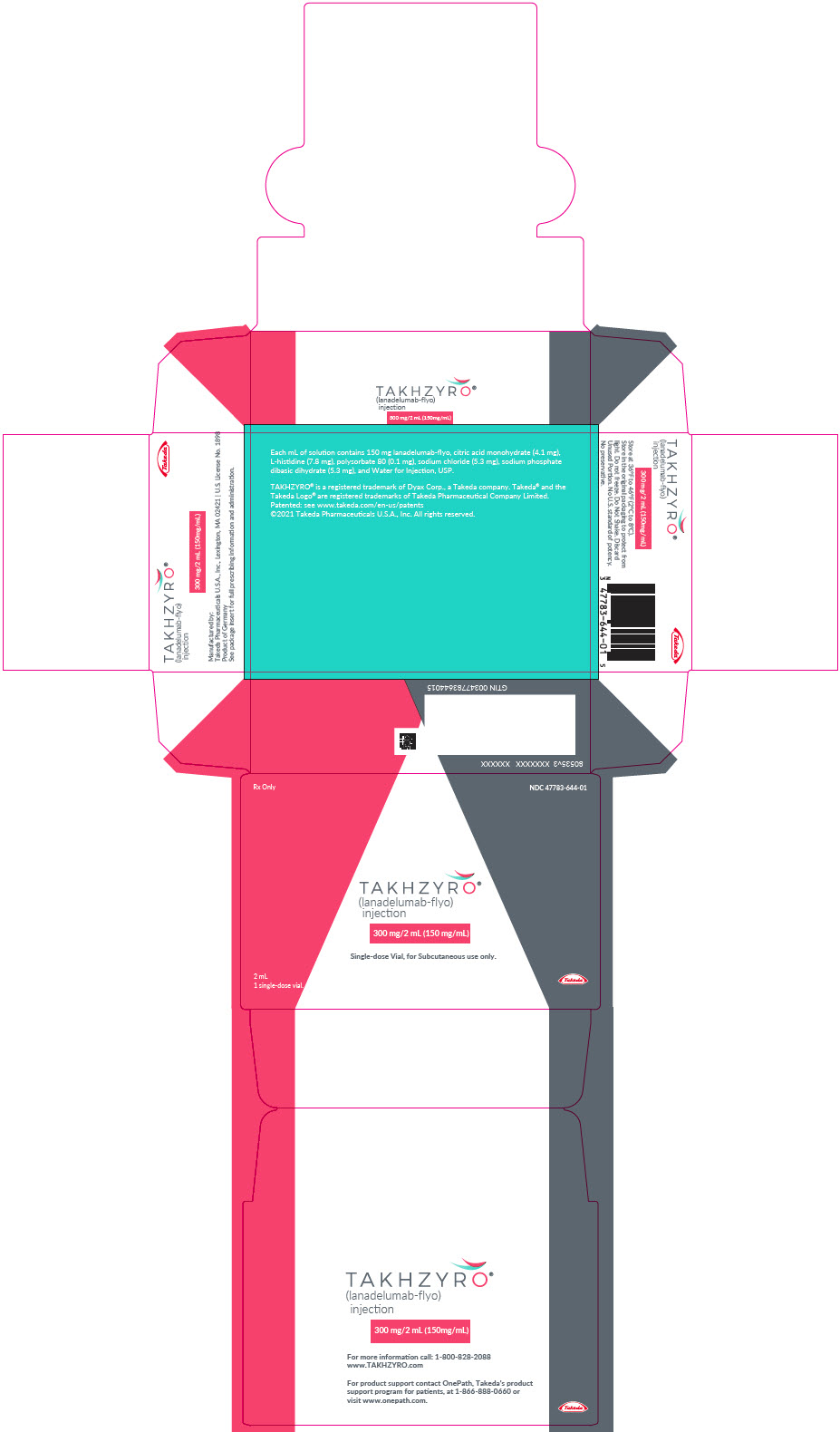
TAKHZYRO lanadelumab-flyo 300 mg/2mL Injection, Solution
🆔 Identity & classification
Where does this data come from?
🏷️ RxNorm drug class
This medicine belongs to the Plasma Kallikrein Inhibitor class.
Where does this data come from?
🏭 Manufacturer & labeler
Where does this data come from?
🩺 Clinical
Lanadelumab-flyo injection is used to prevent swelling and painful attacks of hereditary angioedema (HAE; an inherited condition that causes episodes of swelling in the hands, feet, face, airway, or intestines) in adults and children 2 years of age or older. Lanadelumab-flyo is in a class of medications called monoclonal antibodies. It works by blocking the action of a certain natural substance in the body that causes swelling and pain associated with HAE.
Read the full MedlinePlus article ↗- Great question, and it's an important distinction. Takhzyro is a preventive medication — you take it on a regular schedule (every 2 to 4 weeks) to reduce how often HAE attacks happ...
- What exactly does Takhzyro do — is it a treatment for HAE attacks or something else?
- Takhzyro comes in a prefilled syringe, and before you inject at home, your healthcare provider will walk you through the technique. Take the syringe out of the fridge about 15 minu...
- How do I give myself this injection at home?
Patient education
Supplement & herbal interactions
Where does this data come from?
Ask a licensed pharmacist directly — free, answered by our team.
🧪 Inactive Ingredients / Excipients
Inactive ingredients, also called excipients, are components of the drug product other than the active ingredient. They may include fillers, dyes, coatings, preservatives, flavors, or other formulation ingredients.
💡 Tap an ingredient (hover on desktop) to see what it is and why it’s used.
-
UNII 2968PHW8QP
A weak organic acid derived from citrus fruits or made through fermentation. It works as a buffer to control pH, a preservative to extend shelf life, and a flavoring agent in medications.
-
UNII 4QD397987E
An amino acid used as a buffer and stabilizer in medications. It helps maintain the pH balance and protects the active drug from breaking down during storage and use.
-
UNII 6OZP39ZG8H
Polysorbate 80 is a synthetic emulsifier derived from sorbitol and oleic acid. It helps mix oil and water-based ingredients together in medications and improves how the product disperses in the body.
-
UNII 451W47IQ8X
Sodium chloride is common table salt. It's used in medicines as a buffer to maintain proper pH, as a filler to add bulk, or to adjust the osmotic balance in liquid formulations.
-
UNII 94255I6E2T
Sodium phosphate dibasic dihydrate is a salt that helps control the acidity level of a medicine. It acts as a buffer and pH regulator to keep the medication stable and effective.
5 inactive ingredients listed in the exact product block matched to this NDC.
Where does this data come from?
ingredient classCode="IACT" elements from the exact product block matched by this NDC. Label-section narrative from DailyMed / the openFDA label index is shown separately when available.Inactive ingredient FAQ
Are inactive ingredients the same for every manufacturer?
Why might an inactive ingredient be missing?
Can inactive ingredients matter?
💲 Pricing
A drug doesn't have one price. Each row is a different public payment system, and none is what you'd pay at the counter — that depends on your insurance. The ⓘ on each row explains what it measures.
| Price system | Per mL | Per package |
|---|---|---|
| Retail pharmacies payNADAC · weekly | Not in the retail survey — common for institutional, discontinued, or low-volume packs. | |
| Medicaid paysCMS SDUD · 12 mo | No recent Medicaid claims on file for this NDC — rare and low-volume NDCs are suppressed in the public data. | |
| Medicare drug plans payPart D · Q2 2026 | $13,424.97 | $67,124.87 / 5 ml |
| Medicare Part B allowsASP · J0593 | $88.216 / J0593 unit | — |
Where does this data come from?
🧾 Billing & reimbursement
Where does this data come from?
🔁 Therapeutic equivalents
| Product | Labeler | Pack | NADAC/unit | TE | Status | Price vs. this |
|---|---|---|---|---|---|---|
| Takhzyro 300 mg/2mLthis 47783-0644-01 | Takeda | 1 vial | — | — | Discontinued | — |
| Takhzyro 300 mg/2mL 47783-0646-01 | Takeda | 1 syringe | — | — | FDA listed | — |
Where does this data come from?
⏳ Availability & biosimilar status
Biologics have no small-molecule generics; biosimilar competition is tracked in the FDA Purple Book.
Why the date isn’t exact: Biosimilar timing can change because patents may be challenged, settled, licensed, added or removed, and litigation can move the real date earlier or later.
🛈 What do these terms mean?
- Biologic patent
- A patent the reference product’s maker has publicly listed. A biosimilar generally can’t launch until these expire — unless they’re invalidated or resolved in a settlement.
- Reference-product exclusivity
- A flat 12 years of FDA market protection from the biologic’s first licensure (the BPCIA). No biosimilar can be licensed before it ends, regardless of patents.
- Interchangeable exclusivity
- The first interchangeable biosimilar can earn a period as the only interchangeable version (pharmacists can substitute it without the prescriber).
- Earliest biosimilar (LOE)
- The latest of all the dates above — the soonest a biosimilar can realistically reach the market. Litigation and settlements can move it earlier.
Biologics have no small-molecule “generics” — competition comes from FDA-licensed biosimilars, tracked in the FDA Purple Book.
| Code | What it grants | Expires |
|---|---|---|
| RefProduct | Reference-product exclusivity (12-year, BPCIA) — no biosimilar can be licensed before this date | Aug 23, 2030 |
Is there a biosimilar for TAKHZYRO 300 MG/2 ML VIAL?
Why do different websites show different biosimilar dates?
Can a biosimilar launch before the last patent expires?
What does “current Purple Book estimate” mean?
What does “FDA listed” mean?
What does a patent or protection date mean here?
Where does this data come from?
📊 Medicare Part D spend CMS · PART D · 2026 (Q1)
🔬 Reported adverse events (FAERS)
Top reported reactions
Reporter sex
Where does this data come from?
📦 Packaging — all sizes for this product
| Package NDC | Description | Marketing start | Status |
|---|---|---|---|
| 47783-0644-01 You're viewing this | 1 VIAL, GLASS in 1 CARTON (47783-644-01) / 5 mL in 1 VIAL, GLASS | 2018-08-24 | Discontinued by firm |
🧭 About this NDC listing & data coverage
What data is (and isn’t) available for this NDC — tap to expand
| NDC identity (package / product / labeler codes) | ✓ Available |
| Labeler | ✓ Available |
| Product & package description | ✓ Available |
| Marketing category & status | ✓ Available |
| Active ingredient / dosage form / route | ✓ Available |
| FDA label (SPL via DailyMed) | ✓ Available |
| Package photos | ✓ Available |
| Inactive ingredients (structured) | ✓ Available |
| NADAC pharmacy acquisition price (CMS) | — Not published for this NDC CMS publishes NADAC only for NDCs reported in its retail-pharmacy survey. |
| Orange Book / therapeutic-equivalence data | ✓ Available |
| HCPCS J-code billing crosswalk | ✓ Available |
| Medicaid utilization (CMS SDUD) | — Not published for this NDC CMS reports utilization only for NDCs with Medicaid claims above its privacy threshold. |
Questions about this listing
Why is there no price listed?
What does the discontinued status mean for this NDC?
Is the NDC printed on the package the same as the 11-digit billing NDC?
What do the three segments of this NDC mean?
Who lists this product with the FDA?
Do I need a prescription for this product?
Does this product have a billing J-code?
Where does this data come from?
📄 Full prescribing information FDA SPL
🎯 Indications and Usage ▾
1 INDICATIONS AND USAGE TAKHZYRO ® is indicated for prophylaxis to prevent attacks of hereditary angioedema (HAE) in adult and pediatric patients aged 2 years and older. TAKHZYRO is a plasma kallikrein inhibitor (monoclonal antibody) indicated for prophylaxis to prevent attacks of hereditary angioedema (HAE) in adult and pediatric patients 2 years and older. ( 1 )
⏱️ Dosage and Administration ▾
2 DOSAGE AND ADMINISTRATION For subcutaneous use only. Recommended Dosage: Adult and pediatric patients 12 years of age and older: administer 300 mg every 2 weeks by the patient or caregiver. Dosing interval every 4 weeks may be considered in some patients.
( 2.1 ) Pediatric patients 6 years to less than 12 years of age: administer 150 mg every 2 weeks by a healthcare provider or caregiver. Dosing interval every 4 weeks may be considered in some patients. ( 2.2 ) Pediatric patients 2 years to less than 6 years of age: administer 150 mg every 4 weeks by a healthcare provider or caregiver.
( 2.2 ) See Full Prescribing Information for Preparation and Administration Instructions. ( 2.3 )
2.1Recommended Dosage for Adult and Pediatric Patients 12 Years of Age and Older The recommended starting dosage in adult and pediatric patients 12 years of age and older is 300 mg administered subcutaneously every 2 weeks (q2wks). A dosing interval of 300 mg every 4 weeks (q4wks) is also effective and may be considered if the patient is well-controlled (e.g., attack free) for more than 6 months.
2.2Recommended Dosage for Pediatric Patients 2 Years to Less Than 12 Years of Age Pediatric Patients 6 Years to Less Than 12 Years of Age The recommended starting dosage in pediatric patients 6 years to less than 12 years of age is 150 mg administered subcutaneously every 2 weeks (q2wks). A dosing interval of 150 mg every 4 weeks (q4wks) may be considered if the patient is well-controlled (e.g., attack free) for more than 6 months. Pediatric Patients 2 Years to Less Than 6 Years of Age The recommended dosage in pediatric patients 2 years to less than 6 years of age is 150 mg administered subcutaneously every 4 weeks (q4wks).
2.3Preparation and Administration Instructions TAKHZYRO is administered subcutaneously only. TAKHZYRO is intended for administration by a healthcare provider, patient or caregiver. The patient or caregiver should be trained in subcutaneous injection technique by a healthcare professional.
Adult and pediatric patients 12 years of age and older: TAKHZYRO may be administered by the patient or caregiver. Pediatric patients 2 years to less than 12 years of age: TAKHZYRO should be administered by a healthcare provider or caregiver. Parenteral drug products should be inspected visually for particulate matter and discoloration prior to administration, whenever solution and container permit.
Do not use TAKHZYRO if the solution appears discolored or contains visible particles. TAKHZYRO is a clear to slightly opalescent, colorless to slightly yellow solution. Administration Instructions for Single-Dose Prefilled Syringes Instruct patients and/or caregivers on proper use of the TAKHZYRO prefilled syringe and assess that they are well trained in subcutaneous injection technique prior to administration by patient and/or caregiver.
Avoid vigorous agitation of the prefilled syringe. Take the TAKHZYRO prefilled syringe out of the refrigerator 15 minutes before injecting to allow it to equilibrate to room temperature. Using aseptic technique, inject TAKHZYRO subcutaneously into the abdomen, thigh, or upper arm.
Discard any unused portion of drug remaining in the prefilled syringe. For detailed instructions on the preparation and administration of TAKHZYRO see Instructions for Use for either single-dose 1 mL prefilled syringe or single-dose 2 mL prefilled syringe.
💊 Dosage Forms and Strengths ▾
3 DOSAGE FORMS AND STRENGTHS Injection: Sterile, preservative-free, clear to slightly opalescent, colorless to slightly yellow solution available as follows: 150 mg/mL solution in a single-dose prefilled syringe 300 mg/2 mL (150 mg/mL) solution in a single-dose prefilled syringe Injection: 150 mg/mL solution in a single-dose prefilled syringe. ( 3 ) 300 mg/2 mL (150 mg/mL) solution in a single-dose prefilled syringe. ( 3 )
⛔ Contraindications ▾
4 CONTRAINDICATIONS None. None. ( 4 )
⚠️ Warnings and Cautions ▾
5 WARNINGS AND PRECAUTIONS Hypersensitivity reactions have been observed. In case of a severe hypersensitivity reaction, discontinue TAKHZYRO administration and institute appropriate treatment. ( 5.1 )
5.1Hypersensitivity Reactions Hypersensitivity reactions have been observed. In case of a severe hypersensitivity reaction, discontinue TAKHZYRO administration and institute appropriate treatment.
🤒 Adverse Reactions ▾
6 ADVERSE REACTIONS The most common adverse reactions (≥10%) are injection site reactions, upper respiratory infections, headache, rash, dizziness, diarrhea, and myalgia. ( 6.1 ) To report SUSPECTED ADVERSE REACTIONS, contact Takeda Pharmaceuticals at 1-877-TAKEDA-7 (1-877-825-3327) or FDA at 1-800-FDA-1088 or www.fda.gov/medwatch .
6.1Clinical Trials Experience Because clinical trials are conducted under widely varying conditions, adverse reaction rates observed in the clinical trials of a drug cannot be directly compared to rates in the clinical trials of another drug and may not reflect the rates observed in practice. Adult and Pediatric Patients 12 Years of Age and Older The safety of TAKHZYRO is primarily based on a 26-week, randomized, double-blind, parallel-group and placebo-controlled study (Trial 1) in 125 patients with Type I or II HAE.
Eligible patients were also able to participate in an open-label extension study (Trial 2) up to 130 weeks. In Trial 1, a total of 84 patients with HAE aged 12 years and older received at least one dose of TAKHZYRO. Overall, 70% of patients were female and 90% of patients were Caucasian with a mean age of 41 years.
The proportion of patients who discontinued study drug prematurely due to adverse events was 1.2% for TAKHZYRO-treated patients and 4.9% for placebo-treated patients. No deaths occurred in the trial. The safety profile of TAKHZYRO was generally similar across all subgroups of patients, including analysis by age, sex, and geographic region.
Table 1 shows adverse reactions occurring in ≥10% of patients in any TAKHZYRO treatment group that also occurred at a higher rate than in the placebo treatment group in Trial 1. Table 1 Adverse Reactions Observed in ≥10% of Patients Treated with TAKHZYRO in Trial 1 Adverse Reaction Placebo (N=41) n (%) TAKHZYRO 150 mg q4wks (N=28) n (%) TAKHZYRO 300 mg q4wks (N=29) n (%) TAKHZYRO 300 mg q2wks (N=27) n (%) TAKHZYRO Total (N=84) n (%) N= number of patients; n =number of patients experiencing the event; q2wks = every 2 weeks; q4wks = every 4 weeks Injection site reactions Injection site reactions include: pain, erythema, bruising, hematoma, hemorrhage, pruritus, swelling, induration, paresthesia, reaction, warmth, edema and rash.
14 (34) 16 (57) 13 (45) 15 (56) 44 (52) Upper respiratory infection Includes upper respiratory infection, viral upper respiratory infection 13 (32) 3 (11) 9 (31) 12 (44) 24 (29) Headache Includes headache, tension headache, sinus headache 9 (22) 3 (11) 6 (21) 9 (33) 18 (21) Rash Includes rash, rash maculopapular, rash erythematous 2(5) 2 (7) 3 (10) 1 (4) 6 (7) Dizziness 0 1 (4) 3 (10) 1 (4) 5 (6) Diarrhea 2 (5) 3 (11) 0 1 (4) 4 (5) Myalgia 0 1 (4) 0 3 (11) 4 (5) Injection site reactions primarily consisted mainly of pain, erythema, and bruising at the injection site.
There was no meaningful difference in injection site reactions with self-administration. Less Common Adverse Reactions Other adverse reactions that occurred at a higher incidence in TAKHZYRO-treated patients compared to placebo include hypersensitivity (1% vs 0%), increased aspartate transaminase (2% vs 0%), and increased alanine transaminase (2% vs 0%). Safety data from the open-label extension study, consisting of 109 rollover patients from Trial 1 and 103 non-rollover HAE patients, is consistent with controlled safety data from Trial 1.
Laboratory Abnormalities Transaminase elevations During the placebo-controlled treatment period in Trial 1, the number of TAKHZYRO-treated patients with maximum transaminase (ALT or AST) levels >8, >5, or >3 times the upper limit of normal (ULN) was 1 (1.2%), 0 (0%), or 3 (3.6%) respectively, compared to 0 in the placebo-treated patients. These transaminase elevations were asymptomatic and transient. No patients had elevated total bilirubin >2× ULN.
One TAKHZYRO-treated patient permanently discontinued treatment due to elevated transaminases (4.1× ULN AST). None of the patients were reported to have serious adverse r…
🔄 Drug Interactions ▾
7 DRUG INTERACTIONS No dedicated drug interaction studies have been conducted [see Clinical Pharmacology (12.3) ]. No dedicated drug interaction studies have been conducted. ( 7 )
7.1Drug-Laboratory Test Interactions Coagulation tests TAKHZYRO can increase activated partial thromboplastin time (aPTT) due to an interaction of TAKHZYRO with the aPTT assay. The reagents used in the aPTT laboratory test initiate intrinsic coagulation through the activation of plasma kallikrein in the contact system. Inhibition of plasma kallikrein by TAKHZYRO can increase aPTT in this assay.
In Trial 1, prolongation of aPTT (>1× ULN) was observed at one or more time points in 3, 9, and 11 patients treated with TAKHZYRO 150 mg every 4 weeks (q4wks), 300 mg every 4 weeks (q4wks), and 300 mg every 2 weeks (q2wks), respectively, compared to 5 placebo-treated patients. Only one patient in the 300 mg every 2 weeks (q2wks) treatment group experienced transient aPTT prolongation ≥1.5x ULN which was confounded by ongoing heparin therapy. None of the increases in aPTT in patients treated with TAKHZYRO were associated with abnormal bleeding adverse events.
There were no differences in INR values between treatment groups.
👥 Use in Specific Populations ▾
8 USE IN SPECIFIC POPULATIONS
8.1Pregnancy Risk Summary There are no available data on TAKHZYRO use in pregnant women to inform any drug associated risks. Monoclonal antibodies such as lanadelumab-flyo are transported across the placenta during the third trimester of pregnancy; therefore, potential effects on a fetus are likely to be greater during the third trimester of pregnancy. An enhanced pre- and postnatal development (ePPND) study conducted in pregnant monkeys at doses resulting in exposures of up to 33 times the exposure achieved (on an AUC basis) at the maximum recommended human dose (MRHD) revealed no evidence of harm to the developing fetus.
The background risk of major birth defects and miscarriage for the indicated population is unknown. In the U.S. general population, the estimated background risk of major birth defects and miscarriage in clinically recognized pregnancies is 2 to 4% and 15 to 20%, respectively. Data Animal Data In the ePPND study, pregnant cynomolgus monkeys were administered lanadelumab-flyo once weekly at subcutaneous doses resulting in up to 33 times the exposure at the MRHD (on an AUC basis with maternal subcutaneous doses up to 50 mg/kg/week) from gestation day 20, at the beginning of organogenesis, through to parturition.
There were no lanadelumab-flyo-related effects on maintenance of pregnancy or parturition. Maternal lanadelumab-flyo treatment had no effects on embryo-fetal development, survival, growth, or postnatal development of offspring through 3 months of age. Lanadelumab-flyo crossed the placenta in monkeys.
Offspring were exposed to lanadelumab-flyo at approximately 50% of the maternal plasma concentration out to postnatal day 21 (PND 21). Lanadelumab-flyo concentrations were approximately equivalent in maternal and offspring plasma at PND 90.
8.2Lactation Risk Summary There are no data on the presence of lanadelumab-flyo in human milk, its effects on the breastfed infant, or its effects on milk production. Lanadelumab-flyo was detected in the milk of lactating cynomolgus monkeys at approximately 0.2% of the maternal plasma concentration. The developmental and health benefits of breastfeeding should be considered along with the mother's clinical need for TAKHZYRO and any potential adverse effects on the breastfed infant from TAKHZYRO or from the underlying maternal condition.
Data Animal Data Available pharmacokinetic data in cynomolgus monkeys have shown excretion of lanadelumab-flyo in milk at approximately 0.2% of the maternal plasma level.
8.4Pediatric Use The safety and effectiveness of TAKHZYRO for prophylaxis to prevent attacks of hereditary angioedema (HAE) have been established in pediatric patients 2 years of age and older. Use of TAKHZYRO for this indication in patients 12 years of age and older was supported by a subgroup analysis by age of 10 patients aged 12 years to <18 years in Trial 1 (a randomized, double-blind, placebo-controlled parallel-group study in adult and pediatric patients 12 years of age and older with HAE). Results of the subgroup analysis by age were consistent with overall study results.
An additional 13 pediatric patients aged 12 years to <18 years were enrolled in the open-label extension study [see Adverse Reactions (6.1) , Clinical Pharmacology (12.3) and Clinical Studies (14) ]. Use of TAKHZYRO for this indication in patients 2 years to less than 12 years of age was supported by extrapolation of efficacy data from Trial 1, an adequate and well controlled study in adult and pediatric (12 years to less than 18 years of age) patients, with additional pharmacokinetic analyses showing similar drug exposures between adults (>18 years of age) and pediatric patients (2 years to less than 12 years of age), and safety and pharmacodynamic data from an open-label, multicenter study in pediatric patients with HAE aged 2 years to less than 12 years that enrolled 21 patients (4 patients were aged 2 years to less than 6 years and 17 patients were 6 to less…
🤰 Pregnancy ▾
8.1Pregnancy Risk Summary There are no available data on TAKHZYRO use in pregnant women to inform any drug associated risks. Monoclonal antibodies such as lanadelumab-flyo are transported across the placenta during the third trimester of pregnancy; therefore, potential effects on a fetus are likely to be greater during the third trimester of pregnancy. An enhanced pre- and postnatal development (ePPND) study conducted in pregnant monkeys at doses resulting in exposures of up to 33 times the exposure achieved (on an AUC basis) at the maximum recommended human dose (MRHD) revealed no evidence of harm to the developing fetus.
The background risk of major birth defects and miscarriage for the indicated population is unknown. In the U.S. general population, the estimated background risk of major birth defects and miscarriage in clinically recognized pregnancies is 2 to 4% and 15 to 20%, respectively. Data Animal Data In the ePPND study, pregnant cynomolgus monkeys were administered lanadelumab-flyo once weekly at subcutaneous doses resulting in up to 33 times the exposure at the MRHD (on an AUC basis with maternal subcutaneous doses up to 50 mg/kg/week) from gestation day 20, at the beginning of organogenesis, through to parturition.
There were no lanadelumab-flyo-related effects on maintenance of pregnancy or parturition. Maternal lanadelumab-flyo treatment had no effects on embryo-fetal development, survival, growth, or postnatal development of offspring through 3 months of age. Lanadelumab-flyo crossed the placenta in monkeys.
Offspring were exposed to lanadelumab-flyo at approximately 50% of the maternal plasma concentration out to postnatal day 21 (PND 21). Lanadelumab-flyo concentrations were approximately equivalent in maternal and offspring plasma at PND 90.
🧒 Pediatric Use ▾
8.4Pediatric Use The safety and effectiveness of TAKHZYRO for prophylaxis to prevent attacks of hereditary angioedema (HAE) have been established in pediatric patients 2 years of age and older. Use of TAKHZYRO for this indication in patients 12 years of age and older was supported by a subgroup analysis by age of 10 patients aged 12 years to <18 years in Trial 1 (a randomized, double-blind, placebo-controlled parallel-group study in adult and pediatric patients 12 years of age and older with HAE). Results of the subgroup analysis by age were consistent with overall study results.
An additional 13 pediatric patients aged 12 years to <18 years were enrolled in the open-label extension study [see Adverse Reactions (6.1) , Clinical Pharmacology (12.3) and Clinical Studies (14) ]. Use of TAKHZYRO for this indication in patients 2 years to less than 12 years of age was supported by extrapolation of efficacy data from Trial 1, an adequate and well controlled study in adult and pediatric (12 years to less than 18 years of age) patients, with additional pharmacokinetic analyses showing similar drug exposures between adults (>18 years of age) and pediatric patients (2 years to less than 12 years of age), and safety and pharmacodynamic data from an open-label, multicenter study in pediatric patients with HAE aged 2 years to less than 12 years that enrolled 21 patients (4 patients were aged 2 years to less than 6 years and 17 patients were 6 to less than 12 years of age) [see Adverse Reactions (6.1) and Clinical Pharmacology (12.3) ] .
The pharmacodynamic response observed in this trial for pediatric patients 2 years to less than 12 years of age was similar to that seen in adult and pediatric patients 12 years of age and older [see Clinical Pharmacology (12.2) ] . The safety and effectiveness of TAKHZYRO in pediatric patients less than 2 years of age have not been established.
🧓 Geriatric Use ▾
8.5Geriatric Use The safety and effectiveness of TAKHZYRO were evaluated in a subgroup of patients (N=5) aged ≥65 years in Trial 1. Results of the subgroup analysis by age were consistent with overall study results [see Adverse Reactions (6.1) , Clinical Pharmacology (12.3) and Clinical Studies (14) ] .
🆘 Overdosage ▾
10 OVERDOSAGE There is no clinical experience with overdosage of TAKHZYRO.
🧬 Clinical Pharmacology ▾
12 CLINICAL PHARMACOLOGY
12.1Mechanism of Action Lanadelumab-flyo is a fully human monoclonal antibody (IgG1/κ-light chain) that binds plasma kallikrein and inhibits its proteolytic activity. Plasma kallikrein is a protease that cleaves high-molecular-weight-kininogen (HMWK) to generate cleaved HMWK (cHMWK) and bradykinin, a potent vasodilator that increases vascular permeability resulting in swelling and pain associated with HAE. In patients with HAE due to C1-inhibitor (C1-INH) deficiency or dysfunction, normal regulation of plasma kallikrein activity is not present, which leads to uncontrolled increases in plasma kallikrein activity and results in angioedema attacks.
Lanadelumab-flyo decreases plasma kallikrein activity to control excess bradykinin generation in patients with HAE.
12.2Pharmacodynamics In adult and pediatric (12 years to less than 18 years of age) patients, concentration-dependent inhibition of plasma kallikrein, measured as reduction of cHMWK levels, was demonstrated after subcutaneous administration of TAKHZYRO 150 mg every 4 weeks (q4wks), 300 mg every 4 weeks (q4wks) or 300 mg every 2 weeks (q2wks) in patients with HAE. For pediatric patients 2 years to less than 6 years of age (150 mg every 4 weeks (q4wks)) and 6 years to less than 12 years (150 mg every 2 weeks (q2wks)), the observed mean percent change from baseline cHMWK levels was similar to that observed in adult and pediatric (12 years to less than 18 years of age) patients (300 mg every 2 weeks (q2wks) or 300 mg every 4 weeks (q4wks)).
Cardiac Electrophysiology TAKHZYRO did not prolong the QT/QTc interval.
12.3Pharmacokinetics Following subcutaneous administration, the pharmacokinetics of lanadelumab-flyo was approximately dose-proportional in the therapeutic dose range in patients with HAE (Table 2). The pharmacokinetic properties and exposure (steady state) of lanadelumab-flyo in HAE patients, following subcutaneous administration of 150 mg every 4 weeks (q4wks), 300 mg every 4 weeks (q4wks) and 300 mg every 2 weeks (q2wks), are provided in Table 2 . Following subcutaneous administration of TAKHZYRO, peak plasma concentrations are reached within 5 days, and terminal elimination half-life is ~ 2 weeks.
The anticipated time to reach steady state concentration was approximately 70 days. At steady-state, the mean accumulation ratio is approximately 1.44, 1.42, and 2.43 for dosing regimen of 150 mg every 4 weeks (q4wks), 300 mg every 4 weeks (q4wks) and 300 mg every 2 weeks (q2wks), respectively. Table 2 Mean (SD) Pharmacokinetic Parameters of Lanadelumab-flyo Following Subcutaneous Administration (Trial 1) Pharmacokinetic Parameters Lanadelumab-flyo 150 mg q4wks (N=28) Lanadelumab-flyo 300 mg q4wks (N=29) Lanadelumab-flyo 300 mg q2wks (N=27) CL/F: apparent clearance; Vc/F: apparent volume of distribution; AUC tau,ss : area under the curve over the dosing interval at steady-state; C max,ss : maximum concentration at steady-state; C min,ss : minimum concentration at steady state; t max : time to maximum concentration; t 1/2 terminal elimination half-life.
CL/F (L/day) 0.667 (0.162) 0.742 (0.239) 0.809 (0.370) Vc/F (L) 14.1 (2.93) 14.9 (4.45) 16.6 (4.79) AUC tau,ss (µg*day/mL) 233 (56.6) 441(137) 408 (138) C max,ss (µg/mL) 12.0 (3.01) 23.3 (7.94) 34.4 (11.2) C min,ss (µg/mL) 4.81 (1.40) 8.77 (2.80) 25.4 (9.18) t max (day) 5.17 (1.09) 5.17 (1.12) 4.11 (0.377) t 1/2 (day) 14.9 (2.00) 14.2 (1.89) 15.0 (2.48) Specific Populations Population pharmacokinetic analyses showed that age, gender and race did not meaningfully influence the pharmacokinetics of lanadelumab-flyo after correcting for body weight.
Body weight was identified as an important covariate describing the variability of clearance and volume of distribution, resulting in higher exposure (AUC and C max ) in lighter patients. However, this difference is not considered to be clinically relevant and no dose adjustments are recommended for any of these demographics. Pediatric Population Based on…
🧬 Mechanism of Action ▾
12.1Mechanism of Action Lanadelumab-flyo is a fully human monoclonal antibody (IgG1/κ-light chain) that binds plasma kallikrein and inhibits its proteolytic activity. Plasma kallikrein is a protease that cleaves high-molecular-weight-kininogen (HMWK) to generate cleaved HMWK (cHMWK) and bradykinin, a potent vasodilator that increases vascular permeability resulting in swelling and pain associated with HAE. In patients with HAE due to C1-inhibitor (C1-INH) deficiency or dysfunction, normal regulation of plasma kallikrein activity is not present, which leads to uncontrolled increases in plasma kallikrein activity and results in angioedema attacks.
Lanadelumab-flyo decreases plasma kallikrein activity to control excess bradykinin generation in patients with HAE.
📦 How Supplied / Storage and Handling ▾
16 HOW SUPPLIED/STORAGE AND HANDLING How Supplied TAKHZYRO (lanadelumab-flyo) injection is a ready-to-use, clear to slightly opalescent, colorless to slightly yellow solution supplied in the following presentations. Single-dose prefilled syringe Supplied in a carton containing one single-dose prefilled syringe with a bromobutyl rubber stopper, 27-gauge, ½-inch staked needle and rigid needle cap. NDC 47783-645-01: 150 mg/mL prefilled syringe NDC 47783-646-01: 300 mg/2 mL (150 mg/mL) prefilled syringe Storage and Handling Store the prefilled syringes refrigerated at 36°F to 46°F (2°C to 8°C).
Do not freeze. Do not shake. Keep the prefilled syringe in the original carton to protect from light.
📦 Storage and Handling ▾
Storage and Handling Store the prefilled syringes refrigerated at 36°F to 46°F (2°C to 8°C). Do not freeze. Do not shake. Keep the prefilled syringe in the original carton to protect from light.
📋 Description ▾
11 DESCRIPTION Lanadelumab-flyo, a plasma kallikrein inhibitor, is a non-plasma derived, recombinant, fully human, monoclonal antibody (IgG1/κ-light chain) produced in Chinese Hamster Ovary (CHO) cells. Based on the amino acid sequence, the molecular weight of the non-glycosylated lanadelumab-flyo is 146 kDa. The calculated molecular mass of the fully reduced light chain is 23 kDa.
The calculated molecular mass of the fully reduced and non-glycosylated heavy chain is 49 kDa. TAKHZYRO (lanadelumab-flyo) injection is a sterile, preservative-free, clear to slightly opalescent, colorless to slightly yellow solution for subcutaneous use. Each mL of ready-to-use TAKHZYRO solution contains 150 mg of lanadelumab-flyo, citric acid monohydrate (4.1 mg), L-histidine (7.8 mg), polysorbate 80 (0.1 mg), sodium chloride (5.3 mg), sodium phosphate dibasic dihydrate (5.3 mg), and Water for Injection, USP.
The solution has a pH of approximately 6.0.
💬 Information for Patients ▾
17 PATIENT COUNSELING INFORMATION Advise the patient to read the FDA-approved patient labeling (Patient Information and Instructions for Use). Hypersensitivity Advise patients to seek immediate medical attention if they experience any symptoms of serious hypersensitivity reactions [see Warnings and Precautions (5.1) ] . Self-Administration: Ensure that the patient or caregiver receives clear instructions and training on subcutaneous administration and has demonstrated the ability to perform a subcutaneous injection.
Instruct patients or caregivers in the technique of proper syringe and needle disposal, and advise them not to reuse these items. Instruct patients or caregivers to dispose needles and syringes in a puncture-resistant container.