
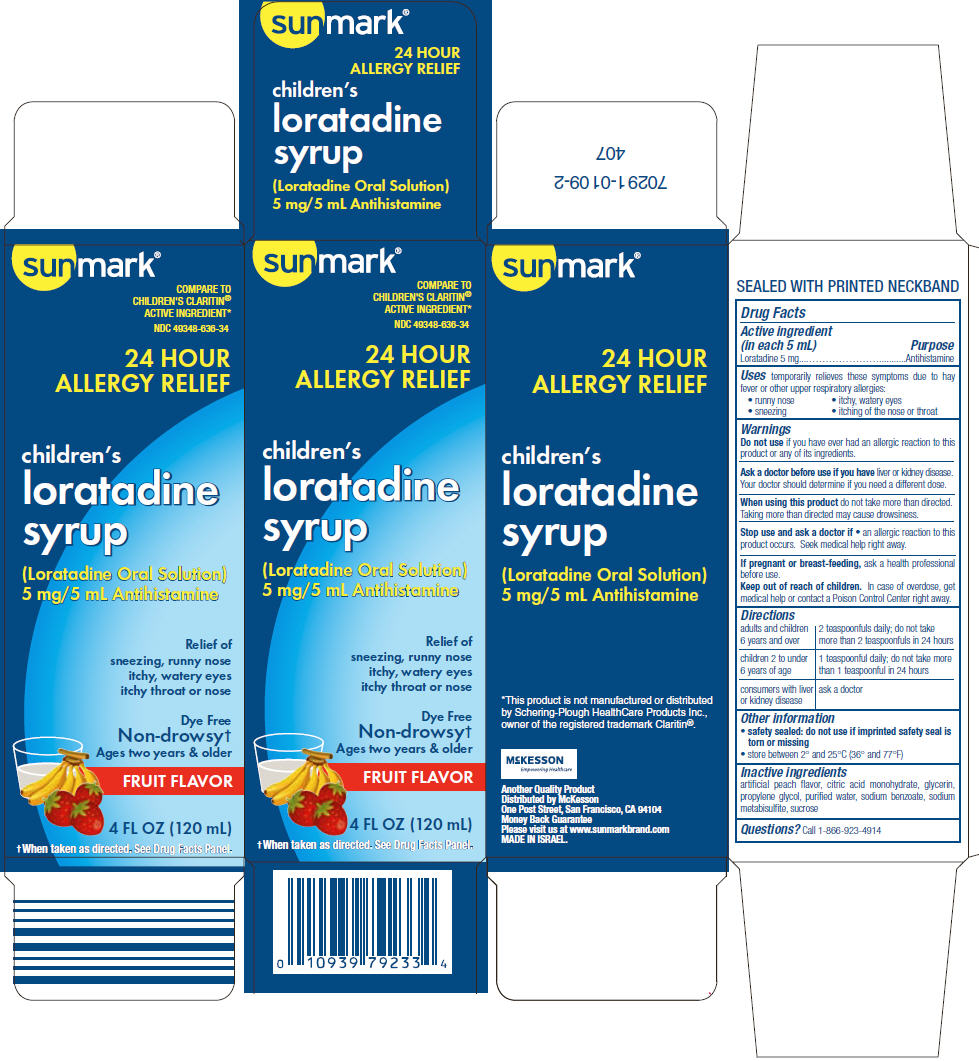
Sunmark childrens loratadine 5 mg/5mL Solution
🆔 Identity & classification
Where does this data come from?
🏷️ RxNorm drug class
This medicine belongs to the Other antihistamines for systemic use class.
Where does this data come from?
🏭 Manufacturer & labeler
Where does this data come from?
🩺 Clinical
Loratadine is used to treat allergy symptoms: sneezing runny nose itching of the nose or throat red, itchy, or watery eyes Loratadine is in a class of medications called antihistamines. It works by blocking the action of histamine, a substance in the body that causes allergic symptoms.
Read the full MedlinePlus article ↗- Loratadine is an antihistamine that temporarily relieves common allergy symptoms — things like a runny nose, sneezing, itchy or watery eyes, and an itchy nose or throat. It works f...
- When taken as directed, loratadine is considered non-drowsy for most people. However, if you take more than the recommended daily amount, drowsiness can happen. So stick to the dos...
- It depends on the age. Children 6 and older can take standard adult doses of most forms. Children 2 to under 6 can use the oral solution or chewable tablets, but at a lower amount....
- You should check with your doctor before taking loratadine if you have liver or kidney disease. Your doctor may need to adjust your dose. It's not necessarily off-limits, but it's...
Patient education
Supplement & herbal interactions
Some supplements/herbs that may interact with Loratadine — tap one for details:
Where does this data come from?
Ask a licensed pharmacist directly — free, answered by our team.
🧪 Inactive Ingredients / Excipients
Inactive ingredients, also called excipients, are components of the drug product other than the active ingredient. They may include fillers, dyes, coatings, preservatives, flavors, or other formulation ingredients.
💡 Tap an ingredient (hover on desktop) to see what it is and why it’s used.
-
UNII 2968PHW8QP
A weak organic acid derived from citrus fruits or made through fermentation. It works as a buffer to control pH, a preservative to extend shelf life, and a flavoring agent in medications.
-
UNII PDC6A3C0OX
Glycerin is a clear, thick liquid derived from plant oils or fats. It acts as a humectant to retain moisture, a sweetener, and a solvent in medications.
-
UNII 6DC9Q167V3
Propylene glycol is a clear liquid derived from petroleum or vegetable sources. It acts as a solvent, humectant, and preservative in medicines, helping dissolve active ingredients and maintain product stability.
-
UNII OJ245FE5EU
Sodium benzoate is a salt derived from benzoic acid, a preservative. It's added to medicines to prevent growth of bacteria, fungi, and other microorganisms that could spoil the product.
-
UNII 4VON5FNS3C
Sodium metabisulfite is a preservative derived from sulfur compounds. It prevents microbial growth and oxidation in medicines, helping extend shelf life and maintain product stability.
-
UNII C151H8M554
A natural sugar derived from sugar cane or sugar beets. It's used as a sweetener, filler, and binder to improve taste, add bulk, and help hold tablet or capsule ingredients together.
-
UNII 059QF0KO0R
Water is a liquid solvent that dissolves and mixes ingredients together in liquid medicines, syrups, and injections. It helps distribute the active drug evenly throughout the product.
7 inactive ingredients listed in the exact product block matched to this NDC.
Label-section wording can be broader than the structured product block and may mention additional formulation ingredients.
Where does this data come from?
ingredient classCode="IACT" elements from the exact product block matched by this NDC. Label-section narrative from DailyMed / the openFDA label index is shown separately when available.Inactive ingredient FAQ
Are inactive ingredients the same for every manufacturer?
Why might an inactive ingredient be missing?
Can inactive ingredients matter?
💲 Pricing
A drug doesn't have one price. Each row is a different public payment system, and none is what you'd pay at the counter — that depends on your insurance. The ⓘ on each row explains what it measures.
| Price system | Per mL | Per package |
|---|---|---|
| Retail pharmacies payNADAC · weekly | $0.043 | $5.10 / 120 ml |
| Medicaid paysCMS SDUD · 12 mo | $0.0928 | $11.14 / 120 ml |
| Medicare drug plans payPart D · quarterly | No Part D plan price is available for this NDC in our data. | |
Where does this data come from?
🔁 Therapeutic equivalents
| Product | Labeler | Pack | NADAC/unit | TE | Status | Price vs. this |
|---|---|---|---|---|---|---|
| Good Sense childrens allergy relief 5 mg/5mL 00113-0671-26 | L. | 1 bottle | $0.041 | — | Availability likely | save 3% |
| Childrens Loratadine Oral 5 mg/5mL 00904-6767-20 | Major | 1 bottle | $0.041 | — | Availability likely | save 3% |
| Good Neighbor Pharmacy Childrens Loratadine 5 mg/5mL 24385-0531-26 | AmerisourceBergen | 1 bottle | $0.041 | — | Availability likely | save 3% |
| good neighbor pharmacy childrens loratadine 5 mg/5mL 46122-0787-34 | Amerisource | 1 bottle | $0.041 | — | Availability likely | save 3% |
| Loratadine 5 mg/5mL 54838-0558-40 | Lannett | 120 ml | $0.041 | — | Availability likely | save 3% |
| Loratadine 5 mg/5mL 68001-0449-98 | BluePoint | 1 bottle | $0.041 | — | Availability likely | save 3% |
| Loratadine 5 mg/5mL 69230-0322-12 | Camber | 1 bottle | $0.041 | — | Availability likely | save 3% |
| leader childrens allergy relief 5 mg/5mL 70000-0473-01 | Cardinal | 1 bottle | $0.041 | — | Availability likely | save 3% |
| Loratadine 5 mg/5mL 70677-1057-01 | STRATEGIC | 1 bottle | $0.041 | — | Availability likely | save 3% |
| Childrens Loratadine Sugar Free 5 mg/5mL 70677-1058-01 | STRATEGIC | 1 bottle | $0.041 | — | Availability likely | save 3% |
| Sunmark childrens loratadine 5 mg/5mLthis 49348-0636-34 | Strategic | 1 bottle | $0.042 | — | FDA listed | — |
| Loratadine 5 mg/5mL 70000-0125-01 | Cardinal | 1 bottle | $0.044 | — | Availability likely | +3% |
| good sense childrens allergy relief 5 mg/5mL 00113-1719-06 | L. | 1 bottle | — | — | FDA listed | — |
| Loratadine 5 mg/5mL 00363-0771-01 | WALGREEN | 1 bottle | — | — | FDA listed | — |
| Childrens Walitin 5 mg/5mL 00363-2108-08 | Walgreen | 1 bottle | — | — | FDA listed | — |
| Childrens Loratadine Sugar Free 5 mg/5mL 00363-2131-08 | Walgreen | 1 bottle | — | — | FDA listed | — |
| Claritin Allergy 1 mg/mL 11523-0101-01 | Bayer | 1 bottle | — | — | FDA listed | — |
| Children Claritin Allergy 5 mg/5mL 11523-4360-01 | Bayer | 1 bottle | — | — | FDA listed | — |
| childrens allergy relief 5 mg/5mL 11822-0620-00 | Rite | 1 bottle | — | — | FDA listed | — |
| Childrens Loratadine Oral 5 mg/5mL 17856-6767-01 | Atlantic | 72 cups | — | — | FDA listed | — |
| Loratadine 5 mg/5mL 21130-0042-24 | Better | 1 bottle | — | — | FDA listed | — |
| Good Neighbor Pharmacy Childrens Loratadine 5 mg/5mL 24385-0543-26 | AmerisourceBergen | 1 bottle | — | — | Discontinued | — |
| Loratadine 5 mg/5mL 30142-0062-24 | KROGER | 1 bottle | — | — | FDA listed | — |
| childrens allergy relief 5 mg/5mL 30142-0723-00 | Kroger | 1 bottle | — | — | Discontinued | — |
| topcare childrens allergy 5 mg/5mL 36800-0608-26 | Topco | 1 bottle | — | — | FDA listed | — |
| Childrens Loratadine Sugar Free 5 mg/5mL 37808-0131-08 | H | 1 bottle | — | — | FDA listed | — |
| Equaline Childrens Allergy Relief 5 mg/5mL 41163-0633-26 | United | 1 bottle | — | — | FDA listed | — |
| childrens allergy relief 5 mg/5mL 41250-0716-00 | Meijer, | 1 bottle | — | — | FDA listed | — |
| Childrens Loratadine Sugar Free 5 mg/5mL 41520-0131-08 | American | 1 bottle | — | — | FDA listed | — |
| Childrens Allergy 5 mg/5mL 49035-0538-08 | Wal-Mart | 1 bottle | — | — | FDA listed | — |
| equate childrens allergy 5 mg/5mL 49035-0611-34 | Wal-Mart | 1 bottle | — | — | FDA listed | — |
| Loratadine 5 mg/5mL 50090-1454-00 | A-S | 120 ml | — | — | FDA listed | — |
| Childrens Loratadine Oral 5 mg/5mL 50090-7516-00 | A-S | 1 bottle | — | — | FDA listed | — |
| Childrens Allergy Relief 5 mg/5mL 51316-0611-34 | CVS | 1 bottle | — | — | FDA listed | — |
| Childrens Loratadine 5 mg/5mL 51672-2073-04 | Sun | 1 bottle | — | — | FDA listed | — |
| Childrens Loratadine 5 mg/5mL 51672-2085-01 | Sun | 1 bottle | — | — | FDA listed | — |
| Childrens Loratadine Sugar Free 5 mg/5mL 51672-2108-01 | Sun | 1 bottle | — | — | FDA listed | — |
| Childrens Loratadine Sugar Free 5 mg/5mL 51672-2131-01 | Sun | 1 bottle | — | — | FDA listed | — |
| Loratadine 5 mg/5mL 54838-0554-40 | Lannett | 120 ml | — | — | FDA listed | — |
| dg health childrens allergy 5 mg/5mL 55910-0611-26 | Dolgencorp, | 1 bottle | — | — | FDA listed | — |
| childrens allergy 5 mg/5mL 56062-0092-08 | Publix | 1 bottle | — | — | FDA listed | — |
| Loratadine 5 mg/5mL 58602-0423-11 | Aurohealth | 1 bottle | — | — | FDA listed | — |
| Childrens Loratadine 5 mg/5mL 62011-0305-01 | Strategic | 1 bottle | — | — | FDA listed | — |
| welby childrens allergy relief 5 mg/5mL 64024-0023-26 | Aldi | 1 bottle | — | — | FDA listed | — |
| Good Sense childrens allergy relief 5 mg/5mL 68071-3904-04 | NuCare | 1 bottle | — | — | FDA listed | — |
| Loratadine 5 mg/5mL 68071-4451-04 | NuCare | 120 ml | — | — | FDA listed | — |
| Childrens Loratadine Sugar Free 5 mg/5mL 68788-8286-01 | Preferred | 1 bottle | — | — | FDA listed | — |
| Good Sense childrens allergy relief 5 mg/5mL 68788-8657-01 | Preferred | 1 bottle | — | — | FDA listed | — |
| Childrens Allergy 5 mg/5mL 69842-0337-26 | CVS | 1 bottle | — | — | FDA listed | — |
| Childrens Allergy 5 mg/5mL 69842-0535-08 | CVS | 1 bottle | — | — | FDA listed | — |
| basic care childrens allergy relief 5 mg/5mL 72288-0511-26 | Amazon.com | 1 bottle | — | — | Discontinued | — |
| Up And Up Childrens Allergy 5 mg/5mL 82442-0207-26 | Target | 1 bottle | — | — | FDA listed | — |
| childrens allergy relief 5 mg/5mL 72288-0533-34 | Amazon.com | 1 bottle | — | — | FDA listed | — |
Where does this data come from?
⏳ Availability & generic status
This product is an FDA-approved generic. Other versions of the same drug are listed under Therapeutic equivalents, least expensive first.
Where does this data come from?
🗺️ Medicaid utilization & spend
🔬 Reported adverse events (FAERS)
Top reported reactions
Age at onset
Reporter sex
Serious outcomes
Where does this data come from?
📦 Packaging — all sizes for this product
| Package NDC | Description | Marketing start | Status |
|---|---|---|---|
| 49348-0636-34 You're viewing this | 1 BOTTLE in 1 CARTON (49348-636-34) / 120 mL in 1 BOTTLE | 2012-11-14 | Active |
📄 FDA label — Drug Facts FDA SPL
🎯 Indications and Usage ▾
Uses temporarily relieves these symptoms due to hay fever or other upper respiratory allergies: runny nose itchy, watery eyes sneezing itching of the nose or throat
⏱️ Dosage and Administration ▾
Directions adults and children 6 years and over 2 teaspoonfuls daily; do not take more than 2 teaspoonfuls in 24 hours children 2 to under 6 years of age 1 teaspoonful daily; do not take more than 1 teaspoonful in 24 hours consumers with liver or kidney disease ask a doctor
⚠️ Warnings ▾
Warnings Do not use if you have ever had an allergic reaction to this product or any of its ingredients. Ask a doctor before use if you have liver or kidney disease. Your doctor should determine if you need a different dose.
When using this product do not take more than directed. Taking more than directed may cause drowsiness. Stop use and ask a doctor if an allergic reaction to this product occurs.
Seek medical help right away. If pregnant or breast-feeding, ask a health professional before use. Keep out of reach of children.
In case of overdose, get medical help or contact a Poison Control Center right away.
📦 Storage and Handling ▾
Other information safety sealed: do not use if imprinted safety seal is torn or missing store between 2° and 25°C (36° and 77°F)
🧪 Active Ingredient ▾
Active ingredient (in each 5 mL) Loratadine 5 mg
🧪 Inactive Ingredients ▾
Inactive ingredients artificial peach flavor, citric acid monohydrate, glycerin, propylene glycol, purified water, sodium benzoate, sodium metabisulfite, sucrose
🎯 Purpose ▾
Purpose Antihistamine