
Tizanidine Hydrochloride 4 mg Tablet, 90-count — NDC 49999-347-90 (Billing 49999-0347-90)
This is a package of 90 tablets of Tizanidine Hydrochloride 4 mg Tablet from Quality Care Products LLC, marketed since Nov 2010 and currently FDA-listed, this package's marketing is listed to end Apr 2027.
NDC database record
One package, one record: these facts belong to NDC 49999-347-90 alone.
- Record
- FDA NDC Directory package listing · Human prescription drug
- Code segments
- 49999 labeler · 347 product · 90 package
- Package marketed since
- Nov 23, 2010
- Package marketing ended
- Apr 30, 2027
- Sample package
- No — commercial package
- Billing quantity
- 90 EA per package
- Barcode (UPC-A, from the NDC)
- 3 4999934790 2
- FDA record last changed
- Jul 24, 2026
Identity & classification
Regulatory identifiers FDA, NLM and CMS codes for this package
Drug-database identifiers Medi-Span GPI and First Databank GCN / HICL / AHFS classification
- GSN (GCN sequence number): 030274
- GCN: 14693
- GPI-14 (Medi-Span): 75100090100320
- HICL (First Databank): 011582
- AHFS class code: 12:20.04.00
- RxCUI (RxNorm): 313413
Where does this data come from?
- FDA openFDA NDC Directory · synced Oct 8, 2026
- FDA label on DailyMed · label index refreshed Oct 8, 2026
- RxNorm (NLM RxNav) · catalog refreshed Oct 1, 2026
- Medi-Span GPI (licensed)
- First Databank (licensed) · refreshed Oct 8, 2026
RxNorm drug class
This medicine belongs to the Central alpha-2 Adrenergic Agonist class.
Where does this data come from?
- RxClass (NLM) · catalog refreshed Oct 1, 2026
Clinical
Tizanidine is used to relieve muscle spasms, cramping, and tightness caused by certain conditions including multiple sclerosis (MS, a disease in which the nerves do not function properly and patients may experience weakness, numbness, loss of muscle coordination and problems with vision, speech, and bladder control) and spinal injury. Tizanidine is in a class of medications called skeletal muscle relaxants. It works by slowing action in the brain and nervous system to allow the muscles to relax.
Read the full MedlinePlus article ↗- It helps manage spasticity, meaning stiff, tight muscles that are hard to control. It wears off quickly, so it is meant for the times and activities when you most need relief.
- Food changes how much tizanidine you absorb, and tablets and capsules react differently. The key is to be consistent, either always with food or always without. Tell me or your pre...
- Dry mouth, sleepiness, tiredness or weakness, and dizziness are the most common. Many people find them mild to moderate. Call your doctor if you faint, see things that are not ther...
- It is best to avoid it. Alcohol raises the amount of tizanidine in your blood and adds to drowsiness and side effects. The same goes for other sedating medicines, so check with me...
Patient education
Supplement & herbal interactions
Where does this data come from?
- MedlinePlus (NLM) · refreshed Oct 8, 2026
- FDA label on DailyMed · label index refreshed Oct 8, 2026
Ask a licensed pharmacist directly — free, answered by our team.
Pricing
A drug doesn't have one price. Each row is a different public payment system, and none is what you'd pay at the counter — that depends on your insurance. The ⓘ on each row explains what it measures.
| Price system | Per each | Per package |
|---|---|---|
| Retail pharmacies payNADAC · weekly | Not in the retail survey — common for institutional, discontinued, or low-volume packs. | |
| Medicaid paysCMS SDUD · 12 mo | No recent Medicaid claims on file for this NDC — rare and low-volume NDCs are suppressed in the public data. | |
| Medicare drug plans payPart D · Q2 2026 | $0.1130 | $10.17 / 90 tablets |
Where does this data come from?
- CMS NADAC weekly file
- CMS ASP pricing files · refreshed Sep 20, 2026
- CMS Medicaid State Drug Utilization Data · refreshed Oct 8, 2026
- CMS Part D plan pricing files · refreshed Sep 24, 2026
- VA National Acquisition Center price file
Packaging — all sizes for this product
| Package NDC | Description | Marketing start | Marketing end | Status |
|---|---|---|---|---|
| 49999-0347-01 49999-347-01 Main listing | 120 TABLET in 1 BOTTLE, PLASTIC | 2010-11-23 | Oct 31, 2026 | Active |
| 49999-0347-15 49999-347-15 | 15 TABLET in 1 BOTTLE, PLASTIC | 2019-11-19 | — | Discontinued by firm |
| 49999-0347-30 49999-347-30 | 30 TABLET in 1 BOTTLE, PLASTIC | 2010-11-23 | Apr 30, 2027 | Active |
| 49999-0347-60 49999-347-60 | 60 TABLET in 1 BOTTLE, PLASTIC | 2010-11-23 | Apr 30, 2027 | Active |
| 49999-0347-90 You're viewing this | 90 TABLET in 1 BOTTLE, PLASTIC | 2010-11-23 | Apr 30, 2027 | Active |
You're viewing one of 5 pack sizes for this product.
Pack size FAQ
What quantity is in this package?
How does this package differ from NDC 49999-0347-15?
What NDC number is used to bill for this package of Tizanidine Hydrochloride 4 mg Tablet?
Therapeutic equivalents
| Product | Labeler | Pack | NADAC/unit | TE | Status | Price vs. this |
|---|---|---|---|---|---|---|
| tizanidine 4 mg 00904-6418-61 | Major | 100 tablets | $0.033 | AB | Availability likely | — |
| Tizanidine 4 mg 16714-0172-01 | NorthStar | 150 tablets | $0.033 | AB | Availability likely | — |
| Tizanidine 4 mg 29300-0169-03 | Unichem | 300 tablets | $0.033 | AB | Availability likely | — |
| Tizanidine 4 mg 50268-0760-15 | AvPAK | 50 tablets | $0.033 | AB | Availability likely | — |
| Tizanidine 4 mg 57664-0503-18 | Sun | 1000 tablets | $0.033 | AB | Availability likely | — |
| Tizanidine 4 mg 68084-0645-01 | American | 100 tablets | $0.033 | AB | Availability likely | — |
| tizanidine 4 mg 00615-8469-39 | NCS | 30 tablets | — | AB | FDA listed | — |
| Tizanidine 4 mg 43063-0455-15 | PD-Rx | 15 tablets | — | AB | FDA listed | — |
| Tizanidine Hydrochloride 4 mgthis 49999-0347-90 | Quality | 90 tablets | — | AB | FDA listed | — |
| Tizanidine 4 mg 50090-0840-00 | A-S | 120 tablets | — | AB | FDA listed | — |
| Tizanidine 4 mg 50090-5767-00 | A-S | 120 tablets | — | AB | FDA listed | — |
| Tizanidine 4 mg 50090-6756-00 | A-S | 120 tablets | — | AB | FDA listed | — |
| Tizanidine 4 mg 50090-6757-00 | A-S | 90 tablets | — | AB | FDA listed | — |
| Tizanidine 4 mg 50090-7889-00 | A-S | 90 tablets | — | AB | FDA listed | — |
| Tizanidine 4 mg 51655-0603-20 | Northwind | 20 tablets | — | AB | FDA listed | — |
| Tizanidine 4 mg 51655-0740-26 | Northwind | 90 tablets | — | AB | FDA listed | — |
| Tizanidine 4 mg 55111-0180-03 | Dr. | 300 tablets | — | AB | FDA listed | — |
| tizanidine 4 mg 55154-7287-00 | Cardinal | 10 tablets | — | AB | FDA listed | — |
| tizanidine 4 mg 60505-0252-01 | Apotex | 100 tablets | — | AB | FDA listed | — |
| Tizanidine 4 mg 60760-0505-04 | St. | 4 tablets | — | AB | FDA listed | — |
| Tizanidine Hydrochloride 4 mg 61919-0196-30 | TIZANIDINE | 30 tablets | — | AB | FDA listed | — |
| Tizanidine 4 mg 63187-0009-30 | Proficient | 30 tablets | — | AB | FDA listed | — |
| tizanidine 4 mg 63187-0145-30 | Proficient | 30 tablets | — | AB | FDA listed | — |
| Tizanidine 4 mg 63187-0493-15 | Proficient | 15 tablets | — | AB | FDA listed | — |
| Tizanidine 4 mg 63187-0673-14 | Proficient | 14 tablets | — | AB | FDA listed | — |
| Tizanidine 4 mg 63629-1673-00 | Bryant | 112 tablets | — | AB | FDA listed | — |
| Tizanidine 4 mg 63629-2371-01 | Bryant | 1000 tablets | — | AB | FDA listed | — |
| tizanidine 4 mg 64980-0659-03 | Rising | 30 tablets | — | AB | FDA listed | — |
| tizanidine 4 mg 67046-1444-03 | Coupler | 30 tablets | — | AB | FDA listed | — |
| Tizanidine 4 mg 67296-2263-02 | Redpharm | 15 tablets | — | AB | FDA listed | — |
| Tizanidine 4 mg 67877-0614-05 | Ascend | 500 tablets | — | AB | FDA listed | — |
| tizanidine 4 mg 68071-3719-03 | NuCare | 30 tablets | — | AB | FDA listed | — |
| Tizanidine 4 mg 68071-4463-03 | NuCare | 30 tablets | — | AB | FDA listed | — |
| Tizanidine 4 mg 68071-5268-03 | NuCare | 30 tablets | — | AB | FDA listed | — |
| Tizanidine 4 mg 68788-7781-01 | Preferred | 100 tablets | — | AB | FDA listed | — |
| tizanidine 4 mg 68788-8741-01 | Preferred | 100 tablets | — | AB | FDA listed | — |
| Tizanidine 4 mg 68788-8802-01 | Preferred | 100 tablets | — | AB | FDA listed | — |
| Zanaflex 4 mg 70515-0594-15 | Covis | 150 tablets | — | AB | FDA listed | — |
| Tizanidine 4 mg 70518-0133-00 | REMEDYREPACK | 60 tablets | — | AB | FDA listed | — |
| Tizanidine 4 mg 70518-1598-01 | REMEDYREPACK | 60 tablets | — | AB | FDA listed | — |
| Tizanidine 4 mg 70518-3658-00 | REMEDYREPACK | 30 tablets | — | AB | FDA listed | — |
| tizanidine 4 mg 70518-4181-00 | REMEDYREPACK | 90 tablets | — | AB | FDA listed | — |
| tizanidine 4 mg 70771-1336-00 | Zydus | 1000 tablets | — | AB | FDA listed | — |
| Tizanidine 4 mg 71335-0914-00 | Bryant | 112 tablets | — | AB | FDA listed | — |
| Tizanidine 4 mg 71335-1016-00 | Bryant | 112 tablets | — | AB | FDA listed | — |
| Tizanidine 4 mg 71335-2325-00 | Bryant | 112 tablets | — | AB | FDA listed | — |
| Tizanidine 4 mg 71335-3016-01 | Bryant | 90 tablets | — | AB | FDA listed | — |
| Tizanidine 4 mg 71610-0228-30 | Aphena | 30 tablets | — | AB | FDA listed | — |
| tizanidine 4 mg 71610-0776-16 | Aphena | 6000 tablets | — | AB | FDA listed | — |
| Tizanidine 4 mg 71610-0864-16 | Aphena | 6000 tablets | — | AB | FDA listed | — |
| Tizanidine 4 mg 72162-1642-00 | Bryant | 1000 tablets | — | AB | FDA listed | — |
| Tizanidine 4 mg 72189-0602-30 | Direct_rx | 30 tablets | — | AB | FDA listed | — |
| tizanidine 4 mg 72578-0097-06 | Viona | 30 tablets | — | AB | FDA listed | — |
| Tizanidine 4 mg 72789-0325-30 | PD-Rx | 30 tablets | — | AB | FDA listed | — |
| Tizanidine 4 mg 72789-0327-20 | PD-Rx | 20 tablets | — | AB | FDA listed | — |
| Tizanidine 4 mg 76420-0229-30 | Asclemed | 30 tablets | — | AB | FDA listed | — |
| Tizanidine 4 mg 76420-0339-00 | Asclemed | 1000 tablets | — | AB | FDA listed | — |
| Tizanidine 4 mg 76420-0866-00 | Asclemed | 1000 tablets | — | AB | FDA listed | — |
| tizanidine 4 mg 76420-0886-00 | Asclemed | 1000 tablets | — | AB | FDA listed | — |
| Tizanidine HCL 4 mg 80425-0022-01 | Advanced | 60 tablets | — | AB | FDA listed | — |
| Tizanidine HCl 4 mg 80425-0023-01 | Advanced | 60 tablets | — | AB | FDA listed | — |
| Tizanidine HCL 4 mg 80425-0024-01 | Advanced | 60 tablets | — | AB | FDA listed | — |
| Tizanidine 4 mg 80425-0453-01 | Advanced | 30 tablets | — | AB | FDA listed | — |
| tizanidine 4 mg 80425-0454-01 | Advanced | 30 tablets | — | AB | FDA listed | — |
| Tizanidine 4 mg 82461-0721-60 | Medcore | 60 tablets | — | AB | FDA listed | — |
| Zanaflex 4 mg 83107-0004-15 | Legacy | 150 tablets | — | AB | FDA listed | — |
| Tizanidine 4 mg 85509-1180-01 | PHOENIX | 120 tablets | — | AB | FDA listed | — |
Where does this data come from?
- FDA openFDA NDC Directory · synced Oct 8, 2026
- FDA Orange Book · refreshed Oct 3, 2026
- CMS NADAC weekly file
Availability & generic status
This product is an FDA-approved generic. Other versions of the same drug are listed under Therapeutic equivalents, least expensive first.
Where does this data come from?
- FDA Orange Book · refreshed Oct 3, 2026
Inactive Ingredients / Excipients
Inactive ingredients, also called excipients, are components of the drug product other than the active ingredient. They may include fillers, dyes, coatings, preservatives, flavors, or other formulation ingredients.
🧪 Avoiding an ingredient? See Tizanidine inactive ingredients by manufacturer: every current product's list side by side, so you can ask your pharmacy for the version that does not list it.
💡 Tap an ingredient (hover on desktop) to see what it is and why it’s used.
-
UNII 3SY5LH9PMK
Anhydrous lactose is a milk sugar with no water content. It acts as a filler and binder in tablets and capsules, adding bulk and helping ingredients stick together.
-
UNII OP1R32D61U
Microcrystalline cellulose is a purified form of cellulose, a natural fiber from plant sources. It acts as a binder and filler in tablets and capsules, helping hold ingredients together and give the medicine its shape and size.
-
UNII ETJ7Z6XBU4
Silicon dioxide is a naturally occurring mineral used as a glidant and anti-caking agent. It helps powder ingredients flow smoothly and prevents clumping during manufacturing and storage.
-
UNII 4ELV7Z65AP
Stearic acid is a fatty acid derived from plant or animal sources. It acts as a binder and lubricant in tablets and capsules, helping them hold together and flow smoothly during manufacturing.
4 inactive ingredients listed in the exact product block matched to this NDC.
Where does this data come from?
ingredient classCode="IACT" elements from the exact product block matched by this NDC. Label-section narrative from DailyMed / the openFDA label index is shown separately when available.- FDA label on DailyMed · label index refreshed Oct 8, 2026
- FDA openFDA NDC Directory · synced Oct 8, 2026
Inactive ingredient FAQ
Are inactive ingredients the same for every manufacturer?
Why might an inactive ingredient be missing?
Can inactive ingredients matter?
Manufacturer & labeler
More NDCs from Quality Care Products LLC labeler code 49999
- Orphenadrine Citrate 100 mg Tablet, Extended Release NDC 49999-046-14
- Acetaminophen and Codeine Phosphate 300 mg; 30 mg Tablet NDC 49999-060-30
- Doxycycline Hyclate 100 mg Capsule NDC 49999-126-14
- Omeprazole 20 mg Capsule, Delayed Release NDC 49999-265-14
- Oxycodone and Acetaminophen 5 mg; 325 mg Tablet NDC 49999-852-14
- Meloxicam 15 mg Tablet NDC 49999-869-15
- Oxycodone Hydchloride 5 mg Tablet NDC 49999-899-15
Where does this data come from?
- FDA openFDA NDC Directory · synced Oct 8, 2026
- Drugs@FDA
Full prescribing information FDA SPL
🎯 Indications and Usage ▾
INDICATIONS AND USAGE Tizanidine tablets are a short-acting drug for the management of spasticity. Because of the short duration of effect, treatment with tizanidine should be reserved for those daily activities and times when relief of spasticity is most important (see DOSAGE AND ADMINISTRATION ).
⏱️ Dosage and Administration ▾
DOSAGE AND ADMINISTRATION A single dose of 8 mg of tizanidine reduces muscle tone in patients with spasticity for a period of several hours. The effect peaks at approximately 1 to 2 hours and dissipates between 3 to 6 hours. Effects are dose-related.
Although single doses of less than 8 mg have not been demonstrated to be effective in controlled clinical studies, the dose-related nature of tizanidine’s common adverse events make it prudent to begin treatment with single oral doses of 4 mg. Increase the dose gradually (2 to 4 mg steps) to optimum effect (satisfactory reduction of muscle tone at a tolerated dose). The dose can be repeated at 6 to 8 hour intervals, as needed, to a maximum of three doses in 24 hours.
The total daily dose should not exceed 36 mg. Experience with single doses exceeding 8 mg and daily doses exceeding 24 mg is limited. There is essentially no experience with repeated, single, daytime doses greater than 12 mg or total daily doses greater than 36 mg (see WARNINGS ).
Food has complex effects on tizanidine pharmacokinetics, which differ with the different formulations. These pharmacokinetic differences may result in clinically significant differences when switching administration of the tablet between the fed or fasted state. These changes may result in increased adverse events or delayed/more rapid onset of activity, depending upon the nature of the switch.
For this reason, the prescriber should be thoroughly familiar with the changes in kinetics associated with these different conditions (see CLINICAL PHARMACOLOGY: Pharmacokinetics ).
⛔ Contraindications ▾
CONTRAINDICATIONS Concomitant use of tizanidine with fluvoxamine or with ciprofloxacin, potent inhibitors of CYP1A2, is contraindicated. Significant alterations of pharmacokinetic parameters of tizanidine including increased AUC, t 1/2, Cmax, increased oral bioavailability and decreased plasma clearance have been observed with concomitant administration of either fluvoxamine or ciprofloxacin. This pharmacokinetic interaction can result in potentially serious adverse events (See WARNINGS and CLINICAL PHARMACOLOGY: Drug Interactions ).
Tizanidine tablets are contraindicated in patients with known hypersensitivity to tizanidine or its ingredients.
⚠️ Warnings ▾
WARNINGS Limited Data Base For Chronic Use Of Single Doses Above 8 Mg And Multiple Doses Above 24 Mg Per Day Clinical experience with long-term use of tizanidine at doses of 8 to 16 mg single doses or total daily doses of 24 to 36 mg (see DOSAGE AND ADMINISTRATION ) is limited. In safety studies, approximately 75 patients have been exposed to individual doses of 12 mg or more for at least one year or more and approximately 80 patients have been exposed to total daily doses of 30 to 36 mg/day for at least one year or more.
There is essentially no long-term experience with single, daytime doses of 16 mg. Because long-term clinical study experience at high doses is limited, only those adverse events with a relatively high incidence are likely to have been identified (see WARNINGS , PRECAUTIONS AND ADVERSE REACTIONS ). Hypotension Tizanidine is an α 2 -adrenergic agonist (like clonidine) and can produce hypotension.
In a single dose study where blood pressure was monitored closely after dosing, two-thirds of patients treated with 8 mg of tizanidine had a 20% reduction in either the diastolic or systolic BP. The reduction was seen within 1 hour after dosing, peaked 2 to 3 hours after dosing and was associated, at times, with bradycardia, orthostatic hypotension, lightheadedness/dizziness and rarely syncope. The hypotensive effect is dose related and has been measured following single doses of ³ 2 mg.
The chance of significant hypotension may possibly be minimized by titration of the dose and by focusing attention on signs and symptoms of hypotension prior to dose advancement. In addition, patients moving from a supine to a fixed upright position may be at increased risk for hypotension and orthostatic effects. Caution is advised when tizanidine is to be used in patients receiving concurrent antihypertensive therapy and should not be used with other a 2 -adrenergic agonists.
Clinically significant hypotension (decreases in both systolic and diastolic pressure) has been reported with concomitant administration of either fluvoxamine or ciprofloxacin and single doses of 4 mg of tizanidine. Therefore, concomitant use of tizanidine with fluvoxamine or with ciprofloxacin, potent inhibitors of CYP1A2, is contraindicated (see CONTRAINDICATIONS and CLINICAL PHARMACOLOGY: Drug Interactions ). Risk Of Liver Injury Tizanidine occasionally causes liver injury, most often hepatocellular in type.
In controlled clinical studies, approximately 5% of patients treated with tizanidine had elevations of liver function tests (ALT/SGPT, AST/SGOT) to greater than 3 times the upper limit of normal (or 2 times if baseline levels were elevated) compared to 0.4% in the control patients. Most cases resolved rapidly upon drug withdrawal with no reported residual problems. In occasional symptomatic cases, nausea, vomiting, anorexia and jaundice have been reported.
Based upon postmarketing experience, death associated with liver failure has been a rare occurrence reported in patients treated with tizanidine. Monitoring of aminotransferase levels is recommended during the first 6 months of treatment (e.g., baseline, 1, 3 and 6 months) and periodically thereafter, based on clinical status. Because of the potential toxic hepatic effect of tizanidine, the drug should be used only with extreme caution in patients with impaired hepatic function.
Sedation In the multiple dose, controlled clinical studies, 48% of patients receiving any dose of tizanidine reported sedation as an adverse event. In 10% of these cases, the sedation was rated as severe compared to greater than 1% in the placebo treated patients. Sedation may interfere with everyday activity.
The effect appears to be dose related. In a single dose study, 92% of the patients receiving16 mg, when asked, reported that they were drowsy during the 6 hour study. This compares to 76% of the patients on 8 mg and 35% of the patients on placebo.
Patients began noting this effect 30 minutes following dosing. The effect pe… [Excerpted — this section continues on DailyMed.]
🤒 Adverse Reactions ▾
ADVERSE REACTIONS In multiple dose, placebo-controlled clinical studies, 264 patients were treated with tizanidine and 261 with placebo. Adverse events, including severe adverse events, were more frequently reported with tizanidine than with placebo. Common Adverse Events Leading To Discontinuation Forty-five of 264 (17%) patients receiving tizanidine and 13 of 261 (5%) patients receiving placebo in three multiple dose, placebo-controlled clinical studies discontinued treatment for adverse events.
When patients withdrew from the study, they frequently had more than one reason for discontinuing. The adverse events most fr equently leading to withdrawal of tizanidine treated patients in the controlled clinical studies were asthenia (weakness, fatigue and/or tiredness) (3%), somnolence (3%), dry mouth (3%), increased spasm or tone (2%) and dizziness (2%). Most Frequent Adverse Clinical Events Seen In Association With The Use Of Tizanidine In multiple dose, placebo-controlled clinical studies involving 264 patients with spasticity, the most frequent adverse effects were dry mouth, somnolence/sedation, asthenia (weakness, fatigue and/or tiredness) and dizziness.
Three-quarters of the patients rated the events as mild to moderate and one-quarter of the patients rated the events as being severe. These events appeared to be dose related. Adverse Events Reported In Controlled Studies The events cited reflect experience gained under closely monitored conditions of clinical studies in a highly selected patient population.
In actual clinical practice or in other clinical studies, these frequency estimates may not apply, as the conditions of use, reporting behavior, and the kinds of patients treated may differ. Table 1 lists treatment emergent signs and symptoms that were reported in greater than 2% of patients in three multiple dose, placebo-controlled studies who received tizanidine where the frequency in the tizanidine group was at least as common as in the placebo group. These events are not necessarily related to tizanidine treatment.
For comparison purposes, the corresponding frequency of the event (per 100 patients) among placebo treated patients is also provided. TABLE 1: Multiple Dose, Placebo-Controlled Studies –Frequent (less than 2%) Adverse Events Reports for which Tizanidine Tablets Incidence is Greater than Placebo In the single dose, placebo-controlled study involving 142 patients with spasticity, the patients were specifically asked if they had experienced any of the four most common adverse events: dry mouth, somnolence (drowsiness), asthenia (weakness, fatigue and/or tiredness) and dizziness.
In addition, hypotension and bradycardia were observed. The occurrence of these adverse effects are summarized in Table 2. Other events were, in general, reported at a rate of 2% or less.
Table 2: Single Dose, Placebo-Controlled Study—Common Adverse Events Reported Other Adverse Events Observed During The Evaluation Of Tizanidine Tizanidine was administered to 1385 patients in additional clinical studies where adverse event information was available. The conditions and duration of exposure varied greatly, and included (in overlapping categories) double-blind and open-label studies, uncontrolled and controlled studies, inpatient and outpatient studies, and titration studies. Untoward events associated with this exposure were recorded by clinical investigators using terminology of their own choosing.
Consequently, it is not possible to provide a meaningful estimate of the proportion of individuals experiencing adverse events without first grouping similar types of untoward events into a smaller number of standardized event categories. In the tabulations that follow, reported adverse events were classified using a standard COSTART-based dictionary terminology. The frequencies presented, therefore, represent the proportion of the 1385 patients exposed to tizanidine who experienced an event of the type cited on at least one occasion whil… [Excerpted — this section continues on DailyMed.]
🆘 Overdosage ▾
OVERDOSAGE A review of the safety surveillance database revealed cases of intentional and accidental tizanidine overdose. Some of the cases resulted in fatality and many of the intentional overdoses were with multiple drugs including CNS depressants. The clinical manifestations of tizanidine overdose were consistent with its known pharmacology.
In the majority of cases a decrease in sensorium was observed including lethargy, somnolence, confusion and coma. Depressed cardiac function are also observed including most often bradycardia and hypotension. Respiratory depression is another common feature of tizanidine overdose.
Should overdose occur, basic steps to ensure the adequacy of an airway and the monitoring of cardiovascular and respiratory systems should be undertaken. In general, symptoms resolve within one to three days following discontinuation of tizanidine and administration of appropriate therapy. Due to the similar mechanism of action, symptoms and management of tizanidine overdose are similar to those following clonidine overdose.
For the most recent information concerning the management of overdose, contact a poison control center.
🧬 Clinical Pharmacology ▾
CLINICAL PHARMACOLOGY Mechanism Of Action Tizanidine is an agonist at α 2 -adrenergic receptor sites and presumably reduces spasticity by increasing presynaptic inhibition of motor neurons. In animal models, tizanidine has no direct effect on skeletal muscle fibers or the neuromuscular junction, and no major effect on monosynaptic spinal reflexes. The effects of tizanidine are greatest on polysynaptic pathways.
The overall effect of these actions is thought to reduce facilitation of spinal motor neurons. The imidazoline chemical structure of tizanidine is related to that of the anti-hypertensive drug clonidine and other α 2 -adrenergic agonists. Pharmacological studies in animals show similarities between the two compounds, but tizanidine was found to have one-tenth to one-fiftieth (1/50) of the potency of clonidine in lowering blood pressure.
📦 How Supplied / Storage and Handling ▾
HOW SUPPLIED Tizanidine Tablets USP, 2 mgare white to off white, oval, flat, beveled edged tablets embossed with “R179” on one side and “bisecting score” on other side. The tablets are available in bottles of 30, 150, 300 and 1000. Tizanidine Tablets USP, 4 mg are white to off white, oval, flat, beveled edged tablets embossed with “R180” on one side and “quadrisecting score” on other side. The tablets are available in bottles of 30, 150, 300 and 1000.
📋 Description ▾
DESCRIPTION Tizanidine hydrochloride USP, is a centrally acting α 2 -adrenergic agonist. Tizanidine HCl USP (tizanidine) is a white to off-white, fine crystalline powder, which is odorless or with a faint characteristic odor. Tizanidine is slightly soluble in water and methanol; solubility in water decreases as the pH increases.
Its chemical name is 5-chloro-4-(2-imidazolin-2-ylamino)-2,1,3-benzothiodiazole hydrochloride. Tizanidine’s molecular formula is C 9 H 8 ClN 5 S.HCl, its molecular weight is 290.2 and its structural formula is Tizanidine tablets USP, is supplied as 2 mg and 4 mg tablets for oral administration. Tizanidine tablets USP, are composed of the active ingredient, tizanidine hydrochloride USP (2.29 mg equivalent to 2 mg tizanidine base and 4.58 mg equivalent to 4 mg tizanidine base), and the inactive ingredients, anhydrous lactose, microcrystalline cellulose, colloidal silicon dioxide and stearic acid.
⚠️ Precautions ▾
PRECAUTIONS Cardiovascular Prolongation of the QT interval and bradycardia were noted in chronic toxicity studies in dogs at doses equal to the maximum human dose on a mg/m 2 basis. ECG evaluation was not performed in the controlled clinical studies. Reduction in pulse rate has been noted in association with decreases in blood pressure in the single dose controlled study (see WARNINGS ).
Ophthalmic Dose-related retinal degeneration and corneal opacities have been found in animal studies at doses equivalent to approximately the maximum recommended dose on a mg/m 2 basis. There have been no reports of corneal opacities or retinal degeneration in the clinical studies. Use in Renally Impaired Patients Tizanidine should be used with caution in patients with renal insufficiency (creatinine clearance greater than 25 mL/min), as clearance is reduced by more than 50%.
In these patients, during titration, the individual doses should be reduced. If higher doses are required, individual doses rather than dosing frequency should be increased. These patients should be monitored closely for the onset or increase in severity of the common adverse events (dry mouth, somnolence, asthenia and dizziness) as indicators of potential overdose.
Use in Women Taking Oral Contraceptives Because drug interaction studies of tizanidine with oral contraceptives have shown that concomitant use may reduce the clearance of tizanidine by as much as 50%, concomitant use of tizanidine with oral contraceptives should ordinarily be avoided (see CLINICAL PHARMACOLOGY: Drug Interactions ). However, if concomitant use is clinically necessary, the starting dose and subsequent titration rate of tizanidine should be reduced. Discontinuing Therapy If therapy needs to be discontinued, particularly in patients who have been receiving high doses for long periods, the dose should be decreased slowly to minimize the risk of withdrawal and rebound hypertension, tachycardia, and hypertonia.
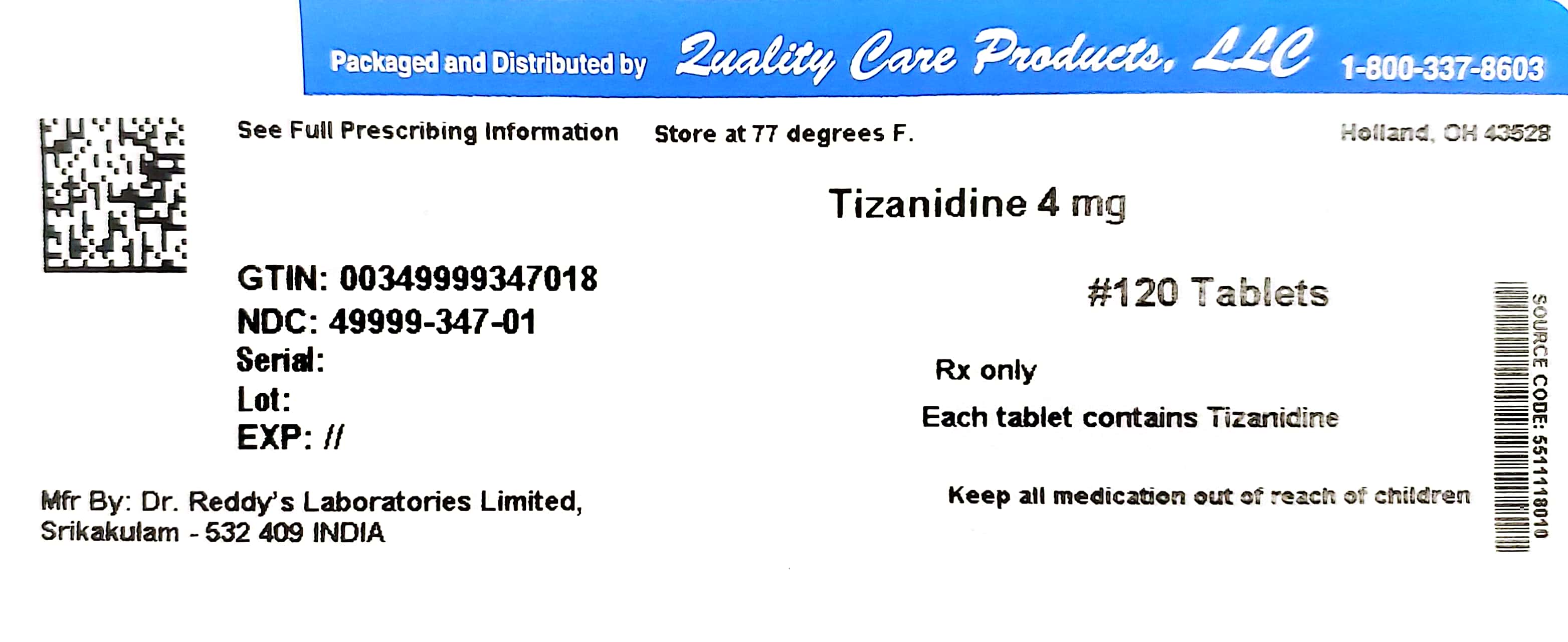
📄 Package Label / Principal Display Panel ▾
image description
About this NDC listing & data coverage
What data is (and isn’t) available for this NDC — tap to expand
| NDC identity (package / product / labeler codes) | ✓ Available |
| Labeler | ✓ Available |
| Product & package description | ✓ Available |
| Marketing category & status | ✓ Available |
| Active ingredient / dosage form / route | ✓ Available |
| FDA label (SPL via DailyMed) | ✓ Available |
| Package photos | ✓ Available |
| Inactive ingredients (structured) | ✓ Available |
| NADAC pharmacy acquisition price (CMS) | — Not published for this NDC CMS publishes NADAC only for NDCs reported in its retail-pharmacy survey. |
| Orange Book / therapeutic-equivalence data | ✓ Available |
| HCPCS J-code billing crosswalk | — Not published for this NDC Most self-administered / retail products have no J-code — that is normal. |
| Medicaid utilization (CMS SDUD) | — Not published for this NDC CMS reports utilization only for NDCs with Medicaid claims above its privacy threshold. |