
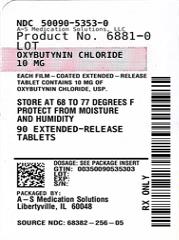
oxybutynin 10 mg Tablet, Film Coated, Extended Release, 90-count
🆔 Identity & classification
Where does this data come from?
🏷️ RxNorm drug class
This medicine belongs to the Cholinergic Muscarinic Antagonist class.
Where does this data come from?
🏭 Manufacturer & labeler
Where does this data come from?
🩺 Clinical
- Oxybutynin calms down an overactive bladder by relaxing the bladder muscle and reducing those sudden, hard-to-ignore urges to go. Over time, most people find they have fewer urgent...
- What exactly is oxybutynin supposed to do for me?
- Yes, dry mouth is the most common side effect of oxybutynin — and it's more noticeable with the immediate-release tablets than the extended-release form. Sipping water throughout t...
- My mouth is incredibly dry since starting this — is that normal?
Patient education
Supplement & herbal interactions
Some supplements/herbs that may interact with Oxybutynin — tap one for details:
Where does this data come from?
Ask a licensed pharmacist directly — free, answered by our team.
🧪 Inactive Ingredients / Excipients
Inactive ingredients, also called excipients, are components of the drug product other than the active ingredient. They may include fillers, dyes, coatings, preservatives, flavors, or other formulation ingredients.
Where does this data come from?
IACT rows and label-wide narrative are kept separate; availability and product-level specificity depend on the submitted label.Inactive ingredient FAQ
Are inactive ingredients the same for every manufacturer?
Why might an inactive ingredient be missing?
Can inactive ingredients matter?
💲 Pricing
A drug doesn't have one price. Each row is a different public payment system, and none is what you'd pay at the counter — that depends on your insurance. The ⓘ on each row explains what it measures.
| Price system | Per each | Per package |
|---|---|---|
| Retail pharmacies payNADAC · weekly | Not in the retail survey — common for institutional, discontinued, or low-volume packs. | |
| Medicaid paysCMS SDUD · 12 mo | No recent Medicaid claims on file for this NDC — rare and low-volume NDCs are suppressed in the public data. | |
| Medicare drug plans payPart D · Q2 2026 | $0.3976 | $35.78 / 90 tablets |
Where does this data come from?
🔁 Therapeutic equivalents
| Product | Labeler | Pack | NADAC/unit | TE | Status | Price vs. this |
|---|---|---|---|---|---|---|
| Oxybutynin Chloride 10 mg 27241-0156-04 | Ajanta | 100 tablets | $0.098 | AB | Availability likely | — |
| Oxybutynin Chloride Extended Release 10 mg 50268-0628-15 | AvPAK | 1 tablet | $0.098 | AB | Availability likely | — |
| oxybutynin chloride 10 mg 62135-0508-90 | Chartwell | 90 tablets | $0.098 | AB | Availability likely | — |
| Oxybutynin Chloride Extended Release 10 mg 64980-0210-01 | Rising | 100 tablets | $0.098 | AB | Availability likely | — |
| Oxybutynin Chloride Extended Release 10 mg 68084-0610-21 | American | 1 tablet | $0.098 | AB | Availability likely | — |
| oxybutynin 10 mg 68382-0256-01 | Zydus | 100 tablets | $0.098 | AB | Availability likely | — |
| Oxybutynin Chloride 10 mg 72888-0031-01 | Advagen | 100 tablets | $0.098 | AB | Availability likely | — |
| oxybutynin chloride 10 mg 16729-0318-01 | Accord | 100 tablets | $0.103 | AB | Availability likely | — |
| oxybutynin 10 mg 00615-8220-39 | NCS | 30 tablets | — | AB | Discontinued | — |
| Oxybutynin Chloride Extended Release 10 mg 42291-0634-01 | AvKARE | 100 tablets | — | AB | FDA listed | — |
| Oxybutynin Chloride Extended Release 10 mg 43063-0790-90 | PD-Rx | 90 tablets | — | AB | FDA listed | — |
| Oxybutynin Chloride Extended Release 10 mg 43353-0284-30 | Aphena | 30 tablets | — | AB | FDA listed | — |
| oxybutynin chloride 10 mg 50090-4307-00 | A-S | 90 tablets | — | AB | FDA listed | — |
| oxybutynin 10 mgthis 50090-5353-00 | A-S | 90 tablets | — | AB | FDA listed | — |
| Oxybutynin Chloride Extended Release 10 mg 50090-6673-00 | A-S | 90 tablets | — | AB | FDA listed | — |
| Oxybutynin Chloride Extended Release 10 mg 62175-0271-32 | Lannett | 30 tablets | — | AB | FDA listed | — |
| Oxybutynin Chloride 10 mg 65162-0372-03 | Amneal | 30 tablets | — | AB | FDA listed | — |
| oxybutynin 10 mg 70771-1087-01 | Zydus | 100 tablets | — | AB | FDA listed | — |
| oxybutynin chloride 10 mg 71205-0667-30 | Proficient | 30 tablets | — | AB | FDA listed | — |
| Oxybutynin Chloride 10 mg 71335-1690-01 | Bryant | 30 tablets | — | AB | FDA listed | — |
| Oxybutynin Chloride Extended Release 10 mg 71335-2121-01 | Bryant | 30 tablets | — | AB | FDA listed | — |
| Oxybutynin Chloride 10 mg 72189-0132-30 | DIRECT | 30 tablets | — | AB | FDA listed | — |
| oxybutynin chloride 10 mg 72789-0049-90 | PD-Rx | 90 tablets | — | AB | FDA listed | — |
| Oxybutynin Chloride Extended Release 10 mg 72789-0414-90 | PD-Rx | 90 tablets | — | AB | FDA listed | — |
| Oxybutynin Chloride Extended Release 10 mg 82804-0095-30 | Proficient | 30 tablets | — | AB | FDA listed | — |
Where does this data come from?
⏳ Availability & generic status
This product is an FDA-approved generic. Other versions of the same drug are listed under Therapeutic equivalents, least expensive first.
Where does this data come from?
📊 Medicare Part D spend CMS · PART D · 2026 (Q1)
🔬 Reported adverse events (FAERS)
Top reported reactions
Age at onset
Reporter sex
Serious outcomes
Where does this data come from?
📦 Packaging — all sizes for this product
| Package NDC | Description | Marketing start | Status |
|---|---|---|---|
| 50090-5353-00 You're viewing this | 90 TABLET, FILM COATED, EXTENDED RELEASE in 1 BOTTLE (50090-5353-0) | 2020-11-11 | Active |
🧭 About this NDC listing & data coverage
What data is (and isn’t) available for this NDC — tap to expand
| NDC identity (package / product / labeler codes) | ✓ Available |
| Labeler | ✓ Available |
| Product & package description | ✓ Available |
| Marketing category & status | ✓ Available |
| Active ingredient / dosage form / route | ✓ Available |
| FDA label (SPL via DailyMed) | ✓ Available |
| Package photos | ✓ Available |
| Inactive ingredients (structured) | — Not published for this NDC The labeler did not submit a structured excipient list, or no SPL is available. |
| NADAC pharmacy acquisition price (CMS) | — Not published for this NDC CMS publishes NADAC only for NDCs reported in its retail-pharmacy survey. |
| Orange Book / therapeutic-equivalence data | ✓ Available |
| HCPCS J-code billing crosswalk | — Not published for this NDC Most self-administered / retail products have no J-code — that is normal. |
| Medicaid utilization (CMS SDUD) | — Not published for this NDC CMS reports utilization only for NDCs with Medicaid claims above its privacy threshold. |
Questions about this listing
Why is there no price listed?
Is the NDC printed on the package the same as the 11-digit billing NDC?
What do the three segments of this NDC mean?
Is this package still being marketed?
Who lists this product with the FDA?
Do I need a prescription for this product?
Where does this data come from?
📄 Full prescribing information FDA SPL
🎯 Indications and Usage ▾
1 INDICATIONS AND USAGE Oxybutynin chloride is a muscarinic antagonist indicated for the treatment of overactive bladder with symptoms of urge urinary incontinence, urgency, and frequency. ( 1 ) Oxybutynin chloride extended-release tablets are also indicated for the treatment of pediatric patients aged 6 years and older with symptoms of detrusor overactivity associated with a neurological condition (e.g., spina bifida). ( 1 ) Oxybutynin chloride extended-release tablets are a muscarinic antagonist indicated for the treatment of overactive bladder with symptoms of urge urinary incontinence, urgency, and frequency.
Oxybutynin chloride extended release tablets are also indicated for the treatment of pediatric patients aged 6 years and older with symptoms of detrusor overactivity associated with a neurological condition (e.g., spina bifida).
⏱️ Dosage and Administration ▾
2 DOSAGE AND ADMINISTRATION Oxybutynin chloride extended-release tablets must be swallowed whole with the aid of liquids, and must not be chewed, divided, or crushed. Oxybutynin chloride extended-release tablets may be administered with or without food. ( 2 ) Adults: Start with 5 mg or 10 mg, once daily at approximately the same time every day.
Dose should not exceed 30 mg per day. ( 2.1 ) Pediatric patients (6 years of age or older): Start with 5 mg, once daily at approximately the same time every day.Dose should not exceed 20 mg per day. ( 2.2 ) Oxybutynin chloride extended release tablets must be swallowed whole with the aid of liquids, and must not be chewed, divided, or crushed.
Oxybutynin chloride extended release tablets may be administered with or without food.
2.1Adults The recommended starting dose of oxybutynin chloride extended-release tablet is 5 mg or 10 mg once daily at approximately the same time each day. Dosage may be adjusted in 5 mg increments to achieve a balance of efficacy and tolerability (up to a maximum of 30 mg/day). In general, dosage adjustment may proceed at approximately weekly intervals.
2.2Pediatric Patients Aged 6 Years of Age and Older The recommended starting dose of oxybutynin chloride extended-release tablets are 5 mg once daily at approximately the same time each day. Dosage may be adjusted in 5 mg increments to achieve a balance of efficacy and tolerability (up to a maximum of 20 mg/day).
💊 Dosage Forms and Strengths ▾
3 DOSAGE FORMS AND STRENGTHS Extended-release tablets 5 mg, 10 mg and 15 mg (3) Oxybutynin chloride extended-release tablets, USP are available as 5 mg, 10 mg and 15 mg tablets for oral use: Oxybutynin chloride extended-release tablets USP, 5 mg are white to off-white, round, beveled-edged, biconvex, coated-tablets debossed on one side with "255" and plain on other side. Oxybutynin chloride extended-release tablets USP, 10 mg are white to off-white, round, beveled-edged, biconvex, coated-tablets debossed on one side with "256" and plain on other side.
Oxybutynin chloride extended-release tablets USP, 15 mg are white to off-white, round, beveled-edged, biconvex, coated-tablets debossed on one side with "257" and plain on other side.
⛔ Contraindications ▾
4 CONTRAINDICATIONS Urinary retention ( 4 ) Gastric Retention ( 4 ) Uncontrolled narrow angle glaucoma ( 4 ) Known hypersensitivity to oxybutynin chloride or any component of oxybutynin chloride extended-release tablets ( 4 ) Oxybutynin chloride extended release tablets are contraindicated in patients with urinary retention, gastric retention and other severe decreased gastrointestinal motility conditions, uncontrolled narrow-angle glaucoma. Oxybutynin chloride extended release tablets are also contraindicated in patients who have demonstrated hypersensitivity to the drug substance or other components of the product.
There have been reports of hypersensitivity reactions, including anaphylaxis and angioedema.
⚠️ Warnings and Cautions ▾
5 WARNINGS AND PRECAUTIONS Angioedema: Angioedema has been reported with oxybutynin. If symptoms of angioedema occur, discontinue oxybutynin chloride extended-release tablets immediately and initiate appropriate therapy. ( 5.1 ) Central Nervous System (CNS) effects: CNS effects have been reported with oxybutynin.
If patient experiences anticholinergic CNS effects, consider dose adjustment or discontinuation of oxybutynin chloride extended-release tablets. ( 5.2 ) Use with caution due to aggravation of symptoms: ○ Pre-existing dementia in patients treated with cholinesterase inhibitors ( 5.2 ), ○ Parkinson's disease ( 5.2 ), ○ Myasthenia gravis ( 5.3 ), and ○ Decreased gastrointestinal motility in patients with autonomic neuropathy. ( 5.4 ) Urinary Retention: Use with caution in patients with clinically significant bladder outflow obstruction because of the risk of urinary retention ( 5.5 ) Gastrointestinal Adverse Reactions: Use with caution in patients with gastrointestinal obstructive disorders or decreased intestinal motility due to risk of gastric retention.
Use with caution in patients with gastroesophageal reflux or in patients concurrently taking drugs that can exacerbate esophagitis. ( 5.6 )
5.1Angioedema Angioedema of the face, lips, tongue and/or larynx has been reported with oxybutynin. In some cases, angioedema occurred after the first dose. Angioedema associated with upper airway swelling may be life-threatening. If involvement of the tongue, hypopharynx, or larynx occurs, oxybutynin should be promptly discontinued and appropriate therapy and/or measures necessary to ensure a patent airway should be promptly provided.
5.2Central Nervous System Effects Oxybutynin is associated with anticholinergic central nervous system (CNS) effects [see Adverse Reactions (6)] . A variety of CNS anticholinergic effects have been reported, including hallucinations, agitation, confusion and somnolence. Patients should be monitored for signs of anticholinergic CNS effects, particularly in the first few months after beginning treatment or increasing the dose.
Advise patients not to drive or operate heavy machinery until they know how Oxybutynin chloride extended-release tablets affects them. If a patient experiences anticholinergic CNS effects, dose reduction or drug discontinuation should be considered. Oxybutynin chloride extended-release tablets should be used with caution in patients with preexisting dementia treated with cholinesterase inhibitors due to the risk of aggravation of symptoms.
Oxybutynin chloride extended-release tablets should be used with caution in patients with Parkinson's disease due to the risk of aggravation of symptoms.
5.3Worsening of Symptoms of Myasthenia Gravis Oxybutynin chloride extended-release tablets should be used with caution in patients with myasthenia gravis due to the risk of aggravation of symptoms.
5.4Worsening of Symptoms of Decreased Gastrointestinal Motility in Patients with Autonomic Neuropathy Oxybutynin chloride extended-release tablets should be used with caution in patients with autonomic neuropathy due to the risk of aggravation of symptoms of decreased gastrointestinal motility.
5.5Urinary Retention Oxybutynin chloride extended-release tablets should be administered with caution to patients with clinically significant bladder outflow obstruction because of the risk of urinary retention [see Contraindications ( 4 )] .
5.6Gastrointestinal Adverse Reactions Oxybutynin chloride extended-release tablets should be administered with caution to patients with gastrointestinal obstructive disorders because of the risk of gastric retention [see Contraindications ( 4 )] . Oxybutynin chloride extended-release tablets, like other anticholinergic drugs, may decrease gastrointestinal motility and should be used with caution in patients with conditions such as ulcerative colitis and intestinal atony. Oxybutynin chloride extended-release tablets should be used with caution in patients who have g…
🤒 Adverse Reactions ▾
6 ADVERSE REACTIONS The most common (incidence ≥5%) adverse reactions were dry mouth, constipation, diarrhea, headache, somnolence and dizziness. ( 6 ) To report SUSPECTED ADVERSE REACTIONS, contact Zydus Pharmaceuticals USA Inc. at 1-877-993-8779 or FDA at 1-800-FDA-1088 or www.fda.gov/medwatch.
6.1Clinical Trials Experience Because clinical trials are conducted under widely varying conditions, the adverse reaction rates observed in the clinical trials of a drug cannot be directly compared to rates in the clinical trials of another drug and may not reflect the rates observed in clinical practice. The safety and efficacy of oxybutynin chloride extended-release tablets (5 to 30 mg/day) was evaluated in 774 adult subjects who participated in five double-blind, controlled clinical trials. In four of the five studies, Oxybutynin chloride extended-release tablets (5 to 20 mg/day in 199 subjects) was an active comparator.
Adverse reactions reported by ≥ 1% of subjects are shown in Table 1. Table 1 Adverse Drug Reactions Reported by ≥ 1% of Oxybutynin Chloride Extended-Release Tablets-treated Adult Subjects in Five Double-blind, Controlled Clinical Trials of Oxybutynin Chloride Extended-Release Tablets 2 The bundled term residual urine volume consists of the preferred terms residual urine volume and residual urine volume increased. System/Organ Class Preferred Term Oxybutynin Chloride Extended-Release Tablets 5 to 30 mg/day n = 774 % Oxybutynin Chloride Immediate-Release Tablets 5 to 20 mg/day n = 199 % Psychiatric Disorders Insomnia 3
5.5Nervous System Disorders Headache 7.5 8 Somnolence 5.6
14.1 Dizziness 5
16.6Dysgeusia 1.6
1.5Eye Disorders Vision blurred 4.3
9.6Dry eye 3.1
2.5Respiratory, Thoracic and Mediastinal Disorders Cough 1.9 3 Oropharyngeal pain 1.9
1.5Dry throat 1.7
2.5Nasal dryness 1.7
4.5Gastrointestinal Disorders Dry mouth 34.9
72.4Constipation 8.7
15.1Diarrhea 7.9
6.5Dyspepsia 4.5 6 Nausea 4.5
11.6Abdominal pain 1.6 2 Vomiting 1.3
1.5Flatulence 1.2
2.5 Gastro-esophageal reflux disease 1
0.5Skin and Subcutaneous Tissue Disorders Dry skin 1.8
2.5Pruritus 1.3
1.5Renal and Urinary Disorders Dysuria 1.9 2 Urinary hesitation 1.9
8.5Urinary retention 1.2 3 General Disorders and Administration Site Conditions Fatigue 2.6 3 I nvestigations Residual urine volume 2 2.3
3.5The discontinuation rate due to adverse reactions was 4.4% with oxybutynin chloride extended-release tablets compared to 0% with oxybutynin chloride immediate-release tablets. The most frequent adverse reaction causing discontinuation of study medication was dry mouth (0.7% ). The following adverse reactions were reported by <1% of oxybutynin chloride-treated patients and at a higher incidence than placebo in clinical trials: Metabolism and Nutrition Disorders: anorexia, fluid retention; Vascular disorders: hot flush; Respiratory, thoracic and mediastinal disorders: dysphonia; Gastrointestinal Disorders: dysphagia, frequent bowel movements; General disorders and administration site conditions: chest discomfort, thirst.
6.2Postmarketing Experience The following additional adverse reactions have been reported from worldwide postmarketing experience with oxybutynin chloride extended-release tablets. Because postmarketing reactions are reported voluntarily from a population of uncertain size, it is not always possible to reliably estimate their frequency or establish a causal relationship to drug exposure. Infections and Infestations: Urinary tract infection; Psychiatric Disorders: psychotic disorder, agitation, confusional state, hallucinations, memory impairment, abnormal behavior; Nervous System Disorders: convulsions; Eye Disorders: glaucoma; Respiratory, Thoracic and Mediastinal Disorders: nasal congestion; Cardiac Disorders: arrhythmia, tachycardia, QT interval prolongation; Vascular Disorders: flushing, hypertension; S kin and Subcutaneous Tissue Disorders: rash; Renal and Urinary Disorders: impotence; General Disorders and Administratio…
🔄 Drug Interactions ▾
7 DRUG INTERACTIONS Co-administration with other anticholinergic drugs may increase the frequency and/or severity of anticholinergic-like effects. ( 7 ) Co-administration with strong cytochrome P450 (CYP) 3A4 inhibitors (e.g., ketoconazole) increases the systemic exposure of oxybutynin. ( 7 ) The concomitant use of oxybutynin with other anticholinergic drugs or with other agents which produce dry mouth, constipation, somnolence (drowsiness), and/or other anticholinergic-like effects may increase the frequency and/or severity of such effects.
Anticholinergic agents may potentially alter the absorption of some concomitantly administered drugs due to anticholinergic effects on gastrointestinal motility. This may be of concern for drugs with a narrow therapeutic index. Anticholinergic agents may also antagonize the effects of prokinetic agents, such as metoclopramide.
Mean oxybutynin plasma concentrations were approximately 2 fold higher when oxybutynin chloride extended-release tablets were administered with ketoconazole, a potent CYP3A4 inhibitor. Other inhibitors of the cytochrome P450 3A4 enzyme system, such as antimycotic agents (e.g., itraconazole and miconazole) or macrolide antibiotics (e.g., erythromycin and clarithromycin), may alter oxybutynin mean pharmacokinetic parameters (i.e., Cmax and AUC). The clinical relevance of such potential interactions is not known.
Caution should be used when such drugs are co-administered.
👥 Use in Specific Populations ▾
8 USE IN SPECIFIC POPULATIONS Pediatric Use: Oxybutynin chloride extended-release tablets are not recommended in pediatric patients who cannot swallow the tablet whole without chewing, dividing or crushing, or in children under the age of 6 years. ( 8.4 ) Renal or Hepatic Impairment: There have been no studies conducted in patients with renal or hepatic impairment. ( 8.6 , 8.7 )
8.1Pregnancy Risk Summary There are no adequate data on oxybutynin chloride extended-release tablets use in pregnant women to evaluate for a drug-associated risk of major birth defects, miscarriage or adverse maternal or fetal outcomes. In the U.S. general population, the estimated background risk of major birth defects and miscarriage in clinically recognized pregnancies is 2 to 4% and 15 to 20%, respectively. The background risk of major birth defects and miscarriage for the indicated population is unknown.
8.2Lactation Risk Summary There are no data on the presence of oxybutynin in human milk, the effects on the breastfed infant, or the effects of oxybutynin chloride on milk production. The developmental and health benefits of breastfeeding should be considered along with the mother's clinical need for oxybutynin chloride extended-release tablets and any potential adverse effects on the breastfed child from oxybutynin chloride extended-release tablets or from the underlying maternal condition.
8.4Pediatric Use The safety and efficacy of oxybutynin chloride extended-release tablets were studied in 60 children in a 24 week, open-label, non-randomized trial. Patients were aged 6 to 15 years, all had symptoms of detrusor overactivity in association with a neurological condition (e.g., spina bifida), all used clean intermittent catheterization, and all were current users of oxybutynin chloride extended-release tablets. Study results demonstrated that administration of oxybutynin chloride extended-release tablets 5 to 20 mg/day was associated with an increase from baseline in mean urine volume per catheterization from 108 mL to 136 mL, an increase from baseline in mean urine volume after morning awakening from 148 mL to 189 mL, and an increase from baseline in the mean percentage of catheterizations without a leaking episode from 34% to 51%.
Urodynamic results were consistent with clinical results. Administration of oxybutynin chloride extended-release tablets resulted in an increase from baseline in mean maximum cystometric capacity from 185 mL to 254 mL, a decrease from baseline in mean detrusor pressure at maximum cystometric capacity from 44 cm H 2 O to 33 cm H 2 O, and a reduction in the percentage of patients demonstrating uninhibited detrusor contractions (of at least 15 cm H 2 O) from 60% to 28%. The pharmacokinetics of oxybutynin chloride in these patients were consistent with those reported for adults [see Clinical Pharmacology ( 12.3 )] .
Oxybutynin chloride extended-release tablets are not recommended in pediatric patients who cannot swallow the tablet whole without chewing, dividing, or crushing, or in children under the age of 6.
8.5Geriatric Use The rate and severity of anticholinergic effects reported by patients less than 65 years old and those 65 years and older were similar. The pharmacokinetics of oxybutynin chloride extended-release tablets were similar in all patients studied (up to 78 years of age).
8.6Renal Impairment There were no studies conducted with oxybutynin chloride extended-release tablets in patients with renal impairment.
8.7Hepatic Impairment There were no studies conducted with oxybutynin chloride extended-release tablets in patients with hepatic impairment.
🤰 Pregnancy ▾
8.1Pregnancy Risk Summary There are no adequate data on oxybutynin chloride extended-release tablets use in pregnant women to evaluate for a drug-associated risk of major birth defects, miscarriage or adverse maternal or fetal outcomes. In the U.S. general population, the estimated background risk of major birth defects and miscarriage in clinically recognized pregnancies is 2 to 4% and 15 to 20%, respectively. The background risk of major birth defects and miscarriage for the indicated population is unknown.
🧒 Pediatric Use ▾
8.4Pediatric Use The safety and efficacy of oxybutynin chloride extended-release tablets were studied in 60 children in a 24 week, open-label, non-randomized trial. Patients were aged 6 to 15 years, all had symptoms of detrusor overactivity in association with a neurological condition (e.g., spina bifida), all used clean intermittent catheterization, and all were current users of oxybutynin chloride extended-release tablets. Study results demonstrated that administration of oxybutynin chloride extended-release tablets 5 to 20 mg/day was associated with an increase from baseline in mean urine volume per catheterization from 108 mL to 136 mL, an increase from baseline in mean urine volume after morning awakening from 148 mL to 189 mL, and an increase from baseline in the mean percentage of catheterizations without a leaking episode from 34% to 51%.
Urodynamic results were consistent with clinical results. Administration of oxybutynin chloride extended-release tablets resulted in an increase from baseline in mean maximum cystometric capacity from 185 mL to 254 mL, a decrease from baseline in mean detrusor pressure at maximum cystometric capacity from 44 cm H 2 O to 33 cm H 2 O, and a reduction in the percentage of patients demonstrating uninhibited detrusor contractions (of at least 15 cm H 2 O) from 60% to 28%. The pharmacokinetics of oxybutynin chloride in these patients were consistent with those reported for adults [see Clinical Pharmacology ( 12.3 )] .
Oxybutynin chloride extended-release tablets are not recommended in pediatric patients who cannot swallow the tablet whole without chewing, dividing, or crushing, or in children under the age of 6.
🧓 Geriatric Use ▾
8.5Geriatric Use The rate and severity of anticholinergic effects reported by patients less than 65 years old and those 65 years and older were similar. The pharmacokinetics of oxybutynin chloride extended-release tablets were similar in all patients studied (up to 78 years of age).
🆘 Overdosage ▾
10 OVERDOSAGE The continuous release of oxybutynin from oxybutynin chloride extended-release tablets should be considered in the treatment of overdosage. Patients should be monitored for at least 24 hours. Treatment should be symptomatic and supportive.
A cathartic may be administered. Overdosage with oxybutynin chloride has been associated with anticholinergic effects including central nervous system excitation, flushing, fever, dehydration, cardiac arrhythmia, vomiting, and urinary retention. Ingestion of 100 mg oxybutynin chloride in association with alcohol has been reported in a 13 year old boy who experienced memory loss, and a 34 year old woman who developed stupor, followed by disorientation and agitation on awakening, dilated pupils, dry skin, cardiac arrhythmia, and retention of urine.
Both patients fully recovered with symptomatic treatment.
🧬 Clinical Pharmacology ▾
12 CLINICAL PHARMACOLOGY
12.1Mechanism of Action Oxybutynin relaxes bladder smooth muscle. Oxybutynin chloride exerts a direct antispasmodic effect on smooth muscle and inhibits the muscarinic action of acetylcholine on smooth muscle. No blocking effects occur at skeletal neuromuscular junctions or autonomic ganglia (antinicotinic effects).
Antimuscarinic activity resides predominantly in the R-isomer. A metabolite, desethyloxybutynin, has pharmacological activity similar to that of oxybutynin in in vitro studies.
12.2Pharmacodynamics In patients with conditions characterized by involuntary bladder contractions, cystometric studies have demonstrated that oxybutynin increases bladder (vesical) capacity, diminishes the frequency of uninhibited contractions of the detrusor muscle, and delays the initial desire to void.
12.3Pharmacokinetics Absorption Following the first dose of oxybutynin chloride extended-release tablets,oxybutynin plasma concentrations rise for 4 to 6 hours; thereafter steady concentrations are maintained for up to 24 hours, minimizing fluctuations between peak and trough concentrations associated with oxybutynin. The relative bioavailabilities of R-and S-oxybutynin from oxybutynin chloride extended-release tabletsare 156% and 187%, respectively, compared with oxybutynin. The mean pharmacokinetic parameters for R -and S-oxybutynin are summarized in Table 2.
The plasma concentration-time profiles for R-and S-oxybutynin are similar in shape; Figure 1 shows the profile for R-oxybutynin. Table 2 Mean (SD) R-and S-Oxybutynin Pharmacokinetic Parameters Following a Single Dose of Oxybutynin Chloride Extended-Release Tablets 10 mg (n=43) Parameters (units) R-Oxybutynin S-Oxybutynin C max (ng/mL) 1 (0.6) 1.8 (1) T max (h) 12.7 (5.4) 11.8 (5.3) t 1/2 (h) 13.2 (6.2) 12.4 (6.1) AUC (0 to 48) (ng•h/mL) 18.4 (10.3) 34.2 (16.9) AUC inf (ng•h/mL) 21.3 (12.2) 39.5 (21.2) Figure 1 Mean R-oxybutynin plasma concentrations following a single dose of oxybutynin chloride extended-release tablets 10 mg and oxybutynin 5 mg administered every 8 hours (n=23 for each treatment).
Steady state oxybutynin plasma concentrations are achieved by Day 3 of repeated oxybutynin chloride extended-release dosing, with no observed drug accumulation or change in oxybutynin and desethyloxybutynin pharmacokinetic parameters. Oxybutynin chloride extended-release tablets steady state pharmacokinetics were studied in 19 children aged 5 to 15 years with detrusor overactivity associated with a neurological condition (e.g., spina bifida). The children were on oxybutynin chloride extended-release tablets total daily dose ranging from 5 to 20 mg (0.10 to 0.77 mg/kg).
Sparse sampling technique was used to obtain serum samples. When all available data are normalized to an equivalent of 5 mg per day of oxybutynin chloride extended-release tablets, the mean pharmacokinetic parameters derived for R-and S-oxybutynin and R-and S-desethyloxybutynin are summarized in Table 3. The plasma-time concentration profiles for R-and S-oxybutynin are similar in shape; Figure 2 shows the profile for R-oxybutynin when all available data are normalized to an equivalent of 5 mg per day.
Table 3 Mean ± SD R-and S-Oxybutynin and R-and S-Desethyloxybutynin Pharmacokinetic Parameters in Children Aged 5 to 15 Following Administration of 5 to 20 mg Oxybutynin Chloride Extended-Release Tablets Once Daily (n=19), All Available Data Normalized to an Equivalent of Oxybutynin Chloride Extended-Release Tablets 5 mg Once Daily R-Oxybutynin S-Oxybutynin R-Desethyloxybutynin S-Desethyloxybutynin C max (ng/mL) 0.7 ± 0.4 1.3 ± 0.8 7.8 ± 3.7 4.2 ±
2.3T max (h) 5 5 5 5 AUC (ng•h/mL) 12.8 ± 7 23.7 ± 14.4 125.1 ± 66.7 73.6 ±
47.7Figure 2 Mean steady state (± SD) R-oxybutynin plasma concentrations following administration of 5 to 20 mg oxybutynin chloride extended-release tablets once daily in children aged 5 to 15. Plot represents all available data normalized to an equivalent of oxybutynin chloride…
🧬 Mechanism of Action ▾
12.1Mechanism of Action Oxybutynin relaxes bladder smooth muscle. Oxybutynin chloride exerts a direct antispasmodic effect on smooth muscle and inhibits the muscarinic action of acetylcholine on smooth muscle. No blocking effects occur at skeletal neuromuscular junctions or autonomic ganglia (antinicotinic effects).
Antimuscarinic activity resides predominantly in the R-isomer. A metabolite, desethyloxybutynin, has pharmacological activity similar to that of oxybutynin in in vitro studies.
📦 How Supplied / Storage and Handling ▾
16 HOW SUPPLIED/STORAGE AND HANDLING Product: 50090-5353 NDC: 50090-5353-0 90 TABLET, FILM COATED, EXTENDED RELEASE in a BOTTLE
📋 Description ▾
11 DESCRIPTION Oxybutynin chloride extended-release tablets are an antispasmodic, muscarinic antagonist. Each oxybutynin chloride extended-release tablets contains 5 mg, 10 mg, or 15 mg of oxybutynin chloride USP, formulated as a once-a-day controlled-release tablet for oral administration. Oxybutynin chloride is administered as a racemate of R-and S-enantiomers.
Chemically, oxybutynin chloride is d,l (racemic) 4-diethylamino-2-butynyl phenylcyclohexylglycolate hydrochloride. The empirical formula of oxybutynin chloride is C 22 H 31 NO 3 •HCl. Its structural formula is: Oxybutynin chloride, USP is a white crystalline, practically odorless powder with a molecular weight of 393.95.
It is freely soluble in water and in alcohol, very soluble in methanol and in chloroform, soluble in acetone, slightly soluble in ether and very slightly soluble in hexane. Oxybutynin chloride extended-release tablet, USP also contains the following inactive ingredients: alginic acid, hydrogenated castor oil, hypromellose, lactose monohydrate, magnesium stearate, methacrylic acid copolymer dispersion, microcrystalline cellulose, povidone, talc and triethyl citrate. The product complies the USP Dissolution Test 8 System Components and Performance Oxybutynin chloride extended-release tablet uses an enteric coated hydrophilic hydrogel matrix to deliver oxybutynin chloride at controlled rate over approximately 24 hours by diffusion mechanism.
The system comprises of a core, which contains the drug, rate controlling hydrogel and other excipients. The core is surrounded by a partially or complete pH dependent membrane. Hence, when the drug reaches the acidic medium, in stomach minimal drug release will occur and when it reaches an environment of pH 5.5 and above, the outer membrane will be dissolved exposing the inner core.
This inner core will partially hydrate to form a gel layer and the drug release will occur via diffusion mechanism from a gel layer and subsequently through gel erosion. Oxybutynin chloride extended-release tablet
💬 Information for Patients ▾
17 PATIENT COUNSELING INFORMATION Patients should be informed that oxybutynin may produce angioedema that could result in life threatening airway obstruction. Patients should be advised to promptly discontinue oxybutynin therapy and seek immediate medical attention if they experience swelling of the tongue, edema of the laryngopharynx, or difficulty breathing. Patients should be informed that anticholinergic (antimuscarinic) agents such as oxybutynin chloride extended-release tablets, may produce clinically significant adverse reactions related to anticholinergic activity such as: ○ Urinary retention and constipation ○ Heat prostration due to decreased sweating.
Heat prostration can occur when anticholinergic medicines are administered in the presence of high environmental temperature. Patients should be informed that anticholinergic medicines such as oxybutynin chloride extended-release tablets may produce drowsiness (somnolence), dizziness or blurred vision. Patients should be advised to exercise caution in decisions to engage in potentially dangerous activities until oxybutynin chloride extended-release tablets effects have been determined.
Patients should be informed that alcohol may enhance the drowsiness caused by anticholinergic agents such as oxybutynin chloride extended-release tablets. Patients should be informed that oxybutynin chloride extended-release tablets should be swallowed whole with the aid of liquids. Patients should not chew, divide, or crush tablets.
The hydrated polymer system of the tablet is not rigid and is expected to be broken up by normal peristalsis in the GI tract. The biologically inert components of the tablet may occasionally remain intact during GI transit and will be eliminated in the feces as a soft, hydrated mass. Oxybutynin chloride extended-release tablets should be taken at approximately the same time each day.