
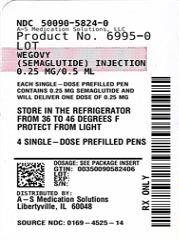
WEGOVY semaglutide .25 mg/.5mL Injection, Solution, 4 syringes
🆔 Identity & classification
Where does this data come from?
🏷️ RxNorm drug class
This medicine belongs to the GLP-1 Receptor Agonist class.
Where does this data come from?
🏭 Manufacturer & labeler
Where does this data come from?
🩺 Clinical
- They both contain semaglutide, yes, but they're approved for different things. Ozempic is approved to treat type 2 diabetes and reduce heart risk in people with type 2 diabetes. We...
- What's the difference between Ozempic and Wegovy — aren't they the same drug?
- Nausea is genuinely the most common side effect — a lot of people experience it, especially in the first few weeks or when the dose gets bumped up. The good news is it usually ease...
- I feel nauseous all the time since starting this. Is that normal, and will it go away?
Patient education
Supplement & herbal interactions
Some supplements/herbs that may interact with Semaglutide — tap one for details:
Semaglutide may be associated with lower levels of 1 nutrient — worth a chat with your pharmacist, not a cause for alarm.
Where does this data come from?
Ask a licensed pharmacist directly — free, answered by our team.
🧪 Inactive Ingredients / Excipients
Inactive ingredients, also called excipients, are components of the drug product other than the active ingredient. They may include fillers, dyes, coatings, preservatives, flavors, or other formulation ingredients.
💡 Tap an ingredient (hover on desktop) to see what it is and why it’s used.
-
UNII 451W47IQ8X
Sodium chloride is common table salt. It's used in medicines as a buffer to maintain proper pH, as a filler to add bulk, or to adjust the osmotic balance in liquid formulations.
-
UNII 94255I6E2T
Sodium phosphate dibasic dihydrate is a salt that helps control the acidity level of a medicine. It acts as a buffer and pH regulator to keep the medication stable and effective.
-
UNII 059QF0KO0R
Water is a liquid solvent that dissolves and mixes ingredients together in liquid medicines, syrups, and injections. It helps distribute the active drug evenly throughout the product.
3 inactive ingredients listed in the exact product block matched to this NDC.
Where does this data come from?
ingredient classCode="IACT" elements from the exact product block matched by this NDC. Label-section narrative from DailyMed / the openFDA label index is shown separately when available.Inactive ingredient FAQ
Are inactive ingredients the same for every manufacturer?
Why might an inactive ingredient be missing?
Can inactive ingredients matter?
💲 Pricing
A drug doesn't have one price. Each row is a different public payment system, and none is what you'd pay at the counter — that depends on your insurance. The ⓘ on each row explains what it measures.
| Price system | Per mL | Per package |
|---|---|---|
| Retail pharmacies payNADAC · weekly | Not in the retail survey — common for institutional, discontinued, or low-volume packs. | |
| Medicaid paysCMS SDUD · 12 mo | No recent Medicaid claims on file for this NDC — rare and low-volume NDCs are suppressed in the public data. | |
| Medicare drug plans payPart D · Q2 2026 | $664.52 | $1,329.04 / 2 ml |
Where does this data come from?
🔁 Therapeutic equivalents
| Product | Labeler | Pack | NADAC/unit | TE | Status | Price vs. this |
|---|---|---|---|---|---|---|
| Wegovy .25 mg/.5mL 00169-4525-14 | Novo | 4 syringes | $653.294 | — | Availability likely | — |
| Wegovy .25 mg/.5mLthis 50090-5824-00 | A-S | 4 syringes | — | — | FDA listed | — |
Where does this data come from?
⏳ Availability & generic status
We did not find an FDA-approved generic match for this exact strength, form and route. Patent/protection dates below may affect future generic timing.
Why the date isn’t exact: Generic timing can change because patents may be challenged, settled, licensed, added, removed, or worked around with a narrower label — and FDA approval does not always mean a pharmacy can get the generic today.
🛈 What do these terms mean?
- Patent
- Legal protection listed in the Orange Book that may delay generic approval or launch. Issued by the U.S. Patent & Trademark Office.
- Substance patent
- Covers the active drug molecule itself — the hardest to design around. A generic generally can’t launch until it expires.
- Formulation (product) patent
- Covers a specific formulation or dosage form. A generic can sometimes work around it with a different formulation.
- Method-of-use patent
- A patent covering one specific approved use of the drug — not necessarily the whole molecule. A generic can sometimes launch with a “skinny label” that carves out the protected use and keeps the others.
- Skinny label
- A generic label that omits a still-patented use when the FDA allows it — letting a generic reach the market for the unprotected uses.
- Exclusivity
- FDA-granted marketing protection, separate from patents — e.g. 5-yr new chemical entity, 7-yr orphan drug, or a +6-month pediatric extension.
- Paragraph IV
- A generic applicant’s formal challenge to a listed patent. It can potentially lead to earlier generic entry, but often involves litigation or a settlement.
- RLD / RS
- Reference Listed Drug — the brand product the FDA uses as the reference for generic applications. Reference Standard — the product the FDA expects generics to compare against in bioequivalence testing.
- TE / AB rating
- FDA therapeutic-equivalence rating. An AB rating generally means the FDA considers a generic therapeutically equivalent to — and substitutable for — the brand.
- LOE (loss of exclusivity)
- The latest patent or exclusivity currently listed — the loss-of-exclusivity / latest-listed-protection date shown on this page. Paragraph-IV challenges and settlements can move the real date earlier; FDA approval and a manufacturer’s decision to market can move it later.
Built from the FDA Orange Book. The bars above are scaled to each protection’s expiry; the red LOE marker is the last one to lapse.
| Patent | Type | Use code | Expires |
|---|---|---|---|
| US 12551536 ↗ | Method of use | U-4418 | Oct 10, 2038 |
| US 12551536 ↗ | Method of use | U-4418 | Oct 10, 2038 |
| US 12214017 ↗ | Method of use | U-4418 | Aug 24, 2038 |
| US 12029779 ↗ | Method of use | U-4418 | Oct 10, 2038 |
| US 11752198 ↗ | Method of use | U-4418 | Aug 24, 2038 |
| US 11318191 ↗ | Method of use | U-4418 | Feb 17, 2041 |
| US 10888605 ↗ | Method of use | U-4418 | Aug 24, 2038 |
| US 9764003 ↗ | Method of use | U-4418 | Jun 21, 2033 |
| US 11478533 ↗ | Method of use | U-3861 | May 13, 2040 |
| US 11478533 ↗ | Method of use | U-3861 | May 13, 2040 |
| US 11478533 ↗ | Method of use | U-3861 | May 13, 2040 |
| US 11478533 ↗ | Method of use | U-3861 | May 13, 2040 |
| US 11478533 ↗ | Method of use | U-3861 | May 13, 2040 |
| US 12214017 ↗ | Method of use | U-3162 | Aug 24, 2038 |
| US 12214017 ↗ | Method of use | U-3162 | Aug 24, 2038 |
| US 12214017 ↗ | Method of use | U-3162 | Aug 24, 2038 |
| US 12214017 ↗ | Method of use | U-3162 | Aug 24, 2038 |
| US 12214017 ↗ | Method of use | U-3162 | Aug 24, 2038 |
| US 11318191 ↗ | Method of use | U-3162 | Feb 17, 2041 |
| US 11318191 ↗ | Method of use | U-3162 | Feb 17, 2041 |
| US 11318191 ↗ | Method of use | U-3162 | Feb 17, 2041 |
| US 11318191 ↗ | Method of use | U-3162 | Feb 17, 2041 |
| US 11318191 ↗ | Method of use | U-3162 | Feb 17, 2041 |
| US 11752198 ↗ | Method of use | U-3162 | Aug 24, 2038 |
| US 11752198 ↗ | Method of use | U-3162 | Aug 24, 2038 |
| US 11752198 ↗ | Method of use | U-3162 | Aug 24, 2038 |
| US 11752198 ↗ | Method of use | U-3162 | Aug 24, 2038 |
| US 11752198 ↗ | Method of use | U-3162 | Aug 24, 2038 |
| US 10888605 ↗ | Method of use | U-3162 | Aug 24, 2038 |
| US 9764003 ↗ | Method of use | U-3161 | Jun 21, 2033 |
| US 9764003 ↗ | Method of use | U-3161 | Jun 21, 2033 |
| US 10888605 ↗ | Method of use | U-3162 | Aug 24, 2038 |
| US 9764003 ↗ | Method of use | U-3161 | Jun 21, 2033 |
| US 10888605 ↗ | Method of use | U-3162 | Aug 24, 2038 |
| US 10888605 ↗ | Method of use | U-3162 | Aug 24, 2038 |
| US 9764003 ↗ | Method of use | U-3161 | Jun 21, 2033 |
| US 9764003 ↗ | Method of use | U-3161 | Jun 21, 2033 |
| US 10888605 ↗ | Method of use | U-3162 | Aug 24, 2038 |
| US 12029779 ↗ | Method of use | U-3162 | Oct 10, 2038 |
| US 11318191 ↗ | Method of use | U-3162 | Feb 17, 2041 |
| US 11318191 ↗ | Method of use | U-4443 | Feb 17, 2041 |
| US 11318191 ↗ | Method of use | U-4560 | Feb 17, 2041 |
| US 11318191 ↗ | Method of use | U-3162 | Feb 17, 2041 |
| US 11318191 ↗ | Method of use | U-4443 | Feb 17, 2041 |
| US 11318191 ↗ | Method of use | U-4560 | Feb 17, 2041 |
| US 11318191 ↗ | Method of use | U-3162 | Feb 17, 2041 |
| US 11318191 ↗ | Method of use | U-4443 | Feb 17, 2041 |
| US 11318191 ↗ | Method of use | U-4560 | Feb 17, 2041 |
| US 11318191 ↗ | Method of use | U-3162 | Feb 17, 2041 |
| US 11318191 ↗ | Method of use | U-4443 | Feb 17, 2041 |
| US 11318191 ↗ | Method of use | U-4560 | Feb 17, 2041 |
| US 11318191 ↗ | Method of use | U-3162 | Feb 17, 2041 |
| US 11318191 ↗ | Method of use | U-4443 | Feb 17, 2041 |
| US 11318191 ↗ | Method of use | U-4560 | Feb 17, 2041 |
| US 12551536 ↗ | Method of use | U-4418 | Oct 10, 2038 |
| US 12029779 ↗ | Method of use | U-3162 | Oct 10, 2038 |
| US 11478533 ↗ | Method of use | U-3861 | May 13, 2040 |
| US 9764003 ↗ | Method of use | U-3161 | Jun 21, 2033 |
| US 12569543 ↗ | Method of use | U-4443 | Apr 28, 2037 |
| US 12569543 ↗ | Method of use | U-4443 | Apr 28, 2037 |
| US 12569543 ↗ | Method of use | U-4443 | Apr 28, 2037 |
| US 12569543 ↗ | Method of use | U-4443 | Apr 28, 2037 |
| US 12569543 ↗ | Method of use | U-4443 | Apr 28, 2037 |
| US 12551536 ↗ | Method of use | U-4418 | Oct 10, 2038 |
| US 12551536 ↗ | Method of use | U-4418 | Oct 10, 2038 |
| US 12551536 ↗ | Method of use | U-4418 | Oct 10, 2038 |
| US 12551536 ↗ | Method of use | U-4418 | Oct 10, 2038 |
| US 12551536 ↗ | Method of use | U-4418 | Oct 10, 2038 |
| US 12214017 ↗ | Method of use | U-3162 | Aug 24, 2038 |
| US 12214017 ↗ | Method of use | U-3162 | Aug 24, 2038 |
| US 12214017 ↗ | Method of use | U-3162 | Aug 24, 2038 |
| US 12214017 ↗ | Method of use | U-3162 | Aug 24, 2038 |
| US 12214017 ↗ | Method of use | U-3162 | Aug 24, 2038 |
| US 12029779 ↗ | Method of use | U-3162 | Oct 10, 2038 |
| US 12029779 ↗ | Method of use | U-3162 | Oct 10, 2038 |
| US 12029779 ↗ | Method of use | U-3162 | Oct 10, 2038 |
| US 12029779 ↗ | Method of use | U-3162 | Oct 10, 2038 |
| US 12029779 ↗ | Method of use | U-3162 | Oct 10, 2038 |
| US 11752198 ↗ | Method of use | U-3162 | Aug 24, 2038 |
| US 11752198 ↗ | Method of use | U-3162 | Aug 24, 2038 |
| US 11752198 ↗ | Method of use | U-3162 | Aug 24, 2038 |
| US 11752198 ↗ | Method of use | U-3162 | Aug 24, 2038 |
| US 11752198 ↗ | Method of use | U-3162 | Aug 24, 2038 |
| US 11478533 ↗ | Method of use | U-3861 | May 13, 2040 |
| US 11478533 ↗ | Method of use | U-3861 | May 13, 2040 |
| US 11478533 ↗ | Method of use | U-3861 | May 13, 2040 |
| US 11478533 ↗ | Method of use | U-3861 | May 13, 2040 |
| US 11478533 ↗ | Method of use | U-3861 | May 13, 2040 |
| US 10888605 ↗ | Method of use | U-3162 | Aug 24, 2038 |
| US 10888605 ↗ | Method of use | U-3162 | Aug 24, 2038 |
| US 10888605 ↗ | Method of use | U-3162 | Aug 24, 2038 |
| US 10888605 ↗ | Method of use | U-3162 | Aug 24, 2038 |
| US 10888605 ↗ | Method of use | U-3162 | Aug 24, 2038 |
| US 9764003 ↗ | Method of use | U-3161 | Jun 21, 2033 |
| US 9764003 ↗ | Method of use | U-3161 | Jun 21, 2033 |
| US 9764003 ↗ | Method of use | U-3161 | Jun 21, 2033 |
| US 9764003 ↗ | Method of use | U-3161 | Jun 21, 2033 |
| US 9764003 ↗ | Method of use | U-3161 | Jun 21, 2033 |
| US 8536122 ↗ | Drug substance | — | Mar 20, 2026 |
| US 8129343 ↗ | Drug substance | — | Dec 5, 2031 |
| US 8536122 ↗ | Drug substance | — | Mar 20, 2026 |
| US 8129343 ↗ | Drug substance | — | Dec 5, 2031 |
| US 8129343 ↗ | Drug substance | — | Dec 5, 2031 |
| US 8129343 ↗ | Drug substance | — | Dec 5, 2031 |
| US 8129343 ↗ | Drug substance | — | Dec 5, 2031 |
| US 8129343 ↗ | Drug substance | — | Dec 5, 2031 |
| US 8536122 ↗ | Drug substance | — | Mar 20, 2026 |
| US 8129343 ↗ | Drug substance | — | Dec 5, 2031 |
| US 8536122 ↗ | Drug substance | — | Mar 20, 2026 |
| US 8129343 ↗ | Drug substance | — | Dec 5, 2031 |
| US 8129343 ↗ | Drug substance | — | Dec 5, 2031 |
| US 8129343 ↗ | Drug substance | — | Dec 5, 2031 |
| US 8536122 ↗ | Drug substance | — | Mar 20, 2026 |
| US 8129343 ↗ | Drug substance | — | Dec 5, 2031 |
| US 8129343 ↗ | Drug substance | — | Dec 5, 2031 |
| Code | What it grants | Expires |
|---|---|---|
| I-935 | New indication (3-year) | Mar 8, 2027 |
| I-973 | New indication (3-year) | Aug 15, 2028 |
| I-935 | New indication (3-year) | Mar 8, 2027 |
| I-973 | New indication (3-year) | Aug 15, 2028 |
| I-935 | New indication (3-year) | Mar 8, 2027 |
| I-973 | New indication (3-year) | Aug 15, 2028 |
| D-190 | Other change requiring clinical data (3-year) | Jul 21, 2026 |
| I-935 | New indication (3-year) | Mar 8, 2027 |
| I-973 | New indication (3-year) | Aug 15, 2028 |
| I-935 | New indication (3-year) | Mar 8, 2027 |
| I-973 | New indication (3-year) | Aug 15, 2028 |
| NS | New Strength | Mar 19, 2029 |
| I-935 | New indication (3-year) | Mar 8, 2027 |
| I-973 | New indication (3-year) | Aug 15, 2028 |
Is there a generic version of WEGOVY 0.25 MG/0.5 ML PEN?
The FDA approved a generic — why can’t I get it at my pharmacy yet?
Why do different websites show different generic release dates?
What does “FDA listed” mean?
What does a patent or protection date mean here?
What does “current Orange Book estimate” mean?
Can a generic come out before the last patent expires?
Can a generic come out after the listed dates?
What is the difference between patents and exclusivity?
Why are there multiple patent dates?
Where does this data come from?
📊 Medicare Part D spend CMS · PART D · 2026 (Q1)
📦 Packaging — all sizes for this product
| Package NDC | Description | Marketing start | Status |
|---|---|---|---|
| 50090-5824-00 You're viewing this | 4 SYRINGE, PLASTIC in 1 CARTON (50090-5824-0) / .5 mL in 1 SYRINGE, PLASTIC | 2021-10-25 | Active |
🧭 About this NDC listing & data coverage
What data is (and isn’t) available for this NDC — tap to expand
| NDC identity (package / product / labeler codes) | ✓ Available |
| Labeler | ✓ Available |
| Product & package description | ✓ Available |
| Marketing category & status | ✓ Available |
| Active ingredient / dosage form / route | ✓ Available |
| FDA label (SPL via DailyMed) | ✓ Available |
| Package photos | ✓ Available |
| Inactive ingredients (structured) | ✓ Available |
| NADAC pharmacy acquisition price (CMS) | — Not published for this NDC CMS publishes NADAC only for NDCs reported in its retail-pharmacy survey. |
| Orange Book / therapeutic-equivalence data | ✓ Available |
| HCPCS J-code billing crosswalk | — Not published for this NDC Most self-administered / retail products have no J-code — that is normal. |
| Medicaid utilization (CMS SDUD) | — Not published for this NDC CMS reports utilization only for NDCs with Medicaid claims above its privacy threshold. |
Questions about this listing
Why is there no price listed?
Is the NDC printed on the package the same as the 11-digit billing NDC?
What do the three segments of this NDC mean?
Is this package still being marketed?
Who lists this product with the FDA?
Do I need a prescription for this product?
Where does this data come from?
📄 Full prescribing information FDA SPL
🚨 Boxed Warning ▾
WARNING: RISK OF THYROID C-CELL TUMORS • In rodents, semaglutide causes dose-dependent and treatment-duration-dependent thyroid C-cell tumors at clinically relevant exposures. It is unknown whether WEGOVY causes thyroid C-cell tumors, including medullary thyroid carcinoma (MTC), in humans as human relevance of semaglutide-induced rodent thyroid C-cell tumors has not been determined [see Warnings and Precautions ( 5.1 ) and Nonclinical Toxicology ( 13.1 )] . • WEGOVY is contraindicated in patients with a personal or family history of MTC or in patients with Multiple Endocrine Neoplasia syndrome type 2 (MEN 2) [see Contraindications ( 4 )] .
Counsel patients regarding the potential risk for MTC with the use of WEGOVY and inform them of symptoms of thyroid tumors (e.g. a mass in the neck, dysphagia, dyspnea, persistent hoarseness). Routine monitoring of serum calcitonin or using thyroid ultrasound is of uncertain value for early detection of MTC in patients treated with WEGOVY [see Contraindications ( 4 ) and Warnings and Precautions ( 5.1 )] . WARNING: RISK OF THYROID C-CELL TUMORS See full prescribing information for complete boxed warning. • In rodents, semaglutide causes thyroid C-cell tumors at clinically relevant exposures.
It is unknown whether WEGOVY causes thyroid C-cell tumors, including medullary thyroid carcinoma (MTC), in humans as the human relevance of semaglutide-induced rodent thyroid C-cell tumors has not been determined ( 5.1 , 13.1 ). • WEGOVY is contraindicated in patients with a personal or family history of MTC or in patients with Multiple Endocrine Neoplasia syndrome type 2 (MEN 2). Counsel patients regarding the potential risk of MTC and symptoms of thyroid tumors ( 4 , 5.1 ).
🎯 Indications and Usage ▾
1 INDICATIONS AND USAGE WEGOVY is indicated in combination with a reduced calorie diet and increased physical activity: • to reduce the risk of major adverse cardiovascular events (cardiovascular death, non-fatal myocardial infarction, or non-fatal stroke) in adults with established cardiovascular disease and either obesity or overweight. • to reduce excess body weight and maintain weight reduction long term in: o Adults and pediatric patients aged 12 years and older with obesity o Adults with overweight in the presence of at least one weight-related comorbid condition.
Limitations of Use • WEGOVY contains semaglutide. Coadministration with other semaglutide-containing products or with any other GLP-1 receptor agonist is not recommended. WEGOVY is a glucagon-like peptide-1 (GLP-1) receptor agonist indicated in combination with a reduced calorie diet and increased physical activity: • to reduce the risk of major adverse cardiovascular events (cardiovascular death, non-fatal myocardial infarction, or non-fatal stroke) in adults with established cardiovascular disease and either obesity or overweight (1) . • to reduce excess body weight and maintain weight reduction long term in: o Adults and pediatric patients aged 12 years and older with obesity o Adults with overweight in the presence of at least one weight-related comorbid condition (1) .
Limitations of Use: • Coadministration with other semaglutide-containing products or with any other GLP-1 receptor agonist is not recommended (1).
⏱️ Dosage and Administration ▾
2 DOSAGE AND ADMINISTRATION • Administer WEGOVY once weekly as an adjunct to diet and increased physical activity, on the same day each week, at any time of day, with or without meals (2.1). • Inject subcutaneously in the abdomen, thigh or upper arm (2.1). • In patients with type 2 diabetes, monitor blood glucose prior to starting and during WEGOVY treatment (2.1). • Initiate at 0.25 mg once weekly for 4 weeks. Then follow the dosage escalation schedule, titrating every 4 weeks to achieve the maintenance dosage (2.2 , 2.3). • The maintenance dosage of WEGOVY in adults is either 2.4 mg (recommended) or 1.7 mg once weekly (2.2) . • The maintenance dosage of WEGOVY in pediatric patients aged 12 years and older is 2.4 mg once weekly (2.3).
2.1Important Monitoring and Administration Instructions • In patients with type 2 diabetes, monitor blood glucose prior to starting WEGOVY and during WEGOVY treatment [see Warnings and Precautions (5.4 )]. • Prior to initiation of WEGOVY, train patients on proper injection technique. Refer to the accompanying Instructions for Use for complete administration instructions with illustrations. • Inspect WEGOVY visually prior to each injection. Only use if solution is clear, colorless, and contains no particles. • Administer WEGOVY in combination with a reduced-calorie diet and increased physical activity. • Administer WEGOVY once weekly, on the same day each week, at any time of day, with or without meals. • Inject WEGOVY subcutaneously in the abdomen, thigh, or upper arm.
The time of day and the injection site can be changed without dose adjustment.
2.2Recommended Dosage in Adults Dosage Initiation and Escalation • Initiate WEGOVY with a dosage of 0.25 mg injected subcutaneously once weekly. Then follow the dose escalation schedule presented in Table 1 to minimize gastrointestinal adverse reactions [see Adverse Reactions ( 6.1 )] . • If patients do not tolerate a dose during dosage escalation, consider delaying dosage escalation for 4 weeks. Table 1.
Recommended Dosage Regimen for Adults Treatment Weeks Once weekly Subcutaneous Dosage Initiation 1 through 4 0.25 mg Escalation 5 through 8 0.5 mg 9 through 12 1 mg 13 through 16 1.7 mg Maintenance 17 and onward 1.7 mg or 2.4 mg Maintenance Dosage • The maintenance dosage of WEGOVY in adults is either 2.4 mg (recommended) or 1.7 mg once weekly. Consider treatment response and tolerability when selecting the maintenance dosage [see Clinical Studies (14.2) ] .
2.3Recommended Dosage in Pediatric Patients Aged 12 Years and Older Dosage Initiation and Escalation • Initiate WEGOVY according to the dosage escalation schedule in Table 2 to minimize gastrointestinal adverse reactions [see Adverse Reactions (6.1) ] . • If patients do not tolerate a dose during dosage escalation, consider delaying dosage escalation for 4 weeks. • The 0.25 mg, 0.5 mg, and 1 mg once-weekly dosages are initiation and escalation dosages and are not approved as maintenance dosages. Table 2. Recommended Dosage Regimen for Pediatric Patients Aged 12 Years and Older Treatment Weeks Once weekly Subcutaneous Dosage Initiation 1 through 4 0.25 mg a Escalation 5 through 8 0.5 mg a 9 through 12 1 mg a 13 through 16 1.7 mg b Maintenance 17 and onward 2.4 mg a Not approved as maintenance dosages b See Dosage Modifications for Adverse Reactions Maintenance Dosage • The maintenance dosage of WEGOVY in pediatric patients aged 12 years and older is 2.4 mg once weekly.
Dosage Modifications for Adverse Reactions • If patients do not tolerate the 2.4 mg once weekly maintenance dosage, the maintenance dosage may be reduced to 1.7 mg once weekly. • Discontinue WEGOVY if the patient cannot tolerate the 1.7 mg once-weekly dosage.
2.4Recommendations Regarding Missed Dose • If one dose is missed and the next scheduled dose is more than 2 days away (48 hours), administer WEGOVY as soon as possible. If one dose is missed and the next scheduled dose is less than 2 days away (48 hours), do not administer th…
💊 Dosage Forms and Strengths ▾
3 DOSAGE FORMS AND STRENGTHS Injection: clear, colorless solution available in 5 pre-filled, disposable, single-dose pens: • 0.25 mg/0.5 mL • 0.5 mg/0.5 mL • 1 mg/0.5 mL • 1.7 mg/0.75 mL • 2.4 mg/0.75 mL Injection: pre-filled, single-dose pen that delivers doses of 0.25 mg, 0.5 mg, 1 mg, 1.7 mg or 2.4 mg ( 3 ).
⛔ Contraindications ▾
4 CONTRAINDICATIONS WEGOVY is contraindicated in the following conditions: • A personal or family history of MTC or in patients with MEN 2 [see Warnings and Precautions ( 5.1 )] . • A prior serious hypersensitivity reaction to semaglutide or to any of the excipients in WEGOVY. Serious hypersensitivity reactions, including anaphylaxis and angioedema, have been reported with WEGOVY [see Warnings and Precautions ( 5.6 )]. • Personal or family history of MTC or in patients with MEN 2 ( 4 ). • Known hypersensitivity to semaglutide or any of the excipients in WEGOVY ( 4 ).
⚠️ Warnings and Cautions ▾
5 WARNINGS AND PRECAUTIONS • Acute Pancreatitis : Has occurred in clinical trials. Discontinue promptly if pancreatitis is suspected. Do not restart if pancreatitis is confirmed ( 5.2 ). • Acute Gallbladder Disease : Has occurred in clinical trials.
If cholelithiasis is suspected, gallbladder studies and clinical follow-up are indicated ( 5.3 ). • Hypoglycemia: Concomitant use with insulin or an insulin secretagogue may increase the risk of hypoglycemia, including severe hypoglycemia. Reducing the dose of insulin or insulin secretagogue may be necessary. Inform all patients of the risk of hypoglycemia and educate them on the signs and symptoms of hypoglycemia ( 5.4 ). • Acute Kidney Injury: Has occurred.
Monitor renal function when initiating or escalating doses of WEGOVY in patients reporting severe adverse gastrointestinal reactions or in those with renal impairment reporting severe adverse gastrointestinal reactions ( 5.5 ). • Hypersensitivity Reactions: Anaphylactic reactions and angioedema have been reported postmarketing. Discontinue WEGOVY if suspected and promptly seek medical advice ( 5.6 ). • Diabetic Retinopathy Complications in Patients with Type 2 Diabetes : Has been reported in trials with semaglutide.
Patients with a history of diabetic retinopathy should be monitored ( 5.7 ). • Heart Rate Increase : Monitor heart rate at regular intervals ( 5.8 ). • Suicidal Behavior and Ideation : Monitor for depression or suicidal thoughts. Discontinue WEGOVY if symptoms develop ( 5.9 ).
5.1Risk of Thyroid C-Cell Tumors In mice and rats, semaglutide caused a dose-dependent and treatment-duration-dependent increase in the incidence of thyroid C-cell tumors (adenomas and carcinomas) after lifetime exposure at clinically relevant plasma exposures [see Nonclinical Toxicology ( 13.1 )] . It is unknown whether WEGOVY causes thyroid C-cell tumors, including MTC, in humans, as human relevance of semaglutide-induced rodent thyroid C-cell tumors has not been determined. Cases of MTC in patients treated with liraglutide, another GLP-1 receptor agonist, have been reported in the postmarketing period; the data in these reports are insufficient to establish or exclude a causal relationship between MTC and GLP-1 receptor agonist use in humans.
WEGOVY is contraindicated in patients with a personal or family history of MTC or in patients with MEN 2. Counsel patients regarding the potential risk for MTC with the use of WEGOVY and inform them of symptoms of thyroid tumors (e.g. a mass in the neck, dysphagia, dyspnea, persistent hoarseness). Routine monitoring of serum calcitonin or using thyroid ultrasound is of uncertain value for early detection of MTC in patients treated with WEGOVY.
Such monitoring may increase the risk of unnecessary procedures, due to the low-test specificity for serum calcitonin and a high background incidence of thyroid disease. Significantly elevated serum calcitonin value may indicate MTC and patients with MTC usually have calcitonin values greater than 50 ng/L. If serum calcitonin is measured and found to be elevated, the patient should be further evaluated.
Patients with thyroid nodules noted on physical examination or neck imaging should also be further evaluated.
5.2Acute Pancreatitis Acute pancreatitis, including fatal and non-fatal hemorrhagic or necrotizing pancreatitis, has been observed in patients treated with GLP-1 receptor agonists, including semaglutide. Acute pancreatitis was observed in patients treated with WEGOVY in clinical trials [see Adverse Reactions ( 6 )] . After initiation of WEGOVY, observe patients carefully for signs and symptoms of acute pancreatitis (including persistent severe abdominal pain, sometimes radiating to the back, and which may or may not be accompanied by vomiting).
If acute pancreatitis is suspected, WEGOVY should promptly be discontinued, and appropriate management should be initiated. If acute pancreatitis is confirmed, WEGOVY should not be restarted. There is limited exp…
🤒 Adverse Reactions ▾
6 ADVERSE REACTIONS The following serious adverse reactions are described below or elsewhere in the prescribing information: • Risk of Thyroid C-Cell Tumors [see Warnings and Precautions ( 5.1 )] • Acute Pancreatitis [see Warnings and Precautions ( 5.2 )] • Acute Gallbladder Disease [see Warnings and Precautions ( 5.3 )] • Hypoglycemia [see Warnings and Precautions ( 5.4 )] • Acute Kidney Injury [see Warnings and Precautions ( 5.5 )] • Hypersensitivity Reactions [see Warnings and Precautions ( 5.6 )] • Diabetic Retinopathy Complications in Patients with Type 2 Diabetes [see Warnings and Precautions ( 5.7 )] • Heart Rate Increase [see Warnings and Precautions ( 5.8 )] • Suicidal Behavior and Ideation [see Warnings and Precautions ( 5.9 )] Most common adverse reactions (incidence ≥ 5%) in adults or pediatric patients aged 12 years and older are: nausea, diarrhea, vomiting, constipation, abdominal pain, headache, fatigue, dyspepsia, dizziness, abdominal distension, eructation, hypoglycemia in patients with type 2 diabetes, flatulence, gastroenteritis, gastroesophageal reflux disease, and nasopharyngitis ( 6.1 ).
To report SUSPECTED ADVERSE REACTIONS, contact Novo Nordisk Inc., at 1-833-934-6891 or FDA at 1-800-FDA-1088 or www.fda.gov/medwatch.
6.1Clinical Trials Experience Because clinical trials are conducted under widely varying conditions, adverse reaction rates observed in the clinical trials of a drug cannot be directly compared to rates in the clinical studies of another drug and may not reflect the rates observed in practice. Adverse Reactions in Clinical Trials in Adults with Obesity or Overweight WEGOVY 2.4 mg Subcutaneous Weekly Dosage WEGOVY was evaluated for safety in 3 randomized, double-blind, placebo-controlled trials that included 2,116 adult patients with obesity or overweight treated with 2.4 mg WEGOVY for up to 68 weeks and a 7 week off-drug follow-up period [see Clinical Studies (14.2) ] .
Baseline characteristics included a mean age of 48 years, 71% female, 72% White, 14% Asian, 9% Black or African American, and 5% reported as other or unknown; and 85% were not Hispanic or Latino ethnicity, 13% were Hispanic or Latino ethnicity, and 2% reported as unknown. The baseline characteristics were 42% with hypertension, 19% with type 2 diabetes, 43% with dyslipidemia, 28% with a BMI greater than 40 kg/m 2 , and 4% with cardiovascular disease. In these clinical trials, 6.8% of patients treated with 2.4 mg WEGOVY and 3.2% of patients treated with placebo permanently discontinued treatment as a result of adverse reactions.
The most common adverse reactions leading to discontinuation were nausea (1.8% versus 0.2%), vomiting (1.2% versus 0%), and diarrhea (0.7% versus 0.1%) for WEGOVY and placebo, respectively. Adverse reactions reported in clinical trials in adults and greater than or equal to 2% of WEGOVY-treated patients and more frequently than in placebo-treated patients are shown in Table 3. Table 3.
Adverse Reactions (≥2% and Greater Than Placebo) in WEGOVY-treated Adults with Obesity or Overweight Placebo N = 1,261 % WEGOVY 2.4 mg N = 2,116 % Nausea 16 44 Diarrhea 16 30 Vomiting 6 24 Constipation 11 24 Abdominal Pain a 10 20 Headache 10 14 Fatigue b 5 11 Dyspepsia 3 9 Dizziness 4 8 Abdominal Distension 5 7 Eructation <1 7 Hypoglycemia in T2DM c 2 6 Flatulence 4 6 Gastroenteritis 4 6 Gastroesophageal Reflux Disease 3 5 Gastritis d 1 4 Gastroenteritis Viral 3 4 Hair Loss 1 3 Dysesthesia e 1 2 a Includes abdominal pain, abdominal pain upper, abdominal pain lower, gastrointestinal pain, abdominal tenderness, abdominal discomfort and epigastric discomfort b Includes fatigue and asthenia c Defined as blood glucose <54 mg/dL with or without symptoms of hypoglycemia or severe hypoglycemia (requiring the assistance of another person) in patients with type 2 diabetes not on concomitant insulin (Study 3, WEGOVY N=403, Placebo N=402).
See text below for further information regarding hypoglycemia in patients with and without…
🔄 Drug Interactions ▾
7 DRUG INTERACTIONS WEGOVY delays gastric emptying. May impact absorption of concomitantly administered oral medications. Use with caution ( 7.2 ).
7.1Concomitant Use with Insulin or an Insulin Secretagogue (e.g., Sulfonylurea) WEGOVY lowers blood glucose and can cause hypoglycemia. The risk of hypoglycemia is increased when WEGOVY is used in combination with insulin or insulin secretagogues (e.g., sulfonylureas). The addition of WEGOVY in patients treated with insulin has not been evaluated.
When initiating WEGOVY, consider reducing the dose of concomitantly administered insulin secretagogue (such as sulfonylureas) or insulin to reduce the risk of hypoglycemia [see Warnings and Precautions ( 5.4 ) and Adverse Reactions ( 6.1 )] .
7.2Oral Medications WEGOVY causes a delay of gastric emptying and thereby has the potential to impact the absorption of concomitantly administered oral medications. In clinical pharmacology trials with semaglutide 1 mg, semaglutide did not affect the absorption of orally administered medications [see Clinical Pharmacology ( 12.3 )] . Nonetheless, monitor the effects of oral medications concomitantly administered with WEGOVY.
👥 Use in Specific Populations ▾
8 USE IN SPECIFIC POPULATIONS • Pregnancy: May cause fetal harm. When pregnancy is recognized, discontinue WEGOVY ( 8.1 ). • Females and Males of Reproductive Potential: Discontinue WEGOVY at least 2 months before a planned pregnancy because of the long half-life of semaglutide ( 8.3 ).
8.1Pregnancy Pregnancy Exposure Registry There will be a pregnancy exposure registry that monitors pregnancy outcomes in women exposed to semaglutide during pregnancy. Pregnant women exposed to WEGOVY and healthcare providers are encouraged to contact Novo Nordisk at 1-877-390-2760 or www.wegovypregnancyregistry.com. Risk Summary Based on animal reproduction studies, there may be potential risks to the fetus from exposure to semaglutide during pregnancy.
Additionally, weight loss offers no benefit to a pregnant patient and may cause fetal harm. When a pregnancy is recognized, advise the pregnant patient of the risk to a fetus, and discontinue WEGOVY (see Clinical Considerations) . Available pharmacovigilance data and data from clinical trials with WEGOVY use in pregnant patients are insufficient to establish a drug-associated risk of major birth defects, miscarriage or adverse maternal or fetal outcomes.
In pregnant rats administered semaglutide during organogenesis, embryofetal mortality, structural abnormalities and alterations to growth occurred at maternal exposures below the maximum recommended human dose (MRHD) based on AUC. In rabbits and cynomolgus monkeys administered semaglutide during organogenesis, early pregnancy losses and structural abnormalities were observed at below the MRHD (rabbit) and greater than or equal to 2-fold the MRHD (monkey). These findings coincided with a marked maternal body weight loss in both animal species (see Data).
The estimated background risk of major birth defects and miscarriage for the indicated population are unknown. In the U.S. general population, the estimated background risk of major birth defects and miscarriage in clinically recognized pregnancies is 2-4% and 15-20%, respectively. Clinical Considerations Disease-associated maternal and/or embryo/fetal risk Appropriate weight gain based on pre-pregnancy weight is currently recommended for all pregnant patients, including those who already have overweight or obesity, because of the obligatory weight gain that occurs in maternal tissues during pregnancy.
Data Animal Data In a combined fertility and embryofetal development study in rats, subcutaneous doses of 0.01, 0.03 and 0.09 mg/kg/day (0.04-, 0.1-, and 0.4-fold the MRHD) were administered to males for 4 weeks prior to and throughout mating and to females for 2 weeks prior to mating, and throughout organogenesis to Gestation Day 17. In parental animals, pharmacologically mediated reductions in body weight gain and food consumption were observed at all dose levels. In the offspring, reduced growth and fetuses with visceral (heart blood vessels) and skeletal (cranial bones, vertebra, ribs) abnormalities were observed at the human exposure.
In an embryofetal development study in pregnant rabbits, subcutaneous doses of 0.0010, 0.0025 or 0.0075 mg/kg/day (0.01-, 0.1-, and 0.9-fold the MRHD) were administered throughout organogenesis from Gestation Day 6 to 19. Pharmacologically mediated reductions in maternal body weight gain and food consumption were observed at all dose levels. Early pregnancy losses and increased incidences of minor visceral (kidney, liver) and skeletal (sternebra) fetal abnormalities were observed at greater than or equal to 0.0025 mg/kg/day, at clinically relevant exposures.
In an embryofetal development study in pregnant cynomolgus monkeys, subcutaneous doses of 0.015, 0.075, and 0.15 mg/kg twice weekly (0.4-, 2-, and 6-fold the MRHD) were administered throughout organogenesis, from Gestation Day 16 to 50. Pharmacologically mediated, marked initial maternal body weight loss and reductions in body weight gain and food consumption coincided with the occurrence of sporadic abnorm…
🤰 Pregnancy ▾
8.1Pregnancy Pregnancy Exposure Registry There will be a pregnancy exposure registry that monitors pregnancy outcomes in women exposed to semaglutide during pregnancy. Pregnant women exposed to WEGOVY and healthcare providers are encouraged to contact Novo Nordisk at 1-877-390-2760 or www.wegovypregnancyregistry.com. Risk Summary Based on animal reproduction studies, there may be potential risks to the fetus from exposure to semaglutide during pregnancy.
Additionally, weight loss offers no benefit to a pregnant patient and may cause fetal harm. When a pregnancy is recognized, advise the pregnant patient of the risk to a fetus, and discontinue WEGOVY (see Clinical Considerations) . Available pharmacovigilance data and data from clinical trials with WEGOVY use in pregnant patients are insufficient to establish a drug-associated risk of major birth defects, miscarriage or adverse maternal or fetal outcomes.
In pregnant rats administered semaglutide during organogenesis, embryofetal mortality, structural abnormalities and alterations to growth occurred at maternal exposures below the maximum recommended human dose (MRHD) based on AUC. In rabbits and cynomolgus monkeys administered semaglutide during organogenesis, early pregnancy losses and structural abnormalities were observed at below the MRHD (rabbit) and greater than or equal to 2-fold the MRHD (monkey). These findings coincided with a marked maternal body weight loss in both animal species (see Data).
The estimated background risk of major birth defects and miscarriage for the indicated population are unknown. In the U.S. general population, the estimated background risk of major birth defects and miscarriage in clinically recognized pregnancies is 2-4% and 15-20%, respectively. Clinical Considerations Disease-associated maternal and/or embryo/fetal risk Appropriate weight gain based on pre-pregnancy weight is currently recommended for all pregnant patients, including those who already have overweight or obesity, because of the obligatory weight gain that occurs in maternal tissues during pregnancy.
Data Animal Data In a combined fertility and embryofetal development study in rats, subcutaneous doses of 0.01, 0.03 and 0.09 mg/kg/day (0.04-, 0.1-, and 0.4-fold the MRHD) were administered to males for 4 weeks prior to and throughout mating and to females for 2 weeks prior to mating, and throughout organogenesis to Gestation Day 17. In parental animals, pharmacologically mediated reductions in body weight gain and food consumption were observed at all dose levels. In the offspring, reduced growth and fetuses with visceral (heart blood vessels) and skeletal (cranial bones, vertebra, ribs) abnormalities were observed at the human exposure.
In an embryofetal development study in pregnant rabbits, subcutaneous doses of 0.0010, 0.0025 or 0.0075 mg/kg/day (0.01-, 0.1-, and 0.9-fold the MRHD) were administered throughout organogenesis from Gestation Day 6 to 19. Pharmacologically mediated reductions in maternal body weight gain and food consumption were observed at all dose levels. Early pregnancy losses and increased incidences of minor visceral (kidney, liver) and skeletal (sternebra) fetal abnormalities were observed at greater than or equal to 0.0025 mg/kg/day, at clinically relevant exposures.
In an embryofetal development study in pregnant cynomolgus monkeys, subcutaneous doses of 0.015, 0.075, and 0.15 mg/kg twice weekly (0.4-, 2-, and 6-fold the MRHD) were administered throughout organogenesis, from Gestation Day 16 to 50. Pharmacologically mediated, marked initial maternal body weight loss and reductions in body weight gain and food consumption coincided with the occurrence of sporadic abnormalities (vertebra, sternebra, ribs) at greater than or equal to 0.075 mg/kg twice weekly (greater than or equal to 2 times human exposure).
In a pre- and postnatal development study in pregnant cynomolgus monkeys, subcutaneous doses of 0.015, 0.075, and 0.15 mg/kg twice weekly (0.2-, 1-,…
🧒 Pediatric Use ▾
8.4Pediatric Use The safety and effectiveness of WEGOVY as an adjunct to a reduced calorie diet and increased physical activity for weight reduction and long-term maintenance have been established in pediatric patients aged 12 years and older with obesity. Use of WEGOVY for this indication is supported by a 68-week, double-blind, placebo-controlled clinical trial in 201 pediatric patients aged 12 years and older with a BMI corresponding to ≥95th percentile for age and sex and from studies in adult patients with obesity [see Clinical Studies (14.3) ] .
Adverse reactions with WEGOVY treatment in pediatric patients aged 12 years and older were generally similar to those reported in adults. Pediatric patients aged 12 years and older treated with WEGOVY had greater incidences of cholelithiasis, cholecystitis, hypotension, rash, and urticaria compared to adults treated with WEGOVY [see Adverse Reactions ( 6.1 )] . There are insufficient data in pediatric patients with type 2 diabetes treated with WEGOVY for obesity to determine if there is an increased risk of hypoglycemia with WEGOVY treatment similar to that reported in adults.
Inform patients of the risk of hypoglycemia and educate them on the signs and symptoms of hypoglycemia. In pediatric patients aged 12 years and older with type 2 diabetes, monitor blood glucose prior to starting WEGOVY and during WEGOVY treatment. When initiating WEGOVY in pediatric patients aged 12 years and older with type 2 diabetes, consider reducing the dose of concomitantly administered insulin secretagogue (such as sulfonylureas) or insulin to reduce the risk of hypoglycemia [see Warnings and Precautions ( 5.4 )] .
The safety and effectiveness of WEGOVY have not been established in pediatric patients less than 12 years of age.
🧓 Geriatric Use ▾
8.5Geriatric Use In the WEGOVY clinical trials for weight reduction and long-term maintenance, 233 (9%) WEGOVY-treated patients were aged 65 to 75 years and 23 (1%) WEGOVY-treated patients were aged 75 years and older [see Clinical Studies (14.2) ] . In a cardiovascular outcomes trial, 2656 (30%) WEGOVY-treated patients were aged 65 to 75 years and 703 (8%) WEGOVY-treated patients were aged 75 years and older [see Clinical Studies (14.1) ] . No overall difference in effectiveness was observed between patients aged 65 years and older and younger adult patients.
In the cardiovascular outcomes trial, patients aged 75 years and older reported more fractures of the hip and pelvis on WEGOVY than on placebo. Patients aged 75 years and older (WEGOVY-treated and placebo-treated) reported more serious adverse reactions overall compared to younger adult patients [see Adverse Reactions (6.1) ].
🆘 Overdosage ▾
10 OVERDOSAGE Overdoses have been reported with other GLP-1 receptor agonists. Effects have included severe nausea, severe vomiting, and severe hypoglycemia. In the event of overdose, appropriate supportive treatment should be initiated according to the patient’s clinical signs and symptoms.
In the event of an overdose of WEGOVY, consider contacting the Poison Help line (1-800-222-1222) or a medical toxicologist for additional overdosage management recommendations. A prolonged period of observation and treatment for these symptoms may be necessary, taking into account the long half-life of WEGOVY of approximately 1 week.
🧬 Clinical Pharmacology ▾
12 CLINICAL PHARMACOLOGY
12.1Mechanism of Action Semaglutide is a GLP-1 analogue with 94% sequence homology to human GLP-1. Semaglutide acts as a GLP-1 receptor agonist that selectively binds to and activates the GLP-1 receptor, the target for native GLP-1. GLP-1 is a physiological regulator of appetite and caloric intake, and the GLP-1 receptor is present in several areas of the brain involved in appetite regulation.
Animal studies show that semaglutide distributed to and activated neurons in brain regions involved in regulation of food intake. The exact mechanism of cardiovascular risk reduction has not been established.
12.2Pharmacodynamics Semaglutide lowers body weight with greater fat mass loss than lean mass loss. Semaglutide decreases calorie intake. The effects are likely mediated by affecting appetite.
Semaglutide stimulates insulin secretion and reduces glucagon secretion in a glucose-dependent manner. These effects can lead to a reduction of blood glucose. Gastric Emptying Semaglutide delays gastric emptying.
Cardiac Electrophysiology (QTc) The effect of semaglutide on cardiac repolarization was tested in a thorough QTc trial. Semaglutide did not prolong QTc intervals at doses up to 1.5 mg at steady state.
12.3Pharmacokinetics Absorption Absolute bioavailability of semaglutide is 89%. Maximum concentration of semaglutide is reached 1 to 3 days post dose. Similar exposure was achieved with subcutaneous administration of semaglutide in the abdomen, thigh, or upper arm.
The average semaglutide steady state concentration following subcutaneous administration of WEGOVY was approximately 75 nmol/L in patients with either obesity (BMI greater than or equal to 30 kg/m 2 ) or overweight (BMI greater than or equal to 27 kg/m 2 ). The steady state exposure of WEGOVY increased proportionally with doses up to 2.4 mg once weekly. Distribution The mean volume of distribution of semaglutide following subcutaneous administration in patients with obesity or overweight is approximately
12.5L. Semaglutide is extensively bound to plasma albumin (greater than 99%) which results in decreased renal clearance and protection from degradation. Elimination The apparent clearance of semaglutide in patients with obesity or overweight is approximately
0.05L/h. With an elimination half-life of approximately 1 week, semaglutide will be present in the circulation for about 5 to 7 weeks after the last dose of 2.4 mg. Metabolism The primary route of elimination for semaglutide is metabolism following proteolytic cleavage of the peptide backbone and sequential beta-oxidation of the fatty acid sidechain.
Excretion The primary excretion routes of semaglutide-related material are via the urine and feces. Approximately 3% of the dose is excreted in the urine as intact semaglutide. Specific Populations The effects of intrinsic factors on the pharmacokinetics of semaglutide are shown in Figure 2.
Figure 2. Impact of intrinsic factors on semaglutide exposure Data are steady-state dose-normalized average semaglutide exposures relative to a reference subject profile (non-Hispanic or Latino ethnicity, white female aged 18 to less than 65 years, with a body weight of 110 kg and normal renal function, who injected in the abdomen). Body weight categories (74 and 143 kg) represent the 5% and 95% percentiles in the dataset.
Patients with Renal Impairment Renal impairment did not impact the exposure of semaglutide in a clinically relevant manner. The pharmacokinetics of semaglutide were evaluated following a single dose of 0.5 mg semaglutide in a study of patients with different degrees of renal impairment (mild, moderate, severe, or ESRD) compared with subjects with normal renal function. The pharmacokinetics were also assessed in subjects with overweight (BMI 27-29.9 kg/m 2 ) or obesity (BMI greater than or equal to 30 kg/m 2 ) and mild to moderate renal impairment, based on data from clinical trials.
Patients with Hepatic Impairment Hepatic impairment did not…
🧬 Mechanism of Action ▾
12.1Mechanism of Action Semaglutide is a GLP-1 analogue with 94% sequence homology to human GLP-1. Semaglutide acts as a GLP-1 receptor agonist that selectively binds to and activates the GLP-1 receptor, the target for native GLP-1. GLP-1 is a physiological regulator of appetite and caloric intake, and the GLP-1 receptor is present in several areas of the brain involved in appetite regulation.
Animal studies show that semaglutide distributed to and activated neurons in brain regions involved in regulation of food intake. The exact mechanism of cardiovascular risk reduction has not been established.
📦 How Supplied / Storage and Handling ▾
16 HOW SUPPLIED/STORAGE AND HANDLING Product: 50090-5824 NDC: 50090-5824-0 .5 mL in a SYRINGE, PLASTIC / 4 in a CARTON
📋 Description ▾
11 DESCRIPTION WEGOVY (semaglutide) injection, for subcutaneous use, contains semaglutide, a human GLP-1 receptor agonist (or GLP-1 analog). The peptide backbone is produced by yeast fermentation. The main protraction mechanism of semaglutide is albumin binding, facilitated by modification of position 26 lysine with a hydrophilic spacer and a C18 fatty di-acid.
Furthermore, semaglutide is modified in position 8 to provide stabilization against degradation by the enzyme dipeptidyl-peptidase 4 (DPP-4). A minor modification was made in position 34 to ensure the attachment of only one fatty di-acid. The molecular formula is C 187 H 291 N 45 O 59 and the molecular weight is 4113.58 g/mol.
Figure 1. Structural Formula of semaglutide WEGOVY is a sterile, aqueous, clear, colorless solution. Each 0.5 mL single-dose pen contains a solution of WEGOVY containing 0.25 mg, 0.5 mg or 1 mg of semaglutide; and each 0.75 mL single-dose pen contains a solution of WEGOVY containing 1.7 or 2.4 mg of semaglutide.
Each 1 mL of WEGOVY contains the following inactive ingredients: disodium phosphate dihydrate, 1.42 mg; sodium chloride, 8.25 mg; and water for injection. WEGOVY has a pH of approximately 7.4. Hydrochloric acid or sodium hydroxide may be added to adjust pH. structural-formula
💬 Information for Patients ▾
17 PATIENT COUNSELING INFORMATION Advise the patient to read the FDA-approved patient labeling (Medication Guide and Instructions for Use). Risk of Thyroid C-cell Tumors Inform patients that semaglutide causes thyroid C-cell tumors in rodents and that the human relevance of this finding has not been determined. Counsel patients to report symptoms of thyroid tumors (e.g., a lump in the neck, hoarseness, dysphagia, or dyspnea) to their physician [see Boxed Warning and Warnings and Precautions ( 5.1 )] .
Acute Pancreatitis Inform patients of the potential risk for acute pancreatitis. Instruct patients to discontinue WEGOVY promptly and contact their physician if pancreatitis is suspected (severe abdominal pain that may radiate to the back, and which may or may not be accompanied by vomiting) [see Warnings and Precautions ( 5.2 )] . Acute Gallbladder Disease Inform patients of the risk of acute gallbladder disease.
Advise patients that substantial or rapid weight loss can increase the risk of gallbladder disease, but that gallbladder disease may also occur in the absence of substantial or rapid weight loss. Instruct patients to contact their healthcare provider for appropriate clinical follow-up if gallbladder disease is suspected [see Warnings and Precautions ( 5.3 )]. Hypoglycemia Inform patients of the risk of hypoglycemia and educate patients on the signs and symptoms of hypoglycemia.
Advise patients with diabetes mellitus on glycemic lowering therapy that they may have an increased risk of hypoglycemia when using WEGOVY and to report signs and/or symptoms of hypoglycemia to their healthcare provider [see Warnings and Precautions ( 5.4 )] . Dehydration and Renal Impairment Advise patients treated with WEGOVY of the potential risk of dehydration due to gastrointestinal adverse reactions and take precautions to avoid fluid depletion. Inform patients of the potential risk for worsening renal function and explain the associated signs and symptoms of renal impairment, as well as the possibility of dialysis as a medical intervention if renal failure occurs [see Warnings and Precautions ( 5.5 )] .
Hypersensitivity Reactions Inform patients that serious hypersensitivity reactions have been reported during postmarketing use of semaglutide, the active ingredient in WEGOVY. Advise patients on the symptoms of hypersensitivity reactions and instruct them to stop taking WEGOVY and seek medical advice promptly if such symptoms occur [see Warnings and Precautions ( 5.6 )] . Diabetic Retinopathy Complications in Patients with Type 2 Diabetes Inform patients with type 2 diabetes to contact their physician if changes in vision are experienced during treatment with WEGOVY [see Warnings and Precautions ( 5.7 )] .
Heart Rate Increase Instruct patients to inform their healthcare providers of palpitations or feelings of a racing heartbeat while at rest during WEGOVY treatment [see Warnings and Precautions ( 5.8 )] . Suicidal Behavior and Ideation Advise patients to report emergence or worsening of depression, suicidal thoughts or behavior, and/or any unusual changes in mood or behavior. Inform patients that if they experience suicidal thoughts or behaviors, they should stop taking WEGOVY [see Warnings and Precautions ( 5.9 )] .
Pregnancy WEGOVY may cause fetal harm. Advise patients to inform their healthcare provider of a known or suspected pregnancy. Advise patients who are exposed to WEGOVY during pregnancy to contact Novo Nordisk at 1-877-390-2760 or www.wegovypregnancyregistry.com [see Use in Specific Populations ( 8.1 )] .
Manufactured by: Novo Nordisk A/S DK-2880 Bagsvaerd Denmark For additional information about WEGOVY contact: Novo Nordisk Inc. 800 Scudders Mill Road Plainsboro, NJ 08536 1-833-934-6891 Version: 4 WEGOVY ® is a registered trademark of Novo Nordisk A/S. PATENT INFORMATION : http://www.novonordisk-us.com/products/product-patents.html © 2024 Novo Nordisk
💬 Medication Guide ▾
Medication Guide Medication Guide WEGOVY ® (wee-GOH-vee) (semaglutide) injection, for subcutaneous use Read this Medication Guide and Instructions for Use before you start using WEGOVY and each time you get a refill. There may be new information. This information does not take the place of talking to your healthcare provider about your medical condition or your treatment.
What is the most important information I should know about WEGOVY? WEGOVY may cause serious side effects, including: • Possible thyroid tumors, including cancer . Tell your healthcare provider if you get a lump or swelling in your neck, hoarseness, trouble swallowing, or shortness of breath.
These may be symptoms of thyroid cancer. In studies with rodents, WEGOVY and medicines that work like WEGOVY caused thyroid tumors, including thyroid cancer. It is not known if WEGOVY will cause thyroid tumors or a type of thyroid cancer called medullary thyroid carcinoma (MTC) in people. • Do not use WEGOVY if you or any of your family have ever had a type of thyroid cancer called medullary thyroid carcinoma (MTC), or if you have an endocrine system condition called Multiple Endocrine Neoplasia syndrome type 2 (MEN 2).
What is WEGOVY? • WEGOVY is an injectable prescription medicine used with a reduced calorie diet and increased physical activity: o to reduce the risk of major cardiovascular events such as death, heart attack, or stroke in adults with known heart disease and with either obesity or overweight. o that may help adults and children aged 12 years and older with obesity, or some adults with overweight who also have weight-related medical problems, to help them lose excess body weight and keep the weight off. • WEGOVY contains semaglutide and should not be used with other semaglutide-containing products or other GLP-1 receptor agonist medicines. • It is not known if WEGOVY is safe and effective for use in children under 12 years of age.
Do not use WEGOVY if: • you or any of your family have ever had a type of thyroid cancer called medullary thyroid carcinoma (MTC) or if you have an endocrine system condition called Multiple Endocrine Neoplasia syndrome type 2 (MEN 2). • you have had a serious allergic reaction to semaglutide or any of the ingredients in WEGOVY. See the end of this Medication Guide for a complete list of ingredients in WEGOVY. Symptoms of a serious allergic reaction include: o swelling of your face, lips, tongue or throat o fainting or feeling dizzy o problems breathing or swallowing o very rapid heartbeat o severe rash or itching Before using WEGOVY, tell your healthcare provider if you have any other medical conditions, including if you: • have or have had problems with your pancreas or kidneys. • have type 2 diabetes and a history of diabetic retinopathy. • have or have had depression or suicidal thoughts, or mental health issues. • are pregnant or plan to become pregnant.
WEGOVY may harm your unborn baby. You should stop using WEGOVY 2 months before you plan to become pregnant. o Pregnancy Exposure Registry: There is a pregnancy exposure registry for women who use WEGOVY during pregnancy. The purpose of this registry is to collect information about the health of you and your baby.
Talk to your healthcare provider about how you can take part in this registry or you may contact Novo Nordisk at 1-877-390-2760. • are breastfeeding or plan to breastfeed. It is not known if WEGOVY passes into your breast milk. You should talk with your healthcare provider about the best way to feed your baby while using WEGOVY.
Tell your healthcare provider about all the medicines you take, including prescription and over-the-counter medicines, vitamins, and herbal supplements. WEGOVY may affect the way some medicines work and some medicines may affect the way WEGOVY works. Tell your healthcare provider if you are taking other medicines to treat diabetes, including sulfonylureas or insulin.
WEGOVY slows stomach emptying and can affect medicines that need to pass th…