
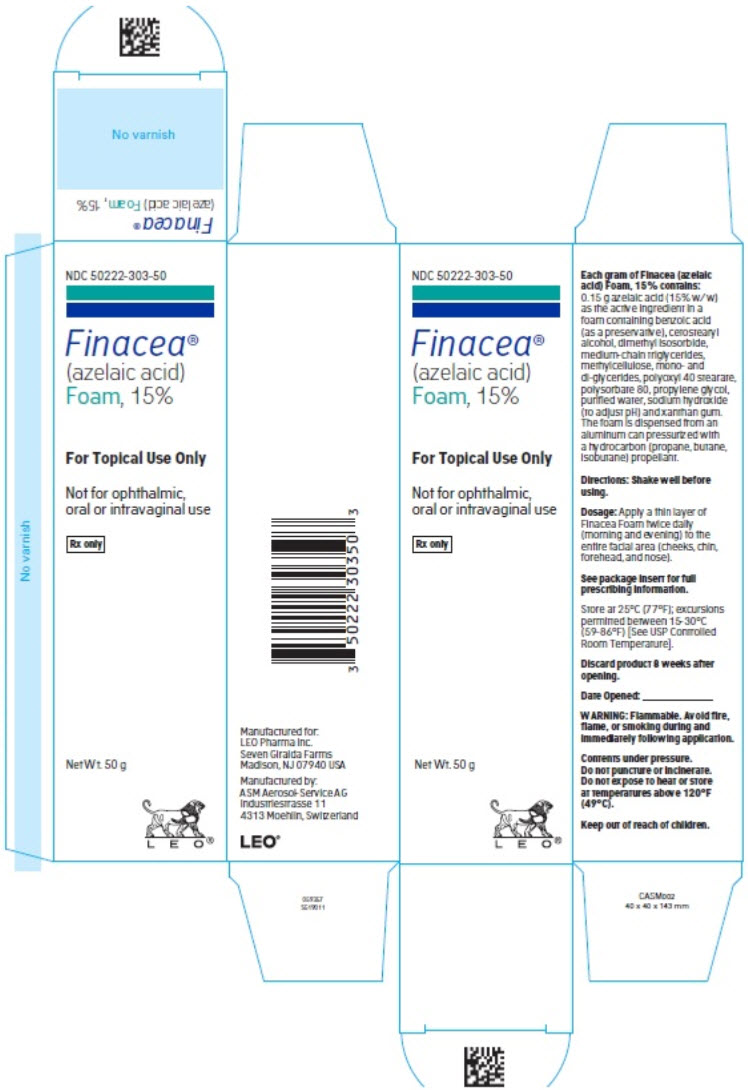
FINACEA FOAM azelaic acid .15 g/g Aerosol, Foam
Other active recalls for Azelaic Acid (different manufacturers) — 3 · tap to view
🆔 Identity & classification
Where does this data come from?
🏷️ RxNorm drug class
This medicine belongs to the Other anti-acne preparations for topical use class.
Where does this data come from?
🏭 Manufacturer & labeler
Where does this data come from?
🩺 Clinical
Azelaic acid gel and foam is used to clear the bumps, lesions, and swelling caused by rosacea (a skin disease that causes redness, flushing, and pimples on the face). Azelaic acid cream is used to treat the pimples and swelling caused by acne. Azelaic acid is in a class of medications called dicarboxylic acids. It works to treat rosacea by decreasing the swelling and redness of the skin. It works to treat acne by killing the bacteria that infect pores and by decreasing production of keratin, a natural substance that can lead to the development of acne.
Read the full MedlinePlus article ↗- It's used to treat the red bumps and pimples that come with mild to moderate rosacea — a chronic skin condition that mainly affects the face. It's applied directly to the skin, not...
- Yes, that's actually one of the most commonly reported side effects, especially in the first few weeks of use. It usually settles down as your skin adjusts. That said, if the irrit...
- My skin is burning and stinging after I apply it — is that normal?
- Shake the can well before each use. Gently wash your face with a mild cleanser, pat it dry, then apply a thin layer of foam to your whole face — cheeks, chin, forehead, and nose —...
Patient education
Supplement & herbal interactions
Some supplements/herbs that may interact with Azelaic Acid — tap one for details:
Where does this data come from?
Ask a licensed pharmacist directly — free, answered by our team.
🧪 Inactive Ingredients / Excipients
Inactive ingredients, also called excipients, are components of the drug product other than the active ingredient. They may include fillers, dyes, coatings, preservatives, flavors, or other formulation ingredients.
💡 Tap an ingredient (hover on desktop) to see what it is and why it’s used.
-
UNII 8SKN0B0MIM
Benzoic acid is a naturally occurring organic acid used as a preservative in medicines and foods. It helps prevent bacterial and fungal growth to extend shelf life and maintain product stability.
-
UNII 2DMT128M1S
A waxy solid derived from plant or animal sources. It acts as an emulsifier to blend oil and water components, and also thickens the medicine to give it the right texture and consistency.
-
UNII SA6A6V432S
Dimethyl isosorbide is a clear liquid solvent derived from natural sugar sources. It helps dissolve active ingredients and improve their absorption in liquid medicines and topical products.
-
UNII KC98RO82HJ
A waxy substance made from glycerin and fatty acids. It acts as an emulsifier to help mix oil and water components, and as a thickener to give the medicine proper texture and consistency.
-
UNII C9H2L21V7U
A fat derived from coconut or palm oil containing shorter fatty acid chains. It serves as a solvent and carrier to help dissolve or suspend active ingredients, improving absorption and stability in liquid formulations.
-
UNII MRJ667KA5E
Methylcellulose is a plant-derived thickening agent made by chemically modifying cellulose. In medicines, it acts as a binder to hold ingredients together, a thickener to create the right consistency, and sometimes a disintegrant to help the tablet break apart when swallowed.
-
UNII 13A4J4NH9I
A synthetic emulsifier derived from stearic acid and polyethylene glycol. It helps mix oil and water-based ingredients together in liquid medicines and creams to create a smooth, uniform product.
-
UNII 6OZP39ZG8H
Polysorbate 80 is a synthetic emulsifier derived from sorbitol and oleic acid. It helps mix oil and water-based ingredients together in medications and improves how the product disperses in the body.
-
UNII 6DC9Q167V3
Propylene glycol is a clear liquid derived from petroleum or vegetable sources. It acts as a solvent, humectant, and preservative in medicines, helping dissolve active ingredients and maintain product stability.
-
UNII 55X04QC32I
A strong alkaline chemical used to adjust and maintain the pH balance of liquid medicines. It helps keep the medicine stable and ensures it stays effective during storage.
-
UNII 059QF0KO0R
Water is a liquid solvent that dissolves and mixes ingredients together in liquid medicines, syrups, and injections. It helps distribute the active drug evenly throughout the product.
-
UNII TTV12P4NEE
Xanthan gum is a thickening and stabilizing ingredient made from fermented corn or other sugars. It's added to medicines to improve texture, prevent separation of liquids and solids, and help the product stay consistent.
12 inactive ingredients listed in the exact product block matched to this NDC.
Where does this data come from?
ingredient classCode="IACT" elements from the exact product block matched by this NDC. Label-section narrative from DailyMed / the openFDA label index is shown separately when available.Inactive ingredient FAQ
Are inactive ingredients the same for every manufacturer?
Why might an inactive ingredient be missing?
Can inactive ingredients matter?
💲 Pricing
A drug doesn't have one price. Each row is a different public payment system, and none is what you'd pay at the counter — that depends on your insurance. The ⓘ on each row explains what it measures.
| Price system | Per g | Per package |
|---|---|---|
| Retail pharmacies payNADAC · weekly | $8.339 | $416.97 / 50 g |
| Medicaid paysCMS SDUD · 12 mo | $8.50 | $424.78 / 50 g |
| Medicare drug plans payPart D · Q2 2026 | $8.62 | $431.05 / 50 g |
Where does this data come from?
🔁 Therapeutic equivalents
| Product | Labeler | Pack | NADAC/unit | TE | Status | Price vs. this |
|---|---|---|---|---|---|---|
| Finacea Foam .15 g/gthis 50222-0303-50 | LEO | 1 can | $8.339 | — | Availability likely | — |
Where does this data come from?
⏳ Availability & generic status
The FDA lists approved generic versions of this medicine, but that does not always mean a pharmacy can get one today. Patent rules, launch agreements, supply and pricing can affect when generics actually arrive.
Why the date isn’t exact: Generic timing can change because patents may be challenged, settled, licensed, added, removed, or worked around with a narrower label — and FDA approval does not always mean a pharmacy can get the generic today.
🛈 What do these terms mean?
- Patent
- Legal protection listed in the Orange Book that may delay generic approval or launch. Issued by the U.S. Patent & Trademark Office.
- Substance patent
- Covers the active drug molecule itself — the hardest to design around. A generic generally can’t launch until it expires.
- Formulation (product) patent
- Covers a specific formulation or dosage form. A generic can sometimes work around it with a different formulation.
- Method-of-use patent
- A patent covering one specific approved use of the drug — not necessarily the whole molecule. A generic can sometimes launch with a “skinny label” that carves out the protected use and keeps the others.
- Skinny label
- A generic label that omits a still-patented use when the FDA allows it — letting a generic reach the market for the unprotected uses.
- Exclusivity
- FDA-granted marketing protection, separate from patents — e.g. 5-yr new chemical entity, 7-yr orphan drug, or a +6-month pediatric extension.
- Paragraph IV
- A generic applicant’s formal challenge to a listed patent. It can potentially lead to earlier generic entry, but often involves litigation or a settlement.
- RLD / RS
- Reference Listed Drug — the brand product the FDA uses as the reference for generic applications. Reference Standard — the product the FDA expects generics to compare against in bioequivalence testing.
- TE / AB rating
- FDA therapeutic-equivalence rating. An AB rating generally means the FDA considers a generic therapeutically equivalent to — and substitutable for — the brand.
- LOE (loss of exclusivity)
- The latest patent or exclusivity currently listed — the loss-of-exclusivity / latest-listed-protection date shown on this page. Paragraph-IV challenges and settlements can move the real date earlier; FDA approval and a manufacturer’s decision to market can move it later.
Built from the FDA Orange Book. The bars above are scaled to each protection’s expiry; the red LOE marker is the last one to lapse.
| Patent | Type | Use code | Expires |
|---|---|---|---|
| US 10117812 ↗ | Method of use | U-1796 | Oct 18, 2027 |
| US 9211259 ↗ | Method of use | U-1796 | Feb 28, 2029 |
| US 9265725 ↗ | Drug product | — | Dec 8, 2027 |
| US 7700076 ↗ | Drug product | — | Sep 18, 2027 |
Is there a generic version of FINACEA 15% FOAM?
The FDA approved a generic — why can’t I get it at my pharmacy yet?
Why do different websites show different generic release dates?
What does “FDA listed” mean?
What does a patent or protection date mean here?
What does “current Orange Book estimate” mean?
Can a generic come out before the last patent expires?
Can a generic come out after the listed dates?
What is the difference between patents and exclusivity?
Why are there multiple patent dates?
Where does this data come from?
🗺️ Medicaid utilization & spend
💊 Medicaid utilization by pack size
📊 Medicare Part D spend CMS · PART D · 2026 (Q1)
🔬 Reported adverse events (FAERS)
Top reported reactions
Age at onset
Reporter sex
Serious outcomes
Where does this data come from?
📦 Packaging — all sizes for this product
| Package NDC | Description | Per unit | Per pack | Marketing start | Status |
|---|---|---|---|---|---|
| 50222-0303-50 You're viewing this | 1 CAN in 1 CARTON (50222-303-50) / 50 g in 1 CAN | $8.34 / g | $416.97 | 2018-10-01 | Active |
| 50222-0303-91 | 1 CAN in 1 CARTON (50222-303-91) / 15 g in 1 CAN | — | — | 2018-10-01 | Active |
In Medicaid, this is the most-dispensed pack of this product — about 100% of fills over the last four reported quarters. See all packs ↓
Pack size FAQ
What quantity is in NDC 50222-0303-50?
What NDC number is used to bill for this package of FINACEA FOAM azelaic acid .15 g/g Aerosol, Foam?
Prices are the latest CMS NADAC pharmacy acquisition cost per NDC; per-pack figures are per-unit × pack quantity, shown only when the pack is denominated in the same measure NADAC prices.
📄 Full prescribing information FDA SPL
🎯 Indications and Usage ▾
1 INDICATIONS AND USAGE FINACEA Foam, 15% is indicated for topical treatment of the inflammatory papules and pustules of mild to moderate rosacea. FINACEA Foam is indicated for the topical treatment of inflammatory papules and pustules of mild to moderate rosacea. ( 1 )
⏱️ Dosage and Administration ▾
2 DOSAGE AND ADMINISTRATION Shake well before use. Cleanse affected area(s) using only very mild soaps or soapless cleansing lotion and pat dry with a soft towel before application of FINACEA Foam. Apply FINACEA Foam twice daily (morning and evening) to the entire facial area (cheeks, chin, forehead, and nose).
For a single application, dispense the smallest amount of foam necessary to adequately cover the affected area(s) with a thin layer. Use FINACEA Foam continuously over 12 weeks. Wash hands immediately following application of FINACEA Foam.
Cosmetics may be applied after the application of FINACEA Foam has dried. Reassess the diagnosis if no improvement is observed upon completing 12 weeks of therapy. Avoid the use of occlusive dressings or wrappings.
Instruct patients to avoid use of alcoholic cleansers, tinctures and astringents, abrasives and peeling agents. For topical use. Not for oral, ophthalmic or intravaginal use.
Apply a thin layer twice daily (morning and evening) to the entire facial area (cheeks, chin, forehead, and nose). ( 2 ) Use only very mild soaps or soapless cleansing lotion and pat dry with a soft towel before applying FINACEA Foam. ( 2 ) Wash hands immediately following application.
( 2 ) Cosmetics may be applied after the application of FINACEA Foam has dried. ( 2 ) Avoid use of alcoholic cleansers, tinctures and astringents, abrasives and peeling agents. ( 2 ) For topical use.
( 2 ) Not for oral, ophthalmic or intravaginal use. ( 2 )
💊 Dosage Forms and Strengths ▾
3 DOSAGE FORMS AND STRENGTHS Each gram of FINACEA (azelaic acid) Foam contains 0.15 g of azelaic acid (15% w/w) in a white to off-white foam. Foam, 15% ( 3 )
⛔ Contraindications ▾
4 CONTRAINDICATIONS None. None. ( 4 )
⚠️ Warnings and Cautions ▾
5 WARNINGS AND PRECAUTIONS Hypopigmentation: Isolated cases of hypopigmentation occurred after azelaic acid use. Monitor patients with dark complexion for early signs of hypopigmentation ( 5.1 ) Eye and Mucous Membrane Irritation: Azelaic acid has been reported to cause irritation of the eyes. Avoid contact with the eyes and mucous membranes.
( 5.2 ) Flammability: Contents are flammable. Instruct the patient to avoid fire, flame, and smoking during and immediately following application. ( 5.3 )
5.1Hypopigmentation There have been reports of hypopigmentation after use of azelaic acid. Because azelaic acid has not been well studied in patients with dark complexion, monitor these patients for early signs of hypopigmentation.
5.2Eye and Mucous Membranes Irritation Azelaic acid has been reported to cause irritation of the eyes. Avoid contact with the eyes, mouth and other mucous membranes. If FINACEA Foam does come in contact with the eyes, wash the eyes with large amounts of water and consult a physician if eye irritation persists.
5.3Flammability The propellant in FINACEA Foam is flammable. Instruct the patient to avoid fire, flame, and smoking during and immediately following application. Do not puncture and/or incinerate the containers. Do not expose containers to heat and/or store at temperatures above 120°F (49°C).
🤒 Adverse Reactions ▾
6 ADVERSE REACTIONS The following adverse reactions are described elsewhere in the prescribing information: Hypopigmentation [see Warnings and Precautions (5.1) ]. Eye and Mucous Membranes Irritation [see Warnings and Precautions (5.2) ]. The most common adverse reactions (incidence ≥ 0.5% of subjects treated with FINACEA Foam) are local site pain (6.2%), pruritus (2.5%), dryness (0.7%), and erythema (0.7%).
( 6.1 ) To report SUSPECTED ADVERSE REACTIONS, contact LEO Pharma Inc. at 1-877-494-4536 or FDA at 1-800-FDA-1088 or www.fda.gov/medwatch.
6.1Clinical Trials Experience Because clinical trials are conducted under widely varying conditions, adverse reaction rates observed in the clinical trials of a drug cannot be directly compared to rates in the clinical trials of another drug and may not reflect the rates observed in practice. FINACEA Foam was evaluated for the treatment of papulopustular rosacea in two multicenter, randomized, double-blind, vehicle-controlled, 12-week clinical trials involving a total of 1362 (FINACEA Foam, 15%: 681; vehicle: 681) subjects.
Overall, 95.7% of subjects were White, 73.4% were female, and the mean age was 50.6 years. Table 1: Adverse Reactions Occurring in ≥ 0.5% of Subjects Treated with FINACEA Foam Compared with Subjects Treated with Vehicle System/Organ Class Preferred FINACEA Foam, 15% (N=681) n (%) Vehicle (N=681) n (%) General disorders and application site conditions Application site pain "Application site pain" is a term used to describe disagreeable skin sensations, including burning, stinging, paraesthesia and tenderness. 42 (6.2%) 10 (1.5%) Application site pruritus 17 (2.5%) 2 (0.3%) Application site dryness 5 (0.7%) 5 (0.7%) Application site erythema 5 (0.7%) 6 (0.9%) Local Tolerability Studies In a 21-day cumulative irritation study under occlusive conditions, mild-to-moderate irritation was observed for azelaic acid pre-foam emulsion.
In a human repeat insult patch test (HRIPT) study, no sensitization potential was observed for azelaic acid pre-foam emulsion.
6.2Postmarketing Experience Hypersensitivity, rash and worsening of asthma have been reported from the postmarketing experience of azelaic acid-containing formulations. Because these reactions are reported voluntarily from a population of uncertain size, it is not always possible to reliably estimate their frequency or establish a causal relationship to drug exposure.
👥 Use in Specific Populations ▾
8 USE IN SPECIFIC POPULATIONS
8.1Pregnancy Risk Summary Azelaic acid is minimally absorbed systemically following topical route of administration, and maternal use is not expected to result in fetal exposure to the drug [see Clinical Pharmacology (12.3) ]. In animal reproduction studies, embryofetal toxicity was noted when azelaic acid was administered orally during the period of organogenesis at doses 162, 19, and 65 times the maximum recommended human dose (MRHD) in rats, rabbits, and monkeys, respectively. Maternal toxicity was noted at these doses but no malformations were observed in these embryofetal developmental studies ( see Data ).
The background risk of major birth defects and miscarriage for the indicated population is unknown. All pregnancies have a background risk of birth defect, loss, or other adverse outcomes. In the U.S. general population, the estimated background risk of major birth defects and miscarriage in clinically recognized pregnancies is 2 to 4% and 15 to 20%, respectively.
Data Animal Data Dermal embryofetal developmental toxicology studies have not been performed with azelaic acid, 15% foam. Oral embryofetal developmental studies were conducted with azelaic acid in rats, rabbits, and cynomolgus monkeys. Azelaic acid was administered during the period of organogenesis in all three animal species.
Embryotoxicity was observed in rats, rabbits, and monkeys at oral doses of azelaic acid that generated some maternal toxicity. Embryotoxicity was observed in rats given 2500 mg/kg/day [162 times the MRHD based on body surface area (BSA) comparison], rabbits given 150 or 500 mg/kg/day (19 or 65 times the MRHD based on BSA comparison) and cynomolgus monkeys given 500 mg/kg/day (65 times the MRHD based on BSA comparison) azelaic acid. No malformations were observed in the oral embryofetal developmental studies conducted in rats, rabbits and cynomolgus monkeys.
An oral peri- and post-natal developmental study was conducted in rats. Azelaic acid was administered from gestational day 15 through day 21 postpartum up to a dose level of 2500 mg/kg/day. Embryotoxicity was observed in rats at an oral dose of 2500 mg/kg/day (162 times the MRHD based on BSA comparison) that generated some maternal toxicity.
In addition, slight disturbances in the post-natal development of fetuses was noted in rats at oral doses that generated some maternal toxicity (500 and 2500 mg/kg/day; 32 and 162 times the MRHD based on BSA comparison). No effects on sexual maturation of the fetuses were noted in this study.
8.2Lactation Risk Summary Azelaic acid is naturally present in human milk. When used as prescribed, azelaic acid is unlikely to be absorbed through the skin in clinically relevant amounts to cause a change in azelaic acid concentration in milk or milk production; therefore, breastfeeding is not expected to result in exposure of the infant to FINACEA Foam. The developmental and health benefits of breastfeeding should be considered along with the mother's clinical need for FINACEA Foam and any potential adverse effects on the breastfed child from FINACEA Foam or from the underlying maternal condition.
8.4Pediatric Use The safety and efficacy of FINACEA Foam have not been established in pediatric patients.
8.5Geriatric Use Of the total number of subjects in clinical studies of FINACEA Foam, 18.8 percent were 65 and over, while 7.2 percent were 75 and over. No overall differences in safety or effectiveness were observed between these subjects and younger subjects, and other reported clinical experience has not identified differences in responses between the elderly and younger patients, but greater sensitivity of some older individuals cannot be ruled out.
🤰 Pregnancy ▾
8.1Pregnancy Risk Summary Azelaic acid is minimally absorbed systemically following topical route of administration, and maternal use is not expected to result in fetal exposure to the drug [see Clinical Pharmacology (12.3) ]. In animal reproduction studies, embryofetal toxicity was noted when azelaic acid was administered orally during the period of organogenesis at doses 162, 19, and 65 times the maximum recommended human dose (MRHD) in rats, rabbits, and monkeys, respectively. Maternal toxicity was noted at these doses but no malformations were observed in these embryofetal developmental studies ( see Data ).
The background risk of major birth defects and miscarriage for the indicated population is unknown. All pregnancies have a background risk of birth defect, loss, or other adverse outcomes. In the U.S. general population, the estimated background risk of major birth defects and miscarriage in clinically recognized pregnancies is 2 to 4% and 15 to 20%, respectively.
Data Animal Data Dermal embryofetal developmental toxicology studies have not been performed with azelaic acid, 15% foam. Oral embryofetal developmental studies were conducted with azelaic acid in rats, rabbits, and cynomolgus monkeys. Azelaic acid was administered during the period of organogenesis in all three animal species.
Embryotoxicity was observed in rats, rabbits, and monkeys at oral doses of azelaic acid that generated some maternal toxicity. Embryotoxicity was observed in rats given 2500 mg/kg/day [162 times the MRHD based on body surface area (BSA) comparison], rabbits given 150 or 500 mg/kg/day (19 or 65 times the MRHD based on BSA comparison) and cynomolgus monkeys given 500 mg/kg/day (65 times the MRHD based on BSA comparison) azelaic acid. No malformations were observed in the oral embryofetal developmental studies conducted in rats, rabbits and cynomolgus monkeys.
An oral peri- and post-natal developmental study was conducted in rats. Azelaic acid was administered from gestational day 15 through day 21 postpartum up to a dose level of 2500 mg/kg/day. Embryotoxicity was observed in rats at an oral dose of 2500 mg/kg/day (162 times the MRHD based on BSA comparison) that generated some maternal toxicity.
In addition, slight disturbances in the post-natal development of fetuses was noted in rats at oral doses that generated some maternal toxicity (500 and 2500 mg/kg/day; 32 and 162 times the MRHD based on BSA comparison). No effects on sexual maturation of the fetuses were noted in this study.
🧒 Pediatric Use ▾
8.4Pediatric Use The safety and efficacy of FINACEA Foam have not been established in pediatric patients.
🧓 Geriatric Use ▾
8.5Geriatric Use Of the total number of subjects in clinical studies of FINACEA Foam, 18.8 percent were 65 and over, while 7.2 percent were 75 and over. No overall differences in safety or effectiveness were observed between these subjects and younger subjects, and other reported clinical experience has not identified differences in responses between the elderly and younger patients, but greater sensitivity of some older individuals cannot be ruled out.
🧬 Clinical Pharmacology ▾
12 CLINICAL PHARMACOLOGY
12.1Mechanism of Action The mechanism(s) by which azelaic acid interferes with the pathogenic events in rosacea are unknown.
12.2Pharmacodynamics The efficacy of FINACEA Foam is being driven by local mechanisms of azelaic acid within the skin.
12.3Pharmacokinetics Pharmacokinetics of azelaic acid and its metabolite pimelic acid was assessed in 21 adult subjects with moderate papulopustular rosacea with a minimum of 15 and no more than 50 inflammatory lesions (papules and/or pustules). Endogenous plasma concentrations of azelaic acid (range <1-105 ng/mL) and pimelic acid (range 0.69-27 ng/mL) were measured over various time points over 2 days prior to treatment initiation. The endogenous plasma concentrations varied widely across subjects and the mean ± SD values of endogenous azelaic acid plasma concentrations ranged between 4.5 ± 2.4 ng/mL and 14.6 ± 5.6 ng/mL and pimelic acid plasma concentrations ranged between 2.2 ± 1.1 ng/mL and 3.7 ± 3.1 ng/mL.
Following topical dermal applications of a mean dose of 0.94 g of FINACEA Foam (141 mg azelaic acid) twice daily for 7 consecutive days, systemic concentrations of azelaic acid were at steady state by Day 5. On Day 7, a wide range of maximum azelaic acid (22.2 to 90.1 ng/mL) and pimelic acid (2.3-16.9 ng/mL) plasma concentrations (C max ) was also observed after treatment with FINACEA Foam. The mean ± SD C max for azelaic acid and pimelic acid were 51.8 ± 18.5 ng/mL and 5.0 ± 3.0 ng/mL, respectively.
The mean ± SD systemic exposure of azelaic acid and pimelic acid within a dosing interval (AUC 0-12h ) were 442.0 ± 177.6 ng.h/mL and 43.4 ± 15.4 ng.h/mL, respectively. Azelaic acid is mainly excreted unchanged in the urine, but undergoes some ß-oxidation to shorter chain dicarboxylic acids.
🧬 Mechanism of Action ▾
12.1Mechanism of Action The mechanism(s) by which azelaic acid interferes with the pathogenic events in rosacea are unknown.
📦 How Supplied / Storage and Handling ▾
16 HOW SUPPLIED/STORAGE AND HANDLING How Supplied FINACEA (azelaic acid) Foam 15% is a white to off-white emulsion supplied in a pressurized 50 g (NDC 50222-303-50) aluminum can. Storage and Handling Store at 25 ◦ C (77 ◦ F); excursions permitted between 15–30 ◦ C (59–86 ◦ F) [See USP Controlled Room Temperature]. Flammable.
Avoid fire, flame, or smoking during and immediately following application. Contents under pressure. Do not puncture or incinerate.
Do not expose to heat or store at temperatures above 120°F (49°C).
📦 Storage and Handling ▾
Storage and Handling Store at 25 ◦ C (77 ◦ F); excursions permitted between 15–30 ◦ C (59–86 ◦ F) [See USP Controlled Room Temperature]. Flammable. Avoid fire, flame, or smoking during and immediately following application. Contents under pressure. Do not puncture or incinerate. Do not expose to heat or store at temperatures above 120°F (49°C).
📋 Description ▾
11 DESCRIPTION FINACEA (azelaic acid) Foam contains 15% (w/w) azelaic acid, a naturally-occurring saturated dicarboxylic acid and is suspended in an oil-in-water emulsion vehicle. It is for topical use. Chemically, azelaic acid is 1,7-heptanedicarboxylic acid.
The structural formula of azelaic acid is: Azelaic acid has a molecular formula of C 9 H 16 O 4 and a molecular weight of 188.22. The aluminum containers are filled with hydrophilic emulsion, crimped with a continuous spray valve, and pressurized with propellants consisting of propane, butane, and isobutane. Each gram of FINACEA Foam, 15% contains 0.15 g of azelaic acid.
FINACEA Foam also contains benzoic acid (as a preservative), cetostearyl alcohol, dimethyl isosorbide, medium-chain triglycerides, methylcellulose, mono- and di-glycerides, polyoxyl 40 stearate, polysorbate 80, propylene glycol, purified water, sodium hydroxide (to adjust pH), and xanthan gum as inactive ingredients. Chemical Structure
💬 Information for Patients ▾
17 PATIENT COUNSELING INFORMATION Inform patients using FINACEA Foam of the following: Administration Instructions For topical use only. Shake well before use. Before applying FINACEA Foam, cleanse affected area(s) with a very mild soap or a soapless cleansing lotion and pat dry with a soft towel.
Wash hands immediately following application of FINACEA Foam. Cosmetics may be applied after the application of FINACEA Foam has dried. Avoid the use of occlusive dressings and wrappings.
Avoid use of alcoholic cleansers, tinctures and astringents, abrasives and peeling agents. If allergic reactions occur, discontinue use and consult your physician. Discard product 8 weeks after opening [see Dosage and Administration (2) ] .
Hypopigmentation Advise patients to report abnormal changes in skin color to their healthcare provider [see Warnings and Precautions (5.1) ] . Eye and Mucous Membranes Irritation Avoid contact with the eyes, mouth and other mucous membranes. If FINACEA Foam does come in contact with the eyes, wash the eyes with large amounts of water and consult your physician if eye irritation persists [see Warnings and Precautions (5.2) ] .
Flammability The propellant in FINACEA Foam is flammable. Avoid fire, flame, or smoking during and immediately following application [see Warnings and Precautions (5.3) ] .