
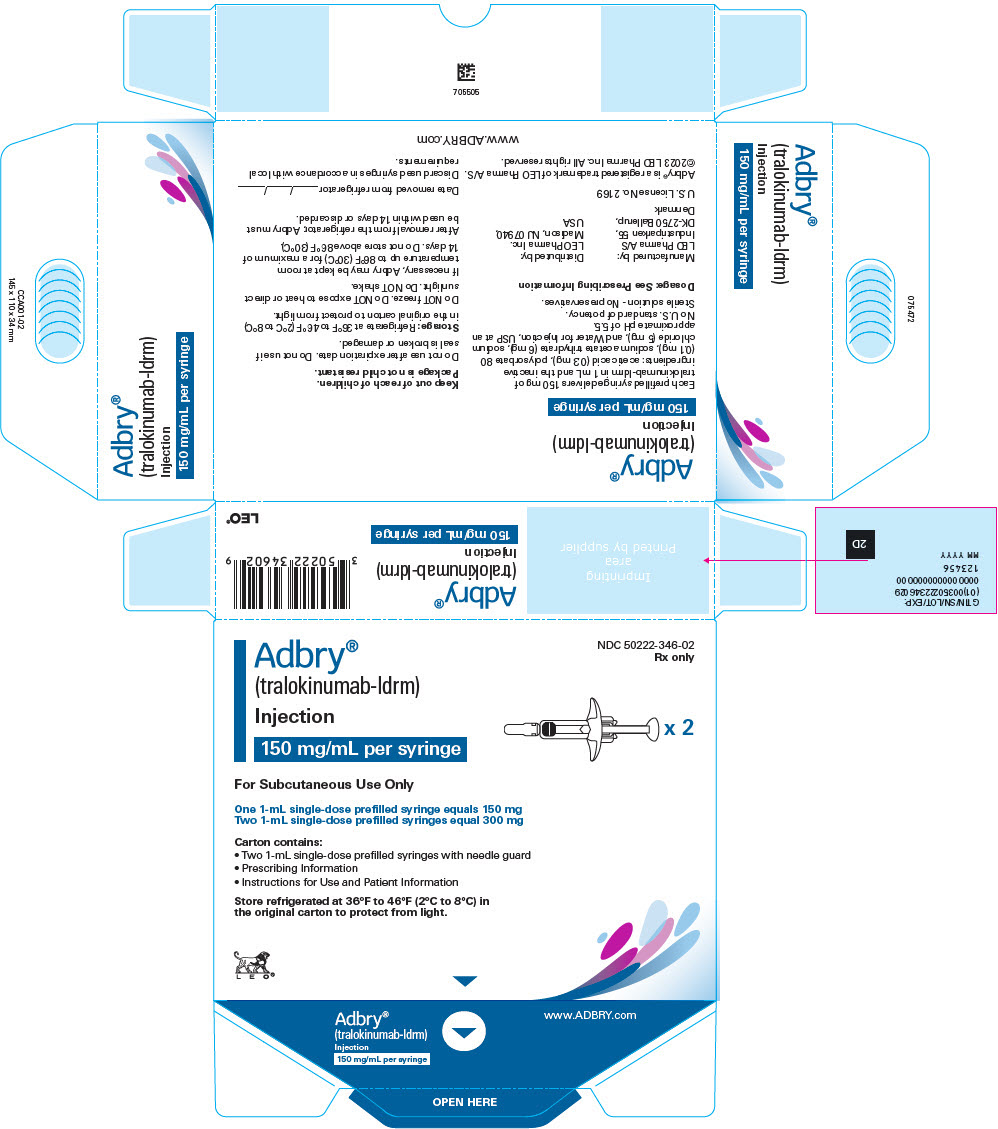
Adbry tralokinumab-ldrm 150 mg/mL Injection, Solution, 2 syringes
🆔 Identity & classification
Where does this data come from?
🏷️ RxNorm drug class
This medicine belongs to the Interleukin-13 Antagonist class.
Where does this data come from?
🏭 Manufacturer & labeler
Where does this data come from?
🩺 Clinical
Tralokinumab injection is used to treat eczema (atopic dermatitis; a skin disease that causes the skin to be dry and itchy and to sometimes develop red, scaly rashes). Tralokinumab is in a class of medications called interleukin-13 receptor inhibitors. It works by blocking the activity of interleukin-13, a substance in the body that causes inflammation.
Read the full MedlinePlus article ↗- Adbry is a biologic — a lab-made antibody that you inject under the skin. Unlike topical creams that work directly on the skin surface, Adbry travels through your bloodstream and b...
- What exactly is Adbry and how is it different from my usual eczema creams?
- For adults, you start with a loading dose and then inject every other week — or possibly every 4 weeks if your skin clears up well after 16 weeks and your weight is below 100 kg. T...
- How often do I need to inject Adbry, and can I do it myself at home?
Patient education
Supplement & herbal interactions
Some supplements/herbs that may interact with Tralokinumab-ldrm — tap one for details:
Where does this data come from?
Ask a licensed pharmacist directly — free, answered by our team.
🧪 Inactive Ingredients / Excipients
Inactive ingredients, also called excipients, are components of the drug product other than the active ingredient. They may include fillers, dyes, coatings, preservatives, flavors, or other formulation ingredients.
💡 Tap an ingredient (hover on desktop) to see what it is and why it’s used.
-
0.3 mg / 1 mL
UNII Q40Q9N063P
Acetic acid is a weak organic acid commonly used in medicines as a buffer and pH adjuster. It helps maintain the proper acidity level to ensure the drug remains stable and effective in its formulation.
-
0.1 mg / 1 mL
UNII 6OZP39ZG8H
Polysorbate 80 is a synthetic emulsifier derived from sorbitol and oleic acid. It helps mix oil and water-based ingredients together in medications and improves how the product disperses in the body.
-
6 mg / 1 mL
UNII 4550K0SC9B
Sodium acetate is a salt derived from acetic acid. It acts as a buffer to help maintain the medicine's pH stability and may serve as a preservative or solubilizer in liquid formulations.
-
5 mg / 1 mL
UNII 451W47IQ8X
Sodium chloride is common table salt. It's used in medicines as a buffer to maintain proper pH, as a filler to add bulk, or to adjust the osmotic balance in liquid formulations.
-
UNII 059QF0KO0R
Water is a liquid solvent that dissolves and mixes ingredients together in liquid medicines, syrups, and injections. It helps distribute the active drug evenly throughout the product.
5 inactive ingredients listed in the exact product block matched to this NDC.
Where does this data come from?
ingredient classCode="IACT" elements from the exact product block matched by this NDC. Label-section narrative from DailyMed / the openFDA label index is shown separately when available.Inactive ingredient FAQ
Are inactive ingredients the same for every manufacturer?
Why might an inactive ingredient be missing?
Can inactive ingredients matter?
💲 Pricing
A drug doesn't have one price. Each row is a different public payment system, and none is what you'd pay at the counter — that depends on your insurance. The ⓘ on each row explains what it measures.
| Price system | Per mL | Per package |
|---|---|---|
| Retail pharmacies payNADAC · weekly | Not in the retail survey — common for institutional, discontinued, or low-volume packs. | |
| Medicaid paysCMS SDUD · 12 mo | $972.67 | $1,945.34 / 2 ml |
| Medicare drug plans payPart D · Q2 2026 | $1,046.72 | $2,093.43 / 2 ml |
Where does this data come from?
🔁 Therapeutic equivalents
| Product | Labeler | Pack | NADAC/unit | TE | Status | Price vs. this |
|---|---|---|---|---|---|---|
| Adbry 150 mg/mLthis 50222-0346-02 | LEO | 2 syringes | — | — | FDA listed | — |
Where does this data come from?
⏳ Availability & biosimilar status
Biologics have no small-molecule generics; biosimilar competition is tracked in the FDA Purple Book.
Why the date isn’t exact: Biosimilar timing can change because patents may be challenged, settled, licensed, added or removed, and litigation can move the real date earlier or later.
🛈 What do these terms mean?
- Biologic patent
- A patent the reference product’s maker has publicly listed. A biosimilar generally can’t launch until these expire — unless they’re invalidated or resolved in a settlement.
- Reference-product exclusivity
- A flat 12 years of FDA market protection from the biologic’s first licensure (the BPCIA). No biosimilar can be licensed before it ends, regardless of patents.
- Interchangeable exclusivity
- The first interchangeable biosimilar can earn a period as the only interchangeable version (pharmacists can substitute it without the prescriber).
- Earliest biosimilar (LOE)
- The latest of all the dates above — the soonest a biosimilar can realistically reach the market. Litigation and settlements can move it earlier.
Biologics have no small-molecule “generics” — competition comes from FDA-licensed biosimilars, tracked in the FDA Purple Book.
| Code | What it grants | Expires |
|---|---|---|
| RefProduct | Reference-product exclusivity (12-year, BPCIA) — no biosimilar can be licensed before this date | Dec 27, 2033 |
Is there a biosimilar for ADBRY 150 MG/ML SYRINGE?
Why do different websites show different biosimilar dates?
Can a biosimilar launch before the last patent expires?
What does “current Purple Book estimate” mean?
What does “FDA listed” mean?
What does a patent or protection date mean here?
Where does this data come from?
🗺️ Medicaid utilization & spend
💊 Medicaid utilization by pack size
📊 Medicare Part D spend CMS · PART D · 2026 (Q1)
🔬 Reported adverse events (FAERS)
Top reported reactions
Age at onset
Reporter sex
Serious outcomes
Where does this data come from?
📦 Packaging — all sizes for this product
| Package NDC | Description | Marketing start | Status |
|---|---|---|---|
| 50222-0346-02 You're viewing this | 2 SYRINGE, GLASS in 1 CARTON (50222-346-02) / 1 mL in 1 SYRINGE, GLASS (50222-346-01) | 2022-01-02 | Active |
| 50222-0346-04 | 2 CARTON in 1 CARTON (50222-346-04) / 2 SYRINGE, GLASS in 1 CARTON (50222-346-22) / 1 mL in 1 SYRINGE, GLASS (50222-346-01) | 2022-01-02 | Active |
| 50222-0346-92 | 2 SYRINGE, GLASS in 1 CARTON (50222-346-92) / 1 mL in 1 SYRINGE, GLASS (50222-346-91) | 2022-01-02 | Active |
In Medicaid, this is the most-dispensed pack of this product — about 64% of fills over the last four reported quarters. See all packs ↓
Pack size FAQ
What quantity is in NDC 50222-0346-02?
What is the difference between NDC 50222-0346-02 and NDC 50222-0346-92?
What NDC number is used to bill for this package of Adbry tralokinumab-ldrm 150 mg/mL Injection, Solution?
🧭 About this NDC listing & data coverage
What data is (and isn’t) available for this NDC — tap to expand
| NDC identity (package / product / labeler codes) | ✓ Available |
| Labeler | ✓ Available |
| Product & package description | ✓ Available |
| Marketing category & status | ✓ Available |
| Active ingredient / dosage form / route | ✓ Available |
| FDA label (SPL via DailyMed) | ✓ Available |
| Package photos | ✓ Available |
| Inactive ingredients (structured) | ✓ Available |
| NADAC pharmacy acquisition price (CMS) | — Not published for this NDC CMS publishes NADAC only for NDCs reported in its retail-pharmacy survey. |
| Orange Book / therapeutic-equivalence data | ✓ Available |
| HCPCS J-code billing crosswalk | — Not published for this NDC Most self-administered / retail products have no J-code — that is normal. |
| Medicaid utilization (CMS SDUD) | ✓ Available |
Questions about this listing
Why is there no price listed?
Is the NDC printed on the package the same as the 11-digit billing NDC?
What do the three segments of this NDC mean?
Is this package still being marketed?
Does this product come in other package sizes?
Who lists this product with the FDA?
Do I need a prescription for this product?
Where does this data come from?
📄 Full prescribing information FDA SPL
🎯 Indications and Usage ▾
1 INDICATIONS AND USAGE ADBRY is indicated for the treatment of moderate-to-severe atopic dermatitis in adults and pediatric patients 12 years of age and older whose disease is not adequately controlled with topical prescription therapies or when those therapies are not advisable. ADBRY can be used with or without topical corticosteroids. ADBRY is an interleukin-13 antagonist indicated for the treatment of moderate-to-severe atopic dermatitis in adults and pediatric patients 12 years of age and older whose disease is not adequately controlled with topical prescription therapies or when those therapies are not advisable.
ADBRY can be used with or without topical corticosteroids. ( 1 )
⏱️ Dosage and Administration ▾
2 DOSAGE AND ADMINISTRATION Prior to ADBRY initiation, complete all age appropriate vaccinations as recommended by current immunization guidelines ( 2.1 ) Administer ADBRY by subcutaneous injection. ( 2.2 ) In pediatric patients 12 years of age and older, it is recommended that ADBRY be given by or under supervision of an adult. ( 2.2 ) The recommended dosage of ADBRY ( 2.3 ) Dosage in Adults Initial Loading Dose Subsequent Dosage Prefilled syringe 600 mg (four 150 mg injections) 300 mg (two 150 mg injections) every other week Autoinjector 600 mg (two 300 mg injections) 300 mg (one 300 mg injection) every other week Dosage in Pediatric Patients 12 Years of Age and Older Initial Loading Dose Subsequent Dosage Prefilled syringe 300 mg (two 150 mg injections) 150 mg (one 150 mg injection) every other week A dosage of 300 mg every 4 weeks may be considered for adult patients below 100 kg who achieve clear or almost clear skin after 16 weeks of treatment.
( 2.3 )
2.1Vaccination Prior to Treatment Complete all age-appropriate vaccinations as recommended by current immunization guidelines prior to initiating treatment with ADBRY [see Warnings and Precautions (5.4) ] .
2.2Important Administration Instructions ADBRY is administered by subcutaneous injection. ADBRY is intended for use under the guidance of a healthcare provider. Provide proper training to patients and/or caregivers on the preparation and administration of ADBRY prior to use according to the "Instructions for Use" [see Instructions for Use ] .
Use of the Autoinjector The ADBRY autoinjector is for use in adults only. A caregiver or adult patient may inject ADBRY using the autoinjector. Use of the Prefilled Syringe The ADBRY prefilled syringe is for use in adults and pediatric patients 12 years of age and older.
A caregiver or patient 12 years of age and older may inject ADBRY using the prefilled syringe. In pediatric patients 12 years of age and older, administer ADBRY under the supervision of an adult. Administration Instructions Administer subcutaneous injection into the thigh or abdomen, except for the 2 inches (5 cm) around the navel.
The upper arm can also be used if a caregiver administers the injection. DO NOT inject ADBRY into skin that is tender, damaged, bruised, or scarred. For adults taking the initial loading dose of 600 mg, administer each of the injections (four ADBRY 150 mg injections using prefilled syringes or two ADBRY 300 mg injections using autoinjectors) at different injection sites within the same body area.
For the subsequent 300 mg doses using the prefilled syringe , administer the two ADBRY 150 mg injections at different injection sites within the same body area, rotating the body area with each subsequent set of injections. For the subsequent 300 mg doses using the autoinjector , administer one ADBRY 300 mg injection, rotating the body area with each subsequent injection For pediatric patients 12 years of age and older taking the initial loading dose of 300 mg, use prefilled syringes to administer the two ADBRY 150 mg injections at different injection sites within the same body area.
For the subsequent 150 mg doses, use a prefilled syringe to administer one ADBRY 150 mg injection, rotating the body area with each subsequent injection. The ADBRY "Instructions for Use" contains more detailed instructions on the preparation and administration of ADBRY [see Instructions for Use ] .
2.3Recommended Dosage Dosage in Adults The recommended dosage for adults is: Initial Loading Dose Subsequent Dosage Prefilled syringe 600 mg (four 150 mg injections) 300 mg (two 150 mg injections) every other week Autoinjector 600 mg (two 300 mg injections) 300 mg (one 300 mg injection) every other week After 16 weeks of treatment, for adult patients with body weight below 100 kg who achieve clear or almost clear skin, a dosage of 300 mg every 4 weeks may be considered. Dosage in Pediatric Patients 12 Years of Age and Older The recommended dosage for pediatric patients…
💊 Dosage Forms and Strengths ▾
3 DOSAGE FORMS AND STRENGTHS ADBRY is a clear to opalescent, colorless to pale yellow solution available as: Injection: 150 mg/mL solution in a single-dose prefilled syringe with needle guard Injection: 300 mg/2 mL solution in a single-dose autoinjector Injection: 150 mg/mL solution in a single-dose prefilled syringe with needle guard. ( 3 ) 300 mg/2 mL solution in a single-dose autoinjector ( 3 )
⛔ Contraindications ▾
4 CONTRAINDICATIONS ADBRY is contraindicated in patients who have known hypersensitivity to tralokinumab-ldrm or any excipients in ADBRY [see Warnings and Precautions (5.1) ] . Known hypersensitivity to tralokinumab-ldrm or any excipients in ADBRY. ( 4 )
⚠️ Warnings and Cautions ▾
5 WARNINGS AND PRECAUTIONS Hypersensitivity: Hypersensitivity reactions, including anaphylaxis, and angioedema have occurred after administration of ADBRY. Discontinue ADBRY in the event of a hypersensitivity reaction. ( 5.1 ) Conjunctivitis and Keratitis: Patients should report new onset or worsening eye symptoms to their healthcare provider.
( 5.2 ) Parasitic (Helminth) Infections: Treat patients with pre-existing helminth infections before initiating treatment with ADBRY. If patients become infected while receiving ADBRY and do not respond to anti-helminth treatment, discontinue treatment with ADBRY until the infection resolves. ( 5.3 ) Risk of Infection with Live Vaccines: Avoid use of live vaccines.
( 5.4 )
5.1Hypersensitivity Hypersensitivity reactions including anaphylaxis and angioedema have been reported with use of ADBRY. If a serious hypersensitivity reaction occurs, discontinue ADBRY immediately and initiate appropriate therapy.
5.2Conjunctivitis and Keratitis Conjunctivitis and keratitis occurred more frequently in atopic dermatitis subjects who received ADBRY. Conjunctivitis was the most frequently reported eye disorder. Most subjects with conjunctivitis or keratitis recovered or were recovering during the treatment period [see Adverse Reactions (6.1) ]. Advise patients to report new onset or worsening eye symptoms to their healthcare provider.
5.3Parasitic (Helminth) Infections Patients with known helminth infections were excluded from participation in clinical studies. It is unknown if ADBRY will influence the immune response against helminth infections by inhibiting IL-13 signaling. Treat patients with pre-existing helminth infections before initiating treatment with ADBRY.
If patients become infected while receiving ADBRY and do not respond to antihelminth treatment, discontinue treatment with ADBRY until the infection resolves.
5.4Risk of Infection with Live Vaccines ADBRY may alter a patient's immunity and increase the risk of infection following administration of live vaccines. Prior to initiating therapy with ADBRY, complete all age-appropriate vaccinations according to current immunization guidelines. Avoid use of live vaccines during treatment with ADBRY.
Limited data are available regarding coadministration of ADBRY with non-live vaccines [see Clinical Pharmacology (12.2) ].
🤒 Adverse Reactions ▾
6 ADVERSE REACTIONS The following adverse reactions are discussed in greater detail elsewhere in the labeling: Hypersensitivity [see Warnings and Precautions (5.1) ] Conjunctivitis and Keratitis [see Warnings and Precautions (5.2) ] Most common adverse reactions (incidence ≥ 1%) are upper respiratory tract infections, conjunctivitis, injection site reactions, and eosinophilia. ( 6.1 ) To report SUSPECTED ADVERSE REACTIONS, contact LEO Pharma Inc. at 1-877-494-4536 or FDA at 1-800-FDA-1088 or www.fda.gov/medwatch .
6.1Clinical Trials Experience Because clinical trials are conducted under widely varying conditions, adverse reaction rates observed in the clinical trials of a drug cannot be directly compared to rates in the clinical trials of another drug and may not reflect the rates observed in practice. Adverse Reactions from Clinical Trials in Adults The safety of ADBRY was evaluated in a pool of 5 randomized, double-blind, placebo-controlled trials in subjects with moderate-to-severe atopic dermatitis including three phase 3 Eczema Tralokinumab trials (ECZTRA 1, ECZTRA 2, and ECZTRA 3), a dose-finding trial, and a vaccine response trial.
The safety population had a mean age of 37 years; 43% of subjects were female, 67% were White, 21% were Asian, and 9% were Black. In terms of co-morbid conditions, 39% of the subjects had asthma, 49% had hay fever, 36% had food allergy, and 21% had allergic conjunctivitis at baseline. In these 5 atopic dermatitis trials, 1964 subjects were treated with subcutaneous injections of ADBRY, with or without concomitant topical corticosteroids (TCS).
A total of 807 subjects were treated with ADBRY for at least 1 year. ECZTRA 1 and ECZTRA 2 compared the safety of ADBRY monotherapy to placebo through Week 52. ECZTRA 3 compared the safety of ADBRY + TCS to placebo + TCS through Week 32.
Weeks 0 to 16 (ECZTRA 1, ECZTRA 2, and ECZTRA 3): Table 1 summarizes the adverse reactions identified in the pool of 3 trials (ECZTRA 1, ECZTRA 2, and ECZTRA 3) and that occurred at a rate of at least 1% in the ADBRY 300 mg every other week monotherapy group, and in the ADBRY 300 mg every other week + TCS trial, all at a higher rate than placebo during the first 16 weeks of treatment. Table 1: Adverse Reactions Occurring in ≥1% of the ADBRY Monotherapy Group or the ADBRY + TCS Group in the Atopic Dermatitis Trials through Week 16 Adverse Reaction ADBRY Monotherapy Pooled analysis of ECZTRA 1 and ECZTRA 2.
ADBRY + TCS Analysis of ECZTRA 3 where subjects were on background TCS therapy. ADBRY 300 mg Q2W ADBRY 600 mg at Week 0, followed by 300 mg every other week. PLACEBO ADBRY 300 mg Q2W + TCS PLACEBO + TCS N=1180 n (%) N=388 n (%) N=243 n (%) N=123 n (%) Upper respiratory tract infections Upper respiratory tract infections cluster includes upper respiratory tract infection, viral upper respiratory tract infection, pharyngitis, and nasopharyngitis; mainly reported as common cold.
281 (23.8) 79 (20.4) 73 (30.0) 19 (15.4) Conjunctivitis Conjunctivitis cluster includes conjunctivitis and allergic conjunctivitis. 88 (7.5) 12 (3.1) 33 (13.6) 6 (4.9) Injection site reactions Injection site reactions cluster includes pain, erythema, and swelling. 87 (7.4) 16 (4.1) 27 (11.1) 1 (0.8) Eosinophilia Eosinophilia cluster includes eosinophilia and eosinophil count increased.
17 (1.4) 2 (0.5) 3 (1.2) 0 In the monotherapy trials (ECZTRA 1 and ECZTRA 2) through Week 16, the proportion of subjects who discontinued treatment due to adverse reactions was 0.7% in the ADBRY 300 mg every other week group and 0% of the placebo group. In the concomitant TCS trial (ECZTRA 3) through Week 16, the proportion of subjects who discontinued treatment due to adverse reactions was 0.8% in the ADBRY 300 mg every other week +TCS group and 0% of the placebo + TCS group. The most common adverse reactions leading to discontinuation in the ADBRY group compared to the placebo group were injection site reaction (0.3% v.
0) and eosinophilia (0.3% v. 0) in ECZTRA 1…
👥 Use in Specific Populations ▾
8 USE IN SPECIFIC POPULATIONS
8.1Pregnancy Pregnancy Exposure Registry There is a pregnancy exposure registry that monitors pregnancy outcomes in women exposed to ADBRY during pregnancy. Healthcare providers are encouraged to register pregnant patients, or pregnant women may enroll themselves in the registry by calling 1-877-311-8972 or visiting https://mothertobaby.org/ongoing-study/adbry-tralokinumab/. Risk Summary There are limited data from the use of ADBRY in pregnant women to inform a drug-associated risk of adverse developmental outcomes.
Monoclonal antibodies are actively transported across the placenta (see Clinical Considerations ) . In an enhanced pre-and post-natal developmental study, no adverse developmental effects were observed in offspring born to pregnant monkeys after intravenous administration of tralokinumab-ldrm during organogenesis through parturition at doses up to 10 times the maximum recommended human dose (MRHD). The background risk of major birth defects and miscarriage for the indicated population is unknown.
All pregnancies have a background risk of birth defect, loss or other adverse outcomes. In the U.S. general population, the estimated background risk of major birth defects and miscarriage in clinically recognized pregnancies is 2% to 4% and 15% to 20%, respectively. Clinical Considerations Fetal/Neonatal Adverse Reactions Transport of endogenous IgG antibodies across the placenta increases as pregnancy progresses and peaks during the third trimester.
Therefore, ADBRY may be present in infants exposed in utero . The potential clinical impact of tralokinumab-ldrm exposure in infants exposed in utero should be considered. Data Animal Data In a pre- and post-natal development study, intravenous doses up to 100 mg/kg tralokinumab-ldrm were administered to pregnant cynomolgus monkeys once every week from gestation day 20 to parturition.
No maternal or developmental toxicity was observed at doses up to 100 mg/kg/week (10 times the MRHD on a mg/kg basis of 10 mg/kg/week). In an enhanced pre- and post-natal development study, intravenous doses up to 100 mg/kg tralokinumab-ldrm (10 times the MRHD on a mg/kg basis of 10 mg/kg/week) were administered to pregnant cynomolgus monkeys once every week from the beginning of organogenesis to parturition. No treatment-related adverse effects on embryofetal toxicity or malformations, or on morphological, functional, or immunological development were observed in the infants from birth through 6 months of age.
8.2Lactation Risk Summary There are no data on the presence of tralokinumab-ldrm in human milk, the effects on the breastfed infant, or the effects on milk production. Maternal IgG is present in breast milk. The effects of local gastrointestinal exposure and limited systemic exposure to ADBRY on the breastfed infant are unknown.
The development and health benefits of breastfeeding should be considered along with the mother's clinical need for ADBRY and any potential adverse effects on the breastfed child from ADBRY or from the underlying maternal condition.
8.4Pediatric Use The safety and effectiveness of ADBRY have been established for the treatment of moderate-to-severe atopic dermatitis in pediatric patients 12 years of age and older whose disease is not adequately controlled with topical prescription therapies or when those therapies are not advisable. Use of ADBRY in this age group is supported by a multicenter, randomized, double-blind, placebo-controlled trial (ECZTRA 6) in 289 subjects 12 to 17 years of age with moderate-to-severe atopic dermatitis. Of the 289 subjects, 195 were treated with ADBRY and 94 were treated with matching placebo.
The safety and effectiveness were consistent between subjects 12 to 17 years of age and adult subjects [see Adverse Reactions (6.1) and Clinical Studies (14) ] . Safety and effectiveness of ADBRY have not been established in pediatric patients younger than 12 years of age.
8.5 Geriatric Use Of the 1605 subjects e…
🤰 Pregnancy ▾
8.1Pregnancy Pregnancy Exposure Registry There is a pregnancy exposure registry that monitors pregnancy outcomes in women exposed to ADBRY during pregnancy. Healthcare providers are encouraged to register pregnant patients, or pregnant women may enroll themselves in the registry by calling 1-877-311-8972 or visiting https://mothertobaby.org/ongoing-study/adbry-tralokinumab/. Risk Summary There are limited data from the use of ADBRY in pregnant women to inform a drug-associated risk of adverse developmental outcomes.
Monoclonal antibodies are actively transported across the placenta (see Clinical Considerations ) . In an enhanced pre-and post-natal developmental study, no adverse developmental effects were observed in offspring born to pregnant monkeys after intravenous administration of tralokinumab-ldrm during organogenesis through parturition at doses up to 10 times the maximum recommended human dose (MRHD). The background risk of major birth defects and miscarriage for the indicated population is unknown.
All pregnancies have a background risk of birth defect, loss or other adverse outcomes. In the U.S. general population, the estimated background risk of major birth defects and miscarriage in clinically recognized pregnancies is 2% to 4% and 15% to 20%, respectively. Clinical Considerations Fetal/Neonatal Adverse Reactions Transport of endogenous IgG antibodies across the placenta increases as pregnancy progresses and peaks during the third trimester.
Therefore, ADBRY may be present in infants exposed in utero . The potential clinical impact of tralokinumab-ldrm exposure in infants exposed in utero should be considered. Data Animal Data In a pre- and post-natal development study, intravenous doses up to 100 mg/kg tralokinumab-ldrm were administered to pregnant cynomolgus monkeys once every week from gestation day 20 to parturition.
No maternal or developmental toxicity was observed at doses up to 100 mg/kg/week (10 times the MRHD on a mg/kg basis of 10 mg/kg/week). In an enhanced pre- and post-natal development study, intravenous doses up to 100 mg/kg tralokinumab-ldrm (10 times the MRHD on a mg/kg basis of 10 mg/kg/week) were administered to pregnant cynomolgus monkeys once every week from the beginning of organogenesis to parturition. No treatment-related adverse effects on embryofetal toxicity or malformations, or on morphological, functional, or immunological development were observed in the infants from birth through 6 months of age.
🧒 Pediatric Use ▾
8.4Pediatric Use The safety and effectiveness of ADBRY have been established for the treatment of moderate-to-severe atopic dermatitis in pediatric patients 12 years of age and older whose disease is not adequately controlled with topical prescription therapies or when those therapies are not advisable. Use of ADBRY in this age group is supported by a multicenter, randomized, double-blind, placebo-controlled trial (ECZTRA 6) in 289 subjects 12 to 17 years of age with moderate-to-severe atopic dermatitis. Of the 289 subjects, 195 were treated with ADBRY and 94 were treated with matching placebo.
The safety and effectiveness were consistent between subjects 12 to 17 years of age and adult subjects [see Adverse Reactions (6.1) and Clinical Studies (14) ] . Safety and effectiveness of ADBRY have not been established in pediatric patients younger than 12 years of age.
🧓 Geriatric Use ▾
8.5Geriatric Use Of the 1605 subjects exposed to ADBRY in 5 atopic dermatitis trials in the initial treatment period of up to 16 weeks, 77 subjects were 65 years or older. Clinical studies did not include sufficient numbers of subjects aged 65 and over to determine whether they respond differently from younger subjects [see Clinical Pharmacology (12.3) ].
🆘 Overdosage ▾
10 OVERDOSAGE There is no specific treatment for ADBRY overdose. In the event of overdosage, contact Poison Control (1-800-222-1222) for latest recommendations and monitor the patient for any signs or symptoms of adverse reactions and institute appropriate symptomatic treatment immediately.
🧬 Clinical Pharmacology ▾
12 CLINICAL PHARMACOLOGY
12.1Mechanism of Action Tralokinumab-ldrm is a human IgG4 monoclonal antibody that specifically binds to human interleukin-13 (IL-13) and inhibits its interaction with the IL-13 receptor α1 and α2 subunits (IL-13Rα1 and IL-13Rα2). IL-13 is a naturally occurring cytokine of the Type 2 immune response. Tralokinumab-ldrm inhibits the bioactivity of IL-13 by blocking IL-13 interaction with IL-13Rα1/IL-4Rα receptor complex.
Tralokinumab-ldrm inhibits IL-13-induced responses including the release of proinflammatory cytokines, chemokines and IgE.
12.2Pharmacodynamics ADBRY was associated with decreased concentrations of Th2 and Th22 immunity biomarkers in the blood, such as thymus and activation-regulated chemokine (TARC/CCL17), periostin, IL-22, lactate dehydrogenase (LDH) and serum IgE. ADBRY decreased expression of keratin 16 and Ki-67 in AD skin, and upregulated protein expression of loricrin. ADBRY suppressed expression of genes in the Th2 pathway, including CCL17, CCL18 and CCL26 as well as markers of Th17- and Th22-regulated genes in lesional skin.
The clinical relevance of these is not fully understood. Immune Response to Non-live Vaccines during Treatment Immune responses to non-live vaccines were assessed in a trial in which adult subjects with atopic dermatitis were treated with an initial dose of 600 mg (four 150 mg injections) followed by 300 mg every other week administered as subcutaneous injection. After 12 weeks of ADBRY administration, subjects were vaccinated with a combined tetanus, diphtheria, and acellular pertussis vaccine, and a meningococcal vaccine.
Antibody responses were assessed 4 weeks later. Antibody response to tetanus, diphtheria, acellular pertussis, and a meningococcal vaccine was similar in tralokinumab-ldrm treated and placebo treated subjects. Immune responses to other vaccines were not assessed.
12.3Pharmacokinetics In adults, the mean (SD) steady-state trough concentration of tralokinumab-ldrm ranged from 98.0 (41.1) mcg/mL to 101.4 (42.7) mcg/mL following administration of ADBRY at 300 mg every other week. Tralokinumab-ldrm exposure increased proportionally over a dosage range up to 2100 mg for a 70 kg subject (30 mg/kg IV) (3.5 times the maximum approved recommended dosage). Steady-state tralokinumab-ldrm concentrations were achieved by week 16 following a 600 mg starting dose and 300 mg every other week.
Absorption The absolute bioavailability of tralokinumab-ldrm was estimated to be 76%. The time to maximum tralokinumab-ldrm concentrations (t max ) was 5 to 8 days after administration. Distribution The volume of distribution of tralokinumab-ldrm was estimated to be approximately
4.2L. Elimination The half-life of tralokinumab-ldrm was 3 weeks and systemic clearance was estimated to be 0.149 L/day. Metabolism Tralokinumab-ldrm is expected to be metabolized into small peptides by catabolic pathways.
Specific Populations Geriatric Patients, Patients with Renal and Hepatic Impairment No clinically significant differences in the pharmacokinetics of tralokinumab-ldrm were observed based on age (ranged from 18 – 92 years), sex, mild to moderate renal impairment, or mild hepatic impairment. The effect of severe renal impairment or moderate to severe hepatic impairment on the pharmacokinetics of tralokinumab-ldrm is unknown. Pediatric Patients In subjects 12 to 17 years of age with atopic dermatitis, the mean (SD) steady-state trough concentration of tralokinumab-ldrm was 59.6 mcg/mL (19.4) and 112.8 mcg/mL (39.2) following administration of ADBRY at 150 mg and 300 mg every other week, respectively.
Body Weight The exposure of tralokinumab-ldrm decreases with increasing body weight. After 300 mg dose every 4 weeks, the median tralokinumab-ldrm exposure (AUC) of subjects with body weight of above 100 kg is expected to be 1.46-fold lower than that of subjects weighing below 100 kg [see Dosage and Administration (2.2) ]. Drug Interaction Studies Cytochrome P450 Substrates T…
🧬 Mechanism of Action ▾
12.1Mechanism of Action Tralokinumab-ldrm is a human IgG4 monoclonal antibody that specifically binds to human interleukin-13 (IL-13) and inhibits its interaction with the IL-13 receptor α1 and α2 subunits (IL-13Rα1 and IL-13Rα2). IL-13 is a naturally occurring cytokine of the Type 2 immune response. Tralokinumab-ldrm inhibits the bioactivity of IL-13 by blocking IL-13 interaction with IL-13Rα1/IL-4Rα receptor complex.
Tralokinumab-ldrm inhibits IL-13-induced responses including the release of proinflammatory cytokines, chemokines and IgE.
📦 How Supplied / Storage and Handling ▾
16 HOW SUPPLIED/STORAGE AND HANDLING How Supplied ADBRY (tralokinumab-ldrm) injection is a sterile, clear to opalescent, colorless to pale yellow solution, supplied in a single-dose prefilled syringe with a 27-gauge, ½ inch needle and a needle guard, or a single-dose autoinjector with a 27-gauge, ½ inch needle. Each prefilled syringe delivers 150 mg of ADBRY in 1 mL solution (NDC 50222-346-01). Each autoinjector delivers 300 mg of ADBRY in 2 mL solution (NDC 50222-350-00).
ADBRY is available in pack sizes containing either 2 or 4 prefilled syringes with needle guard or 1 or 2 autoinjectors. 150 mg in a 1 mL prefilled syringe – Pack Size NDC # Two cartons (multipack) containing 4 prefilled syringes NDC 50222-346-04 One carton containing 2 prefilled syringes NDC 50222-346-02 300 mg in a 2 mL autoinjector – Pack Size NDC # One carton containing 2 autoinjectors NDC 50222-350-02 One carton containing 1 autoinjector NDC 50222-350-01 Storage and Handling ADBRY does not contain preservatives.
Discard any unused portion. Store refrigerated at 2°C to 8°C (36°F to 46°F) in the original carton to protect from light. If necessary, ADBRY may be kept at room temperature up to 30°C (86°F) for a maximum of 14 days in the original carton.
Do not store above 30°C (86°F). Do not put ADBRY back in the refrigerator after reaching room temperature. If the carton needs to be removed permanently from refrigerator, the date of removal may be recorded on the outer carton in the space provided.
After removal from the refrigerator, ADBRY must be used within 14 days or discarded. Do not expose ADBRY to heat or direct sunlight. Do not freeze.
Do not shake.
📦 Storage and Handling ▾
Storage and Handling ADBRY does not contain preservatives. Discard any unused portion. Store refrigerated at 2°C to 8°C (36°F to 46°F) in the original carton to protect from light.
If necessary, ADBRY may be kept at room temperature up to 30°C (86°F) for a maximum of 14 days in the original carton. Do not store above 30°C (86°F). Do not put ADBRY back in the refrigerator after reaching room temperature.
If the carton needs to be removed permanently from refrigerator, the date of removal may be recorded on the outer carton in the space provided. After removal from the refrigerator, ADBRY must be used within 14 days or discarded. Do not expose ADBRY to heat or direct sunlight.
Do not freeze. Do not shake.
📋 Description ▾
11 DESCRIPTION Tralokinumab-ldrm, an interleukin-13 antagonist, is a human IgG4 monoclonal antibody. Tralokinumab-ldrm is produced in mouse myeloma cells by recombinant DNA technology, consists of 1326 amino acids, and has a molecular weight of approximately 147 kilodaltons. ADBRY (tralokinumab-ldrm) injection is a sterile, preservative-free, clear to opalescent, colorless to pale yellow solution for subcutaneous use supplied as either a single-dose prefilled syringe with needle guard in a siliconized Type-1 clear glass syringe or a single-dose autoinjector with a siliconized Type-1 clear glass syringe inside.
None of the components of the prefilled syringe, autoinjector or the needle guard are made with natural rubber latex. Each prefilled syringe delivers 150 mg tralokinumab-ldrm in 1 mL and the inactive ingredients: acetic acid (0.3 mg), polysorbate 80 (0.1 mg), sodium acetate trihydrate (6 mg), sodium chloride (5 mg), and Water for Injection, at an approximate pH of 5.5. Each autoinjector delivers 300 mg tralokinumab-ldrm in 2 mL and the inactive ingredients: acetic acid (0.6 mg), polysorbate 80 (0.2 mg), sodium acetate trihydrate (12 mg), sodium chloride (10 mg), and Water for Injection, at an approximate pH of 5.5.
💬 Information for Patients ▾
17 PATIENT COUNSELING INFORMATION Advise the patients to read the FDA-approved patient labeling (Patient Information and Instructions for Use). Administration Instructions Instruct patients or caregivers: to perform the first self-injection under the supervision and guidance of a qualified healthcare provider for proper training in subcutaneous injection technique. to inject the full dose of ADBRY. to follow sharps disposal recommendations [see Instructions for Use ]. Hypersensitivity Advise patients to discontinue ADBRY and to seek immediate medical attention if they experience any symptoms of systemic hypersensitivity reactions [see Warnings and Precautions (5.1) ] .
Conjunctivitis and Keratitis Advise patients to consult their healthcare provider if new onset or worsening eye symptoms develop [see Adverse Reactions (6.1) ]. Risk of Infection with Live Vaccines Instruct patients to inform the healthcare provider that they are taking ADBRY prior to a potential vaccination [see Warnings and Precautions (5.4) ] . Pregnancy Registry There is a pregnancy exposure registry that monitors pregnancy outcomes in women exposed to ADBRY during pregnancy.
Encourage participation and advise patients about how they may enroll in the registry [see Use in Specific Populations (8.1) ] .