
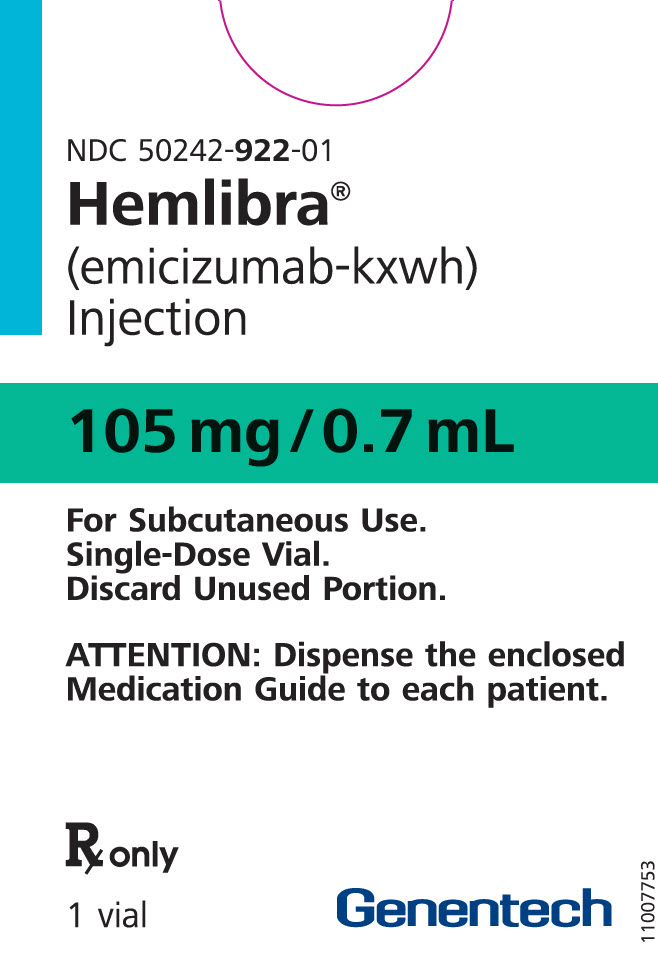
Hemlibra emicizumab 105 mg/.7mL Injection, Solution, 1 vial
🆔 Identity & classification
Where does this data come from?
🏷️ RxNorm drug class
This medicine belongs to the Other systemic hemostatics class.
Where does this data come from?
🏭 Manufacturer & labeler
Where does this data come from?
🩺 Clinical
Emicizumab-kxwh injection is used to prevent or reduce the frequency of bleeding in adults, children, and infants with hemophilia A (condition in which the blood does not clot normally because of a missing or faulty blood clotting factor). Emicizumab-kxwh is in a class of medications called hemostatic antibodies. It works by acting as a bridge between clotting factors to help your blood clot.
Read the full MedlinePlus article ↗- It's not the same, but it does a similar job. In hemophilia A, your body is missing factor VIII, a protein that helps blood clot by linking two other proteins together. Hemlibra is...
- What exactly does Hemlibra do — is it the same as taking factor VIII?
- After starting with weekly injections for the first four weeks to build up levels quickly, you'll switch to a maintenance schedule — either weekly, every two weeks, or every four w...
- How often do I need to inject myself, and can I do it at home?
Patient education
Supplement & herbal interactions
Where does this data come from?
Ask a licensed pharmacist directly — free, answered by our team.
🧪 Inactive Ingredients / Excipients
Inactive ingredients, also called excipients, are components of the drug product other than the active ingredient. They may include fillers, dyes, coatings, preservatives, flavors, or other formulation ingredients.
💡 Tap an ingredient (hover on desktop) to see what it is and why it’s used.
-
UNII 94ZLA3W45F
Arginine is an amino acid used in medicines as a buffer and pH adjuster. It helps maintain the proper acidity level and stability of liquid formulations.
-
UNII 30KYC7MIAI
Aspartic acid is an amino acid used in pharmaceutical formulations as a pH buffer and to help stabilize active ingredients. It works to maintain the proper acidity level in the medicine.
-
UNII 4QD397987E
An amino acid used as a buffer and stabilizer in medications. It helps maintain the pH balance and protects the active drug from breaking down during storage and use.
-
UNII LQA7B6G8JG
A synthetic polymer made by combining water-soluble compounds. It acts as a surfactant and solubilizer to help mix oil and water-based ingredients, improving the medicine's texture and how active ingredients dissolve.
-
UNII 059QF0KO0R
Water is a liquid solvent that dissolves and mixes ingredients together in liquid medicines, syrups, and injections. It helps distribute the active drug evenly throughout the product.
5 inactive ingredients listed in the exact product block matched to this NDC.
Where does this data come from?
ingredient classCode="IACT" elements from the exact product block matched by this NDC. Label-section narrative from DailyMed / the openFDA label index is shown separately when available.Inactive ingredient FAQ
Are inactive ingredients the same for every manufacturer?
Why might an inactive ingredient be missing?
Can inactive ingredients matter?
💲 Pricing
A drug doesn't have one price. Each row is a different public payment system, and none is what you'd pay at the counter — that depends on your insurance. The ⓘ on each row explains what it measures.
| Price system | Per mL | Per package |
|---|---|---|
| Retail pharmacies payNADAC · weekly | Not in the retail survey — common for institutional, discontinued, or low-volume packs. | |
| Medicaid paysCMS SDUD · 12 mo | $16,268.49 | $11,387.94 / 0.7 ml |
| Medicare drug plans payPart D · quarterly | No Part D plan price is available for this NDC in our data. | |
| Medicare Part B allowsASP · J7170 | $58.032 / J7170 unit | — |
Where does this data come from?
🧾 Billing & reimbursement
Where does this data come from?
🔁 Therapeutic equivalents
| Product | Labeler | Pack | NADAC/unit | TE | Status | Price vs. this |
|---|---|---|---|---|---|---|
| Hemlibra 105 mg/.7mLthis 50242-0922-01 | Genentech, | 1 vial | — | — | FDA listed | — |
Where does this data come from?
⏳ Availability & biosimilar status
Biologics have no small-molecule generics; biosimilar competition is tracked in the FDA Purple Book.
Why the date isn’t exact: Biosimilar timing can change because patents may be challenged, settled, licensed, added or removed, and litigation can move the real date earlier or later.
🛈 What do these terms mean?
- Biologic patent
- A patent the reference product’s maker has publicly listed. A biosimilar generally can’t launch until these expire — unless they’re invalidated or resolved in a settlement.
- Reference-product exclusivity
- A flat 12 years of FDA market protection from the biologic’s first licensure (the BPCIA). No biosimilar can be licensed before it ends, regardless of patents.
- Interchangeable exclusivity
- The first interchangeable biosimilar can earn a period as the only interchangeable version (pharmacists can substitute it without the prescriber).
- Earliest biosimilar (LOE)
- The latest of all the dates above — the soonest a biosimilar can realistically reach the market. Litigation and settlements can move it earlier.
Biologics have no small-molecule “generics” — competition comes from FDA-licensed biosimilars, tracked in the FDA Purple Book.
| Code | What it grants | Expires |
|---|---|---|
| RefProduct | Reference-product exclusivity (12-year, BPCIA) — no biosimilar can be licensed before this date | Nov 16, 2029 |
Is there a biosimilar for HEMLIBRA 105 MG/0.7 ML VIAL?
Why do different websites show different biosimilar dates?
Can a biosimilar launch before the last patent expires?
What does “current Purple Book estimate” mean?
What does “FDA listed” mean?
What does a patent or protection date mean here?
Where does this data come from?
🗺️ Medicaid utilization & spend
🔬 Reported adverse events (FAERS)
Top reported reactions
Age at onset
Reporter sex
Serious outcomes
Where does this data come from?
📦 Packaging — all sizes for this product
| Package NDC | Description | Marketing start | Status |
|---|---|---|---|
| 50242-0922-01 You're viewing this | 1 VIAL, SINGLE-USE in 1 CARTON (50242-922-01) / .7 mL in 1 VIAL, SINGLE-USE | 2017-11-16 | Active |
🧭 About this NDC listing & data coverage
What data is (and isn’t) available for this NDC — tap to expand
| NDC identity (package / product / labeler codes) | ✓ Available |
| Labeler | ✓ Available |
| Product & package description | ✓ Available |
| Marketing category & status | ✓ Available |
| Active ingredient / dosage form / route | ✓ Available |
| FDA label (SPL via DailyMed) | ✓ Available |
| Package photos | ✓ Available |
| Inactive ingredients (structured) | ✓ Available |
| NADAC pharmacy acquisition price (CMS) | — Not published for this NDC CMS publishes NADAC only for NDCs reported in its retail-pharmacy survey. |
| Orange Book / therapeutic-equivalence data | ✓ Available |
| HCPCS J-code billing crosswalk | ✓ Available |
| Medicaid utilization (CMS SDUD) | ✓ Available |
Questions about this listing
Why is there no price listed?
Is the NDC printed on the package the same as the 11-digit billing NDC?
What do the three segments of this NDC mean?
Is this package still being marketed?
Who lists this product with the FDA?
Do I need a prescription for this product?
Does this product have a billing J-code?
Where does this data come from?
📄 Full prescribing information FDA SPL
🚨 Boxed Warning ▾
WARNING: THROMBOTIC MICROANGIOPATHY AND THROMBOEMBOLISM Cases of thrombotic microangiopathy and thrombotic events were reported when on average a cumulative amount of >100 U/kg/24 hours of activated prothrombin complex concentrate was administered for 24 hours or more to patients receiving HEMLIBRA prophylaxis. Monitor for the development of thrombotic microangiopathy and thrombotic events if aPCC is administered. Discontinue aPCC and suspend dosing of HEMLIBRA if symptoms occur.
WARNING: THROMBOTIC MICROANGIOPATHY and THROMBOEMBOLISM See full prescribing information for complete boxed warning. Cases of thrombotic microangiopathy and thrombotic events were reported when on average a cumulative amount of >100 U/kg/24 hours of activated prothrombin complex concentrate (aPCC) was administered for 24 hours or more to patients receiving HEMLIBRA prophylaxis. Monitor for the development of thrombotic microangiopathy and thrombotic events if aPCC is administered.
Discontinue aPCC and suspend dosing of HEMLIBRA if symptoms occur.
🎯 Indications and Usage ▾
1 INDICATIONS AND USAGE HEMLIBRA is indicated for routine prophylaxis to prevent or reduce the frequency of bleeding episodes in adult and pediatric patients ages newborn and older with hemophilia A (congenital factor VIII deficiency) with or without factor VIII inhibitors. HEMLIBRA is a bispecific factor IXa- and factor X-directed antibody indicated for routine prophylaxis to prevent or reduce the frequency of bleeding episodes in adult and pediatric patients ages newborn and older with hemophilia A (congenital factor VIII deficiency) with or without factor VIII inhibitors.
( 1 )
⏱️ Dosage and Administration ▾
2 DOSAGE AND ADMINISTRATION Recommended loading dose is 3 mg/kg by subcutaneous injection once weekly for the first 4 weeks, followed by a maintenance dose of: 1.5 mg/kg once every week, or 3 mg/kg once every two weeks, or 6 mg/kg once every four weeks. ( 2.1 ) See Full Prescribing Information for important preparation and administration instructions. ( 2.2 )
2.1Recommended Dosage For subcutaneous use only. The recommended loading dose is 3 mg/kg by subcutaneous injection once weekly for the first 4 weeks, followed by a maintenance dose of: 1.5 mg/kg once every week, or 3 mg/kg once every two weeks, or 6 mg/kg once every four weeks. The selection of a maintenance dose should be based on healthcare provider preference with consideration of regimens that may increase patient adherence.
Discontinue the prophylactic use of bypassing agents the day before starting HEMLIBRA prophylaxis. The prophylactic use of factor VIII (FVIII) products may be continued during the first week of HEMLIBRA prophylaxis. Missed Dose If a dose of HEMLIBRA is missed administer as soon as possible and then resume usual dosing schedule.
Do not administer two doses on the same day to make up for a missed dose.
2.2Preparation and Administration HEMLIBRA is intended for use under the guidance of a healthcare provider. After proper training in subcutaneous injection technique, a patient may self-inject, or the patient's caregiver may administer HEMLIBRA, if a healthcare provider determines that it is appropriate. Self-administration is not recommended for children less than 7 years of age.
The HEMLIBRA "Instructions for Use" contains more detailed instructions on the preparation and administration of HEMLIBRA [see Instructions for Use ] . Visually inspect HEMLIBRA for particulate matter and discoloration before administration. HEMLIBRA for subcutaneous administration is a colorless to slightly yellow solution.
Do not use if particulate matter is visible or product is discolored. A syringe, a transfer needle with filter and an injection needle are needed to withdraw HEMLIBRA solution from the vial and inject it subcutaneously. Refer to the HEMLIBRA " Instructions for Use " for handling instructions when combining vials.
Do not combine HEMLIBRA vials of different concentrations (i.e. 30 mg/mL and 150 mg/mL) in a single injection. Please see below the selection criteria for the recommended device options: Administer doses of HEMLIBRA up to 1 mL with a 1 mL syringe.
A 1 mL syringe fulfilling the following criteria may be used: Transparent polypropylene or polycarbonate syringe with Luer-Lock tip, graduation 0.01 mL, sterile, for injection only, single-use, latex-free and non-pyrogenic, commercially available in the US. Administer doses of HEMLIBRA greater than 1 mL and up to 2 mL with a 2 mL or 3 mL syringe. A 2 mL or 3 mL syringe fulfilling the following criteria may be used: Transparent polypropylene or polycarbonate syringe with Luer-Lock tip, graduation 0.1 mL, sterile, for injection only, single-use, latex-free, and non-pyrogenic, commercially available in the US.
A transfer needle with a filter fulfilling the following criteria should be used: Stainless steel needle with Luer-Lock connection, sterile, 18 gauge, length 1 to 1½ inch, single bevel or semi-blunted tip, single-use, latex-free, containing a 5-micron filter and non-pyrogenic, commercially available in the US. An injection needle fulfilling the following criteria may be used: Stainless steel with Luer-Lock connection, sterile, 26 gauge (acceptable range: 25 – 27 gauge), length preferably ⅜ inch or maximal length ½ inch, single-use, latex-free and non-pyrogenic, including needle safety feature, commercially available in the US.
Administer each injection at a different anatomic location (upper outer arms, thighs, or any quadrant of abdomen) than the previous injection. An injection should never be given into moles, scars, or areas where the skin is tender, bruised, red, hard, or not intact. Administ…
💊 Dosage Forms and Strengths ▾
3 DOSAGE FORMS AND STRENGTHS HEMLIBRA is available as a colorless to slightly yellow solution in single-dose vials. Injection: 12 mg/0.4 mL 30 mg/mL 60 mg/0.4 mL 105 mg/0.7 mL 150 mg/mL 300 mg/2 mL (150 mg/mL) Injection: 12 mg/0.4 mL in a single-dose vial ( 3 ) 30 mg/mL in a single-dose vial ( 3 ) 60 mg/0.4 mL in a single-dose vial ( 3 ) 105 mg/0.7 mL in a single-dose vial ( 3 ) 150 mg/mL in a single-dose vial ( 3 ) 300 mg/2 mL (150 mg/mL) in a single-dose vial ( 3 )
⛔ Contraindications ▾
4 CONTRAINDICATIONS None. None ( 4 )
⚠️ Warnings and Cautions ▾
5 WARNINGS AND PRECAUTIONS Immunogenicity: Anti-emicizumab antibodies (including neutralizing antibodies) have developed in HEMLIBRA-treated patients. In case of clinical signs of loss of efficacy, promptly assess the etiology and consider a change in treatment if neutralizing antibodies are suspected. ( 5.3 , 12.6 , 14.3 ) Laboratory Coagulation Test Interference: HEMLIBRA interferes with activated clotting time (ACT), activated partial thromboplastin time (aPTT), and coagulation laboratory tests based on aPTT, including one-stage aPTT-based single-factor assays, aPTT-based Activated Protein C Resistance (APC-R), and Bethesda assays (clotting-based) for factor VIII (FVIII) inhibitor titers.
Intrinsic pathway clotting-based laboratory tests should not be used. ( 5.4 , 7.2 )
5.1Thrombotic Microangiopathy Associated with HEMLIBRA and aPCC Cases of thrombotic microangiopathy (TMA) were reported from clinical trials when on average a cumulative amount of >100 U/kg/24 hours of activated prothrombin complex concentrate (aPCC) was administered for 24 hours or more to patients receiving HEMLIBRA prophylaxis. In clinical trials, thrombotic microangiopathy was reported in 0.8% of patients (3/391) and in 8.1% of patients (3/37) who received at least one dose of aPCC. Patients presented with thrombocytopenia, microangiopathic hemolytic anemia, and acute kidney injury, without severe deficiencies in ADAMTS13 activity.
Evidence of improvement was seen within one week following discontinuation of aPCC. One patient resumed HEMLIBRA following resolution of TMA. Consider the benefits and risks if aPCC must be used in a patient receiving HEMLIBRA prophylaxis.
Due to the long half-life of HEMLIBRA, the potential for an interaction with aPCC may persist for up to 6 months after the last dose. Monitor for the development of TMA when administering aPCC. Immediately discontinue aPCC and interrupt HEMLIBRA prophylaxis if clinical symptoms and/or laboratory findings consistent with TMA occur, and manage as clinically indicated.
Consider the benefits and risks of resuming HEMLIBRA prophylaxis following complete resolution of TMA on a case-by-case basis.
5.2Thromboembolism Associated with HEMLIBRA and aPCC Thrombotic events were reported from clinical trials when on average a cumulative amount of >100 U/kg/24 hours of aPCC was administered for 24 hours or more to patients receiving HEMLIBRA prophylaxis. In clinical trials, thrombotic events were reported in 0.5% of patients (2/391) and in 5.4% of patients (2/37) who received at least one dose of aPCC. No thrombotic event required anticoagulation therapy.
Evidence of improvement or resolution was seen within one month following discontinuation of aPCC. One patient resumed HEMLIBRA following resolution of thrombotic event. Consider the benefits and risks if aPCC must be used in a patient receiving HEMLIBRA prophylaxis.
Due to the long half-life of HEMLIBRA, the potential for an interaction with aPCC may persist for up to 6 months after the last dose. Monitor for the development of thromboembolism when administering aPCC. Immediately discontinue aPCC and interrupt HEMLIBRA prophylaxis if clinical symptoms, imaging, or laboratory findings consistent with thromboembolism occur, and manage as clinically indicated.
Consider the benefits and risks of resuming HEMLIBRA prophylaxis following complete resolution of thrombotic events on a case-by-case basis.
5.3Immunogenicity Treatment with HEMLIBRA may induce anti-drug antibodies. Anti-emicizumab-kxwh antibodies were reported in 5.1% of patients (34/668) treated with HEMLIBRA in clinical trials. Most patients with anti-emicizumab-kxwh antibodies did not experience a change in HEMLIBRA plasma concentrations or an increase in bleeding events; however, in uncommon cases (incidence < 1%), the presence of neutralizing antibodies with decreasing plasma concentration may be associated with loss of efficacy [see Clinical Pharmacology (12.6) , Clinical Studies (14.3) ] .…
🤒 Adverse Reactions ▾
6 ADVERSE REACTIONS The following serious adverse reactions are described elsewhere in the labeling: Thrombotic Microangiopathy Associated with HEMLIBRA and aPCC [see Warnings and Precautions (5.1) ] Thromboembolism Associated with HEMLIBRA and aPCC [see Warnings and Precautions (5.2) ] Most common adverse reactions (incidence ≥ 10%) are injection site reactions, headache, and arthralgia. ( 6.1 ) To report SUSPECTED ADVERSE REACTIONS, contact Genentech at 1-888-835-2555 or FDA at 1-800-FDA-1088 or www.fda.gov/medwatch.
6.1Clinical Trials Experience Because clinical trials are conducted under widely varying conditions, adverse reaction rates observed in the clinical trials of a drug cannot be directly compared to rates in the clinical trials of another drug and may not reflect the rates observed in practice. The following adverse reactions are based on pooled data from two randomized trials in adult and adolescent patients (HAVEN 1 and HAVEN 3), one single-arm trial in adult and adolescent patients (HAVEN 4), one single-arm trial in pediatric patients (HAVEN 2), and one dose-finding trial, in which a total of 391 male patients with hemophilia A received at least one dose of HEMLIBRA as routine prophylaxis.
Two hundred eighty-one patients (72%) were adults (18 years and older), 50 (13%) were adolescents (12 years up to less than 18 years), 55 (14%) were children (2 years up to less than 12 years), and five (1%) were infants (1 month up to less than 2 years). The median duration of exposure across the studies was 34.1 weeks (0.1 to 224.4 weeks). The most frequently reported adverse reactions observed in ≥ 10% of patients treated with HEMLIBRA were injection site reactions, headache, and arthralgia.
Four patients (1%) in the clinical trials receiving HEMLIBRA prophylaxis withdrew from treatment due to adverse reactions, which were thrombotic microangiopathy, skin necrosis and superficial thrombophlebitis, headache, and injection site reaction. Adverse reactions observed in patients who received HEMLIBRA are shown in Table 2 . Table 2 Adverse Reactions Reported in ≥ 5% of Patients from Pooled Clinical Trials with HEMLIBRA Body System Adverse Reaction Number of Patients n (%) (N = 391) General Disorders and Administration Site Conditions Injection site reaction Includes injection site bruising, injection site discomfort, injection site erythema, injection site hematoma, injection site induration, injection site pain, injection site pruritus, injection site rash, injection site reaction, injection site swelling, injection site urticaria, and injection site warmth.
85 (22%) Pyrexia 23 (6%) Nervous System Disorders Headache 57 (15%) Gastrointestinal Disorders Diarrhea 22 (6%) Musculoskeletal and Connective Tissue Disorders Arthralgia 59 (15%) Characterization of aPCC treatment in pooled clinical trials There were 130 instances of aPCC treatment in 37 patients, of which 13 instances (10%) consisted of on average a cumulative amount of >100 U/kg/24 hours of aPCC for 24 hours or more; two of the 13 were associated with thrombotic events and three of the 13 were associated with TMA ( Table 3 ).
No TMA or thrombotic events were associated with the remaining instances of aPCC treatment. Table 3 Characterization of aPCC Treatment An instance of aPCC treatment is defined as all doses of aPCC received by a patient, for any reason, until there was a 36-hour treatment-free break. in Pooled Clinical Trials Duration of aPCC treatment Average cumulative amount of aPCC over 24 hours (U/kg/24 hours) < 50 50 – 100 > 100 < 24 hours 11 76 18 24 – 48 hours 0 6 3 Thrombotic event. > 48 hours 1 5 10 , Thrombotic microangiopathy. , , Injection Site Reactions In total, 85 patients (22%) reported injection site reactions (ISRs).
All ISRs observed in HEMLIBRA clinical trials were reported as mild to moderate intensity and 93% resolved without treatment. The commonly reported ISR symptoms were injection site erythema (11%), injection site pain (4%), and injecti…
🔄 Drug Interactions ▾
7 DRUG INTERACTIONS
7.1Hypercoagulability with Concomitant Use of aPCC Clinical experience suggests that a drug interaction exists with HEMLIBRA and aPCC [see Warnings and Precautions (5.1 , 5.2) ] .
7.2Drug-Laboratory Test Interactions HEMLIBRA restores the tenase cofactor activity of missing activated factor VIII (FVIIIa). Coagulation laboratory tests based on intrinsic clotting (i.e., aPTT) measure the total clotting time including time needed for activation of FVIII to FVIIIa by thrombin. Such intrinsic pathway-based tests will yield overly shortened clotting times with HEMLIBRA, which does not require activation by thrombin.
The overly shortened intrinsic clotting time will then disturb all single-factor assays based on aPTT, such as the one-stage FVIII activity assay; however, single-factor assays utilizing chromogenic or immuno-based methods are unaffected by HEMLIBRA and may be used to monitor coagulation parameters during treatment, with specific considerations for FVIII chromogenic activity assays as described below. Chromogenic FVIII activity tests may be manufactured with either human or bovine coagulation proteins. Assays containing human coagulation factors are responsive to HEMLIBRA but may overestimate the clinical hemostatic potential of HEMLIBRA.
In contrast, assays containing bovine coagulation factors are insensitive to HEMLIBRA (no activity measured) and can be used to monitor endogenous or infused FVIII activity, or to measure anti-FVIII inhibitors. HEMLIBRA remains active in the presence of inhibitors against FVIII, so it will produce a false-negative result in clotting-based Bethesda assays for functional inhibition of FVIII. Instead, a chromogenic Bethesda assay utilizing a bovine-based FVIII chromogenic test that is insensitive to HEMLIBRA may be used.
Due to the long half-life of HEMLIBRA, effects on coagulation assays may persist for up to 6 months after the last dose [see Clinical Pharmacology (12.3) ] .
👥 Use in Specific Populations ▾
8 USE IN SPECIFIC POPULATIONS
8.1Pregnancy Risk Summary There are no available data on HEMLIBRA use in pregnant women to inform a drug-associated risk of major birth defects and miscarriage. Animal reproduction studies have not been conducted with emicizumab-kxwh. It is not known whether HEMLIBRA can cause fetal harm when administered to a pregnant woman or can affect reproduction capacity.
HEMLIBRA should be used during pregnancy only if the potential benefit for the mother outweighs the risk to the fetus. All pregnancies have a background risk of birth defect, loss, or other adverse outcomes. The estimated background risk of major birth defects and miscarriage for the indicated populations is unknown.
In the U.S. general population, the estimated background risk of major birth defect and miscarriage in clinically recognized pregnancies is 2 – 4% and 15 – 20%, respectively.
8.2Lactation Risk Summary There is no information regarding the presence of emicizumab-kxwh in human milk, the effects on the breastfed child, or the effects on milk production. Human IgG is known to be present in human milk. The developmental and health benefits of breastfeeding should be considered along with the mother's clinical need for HEMLIBRA and any potential adverse effects on the breastfed child from HEMLIBRA or from the underlying maternal condition.
8.3Females and Males of Reproductive Potential Contraception Women of childbearing potential should use contraception while receiving HEMLIBRA.
8.4Pediatric Use The safety and efficacy of HEMLIBRA have been established in pediatric patients. Use of HEMLIBRA in pediatric patients with hemophilia A is supported by two randomized trials (HAVEN 1 and HAVEN 3) and two single-arm trials (HAVEN 2 and HAVEN 4). All clinical trials included pediatric patients in the following age group: 47 adolescents (12 years up to less than 18 years).
Only HAVEN 2 included pediatric patients in the following age groups: 55 children (2 years up to less than 12 years) and five infants (1 month up to less than 2 years). No differences in efficacy were observed between the different age groups [see Clinical Studies (14) ] . The steady-state plasma trough concentrations of emicizumab-kxwh were comparable in adult and pediatric patients older than 6 months at equivalent weight-based doses.
Lower concentrations of emicizumab-kxwh were predicted in pediatric patients less than 6 months old [see Clinical Pharmacology (12.3) ] . In general, the adverse reactions in HEMLIBRA-treated pediatric patients were similar in type to those seen in adult patients with hemophilia A [see Adverse Reactions (6.1) ] .
8.5Geriatric Use Clinical studies of HEMLIBRA did not include a sufficient number of patients aged 65 and over to determine whether they respond differently from younger patients. Other reported clinical experience has not identified differences in responses between the elderly and younger patients.
🤰 Pregnancy ▾
8.1Pregnancy Risk Summary There are no available data on HEMLIBRA use in pregnant women to inform a drug-associated risk of major birth defects and miscarriage. Animal reproduction studies have not been conducted with emicizumab-kxwh. It is not known whether HEMLIBRA can cause fetal harm when administered to a pregnant woman or can affect reproduction capacity.
HEMLIBRA should be used during pregnancy only if the potential benefit for the mother outweighs the risk to the fetus. All pregnancies have a background risk of birth defect, loss, or other adverse outcomes. The estimated background risk of major birth defects and miscarriage for the indicated populations is unknown.
In the U.S. general population, the estimated background risk of major birth defect and miscarriage in clinically recognized pregnancies is 2 – 4% and 15 – 20%, respectively.
🧒 Pediatric Use ▾
8.4Pediatric Use The safety and efficacy of HEMLIBRA have been established in pediatric patients. Use of HEMLIBRA in pediatric patients with hemophilia A is supported by two randomized trials (HAVEN 1 and HAVEN 3) and two single-arm trials (HAVEN 2 and HAVEN 4). All clinical trials included pediatric patients in the following age group: 47 adolescents (12 years up to less than 18 years).
Only HAVEN 2 included pediatric patients in the following age groups: 55 children (2 years up to less than 12 years) and five infants (1 month up to less than 2 years). No differences in efficacy were observed between the different age groups [see Clinical Studies (14) ] . The steady-state plasma trough concentrations of emicizumab-kxwh were comparable in adult and pediatric patients older than 6 months at equivalent weight-based doses.
Lower concentrations of emicizumab-kxwh were predicted in pediatric patients less than 6 months old [see Clinical Pharmacology (12.3) ] . In general, the adverse reactions in HEMLIBRA-treated pediatric patients were similar in type to those seen in adult patients with hemophilia A [see Adverse Reactions (6.1) ] .
🧓 Geriatric Use ▾
8.5Geriatric Use Clinical studies of HEMLIBRA did not include a sufficient number of patients aged 65 and over to determine whether they respond differently from younger patients. Other reported clinical experience has not identified differences in responses between the elderly and younger patients.
🧬 Clinical Pharmacology ▾
12 CLINICAL PHARMACOLOGY
12.1Mechanism of Action HEMLIBRA bridges activated factor IX and factor X to restore the function of missing activated factor VIII that is needed for effective hemostasis.
12.3Pharmacokinetics Emicizumab-kxwh exhibited dose-proportional pharmacokinetics over a dose range of 0.3 mg/kg (0.1 times approved recommended starting dosage) to 6 mg/kg following subcutaneous administration. Following multiple subcutaneous administrations of a loading dose of 3 mg/kg emicizumab-kxwh once weekly for the first 4 weeks in hemophilia A patients, mean (± SD) trough plasma concentrations of 52.6 ± 13.6 μg/mL was achieved at Week 5. Sustained mean (± SD) plasma concentrations of emicizumab-kxwh at steady-state with the recommended maintenance doses are shown in Table 4 .
Table 4 Mean (± SD) Steady-State Concentrations after emicizumab-kxwh Loading Dose by Maintenance Dose Regimen Maintenance Dose Parameters 1.5 mg/kg once every week 3 mg/kg once every two weeks 6 mg/kg once every four weeks AUC ss,τ = area under the concentration time curve at steady-state over the dosing interval (τ = 1, 2, or 4 weeks); C max, ss = maximum plasma concentration at steady state; C trough, ss = trough concentration at steady state. C max, ss (µg/mL) 55.1 ± 15.9 58.3 ± 16.4 67 ±
17.7AUC ss,τ (µg/mL*day) 376 ± 109 752 ± 218 1503 ± 437 C trough, ss (µg/mL) 51.2± 15.2 46.9 ± 14.8 38.5 ±
14.2C max / C trough ratio (µg/mL) 1.08 ± 0.03 1.26 ± 0.12 1.85 ±
0.47Absorption Following subcutaneous administration, the mean (± SD) absorption half-life was 1.6 ± 1 day. The absolute bioavailability following subcutaneous administration of 1 mg/kg was between 80.4% and 93.1%. Similar pharmacokinetic profiles were observed following subcutaneous administration in the abdomen, upper arm, and thigh [see Dosage and Administration (2.2) ] .
Distribution The mean apparent volume of distribution (% coefficient of variation [%CV]) was
10.4L (26.0%). Elimination The mean apparent clearance (%CV) was
0.27L/day (28.4%) and the mean elimination apparent half-life (± SD) was 26.9 ± 9.1 days. Specific Populations The pharmacokinetics of emicizumab-kxwh are not influenced by age (1 year to 77 years), race (White 62.7%, Asian 22.9%, and Black 8%), inhibitor status (inhibitor present, 50%), mild hepatic impairment (defined as total bilirubin 1× to ≤1.5× the upper limit of normal (ULN) and any aspartate transaminase (AST) level), moderate hepatic impairment (defined as total bilirubin 1.5× to ≤3× the ULN and any AST level), mild renal impairment (defined as creatinine clearance (CrCl) of 60 – 89 mL/min), and moderate renal impairment (defined as CrCl of 30 – 59 mL/min).
Emicizumab-kxwh has not been studied in patients with severe hepatic or renal impairment. In pediatric patients less than 6 months old, the predicted concentrations of emicizumab-kxwh were 19% to 33% lower than the older patients, especially with the 3 mg/kg once every two weeks or 6 mg/kg once every four weeks maintenance dose. Body weight : The apparent clearance and volume of distribution of emicizumab-kxwh increased with increasing body weight (9 kg to 156 kg).
Dosing in mg/kg provides similar emicizumab-kxwh exposure across body weight range. Drug Interaction Studies No drug-drug interaction studies have been conducted with HEMLIBRA.
12.6Immunogenicity The observed incidence of anti-drug antibodies is highly dependent on the sensitivity and specificity of the assay. Differences in assay methods preclude meaningful comparisons of the incidence of anti-drug antibodies in the studies described below with the incidence of anti-drug antibodies in other studies, including those of HEMLIBRA or of other emicizumab products. In the clinical trials with HEMLIBRA, 5.1% of patients (34/668) tested positive for anti-emicizumab-kxwh antibodies.
Participants were exposed to emicizumab-kxwh for a median interquartile range (IQR) of 103.1 (82.4 – 148.1) weeks. Samples testing for anti-drug antibodies were obtain…
🧬 Mechanism of Action ▾
12.1Mechanism of Action HEMLIBRA bridges activated factor IX and factor X to restore the function of missing activated factor VIII that is needed for effective hemostasis.
📦 How Supplied / Storage and Handling ▾
16 HOW SUPPLIED/STORAGE AND HANDLING How Supplied HEMLIBRA (emicizumab-kxwh) injection is available as a sterile, preservative-free, colorless to slightly yellow solution in single-dose vials in the following dosage strengths: Strength Nominal Volume Concentration Package Size (per carton) Cap Color NDC 12 mg 0.4 mL 30 mg/mL 1 vial Grey 50242-927-01 30 mg 1 mL 30 mg/mL 1 vial Sky Blue 50242-920-01 60 mg 0.4 mL 150 mg/mL 1 vial Purple 50242-921-01 105 mg 0.7 mL 150 mg/mL 1 vial Turquoise 50242-922-01 150 mg 1 mL 150 mg/mL 1 vial Brown 50242-923-01 300 mg 2 mL 150 mg/mL 1 vial Yellow 50242-930-01 Storage and Handling Store HEMLIBRA vials in a refrigerator at 2°C to 8°C (36°F to 46°F) in the original carton to protect from light.
Do not freeze. Do not shake. Prior to administration, if needed, unopened vials of HEMLIBRA may be stored out of and then returned to refrigeration.
The temperature and total combined time out of refrigeration should not exceed 30°C (86°F) and 7 days (at a temperature below 30°C [86°F]), respectively. Once removed from the vial, discard HEMLIBRA if not used immediately. Discard any unused HEMLIBRA.
📦 Storage and Handling ▾
Storage and Handling Store HEMLIBRA vials in a refrigerator at 2°C to 8°C (36°F to 46°F) in the original carton to protect from light. Do not freeze. Do not shake.
Prior to administration, if needed, unopened vials of HEMLIBRA may be stored out of and then returned to refrigeration. The temperature and total combined time out of refrigeration should not exceed 30°C (86°F) and 7 days (at a temperature below 30°C [86°F]), respectively. Once removed from the vial, discard HEMLIBRA if not used immediately.
Discard any unused HEMLIBRA.
📋 Description ▾
11 DESCRIPTION Emicizumab-kxwh is a humanized monoclonal modified immunoglobulin G4 (IgG4) bispecific antibody binding factor IXa and factor X. Emicizumab-kxwh has an approximate molecular weight of 145.6 kDa and is produced in genetically engineered mammalian (Chinese hamster ovary) cells. Emicizumab-kxwh has no structural relationship or sequence homology to FVIII and, as such, does not induce or enhance the development of direct inhibitors to FVIII.
HEMLIBRA (emicizumab-kxwh) injection is a sterile, preservative-free, colorless to slightly yellow solution for subcutaneous injection supplied in single-dose vials containing emicizumab-kxwh at 12 mg/0.4 mL, 30 mg/mL, 60 mg/0.4 mL, 105 mg/0.7 mL, 150 mg/mL, or 300 mg/2 mL. Each single-dose 12 mg vial contains a 0.4 mL solution of emicizumab-kxwh (12 mg), L-arginine (10.5 mg), L-histidine (1.2 mg), and poloxamer 188 (0.2 mg), adjusted to pH 6.0 with L-aspartic acid. Each single-dose 30 mg vial contains a 1 mL solution of emicizumab-kxwh (30 mg), L-arginine (26.1 mg), L-histidine (3.1 mg), and poloxamer 188 (0.5 mg), adjusted to pH 6.0 with L-aspartic acid.
Each single-dose 60 mg vial contains a 0.4 mL solution of emicizumab-kxwh (60 mg), L-arginine (10.5 mg), L-histidine (1.2 mg), and poloxamer 188 (0.2 mg), adjusted to pH 6.0 with L-aspartic acid. Each single-dose 105 mg vial contains a 0.7 mL solution of emicizumab-kxwh (105 mg), L-arginine (18.3 mg), L-histidine (2.2 mg), and poloxamer 188 (0.4 mg), adjusted to pH 6.0 with L-aspartic acid. Each single-dose 150 mg vial contains a 1 mL solution of emicizumab-kxwh (150 mg), L-arginine (26.1 mg), L-histidine (3.1 mg), and poloxamer 188 (0.5 mg), adjusted to pH 6.0 with L-aspartic acid.
Each single-dose 300 mg vial contains a 2 mL solution of emicizumab-kxwh (300 mg), L-arginine (52.3 mg), L-histidine (6.2 mg), and poloxamer 188 (1 mg), adjusted to pH 6.0 with L-aspartic acid.
💬 Information for Patients ▾
17 PATIENT COUNSELING INFORMATION Advise the patient to read the FDA-approved patient labeling ( Medication Guide and Instructions for Use ). Use of Bypassing Agents or FVIII Inform the patient and/or caregiver that HEMLIBRA increases coagulation potential. Advise the patient and/or caregiver to discontinue prophylactic use of bypassing agents the day before starting HEMLIBRA prophylaxis.
Advise the patient and/or caregiver that prophylactic use of FVIII may be continued for the first week of HEMLIBRA prophylaxis. Discuss the appropriate dosing of concomitant agents such as bypassing agents or FVIII with the patient and/or caregiver prior to starting HEMLIBRA prophylaxis [see Warnings and Precautions (5.1 , 5.2) and Drug Interactions (7.1) ] . Thrombotic Microangiopathy Associated with HEMLIBRA and aPCC Inform the patient and/or caregiver of the potential risk of thrombotic microangiopathy if aPCC is administered while receiving HEMLIBRA prophylaxis.
Instruct the patient and/or caregiver to consult their healthcare provider if aPCC is required in cumulative doses exceeding 100 U/kg. Advise the patient and/or caregiver to seek immediate medical attention if any signs or symptoms of thrombotic microangiopathy occur [see Warnings and Precautions (5.1) ] . Thromboembolism Associated with HEMLIBRA and aPCC Inform the patient and/or caregiver of the potential risk of thromboembolism if aPCC is administered while receiving HEMLIBRA prophylaxis.
Instruct the patient and/or caregiver to consult their healthcare provider if aPCC is required in cumulative doses exceeding 100 U/kg. Advise the patient and/or caregiver to seek immediate medical attention if any signs or symptoms of thromboembolism occur [see Warnings and Precautions (5.2) ] . Immunogenicity Inform the patient and/or caregiver of the uncommon occurrence (incidence < 1%) of loss of efficacy while receiving HEMLIBRA prophylaxis due to immunogenicity (neutralizing anti-emicizumab-kxwh antibodies).
Instruct the patient and/or caregiver to promptly report clinical signs of loss of efficacy (e.g., increase in breakthrough bleeding events) [see Warnings and Precautions (5.3) ]. Laboratory Coagulation Test Interference Inform the patient and/or caregiver that HEMLIBRA interferes with some laboratory tests that measure blood clotting and may cause a false reading. Advise the patient and/or caregiver that they should notify any healthcare provider about this possibility prior to any blood tests or medical procedures [see Warnings and Precautions (5.4) ] .
Instruction on Injection Technique HEMLIBRA is intended for use under the guidance of a healthcare provider. If a patient or caregiver is to administer subcutaneous HEMLIBRA, instruct him/her in injection techniques and assess his/her ability to inject subcutaneously to ensure proper administration of subcutaneous HEMLIBRA and the suitability for home use [see Instructions for Use ] . Advise the patient to follow the recommendations in the FDA-approved patient labeling regarding proper sharps disposal.
💬 Medication Guide ▾
This Medication Guide has been approved by the U.S. Food and Drug Administration Revised: 07/2025 Medication Guide HEMLIBRA ® (hem-lee-bruh) (emicizumab-kxwh) injection, for subcutaneous use What is the most important information I should know about HEMLIBRA? HEMLIBRA increases the potential for your blood to clot.
Carefully follow your healthcare provider's instructions regarding when to use an on-demand bypassing agent or factor VIII (FVIII) and the recommended dose and schedule to use for breakthrough bleed treatment. HEMLIBRA may cause the following serious side effects when used with activated prothrombin complex concentrate (aPCC; FEIBA ® ), including: Thrombotic microangiopathy (TMA). This is a condition involving blood clots and injury to small blood vessels that may cause harm to your kidneys, brain, and other organs.
Get medical help right away if you have any of the following signs or symptoms during or after treatment with HEMLIBRA: confusion weakness swelling of arms and legs yellowing of skin and eyes stomach (abdomen) or back pain nausea or vomiting feeling sick decreased urination Blood clots (thrombotic events). Blood clots may form in blood vessels in your arm, leg, lung, or head. Get medical help right away if you have any of these signs or symptoms of blood clots during or after treatment with HEMLIBRA: swelling in arms or legs pain or redness in your arms or legs shortness of breath chest pain or tightness fast heart rate cough up blood feel faint headache numbness in your face eye pain or swelling trouble seeing If aPCC (FEIBA ® ) is needed, talk to your healthcare provider in case you feel you need more than 100 U/kg of aPCC (FEIBA ® ) total.
Your body may make antibodies against HEMLIBRA, which may stop HEMLIBRA from working properly. Contact your healthcare provider immediately if you notice that HEMLIBRA has stopped working for you (e.g., increase in bleeds). See " What are the possible side effects of HEMLIBRA? " for more information about side effects.
What is HEMLIBRA? HEMLIBRA is a prescription medicine used for routine prophylaxis to prevent or reduce the frequency of bleeding episodes in adults and children, ages newborn and older, with hemophilia A with or without factor VIII inhibitors. Hemophilia A is a bleeding condition people can be born with where a missing or faulty blood clotting factor (factor VIII) prevents blood from clotting normally.
HEMLIBRA is a therapeutic antibody that bridges clotting factors to help your blood clot. Before using HEMLIBRA, tell your healthcare provider about all of your medical conditions, including if you: are pregnant or plan to become pregnant. It is not known if HEMLIBRA may harm your unborn baby.
Females who are able to become pregnant should use birth control (contraception) during treatment with HEMLIBRA. are breastfeeding or plan to breastfeed. It is not known if HEMLIBRA passes into your breast milk. Tell your healthcare provider about all the medicines you take , including prescription medicines, over-the-counter medicines, vitamins, or herbal supplements.
Keep a list of them to show your healthcare provider and pharmacist when you get a new medicine. How should I use HEMLIBRA? See the detailed " Instructions for Use " that comes with your HEMLIBRA for information on how to prepare and inject a dose of HEMLIBRA, and how to properly throw away (dispose of) used needles and syringes.
Use HEMLIBRA exactly as prescribed by your healthcare provider. Stop (discontinue) prophylactic use of bypassing agents the day before starting HEMLIBRA prophylaxis. You may continue prophylactic use of FVIII for the first week of HEMLIBRA prophylaxis.
HEMLIBRA is given as an injection under your skin (subcutaneous injection) by you or a caregiver. Your healthcare provider should show you or your caregiver how to prepare, measure, and inject your dose of HEMLIBRA before you inject yourself for the first time. Do not attempt to inject yourself or another person unless you h…