
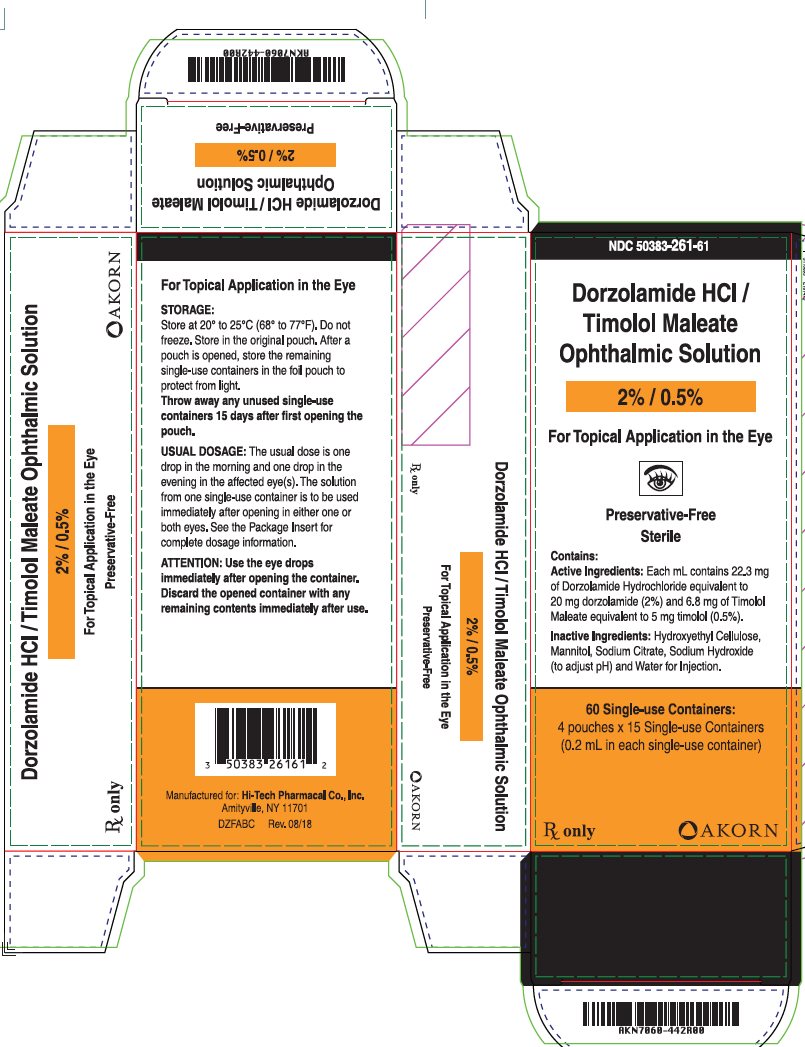
Dorzolamide Hydrochloride and Timolol Maleate 20 mg/mL; 5 mg/mL Solution/ Drops
Other active recalls for Dorzolamide Hydrochloride And Timolol Maleate (different manufacturers) — 1 · tap to view
🆔 Identity & classification
Where does this data come from?
🏷️ RxNorm drug class
This medicine belongs to the beta-Adrenergic Blocker class.
Where does this data come from?
🏭 Manufacturer & labeler
Where does this data come from?
🩺 Clinical
Dorzolamide and timolol is used to treat glaucoma and ocular hypertension (eye conditions that lead to increased intraocular pressure and can progress to vision loss). Dorzolamide is in a class of medications called topical carbonic anhydrase inhibitors. Timolol is in a class of medications called topical beta blockers. Dorzolamide and timolol lowers pressure in the eye by decreasing the production of natural fluids in the eye.
Read the full MedlinePlus article ↗- Your eye constantly produces a small amount of clear fluid called aqueous humor. When that fluid doesn't drain well, pressure builds up inside the eye. Over time, high pressure can...
- What exactly does this eye drop do — why do I need to lower my eye pressure?
- Yes, and this is really important to know. Both timolol and dorzolamide are absorbed into your bloodstream through the eye, even in small amounts. Timolol is a beta-blocker, so it...
- It's just an eye drop — can it really affect the rest of my body?
Patient education
Supplement & herbal interactions
Where does this data come from?
Ask a licensed pharmacist directly — free, answered by our team.
🧪 Inactive Ingredients / Excipients
Inactive ingredients, also called excipients, are components of the drug product other than the active ingredient. They may include fillers, dyes, coatings, preservatives, flavors, or other formulation ingredients.
💡 Tap an ingredient (hover on desktop) to see what it is and why it’s used.
-
UNII S38J6RZN16
Hydroxyethyl cellulose is a plant-derived thickening agent made from cellulose. In medicines, it acts as a binder to hold ingredients together, a thickener to adjust product texture, and a film-former to create smooth coatings on tablets.
-
UNII 3OWL53L36A
A natural sugar alcohol derived from seaweed or synthesized in the lab. It's used as a filler to add bulk, a sweetener in sugar-free formulas, and a disintegrant to help tablets break apart in the stomach.
-
UNII 1Q73Q2JULR
Sodium citrate is a salt derived from citric acid. It works as a buffer to maintain the medicine's pH level and may also help improve taste or act as a preservative in the formulation.
-
UNII 55X04QC32I
A strong alkaline chemical used to adjust and maintain the pH balance of liquid medicines. It helps keep the medicine stable and ensures it stays effective during storage.
-
UNII 059QF0KO0R
Water is a liquid solvent that dissolves and mixes ingredients together in liquid medicines, syrups, and injections. It helps distribute the active drug evenly throughout the product.
5 inactive ingredients listed in the exact product block matched to this NDC.
Where does this data come from?
ingredient classCode="IACT" elements from the exact product block matched by this NDC. Label-section narrative from DailyMed / the openFDA label index is shown separately when available.Inactive ingredient FAQ
Are inactive ingredients the same for every manufacturer?
Why might an inactive ingredient be missing?
Can inactive ingredients matter?
💲 Pricing
A drug doesn't have one price. Each row is a different public payment system, and none is what you'd pay at the counter — that depends on your insurance. The ⓘ on each row explains what it measures.
| Price system | Per ea | Per package |
|---|---|---|
| Retail pharmacies payNADAC · weekly | $1.751 | $105.05 / 60 vials |
| Medicaid paysCMS SDUD · 12 mo | No recent Medicaid claims on file for this NDC — rare and low-volume NDCs are suppressed in the public data. | |
| Medicare drug plans payPart D · quarterly | No Part D plan price is available for this NDC in our data. | |
Where does this data come from?
🔁 Therapeutic equivalents
Where does this data come from?
⏳ Availability & generic status
FDA-approved generic versions are listed, and recent pricing/market data suggests they may be available — see Therapeutic equivalents.
Where does this data come from?
📦 Packaging — all sizes for this product
| Package NDC | Description | Marketing start | Status |
|---|---|---|---|
| 50383-0261-61 You're viewing this | 4 POUCH in 1 CARTON (50383-261-61) / 15 VIAL, SINGLE-USE in 1 POUCH / .2 mL in 1 VIAL, SINGLE-USE | 2019-02-01 | Discontinued by firm |
🧭 About this NDC listing & data coverage
What data is (and isn’t) available for this NDC — tap to expand
| NDC identity (package / product / labeler codes) | ✓ Available |
| Labeler | ✓ Available |
| Product & package description | ✓ Available |
| Marketing category & status | ✓ Available |
| Active ingredient / dosage form / route | ✓ Available |
| FDA label (SPL via DailyMed) | ✓ Available |
| Package photos | ✓ Available |
| Inactive ingredients (structured) | ✓ Available |
| NADAC pharmacy acquisition price (CMS) | ✓ Available |
| Orange Book / therapeutic-equivalence data | ✓ Available |
| HCPCS J-code billing crosswalk | — Not published for this NDC Most self-administered / retail products have no J-code — that is normal. |
| Medicaid utilization (CMS SDUD) | — Not published for this NDC CMS reports utilization only for NDCs with Medicaid claims above its privacy threshold. |
Questions about this listing
What does the discontinued status mean for this NDC?
Is the NDC printed on the package the same as the 11-digit billing NDC?
What do the three segments of this NDC mean?
Who lists this product with the FDA?
Do I need a prescription for this product?
Where does this data come from?
📄 Full prescribing information FDA SPL
🎯 Indications and Usage ▾
1 INDICATIONS AND USAGE Dorzolamide hydrochloride-timolol maleate ophthalmic solution (preservative-free) is indicated for the reduction of elevated intraocular pressure (IOP) in patients with open-angle glaucoma or ocular hypertension who are insufficiently responsive to beta-blockers (failed to achieve target IOP determined after multiple measurements over time). The IOP-lowering of dorzolamide hydrochloride-timolol maleate ophthalmic solution administered twice a day was slightly less than that seen with the concomitant administration of 0.5% timolol administered twice a day and 2% dorzolamide administered three times a day [see Clinical Studies (14.1) ] . • Dorzolamide hydrochloride-timolol maleate ophthalmic solution (preservative-free) is a carbonic anhydrase inhibitor with a beta-adrenergic receptor blocking agent indicated for the reduction of elevated intraocular pressure (IOP) in patients with open-angle glaucoma or ocular hypertension who are insufficiently responsive to beta-blockers. • The IOP-lowering of dorzolamide hydrochloride-timolol maleate ophthalmic solution twice daily was slightly less than that seen with the concomitant administration of 0.5% timolol twice daily, and 2% dorzolamide three times daily.
(1)
⏱️ Dosage and Administration ▾
2 DOSAGE AND ADMINISTRATION The dose is one drop of dorzolamide hydrochloride-timolol maleate ophthalmic solution (preservative-free) in the affected eye(s) two times daily. If more than one topical ophthalmic drug is being used, the drugs should be administered at least five minutes apart [see Drug Interactions (7.3) ] . The solution from one individual unit is to be used immediately after opening for administration to one or both eyes.
Since sterility cannot be maintained after the individual unit is opened, the remaining contents should be discarded immediately after administration. The dose is one drop of dorzolamide hydrochloride-timolol maleate ophthalmic solution (preservative-free) in the affected eye(s) two times daily. (2)
💊 Dosage Forms and Strengths ▾
3 DOSAGE FORMS AND STRENGTHS Solution containing 20 mg/mL dorzolamide (22.26 mg of dorzolamide hydrochloride) and 5 mg/mL timolol (6.83 mg timolol maleate). Solution containing 20 mg/mL dorzolamide and 5 mg/mL timolol. (3)
⛔ Contraindications ▾
4 CONTRAINDICATIONS Dorzolamide hydrochloride-timolol maleate ophthalmic solution (preservative-free) is contraindicated in patients with: • Bronchial asthma or a history of bronchial asthma, severe chronic obstructive pulmonary disease. (4.1) • Sinus bradycardia, second or third degree atrioventricular block, overt cardiac failure, cardiogenic shock. (4.2) • Hypersensitivity to any component of this product. (4.3, 5.3)
4.1Asthma, COPD Dorzolamide hydrochloride-timolol maleate ophthalmic solution (preservative-free) is contraindicated in patients with bronchial asthma, a history of bronchial asthma, or severe chronic obstructive pulmonary disease [see Warnings and Precautions (5.1) ] .
4.2Sinus Bradycardia, AV Block, Cardiac Failure, Cardiogenic Shock Dorzolamide hydrochloride-timolol maleate ophthalmic solution (preservative-free) is contraindicated in patients with sinus bradycardia, second or third degree atrioventricular block, overt cardiac failure, and cardiogenic shock [see Warnings and Precautions (5.2) ] .
4.3Hypersensitivity Dorzolamide hydrochloride-timolol maleate ophthalmic solution (preservative-free) is contraindicated in patients who are hypersensitive to any component of this product [see Warnings and Precautions (5.3) ] .
⚠️ Warnings and Cautions ▾
5 WARNINGS AND PRECAUTIONS • Potentiation of Respiratory Reactions Including Asthma (5.1) • Cardiac Failure (5.2) • Sulfonamide Hypersensitivity (5.3) • Obstructive Pulmonary Disease (5.4) • Increased Reactivity to Allergens (5.5) • Potentiation of Muscle Weakness (5.6) • Masking of Hypoglycemic Symptoms in Patients with Diabetes Mellitus (5.7) • Masking of Thyrotoxicosis (5.8) • Renal and Hepatic Impairment (5.9) • Impairment of Beta-Adrenergically Mediated Reflexes During Surgery (5.10)
5.1Potentiation of Respiratory Reactions Including Asthma Dorzolamide hydrochloride-timolol maleate ophthalmic solution (preservative-free) contains timolol maleate, a beta-adrenergic blocking agent; and although administered topically, is absorbed systemically. Therefore, the same types of adverse reactions that are attributable to systemic administration of beta-adrenergic blocking agents may occur with topical administration. For example, severe respiratory reactions, including death due to bronchospasm in patients with asthma, and rarely death in association with cardiac failure, have been reported following systemic or ophthalmic administration of timolol maleate [see Contraindications (4.1) and Patient Counseling Information (17.1) ] .
5.2Cardiac Failure Sympathetic stimulation may be essential for support of the circulation in individuals with diminished myocardial contractility, and its inhibition by beta-adrenergic receptor blockade may precipitate more severe failure. In patients without a history of cardiac failure continued depression of the myocardium with beta-blocking agents over a period of time can, in some cases, lead to cardiac failure. At the first sign or symptom of cardiac failure, dorzolamide hydrochloride-timolol maleate ophthalmic solution (preservative-free) should be discontinued [see Contraindications (4.2) and Patient Counseling Information (17.2) ] .
5.3Sulfonamide Hypersensitivity Dorzolamide hydrochloride-timolol maleate ophthalmic solution (preservativefree) contains dorzolamide, a sulfonamide; and although administered topically, it is absorbed systemically. Therefore, the same types of adverse reactions that are attributable to sulfonamides may occur with topical administration of dorzolamide hydrochloride-timolol maleate ophthalmic solution (preservative-free). Fatalities have occurred, although rarely, due to severe reactions to sulfonamides including Stevens-Johnson syndrome, toxic epidermal necrolysis, fulminant hepatic necrosis, agranulocytosis, aplastic anemia, and other blood dyscrasias.
Sensitization may recur when a sulfonamide is readministered irrespective of the route of administration. If signs of serious reactions or hypersensitivity occur, discontinue the use of this preparation [see Contraindications (4.3) and Patient Counseling Information (17.3) ] .
5.4Obstructive Pulmonary Disease Patients with chronic obstructive pulmonary disease (e.g., chronic bronchitis, emphysema) of mild or moderate severity, bronchospastic disease, or a history of bronchospastic disease (other than bronchial asthma or a history of bronchial asthma, in which dorzolamide hydrochloride-timolol maleate ophthalmic solution (preservative-free) is contraindicated) should, in general, not receive beta-blocking agents, including dorzolamide hydrochloride-timolol maleate ophthalmic solution (preservative-free) [see Contraindications (4.1) and Patient Counseling Information (17.1) ] .
5.5Increased Reactivity to Allergens While taking beta-blockers, patients with a history of atopy or a history of severe anaphylactic reactions to a variety of allergens may be more reactive to repeated accidental, diagnostic, or therapeutic challenge with such allergens. Such patients may be unresponsive to the usual doses of epinephrine used to treat anaphylactic reactions.
5.6Potentiation of Muscle Weakness Beta-adrenergic blockade has been reported to potentiate muscle weakness consistent with certain myasthenic symptoms (e.g., diplopia…
🤒 Adverse Reactions ▾
6 ADVERSE REACTIONS The most frequently reported adverse reactions were taste perversion (bitter, sour, or unusual taste) or ocular burning and/or stinging in up to 30% of patients. Conjunctival hyperemia, blurred vision, superficial punctate keratitis or eye itching were reported between 5-15% of patients. (6) To report SUSPECTED ADVERSE REACTIONS, contact Hi-Tech Pharmacal Co., Inc. at 1-800-262-9010 or FDA at 1-800-FDA-1088 or www.fda.gov/medwatch.
6.1Clinical Studies Experience Because clinical trials are conducted under widely varying conditions, adverse reaction rates observed in the clinical trials of a drug cannot be directly compared to rates in the clinical trials of another drug and may not reflect the rates observed in practice. Dorzolamide Hydrochloride-Timolol Maleate Ophthalmic Solution and Dorzolamide Hydrochloride-Timolol Maleate Ophthalmic Solution (Preservative-Free) Dorzolamide hydrochloride-timolol maleate ophthalmic solution and dorzolamide hydrochloride-timolol maleate ophthalmic solution (preservative-free) were evaluated in patients with elevated intraocular pressure treated for open-angle glaucoma or ocular hypertension for up to 15 months.
Approximately 5% of all patients discontinued therapy because of adverse reactions. The most frequently reported adverse reactions occurring in up to 30% of patients were taste perversion (bitter, sour, or unusual taste) or ocular burning and/or stinging. The following adverse reactions were reported in 5-15% of patients: conjunctival hyperemia, blurred vision, superficial punctate keratitis or eye itching.
The following adverse reactions were reported in 1-5% of patients: abdominal pain, back pain, blepharitis, bronchitis, cloudy vision, conjunctival discharge, conjunctival edema, conjunctival follicles, conjunctival injection, conjunctivitis, corneal erosion, corneal staining, cortical lens opacity, cough, dizziness, dryness of eyes, dyspepsia, eye debris, eye discharge, eye pain, eye tearing, eyelid edema, eyelid erythema, eyelid exudate/scales, eyelid pain or discomfort, foreign body sensation, glaucomatous cupping, headache, hypertension, influenza, lens nucleus coloration, lens opacity, nausea, nuclear lens opacity, pharyngitis, post-subcapsular cataract, sinusitis, upper respiratory infection, urinary tract infection, visual field defect, vitreous detachment.
Other adverse reactions that have been reported with the individual components are listed below: Dorzolamide 2% Angioedema, asthenia/fatigue, bronchospasm, contact dermatitis, epistaxis, eyelid crusting, ocular discomfort, photophobia, signs and symptoms of ocular allergic reaction, transient myopia. Timolol (ocular administration) Body as a Whole: Asthenia/fatigue; Cardiovascular: Arrhythmia, syncope, cerebral ischemia, worsening of angina pectoris, palpitation, cardiac arrest, pulmonary edema, edema, claudication, Raynaud’s phenomenon, and cold hands and feet; Digestive: Anorexia; Immunologic: Systemic lupus erythematosus; Nervous System/Psychiatric: Increase in signs and symptoms of myasthenia gravis, somnolence, insomnia, nightmares, behavioral changes and psychic disturbances including confusion, hallucinations, anxiety, disorientation, nervousness, and memory loss; Skin: Alopecia, psoriasiform rash or exacerbation of psoriasis; Hypersensitivity: Signs and symptoms of systemic allergic reactions, including anaphylaxis, angioedema, urticaria, and localized and generalized rash; Respiratory: Bronchospasm (predominantly in patients with preexisting bronchospastic disease); Endocrine: Masked symptoms of hypoglycemia in diabetic patients; Special Senses: Ptosis, decreased corneal sensitivity, cystoid macular edema, visual disturbances including refractive changes and diplopia, pseudopemphigoid, and tinnitus; Urogenital: Retroperitoneal fibrosis, decreased libido, impotence, and Peyronie’s disease.
6.2Post-Marketing Experience The following adverse reactions have been identified during post-approval us…
🔄 Drug Interactions ▾
7 DRUG INTERACTIONS • Potential additive effect of oral carbonic anhydrase inhibitor with dorzolamide hydrochloride-timolol maleate ophthalmic solution (preservative-free). (7.1) • Potential acid-base and electrolyte disturbances. (7.2) • Concomitant use with systemic beta-blockers may potentiate systemic beta-blockade.
(7.3) • Oral or intravenous calcium antagonists may cause atrioventricular conduction disturbances, left ventricular failure, and hypotension. (7.4) • Catecholamine-depleting drugs may have additive effects and produce hypotension and/or marked bradycardia. (7.5) • Digitalis and calcium antagonists may have additive effects in prolonging atrioventricular conduction time.
(7.6) • CYP2D6 inhibitors may potentiate systemic beta-blockade. (7.7)
7.1Oral Carbonic Anhydrase Inhibitors There is a potential for an additive effect on the known systemic effects of carbonic anhydrase inhibition in patients receiving an oral carbonic anhydrase inhibitor and dorzolamide hydrochloride-timolol maleate ophthalmic solution (preservative-free). The concomitant administration of dorzolamide hydrochloride-timolol maleate ophthalmic solution (preservative-free) and oral carbonic anhydrase inhibitors is not recommended.
7.2High-Dose Salicylate Therapy Although acid-base and electrolyte disturbances were not reported in the clinical trials with dorzolamide hydrochloride ophthalmic solution, these disturbances have been reported with oral carbonic anhydrase inhibitors and have, in some instances, resulted in drug interactions (e.g., toxicity associated with high-dose salicylate therapy). Therefore, the potential for such drug interactions should be considered in patients receiving dorzolamide hydrochloride-timolol maleate ophthalmic solution (preservative-free).
7.3Beta-Adrenergic Blocking Agents Patients who are receiving a beta-adrenergic blocking agent orally and dorzolamide hydrochloride-timolol maleate ophthalmic solution (preservativefree) should be observed for potential additive effects of beta-blockade, both systemic and on intraocular pressure. The concomitant use of two topical beta-adrenergic blocking agents is not recommended.
7.4Calcium Antagonists Caution should be used in the coadministration of beta-adrenergic blocking agents, such as dorzolamide hydrochloride-timolol maleate ophthalmic solution (preservative-free), and oral or intravenous calcium antagonists because of possible atrioventricular conduction disturbances, left ventricular failure, and hypotension. In patients with impaired cardiac function, coadministration should be avoided.
7.5Catecholamine-Depleting Drugs Close observation of the patient is recommended when a beta-blocker is administered to patients receiving catecholamine-depleting drugs such as reserpine, because of possible additive effects and the production of hypotension and/or marked bradycardia, which may result in vertigo, syncope, or postural hypotension.
7.6Digitalis and Calcium Antagonists The concomitant use of beta-adrenergic blocking agents with digitalis and calcium antagonists may have additive effects in prolonging atrioventricular conduction time.
7.7CYP2D6 Inhibitors Potentiated systemic beta-blockade (e.g., decreased heart rate, depression) has been reported during combined treatment with CYP2D6 inhibitors (e.g., quinidine, SSRIs) and timolol.
7.8Clonidine Oral beta-adrenergic blocking agents may exacerbate the rebound hypertension which can follow the withdrawal of clonidine. There have been no reports of exacerbation of rebound hypertension with ophthalmic timolol maleate.
👥 Use in Specific Populations ▾
8 USE IN SPECIFIC POPULATIONS
8.1Pregnancy Teratogenic Effects. Pregnancy Category C. Developmental toxicity studies with dorzolamide hydrochloride in rabbits at oral doses of ≥ 2.5 mg/kg/day (31 times the recommended human ophthalmic dose) revealed malformations of the vertebral bodies.
These malformations occurred at doses that caused metabolic acidosis with decreased body weight gain in dams and decreased fetal weights. No treatment-related malformations were seen at 1 mg/kg/day (13 times the recommended human ophthalmic dose). Teratogenicity studies with timolol in mice, rats, and rabbits at oral doses up to 50 mg/kg/day (7,000 times the systemic exposure following the maximum recommended human ophthalmic dose) demonstrated no evidence of fetal malformations.
Although delayed fetal ossification was observed at this dose in rats, there were no adverse effects on postnatal development of offspring. Doses of 1,000 mg/kg/day (142,000 times the systemic exposure following the maximum recommended human ophthalmic dose) were maternotoxic in mice and resulted in an increased number of fetal resorptions. Increased fetal resorptions were also seen in rabbits at doses of 14,000 times the systemic exposure following the maximum recommended human ophthalmic dose, in this case without apparent maternotoxicity.
There are no adequate and well-controlled studies in pregnant women. Dorzolamide hydrochloride-timolol maleate ophthalmic solution (preservative-free) should be used during pregnancy only if the potential benefit justifies the potential risk to the fetus.
8.3Nursing Mothers It is not known whether dorzolamide is excreted in human milk. Timolol maleate has been detected in human milk following oral and ophthalmic drug administration. Because of the potential for serious adverse reactions from dorzolamide hydrochloride-timolol maleate ophthalmic solution (preservative-free) in nursing infants, a decision should be made whether to discontinue nursing or to discontinue the drug, taking into account the importance of the drug to the mother.
8.4Pediatric Use The safety and effectiveness of dorzolamide hydrochloride ophthalmic solution and timolol maleate ophthalmic solution have been established when administered individually in pediatric patients aged 2 years and older. Use of these drug products in these children is supported by evidence from adequate and well-controlled studies in children and adults. Safety and efficacy in pediatric patients below the age of 2 years have not been established.
8.5Geriatric Use No overall differences in safety or effectiveness have been observed between elderly and younger patients.
🤰 Pregnancy ▾
8.1Pregnancy Teratogenic Effects. Pregnancy Category C. Developmental toxicity studies with dorzolamide hydrochloride in rabbits at oral doses of ≥ 2.5 mg/kg/day (31 times the recommended human ophthalmic dose) revealed malformations of the vertebral bodies.
These malformations occurred at doses that caused metabolic acidosis with decreased body weight gain in dams and decreased fetal weights. No treatment-related malformations were seen at 1 mg/kg/day (13 times the recommended human ophthalmic dose). Teratogenicity studies with timolol in mice, rats, and rabbits at oral doses up to 50 mg/kg/day (7,000 times the systemic exposure following the maximum recommended human ophthalmic dose) demonstrated no evidence of fetal malformations.
Although delayed fetal ossification was observed at this dose in rats, there were no adverse effects on postnatal development of offspring. Doses of 1,000 mg/kg/day (142,000 times the systemic exposure following the maximum recommended human ophthalmic dose) were maternotoxic in mice and resulted in an increased number of fetal resorptions. Increased fetal resorptions were also seen in rabbits at doses of 14,000 times the systemic exposure following the maximum recommended human ophthalmic dose, in this case without apparent maternotoxicity.
There are no adequate and well-controlled studies in pregnant women. Dorzolamide hydrochloride-timolol maleate ophthalmic solution (preservative-free) should be used during pregnancy only if the potential benefit justifies the potential risk to the fetus.
🧒 Pediatric Use ▾
8.4Pediatric Use The safety and effectiveness of dorzolamide hydrochloride ophthalmic solution and timolol maleate ophthalmic solution have been established when administered individually in pediatric patients aged 2 years and older. Use of these drug products in these children is supported by evidence from adequate and well-controlled studies in children and adults. Safety and efficacy in pediatric patients below the age of 2 years have not been established.
🧓 Geriatric Use ▾
8.5Geriatric Use No overall differences in safety or effectiveness have been observed between elderly and younger patients.
🆘 Overdosage ▾
10 OVERDOSAGE Symptoms consistent with systemic administration of beta-blockers or carbonic anhydrase inhibitors may occur, including electrolyte imbalance, development of an acidotic state, dizziness, headache, shortness of breath, bradycardia, bronchospasm, cardiac arrest and possible central nervous system effects. Serum electrolyte levels (particularly potassium) and blood pH levels should be monitored. [See Adverse Reactions (6) .] A study of patients with renal failure showed that timolol did not dialyze readily.
🧬 Clinical Pharmacology ▾
12 CLINICAL PHARMACOLOGY
12.1Mechanism of Action Dorzolamide hydrochloride-timolol maleate ophthalmic solution (preservative-free) is comprised of two components: dorzolamide hydrochloride and timolol maleate. Each of these two components decreases elevated intraocular pressure, whether or not associated with glaucoma, by reducing aqueous humor secretion. Elevated intraocular pressure is a major risk factor in the pathogenesis of optic nerve damage and glaucomatous visual field loss.
The higher the level of intraocular pressure, the greater the likelihood of glaucomatous field loss and optic nerve damage. Dorzolamide hydrochloride is an inhibitor of human carbonic anhydrase II. Inhibition of carbonic anhydrase in the ciliary processes of the eye decreases aqueous humor secretion, presumably by slowing the formation of bicarbonate ions with subsequent reduction in sodium and fluid transport.
Timolol maleate is a beta 1 and beta 2 (non-selective) adrenergic receptor blocking agent that does not have significant intrinsic sympathomimetic, direct myocardial depressant, or local anesthetic (membrane-stabilizing) activity. The combined effect of these two agents administered as dorzolamide hydrochloride-timolol maleate ophthalmic solution (preservative-free) administered twice daily results in additional intraocular pressure reduction compared to either component administered alone, but the reduction is not as much as when dorzolamide administered three times daily and timolol twice daily are administered concomitantly. [See Clinical Studies (14) .]
12.3Pharmacokinetics Dorzolamide Hydrochloride When topically applied, dorzolamide reaches the systemic circulation. To assess the potential for systemic carbonic anhydrase inhibition following topical administration, drug and metabolite concentrations in RBCs and plasma and carbonic anhydrase inhibition in RBCs were measured. Dorzolamide accumulates in RBCs during chronic dosing as a result of binding to CA-II.
The parent drug forms a single N-desethyl metabolite, which inhibits CA-II less potently than the parent drug but also inhibits CA-I. The metabolite also accumulates in RBCs where it binds primarily to CA-I. Plasma concentrations of dorzolamide and metabolite are generally below the assay limit of quantitation (15 nM).
Dorzolamide binds moderately to plasma proteins (approximately 33%). Dorzolamide is primarily excreted unchanged in the urine; the metabolite also is excreted in urine. After dosing is stopped, dorzolamide washes out of RBCs nonlinearly, resulting in a rapid decline of drug concentration initially, followed by a slower elimination phase with a half-life of about four months.
To simulate the systemic exposure after long-term topical ocular administration, dorzolamide was given orally to eight healthy subjects for up to 20 weeks. The oral dose of 2 mg twice daily closely approximates the amount of drug delivered by topical ocular administration of dorzolamide 2% three times daily. Steady state was reached within 8 weeks.
The inhibition of CA-II and total carbonic anhydrase activities was below the degree of inhibition anticipated to be necessary for a pharmacological effect on renal function and respiration in healthy individuals. Timolol Maleate In a study of plasma drug concentrations in six subjects, the systemic exposure to timolol was determined following twice daily topical administration of timolol maleate ophthalmic solution 0.5%. The mean peak plasma concentration following morning dosing was 0.46 ng/mL.
🧬 Mechanism of Action ▾
12.1Mechanism of Action Dorzolamide hydrochloride-timolol maleate ophthalmic solution (preservative-free) is comprised of two components: dorzolamide hydrochloride and timolol maleate. Each of these two components decreases elevated intraocular pressure, whether or not associated with glaucoma, by reducing aqueous humor secretion. Elevated intraocular pressure is a major risk factor in the pathogenesis of optic nerve damage and glaucomatous visual field loss.
The higher the level of intraocular pressure, the greater the likelihood of glaucomatous field loss and optic nerve damage. Dorzolamide hydrochloride is an inhibitor of human carbonic anhydrase II. Inhibition of carbonic anhydrase in the ciliary processes of the eye decreases aqueous humor secretion, presumably by slowing the formation of bicarbonate ions with subsequent reduction in sodium and fluid transport.
Timolol maleate is a beta 1 and beta 2 (non-selective) adrenergic receptor blocking agent that does not have significant intrinsic sympathomimetic, direct myocardial depressant, or local anesthetic (membrane-stabilizing) activity. The combined effect of these two agents administered as dorzolamide hydrochloride-timolol maleate ophthalmic solution (preservative-free) administered twice daily results in additional intraocular pressure reduction compared to either component administered alone, but the reduction is not as much as when dorzolamide administered three times daily and timolol twice daily are administered concomitantly. [See Clinical Studies (14) .]
📦 How Supplied / Storage and Handling ▾
16 HOW SUPPLIED/STORAGE AND HANDLING Dorzolamide Hydrochloride-Timolol Maleate Ophthalmic Solution 2%/0.5% (Preservative-Free) is supplied in a foil pouch containing 15 low density polyethylene 0.2 mL single-use containers. NDC 50383-261-61, package of 60 single-use vials in 4 pouches. NDC 50383-261-91, package of 180 single-use vials in 12 pouches.
Store Dorzolamide Hydrochloride-Timolol Maleate Ophthalmic Solution 2%/0.5% (Preservative-Free) at 20° to 25°C (68° to 77°F). Do not freeze. Store in the original pouch.
After the pouch is opened, store the remaining single-use containers in the foil pouch to protect from light. Write down the date you open the foil pouch in the space provided on the pouch. Discard any unused containers 15 days after first opening the pouch.
📋 Description ▾
11 DESCRIPTION Dorzolamide Hydrochloride-Timolol Maleate Ophthalmic Solution 2%/0.5% (Preservative-Free) is the combination of a topical carbonic anhydrase inhibitor and a topical beta-adrenergic receptor blocking agent. Dorzolamide hydrochloride is described chemically as: (4 S-trans )-4- (ethylamino)-5,6-dihydro-6-methyl-4 H -thieno [2,3- b ]thiopyran-2-sulfonamide 7,7-dioxide monohydrochloride. Dorzolamide hydrochloride is optically active.
The specific rotation is: Its empirical formula is C 10 H 16 N 2 O 4 S 3 •HCl and its structural formula is: Dorzolamide hydrochloride has a molecular weight of 360.91. It is a white to off-white, crystalline powder, which is soluble in water and slightly soluble in methanol and ethanol. Timolol maleate is described chemically as: (-)-1-( tert -butylamino)-3- [(4-morpholino-1,2,5-thiadiazol-3-yl)oxy]-2-propanol maleate (1:1) (salt).
Timolol maleate possesses an asymmetric carbon atom in its structure and is provided as the levo-isomer. The optical rotation of timolol maleate is: Its molecular formula is C 13 H 24 N 4 O 3 S•C 4 H 4 O 4 and its structural formula is: Timolol maleate has a molecular weight of 432.50. It is a white, odorless, crystalline powder which is soluble in water, methanol, and alcohol.
Timolol maleate is stable at room temperature. Dorzolamide Hydrochloride-Timolol Maleate Ophthalmic Solution 2%/0.5% (Preservative-Free) is supplied as a sterile, clear, colorless to nearly colorless, isotonic, buffered, slightly viscous, aqueous solution. The pH of the solution is approximately 5.65, and the osmolarity is 242-323 mOsM.
Each mL of Dorzolamide Hydrochloride-Timolol Maleate Ophthalmic Solution 2%/0.5% (Preservative-Free) contains 20 mg dorzolamide (22.26 mg of dorzolamide hydrochloride) and 5 mg timolol (6.83 mg timolol maleate). Inactive ingredients are sodium citrate, hydroxyethyl cellulose, sodium hydroxide, mannitol, and water for injection. Dorzolamide Hydrochloride-Timolol Maleate Ophthalmic Solution 2%/0.5% (Preservative-Free) does not contain a preservative.
Rotation Chemical Structure Rotation 2 Chemical structure 2
💬 Information for Patients ▾
17 PATIENT COUNSELING INFORMATION See FDA-Approved Patient Labeling (Patient Information).
17.1Potential for Exacerbation of Asthma and COPD Dorzolamide hydrochloride-timolol maleate ophthalmic solution (preservative-free) may cause severe worsening of asthma and COPD symptoms including death due to bronchospasm. Patients with bronchial asthma, a history of bronchial asthma, severe chronic obstructive pulmonary disease should be advised not to take this product. [See Contraindications (4.1) .]
17.2Potential of Cardiovascular Effects Dorzolamide hydrochloride-timolol maleate ophthalmic solution (preservative-free) may cause worsening of cardiac symptoms. Patients with sinus bradycardia, second or third degree atrioventricular block, or cardiac failure should be advised not to take this product. [See Contraindications (4.2) .]
17.3Sulfonamide Reactions Dorzolamide hydrochloride-timolol maleate ophthalmic solution (preservative-free) contains dorzolamide (which is a sulfonamide) and, although administered topically, is absorbed systemically. Therefore the same types of adverse reactions that are attributable to sulfonamides may occur with topical administration, including severe skin reactions. Patients should be advised that if serious or unusual reactions or signs of hypersensitivity occur, they should discontinue the use of the product and seek their physician’s advice. [See Warnings and Precautions (5.3) .]
17.4Handling the Single-Use Container Dorzolamide hydrochloride-timolol maleate ophthalmic solution (preservative-free) is a sterile solution that does not contain a preservative. The solution from one individual unit is to be used immediately after opening for administration to one or both eyes. Since sterility cannot be maintained after the individual unit is opened, the remaining contents should be discarded immediately after administration.
17.5Intercurrent Ocular Conditions Patients also should be advised that if they have ocular surgery or develop an intercurrent ocular condition (e.g., trauma or infection), they should immediately seek their physician’s advice concerning the continued use of this product.
17.6Concomitant Topical Ocular Therapy If more than one topical ophthalmic drug is being used, the drugs should be administered at least five minutes apart. Manufactured for: Hi-Tech Pharmacal Co., Inc. Amityville, NY 11701 DZF00N Rev. 08/18 AK60400 logo