
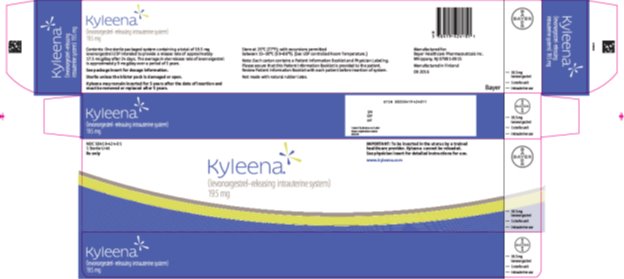
Kyleena Levonorgestrel 19.5 mg Intrauterine Device, 1 intrauterine — NDC 50419-424-01 (Billing 50419-0424-01)
This is a package of 1 intrauterine of Kyleena Levonorgestrel 19.5 mg Intrauterine Device from Bayer HealthCare Pharmaceuticals Inc., marketed since Sep 2016 and currently FDA-listed. It is the main listing for this product, which comes in 3 package sizes.
NDC database record
One package, one record: these facts belong to NDC 50419-424-01 alone.
- Record
- FDA NDC Directory package listing · Human prescription drug
- Code segments
- 50419 labeler · 424 product · 01 package
- Package marketed since
- Sep 19, 2016
- Sample package
- No — commercial package
- Listing certified through
- Dec 31, 2026
- Billing quantity
- 1 EA per package
- Barcode (UPC-A, from the NDC)
- 3 5041942401 1
- Medicaid fills, this package
- 21,008 prescriptions in the last four reported quarters
- FDA record last changed
- Jul 24, 2026
Identity & classification
Regulatory identifiers FDA, NLM and CMS codes for this package
Drug-database identifiers Medi-Span GPI and First Databank GCN / HICL / AHFS classification
- GSN (GCN sequence number): 076612
- GCN: 42304
- GPI-14 (Medi-Span): 25200050005313
- HICL (First Databank): 007318
- AHFS class code: 68:12.00.00
- RxCUI (RxNorm): 1811886
Where does this data come from?
- FDA openFDA NDC Directory · synced Oct 1, 2026
- FDA label on DailyMed · label index refreshed Oct 1, 2026
- RxNorm (NLM RxNav) · catalog refreshed Oct 1, 2026
- Medi-Span GPI (licensed)
- First Databank (licensed) · refreshed Oct 1, 2026
RxNorm drug class
This medicine belongs to the Progestin class.
Where does this data come from?
- RxClass (NLM) · catalog refreshed Oct 1, 2026
Clinical
- It comes in two main types. The intrauterine systems (Mirena, Liletta, Kyleena, Skyla) prevent pregnancy for years, and Mirena and Liletta also treat heavy menstrual bleeding. The...
- Take it as soon as you can, within 72 hours (3 days) of unprotected sex. The sooner you take it, the better it works. If you vomit within 2 hours, call a healthcare professional to...
- How do I take the emergency contraceptive tablet?
- No. It's a backup method and isn't as effective as regular birth control. It also won't work if you're already pregnant, and it doesn't protect against HIV or other STDs.
Patient education
Supplement & herbal interactions
Some supplements/herbs that may interact with Levonorgestrel — tap one for details:
Levonorgestrel may be associated with lower levels of 2 nutrients — worth a chat with your pharmacist, not a cause for alarm.
Where does this data come from?
- MedlinePlus (NLM) · refreshed Oct 1, 2026
- FDA label on DailyMed · label index refreshed Oct 1, 2026
Ask a licensed pharmacist directly — free, answered by our team.
Pricing
A drug doesn't have one price. Each row is a different public payment system, and none is what you'd pay at the counter — that depends on your insurance. The ⓘ on each row explains what it measures.
| Price system | Per each | Per package |
|---|---|---|
| Retail pharmacies payNADAC · weekly | Not in the retail survey — common for institutional, discontinued, or low-volume packs. | |
| Medicaid paysCMS SDUD · 12 mo | $1,254.95 | $1,254.95 / 1 intrauterine |
| Medicare drug plans payPart D · Q2 2026 | $1,241.36 | $1,241.36 / 1 intrauterine |
Where does this data come from?
- CMS NADAC weekly file
- CMS ASP pricing files · refreshed Sep 20, 2026
- CMS Medicaid State Drug Utilization Data · through Q1 2026
- CMS Part D plan pricing files · refreshed Sep 24, 2026
- VA National Acquisition Center price file
Packaging — all sizes for this product
| Package NDC | Description | Marketing start | Marketing end | Status |
|---|---|---|---|---|
| 50419-0424-01 You're viewing this Main listing | 1 INTRAUTERINE DEVICE in 1 CARTON | 2016-09-19 | — | Active |
| 50419-0424-08 50419-424-08 | 1 INTRAUTERINE DEVICE in 1 CARTON | 2016-09-19 | — | Active |
| 50419-0424-71 50419-424-71 | 1 INTRAUTERINE DEVICE in 1 CARTON Sample | 2016-09-19 | — | Active |
In Medicaid, this is the most-dispensed pack of this product — about 100% of fills over the last four reported quarters. See all packs ↓
Pack size FAQ
What quantity is in this package?
How does this package differ from NDC 50419-0424-08?
What NDC number is used to bill for this package of Kyleena Levonorgestrel 19.5 mg Intrauterine Device?
Therapeutic equivalents
| Product | Labeler | Pack | NADAC/unit | TE | Status | Price vs. this |
|---|---|---|---|---|---|---|
| Kyleena 19.5 mgthis 50419-0424-01 | Bayer | 1 intrauterine | — | — | FDA listed | — |
Where does this data come from?
- FDA openFDA NDC Directory · synced Oct 1, 2026
- FDA Orange Book · refreshed Oct 3, 2026
- CMS NADAC weekly file
Availability & generic status
We did not find an FDA-approved generic match for this exact strength, form and route. Patent/protection dates below may affect future generic timing.
Why the date isn’t exact: Generic timing can change because patents may be challenged, settled, licensed, added, removed, or worked around with a narrower label — and FDA approval does not always mean a pharmacy can get the generic today.
🛈 What do these terms mean?
- Patent
- Legal protection listed in the Orange Book that may delay generic approval or launch. Issued by the U.S. Patent & Trademark Office.
- Substance patent
- Covers the active drug molecule itself — the hardest to design around. A generic generally can’t launch until it expires.
- Formulation (product) patent
- Covers a specific formulation or dosage form. A generic can sometimes work around it with a different formulation.
- Method-of-use patent
- A patent covering one specific approved use of the drug — not necessarily the whole molecule. A generic can sometimes launch with a “skinny label” that carves out the protected use and keeps the others.
- Skinny label
- A generic label that omits a still-patented use when the FDA allows it — letting a generic reach the market for the unprotected uses.
- Exclusivity
- FDA-granted marketing protection, separate from patents — e.g. 5-yr new chemical entity, 7-yr orphan drug, or a +6-month pediatric extension.
- Paragraph IV
- A generic applicant’s formal challenge to a listed patent. It can potentially lead to earlier generic entry, but often involves litigation or a settlement.
- RLD / RS
- Reference Listed Drug — the brand product the FDA uses as the reference for generic applications. Reference Standard — the product the FDA expects generics to compare against in bioequivalence testing.
- TE / AB rating
- FDA therapeutic-equivalence rating. An AB rating generally means the FDA considers a generic therapeutically equivalent to — and substitutable for — the brand.
- LOE (loss of exclusivity)
- The latest patent or exclusivity currently listed — the loss-of-exclusivity / latest-listed-protection date shown on this page. Paragraph-IV challenges and settlements can move the real date earlier; FDA approval and a manufacturer’s decision to market can move it later.
Built from the FDA Orange Book. The bars above are scaled to each protection’s expiry; the red LOE marker is the last one to lapse.
| Patent | Type | Use code | Expires |
|---|---|---|---|
| US 11850182 ↗ | Method of use | U-3819 | Sep 14, 2029 |
| US 10561524 ↗ | Method of use | U-2948 | Sep 16, 2029 |
| US 11628088 ↗ | Drug product | — | Feb 7, 2027 |
Is there a generic version of KYLEENA 19.5 MG SYSTEM?
The FDA approved a generic — why can’t I get it at my pharmacy yet?
Why do different websites show different generic release dates?
What does “FDA listed” mean?
What does a patent or protection date mean here?
What does “current Orange Book estimate” mean?
Can a generic come out before the last patent expires?
Can a generic come out after the listed dates?
What is the difference between patents and exclusivity?
Why are there multiple patent dates?
Where does this data come from?
- FDA Orange Book · refreshed Oct 3, 2026
Inactive Ingredients / Excipients
Inactive ingredients, also called excipients, are components of the drug product other than the active ingredient. They may include fillers, dyes, coatings, preservatives, flavors, or other formulation ingredients.
💡 Tap an ingredient (hover on desktop) to see what it is and why it’s used.
-
UNII 25BB7EKE2E
Barium sulfate is a white powder mineral compound used as a filler and opacifying agent in tablets and capsules. It adds bulk to the medicine and may be included in formulations for imaging purposes.
-
UNII 92RU3N3Y1O
Dimethicone is a silicone-based oil that acts as an anti-foaming agent and lubricant in medicines. It reduces gas bubbles in liquid formulations and helps coat and protect the stomach lining when ingested.
2 inactive ingredients listed in the exact product block matched to this NDC.
Where does this data come from?
ingredient classCode="IACT" elements from the exact product block matched by this NDC. Label-section narrative from DailyMed / the openFDA label index is shown separately when available.- FDA label on DailyMed · label index refreshed Oct 1, 2026
- FDA openFDA NDC Directory · synced Oct 1, 2026
Inactive ingredient FAQ
Are inactive ingredients the same for every manufacturer?
Why might an inactive ingredient be missing?
Can inactive ingredients matter?
Manufacturer & labeler
More NDCs from Bayer HealthCare Pharmaceuticals Inc. labeler code 50419
- Safyral Drospirenone/ethinyl estradiol/levomefolate calcium and levomefolate Kit NDC 50419-403-00
- Yaz Drospirenone and ethinyl estradiol Kit NDC 50419-405-03
- Beyaz Drospirenone/ethinyl estradiol/levomefolate calcium and levomefolate Kit NDC 50419-407-00
- Natazia estradiol valerate and estradiol valerate/dienogest Kit NDC 50419-409-00
- Skyla Levonorgestrel 13.5 mg Intrauterine Device NDC 50419-422-01
- Mirena Levonorgestrel 52 mg Intrauterine Device NDC 50419-423-01
- Climara Estradiol .05 mg/d Patch NDC 50419-451-04
- Climara Estradiol .1 mg/d Patch NDC 50419-452-04
- Climara Estradiol .075 mg/d Patch NDC 50419-453-04
- Climara Estradiol .025 mg/d Patch NDC 50419-454-04
- Menostar estradiol 14 ug/d Patch NDC 50419-455-04
- Climara Estradiol .0375 mg/d Patch NDC 50419-456-04
Where does this data come from?
- FDA openFDA NDC Directory · synced Oct 1, 2026
- Drugs@FDA
Full prescribing information FDA SPL
🎯 Indications and Usage ▾
1 INDICATIONS AND USAGE Kyleena is indicated to prevent pregnancy for up to 5 years. Replace the system after 5 years if continued use is desired. Kyleena is a progestin-containing intrauterine system (IUS) indicated for prevention of pregnancy for up to 5 years. ( 1 )
⏱️ Dosage and Administration ▾
2 DOSAGE AND ADMINISTRATION • Release rate of levonorgestrel (LNG) is 17.5 mcg/day after 24 days and declines to 7.4 mcg/day after 5 years; Kyleena must be removed or replaced after 5 years. ( 2.1 ) • To be inserted by a trained healthcare provider using strict aseptic technique. Follow insertion instructions exactly as described.
( 2.2 ) • Patient should be re-examined and evaluated 4 to 6 weeks after insertion; then yearly or more often if clinically indicated. ( 2.3 )
2.1Dosing Over Time Kyleena contains 19.5 mg of levonorgestrel (LNG) released in vivo at a rate of approximately 17.5 mcg/day after 24 days. This rate decreases progressively to 9.8 mcg/day after 1 year and to 7.4 mcg/day after 5 years. The average in vivo release rate of LNG is approximately 12.6 mcg/day over the first year and 9.0 mcg/day over a period of 5 years . [See Clinical Pharmacology ( 12.3 ).] Kyleena must be removed by the end of the fifth year and can be replaced at the time of removal with a new Kyleena if continued contraceptive protection is desired.
Kyleena can be physically distinguished from other intrauterine systems (IUSs) by the combination of the visibility of the silver ring on ultrasound and the blue color of the removal threads. Kyleena is supplied in a sterile package within an inserter that enables single-handed loading (see Figure 1). Do not open the package until required for insertion [see Description ( 11.2 )] .
Do not use if the seal of the sterile package is broken or appears compromised. Use strict aseptic techniques throughout the insertion procedure [see Warnings and Precautions ( 5.3 )] . Kyleena and Inserter 2.2.
Insertion Instructions • Obtain a complete medical and social history to determine conditions that might influence the selection of a levonorgestrel-releasing intrauterine system (LNG IUS) for contraception . If indicated, perform a physical examination and appropriate tests for any forms of genital or other sexually transmitted infections. [See Contraindications ( 4 ) and Warnings and Precautions ( 5.10 ).] Because irregular bleeding/spotting is common during the first months of Kyleena use, exclude endometrial pathology (polyps or cancer) prior to the insertion of Kyleena in women with persistent or uncharacteristic bleeding [see Warnings and Precautions ( 5.8 )] . • Follow the insertion instructions exactly as described to ensure proper placement and avoid premature release of Kyleena from the inserter.
Once released, Kyleena cannot be re-loaded . • Check expiration date of Kyleena prior to initiating insertion. • Kyleena should be inserted by a trained healthcare provider. Healthcare providers should become thoroughly familiar with the insertion instructions before attempting insertion of Kyleena. • Insertion may be associated with some pain and/or bleeding or vasovagal reactions (for example, syncope, bradycardia), or with seizure, especially in patients with a predisposition to these conditions. Consider administering analgesics prior to insertion.
Timing of Insertion Table 1: When to Insert Kyleena Starting Kyleena in women not currently using hormonal or intrauterine contraception • Insert Kyleena any time there is reasonable certainty that the woman is not pregnant. Consider the possibility of ovulation and conception prior to initiation of this product [see Contraindications ( 4 )]. • If Kyleena is inserted during the first seven days of the menstrual cycle or immediately after a first trimester abortion, back-up contraception is not needed. • If Kyleena is not inserted during the first seven days of the menstrual cycle, a barrier method of contraception should be used, or the patient should abstain from vaginal intercourse for seven days to prevent pregnancy.
Switching to Kyleena from an oral, transdermal or vaginal hormonal contraceptive • Insert Kyleena at any time, including during the hormone-free interval of the previous method. • If inserted during active use of the previous method, continue tha… [Excerpted — this section continues on DailyMed.]
💊 Dosage Forms and Strengths ▾
3 DOSAGE FORMS AND STRENGTHS Kyleena is a LNG-releasing IUS (a type of intrauterine device, or IUD) consisting of a T-shaped polyethylene frame with a steroid reservoir containing a total of 19.5 mg LNG. • One sterile intrauterine system consisting of a T-shaped polyethylene frame with a steroid reservoir containing 19.5 mg levonorgestrel, packaged within a sterile inserter ( 3 )
⛔ Contraindications ▾
4 CONTRAINDICATIONS The use of Kyleena is contraindicated when one or more of the following conditions exist: • Pregnancy or suspicion of pregnancy [see Warnings and Precautions ( 5.2 ), Use in Specific Populations ( 8.1 )] • For use as post-coital contraception (emergency contraception) • Congenital or acquired uterine anomaly, including fibroids, that distorts the uterine cavity • Acute pelvic inflammatory disease (PID) or a history of PID unless there has been a subsequent intrauterine pregnancy [see Warnings and Precautions ( 5.4 )] • Postpartum endometritis or infected abortion in the past 3 months • Known or suspected uterine or cervical malignancy • Known or suspected breast cancer or other progestin-sensitive cancer, now or in the past • Uterine bleeding of unknown etiology • Untreated acute cervicitis or vaginitis, including bacterial vaginosis or other lower genital tract infections until infection is controlled • Acute liver disease or liver tumor (benign or malignant) • Conditions associated with increased susceptibility to pelvic infections [see Warnings and Precautions ( 5.4 )] • A previously inserted intrauterine device (IUD) that has not been removed • Hypersensitivity to any component of this product [see Adverse Reactions ( 6.2 ) and Description ( 11.1 )] • Pregnancy or suspicion of pregnancy.
Cannot be used for post-coital contraception (emergency contraception) ( 4 ) • Congenital or acquired uterine anomaly if it distorts the uterine cavity ( 4 ) • Acute pelvic inflammatory disease (PID) or a history of PID unless there has been a subsequent intrauterine pregnancy ( 4 ) • Postpartum endometritis or infected abortion in the past 3 months ( 4 ) • Known or suspected uterine or cervical malignancy ( 4 ) • Known or suspected breast cancer or other progestin-sensitive cancer ( 4 ) • Uterine bleeding of unknown etiology ( 4 ) • Untreated acute cervicitis or vaginitis or other lower genital tract infections ( 4 ) • Acute liver disease or liver tumor (benign or malignant) ( 4 ) • Increased susceptibility to pelvic infection ( 4 ) • A previous intrauterine device (IUD) that has not been removed ( 4 ) • Hypersensitivity to any component of Kyleena ( 4 )
⚠️ Warnings and Cautions ▾
5 WARNINGS AND PRECAUTIONS • Remove Kyleena if pregnancy occurs with Kyleena in place. If pregnancy occurs, there is increased risk of ectopic pregnancy including loss of fertility, pregnancy loss, septic abortion (including septicemia, shock and death), and premature labor and delivery. ( 5.1 , 5.2 ) • Group A streptococcal infection has been reported following insertion of LNG IUS; strict aseptic technique is essential during insertion.
( 5.3 ) • Before using Kyleena, consider the risks of PID. ( 5.4 ) • Uterine perforation may occur and may reduce contraceptive effectiveness or require surgery. Risk is increased if inserted in lactating women and may be increased if inserted in women with fixed retroverted uteri and postpartum.
( 5.5 ) • Partial or complete expulsion may occur, which can be unnoticed, leading to loss of contraceptive efficacy. ( 5.6 ) • Evaluate persistent enlarged ovarian follicles or ovarian cysts. ( 5.7 ) • Bleeding patterns become altered, may remain irregular and amenorrhea may ensue.
( 5.8 ) • Kyleena can be safely scanned with MRI only under certain conditions. ( 5.11 )
5.1Risk of Ectopic Pregnancy Evaluate women for ectopic pregnancy if they become pregnant with Kyleena in place because the likelihood of a pregnancy being ectopic is increased with Kyleena. Approximately one-half of pregnancies that occur with Kyleena in place are likely to be ectopic. Also consider the possibility of ectopic pregnancy in the case of lower abdominal pain, especially in association with missed menses or if an amenorrheic woman starts bleeding.
The incidence of ectopic pregnancy in clinical trials with Kyleena, which excluded women with a history of ectopic pregnancy, was approximately 0.2% per year. The risk of ectopic pregnancy in women who have a history of ectopic pregnancy and use Kyleena is unknown. Women with a previous history of ectopic pregnancy, tubal surgery or pelvic infection carry a higher risk of ectopic pregnancy.
Ectopic pregnancy may result in loss of fertility.
5.2Risks with Intrauterine Pregnancy If pregnancy occurs while using Kyleena, remove Kyleena because leaving it in place may increase the risk of spontaneous abortion and preterm labor. Removal of Kyleena or probing of the uterus may also result in spontaneous abortion. In the event of an intrauterine pregnancy with Kyleena, consider the following: Septic abortion In patients becoming pregnant with an IUS in place, septic abortion—with septicemia, septic shock, and death—may occur.
Continuation of pregnancy If a woman becomes pregnant with Kyleena in place and if Kyleena cannot be removed or the woman chooses not to have it removed, warn her that failure to remove Kyleena increases the risk of miscarriage, sepsis, premature labor and premature delivery. Advise her of isolated reports of virilization of the female fetus following local exposure to LNG during pregnancy with an LNG IUS in place [see Use in Specific Populations ( 8.1 )] . Follow her pregnancy closely and advise her to report immediately any symptom that suggests complications of the pregnancy.
5.3Sepsis Severe infection or sepsis, including Group A streptococcal sepsis (GAS), have been reported following insertion of a LNG-releasing IUS. In some cases, severe pain occurred within hours of insertion followed by sepsis within days. Because death from GAS is more likely if treatment is delayed, it is important to be aware of these rare but serious infections.
Aseptic technique during insertion of Kyleena is essential in order to minimize serious infections such as GAS.
5.4Pelvic Infection Promptly examine users with complaints of lower abdominal or pelvic pain, odorous discharge, unexplained bleeding, fever, genital lesions or sores. Remove Kyleena in cases of recurrent endometritis or pelvic inflammatory disease, or if an acute pelvic infection is severe or does not respond to treatment. Pelvic Inflammatory Disease (PID) Kyleena is contraindicated in the presence of known or su… [Excerpted — this section continues on DailyMed.]
🤒 Adverse Reactions ▾
6 ADVERSE REACTIONS The following serious or otherwise important adverse reactions are discussed elsewhere in the labeling: • Ectopic Pregnancy [see Warnings and Precautions ( 5.1 )] • Intrauterine Pregnancy [see Warnings and Precautions ( 5.2 )] • Group A Streptococcal Sepsis (GAS) [see Warnings and Precautions ( 5.3 )] • Pelvic Inflammatory Disease [see Warnings and Precautions ( 5.4 )] • Perforation [see Warnings and Precautions ( 5.5 )] • Expulsion [see Warnings and Precautions ( 5.6 ] • Ovarian Cysts [see Warnings and Precautions ( 5.7 )] • Bleeding Pattern Alterations [see Warnings and Precautions ( 5.8 )] The most common adverse reactions reported (≥ 5% users) were vulvovaginitis, ovarian cysts, abdominal pain/pelvic pain, headache/migraine, acne/seborrhea, dysmenorrhea/uterine spasm, breast pain/breast discomfort, and increased bleeding.
( 6 ) To report SUSPECTED ADVERSE REACTIONS, contact Bayer HealthCare Pharmaceuticals Inc. at 1-888-842-2937 or FDA at 1-800-FDA-1088 or www.fda.gov/medwatch.
6.1Clinical Trials Experience Because clinical trials are conducted under widely varying conditions, adverse reaction rates observed in the clinical trials of a drug cannot be directly compared to rates in the clinical trials of another drug and may not reflect the rates observed in clinical practice. The data described below reflect exposure of 1,697 healthy 18 to 41-year-old women (mean age 27.8 ± 5.2 years) to Kyleena. These data come from two multi-center contraceptive trials: A phase 2 study with a 3-year duration was conducted in Europe enrolling generally healthy, 21 to 41-year old women; 217 subjects were exposed to Kyleena for one year and 174 completed three years.
The data in this trial cover approximately 8,000 cycles of exposure. A phase 3 study with a 3-year duration and an optional extension of Kyleena use up to 5 years was conducted in the United States (US), Canada, Europe, and Latin America. The population was generally healthy, 18 to 35-year old women.
A total of 1,208 subjects were exposed to Kyleena for at least one year; 707 women entered the optional extension phase after 3 years and 550 completed five years. The data in this trial cover approximately 60,000 cycles. In total for both studies, 1,425 subjects were exposed for at least 1 year, and 550 subjects completed 5 years of use.
Of the total of 1,697 subjects exposed to Kyleena, 563 were from the US and 1,134 were from Europe, Canada and Latin America; 623 (37%) were nulliparous (mean age 24.6 ± 4.5 years) and 1,074 (63%) were parous (mean age 29.7 ± 4.7 years). Most women who received Kyleena were Caucasian (83%) or Black/African American (4.4%); 9.4% of women were of Hispanic ethnicity. The clinical trials had no upper or lower weight or body mass index (BMI) limit.
Mean BMI of Kyleena subjects was 25.2 kg/m2 (range 15.2 – 57.6 kg/m2); 16% had a BMI ≥ 30 kg/m2, and 2.0% had a BMI ≥ 40 kg/m2. The frequencies of reported adverse drug reactions represent crude incidences. The most common adverse reactions (occurring in ≥ 5% users) were vulvovaginitis (24%), ovarian cyst (22%), abdominal pain/pelvic pain (21%), headache/migraine (15%), acne/seborrhea (15%), dysmenorrhea/uterine spasm (10%), breast pain/breast discomfort (10%), and increased bleeding (8%).
In the combined studies, 22% discontinued prematurely due to an adverse reaction. The most common adverse reactions (>1%) leading to discontinuation were increased bleeding (4.5%), abdominal pain/pelvic pain (4.2%), device expulsion (3.1%), acne/seborrhea (2.3%), and dysmenorrhea/uterine spasm (1.3%). Common adverse reactions (occurring in ≥1% users) are summarized in Table 4 (presented as crude incidences).
Table 4: Adverse reactions that occurred in at least 1% of Kyleena users in clinical trials by System Organ Class (SOC) System Organ Class Adverse Reaction Incidence (%) (N=1,697) Reproductive System and Breast Disorders Vulvovaginitis
24.3 Ovarian cyst a
22.2Dysmenorrhea/uterine spasm 8.0/2.4 Incr… [Excerpted — this section continues on DailyMed.]
🔄 Drug Interactions ▾
7 DRUG INTERACTIONS No drug-drug interaction studies have been conducted with Kyleena. Drugs or herbal products that induce or inhibit LNG metabolizing enzymes, including CYP3A4, may decrease or increase, respectively, the serum concentrations of LNG during the use of Kyleena. However, the contraceptive effect of Kyleena is mediated via the direct release of LNG into the uterine cavity and is unlikely to be affected by drug interactions via enzyme induction or inhibition.
👥 Use in Specific Populations ▾
8 USE IN SPECIFIC POPULATIONS
8.1Pregnancy Risk Summary The use of Kyleena is contraindicated in pregnancy or with a suspected pregnancy and Kyleena may cause adverse pregnancy outcomes [see Contraindications ( 4 ), Warnings and Precautions ( 5.1 , 5.2 )]. If a woman becomes pregnant with Kyleena in place, the likelihood of ectopic pregnancy is increased and there is an increased risk of miscarriage, sepsis, premature labor, and premature delivery . Remove Kyleena, if possible, if pregnancy occurs in a woman using Kyleena.
If Kyleena cannot be removed, follow the pregnancy closely [see Warnings and Precautions ( 5.1 , 5.2 )] . There have been isolated cases of virilization of the external genitalia of the female fetus following local exposure to LNG during pregnancy with an LNG IUS in place. Animal reproduction studies have not been conducted with Kyleena.
8.2Lactation Risk Summary Published studies report the presence of LNG in human milk. Small amounts of progestins (approximately 0.1% of the total maternal doses) were detected in the breast milk of nursing mothers who used other LNG-releasing IUSs, resulting in exposure of LNG to the breastfed infants. There are no reports of adverse effects in breastfed infants with maternal use of progestin-only contraceptives.
Isolated cases of decreased milk production have been reported with a LNG-releasing IUS. The developmental and health benefits of breastfeeding should be considered along with the mother's clinical need for Kyleena and any potential adverse effects on the breastfed child from Kyleena or from the underlying maternal condition.
8.3Females and Males of Reproductive Potential Return to Fertility After Discontinuing Kyleena About 71% of 163 women who desired pregnancy after study discontinuation and provided follow-up information, conceived within 12 months after removal of Kyleena.
8.4Pediatric Use Safety and efficacy of Kyleena have been established in women of reproductive age. Efficacy is expected to be the same for postpubertal females under the age of 18 as for users 18 years and older. Use of this product before menarche is not indicated.
8.5Geriatric Use Kyleena has not been studied in women over age 65 and is not approved for use in this population.
🤰 Pregnancy ▾
8.1Pregnancy Risk Summary The use of Kyleena is contraindicated in pregnancy or with a suspected pregnancy and Kyleena may cause adverse pregnancy outcomes [see Contraindications ( 4 ), Warnings and Precautions ( 5.1 , 5.2 )]. If a woman becomes pregnant with Kyleena in place, the likelihood of ectopic pregnancy is increased and there is an increased risk of miscarriage, sepsis, premature labor, and premature delivery . Remove Kyleena, if possible, if pregnancy occurs in a woman using Kyleena.
If Kyleena cannot be removed, follow the pregnancy closely [see Warnings and Precautions ( 5.1 , 5.2 )] . There have been isolated cases of virilization of the external genitalia of the female fetus following local exposure to LNG during pregnancy with an LNG IUS in place. Animal reproduction studies have not been conducted with Kyleena.
🧒 Pediatric Use ▾
8.4Pediatric Use Safety and efficacy of Kyleena have been established in women of reproductive age. Efficacy is expected to be the same for postpubertal females under the age of 18 as for users 18 years and older. Use of this product before menarche is not indicated.
🧓 Geriatric Use ▾
8.5Geriatric Use Kyleena has not been studied in women over age 65 and is not approved for use in this population.
🧬 Clinical Pharmacology ▾
12 CLINICAL PHARMACOLOGY
12.1Mechanism of Action The local mechanism by which continuously released LNG contributes to the contraceptive effectiveness of Kyleena has not been conclusively demonstrated. Studies of Kyleena and similar LNG IUS prototypes have suggested several mechanisms that prevent pregnancy: thickening of cervical mucus preventing passage of sperm into the uterus, inhibition of sperm capacitation or survival, and alteration of the endometrium .
12.2Pharmacodynamics Kyleena has mainly local progestogenic effects in the uterine cavity. The local concentrations of LNG lead to morphological changes including stromal pseudodecidualization, glandular atrophy, a leukocytic infiltration and a decrease in glandular and stromal mitoses. In clinical trials with Kyleena, ovulation was assessed based on serum progesterone values >2.5 ng/mL in one study and serum progesterone values >2.5 ng/mL together with serum estradiol levels <27.24 pg/mL in another study.
Evidence of ovulation by these criteria was seen in 23 out of 26 women in the first year, in 19 out of 20 women in the second year, and in all 16 women in the third year . In the fourth year, evidence of ovulation was observed in the one woman remaining in the subset and in the fifth year, no women remained in this subset.
12.3Pharmacokinetics Absorption Low doses of LNG are administered into the uterine cavity with the Kyleena intrauterine delivery system. The in vivo release rate is approximately 17.5 mcg/day after 24 days and is reduced to approximately 15.3 mcg/day after 60 days and to 9.8 mcg/day after 1 year. It then declines progressively to approximately 7.9 mcg/day after 3 years and 7.4 mcg/day after 5 years.
The average LNG in vivo release rate is approximately 12.6 mcg/day over the first year and 9.0 mcg/day over the period of 5 years. In a subset of 6 subjects, the maximum observed serum LNG concentration (mean ±SD) was 302 ± 170 pg/mL, reached after 7.5 days (median) of Kyleena insertion. Thereafter, the LNG serum concentrations (mean ±SD) at Year 1, 2, 3, 4 and 5 were 199 ± 171 pg/mL (N=6), 120 ± 57 pg/mL (N=6), 122 ± 65 pg/mL (N=6), 79 ± 12 pg/mL (N=3) and 65 ± 15 pg/mL (N=3), respectively.
A population pharmacokinetic evaluation based on a broader database (>1000 patients) showed a similar declining concentration profile, with 175 ± 74 pg/mL at 7 days after placement, 125 ± 50 pg/mL at 1 year, 99 ± 41 pg/mL after 3 years, and 90 ± 35 pg/mL after 5 years. Distribution The apparent volume of distribution of LNG is reported to be approximately
1.8L/kg. LNG is bound non-specifically to serum albumin and specifically to sex hormone binding globulin (SHBG). Accordingly, changes in the concentration of SHBG in serum result in an increase (at higher SHBG concentration) or a decrease (at lower SHBG concentration) of the total LNG concentration in serum.
In a subset of 6 subjects, the concentration of SHBG declined on average by about 30% during the first 3 months after insertion of Kyleena and remained relatively stable over the 5 year period of use. Less than 2% of the circulating LNG is present as free steroid. Elimination Following intravenous administration of 0.09 mg LNG to healthy volunteers, the total clearance of LNG is approximately 1 mL/min/kg and the elimination half-life is approximately 20 hours.
Metabolic clearance rates may differ among individuals by several-fold, and this may account in part for wide individual variations in LNG concentrations seen in individuals using LNG–containing contraceptive products. Metabolism Following absorption, LNG is extensively metabolized. The most important metabolic pathways are the reduction of the Δ4-3-oxo group and hydroxylations at positions 2α, 1β and 16β, followed by conjugation.
Significant amounts of conjugated and unconjugated 3α, 5β- are also present in serum, along with much smaller amounts of 3α, 5α-tetrahydrolevonorgestrel and 16β-hydroxylevonorgestrel. CYP3A4 is the main enzyme involved in the… [Excerpted — this section continues on DailyMed.]
🧬 Mechanism of Action ▾
12.1Mechanism of Action The local mechanism by which continuously released LNG contributes to the contraceptive effectiveness of Kyleena has not been conclusively demonstrated. Studies of Kyleena and similar LNG IUS prototypes have suggested several mechanisms that prevent pregnancy: thickening of cervical mucus preventing passage of sperm into the uterus, inhibition of sperm capacitation or survival, and alteration of the endometrium .
📦 How Supplied / Storage and Handling ▾
16 HOW SUPPLIED/STORAGE AND HANDLING Kyleena (levonorgestrel-releasing intrauterine system), containing a total of 19.5 mg LNG, is available in a carton of one sterile unit. NDC# 50419-424-01 Kyleena is supplied sterile. Kyleena is sterilized with ethylene oxide.
Do not resterilize. For single use only. Do not use if the inner package is damaged or open.
Insert before the end of the month shown on the label. Store at 25°C (77°F); with excursions permitted between 15–30°C (59–86°F) [see USP Controlled Room Temperature].
📋 Description ▾
11 DESCRIPTION Kyleena (levonorgestrel-releasing intrauterine system) contains 19.5 mg of LNG, a progestin, and is intended to provide an initial release rate of approximately17.5 mcg/day of LNG after 24 days. Levonorgestrel USP, (-)-13-Ethyl-17-hydroxy-18,19-dinor-17α-pregn-4-en-20-yn-3-one, the active ingredient in Kyleena, has a molecular weight of 312.4, a molecular formula of C 21 H 28 O 2 , and the following structural formula:
11.1Kyleena Kyleena consists of a T-shaped polyethylene frame (T-body) with a steroid reservoir (hormone elastomer core) around the vertical stem. The white T-body has a loop at one end of the vertical stem and two horizontal arms at the other end. The reservoir consists of a whitish or pale yellow cylinder, made of a mixture of LNG and silicone (polydimethylsiloxane), containing a total of 19.5 mg LNG.
The reservoir is covered by a semi-opaque silicone membrane, composed of polydimethylsiloxane and colloidal silica. A ring composed of 99.95% pure silver is located at the top of the vertical stem close to the horizontal arms and is visible by ultrasound. The polyethylene of the T-body is compounded with barium sulfate, which makes it radiopaque.
A monofilament blue polypropylene removal thread is attached to a loop at the end of the vertical stem of the T-body. The polypropylene of the removal thread contains <0.5% phthalocyaninato(2-) copper as a colorant (see Figure 10). The components of Kyleena, including its packaging, are not manufactured using natural rubber latex.
Figure 10. Kyleena Kyleena
11.2Inserter Kyleena is packaged sterile within an inserter. The inserter (Figure 11), which is used for insertion of Kyleena into the uterine cavity, consists of a symmetric two-sided body and slider that are integrated with flange, lock, pre-bent insertion tube and plunger. The outer diameter of the insertion tube is 3.8 mm.
The vertical stem of Kyleena is loaded in the insertion tube at the tip of the inserter. The arms are pre-aligned in the horizontal position. The removal threads are contained within the insertion tube and handle.
Once Kyleena has been placed, the inserter is discarded. Figure 11. Diagram of Inserter Inserter Chem Diagram
💬 Information for Patients ▾
17 PATIENT COUNSELING INFORMATION Advise the patient to read the FDA-approved patient labeling (Patient Information). • Sexually Transmitted Infections: Advise the patient that this product does not protect against HIV infection (AIDS) and other sexually transmitted infections (STIs). • Risk of Ectopic Pregnancy: Advise the patient about the risks of ectopic pregnancy, including the loss of fertility. Teach her to recognize and report to her healthcare provider promptly any symptoms of ectopic pregnancy. [See Warnings and Precautions ( 5.1 ).] • Risks of Intrauterine Pregnancy: Advise the patient to contact her healthcare provider if she thinks she might be pregnant.
Inform the patient about the risks of intrauterine pregnancy while using Kyleena, including the risks of leaving Kyleena in place and the risks of removing Kyleena or probing of the uterus. If Kyleena cannot be removed in a pregnant patient, advise her to report immediately any symptom that suggests complications of the pregnancy. Advise her of isolated reports of virilization of the female fetus following local exposure to LNG during pregnancy with an LNG IUS in place. [See Warnings and Precautions ( 5.2 ) and Use in Special Populations ( 8.1 ).] • Sepsis: Advise the patient that severe infection or sepsis, including Group A streptococcal sepsis (GAS), can occur within the first few days after Kyleena is inserted.
Instruct her to contact a healthcare provider immediately if she develops severe pain or fever shortly after Kyleena is inserted. [See Warnings and Precautions ( 5.3 ).] • Pelvic Infection: Advise the patient about the possibility of pelvic infections, including PID, and that these infections can cause tubal damage leading to ectopic pregnancy or infertility, or infrequently can necessitate hysterectomy, or cause death. Teach patients to recognize and report to their healthcare provider promptly any symptoms of pelvic infection.
These symptoms include development of menstrual disorders (prolonged or heavy bleeding), unusual vaginal discharge, abdominal or pelvic pain or tenderness, dyspareunia, chills, and fever. [See Warnings and Precautions ( 5.4 ).] • Perforation and Expulsion: Advise the patient that the IUS may be expelled from or perforate the uterus and instruct her on how she can check that the threads still protrude from the cervix. Inform her that excessive pain or vaginal bleeding during Kyleena placement, worsening pain or bleeding after placement, or the inability to feel Kyleena strings may occur with Kyleena perforation and expulsion.
Caution her not to pull on the threads and displace Kyleena. Inform her that there is no contraceptive protection if Kyleena is displaced or expelled. Instruct the patient to contact her healthcare provider if she cannot feel the threads and to avoid intercourse or use a non-hormonal back-up birth control (such as condoms or spermicide) until the location of Kyleena has been confirmed.
Advise her that if perforation occurs, Kyleena will have to be located and removed; surgery may be required. [See Warnings and Precautions ( 5.5 , 5.6 , 5.10 ).] • Ovarian Cysts: Advise the patient regarding the risk of ovarian cysts and that cysts can cause clinical symptoms including pelvic pain, abdominal pain or dyspareunia. Advise the patient to contact her healthcare provider if she experiences these symptoms. [See Warnings and Precautions ( 5.7 ).] • Bleeding Pattern Alterations: Advise the patient that irregular or prolonged bleeding and spotting, and/or cramps may occur during the first few weeks after insertion.
Inform the patient that, during the first 6 months of Kyleena use, the number of bleeding and spotting days may be higher and bleeding patterns may be irregular. If her symptoms continue or are severe she should report them to her healthcare provider. [See Warnings and Precautions ( 5.8 ).] • Clinical Considerations for Use and Removal: Advise the patient to contact her healthcare provider if she experiences… [Excerpted — this section continues on DailyMed.]
🧬 Pharmacokinetics ▾
12.3Pharmacokinetics Absorption Low doses of LNG are administered into the uterine cavity with the Kyleena intrauterine delivery system. The in vivo release rate is approximately 17.5 mcg/day after 24 days and is reduced to approximately 15.3 mcg/day after 60 days and to 9.8 mcg/day after 1 year. It then declines progressively to approximately 7.9 mcg/day after 3 years and 7.4 mcg/day after 5 years.
The average LNG in vivo release rate is approximately 12.6 mcg/day over the first year and 9.0 mcg/day over the period of 5 years. In a subset of 6 subjects, the maximum observed serum LNG concentration (mean ±SD) was 302 ± 170 pg/mL, reached after 7.5 days (median) of Kyleena insertion. Thereafter, the LNG serum concentrations (mean ±SD) at Year 1, 2, 3, 4 and 5 were 199 ± 171 pg/mL (N=6), 120 ± 57 pg/mL (N=6), 122 ± 65 pg/mL (N=6), 79 ± 12 pg/mL (N=3) and 65 ± 15 pg/mL (N=3), respectively.
A population pharmacokinetic evaluation based on a broader database (>1000 patients) showed a similar declining concentration profile, with 175 ± 74 pg/mL at 7 days after placement, 125 ± 50 pg/mL at 1 year, 99 ± 41 pg/mL after 3 years, and 90 ± 35 pg/mL after 5 years. Distribution The apparent volume of distribution of LNG is reported to be approximately
1.8L/kg. LNG is bound non-specifically to serum albumin and specifically to sex hormone binding globulin (SHBG). Accordingly, changes in the concentration of SHBG in serum result in an increase (at higher SHBG concentration) or a decrease (at lower SHBG concentration) of the total LNG concentration in serum.
In a subset of 6 subjects, the concentration of SHBG declined on average by about 30% during the first 3 months after insertion of Kyleena and remained relatively stable over the 5 year period of use. Less than 2% of the circulating LNG is present as free steroid. Elimination Following intravenous administration of 0.09 mg LNG to healthy volunteers, the total clearance of LNG is approximately 1 mL/min/kg and the elimination half-life is approximately 20 hours.
Metabolic clearance rates may differ among individuals by several-fold, and this may account in part for wide individual variations in LNG concentrations seen in individuals using LNG–containing contraceptive products. Metabolism Following absorption, LNG is extensively metabolized. The most important metabolic pathways are the reduction of the Δ4-3-oxo group and hydroxylations at positions 2α, 1β and 16β, followed by conjugation.
Significant amounts of conjugated and unconjugated 3α, 5β- are also present in serum, along with much smaller amounts of 3α, 5α-tetrahydrolevonorgestrel and 16β-hydroxylevonorgestrel. CYP3A4 is the main enzyme involved in the oxidative metabolism of LNG. Excretion LNG and its phase I metabolites are excreted primarily as glucuronide conjugates.
About 45% of LNG and its metabolites are excreted in the urine and about 32% are excreted in feces, mostly as glucuronide conjugates. Specific Populations Pediatric: Safety and efficacy of Kyleena have been established in women of reproductive age. Use of this product before menarche is not indicated.
Geriatric: Kyleena has not been studied in women over age 65 and is not approved for use in this population . Race: No studies have evaluated the effect of race on the pharmacokinetics of Kyleena. Hepatic Impairment: No studies were conducted to evaluate the effect of hepatic disease on the disposition of Kyleena .
Renal Impairment: No formal studies were conducted to evaluate the effect of renal disease on the disposition of Kyleena. Drug-Drug Interactions No drug-drug interaction studies were conducted with Kyleena [see Drug Interactions ( 7 )] .
🧬 Pharmacodynamics ▾
12.2Pharmacodynamics Kyleena has mainly local progestogenic effects in the uterine cavity. The local concentrations of LNG lead to morphological changes including stromal pseudodecidualization, glandular atrophy, a leukocytic infiltration and a decrease in glandular and stromal mitoses. In clinical trials with Kyleena, ovulation was assessed based on serum progesterone values >2.5 ng/mL in one study and serum progesterone values >2.5 ng/mL together with serum estradiol levels <27.24 pg/mL in another study.
Evidence of ovulation by these criteria was seen in 23 out of 26 women in the first year, in 19 out of 20 women in the second year, and in all 16 women in the third year . In the fourth year, evidence of ovulation was observed in the one woman remaining in the subset and in the fifth year, no women remained in this subset.
🔬 Clinical Studies ▾
14 CLINICAL STUDIES The contraceptive efficacy of Kyleena was evaluated in a clinical trial that enrolled generally healthy women aged 18–35, of whom 1,452 received Kyleena. Of these, 40% (574) were nulliparous women, 870 (60%) women completed 3 years of the study, 707 (49%) elected to enroll in an extension phase up to a total of 5 years, and 550 (38%) completed 5 years of use. The trial was a multicenter, multi-national, randomized, open-label study conducted in 11 countries in Europe, Latin America, the US and Canada.
Women less than six weeks postpartum, with a history of ectopic pregnancy, with clinically significant ovarian cysts or with HIV or otherwise at high risk for sexually transmitted infections were excluded. A total of 563 (39%) were treated at US sites and 889 (61%) were at non-US sites. The racial demographics of enrolled women who received Kyleena was: Caucasian (80%), Black/African American (5.1%), Other (2.6%) and Asian (1.2%); 11% indicated Hispanic ethnicity.
The clinical trial had no upper or lower weight or BMI limit. The weight range was 38 to 173 kg (mean weight: 68.7 kg) and mean BMI was 25.3 kg/m 2 (range 15.2–57.6 kg/m 2 ). Of Kyleena-treated women, 22% discontinued the study treatment due to an adverse reaction, 5.0% were lost to follow-up, 2.3% withdrew for unspecified reasons, 1.2% discontinued due to a protocol deviation, 0.9% discontinued due to pregnancy, and 20% discontinued due to other reasons.
The pregnancy rate calculated as the Pearl Index (PI) in women aged 18–35 years was the primary efficacy endpoint used to assess contraceptive reliability. The PI was calculated based on 28-day equivalent exposure cycles; evaluable cycles excluded those in which back-up contraception was used unless a pregnancy occurred in that cycle. The Year 1 PI was based on 2 pregnancies and the cumulative 5-year pregnancy rate was based on 13 pregnancies that occurred after the onset of treatment and within 7 days after Kyleena removal or expulsion.
Table 5 shows the calculated annual and cumulative pregnancy rates. Table 7: Pearl Indices by Year and 5-Year Cumulative Pregnancy Rate Kyleena Clinical Trial Pearl Index Cumulative 5-Year Kaplan Meier Rate Year 1 Year 2 Year 3 Year 4 Year 5 Number of Evaluable 28-day Cycles of Exposure 16,207 13,853 11,610 8,556 7,087 57,313 Pregnancy Rate (95% Confidence Interval) 0.16 (0.02, 0.58) 0.38 (0.10, 0.96) 0.45 (0.12, 1.15) 0.15 (0.00, 0.85) 0.37 (0.04, 1.33) 1.45 (0.82, 2.53)
🧪 Nonclinical Toxicology ▾
13 NONCLINICAL TOXICOLOGY
13.1Carcinogenesis, Mutagenesis, Impairment of Fertility [See Warnings and Precautions ( 5.9 ).]
📄 Carcinogenesis, Mutagenesis, Impairment of Fertility ▾
13.1Carcinogenesis, Mutagenesis, Impairment of Fertility [See Warnings and Precautions ( 5.9 ).]
📚 References ▾
15 REFERENCES 1 Centers for Disease Control and Prevention (CDC), (2019). CDC-STD Treatment [online] Available at: https://www.cdc.gov/std/treatment/default.htm
📄 Patient Package Insert ▾
Patient Package Insert Patient Information Kyleena (Ki-lee-nah) (levonorgestrel-releasing intrauterine system) Read this Patient Information carefully before you decide if Kyleena is right for you. This information does not take the place of talking with your gynecologist or other healthcare provider who specializes in women's health. If you have any questions about Kyleena, ask your healthcare provider.
You should also learn about other birth control methods to choose the one that is best for you. Kyleena does not protect against HIV infection (AIDS) and other sexually transmitted infections (STIs). What is Kyleena? • Kyleena is a hormone-releasing system placed in your uterus by your healthcare provider to prevent pregnancy for up to 5 years. • Kyleena can be removed by your healthcare provider at any time. • Kyleena can be used whether or not you have given birth to a child.
Kyleena is a small, flexible plastic T-shaped system that slowly releases a progestin hormone called levonorgestrel (LNG) that is often used in birth control pills. Because Kyleena releases LNG into your uterus, only small amounts of the hormone enter your blood. Kyleena does not contain estrogen.
Two thin threads are attached to the stem (lower end) of Kyleena. The threads are the only part of Kyleena you can feel when Kyleena is in your uterus; however, unlike a tampon string, the threads do not extend outside your body. Kyleena is small and Flexible What if I need birth control for more than 5 years?
Kyleena must be removed after 5 years. Your healthcare provider can place a new Kyleena during the same office visit if you choose to continue using Kyleena. What if I want to stop using Kyleena?
Kyleena is intended for use up to 5 years, but you can stop using Kyleena at any time by asking your healthcare provider to remove it. You could become pregnant as soon as Kyleena is removed, so you should use another method of birth control if you do not want to become pregnant. Talk to your healthcare provider about the best birth control methods for you, because your new method may need to be started 7 days before Kyleena is removed to prevent pregnancy.
What if I change my mind about birth control and want to become pregnant in less than 5 years? Your healthcare provider can remove Kyleena at any time. You may become pregnant as soon as Kyleena is removed.
About 7 out of 10 women who want to become pregnant will become pregnant sometime in the first year after Kyleena is removed. How does Kyleena work? Kyleena may work in several ways including thickening cervical mucus, inhibiting sperm movement, reducing sperm survival, and thinning the lining of your uterus.
It is not known exactly how these actions work together to prevent pregnancy. How well does Kyleena work for contraception? The following chart shows the chance of getting pregnant for women who use different methods of birth control.
Each box on the chart contains a list of birth control methods that are similar in effectiveness. The most effective methods are at the top of the chart. The box on the bottom of the chart shows the chance of getting pregnant for women who do not use birth control and are trying to get pregnant.
Kyleena, an intrauterine device (IUD), also known as an intrauterine system (IUS), is in the box at the top of the chart. Who might use Kyleena? You might choose Kyleena if you: • want long-term birth control that provides a low chance of getting pregnant (less than 1 in 100) • want birth control that works continuously for up to 5 years • want birth control that is reversible • want a birth control method that you do not need to take daily • are willing to use a birth control method that is placed in the uterus • want birth control that does not contain estrogen Do not use Kyleena if you: • are or might be pregnant; Kyleena cannot be used as an emergency contraceptive • have a serious pelvic infection called pelvic inflammatory disease (PID) or have had PID in the past unless yo… [Excerpted — this section continues on DailyMed.]
📄 Recent Major Changes ▾
Dosage and Administration (2.4 ) 3/2023
📄 Package Label / Principal Display Panel ▾
PACKAGE/LABEL PRINCIPAL DISPLAY PANEL NDC 50419-424-011 Sterile Unit Rx only www.kyleena.com IMPORTANT: To be inserted in the uterus by or under the supervision of a licensed clinician. See physician insert for detailed instructions for use. Kyleena (levonorgestrel-releasing intrauterine system) — 19.5 mg levonorgestrel — 1 sterile unit — intrauterine use Kyleena Carton
Medicaid utilization & spend
Medicaid utilization by pack size
Medicare Part D spend CMS · PART D · 2025 (Q1-Q4)
Reported adverse events (FAERS)
Top reported reactions
Age at onset
Reporter sex
Serious outcomes
Where does this data come from?
About this NDC listing & data coverage
What data is (and isn’t) available for this NDC — tap to expand
| NDC identity (package / product / labeler codes) | ✓ Available |
| Labeler | ✓ Available |
| Product & package description | ✓ Available |
| Marketing category & status | ✓ Available |
| Active ingredient / dosage form / route | ✓ Available |
| FDA label (SPL via DailyMed) | ✓ Available |
| Package photos | ✓ Available |
| Inactive ingredients (structured) | ✓ Available |
| NADAC pharmacy acquisition price (CMS) | — Not published for this NDC CMS publishes NADAC only for NDCs reported in its retail-pharmacy survey. |
| Orange Book / therapeutic-equivalence data | ✓ Available |
| HCPCS J-code billing crosswalk | — Not published for this NDC Most self-administered / retail products have no J-code — that is normal. |
| Medicaid utilization (CMS SDUD) | ✓ Available |