
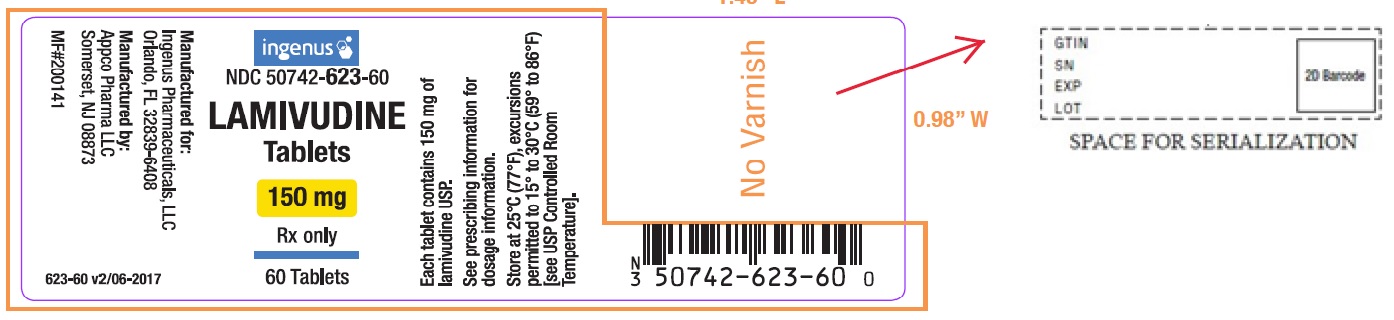
Lamivudine 150 mg Tablet, 60-count — NDC 50742-623-60 (Billing 50742-0623-60)
This is a package of 60 tablets of Lamivudine 150 mg Tablet from Ingenus Pharmaceuticals, LLC, marketed since Feb 2017 and currently FDA-listed. It is this product's only package size.
NDC database record
One package, one record: these facts belong to NDC 50742-623-60 alone.
- Record
- FDA NDC Directory package listing · Human prescription drug
- Code segments
- 50742 labeler · 623 product · 60 package
- Package marketed since
- Feb 1, 2017
- Sample package
- No — commercial package
- Listing certified through
- Dec 31, 2026
- Billing quantity
- 60 EA per package
- Barcode (UPC)
- 0350742623600
- FDA record last changed
- Jul 24, 2026
Identity & classification
Regulatory identifiers FDA, NLM and CMS codes for this package
Drug-database identifiers Medi-Span GPI and First Databank GCN / HICL / AHFS classification
- GSN (GCN sequence number): 024417
- GCN: 26720
- GPI-14 (Medi-Span): 12106060000320
- HICL (First Databank): 010215
- AHFS class code: 08:18.08.20
- RxCUI (RxNorm): 199147
Where does this data come from?
- FDA openFDA NDC Directory · synced Oct 1, 2026
- FDA label on DailyMed · label index refreshed Oct 5, 2026
- RxNorm (NLM RxNav) · catalog refreshed Oct 1, 2026
- Medi-Span GPI (licensed)
- First Databank (licensed) · refreshed Oct 1, 2026
RxNorm drug class
This medicine belongs to the Human Immunodeficiency Virus Nucleoside Analog Reverse Transcriptase Inhibitor class.
Where does this data come from?
- RxClass (NLM) · catalog refreshed Oct 1, 2026
Clinical
Lamivudine is used to treat human immunodeficiency virus (HIV) infection. Lamivudine is in a class of medications called nucleoside reverse transcriptase inhibitors (NRTIs). It works by decreasing the amount of HIV in the blood. Although lamivudine will not cure HIV, it may decrease your chance of developing acquired immunodeficiency syndrome (AIDS) and HIV-related illnesses. Taking these medications and making other lifestyle changes may also decrease the risk of giving the HIV virus to other people.
Read the full MedlinePlus article ↗- Lamivudine treats HIV-1 infection when combined with other HIV medicines. A separate lower-dose tablet treats chronic hepatitis B. Make sure you have the version your doctor prescr...
- For HIV-1 it is taken by mouth once or twice daily, with or without food. Follow your prescriber's schedule exactly. Children's doses depend on weight.
- Common ones are headache, nausea, tiredness, stuffy nose, diarrhea and cough. Call your doctor if you notice signs of liver problems, pancreatitis, or an allergic reaction.
- Please don't stop on your own. If you also have hepatitis B, stopping can cause a serious flare-up, and your liver needs close monitoring afterward. Talk to your doctor first.
Patient education
Supplement & herbal interactions
Some supplements/herbs that may interact with Lamivudine — tap one for details:
Where does this data come from?
- MedlinePlus (NLM) · refreshed Oct 1, 2026
- FDA label on DailyMed · label index refreshed Oct 5, 2026
Ask a licensed pharmacist directly — free, answered by our team.
Pricing
A drug doesn't have one price. Each row is a different public payment system, and none is what you'd pay at the counter — that depends on your insurance. The ⓘ on each row explains what it measures.
| Price system | Per each | Per package |
|---|---|---|
| Retail pharmacies payNADAC · weekly | Not in the retail survey — common for institutional, discontinued, or low-volume packs. | |
| Medicaid paysCMS SDUD · 12 mo | No recent Medicaid claims on file for this NDC — rare and low-volume NDCs are suppressed in the public data. | |
| Medicare drug plans payPart D · Q2 2026 | $1.43 | $85.80 / 60 tablets |
Where does this data come from?
- CMS NADAC weekly file
- CMS ASP pricing files · refreshed Sep 20, 2026
- CMS Medicaid State Drug Utilization Data · refreshed Oct 5, 2026
- CMS Part D plan pricing files · refreshed Sep 24, 2026
- VA National Acquisition Center price file
Packaging — all sizes for this product
| Package NDC | Description | Marketing start | Marketing end | Status |
|---|---|---|---|---|
| 50742-0623-60 You're viewing this Main listing | 60 TABLET in 1 BOTTLE, PLASTIC | 2017-02-01 | — | Active |
Therapeutic equivalents
| Product | Labeler | Pack | NADAC/unit | TE | Status | Price vs. this |
|---|---|---|---|---|---|---|
| Lamivudine 150 mg 00904-6583-04 | Major | 1 tablet | $0.489 | AB | Availability likely | — |
| Lamivudine 150 mg 33342-0001-09 | Macleods | 60 tablets | $0.489 | AB | Availability likely | — |
| Lamivudine 150 mg 60505-3251-06 | Apotex | 60 tablets | $0.489 | AB | Availability likely | — |
| Lamivudine 150 mg 60687-0720-21 | American | 1 tablet | $0.489 | AB | Availability likely | — |
| Lamivudine 150 mg 64380-0710-03 | Strides | 60 tablets | $0.489 | AB | Availability likely | — |
| Lamivudine 150 mg 31722-0753-06 | Camber | 600 tablets | — | AB | FDA listed | — |
| Epivir 150 mg 49702-0203-18 | ViiV | 60 tablets | — | AB | FDA listed | — |
| Lamivudine 150 mgthis 50742-0623-60 | Ingenus | 60 tablets | — | AB | FDA listed | — |
| Lamivudine 150 mg 60429-0353-60 | Golden | 60 tablets | — | AB | FDA listed | — |
| Lamivudine 150 mg 65862-0025-10 | Aurobindo | 10 tablets | — | — | FDA listed | — |
| Lamivudine 150 mg 67046-1459-03 | Coupler | 30 tablets | — | AB | FDA listed | — |
| Lamivudine 150 mg 68180-0602-01 | Lupin | 100 tablets | — | — | FDA listed | — |
Where does this data come from?
- FDA openFDA NDC Directory · synced Oct 1, 2026
- FDA Orange Book · refreshed Oct 3, 2026
- CMS NADAC weekly file
Availability & generic status
This product is an FDA-approved generic. Other versions of the same drug are listed under Therapeutic equivalents, least expensive first.
Where does this data come from?
- FDA Orange Book · refreshed Oct 3, 2026
Inactive Ingredients / Excipients
Inactive ingredients, also called excipients, are components of the drug product other than the active ingredient. They may include fillers, dyes, coatings, preservatives, flavors, or other formulation ingredients.
🧪 Avoiding an ingredient? See Lamivudine inactive ingredients by manufacturer: every current product's list side by side, so you can ask your pharmacy for the version that does not list it.
💡 Tap an ingredient (hover on desktop) to see what it is and why it’s used.
-
UNII OP1R32D61U
Microcrystalline cellulose is a purified form of cellulose, a natural fiber from plant sources. It acts as a binder and filler in tablets and capsules, helping hold ingredients together and give the medicine its shape and size.
-
UNII 3NXW29V3WO
Hypromellose is a plant-based thickener made from cellulose. It's used in medicines as a binder to hold ingredients together, a coating for tablets, and a thickener for liquids.
-
UNII 70097M6I30
Magnesium stearate is a salt made from magnesium and stearic acid, a fatty substance. It's used in tablets and capsules as a lubricant and glidant to help ingredients flow smoothly during manufacturing and prevent sticking.
-
UNII 3WJQ0SDW1A
Polyethylene glycol is a synthetic liquid or solid polymer used in medicines as a solvent, lubricant, and humectant. It helps dissolve active ingredients, reduces friction during manufacturing, and retains moisture in the final product.
-
UNII 6OZP39ZG8H
Polysorbate 80 is a synthetic emulsifier derived from sorbitol and oleic acid. It helps mix oil and water-based ingredients together in medications and improves how the product disperses in the body.
-
UNII 5856J3G2A2
A starch-based powder made from potatoes and processed with sodium. It acts as a disintegrant, helping the tablet or capsule break apart quickly in the stomach so the medicine can be absorbed.
-
UNII 15FIX9V2JP
Titanium dioxide is a bright white mineral powder commonly used as a colorant and opacifying agent. It makes pills and tablets white or lighter in color and helps make coatings non-transparent.
7 inactive ingredients listed in the exact product block matched to this NDC.
Where does this data come from?
ingredient classCode="IACT" elements from the exact product block matched by this NDC. Label-section narrative from DailyMed / the openFDA label index is shown separately when available.- FDA label on DailyMed · label index refreshed Oct 5, 2026
- FDA openFDA NDC Directory · synced Oct 1, 2026
Inactive ingredient FAQ
Are inactive ingredients the same for every manufacturer?
Why might an inactive ingredient be missing?
Can inactive ingredients matter?
Manufacturer & labeler
More NDCs from Ingenus Pharmaceuticals, LLC labeler code 50742
- Metoprolol Succinate 50 mg Tablet, Extended Release NDC 50742-616-01
- Metoprolol Succinate 100 mg Tablet, Extended Release NDC 50742-617-01
- Metoprolol Succinate 200 mg Tablet, Extended Release NDC 50742-618-01
- Nifedipine 30 mg Tablet, Extended Release NDC 50742-620-01
- Nifedipine 60 mg Tablet, Extended Release NDC 50742-621-01
- Nifedipine 90 mg Tablet, Extended Release NDC 50742-622-01
- Lamivudine 300 mg Tablet NDC 50742-624-60
- Metformin 500 mg Tablet, Extended Release NDC 50742-633-10
- Metformin 1000 mg Tablet, Extended Release NDC 50742-634-10
- Quetiapine Fumarate 50 mg Tablet, Extended Release NDC 50742-635-10
- Quetiapine Fumarate 150 mg Tablet, Extended Release NDC 50742-636-10
- Quetiapine Fumarate 200 mg Tablet, Extended Release NDC 50742-637-10
Where does this data come from?
- FDA openFDA NDC Directory · synced Oct 1, 2026
- Drugs@FDA
Full prescribing information FDA SPL
🚨 Boxed Warning ▾
WARNING: LACTIC ACIDOSIS AND SEVERE HEPATOMEGALY, EXACERBATIONS OF HEPATITIS B, and DIFFERENT FORMULATIONS OF LAMIVUDINE. Lactic Acidosis and Severe Hepatomegaly with Steatosis Lactic acidosis and severe hepatomegaly with steatosis, including fatal cases, have been reported with the use of nucleoside analogues and other antiretrovirals.Discontinue LAMIVUDINE if clinical or laboratory findings suggestive of lactic acidosis or pronounced hepatotoxicity occurs [see Warnings and Precautions (5.1) ]. Exacerbations of Hepatitis B Severe acute exacerbations of hepatitis B have been reported in patients who are co-infected with hepatitis B virus (HBV) and human immunodeficiency virus (HIV-1) and have discontinued LAMIVUDINE.
Hepatic function should be monitored closely with both clinical and laboratory follow-up for at least several months in patients who discontinue LAMIVUDINE and are co-infected with HIV-1 and HBV. If appropriate, initiation of anti-hepatitis B therapy may be warranted [see Warnings and Precautions (5.2) ]. Important Differences among Lamivudine-containing Products LAMIVUDINE tablets (used to treat HIV-1 infection) contain a higher dose of the active ingredient (lamivudine) than LAMIVUDINE–HBV tablets (used to treat chronic HBV infection).
Patients with HIV-1 infection should receive only dosage forms appropriate for treatment of HIV-1 [see Warnings and Precautions (5.2) ]. WARNING: LACTIC ACIDOSIS AND SEVERE HEPATOMEGALY, EXACERBATIONS OF HEPATITIS B, and DIFFERENT FORMULATIONS OF LAMIVUDINE See full prescribing information for complete boxed warning Lactic acidosis and severe hepatomegaly with steatosis, including fatal cases, have been reported with the use of nucleoside analogues. (5.1) Severe acute exacerbations of hepatitis B have been reported in patients who are co-infected with hepatitis B virus (HBV) and human immunodeficiency virus (HIV-1) and have discontinued LAMIVUDINE.
Monitor hepatic function closely in these patients and, if appropriate, initiate anti-hepatitis B treatment. (5.2) Patients with HIV-1 infection should receive only dosage forms of LAMIVUDINE appropriate for treatment of HIV-1. (5.2)
🎯 Indications and Usage ▾
1 INDICATIONS AND USAGE LAMIVUDINE is a nucleoside analogue indicated in combination with other antiretroviral agents for the treatment of human immunodeficiency virus type 1 (HIV-1) infection. Limitations of Use: The dosage of this product is for HIV-1 and not for HBV. LAMIVUDINE is a nucleoside analogue reverse transcriptase inhibitor indicated in combination with other antiretroviral agents for the treatment of HIV-1 infection.
Limitation of Use: The dosage of this product is for HIV-1 and not for HBV. (1)
⏱️ Dosage and Administration ▾
2 DOSAGE AND ADMINISTRATION Adults: 300 mg daily, administered as either 150 mg twice daily or 300 mg once daily. (2.1) Pediatric Patients Aged 3 Months and Older: Administered twice daily. Dose should be calculated on body weight (kg) and should not exceed 300 mg daily. (2.2) Patients with Renal Impairment: Doses of LAMIVUDINE must be adjusted in accordance with renal function. (2.3)
2.1Recommended Dosage for Adult Patients The recommended dosage of LAMIVUDINE in HIV-1-infected adults is 300 mg daily, administered as either 150 mg taken orally twice daily or 300 mg taken orally once daily with or without food. If lamivudine is administered to a patient infected with HIV-1 and HBV, the dosage indicated for HIV-1 therapy should be used as part of an appropriate combination regimen [see Warnings and Precautions (5.2) ].
2.2Recommended Dosage for Pediatric Patients The recommended dosage of EPIVIR oral solution in HIV-1-infected pediatric patients aged 3 months and older is 4 mg per kg taken orally twice daily (up to a maximum of 300 mg daily), administered in combination with other antiretroviral agents. Once daily dosing in pediatric patients 3 months of age and older in combination with other antiretroviral agents for the treatment of HIV-1 infection. LAMIVUDINE scored tablet is the preferred formulation for HIV-1-infected pediatric patients who weigh at least 14 kg and for whom a solid dosage form is appropriate.
Before prescribing LAMIVUDINE scored tablets, pediatric patients should be assessed for the ability to swallow tablets. For patients unable to safely and reliably swallow LAMIVUDINE tablets, the oral solution formulation should be prescribed [see Warnings and Precautions (5.6) ] . The recommended oral dosage of LAMIVUDINE tablets for HIV-l-infected pediatric patients is presented in Table 1.
Table 1. Dosing Recommendations for LAMIVUDINE Scored (150-mg) Tablets in Pediatric Patients Weight (kg) Twice-daily Dosing Regimen Using Scored 150-mg Tablet AM Dose PM Dose Total Daily Dose 14 to <20 ½ tablet (75 mg) ½ tablet (75 mg) 150 mg ≥20to <25 ½ tablet (75 mg) 1 tablet (150 mg) 225 mg ≥25 1 tablet (150 mg) 1 tablet (150 mg) 300 mg Additional pediatric use information for patients aged 3 months and above is approved for ViiV Healthcare Company’s EPIVIR® (lamivudine) tablets and oral solution. However, due to ViiV Healthcare Company’s marketing exclusivity rights, this drug product is not labeled with that pediatric information.
2.3Patients with Renal Impairment Dosing of LAMIVUDINE is adjusted in accordance with renal function. Dosage adjustments are listed in Table 2 [see Clinical Pharmacology (12.3) ] . Table 2.
Adjustment of Dosage of LAMIVUDINE in Adults and Adolescents (Greater than or Equal to 25 kg) in Accordance with Creatinine Clearance Creatinine Clearance (mL/min) Recommended Dosage of ≥50 150 mg twice daily or 300 mg once daily 30-49 150 mg once daily 15-29 150 mg first dose, then 100 mg once daily 5-14 150 mg first dose, then 50 mg once daily <5 50 mg first dose, then 25 mg once daily No additional dosing of LAMIVUDINE is required after routine (4-hour) hemodialysis or peritoneal dialysis. Although there are insufficient data to recommend a specific dose adjustment of LAMIVUDINE in pediatric patients with renal impairment, a reduction in the dose and/or an increase in the dosing interval should be considered.
2.1Recommended Dosage for Adult Patients The recommended dosage of LAMIVUDINE in HIV-1-infected adults is 300 mg daily, administered as either 150 mg taken orally twice daily or 300 mg taken orally once daily with or without food. If lamivudine is administered to a patient infected with HIV-1 and HBV, the dosage indicated for HIV-1 therapy should be used as part of an appropriate combination regimen [see Warnings and Precautions (5.2) ].
2.2Recommended Dosage for Pediatric Patients The recommended dosage of EPIVIR oral solution in HIV-1-infected pediatric patients aged 3 months and older is 4 mg p… [Excerpted — this section continues on DailyMed.]
💊 Dosage Forms and Strengths ▾
3 DOSAGE FORMS AND STRENGTHS LAMIVUDINE Scored Tablets 150 mg are white to off-white, film-coated, diamond- shaped tablets, debossed with “MCR” and “313” separated by functional score on one side and plain on other side with functional score. LAMIVUDINE Tablets 300 mg are Grey, film-coated, modified diamond-shaped tablets, debossed with “MCR” and “314” on one side and plain on other side. Tablets: 300 mg (3) Tablets: 150 mg scored (3)
⛔ Contraindications ▾
4 CONTRAINDICATIONS LAMIVUDINE is contraindicated in patients with a previous hypersensitivity reaction to lamivudine. LAMIVUDINE is contraindicated in patients with previous hypersensitivity reaction to lamivudine. (4)
⚠️ Warnings and Cautions ▾
5 WARNINGS AND PRECAUTIONS Co-infected HIV-1/HBV Patients: Emergence of lamivudineresistant HBV variants associated with lamivudine-containing antiretroviral regimens has been reported. (5.2) Hepatic decompensation, some fatal, has occurred in HIV-1/HCV co-infected patients receiving interferon and ribavirin-based regimens. Monitor for treatment-associated toxicities.
Discontinue LAMIVUDINE as medically appropriate and consider dose reduction or discontinuation of interferon alfa, ribavirin, or both. (5.3) Pancreatitis: Use with caution in pediatric patients with a history of pancreatitis or other significant risk factors for pancreatitis. Discontinue treatment as clinically appropriate.
(5.4) Immune reconstitution syndrome and redistribution/accumulation of body fat have been reported in patients treated with combination antiretroviral therapy. (5.5, 5.7) Lower virologic suppression rates and increased risk of viral resistance were observed in pediatric subjects who received LAMIVUDINE oral solution concomitantly with other antiretroviral oral solutions compared with those who received tablets. (5.6)
5.1Lactic Acidosis and Severe Hepatomegaly with Steatosis Lactic acidosis and severe hepatomegaly with steatosis, including fatal cases, have been reported with the use of nucleoside analogues and other antiretrovirals. A majority of these cases have been in women. Obesity and prolonged nucleoside exposure may be risk factors.
Caution should be exercised when administering LAMIVUDINE to any patient with known risk factors for liver disease; however, cases also have been reported in patients with no known risk factors. Treatment with LAMIVUDINE should be suspended in any patient who develops clinical or laboratory findings suggestive of lactic acidosis or pronounced hepatotoxicity (which may include hepatomegaly and steatosis even in the absence of marked transaminase elevations).
5.2Patients with and Hepatitis B Virus Co-infection Posttreatment Exacerbations of Hepatitis Clinical and laboratory evidence of exacerbations of hepatitis have occurred after discontinuation of lamivudine. These exacerbations have been detected primarily by serum ALT elevations in addition to re-emergence of HBV DNA. Although most events appear to have been self-limited, fatalities have been reported in some cases.
Similar events have been reported from postmarketing experience after changes from lamivudine-containing HIV-1 treatment regimens to non-lamivudine-containing regimens in patients infected with both HIV-1 and HBV. The causal relationship to discontinuation of lamivudine treatment is unknown. Patients should be closely monitored with both clinical and laboratory follow-up for at least several months after stopping treatment.
Important Differences among Lamivudine-containing Products LAMIVUDINE tablets contain a higher dose of the same active ingredient (lamivudine) than LAMIVUDINE-HBV tablets. LAMIVUDINE-HBV was developed for patients with chronic hepatitis B. The formulation and dosage of lamivudine in LAMIVUDINE-HBV are not appropriate for patients co-infected with HIV-1 and HBV.
Safety and efficacy of lamivudine have not been established for treatment of chronic hepatitis B in patients co-infected with HIV-1 and HBV. If treatment with LAMIVUDINE-HBV is prescribed for chronic hepatitis B for a patient with unrecognized or untreated HIV-1 infection, rapid emergence of HIV-1 resistance is likely to result because of the subtherapeutic dose and the inappropriateness of monotherapy HIV-1 treatment. If a decision is made to administer lamivudine to patients co-infected with HIV-1 and HBV, LAMIVUDINE tablets, or another product containing the higher dose of lamivudine should be used as part of an appropriate combination regimen.
Emergence of Lamivudine-resistant HBV Safety and efficacy of lamivudine have not been established for treatment of chronic hepatitis B in subjects dually infected with HIV-1 and HBV (see full prescribing information for… [Excerpted — this section continues on DailyMed.]
🤒 Adverse Reactions ▾
6 ADVERSE REACTIONS The following adverse reactions are discussed in other sections of the labeling: Lactic acidosis and severe hepatomegaly with steatosis [see Boxed Warning , Warnings and Precautions (5.1) ]. Exacerbations of hepatitis B [see Boxed Warning, Warnings and Precautions (5.2) ]. Hepatic decompensation in patients co-infected with HIV-1 and hepatitis C [see Warnings and Precautions (5.3) ].
Pancreatitis [see Warnings and Precautions (5.4) ]. Immune reconstitution syndrome [see Warnings and Precautions (5.5) ]. Fat redistribution [see Warnings and Precautions (5.7) ].
The most common reported adverse reactions (incidence greater than equal to 15%) in adults were headache, nausea, malaise and fatigue, nasal signs and symptoms, diarrhea, and cough. (6.1) The most common reported adverse reactions (incidence greater than equal to 15%) in pediatric patients subjects were fever and cough. (6.1) To report SUSPECTED ADVERSE REACTIONS, contact Ingenus Pharmaceuticals, LLC at 1-877-748-1970 or FDA at 1-800-FDA-1088 or www.fda.gov/medwatch.
6.1Clinical Trials Experience Clinical Trials Experience in Adult SubjectsBecause clinical trials are conducted under widely varying conditions, adverse reaction rates observed in the clinical trials of a drug cannot be directly compared with rates in the clinical trials of another drug and may not reflect the rates observed in clinical practice.The safety profile of LAMIVUDINE in adults is primarily based on 3,568 HIV-1-infected subjects in 7 clinical trials.The most common adverse reactions are headache, nausea, malaise, fatigue, nasal signs and symptoms, diarrhea, and cough.Selected clinical adverse reactions in greater than or equal to 5% of subjects during therapy with LAMIVUDINE 150 mg twice daily plus RETROVIR® 200 mg 3 times daily for up to 24 weeks are listed in Table 3.
Table 3. Selected Clinical Adverse Reactions (Greater than or Equal to 5% Frequency) in Four Controlled Clinical Trials (NUCA3001, NUCA3002, NUCB3001, NUCB3002)Adverse ReactionLAMIVUDINE 150 mgTwice Dailyplus RETROVIR(n = 251)RETROVIRaEither zidovudine monotherapy or zidovudine in combination with zalcitabine.(n = 230)Body as a WholeHeadache35%27%Malaise & fatigue27%23%Fever or chills10%12%DigestiveNausea33%29%Diarrhea18%22%Nausea & vomiting13%12%Anorexia and/or decreased appetite10%7%Abdominal pain9%11%Abdominal cramps6%3%Dyspepsia5%5%Nervous SystemNeuropathy12%10%Insomnia & other sleep disorders11%7%Dizziness10%4%Depressive disorders9%4%RespiratoryNasal signs & symptoms20%11%Cough18%13%SkinSkin rashes9%6%MusculoskeletalMusculoskeletal pain12%10%Myalgia8%6%Arthralgia5%5%Pancreatitis: Pancreatitis was observed in 9 out of 2,613 adult subjects (0.3%) who received LAMIVUDINE in controlled clinical trials EPV20001, NUCA3001, NUCB3001, NUCA3002, NUCB3002, and NUCB3007 [see Warnings and Precautions (5.4)].LAMIVUDINE 300 mg Once Daily: The types and frequencies of clinical adverse reactions reported in subjects receiving LAMIVUDINE 300 mg once daily or LAMIVUDINE 150 mg twice daily (in 3-drug combination regimens in EPV20001 and EPV40001) for 48 weeks were similar.
Selected laboratory abnormalities observed during therapy are summarized in Table 4.Table 4. Frequencies of Selected Grade 3-4 Laboratory Abnormalities in Adults in Four 24-Week Surrogate Endpoint Trials (NUCA3001, NUCA3002, NUCB3001, NUCB3002) and a Clinical Endpoint Trial (NUCB3007)ULN = Upper limit of normal.ND = Not done.Test (Threshold Level)24-Week Surrogate EndpointClinical Endpoint TrialThe median duration on study was 12 months.LAMIVUDINE plus RETROVIREither zidovudine monotherapy or zidovudine in combination with zalcitabine.LAMIVUDINE plus Current TherapyCurrent therapy was either zidovudine, zidovudine plus didanosine, or zidovudine plus zalcitabine.Placebo plus Current TherapyAbsolute neutrophil count(<750/mm3)7.2%5.415%13%Hemoglobin (<8.0 g/dL)2.9%1.82.2%3.4%Platelets (<50,000/mm3)0.4%1.32.8%3.8%ALT (>5.0 x ULN)3.7%3.63.8%1.9%AST (>5.0 x ULN)1… [Excerpted — this section continues on DailyMed.]
🔄 Drug Interactions ▾
7 DRUG INTERACTIONS Lamivudine is predominantly eliminated in the urine by active organic cationic secretion. The possibility of interactions with other drugs administered concurrently should be considered, particularly when their main route of elimination is active renal secretion via the organic cationic transport system (e.g., trimethoprim) [see Pharmacokinetics (12.3) ]. No data are available regarding interactions with other drugs that have renal clearance mechanisms similar to that of lamivudine.
👥 Use in Specific Populations ▾
8 USE IN SPECIFIC POPULATIONS Lactation: Breastfeeding not recommended. (8.2) Additional pediatric use information for patients aged 3 months and above is approved for ViiV Healthcare Company’s EPIVIR ® (lamivudine) tablets and oral solution. However, due to ViiV Healthcare Company’s marketing exclusivity rights, this drug product is not labeled with that pediatric information.
8.1Pregnancy Pregnancy Exposure Registry There is a pregnancy exposure registry that monitors pregnancy outcomes in women exposed to LAMIVUDINE during pregnancy. Physicians are encouraged to register patients by calling the Antiretroviral Pregnancy Registry at 1-800-258-4263. Risk Summary Available data from the Antiretroviral Pregnancy Registry show no difference in the risk of overall major birth defects for lamivudine compared with the background rate for major birth defects of 2.7% in the US reference population of the Metropolitan Atlanta Congenital Defects Program (MACDP).
Lamivudine produced embryonic toxicity in rabbits at a dose that produced similar human exposures as the recommended clinical dose. The relevance of animal findings to human pregnancy registry data is not known. Data Human Data: Based on prospective reports from the Antiretroviral Pregnancy Registry of over 11,000 exposures to lamivudine during pregnancy resulting in live births (including over 4,300 exposed in the first trimester), there was no difference between lamivudine and overall birth defects compared with the background birth defect rate of 2.7% in the US reference population of the MACDP.
The prevalence of defects in the first trimester was 3.1% (95% CI: 2.6% to 3.7%). Lamivudine pharmacokinetics were studied in pregnant women during 2 clinical trials conducted in South Africa. The trials assessed pharmacokinetics in 16 women at 36 weeks gestation using 150 mg lamivudine twice daily with zidovudine, 10 women at 38 weeks gestation using 150 mg lamivudine twice daily with zidovudine, and 10 women at 38 weeks gestation using lamivudine 300 mg twice daily without other antiretrovirals.
These trials were not designed or powered to provide efficacy information. Lamivudine pharmacokinetics in pregnant women were similar to those seen in non-pregnant adults and in postpartum women. Lamivudine concentrations were generally similar in maternal, neonatal, and umbilical cord serum samples.
In a subset of subjects, amniotic fluid specimens were collected following natural rupture of membranes and confirmed that lamivudine crosses the placenta in humans. Amniotic fluid concentrations of lamivudine were typically 2 times greater than maternal serum levels and ranged from 1.2 to 2.5 mcg per mL (150 mg twice daily) and 2.1 to 5.2 mcg per mL (300 mg twice daily). Animal Data: Studies in pregnant rats showed that lamivudine is transferred to the fetus through the placenta.
Reproduction studies with orally administered lamivudine have been performed in rats and rabbits at doses producing plasma levels up to approximately 35 times that for the recommended adult HIV dose. No evidence of teratogenicity due to lamivudine was observed. Evidence of early embryolethality was seen in the rabbit at exposure levels similar to those observed in humans but there was no indication of this effect in the rat at exposure levels up to 35 times those in humans.
8.2Lactation Risk Summary The Centers for Disease Control and Prevention recommend that HIV-1-infected mothers in the United States not breastfeed their infants to avoid risking postnatal transmission of HIV-1 infection. Because of the potential for HIV-1 transmission mothers should be instructed not to breastfeed.
8.4Pediatric Use The safety and effectiveness of LAMIVUDINE in combination with other antiretroviral agents have been established in pediatric patients aged 3 months and older. LAMIVUDINE scored tablet is the preferred formulation for HIV-1-infected pediatric patients who weigh at least 14 kg and for whom a solid dosage form is appropr… [Excerpted — this section continues on DailyMed.]
🤰 Pregnancy ▾
8.1Pregnancy Pregnancy Exposure Registry There is a pregnancy exposure registry that monitors pregnancy outcomes in women exposed to LAMIVUDINE during pregnancy. Physicians are encouraged to register patients by calling the Antiretroviral Pregnancy Registry at 1-800-258-4263. Risk Summary Available data from the Antiretroviral Pregnancy Registry show no difference in the risk of overall major birth defects for lamivudine compared with the background rate for major birth defects of 2.7% in the US reference population of the Metropolitan Atlanta Congenital Defects Program (MACDP).
Lamivudine produced embryonic toxicity in rabbits at a dose that produced similar human exposures as the recommended clinical dose. The relevance of animal findings to human pregnancy registry data is not known. Data Human Data: Based on prospective reports from the Antiretroviral Pregnancy Registry of over 11,000 exposures to lamivudine during pregnancy resulting in live births (including over 4,300 exposed in the first trimester), there was no difference between lamivudine and overall birth defects compared with the background birth defect rate of 2.7% in the US reference population of the MACDP.
The prevalence of defects in the first trimester was 3.1% (95% CI: 2.6% to 3.7%). Lamivudine pharmacokinetics were studied in pregnant women during 2 clinical trials conducted in South Africa. The trials assessed pharmacokinetics in 16 women at 36 weeks gestation using 150 mg lamivudine twice daily with zidovudine, 10 women at 38 weeks gestation using 150 mg lamivudine twice daily with zidovudine, and 10 women at 38 weeks gestation using lamivudine 300 mg twice daily without other antiretrovirals.
These trials were not designed or powered to provide efficacy information. Lamivudine pharmacokinetics in pregnant women were similar to those seen in non-pregnant adults and in postpartum women. Lamivudine concentrations were generally similar in maternal, neonatal, and umbilical cord serum samples.
In a subset of subjects, amniotic fluid specimens were collected following natural rupture of membranes and confirmed that lamivudine crosses the placenta in humans. Amniotic fluid concentrations of lamivudine were typically 2 times greater than maternal serum levels and ranged from 1.2 to 2.5 mcg per mL (150 mg twice daily) and 2.1 to 5.2 mcg per mL (300 mg twice daily). Animal Data: Studies in pregnant rats showed that lamivudine is transferred to the fetus through the placenta.
Reproduction studies with orally administered lamivudine have been performed in rats and rabbits at doses producing plasma levels up to approximately 35 times that for the recommended adult HIV dose. No evidence of teratogenicity due to lamivudine was observed. Evidence of early embryolethality was seen in the rabbit at exposure levels similar to those observed in humans but there was no indication of this effect in the rat at exposure levels up to 35 times those in humans.
8.2Lactation Risk Summary The Centers for Disease Control and Prevention recommend that HIV-1-infected mothers in the United States not breastfeed their infants to avoid risking postnatal transmission of HIV-1 infection. Because of the potential for HIV-1 transmission mothers should be instructed not to breastfeed.
🧒 Pediatric Use ▾
8.4Pediatric Use The safety and effectiveness of LAMIVUDINE in combination with other antiretroviral agents have been established in pediatric patients aged 3 months and older. LAMIVUDINE scored tablet is the preferred formulation for HIV-1-infected pediatric patients who weigh at least 14 kg and for whom a solid dosage form is appropriate because pediatric subjects who received LAMIVUDINE oral solution had lower rates of virologic suppression, lower plasma lamivudine exposure, and developed viral resistance more frequently than those receiving LAMIVUDINE tablets in the ARROW trial [see Dosage and Administration (2.2) , Warnings and Precautions (5.6) , Adverse Reactions (6.1) , Clinical Pharmacology (12.3) , Clinical Studies (14.2) ].
🧓 Geriatric Use ▾
8.5Geriatric Use Clinical trials of LAMIVUDINE did not include sufficient numbers of subjects aged 65 and over to determine whether they respond differently from younger subjects.In general, caution should be exercised in the administration of LAMIVUDINE in elderly patients reflecting the greater frequency of decreased hepatic, renal, or cardiac function, and of concomitant disease orother drug therapy [see Dosage and Administration (2.3) , Clinical Pharmacology (12.3) ].
🆘 Overdosage ▾
10 OVERDOSAGE There is no known specific treatment for overdose with LAMIVUDINE. If overdose occurs, the patient should be monitored and standard supportive treatment applied as required. Because a negligible amount of lamivudine was removed via (4-hour) hemodialysis, continuous ambulatory peritoneal dialysis, and automated peritoneal dialysis, it is not known if continuous hemodialysis would provide clinical benefit in a lamivudine overdose event.
🧬 Clinical Pharmacology ▾
12 CLINICAL PHARMACOLOGY
12.1Mechanism of Action Lamivudine is an antiviral agent [see Microbiology (12.4) ].
12.3Pharmacokinetics Pharmacokinetics in Adults The pharmacokinetic properties of lamivudine have been studied in asymptomatic, HIV-1-infected adult subjects after administration of single intravenous (IV) doses ranging from 0.25 to 8 mg per kg, as well as single and multiple (twice-daily regimen) oral doses ranging from 0.25 to 10 mg per kg. The pharmacokinetic properties of lamivudine have also been studied as single and multiple oral doses ranging from 5 mg to 600 mg per day administered to HBV-infected subjects.
The steady-state pharmacokinetic properties of the LAMIVUDINE 300-mg tablet once daily for 7 days compared with the LAMIVUDINE 150-mg tablet twice daily for 7 days were assessed in a crossover trial in 60 healthy subjects. LAMIVUDINE 300 mg once daily resulted in lamivudine exposures that were similar to LAMIVUDINE 150 mg twice daily with respect to plasma AUC 24,ss ; however, C max,ss was 66% higher and the trough value was 53% lower compared with the 150-mg twice-daily regimen. Intracellular lamivudine triphosphate exposures in peripheral blood mononuclear cells were also similar with respect to AUC 24,ss and C max24,ss ; however, trough values were lower compared with the 150-mg twice-daily regimen.
Inter-subject variability was greater for intracellular lamivudine triphosphate concentrations versus lamivudine plasma trough concentrations. The pharmacokinetics of lamivudine was evaluated in 12 adult HIV-1-infected subjects dosed with lamivudine 150 mg twice daily in combination with other antiretroviral agents. The geometric mean (95% CI) for AUC (0-12) was 5.53 (4.58, 6.67) mcg.h per mL and for C max was 1.40 (1.17, 1.69) mcg per mL.
Absorption and Bioavailability: Following oral administration, lamivudine is rapidly absorbed and extensively distributed.Absolute bioavailability in 12 adult subjects was 86% ± 16% (mean ± SD) for the 150-mg tablet. After oral administration of 2 mg per kg twice a day to 9 adults with HIV-1, the peak serum lamivudine concentration (C max ) was 1.5 ± 0.5 mcg per mL (mean ± SD). The area under the plasma concentration versus time curve (AUC) and C max increased in proportion to oral dose over the range from 0.25 to 10 mg per kg.
The accumulation ratio of lamivudine in HIV-1-positive asymptomatic adults with normal renal function was 1.50 following 15 days of oral administration of 2 mg per kg twice daily. Effects of Food on Oral Absorption: LAMIVUDINE tablets may be administered with or without food. An investigational 25-mg dosage form of lamivudine was administered orally to 12 asymptomatic, HIV-1-infected subjects on 2 occasions, once in the fasted state and once with food (1,099 kcal; 75 grams fat, 34 grams protein, 72 grams carbohydrate).
Absorption of lamivudine was slower in the fed state (T max : 3.2 ± 1.3 hours) compared with the fasted state (T max : 0.9 ± 0.3 hours); C max in the fed state was 40% ± 23% (mean ± SD) lower than in the fasted state. There was no significant difference in systemic exposure (AUC∞) in the fed and fasted states. Distribution: The apparent volume of distribution after IV administration of lamivudine to 20 subjects was 1.3 ±
0.4L per kg, suggesting that lamivudine distributes into extravascular spaces. Volume of distribution was independent of dose and did not correlate with body weight. Binding of lamivudine to human plasma proteins is low (less than 36%).
In vitro studies showed that over the concentration range of 0.1 to 100 mcg per mL, the amount of lamivudine associated with erythrocytes ranged from 53% to 57% and was independent of concentration. Metabolism: Metabolism of lamivudine is a minor route of elimination. In humans, the only known metabolite of lamivudine is the trans-sulfoxide metabolite(approximately 5% of an oraldose after 12 hours).
Serum concentrations of this metabolite have not been determined.Lamivudine is not si… [Excerpted — this section continues on DailyMed.]
🧬 Mechanism of Action ▾
12.1Mechanism of Action Lamivudine is an antiviral agent [see Microbiology (12.4) ].
📦 How Supplied / Storage and Handling ▾
16 HOW SUPPLIED/STORAGE AND HANDLING LAMIVUDINE Scored Tablets, 150 mg White to off-white, film-coated tablets debossed with “MCR” and “313” separated by functional score on one side and plain on other side with functional score. Bottle of 60 tablets (NDC 50742-623-60) with child-resistant closure. LAMIVUDINE Tablets, 300 mg Gray, modified diamond-shaped, film-coated tablets engraved with “MCR" and "314” on one side and plain on the reverse side.
Bottle of 30 tablets (NDC 50742-624-30) with child-resistant closure. Recommended Storage: Store LAMIVUDINE Tablets at 25°C (77°F); excursions permitted to 15° to 30°C (59° to 86°F) [see USP Controlled Room Temperature].
📋 Description ▾
11 DESCRIPTION LAMIVUDINE (also known as 3TC) is a brand name for lamivudine, a synthetic nucleoside analogue with activity against HIV-1 and HBV. The chemical name of lamivudine is (2R,cis)-4-amino-1- (2-hydroxymethyl-1,3-oxathiolan-5-yl)-(1H)-pyrimidin-2-one. Lamivudine is the (-) enantiomer of a dideoxy analogue of cytidine.
Lamivudine has also been referred to as (-) 2 ′ ,3 ′ dideoxy, 3 ′ - thiacytidine. It has a molecular formula of C 8 H 11 N 3 O 3 S and a molecular weight of 229.3 g per mol. It has the following structural formula: Lamivudine is a white to off-white crystalline solid with a solubility of approximately 70 mg per mL in water at 20 ° C.
LAMIVUDINE tablets are for oral administration. Each scored 150-mg film-coated tablet contains 150 mg of lamivudine and the inactive ingredients hypromellose, magnesium stearate, microcrystalline cellulose, polyethylene glycol, polysorbate 80, sodium starch glycolate, and titanium dioxide. Each 300-mg film-coated tablet contains 300 mg of lamivudine and the inactive ingredients black iron oxide, hypromellose, magnesium stearate, microcrystalline cellulose, polyethylene glycol, polysorbate 80, sodium starch glycolate, and titanium dioxide Chemical Structure
💬 Information for Patients ▾
17 PATIENT COUNSELING INFORMATION Advise the patient to read the FDA-approved patient labeling (Patient Information). Lactic Acidosis/Hepatomegaly Inform patients that some HIV medicines, including LAMIVUDINE, can cause a rare, but serious condition called lactic acidosis with liver enlargement (hepatomegaly) [see Warnings and Precautions (5.1) ]. Patients with Hepatitis B or C Co-infection Inform patients co-infected with HIV-1 and HBV should be informed that deterioration of liver disease has occurred in some cases when treatment with lamivudine was discontinued.
Advise patients to discuss any changes in regimen with their physician [see Warnings and Precautions (5.2) ]. Inform patients with HIV-1/HCV co-infection that hepatic decompensation (some fatal) has occurred in HIV-1/HCV co-infected patients receiving combination antiretroviral therapy for HIV-1 and interferon alfa with or without ribavirin [see Warnings and Precautions (5.3) ]. Differences in Formulations of LAMIVUDINE Advise patients that LAMIVUDINE Tablets and contain a higher dose of the same active ingredient (lamivudine) as LAMIVUDINE-HBV Tablets.
If a decision is made to include lamivudine Tablets in the HIV-1 treatment regimen of a patient co-infected with HIV-1 and HBV, the formulation and dosage of lamivudine in LAMIVUDINE (not LAMIVUDINE-HBV) should be used [see Warnings and Precautions (5.2) ]. Risk of Pancreatitis Advise parents or guardians to monitor pediatric patients for signs and symptoms of pancreatitis [see Warnings and Precautions (5.4) ]. Immune Reconstitution Syndrome In some patients with advanced HIV infection, signs and symptoms of inflammation from previous infections may occur soon after anti-HIV treatment is started.
It is believed that these symptoms are due to an improvement in the body's immune response, enabling the body to fight infections that may have been present with no obvious symptoms. Advise patients to inform their healthcare provider immediately of any symptoms of infection [see Warnings and Precautions (5.5) ]. Redistribution/Accumulation of Body Fat Inform patients that redistribution or accumulation of body fat may occur in patients receiving antiretroviral therapy, including LAMIVUDINE, and that the cause and long-term health effects of these conditions are not known at this time [see Warnings and Precautions (5.7) ].
Pregnancy Registry Advise patients that there is a pregnancy exposure registry that monitors pregnancy outcomes in women exposed to LAMIVUDINE during pregnancy [see Use in Specific Populations (8.1) ]. Lactation Instruct women with HIV-1 infection not to breastfeed because HIV-1 can be passed to the baby in the breast milk [see Use in Specific Populations (8.2) ]. Missed Dosage Instruct patients that if they miss a dose of LAMIVUDINE, to take it as soon as they remember.
Advise patients not to double their next dose or take more than the prescribed dose [see Dosage and Administration (2) ]. Manufactured For: Ingenus Pharmaceuticals, LLC Orlando, FL 32839-6408 Customer toll free number: 1-877-748-1970 Manufactured By Appco Pharma LLC Somerset, New Jersey-08873 Revised: 06/2017 MF#200143
🧬 Pharmacokinetics ▾
12.3Pharmacokinetics Pharmacokinetics in Adults The pharmacokinetic properties of lamivudine have been studied in asymptomatic, HIV-1-infected adult subjects after administration of single intravenous (IV) doses ranging from 0.25 to 8 mg per kg, as well as single and multiple (twice-daily regimen) oral doses ranging from 0.25 to 10 mg per kg. The pharmacokinetic properties of lamivudine have also been studied as single and multiple oral doses ranging from 5 mg to 600 mg per day administered to HBV-infected subjects.
The steady-state pharmacokinetic properties of the LAMIVUDINE 300-mg tablet once daily for 7 days compared with the LAMIVUDINE 150-mg tablet twice daily for 7 days were assessed in a crossover trial in 60 healthy subjects. LAMIVUDINE 300 mg once daily resulted in lamivudine exposures that were similar to LAMIVUDINE 150 mg twice daily with respect to plasma AUC 24,ss ; however, C max,ss was 66% higher and the trough value was 53% lower compared with the 150-mg twice-daily regimen. Intracellular lamivudine triphosphate exposures in peripheral blood mononuclear cells were also similar with respect to AUC 24,ss and C max24,ss ; however, trough values were lower compared with the 150-mg twice-daily regimen.
Inter-subject variability was greater for intracellular lamivudine triphosphate concentrations versus lamivudine plasma trough concentrations. The pharmacokinetics of lamivudine was evaluated in 12 adult HIV-1-infected subjects dosed with lamivudine 150 mg twice daily in combination with other antiretroviral agents. The geometric mean (95% CI) for AUC (0-12) was 5.53 (4.58, 6.67) mcg.h per mL and for C max was 1.40 (1.17, 1.69) mcg per mL.
Absorption and Bioavailability: Following oral administration, lamivudine is rapidly absorbed and extensively distributed.Absolute bioavailability in 12 adult subjects was 86% ± 16% (mean ± SD) for the 150-mg tablet. After oral administration of 2 mg per kg twice a day to 9 adults with HIV-1, the peak serum lamivudine concentration (C max ) was 1.5 ± 0.5 mcg per mL (mean ± SD). The area under the plasma concentration versus time curve (AUC) and C max increased in proportion to oral dose over the range from 0.25 to 10 mg per kg.
The accumulation ratio of lamivudine in HIV-1-positive asymptomatic adults with normal renal function was 1.50 following 15 days of oral administration of 2 mg per kg twice daily. Effects of Food on Oral Absorption: LAMIVUDINE tablets may be administered with or without food. An investigational 25-mg dosage form of lamivudine was administered orally to 12 asymptomatic, HIV-1-infected subjects on 2 occasions, once in the fasted state and once with food (1,099 kcal; 75 grams fat, 34 grams protein, 72 grams carbohydrate).
Absorption of lamivudine was slower in the fed state (T max : 3.2 ± 1.3 hours) compared with the fasted state (T max : 0.9 ± 0.3 hours); C max in the fed state was 40% ± 23% (mean ± SD) lower than in the fasted state. There was no significant difference in systemic exposure (AUC∞) in the fed and fasted states. Distribution: The apparent volume of distribution after IV administration of lamivudine to 20 subjects was 1.3 ±
0.4L per kg, suggesting that lamivudine distributes into extravascular spaces. Volume of distribution was independent of dose and did not correlate with body weight. Binding of lamivudine to human plasma proteins is low (less than 36%).
In vitro studies showed that over the concentration range of 0.1 to 100 mcg per mL, the amount of lamivudine associated with erythrocytes ranged from 53% to 57% and was independent of concentration. Metabolism: Metabolism of lamivudine is a minor route of elimination. In humans, the only known metabolite of lamivudine is the trans-sulfoxide metabolite(approximately 5% of an oraldose after 12 hours).
Serum concentrations of this metabolite have not been determined.Lamivudine is not significantly metabolized by cytochrome P450 enzymes. Elimination: The majority of lamivudine is eliminated uncha… [Excerpted — this section continues on DailyMed.]
🔬 Clinical Studies ▾
14 CLINICAL STUDIES The use of LAMIVUDINE is based on the results of clinical trials in HIV-1-infected subjects in combination regimens with other antiretroviral agents. Information from trials with clinical endpoints or a combination of CD4+ cell counts and HIV-1 RNA measurements is included below as documentation of the contribution of lamivudine to a combination regimen in controlled trials.
14.1Adult Subjects Clinical Endpoint Trial: NUCB3007 (CAESAR) was a multi-center, double-blind, placebo-controlled trial comparing continued current therapy (zidovudine alone [62% of subjects] or zidovudine with didanosine or zalcitabine [38% of subjects]) to the addition of LAMIVUDINE or LAMIVUDINE plus an investigational non-nucleoside reverse transcriptase inhibitor (NNRTI), randomized 1:2:1. A total of 1,816 HIV-1-infected adults with 25 to 250 CD4+ cells per mm3 (median = 122 cells per mm3) at baseline were enrolled: median age was 36 years, 87% were male, 84% were nucleoside-experienced, and 16% were therapy-naive.
The median duration on trial was 12 months. Results are summarized in Table 9. Table 9.
Number of Subjects (%) with at Least One HIV-1 Disease Progression Event or Death Endpoint Current Therapy (n = 460) LAMIVUDINE plus Current Therapy (n = 896) LAMIVUDINE plus an NNRTI An investigational non-nucleoside reverse transcriptase inhibitor not approved in the United States.Achieved confirmed plasma HIV-1 RNA less than 400 copies/mL and maintained through 48 weeks.Achieved suppression but rebounded by Week 48, discontinued due to virologic failure, insufficient viral response according to the investigator, or never suppressed through Week 48.Includes consent withdrawn, lost to follow-up, protocol violation, data outside the trial-defined schedule, and randomized but never initiated treatment.Roche AMPLICOR HIV-1 MONITOR.Responders at each visit are subjects who had achieved and maintained HIV-1 RNA less than 400 copies per mL without discontinuation by that visit. plus Current Therapy (n = 460) HIV-1 progression or death 90 (19.6%) 86 (9.6%) 41 (8.9%) Death 27 (5.9%) 23 (2.6%) 14 (3.0%) Surrogate Endpoint Trials Dual Nucleoside Analogue Trials: Principal clinical trials in the initial development of lamivudine compared lamivudine/zidovudine combinations with zidovudine monotherapy or with zidovudine plus zalcitabine.
These trials demonstrated the antiviral effect of lamivudine in a 2-drug combination. More recent uses of lamivudine in treatment of HIV-1 infection incorporate it into multiple-drug regimens containing at least 3 antiretroviral drugs for enhanced viral suppression. Dose Regimen Comparison Surrogate Endpoint Trials in Therapy-naive Adults: EPV20001 was a multi-center, double-blind, controlled trial in which subjects were randomized 1:1 to receive LAMIVUDINE 300 mg once daily or LAMIVUDINE 150 mg twice daily, in combination with zidovudine 300 mg twice daily and efavirenz 600 mg once daily.
A total of 554 antiretroviral treatment-naive HIV-1-infected adults enrolled: male (79%), white (50%), median age of 35 years, baseline CD4+ cell counts of 69 to 1,089 cells per mm 3 (median = 362 cells per mm 3 ), and median baseline plasma HIV-1 RNA of 4.66 log 10 copies per mL. Outcomes of treatment through 48 weeks are summarized in Figure 1 and Table 10. Figure 1.
Virologic Response through Week 48, EPV20001 An investigational non-nucleoside reverse transcriptase inhibitor not approved in the United States.Achieved confirmed plasma HIV-1 RNA less than 400 copies/mL and maintained through 48 weeks.Achieved suppression but rebounded by Week 48, discontinued due to virologic failure, insufficient viral response according to the investigator, or never suppressed through Week 48.Includes consent withdrawn, lost to follow-up, protocol violation, data outside the trial-defined schedule, and randomized but never initiated treatment.Roche AMPLICOR HIV-1 MONITOR.Responders at each visit are subjects who had achieved and maintained… [Excerpted — this section continues on DailyMed.]
🧪 Nonclinical Toxicology ▾
13 NONCLINICAL TOXICOLOGY
13.1Carcinogenesis, Mutagenesis, Impairment of Fertility Carcinogenesis Long-term carcinogenicity studies with lamivudine in mice and rats showed no evidence of carcinogenic potential at exposures up to 10 times (mice) and 58 times (rats) the human exposures at the recommended dose of 300 mg. Mutagenesis Lamivudine was mutagenic in an L5178Y mouse lymphoma assay and clastogenic in a cytogenetic assay using cultured human lymphocytes. Lamivudine was not mutagenic in a microbial mutagenicity assay, in an in vitro cell transformation assay, in a rat micronucleus test, in a rat bone marrow cytogenetic assay, and in an assay for unscheduled DNA synthesis in rat liver.
Lamivudine showed no evidence of in vivo genotoxic activity in the rat at oral doses of up to 2,000 mg per kg, producing plasma levels of 35 to 45 times those in humans at the recommended dose for HIV-1 infection. Impairment of Fertility In a study of reproductive performance, lamivudine administered to rats at doses up to 4,000 mg per kg per day, producing plasma levels 47 to 70 times those in humans, revealed no evidence of impaired fertility and no effect on the survival, growth, and development to weaning of the offspring.
📄 Carcinogenesis, Mutagenesis, Impairment of Fertility ▾
13.1Carcinogenesis, Mutagenesis, Impairment of Fertility Carcinogenesis Long-term carcinogenicity studies with lamivudine in mice and rats showed no evidence of carcinogenic potential at exposures up to 10 times (mice) and 58 times (rats) the human exposures at the recommended dose of 300 mg. Mutagenesis Lamivudine was mutagenic in an L5178Y mouse lymphoma assay and clastogenic in a cytogenetic assay using cultured human lymphocytes. Lamivudine was not mutagenic in a microbial mutagenicity assay, in an in vitro cell transformation assay, in a rat micronucleus test, in a rat bone marrow cytogenetic assay, and in an assay for unscheduled DNA synthesis in rat liver.
Lamivudine showed no evidence of in vivo genotoxic activity in the rat at oral doses of up to 2,000 mg per kg, producing plasma levels of 35 to 45 times those in humans at the recommended dose for HIV-1 infection. Impairment of Fertility In a study of reproductive performance, lamivudine administered to rats at doses up to 4,000 mg per kg per day, producing plasma levels 47 to 70 times those in humans, revealed no evidence of impaired fertility and no effect on the survival, growth, and development to weaning of the offspring.
📄 Patient Package Insert ▾
PATIENT INFORMATION LAMIVUDINE tablets What is the most important information I should know about LAMIVUDINE? LAMIVUDINE can cause serious side effects, including: Build-up of an acid in your blood (lactic acidosis). Lactic acidosis can happen in some people who take LAMIVUDINE.
Lactic acidosis is a serious medical emergency that can cause death. Call your healthcare provider right away if you get any of the following symptoms that could be signs of lactic acidosis: feel very weak or tired feel cold, especially in your arms and legs unusual (not normal) muscle pain feel dizzy or light-headed trouble breathing have a fast or irregular heartbeat stomach pain with nausea and vomiting Severe liver problems can happen in people who take LAMIVUDINE. In some cases these serious liver problems can lead to death.
Your liver may become large (hepatomegaly) and you may develop fat in your liver (steatosis). Call your healthcare provider right away if you get any of the following signs or symptoms of liver problems: your skin or the white part of your eyes turns yellow (jaundice) loss of appetite for several days or longer dark or “tea-colored” urine nausea light-colored stools (bowel movements) pain, aching, or tenderness on the right side of your stomach area You may be more likely to get lactic acidosis or severe liver problems if you are female, very overweight (obese), or have been taking nucleoside analog medicines for a long time or have risks for liver problems.
Worsening of hepatitis B infection. If you have HIV-1 (Human Immunodeficiency Virus type 1) and hepatitis B virus (HBV) infection, your HBV may get worse (flare up) if you stop taking LAMIVUDINE. A “flare-up” is when your HBV infection suddenly returns in a worse way than before.
Worsening liver disease can be serious and may lead to death. Do not run out of LAMIVUDINE. Refill your prescription or talk to your healthcare provider before your LAMIVUDINE is all gone.
Do not stop LAMIVUDINE without first talking to your healthcare provider. If you stop taking LAMIVUDINE, your healthcare provider will need to check your health often and do blood tests regularly for several months to check your liver. Resistant Hepatitis B Virus (HBV).
If you have HIV-1 and hepatitis B, the hepatitis B virus can change (mutate) during your treatment with LAMIVUDINE and become harder to treat (resistant). Use with interferon and ribavirin-based regimens. Worsening of liver disease that has caused death has happened in people infected with both HIV-1 and hepatitis C virus who are taking antiretroviral medicines and are also being treated for hepatitis C with interferon with or without ribavirin.
If you are taking LAMIVUDINE and interferon with or without ribavirin, tell your healthcare provider if you have any new symptoms. What is LAMIVUDINE? LAMIVUDINE is a prescription HIV-1 medicine used with other antiretroviral medicines to treat HIV-1 infections in adults and children aged 3 months and older.
HIV-1 is the virus that causes Acquired Immune Deficiency Syndrome (AIDS). LAMIVUDINE tablets (used to treat HIV-1 infection) contain a higher dose of the same active ingredient (lamivudine) than is in the medicine LAMIVUDINE-HBV tablets (used to treat HBV). If you have both HIV-1 and HBV, you should not use LAMIVUDINE-HBV to treat your infections.
The safety and effectiveness of LAMIVUDINE have not been established in children under 3 months of age. Who should not take LAMIVUDINE? Do not take LAMIVUDINE if you are allergic to lamivudine or any of the ingredients in LAMIVUDINE.
See the end of this Patient Information leaflet for a complete list of ingredients in LAMIVUDINE. What should I tell my healthcare provider before taking LAMIVUDINE? Before you take LAMIVUDINE, tell your healthcare provider if you: have or have had liver problems, including hepatitis B or C virus infection. have kidney problems. have diabetes.
Each 15-mL dose (150 mg) of LAMIVUDINE oral solution contains 3 grams of sucrose. ar… [Excerpted — this section continues on DailyMed.]
📄 Recent Major Changes ▾
Dosage and Administration (2.2) 07/2016 Warnings and Precautions, Related Products that are Recommended (5.3) Removed-Not 07/2016 Warnings and Precautions, Lower Virologic Suppression Rates and Increased Risk of Viral Resistance with Oral Solution (5.6) 07/2016
📄 Package Label / Principal Display Panel ▾
150mg60ct label
Medicare Part D spend CMS · PART D · 2026 (Q1)
Reported adverse events (FAERS)
Top reported reactions
Age at onset
Reporter sex
Serious outcomes
Where does this data come from?
About this NDC listing & data coverage
What data is (and isn’t) available for this NDC — tap to expand
| NDC identity (package / product / labeler codes) | ✓ Available |
| Labeler | ✓ Available |
| Product & package description | ✓ Available |
| Marketing category & status | ✓ Available |
| Active ingredient / dosage form / route | ✓ Available |
| FDA label (SPL via DailyMed) | ✓ Available |
| Package photos | ✓ Available |
| Inactive ingredients (structured) | ✓ Available |
| NADAC pharmacy acquisition price (CMS) | — Not published for this NDC CMS publishes NADAC only for NDCs reported in its retail-pharmacy survey. |
| Orange Book / therapeutic-equivalence data | ✓ Available |
| HCPCS J-code billing crosswalk | — Not published for this NDC Most self-administered / retail products have no J-code — that is normal. |
| Medicaid utilization (CMS SDUD) | — Not published for this NDC CMS reports utilization only for NDCs with Medicaid claims above its privacy threshold. |