
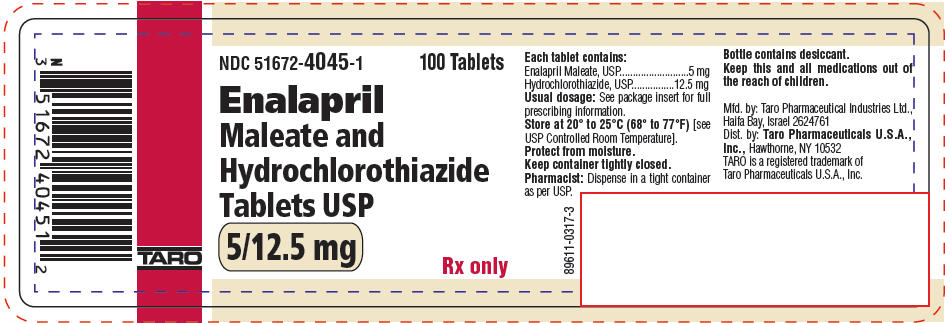
Enalapril Maleate and Hydrochlorothiazide 5 mg; 12.5 mg Tablet, 100-count — NDC 51672-4045-1 (Billing 51672-4045-01)
This is a package of 100 tablets of Enalapril Maleate and Hydrochlorothiazide 5 mg; 12.5 mg Tablet from Sun Pharmaceutical Industries, Inc., marketed since Sep 2001 and currently FDA-listed; retail pharmacies pay about $0.1699 per tablet (NADAC). It is the main listing for this product, which comes in 2 package sizes.
NDC database record
One package, one record: these facts belong to NDC 51672-4045-1 alone.
- Record
- FDA NDC Directory package listing · Human prescription drug
- Code segments
- 51672 labeler · 4045 product · 1 package
- Package marketed since
- Sep 18, 2001
- Sample package
- No — commercial package
- Listing certified through
- Dec 31, 2027
- Billing quantity
- 100 EA per package
- Barcode (UPC-A, from the NDC)
- 3 5167240451 2
- Medicaid fills, this package
- 4,396 prescriptions in the last four reported quarters
- FDA record last changed
- Oct 8, 2026
Identity & classification
Regulatory identifiers FDA, NLM and CMS codes for this package
Drug-database identifiers Medi-Span GPI and First Databank GCN / HICL / AHFS classification
- GSN (GCN sequence number): 024190
- GCN: 54862
- GPI-14 (Medi-Span): 36991802350305
- HICL (First Databank): 000129
- AHFS class code: 24:32.04.00
- RxCUI (RxNorm): 858824
Where does this data come from?
- FDA openFDA NDC Directory · synced Oct 8, 2026
- FDA label on DailyMed · label index refreshed Oct 8, 2026
- RxNorm (NLM RxNav) · catalog refreshed Oct 1, 2026
- Medi-Span GPI (licensed)
- First Databank (licensed) · refreshed Oct 8, 2026
RxNorm drug class
This medicine belongs to the Angiotensin Converting Enzyme Inhibitor class.
Where does this data come from?
- RxClass (NLM) · catalog refreshed Oct 1, 2026
Clinical
- This tablet combines two different types of blood pressure medicine — enalapril, which relaxes your blood vessels, and hydrochlorothiazide, a mild water pill that helps your kidney...
- Why am I on a combination pill instead of just one blood pressure medicine?
- Yes, a dry, persistent cough is one of the more common side effects of enalapril, reported in about 1 in 28 patients in clinical studies. It's not dangerous, but it can be botherso...
- I've heard about a serious cough with this type of medicine — is that true?
Patient education
Supplement & herbal interactions
Where does this data come from?
- MedlinePlus (NLM) · refreshed Oct 8, 2026
- FDA label on DailyMed · label index refreshed Oct 8, 2026
Ask a licensed pharmacist directly — free, answered by our team.
Pricing
A drug doesn't have one price. Each row is a different public payment system, and none is what you'd pay at the counter — that depends on your insurance. The ⓘ on each row explains what it measures.
| Price system | Per ea | Per package |
|---|---|---|
| Retail pharmacies payNADAC · weekly | $0.170 | $16.99 / 100 tablets |
| Medicaid paysCMS SDUD · 12 mo | $0.3579 | $35.79 / 100 tablets |
| Medicare drug plans payPart D · Q2 2026 | $0.2910 | $29.10 / 100 tablets |
Where does this data come from?
- CMS NADAC weekly file · file of Oct 7, 2026
- CMS ASP pricing files · refreshed Sep 20, 2026
- CMS Medicaid State Drug Utilization Data · through Q1 2026
- CMS Part D plan pricing files · refreshed Sep 24, 2026
- VA National Acquisition Center price file
Packaging — all sizes for this product
| Package NDC | Description | Per unit | Per pack | Marketing start | Marketing end | Status |
|---|---|---|---|---|---|---|
| 51672-4045-01 You're viewing this Main listing | 100 TABLET in 1 BOTTLE | $0.1699 / ea | $16.99 | 2001-09-18 | — | Active |
| 51672-4045-03 51672-4045-3 | 1000 TABLET in 1 BOTTLE | — | — | 2001-09-18 | — | Active |
You're viewing the smallest of 2 pack sizes for this product.
In Medicaid, this is the most-dispensed pack of this product — about 100% of fills over the last four reported quarters. See all packs ↓
Pack size FAQ
What quantity is in this package?
How does this package differ from NDC 51672-4045-03?
What NDC number is used to bill for this package of Enalapril Maleate and Hydrochlorothiazide 5 mg; 12.5 mg Tablet?
Prices are the latest CMS NADAC pharmacy acquisition cost per NDC; per-pack figures are per-unit × pack quantity, shown only when the pack is denominated in the same measure NADAC prices.
Therapeutic equivalents
| Product | Labeler | Pack | NADAC/unit | TE | Status | Price vs. this |
|---|---|---|---|---|---|---|
| Enalapril Maleate and Hydrochlorothiazide 5 mg/1; 12.5 mgthis 51672-4045-01 | Sun | 100 tablets | $0.170 | AB | Availability likely | — |
| Enalapril maleate and hydrochlorothiazide 5 mg/1; 12.5 mg 55111-0133-01 | Dr. | 100 tablets | — | AB | FDA listed | — |
Where does this data come from?
- FDA openFDA NDC Directory · synced Oct 8, 2026
- FDA Orange Book · refreshed Oct 3, 2026
- CMS NADAC weekly file · file of Oct 7, 2026
Availability & generic status
This product is an FDA-approved generic. Other versions of the same drug are listed under Therapeutic equivalents, least expensive first.
Where does this data come from?
- FDA Orange Book · refreshed Oct 3, 2026
Inactive Ingredients / Excipients
Inactive ingredients, also called excipients, are components of the drug product other than the active ingredient. They may include fillers, dyes, coatings, preservatives, flavors, or other formulation ingredients.
🧪 Avoiding an ingredient? See Enalapril and Hydrochlorothiazide inactive ingredients by manufacturer: every current product's list side by side, so you can ask your pharmacy for the version that does not list it.
💡 Tap an ingredient (hover on desktop) to see what it is and why it’s used.
-
UNII EX438O2MRT
Ferric oxide yellow is a naturally occurring iron compound used as a colorant in medications. It gives tablets, capsules, and other forms a yellow or golden hue for identification and appearance.
-
UNII XM0M87F357
A dark iron oxide compound that gives medicines their black or dark color. It's used as a colorant in tablets and capsules to help identify the product and make it visually distinctive.
-
UNII EWQ57Q8I5X
Lactose monohydrate is a natural sugar derived from milk. It serves as a filler and binder in tablets and capsules, helping create the proper size, texture, and consistency of the medicine.
-
UNII 70097M6I30
Magnesium stearate is a salt made from magnesium and stearic acid, a fatty substance. It's used in tablets and capsules as a lubricant and glidant to help ingredients flow smoothly during manufacturing and prevent sticking.
-
UNII 8MDF5V39QO
A white powder form of baking soda that acts as a buffer and pH regulator in medicines. It helps maintain the right acid-base balance and may aid tablet disintegration.
-
UNII O8232NY3SJ
A plant-based carbohydrate derived from corn kernels. It acts as a filler to add bulk, a binder to hold ingredients together, and a disintegrant to help the tablet break apart in your stomach for absorption.
-
UNII 059QF0KO0R
Water is a liquid solvent that dissolves and mixes ingredients together in liquid medicines, syrups, and injections. It helps distribute the active drug evenly throughout the product.
7 inactive ingredients listed in the exact product block matched to this NDC.
Where does this data come from?
ingredient classCode="IACT" elements from the exact product block matched by this NDC. Label-section narrative from DailyMed / the openFDA label index is shown separately when available.- FDA label on DailyMed · label index refreshed Oct 8, 2026
- FDA openFDA NDC Directory · synced Oct 8, 2026
Inactive ingredient FAQ
Are inactive ingredients the same for every manufacturer?
Why might an inactive ingredient be missing?
Can inactive ingredients matter?
Manufacturer & labeler
More NDCs from Sun Pharmaceutical Industries, Inc. labeler code 51672
- Enalapril Maleate 5 mg Tablet NDC 51672-4038-1
- Enalapril Maleate 20 mg Tablet NDC 51672-4040-1
- Carbamazepine 100 mg Tablet, Chewable NDC 51672-4041-0
- Clorazepate Dipotassium 3.75 mg Tablet NDC 51672-4042-1
- Clorazepate Dipotassium 7.5 mg Tablet NDC 51672-4043-1
- Clorazepate Dipotassium 15 mg Tablet NDC 51672-4044-1
- Enalapril Maleate and Hydrochlorothiazide 10 mg; 25 mg Tablet NDC 51672-4046-1
- Carbamazepine 100 mg/5mL Suspension NDC 51672-4047-4
- Clotrimazole and Betamethasone Dipropionate .5 mg/g; 10 mg/g Cream NDC 51672-4048-1
- Carbamazepine 200 mg Tablet, Chewable NDC 51672-4050-1
- Etodolac 400 mg Tablet, Extended Release NDC 51672-4051-1
- Etodolac 500 mg Tablet, Extended Release NDC 51672-4052-1
Where does this data come from?
- FDA openFDA NDC Directory · synced Oct 8, 2026
- Drugs@FDA
Full prescribing information FDA SPL
🚨 Boxed Warning ▾
WARNING: FETAL TOXICITY See full prescribing information for complete boxed warning. When pregnancy is detected, discontinue enalapril maleate and hydrochlorothiazide as soon as possible. Drugs that act directly on the renin-angiotensin system can cause injury and death to the developing fetus. See WARNINGS: Fetal Toxicity
🎯 Indications and Usage ▾
INDICATIONS AND USAGE Enalapril maleate and hydrochlorothiazide is indicated for the treatment of hypertension. This fixed dose combination is not indicated for initial treatment (see DOSAGE AND ADMINISTRATION ). In using enalapril maleate and hydrochlorothiazide, consideration should be given to the fact that another angiotensin converting enzyme inhibitor, captopril, has caused agranulocytosis, particularly in patients with renal impairment or collagen vascular disease, and that available data are insufficient to show that enalapril does not have a similar risk (see WARNINGS ).
In considering use of enalapril maleate and hydrochlorothiazide, it should be noted that black patients receiving ACE inhibitors have been reported to have a higher incidence of angioedema compared to non-blacks (see WARNINGS, Head and Neck Angioedema ).
⏱️ Dosage and Administration ▾
DOSAGE AND ADMINISTRATION Enalapril and hydrochlorothiazide are effective treatments for hypertension. The usual dosage range of enalapril is 10 to 40 mg per day administered in a single or two divided doses; hydrochlorothiazide is effective in doses of 12.5 to 50 mg daily. The side effects (see WARNINGS ) of enalapril are generally rare and apparently independent of dose; those of hydrochlorothiazide are a mixture of dose-dependent phenomena (primarily hypokalemia) and dose-independent phenomena (e.g., pancreatitis), the former much more common than the latter.
Therapy with any combination of enalapril and hydrochlorothiazide will be associated with both sets of dose-independent side effects but the addition of enalapril in clinical trials blunted the hypokalemia normally seen with diuretics. To minimize dose-independent side effects, it is usually appropriate to begin combination therapy only after a patient has failed to achieve the desired effect with monotherapy. Dose Titration Guided by Clinical Effect A patient whose blood pressure is not adequately controlled with either enalapril or hydrochlorothiazide monotherapy may be given enalapril maleate and hydrochlorothiazide 5/12.5 mg or enalapril maleate and hydrochlorothiazide 10/25 mg.
Further increases of enalapril, hydrochlorothiazide or both depend on clinical response. The hydrochlorothiazide dose should generally not be increased until 2 to 3 weeks have elapsed. In general, patients do not require doses in excess of 20 mg of enalapril or 50 mg of hydrochlorothiazide.
The daily dosage should not exceed four tablets of enalapril maleate and hydrochlorothiazide 5/12.5 mg or two tablets of enalapril maleate and hydrochlorothiazide 10/25 mg. Replacement Therapy The combination may be substituted for the titrated components. Use in Renal Impairment The usual regimens of therapy with enalapril maleate and hydrochlorothiazide need not be adjusted as long as the patient's creatinine clearance is greater than 30 mL/min/1.73m2 (serum creatinine approximately less than or equal to 3 mg/dL or 265 μmol/L).
In patients with more severe renal impairment, loop diuretics are preferred to thiazides, so enalapril maleate and hydrochlorothiazide is not recommended (see WARNINGS, Anaphylactoid Reactions During Membrane Exposure ).
⛔ Contraindications ▾
CONTRAINDICATIONS Enalapril maleate and hydrochlorothiazide is contraindicated in patients who are hypersensitive to any component of this product and in patients with a history of angioedema related to previous treatment with an angiotensin converting enzyme inhibitor and in patients with hereditary or idiopathic angioedema. Because of the hydrochlorothiazide component, this product is contraindicated in patients with anuria or hypersensitivity to other sulfonamide-derived drugs. Enalapril maleate and hydrochlorothiazide is contraindicated in combination with a neprilysin inhibitor (e.g., sacubitril).
Do not administer enalapril maleate and hydrochlorothiazide within 36 hours of switching to or from sacubitril/valsartan, a neprilysin inhibitor (see WARNINGS ). Do not co-administer aliskiren with enalapril maleate and hydrochlorothiazide in patients with diabetes (see PRECAUTIONS, Drug Interactions ).
⚠️ Warnings ▾
WARNINGS General Enalapril Maleate Hypotension Excessive hypotension was rarely seen in uncomplicated hypertensive patients but is a possible consequence of enalapril use in severely salt/volume depleted persons such as those treated vigorously with diuretics or patients on dialysis. Syncope has been reported in 1.3 percent of patients receiving enalapril maleate and hydrochlorothiazide. In patients receiving enalapril alone, the incidence of syncope is 0.5 percent.
The overall incidence of syncope may be reduced by proper titration of the individual components (see PRECAUTIONS, Drug Interactions , ADVERSE REACTIONS and DOSAGE AND ADMINISTRATION ). In patients with severe congestive heart failure, with or without associated renal insufficiency, excessive hypotension has been observed and may be associated with oliguria and/or progressive azotemia, and rarely with acute renal failure and/or death. Because of the potential fall in blood pressure in these patients, therapy should be started under very close medical supervision.
Such patients should be followed closely for the first two weeks of treatment and whenever the dose of enalapril and/or diuretic is increased. Similar considerations may apply to patients with ischemic heart or cerebrovascular disease, in whom an excessive fall in blood pressure could result in a myocardial infarction or cerebrovascular accident. If hypotension occurs, the patient should be placed in the supine position and, if necessary, receive an intravenous infusion of normal saline.
A transient hypotensive response is not a contraindication to further doses, which usually can be given without difficulty once the blood pressure has increased after volume expansion. Anaphylactoid and Possibly Related Reactions Presumably because angiotensin-converting enzyme inhibitors affect the metabolism of eicosanoids and polypeptides, including endogenous bradykinin, patients receiving ACE inhibitors (including enalapril maleate and hydrochlorothiazide) may be subject to a variety of adverse reactions, some of them serious.
Head and Neck Angioedema Angioedema of the face, extremities, lips, tongue, glottis and/or larynx has been reported in patients treated with angiotensin converting enzyme inhibitors, including enalapril. This may occur at any time during treatment. In such cases enalapril maleate and hydrochlorothiazide should be promptly discontinued and appropriate therapy and monitoring should be provided until complete and sustained resolution of signs and symptoms has occurred.
In instances where swelling has been confined to the face and lips the condition has generally resolved without treatment, although antihistamines have been useful in relieving symptoms. Angioedema associated with laryngeal edema may be fatal. Where there is involvement of the tongue, glottis or larynx, likely to cause airway obstruction, appropriate therapy, e.g., subcutaneous epinephrine solution 1:1000 (0.3 mL to 0.5 mL) and/or measures necessary to ensure a patent airway, should be promptly provided (see ADVERSE REACTIONS ).
Patients receiving coadministration of ACE inhibitor and mTOR (mammalian target of rapamycin) inhibitor (e.g., temsirolimus, sirolimus, everolimus) therapy or a neprilysin inhibitor may be at increased risk for angioedema (see PRECAUTIONS ). Intestinal Angioedema Intestinal angioedema has been reported in patients treated with ACE inhibitors. These patients presented with abdominal pain (with or without nausea or vomiting); in some cases there was no prior history of facial angioedema and C-1 esterase levels were normal.
The angioedema was diagnosed by procedures including abdominal CT scan or ultrasound, or at surgery, and symptoms resolved after stopping the ACE inhibitor. Intestinal angioedema should be included in the differential diagnosis of patients on ACE inhibitors presenting with abdominal pain. Patients with a history of angioedema unrelated to ACE inhibitor therapy may be at increased risk of angi… [Excerpted — this section continues on DailyMed.]
🤒 Adverse Reactions ▾
ADVERSE REACTIONS Enalapril maleate and hydrochlorothiazide has been evaluated for safety in more than 1500 patients, including over 300 patients treated for one year or more. In clinical trials with enalapril maleate and hydrochlorothiazide no adverse experiences peculiar to this combination drug have been observed. Adverse experiences that have occurred, have been limited to those that have been previously reported with enalapril or hydrochlorothiazide.
The most frequent clinical adverse experiences in controlled trials were: dizziness (8.6 percent), headache (5.5 percent), fatigue (3.9 percent) and cough (3.5 percent). Generally, adverse experiences were mild and transient in nature. Adverse experiences occurring in greater than two percent of patients treated with enalapril maleate and hydrochlorothiazide in controlled clinical trials are shown below.
Percent of Patients in Controlled Studies Enalapril maleate and hydrochlorothiazide (n=1580) Incidence (discontinuation) Placebo (n=230) Incidence Dizziness 8.6 (0.7)
4.3Headache 5.5 (0.4)
9.1Fatigue 3.9 (0.8)
2.6Cough 3.5 (0.4)
0.9Muscle Cramps 2.7 (0.2)
0.9Nausea 2.5 (0.4)
1.7Asthenia 2.4 (0.3)
0.9Orthostatic Effects 2.3 (<0.1)
0.0Impotence 2.2 (0.5)
0.5Diarrhea 2.1 (<0.1)
1.7Clinical adverse experiences occurring in 0.5 to 2.0 percent of patients in controlled trials included: Body As A Whole: Syncope, chest pain, abdominal pain Cardiovascular: Orthostatic hypotension, palpitation, tachycardia Digestive: Vomiting, dyspepsia, constipation, flatulence, dry mouth Nervous/Psychiatric: Insomnia, nervousness, paresthesia, somnolence, vertigo Skin: Pruritus, rash Other: Dyspnea, gout, back pain, arthralgia, diaphoresis, decreased libido, tinnitus, urinary tract infection Angioedema: Angioedema has been reported in patients receiving enalapril maleate and hydrochlorothiazide, with an incidence higher in black than in non-black patients.
Angioedema associated with laryngeal edema may be fatal. If angioedema of the face, extremities, lips, tongue, glottis and/or larynx occurs, treatment with enalapril maleate and hydrochlorothiazide should be discontinued and appropriate therapy instituted immediately (see WARNINGS ). Hypotension: In clinical trials, adverse effects relating to hypotension occurred as follows: hypotension (0.9 percent), orthostatic hypotension (1.5 percent), other orthostatic effects (2.3 percent).
In addition syncope occurred in 1.3 percent of patients (see WARNINGS ). Cough: See PRECAUTIONS, Cough . Clinical Laboratory Test Findings Serum Electrolytes: See PRECAUTIONS .
Creatinine, Blood Urea Nitrogen: In controlled clinical trials minor increases in blood urea nitrogen and serum creatinine, reversible upon discontinuation of therapy, were observed in about 0.6 percent of patients with essential hypertension treated with enalapril maleate and hydrochlorothiazide. More marked increases have been reported in other enalapril experience. Increases are more likely to occur in patients with renal artery stenosis (see PRECAUTIONS ).
Serum Uric Acid, Glucose, Magnesium, and Calcium: See PRECAUTIONS . Hemoglobin and Hematocrit: Small decreases in hemoglobin and hematocrit (mean decreases of approximately 0.3 g percent and 1.0 vol percent, respectively) occur frequently in hypertensive patients treated with enalapril maleate and hydrochlorothiazide but are rarely of clinical importance unless another cause of anemia coexists. In clinical trials, less than 0.1 percent of patients discontinued therapy due to anemia.
Liver Function Tests: Rarely, elevations of liver enzymes and/or serum bilirubin have occurred (see WARNINGS, Hepatic Failure ). Other adverse reactions that have been reported with the individual components are listed below and, within each category, are in order of decreasing severity. Enalapril Maleate Enalapril has been evaluated for safety in more than 10,000 patients.
In clinical trials adverse reactions which occurred with enalapril were also seen… [Excerpted — this section continues on DailyMed.]
🔄 Drug Interactions ▾
Drug Interactions Neprilysin Inhibitors Patients taking concomitant neprilysin inhibitors may be at increased risk for angioedema (see WARNINGS ). Enalapril Maleate Dual Blockade of the Renin-Angiotensin System (RAS) Dual blockade of the RAS with angiotensin receptor blockers, ACE inhibitors, or aliskiren is associated with increased risks of hypotension, hyperkalemia, and changes in renal function (including acute renal failure) compared to monotherapy. Most patients receiving the combination of two RAS inhibitors do not obtain any additional benefit compared to monotherapy.
In general, avoid combined use of RAS inhibitors. Closely monitor blood pressure, renal function and electrolytes in patients on enalapril maleate and hydrochlorothiazide and other agents that affect the RAS. Do not coadminister aliskiren with enalapril maleate and hydrochlorothiazide in patients with diabetes.
Avoid use of aliskiren with enalapril maleate and hydrochlorothiazide in patients with renal impairment (GFR <60 mL/min). Hypotension – Patients on Diuretic Therapy Patients on diuretics and especially those in whom diuretic therapy was recently instituted, may occasionally experience an excessive reduction of blood pressure after initiation of therapy with enalapril. The possibility of hypotensive effects with enalapril can be minimized by either discontinuing the diuretic or increasing the salt intake prior to initiation of treatment with enalapril.
If it is necessary to continue the diuretic, provide medical supervision for at least two hours and until blood pressure has stabilized for at least an additional hour (see WARNINGS and DOSAGE AND ADMINISTRATION ). Agents Causing Renin Release The antihypertensive effect of enalapril is augmented by antihypertensive agents that cause renin release (e.g., diuretics). Non-steroidal Anti-inflammatory Agents including Selective Cyclooxygenase-2 Inhibitors (COX-2 Inhibitors) In patients who are elderly, volume-depleted (including those on diuretic therapy), or with compromised renal function, coadministration of NSAIDs, including selective COX-2 inhibitors, with ACE inhibitors, including enalapril, may result in deterioration of renal function, including possible acute renal failure.
These effects are usually reversible. Monitor renal function periodically in patients receiving enalapril and NSAID therapy. In a clinical pharmacology study, indomethacin or sulindac was administered to hypertensive patients receiving enalapril maleate.
In this study there was no evidence of a blunting of the antihypertensive action of enalapril maleate. However, reports suggest that NSAIDs may diminish the antihypertensive effect of ACE inhibitors. Other Cardiovascular Agents Enalapril has been used concomitantly with beta adrenergic-blocking agents, methyldopa, nitrates, calcium-blocking agents, hydralazine and prazosin without evidence of clinically significant adverse interactions.
Agents Increasing Serum Potassium Enalapril attenuates diuretic-induced potassium loss. Potassium-sparing diuretics (e.g., spironolactone, triamterene, or amiloride), potassium supplements, or potassium-containing salt substitutes may lead to significant increases in serum potassium. Therefore, if concomitant use of these agents is indicated because of demonstrated hypokalemia they should be used with caution and with frequent monitoring of serum potassium.
Lithium Lithium toxicity has been reported in patients receiving lithium concomitantly with drugs which cause elimination of sodium, including ACE inhibitors. A few cases of lithium toxicity have been reported in patients receiving concomitant enalapril and lithium and were reversible upon discontinuation of both drugs. It is recommended that serum lithium levels be monitored frequently if enalapril is administered concomitantly with lithium.
Gold Nitritoid reactions (symptoms include facial flushing, nausea, vomiting and hypotension) have been reported rarely in patients on therapy with inj… [Excerpted — this section continues on DailyMed.]
🤰 Pregnancy ▾
Pregnancy
🧒 Pediatric Use ▾
Pediatric Use Neonates with a history of in utero exposure to enalapril maleate and hydrochlorothiazide If oliguria or hypotension occurs, direct attention toward support of blood pressure and renal perfusion. Exchange transfusions or dialysis may be required as a means of reversing hypotension and/or substituting for disordered renal function. Enalapril, which crosses the placenta, has been removed from neonatal circulation by peritoneal dialysis with some clinical benefit, and theoretically may be removed by exchange transfusion, although there is no experience with the latter procedure.
Safety and effectiveness in pediatric patients have not been established.
🧓 Geriatric Use ▾
Geriatric Use Clinical studies of enalapril maleate and hydrochlorothiazide did not include sufficient numbers of subjects aged 65 and over to determine whether they respond differently from younger subjects. Other reported clinical experience has not identified differences in responses between the elderly and younger patients. In general, dose selection for an elderly patient should be cautious, usually starting at the low end of the dosing range, reflecting the greater frequency of decreased hepatic, renal, or cardiac function, and of concomitant disease or other drug therapy.
This drug is known to be substantially excreted by the kidney, and the risk of toxic reactions to this drug may be greater in patients with impaired renal function. Because elderly patients are more likely to have decreased renal function, care should be taken in dose selection. Evaluation of the hypertensive patient should always include assessment of renal function (see DOSAGE AND ADMINISTRATION ).
🆘 Overdosage ▾
OVERDOSAGE No specific information is available on the treatment of overdosage with enalapril maleate and hydrochlorothiazide. Treatment is symptomatic and supportive. Therapy with enalapril maleate and hydrochlorothiazide should be discontinued and the patient observed closely.
Suggested measures include induction of emesis and/or gastric lavage, and correction of dehydration, electrolyte imbalance and hypotension by established procedures. Enalapril Maleate Single oral doses of enalapril above 1,000 mg/kg and ≥ 1,775 mg/kg were associated with lethality in mice and rats, respectively. The most likely manifestation of overdosage would be hypotension, for which the usual treatment would be intravenous infusion of normal saline solution.
Enalaprilat may be removed from general circulation by hemodialysis and has been removed from neonatal circulation by peritoneal dialysis (see WARNINGS, Anaphylactoid Reactions During Membrane Exposure ). Hydrochlorothiazide Lethality was not observed after administration of an oral dose of 10 g/kg to mice and rats. The most common signs and symptoms observed are those caused by electrolyte depletion (hypokalemia, hypochloremia, hyponatremia) and dehydration resulting from excessive diuresis.
If digitalis has also been administered, hypokalemia may accentuate cardiac arrhythmias.
🧬 Clinical Pharmacology ▾
CLINICAL PHARMACOLOGY As a result of its diuretic effects, hydrochlorothiazide increases plasma renin activity, increases aldosterone secretion, and decreases serum potassium. Administration of enalapril maleate blocks the renin-angiotensin-aldosterone axis and tends to reverse the potassium loss associated with the diuretic. In clinical studies, the extent of blood pressure reduction seen with the combination of enalapril maleate and hydrochlorothiazide was approximately additive.
The antihypertensive effect of enalapril maleate and hydrochlorothiazide was usually sustained for at least 24 hours. Concomitant administration of enalapril maleate and hydrochlorothiazide has little, or no effect on the bioavailability of either drug. The combination tablet is bioequivalent to concomitant administration of the separate entities.
Enalapril Maleate Mechanism of Action Enalapril, after hydrolysis to enalaprilat, inhibits angiotensin-converting enzyme (ACE) in human subjects and animals. ACE is a peptidyl dipeptidase that catalyzes the conversion of angiotensin I to the vasoconstrictor substance, angiotensin II. Angiotensin II also stimulates aldosterone secretion by the adrenal cortex.
Inhibition of ACE results in decreased plasma angiotensin II, which leads to decreased vasopressor activity and to decreased aldosterone secretion. Although the latter decrease is small, it results in small increases of serum potassium. In hypertensive patients treated with enalapril maleate alone for up to 48 weeks, mean increases in serum potassium of approximately 0.2 mEq/L were observed.
In patients treated with enalapril maleate plus a thiazide diuretic, there was essentially no change in serum potassium (see PRECAUTIONS ). Removal of angiotensin II negative feedback on renin secretion leads to increased plasma renin activity. ACE is identical to kininase, an enzyme that degrades bradykinin.
Whether increased levels of bradykinin, a potent vasodepressor peptide, play a role in the therapeutic effects of enalapril remains to be elucidated. While the mechanism through which enalapril lowers blood pressure is believed to be primarily suppression of the renin-angiotensin-aldosterone system, enalapril is antihypertensive even in patients with low-renin hypertension. Although enalapril was antihypertensive in all races studied, black hypertensive patients (usually a low-renin hypertensive population) had a smaller average response to enalapril maleate monotherapy than non-black patients.
In contrast, hydrochlorothiazide was more effective in black patients than enalapril. Concomitant administration of enalapril maleate and hydrochlorothiazide was equally effective in black and non-black patients. Pharmacokinetics and Metabolism Following oral administration of enalapril maleate, peak serum concentrations of enalapril occur within about one hour.
Based on urinary recovery, the extent of absorption of enalapril is approximately 60 percent. Enalapril absorption is not influenced by the presence of food in the gastrointestinal tract. Following absorption, enalapril is hydrolyzed to enalaprilat, which is a more potent angiotensin converting enzyme inhibitor than enalapril; enalaprilat is poorly absorbed when administered orally.
Peak serum concentrations of enalaprilat occur three to four hours after an oral dose of enalapril maleate. Excretion of enalaprilat and enalapril is primarily renal. Approximately 94 percent of the dose is recovered in the urine and feces as enalaprilat or enalapril.
The principal components in urine are enalaprilat, accounting for about 40 percent of the dose, and intact enalapril. There is no evidence of metabolites of enalapril, other than enalaprilat. The serum concentration profile of enalaprilat exhibits a prolonged terminal phase, apparently representing a small fraction of the administered dose that has been bound to ACE.
The amount bound does not increase with dose, indicating a saturable site of binding. The effective half… [Excerpted — this section continues on DailyMed.]
🧬 Mechanism of Action ▾
Mechanism of Action Enalapril, after hydrolysis to enalaprilat, inhibits angiotensin-converting enzyme (ACE) in human subjects and animals. ACE is a peptidyl dipeptidase that catalyzes the conversion of angiotensin I to the vasoconstrictor substance, angiotensin II. Angiotensin II also stimulates aldosterone secretion by the adrenal cortex.
Inhibition of ACE results in decreased plasma angiotensin II, which leads to decreased vasopressor activity and to decreased aldosterone secretion. Although the latter decrease is small, it results in small increases of serum potassium. In hypertensive patients treated with enalapril maleate alone for up to 48 weeks, mean increases in serum potassium of approximately 0.2 mEq/L were observed.
In patients treated with enalapril maleate plus a thiazide diuretic, there was essentially no change in serum potassium (see PRECAUTIONS ). Removal of angiotensin II negative feedback on renin secretion leads to increased plasma renin activity. ACE is identical to kininase, an enzyme that degrades bradykinin.
Whether increased levels of bradykinin, a potent vasodepressor peptide, play a role in the therapeutic effects of enalapril remains to be elucidated. While the mechanism through which enalapril lowers blood pressure is believed to be primarily suppression of the renin-angiotensin-aldosterone system, enalapril is antihypertensive even in patients with low-renin hypertension. Although enalapril was antihypertensive in all races studied, black hypertensive patients (usually a low-renin hypertensive population) had a smaller average response to enalapril maleate monotherapy than non-black patients.
In contrast, hydrochlorothiazide was more effective in black patients than enalapril. Concomitant administration of enalapril maleate and hydrochlorothiazide was equally effective in black and non-black patients.
📦 How Supplied / Storage and Handling ▾
HOW SUPPLIED Enalapril Maleate and Hydrochlorothiazide Tablets USP, 5/12.5 mg , are ivory, caplet-shaped compressed tablets, engraved on one side with T4. Each tablet contains 5 mg of enalapril maleate and 12.5 mg of hydrochlorothiazide. They are supplied as follows: NDC 51672-4045-1 bottles of 100 (with desiccant).
NDC 51672-4045-3 bottles of 1,000 (with desiccant). Enalapril Maleate and Hydrochlorothiazide Tablets USP, 10/25 mg , are peach colored, capsule shaped, tablets. One side scored and engraved "T" to the left of the score and "3" to the right of the score.
Other side scored. Each tablet contains 10 mg of enalapril maleate and 25 mg of hydrochlorothiazide. They are supplied as follows: NDC 51672-4046-1 bottles of 100 (with desiccant).
NDC 51672-4046-3 bottles of 1,000 (with desiccant). Storage Store at 20° to 25°C (68° to 77°F) [see USP Controlled Room Temperature]. Keep container tightly closed.
Protect from moisture. Dispense in a tight container as per USP, if product package is subdivided.
📦 Storage and Handling ▾
Storage Store at 20° to 25°C (68° to 77°F) [see USP Controlled Room Temperature]. Keep container tightly closed. Protect from moisture. Dispense in a tight container as per USP, if product package is subdivided.
📋 Description ▾
DESCRIPTION Enalapril maleate and hydrochlorothiazide combines an angiotensin converting enzyme inhibitor, enalapril maleate, and a diuretic, hydrochlorothiazide. Enalapril maleate is the maleate salt of enalapril, the ethyl ester of a long-acting angiotensin converting enzyme inhibitor, enalaprilat. Enalapril maleate is chemically described as ( S )-1-[ N -[1-(ethoxycarbonyl)-3-phenylpropyl]-L-alanyl]-L-proline, ( Z )-2-butenedioate salt (1:1).
Its empirical formula is C 20 H 28 N 2 O 5 ∙C 4 H 4 O 4 , and its structural formula is: Enalapril maleate is a white to off-white crystalline powder with a molecular weight of 492.53. It is sparingly soluble in water, soluble in ethanol, and freely soluble in methanol. Enalapril is a pro-drug; following oral administration, it is bioactivated by hydrolysis of the ethyl ester to enalaprilat, which is the active angiotensin converting enzyme inhibitor.
Hydrochlorothiazide is 6-chloro-3,4-dihydro-2 H -1,2,4-benzothiadiazine-7-sulfonamide 1,1-dioxide. Its empirical formula is C 7 H 8 ClN 3 O 4 S 2 and its structural formula is: It is a white, or practically white, crystalline powder with a molecular weight of 297.74, which is slightly soluble in water, but freely soluble in sodium hydroxide solution. Enalapril maleate and hydrochlorothiazide is available in two tablet combinations of enalapril maleate with hydrochlorothiazide: enalapril maleate and hydrochlorothiazide 5/12.5 mg, containing 5 mg enalapril maleate and 12.5 mg hydrochlorothiazide and contain the following inactive ingredients: ferric oxide black, ferric oxide yellow, lactose monohydrate, magnesium stearate, pregelatinized starch, purified water, and sodium bicarbonate.
Enalapril maleate and hydrochlorothiazide 10/25 mg, containing 10 mg enalapril maleate and 25 mg hydrochlorothiazide and contain the following inactive ingredients: ferrix oxide yellow, ferric oxide red, lactose monohydrate, magnesium stearate, pregelatinized starch, purified water, and sodium bicarbonate. Chemical Structure Chemical Structure
💬 Information for Patients ▾
Information for Patients Angioedema Angioedema, including laryngeal edema, may occur at any time during treatment with angiotensin converting enzyme inhibitors, including enalapril. Patients should be so advised and told to report immediately any signs or symptoms suggesting angioedema (swelling of face, extremities, eyes, lips, tongue, difficulty in swallowing or breathing) and to take no more drug until they have consulted with the prescribing physician. Hypotension Patients should be cautioned to report lightheadedness especially during the first few days of therapy.
If actual syncope occurs, the patients should be told to discontinue the drug until they have consulted with the prescribing physician. All patients should be cautioned that excessive perspiration and dehydration may lead to an excessive fall in blood pressure because of reduction in fluid volume. Other causes of volume depletion such as vomiting or diarrhea may also lead to a fall in blood pressure; patients should be advised to consult with the physician.
Hyperkalemia Patients should be told not to use salt substitutes containing potassium without consulting their physician. Neutropenia Patients should be told to report promptly any indication of infection (e.g., sore throat, fever) which may be a sign of neutropenia. Pregnancy Female patients of childbearing age should be told about the consequences of exposure to enalapril maleate and hydrochlorothiazide during pregnancy.
Discuss treatment options with women planning to become pregnant. Patients should be asked to report pregnancies to their physicians as soon as possible. NOTE: As with many other drugs, certain advice to patients being treated with enalapril maleate and hydrochlorothiazide is warranted.
This information is intended to aid in the safe and effective use of this medication. It is not a disclosure of all possible adverse or intended effects. Non-melanoma Skin Cancer Instruct patients taking hydrochlorothiazide to protect skin from the sun and undergo regular skin cancer screening.
⚠️ Precautions ▾
PRECAUTIONS General Enalapril Maleate Aortic Stenosis/Hypertrophic Cardiomyopathy As with all vasodilators, enalapril should be given with caution to patients with obstruction in the outflow tract of the left ventricle. Impaired Renal Function As a consequence of inhibiting the renin-angiotensin-aldosterone system, changes in renal function may be anticipated in susceptible individuals. In patients with severe congestive heart failure whose renal function may depend on the activity of the renin-angiotensin-aldosterone system, treatment with angiotensin converting enzyme inhibitors, including enalapril, may be associated with oliguria and/or progressive azotemia and rarely with acute renal failure and/or death (see PRECAUTIONS, Drug Interactions ).
In clinical studies in hypertensive patients with unilateral or bilateral renal artery stenosis, increases in blood urea nitrogen and serum creatinine were observed in 20 percent of patients. These increases were almost always reversible upon discontinuation of enalapril and/or diuretic therapy. In such patients renal function should be monitored during the first few weeks of therapy.
Some patients with hypertension or heart failure with no apparent pre-existing renal vascular disease have developed increases in blood urea and serum creatinine, usually minor and transient, especially when enalapril has been given concomitantly with a diuretic. This is more likely to occur in patients with pre-existing renal impairment. Dosage reduction of enalapril and/or discontinuation of the diuretic may be required.
Evaluation of the hypertensive patient should always include assessment of renal function. Hyperkalemia Elevated serum potassium (greater than 5.7 mEq/L) was observed in approximately one percent of hypertensive patients in clinical trials treated with enalapril alone. In most cases these were isolated values which resolved despite continued therapy, although hyperkalemia was a cause of discontinuation of therapy in 0.28 percent of hypertensive patients.
Hyperkalemia was less frequent (approximately 0.1 percent) in patients treated with enalapril plus hydrochlorothiazide. Risk factors for the development of hyperkalemia include renal insufficiency, diabetes mellitus, and the concomitant use of potassium-sparing diuretics, potassium supplements and/or potassium-containing salt substitutes, which should be used cautiously, if at all, with enalapril (see Drug Interactions ). Cough Presumably due to the inhibition of the degradation of endogenous bradykinin, persistent nonproductive cough has been reported with all ACE inhibitors, always resolving after discontinuation of therapy.
ACE inhibitor-induced cough should be considered in the differential diagnosis of cough. Surgery/Anesthesia In patients undergoing major surgery or during anesthesia with agents that produce hypotension, enalapril may block angiotensin II formation secondary to compensatory renin release. If hypotension occurs and is considered to be due to this mechanism, it can be corrected by volume expansion.
Hydrochlorothiazide Periodic determination of serum electrolytes to detect possible electrolyte imbalance should be performed at appropriate intervals. All patients receiving thiazide therapy should be observed for clinical signs of fluid or electrolyte imbalance: hyponatremia, hypochloremic alkalosis, and hypokalemia. Serum and urine electrolyte determinations are particularly important when the patient is vomiting excessively or receiving parenteral fluids.
Warning signs or symptoms of fluid and electrolyte imbalance, irrespective of cause, include dryness of mouth, thirst, weakness, lethargy, drowsiness, restlessness, confusion, seizures, muscle pains or cramps, muscular fatigue, hypotension, oliguria, tachycardia, and gastrointestinal disturbances such as nausea and vomiting. Hypokalemia may develop, especially with brisk diuresis, when severe cirrhosis is present, or after prolonged therapy. Interference with adequ… [Excerpted — this section continues on DailyMed.]
🍼 Nursing Mothers ▾
Nursing Mothers Enalapril, enalaprilat, and hydrochlorothiazide have been detected in human breast milk. Because of the potential for serious reactions in nursing infants from either drug, a decision should be made whether to discontinue nursing or to discontinue enalapril maleate and hydrochlorothiazide, taking into account the importance of the drug to the mother.
🧬 Pharmacokinetics ▾
Pharmacokinetics and Metabolism Following oral administration of enalapril maleate, peak serum concentrations of enalapril occur within about one hour. Based on urinary recovery, the extent of absorption of enalapril is approximately 60 percent. Enalapril absorption is not influenced by the presence of food in the gastrointestinal tract.
Following absorption, enalapril is hydrolyzed to enalaprilat, which is a more potent angiotensin converting enzyme inhibitor than enalapril; enalaprilat is poorly absorbed when administered orally. Peak serum concentrations of enalaprilat occur three to four hours after an oral dose of enalapril maleate. Excretion of enalaprilat and enalapril is primarily renal.
Approximately 94 percent of the dose is recovered in the urine and feces as enalaprilat or enalapril. The principal components in urine are enalaprilat, accounting for about 40 percent of the dose, and intact enalapril. There is no evidence of metabolites of enalapril, other than enalaprilat.
The serum concentration profile of enalaprilat exhibits a prolonged terminal phase, apparently representing a small fraction of the administered dose that has been bound to ACE. The amount bound does not increase with dose, indicating a saturable site of binding. The effective half-life for accumulation of enalaprilat following multiple doses of enalapril maleate is 11 hours.
The disposition of enalapril and enalaprilat in patients with renal insufficiency is similar to that in patients with normal renal function until the glomerular filtration rate is 30 mL/min or less. With glomerular filtration rate ≤ 30 mL/min, peak and trough enalaprilat levels increase, time to peak concentration increases and time to steady state may be delayed. The effective half-life of enalaprilat following multiple doses of enalapril maleate is prolonged at this level of renal insufficiency.
Enalaprilat is dialyzable at the rate of 62 mL/min. Studies in dogs indicate that enalapril crosses the blood-brain barrier poorly, if at all; enalaprilat does not enter the brain. Multiple doses of enalapril maleate in rats do not result in accumulation in any tissues.
Milk of lactating rats contains radioactivity following administration of 14 C enalapril maleate. Radioactivity was found to cross the placenta following administration of labeled drug to pregnant hamsters.
🧬 Pharmacodynamics ▾
Pharmacodynamics Administration of enalapril maleate to patients with hypertension of severity ranging from mild to severe results in a reduction of both supine and standing blood pressure usually with no orthostatic component. Symptomatic postural hypotension is infrequent with enalapril alone but it can be anticipated in volume-depleted patients, such as patients treated with diuretics. In clinical trials with enalapril and hydrochlorothiazide administered concurrently, syncope occurred in 1.3 percent of patients (see WARNINGS and DOSAGE AND ADMINISTRATION ).
In most patients studied, after oral administration of a single dose of enalapril maleate, onset of antihypertensive activity was seen at one hour with peak reduction of blood pressure achieved by four to six hours. At recommended doses, antihypertensive effects of enalapril maleate monotherapy have been maintained for at least 24 hours. In some patients the effects may diminish toward the end of the dosing interval; this was less frequently observed with concomitant administration of enalapril maleate and hydrochlorothiazide.
Achievement of optimal blood pressure reduction may require several weeks of enalapril therapy in some patients. The antihypertensive effects of enalapril have continued during long-term therapy. Abrupt withdrawal of enalapril has not been associated with a rapid increase in blood pressure.
In hemodynamic studies in patients with essential hypertension, blood pressure reduction produced by enalapril was accompanied by a reduction in peripheral arterial resistance with an increase in cardiac output and little or no change in heart rate. Following administration of enalapril maleate, there is an increase in renal blood flow; glomerular filtration rate is usually unchanged. The effects appear to be similar in patients with renovascular hypertension.
In a clinical pharmacology study, indomethacin or sulindac was administered to hypertensive patients receiving enalapril maleate. In this study there was no evidence of a blunting of the antihypertensive action of enalapril maleate (see PRECAUTIONS, Drug Interactions, Enalapril Maleate ).
📄 Carcinogenesis, Mutagenesis, Impairment of Fertility ▾
Carcinogenesis, Mutagenesis, Impairment of Fertility Enalapril in combination with hydrochlorothiazide was not mutagenic in the Ames microbial mutagen test with or without metabolic activation. Enalapril-hydrochlorothiazide did not produce DNA single strand breaks in an in vitro alkaline elution assay in rat hepatocytes or chromosomal aberrations in an in vivo mouse bone marrow assay. Enalapril Maleate There was no evidence of a tumorigenic effect when enalapril was administered for 106 weeks to male and female rats at doses up to 90 mg/kg/day or for 94 weeks to male and female mice at doses up to 90 and 180 mg/kg/day, respectively.
These doses are 26 times (in rats and female mice) and 13 times (in male mice) the maximum recommended human daily dose (MRHDD) when compared on a body surface area basis. Neither enalapril maleate nor the active diacid was mutagenic in the Ames microbial mutagen test with or without metabolic activation. Enalapril was also negative in the following genotoxicity studies: rec-assay, reverse mutation assay with E. coli, sister chromatid exchange with cultured mammalian cells, and the micronucleus test with mice, as well as in an in vivo cytogenic study using mouse bone marrow.
There were no adverse effects on reproductive performance of male and female rats treated with up to 90 mg/kg/day of enalapril (26 times the MRHDD when compared on a body surface area basis). Hydrochlorothiazide Two year feeding studies in mice and rats conducted under the auspices of the National Toxicology Program (NTP) uncovered no evidence of a carcinogenic potential of hydrochlorothiazide in female mice at doses up to approximately 600 mg/kg/day (53 times the MRHDD when compared on a body surface area basis) or in male and female rats at doses up to approximately 100 mg/kg/day (18 times the MRHDD when compared on a body surface area basis).
The NTP, however, found equivocal evidence for hepatocarcinogenicity in male mice. Hydrochlorothiazide was not genotoxic in vitro in the Ames mutagenicity assay of Salmonella typhimurium strains TA 98, TA 100, TA 1535, TA 1537, and TA 1538 and in the Chinese Hamster Ovary (CHO) test for chromosomal aberrations, or in vivo in assays using mouse germinal cell chromosomes, Chinese hamster bone marrow chromosomes, and the Drosophila sex-linked recessive lethal trait gene. Positive test results were obtained only in the in vitro CHO Sister Chromatid Exchange (clastogenicity) and in the Mouse Lymphoma Cell (mutagenicity) assays, using concentrations of hydrochlorothiazide from 43 to 1300 mcg/mL, and in the Aspergillus nidulans non-disjunction assay at an unspecified concentration.
Hydrochlorothiazide had no adverse effects on the fertility of mice and rats of either sex in studies wherein these species were exposed, via their diet, to doses of up to 100 and 4 mg/kg, respectively, prior to mating and throughout gestation. In mice and rats these doses are 9 times and 0.7 times, respectively, the MRHDD when compared on a body surface area basis.
📄 Package Label / Principal Display Panel ▾
PRINCIPAL DISPLAY PANEL - 10/25 mg Tablet Bottle Label NDC 51672- 4046 -1 100 Tablets Enalapril Maleate and Hydrochlorothiazide Tablets USP 10/25 mg Rx only TARO enalapril-04
PRINCIPAL DISPLAY PANEL - 5/12.5 mg Tablet Bottle Label NDC 51672- 4045 -1 100 Tablets Enalapril Maleate and Hydrochlorothiazide Tablets USP 5/12.5 mg TARO Rx only PRINCIPAL DISPLAY PANEL - 5/12.5 mg Tablet Bottle Label