
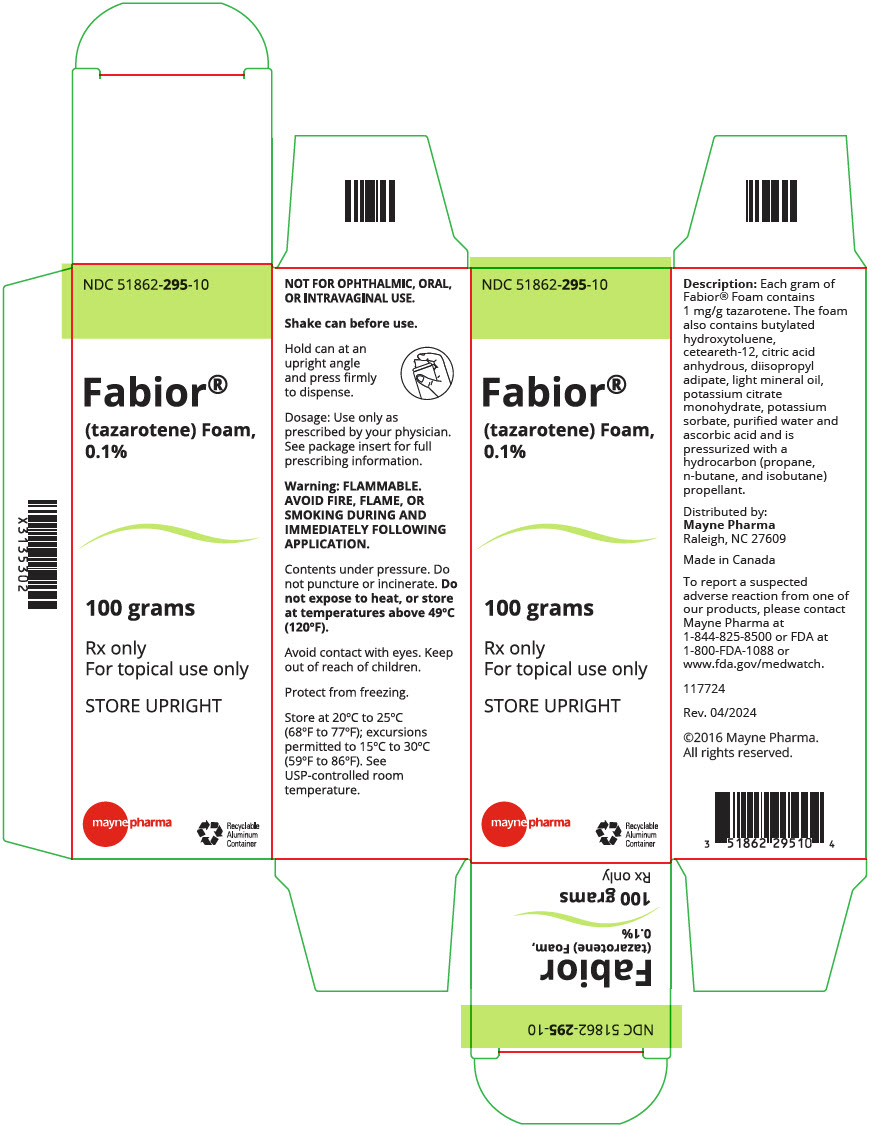
FABIOR tazarotene 1 mg/g Aerosol, Foam
🆔 Identity & classification
Where does this data come from?
🏷️ RxNorm drug class
This medicine belongs to the Retinoid class.
Where does this data come from?
🏭 Manufacturer & labeler
Where does this data come from?
🩺 Clinical
Tazarotene (Tazorac, Fabior) is used to treat acne. Tazarotene (Tazorac) is also used to treat psoriasis (a skin disease in which red, scaly patches form on some areas of the body). Tazarotene (Avage) is used to reduce facial wrinkling and discoloration in patients who are also using other skin care and sunlight avoidance programs. Tazarotene is in a class of medications called retinoids. It works to treat acne and psoriasis by slowing skin cell overgrowth and decreasing skin cell inflammation, which can lead to acne or psoriasis. It works to reduce facial wrinkles and discoloration by causing...
Read the full MedlinePlus article ↗- It's designed to help reduce the look of fine facial wrinkles, uneven patches of lighter or darker skin, and flat age spots — but it works as part of a bigger picture that includes...
- What exactly is tazarotene cream supposed to do for my skin?
- Yes, some redness, peeling, burning, and dryness are very common when you first start using tazarotene, and they tend to be most noticeable in the beginning. Your skin often needs...
- My skin got really red and peely after I started using it — is that normal?
Patient education
Supplement & herbal interactions
Some supplements/herbs that may interact with Tazarotene — tap one for details:
Tazarotene may be associated with lower levels of 1 nutrient — worth a chat with your pharmacist, not a cause for alarm.
Where does this data come from?
Ask a licensed pharmacist directly — free, answered by our team.
🧪 Inactive Ingredients / Excipients
Inactive ingredients, also called excipients, are components of the drug product other than the active ingredient. They may include fillers, dyes, coatings, preservatives, flavors, or other formulation ingredients.
💡 Tap an ingredient (hover on desktop) to see what it is and why it’s used.
-
UNII XF417D3PSL
Anhydrous citric acid is a sour, crystalline powder derived from citric acid with water removed. In medicines, it acts as a buffer to control pH, adds tartness to improve taste, and helps tablets disintegrate.
-
UNII 1P9D0Z171K
BHT is a synthetic antioxidant that prevents fats and oils in medicines from breaking down and becoming rancid. It helps keep the product stable and effective during storage.
-
UNII 7V4MR24V5P
Ceteareth-12 is a synthetic emulsifier made from cetyl and stearyl alcohols combined with ethylene oxide. It helps blend oil and water-based ingredients in medicines, creating a stable, uniform texture.
-
UNII P7E6YFV72X
Diisopropyl adipate is a clear, oily liquid derived from adipic acid. It acts as a plasticizer and solvent in medicines, helping soften coatings and improve how the drug dissolves or spreads in the body.
-
UNII N6K5787QVP
Light mineral oil is a clear, odorless liquid derived from petroleum. In medicines, it acts as a lubricant and emollient to help the product spread smoothly and improve texture.
-
UNII EE90ONI6FF
Potassium citrate is a salt derived from citric acid and potassium. In medicines, it acts as a buffer to adjust and maintain the pH balance of the product, helping keep it stable and palatable.
-
UNII 1VPU26JZZ4
Potassium sorbate is a salt derived from sorbic acid, a naturally occurring preservative. It prevents growth of mold, yeast, and some bacteria, extending the medicine's shelf life.
-
UNII X045WJ989B
Sorbic acid is a preservative derived from berries that prevents mold, yeast, and bacterial growth in medicines. It keeps the product stable and safe during storage.
-
UNII 059QF0KO0R
Water is a liquid solvent that dissolves and mixes ingredients together in liquid medicines, syrups, and injections. It helps distribute the active drug evenly throughout the product.
9 inactive ingredients listed in the exact product block matched to this NDC.
Where does this data come from?
ingredient classCode="IACT" elements from the exact product block matched by this NDC. Label-section narrative from DailyMed / the openFDA label index is shown separately when available.Inactive ingredient FAQ
Are inactive ingredients the same for every manufacturer?
Why might an inactive ingredient be missing?
Can inactive ingredients matter?
💲 Pricing
A drug doesn't have one price. Each row is a different public payment system, and none is what you'd pay at the counter — that depends on your insurance. The ⓘ on each row explains what it measures.
| Price system | Per g | Per package |
|---|---|---|
| Retail pharmacies payNADAC · weekly | $12.323 | $1,232.28 / 100 g |
| Medicaid paysCMS SDUD · 12 mo | No recent Medicaid claims on file for this NDC — rare and low-volume NDCs are suppressed in the public data. | |
| Medicare drug plans payPart D · quarterly | No Part D plan price is available for this NDC in our data. | |
Where does this data come from?
🔁 Therapeutic equivalents
| Product | Labeler | Pack | NADAC/unit | TE | Status | Price vs. this |
|---|---|---|---|---|---|---|
| Fabior 1 mg/gthis 51862-0295-10 | Mayne | 1 can | $12.323 | — | Availability likely | — |
| tazarotene 1 mg/g 68308-0685-50 | Mayne | 1 can | — | — | FDA listed | — |
Where does this data come from?
⏳ Availability & generic status
We did not find an FDA-approved generic match for this exact strength, form and route. Patent/protection dates below may affect future generic timing.
Why the date isn’t exact: Generic timing can change because patents may be challenged, settled, licensed, added, removed, or worked around with a narrower label — and FDA approval does not always mean a pharmacy can get the generic today.
🛈 What do these terms mean?
- Patent
- Legal protection listed in the Orange Book that may delay generic approval or launch. Issued by the U.S. Patent & Trademark Office.
- Substance patent
- Covers the active drug molecule itself — the hardest to design around. A generic generally can’t launch until it expires.
- Formulation (product) patent
- Covers a specific formulation or dosage form. A generic can sometimes work around it with a different formulation.
- Method-of-use patent
- A patent covering one specific approved use of the drug — not necessarily the whole molecule. A generic can sometimes launch with a “skinny label” that carves out the protected use and keeps the others.
- Skinny label
- A generic label that omits a still-patented use when the FDA allows it — letting a generic reach the market for the unprotected uses.
- Exclusivity
- FDA-granted marketing protection, separate from patents — e.g. 5-yr new chemical entity, 7-yr orphan drug, or a +6-month pediatric extension.
- Paragraph IV
- A generic applicant’s formal challenge to a listed patent. It can potentially lead to earlier generic entry, but often involves litigation or a settlement.
- RLD / RS
- Reference Listed Drug — the brand product the FDA uses as the reference for generic applications. Reference Standard — the product the FDA expects generics to compare against in bioequivalence testing.
- TE / AB rating
- FDA therapeutic-equivalence rating. An AB rating generally means the FDA considers a generic therapeutically equivalent to — and substitutable for — the brand.
- LOE (loss of exclusivity)
- The latest patent or exclusivity currently listed — the loss-of-exclusivity / latest-listed-protection date shown on this page. Paragraph-IV challenges and settlements can move the real date earlier; FDA approval and a manufacturer’s decision to market can move it later.
Built from the FDA Orange Book. The bars above are scaled to each protection’s expiry; the red LOE marker is the last one to lapse.
| Patent | Type | Use code | Expires |
|---|---|---|---|
| US 10568859 ↗ | Method of use | U-2760 | Feb 24, 2030 |
| US 10688071 ↗ | Method of use | U-2760 | Feb 24, 2030 |
| US 8808716 ↗ | Drug product | — | Feb 24, 2030 |
Is there a generic version of FABIOR 0.1% FOAM?
The FDA approved a generic — why can’t I get it at my pharmacy yet?
Why do different websites show different generic release dates?
What does “FDA listed” mean?
What does a patent or protection date mean here?
What does “current Orange Book estimate” mean?
Can a generic come out before the last patent expires?
Can a generic come out after the listed dates?
What is the difference between patents and exclusivity?
Why are there multiple patent dates?
Where does this data come from?
📊 Medicare Part D spend CMS · PART D · 2026 (Q1)
🔬 Reported adverse events (FAERS)
Top reported reactions
Age at onset
Reporter sex
Serious outcomes
Where does this data come from?
📦 Packaging — all sizes for this product
| Package NDC | Description | Per unit | Per pack | Marketing start | Status |
|---|---|---|---|---|---|
| 51862-0295-10 You're viewing this | 1 CAN in 1 CARTON (51862-295-10) / 100 g in 1 CAN | $12.32 / g | $1,232.28 | 2017-03-17 | Active |
| 51862-0295-50 | 1 CAN in 1 CARTON (51862-295-50) / 50 g in 1 CAN | — | — | 2017-03-10 | Discontinued by firm |
Pack size FAQ
What quantity is in NDC 51862-0295-10?
What NDC number is used to bill for this package of FABIOR tazarotene 1 mg/g Aerosol, Foam?
Prices are the latest CMS NADAC pharmacy acquisition cost per NDC; per-pack figures are per-unit × pack quantity, shown only when the pack is denominated in the same measure NADAC prices.
📄 Full prescribing information FDA SPL
🎯 Indications and Usage ▾
1 INDICATIONS AND USAGE FABIOR ® (tazarotene) Foam, 0.1% is indicated for the topical treatment of acne vulgaris in patients 12 years of age or older. FABIOR Foam is a retinoid indicated for the topical treatment of acne vulgaris in patients 12 years of age or older. ( 1 )
⏱️ Dosage and Administration ▾
2 DOSAGE AND ADMINISTRATION FABIOR Foam is for topical use only. FABIOR Foam is not for oral, ophthalmic, or intravaginal use. FABIOR Foam should be applied once daily in the evening after washing with a mild cleanser and fully drying the affected area.
Dispense a small amount of foam into the palm of the hand. Using fingertips, apply only enough foam to lightly cover the entire affected areas of the face and/or upper trunk with a thin layer; gently massage the foam into the skin until the foam disappears. Avoid the eyes, lips, and mucous membranes.
Wash hands after application. Patients may use moisturizer as needed. If undue irritation (redness, peeling, or discomfort) occurs, patients should reduce frequency of application or temporarily interrupt treatment.
Treatment may be resumed once irritation subsides. Treatment should be discontinued if irritation persists. Apply a thin layer to the entire affected areas of the face and/or upper trunk once daily in the evening.
Avoid the eyes, lips, and mucous membranes. Wash hands after application. ( 2 )
💊 Dosage Forms and Strengths ▾
3 DOSAGE FORMS AND STRENGTHS 0.1%, white to off-white foam 0.1%, foam. ( 3 )
⛔ Contraindications ▾
4 CONTRAINDICATIONS FABIOR Foam is contraindicated in pregnancy. FABIOR Foam may cause fetal harm when administered to a pregnant woman. Tazarotene elicits teratogenic and developmental effects associated with retinoids after topical or systemic administration in rats and rabbits [see Use in Specific Populations (8.1) ].
If this drug is used during pregnancy, or if the patient becomes pregnant while taking this drug, treatment should be discontinued and the patient apprised of the potential hazard to the fetus [see Warnings and Precautions (5.1) , Use in Specific Populations (8.1) ]. Pregnancy. ( 4 , 8.1 )
⚠️ Warnings and Cautions ▾
5 WARNINGS AND PRECAUTIONS Fetal Risk: FABIOR Foam contains tazarotene, which is a teratogenic substance. FABIOR Foam is contraindicated in pregnancy. Females of childbearing potential should have a negative pregnancy test within 2 weeks prior to initiating treatment and use an effective method of contraception during treatment.
( 5.1 ) Local Irritation: Use with caution in patients with a history of local tolerability reactions or local hypersensitivity. ( 5.2 ) Potential Irritant Effect with Concomitant Topical Medications: Use with caution because a cumulative irritant effect may occur. ( 5.3 ) Photosensitivity and Risk for Sunburn: Avoid exposure to sunlight, sunlamps, and weather extremes.
Wear sunscreen daily. ( 5.4 ) Contents are flammable. Instruct the patient to avoid fire, flame, and smoking during and immediately following application.
( 5.5 )
5.1Fetal Risk Systemic exposure to tazarotenic acid is dependent upon the extent of the body surface area treated. In patients treated topically over sufficient body surface area, exposure could be in the same order of magnitude as in orally treated animals. Tazarotene is a teratogenic substance, and it is not known what level of exposure is required for teratogenicity in humans [see Clinical Pharmacology (12) ] .
There were 5 reported pregnancies in subjects who participated in clinical trials for topical tazarotene foam. One of the subjects was found to have been treated with topical tazarotene for 25 days, 2 were treated with vehicle foam, and the other 2 did not receive either tazarotene foam or vehicle foam. The subjects were discontinued from the trials when their pregnancy was reported.
The one pregnant woman who was inadvertently exposed to topical tazarotene during the clinical trial delivered a full-term healthy infant. Females of Childbearing Potential: Females of child-bearing potential should be warned of the potential risk and use adequate birth-control measures when tazarotene foam is used. The possibility of pregnancy should be considered in females of child-bearing potential at the time of institution of therapy.
A negative serum or urine result for pregnancy test having a sensitivity down to at least 25 mIU/mL for human chorionic gonadotropin (hCG) should be obtained within 2 weeks prior to therapy with FABIOR Foam, which should begin during a normal menstrual period for females of childbearing potential. Advise patients of the need to use an effective method of contraception to avoid pregnancy [see Use in Specific Populations (8.1) ] .
5.2Local Irritation FABIOR Foam should be used with caution in patients with a history of local tolerability reactions or local hypersensitivity. Retinoids should not be used on abraded or eczematous skin, as they may cause severe irritation. Contact with the mouth, eyes, and mucous membranes should be avoided.
In case of accidental contact, rinse well with water. Some individuals may experience skin redness, peeling, burning or excessive pruritus. If these effects occur, the medication should either be discontinued until the integrity of the skin is restored, or the dosing should be reduced to an interval the patient can tolerate.
However, efficacy at reduced frequency of application has not been established. Weather extremes, such as wind or cold, may be more irritating to patients using FABIOR Foam.
5.3Potential Irritant Effect with Concomitant Topical Medications Concomitant topical acne therapy should be used with caution because a cumulative irritant effect may occur. If irritancy or dermatitis occurs, reduce frequency of application or temporarily interrupt treatment and resume once the irritation subsides. Treatment should be discontinued if the irritation persists.
5.4Photosensitivity and Risk for Sunburn Because of heightened burning susceptibility, exposure to sunlight (including sunlamps) should be avoided. Patients must be warned to use sunscreens and protective clothing when using FABIOR Foam. Patients with s…
🤒 Adverse Reactions ▾
6 ADVERSE REACTIONS Most common adverse reactions reported at an incidence ≥6% are application site irritation, application site dryness, application site erythema, and application site exfoliation. ( 6.1 ) To report SUSPECTED ADVERSE REACTIONS, contact Mayne Pharma at 1-844-825-8500 or FDA at 1-800-FDA-1088 or www.fda.gov/medwatch
6.1Clinical Trials Experience Because clinical trials are conducted under widely varying conditions, adverse reaction rates observed in the clinical trials of a drug cannot be directly compared with rates in the clinical trials of another drug and may not reflect the rates observed in practice. The safety data reflect exposure to FABIOR Foam in 744 subjects with acne vulgaris. Subjects were aged 12 to 45 years and were treated once daily in the evening for 12 weeks.
Adverse reactions reported in ≥ 1% of subjects treated with FABIOR Foam are presented in Table 1. Most adverse reactions were mild to moderate in severity. Severe adverse reactions represented 3.0% of the subjects treated.
Overall, 2.7% (20/744) of subjects discontinued FABIOR Foam because of local skin reactions. Table 1. Incidence of Adverse Reactions in ≥1 % of Subjects Treated with FABIOR Foam FABIOR Foam N = 744 Vehicle Foam N = 741 Patients with any adverse reaction, n (%) 163 (22) 19 (3) Application site irritation 107 (14) 9 (1) Application site dryness 50 (7) 8 (1) Application site erythema 48 (6) 3 (<1) Application site exfoliation 44 (6) 3 (<1) Application site pain 9 (1) 0 Application site photosensitivity (including sunburn) 8 (1) 3 (<1) Application site pruritus 7 (1) 3 (<1) Application site dermatitis 6 (1) 1 (<1) Additional adverse reactions that were reported in <1% of subjects treated with FABIOR Foam included application site reactions (including discoloration, discomfort, edema, rash, and swelling), dermatitis, impetigo, and pruritus.
Local skin reactions, dryness, erythema, and peeling actively assessed by the investigator and burning/stinging and itching reported by the subject were evaluated at baseline, during treatment, and end of treatment. During the 12 weeks of treatment, each local skin reaction peaked at Week 2 and gradually reduced thereafter with the continued use of FABIOR Foam.
🔄 Drug Interactions ▾
7 DRUG INTERACTIONS No formal drug-drug interaction studies were conducted with FABIOR Foam. Concomitant dermatologic medications and cosmetics that have a strong drying effect should be avoided. It is recommended to postpone treatment until the effects of these products subside before use of FABIOR Foam is started.
Concomitant use with oxidizing agents, such as benzoyl peroxide, may cause degradation of tazarotene and may reduce the clinical efficacy of tazarotene. If combination therapy is required, they should be applied at different times of the day (e.g., one in the morning and the other in the evening). The impact of tazarotene on the pharmacokinetics of progestin-only oral contraceptives (i.e., minipills) has not been evaluated.
In a trial of 27 healthy female subjects between the ages of 20 to 55 years receiving a combination oral contraceptive tablet containing 1 mg norethindrone and 35 mcg ethinyl estradiol, concomitant use of tazarotene did not affect the pharmacokinetics of norethindrone and ethinyl estradiol over a complete cycle. Avoid concomitant dermatologic medications and cosmetics that have a strong drying effect. ( 7 )
👥 Use in Specific Populations ▾
8 USE IN SPECIFIC POPULATIONS
8.1Pregnancy FABIOR Foam is contraindicated in pregnancy [see Contraindications (4) ]. There are no adequate and well-controlled studies with FABIOR Foam in pregnant women. FABIOR Foam is contraindicated in females who are or may become pregnant [see Contraindications (4) ].
Females of child-bearing potential should be warned of the potential risk and use adequate birth-control measures when FABIOR Foam is used. The possibility that a female of child-bearing potential is pregnant at the time of institution of therapy should be considered. A negative serum or urine result for pregnancy test having a sensitivity down to at least 25 mIU/mL for hCG should be obtained within 2 weeks prior to therapy with FABIOR Foam, which should begin during a normal menstrual period for females of childbearing potential.
In rats, tazarotene 0.05% gel administered topically during gestation days 6 through 17 at 0.25 mg/kg/day resulted in reduced fetal body weights and reduced skeletal ossification. Rabbits dosed topically with 0.25 mg/kg/day tazarotene gel during gestation days 6 through 18 were noted with single incidences of known retinoid malformations, including spina bifida, hydrocephaly, and heart anomalies. Systemic exposure (AUC) to tazarotenic acid at topical doses of 0.25 mg/kg/day tazarotene in a gel formulation in rats and rabbits were 15 and 166 times, respectively, the AUC in acne patients treated with 2 mg/cm 2 of FABIOR Foam 0.1% over a 15% body surface area.
As with other retinoids, when tazarotene was administered orally to experimental animals, developmental delays were seen in rats, and teratogenic effects and post-implantation loss were observed in rats and rabbits at doses 13 and 325 times, respectively, the AUC to tazarotenic acid in acne patients treated with 2 mg/cm 2 of FABIOR Foam 0.1% over a 15% body surface area. In female rats orally administered 2 mg/kg/day tazarotene from 15 days before mating through gestation day 7, a number of classic developmental effects of retinoids were observed including decreased number of implantation sites, decreased litter size, decreased numbers of live fetuses, and decreased fetal body weights.
A low incidence of retinoid-related malformations was also observed. AUC in rats was 42 times the AUC in acne patients treated with 2 mg/cm 2 of FABIOR Foam 0.1% over a 15% body surface area.
8.3Nursing Mothers After single topical doses of 14 C-tazarotene to the skin of lactating rats, radioactivity was detected in milk, suggesting that there would be transfer of drug-related material to the offspring via milk. It is not known whether this drug is excreted in human milk. The safe use of FABIOR Foam during lactation has not been established.
A decision should be made whether to discontinue breastfeeding or to discontinue therapy with FABIOR Foam taking into account the benefit of breastfeeding for the child and the benefit of therapy for the woman.
8.4Pediatric Use The safety and effectiveness of FABIOR Foam in pediatric patients younger than 12 years have not been established. Clinical studies of FABIOR Foam included 860 patients aged 12 to 17 years with acne vulgaris.
8.5Geriatric Use FABIOR Foam for the treatment of acne has not been clinically evaluated in persons over the age of 65.
🤰 Pregnancy ▾
8.1Pregnancy FABIOR Foam is contraindicated in pregnancy [see Contraindications (4) ]. There are no adequate and well-controlled studies with FABIOR Foam in pregnant women. FABIOR Foam is contraindicated in females who are or may become pregnant [see Contraindications (4) ].
Females of child-bearing potential should be warned of the potential risk and use adequate birth-control measures when FABIOR Foam is used. The possibility that a female of child-bearing potential is pregnant at the time of institution of therapy should be considered. A negative serum or urine result for pregnancy test having a sensitivity down to at least 25 mIU/mL for hCG should be obtained within 2 weeks prior to therapy with FABIOR Foam, which should begin during a normal menstrual period for females of childbearing potential.
In rats, tazarotene 0.05% gel administered topically during gestation days 6 through 17 at 0.25 mg/kg/day resulted in reduced fetal body weights and reduced skeletal ossification. Rabbits dosed topically with 0.25 mg/kg/day tazarotene gel during gestation days 6 through 18 were noted with single incidences of known retinoid malformations, including spina bifida, hydrocephaly, and heart anomalies. Systemic exposure (AUC) to tazarotenic acid at topical doses of 0.25 mg/kg/day tazarotene in a gel formulation in rats and rabbits were 15 and 166 times, respectively, the AUC in acne patients treated with 2 mg/cm 2 of FABIOR Foam 0.1% over a 15% body surface area.
As with other retinoids, when tazarotene was administered orally to experimental animals, developmental delays were seen in rats, and teratogenic effects and post-implantation loss were observed in rats and rabbits at doses 13 and 325 times, respectively, the AUC to tazarotenic acid in acne patients treated with 2 mg/cm 2 of FABIOR Foam 0.1% over a 15% body surface area. In female rats orally administered 2 mg/kg/day tazarotene from 15 days before mating through gestation day 7, a number of classic developmental effects of retinoids were observed including decreased number of implantation sites, decreased litter size, decreased numbers of live fetuses, and decreased fetal body weights.
A low incidence of retinoid-related malformations was also observed. AUC in rats was 42 times the AUC in acne patients treated with 2 mg/cm 2 of FABIOR Foam 0.1% over a 15% body surface area.
🧒 Pediatric Use ▾
8.4Pediatric Use The safety and effectiveness of FABIOR Foam in pediatric patients younger than 12 years have not been established. Clinical studies of FABIOR Foam included 860 patients aged 12 to 17 years with acne vulgaris.
🧓 Geriatric Use ▾
8.5Geriatric Use FABIOR Foam for the treatment of acne has not been clinically evaluated in persons over the age of 65.
🆘 Overdosage ▾
10 OVERDOSAGE Excessive topical application of FABIOR Foam may lead to marked redness, peeling, or discomfort. [see Warnings and Precautions (5.2) ]. Management of accidental ingestion or excessive application to the skin should be as clinically indicated.
🧬 Clinical Pharmacology ▾
12 CLINICAL PHARMACOLOGY
12.1Mechanism of Action Tazarotene is a retinoid prodrug that is converted to its active form, the cognate carboxylic acid of tazarotene, by rapid deesterification in animals and man. Tazarotenic acid binds to all 3 members of the retinoic acid receptor (RAR) family: RARα, RARβ, and RARγ but shows relative selectivity for RARβ and RARγ and may modify gene expression. The clinical significance of these findings is unknown.
The mechanism of tazarotene action in acne vulgaris is not defined. However, the basis of tazarotene's therapeutic effect in acne may be due to its anti-hyperproliferative, normalizing-of-differentiation and anti-inflammatory effects. Tazarotene inhibited corneocyte accumulation in rhino mouse skin and cross- linked envelope formation in cultured human keratinocytes.
The clinical significance of these findings is unknown.
12.2Pharmacodynamics The pharmacodynamics of FABIOR Foam are unknown.
12.3Pharmacokinetics Following topical application, tazarotene undergoes esterase hydrolysis to form its active metabolite, tazarotenic acid. Tazarotenic acid was highly bound to plasma proteins (greater than 99%). Tazarotene and tazarotenic acid were metabolized to sulfoxides, sulfones, and other polar metabolites which were eliminated through urinary and fecal pathways.
Systemic exposure following topical application of FABIOR Foam 0.1% was evaluated in one trial. Patients aged 15 years and older with moderate-to-severe acne applied approximately 3.7 grams of FABIOR Foam 0.1% (N = 13) to approximately 15% body surface area (face, upper chest, upper back, and shoulders) once daily for 22 days. On Day 22, the mean (±SD) tazarotenic acid C max was 0.43 (±0.19) ng/mL, the AUC 0 - 24h was 6.98 (±3.56) ng∙h/mL, and the half-life was 21.7 (±15.7) hours.
The median T max was 6 hours (range: 4.4 to 12 hours). The AUC 0-24h for tazarotenic acid was approximately 50-fold higher compared with the parent compound tazarotene. The mean (±SD) half-life of tazarotene was 8.1 (±3.7) hours.
Accumulation was observed upon repeated once-daily dosing as the tazarotenic acid predose concentrations were measurable in the majority of subjects. Steady state was attained within 22 days of daily application. Once-daily dosing resulted in little to no accumulation of tazarotene as predose concentrations were mostly below the quantitation limit throughout the study.
🧬 Mechanism of Action ▾
12.1Mechanism of Action Tazarotene is a retinoid prodrug that is converted to its active form, the cognate carboxylic acid of tazarotene, by rapid deesterification in animals and man. Tazarotenic acid binds to all 3 members of the retinoic acid receptor (RAR) family: RARα, RARβ, and RARγ but shows relative selectivity for RARβ and RARγ and may modify gene expression. The clinical significance of these findings is unknown.
The mechanism of tazarotene action in acne vulgaris is not defined. However, the basis of tazarotene's therapeutic effect in acne may be due to its anti-hyperproliferative, normalizing-of-differentiation and anti-inflammatory effects. Tazarotene inhibited corneocyte accumulation in rhino mouse skin and cross- linked envelope formation in cultured human keratinocytes.
The clinical significance of these findings is unknown.
📦 How Supplied / Storage and Handling ▾
16 HOW SUPPLIED/STORAGE AND HANDLING How Supplied: FABIOR Foam, 0.1% (1 mg/g) is a white to off-white foam, supplied as follows: 100-g aluminum can NDC 51862-295-10 Storage and Handling: Store at 20°C to 25°C (68°F to 77°F); excursions permitted to 15°C to 30°C (59°F to 86°F). See USP-controlled room temperature. Store upright.
Protect from freezing. Flammable. Avoid fire, flame, or smoking during and immediately following application.
Contents under pressure. Do not puncture or incinerate. Do not expose to heat or store at temperatures above 120°F (49°C).
Shake can before use. Hold can at an upright angle and press firmly to dispense.
📦 Storage and Handling ▾
Storage and Handling: Store at 20°C to 25°C (68°F to 77°F); excursions permitted to 15°C to 30°C (59°F to 86°F). See USP-controlled room temperature. Store upright.
Protect from freezing. Flammable. Avoid fire, flame, or smoking during and immediately following application.
Contents under pressure. Do not puncture or incinerate. Do not expose to heat or store at temperatures above 120°F (49°C).
Shake can before use. Hold can at an upright angle and press firmly to dispense.
📋 Description ▾
11 DESCRIPTION FABIOR (tazarotene) Foam, 0.1% contains the compound tazarotene, a member of the acetylenic class of retinoids. It is for topical use only. Chemically, tazarotene is ethyl 6-[(4,4-dimethylthiochroman-6-yl)ethynyl]nicotinate.
The structural formula is represented below: Molecular Formula: C 21 H 21 NO 2 S Molecular Weight: 351.46 Tazarotene is a pale yellow to yellow substance. FABIOR Foam contains tazarotene, 1 mg/g, in aqueous-based white to off-white foam vehicle consisting of butylated hydroxytoluene, ceteareth-12, citric acid anhydrous, diisopropyl adipate, light mineral oil, potassium citrate monohydrate, potassium sorbate, purified water, and sorbic acid. FABIOR Foam is dispensed from an aluminum can pressurized with a hydrocarbon (propane/n-butane/isobutane) propellant.
Chemical Structure
💬 Information for Patients ▾
17 PATIENT COUNSELING INFORMATION See FDA-approved patient labeling (Patient Information) . Inform the patient of the following: Fetal risk associated with FABIOR Foam for females of childbearing potential. Advise patients to use an effective method of contraception during treatment to avoid pregnancy.
Advise the patient to stop medication if she becomes pregnant and call her doctor. If undue irritation (redness, peeling, or discomfort) occurs, reduce frequency of application or temporarily interrupt treatment. Treatment may be resumed once irritation subsides.
Do not place FABIOR Foam in the freezer. Avoid exposure of the treated areas to either natural or artificial sunlight, including tanning beds and sun lamps. Avoid contact with the eyes.
If FABIOR Foam gets in or near their eyes, to rinse thoroughly with water. Wash their hands after applying FABIOR Foam. Avoid fire, flame, or smoking during and immediately following application since FABIOR Foam is flammable.
Keep out of the reach of children. Not for ophthalmic, oral, or intravaginal use.