
Naproxen 500 mg Tablet, Delayed Release, 100-count — NDC 52817-381-10 (Billing 52817-0381-10)
This is a package of 100 tablets of Naproxen 500 mg Tablet, Delayed Release from TruPharma LLC, marketed since Jul 2023 and currently FDA-listed; retail pharmacies pay about $1.84 per tablet (NADAC). It is this product's only package size.
NDC database record
One package, one record: these facts belong to NDC 52817-381-10 alone.
- Record
- FDA NDC Directory package listing · Human prescription drug
- Code segments
- 52817 labeler · 381 product · 10 package
- Package marketed since
- Aug 1, 2023
- Sample package
- No — commercial package
- Listing certified through
- Dec 31, 2027
- Billing quantity
- 100 EA per package
- Barcode (UPC-A, from the NDC)
- 3 5281738110 1
- Medicaid fills, this package
- 15,947 prescriptions in the last four reported quarters
- FDA record last changed
- Oct 8, 2026
Other active recalls for Naproxen (different manufacturers) — 1 · tap to view
Identity & classification
Regulatory identifiers FDA, NLM and CMS codes for this package
Drug-database identifiers Medi-Span GPI and First Databank GCN / HICL / AHFS classification
- GSN (GCN sequence number): 018436
- GCN: 61851
- HICL (First Databank): 003727
- AHFS class code: 28:08.04.04
Where does this data come from?
- FDA openFDA NDC Directory · synced Oct 8, 2026
- FDA label on DailyMed · label index refreshed Oct 8, 2026
- RxNorm (NLM RxNav) · catalog refreshed Oct 1, 2026
- Medi-Span GPI (licensed)
- First Databank (licensed) · refreshed Oct 8, 2026
Clinical
Prescription naproxen is used to relieve pain, tenderness, swelling, and stiffness caused by osteoarthritis (arthritis caused by a breakdown of the lining of the joints), rheumatoid arthritis (arthritis caused by swelling of the lining of the joints), juvenile arthritis (a form of joint disease in children), and ankylosing spondylitis (arthritis that mainly affects the spine). Prescription naproxen tablets, extended-release tablets, and suspension are also used to relieve shoulder pain caused by bursitis (inflammation of a fluid-filled sac in the shoulder joint), tendinitis (inflammation of th...
Read the full MedlinePlus article ↗- It relieves pain, inflammation and fever. Prescription versions treat arthritis, tendonitis, bursitis, acute gout and painful periods. Over-the-counter versions handle minor aches...
- Take it by mouth with a full glass of water. Over-the-counter products are taken every 8 to 12 hours while symptoms last, and you should use the smallest dose that works. For presc...
- Headache, indigestion, heartburn, nausea and swelling are common. Call your doctor if you have black stools, vomit blood, a rash, yellow skin or eyes, or chest pain.
- Usually not. Combining naproxen with other NSAIDs or aspirin raises bleeding risk with little added benefit. Naproxen can also interfere with low-dose aspirin taken for your heart,...
Patient education
Supplement & herbal interactions
Some supplements/herbs that may interact with Naproxen — tap one for details:
Naproxen may be associated with lower levels of 1 nutrient — worth a chat with your pharmacist, not a cause for alarm.
Where does this data come from?
- MedlinePlus (NLM) · refreshed Oct 8, 2026
- FDA label on DailyMed · label index refreshed Oct 8, 2026
Ask a licensed pharmacist directly — free, answered by our team.
Pricing
A drug doesn't have one price. Each row is a different public payment system, and none is what you'd pay at the counter — that depends on your insurance. The ⓘ on each row explains what it measures.
| Price system | Per ea | Per package |
|---|---|---|
| Retail pharmacies payNADAC · weekly | $1.842 | $184.15 / 100 tablets |
| Medicaid paysCMS SDUD · 12 mo | $2.15 | $214.83 / 100 tablets |
| Medicare drug plans payPart D · Q2 2026 | $0.8963 | $89.63 / 100 tablets |
Where does this data come from?
- CMS NADAC weekly file · file of Oct 7, 2026
- CMS ASP pricing files · refreshed Sep 20, 2026
- CMS Medicaid State Drug Utilization Data · through Q1 2026
- CMS Part D plan pricing files · refreshed Sep 24, 2026
- VA National Acquisition Center price file
Packaging — all sizes for this product
| Package NDC | Description | Marketing start | Marketing end | Status |
|---|---|---|---|---|
| 52817-0381-10 You're viewing this Main listing | 100 TABLET, DELAYED RELEASE in 1 BOTTLE, PLASTIC | 2023-08-01 | — | Active |
Therapeutic equivalents
| Product | Labeler | Pack | NADAC/unit | TE | Status | Price vs. this |
|---|---|---|---|---|---|---|
| Naproxen 500 mg 42494-0454-10 | Cameron | 100 tablets | $1.841 | AB | Availability likely | — |
| Naproxen 500 mgthis 52817-0381-10 | TruPharma | 100 tablets | $1.841 | AB | Availability likely | — |
| Naproxen 500 mg 70954-0928-10 | ANI | 100 tablets | $1.841 | AB | Availability likely | — |
| Naproxen 500 mg 90096-0161-01 | Zameer | 100 tablets | $1.841 | AB | Availability likely | — |
| Naproxen 500 mg 11534-0212-01 | Sunrise | 100 tablets | — | AB | FDA listed | — |
| Naproxen 500 mg 59651-0987-01 | Aurobindo | 100 tablets | — | AB | FDA listed | — |
| Naproxen 500 mg 66267-0373-20 | NuCare | 20 tablets | — | AB | FDA listed | — |
| Naproxen 500 mg 69097-0852-07 | Cipla | 100 tablets | — | AB | FDA listed | — |
| Naproxen 500 mg 72162-2276-01 | Bryant | 100 tablets | — | AB | FDA listed | — |
| Naproxen 500 mg 72789-0003-60 | PD-Rx | 60 tablets | — | AB | FDA listed | — |
Where does this data come from?
- FDA openFDA NDC Directory · synced Oct 8, 2026
- FDA Orange Book · refreshed Oct 3, 2026
- CMS NADAC weekly file · file of Oct 7, 2026
Availability & generic status
This product is an FDA-approved generic. Other versions of the same drug are listed under Therapeutic equivalents, least expensive first.
Where does this data come from?
- FDA Orange Book · refreshed Oct 3, 2026
What it looks like
Where does this data come from?
- FDA label on DailyMed · label index refreshed Oct 8, 2026
Inactive Ingredients / Excipients
Inactive ingredients, also called excipients, are components of the drug product other than the active ingredient. They may include fillers, dyes, coatings, preservatives, flavors, or other formulation ingredients.
🧪 Avoiding an ingredient? See Naproxen inactive ingredients by manufacturer: every current product's list side by side, so you can ask your pharmacy for the version that does not list it.
💡 Tap an ingredient (hover on desktop) to see what it is and why it’s used.
-
UNII M28OL1HH48
Croscarmellose sodium is a plant-based substance derived from cellulose. It acts as a disintegrant, helping tablets and capsules break down quickly in the digestive system so the medicine can be absorbed.
-
UNII XM0M87F357
A dark iron oxide compound that gives medicines their black or dark color. It's used as a colorant in tablets and capsules to help identify the product and make it visually distinctive.
-
UNII 3NXW29V3WO
Hypromellose is a plant-based thickener made from cellulose. It's used in medicines as a binder to hold ingredients together, a coating for tablets, and a thickener for liquids.
-
UNII 70097M6I30
Magnesium stearate is a salt made from magnesium and stearic acid, a fatty substance. It's used in tablets and capsules as a lubricant and glidant to help ingredients flow smoothly during manufacturing and prevent sticking.
-
UNII NX76LV5T8J
A synthetic plastic polymer made from methacrylic acid and ethyl acrylate. It's used as a coating or binder to control how and where the medicine dissolves in your digestive system.
-
UNII 3WJQ0SDW1A
Polyethylene glycol is a synthetic liquid or solid polymer used in medicines as a solvent, lubricant, and humectant. It helps dissolve active ingredients, reduces friction during manufacturing, and retains moisture in the final product.
-
UNII FZ989GH94E
Povidone is a synthetic polymer made from a plastic-like material. It acts as a binder to hold tablet ingredients together and as a disintegrant to help the tablet break apart in your stomach so the medicine can be absorbed.
-
UNII 6DC9Q167V3
Propylene glycol is a clear liquid derived from petroleum or vegetable sources. It acts as a solvent, humectant, and preservative in medicines, helping dissolve active ingredients and maintain product stability.
-
UNII 7SEV7J4R1U
A powder made from a naturally occurring mineral. In medicines, talc works as a glidant and anti-caking agent, helping tablets and capsules flow smoothly during manufacturing and preventing clumping.
-
UNII 8Z96QXD6UM
Triethyl citrate is a clear liquid derived from citric acid. It acts as a plasticizer and solvent in tablet coatings and film formulations, helping the coating remain flexible and adhere properly to the medicine.
10 inactive ingredients listed in the exact product block matched to this NDC.
Where does this data come from?
ingredient classCode="IACT" elements from the exact product block matched by this NDC. Label-section narrative from DailyMed / the openFDA label index is shown separately when available.- FDA label on DailyMed · label index refreshed Oct 8, 2026
- FDA openFDA NDC Directory · synced Oct 8, 2026
Inactive ingredient FAQ
Are inactive ingredients the same for every manufacturer?
Why might an inactive ingredient be missing?
Can inactive ingredients matter?
Manufacturer & labeler
More NDCs from TruPharma LLC labeler code 52817
- Metoprolol Tartrate 100 mg Tablet, Film Coated NDC 52817-362-00
- Triamterene 50 mg Capsule NDC 52817-364-10
- Triamterene 100 mg Capsule NDC 52817-365-10
- Ethacrynic acid 25 mg Tablet NDC 52817-367-10
- Clonidine .17 mg Tablet, Extended Release NDC 52817-375-30
- Naproxen 375 mg Tablet, Delayed Release NDC 52817-380-10
- Glipizide 2.5 mg Tablet NDC 52817-385-10
- Carbidopa-levodopa 10 mg; 100 mg Tablet NDC 52817-390-10
- Carbidopa-levodopa 25 mg; 100 mg Tablet NDC 52817-391-00
- Carbidopa-levodopa 25 mg; 250 mg Tablet NDC 52817-392-00
- Trazodone Hydrochloride 25 mg Tablet, Film Coated NDC 52817-395-10
- Trazodone Hydrochloride 75 mg Tablet, Film Coated NDC 52817-396-10
Where does this data come from?
- FDA openFDA NDC Directory · synced Oct 8, 2026
- Drugs@FDA
Full prescribing information FDA SPL
🚨 Boxed Warning ▾
WARNING: RISK OF SERIOUS CARDIOVASCULAR AND GASTROINTESTINAL EVENTS Cardiovascular Thrombotic Events Nonsteroidal anti-inflammatory drugs (NSAIDs) cause an increased risk of serious cardiovascular thrombotic events, including myocardial infarction and stroke, which can be fatal. This risk may occur early in treatment and may increase with duration of use [ see Warnings and Precautions (5.1) ]. Naproxen delayed-release tablets are contraindicated in the setting of coronary artery bypass graft (CABG) surgery [ see Contraindications (4) , Warnings and Precautions (5.1) ].
Gastrointestinal Bleeding, Ulceration, and Perforation NSAIDs cause an increased risk of serious gastrointestinal (GI) adverse events including bleeding, ulceration, and perforation of the stomach or intestines, which can be fatal. These events can occur at any time during use and without warning symptoms. Elderly patients and patients with a prior history of peptic ulcer disease and/or GI bleeding are at greater risk for serious GI events [ see Warnings and Precautions (5.2) ].
WARNING: RISK OF SERIOUS CARDIOVASCULAR AND GASTROINTESTINAL EVENTS See full prescribing information for complete boxed warning. Nonsteroidal anti-inflammatory drugs (NSAIDs) cause an increased risk of serious cardiovascular thrombotic events, including myocardial infarction and stroke, which can be fatal. This risk may occur early in treatment and may increase with duration of use.
(5.1) Naproxen delayed-release tablets are contraindicated in the setting of coronary artery bypass graft (CABG) surgery. (4 , 5.1) NSAIDs cause an increased risk of serious gastrointestinal (GI) adverse events including bleeding, ulceration, and perforation of the stomach or intestines, which can be fatal. These events can occur at any time during use and without warning symptoms.
Elderly patients and patients with a prior history of peptic ulcer disease and/or GI bleeding are at greater risk for serious GI events. (5.2)
🎯 Indications and Usage ▾
1 INDICATIONS AND USAGE Naproxen delayed-release tablets are indicated for: The relief of the signs and symptoms of: rheumatoid arthritis osteoarthritis ankylosing spondylitis polyarticular juvenile idiopathic arthritis Naproxen delayed-release tablets are non-steroidal anti-inflammatory drugs indicated for: the relief of the signs and symptoms of: rheumatoid arthritis osteoarthritis ankylosing spondylitis polyarticular juvenile idiopathic arthritis
⏱️ Dosage and Administration ▾
2 DOSAGE AND ADMINISTRATION Use the lowest effective dosage for shortest duration consistent with individual patient treatment goals. (2.1) Rheumatoid Arthritis, Osteoarthritis, and Ankylosing Spondylitis Naproxen delayed-release tablets 375 mg or 500 mg Twice daily To maintain the integrity of the enteric coating, the naproxen delayed-release tablet should not be broken, crushed or chewed during ingestion. The dose may be adjusted up or down depending on the clinical response of the patient.
In patients who tolerate lower doses well, the dose may be increased to naproxen 1500 mg/day for up to 6 months. Acute Gout Naproxen delayed-release tablets are not recommended because of the delay in absorption.
2.1General Dosing Instructions Carefully consider the potential benefits and risks of naproxen delayed-release tablets and other treatment options before deciding to use naproxen delayed-release tablets. Use the lowest effective dose for the shortest duration consistent with individual patient treatment goals. [see Warnings and Precautions (5) ] . After observing the response to initial therapy with naproxen delayed-release tablets, the dose and frequency should be adjusted to suit an individual patient’s needs.
To maintain the integrity of the enteric coating, the naproxen delayed-release tablet should not be broken, crushed or chewed during ingestion. Naproxen-containing products such as naproxen delayed-release tablets and other naproxen products should not be used concomitantly since they all circulate in the plasma as the naproxen anion.
2.2Rheumatoid Arthritis, Osteoarthritis and Ankylosing Spondylitis The recommended dosages of naproxen delayed-release tablets are shown in Table 1. Table 1: Recommended dosages for Naproxen delayed-release tablets Naproxen delayed-release tablets 375 mg or 500 mg Twice daily Twice daily During long-term administration, the dose of naproxen may be adjusted up or down depending on the clinical response of the patient. A lower daily dose may suffice for long-term administration.
The morning and evening doses do not have to be equal in size and administration of the drug more frequently than twice daily does not generally make a difference in response. In patients who tolerate lower doses well, the dose may be increased to naproxen 1500 mg/day for limited periods of up to 6 months when a higher level of anti-inflammatory/analgesic activity is required. When treating such patients with naproxen 1500 mg/day, the physician should observe sufficient increased clinical benefits to offset the potential increased risk.
2.3Polyarticular Juvenile Idiopathic Arthritis Naproxen solid-oral dosage forms may not allow for the flexible dose titration needed in pediatric patients with polyarticular juvenile idiopathic arthritis. A liquid formulation may be more appropriate for weight-based dosing and due to the need for dose flexibility in children. In pediatric patients, doses of 5 mg/kg/day produced plasma levels of naproxen similar to those seen in adults taking 500 mg of naproxen [see Clinical Pharmacology (12) ] .
The recommended total daily dose of naproxen is approximately 10 mg/kg given in 2 divided doses.
2.4Management of Pain, Primary Dysmenorrhea, and Acute Tendonitis and Bursitis Naproxen delayed-release tablets are not recommended for initial treatment of acute pain because absorption of naproxen is delayed compared to other naproxen-containing products [see Clinical Pharmacology (12) ] .
2.5Acute Gout Naproxen delayed-release tablets are not recommended because of the delay in absorption.
2.6Non-Interchangeability with Other Formulations of Naproxen Different dose strengths and formulations (e.g., tablets, suspension) of naproxen are not interchangeable. This difference should be taken into consideration when changing strengths or formulations.
💊 Dosage Forms and Strengths ▾
3 DOSAGE FORMS AND STRENGTHS Naproxen delayed-release tablets USP: 375 mg: white or off-white oval shaped tablet, printed with 'T54' on one side and plain on the other side. Naproxen delayed-release tablets USP: 500 mg: white or off-white oval shaped tablet, printed with 'T55' on one side and plain on the other side. Naproxen delayed-release tablets, USP: 375 mg and 500 mg
⛔ Contraindications ▾
4 CONTRAINDICATIONS Naproxen delayed-release tablets are contraindicated in the following patients: Known hypersensitivity (e.g., anaphylactic reactions and serious skin reactions) to naproxen or any components of the drug product [ see Warnings and Precautions (5.7 , 5.9) ]. History of asthma, urticaria, or other allergic-type reactions after taking aspirin or other NSAIDs. Severe, sometimes fatal, anaphylactic reactions to NSAIDs have been reported in such patients [ see Warnings and Precautions (5.7 , 5.8) ].
In the setting of coronary artery bypass graft (CABG) surgery [ see Warnings and Precautions ( 5.1) ]. Known hypersensitivity to naproxen or any components of the drug product (4) History of asthma, urticaria, or other allergic-type reactions after taking aspirin or other NSAIDs (4) In the setting of CABG surgery (4)
⚠️ Warnings and Cautions ▾
5 WARNINGS AND PRECAUTIONS Hepatotoxicity : Inform patients of warning signs and symptoms of hepatotoxicity. Discontinue if abnormal liver tests persist or worsen or if clinical signs and symptoms of liver disease develop. (5.3) Hypertension: Patients taking some antihypertensive medications may have impaired response to these therapies when taking NSAIDs.
Monitor blood pressure. (5.4 , 7) Heart Failure and Edema: Avoid use of naproxen delayed-release tablets in patients with severe heart failure unless benefits are expected to outweigh risk of worsening heart failure. (5.5) Renal Toxicity: Monitor renal function in patients with renal or hepatic impairment, heart failure, dehydration, or hypovolemia.
Avoid use of naproxen delayed-release tablets in patients with advanced renal disease unless benefits are expected to outweigh risk of worsening renal function. (5.6) Anaphylactic Reactions: Seek emergency help if an anaphylactic reaction occurs. (5.7) Exacerbation of Asthma Related to Aspirin Sensitivity: Naproxen delayed-release tablets are contraindicated in patients with aspirin-sensitive asthma.
Monitor patients with preexisting asthma (without aspirin sensitivity). (5.8) Serious Skin Reactions: Discontinue naproxen delayed-release tablets at first appearance of skin rash or other signs of hypersensitivity. (5.9) Drug Reaction with Eosinophilia and Systemic Symptoms (DRESS): Discontinue and evaluate clinically.
(5.10 ) Fetal Toxicity : Limit use of NSAIDs, including naproxen delayed-release tablets, between about 20 to 30 weeks in pregnancy due to the risk of oligohydramnios/fetal dysfunction. Avoid use of NSAIDs in women at about 30 weeks gestation and later in pregnancy due to the risks of oligohydramnios/fetal renal dysfunction and premature closure of the fetal ductus arteriosus (5.11 , 8.1 ) Hematologic Toxicity: Monitor hemoglobin or hematocrit in patients with any signs or symptoms of anemia. (5.12 , 7)
5.1Cardiovascular Thrombotic Events Clinical trials of several COX-2 selective and nonselective NSAIDs of up to three years duration have shown an increased risk of serious cardiovascular (CV) thrombotic events, including myocardial infarction (MI) and stroke, which can be fatal. Based on available data, it is unclear that the risk for CV thrombotic events is similar for all NSAIDs. The relative increase in serious CV thrombotic events over baseline conferred by NSAID use appears to be similar in those with and without known CV disease or risk factors for CV disease.
However, patients with known CV disease or risk factors had a higher absolute incidence of excess serious CV thrombotic events, due to their increased baseline rate. Some observational studies found that this increased risk of serious CV thrombotic events began as early as the first weeks of treatment. The increase in CV thrombotic risk has been observed most consistently at higher doses.
To minimize the potential risk for an adverse CV event in NSAID-treated patients, use the lowest effective dose for the shortest duration possible. Physicians and patients should remain alert for the development of such events, throughout the entire treatment course, even in the absence of previous CV symptoms. Patients should be informed about the symptoms of serious CV events and the steps to take if they occur.
There is no consistent evidence that concurrent use of aspirin mitigates the increased risk of serious CV thrombotic events associated with NSAID use. The concurrent use of aspirin and an NSAID, such as naproxen, increases the risk of serious gastrointestinal (GI) events [ see Warnings and Precautions (5.2) ]. Status Post Coronary Artery Bypass Graft (CABG) Surgery Two large, controlled clinical trials of a COX-2 selective NSAID for the treatment of pain in the first 10 to 14 days following CABG surgery found an increased incidence of myocardial infarction and stroke.
NSAIDs are contraindicated in the setting of CABG [see Contraindications (4) ] . Post-MI Patie… [Excerpted — this section continues on DailyMed.]
🤒 Adverse Reactions ▾
6 ADVERSE REACTIONS The following adverse reactions are discussed in greater detail in other sections of the labeling: Cardiovascular Thrombotic Events [ see Warnings and Precautions (5.1) ] GI Bleeding, Ulceration, and Perforation [ see Warnings and Precautions (5.2) ] Hepatotoxicity [ see Warnings and Precautions (5.3) ] Hypertension [ see Warnings and Precautions (5.4) ] Heart Failure and Edema [ see Warnings and Precautions (5.5) ] Renal Toxicity and Hyperkalemia [ see Warnings and Precautions (5.6) ] Anaphylactic Reactions [ see Warnings and Precautions (5.7) ] Serious Skin Reactions [ see Warnings and Precautions (5.9) ] Hematologic Toxicity [ see Warnings and Precautions (5.12) ] Most common adverse reactions to naproxen were dyspepsia, abdominal pain, nausea, headache, rash, ecchymosis, and edema.
(6.1) To report SUSPECTED ADVERSE REACTIONS, contact TruPharma LLC at (877)-541-5504 or FDA at 1-800-FDA-1088 or www.fda.gov/medwatch.
6.1Clinical Trials Experience Because clinical trials are conducted under widely varying conditions, adverse reaction rates observed in the clinical trials of a drug cannot be directly compared to rates in the clinical trials of another drug and may not reflect the rates observed in practice. Adverse reactions reported in controlled clinical trials in 960 patients treated for rheumatoid arthritis or osteoarthritis are listed below. In general, reactions in patients treated chronically were reported 2 to 10 times more frequently than they were in short-term studies in the 962 patients treated for mild to moderate pain or for dysmenorrhea.
The most frequent complaints reported related to the gastrointestinal tract. A clinical study found gastrointestinal reactions to be more frequent and more severe in rheumatoid arthritis patients taking daily doses of 1500 mg naproxen compared to those taking 750 mg naproxen. In controlled clinical trials with about 80 pediatric patients and in well-monitored, open-label studies with about 400 pediatric patients with polyarticular juvenile idiopathic arthritis treated with naproxen, the incidence of rash and prolonged bleeding times were greater, the incidence of gastrointestinal and central nervous system reactions were about the same, and the incidence of other reactions were lower in pediatric patients than in adults.
In patients taking naproxen in clinical trials, the most frequently reported adverse experiences in approximately 1% to 10% of patients were: Gastrointestinal (GI) Experiences, including: heartburn * , abdominal pain * , nausea * , constipation * , diarrhea, dyspepsia, stomatitis C entral Nervous System: headache * , dizziness * , drowsiness * , lightheadedness, vertigo Dermatologic: pruritus (itching) * , skin eruptions * , ecchymoses * , sweating, purpura Special Senses: tinnitus * , visual disturbances, hearing disturbances C ardiovascular: edema * , palpitations General: dyspnea * , thirst * Incidence of reported reaction between 3% and 9%.
Those reactions occurring in less than 3% of the patients are unmarked. In patients taking NSAIDs, the following adverse experiences have also been reported in approximately 1% to 10% of patients. Gastrointestinal (GI) Experiences, including: flatulence, gross bleeding/perforation, GI ulcers (gastric/duodenal), vomiting General: abnormal renal function, anemia, elevated liver enzymes, increased bleeding time, rashes The following are additional adverse experiences reported in <1% of patients taking naproxen during clinical trials.
Gastrointestinal: pancreatitis, vomiting Hepatobiliary: jaundice Hemic and Lymphatic: melena, thrombocytopenia, agranulocytosis Nervous System: inability to concentrate Dermatologic: skin rashes
6.2Postmarketing Experience The following adverse reactions have been identified during post approval use of naproxen. Because these reactions are reported voluntarily from a population of uncertain size, it is not always possible to reliably estimate their frequency or establish a c… [Excerpted — this section continues on DailyMed.]
🔄 Drug Interactions ▾
7 DRUG INTERACTIONS See Table 1 for clinically significant drug interactions with naproxen. Table 1: Clinically Significant Drug Interactions with naproxen Drugs That Interfere with Hemostasis Clinical Impact: Naproxen and anticoagulants such as warfarin have a synergistic effect on bleeding. The concomitant use of naproxen and anticoagulants have an increased risk of serious bleeding compared to the use of either drug alone.
Serotonin release by platelets plays an important role in hemostasis. Case-control and cohort epidemiological studies showed that concomitant use of drugs that interfere with serotonin reuptake and an NSAID may potentiate the risk of bleeding more than an NSAID alone. Intervention: Monitor patients with concomitant use of naproxen delayed-release tablets with anticoagulants (e.g., warfarin), antiplatelet agents (e.g., aspirin), selective serotonin reuptake inhibitors (SSRIs), and serotonin norepinephrine reuptake inhibitors (SNRIs) for signs of bleeding [see Warnings and Precautions (5.12) ] .
Aspirin Clinical Impact: A pharmacodynamic (PD) study has demonstrated an interaction in which lower dose naproxen (220mg/day or 220mg twice daily) interfered with the antiplatelet effect of low-dose immediate-release aspirin, with the interaction most marked during the washout period of naproxen [see
12.2Pharmacodynamics ] . There is reason to expect that the interaction would be present with prescription doses of naproxen or with enteric-coated low-dose aspirin; however, the peak interference with aspirin function may be later than observed in the PD study due to the longer washout period. Controlled clinical studies showed that the concomitant use of NSAIDs and analgesic doses of aspirin does not produce any greater therapeutic effect than the use of NSAIDs alone.
In a clinical study, the concomitant use of an NSAID and aspirin was associated with a significantly increased incidence of GI adverse reactions as compared to use of the NSAID alone [see Warnings and Precautions (5.2) ] . Intervention: Because there may be an increased risk of cardiovascular events following discontinuation of naproxen due to the interference with the antiplatelet effect of aspirin during the washout period, for patients taking low-dose aspirin for cardioprotection who require intermittent analgesics, consider use of an NSAID that does not interfere with the antiplatelet effect of aspirin, or non-NSAID analgesics where appropriate.
Concomitant use of naproxen delayed-release tablets and analgesic doses of aspirin is not generally recommended because of the increased risk of bleeding [see Warnings and Precautions ( 5.12) ]. Naproxen delayed-release tablets are not a substitute for low dose aspirin for cardiovascular protection. ACE Inhibitors, Angiotensin Receptor Blockers, and Beta-Blockers Clinical Impact: NSAIDs may diminish the antihypertensive effect of angiotensin converting enzyme (ACE) inhibitors, angiotensin receptor blockers (ARBs), or beta-blockers (including propranolol).
In patients who are elderly, volume-depleted (including those on diuretic therapy), or have renal impairment, co-administration of an NSAID with ACE inhibitors or ARBs may result in deterioration of renal function, including possible acute renal failure. These effects are usually reversible. Intervention: During concomitant use of naproxen delayed-release tablets and ACE-inhibitors, ARBs, or beta-blockers, monitor blood pressure to ensure that the desired blood pressure is obtained.
During concomitant use of naproxen delayed-release tablets and ACE-inhibitors or ARBs in patients who are elderly, volume-depleted, or have impaired renal function, monitor for signs of worsening renal function [ see Warnings and Precautions (5.6) ]. When these drugs are administered concomitantly, patients should be adequately hydrated. Assess renal function at the beginning of the concomitant treatment and periodically thereafter.
Diuretics Clinical Impact: Clinical studies,… [Excerpted — this section continues on DailyMed.]
👥 Use in Specific Populations ▾
8 USE IN SPECIFIC POPULATIONS Infertility: NSAIDs are associated with reversible infertility. Consider withdrawal of naproxen delayed-release tablets in women who have difficulties conceiving. (8.3) Renal Impairment: Naproxen-containing products are not recommended for use in patients with moderate to severe and severe renal impairment (creatinine clearance <30 mL/min). (8.7)
8.1Pregnancy Risk Summary Use of NSAIDs, including naproxen delayed-release tablets, can cause premature closure of the fetal ductus arteriosus and fetal renal dysfunction leading to oligohydramnios and, in some cases, neonatal renal impairment. Because of these risks, limit dose and duration of naproxen delayed-release tablets use between about 20 and 30 weeks of gestation, and avoid naproxen delayed-release tablets use at about 30 weeks of gestation and later in pregnancy (see CLINICAL CONSIDERATIONS , DATA ). Premature Closure of Fetal Ductus Arteriosus Use of NSAIDs, including naproxen delayed-release tablets, at about 30 weeks gestation or later in pregnancy increases the risk of premature closure of the fetal ductus arteriosus.
Oligohydramnios/Neonatal Renal Impairment Use of NSAIDs at about 20 weeks gestation or later in pregnancy has been associated with cases of fetal renal dysfunction leading to oligohydramnios, and in some cases, neonatal renal impairment. Data from observational studies regarding other potential embryofetal risks of NSAID use in women in the first or second trimesters of pregnancy are inconclusive. In animal reproduction studies in rats, rabbits, and mice no evidence of teratogenicity or fetal harm when naproxen was administered during the period of organogenesis at doses 0.13, 0.26, and 0.6 times the maximum recommended human daily dose of 1500 mg/day, respectively [see DATA ].
Based on animal data, prostaglandins have been shown to have an important role in endometrial vascular permeability, blastocyst implantation, and decidualization. In animal studies, administration of prostaglandin synthesis inhibitors such as naproxen, resulted in increased pre- and post-implantation loss. Prostaglandins also have been shown to have an important role in fetal kidney development.
In published animal studies, prostaglandin synthesis inhibitors have been reported to impair kidney development when administered at clinically relevant doses. The estimated background risk of major birth defects and miscarriage for the indicated population(s) is unknown. All pregnancies have a background risk of birth defect, loss, or other adverse outcomes.
In the U.S. general population, the estimated background risk of major birth defects and miscarriage in clinically recognized pregnancies is 2% to 4% and 15% to 20%, respectively. Clinical Considerations Fetal/Neonatal Adverse Reactions Premature Closure of Fetal Ductus Arteriosus: Avoid use of NSAIDs in women at about 30 weeks gestation and later in pregnancy, because NSAIDs, including naproxen delayed-release tablets, can cause premature closure of the fetal ductus arteriosus (see DATA ). Oligohydramnios/Neonatal Renal Impairment If an NSAID is necessary at about 20 weeks gestation or later in pregnancy, limit the use to the lowest effective dose and shortest duration possible.
If naproxen delayed-release Tablets treatment extends beyond 48 hours, consider monitoring with ultrasound for oligohydramnios. If oligohydramnios occurs, discontinue naproxen delayed-release tablets, and follow up according to clinical practice (see DATA ) Labor or Delivery There are no studies on the effects of naproxen delayed-release tablets during labor or delivery. In animal studies, NSAIDS, including naproxen, inhibit prostaglandin synthesis, cause delayed parturition, and increase the incidence of stillbirth.
Data Human data There is some evidence to suggest that when inhibitors of prostaglandin synthesis are used to delay preterm labor, there is an increased risk of neonatal complications such as necrotizing enterocoliti… [Excerpted — this section continues on DailyMed.]
🤰 Pregnancy ▾
8.1Pregnancy Risk Summary Use of NSAIDs, including naproxen delayed-release tablets, can cause premature closure of the fetal ductus arteriosus and fetal renal dysfunction leading to oligohydramnios and, in some cases, neonatal renal impairment. Because of these risks, limit dose and duration of naproxen delayed-release tablets use between about 20 and 30 weeks of gestation, and avoid naproxen delayed-release tablets use at about 30 weeks of gestation and later in pregnancy (see CLINICAL CONSIDERATIONS , DATA ). Premature Closure of Fetal Ductus Arteriosus Use of NSAIDs, including naproxen delayed-release tablets, at about 30 weeks gestation or later in pregnancy increases the risk of premature closure of the fetal ductus arteriosus.
Oligohydramnios/Neonatal Renal Impairment Use of NSAIDs at about 20 weeks gestation or later in pregnancy has been associated with cases of fetal renal dysfunction leading to oligohydramnios, and in some cases, neonatal renal impairment. Data from observational studies regarding other potential embryofetal risks of NSAID use in women in the first or second trimesters of pregnancy are inconclusive. In animal reproduction studies in rats, rabbits, and mice no evidence of teratogenicity or fetal harm when naproxen was administered during the period of organogenesis at doses 0.13, 0.26, and 0.6 times the maximum recommended human daily dose of 1500 mg/day, respectively [see DATA ].
Based on animal data, prostaglandins have been shown to have an important role in endometrial vascular permeability, blastocyst implantation, and decidualization. In animal studies, administration of prostaglandin synthesis inhibitors such as naproxen, resulted in increased pre- and post-implantation loss. Prostaglandins also have been shown to have an important role in fetal kidney development.
In published animal studies, prostaglandin synthesis inhibitors have been reported to impair kidney development when administered at clinically relevant doses. The estimated background risk of major birth defects and miscarriage for the indicated population(s) is unknown. All pregnancies have a background risk of birth defect, loss, or other adverse outcomes.
In the U.S. general population, the estimated background risk of major birth defects and miscarriage in clinically recognized pregnancies is 2% to 4% and 15% to 20%, respectively. Clinical Considerations Fetal/Neonatal Adverse Reactions Premature Closure of Fetal Ductus Arteriosus: Avoid use of NSAIDs in women at about 30 weeks gestation and later in pregnancy, because NSAIDs, including naproxen delayed-release tablets, can cause premature closure of the fetal ductus arteriosus (see DATA ). Oligohydramnios/Neonatal Renal Impairment If an NSAID is necessary at about 20 weeks gestation or later in pregnancy, limit the use to the lowest effective dose and shortest duration possible.
If naproxen delayed-release Tablets treatment extends beyond 48 hours, consider monitoring with ultrasound for oligohydramnios. If oligohydramnios occurs, discontinue naproxen delayed-release tablets, and follow up according to clinical practice (see DATA ) Labor or Delivery There are no studies on the effects of naproxen delayed-release tablets during labor or delivery. In animal studies, NSAIDS, including naproxen, inhibit prostaglandin synthesis, cause delayed parturition, and increase the incidence of stillbirth.
Data Human data There is some evidence to suggest that when inhibitors of prostaglandin synthesis are used to delay preterm labor, there is an increased risk of neonatal complications such as necrotizing enterocolitis, patent ductus arteriosus, and intracranial hemorrhage. Naproxen treatment given in late pregnancy to delay parturition has been associated with persistent pulmonary hypertension, renal dysfunction, and abnormal prostaglandin E levels in preterm infants. Because of the known effects of nonsteroidal anti-inflammatory drugs on the fetal cardiovascular system (closure of ductus… [Excerpted — this section continues on DailyMed.]
🧒 Pediatric Use ▾
8.4Pediatric Use Safety and effectiveness in pediatric patients below the age of 2 years have not been established. Pediatric dosing recommendations for polyarticular juvenile idiopathic arthritis are based on well-controlled studies [ see Dosage and Administration (2) ]. There are no adequate effectiveness or dose-response data for other pediatric conditions, but the experience in polyarticular juvenile idiopathic arthritis and other use experience have established that single doses of 2.5 to 5 mg/kg as naproxen suspension, with total daily dose not exceeding 15 mg/kg/day, are well tolerated in pediatric patients over 2 years of age.
🧓 Geriatric Use ▾
8.5Geriatric Use The hepatic and renal tolerability of long-term naproxen administration was studied in two double-blind clinical trials involving 586 patients. Of the patients studied, 98 patients were age 65 and older and 10 of the 98 patients were age 75 and older. Naproxen was administered at doses of 375 mg twice daily or 750 mg twice daily for up to 6 months.
Transient abnormalities of laboratory tests assessing hepatic and renal function were noted in some patients, although there were no differences noted in the occurrence of abnormal values among different age groups. Elderly patients, compared to younger patients, are at greater risk for NSAID-associated serious cardiovascular, gastrointestinal, and/or renal adverse reactions. If the anticipated benefit for the elderly patient outweighs these potential risks, start dosing at the low end of the dosing range, and monitor patients for adverse effects [ see Warnings and Precautions (5.1 , 5.2 , 5.3 , 5.6 , 5.14) ].
Studies indicate that although total plasma concentration of naproxen is unchanged, the unbound plasma fraction of naproxen is increased in the elderly. The clinical significance of this finding is unclear, although it is possible that the increase in free naproxen concentration could be associated with an increase in the rate of adverse events per a given dosage in some elderly patients. Caution is advised when high doses are required and some adjustment of dosage may be required in elderly patients.
As with other drugs used in the elderly, it is prudent to use the lowest effective dose. Experience indicates that geriatric patients may be particularly sensitive to certain adverse effects of nonsteroidal anti-inflammatory drugs. Elderly or debilitated patients seem to tolerate peptic ulceration or bleeding less well when these events do occur.
Most spontaneous reports of fatal GI events are in the geriatric population [ see Warnings and Precautions (5.2) ]. Naproxen is known to be substantially excreted by the kidney, and the risk of toxic reactions to this drug may be greater in patients with impaired renal function. Because elderly patients are more likely to have decreased renal function, care should be taken in dose selection, and it may be useful to monitor renal function [ see Clinical Pharmacology (12.3) ].
Geriatric patients may be at a greater risk for the development of a form of renal toxicity precipitated by reduced prostaglandin formation during administration of nonsteroidal anti-inflammatory drugs [ see Warnings and Precautions (5.6) ].
🆘 Overdosage ▾
10 OVERDOSAGE Symptoms following acute NSAID overdosages have been typically limited to lethargy, drowsiness, nausea, vomiting, and epigastric pain, which have been generally reversible with supportive care. Gastrointestinal bleeding has occurred. Hypertension, acute renal failure, respiratory depression, and coma have occurred, but were rare [ see Warnings and Precautions ( 5.1 , 5.2 ) ].
Because naproxen sodium may be rapidly absorbed, high and early blood levels should be anticipated. A few patients have experienced convulsions, but it is not clear whether or not these were drug-related. It is not known what dose of the drug would be life threatening. [see Warnings and Precautions ( 5.1 , 5.2 , 5.4 , 5.6) ].
Manage patients with symptomatic and supportive care following an NSAID overdosage. There are no specific antidotes. Consider emesis and/or activated charcoal (60 to 100 grams in adults, 1 to 2 grams per kg of body weight in pediatric patients) and/or osmotic cathartic in symptomatic patients seen within four hours of ingestion or in patients with a large overdosage (5 to 10 times the recommended dosage).
Forced diuresis, alkalinization of urine, hemodialysis, or hemoperfusion may not be useful due to high protein binding. For additional information about overdosage treatment contact a poison control center (1-800-222-1222).
🧬 Clinical Pharmacology ▾
12 CLINICAL PHARMACOLOGY
12.1Mechanism of Action Naproxen has analgesic, anti-inflammatory, and antipyretic properties. The mechanism of action of naproxen, like that of other NSAIDs, is not completely understood but involves inhibition of cyclooxygenase (COX-1 and COX-2). Naproxen is a potent inhibitor of prostaglandin synthesis in vitro .
Naproxen concentrations reached during therapy have produced in vivo effects. Prostaglandins sensitize afferent nerves and potentiate the action of bradykinin in inducing pain in animal models. Prostaglandins are mediators of inflammation.
Because naproxen is an inhibitor of prostaglandin synthesis, its mode of action may be due to a decrease of prostaglandins in peripheral tissues.
12.2Pharmacodynamics In a healthy volunteer study, 10 days of concomitant administration of naproxen 220 mg once-daily with low-dose immediate-release aspirin (81 mg) showed an interaction with the antiplatelet activity of aspirin as measured by % serum thromboxane B2 inhibition at 24 hours following the day 10 dose [98.7% (aspirin alone) vs 93.1% (naproxen and aspirin)]. The interaction was observed even following discontinuation of naproxen on day 11 (while aspirin dose was continued) but normalized by day 13. In the same study, the interaction was greater when naproxen was administered 30 minutes prior to aspirin [98.7% vs 87.7%] and minimal when aspirin was administered 30 minutes prior to naproxen [98.7% vs 95.4%].
Following administration of naproxen 220 mg twice-daily with low-dose immediate-release aspirin (first naproxen dose given 30 minutes prior to aspirin), the interaction was minimal at 24 h following day 10 dose [98.7% vs 95.7%]. However, the interaction was more prominent after discontinuation of naproxen (washout) on day 11 [98.7% vs 84.3%] and did not normalize completely by day 13 [98.5% vs 90.7%]. [see Drug Interactions (7) ] .
12.3Pharmacokinetics Naproxen is rapidly and completely absorbed from the gastrointestinal tract with an in vivo bioavailability of 95%. The different dosage forms of naproxen are bioequivalent in terms of extent of absorption (AUC) and peak concentration (C max ); however, the products do differ in their pattern of absorption. These differences between naproxen products are related to both the chemical form of naproxen used and its formulation.
Even with the observed differences in pattern of absorption, the elimination half-life of naproxen is unchanged across products ranging from 12 to 17 hours. Steady-state levels of naproxen are reached in 4 to 5 days, and the degree of naproxen accumulation is consistent with this half-life. This suggests that the differences in pattern of release play only a negligible role in the attainment of steady-state plasma levels.
Absorption Naproxen Delayed-Release Tablets: Naproxen delayed-release tablets are designed with a pH-sensitive coating to provide a barrier to disintegration in the acidic environment of the stomach and to lose integrity in the more neutral environment of the small intestine. The enteric polymer coating selected for naproxen delayed-release tablets dissolves above pH 6. When naproxen delayed-release tablets were given to fasted subjects, peak plasma levels were attained about 4 to 6 hours following the first dose (range: 2 to 12 hours).
An in vivo study in man using radiolabeled naproxen delayed-release tablets demonstrated that naproxen delayed-release tablets dissolve primarily in the small intestine rather than in the stomach, so the absorption of the drug is delayed until the stomach is emptied. When naproxen delayed-release tablets and naproxen tablets were given to fasted subjects (n=24) in a crossover study following 1 week of dosing, differences in time to peak plasma levels (T max ) were observed, but there were no differences in total absorption as measured by C max and AUC: Antacid Effects When naproxen delayed-release tablets were given as a single dose with antacid (54 mEq buffering capacity),… [Excerpted — this section continues on DailyMed.]
🧬 Mechanism of Action ▾
12.1Mechanism of Action Naproxen has analgesic, anti-inflammatory, and antipyretic properties. The mechanism of action of naproxen, like that of other NSAIDs, is not completely understood but involves inhibition of cyclooxygenase (COX-1 and COX-2). Naproxen is a potent inhibitor of prostaglandin synthesis in vitro .
Naproxen concentrations reached during therapy have produced in vivo effects. Prostaglandins sensitize afferent nerves and potentiate the action of bradykinin in inducing pain in animal models. Prostaglandins are mediators of inflammation.
Because naproxen is an inhibitor of prostaglandin synthesis, its mode of action may be due to a decrease of prostaglandins in peripheral tissues.
📦 How Supplied / Storage and Handling ▾
16 HOW SUPPLIED/STORAGE AND HANDLING Naproxen delayed-release tablets USP: 375 mg: White to off-white oval shaped tablet printed with 'T54' on one side and plain on the other side, supplied in light-resistant bottles of 100 (NDC 52817-380-10). Naproxen delayed-release tablets USP: 500 mg: White to off-white oval shaped tablet printed with 'T55' on one side and plain on the other side, supplied in light-resistant bottles of 100 (NDC 52817-381-10). Store at 20° to 25°C (68° to 77°F); [See USP Controlled Room Temperature].
Dispense in tight, light-resistant container.
📋 Description ▾
11 DESCRIPTION Naproxen delayed-release tablets are nonsteroidal anti-inflammatory drugs available as follows: Naproxen delayed-release tablets USP are available as enteric coated, white to off-white tablets containing 375 mg of naproxen or 500 mg of naproxen, USP for oral administration. Naproxen, USP is a propionic acid derivative related to the arylacetic acid group of nonsteroidal anti-inflammatory drugs. The chemical name for naproxen, USP is (S)-6-methoxy-α-methyl-2-naphthaleneacetic acid.
Naproxen, USP has a molecular weight of 230.26 and a molecular formula of C 14 H 14 O 3 . Naproxen has the following structural formula: Naproxen, USP is an odorless, white to off-white crystalline powder. It is lipid-soluble, practically insoluble in water at low pH and freely soluble in water at high pH.
The log octanol/water partition coefficient of naproxen, USP is
3.18The inactive ingredients are croscarmellose sodium, povidone, and magnesium stearate. The enteric coating dispersion contains methacrylic acid and ethyl acrylate copolymer dispersion, talc, hypromellose, polyethylene glycol, triethyl citrate and purified water. The tablets are printed with edible black ink which contains purified water, ferrosoferric oxide, propylene glycol and hypromellose.
The dissolution of this enteric-coated naproxen tablet is pH dependent with rapid dissolution above pH 6. There is no dissolution below pH 4. molecule
💬 Information for Patients ▾
17 PATIENT COUNSELING INFORMATION Advise the patient to read the FDA-approved patient labeling (Medication Guide) that accompanies each prescription dispensed. Inform patients, families, or their caregivers of the following information before initiating therapy with naproxen delayed-release tablets and periodically during the course of ongoing therapy. Cardiovascular Thrombotic Events Advise patients to be alert for the symptoms of cardiovascular thrombotic events, including chest pain, shortness of breath, weakness, or slurring of speech, and to report any of these symptoms to their health care provider immediately [see Warnings and Precautions (5.1) ] .
Gastrointestinal Bleeding, Ulceration, and Perforation Advise patients to report symptoms of ulcerations and bleeding, including epigastric pain, dyspepsia, melena, and hematemesis to their health care provider. In the setting of concomitant use of low-dose aspirin for cardiac prophylaxis, inform patients of the increased risk for and the signs and symptoms of GI bleeding [see Warnings and Precautions (5.2) ] . Hepatotoxicity Inform patients of the warning signs and symptoms of hepatotoxicity (e.g., nausea, fatigue, lethargy, pruritus, diarrhea, jaundice, right upper quadrant tenderness, and “flu-like” symptoms).
If these occur, instruct patients to stop naproxen delayed-release tablets and seek immediate medical therapy [see Warnings and Precautions (5.3) ] . Heart Failure and Edema Advise patients to be alert for the symptoms of congestive heart failure including shortness of breath, unexplained weight gain, or edema and to contact their healthcare provider if such symptoms occur [see Warnings and Precautions (5.5) ] . Anaphylactic Reactions Inform patients of the signs of an anaphylactic reaction (e.g., difficulty breathing, swelling of the face or throat).
Instruct patients to seek immediate emergency help if these occur [see Contraindications (4) and Warnings and Precautions (5.7) ] . Serious Skin Reactions, including DRESS Advise patients to stop taking naproxen delayed-release tablets immediately if they develop any type of rash or fever and to contact their healthcare provider as soon as possible [see Warnings and Precautions ( 5.9 , 5.10 )]. Female Fertility Advise females of reproductive potential who desire pregnancy that NSAIDs, including naproxen, may be associated with a reversible delay in ovulation [see Use in Specific Populations (8.3) ].
Fetal Toxicity Inform pregnant women to avoid use of naproxen delayed-release tablets and other NSAIDs starting at 30 weeks gestation because of the risk of the premature closing of the fetal ductus arteriosus. If treatment with naproxen delayed-release tablets are needed for a pregnant women between about 20 to 30 weeks gestation, advise her that she may need to be monitored for oligohydramnios, if treatment continues for longer than 48 hours [see Warnings and Precautions (5.11) and Use in Specific Populations (8.1) ] .
Avoid Concomitant Use of NSAIDs Inform patients that the concomitant use of naproxen delayed-release tablets with other NSAIDs or salicylates (e.g., diflunisal, salsalate) is not recommended due to the increased risk of gastrointestinal toxicity, and little or no increase in efficacy [see Warnings and Precautions (5.2) and Drug Interactions (7) ] . Alert patients that NSAIDs may be present in “over the counter” medications for treatment of colds, fever, or insomnia. Use of NSAIDS and Low-Dose Aspirin Inform patients not to use low-dose aspirin concomitantly with naproxen delayed-release tablets until they talk to their healthcare provider [see Drug Interactions (7) ] .
Manufactured by: Tulex Pharmaceuticals, Inc. Cranbury, NJ 08512 Distributed by: TruPharma LLC, Tampa, FL33609 Revised: 12/2024 PI3801000301
💬 Medication Guide ▾
Medication Guide for Nonsteroidal Anti-Inflammatory Drugs (NSAIDs) What is the most important information I should know about medicines called Non-Steroidal Anti- Inflammatory Drugs (NSAIDs)? NSAIDs can cause serious side effects, including: Increased risk of a heart attack or stroke that can lead to death. This risk may happen early in treatment and may increase: with increasing doses of NSAIDs with longer use of NSAIDs Do not take NSAIDs right before or after a heart surgery called a “coronary artery bypass graft (CABG).” Avoid taking NSAIDs after a recent heart attack, unless your healthcare provider tells you to.
You may have an increased risk of another heart attack if you take NSAIDs after a recent heart attack. Increased risk of bleeding, ulcers, and tears (perforation) of the esophagus (tube leading from the mouth to the stomach), stomach and intestines: anytime during use without warning symptoms that may cause death The risk of getting an ulcer or bleeding increases with: past history of stomach ulcers, or stomach or intestinal bleeding with use of NSAIDs taking medicines called “corticosteroids”, “anticoagulants”, “SSRIs”, or “SNRIs” increasing doses of NSAIDs longer use of NSAIDs smoking drinking alcohol older age poor health advanced liver disease bleeding problems NSAIDs should only be used: exactly as prescribed at the lowest dose possible for your treatment for the shortest time needed What are NSAIDs?
NSAIDs are used to treat pain and redness, swelling, and heat (inflammation) from medical conditions such as different types of arthritis, menstrual cramps, and other types of short-term pain. Who should not take NSAIDs? Do not take NSAIDs: if you have had an asthma attack, hives, or other allergic reaction with aspirin or any other NSAIDs. right before or after heart bypass surgery.
Before taking NSAIDs, tell your healthcare provider about all of your medical conditions, including if you: have liver or kidney problems have high blood pressure have asthma are pregnant or plan to become pregnant. Taking NSAIDs at about 20 weeks of pregnancy or later may harm your unborn baby. If you need to take NSAIDs for more than 2 days when you are between 20 and 30 weeks of pregnancy, your healthcare provider may need to monitor the amount of fluid in your womb around your baby.
You should not take NSAIDs after about 30 weeks of pregnancy. are breastfeeding or plan to breastfeed . Tell your healthcare provider about all of the medicines you take, including prescription or over-the-counter medicines, vitamins or herbal supplements. NSAIDs and some other medicines can interact with each other and cause serious side effects.
Do not start taking any new medicine without talking to your healthcare provider first. What are the possible side effects of NSAIDs? NSAIDs can cause serious side effects, including: See “What is the most important information I should know about medicines called Nonsteroidal Anti-inflammatory Drugs (NSAIDs)?” new or worse high blood pressure heart failure liver problems including liver failure kidney problems including kidney failure low red blood cells (anemia) life-threatening skin reactions life-threatening allergic reactions Other side effects of NSAIDs include: stomach pain, constipation, diarrhea, gas, heartburn, nausea, vomiting, and dizziness.
Get emergency help right away if you get any of the following symptoms: shortness of breath or trouble breathing chest pain weakness in one part or side of your body slurred speech swelling of the face or throat Stop taking your NSAID and call your healthcare provider right away if you get any of the following symptoms: nausea more tired or weaker than usual diarrhea itching your skin or eyes look yellow indigestion or stomach pain flu-like symptoms vomit blood there is blood in your bowel movement or it is black and sticky like tar unusual weight gain skin rash or blisters with fever swelling of the arms, legs, hands and feet If you take too much of your NSA… [Excerpted — this section continues on DailyMed.]
🍼 Nursing Mothers ▾
8.3Females and Males of Reproductive Potential Infertility Females Based on the mechanism of action, the use of prostaglandin-mediated NSAIDs, including naproxen delayed-release tablets, may delay or prevent rupture of ovarian follicles, which has been associated with reversible infertility in some women. Published animal studies have shown that administration of prostaglandin synthesis inhibitors has the potential to disrupt prostaglandin- mediated follicular rupture required for ovulation. Small studies in women treated with NSAIDs have also shown a reversible delay in ovulation.
Consider withdrawal of NSAIDs, including naproxen delayed-release tablets, in women who have difficulties conceiving or who are undergoing investigation of infertility.
🧬 Pharmacokinetics ▾
12.3Pharmacokinetics Naproxen is rapidly and completely absorbed from the gastrointestinal tract with an in vivo bioavailability of 95%. The different dosage forms of naproxen are bioequivalent in terms of extent of absorption (AUC) and peak concentration (C max ); however, the products do differ in their pattern of absorption. These differences between naproxen products are related to both the chemical form of naproxen used and its formulation.
Even with the observed differences in pattern of absorption, the elimination half-life of naproxen is unchanged across products ranging from 12 to 17 hours. Steady-state levels of naproxen are reached in 4 to 5 days, and the degree of naproxen accumulation is consistent with this half-life. This suggests that the differences in pattern of release play only a negligible role in the attainment of steady-state plasma levels.
Absorption Naproxen Delayed-Release Tablets: Naproxen delayed-release tablets are designed with a pH-sensitive coating to provide a barrier to disintegration in the acidic environment of the stomach and to lose integrity in the more neutral environment of the small intestine. The enteric polymer coating selected for naproxen delayed-release tablets dissolves above pH 6. When naproxen delayed-release tablets were given to fasted subjects, peak plasma levels were attained about 4 to 6 hours following the first dose (range: 2 to 12 hours).
An in vivo study in man using radiolabeled naproxen delayed-release tablets demonstrated that naproxen delayed-release tablets dissolve primarily in the small intestine rather than in the stomach, so the absorption of the drug is delayed until the stomach is emptied. When naproxen delayed-release tablets and naproxen tablets were given to fasted subjects (n=24) in a crossover study following 1 week of dosing, differences in time to peak plasma levels (T max ) were observed, but there were no differences in total absorption as measured by C max and AUC: Antacid Effects When naproxen delayed-release tablets were given as a single dose with antacid (54 mEq buffering capacity), the peak plasma levels of naproxen were unchanged, but the time to peak was reduced (mean T max fasted 5.6 hours, mean T max with antacid 5 hours), although not significantly [see Drug Interactions (7) ].
Food Effects When naproxen delayed-release tablets were given as a single dose with food, peak plasma levels in most subjects were achieved in about 12 hours (range: 4 to 24 hours). Residence time in the small intestine until disintegration was independent of food intake. The presence of food prolonged the time the tablets remained in the stomach, time to first detectable serum naproxen levels, and time to maximal naproxen levels (T max ), but did not affect peak naproxen levels (C max ).
Distribution Naproxen has a volume of distribution of
0.16L/kg. At therapeutic levels naproxen is greater than 99% albumin-bound. At doses of naproxen greater than 500 mg/day there is less than proportional increase in plasma levels due to an increase in clearance caused by saturation of plasma protein binding at higher doses (average trough C ss 36.5, 49.2 and 56.4 mg/L with 500, 1000 and 1500 mg daily doses of naproxen, respectively).
The naproxen anion has been found in the milk of lactating women at a concentration equivalent to approximately 1% of maximum naproxen concentration in plasma [see Use in Specific Populations ( 8.2 ) ] . Elimination Metabolism Naproxen is extensively metabolized in the liver to 6-0-desmethyl naproxen, and both parent and metabolites do not induce metabolizing enzymes. Both naproxen and 6-0-desmethyl naproxen are further metabolized to their respective acylglucuronide conjugated metabolites.
Excretion The clearance of naproxen is 0.13 mL/min/kg. Approximately 95% of the naproxen from any dose is excreted in the urine, primarily as naproxen (<1%), 6-0-desmethyl naproxen (<1%) or their conjugates (66% to 92%). The plasma half-life of the naproxen an… [Excerpted — this section continues on DailyMed.]
🧬 Pharmacodynamics ▾
12.2Pharmacodynamics In a healthy volunteer study, 10 days of concomitant administration of naproxen 220 mg once-daily with low-dose immediate-release aspirin (81 mg) showed an interaction with the antiplatelet activity of aspirin as measured by % serum thromboxane B2 inhibition at 24 hours following the day 10 dose [98.7% (aspirin alone) vs 93.1% (naproxen and aspirin)]. The interaction was observed even following discontinuation of naproxen on day 11 (while aspirin dose was continued) but normalized by day 13. In the same study, the interaction was greater when naproxen was administered 30 minutes prior to aspirin [98.7% vs 87.7%] and minimal when aspirin was administered 30 minutes prior to naproxen [98.7% vs 95.4%].
Following administration of naproxen 220 mg twice-daily with low-dose immediate-release aspirin (first naproxen dose given 30 minutes prior to aspirin), the interaction was minimal at 24 h following day 10 dose [98.7% vs 95.7%]. However, the interaction was more prominent after discontinuation of naproxen (washout) on day 11 [98.7% vs 84.3%] and did not normalize completely by day 13 [98.5% vs 90.7%]. [see Drug Interactions (7) ] .
🔬 Clinical Studies ▾
14 CLINICAL STUDIES Naproxen has been studied in patients with rheumatoid arthritis, osteoarthritis, polyarticular juvenile idiopathic arthritis, ankylosing spondylitis, tendonitis and bursitis, and acute gout. Improvement in patients treated for rheumatoid arthritis was demonstrated by a reduction in joint swelling, a reduction in duration of morning stiffness, a reduction in disease activity as assessed by both the investigator and patient, and by increased mobility as demonstrated by a reduction in walking time. Generally, response to naproxen has not been found to be dependent on age, sex, severity or duration of rheumatoid arthritis.
In patients with osteoarthritis, the therapeutic action of naproxen has been shown by a reduction in joint pain or tenderness, an increase in range of motion in knee joints, increased mobility as demonstrated by a reduction in walking time, and improvement in capacity to perform activities of daily living impaired by the disease. In a clinical trial comparing standard formulations of naproxen 375 mg twice a day (750 mg a day) vs 750 mg twice a day (1500 mg/day), 9 patients in the 750 mg group terminated prematurely because of adverse events.
Nineteen patients in the 1500 mg group terminated prematurely because of adverse events. Most of these adverse events were gastrointestinal events. In clinical studies in patients with rheumatoid arthritis, osteoarthritis, and polyarticular juvenile idiopathic arthritis, naproxen has been shown to be comparable to aspirin and indomethacin in controlling the aforementioned measures of disease activity, but the frequency and severity of the milder gastrointestinal adverse effects (nausea, dyspepsia, heartburn) and nervous system adverse effects (tinnitus, dizziness, lightheadedness) were less in naproxen-treated patients than in those treated with aspirin or indomethacin.
In patients with ankylosing spondylitis, naproxen has been shown to decrease night pain, morning stiffness and pain at rest. In double-blind studies the drug was shown to be as effective as aspirin, but with fewer side effects. In patients with acute gout, a favorable response to naproxen was shown by significant clearing of inflammatory changes (e.g., decrease in swelling, heat) within 24 to 48 hours, as well as by relief of pain and tenderness.
Naproxen has been studied in patients with mild to moderate pain secondary to postoperative, orthopedic, postpartum episiotomy and uterine contraction pain and dysmenorrhea. Onset of pain relief can begin within 1 hour in patients taking naproxen and within 30 minutes in patients taking naproxen sodium. Analgesic effect was shown by such measures as reduction of pain intensity scores, increase in pain relief scores, decrease in numbers of patients requiring additional analgesic medication, and delay in time to remedication.
The analgesic effect has been found to last for up to 12 hours. Naproxen may be used safely in combination with gold salts and/or corticosteroids; however, in controlled clinical trials, when added to the regimen of patients receiving corticosteroids, it did not appear to cause greater improvement over that seen with corticosteroids alone. Whether naproxen has a “steroid-sparing” effect has not been adequately studied.
When added to the regimen of patients receiving gold salts, naproxen did result in greater improvement. Its use in combination with salicylates is not recommended because there is evidence that aspirin increases the rate of excretion of naproxen and data are inadequate to demonstrate that naproxen and aspirin produce greater improvement over that achieved with aspirin alone. In addition, as with other NSAIDs, the combination may result in higher frequency of adverse events than demonstrated for either product alone.
Three 6-week, double-blind, multicenter studies with naproxen delayed-release tablets (375 mg or 500 mg twice a day, n=385) and naproxen tablets (375 mg or 500 mg twice a day, n=279) were conducted co… [Excerpted — this section continues on DailyMed.]
🧪 Nonclinical Toxicology ▾
13 NONCLINICAL TOXICOLOGY
13.1Carcinogenesis, Mutagenesis, Impairment of Fertility Carcinogenesis A 2-year study was performed in rats to evaluate the carcinogenic potential of naproxen at rat doses of 8, 16, and 24 mg/kg/day (0.05, 0.1, and 0.16 times the maximum recommended human daily dose [MRHD] of 1500 mg/day based on a body surface area comparison). No evidence of tumorigenicity was found. Mutagenesis Naproxen tested positive in the in vivo sister chromatid exchange assay for but was not mutagenic in the in vitro bacterial reverse mutation assay (Ames test).
Impairment of Fertility Male rats were treated with 2, 5, 10, and 20 mg/kg naproxen by oral gavage for 60 days prior to mating and female rats were treated with the same doses for 14 days prior to mating and for the first 7 days of pregnancy. There were no adverse effects on fertility noted (up to 0.13 times the MRDH based on body surface area).
📄 Carcinogenesis, Mutagenesis, Impairment of Fertility ▾
13.1Carcinogenesis, Mutagenesis, Impairment of Fertility Carcinogenesis A 2-year study was performed in rats to evaluate the carcinogenic potential of naproxen at rat doses of 8, 16, and 24 mg/kg/day (0.05, 0.1, and 0.16 times the maximum recommended human daily dose [MRHD] of 1500 mg/day based on a body surface area comparison). No evidence of tumorigenicity was found. Mutagenesis Naproxen tested positive in the in vivo sister chromatid exchange assay for but was not mutagenic in the in vitro bacterial reverse mutation assay (Ames test).
Impairment of Fertility Male rats were treated with 2, 5, 10, and 20 mg/kg naproxen by oral gavage for 60 days prior to mating and female rats were treated with the same doses for 14 days prior to mating and for the first 7 days of pregnancy. There were no adverse effects on fertility noted (up to 0.13 times the MRDH based on body surface area).
📄 Package Label / Principal Display Panel ▾
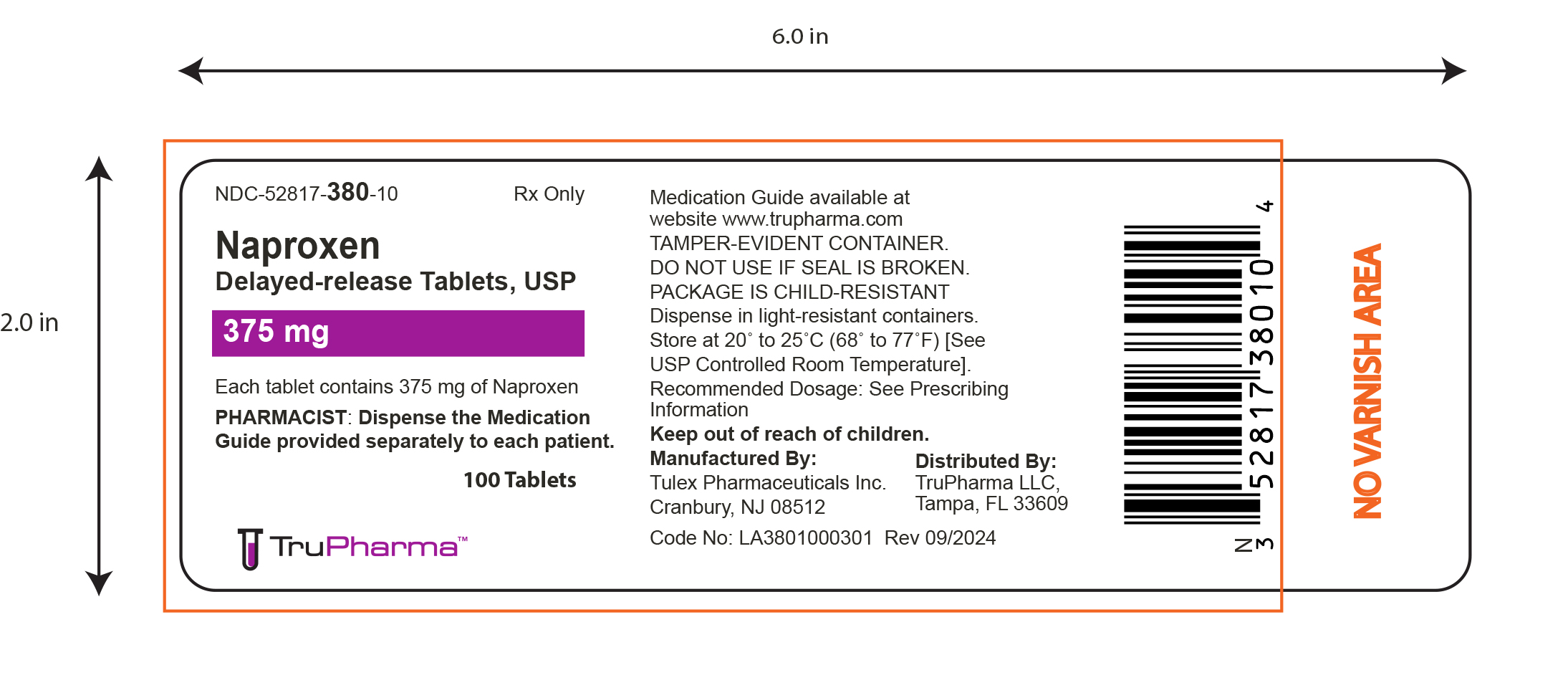
PACKAGE LABEL.PRINCIPAL DISPLAY PANEL NDC 52817-380-10 Rx Only Naproxen Delayed-Release Tablets, USP 375 mg PHARMACIST: Dispense the Medication Guide provided separately to each patient 100 Tablets Medication Guide availbale at website www.trupharma.com TAMPER-EVIDENT CONTAINER. DO NOT USE IF SEAL IS BROKEN PACKAGE IS CHILD-RESISTANT Dispense in light-resistant containers Store at 20º to 25ºC (68º to 77ºF) [See USP Controlled Room Temperature] USUAL DOSAGE: See package insert Keep out of reach of children Manufactured By: Tulex Pharmaceuticals Inc.
Cranbury, NJ 08512 Distributed By: TruPharma LLC, Tampa, FL33609 Code No. LA3801000301 Rev 09/2024 NDC 52817-381-10 Rx Only Naproxen Delayed-Release Tablets, USP 500 mg PHARMACIST: Dispense the Medication Guide provided separately to each patient 100 Tablets Medication Guide availbale at website www.trupharma.com TAMPER-EVIDENT CONTAINER. DO NOT USE IF SEAL IS BROKEN PACKAGE IS CHILD-RESISTANT Dispense in light-resistant containers Store at 20º to 25ºC (68º to 77ºF) [See USP Controlled Room Temperature] USUAL DOSAGE: See package insert Keep out of reach of children Manufactured By: Tulex Pharmaceuticals Inc.
Cranbury, NJ 08512 Distributed By: TruPharma LLC Tampa, FL 33609 Code No. LA3811000301 Rev 09/2024 375 mg tablet 500 mg tablets