
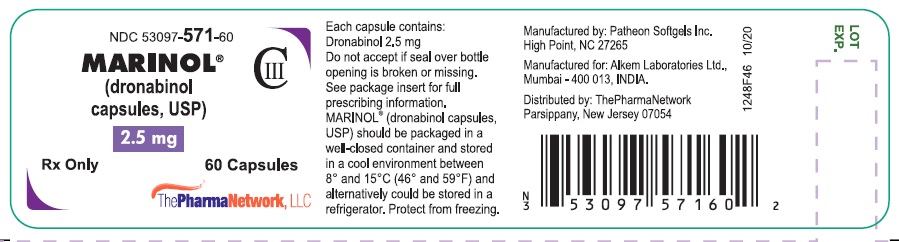
MARINOL Dronabinol 2.5 mg Capsule, 60-count
🆔 Identity & classification
Where does this data come from?
🏷️ RxNorm drug class
This medicine belongs to the Cannabinoid class.
Where does this data come from?
🏭 Manufacturer & labeler
Where does this data come from?
🩺 Clinical
Dronabinol is used to treat nausea and vomiting caused by chemotherapy in people who have already taken other medications to treat this type of nausea and vomiting without good results. Dronabinol is also used to treat loss of appetite and weight loss in people who have acquired immunodeficiency syndrome (AIDS). Dronabinol is in a class of medications called cannabinoids. It works by affecting the area of the brain that controls nausea, vomiting, and appetite.
Read the full MedlinePlus article ↗- Dronabinol is specifically approved for situations where standard anti-nausea medications haven't worked well enough. It works differently from typical anti-nausea drugs — it acts...
- Why did my doctor prescribe this instead of a regular anti-nausea pill?
- Yes, that's a known and expected effect — the clinical trials even tracked it. You might feel euphoric, giggly, or have a heightened sense of awareness, especially early on. The go...
- Will this make me feel "high"? Is that normal?
Patient education
Supplement & herbal interactions
Some supplements/herbs that may interact with Dronabinol — tap one for details:
Where does this data come from?
Ask a licensed pharmacist directly — free, answered by our team.
💊 What it looks like
Where does this data come from?
🧪 Inactive Ingredients / Excipients
Inactive ingredients, also called excipients, are components of the drug product other than the active ingredient. They may include fillers, dyes, coatings, preservatives, flavors, or other formulation ingredients.
💡 Tap an ingredient (hover on desktop) to see what it is and why it’s used.
-
UNII 2G86QN327L
Gelatin is a protein derived from animal collagen, commonly used in medicines as a gelling agent and capsule material. It helps create soft or hard capsule shells that hold and release medication, and can also thicken liquid formulations.
-
UNII PDC6A3C0OX
Glycerin is a clear, thick liquid derived from plant oils or fats. It acts as a humectant to retain moisture, a sweetener, and a solvent in medications.
-
UNII QX10HYY4QV
Sesame oil is a plant-derived oil from sesame seeds. It's used in medicines as a solvent or carrier to dissolve or suspend active ingredients, helping them mix evenly throughout the formulation.
-
UNII 15FIX9V2JP
Titanium dioxide is a bright white mineral powder commonly used as a colorant and opacifying agent. It makes pills and tablets white or lighter in color and helps make coatings non-transparent.
4 inactive ingredients listed in the exact product block matched to this NDC.
Where does this data come from?
ingredient classCode="IACT" elements from the exact product block matched by this NDC. Label-section narrative from DailyMed / the openFDA label index is shown separately when available.Inactive ingredient FAQ
Are inactive ingredients the same for every manufacturer?
Why might an inactive ingredient be missing?
Can inactive ingredients matter?
💲 Pricing
A drug doesn't have one price. Each row is a different public payment system, and none is what you'd pay at the counter — that depends on your insurance. The ⓘ on each row explains what it measures.
| Price system | Per each | Per package |
|---|---|---|
| Retail pharmacies payNADAC · weekly | Not in the retail survey — common for institutional, discontinued, or low-volume packs. | |
| Medicaid paysCMS SDUD · 12 mo | No recent Medicaid claims on file for this NDC — rare and low-volume NDCs are suppressed in the public data. | |
| Medicare drug plans payPart D · quarterly | No Part D plan price is available for this NDC in our data. | |
| Medicare Part B allowsASP · Q0167 | $1.869 / Q0167 unit | — |
Where does this data come from?
🧾 Billing & reimbursement
Where does this data come from?
🔁 Therapeutic equivalents
| Product | Labeler | Pack | NADAC/unit | TE | Status | Price vs. this |
|---|---|---|---|---|---|---|
| Dronabinol 2.5 mg 00904-7144-61 | Major | 100 capsules | $1.516 | AB | FDA listed | — |
| Dronabinol 2.5 mg 31722-0960-60 | Camber | 60 capsules | $1.516 | AB | FDA listed | — |
| Dronabinol 2.5 mg 67877-0753-60 | Ascend | 60 capsules | $1.516 | AB | FDA listed | — |
| Marinol 2.5 mg 53097-0568-60 | ThePharmaNetwork, | 60 capsules | — | AB | FDA listed | — |
| Marinol 2.5 mgthis 53097-0571-60 | ThePharmaNetwork, | 60 capsules | — | AB | FDA listed | — |
Where does this data come from?
⏳ Availability & generic status
FDA-approved generic versions are listed, and recent pricing/market data suggests they may be available — see Therapeutic equivalents.
Where does this data come from?
📊 Medicare Part D spend CMS · PART D · 2026 (Q1)
📦 Packaging — all sizes for this product
| Package NDC | Description | Marketing start | Status |
|---|---|---|---|
| 53097-0571-60 You're viewing this | 60 CAPSULE in 1 BOTTLE (53097-571-60) | 2021-03-03 | Active |
🧭 About this NDC listing & data coverage
What data is (and isn’t) available for this NDC — tap to expand
| NDC identity (package / product / labeler codes) | ✓ Available |
| Labeler | ✓ Available |
| Product & package description | ✓ Available |
| Marketing category & status | ✓ Available |
| Active ingredient / dosage form / route | ✓ Available |
| FDA label (SPL via DailyMed) | ✓ Available |
| Package photos | ✓ Available |
| Inactive ingredients (structured) | ✓ Available |
| NADAC pharmacy acquisition price (CMS) | — Not published for this NDC CMS publishes NADAC only for NDCs reported in its retail-pharmacy survey. |
| Orange Book / therapeutic-equivalence data | ✓ Available |
| HCPCS J-code billing crosswalk | ✓ Available |
| Medicaid utilization (CMS SDUD) | — Not published for this NDC CMS reports utilization only for NDCs with Medicaid claims above its privacy threshold. |
Questions about this listing
Why is there no price listed?
Is the NDC printed on the package the same as the 11-digit billing NDC?
What do the three segments of this NDC mean?
Is this package still being marketed?
Who lists this product with the FDA?
Do I need a prescription for this product?
Does this product have a billing J-code?
Where does this data come from?
📄 Full prescribing information FDA SPL
🎯 Indications and Usage ▾
1 INDICATIONS AND USAGE MARINOL is indicated in adults for the treatment of: anorexia associated with weight loss in patients with Acquired Immune Deficiency Syndrome (AIDS). nausea and vomiting associated with cancer chemotherapy in patients who have failed to respond adequately to conventional antiemetic treatments. MARINOL is a cannabinoid indicated in adults for the treatment of: Anorexia associated with weight loss in patients with AIDS. ( 1 ) Nausea and vomiting associated with cancer chemotherapy in patients who have failed to respond adequately to conventional antiemetic treatments.
( 1 )
⏱️ Dosage and Administration ▾
2 DOSAGE AND ADMINISTRATION Anorexia Associated with Weight Loss in Adult Patients with AIDS ( 2.1 ): The recommended adult starting dosage is 2.5 mg orally twice daily, one hour before lunch and dinner. See the full prescribing information for dosage titration to manage adverse reactions and to achieve desired therapeutic effect. Nausea and Vomiting Associated with Chemotherapy in Adult Patients Who Failed Conventional Antiemetics ( 2.2 ): The recommended starting dosage is 5 mg/m 2 , administered 1 to 3 hours prior to the administration of chemotherapy, then every 2 to 4 hours after chemotherapy, for a total of 4 to 6 doses per day.
Administer the first dose on an empty stomach at least 30 minutes prior to eating; subsequent doses can be taken without regard to meals. See the full prescribing information for dosage titration to manage adverse reactions and to achieve desired therapeutic effect.
2.1Anorexia Associated with Weight Loss in Adult Patients with AIDS Starting Dosage The recommended adult starting dosage of MARINOL is 2.5 mg orally twice daily, one hour before lunch and dinner. In elderly patients or patients unable to tolerate 2.5 mg twice daily, consider initiating MARINOL at 2.5 mg once daily one hour before dinner or at bedtime to reduce the risk of central nervous system (CNS) symptoms [see Use in Specific Populations ( 8.5 )]. Dosing later in the day may reduce the frequency of CNS adverse reactions.
CNS adverse reactions are dose-related [see Warnings and Precautions ( 5.1 )] ; therefore monitor patients and reduce the dosage as needed. If CNS adverse reactions of feeling high, dizziness, confusion, and somnolence occur, they usually resolve in 1 to 3 days and usually do not require dosage reduction. If CNS adverse reactions are severe or persistent, reduce the dosage to 2.5 mg in the evening or at bedtime.
Dosage Titration If tolerated and further therapeutic effect is desired, the dosage may be increased gradually to 2.5 mg one hour before lunch and 5 mg one hour before dinner. Increase the dose of MARINOL gradually in order to reduce the frequency of dose-related adverse reactions [see Warnings and Precautions ( 5.1 )]. Most patients respond to 2.5 mg twice daily, but the dose may be further increased to 5 mg one hour before lunch and 5 mg one hour before dinner, as tolerated to achieve a therapeutic effect.
Maximum Dosage: 10 mg twice daily.
2.2Nausea and Vomiting Associated with Cancer Chemotherapy in Adult Patients Who Failed Conventional Antiemetics Starting Dosage The recommended starting dosage of MARINOL is 5 mg/m 2 , orally administered 1 to 3 hours prior to the administration of chemotherapy and then every 2 to 4 hours after chemotherapy, for a total of 4 to 6 doses per day. In elderly patients, consider initiating MARINOL at 2.5 mg/m 2 once daily 1 to 3 hours prior to chemotherapy to reduce the risk of CNS symptoms [see Use in Specific Populations ( 8.5 )].
Administer the first dose on an empty stomach at least 30 minutes before eating. Subsequent doses can be taken without regard to meals [see Clinical Pharmacology ( 12.3) ]. The timing of dosing in relation to meal times should be kept consistent for each chemotherapy cycle, once the dosage has been determined from the titration process.
Dosage Titration The dosage can be titrated to clinical response during a chemotherapy cycle or subsequent cycles, based upon initial response, as tolerated to achieve a clinical effect, in increments of 2.5 mg/m 2 . The maximum dosage is 15 mg/m 2 per dose for 4 to 6 doses per day. Adverse reactions are dose-related and psychiatric symptoms increase significantly at the maximum dosage [see Warnings and Precautions ( 5.1 )].
Monitor patients for adverse reactions and consider decreasing the dose to 2.5 mg once daily 1 to 3 hours prior to chemotherapy to reduce the risk of CNS adverse reactions.
💊 Dosage Forms and Strengths ▾
3 DOSAGE FORMS AND STRENGTHS MARINOL is supplied as round, soft gelatin capsules for oral use as follows: 2.5 mg white capsules (Identified M2) 5 mg dark brown capsules (Identified M5) 10 mg orange capsules (Identified MX) Capsules: 2.5 mg, 5 mg, 10 mg ( 3 )
⛔ Contraindications ▾
4 CONTRAINDICATIONS MARINOL ® (dronabinol capsules, USP), is contraindicated in patients with a history of a hypersensitivity reaction to dronabinol or sesame oil. Reported hypersensitivity reactions to dronabinol capsules include lip swelling, hives, disseminated rash, oral lesions, skin burning, flushing and throat tightness [see Adverse Reactions ( 6.2 )]. History of a hypersensitivity reaction to dronabinol or sesame oil ( 4 )
⚠️ Warnings and Cautions ▾
5 WARNINGS AND PRECAUTIONS Neuropsychiatric Adverse Reactions: May cause psychiatric and cognitive effects and impair mental and/or physical abilities. Avoid use in patients with a psychiatric history. Monitor for symptoms and avoid concomitant use of drugs with similar effects.
Inform patients not to operate motor vehicles or other dangerous machinery until they are reasonably certain that MARINOL ® (dronabinol capsules, USP), does not affect them adversely. ( 5.1 ) Hemodynamic Instability: Patients with cardiac disorders may experience hypotension, hypertension, syncope or tachycardia. Avoid concomitant use of drugs with similar effects and monitor for hemodynamic changes after initiating or increasing the dosage of MARINOL.
( 5.2 ) Seizures and Seizure-like Activity: Weigh the potential risk versus benefits before prescribing MARINOL to patients with a history of seizures, including those requiring anti-epileptic medication or with other factors that lower the seizure threshold. Monitor patients and discontinue if seizures occur. ( 5.3 ) Multiple Substance Abuse: Assess risk for abuse or misuse in patients with a history of substance abuse or dependence, prior to prescribing MARINOL and monitor for the development of associated behaviors or conditions.
( 5.4 ) Paradoxical Nausea, Vomiting, or Abdominal Pain: Consider dose reduction or discontinuation, if worsening of symptoms while on treatment. ( 5.5 )
5.1Neuropsychiatric Adverse Reactions Psychiatric Adverse Reactions Dronabinol has been reported to exacerbate mania, depression, or schizophrenia. Significant CNS symptoms followed oral doses of 0.4 mg/kg (28 mg per 70 kg patient) of MARINOL in antiemetic studies. Prior to initiating treatment with MARINOL, screen patients for a history of these illnesses.
Avoid use in patients with a psychiatric history or, if the drug cannot be avoided, monitor patients for new or worsening psychiatric symptoms during treatment. Also, avoid concomitant use with other drugs that are associated with similar psychiatric effects. Cognitive Adverse Reactions Use of MARINOL has been associated with cognitive impairment and altered mental state.
Reduce the dose of MARINOL or discontinue use of MARINOL if signs or symptoms of cognitive impairment develop. Elderly patients may be more sensitive to the neurological and psychoactive effects of MARINOL [see Use in Specific Populations ( 8.4 , 8.5 )]. Hazardous Activities MARINOL can cause and may impair the mental and/or physical abilities required for the performance of hazardous tasks such as driving a motor vehicle or operating machinery.
Concomitant use of other drugs that cause dizziness, confusion, sedation, or somnolence such as CNS depressants may increase this effect (e.g., barbiturates, benzodiazepines, ethanol, lithium, opioids, buspirone, scopolamine, antihistamines, tricyclic antidepressants, other anticholinergic agents, muscle relaxants). Inform patients not to operate motor vehicles or other dangerous machinery until they are reasonably certain that MARINOL does not affect them adversely.
5.2Hemodynamic Instability Patients may experience occasional hypotension, possible hypertension, syncope, or tachycardia while taking MARINOL [see Clinical Pharmacology ( 12.2 )]. Patients with cardiac disorders may be at higher risk. Avoid concomitant use of other drugs that are also associated with similar cardiac effects (e.g., amphetamines, other sympathomimetic agents, atropine, amoxapine, scopolamine, antihistamines, other anticholinergic agents, amitriptyline, desipramine, other tricyclic antidepressants).
Monitor patients for changes in blood pressure, heart rate, and syncope after initiating or increasing the dosage of MARINOL.
5.3Seizures Seizure and seizure-like activity have been reported in patients receiving dronabinol. Weigh this potential risk against the benefits before prescribing MARINOL to patients with a history of seizures, including those receiving anti-epileptic medication…
🤒 Adverse Reactions ▾
6 ADVERSE REACTIONS Most common adverse reactions (≥3%) are: abdominal pain, dizziness, euphoria, nausea, paranoid reaction, somnolence, thinking abnormal and vomiting. ( 6.1 ) To report SUSPECTED ADVERSE REACTIONS, contact The Pharma Network, LLC at 1-877-272-7901 or FDA at 1-800-FDA-1088 or www.fda.gov/medwatch.
6.1Clinical Trials Experience Because clinical trials are conducted under widely varying conditions, adverse reaction rates observed in the clinical trials of a drug cannot be directly compared to rates in the clinical trials of another drug and may not reflect the rates observed in practice. The following serious adverse reactions are described below and elsewhere in the labeling. Neuropsychiatric Adverse Reactions [see Warnings and Precautions ( 5.1 )] Hemodynamic Instability [see Warnings and Precautions ( 5.2 )] Seizures [see Warnings and Precautions ( 5.3 )] Paradoxical Nausea, Vomiting, and Abdominal Pain [see Warnings and Precautions ( 5.5 )] Studies of AIDS-related weight loss included 157 patients receiving MARINOL at a dose of 2.5 mg twice daily and 67 receiving placebo.
Studies of nausea and vomiting related to cancer chemotherapy included 317 patients receiving MARINOL and 68 receiving placebo. In the tables below is a summary of the adverse reactions in 474 patients exposed to MARINOL in studies. Studies of different durations were combined by considering the first occurrence of events during the first 28 days.
A cannabinoid dose-related “high” (easy laughing, elation and heightened awareness) has been reported by patients receiving MARINOL in both the antiemetic (24%) and the lower dose appetite stimulant clinical trials (8%). The most frequently reported adverse experiences in patients with AIDS during placebo-controlled clinical trials involved the CNS and were reported by 33% of patients receiving MARINOL. About 25% of patients reported a CNS adverse reaction during the first 2 weeks and about 4% reported such a reaction each week for the next 6 weeks thereafter.
Common Adverse Reactions The following adverse reactions were reported in clinical trials at an incidence greater than 1%. System Organ Class Adverse Reactions General Asthenia Cardiovascular Palpitations, tachycardia, vasodilation/facial flush Gastrointestinal Abdominal pain*, nausea*, vomiting* Central Nervous System Dizziness*, euphoria*, paranoid reaction*, somnolence*, thinking abnormal*, amnesia, anxiety/nervousness, ataxia, confusion, depersonalization, hallucination * Actual incidence 3% to 10% Less Common Adverse Reactions The following adverse reactions were reported in clinical trials at an incidence less than or equal to 1%.
System Organ Class Adverse Reactions General Chills, headache, malaise Cardiovascular Hypotension, conjunctival injection [see Clinical Pharmacology (12.2)] Gastrointestinal Diarrhea, fecal incontinence, anorexia, hepatic enzyme elevation Musculoskeletal Myalgias Central Nervous System Depression, nightmares, speech difficulties, tinnitus Respiratory Cough, rhinitis, sinusitis Skin Flushing, sweating Sensory Vision difficulties
6.2Postmarketing Experience The following adverse reactions have been identified during post-approval use of dronabinol capsules. Because these reactions are reported voluntarily from a population of uncertain size, it is not always possible to reliably estimate their frequency or establish a causal relationship to drug exposure. General disorders and administration site conditions: Fatigue Hypersensitivity reactions: Lip swelling, hives, disseminated rash, oral lesions, skin burning, flushing, throat tightness [see Contraindications ( 4 )] Injury, poisoning and procedural complications: Fall [see Use in Specific Populations ( 8.5 )] Nervous system disorders: Seizures [see Warnings and Precautions ( 5.3 )] , disorientation, movement disorder, loss of consciousness Psychiatric disorders: Delirium, insomnia, panic attack Vascular disorders: Syncope [see Warnings and Precautions ( 5.2 )…
🔄 Drug Interactions ▾
7 DRUG INTERACTIONS Inhibitors and inducers of CYP2C9 and CYP3A4: May alter dronabinol systemic exposure; monitor for potential dronabinol-related adverse reactions or loss of efficacy. ( 7.3 ) Highly protein-bound drugs: Potential for displacement of other drugs from plasma proteins; monitor for adverse reactions to concomitant highly protein-bound drugs and narrow therapeutic index drugs (e.g., warfarin, cyclosporine, amphotericin B) when initiating or increasing the dosage of MARINOL. ( 7.4 )
7.1Additive CNS Effects Additive CNS effects (e.g., dizziness, confusion, sedation, somnolence) may occur when MARINOL is taken concomitantly with drugs that have similar effects on the central nervous system such as CNS depressants [see Warnings and Precautions ( 5.1 )].
7.2Additive Cardiac Effects Additive cardiac effects (e.g., hypotension, hypertension, syncope, tachycardia) may occur when MARINOL is taken concomitantly with drugs that have similar effects on the cardiovascular system [see Warnings and Precautions ( 5.2 )].
7.3Effect of Other Drugs on Dronabinol Dronabinol is primarily metabolized by CYP2C9 and CYP3A4 enzymes based on published in vitro studies. Inhibitors of these enzymes may increase, while inducers may decrease, the systemic exposure of dronabinol and/or its active metabolite resulting in an increase in dronabinol-related adverse reactions or loss of efficacy of MARINOL. Monitor for potentially increased dronabinol-related adverse reactions when MARINOL is co-administered with inhibitors of CYP2C9 (e.g., amiodarone, fluconazole) and inhibitors of CYP3A4 enzymes (e.g., ketoconazole, itraconazole, clarithromycin, ritonavir, erythromycin, grapefruit juice).
7.4Highly Protein-Bound Drugs Dronabinol is highly bound to plasma proteins, and therefore, might displace and increase the free fraction of other concomitantly administered protein-bound drugs. Although this displacement has not been confirmed in vivo , monitor patients for increased adverse reactions to narrow therapeutic index drugs that are highly protein-bound (e.g., warfarin, cyclosporine, amphotericin B) when initiating treatment or increasing the dosage of MARINOL.
👥 Use in Specific Populations ▾
8 USE IN SPECIFIC POPULATIONS Pregnancy: May cause fetal harm. ( 8.1 ) Lactation : Advise HIV-infected women not to breastfeed due to the potential for HIV transmission. Weight should be monitored in breastfed infants of mothers with nausea and vomiting associated with cancer chemotherapy in whom breastfeeding is appropriate.
( 8.2 ) Geriatric Use: Elderly patients may be more sensitive to the neuropsychiatric and postural hypotensive effects. Consider a lower starting dose in elderly patients. ( 2.1 , 2.2 , 5.1 , 5.2 , 8.5)
8.1Pregnancy Risk Summary MARINOL, a synthetic cannabinoid, may cause fetal harm. Avoid use of MARINOL in pregnant women. Although there is little published data on the use of synthetic cannabinoids during pregnancy, use of cannabis (e.g., marijuana) during pregnancy has been associated with adverse fetal/neonatal outcomes (see Clinical Considerations).
Cannabinoids have been found in the umbilical cord blood from pregnant women who smoke cannabis. In animal reproduction studies, no teratogenicity was reported in mice administered dronabinol (delta-9-THC) at up to 30 times the MRHD (maximum recommended human dose) and up to 5 times the MRHD for patients with AIDS and cancer, respectively. Similar findings were reported in pregnant rats administered dronabinol at up to 5 to 20 times the MRHD and 3 times the MRHD for patients with AIDS and cancer, respectively.
Decreased maternal weight gain and number of viable pups and increased fetal mortality and early resorptions were observed in both species at doses which induced maternal toxicity. In rats, maternal administration of dronabinol from pregnancy (implantation) through weaning was associated with maternal toxicity including adverse clinical signs, increased stillbirths and mortality of offspring, and reduced pup bodyweight at 2 and 6 times the MRHD for patients with AIDS, and less than or equal to the MRHD for patients with cancer.
No evidence of neurodevelopmental adverse effects was observed in the offspring at doses up to 6 times the MRHD for patients with AlDS, and up to the MRHD for patients with cancer (see Data). The estimated background risk of major birth defects and miscarriage for the indicated populations are unknown. All pregnancies have a background risk of birth defect, loss, or other adverse outcomes.
In the U.S. general population, the estimated background risk of major birth defects and miscarriage in clinically recognized pregnancies is 2 to 4% and 15 to 20%, respectively. Clinical Considerations Fetal/Neonatal Adverse Reactions Published studies suggest that during pregnancy, the use of cannabis, which includes THC, whether for recreational or medicinal purposes, may increase the risk of adverse fetal/neonatal outcomes including fetal growth restriction, low birth weight, preterm birth, small-for-gestational age, admission to the neonatal intensive care unit, and stillbirth.
Therefore, use of cannabis during pregnancy should be avoided. Data Human Data Delta-9-THC has been measured in the cord blood of some infants whose mothers reported prenatal use of cannabis, suggesting that dronabinol may cross the placenta to the fetus during pregnancy. The effects of delta-9-THC on the fetus are not known.
Animal Data Reproduction studies with dronabinol have been performed in mice at 15 to 450 mg/m2, equivalent to 1 to 30 times the MRHD of 15 mg/m2/day in patients with AIDS or 0.2 to 5 times the MRHD of 90 mg/m2/day in patients with cancer, and in rats at 74 to 295 mg/m2 (equivalent to 5 to 20 times the MRHD of 15 mg/m2/day in patients with AIDS or 0.8 to 3 times the MRHD of 90 mg/m2/day in patients with cancer). These studies have revealed no evidence of teratogenicity due to delta-9-THC. At these dronabinol dosages in mice and rats, delta-9-THC decreased maternal weight gain and number of viable pups and increased fetal mortality and early resorptions.
Such effects were dose dependent and less apparent at lower doses that produced less mater…
🤰 Pregnancy ▾
8.1Pregnancy Risk Summary MARINOL, a synthetic cannabinoid, may cause fetal harm. Avoid use of MARINOL in pregnant women. Although there is little published data on the use of synthetic cannabinoids during pregnancy, use of cannabis (e.g., marijuana) during pregnancy has been associated with adverse fetal/neonatal outcomes (see Clinical Considerations).
Cannabinoids have been found in the umbilical cord blood from pregnant women who smoke cannabis. In animal reproduction studies, no teratogenicity was reported in mice administered dronabinol (delta-9-THC) at up to 30 times the MRHD (maximum recommended human dose) and up to 5 times the MRHD for patients with AIDS and cancer, respectively. Similar findings were reported in pregnant rats administered dronabinol at up to 5 to 20 times the MRHD and 3 times the MRHD for patients with AIDS and cancer, respectively.
Decreased maternal weight gain and number of viable pups and increased fetal mortality and early resorptions were observed in both species at doses which induced maternal toxicity. In rats, maternal administration of dronabinol from pregnancy (implantation) through weaning was associated with maternal toxicity including adverse clinical signs, increased stillbirths and mortality of offspring, and reduced pup bodyweight at 2 and 6 times the MRHD for patients with AIDS, and less than or equal to the MRHD for patients with cancer.
No evidence of neurodevelopmental adverse effects was observed in the offspring at doses up to 6 times the MRHD for patients with AlDS, and up to the MRHD for patients with cancer (see Data). The estimated background risk of major birth defects and miscarriage for the indicated populations are unknown. All pregnancies have a background risk of birth defect, loss, or other adverse outcomes.
In the U.S. general population, the estimated background risk of major birth defects and miscarriage in clinically recognized pregnancies is 2 to 4% and 15 to 20%, respectively. Clinical Considerations Fetal/Neonatal Adverse Reactions Published studies suggest that during pregnancy, the use of cannabis, which includes THC, whether for recreational or medicinal purposes, may increase the risk of adverse fetal/neonatal outcomes including fetal growth restriction, low birth weight, preterm birth, small-for-gestational age, admission to the neonatal intensive care unit, and stillbirth.
Therefore, use of cannabis during pregnancy should be avoided. Data Human Data Delta-9-THC has been measured in the cord blood of some infants whose mothers reported prenatal use of cannabis, suggesting that dronabinol may cross the placenta to the fetus during pregnancy. The effects of delta-9-THC on the fetus are not known.
Animal Data Reproduction studies with dronabinol have been performed in mice at 15 to 450 mg/m2, equivalent to 1 to 30 times the MRHD of 15 mg/m2/day in patients with AIDS or 0.2 to 5 times the MRHD of 90 mg/m2/day in patients with cancer, and in rats at 74 to 295 mg/m2 (equivalent to 5 to 20 times the MRHD of 15 mg/m2/day in patients with AIDS or 0.8 to 3 times the MRHD of 90 mg/m2/day in patients with cancer). These studies have revealed no evidence of teratogenicity due to delta-9-THC. At these dronabinol dosages in mice and rats, delta-9-THC decreased maternal weight gain and number of viable pups and increased fetal mortality and early resorptions.
Such effects were dose dependent and less apparent at lower doses that produced less maternal toxicity. Review of published literature indicates that the endocannabinoid system plays a role in neurodevelopmental processes such as neurogenesis, migration, and synaptogenesis. Exposure of pregnant rats to delta-9-THC (during and after organogenesis) may modulate these processes to result in abnormal patterns of neuronal connectivity and subsequent cognitive impairments in the offspring.
Nonclinical toxicity studies in pregnant rats and newborn pups have shown prenatal exposure to delta-9-THC that resulted in impairme…
🧒 Pediatric Use ▾
8.4Pediatric Use The safety and effectiveness of MARINOL have not been established in pediatric patients. Pediatric patients may be more sensitive to neurological and psychoactive effects of MARINOL [see Warnings and Precautions ( 5.1 )].
🧓 Geriatric Use ▾
8.5Geriatric Use Clinical studies of MARINOL in AIDS and cancer patients did not include the sufficient numbers of subjects aged 65 and over to determine whether they respond differently from younger subjects. Elderly patients may be more sensitive to the neuropsychiatric and postural hypotensive effects of MARINOL [see Warnings and Precautions ( 5.1 , 5.2 )]. Elderly patients with dementia are at increased risk for falls as a result of their underlying disease state, which may be exacerbated by the CNS effects of somnolence and dizziness associated with MARINOL [see Warnings and Precautions ( 5.1 )].
These patients should be monitored closely and placed on fall precautions prior to initiating MARINOL therapy. In antiemetic studies, no difference in efficacy was apparent in patients greater than 55 years of age compared to younger patients. In general, dose selection for an elderly patient should be cautious, usually starting at the low end of the dosing range, reflecting the greater frequency of falls, decreased hepatic, renal, or cardiac function, increased sensitivity to psychoactive effects, and of concomitant disease or other drug therapy [see Dosage and Administration ( 2.1 , 2.2 )].
🆘 Overdosage ▾
10 OVERDOSAGE Signs and symptoms of dronabinol overdosage include drowsiness, euphoria, heightened sensory awareness, altered time perception, reddened conjunctiva, dry mouth, tachycardia, memory impairment, depersonalization, mood alteration, urinary retention, reduced bowel motility, decreased motor coordination, lethargy, slurred speech, and postural hypotension. Patients may also experience panic reactions if they have a prior history of nervousness or anxiety, and seizures may occur in patients with existing seizure disorders.
It is not known if dronabinol can be removed by dialysis in cases of overdose. If over-exposure of MARINOL occurs, call your Poison Control Center at 1-800-222-1222 for current information on the management of poisoning or overdosage.
🧬 Clinical Pharmacology ▾
12 CLINICAL PHARMACOLOGY
12.1Mechanism of Action Dronabinol is an orally active cannabinoid which has complex effects on the CNS, including central sympathomimetic activity. Cannabinoid receptors have been discovered in neural tissues. These receptors may play a role in mediating the effects of dronabinol.
12.2Pharmacodynamics Effects on the Cardiovascular System Dronabinol-induced sympathomimetic activity may result in tachycardia and/or conjunctival injection. Its effects on blood pressure are inconsistent, but subjects have experienced orthostatic hypotension and/or syncope upon abrupt standing [see Warnings and Precautions ( 5.2 )]. Effects on the Central Nervous System Dronabinol also demonstrates reversible effects on appetite, mood, cognition, memory, and perception.
These phenomena appear to be dose-related, increasing in frequency with higher dosages, and subject to great inter-patient variability. After oral administration, dronabinol has an onset of action of approximately 0.5 to 1 hours and peak effect at 2 to 4 hours. Duration of action for psychoactive effects is 4 to 6 hours, but the appetite stimulant effect of dronabinol may continue for 24 hours or longer after administration.
Tachyphylaxis and tolerance develop to some of the pharmacologic effects of dronabinol with chronic use, suggesting an indirect effect on sympathetic neurons. In a study of the pharmacodynamics of chronic dronabinol exposure, healthy male subjects (N = 12) received 210 mg per day of MARINOL, administered orally in divided doses, for 16 days. An initial tachycardia induced by dronabinol was replaced successively by normal sinus rhythm and then bradycardia.
A decrease in supine blood pressure, made worse by standing, was also observed initially. These subjects developed tolerance to the cardiovascular and subjective adverse CNS effects of dronabinol within 12 days of treatment initiation. Tachyphylaxis and tolerance do not appear to develop to the appetite stimulant effect of MARINOL.
In clinical studies involving AIDS patients, the appetite stimulant effect of MARINOL was sustained for up to five months at dosages ranging from 2.5 mg to 20 mg per day.
12.3Pharmacokinetics Absorption Dronabinol (delta-9-THC) is almost completely absorbed (90 to 95%) after single oral doses. Due to the combined effects of first pass hepatic metabolism and high lipid solubility, only 10 to 20% of the administered dose reaches the systemic circulation. Concentrations of both parent drug and its major active metabolite (11-hydroxy-delta-9-THC) peak at approximately 0.5 to 4 hours after oral dosing and decline over several days.
The pharmacokinetics of dronabinol after single doses (2.5, 5, and 10 mg) and multiple doses (2.5, 5, and 10 mg given twice a day) have been studied in healthy subjects. Summary of Multiple-Dose Pharmacokinetic Parameters of Dronabinol in Healthy Subjects (n=34; 20-45 years) under Fasted Conditions Mean (SD) PK Parameter Values Twice Daily Dose C max ng/mL Median T max (range), hr AUC (0-12) ng•hr/mL 2.5 mg 1.32 (0.62) 1.00 (0.50-4.00) 2.88 (1.57) 5 mg 2.96 (1.81) 2.50 (0.50-4.00) 6.16 (1.85) 10 mg 7.88 (4.54) 1.50 (0.50-3.50) 15.2 (5.52) C max : maximum observed plasma concentration; T max : time to maximum observed plasma concentration; AUC (0-12) : area under the plasma concentration-time curve from 0 to 12 hours.
A slight increase in dose proportionality on mean C max and AUC (0-12) of dronabinol was observed with increasing dose over the dose range studied. Effect of Food: In a published study, the effect of food on the pharmacokinetics of dronabinol was studied by concomitant dosing of MARINOL ® (dronabinol capsules, USP) with a high-fat (59 grams of fat, approximately 50% of total caloric content of the meal), high calorie meal (approximately 950 calories). An appreciable food effect was observed, resulting in a 4-hour delay in mean T max and 2.9-fold increase in total exposure (AUC inf ), but C max was not significantly chan…
🧬 Mechanism of Action ▾
12.1Mechanism of Action Dronabinol is an orally active cannabinoid which has complex effects on the CNS, including central sympathomimetic activity. Cannabinoid receptors have been discovered in neural tissues. These receptors may play a role in mediating the effects of dronabinol.
📦 How Supplied / Storage and Handling ▾
16 HOW SUPPLIED/STORAGE AND HANDLING MARINOL ® (dronabinol capsules, USP) 2.5 mg white capsules (Identified M2). NDC 53097-571-60 (Bottle of 60 capsules). 5 mg dark brown capsules (Identified M5).
NDC 53097-572-60 (Bottle of 60 capsules). 10 mg orange capsules (Identified MX). NDC 53097-573-60 (Bottle of 60 capsules).
Storage Conditions MARINOL capsules should be packaged in a well-closed container and stored in a cool environment between 8° and 15°C (46° and 59°F) and alternatively could be stored in a refrigerator. Protect from freezing.
📋 Description ▾
11 DESCRIPTION Dronabinol is a cannabinoid designated chemically as (6aR,10aR)-6a,7,8,10a-Tetrahydro-6,6,9- trimethyl-3-pentyl-6H-dibenzo[b,d]-pyran-1-ol. Dronabinol has the following empirical and structural formulas: C 21 H 30 O 2 (molecular weight = 314.46) Dronabinol, the active ingredient in MARINOL (dronabinol capsules, USP), is synthetic delta-9- tetrahydrocannabinol (delta-9-THC). Dronabinol is a light yellow resinous oil that is sticky at room temperature and hardens upon refrigeration.
Dronabinol is insoluble in water and is formulated in sesame oil. It has a pKa of 10.6 and an octanol-water partition coefficient: 6,000:1 at pH 7. Each MARINOL capsule strength is formulated with the following inactive ingredients: 2.5 mg capsule contains gelatin, glycerin, sesame oil, and titanium dioxide; 5 mg capsule contains iron oxide red and iron oxide black, gelatin, glycerin, sesame oil, and titanium dioxide; 10 mg capsule contains iron oxide red and iron oxide yellow, gelatin, glycerin, sesame oil, and titanium dioxide. marinol-str.jpg
💬 Information for Patients ▾
17 PATIENT COUNSELING INFORMATION Advise the patient to read the FDA-approved patient labeling (Patient Information). Neuropsychiatric Adverse Reactions [see Warnings and Precautions ( 5.1 )] Advise patients that psychiatric adverse reactions may occur, especially in patients with a past psychiatric history or in those receiving other drugs also associated with psychiatric effects, and to report to their healthcare provider any new or worsening psychiatric symptoms. Advise patients, especially elderly patients, that cognitive impairment or an altered mental state may also occur during treatment with MARINOL and to report to their healthcare provider if they develop signs or symptoms of cognitive impairment.
Advise patients not to operate motor vehicles or other dangerous machinery until they are reasonably certain that MARINOL does not affect them adversely. Alert patients to the potential for additive central nervous system depression if MARINOL is used concomitantly with alcohol or other CNS depressants such as benzodiazepines and barbiturates. Hemodynamic Instability Advise patients, especially those with cardiac disorders, to report to their healthcare provider if they experience any signs or symptoms of hemodynamic instability, including hypotension, hypertension, syncope or tachycardia, especially after initiating or increasing the dosage of MARINOL [see Warnings and Precautions ( 5.2 )].
Seizures Advise patients to discontinue MARINOL and contact a healthcare provider immediately if they experience a seizure [see Warnings and Precautions ( 5.3) ]. Multiple Substance Abuse Inform patients with a history of substance abuse or dependence, including marijuana or alcohol, that they may be more likely to abuse MARINOL. Advise patients to report to their healthcare provider if they develop abuse behaviors or conditions [see Warnings and Precautions ( 5.4 )].
Paradoxical Nausea, Vomiting, or Abdominal Pain Advise patients to report worsening nausea, vomiting or abdominal pain to their healthcare provider [see Warnings and Precautions ( 5.5 )]. Pregnancy Advise pregnant women of the potential risk to a fetus and to avoid use of MARINOL during pregnancy [see Use in Specific Populations ( 8.1 )]. Lactation Advise HIV infected women with anorexia associated with weight loss, not to breastfeed because HIV can be passed to the baby through the breast milk.
Advise women with nausea and vomiting associated with cancer chemotherapy that breastfeeding infants should have their weight monitored [see Use in Specific Populations ( 8.2 )] . Manufactured by: Patheon Softgels Inc. High Point, NC 27265 Manufactured for: Alkem Laboratories Ltd., Mumbai - 400 013, INDIA.
Distributed by: ThePharmaNetwork Parsippany, New Jersey 07054 1248F00 01/23