
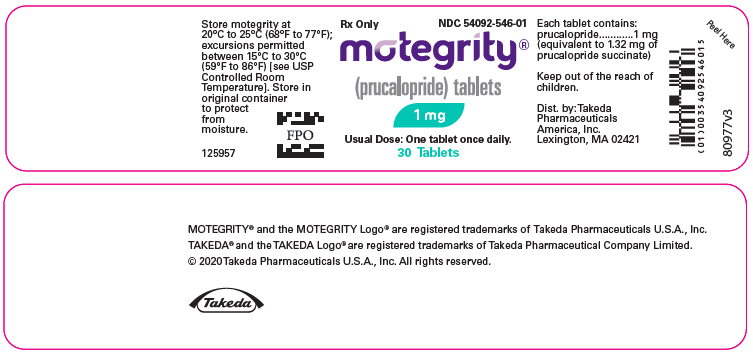
Motegrity Prucalopride 1 mg Tablet, Film Coated, 30-count — NDC 54092-546-01 (Billing 54092-0546-01)
This is a package of 30 tablets of Motegrity Prucalopride 1 mg Tablet, Film Coated from Takeda Pharmaceuticals America, Inc., marketed since Dec 2018 and currently FDA-listed; retail pharmacies pay about $17.73 per tablet (NADAC). It is this product's only package size.
NDC database record
One package, one record: these facts belong to NDC 54092-546-01 alone.
- Record
- FDA NDC Directory package listing · Human prescription drug
- Code segments
- 54092 labeler · 546 product · 01 package
- Package marketed since
- Dec 14, 2018
- Sample package
- No — commercial package
- Listing certified through
- Dec 31, 2026
- Billing quantity
- 30 EA per package
- Barcode (UPC-A, from the NDC)
- 3 5409254601 5
- Medicaid fills, this package
- 2,099 prescriptions in the last four reported quarters
- FDA record last changed
- Jul 24, 2026
Identity & classification
Regulatory identifiers FDA, NLM and CMS codes for this package
Drug-database identifiers Medi-Span GPI and First Databank GCN / HICL / AHFS classification
- GSN (GCN sequence number): 066216
- GCN: 28446
- GPI-14 (Medi-Span): 52560060200320
- HICL (First Databank): 036920
- AHFS class code: 56:32.00.00
- RxCUI (RxNorm): 2107345
Where does this data come from?
- FDA openFDA NDC Directory · synced Oct 8, 2026
- FDA label on DailyMed · label index refreshed Oct 6, 2026
- RxNorm (NLM RxNav) · catalog refreshed Oct 1, 2026
- Medi-Span GPI (licensed)
- First Databank (licensed) · refreshed Oct 8, 2026
RxNorm drug class
This medicine belongs to the Serotonin-4 Receptor Agonist class.
Where does this data come from?
- RxClass (NLM) · catalog refreshed Oct 1, 2026
Clinical
Prucalopride is used to treat chronic idiopathic constipation (CIC; difficult or infrequent passage of stools that lasts for 3 months or longer and is not caused by a disease or a medication). Prucalopride is in a class of medications called serotonin receptor agonists. It works by increasing the movement of waste through the bowel.
Read the full MedlinePlus article ↗- Chronic idiopathic constipation — or CIC — is ongoing constipation where doctors can't find a specific underlying cause. It's not constipation from a medication or another disease;...
- What exactly is chronic idiopathic constipation, and is that what this is for?
- Prucalopride reaches steady, stable levels in your bloodstream within about 3 to 4 days of once-daily dosing, so many people start to notice a difference within the first week. The...
- You can take prucalopride with or without food — it makes no difference to how well the medication is absorbed. Pick whatever time of day works best for your routine and stick with...
Patient education
Supplement & herbal interactions
Some supplements/herbs that may interact with Prucalopride — tap one for details:
Where does this data come from?
- MedlinePlus (NLM) · refreshed Oct 1, 2026
- FDA label on DailyMed · label index refreshed Oct 6, 2026
Ask a licensed pharmacist directly — free, answered by our team.
Pricing
A drug doesn't have one price. Each row is a different public payment system, and none is what you'd pay at the counter — that depends on your insurance. The ⓘ on each row explains what it measures.
| Price system | Per ea | Per package |
|---|---|---|
| Retail pharmacies payNADAC · weekly | $17.731 | $531.94 / 30 tablets |
| Medicaid paysCMS SDUD · 12 mo | $17.74 | $532.27 / 30 tablets |
| Medicare drug plans payPart D · quarterly | No Part D plan price is available for this NDC in our data. | |
Where does this data come from?
- CMS NADAC weekly file · file of Oct 7, 2026
- CMS ASP pricing files · refreshed Sep 20, 2026
- CMS Medicaid State Drug Utilization Data · through Q1 2026
- CMS Part D plan pricing files · refreshed Sep 24, 2026
- VA National Acquisition Center price file
Packaging — all sizes for this product
| Package NDC | Description | Marketing start | Marketing end | Status |
|---|---|---|---|---|
| 54092-0546-01 You're viewing this Main listing | 30 TABLET, FILM COATED in 1 BOTTLE | 2018-12-14 | — | Active |
Therapeutic equivalents
| Product | Labeler | Pack | NADAC/unit | TE | Status | Price vs. this |
|---|---|---|---|---|---|---|
| Prucalopride 1 mg 00054-0749-13 | Hikma | 30 tablets | $0.639 | AB | Availability likely | save 96% |
| Prucalopride 1 mg 00406-6301-03 | SpecGx | 30 tablets | $0.639 | AB | Availability likely | save 96% |
| Prucalopride 1 mg 00781-8158-31 | Sandoz | 30 tablets | $0.639 | AB | Availability likely | save 96% |
| Prucalopride 1 mg 31722-0391-30 | Camber | 30 tablets | $0.639 | AB | Availability likely | save 96% |
| Prucalopride 1 mg 60505-4806-03 | Apotex | 30 tablets | $0.639 | AB | Availability likely | save 96% |
| Prucalopride 1 mg 69097-0218-02 | Cipla | 30 tablets | $0.639 | AB | Availability likely | save 96% |
| Prucalopride 1 mg 69238-2698-01 | Amneal | 30 tablets | $0.639 | AB | Availability likely | save 96% |
| Prucalopride succinate 1 mg 70069-0821-01 | Somerset | 30 tablets | $0.639 | AB | Availability likely | save 96% |
| Prucalopride 1 mg 70748-0389-01 | Lupin | 30 tablets | $0.639 | AB | Availability likely | save 96% |
| Prucalopride 1 mg 70954-0596-10 | ANI | 30 tablets | $0.639 | AB | Availability likely | save 96% |
| Prucalopride 1 mg 72205-0218-30 | Novadoz | 30 tablets | $0.639 | AB | Availability likely | save 96% |
| Motegrity 1 mgthis 54092-0546-01 | Takeda | 30 tablets | $17.731 | AB | Availability likely | — |
| Prucalopride 1 mg 27241-0294-30 | Ajanta | 30 tablets | — | AB | FDA listed | — |
| prucalopride 1 mg 70771-1899-03 | Zydus | 30 tablets | — | AB | FDA listed | — |
| prucalopride 1 mg 72578-0221-06 | Viona | 30 tablets | — | AB | FDA listed | — |
| Prucalopride 1 mg 73190-0038-30 | AvKARE | 30 tablets | — | AB | FDA listed | — |
| Prucalopride 1 mg 83085-0005-30 | SKG | 30 tablets | — | AB | FDA listed | — |
| Prucalopride 1 mg 46708-0077-30 | Alembic | 30 tablets | — | AB | FDA listed | — |
| Prucalopride 1 mg 62332-0077-30 | Alembic | 30 tablets | — | AB | FDA listed | — |
Where does this data come from?
- FDA openFDA NDC Directory · synced Oct 8, 2026
- FDA Orange Book · refreshed Oct 3, 2026
- CMS NADAC weekly file · file of Oct 7, 2026
Availability & generic status
FDA-approved generic versions are listed, and recent pricing/market data suggests they may be available — see Therapeutic equivalents.
Why the date isn’t exact: Generic timing can change because patents may be challenged, settled, licensed, added, removed, or worked around with a narrower label — and FDA approval does not always mean a pharmacy can get the generic today.
🛈 What do these terms mean?
- Patent
- Legal protection listed in the Orange Book that may delay generic approval or launch. Issued by the U.S. Patent & Trademark Office.
- Substance patent
- Covers the active drug molecule itself — the hardest to design around. A generic generally can’t launch until it expires.
- Formulation (product) patent
- Covers a specific formulation or dosage form. A generic can sometimes work around it with a different formulation.
- Method-of-use patent
- A patent covering one specific approved use of the drug — not necessarily the whole molecule. A generic can sometimes launch with a “skinny label” that carves out the protected use and keeps the others.
- Skinny label
- A generic label that omits a still-patented use when the FDA allows it — letting a generic reach the market for the unprotected uses.
- Exclusivity
- FDA-granted marketing protection, separate from patents — e.g. 5-yr new chemical entity, 7-yr orphan drug, or a +6-month pediatric extension.
- Paragraph IV
- A generic applicant’s formal challenge to a listed patent. It can potentially lead to earlier generic entry, but often involves litigation or a settlement.
- RLD / RS
- Reference Listed Drug — the brand product the FDA uses as the reference for generic applications. Reference Standard — the product the FDA expects generics to compare against in bioequivalence testing.
- TE / AB rating
- FDA therapeutic-equivalence rating. An AB rating generally means the FDA considers a generic therapeutically equivalent to — and substitutable for — the brand.
- LOE (loss of exclusivity)
- The latest patent or exclusivity currently listed — the loss-of-exclusivity / latest-listed-protection date shown on this page. Paragraph-IV challenges and settlements can move the real date earlier; FDA approval and a manufacturer’s decision to market can move it later.
Built from the FDA Orange Book. The bars above are scaled to each protection’s expiry; the red LOE marker is the last one to lapse.
| Code | What it grants | Expires |
|---|---|---|
| M-14 | New indication / labeling change (3-year) | Jul 10, 2028 |
| M-14 | New indication / labeling change (3-year) | Jul 10, 2028 |
Is there a generic version of MOTEGRITY 1 MG TABLET?
The FDA approved a generic — why can’t I get it at my pharmacy yet?
Why do different websites show different generic release dates?
What does “FDA listed” mean?
What does a patent or protection date mean here?
What does “current Orange Book estimate” mean?
Can a generic come out before the last patent expires?
Can a generic come out after the listed dates?
What is the difference between patents and exclusivity?
Why are there multiple patent dates?
Where does this data come from?
- FDA Orange Book · refreshed Oct 3, 2026
What it looks like
Where does this data come from?
- FDA label on DailyMed · label index refreshed Oct 6, 2026
Inactive Ingredients / Excipients
Inactive ingredients, also called excipients, are components of the drug product other than the active ingredient. They may include fillers, dyes, coatings, preservatives, flavors, or other formulation ingredients.
🧪 Avoiding an ingredient? See Prucalopride inactive ingredients by manufacturer: every current product's list side by side, so you can ask your pharmacy for the version that does not list it.
💡 Tap an ingredient (hover on desktop) to see what it is and why it’s used.
-
UNII 0WZ8WG20P6
Hypromellose 2910 is a plant-based cellulose derivative that acts as a thickener, binder, and film-coating agent. It helps control how quickly the medicine dissolves and protects the tablet or capsule from moisture and light.
-
UNII EWQ57Q8I5X
Lactose monohydrate is a natural sugar derived from milk. It serves as a filler and binder in tablets and capsules, helping create the proper size, texture, and consistency of the medicine.
-
UNII 70097M6I30
Magnesium stearate is a salt made from magnesium and stearic acid, a fatty substance. It's used in tablets and capsules as a lubricant and glidant to help ingredients flow smoothly during manufacturing and prevent sticking.
-
UNII OP1R32D61U
Microcrystalline cellulose is a purified form of cellulose, a natural fiber from plant sources. It acts as a binder and filler in tablets and capsules, helping hold ingredients together and give the medicine its shape and size.
-
UNII SA1B764746
A synthetic polymer commonly used as a solvent and binder in medicines. It helps dissolve active ingredients, improve texture, and ensure consistent tablet or capsule formation.
-
UNII ETJ7Z6XBU4
Silicon dioxide is a naturally occurring mineral used as a glidant and anti-caking agent. It helps powder ingredients flow smoothly and prevents clumping during manufacturing and storage.
-
UNII 15FIX9V2JP
Titanium dioxide is a bright white mineral powder commonly used as a colorant and opacifying agent. It makes pills and tablets white or lighter in color and helps make coatings non-transparent.
-
UNII XHX3C3X673
Triacetin is a clear, oily liquid made from glycerin and acetic acid. It works as a plasticizer and solvent in medicines, helping soften coatings and improve how liquids mix together in formulations.
8 inactive ingredients listed in the exact product block matched to this NDC.
Where does this data come from?
ingredient classCode="IACT" elements from the exact product block matched by this NDC. Label-section narrative from DailyMed / the openFDA label index is shown separately when available.- FDA label on DailyMed · label index refreshed Oct 6, 2026
- FDA openFDA NDC Directory · synced Oct 8, 2026
Inactive ingredient FAQ
Are inactive ingredients the same for every manufacturer?
Why might an inactive ingredient be missing?
Can inactive ingredients matter?
Manufacturer & labeler
More NDCs from Takeda Pharmaceuticals America, Inc. labeler code 54092
- Lialda mesalamine 1.2 g Tablet, Delayed Release NDC 54092-476-01
- Mydayis Dextroamphetamine Sulfate, Dextroamphetamine Saccharate, Amphetamine Aspartate Monohydrate, and Amphetamine Sulfate 12.5 mg; 12.5 mg; 12.5 mg; 12.5 mg Capsule, Extended Release NDC 54092-477-01
- Intuniv guanfacine 1 mg Tablet, Extended Release NDC 54092-513-02
- Intuniv guanfacine 2 mg Tablet, Extended Release NDC 54092-515-02
- Intuniv guanfacine 3 mg Tablet, Extended Release NDC 54092-517-02
- Intuniv guanfacine 4 mg Tablet, Extended Release NDC 54092-519-02
- Motegrity Prucalopride 2 mg Tablet, Film Coated NDC 54092-547-01
- ELAPRASE idursulfase 6 mg/3mL Solution, Concentrate NDC 54092-700-01
- VPRIV velaglucerase alfa 2.5 mg/mL Injection, Powder, Lyophilized, For Solution NDC 54092-701-04
- Firazyr icatibant acetate 30 mg/3mL Injection, Solution NDC 54092-702-01
Where does this data come from?
- FDA openFDA NDC Directory · synced Oct 8, 2026
- Drugs@FDA
Full prescribing information FDA SPL
🎯 Indications and Usage ▾
1 INDICATIONS AND USAGE MOTEGRITY ® is indicated for the treatment of chronic idiopathic constipation (CIC) in adults. MOTEGRITY is a serotonin-4 (5-HT 4 ) receptor agonist indicated for the treatment of chronic idiopathic constipation (CIC) in adults. ( 1 )
⏱️ Dosage and Administration ▾
2 DOSAGE AND ADMINISTRATION MOTEGRITY can be taken with or without food. The recommended dosage by patient population is shown in Table 1. Table 1: Recommended Dosage Regimen and Dosage Adjustments by Population Population with CIC Recommended Oral Dose Regimen Adults 2 mg once daily Patients with severe renal impairment (creatinine clearance (CrCL) less than 30 mL/min) [see Use in Specific Populations (8.5 , 8.6) ] .
1 mg once daily Take with or without food. ( 2 ) Recommended dosage by patient population: Population with CIC Recommended Oral Dose Regimen Adults 2 mg once daily. ( 2 ) Patients with severe renal impairment (creatinine clearance (CrCL) less than 30 mL/min) 1 mg once daily.
( 2 , 8.5 , 8.6 )
💊 Dosage Forms and Strengths ▾
3 DOSAGE FORMS AND STRENGTHS MOTEGRITY Tablets: 1 mg prucalopride: White to off-white, round, biconvex film-coated tablet debossed with "PRU 1" on one side and no debossing on the other side. 2 mg prucalopride: Pink, round, biconvex film-coated tablet debossed with "PRU 2" on one side and no debossing on the other side. Tablets: 1 mg, 2 mg of prucalopride. ( 3 )
⛔ Contraindications ▾
4 CONTRAINDICATIONS MOTEGRITY is contraindicated in patients with: A history of hypersensitivity to MOTEGRITY. Reactions including dyspnea, rash, pruritus, urticaria, and facial edema have been observed [see Adverse Reactions (6.2) ] . Intestinal perforation or obstruction due to structural or functional disorder of the gut wall, obstructive ileus, severe inflammatory conditions of the intestinal tract such as Crohn's disease, ulcerative colitis, and toxic megacolon/megarectum.
Hypersensitivity to MOTEGRITY. ( 4 ) Intestinal perforation or obstruction due to structural or functional disorder of the gut wall, obstructive ileus, severe inflammatory conditions of the intestinal tract such as Crohn's disease, ulcerative colitis, and toxic megacolon/megarectum. ( 4 )
⚠️ Warnings and Cautions ▾
5 WARNINGS AND PRECAUTIONS Suicidal Ideation and Behavior : Monitor patients for suicidal ideation and behavior as well as self-injurious ideation and new-onset or worsening of depression. Instruct patients to discontinue MOTEGRITY immediately and contact their healthcare provider if they experience any unusual changes in mood or behavior, or they experience emerging suicidal thoughts or behaviors. ( 5.1 )
5.1Suicidal Ideation and Behavior In clinical trials, suicides, suicide attempts, and suicidal ideation have been reported. Postmarketing cases of suicidal ideation and behavior as well as self-injurious ideation and new onset or worsening of depression have been reported within the first few weeks of starting MOTEGRITY [see Adverse Reactions (6.1 , 6.2) ] . A causal association between treatment with MOTEGRITY and an increased risk of suicidal ideation and behavior has not been established.
Monitor all patients treated with MOTEGRITY for new onset or worsening of depression or the emergence of suicidal thoughts and behaviors. Counsel patients, their caregivers, and family members of patients to be aware of any unusual changes in mood or behavior and alert the healthcare provider. Instruct patients to discontinue MOTEGRITY immediately and contact their healthcare provider if they experience any of these symptoms.
🤒 Adverse Reactions ▾
6 ADVERSE REACTIONS Most common adverse reactions (≥2%) are headache, abdominal pain, nausea, diarrhea, abdominal distension, dizziness, vomiting, flatulence, and fatigue. ( 6.1 ) To report SUSPECTED ADVERSE REACTIONS, contact Takeda Pharmaceuticals at 1-800-828-2088 or FDA at 1-800-FDA-1088 or www.fda.gov/medwatch .
6.1Clinical Trials Experience Because clinical trials are conducted under widely varying conditions, adverse reaction rates observed in the clinical trials of a drug cannot be directly compared to rates in the clinical trials of another drug and may not reflect the rates observed in practice. The data described below represent 2,530 patients (1,251 received MOTEGRITY 2 mg once daily and 1,279 received placebo) with CIC from 6 double-blind, placebo-controlled clinical trials of 12 weeks to 24 weeks in duration. In these trials overall, patients were primarily female (76%) and white (76%).
The mean age was 47 years (range 17 to 95 years) [see Clinical Studies (14) ] . Common Adverse Reactions Table 2 below summarizes the incidence (%) of common adverse reactions occurring in at least 2% of patients with CIC receiving either 2 mg of MOTEGRITY once daily or placebo and at an incidence greater than in the placebo group from the six double-blind placebo-controlled trials described above. Table 2: Common Adverse Reactions Reported in ≥2% of patients receiving MOTEGRITY and a rate higher than patients receiving placebo. in Double-Blind Placebo-Controlled Trials of CIC of at least 12 Weeks Duration Adverse Reaction MOTEGRITY 2 mg Once Daily N=1,251 Includes 93 patients who started on MOTEGRITY 1 mg and increased to MOTEGRITY 2 mg. % Placebo N=1,279 % Headache 19 9 Abdominal pain Includes abdominal pain, upper abdominal pain, lower abdominal pain, abdominal tenderness, abdominal discomfort, and epigastric discomfort.
16 11 Nausea 14 7 Diarrhea 13 5 Abdominal distension 5 4 Dizziness 4 2 Vomiting 3 2 Flatulence 3 2 Fatigue 2 1 Less Common Adverse Reactions Less common adverse reactions occurring in <2% of patients receiving MOTEGRITY 2 mg once daily include: Gastrointestinal disorders : Abnormal gastrointestinal sounds Metabolism and nutrition disorders : Decreased appetite Nervous system disorders : Migraine Renal and urinary disorders : Pollakiuria Diarrhea Of the patients who reported diarrhea, 70% (110 out of 157) reported it in the first week of treatment.
Diarrhea typically resolved within a few days in 73% (80 out of 110) of those patients. Severe diarrhea was reported in 1.8% of patients treated with MOTEGRITY 2 mg compared to 1% of patients in the placebo group, and had a similar onset and duration as diarrhea overall. Headache Of the patients who reported headache, 66% (157 out of 237) treated with MOTEGRITY 2 mg once daily reported onset in the first 2 days of treatment.
Symptoms typically resolved within a few days in 65% (102 out of 157) of those patients. Adverse Reactions Leading to Discontinuation In the 6 clinical trials described above, 5% of patients treated with 2 mg of MOTEGRITY once daily discontinued due to adverse reactions, compared to 3% of patients in the placebo group. The most common adverse reactions leading to discontinuation were nausea (2% MOTEGRITY, 1% placebo), headache (1% MOTEGRITY, 1% placebo), diarrhea (1% MOTEGRITY, <1% placebo), or abdominal pain (1% MOTEGRITY, 1% placebo).
Adverse Reactions of Special Interest Adverse reactions of special interest were evaluated in a pool of 28 completed clinical trials (19 double-blind and 9 open-label) for MOTEGRITY at doses including 0.5 mg, 1 mg, 2 mg, or 4 mg per day in adult patients with CIC (the recommended dosage of MOTEGRITY for CIC is 2 mg once daily). The total exposure in the double-blind trials was 565 patient-years in the MOTEGRITY group, 384 patient-years in the placebo group, and 2,769 patient-years in the double-blind and open-label clinical trials.
Cardiovascular Safety Analysis In an evaluation by an independent adjudication comm… [Excerpted — this section continues on DailyMed.]
👥 Use in Specific Populations ▾
8 USE IN SPECIFIC POPULATIONS
8.1Pregnancy Pregnancy Exposure Registry There is a pregnancy exposure registry that monitors pregnancy outcomes in women exposed to MOTEGRITY during pregnancy. Healthcare providers are encouraged to register patients by contacting MotherToBaby Pregnancy Studies conducted by the Organization of Teratology Information Specialists (OTIS) at 1-877-311-8972 or visiting https://mothertobaby.org/pregnancy-studies/ . Risk Summary Available data from case reports with prucalopride use in pregnant women are insufficient to identify any drug-associated risks of miscarriage, major birth defects, or adverse maternal or fetal outcomes.
In animal reproduction studies, no adverse developmental effects were observed with prucalopride administration during the period of organogenesis to pregnant rats and rabbits at doses up to approximately 390 times and 780 times, respectively, the recommended human dose of 2 mg/day (see Data ) . The estimated background risk of major birth defects and miscarriage for the indicated population is unknown. All pregnancies have a background risk of birth defect, loss, or other adverse outcomes.
In the U.S. general population, the estimated background risk of major birth defects and miscarriage in clinically recognized pregnancies is 2 to 4% and 15 to 20%, respectively. Data Animal Data In oral embryofetal development studies in rats and rabbits, prucalopride was administered to pregnant animals at doses of 5, 20, and 80 mg/kg/day throughout the period of organogenesis. No adverse embryofetal developmental effects were observed in either rats or rabbits up to the highest oral dose of 80 mg/kg/day (about 390 times and 780 times the recommended human dose of 2 mg/day, respectively, based on body surface area).
In an oral pre- and post-natal development study in rats, prucalopride was administered at doses of 5, 20, and 80 mg/kg/day. At the 80-mg/kg dose (about 390 times the recommended human dose of 2 mg/day, based on body surface area), a slight decrease in overall survival rate of pups after 7 days was observed, which could be due to maternal toxicity observed at this dose.
8.2Lactation Risk Summary Prucalopride is present in breast milk (see Data ) . There are no data on the effects of prucalopride on the breastfed child or the effects on milk production. The developmental and health benefits of breastfeeding should be considered along with the mother's clinical need for MOTEGRITY and any potential adverse effects on the breastfed child from MOTEGRITY or from the underlying maternal condition.
Data In an open-label study in 8 healthy lactating women in the weaning stage, plasma and milk samples were collected at predose (day 1 and 4), and then 2, 4, 8, 12, and 24 hours (day 4) after a 2-mg dose of prucalopride was administered once daily for 4 days. Prucalopride is excreted in breast milk with a milk to plasma AUC ratio of 2.65:1; the average amount passed to the infant was estimated to be 1.74 mcg/kg/day, which is about 6% of the maternal dose, adjusted for body weight. The prucalopride concentration detected in breast milk during weaning may not reflect the prucalopride concentration in breast milk during full milk production.
8.4Pediatric Use The safety and effectiveness of MOTEGRITY have not been established in pediatric patients. MOTEGRITY was evaluated in a 12-week randomized, double-blind, placebo-controlled study, followed by a 36-week double-blind extension study in patients 6 months to 17 years with functional constipation. The interim analysis of the primary endpoint showed that the number of spontaneous bowel movements per week over 12 weeks was similar between the MOTEGRITY and placebo groups, indicating that the study was unlikely to demonstrate effectiveness.
Therefore, the study was terminated early for futility. Adverse reactions reported in pediatric patients in this study were similar to those reported in adults.
8.5Geriatric Use Of the 2,484 patients treated… [Excerpted — this section continues on DailyMed.]
🤰 Pregnancy ▾
8.1Pregnancy Pregnancy Exposure Registry There is a pregnancy exposure registry that monitors pregnancy outcomes in women exposed to MOTEGRITY during pregnancy. Healthcare providers are encouraged to register patients by contacting MotherToBaby Pregnancy Studies conducted by the Organization of Teratology Information Specialists (OTIS) at 1-877-311-8972 or visiting https://mothertobaby.org/pregnancy-studies/ . Risk Summary Available data from case reports with prucalopride use in pregnant women are insufficient to identify any drug-associated risks of miscarriage, major birth defects, or adverse maternal or fetal outcomes.
In animal reproduction studies, no adverse developmental effects were observed with prucalopride administration during the period of organogenesis to pregnant rats and rabbits at doses up to approximately 390 times and 780 times, respectively, the recommended human dose of 2 mg/day (see Data ) . The estimated background risk of major birth defects and miscarriage for the indicated population is unknown. All pregnancies have a background risk of birth defect, loss, or other adverse outcomes.
In the U.S. general population, the estimated background risk of major birth defects and miscarriage in clinically recognized pregnancies is 2 to 4% and 15 to 20%, respectively. Data Animal Data In oral embryofetal development studies in rats and rabbits, prucalopride was administered to pregnant animals at doses of 5, 20, and 80 mg/kg/day throughout the period of organogenesis. No adverse embryofetal developmental effects were observed in either rats or rabbits up to the highest oral dose of 80 mg/kg/day (about 390 times and 780 times the recommended human dose of 2 mg/day, respectively, based on body surface area).
In an oral pre- and post-natal development study in rats, prucalopride was administered at doses of 5, 20, and 80 mg/kg/day. At the 80-mg/kg dose (about 390 times the recommended human dose of 2 mg/day, based on body surface area), a slight decrease in overall survival rate of pups after 7 days was observed, which could be due to maternal toxicity observed at this dose.
🧒 Pediatric Use ▾
8.4Pediatric Use The safety and effectiveness of MOTEGRITY have not been established in pediatric patients. MOTEGRITY was evaluated in a 12-week randomized, double-blind, placebo-controlled study, followed by a 36-week double-blind extension study in patients 6 months to 17 years with functional constipation. The interim analysis of the primary endpoint showed that the number of spontaneous bowel movements per week over 12 weeks was similar between the MOTEGRITY and placebo groups, indicating that the study was unlikely to demonstrate effectiveness.
Therefore, the study was terminated early for futility. Adverse reactions reported in pediatric patients in this study were similar to those reported in adults.
🧓 Geriatric Use ▾
8.5Geriatric Use Of the 2,484 patients treated with MOTEGRITY 1 mg or 2 mg once daily in 6 controlled trials of at least 12-week duration in patients with CIC, 15% were 65 years of age and over, and 5% were 75 years of age and over [see Clinical Studies (14) ] . No overall differences in safety and effectiveness were observed between elderly and younger patients. In an additional 4-week double-blind, placebo-controlled dose escalation study in 89 elderly nursing home residents with CIC (PRU-USA-26, NCT00627692), no unanticipated safety issues were identified.
Elderly subjects had higher prucalopride exposure compared to younger subjects. However, the effect of age on the pharmacokinetics of prucalopride appeared to be related to decreased renal function [see Clinical Pharmacology (12.3) ] . Adjust the dosage in elderly patients based on renal function [see Dosage and Administration (2) , Use in Specific Populations (8.6) ] .
🆘 Overdosage ▾
10 OVERDOSAGE An overdose may result in appearance of symptoms from an exaggeration of the known pharmacodynamic effects of prucalopride and includes headache, nausea, and diarrhea. Specific treatment is not available for MOTEGRITY overdose. Should an overdose occur, treat symptomatically and institute supportive measures, as required. Extensive fluid loss from diarrhea or vomiting may require correction of electrolyte disturbances.
🧬 Clinical Pharmacology ▾
12 CLINICAL PHARMACOLOGY
12.1Mechanism of Action Prucalopride, a selective serotonin type 4 (5-HT 4 ) receptor agonist, is a gastrointestinal (GI) prokinetic agent that stimulates colonic peristalsis (high-amplitude propagating contractions [HAPCs]), which increases bowel motility. Prucalopride was devoid of effects mediated via 5-HT 2A , 5-HT 2B , 5-HT 3 , motilin or CCK-A receptors in vitro at concentrations exceeding 5-HT 4 receptor affinity by 150-fold or greater. In isolated GI tissues from various animal species, prucalopride facilitated acetylcholine release to enhance the amplitude of contractions and stimulate peristalsis.
In rats and dogs, prucalopride stimulated gastrointestinal motility with contractions starting from the proximal colon to the anal sphincter.
12.2Pharmacodynamics High Amplitude Propagating Contractions Following a single 2-mg dose of prucalopride in patients with CIC, prucalopride increased the number of high amplitude propagating contractions (HAPCs) during the first 12 hours as compared with an osmotic laxative treatment. In addition, prucalopride 4 mg once daily (2 times the maximum human recommended dose of 2 mg) for 7 days increased the amplitude of HAPCs in healthy subjects without affecting colonic phasic activity as compared with placebo. Colonic Transit Time An integrated analysis of 3 randomized, placebo-controlled, dose-finding studies in 280 patients with CIC showed that after once daily treatment with 2 mg of prucalopride, the mean colonic transit time was reduced by 12 hours from a baseline of 65 hours for prucalopride 2 mg, compared to an increase of 0.5 hours from a baseline of 66 hours in the placebo group.
Cardiac Electrophysiology At a dose 5 times the maximum approved recommended dose, MOTEGRITY does not prolong the QT interval to any clinically relevant extent.
12.3Pharmacokinetics The pharmacokinetics of prucalopride has been evaluated in healthy subjects and is dose-proportional within and beyond the therapeutic range (tested up to 20 mg, 10 times the maximum approved recommended dose). Prucalopride administered once daily displays time-independent kinetics during prolonged treatment. With once daily administration of 2 mg prucalopride, pharmacokinetic steady-state is attained within 3 to 4 days, and steady-state plasma concentrations fluctuate between trough and peak values of 2.5 and 7 ng/mL, respectively, with mean plasma AUC 0-24h of 109 ng∙h/mL.
The accumulation ratio after once daily dosing ranged from 1.9 to 2.3. The terminal half-life is approximately 1 day. Pharmacokinetic parameters in patients with CIC are similar to those seen in healthy subjects.
Absorption Following a single oral dose of 2 mg prucalopride in healthy subjects, peak plasma concentrations are observed within 2 to 3 hours after administration. The absolute oral bioavailability is >90%. Effect of Food Concomitant intake with a high-fat meal (1,000 kcal total, 500 kcal from fat) does not influence the oral bioavailability of prucalopride [see Dosage and Administration (2) ] .
Distribution Prucalopride has a steady-state volume of distribution (V ss ) of 567 liters after intravenous administration. The plasma protein binding of prucalopride is approximately 30%. Elimination Renal excretion is the main route of elimination of prucalopride.
Non-renal elimination contributes up to about 35% of the total. The plasma clearance of prucalopride averages 317 mL/min. Metabolism Prucalopride is a substrate of CYP3A4, in vitro.
In an oral dose study with radiolabeled prucalopride in healthy subjects, prucalopride made up 92 to 94% of the total radioactivity in plasma. There are 7 different known minor metabolites, the most abundant metabolite (O-desmethyl prucalopride acid) represents 0 to 1.7% of the total plasma exposure. Excretion Following oral administration of radiolabeled prucalopride in healthy subjects, 60 to 65% of the administered dose is excreted unchanged in urine and about 5% in feces.
On average… [Excerpted — this section continues on DailyMed.]
🧬 Mechanism of Action ▾
12.1Mechanism of Action Prucalopride, a selective serotonin type 4 (5-HT 4 ) receptor agonist, is a gastrointestinal (GI) prokinetic agent that stimulates colonic peristalsis (high-amplitude propagating contractions [HAPCs]), which increases bowel motility. Prucalopride was devoid of effects mediated via 5-HT 2A , 5-HT 2B , 5-HT 3 , motilin or CCK-A receptors in vitro at concentrations exceeding 5-HT 4 receptor affinity by 150-fold or greater. In isolated GI tissues from various animal species, prucalopride facilitated acetylcholine release to enhance the amplitude of contractions and stimulate peristalsis.
In rats and dogs, prucalopride stimulated gastrointestinal motility with contractions starting from the proximal colon to the anal sphincter.
📦 How Supplied / Storage and Handling ▾
16 HOW SUPPLIED/STORAGE AND HANDLING MOTEGRITY tablets containing 1 mg prucalopride are white to off-white, round, biconvex film-coated tablets debossed with "PRU 1" on one side and no debossing on the other side. They are supplied as: NDC 54092-546-01: HDPE bottle of 30 tablets, with child-resistant closure. MOTEGRITY tablets containing 2 mg prucalopride are pink, round, biconvex film-coated tablets debossed with "PRU 2" on one side and no debossing on the other side.
They are supplied as: NDC 54092-547-01: HDPE bottle of 30 tablets, with child-resistant closure. Store MOTEGRITY at 20°C to 25°C (68°F to 77°F); excursions permitted between 15°C to 30°C (between 59°F to 86°F) [see USP Controlled Room Temperature]. Store MOTEGRITY in the original container to protect from moisture.
📦 Storage and Handling ▾
Store MOTEGRITY at 20°C to 25°C (68°F to 77°F); excursions permitted between 15°C to 30°C (between 59°F to 86°F) [see USP Controlled Room Temperature]. Store MOTEGRITY in the original container to protect from moisture.
📋 Description ▾
11 DESCRIPTION MOTEGRITY (prucalopride) tablets for oral use contain prucalopride succinate, a dihydrobenzofurancarboxamide that is a serotonin type 4 (5-HT 4 ) receptor agonist. The IUPAC name is: 4-amino-5-chloro-N-[1-(3-methoxypropyl)piperidin-4-yl]-2,3-dihydrobenzofuran-7-carboxamide succinate. The molecular formula is C 18 H 26 ClN 3 O 3 .C 4 H 6 O 4 and the molecular weight is 485.96.
The structural formula is: Prucalopride succinate is a white to almost white powder. It is highly soluble in acidic aqueous media and alkaline aqueous media up to a pH of approximately 9. Each 1-mg film-coated tablet of MOTEGRITY contains 1 mg of prucalopride (equivalent to 1.32 mg prucalopride succinate), and the following inactive ingredients: colloidal silicon dioxide, lactose monohydrate, magnesium stearate, and microcrystalline cellulose.
The coating for the 1-mg tablet contains hypromellose, lactose monohydrate, polyethylene glycol 3000, titanium dioxide, and triacetin. Each 2-mg film-coated tablet of MOTEGRITY contains 2 mg of prucalopride (equivalent to 2.64 mg prucalopride succinate), and the following inactive ingredients: colloidal silicon dioxide, lactose monohydrate, magnesium stearate, and microcrystalline cellulose. The coating for the 2-mg tablet contains hypromellose, lactose monohydrate, polyethylene glycol 3000, titanium dioxide, triacetin, red iron oxide, yellow iron oxide, and FD&C Blue #2.
Chemical Structure
💬 Information for Patients ▾
17 PATIENT COUNSELING INFORMATION Advise the patient to read the FDA-approved patient labeling (Patient Information). Suicidal Ideation and Behavior : Inform patients, their caregivers, and family members that suicidal ideation and behavior, self-injurious ideation as well as new onset or worsening depression have been reported in patients treated with MOTEGRITY. Advise them to be aware of any unusual changes in mood or behavior, new onset or worsening of depression, or the emergence of suicidal thoughts or behavior.
Instruct patients, caregivers, and family members to discontinue MOTEGRITY immediately and contact their healthcare provider if any of these symptoms occur [see Warnings and Precautions (5.1) ] . Pregnancy: Advise patients that there is a pregnancy registry that monitors pregnancy outcomes in women exposed to MOTEGRITY during pregnancy [see Use in Specific Populations (8.1) ]. Storage Advise patients to keep MOTEGRITY in the original container to protect from moisture.
🧬 Pharmacokinetics ▾
12.3Pharmacokinetics The pharmacokinetics of prucalopride has been evaluated in healthy subjects and is dose-proportional within and beyond the therapeutic range (tested up to 20 mg, 10 times the maximum approved recommended dose). Prucalopride administered once daily displays time-independent kinetics during prolonged treatment. With once daily administration of 2 mg prucalopride, pharmacokinetic steady-state is attained within 3 to 4 days, and steady-state plasma concentrations fluctuate between trough and peak values of 2.5 and 7 ng/mL, respectively, with mean plasma AUC 0-24h of 109 ng∙h/mL.
The accumulation ratio after once daily dosing ranged from 1.9 to 2.3. The terminal half-life is approximately 1 day. Pharmacokinetic parameters in patients with CIC are similar to those seen in healthy subjects.
Absorption Following a single oral dose of 2 mg prucalopride in healthy subjects, peak plasma concentrations are observed within 2 to 3 hours after administration. The absolute oral bioavailability is >90%. Effect of Food Concomitant intake with a high-fat meal (1,000 kcal total, 500 kcal from fat) does not influence the oral bioavailability of prucalopride [see Dosage and Administration (2) ] .
Distribution Prucalopride has a steady-state volume of distribution (V ss ) of 567 liters after intravenous administration. The plasma protein binding of prucalopride is approximately 30%. Elimination Renal excretion is the main route of elimination of prucalopride.
Non-renal elimination contributes up to about 35% of the total. The plasma clearance of prucalopride averages 317 mL/min. Metabolism Prucalopride is a substrate of CYP3A4, in vitro.
In an oral dose study with radiolabeled prucalopride in healthy subjects, prucalopride made up 92 to 94% of the total radioactivity in plasma. There are 7 different known minor metabolites, the most abundant metabolite (O-desmethyl prucalopride acid) represents 0 to 1.7% of the total plasma exposure. Excretion Following oral administration of radiolabeled prucalopride in healthy subjects, 60 to 65% of the administered dose is excreted unchanged in urine and about 5% in feces.
On average, 84.2% of administered radioactive dose was recovered in urine and 13.3% of the dose was recovered in feces. Seven metabolites were recovered in urine and feces, with the most abundant metabolite (O-desmethyl prucalopride acid) accounting for 3.2% and 3.1% of the dose in urine and feces, respectively. None of the other metabolites accounted for more than 3% of the dose.
Renal elimination of prucalopride involves both passive filtration and active secretion. Use in Specific Populations Population pharmacokinetic analysis of a combined study population of 1,343 subjects indicated that there were no clinically significant differences in the pharmacokinetics of prucalopride based on age (17-95 years), sex, race (89% white, 7% black, 4% other), or body weight (37-161 kg), after accounting for the effect of renal function. Geriatric Patients After once daily dosing of 1 mg, peak plasma concentrations (C max ) and AUC of prucalopride in geriatric subjects were 26% to 28% higher than in younger adult subjects.
The effect of age appeared to be related to decreased renal function in the elderly. Additionally, a population pharmacokinetic analysis indicated that age was not a significant covariate, after accounting for the effect of renal function [see Use in Specific Populations (8.5) ] . Patients with Renal Impairment After a single 2-mg oral dose, the mean AUC 0-inf of prucalopride increased 1.23-fold in subjects with mild renal impairment (creatinine clearance 60 to ≤89 mL/min), 1.4-fold in subjects with moderate renal impairment (creatinine clearance 30 to ≤59 mL/min), and 2.38-fold in subjects with severe renal impairment (creatinine clearance 15 to ≤29 mL/min), compared to subjects with normal renal function.
The pharmacokinetics of prucalopride in patients with end-stage renal disease or undergoing dialysis is not… [Excerpted — this section continues on DailyMed.]
🧬 Pharmacodynamics ▾
12.2Pharmacodynamics High Amplitude Propagating Contractions Following a single 2-mg dose of prucalopride in patients with CIC, prucalopride increased the number of high amplitude propagating contractions (HAPCs) during the first 12 hours as compared with an osmotic laxative treatment. In addition, prucalopride 4 mg once daily (2 times the maximum human recommended dose of 2 mg) for 7 days increased the amplitude of HAPCs in healthy subjects without affecting colonic phasic activity as compared with placebo. Colonic Transit Time An integrated analysis of 3 randomized, placebo-controlled, dose-finding studies in 280 patients with CIC showed that after once daily treatment with 2 mg of prucalopride, the mean colonic transit time was reduced by 12 hours from a baseline of 65 hours for prucalopride 2 mg, compared to an increase of 0.5 hours from a baseline of 66 hours in the placebo group.
Cardiac Electrophysiology At a dose 5 times the maximum approved recommended dose, MOTEGRITY does not prolong the QT interval to any clinically relevant extent.
🔬 Clinical Studies ▾
14 CLINICAL STUDIES The efficacy of MOTEGRITY for the treatment of CIC was evaluated in six double-blind, placebo-controlled, randomized, multicenter clinical trials in 2,484 adult patients (Studies 1 to 6; see Table 3 ). Studies 1 through 5 were 12-week treatment duration and Study 6 included 24 weeks of treatment. Patients less than 65 years were dosed with MOTEGRITY 2 mg once daily.
In Studies 2 and 6, the geriatric patients started on MOTEGRITY 1 mg once daily and, if necessary, the dose was increased to 2 mg after 2 or 4 weeks of treatment in the event of insufficient response at 1 mg; of these patients 81% increased to 2 mg. Overall, the majority of patients were female (76%) and white (76%), and also included Asian (19%) and black (3%). The mean adult age was 47±16 years (range 17 to 95 years) and the mean duration of constipation was 16±15 years with 28% of patients having chronic constipation for at least 20 years.
Table 3: Main Studies in the MOTEGRITY Clinical Program Study Number Duration Study 1 (PRU-CRC-3001, NCT01116206) 12 Weeks Study 2 (SPD555-302, NCT01147926) 12 Weeks Study 3 (PRU-INT-6, NCT00488137) 12 Weeks Study 4 (PRU-USA-11, NCT00483886) 12 Weeks Study 5 (PRU-USA-13, NCT00485940) 12 Weeks Study 6 (SPD-555-401, NCT01424228) 24 Weeks Eligible patients required a history of chronic constipation defined as having fewer than 3 spontaneous bowel movements (SBMs) per week that resulted in a feeling of complete evacuation (complete, spontaneous bowel movement [CSBM]) and 1 or more of the following symptoms for greater than 25% of bowel movements in the preceding 3 months, with symptoms onset more than 6 months prior to screening: Lumpy or hard stools Sensation of incomplete evacuation Straining at defecation Patients who never had SBMs were eligible.
In Study 1, eligibility also included sensation of ano-rectal obstruction or blockade or the need for digital manipulation in more than 25% of bowel movements. In all studies, patients were excluded if constipation was due to secondary causes or suspected to be drug-induced. Efficacy was assessed using information provided by patients in a daily diary.
Primary Efficacy Results For the primary efficacy endpoint, a responder was defined as a patient with an average of 3 or more CSBMs per week, over the 12-week treatment period. In the Intent-to-Treat [ITT] population in the 6 trials, 1,237 received MOTEGRITY 1 or 2 mg and 1,247 received placebo. Table 4 summarizes the results.
Table 4: Efficacy Responder Rates in Placebo-Controlled Studies of CIC: Proportion of Patients with an Average Weekly Frequency of ≥3 CSBMs per Week over 12 Weeks of Treatment (ITT Population) Study MOTEGRITY 1 or 2 mg Once Daily Placebo Treatment Difference (95% CI) p value N n (%) N n (%) p-value based on a Cochran-Mantel-Haenszel test N = number of patients per treatment group n = number of responders Study 1 249 83 (33) 252 26 (10) 23 (16, 30) p<0.001 Study 2 177 67 (38) 181 32 (18) 20 (11, 29) p<0.001 Study 3 236 46 (19) 240 23 (10) 10 (4, 16) p=0.002 Study 4 190 55 (29) 193 25 (13) 16 (8, 24) p<0.001 Study 5 214 50 (24) 212 25 (12) 12 (4, 19) p<0.001 Study 6 171 43 (25) 169 34 (20) 5 (-4, 14) p=0.341 In all studies, improvement in the frequency of CSBMs/week was seen as early as week 1 and was maintained through week 12.
Across the six studies, the median time to first CSBM after dosing of MOTEGRITY on day 1 ranged from 1.4 to 4.7 days compared with 9.1 to 20.6 days in the placebo group. The median time to first SBM after dosing on day 1 ranged from 0.1 to 0.4 days in the MOTEGRITY group compared with 1.0 to 1.6 days in the placebo group. Alternative Efficacy Endpoint Using an alternative efficacy endpoint, a responder was defined as a patient who had at least 3 CSBMs and an increase of at least 1 CSBM from baseline in a given week for at least 9 weeks out of the 12-week treatment period and for at least 3 of the last 4 weeks of the treatment period.
The differences in response rates betw… [Excerpted — this section continues on DailyMed.]
🧪 Nonclinical Toxicology ▾
13 NONCLINICAL TOXICOLOGY
13.1Carcinogenesis, Mutagenesis, Impairment of Fertility Carcinogenesis In a 2-year carcinogenicity study in mice, prucalopride was given by daily oral gavage at doses of 10, 20, and 80 mg/kg. An increased incidence of mammary gland adenocarcinomas was observed in female mice at 80 mg/kg/day. The finding is considered rodent-specific.
No significant neoplastic changes were seen in male mice dosed up to 80 mg/kg/day and in female mice dosed up to 20 mg/kg/day (exposure ratio of 219 and 24 times the human dosage of 2 mg per day in male and female mice, respectively, based on AUC). In a 2-year carcinogenicity study in rats, prucalopride was given by daily oral gavage at doses of 5, 20, and 80 mg/kg in males and 5, 10, and 40 mg/kg in females. In male and female rats there was a significant increase in the incidences of benign tumors, including hepatocellular adenomas, thyroid follicular adenomas, and mammary gland fibroadenomas.
An increased incidence of pituitary adenomas, pancreas islet cell adenomas, and adrenal gland benign pheochromocytomas was also seen in male rats. The increases in neoplastic changes occurred primarily at the high dose of 80 mg/kg/day in male rats and 40 mg/kg/day in female rats (exposure ratios 556 times (males) and 495 times (females) the human dosage of 2 mg per day, based on AUC). There was no significant increase in tumor incidence at doses up to 20 mg/kg/day in male rats and up to 10 mg/kg/day in female rats (exposure ratios of 63 and 40 times the human dosage of 2 mg per day in male and female rats, respectively, based on AUC).
In a 12-month carcinogenicity study in neonatal mice, prucalopride was administered by oral gavage at total dosages of 75, 150, and 300 mg/kg given across 2 doses on day 8 of age (one-third of total dosage) and day 15 of age (two-thirds of total dosage). Prucalopride was not tumorigenic at doses up to 300 mg/kg (>1,600 times the human exposure at 2 mg per day, based on AUC). Mechanistic studies demonstrated that the increase in tumor incidence in rodents related to stimulation of prolactin in endocrine tissues was associated with dopamine D2 antagonist activity.
The hepatic and thyroid tumors were due to induction of enzymes in liver and subsequent disruption of thyroid homeostasis. Mutagenesis Prucalopride was tested in a battery of assays, including the Ames bacterial mutation assay in Salmonella typhimurium and Escherichia coli , mouse lymphoma assay, chromosomal aberration assays in human lymphocytes, micronucleus test in mice, Vitotox test, and in vitro Unscheduled DNA Synthesis (UDS) studies. Prucalopride tested positive in the Ames bacterial mutation assay in the S. typhimurium TA100 strain, at concentrations ≥500 mcg/plate, both in the presence and absence of metabolic activation.
Prucalopride was negative in other assays evaluating mutagenesis, including in vitro mammalian-based assays ( e.g. , mouse lymphoma assay, chromosomal aberration assays in human lymphocytes) and in vivo tests ( e.g. , micronucleus test in mice, a UDS test, a gene mutation assay in Big Blue transgenic rats, and a 32 P-postlabeling study in target tissues identified in the carcinogenicity studies, including liver, mammary gland, thyroid, and adrenal tissues). Based on the weight of evidence, prucalopride does not appear to have a mutagenic potential.
Impairment of Fertility In an oral fertility and early embryonic development study performed in rats at doses of 5, 20, and 80 mg/kg/day, there was no evidence of adverse effects on fertility at doses up to 20 mg/kg. At the highest dose of 80 mg/kg (about 390 times the recommended human dose of 2 mg/day, based on body surface area), an increase in pre-coital interval, pseudo-pregnancies, and pre-implantation loss were seen. These effects could be secondary to increased prolactin secretion with prucalopride treatment.
13.2Animal Toxicology and/or Pharmacology In safety pharmacology studies, no relevant effects were obse… [Excerpted — this section continues on DailyMed.]
📄 Carcinogenesis, Mutagenesis, Impairment of Fertility ▾
13.1Carcinogenesis, Mutagenesis, Impairment of Fertility Carcinogenesis In a 2-year carcinogenicity study in mice, prucalopride was given by daily oral gavage at doses of 10, 20, and 80 mg/kg. An increased incidence of mammary gland adenocarcinomas was observed in female mice at 80 mg/kg/day. The finding is considered rodent-specific.
No significant neoplastic changes were seen in male mice dosed up to 80 mg/kg/day and in female mice dosed up to 20 mg/kg/day (exposure ratio of 219 and 24 times the human dosage of 2 mg per day in male and female mice, respectively, based on AUC). In a 2-year carcinogenicity study in rats, prucalopride was given by daily oral gavage at doses of 5, 20, and 80 mg/kg in males and 5, 10, and 40 mg/kg in females. In male and female rats there was a significant increase in the incidences of benign tumors, including hepatocellular adenomas, thyroid follicular adenomas, and mammary gland fibroadenomas.
An increased incidence of pituitary adenomas, pancreas islet cell adenomas, and adrenal gland benign pheochromocytomas was also seen in male rats. The increases in neoplastic changes occurred primarily at the high dose of 80 mg/kg/day in male rats and 40 mg/kg/day in female rats (exposure ratios 556 times (males) and 495 times (females) the human dosage of 2 mg per day, based on AUC). There was no significant increase in tumor incidence at doses up to 20 mg/kg/day in male rats and up to 10 mg/kg/day in female rats (exposure ratios of 63 and 40 times the human dosage of 2 mg per day in male and female rats, respectively, based on AUC).
In a 12-month carcinogenicity study in neonatal mice, prucalopride was administered by oral gavage at total dosages of 75, 150, and 300 mg/kg given across 2 doses on day 8 of age (one-third of total dosage) and day 15 of age (two-thirds of total dosage). Prucalopride was not tumorigenic at doses up to 300 mg/kg (>1,600 times the human exposure at 2 mg per day, based on AUC). Mechanistic studies demonstrated that the increase in tumor incidence in rodents related to stimulation of prolactin in endocrine tissues was associated with dopamine D2 antagonist activity.
The hepatic and thyroid tumors were due to induction of enzymes in liver and subsequent disruption of thyroid homeostasis. Mutagenesis Prucalopride was tested in a battery of assays, including the Ames bacterial mutation assay in Salmonella typhimurium and Escherichia coli , mouse lymphoma assay, chromosomal aberration assays in human lymphocytes, micronucleus test in mice, Vitotox test, and in vitro Unscheduled DNA Synthesis (UDS) studies. Prucalopride tested positive in the Ames bacterial mutation assay in the S. typhimurium TA100 strain, at concentrations ≥500 mcg/plate, both in the presence and absence of metabolic activation.
Prucalopride was negative in other assays evaluating mutagenesis, including in vitro mammalian-based assays ( e.g. , mouse lymphoma assay, chromosomal aberration assays in human lymphocytes) and in vivo tests ( e.g. , micronucleus test in mice, a UDS test, a gene mutation assay in Big Blue transgenic rats, and a 32 P-postlabeling study in target tissues identified in the carcinogenicity studies, including liver, mammary gland, thyroid, and adrenal tissues). Based on the weight of evidence, prucalopride does not appear to have a mutagenic potential.
Impairment of Fertility In an oral fertility and early embryonic development study performed in rats at doses of 5, 20, and 80 mg/kg/day, there was no evidence of adverse effects on fertility at doses up to 20 mg/kg. At the highest dose of 80 mg/kg (about 390 times the recommended human dose of 2 mg/day, based on body surface area), an increase in pre-coital interval, pseudo-pregnancies, and pre-implantation loss were seen. These effects could be secondary to increased prolactin secretion with prucalopride treatment.
📄 Patient Package Insert ▾
This Patient Information has been approved by the U.S. Food and Drug Administration. Revised: July 2025 PATIENT INFORMATION MOTEGRITY ® (moe-teh'-gri-tee) (prucalopride) tablets, for oral use What is MOTEGRITY?
MOTEGRITY is a prescription medicine used in adults to treat a type of constipation called chronic idiopathic constipation (CIC). Idiopathic means the cause of the constipation is unknown. It is not known if MOTEGRITY is safe and effective in children.
Do not take MOTEGRITY if you: are allergic to MOTEGRITY. Allergic reaction symptoms may include trouble breathing, rash, itching and swelling of your face, lips, tongue or throat. have a tear in your stomach or intestinal wall (bowel perforation), a bowel blockage (intestinal obstruction) or serious conditions of the intestinal wall such as Crohn's disease or ulcerative colitis. Before taking MOTEGRITY, tell your healthcare provider about all of your medical conditions, including if you: have or have had depression, suicidal thoughts or actions, or mood problems. have kidney problems.
Your healthcare provider may give you a lower dose of MOTEGRITY. are pregnant or plan to become pregnant. It is not known if MOTEGRITY will harm your unborn baby. Pregnancy Registry: There is a pregnancy registry for women who become pregnant during treatment with MOTEGRITY.
The purpose of this registry is to collect information about the health of you and your baby. Talk to your healthcare provider about how you can take part in this registry. are breastfeeding or plan to breastfeed. Prucalopride can pass into your breastmilk.
Talk with your healthcare provider about the best way to feed your baby if you take MOTEGRITY. Tell your healthcare provider about all the medicines you take, including prescription and over-the-counter medicines, vitamins, and herbal supplements. How should I take MOTEGRITY?
Take 1 MOTEGRITY tablet each day or as directed by your healthcare provider. Take MOTEGRITY exactly as your healthcare provider tells you to take it. Take MOTEGRITY with or without food.
What are the possible side effects of MOTEGRITY? MOTEGRITY may cause serious side effects, including: unusual changes in mood or behavior, thoughts of hurting yourself, trying to hurt yourself, or suicide. Stop taking MOTEGRITY right away and tell your healthcare provider immediately if your depression gets worse, you feel sad, hopeless, begin to have thoughts of suicide, thoughts of hurting yourself or you have tried to hurt yourself or if you develop new depression.
The most common side effects of MOTEGRITY include: headache stomach area (abdominal) pain or bloating nausea diarrhea dizziness vomiting gas fatigue These are not all the possible side effects of MOTEGRITY. Call your doctor for medical advice about side effects. You may report side effects to FDA at 1-800-FDA-1088.
How should I store MOTEGRITY? Store MOTEGRITY at room temperature between 68°F to 77°F (20°C to 25°C). Store MOTEGRITY in the original container to protect from moisture.
Keep MOTEGRITY and all medicines out of the reach of children. General information about the safe and effective use of MOTEGRITY. Medicines are sometimes prescribed for purposes other than those listed in a Patient Information leaflet.
Do not use MOTEGRITY for a condition for which it was not prescribed. Do not give MOTEGRITY to other people, even if they have the same symptoms that you have. It may harm them.
You can ask your pharmacist or healthcare provider for information about MOTEGRITY that is written for health professionals. What are the ingredients in MOTEGRITY? Active ingredient: prucalopride Inactive ingredients : colloidal silicon dioxide, lactose monohydrate, magnesium stearate and microcrystalline cellulose.
The coating contains hypromellose, lactose monohydrate, polyethylene glycol 3000, titanium dioxide and triacetin. The 2-mg tablet also contains red iron oxide, yellow iron oxide and FD&C Blue #2. Distributed by: Takeda Pharmaceuticals America, Inc.
Camb… [Excerpted — this section continues on DailyMed.]
📄 Package Label / Principal Display Panel ▾
PRINCIPAL DISPLAY PANEL - 1 mg Tablet Bottle Label Rx Only NDC 54092-546-01 motegrity ® (prucalopride) tablets 1 mg Usual Dose: One tablet once daily. 30 Tablets PRINCIPAL DISPLAY PANEL - 1 mg Tablet Bottle Label
PRINCIPAL DISPLAY PANEL - 2 mg Tablet Bottle Label Rx Only NDC 54092-547-01 motegrity ® (prucalopride) tablets 2 mg Usual Dose: One tablet once daily. 30 Tablets PRINCIPAL DISPLAY PANEL - 2 mg Tablet Bottle Label