
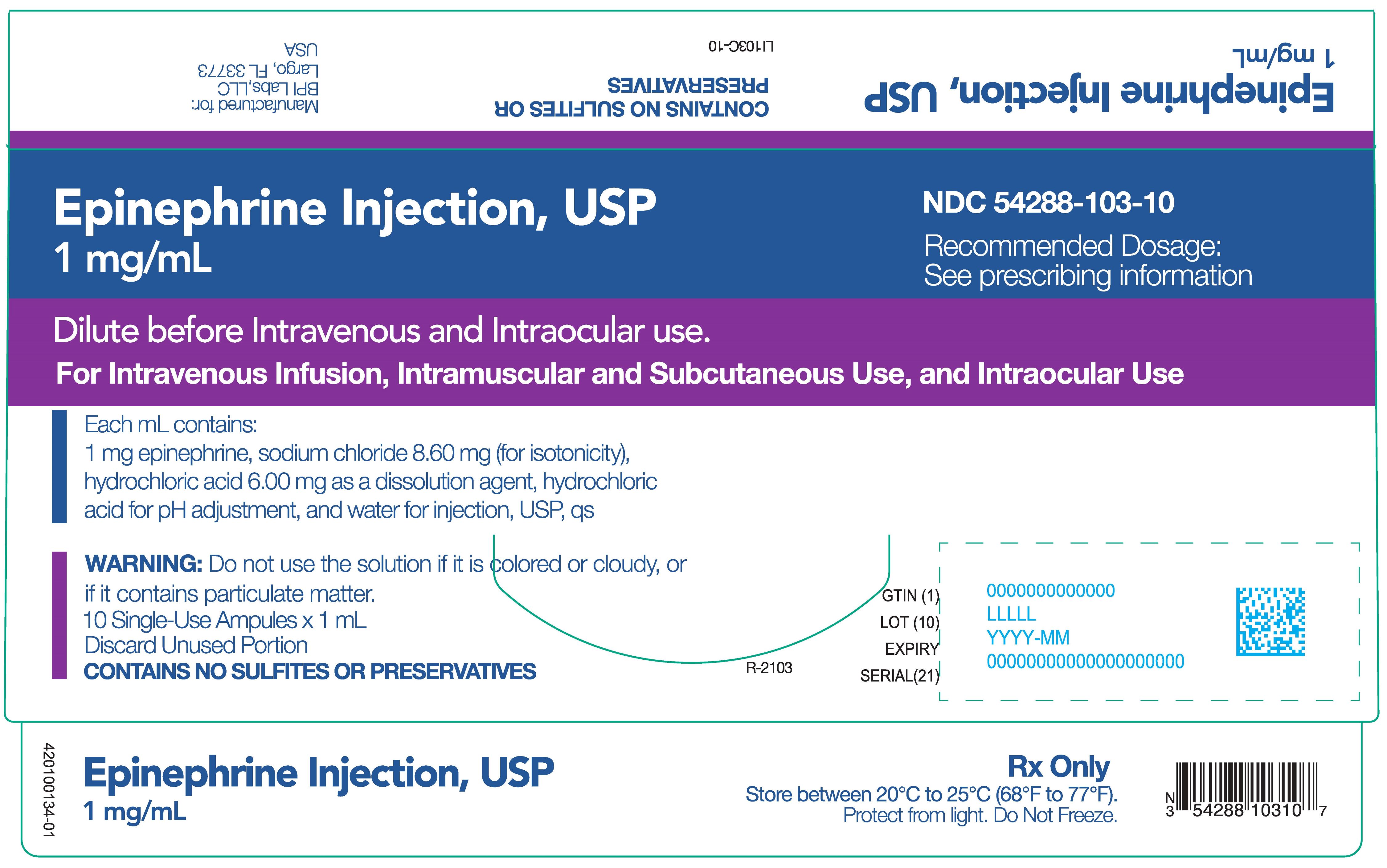
Epinephrine 1 mg/mL Injection, Solution, Concentrate, 10 ampules — NDC 54288-103-10 (Billing 54288-0103-10)
This is a package of 10 ampules of Epinephrine 1 mg/mL Injection, Solution, Concentrate from BPI Labs, LLC, marketed since Aug 2014 and currently FDA-listed. It is this product's only package size.
NDC database record
One package, one record: these facts belong to NDC 54288-103-10 alone.
- Record
- FDA NDC Directory package listing · Human prescription drug
- Code segments
- 54288 labeler · 103 product · 10 package
- Package marketed since
- Aug 8, 2014
- Sample package
- No — commercial package
- Listing certified through
- Dec 31, 2026
- Barcode (UPC)
- 0354288103107, 0354288103015
- FDA record last changed
- Jul 24, 2026
Other active recalls for Epinephrine (different manufacturers) — 2 · tap to view
Identity & classification
Regulatory identifiers FDA, NLM and CMS codes for this package
Drug-database identifiers Medi-Span GPI and First Databank GCN / HICL / AHFS classification
- GSN (GCN sequence number): 062006
- GCN: 97790
- GPI-14 (Medi-Span): 38000032002042
- HICL (First Databank): 034361
- AHFS class code: 12:12.12.00
- RxCUI (RxNorm): 1660014
Where does this data come from?
- FDA openFDA NDC Directory · synced Oct 1, 2026
- FDA label on DailyMed · label index refreshed Oct 6, 2026
- RxNorm (NLM RxNav) · catalog refreshed Oct 1, 2026
- Medi-Span GPI (licensed)
- First Databank (licensed) · refreshed Oct 1, 2026
RxNorm drug class
This medicine belongs to the alpha-Adrenergic Agonist class.
Where does this data come from?
- RxClass (NLM) · catalog refreshed Oct 1, 2026
Clinical
Epinephrine injection is used along with emergency medical treatment to treat life-threatening allergic reactions caused by insect bites or stings, foods, medications, latex, and other causes. Epinephrine injection is also used to treat life-threatening low blood pressure associated with septic shock (a serious condition caused by a body-wide infection that can lead to dangerously low blood pressure and organ failure) in hospitalized patients. Epinephrine is in a class of medications called alpha- and beta-adrenergic agonists (sympathomimetic agents). It works by relaxing the muscles in the ai...
Read the full MedlinePlus article ↗- Its main use is emergency treatment of severe allergic reactions, including anaphylaxis from stings, foods or drugs. Some injections are also used for low blood pressure in septic...
- Yes. Epinephrine is emergency first aid, not a replacement for medical care. Call for help right after using it so you can be monitored and treated further if needed.
- Do I still need to go to the hospital after using it?
- Into the outer middle part of the thigh, through clothing if needed. Never inject into a vein, the buttock, or fingers, hands or feet. For young children, hold the leg firmly so th...
Patient education
Supplement & herbal interactions
Some supplements/herbs that may interact with Epinephrine — tap one for details:
Where does this data come from?
- MedlinePlus (NLM) · refreshed Oct 1, 2026
- FDA label on DailyMed · label index refreshed Oct 6, 2026
Ask a licensed pharmacist directly — free, answered by our team.
Pricing
A drug doesn't have one price. Each row is a different public payment system, and none is what you'd pay at the counter — that depends on your insurance. The ⓘ on each row explains what it measures.
| Price system | Per mL | Per package |
|---|---|---|
| Retail pharmacies payNADAC · weekly | Not in the retail survey — common for institutional, discontinued, or low-volume packs. | |
| Medicaid paysCMS SDUD · 12 mo | No recent Medicaid claims on file for this NDC — rare and low-volume NDCs are suppressed in the public data. | |
| Medicare drug plans payPart D · quarterly | No Part D plan price is available for this NDC in our data. | |
Where does this data come from?
- CMS NADAC weekly file
- CMS ASP pricing files · refreshed Sep 20, 2026
- CMS Medicaid State Drug Utilization Data · refreshed Oct 8, 2026
- CMS Part D plan pricing files · refreshed Sep 24, 2026
- VA National Acquisition Center price file
Packaging — all sizes for this product
| Package NDC | Description | Marketing start | Marketing end | Status |
|---|---|---|---|---|
| 54288-0103-10 You're viewing this Main listing | 10 AMPULE in 1 BOX / 1 mL in 1 AMPULE | 2014-08-08 | — | Active |
Therapeutic equivalents
| Product | Labeler | Pack | NADAC/unit | TE | Status | Price vs. this |
|---|---|---|---|---|---|---|
| Adrenalin 1 mg/mL 42023-0159-25 | Par | 25 vials | $7.796 | AP | Availability likely | — |
| Epinephrine 1 mg/mL 00143-9476-25 | Hikma | 25 ampules | — | AP | FDA listed | — |
| Adrenalin 1 mg/mL 00404-9810-01 | Henry | 1 vial | — | AP | FDA listed | — |
| Epinephrine 1 mg/mL 00404-9857-01 | Henry | 1 ampule | — | AP | FDA listed | — |
| epinephrine 1 mg/mL 00517-1171-10 | American | 10 ampules | — | — | FDA listed | — |
| Epinephrine Professional 24357-0011-13 | Focus | 1 kit | — | AP | FDA listed | — |
| epinephrine 1 mg/mL 43066-0803-25 | Baxter | 25 vials | — | — | FDA listed | — |
| Epinephrine 1 mg/mL 50090-3039-00 | A-S | 25 ampules | — | AP | Discontinued | — |
| Adrenalin (Epinephrine) 1 mg/mL 51662-1290-01 | HF | 1 ml | — | AP | FDA listed | — |
| Epinephrine Convenience Kit 51662-1507-01 | HF | 1 vial | — | AP | FDA listed | — |
| Epinephrine 1 mg/mLthis 54288-0103-10 | BPI | 10 ampules | — | AP | FDA listed | — |
| Epinephrine 1 mg/mL 54288-0119-10 | BPI | 10 vials | — | AP | FDA listed | — |
| Epinephrine 1 mg/mL 63323-0696-25 | Fresenius | 25 vials | — | AP | FDA listed | — |
| epinephrine 1 mg/mL 68083-0591-10 | Gland | 10 ampules | — | AP | FDA listed | — |
| epinephrine 1 mg/mL 68462-0933-10 | GLENMARK | 10 ampules | — | AP | FDA listed | — |
| Adrenalin Vials 1 mg/mL 70385-2024-02 | Sina | 2 vials | — | AP | FDA listed | — |
| Adrenalin 1 mg/mL 70518-1342-00 | REMEDYREPACK | 25 vials | — | AP | Discontinued | — |
| Epinephrine 1 mg/mL 70518-4156-00 | REMEDYREPACK | 25 vials | — | AP | FDA listed | — |
| Epinephrine 1 mg/mL 70518-4274-00 | REMEDYREPACK | 25 vials | — | AP | FDA listed | — |
| Epinephrine 1 mg/mL 71872-7117-01 | Medical | 1 ampule | — | AP | FDA listed | — |
| Adrenalin 1 mg/mL 71872-7223-01 | Medical | 1 vial | — | AP | FDA listed | — |
| Epinephrine 1 mg/mL 71872-7360-01 | Medical | 1 vial | — | AP | FDA listed | — |
| Epinephrine 1 mg/mL 72572-0235-25 | CIVICA, | 25 vials | — | AP | Discontinued | — |
| Epinephrine 1 mg/mL 80830-1659-02 | Amneal | 25 vials | — | AP | FDA listed | — |
| Epinephrine 1 mg/mL 84549-0103-10 | ProPharma | 1 ml | — | AP | FDA listed | — |
| Adrenalin 1 mg/mL 84549-0159-25 | ProPharma | 1 ml | — | AP | FDA listed | — |
Where does this data come from?
- FDA openFDA NDC Directory · synced Oct 1, 2026
- FDA Orange Book · refreshed Oct 3, 2026
- CMS NADAC weekly file
Availability & generic status
The FDA lists approved generic versions of this medicine, but that does not always mean a pharmacy can get one today. Patent rules, launch agreements, supply and pricing can affect when generics actually arrive.
Where does this data come from?
- FDA Orange Book · refreshed Oct 3, 2026
Inactive Ingredients / Excipients
Inactive ingredients, also called excipients, are components of the drug product other than the active ingredient. They may include fillers, dyes, coatings, preservatives, flavors, or other formulation ingredients.
🧪 Avoiding an ingredient? See Epinephrine inactive ingredients by manufacturer: every current product's list side by side, so you can ask your pharmacy for the version that does not list it.
💡 Tap an ingredient (hover on desktop) to see what it is and why it’s used.
-
6.00 mg / 1 mL
UNII QTT17582CB
A strong acid used to adjust and maintain the proper pH level in liquid medicines, ensuring stability and preventing breakdown of active ingredients.
-
8.6 mg / 1 mL
UNII 451W47IQ8X
Sodium chloride is common table salt. It's used in medicines as a buffer to maintain proper pH, as a filler to add bulk, or to adjust the osmotic balance in liquid formulations.
-
UNII 059QF0KO0R
Water is a liquid solvent that dissolves and mixes ingredients together in liquid medicines, syrups, and injections. It helps distribute the active drug evenly throughout the product.
3 inactive ingredients listed in the exact product block matched to this NDC.
Where does this data come from?
ingredient classCode="IACT" elements from the exact product block matched by this NDC. Label-section narrative from DailyMed / the openFDA label index is shown separately when available.- FDA label on DailyMed · label index refreshed Oct 6, 2026
- FDA openFDA NDC Directory · synced Oct 1, 2026
Inactive ingredient FAQ
Are inactive ingredients the same for every manufacturer?
Why might an inactive ingredient be missing?
Can inactive ingredients matter?
Manufacturer & labeler
More NDCs from BPI Labs, LLC labeler code 54288
- Zoledronic Acid 4 mg/5mL Injection, Solution, Concentrate NDC 54288-100-01
- Dehydrated Alcohol 1 mL/mL Injection, Solution NDC 54288-105-10
- Melphalan hydrochloride Kit NDC 54288-109-02
- HYOSCYAMINE SULFATE .5 mg/mL Injection, Solution NDC 54288-111-05
- EPINEPHRINE 1 mg/mL Injection NDC 54288-117-10
- EPINEPHRINE 1 mg/mL Injection NDC 54288-119-10
- EPINEPHRINE 1 mg/mL Injection NDC 54288-120-01
Where does this data come from?
- FDA openFDA NDC Directory · synced Oct 1, 2026
- Drugs@FDA
Full prescribing information FDA SPL
🎯 Indications and Usage ▾
1 INDICATIONS AND USAGE Epinephrine is a non-selective alpha and beta adrenergic agonist indicated: To increase mean arterial blood pressure in adult patients with hypotension associated with septic shock. ( 1.1 ) For emergency treatment of allergic reactions (Type 1), including anaphylaxis. ( 1.2 ) For induction and maintenance of mydriasis during intraocular surgery. ( 1.3 )
1.1Hypotension associated with Septic Shock Epinephrine Injection USP, 1 mg/mL is indicated to increase mean arterial blood pressure in adult patients with hypotension associated with septic shock.
1.2Anaphylaxis Emergency treatment of allergic reactions (Type I), including anaphylaxis, which may result from allergic reactions to insect stings, biting insects, foods, drugs, sera, diagnostic testing substances and other allergens, as well as idiopathic anaphylaxis or exercise-induced anaphylaxis. The signs and symptoms associated with anaphylaxis include flushing, apprehension, syncope, tachycardia, thready or unobtainable pulse associated with hypotension, convulsions, vomiting, diarrhea and abdominal cramps, involuntary voiding, airway swelling, laryngospasm, bronchospasm, pruritus, urticaria or angioedema, swelling of the eyelids, lips, and tongue.
1.3Induction and Maintenance of Mydriasis during Intraocular Surgery Induction and maintenance of mydriasis during intraocular surgery.
⏱️ Dosage and Administration ▾
2 DOSAGE AND ADMINISTRATION • Hypotension associated with septic shock (2.2): o Dilute epinephrine in dextrose solution prior to infusion. o Infuse epinephrine into a large vein. o Titrate 0.05-2 mcg/kg/min to achieve desired blood pressure. o Wean gradually. • Anaphylaxis (2.3): Administer intramuscularly or subcutaneously into anterolateral thigh every 5-10 minutes as needed o Adults and children over 30 kg (66 lb): 0.3-0.5 mg (0.3-0.5 mL) o Children under 30 kg (66 lb): 0.01 mg/kg (0.01 mL/kg) • Intraocular surgery (2.4): o Dilute 1 mL with 100 to 1000 mL of an ophthalmic irrigation fluid, for ophthalmic irrigation or intracameral injection.
2.1General Considerations Inspect visually for particulate matter and discoloration prior to administration, whenever solution and container permit. Do not use if the solution is colored or cloudy, or if it contains particulate matter. Discard any unused portion.
2.2Hypotension associated with Septic Shock Dilute epinephrine in 5 percent dextrose solution or 5 percent dextrose and sodium chloride solution. These dextrose containing fluids provide protection against significant loss of potency by oxidation. Administration in saline solution alone is not recommended .
Whole blood or plasma, if indicated to increase blood volume, should be administered separately. Add 1 mL (1 mg) of epinephrine from its ampule to 1,000 mL of a 5 percent dextrose containing solution. Each mL of this dilution contains 1 mcg of epinephrine.
Correct blood volume depletion as fully as possible before any vasopressor is administered. When, as an emergency measure, intraaortic pressures must be maintained to prevent cerebral or coronary artery ischemia, epinephrine can be administered before and concurrently with blood volume replacement. Whenever possible, give infusions of epinephrine into a large vein.
Avoid using a catheter tie-in technique, because the obstruction to blood flow around the tubing may cause stasis and increased local concentration of the drug. Occlusive vascular diseases (for example, atherosclerosis, arteriosclerosis, diabetic endarteritis, Buerger’s disease) are more likely to occur in the lower than in the upper extremity; therefore, avoid the veins of the leg in elderly patients or in those suffering from such disorders. There is potential for gangrene in a lower extremity when infusions of catecholamine are given in an ankle vein.
To provide hemodynamic support in septic shock associated hypotension in adult patients, the suggested dosing infusion rate of intravenously administered epinephrine is 0.05 mcg/kg/min to 2 mcg/kg/min, and is titrated to achieve a desired mean arterial pressure (MAP). The dosage may be adjusted periodically, such as every 10 to 15 minutes, in increments of 0.05 mcg/kg/min to 0.2 mcg/kg/min, to achieve the desired blood pressure goal. Continuous epinephrine infusion is generally required over several hours or days until the patient’s hemodynamic status improves.
The duration of perfusion or total cumulative dose cannot be predicted. After hemodynamic stabilization, wean incrementally over time, such as by decreasing doses of epinephrine every 30 minutes over a 12- to 24-hour period.
2.3Anaphylaxis Inject epinephrine intramuscularly or subcutaneously into the anterolateral aspect of the thigh, through clothing if necessary. When administering to a child, to minimize the risk of injection related injury, hold the leg firmly in place and limit movement prior to and during an injection. The injection may be repeated every 5 to 10 minutes as necessary.
For intramuscular administration, use a needle long enough (at least 1/2 inch to 5/8 inch) to ensure the injection is administered into the muscle. Monitor the patient clinically for the severity of the allergic reaction and potential cardiac effects of the drug, with repeat doses titrated to effect. Do not administer repeated injections at the same site, as the resulting vasoconstriction may cause tissue necrosis.
A… [Excerpted — this section continues on DailyMed.]
💊 Dosage Forms and Strengths ▾
3 DOSAGE FORMS AND STRENGTHS Injection solution: 1 mg/1 mL epinephrine as a sterile solution in a 2 mL single-use clear glass ampule, marked Epinephrine Injection USP, 1 mg/mL. Injection solution: 1 mg/1 mL, 2 mL single-use ampule. (3)
⛔ Contraindications ▾
4 CONTRAINDICATIONS None. None.
⚠️ Warnings and Cautions ▾
5 WARNINGS AND PRECAUTIONS Monitor patient for acute severe hypertension. (5.1) Avoid extravasation into tissues, which can cause local necrosis. (5.2) Do not inject into buttocks, digits, hands, or feet.
(5.3) Potential for pulmonary edema, which may be fatal. (5.4) May constrict renal blood vessels and decrease urine formation. (5.5) May induce potentially serious cardiac arrhythmias or aggravate angina pectoris, particularly in patients with underlying heart disease.
(5.6)
5.1Hypertension When Epinephrine Injection is administered intravenously, titrate the infusion while monitoring vital signs. Invasive arterial blood pressure monitoring and central venous pressure monitoring are recommended. Because of varying response to epinephrine, dangerously high blood pressure may occur [see Drug Interactions (7)] .
5.2Extravasation and Tissue Necrosis with Intravenous Infusion When Epinephrine Injection is administered intravenously, the infusion site should be checked frequently for free flow. Avoid extravasation of epinephrine into the tissues, to prevent local necrosis. Blanching along the course of the infused vein, sometimes without obvious extravasation, may be attributed to vasa vasorum constriction with increased permeability of the vein wall, permitting some leakage.
This also may progress on rare occasions to superficial slough. Hence, if blanching occurs, consider changing the infusion site at intervals to allow the effects of local vasoconstriction to subside. Antidote for Extravasation Ischemia : To prevent sloughing and necrosis in areas in which extravasation has taken place, infiltrate the area with 10 mL to 15 mL of saline solution containing from 5 mg to 10 mg of phentolamine , an adrenergic blocking agent.
Use a syringe with a fine hypodermic needle, with the solution being infiltrated liberally throughout the area, which is easily identified by its cold, hard, and pallid appearance. Sympathetic blockade with phentolamine causes immediate and conspicuous local hyperemic changes if the area is infiltrated within 12 hours.
5.3Incorrect Locations of Injection for Anaphylaxis When Epinephrine Injection is used for the treatment of anaphylaxis, the most appropriate location for administration is into the anterolateral aspect of the thigh (vastus lateralis muscle) because of its location, size, and available blood flow. Injection into (or near) smaller muscles, such as in the deltoid, is not recommended due to possible differences in absorption associated with this use. Do not administer repeated injections of epinephrine at the same site, as the resulting vasoconstriction may cause tissue necrosis.
Do not inject into buttock . Injection into the buttock may not provide effective treatment of anaphylaxis and has been associated with the development of Clostridial infections (gas gangrene). Cleansing with alcohol does not kill bacterial spores, and therefore, does not lower this risk.
Do not inject into digits, hands, or feet. Epinephrine is a strong vasoconstrictor. Accidental injection into the digits, hands or feet may result in loss of blood flow to the affected area and has been associated with tissue necrosis.
5.4Pulmonary Edema When Epinephrine Injection is administered intravenously, there is risk of pulmonary edema because of the peripheral constriction and cardiac stimulation produced. Treatment of pulmonary edema consists of a rapidly acting alpha-adrenergic blocking drug (such as phentolamine mesylate) and respiratory support.
5.5Renal Impairment Intravenously administered epinephrine initially may produce constriction of renal blood vessels and decrease urine formation.
5.6Cardiac Arrhythmias and Ischemia Epinephrine may induce cardiac arrhythmias and angina pectoris in patients, especially patients suffering from coronary artery disease, organic heart disease, cerebrovascular disease, hypertension, or patients who are receiving drugs that sensitize the myocardium [see Adverse Reactions (6) and Drug I… [Excerpted — this section continues on DailyMed.]
🤒 Adverse Reactions ▾
6 ADVERSE REACTIONS Most common adverse reactions to systemically administered epinephrine are headache; anxiety; apprehensiveness; restlessness; tremor; weakness; dizziness; sweating; palpitations; pallor; peripheral coldness; nausea/vomiting; and/or respiratory difficulties. Arrhythmias, including fatal ventricular fibrillation, rapid rises in blood pressure producing cerebral hemorrhage, and angina have occurred. (6.1, 6.2) To report SUSPECTED ADVERSE REACTIONS, contact BPI Labs, LLC at (727) 471-0850 or FDA at 1-800-FDA-1088 or www.fda.gov/medwatch .
6.1Adverse Reactions associated with Epinephrine Infusion (for Hypotension associated with Septic Shock) The following adverse reactions associated with the infusion of epinephrine were identified in the literature. Because these reactions are reported voluntarily from a population of uncertain size, it is not always possible to estimate their frequency reliably or to establish a causal relationship to drug exposure. Cardiovascular disorders : tachycardia, supraventricular tachycardia, ventricular arrhythmias, myocardial ischemia, myocardial infarction, limb ischemia, pulmonary edema Gastrointestinal disorders : Nausea, vomiting General disorders and administrative site conditions : Chest pain, extravasation Metabolic : hypoglycemia, hyperglycemia, insulin resistance, hypokalemia, lactic acidosis Nervous system disorders : Headache, nervousness, paresthesia, tremor, stroke, central nervous system bleeding Psychiatric disorders : Excitability Renal disorders : Renal insufficiency Respiratory : Pulmonary edema, rales Skin and subcutaneous tissue disorders : Diaphoresis, pallor, piloerection, skin blanching, skin necrosis with extravasation
6.2Adverse Reactions associated with Intramuscular or Subcutaneous Use (for Anaphylaxis) Common adverse reactions to systemically administered epinephrine include anxiety, apprehensiveness, restlessness, tremor, weakness, dizziness, sweating, palpitations, pallor, nausea and vomiting, headache, and respiratory difficulties. These symptoms occur in some persons receiving therapeutic doses of epinephrine, but are more likely to occur in patients with heart disease, hypertension, or hyperthyroidism [see Warnings and Precautions (5.9)] .
Due to the lack of randomized, controlled clinical trials of epinephrine for the treatment of anaphylaxis, the true incidence of adverse reactions associated with the systemic use of epinephrine is difficult to determine. Adverse reactions reported in observational trials, case reports, and studies are listed below by body system: Cardiovascular [see Warnings and Precautions (5.6)] : angina, arrhythmias, hypertension, pallor, palpitations, tachyarrhythmia, tachycardia, vasoconstriction, and ventricular ectopy. Angina may occur in patients with coronary artery disease.
Arrhythmias, including fatal ventricular fibrillation, have occurred, particularly in patients with underlying organic heart disease or patients receiving drugs that sensitize the heart to arrhythmias. Rapid rises in blood pressure associated with epinephrine use have produced cerebral hemorrhage, particularly in elderly patients with cardiovascular disease. Respiratory : respiratory difficulties.
Neurological : dizziness, disorientation, excitability, headache, impaired memory, lightheadedness, nervousness, panic, psychomotor agitation, sleepiness, tingling, tremor, and weakness. Psychiatric : anxiety, apprehensiveness, restlessness. Gastrointestinal : nausea, vomiting.
Skin : sweating. Other : Patients with Parkinson’s disease may experience psychomotor agitation or a temporary worsening of symptoms [see Warnings and Precautions (5.9] . Diabetic patients may experience transient increases in blood sugar [see Warnings and Precautions (5.9)] .
Accidental injection into the digits, hands or feet may result in loss of blood flow to the affected area [see Warnings and Precautions (5.3)] . Adverse events experienced as a result of an injection into the… [Excerpted — this section continues on DailyMed.]
🔄 Drug Interactions ▾
7 DRUG INTERACTIONS Drugs antagonizing pressor effects of epinephrine α-blockers, such as phentolamine Vasodilators, such as nitrates Diuretics Antihypertensives Ergot alkaloids Drugs potentiating pressor effects of epinephrine • Sympathomimetics • β-blockers, such as propranolol • Tricyclic anti-depressants • Monoamine oxidase (MAO) inhibitors • Catechol-O-methyl transferase (COMT) inhibitors, such as entacapone • Clonidine • Doxapram • Oxytocin • Drugs potentiating arrhythmogenic effects of epinephrine. Patients who are concomitantly receiving any of the following drugs should be observed carefully for the development of cardiac arrhythmias [see Warnings and Precautions (5.6) and Adverse Reactions (6)] . • β-blockers, such as propranolol • Cyclopropane or halogenated hydrocarbon anesthetics, such as halothane • Antihistamines • Thyroid hormones • Diuretics • Cardiac glycosides, such as digitalis glycosides • Quinidine Drugs potentiating arrhythmogenic effects of epinephrine.
Patients who are concomitantly receiving any of the following drugs should be observed carefully for the development of cardiac arrhythmias [see Warnings and Precautions (5.6) and Adverse Reactions (6) ]. β-blockers, such as propranolol Cyclopropane or halogenated hydrocarbon anesthetics, such as halothane Antihistamines Thyroid hormones Diuretics Cardiac glycosides, such as digitalis glycosides Quinidine Drugs potentiating hypokalemic effects of epinephrine • Potassium depleting diuretics • Corticosteroids • Theophylline Epinephrine should not be used to counteract circulatory collapse or hypotension caused by phenothiazines, as a reversal of the pressor effects of epinephrine may result in further lowering of blood pressure.
Epinephrine may antagonize the neuronal blockade produced by guanethidine resulting in decreased antihypertensive effect and requiring increased dosage of the latter. • Drugs that counter the pressor effects of epinephrine include alpha blockers, vasodilators such as nitrates, diuretics, antihypertensives, and ergot alkaloids. (7) • Drugs that potentiate the effects of epinephrine include sympathomimetics, beta blockers, tricyclic antidepressants, MAO inhibitors, COMT inhibitors, clonidine, doxapram, oxytocin, levothyroxine sodium, and certain antihistamines.
(7) • Drugs that increase the arrhythmogenic potential of epinephrine include beta blockers, cyclopropane and halogenated hydrocarbon anesthetics, quinidine, antihistamines, exogenous thyroid hormones, diuretics, and cardiac glycosides. Observe for development of cardiac arrhythmias. (7) • Potassium-depleting drugs, including corticosteroids, diuretics, and theophylline, potentiate the hypokalemic effects of epinephrine.
(7)
👥 Use in Specific Populations ▾
8 USE IN SPECIFIC POPULATIONS • Pregnancy: May cause fetal harm (8.1) • Elderly patients and pregnant women may be at greater risk of developing adverse reactions when epinephrine is administered parenterally. (8.1, 8.5)
8.1Pregnancy Risk Summary Prolonged experience with epinephrine use in pregnant women over several decades, based on published literature, does not identify a drug-associated risk of major birth defects, miscarriage, or adverse maternal or fetal outcomes. However, there are risks to the mother and fetus associated with epinephrine use during labor or delivery (see Clinical Considerations ). In animal reproduction studies, epinephrine administered by the subcutaneous route to pregnant rabbits, mice, and hamsters, during the period of organogenesis, resulted in adverse developmental effects (including gastroschisis, embryonic lethality, and delayed skeletal ossification) at doses approximately 2 times the maximum recommended daily intramuscular, subcutaneous, or intravenous dose (see Data ).
The estimated background risk of major birth defects and miscarriage for the indicated population is unknown. All pregnancies have a background risk of birth defect, loss, or other adverse outcomes. In the United States general population, the estimated background risk of major birth defects and miscarriage in clinically recognized pregnancies is 2 to 4% and 15 to 20%, respectively.
Clinical Considerations Disease-associated maternal and/or embryo/fetal risk During pregnancy, anaphylaxis can be catastrophic and can lead to hypoxic-ischemic encephalopathy and permanent central nervous system damage or death in the mother and, more commonly, in the fetus or neonate. The prevalence of anaphylaxis occurring during pregnancy is reported to be approximately 3 cases per 100,000 deliveries. Management of anaphylaxis during pregnancy is similar to management in the general population.
Epinephrine is the first line-medication of choice for treatment of anaphylaxis; it should be used in the same manner in pregnant and non-pregnant patients. In conjunction with the administration of epinephrine, the patient should seek immediate medical or hospital care. Hypotension associated with septic shock is a medical emergency in pregnancy which can be fatal if left untreated.
Delaying treatment in pregnant women with hypotension associated with septic shock may increase the risk of maternal and fetal morbidity and mortality. Life-sustaining therapy for the pregnant woman should not be withheld due to potential concerns regarding the effects of epinephrine on the fetus. Labor or Delivery Epinephrine usually inhibits spontaneous or oxytocin-induced contractions of the pregnant human uterus and may delay the second stage of labor.
Avoid epinephrine during the second stage of labor. In dosage sufficient to reduce uterine contractions, the drug may cause a prolonged period of uterine atony with hemorrhage. Avoid epinephrine in obstetrics when maternal blood pressure exceeds 130/80 mmHg.
Although epinephrine may improve maternal hypotension associated with septic shock and anaphylaxis, it may result in uterine vasoconstriction, decreased uterine blood flow, and fetal anoxia. Data Animal Data In an embryofetal development study with pregnant rabbits dosed during the period of organogenesis (on days 3 to 5, 6 to 7, or 7 to 9 of gestation), epinephrine caused teratogenic effects (including gastroschisis) at doses approximately 15 times the maximum recommended intramuscular, subcutaneous, or intravenous dose (on a mg/m 2 basis at a maternal subcutaneous dose of 1.2 mg/kg/day for 2 to 3 days).
Animals treated on days 6 to 7 had decreased number of implantations. In an embryofetal development study, pregnant mice were administered epinephrine (0.1 to 10 mg/kg/day) on Gestation Days 6 to 15. Teratogenic effects, embryonic lethality, and delays in skeletal ossification were observed at approximately 3 times the maximum recommended intramuscular, subcutaneous… [Excerpted — this section continues on DailyMed.]
🤰 Pregnancy ▾
8.1Pregnancy Risk Summary Prolonged experience with epinephrine use in pregnant women over several decades, based on published literature, does not identify a drug-associated risk of major birth defects, miscarriage, or adverse maternal or fetal outcomes. However, there are risks to the mother and fetus associated with epinephrine use during labor or delivery (see Clinical Considerations ). In animal reproduction studies, epinephrine administered by the subcutaneous route to pregnant rabbits, mice, and hamsters, during the period of organogenesis, resulted in adverse developmental effects (including gastroschisis, embryonic lethality, and delayed skeletal ossification) at doses approximately 2 times the maximum recommended daily intramuscular, subcutaneous, or intravenous dose (see Data ).
The estimated background risk of major birth defects and miscarriage for the indicated population is unknown. All pregnancies have a background risk of birth defect, loss, or other adverse outcomes. In the United States general population, the estimated background risk of major birth defects and miscarriage in clinically recognized pregnancies is 2 to 4% and 15 to 20%, respectively.
Clinical Considerations Disease-associated maternal and/or embryo/fetal risk During pregnancy, anaphylaxis can be catastrophic and can lead to hypoxic-ischemic encephalopathy and permanent central nervous system damage or death in the mother and, more commonly, in the fetus or neonate. The prevalence of anaphylaxis occurring during pregnancy is reported to be approximately 3 cases per 100,000 deliveries. Management of anaphylaxis during pregnancy is similar to management in the general population.
Epinephrine is the first line-medication of choice for treatment of anaphylaxis; it should be used in the same manner in pregnant and non-pregnant patients. In conjunction with the administration of epinephrine, the patient should seek immediate medical or hospital care. Hypotension associated with septic shock is a medical emergency in pregnancy which can be fatal if left untreated.
Delaying treatment in pregnant women with hypotension associated with septic shock may increase the risk of maternal and fetal morbidity and mortality. Life-sustaining therapy for the pregnant woman should not be withheld due to potential concerns regarding the effects of epinephrine on the fetus. Labor or Delivery Epinephrine usually inhibits spontaneous or oxytocin-induced contractions of the pregnant human uterus and may delay the second stage of labor.
Avoid epinephrine during the second stage of labor. In dosage sufficient to reduce uterine contractions, the drug may cause a prolonged period of uterine atony with hemorrhage. Avoid epinephrine in obstetrics when maternal blood pressure exceeds 130/80 mmHg.
Although epinephrine may improve maternal hypotension associated with septic shock and anaphylaxis, it may result in uterine vasoconstriction, decreased uterine blood flow, and fetal anoxia. Data Animal Data In an embryofetal development study with pregnant rabbits dosed during the period of organogenesis (on days 3 to 5, 6 to 7, or 7 to 9 of gestation), epinephrine caused teratogenic effects (including gastroschisis) at doses approximately 15 times the maximum recommended intramuscular, subcutaneous, or intravenous dose (on a mg/m 2 basis at a maternal subcutaneous dose of 1.2 mg/kg/day for 2 to 3 days).
Animals treated on days 6 to 7 had decreased number of implantations. In an embryofetal development study, pregnant mice were administered epinephrine (0.1 to 10 mg/kg/day) on Gestation Days 6 to 15. Teratogenic effects, embryonic lethality, and delays in skeletal ossification were observed at approximately 3 times the maximum recommended intramuscular, subcutaneous, or intravenous dose (on a mg/m2 basis at maternal subcutaneous dose of 1 mg/kg/day for 10 days).
These effects were not seen in mice at approximately 2 times the maximum recommended daily intramuscular or subcutaneous d… [Excerpted — this section continues on DailyMed.]
🧒 Pediatric Use ▾
8.4Pediatric Use Safety and effectiveness of epinephrine in pediatric patients with septic shock have not been established. Clinical use data support weight-based dosing for treatment of anaphylaxis in pediatric patients, and other reported clinical experience with the use of epinephrine suggests that the adverse reactions seen in children are similar in nature and extent to those both expected and reported in adults. The safety and effectiveness of epinephrine (at a dilution of 1:100,000 to 1:400,000) for induction and maintenance of mydriasis during intraocular surgery have been established in pediatric patients.
Use of epinephrine for induction and maintenance of mydriasis during intraocular surgery in pediatric patients is supported by adequate and well controlled studies in adults and uncontrolled studies in pediatric patients.
🧓 Geriatric Use ▾
8.5Geriatric Use Clinical studies of epinephrine for the treatment of hypotension associated with septic shock did not include sufficient numbers of subjects aged 65 and over to determine whether they respond differently from younger subjects. Other reported clinical experience has not identified differences in responses between the elderly and younger patients. In general, dose selection for an elderly patient should be cautious, usually starting at the low end of the dosing range, reflecting the greater frequency of decreased hepatic, renal, or cardiac function, and of concomitant disease or other drug therapy.
Clinical studies for the treatment of anaphylaxis have not been performed in subjects aged 65 and over to determine whether they respond differently from younger subjects. However, other reported clinical experience with use of epinephrine for the treatment of anaphylaxis has identified that geriatric patients may be particularly sensitive to the effects of epinephrine. Therefore, for the treatment of anaphylaxis, consider starting with a lower dose to take into account potential concomitant disease or other drug therapy.
For induction and maintenance of mydriasis during intraocular surgery, no overall differences have been observed between elderly and other patients.
🆘 Overdosage ▾
10 OVERDOSAGE Overdosage of epinephrine may produce extremely elevated arterial pressure, which may result in cerebrovascular hemorrhage, particularly in elderly patients. Overdosage may also result in pulmonary edema because of peripheral vascular constriction together with cardiac stimulation. Epinephrine overdosage may also cause transient bradycardia followed by tachycardia and these may be accompanied by potentially fatal cardiac arrhythmias.
Premature ventricular contractions may appear within one minute after injection and may be followed by multifocal ventricular tachycardia (prefibrillation rhythm). Subsidence of the ventricular effects may be followed by atrial tachycardia and occasionally by atrioventricular block. Myocardial ischemia and infarction, cardiomyopathy, extreme pallor and coldness of the skin, metabolic acidosis due to elevated blood lactic acid levels, and renal insufficiency and failure have also been reported.
Epinephrine is rapidly inactivated in the body and treatment following overdose is primarily supportive. Treatment of pulmonary edema consists of a rapidly acting alpha-adrenergic blocking drug (such as phentolamine mesylate) and respiratory support. Treatment of arrhythmias consists of administration of a beta-adrenergic blocking drug (such as propranolol).
If necessary, pressor effects may be counteracted by rapidly acting vasodilators (such as nitrites) or alpha-adrenergic blocking drugs. If prolonged hypotension follows such measures, it may be necessary to administer another pressor drug.
🧬 Clinical Pharmacology ▾
12 CLINICAL PHARMACOLOGY
12.1Mechanism of Action Epinephrine acts on both alpha (α)- and beta (β)-adrenergic receptors. The mechanism of the rise in blood pressure is 3-fold: a direct myocardial stimulation that increases the strength of ventricular contraction (positive inotropic action), an increased heart rate (positive chronotropic action), and peripheral vasoconstriction.
12.2Pharmacodynamics Intravenous use for hypotension associated with septic shock Following intravenous administration of epinephrine, increases in systolic blood pressure and heart rate are observed. Decreases in systemic vascular resistance and diastolic blood pressure are observed at low doses of epinephrine because of β2-mediated vasodilation, but are overtaken by α1-mediated peripheral vasoconstriction at higher doses leading to increase in diastolic blood pressure. The onset of blood pressure increase following an intravenous dose of epinephrine is < 5 minutes and the time to offset blood pressure response occurs within 20 min.
Most vascular beds are constricted including renal, splanchnic, mucosal and skin. Intramuscular and subcutaneous use for anaphylaxis Through its action on alpha-adrenergic receptors, epinephrine lessens the vasodilation and increased vascular permeability that occurs during anaphylaxis, which can lead to loss of intravascular fluid volume and hypotension. Through its action on beta-adrenergic receptors, epinephrine causes bronchial smooth muscle relaxation and helps alleviate bronchospasm, wheezing and dyspnea that may occur during anaphylaxis.
Epinephrine also alleviates pruritus, urticaria, and angioedema and may relieve gastrointestinal and genitourinary symptoms associated with anaphylaxis because of its relaxer effects on the smooth muscle of the stomach, intestine, uterus and urinary bladder. Epinephrine increases glycogenolysis, reduces glucose up take by tissues, and inhibits insulin release in the pancreas, resulting in hyperglycemia and increased blood lactic acid [see Warnings and Precautions (5.9)]. Intraocular use for mydriasis Epinephrine causes mydriasis when administered intraocularly or parenterally.
12.3Pharmacokinetics When administered parenterally or intraocularly, epinephrine has a rapid onset and short duration of action. Following intravenous injection, epinephrine is rapidly cleared from the plasma with an effective half-life of < 5 min. A pharmacokinetic steady state following continuous intravenous infusion is achieved within 10-15 min.
In patients with septic shock, epinephrine displays dose-proportional pharmacokinetics in the infusion dose range of 0.03 to 1.7 mcg/kg/min. The extent of human systemic exposure at the labeled intraocular dose has not been evaluated, however, significant systemic concentrations or plasma exposure of epinephrine are not expected when administered intraocularly. Epinephrine is extensively metabolized with only a small amount excreted unchanged.
Epinephrine is rapidly degraded to vanillylmandelic acid, an inactive metabolite, by monoamine oxidase and catechol-O-methyltransferase that are abundantly expressed in the liver, kidneys and other extraneuronal tissues. The tissues with the highest contribution to removal of circulating exogenous epinephrine are the liver (32%), kidneys (25%), skeletal muscle (20%), and mesenteric organs (12%). Special Populations Elderly In a pharmacokinetic study of 45-minute epinephrine infusions given to healthy men aged 20 to 25 years and healthy men aged 60 to 65 years, the mean plasma metabolic clearance rate of epinephrine at steady state was greater among the older men (144.8 versus 78 mL/kg/min for a 14.3 ng/kg/min infusion).
Body Weight Body weight has been found to influence epinephrine pharmacokinetics. Higher body weight was associated with a higher plasma epinephrine clearance and a lower concentration plateau. Special Populations Elderly In a pharmacokinetic study of 45-minute epinephrine infusions given to healthy men aged… [Excerpted — this section continues on DailyMed.]
🧬 Mechanism of Action ▾
12.1Mechanism of Action Epinephrine acts on both alpha (α)- and beta (β)-adrenergic receptors. The mechanism of the rise in blood pressure is 3-fold: a direct myocardial stimulation that increases the strength of ventricular contraction (positive inotropic action), an increased heart rate (positive chronotropic action), and peripheral vasoconstriction.
📦 How Supplied / Storage and Handling ▾
16 HOW SUPPLIED/STORAGE AND HANDLING Epinephrine Injection USP, 1 mg/mL is a sterile solution containing 1 mg/1 mL epinephrine in a 2 mL clear glass ampule. Supplied in a box of 10 single-use ampules (NDC 54288-103-10). Epinephrine is light sensitive.
Protect from light until ready to use. Do not refrigerate. Protect from freezing.
Store at room temperature, between 20° to 25°C (68° to 77°F). (See USP Controlled Room Temperature.) Protect from alkalis and oxidizing agents. Inspect visually for particulate matter and discoloration prior to administration.
Do not use the solution if it is colored or cloudy, or if it contains particulate matter.
📦 Storage and Handling ▾
Epinephrine is light sensitive. Protect from light until ready to use. Do not refrigerate. Protect from freezing. Store at room temperature, between 20° to 25°C (68° to 77°F). (See USP Controlled Room Temperature.) Protect from alkalis and oxidizing agents. Inspect visually for particulate matter and discoloration prior to administration. Do not use the solution if it is colored or cloudy, or if it contains particulate matter.
📋 Description ▾
11 DESCRIPTION Epinephrine Injection USP, 1 mg/mL is supplied as a sterile aqueous solution with a pH range of 2.2-5.0, that is colorless and nonpyrogenic. Each milliliter contains 1 mg epinephrine, sodium chloride 8.6 mg (for isotonicity), hydrochloric acid 6.00 mg as a dissolution agent, hydrochloric acid for pH adjustment, and water for injection, USP, qs. Contains no preservatives or sulfites.
Solution must be diluted prior to intravenous or ocular use. Epinephrine, USP is a sympathomimetic catecholamine (adrenergic agent) designated chemically as 4-[1-hydroxy-2 (methylamino) ethyl]-1,2 benzenediol, a white, microcrystalline powder. It has the following structural formula: The molecular weight of epinephrine is 183.2.
Epinephrine solution deteriorates rapidly on exposure to air or light, turning pink from oxidation to adrenochrome and brown from the formation of melanin. structure
💬 Information for Patients ▾
17 PATIENT COUNSELING INFORMATION Advise patients or their caregivers about common adverse reactions associated with the use of epinephrine, including an increase in heart rate, the sensation of a more forceful heartbeat, palpitations, sweating, nausea and vomiting, difficulty breathing, pallor, dizziness, weakness or shakiness, headache, apprehension, nervousness, or anxiety. These symptoms and signs usually subside rapidly, especially with rest, quiet and recumbent positioning. Warn patients with a good response to initial treatment about the possibility of recurrence of anaphylaxis symptoms and instruct patients to obtain medical attention if symptoms return.
Advise patients with diabetes that they may develop increased blood glucose levels following epinephrine administration. Rare cases of serious skin and soft tissue infections, including necrotizing fasciitis and myonecrosis caused by Clostridia (gas gangrene), have been reported at the injection site following epinephrine injection for anaphylaxis. Advise patients to seek medical care if they develop signs or symptoms of infection, such as persistent redness, warmth, swelling, or tenderness, at the epinephrine injection site [see Warnings and Precautions (5.8) ] .
🧬 Pharmacokinetics ▾
12.3Pharmacokinetics When administered parenterally or intraocularly, epinephrine has a rapid onset and short duration of action. Following intravenous injection, epinephrine is rapidly cleared from the plasma with an effective half-life of < 5 min. A pharmacokinetic steady state following continuous intravenous infusion is achieved within 10-15 min.
In patients with septic shock, epinephrine displays dose-proportional pharmacokinetics in the infusion dose range of 0.03 to 1.7 mcg/kg/min. The extent of human systemic exposure at the labeled intraocular dose has not been evaluated, however, significant systemic concentrations or plasma exposure of epinephrine are not expected when administered intraocularly. Epinephrine is extensively metabolized with only a small amount excreted unchanged.
Epinephrine is rapidly degraded to vanillylmandelic acid, an inactive metabolite, by monoamine oxidase and catechol-O-methyltransferase that are abundantly expressed in the liver, kidneys and other extraneuronal tissues. The tissues with the highest contribution to removal of circulating exogenous epinephrine are the liver (32%), kidneys (25%), skeletal muscle (20%), and mesenteric organs (12%). Special Populations Elderly In a pharmacokinetic study of 45-minute epinephrine infusions given to healthy men aged 20 to 25 years and healthy men aged 60 to 65 years, the mean plasma metabolic clearance rate of epinephrine at steady state was greater among the older men (144.8 versus 78 mL/kg/min for a 14.3 ng/kg/min infusion).
Body Weight Body weight has been found to influence epinephrine pharmacokinetics. Higher body weight was associated with a higher plasma epinephrine clearance and a lower concentration plateau. Special Populations Elderly In a pharmacokinetic study of 45-minute epinephrine infusions given to healthy men aged 20 to 25 years and healthy men aged 60 to 65 years, the mean plasma metabolic clearance rate of epinephrine at steady state was greater among the older men (144.8 versus 78 mL/kg/min for a 14.3 ng/kg/min infusion).
Body Weight Body weight has been found to influence epinephrine pharmacokinetics. Higher body weight was associated with a higher plasma epinephrine clearance and a lower concentration plateau.
🧬 Pharmacodynamics ▾
12.2Pharmacodynamics Intravenous use for hypotension associated with septic shock Following intravenous administration of epinephrine, increases in systolic blood pressure and heart rate are observed. Decreases in systemic vascular resistance and diastolic blood pressure are observed at low doses of epinephrine because of β2-mediated vasodilation, but are overtaken by α1-mediated peripheral vasoconstriction at higher doses leading to increase in diastolic blood pressure. The onset of blood pressure increase following an intravenous dose of epinephrine is < 5 minutes and the time to offset blood pressure response occurs within 20 min.
Most vascular beds are constricted including renal, splanchnic, mucosal and skin. Intramuscular and subcutaneous use for anaphylaxis Through its action on alpha-adrenergic receptors, epinephrine lessens the vasodilation and increased vascular permeability that occurs during anaphylaxis, which can lead to loss of intravascular fluid volume and hypotension. Through its action on beta-adrenergic receptors, epinephrine causes bronchial smooth muscle relaxation and helps alleviate bronchospasm, wheezing and dyspnea that may occur during anaphylaxis.
Epinephrine also alleviates pruritus, urticaria, and angioedema and may relieve gastrointestinal and genitourinary symptoms associated with anaphylaxis because of its relaxer effects on the smooth muscle of the stomach, intestine, uterus and urinary bladder. Epinephrine increases glycogenolysis, reduces glucose up take by tissues, and inhibits insulin release in the pancreas, resulting in hyperglycemia and increased blood lactic acid [see Warnings and Precautions (5.9)]. Intraocular use for mydriasis Epinephrine causes mydriasis when administered intraocularly or parenterally.
🔬 Clinical Studies ▾
14 CLINICAL STUDIES
14.1Hypotension associated with Septic Shock Fourteen clinical studies from the literature documented that epinephrine increases the mean arterial pressure (MAP) in patients with hypotension associated with septic shock.
14.2Induction and Maintenance of Mydriasis during Intraocular Surgery In randomized, controlled studies, patients undergoing routine cataract extraction were evaluated after receiving intraocular irrigation with or without epinephrine diluted up to 1:1,666,666 (0.6 mcg/mL). Patients have also been evaluated after receiving bolus intracameral injections of epinephrine diluted between 1:25,000 (40 mcg/mL) and 1:400,000 (2.5 mcg/mL). In patients with similar pupil diameters at baseline, with or without the use of preoperative mydriatic agents, mydriasis was maintained better in the eyes receiving epinephrine by an average of one to two millimeters in pupil diameter.
Pupil constriction to 5 mm or less occurred more often in the patients not receiving epinephrine. Mean pulse rate and blood pressure showed no significance difference between patients receiving epinephrine and controls and there was no increased incidence of ventricular dysrhythmias in patients receiving epinephrine.
🧪 Nonclinical Toxicology ▾
13 NONCLINICAL TOXICOLOGY
13.1Carcinogenesis, Mutagenesis, Impairment of Fertility Long-term studies to evaluate the carcinogenic potential of epinephrine have not been conducted. Epinephrine and other catecholamines have been shown to have mutagenic potential in vitro. Epinephrine was positive in the Salmonella bacterial reverse mutation assay, positive in the mouse lymphoma assay, and negative in the in vivo micronucleus assay.
Epinephrine is an oxidative mutagen based on the E. coli WP2 Mutoxitest bacterial reverse mutation assay. This should not prevent the use of epinephrine under the conditions noted under the Indications and Usage. The potential for epinephrine to impair reproductive performance has not been evaluated, but epinephrine has been shown to decrease implantation in female rabbits dosed subcutaneously with 1.2 mg/kg/day (15-fold the highest human intramuscular or subcutaneous daily dose) during gestation days 3 to 9.
13.2Animal Toxicology and/or Pharmacology Epinephrine was associated with metabolic effects, decreased mesentery, coronary and renal conductance in a sheep model of septic shock. Data from hemolysis study have shown that epinephrine at 1:1000 dilution is non-hemolytic. Epinephrine infusion significantly increased the MAP (69 vs. 86 mmHg) and cardiac output (6.4 vs.
7.1L/min) and decreased renal blood flow (330 vs. 247 mL/min).
📄 Carcinogenesis, Mutagenesis, Impairment of Fertility ▾
13.1Carcinogenesis, Mutagenesis, Impairment of Fertility Long-term studies to evaluate the carcinogenic potential of epinephrine have not been conducted. Epinephrine and other catecholamines have been shown to have mutagenic potential in vitro. Epinephrine was positive in the Salmonella bacterial reverse mutation assay, positive in the mouse lymphoma assay, and negative in the in vivo micronucleus assay.
Epinephrine is an oxidative mutagen based on the E. coli WP2 Mutoxitest bacterial reverse mutation assay. This should not prevent the use of epinephrine under the conditions noted under the Indications and Usage. The potential for epinephrine to impair reproductive performance has not been evaluated, but epinephrine has been shown to decrease implantation in female rabbits dosed subcutaneously with 1.2 mg/kg/day (15-fold the highest human intramuscular or subcutaneous daily dose) during gestation days 3 to 9.
14.1Hypotension associated with Septic Shock Fourteen clinical studies from the literature documented that epinephrine increases the mean arterial pressure (MAP) in patients with hypotension associated with septic shock.
14.2Induction and Maintenance of Mydriasis during Intraocular Surgery In randomized, controlled studies, patients undergoing routine cataract extraction were evaluated after receiving intraocular irrigation with or without epinephrine diluted up to 1:1,666,666 (0.6 mcg/mL). Patients have also been evaluated after receiving bolus intracameral injections of epinephrine diluted between 1:25,000 (40 mcg/mL) and 1:400,000 (2.5 mcg/mL). In patients with similar pupil diameters at baseline, with or without the use of preoperative mydriatic agents, mydriasis was maintained better in the eyes receiving epinephrine by an average of one to two millimeters in pupil diameter.
Pupil constriction to 5 mm or less occurred more often in the patients not receiving epinephrine. Mean pulse rate and blood pressure showed no significance difference between patients receiving epinephrine and controls and there was no increased incidence of ventricular dysrhythmias in patients receiving epinephrine.
📄 Package Label / Principal Display Panel ▾
Epinephrine Injection, USP 1 mg/mL NDC 54288-103-10 Epinephrine Injection, USP 1 mg/mL NDC 54288-103-01 carton label
Medicare Part D spend CMS · PART D · 2026 (Q1)
About this NDC listing & data coverage
What data is (and isn’t) available for this NDC — tap to expand
| NDC identity (package / product / labeler codes) | ✓ Available |
| Labeler | ✓ Available |
| Product & package description | ✓ Available |
| Marketing category & status | ✓ Available |
| Active ingredient / dosage form / route | ✓ Available |
| FDA label (SPL via DailyMed) | ✓ Available |
| Package photos | ✓ Available |
| Inactive ingredients (structured) | ✓ Available |
| NADAC pharmacy acquisition price (CMS) | — Not published for this NDC CMS publishes NADAC only for NDCs reported in its retail-pharmacy survey. |
| Orange Book / therapeutic-equivalence data | ✓ Available |
| HCPCS J-code billing crosswalk | — Not published for this NDC Most self-administered / retail products have no J-code — that is normal. |
| Medicaid utilization (CMS SDUD) | — Not published for this NDC CMS reports utilization only for NDCs with Medicaid claims above its privacy threshold. |