
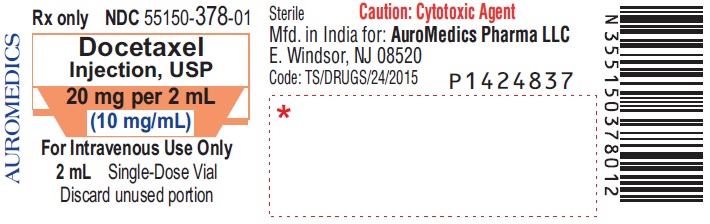
Docetaxel 10 mg/mL Injection, Solution — NDC 55150-378-01 (Billing 55150-0378-01)
This is a package of Docetaxel 10 mg/mL Injection, Solution from Eugia US LLC, marketed since Jun 2021 and currently FDA-listed. It is this product's only package size.
Identity & classification
Regulatory identifiers FDA, NLM and CMS codes for this package
Drug-database identifiers Medi-Span GPI and First Databank GCN / HICL / AHFS classification
- GSN (GCN sequence number): 067168
- GCN: 29663
- GPI-14 (Medi-Span): 21500005002030
- HICL (First Databank): 010280
- AHFS class code: 10:00.00.00
- RxCUI (RxNorm): 1093280
Where does this data come from?
- FDA openFDA NDC Directory · synced Oct 1, 2026
- FDA label on DailyMed · label index refreshed Oct 1, 2026
- RxNorm (NLM RxNav) · catalog refreshed Oct 1, 2026
- Medi-Span GPI (licensed)
- First Databank (licensed) · refreshed Oct 1, 2026
RxNorm drug class
This medicine belongs to the Microtubule Inhibitor class.
Where does this data come from?
- RxClass (NLM) · catalog refreshed Oct 1, 2026
Clinical
Docetaxel injection is used alone or in combination with other medications to treat certain types of breast, lung, prostate, stomach, and head and neck cancers. Docetaxel injection is in a class of medications called taxanes. It works by stopping the growth and spread of cancer cells.
Read the full MedlinePlus article ↗- It is a chemotherapy medicine used for certain breast, lung, prostate, stomach, and head and neck cancers. Which cancer and which combination you get depends on your situation. You...
- It is given through an IV, usually over about an hour every 3 weeks, at a medical facility. You will take steroid medicine by mouth beforehand to help lower the risk of reactions.
- Common ones include tiredness, hair loss, nausea, diarrhea, mouth sores, nail changes, swelling, and numbness or tingling. Low blood counts can also happen. Tell your team about an...
- Call for fever, chills, or signs of infection, trouble breathing, swelling of the face or throat, a severe rash, vision changes, severe diarrhea, or fast weight gain or swelling. T...
Patient education
Supplement & herbal interactions
Some supplements/herbs that may interact with Docetaxel — tap one for details:
Where does this data come from?
- MedlinePlus (NLM) · refreshed Oct 1, 2026
- FDA label on DailyMed · label index refreshed Oct 1, 2026
Ask a licensed pharmacist directly — free, answered by our team.
Pricing
A drug doesn't have one price. Each row is a different public payment system, and none is what you'd pay at the counter — that depends on your insurance. The ⓘ on each row explains what it measures.
| Price system | Per mL | Per package |
|---|---|---|
| Retail pharmacies payNADAC · weekly | Not in the retail survey — common for institutional, discontinued, or low-volume packs. | |
| Medicaid paysCMS SDUD · 12 mo | No recent Medicaid claims on file for this NDC — rare and low-volume NDCs are suppressed in the public data. | |
| Medicare drug plans payPart D · quarterly | No Part D plan price is available for this NDC in our data. | |
| Medicare Part B allowsASP · J9171 | $0.456 / J9171 unit | — |
Where does this data come from?
- CMS NADAC weekly file
- CMS ASP pricing files · refreshed Sep 20, 2026
- CMS Medicaid State Drug Utilization Data · refreshed Oct 3, 2026
- CMS Part D plan pricing files · refreshed Sep 24, 2026
- VA National Acquisition Center price file
Billing & reimbursement
Where does this data come from?
- CMS ASP NDC-HCPCS crosswalk · refreshed Sep 22, 2026
- DMEPDAC NDC-HCPCS crosswalk
- openFDA NSDE billing units · refreshed Sep 7, 2026
Packaging — all sizes for this product
| Package NDC | Description | Marketing start | Marketing end | Status |
|---|---|---|---|---|
| 55150-0378-01 You're viewing this Main listing | 1 VIAL, SINGLE-DOSE in 1 CARTON / 2 mL in 1 VIAL, SINGLE-DOSE | 2021-06-25 | — | Active |
Therapeutic equivalents
| Product | Labeler | Pack | NADAC/unit | TE | Status | Price vs. this |
|---|---|---|---|---|---|---|
| Docetaxel 10 mg/mL 00409-0201-02 | Hospira, | 1 vial | — | AP | FDA listed | — |
| Docetaxel 10 mg/mL 00409-2026-01 | Hospira, | 1 vial | — | AP | FDA listed | — |
| Docetaxel 10 mg/mL 43066-0044-02 | Baxter | 1 vial | — | AP | FDA listed | — |
| Docetaxel 10 mg/mL 46708-0678-02 | Alembic | 1 vial | — | AP | FDA listed | — |
| Docetaxel 10 mg/mLthis 55150-0378-01 | Eugia | 1 vial | — | — | FDA listed | — |
| Docetaxel 10 mg/mL 62332-0678-02 | Alembic | 1 vial | — | AP | FDA listed | — |
| Docetaxel 10 mg/mL 67457-0531-02 | Mylan | 1 vial | — | AP | FDA listed | — |
| Docetaxel 10 mg/mL 68083-0399-01 | Gland | 1 vial | — | AP | FDA listed | — |
| Docivyx 20 mg/2mL 83831-0101-02 | Avyxa | 1 vial | — | — | FDA listed | — |
| Docetaxel 10 mg/mL 68083-0400-01 | Gland | 1 vial | — | AP | FDA listed | — |
| Docetaxel 10 mg/mL 68083-0401-01 | Gland | 1 vial | — | AP | FDA listed | — |
| Docetaxel 10 mg/mL 43066-0048-16 | Baxter | 1 vial | — | AP | FDA listed | — |
| Docetaxel 10 mg/mL 55150-0380-01 | Eugia | 1 vial | — | — | FDA listed | — |
| Docetaxel 10 mg/mL 55150-0379-01 | Eugia | 1 vial | — | — | FDA listed | — |
| Docetaxel 10 mg/mL 43066-0046-08 | Baxter | 1 vial | — | AP | FDA listed | — |
Where does this data come from?
- FDA openFDA NDC Directory · synced Oct 1, 2026
- FDA Orange Book · refreshed Sep 3, 2026
- CMS NADAC weekly file
Availability & generic status
This product is an FDA-approved generic. Other versions of the same drug are listed under Therapeutic equivalents, least expensive first.
Where does this data come from?
- FDA Orange Book · refreshed Sep 3, 2026
Inactive Ingredients / Excipients
Inactive ingredients, also called excipients, are components of the drug product other than the active ingredient. They may include fillers, dyes, coatings, preservatives, flavors, or other formulation ingredients.
💡 Tap an ingredient (hover on desktop) to see what it is and why it’s used.
-
UNII 3K9958V90M
A liquid solvent derived from fermentation or chemical synthesis. In medicines, alcohol dissolves active ingredients, helps preserve the product, and improves how the body absorbs certain drugs.
-
UNII XF417D3PSL
Anhydrous citric acid is a sour, crystalline powder derived from citric acid with water removed. In medicines, it acts as a buffer to control pH, adds tartness to improve taste, and helps tablets disintegrate.
-
UNII 5655G9Y8AQ
A synthetic liquid polymer used as a solvent and humectant in medications. It helps dissolve active ingredients, maintain moisture in the formulation, and improve how the medicine flows and is absorbed.
-
UNII 6OZP39ZG8H
Polysorbate 80 is a synthetic emulsifier derived from sorbitol and oleic acid. It helps mix oil and water-based ingredients together in medications and improves how the product disperses in the body.
4 inactive ingredients listed in the exact product block matched to this NDC.
Where does this data come from?
ingredient classCode="IACT" elements from the exact product block matched by this NDC. Label-section narrative from DailyMed / the openFDA label index is shown separately when available.- FDA label on DailyMed · label index refreshed Oct 1, 2026
- FDA openFDA NDC Directory · synced Oct 1, 2026
Inactive ingredient FAQ
Are inactive ingredients the same for every manufacturer?
Why might an inactive ingredient be missing?
Can inactive ingredients matter?
Manufacturer & labeler
Where does this data come from?
- FDA openFDA NDC Directory · synced Oct 1, 2026
- Drugs@FDA
Full prescribing information FDA SPL
🚨 Boxed Warning ▾
WARNING: TOXIC DEATHS, HEPATOTOXICITY, NEUTROPENIA, HYPERSENSITIVITY REACTIONS, and FLUID RETENTION Treatment-related mortality associated with docetaxel is increased in patients with abnormal liver function, in patients receiving higher doses, and in patients with non-small cell lung carcinoma and a history of prior treatment with platinum-based chemotherapy who receive docetaxel as a single agent at a dose of 100 mg/m 2 [see Warnings and Precautions (5.1) ]. Avoid the use of docetaxel injection in patients with bilirubin > upper limit of normal (ULN), or to patients with AST and/or ALT >1.5 × ULN concomitant with alkaline phosphatase >2.5 × ULN.
Patients with elevations of bilirubin or abnormalities of transaminase concurrent with alkaline phosphatase are at increased risk for the development of severe neutropenia, febrile neutropenia, infections, severe thrombocytopenia, severe stomatitis, severe skin toxicity, and toxic death. Patients with isolated elevations of transaminase >1.5 × ULN also had a higher rate of febrile neutropenia. Measure bilirubin, AST or ALT, and alkaline phosphatase prior to each cycle of docetaxel injection [see Warnings and Precautions (5.2) ].
Do not administer docetaxel injection to patients with neutrophil counts of <1500 cells/mm 3 . Monitor blood counts frequently as neutropenia may be severe and result in infection [see Warnings and Precautions (5.3) ]. Do not administer docetaxel injection to patients who have a history of severe hypersensitivity reactions to docetaxel or to other drugs formulated with polysorbate 80 [see Contraindications (4) ].
Severe hypersensitivity reactions have been reported in patients despite dexamethasone premedication. Hypersensitivity reactions require immediate discontinuation of the docetaxel injection infusion and administration of appropriate therapy [see Warnings and Precautions (5.5) ]. Severe fluid retention occurred in 6.5% (6/92) of patients despite use of dexamethasone premedication.
It was characterized by one or more of the following events: poorly tolerated peripheral edema, generalized edema, pleural effusion requiring urgent drainage, dyspnea at rest, cardiac tamponade, or pronounced abdominal distention (due to ascites) [see Warnings and Precautions (5.6) ]. WARNING: TOXIC DEATHS, HEPATOTOXICITY, NEUTROPENIA, HYPERSENSITIVITY REACTIONS, and FLUID RETENTION See full prescribing information for complete boxed warning. Treatment-related mortality increases with abnormal liver function, at higher doses, and in patients with NSCLC and prior platinum-based therapy receiving docetaxel at 100 mg/m 2 ( 5.1 ) Avoid use of docetaxel injection if bilirubin > ULN, or if AST and/or ALT >1.5 × ULN concomitant with alkaline phosphatase >2.5 × ULN.
LFT elevations increase risk of severe or life-threatening complications. Obtain LFTs before each treatment cycle ( 5.2 ) Do not administer docetaxel injection to patients with neutrophil counts <1500 cells/mm 3 . Obtain frequent blood counts to monitor for neutropenia ( 4 , 5.3 ) Severe hypersensitivity, including fatal anaphylaxis, has been reported in patients who received dexamethasone premedication.
Severe reactions require immediate discontinuation of docetaxel injection and administration of appropriate therapy ( 5.5 ) Contraindicated if history of severe hypersensitivity reactions to docetaxel or to drugs formulated with polysorbate 80 ( 4 ) Severe fluid retention may occur despite dexamethasone ( 5.6 )
🎯 Indications and Usage ▾
1 INDICATIONS AND USAGE Docetaxel injection is a microtubule inhibitor indicated for: Breast Cancer (BC): single agent for locally advanced or metastatic BC after chemotherapy failure; and with doxorubicin and cyclophosphamide as adjuvant treatment of operable node-positive BC ( 1.1 ) Non-small Cell Lung Cancer (NSCLC): single agent for locally advanced or metastatic NSCLC after platinum therapy failure; and with cisplatin for unresectable, locally advanced or metastatic untreated NSCLC ( 1.2 ) Castration-Resistant Prostate Cancer (CRPC): with prednisone in metastatic castration-resistant prostate cancer ( 1.3 ) Gastric Adenocarcinoma (GC): with cisplatin and fluorouracil for untreated, advanced GC, including the gastroesophageal junction ( 1.4 ) Squamous Cell Carcinoma of the Head and Neck (SCCHN): with cisplatin and fluorouracil for induction treatment of locally advanced SCCHN ( 1.5 )
1.1Breast Cancer Docetaxel injection is indicated for the treatment of patients with locally advanced or metastatic breast cancer after failure of prior chemotherapy. Docetaxel injection in combination with doxorubicin and cyclophosphamide is indicated for the adjuvant treatment of patients with operable node-positive breast cancer.
1.2Non-small Cell Lung Cancer Docetaxel injection as a single agent is indicated for the treatment of patients with locally advanced or metastatic non-small cell lung cancer after failure of prior platinum-based chemotherapy. Docetaxel injection in combination with cisplatin is indicated for the treatment of patients with unresectable, locally advanced or metastatic non-small cell lung cancer who have not previously received chemotherapy for this condition.
1.3Prostate Cancer Docetaxel injection in combination with prednisone is indicated for the treatment of patients with metastatic castration-resistant prostate cancer.
1.4Gastric Adenocarcinoma Docetaxel injection in combination with cisplatin and fluorouracil is indicated for the treatment of patients with advanced gastric adenocarcinoma, including adenocarcinoma of the gastroesophageal junction, who have not received prior chemotherapy for advanced disease.
1.5Head and Neck Cancer Docetaxel injection in combination with cisplatin and fluorouracil is indicated for the induction treatment of patients with locally advanced squamous cell carcinoma of the head and neck (SCCHN).
⏱️ Dosage and Administration ▾
2 DOSAGE AND ADMINISTRATION For all indications, toxicities may warrant dosage adjustments [see Dosage and Administration (2.7) ] . Administer in a facility equipped to manage possible complications (e.g., anaphylaxis). Administer in a facility equipped to manage possible complications (e.g., anaphylaxis).
Administer intravenously (IV) over 1 hour every 3 weeks. PVC equipment is not recommended. Use only a 21 gauge needle to withdraw docetaxel injection from the vial.
BC locally advanced or metastatic: 60 mg/m 2 to 100 mg/m 2 single agent ( 2.1 ) BC adjuvant: 75 mg/m 2 administered 1 hour after doxorubicin 50 mg/m 2 and cyclophosphamide 500 mg/m 2 every 3 weeks for 6 cycles ( 2.1 ) NSCLC: after platinum therapy failure: 75 mg/m 2 single agent ( 2.2 ) NSCLC: chemotherapy-naïve: 75 mg/m 2 followed by cisplatin 75 mg/m 2 ( 2.2 ) CRPC: 75 mg/m 2 with 5 mg prednisone twice a day continuously ( 2.3 ) GC: 75 mg/m 2 followed by cisplatin 75 mg/m 2 (both on day 1 only) followed by fluorouracil 750 mg/m 2 per day as a 24-hour intravenous (days 1 to 5), starting at end of cisplatin infusion ( 2.4 ) SCCHN: 75 mg/m 2 followed by cisplatin 75 mg/m 2 intravenous (day 1), followed by fluorouracil 750 mg/m 2 per day as a 24-hour intravenous (days 1 to 5), starting at end of cisplatin infusion; for 4 cycles ( 2.5 ) SCCHN: 75 mg/m 2 followed by cisplatin 100 mg/m 2 intravenous (day 1), followed by fluorouracil 1000 mg/m 2 per day as a 24-hour intravenous (days 1 to 4); for 3 cycles ( 2.5 ) For all patients: Premedicate with oral corticosteroids ( 2.6 ) Adjust dose as needed ( 2.7 )
2.1Breast Cancer For locally advanced or metastatic breast cancer after failure of prior chemotherapy, the recommended dose of docetaxel injection is 60 mg/m 2 to 100 mg/m 2 administered intravenously over 1 hour every 3 weeks. For the adjuvant treatment of operable node-positive breast cancer, the recommended docetaxel injection dose is 75 mg/m 2 administered 1 hour after doxorubicin 50 mg/m 2 and cyclophosphamide 500 mg/m 2 every 3 weeks for 6 courses. Prophylactic G-CSF may be used to mitigate the risk of hematological toxicities [see Dosage and Administration (2.7) ] .
2.2Non-small Cell Lung Cancer For treatment after failure of prior platinum-based chemotherapy, docetaxel was evaluated as monotherapy, and the recommended dose is 75 mg/m 2 administered intravenously over 1 hour every 3 weeks. A dose of 100 mg/m 2 in patients previously treated with chemotherapy was associated with increased hematologic toxicity, infection, and treatment-related mortality in randomized controlled trials [see Boxed Warning , Dosage and Administration (2.7) , Warnings and Precautions (5) , Clinical Studies (14) ] .
For chemotherapy-naïve patients, docetaxel was evaluated in combination with cisplatin. The recommended dose of docetaxel injection is 75 mg/m 2 administered intravenously over 1 hour immediately followed by cisplatin 75 mg/m 2 over 30 to 60 minutes every 3 weeks [see Dosage and Administration (2.7) ] .
2.3Prostate Cancer For metastatic castration-resistant prostate cancer, the recommended dose of docetaxel injection is 75 mg/m 2 every 3 weeks as a 1 hour intravenous infusion. Prednisone 5 mg orally twice daily is administered continuously [see Dosage and Administration (2.7) ] .
2.4Gastric Adenocarcinoma For gastric adenocarcinoma, the recommended dose of docetaxel injection is 75 mg/m 2 as a 1 hour intravenous infusion, followed by cisplatin 75 mg/m 2 , as a 1 to 3 hour intravenous infusion (both on day 1 only), followed by fluorouracil 750 mg/m 2 per day given as a 24-hour continuous intravenous infusion for 5 days, starting at the end of the cisplatin infusion. Treatment is repeated every three weeks. Patients must receive premedication with antiemetics and appropriate hydration for cisplatin administration [see Dosage and Administration (2.7) ] .
2.5Head and Neck Cancer Patients must receive premedication with antiemetics, and appropriate hydration (prior to and… [Excerpted — this section continues on DailyMed.]
💊 Dosage Forms and Strengths ▾
3 DOSAGE FORMS AND STRENGTHS Docetaxel injection, USP is a clear, colorless to pale yellow solution available as: 20 mg/2 mL (10 mg/mL) single-dose vial 80 mg/8 mL (10 mg/mL) multiple-dose vial 160 mg/16 mL (10 mg/mL) multiple-dose vial 20 mg/2 mL (10 mg/mL) single-dose vial ( 3 ) 80 mg/8 mL (10 mg/mL) multiple-dose vial ( 3 ) 160 mg/16 mL (10 mg/mL) multiple-dose vial ( 3 )
⛔ Contraindications ▾
4 CONTRAINDICATIONS Docetaxel injection is contraindicated in patients with: neutrophil counts of <1500 cells/mm 3 [see Warnings and Precautions (5.3) ] . a history of severe hypersensitivity reactions to docetaxel or to other drugs formulated with polysorbate 80. Severe reactions, including anaphylaxis, have occurred [see Warnings and Precautions (5.5) ] . Hypersensitivity to docetaxel or polysorbate 80 ( 4 ) Neutrophil counts of <1500 cells/mm 3 ( 4 )
⚠️ Warnings and Cautions ▾
5 WARNINGS AND PRECAUTIONS Second primary malignancies: In patients treated with docetaxel injection-containing regimens, monitor for delayed AML, MDS, NHL, and renal cancer. ( 5.7 ) Cutaneous reactions: Reactions including erythema of the extremities with edema followed by desquamation may occur. Severe cutaneous adverse reactions have been reported.
Severe skin toxicity may require dose adjustment or permanent treatment discontinuation. ( 5.8 ) Neurologic reactions: Reactions including paresthesia, dysesthesia, and pain may occur. Severe neurosensory symptoms require dose adjustment or discontinuation if persistent.
( 5.9 ) Eye disorders: Cystoid macular edema (CME) has been reported and requires treatment discontinuation. ( 5.10 ) Asthenia: Severe asthenia may occur and may require treatment discontinuation. ( 5.11 ) Embryo-fetal toxicity: Can cause fetal harm.
Advise patients of the potential risk to a fetus and to use effective contraception. ( 5.12 , 8.1 , 8.3 ) Alcohol content: The alcohol content in a dose of docetaxel injection may affect the central nervous system. This may include impairment of a patient’s ability to drive or use machines immediately after infusion.
( 5.13 ) Tumor lysis syndrome: Tumor lysis syndrome has been reported. Patients at risk should be well hydrated and closely monitored during treatment. ( 5.14 )
5.1Toxic Deaths Breast Cancer Docetaxel administered at 100 mg/m 2 was associated with deaths considered possibly or probably related to treatment in 2.0% (19/965) of metastatic breast cancer patients, both previously treated and untreated, with normal baseline liver function and in 11.5% (7/61) of patients with various tumor types who had abnormal baseline liver function (AST and/or ALT >1.5 times ULN together with AP >2.5 times ULN). Among patients dosed at 60 mg/m 2 , mortality related to treatment occurred in 0.6% (3/481) of patients with normal liver function, and in 3 of 7 patients with abnormal liver function.
Approximately half of these deaths occurred during the first cycle. Sepsis accounted for the majority of the deaths. Non-small Cell Lung Cancer Docetaxel administered at a dose of 100 mg/m 2 in patients with locally advanced or metastatic non-small cell lung cancer who had a history of prior platinum-based chemotherapy was associated with increased treatment-related mortality (14% and 5% in two randomized, controlled studies).
There were 2.8% treatment-related deaths among the 176 patients treated at the 75 mg/m 2 dose in the randomized trials. Among patients who experienced treatment-related mortality at the 75 mg/m 2 dose level, 3 of 5 patients had an ECOG PS of 2 at study entry [see Dosage and Administration (2.2) , Clinical Studies (14) ] .
5.2Hepatic Impairment Patients with elevations of bilirubin or abnormalities of transaminase concurrent with alkaline phosphatase are at increased risk for the development of severe neutropenia, febrile neutropenia, infections, severe thrombocytopenia, severe stomatitis, severe skin toxicity, and toxic death. Avoid docetaxel injection in patients with bilirubin > upper limit of normal (ULN), or to patients with AST and/or ALT >1.5 × ULN concomitant with alkaline phosphatase >2.5 × ULN [see Warnings and Precautions (5.1) ] .
For patients with isolated elevations of transaminase >1.5 × ULN, consider docetaxel injection dose modifications [see Dosage and Administration (2.7) ] . Measure bilirubin, AST or ALT, and alkaline phosphatase prior to each cycle of docetaxel injection therapy.
5.3Hematologic Effects Perform frequent peripheral blood cell counts on all patients receiving docetaxel injection. Do not retreat patients with subsequent cycles of docetaxel injection until neutrophils recover to a level >1500 cells/mm 3 [see Contraindications (4) ] . Avoid retreating patients until platelets recover to a level >100,000 cells/mm 3 .
A 25% reduction in the dose of docetaxel injection is recommended during subsequent cycles following severe neutr… [Excerpted — this section continues on DailyMed.]
🤒 Adverse Reactions ▾
6 ADVERSE REACTIONS The most serious adverse reactions from docetaxel are: Toxic Deaths [see Boxed Warning , Warnings and Precautions (5.1) ] Hepatic Impairment [see Boxed Warning , Warnings and Precautions (5.2) ] Hematologic Effects [see Boxed Warning , Warnings and Precautions (5.3) ] Enterocolitis and Neutropenic Colitis [see Warnings and Precautions (5.4) ] Hypersensitivity Reactions [see Boxed Warning , Warnings and Precautions (5.5) ] Fluid Retention [see Boxed Warning , Warnings and Precautions (5.6) ] Second Primary Malignancies [see Warnings and Precautions (5.7) ] Cutaneous Reactions [see Warnings and Precautions (5.8) ] Neurologic Reactions [see Warnings and Precautions (5.9) ] Eye Disorders [see Warnings and Precautions (5.10) ] Asthenia [see Warnings and Precautions (5.11) ] Alcohol Content [see Warnings and Precautions (5.13) ] The most common adverse reactions across all docetaxel indications are infections, neutropenia, anemia, febrile neutropenia, hypersensitivity, thrombocytopenia, neuropathy, dysgeusia, dyspnea, constipation, anorexia, nail disorders, fluid retention, asthenia, pain, nausea, diarrhea, vomiting, mucositis, alopecia, skin reactions, and myalgia.
Incidence varies depending on the indication. Adverse reactions are described according to indication. Because clinical trials are conducted under widely varying conditions, adverse reaction rates observed in the clinical trials of a drug cannot be directly compared to rates in the clinical trials of another drug and may not reflect the rates observed in practice.
Responding patients may not experience an improvement in performance status on therapy and may experience worsening. The relationship between changes in performance status, response to therapy, and treatment-related side effects has not been established. Most common adverse reactions across all docetaxel indications are infections, neutropenia, anemia, febrile neutropenia, hypersensitivity, thrombocytopenia, neuropathy, dysgeusia, dyspnea, constipation, anorexia, nail disorders, fluid retention, asthenia, pain, nausea, diarrhea, vomiting, mucositis, alopecia, skin reactions, and myalgia.
( 6 ) To report SUSPECTED ADVERSE REACTIONS, contact Eugia US LLC at 1-866-850-2876 or FDA at 1-800-FDA-1088 or www.fda.gov/medwatch .
6.1Clinical Trials Experience Breast Cancer Monotherapy with Docetaxel for Locally Advanced or Metastatic Breast Cancer after Failure of Prior Chemotherapy Docetaxel 100 mg/m 2 : Adverse drug reactions occurring in at least 5% of patients are compared for three populations who received docetaxel administered at 100 mg/m 2 as a 1-hour infusion every 3 weeks: 2045 patients with various tumor types and normal baseline liver function tests; the subset of 965 patients with locally advanced or metastatic breast cancer, both previously treated and untreated with chemotherapy, who had normal baseline liver function tests; and an additional 61 patients with various tumor types who had abnormal liver function tests at baseline.
These reactions were described using COSTART terms and were considered possibly or probably related to docetaxel. At least 95% of these patients did not receive hematopoietic support. The safety profile is generally similar in patients receiving docetaxel for the treatment of breast cancer and in patients with other tumor types (see Table 3).
Table 3: Summary of Adverse Reactions in Patients Receiving Docetaxel at 100 mg/m 2 * Normal Baseline LFTs: Transaminases ≤1.5 times ULN or alkaline phosphatase ≤2.5 times ULN or isolated elevations of transaminases or alkaline phosphatase up to 5 times ULN ** Elevated Baseline LFTs: AST and/or ALT >1.5 times ULN concurrent with alkaline phosphatase >2.5 times ULN *** Febrile Neutropenia: ANC grade 4 with fever >38°C with intravenous antibiotics and/or hospitalization Adverse Reaction All Tumor Types Normal LFTs* n=2045 % All Tumor Types Elevated LFTs** n=61 % Breast Cancer Normal LFTs* n=965 % Hematologic Neutropenia <200… [Excerpted — this section continues on DailyMed.]
🔄 Drug Interactions ▾
7 DRUG INTERACTIONS Docetaxel is a CYP3A4 substrate. In vitro studies have shown that the metabolism of docetaxel may be modified by the concomitant administration of compounds that induce, inhibit, or are metabolized by cytochrome P450 3A4. In vivo studies showed that the exposure of docetaxel increased 2.2-fold when it was coadministered with ketoconazole, a potent inhibitor of CYP3A4.
Protease inhibitors, particularly ritonavir, may increase the exposure of docetaxel. Concomitant use of docetaxel injection and drugs that inhibit CYP3A4 may increase exposure to docetaxel and should be avoided. In patients receiving treatment with docetaxel injection close monitoring for toxicity and a docetaxel injection dose reduction could be considered if systemic administration of a potent CYP3A4 inhibitor cannot be avoided [see Dosage and Administration (2.7) , Clinical Pharmacology (12.3) ] .
Cytochrome P450 3A4 inducers, inhibitors, or substrates: May alter docetaxel metabolism. ( 7 )
👥 Use in Specific Populations ▾
8 USE IN SPECIFIC POPULATIONS Lactation: Advise women not to breastfeed. ( 8.2 ) Females and Males of Reproductive Potential: Verify pregnancy status of females prior to initiation of docetaxel injection. ( 8.3 )
8.1Pregnancy Risk Summary Based on findings in animal reproduction studies and its mechanism of action, docetaxel injection can cause fetal harm when administered to a pregnant woman [see Clinical Pharmacology (12.1) ] . Available data from case reports in the literature and pharmacovigilance with docetaxel use in pregnant women are not sufficient to inform the drug-associated risk of major birth defects, miscarriage, or adverse maternal or fetal outcomes. Docetaxel injection contains alcohol which can interfere with neurobehavioral development ( see Clinical Considerations ).
In animal reproductive studies, administration of docetaxel to pregnant rats and rabbits during the period of organogenesis caused an increased incidence of embryo-fetal toxicities, including intrauterine mortality, at doses as low as 0.02 and 0.003 times the recommended human dose based on body surface area, respectively ( see Data ). Advise pregnant women and females of reproductive potential of the potential risk to a fetus. The estimated background risk of major birth defects and miscarriage for the indicated populations is unknown.
All pregnancies have a background risk of birth defect, miscarriage, or other adverse outcomes. In the U.S. general population, the estimated background risk of major birth defects and miscarriage in clinically recognized pregnancies is 2% to 4% and 15% to 20%, respectively. Clinical Considerations Docetaxel injection contains alcohol [see Warnings and Precautions (5.13) ] .
Published studies have demonstrated that alcohol is associated with fetal harm including central nervous system abnormalities, behavioral disorders, and impaired intellectual development. Data Animal data Intravenous administration of ≥0.3 and 0.03 mg/kg/day docetaxel to pregnant rats and rabbits, respectively, during the period of organogenesis caused an increased incidence of intrauterine mortality, resorptions, reduced fetal weights, and fetal ossification delays. Maternal toxicity was also observed at these doses, which were approximately 0.02 and 0.003 times the daily maximum recommended human dose based on body surface area, respectively.
8.2Lactation Risk Summary There is no information regarding the presence of docetaxel in human milk, or on its effects on milk production or the breastfed child. No lactation studies in animals have been conducted. Because of the potential for serious adverse reactions in a breastfed child, advise women not to breastfeed during treatment with docetaxel injection and for 1 week after the last dose.
8.3Females and Males of Reproductive Potential Based on findings in animals, docetaxel injection can cause fetal harm when administered to a pregnant woman [see Use in Specific Populations (8.1) ] . Pregnancy Testing Verify pregnancy status in females of reproductive potential prior to initiating docetaxel injection. Contraception Females Based on genetic toxicity findings, advise females of reproductive potential to use effective contraception during treatment and for 2 months after the last dose of docetaxel injection.
Males Based on genetic toxicity findings, advise male patients with female partners of reproductive potential to use effective contraception during treatment and for 4 months after the last dose of docetaxel injection. Infertility Based on findings in animal studies, docetaxel injection may impair fertility in males of reproductive potential [see Nonclinical Toxicology (13.1) ] .
8.4Pediatric Use The alcohol content of docetaxel injection should be taken into account when given to pediatric patients [see Warnings and Precautions (5.13) ] . The efficacy of docetaxel in pediatric patients as monotherapy or in combination has not been established. The overall safety profile of docetaxel in p… [Excerpted — this section continues on DailyMed.]
🤰 Pregnancy ▾
8.1Pregnancy Risk Summary Based on findings in animal reproduction studies and its mechanism of action, docetaxel injection can cause fetal harm when administered to a pregnant woman [see Clinical Pharmacology (12.1) ] . Available data from case reports in the literature and pharmacovigilance with docetaxel use in pregnant women are not sufficient to inform the drug-associated risk of major birth defects, miscarriage, or adverse maternal or fetal outcomes. Docetaxel injection contains alcohol which can interfere with neurobehavioral development ( see Clinical Considerations ).
In animal reproductive studies, administration of docetaxel to pregnant rats and rabbits during the period of organogenesis caused an increased incidence of embryo-fetal toxicities, including intrauterine mortality, at doses as low as 0.02 and 0.003 times the recommended human dose based on body surface area, respectively ( see Data ). Advise pregnant women and females of reproductive potential of the potential risk to a fetus. The estimated background risk of major birth defects and miscarriage for the indicated populations is unknown.
All pregnancies have a background risk of birth defect, miscarriage, or other adverse outcomes. In the U.S. general population, the estimated background risk of major birth defects and miscarriage in clinically recognized pregnancies is 2% to 4% and 15% to 20%, respectively. Clinical Considerations Docetaxel injection contains alcohol [see Warnings and Precautions (5.13) ] .
Published studies have demonstrated that alcohol is associated with fetal harm including central nervous system abnormalities, behavioral disorders, and impaired intellectual development. Data Animal data Intravenous administration of ≥0.3 and 0.03 mg/kg/day docetaxel to pregnant rats and rabbits, respectively, during the period of organogenesis caused an increased incidence of intrauterine mortality, resorptions, reduced fetal weights, and fetal ossification delays. Maternal toxicity was also observed at these doses, which were approximately 0.02 and 0.003 times the daily maximum recommended human dose based on body surface area, respectively.
🧒 Pediatric Use ▾
8.4Pediatric Use The alcohol content of docetaxel injection should be taken into account when given to pediatric patients [see Warnings and Precautions (5.13) ] . The efficacy of docetaxel in pediatric patients as monotherapy or in combination has not been established. The overall safety profile of docetaxel in pediatric patients receiving monotherapy or TCF was consistent with the known safety profile in adults.
Docetaxel has been studied in a total of 289 pediatric patients: 239 in 2 trials with monotherapy and 50 in combination treatment with cisplatin and 5-fluorouracil (TCF). Docetaxel Monotherapy Docetaxel monotherapy was evaluated in a dose-finding phase 1 trial in 61 pediatric patients (median age 12.5 years, range 1 to 22 years) with a variety of refractory solid tumors. The recommended dose was 125 mg/m 2 as a 1-hour intravenous infusion every 21 days.
The primary dose limiting toxicity was neutropenia. The recommended dose for docetaxel monotherapy was evaluated in a phase 2 single-arm trial in 178 pediatric patients (median age 12 years, range 1 to 26 years) with a variety of recurrent/refractory solid tumors. Efficacy was not established with tumor response rates ranging from one complete response (CR) (0.6%) in a patient with undifferentiated sarcoma to four partial responses (2.2%) seen in one patient each with Ewing Sarcoma, neuroblastoma, osteosarcoma, and squamous cell carcinoma.
Docetaxel in Combination Docetaxel was studied in combination with cisplatin and 5-fluorouracil (TCF) versus cisplatin and 5-fluorouracil (CF) for the induction treatment of nasopharyngeal carcinoma (NPC) in pediatric patients prior to chemoradiation consolidation. Seventy-five patients (median age 16 years, range 9 to 21 years) were randomized (2:1) to docetaxel (75 mg/m 2 ) in combination with cisplatin (75 mg/m 2 ) and 5-fluorouracil (750 mg/m 2 ) (TCF) or to cisplatin (80 mg/m 2 ) and 5-fluorouracil (1000 mg/m 2 /day) (CF).
The primary endpoint was the CR rate following induction treatment of NPC. One patient out of 50 in the TCF group (2%) had a complete response while none of the 25 patients in the CF group had a complete response. Pharmacokinetics Pharmacokinetic parameters for docetaxel were determined in 2 pediatric solid tumor trials.
Following docetaxel administration at 55 mg/m 2 to 235 mg/m 2 in a 1-hour intravenous infusion every 3 weeks in 25 patients aged 1 to 20 years (median 11 years), docetaxel clearance was 17.3±10.9 L/h/m 2 . Docetaxel was administered in combination with cisplatin and 5-fluorouracil (TCF), at dose levels of 75 mg/m 2 in a 1-hour intravenous infusion day 1 in 28 patients aged 10 to 21 years (median 16 years, 17 patients were older than 16). Docetaxel clearance was 17.9±8.75 L/h/m 2 , corresponding to an AUC of 4.20±2.57 μg•h/mL.
In summary, the body surface area adjusted clearance of docetaxel monotherapy and TCF combination in children were comparable to those in adults [see Clinical Pharmacology (12.3) ] .
🧓 Geriatric Use ▾
8.5Geriatric Use In general, dose selection for an elderly patient should be cautious, reflecting the greater frequency of decreased hepatic, renal, or cardiac function and of concomitant disease or other drug therapy in elderly patients. Non-small Cell Lung Cancer In a study conducted in chemotherapy-naïve patients with NSCLC (TAX326), 148 patients (36%) in the docetaxel+cisplatin group were 65 years of age or greater. There were 128 patients (32%) in the vinorelbine+cisplatin group 65 years of age or greater.
In the docetaxel+cisplatin group, patients less than 65 years of age had a median survival of 10.3 months (95% CI: 9.1 months, 11.8 months) and patients 65 years or older had a median survival of 12.1 months (95% CI: 9.3 months, 14 months). In patients 65 years of age or greater treated with docetaxel+cisplatin, diarrhea (55%), peripheral edema (39%) and stomatitis (28%) were observed more frequently than in the vinorelbine+cisplatin group (diarrhea 24%, peripheral edema 20%, stomatitis 20%). Patients treated with docetaxel+cisplatin who were 65 years of age or greater were more likely to experience diarrhea (55%), infections (42%), peripheral edema (39%) and stomatitis (28%) compared to patients less than the age of 65 administered the same treatment (43%, 31%, 31% and 21%, respectively).
When docetaxel was combined with carboplatin for the treatment of chemotherapy-naïve, advanced non-small cell lung carcinoma, patients 65 years of age or greater (28%) experienced higher frequency of infection compared to similar patients treated with docetaxel+cisplatin, and a higher frequency of diarrhea, infection and peripheral edema than elderly patients treated with vinorelbine+cisplatin. Prostate Cancer Of the 333 patients treated with docetaxel every three weeks plus prednisone in the prostate cancer study (TAX327), 209 patients were 65 years of age or greater and 68 patients were older than 75 years.
In patients treated with docetaxel every three weeks, the following treatment-emergent adverse reactions occurred at rates ≥10% higher in patients 65 years of age or greater compared to younger patients: anemia (71% vs. 59%), infection (37% vs. 24%), nail changes (34% vs.
23%), anorexia (21% vs. 10%), weight loss (15% vs. 5%), respectively.
Breast Cancer In the adjuvant breast cancer trial (TAX316), docetaxel in combination with doxorubicin and cyclophosphamide was administered to 744 patients of whom 48 (6%) were 65 years of age or greater. The number of elderly patients who received this regimen was not sufficient to determine whether there were differences in safety and efficacy between elderly and younger patients. Gastric Cancer Among the 221 patients treated with docetaxel injection in combination with cisplatin and fluorouracil in the gastric cancer study, 54 were 65 years of age or older and 2 patients were older than 75 years.
In this study, the number of patients who were 65 years of age or older was insufficient to determine whether they respond differently from younger patients. However, the incidence of serious adverse reactions was higher in the elderly patients compared to younger patients. The incidence of the following adverse reactions (all grades, regardless of relationship): lethargy, stomatitis, diarrhea, dizziness, edema, febrile neutropenia/neutropenic infection occurred at rates ≥10% higher in patients who were 65 years of age or older compared to younger patients.
Elderly patients treated with TCF should be closely monitored. Head and Neck Cancer Among the 174 and 251 patients who received the induction treatment with docetaxel injection in combination with cisplatin and fluorouracil (TPF) for SCCHN in the TAX323 and TAX324 studies, 18 (10%) and 32 (13%) of the patients were 65 years of age or older, respectively. These clinical studies of docetaxel injection in combination with cisplatin and fluorouracil in patients with SCCHN did not include sufficient numbers of patients aged 65 and over to determine… [Excerpted — this section continues on DailyMed.]
🆘 Overdosage ▾
10 OVERDOSAGE There is no known antidote for docetaxel injection overdosage. In case of overdosage, the patient should be kept in a specialized unit where vital functions can be closely monitored. Anticipated complications of overdosage include: bone marrow suppression, peripheral neurotoxicity, and mucositis.
Patients should receive therapeutic G-CSF as soon as possible after discovery of overdose. Other appropriate symptomatic measures should be taken, as needed. In two reports of overdose, one patient received 150 mg/m 2 and the other received 200 mg/m 2 as 1-hour infusions.
Both patients experienced severe neutropenia, mild asthenia, cutaneous reactions, and mild paresthesia, and recovered without incident. In mice, lethality was observed following single intravenous doses that were ≥154 mg/kg (about 4.5 times the human dose of 100 mg/m 2 on a mg/m 2 basis); neurotoxicity associated with paralysis, non-extension of hind limbs, and myelin degeneration was observed in mice at 48 mg/kg (about 1.5 times the human dose of 100 mg/m 2 basis). In male and female rats, lethality was observed at a dose of 20 mg/kg (comparable to the human dose of 100 mg/m 2 on a mg/m 2 basis) and was associated with abnormal mitosis and necrosis of multiple organs.
🧬 Clinical Pharmacology ▾
12 CLINICAL PHARMACOLOGY
12.1Mechanism of Action Docetaxel is an antineoplastic agent that acts by disrupting the microtubular network in cells that is essential for mitotic and interphase cellular functions. Docetaxel binds to free tubulin and promotes the assembly of tubulin into stable microtubules while simultaneously inhibiting their disassembly. This leads to the production of microtubule bundles without normal function and to the stabilization of microtubules, which results in the inhibition of mitosis in cells.
Docetaxel’s binding to microtubules does not alter the number of protofilaments in the bound microtubules, a feature which differs from most spindle poisons currently in clinical use.
12.3Pharmacokinetics Absorption The pharmacokinetics of docetaxel has been evaluated in cancer patients after administration of 20 mg/m 2 to 115 mg/m 2 in phase 1 studies. The area under the curve (AUC) was dose proportional following doses of 70 mg/m 2 to 115 mg/m 2 with infusion times of 1 to 2 hours. Docetaxel’s pharmacokinetic profile is consistent with a three-compartment pharmacokinetic model, with initial rapid distribution phase and the late (terminal) phase.
Distribution Mean steady state volume of distribution was 113 L. Docetaxel is approximately 94% protein bound in vitro, mainly to α1-acid glycoprotein, albumin, and lipoproteins. In three cancer patients, the in vitro binding to plasma proteins was approximately 97%.
Dexamethasone does not affect the protein binding of docetaxel. Elimination With extended plasma sampling up to 8 to 22 days post infusion, the estimated mean total body clearance was 18 L/h/m 2 (range of means: 14 to 23) and mean terminal elimination half-life was 116 hours (range of means: 92 to 135). Metabolism Docetaxel is metabolized by the CYP3A4 isoenzyme in vitro [see Drug Interactions (7) ].
Excretion In three cancer patients urinary and fecal excretion accounted for approximately 6% and 75% of the administered radioactivity, respectively, within 7 days. About 80% of the radioactivity recovered in feces was excreted during the first 48 hours as 1 major and 3 minor metabolites with less than 8% as unchanged drug. Specific Populations Effect of Age A population pharmacokinetic analysis was carried out after docetaxel treatment of 535 patients dosed at 100 mg/m 2 .
Pharmacokinetic parameters estimated by this analysis were very close to those estimated from phase 1 studies. The pharmacokinetics of docetaxel was not influenced by age. Effect of Gender The population pharmacokinetics analysis described above also indicated that gender did not influence the pharmacokinetics of docetaxel.
Hepatic Impairment The population pharmacokinetic analysis described above indicated that in patients with clinical chemistry data suggestive of mild to moderate liver impairment (AST and/or ALT >1.5 times ULN concomitant with alkaline phosphatase >2.5 times ULN), total body clearance was lowered by an average of 27%, resulting in a 38% increase in systemic exposure (AUC). This average, however, includes a substantial range and there is, at present, no measurement that would allow recommendation for dose adjustment in such patients.
Patients with combined abnormalities of transaminase and alkaline phosphatase should not be treated with docetaxel injection. Patients with severe hepatic impairment have not been studied [see Warnings and Precautions (5.2) , Use in Specific Populations (8.6) ] . Effect of Race Mean total body clearance for Japanese patients dosed at the range of 10 mg/m 2 to 90 mg/m 2 was similar to that of European/American populations dosed at 100 mg/m 2 , suggesting no significant difference in the elimination of docetaxel in the two populations.
Drug Interaction Studies Effect of Ketoconazole The effect of ketoconazole (a strong CYP3A4 inhibitor) on the pharmacokinetics of docetaxel was investigated in 7 cancer patients. Patients were randomized to receive either docetaxel (100 mg/m 2 intravenous) alo… [Excerpted — this section continues on DailyMed.]
🧬 Mechanism of Action ▾
12.1Mechanism of Action Docetaxel is an antineoplastic agent that acts by disrupting the microtubular network in cells that is essential for mitotic and interphase cellular functions. Docetaxel binds to free tubulin and promotes the assembly of tubulin into stable microtubules while simultaneously inhibiting their disassembly. This leads to the production of microtubule bundles without normal function and to the stabilization of microtubules, which results in the inhibition of mitosis in cells.
Docetaxel’s binding to microtubules does not alter the number of protofilaments in the bound microtubules, a feature which differs from most spindle poisons currently in clinical use.
📦 How Supplied / Storage and Handling ▾
16 HOW SUPPLIED/STORAGE AND HANDLING
16.1How Supplied Docetaxel injection, USP is supplied in single-dose or multiple-dose vials as a sterile, pyrogen-free, non-aqueous clear, colorless to pale yellow solution. Discard unused portion of the single-dose vial. The following strengths are available in a one-vial formulation: 20 mg per 2 mL (10 mg/mL) Single-Dose Vial Packaged Individually NDC 55150-378-01 80 mg per 8 mL (10 mg/mL) Multiple-Dose Vial Packaged Individually NDC 55150-379-01 160 mg per 16 mL (10 mg/mL) Multiple-Dose Vial Packaged Individually NDC 55150-380-01
16.2Storage Store at 20°C to 25°C (68°F to 77°F) [see USP Controlled Room Temperature]. Retain in the original package to protect from light. Freezing does not adversely affect the product.
After first use and following multiple needle entries and product withdrawals, docetaxel injection multiple-dose vials are stable for up to 28 days when stored between 2°C and 8°C (36°F and 46°F) and protected from light. The vial stopper is not made with natural rubber latex.
16.3Handling and Disposal Docetaxel injection is a hazardous drug. Follow applicable special handling and disposal procedures. 1
📋 Description ▾
11 DESCRIPTION Docetaxel injection, USP is an antineoplastic agent belonging to the taxoid family. It is prepared by semisynthesis beginning with a precursor extracted from the renewable needle biomass of yew plants. The chemical name for docetaxel is (2R,3S)-N-carboxy-3-phenylisoserine,N- tert -butyl ester, 13-ester with 5β-20-epoxy-1,2α,4,7β,10β,13α-hexahydroxytax-11-en-9-one 4-acetate 2-benzoate.
Docetaxel (anhydrous) has the following structural formula: Docetaxel, USP is a white or almost-white crystalline powder with an molecular formula of C 43 H 53 NO 14 , and a molecular weight of 807.88. It is highly lipophilic and practically insoluble in water. Docetaxel injection, USP is a sterile, non-pyrogenic, clear, colorless to pale yellow solution at 10 mg/mL concentration.
Each mL contains 10 mg docetaxel (anhydrous) USP, 260 mg polysorbate 80 NF, 4 mg anhydrous citric acid USP, 23% v/v dehydrated alcohol USP, and polyethylene glycol 300 NF. Docetaxel injection, USP is available in single-dose vials containing 20 mg (2 mL) docetaxel (anhydrous), USP and multiple-dose vials containing 80 mg (8 mL) or 160 mg (16 mL) docetaxel (anhydrous), USP. Docetaxel injection, USP requires NO prior dilution with a diluent and is ready to add to the infusion solution.
Chemical Structure
💬 Information for Patients ▾
17 PATIENT COUNSELING INFORMATION Advise the patient to read the FDA-approved patient labeling ( Patient Information ). Bone Marrow Suppression Advise patients that periodic assessment of their blood count will be performed to detect neutropenia, thrombocytopenia, and/or anemia [see Contraindications (4) , Warnings and Precautions (5.3) ] . Instruct patients to monitor their temperature frequently and immediately report any occurrence of fever.
Enterocolitis and Neutropenic Colitis Advise patients of the symptoms of colitis, such as abdominal pain or tenderness, and/or diarrhea, with or without fever, and instruct patients to promptly contact their healthcare provider if they experience these symptoms [see Dosage and Administration (2.7) , Warnings and Precautions (5.4) ] . Hypersensitivity Reactions Ask patients whether they have previously received paclitaxel therapy, and if they have experienced a hypersensitivity reaction to paclitaxel. Instruct patients to immediately report to their healthcare provider signs of a hypersensitivity reaction [see Contraindications (4) , Warnings and Precautions (5.5) ] .
Fluid Retention Advise patients to report signs of fluid retention such as peripheral edema in the lower extremities, weight gain, and dyspnea immediately to their healthcare provider [see Warnings and Precautions (5.6) ] . Second Primary Malignancies Advise patients on the risk of second primary malignancies during treatment with docetaxel injection [see Warnings and Precautions (5.7) ] . Cutaneous Reactions Advise patients that localized erythema of the extremities and severe skin toxicities may occur.
Instruct patients to immediately report severe cutaneous reactions to their healthcare provider [see Dosage and Administration (2.7) , Warnings and Precautions (5.8) ] . Neurologic Reactions Advise patients that neurosensory symptoms or peripheral neuropathy may occur. Instruct patients to immediately report neurologic reactions to their healthcare provider [see Dosage and Administration (2.7) , Warnings and Precautions (5.9) ] .
Eye Disorders Advise patients that vision disturbances and excessive tearing are associated with docetaxel injection administration. Instruct patients to immediately report any vision changes to their healthcare provider [see Warnings and Precautions (5.10) ] . Gastrointestinal Reactions Explain to patients that nausea, vomiting, diarrhea, and constipation are associated with docetaxel injection administration.
Instruct patients to report any severe events to their healthcare provider [see Adverse Reactions (6) ] . Cardiac Disorders Advise patients to report any irregular and/or rapid heartbeat, severe shortness of breath, dizziness, and/or fainting immediately to their healthcare provider [see Adverse Reactions (6) ] . Other Common Adverse Reactions Advise patients that other common adverse reactions associated with docetaxel injection may include alopecia (cases of permanent hair loss have been reported), asthenia, anorexia, dysgeusia, mucositis, myalgia, nail disorders, or pain.
Instruct patients to report these reactions to their healthcare provider if serious events occur [see Adverse Reactions (6) ] . Importance of Corticosteroids Explain the significance of oral corticosteroids such as dexamethasone administration to the patient to help facilitate compliance. Instruct patients to report to their healthcare provider if they were not compliant with the oral corticosteroid regimen [see Dosage and Administration (2.6) ] .
Embryo-Fetal Toxicity Docetaxel injection can cause fetal harm. Advise patients to inform their healthcare provider of a known or suspected pregnancy. Advise patients to avoid becoming pregnant while receiving this drug.
Advise female patients of reproductive potential to use effective contraceptives during treatment and for 2 months after the last dose of docetaxel injection. Advise male patients with female partners of reproductive potential to use effective contraception dur… [Excerpted — this section continues on DailyMed.]
🍼 Nursing Mothers ▾
8.3Females and Males of Reproductive Potential Based on findings in animals, docetaxel injection can cause fetal harm when administered to a pregnant woman [see Use in Specific Populations (8.1) ] . Pregnancy Testing Verify pregnancy status in females of reproductive potential prior to initiating docetaxel injection. Contraception Females Based on genetic toxicity findings, advise females of reproductive potential to use effective contraception during treatment and for 2 months after the last dose of docetaxel injection.
Males Based on genetic toxicity findings, advise male patients with female partners of reproductive potential to use effective contraception during treatment and for 4 months after the last dose of docetaxel injection. Infertility Based on findings in animal studies, docetaxel injection may impair fertility in males of reproductive potential [see Nonclinical Toxicology (13.1) ] .
🧬 Pharmacokinetics ▾
12.3Pharmacokinetics Absorption The pharmacokinetics of docetaxel has been evaluated in cancer patients after administration of 20 mg/m 2 to 115 mg/m 2 in phase 1 studies. The area under the curve (AUC) was dose proportional following doses of 70 mg/m 2 to 115 mg/m 2 with infusion times of 1 to 2 hours. Docetaxel’s pharmacokinetic profile is consistent with a three-compartment pharmacokinetic model, with initial rapid distribution phase and the late (terminal) phase.
Distribution Mean steady state volume of distribution was 113 L. Docetaxel is approximately 94% protein bound in vitro, mainly to α1-acid glycoprotein, albumin, and lipoproteins. In three cancer patients, the in vitro binding to plasma proteins was approximately 97%.
Dexamethasone does not affect the protein binding of docetaxel. Elimination With extended plasma sampling up to 8 to 22 days post infusion, the estimated mean total body clearance was 18 L/h/m 2 (range of means: 14 to 23) and mean terminal elimination half-life was 116 hours (range of means: 92 to 135). Metabolism Docetaxel is metabolized by the CYP3A4 isoenzyme in vitro [see Drug Interactions (7) ].
Excretion In three cancer patients urinary and fecal excretion accounted for approximately 6% and 75% of the administered radioactivity, respectively, within 7 days. About 80% of the radioactivity recovered in feces was excreted during the first 48 hours as 1 major and 3 minor metabolites with less than 8% as unchanged drug. Specific Populations Effect of Age A population pharmacokinetic analysis was carried out after docetaxel treatment of 535 patients dosed at 100 mg/m 2 .
Pharmacokinetic parameters estimated by this analysis were very close to those estimated from phase 1 studies. The pharmacokinetics of docetaxel was not influenced by age. Effect of Gender The population pharmacokinetics analysis described above also indicated that gender did not influence the pharmacokinetics of docetaxel.
Hepatic Impairment The population pharmacokinetic analysis described above indicated that in patients with clinical chemistry data suggestive of mild to moderate liver impairment (AST and/or ALT >1.5 times ULN concomitant with alkaline phosphatase >2.5 times ULN), total body clearance was lowered by an average of 27%, resulting in a 38% increase in systemic exposure (AUC). This average, however, includes a substantial range and there is, at present, no measurement that would allow recommendation for dose adjustment in such patients.
Patients with combined abnormalities of transaminase and alkaline phosphatase should not be treated with docetaxel injection. Patients with severe hepatic impairment have not been studied [see Warnings and Precautions (5.2) , Use in Specific Populations (8.6) ] . Effect of Race Mean total body clearance for Japanese patients dosed at the range of 10 mg/m 2 to 90 mg/m 2 was similar to that of European/American populations dosed at 100 mg/m 2 , suggesting no significant difference in the elimination of docetaxel in the two populations.
Drug Interaction Studies Effect of Ketoconazole The effect of ketoconazole (a strong CYP3A4 inhibitor) on the pharmacokinetics of docetaxel was investigated in 7 cancer patients. Patients were randomized to receive either docetaxel (100 mg/m 2 intravenous) alone or docetaxel (10 mg/m 2 intravenous) in combination with ketoconazole (200 mg orally once daily for 3 days) in a crossover design with a 3-week washout period. The results of this study indicated that the mean dose-normalized AUC of docetaxel was increased 2.2-fold and its clearance was reduced by 49% when docetaxel was coadministered with ketoconazole [see Dosage and Administration (2.7) , Drug Interactions (7) ] .
Effect of Combination Therapies Dexamethasone: Docetaxel total body clearance was not modified by pretreatment with dexamethasone. Cisplatin: Clearance of docetaxel in combination therapy with cisplatin was similar to that previously observed following monotherapy with docetaxel. The ph… [Excerpted — this section continues on DailyMed.]
🔬 Clinical Studies ▾
14 CLINICAL STUDIES
14.1Locally Advanced or Metastatic Breast Cancer The efficacy and safety of docetaxel have been evaluated in locally advanced or metastatic breast cancer after failure of previous chemotherapy (alkylating agent-containing regimens or anthracycline-containing regimens). Randomized Trials In one randomized trial, patients with a history of prior treatment with an anthracycline-containing regimen were assigned to treatment with docetaxel (100 mg/m 2 every 3 weeks) or the combination of mitomycin (12 mg/m 2 every 6 weeks) and vinblastine (6 mg/m 2 every 3 weeks).
Two hundred three patients were randomized to docetaxel and 189 to the comparator arm. Most patients had received prior chemotherapy for metastatic disease; only 27 patients on the docetaxel arm and 33 patients on the comparator arm entered the study following relapse after adjuvant therapy. Three-quarters of patients had measurable, visceral metastases.
The primary endpoint was time to progression. The following table summarizes the study results (see Table 12). Table 12: Efficacy of Docetaxel in the Treatment of Breast Cancer Patients Previously Treated with an Anthracycline-Containing Regimen (Intent-to-Treat Analysis) * For the risk ratio, a value less than 1.00 favors docetaxel.
Efficacy Parameter Docetaxel (n=203) Mitomycin/Vinblastine (n=189) p-value Median Survival 11.4 months 8.7 months p=0.01 Log Rank Risk Ratio*, Mortality (Docetaxel: Control) 95% CI (Risk Ratio) 0.73 0.58 to
0.93Median Time to Progression 4.3 months 2.5 months p=0.01 Log Rank Risk Ratio*, Progression (Docetaxel: Control) 95% CI (Risk Ratio) 0.75 0.61 to
0.94Overall Response Rate Complete Response Rate 28.1% 3.4% 9.5% 1.6% p<0.0001 Chi Square In a second randomized trial, patients previously treated with an alkylating-containing regimen were assigned to treatment with docetaxel (100 mg/m 2 ) or doxorubicin (75 mg/m 2 ) every 3 weeks. One hundred sixty-one patients were randomized to docetaxel and 165 patients to doxorubicin. Approximately one-half of patients had received prior chemotherapy for metastatic disease, and one-half entered the study following relapse after adjuvant therapy.
Three-quarters of patients had measurable, visceral metastases. The primary endpoint was time to progression. The study results are summarized below (see Table 13).
Table 13: Efficacy of Docetaxel in the Treatment of Breast Cancer Patients Previously Treated with an Alkylating-Containing Regimen (Intent-to-Treat Analysis) * For the risk ratio, a value less than 1.00 favors docetaxel. Efficacy Parameter Docetaxel (n=161) Doxorubicin (n=165) p-value Median Survival 14.7 months 14.3 months p=0.39 Log Rank Risk Ratio*, Mortality (Docetaxel: Control) 95% CI (Risk Ratio) 0.89 0.68 to
1.16Median Time to Progression 6.5 months 5.3 months p=0.45 Log Rank Risk Ratio*, Progression (Docetaxel: Control) 95% CI (Risk Ratio) 0.93 0.71 to
1.16Overall Response Rate Complete Response Rate 45.3% 6.8% 29.7% 4.2% p=0.004 Chi Square In another multicenter open-label, randomized trial (TAX313), in the treatment of patients with advanced breast cancer who progressed or relapsed after one prior chemotherapy regimen, 527 patients were randomized to receive docetaxel monotherapy 60 mg/m 2 (n=151), 75 mg/m 2 (n=188) or 100 mg/m 2 (n=188). In this trial, 94% of patients had metastatic disease and 79% had received prior anthracycline therapy. Response rate was the primary endpoint.
Response rates increased with docetaxel dose: 19.9% for the 60 mg/m 2 group compared to 22.3% for the 75 mg/m 2 and 29.8% for the 100 mg/m 2 group; pair-wise comparison between the 60 mg/m 2 and 100 mg/m 2 groups was statistically significant (p=0.037). Single Arm Studies Docetaxel at a dose of 100 mg/m 2 was studied in six single arm studies involving a total of 309 patients with metastatic breast cancer in whom previous chemotherapy had failed. Among these, 190 patients had anthracycline-resistant breast cancer, defined as progression dur… [Excerpted — this section continues on DailyMed.]
🧪 Nonclinical Toxicology ▾
13 NONCLINICAL TOXICOLOGY
13.1Carcinogenesis, Mutagenesis, Impairment of Fertility Carcinogenicity studies with docetaxel have not been performed. Docetaxel was genotoxic by an aneugenic mechanism in the in vitro chromosome aberration test in CHO-K 1 cells and in the in vivo micronucleus test in mice administered doses of 0.39 to 1.56 mg/kg (about 1/60 th to 1/15 th the recommended human dose on a mg/m 2 basis). Docetaxel was not mutagenic in the Ames test or the CHO/HGPRT gene mutation assays.
Docetaxel did not reduce fertility in rats when administered in multiple intravenous doses of up to 0.3 mg/kg (about 1/50 th the recommended human dose on a mg/m 2 basis), but decreased testicular weights were reported. This correlates with findings of a 10-cycle toxicity study (dosing once every 21 days for 6 months) in rats and dogs in which testicular atrophy or degeneration was observed at intravenous doses of 5 mg/kg in rats and 0.375 mg/kg in dogs (about 1/3 rd and 1/15 th the recommended human dose on a mg/m 2 basis, respectively).
An increased frequency of dosing in rats produced similar effects at lower dose levels.
📄 Carcinogenesis, Mutagenesis, Impairment of Fertility ▾
13.1Carcinogenesis, Mutagenesis, Impairment of Fertility Carcinogenicity studies with docetaxel have not been performed. Docetaxel was genotoxic by an aneugenic mechanism in the in vitro chromosome aberration test in CHO-K 1 cells and in the in vivo micronucleus test in mice administered doses of 0.39 to 1.56 mg/kg (about 1/60 th to 1/15 th the recommended human dose on a mg/m 2 basis). Docetaxel was not mutagenic in the Ames test or the CHO/HGPRT gene mutation assays.
Docetaxel did not reduce fertility in rats when administered in multiple intravenous doses of up to 0.3 mg/kg (about 1/50 th the recommended human dose on a mg/m 2 basis), but decreased testicular weights were reported. This correlates with findings of a 10-cycle toxicity study (dosing once every 21 days for 6 months) in rats and dogs in which testicular atrophy or degeneration was observed at intravenous doses of 5 mg/kg in rats and 0.375 mg/kg in dogs (about 1/3 rd and 1/15 th the recommended human dose on a mg/m 2 basis, respectively).
An increased frequency of dosing in rats produced similar effects at lower dose levels.
📚 References ▾
15 REFERENCES 1. “OSHA Hazardous Drugs.” http://www.osha.gov/SLTC/hazardousdrugs/index.html
📄 Patient Package Insert ▾
Patient Information Docetaxel (doe-se-TAKS-el) Injection for intravenous use What is the most important information I should know about docetaxel injection? Docetaxel injection can cause serious side effects, including death. The chance of death in people who receive docetaxel injection is higher if you: o have liver problems o receive high doses of docetaxel injection o have non-small cell lung cancer and have been treated with chemotherapy medicines that contain platinum Docetaxel injection can affect your blood cells.
Your healthcare provider should do routine blood tests during treatment with docetaxel injection. This will include regular checks of your white blood cell counts. If your white blood cells are too low, your healthcare provider may not treat you with docetaxel injection until you have enough white blood cells.
People with low white blood cell counts can develop life-threatening infections. The earliest sign of infection may be fever. Follow your healthcare provider’s instructions for how often to take your temperature during treatment with docetaxel injection.
Call your healthcare provider right away if you have a fever. Swelling (inflammation) of the small intestine and colon. This can happen at any time during treatment and could lead to death as early as the first day you get symptoms.
Tell your healthcare provider right away if you develop new or worse symptoms of intestinal problems, including stomach (abdominal) pain or tenderness or diarrhea, with or without fever. Severe allergic reactions are medical emergencies that can happen in people who receive docetaxel injection and can lead to death. You may be at higher risk of developing a severe allergic reaction to docetaxel injection if you are allergic to paclitaxel.
Your healthcare provider will monitor you closely for allergic reactions during your docetaxel injection infusion. Tell your healthcare provider right away if you have any of these signs of a severe allergic reaction: o trouble breathing o sudden swelling of your face, lips, tongue, throat, or trouble swallowing o hives (raised bumps), rash, or redness all over your body Your body may hold too much fluid (severe fluid retention) during treatment with docetaxel injection. This can be life threatening.
To decrease the chance of this happening, you must take another medicine, a corticosteroid, before each docetaxel injection treatment. You must take the corticosteroid exactly as your healthcare provider tells you. Tell your healthcare provider or nurse before your docetaxel injection treatment if you forgot to take your corticosteroid dose or do not take it as your healthcare provider tells you.
Tell your healthcare provider right away if you have swelling in your legs or feet, weight gain or shortness of breath. Risk of new cancers . An increase in new (second) cancers has happened in people treated with docetaxel injection together with certain other anticancer treatments.
This includes certain blood cancers, such as acute myeloid leukemia (AML), myelodysplastic syndrome (MDS), non-Hodgkin's Lymphoma (NHL), and kidney cancer. o Changes in blood counts due to leukemia and other blood disorders may occur years after treatment with docetaxel injection. Your healthcare provider will check you for new cancers during and after your treatment with docetaxel injection. Severe skin problems.
Tell your healthcare provider right away if you have any of these signs of a severe skin reaction: o redness and swelling of your arms and legs. o blistering, peeling, or bleeding on any part of your skin (including your lips, eyes, mouth, nose, genitals, hands or feet) with or without a rash. You may also have flu-like symptoms such as fever, chills, or muscle aches. o red, scaly rash all over your body with blisters, small red or white bumps under the skin that contain pus (pustules), and fever. What is docetaxel injection?
Docetaxel injection is a prescription anticancer medicine used to treat certain people wi… [Excerpted — this section continues on DailyMed.]
📄 Package Label / Principal Display Panel ▾
PACKAGE LABEL-PRINCIPAL DISPLAY PANEL-20 mg per 2 mL (10 mg/mL) - Container Label Rx only NDC 55150-378-01 Docetaxel Injection, USP 20 mg per 2 mL (10 mg/mL) For Intravenous Use Only 2 mL Single-Dose Vial Discard unused portion PACKAGE LABEL-PRINCIPAL DISPLAY PANEL-20 mg per 2 mL (10 mg/mL) - Container Label
PACKAGE LABEL-PRINCIPAL DISPLAY PANEL-20 mg per 2 mL (10 mg/mL) - Container-Carton (1 Vial) Rx only NDC 55150-378-01 Docetaxel Injection, USP 20 mg per 2 mL (10 mg/mL) For Intravenous Use Only Ready to add to infusion solution. Check concentration prior to preparation. See package insert for complete instructions. Caution: Cytotoxic Agent One 2 mL Single-Dose Vial Discard unused portion. eugia docetaxel-figure-12
PACKAGE LABEL-PRINCIPAL DISPLAY PANEL-80 mg per 8 mL (10 mg/mL) - Container Label Rx only NDC 55150-379-01 Docetaxel Injection, USP 80 mg per 8 mL (10 mg/mL) For Intravenous Use Only Caution: Cytotoxic Agent Ready to add to infusion solution. Check concentration prior to preparation. See package insert for complete instructions. Sterile 8 mL Multiple-Dose Vial PACKAGE LABEL-PRINCIPAL DISPLAY PANEL-80 mg per 8 mL (10 mg/mL) - Container Label
PACKAGE LABEL-PRINCIPAL DISPLAY PANEL-80 mg per 8 mL (10 mg/mL) - Container-Carton (1 Vial) Rx only NDC 55150-379-01 Docetaxel Injection, USP 80 mg per 8 mL (10 mg/mL) For Intravenous Use Only Ready to add to infusion solution. Check concentration prior to preparation. See package insert for complete instructions.
Caution: Cytotoxic Agent One 8 mL Multiple-Dose Vial eugia PACKAGE LABEL-PRINCIPAL DISPLAY PANEL-80 mg per 8 mL (10 mg/mL) - Container-Carton (1 Vial)
PACKAGE LABEL-PRINCIPAL DISPLAY PANEL-160 mg per 16 mL (10 mg/mL) - Container Label Rx only NDC 55150-380-01 Docetaxel Injection, USP 160 mg per 16 mL (10 mg/mL) For Intravenous Use Only Caution: Cytotoxic Agent Ready to add to infusion solution. Check concentration prior to preparation. See package insert for complete instructions. Sterile 16 mL Multiple-Dose Vial PACKAGE LABEL-PRINCIPAL DISPLAY PANEL-160 mg per 16 mL (10 mg/mL) - Container Label
PACKAGE LABEL-PRINCIPAL DISPLAY PANEL-160 mg per 16 mL (10 mg/mL) - Container-Carton (1 Vial) Rx only NDC 55150-380-01 Docetaxel Injection, USP 160 mg per 16 mL (10 mg/mL) For Intravenous Use Only Ready to add to infusion solution. Check concentration prior to preparation. See package insert for complete instructions. Caution: Cytotoxic Agent One 16 mL Multiple-Dose Vial eugia docetaxel-figure-16
Medicare Part D spend CMS · PART D · 2026 (Q1)
About this NDC listing & data coverage
What data is (and isn’t) available for this NDC — tap to expand
| NDC identity (package / product / labeler codes) | ✓ Available |
| Labeler | ✓ Available |
| Product & package description | ✓ Available |
| Marketing category & status | ✓ Available |
| Active ingredient / dosage form / route | ✓ Available |
| FDA label (SPL via DailyMed) | ✓ Available |
| Package photos | ✓ Available |
| Inactive ingredients (structured) | ✓ Available |
| NADAC pharmacy acquisition price (CMS) | — Not published for this NDC CMS publishes NADAC only for NDCs reported in its retail-pharmacy survey. |
| Orange Book / therapeutic-equivalence data | — Not published for this NDC Applies only to products approved under an NDA/ANDA; many listings are out of scope. |
| HCPCS J-code billing crosswalk | ✓ Available |
| Medicaid utilization (CMS SDUD) | — Not published for this NDC CMS reports utilization only for NDCs with Medicaid claims above its privacy threshold. |