
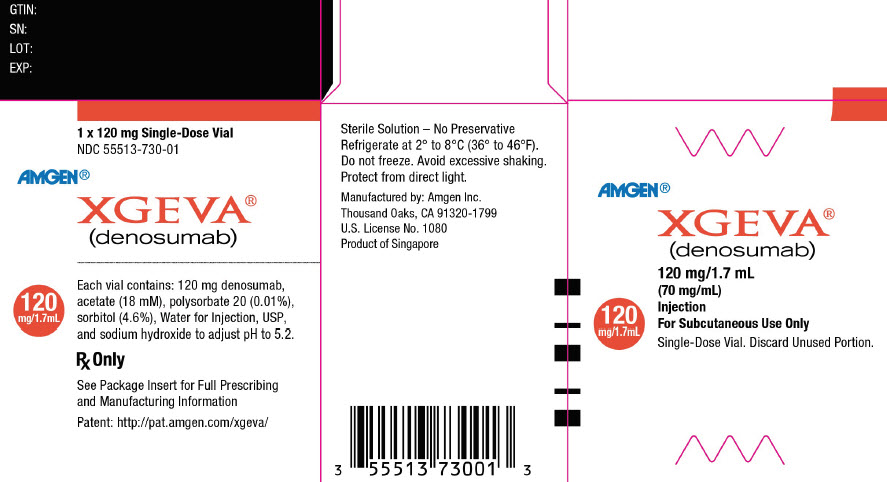
XGEVA denosumab 120 mg/1.7mL Injection, 1 vial — NDC 55513-730-01 (Billing 55513-0730-01)
This is a package of 1 vial of XGEVA denosumab 120 mg/1.7mL Injection from Amgen, Inc, marketed since Nov 2010 and currently FDA-listed; retail pharmacies pay about $2,001.52 per mL (NADAC). It is the main listing for this product, which comes in 2 package sizes.
Other active recalls for Denosumab (different manufacturers) — 1 · tap to view
Identity & classification
Regulatory identifiers FDA, NLM and CMS codes for this package
Drug-database identifiers Medi-Span GPI and First Databank GCN / HICL / AHFS classification
- GSN (GCN sequence number): 066851
- GCN: 29261
- GPI-14 (Medi-Span): 30044530002030
- HICL (First Databank): 037012
- AHFS class code: 90:16.00.00
- RxCUI (RxNorm): 1046398
Where does this data come from?
- FDA openFDA NDC Directory · synced Oct 1, 2026
- FDA label on DailyMed · label index refreshed Oct 1, 2026
- RxNorm (NLM RxNav) · catalog refreshed Oct 1, 2026
- Medi-Span GPI (licensed)
- First Databank (licensed) · refreshed Oct 1, 2026
RxNorm drug class
This medicine belongs to the RANK Ligand Inhibitor class.
Where does this data come from?
- RxClass (NLM) · catalog refreshed Oct 1, 2026
Clinical
Denosumab injection is used to treat certain cases of osteoporosis (a condition in which the bones become thin and weak and break easily) to treat bone loss in individuals with prostate cancer or breast cancer who are being treated with certain medications that cause bone loss to reduce the risk of fractures caused by multiple myeloma (cancer that begins in the bone marrows and causes bone damage) or other types of cancer that has spread to the bones to treat a certain type of giant cell tumor of bone (GCTB; a type of bone tumor) to treat high calcium levels caused by cancer in peopl...
Read the full MedlinePlus article ↗Patient education
Supplement & herbal interactions
Some supplements/herbs that may interact with Denosumab — tap one for details:
Where does this data come from?
- MedlinePlus (NLM) · refreshed Oct 1, 2026
- FDA label on DailyMed · label index refreshed Oct 1, 2026
Ask a licensed pharmacist directly — free, answered by our team.
Pricing
A drug doesn't have one price. Each row is a different public payment system, and none is what you'd pay at the counter — that depends on your insurance. The ⓘ on each row explains what it measures.
| Price system | Per mL | Per package |
|---|---|---|
| Retail pharmacies payNADAC · weekly | $2,001.520 | $3,402.58 / 1.7 ml |
| Medicaid paysCMS SDUD · 12 mo | $1,694.40 | $2,880.49 / 1.7 ml |
| Medicare drug plans payPart D · Q2 2026 | $1,989.43 | $3,382.03 / 1.7 ml |
| Medicare Part B allowsASP · J0897 | $30.101 / J0897 unit | — |
Where does this data come from?
- CMS NADAC weekly file · file of Sep 30, 2026
- CMS ASP pricing files · refreshed Sep 20, 2026
- CMS Medicaid State Drug Utilization Data · through Q1 2026
- CMS Part D plan pricing files · refreshed Sep 24, 2026
- VA National Acquisition Center price file
Billing & reimbursement
Where does this data come from?
- CMS ASP NDC-HCPCS crosswalk · refreshed Sep 22, 2026
- DMEPDAC NDC-HCPCS crosswalk
- openFDA NSDE billing units · refreshed Sep 7, 2026
Packaging — all sizes for this product
| Package NDC | Description | Per unit | Per pack | Marketing start | Marketing end | Status |
|---|---|---|---|---|---|---|
| 55513-0730-01 You're viewing this Main listing | 1 VIAL, SINGLE-USE in 1 CARTON / 1.7 mL in 1 VIAL, SINGLE-USE | $2,001.52 / mL | $3,402.58 | 2010-11-18 | — | Active |
| 55513-0730-21 55513-730-21 | 1 VIAL, SINGLE-USE in 1 CARTON / 1.7 mL in 1 VIAL, SINGLE-USE | $2,001.52 / mL | $3,402.58 | 2025-04-15 | — | Active |
This pack has the lowest per-mL cost of the 2 priced pack sizes ($2,001.52 NADAC).
In Medicaid, this is the most-dispensed pack of this product — about 93% of fills over the last four reported quarters. See all packs ↓
Pack size FAQ
What quantity is in this package?
How does this package differ from NDC 55513-0730-21?
What NDC number is used to bill for this package of XGEVA denosumab 120 mg/1.7mL Injection?
Prices are the latest CMS NADAC pharmacy acquisition cost per NDC; per-pack figures are per-unit × pack quantity, shown only when the pack is denominated in the same measure NADAC prices.
Therapeutic equivalents
| Product | Labeler | Pack | NADAC/unit | TE | Status | Price vs. this |
|---|---|---|---|---|---|---|
| Xgeva 120 mg/1.7mLthis 55513-0730-01 | Amgen, | 1 vial | $2,001.520 | — | Availability likely | — |
| Wyost 120 mg/1.7mL 61314-0228-94 | Sandoz | 1 vial | — | — | FDA listed | — |
| Bilprevda 120 mg/1.7mL 78206-0195-01 | Organon | 1 vial | — | — | FDA listed | — |
Where does this data come from?
- FDA openFDA NDC Directory · synced Oct 1, 2026
- FDA Purple Book · refreshed Sep 5, 2026
- CMS NADAC weekly file · file of Sep 30, 2026
Availability & biosimilar status
18 interchangeables are FDA-licensed for this reference biologic — see the list below. (Biologics have no small-molecule generics.)
Why the date isn’t exact: Biosimilar timing can change because patents may be challenged, settled, licensed, added or removed, and litigation can move the real date earlier or later.
🛈 What do these terms mean?
- Biologic patent
- A patent the reference product’s maker has publicly listed. A biosimilar generally can’t launch until these expire — unless they’re invalidated or resolved in a settlement.
- Reference-product exclusivity
- A flat 12 years of FDA market protection from the biologic’s first licensure (the BPCIA). No biosimilar can be licensed before it ends, regardless of patents.
- Interchangeable exclusivity
- The first interchangeable biosimilar can earn a period as the only interchangeable version (pharmacists can substitute it without the prescriber).
- Earliest biosimilar (LOE)
- The latest of all the dates above — the soonest a biosimilar can realistically reach the market. Litigation and settlements can move it earlier.
Biologics have no small-molecule “generics” — competition comes from FDA-licensed biosimilars, tracked in the FDA Purple Book.
| Patent | Type | Use code | Expires |
|---|---|---|---|
| US 10,583,397 ↗ | Biologic patent | — | Jul 28, 2035 |
| US 10,227,627 ↗ | Biologic patent | — | Dec 11, 2034 |
| US 10,822,630 ↗ | Biologic patent | — | Dec 1, 2035 |
| US 10,894,972 ↗ | Biologic patent | — | May 29, 2034 |
| US 11,077,404 ↗ | Biologic patent | — | May 13, 2035 |
| US 11,098,079 ↗ | Biologic patent | — | Jul 21, 2037 |
| US 11,130,980 ↗ | Biologic patent | — | Apr 5, 2035 |
| US 11,254,963 ↗ | Biologic patent | — | Dec 9, 2034 |
| US 11,299,760 ↗ | Biologic patent | — | Oct 30, 2034 |
| US 11,434,514 ↗ | Biologic patent | — | May 29, 2034 |
| US 8,053,236 ↗ | Biologic patent | — | Jan 19, 2030 |
| US 8,460,896 ↗ | Biologic patent | — | Dec 6, 2026 |
| US 8,680,248 ↗ | Biologic patent | — | Dec 6, 2026 |
| US 10,106,829 ↗ | Biologic patent | — | Dec 11, 2034 |
| US 10,513,723 ↗ | Biologic patent | — | Dec 9, 2034 |
| US 10,167,492 ↗ | Biologic patent | — | Dec 1, 2035 |
| US 9,481,901 ↗ | Biologic patent | — | May 29, 2034 |
| US 9,388,447 ↗ | Biologic patent | — | Apr 20, 2032 |
| US 9,359,435 ↗ | Biologic patent | — | May 22, 2027 |
| US 9,328,134 ↗ | Biologic patent | — | Feb 20, 2034 |
| US 9,320,816 ↗ | Biologic patent | — | Nov 14, 2030 |
| US 9,228,168 ↗ | Biologic patent | — | Jan 19, 2030 |
| US 9,133,493 ↗ | Biologic patent | — | Apr 20, 2032 |
| US 9,012,178 ↗ | Biologic patent | — | Aug 5, 2031 |
| US 8,058,418 ↗ | Biologic patent | — | Nov 30, 2023 |
| US 7,928,205 ↗ | Biologic patent | — | Feb 12, 2027 |
| US 7,427,659 ↗ | Biologic patent | — | Mar 15, 2025 |
| US 7,364,736 ↗ | Biologic patent | — | Feb 19, 2025 |
| US 11,685,772 ↗ | Biologic patent | — | Jun 29, 2032 |
| US 11,319,568 ↗ | Biologic patent | — | Mar 10, 2034 |
| US 11,275,090 ↗ | Biologic patent | — | Jul 2, 2037 |
| US 9,371,554 ↗ | Biologic patent | — | Dec 14, 2032 |
| US 12,025,618 ↗ | Biologic patent | — | Aug 26, 2039 |
| US 9,881,367 ↗ | Biologic patent | — | Aug 9, 2037 |
| US 9,803,166 ↗ | Biologic patent | — | Sep 29, 2034 |
| US 12,059,555 ↗ | Biologic patent | — | Sep 2, 2040 |
| US 11,492,372 ↗ | Biologic patent | — | Mar 11, 2034 |
| US 11,293,930 ↗ | Biologic patent | — | Mar 26, 2033 |
| US 11,192,919 ↗ | Biologic patent | — | Nov 13, 2035 |
| US 8,217,153 ↗ | Biologic patent | — | Jan 5, 2027 |
| US 12,084,686 ↗ | Biologic patent | — | Mar 10, 2034 |
| US 11,786,866 ↗ | Biologic patent | — | Oct 21, 2035 |
| US 11,744,950 ↗ | Biologic patent | — | Nov 21, 2039 |
| US 11,634,476 ↗ | Biologic patent | — | Jun 29, 2032 |
| US 7,662,930 ↗ | Biologic patent | — | Apr 24, 2027 |
| US 11,427,848 ↗ | Biologic patent | — | Jun 4, 2035 |
| US 11,459,595 ↗ | Biologic patent | — | Mar 10, 2034 |
| US 11,486,883 ↗ | Biologic patent | — | Mar 26, 2033 |
| US 11,946,085 ↗ | Biologic patent | — | May 29, 2034 |
| US 11,952,605 ↗ | Biologic patent | — | Mar 10, 2034 |
| US 7,888,101 ↗ | Biologic patent | — | Apr 6, 2027 |
| US 8,247,210 ↗ | Biologic patent | — | Dec 6, 2026 |
| US 10,421,987 ↗ | Biologic patent | — | May 29, 2034 |
| US 10,655,156 ↗ | Biologic patent | — | Dec 11, 2034 |
| US 10,907,186 ↗ | Biologic patent | — | Dec 11, 2034 |
| US 11,292,829 ↗ | Biologic patent | — | Jun 29, 2032 |
| US 11,384,378 ↗ | Biologic patent | — | Jun 4, 2035 |
| Code | What it grants | Expires |
|---|---|---|
| RefProduct | Reference-product exclusivity (12-year, BPCIA) — no biosimilar can be licensed before this date | Jun 1, 2022 |
Is there a biosimilar for XGEVA 120 MG/1.7 ML VIAL?
Why do different websites show different biosimilar dates?
Can a biosimilar launch before the last patent expires?
What does “current Purple Book estimate” mean?
What does “FDA listed” mean?
What does a patent or protection date mean here?
Where does this data come from?
- FDA Purple Book · refreshed Sep 5, 2026
Inactive Ingredients / Excipients
Inactive ingredients, also called excipients, are components of the drug product other than the active ingredient. They may include fillers, dyes, coatings, preservatives, flavors, or other formulation ingredients.
💡 Tap an ingredient (hover on desktop) to see what it is and why it’s used.
-
0.17 mg / 1.7 mL
UNII 7T1F30V5YH
A synthetic emulsifier derived from sorbitol and oleic acid. It helps mix oil and water-based ingredients together and keeps them from separating in liquid formulations.
-
1.8 mg / 1.7 mL
UNII 4550K0SC9B
Sodium acetate is a salt derived from acetic acid. It acts as a buffer to help maintain the medicine's pH stability and may serve as a preservative or solubilizer in liquid formulations.
-
UNII 55X04QC32I
A strong alkaline chemical used to adjust and maintain the pH balance of liquid medicines. It helps keep the medicine stable and ensures it stays effective during storage.
-
78.1 mg / 1.7 mL
UNII 506T60A25R
Sorbitol is a natural sugar alcohol derived from glucose. It serves as a sweetener, humectant, and bulking agent in medications to improve taste and help maintain moisture in the product.
-
UNII 059QF0KO0R
Water is a liquid solvent that dissolves and mixes ingredients together in liquid medicines, syrups, and injections. It helps distribute the active drug evenly throughout the product.
5 inactive ingredients listed in the exact product block matched to this NDC.
Where does this data come from?
ingredient classCode="IACT" elements from the exact product block matched by this NDC. Label-section narrative from DailyMed / the openFDA label index is shown separately when available.- FDA label on DailyMed · label index refreshed Oct 1, 2026
- FDA openFDA NDC Directory · synced Oct 1, 2026
Inactive ingredient FAQ
Are inactive ingredients the same for every manufacturer?
Why might an inactive ingredient be missing?
Can inactive ingredients matter?
Manufacturer & labeler
Where does this data come from?
- FDA openFDA NDC Directory · synced Oct 1, 2026
- Drugs@FDA
Full prescribing information FDA SPL
🎯 Indications and Usage ▾
1 INDICATIONS AND USAGE Xgeva is a RANK ligand (RANKL) inhibitor indicated for: Prevention of skeletal-related events in patients with multiple myeloma and in patients with bone metastases from solid tumors. ( 1.1 ) Treatment of adults and skeletally mature adolescents with giant cell tumor of bone that is unresectable or where surgical resection is likely to result in severe morbidity. ( 1.2 , 14.3 ) Treatment of hypercalcemia of malignancy refractory to bisphosphonate therapy.
( 1.3 )
1.1Multiple Myeloma and Bone Metastasis from Solid Tumors Xgeva is indicated for the prevention of skeletal-related events in patients with multiple myeloma and in patients with bone metastases from solid tumors.
1.2Giant Cell Tumor of Bone Xgeva is indicated for the treatment of adults and skeletally mature adolescents with giant cell tumor of bone that is unresectable or where surgical resection is likely to result in severe morbidity [see Clinical Trials ( 14.2 )] .
1.3Hypercalcemia of Malignancy Xgeva is indicated for the treatment of hypercalcemia of malignancy refractory to bisphosphonate therapy.
⏱️ Dosage and Administration ▾
2 DOSAGE AND ADMINISTRATION Xgeva should be administered by a healthcare provider. ( 2.1 ) Xgeva is intended for subcutaneous route only and should not be administered intravenously, intramuscularly, or intradermally. ( 2.1 ) Multiple Myeloma and Bone Metastasis from Solid Tumors: Administer 120 mg every 4 weeks as a subcutaneous injection in the upper arm, upper thigh, or abdomen.
( 2.2 ) Giant Cell Tumor of Bone: Administer 120 mg every 4 weeks with additional 120 mg doses on Days 8 and 15 of the first month of therapy. Administer subcutaneously in the upper arm, upper thigh, or abdomen. ( 2.3 ) Administer calcium and vitamin D as necessary to treat or prevent hypocalcemia.
( 2.2 , 2.3 ) Hypercalcemia of Malignancy: Administer 120 mg every 4 weeks with additional 120 mg doses on Days 8 and 15 of the first month of therapy. Administer subcutaneously in the upper arm, upper thigh, or abdomen. ( 2.4 )
2.1Important Administration Instructions Xgeva should be administered by a healthcare provider. Xgeva is intended for subcutaneous route only and should not be administered intravenously, intramuscularly, or intradermally.
2.2Multiple Myeloma and Bone Metastasis from Solid Tumors The recommended dose of Xgeva is 120 mg administered as a subcutaneous injection every 4 weeks in the upper arm, upper thigh, or abdomen. Administer calcium and vitamin D as necessary to treat or prevent hypocalcemia [see Warnings and Precautions ( 5.3 )].
2.3Giant Cell Tumor of Bone The recommended dose of Xgeva is 120 mg administered every 4 weeks with additional 120 mg doses on Days 8 and 15 of the first month of therapy. Administer subcutaneously in the upper arm, upper thigh, or abdomen. Administer calcium and vitamin D as necessary to treat or prevent hypocalcemia [see Warnings and Precautions ( 5.3 )].
2.4Hypercalcemia of Malignancy The recommended dose of Xgeva is 120 mg administered every 4 weeks with additional 120 mg doses on Days 8 and 15 of the first month of therapy. Administer subcutaneously in the upper arm, upper thigh, or abdomen.
2.5Preparation and Administration Parenteral drug products should be inspected visually for particulate matter and discoloration prior to administration whenever solution and container permit. Xgeva is a clear, colorless to pale yellow solution that may contain trace amounts of translucent to white proteinaceous particles. Do not use if the solution is discolored or cloudy or if the solution contains many particles or foreign particulate matter.
Prior to administration, Xgeva may be removed from the refrigerator and brought to room temperature up to 25°C (77°F) by standing in the original container. This generally takes 15 to 30 minutes. Do not warm Xgeva in any other way [see How Supplied/Storage and Handling ( 16 )].
Use a 27-gauge needle to withdraw and inject the entire contents of the vial. Do not re-enter the vial. Discard vial after single entry.
💊 Dosage Forms and Strengths ▾
3 DOSAGE FORMS AND STRENGTHS Injection: 120 mg/1.7 mL (70 mg/mL) clear, colorless to pale yellow solution in a single-dose vial. Injection: 120 mg/1.7 mL (70 mg/mL) solution in a single-dose vial ( 3 )
⛔ Contraindications ▾
4 CONTRAINDICATIONS Hypocalcemia ( 4.1 ) Known clinically significant hypersensitivity to Xgeva or denosumab products ( 4.2 )
4.1Hypocalcemia Pre-existing hypocalcemia must be corrected prior to initiating therapy with Xgeva [s ee Warnings and Precautions ( 5.3 )] .
4.2Hypersensitivity Xgeva is contraindicated in patients with known clinically significant hypersensitivity to Xgeva or denosumab products [see Warnings and Precautions ( 5.2 ) and Adverse Reactions ( 6.2 )] .
⚠️ Warnings and Cautions ▾
5 WARNINGS AND PRECAUTIONS Drug Products with Same Active Ingredient: Patients receiving Xgeva should not receive other denosumab products concomitantly. ( 5.1 ) Hypersensitivity reactions including anaphylaxis may occur. Discontinue permanently if a clinically significant reaction occurs.
( 5.2 ) Hypocalcemia: Xgeva can cause severe symptomatic hypocalcemia, and fatal cases have been reported. Correct hypocalcemia prior to initiating Xgeva. Monitor calcium levels during therapy, especially in the first weeks of initiating therapy, and adequately supplement all patients with calcium and vitamin D.
( 5.3 ) Osteonecrosis of the jaw (ONJ) has been reported in patients receiving Xgeva. Perform an oral examination prior to starting Xgeva. Monitor for symptoms.
Avoid invasive dental procedures during treatment with Xgeva. ( 5.4 ) Atypical femoral fracture: Evaluate patients with thigh or groin pain to rule out a femoral fracture. ( 5.5 ) Hypercalcemia Following Treatment Discontinuation in Patients with Giant Cell Tumor of Bone and in Patients with Growing Skeletons: Monitor patients for signs and symptoms of hypercalcemia, and manage as clinically appropriate.
( 5.6 , 8.4 ) Multiple Vertebral Fractures (MVF) Following Treatment Discontinuation: When Xgeva treatment is discontinued, evaluate the individual patient’s risk for vertebral fractures. ( 5.7 ) Embryo-Fetal Toxicity: Can cause fetal harm. Advise females of reproductive potential of potential risk to the fetus and to use effective contraception.
( 5.8 , 8.1 , 8.3 )
5.1Drug Products with Same Active Ingredient Patients receiving Xgeva should not receive other denosumab products concomitantly.
5.2Hypersensitivity Clinically significant hypersensitivity including anaphylaxis has been reported with use of Xgeva. Reactions may include hypotension, dyspnea, upper airway edema, lip swelling, rash, pruritus, and urticaria. If an anaphylactic or other clinically significant allergic reaction occurs, initiate appropriate therapy and discontinue Xgeva therapy permanently [s ee Contraindi cation s ( 4.2 ) and Adverse Reactions ( 6.2 )] .
5.3Hypocalcemia Xgeva can cause severe symptomatic hypocalcemia, and fatal cases have been reported. Correct pre-existing hypocalcemia prior to Xgeva treatment. Monitor calcium levels, throughout Xgeva therapy, especially in the first weeks of initiating therapy, and administer calcium, magnesium, and vitamin D as necessary.
Concomitant use of calcimimetics and other drugs that can lower calcium levels may worsen hypocalcemia risk and serum calcium should be closely monitored. Advise patients to contact a healthcare provider for symptoms of hypocalcemia [see Contraindications ( 4.1 ), Adverse Reactions ( 6.1 , 6.2 ) , and Patient Counseling Information ( 17 )]. An increased risk of hypocalcemia has been observed in clinical trials of patients with increasing renal dysfunction, most commonly with severe dysfunction (creatinine clearance less than 30 mL/min and/or on dialysis), and with inadequate/no calcium supplementation.
Monitor calcium levels and calcium and vitamin D intake [see Adverse Reactions ( 6.1 ), Use in Specific Populations ( 8.6 ), and Clinical Pharmacology ( 12.3 )] .
5.4Osteonecrosis of the Jaw (ONJ) Osteonecrosis of the jaw (ONJ) has been reported in patients receiving Xgeva, manifesting as jaw pain, osteomyelitis, osteitis, bone erosion, tooth or periodontal infection, toothache, gingival ulceration, or gingival erosion. Persistent pain or slow healing of the mouth or jaw after dental surgery may also be manifestations of ONJ. In clinical trials in patients with cancer, the incidence of ONJ was higher with longer duration of exposure [see Adverse Reactions ( 6.1 )].
Seventy-nine percent of patients with ONJ had a history of tooth extraction, poor oral hygiene, or use of a dental appliance as a predisposing factor. Other risk factors for the development of ONJ include immunosuppressive therapy, treatment with angiogenesis inhibitors… [Excerpted — this section continues on DailyMed.]
🤒 Adverse Reactions ▾
6 ADVERSE REACTIONS The following adverse reactions are discussed below and elsewhere in the labeling: • Hypersensitivity [see Warnings and Precautions ( 5.2 )] • Hypocalcemia [see Warnings and Precautions ( 5.3 ) and Use in Specific Populations ( 8.6 ) ] • Osteonecrosis of the Jaw [see Warnings and Precautions ( 5.4 )] • Atypical Subtrochanteric and Diaphyseal Femoral Fracture [see Warnings and Precautions ( 5.5 )] • Hypercalcemia following treatment discontinuation in patients with giant cell tumor of bone and in patients with growing skeletons [see Warnings and Precautions ( 5.6 ) and Use in Specific Populations ( 8.4 ) ] • Multiple vertebral fractures (MVF) following treatment discontinuation [see Warnings and Precautions ( 5.7 )] Bone Metastasis from Solid Tumors: Most common adverse reactions (≥ 25%) were fatigue/asthenia, hypophosphatemia, and nausea.
( 6.1 ) Multiple Myeloma: Most common adverse reactions (≥ 10%) were diarrhea, nausea, anemia, back pain, thrombocytopenia, peripheral edema, hypocalcemia, upper respiratory tract infection, rash, and headache. ( 6.1 ) Giant Cell Tumor of Bone: Most common adverse reactions (≥ 10%) were arthralgia, headache, nausea, back pain, fatigue, and pain in extremity. ( 6.1 ) Hypercalcemia of Malignancy: Most common adverse reactions (> 20%) were nausea, dyspnea, decreased appetite, headache, peripheral edema, vomiting, anemia, constipation, and diarrhea.
( 6.1 ) To report SUSPECTED ADVERSE REACTIONS, contact Amgen Inc. at 1-800-77-AMGEN (1-800-772-6436) or FDA at 1-800-FDA-1088 or www.fda.gov/medwatch.
6.1Clinical Trials Experience Because clinical trials are conducted under widely varying conditions, adverse reaction rates observed in the clinical trials of a drug cannot be directly compared to rates in the clinical trials of another drug and may not reflect the rates observed in practice. Bone Metastasis from Solid Tumors The safety of Xgeva was evaluated in three randomized, double-blind, double-dummy trials [see Clinical Trials ( 14.1 )] in which a total of 2841 patients with bone metastasis from prostate cancer, breast cancer, or other solid tumors, or lytic bony lesions from multiple myeloma received at least one dose of Xgeva.
In Studies 20050136, 20050244, and 20050103, patients were randomized to receive either 120 mg of Xgeva every 4 weeks as a subcutaneous injection or 4 mg (dose adjusted for reduced renal function) of zoledronic acid every 4 weeks by intravenous (IV) infusion. Entry criteria included serum calcium (corrected) from 8 to 11.5 mg/dL (2 to 2.9 mmol/L) and creatinine clearance 30 mL/min or greater. Patients who had received IV bisphosphonates were excluded, as were patients with prior history of ONJ or osteomyelitis of the jaw, an active dental or jaw condition requiring oral surgery, non-healed dental/oral surgery, or any planned invasive dental procedure.
During the study, serum chemistries including calcium and phosphorus were monitored every 4 weeks. Calcium and vitamin D supplementation was recommended but not required. The median duration of exposure to Xgeva was 12 months (range: 0.1-41) and median duration on-study was 13 months (range: 0.1-41).
Of patients who received Xgeva, 46% were female. Eighty-five percent were White, 5% Hispanic/Latino, 6% Asian, and 3% Black. The median age was 63 years (range: 18-93).
Seventy-five percent of patients who received Xgeva received concomitant chemotherapy. The most common adverse reactions in patients (incidence greater than or equal to 25%) were fatigue/asthenia, hypophosphatemia, and nausea (see Table 1). The most common serious adverse reaction was dyspnea.
The most common adverse reactions resulting in discontinuation of Xgeva were osteonecrosis and hypocalcemia. Table 1. Selected Adverse reactions reported in at least 10% of patients receiving Xgeva in Studies 20050136, 20050244, and 20050103, and meeting one of the following criteria: At least 1% greater incidence in Xgeva-treated patients, or Between-g… [Excerpted — this section continues on DailyMed.]
👥 Use in Specific Populations ▾
8 USE IN SPECIFIC POPULATIONS Pediatric patients: Recommended only for treatment of skeletally mature adolescents with giant cell tumor of bone. ( 8.4 ) Renal impairment: Patients with creatinine clearance less than 30 mL/min or receiving dialysis are at risk for hypocalcemia. Adequately supplement with calcium and vitamin D. ( 8.6 )
8.1Pregnancy Risk Summary Based on findings in animals and its mechanism of action, Xgeva can cause fetal harm when administered to a pregnant woman [see Clinical Pharmacology ( 12.1 )] . There are insufficient data with denosumab use in pregnant women to inform any drug associated risks for adverse developmental outcomes. In utero denosumab exposure from cynomolgus monkeys dosed monthly with denosumab throughout pregnancy at a dose 25-fold higher than the recommended human dose of Xgeva based on body weight resulted in increased fetal loss, stillbirths, and postnatal mortality; and absent lymph nodes, abnormal bone growth, and decreased neonatal growth [ see Data ] .
Apprise pregnant women of the potential risk to the fetus. The background rate of major birth defects and miscarriage is unknown for the indicated population. In the U.S. general population, the estimated background risk of major birth defects and miscarriage in clinically recognized pregnancies is 2-4% and 15-20%, respectively.
Data Animal Data The effects of denosumab on prenatal development have been studied in both cynomolgus monkeys and genetically engineered mice in which RANK ligand (RANKL) expression was turned off by gene removal (a “knockout mouse”). In cynomolgus monkeys dosed subcutaneously with denosumab throughout pregnancy starting at gestational day 20 and at a pharmacologically active dose 25-fold higher than the recommended human dose of Xgeva based on body weight, there was increased fetal loss during gestation, stillbirths, and postnatal mortality.
Other findings in offspring included absence of axillary, inguinal, mandibular, and mesenteric lymph nodes; abnormal bone growth, reduced bone strength, reduced hematopoiesis, dental dysplasia, and tooth malalignment; and decreased neonatal growth. At birth out to one month of age, infants had measurable blood levels of denosumab (22-621% of maternal levels). Following a recovery period from birth out to 6 months of age, the effects on bone quality and strength returned to normal; there were no adverse effects on tooth eruption, though dental dysplasia was still apparent; axillary and inguinal lymph nodes remained absent, while mandibular and mesenteric lymph nodes were present, though small; and minimal to moderate mineralization in multiple tissues was seen in one recovery animal.
There was no evidence of maternal harm prior to labor; adverse maternal effects occurred infrequently during labor. Maternal mammary gland development was normal. There was no fetal NOAEL (no observable adverse effect level) established for this study because only one dose of 50 mg/kg was evaluated.
Mammary gland histopathology at 6 months of age was normal in female offspring exposed to denosumab in utero ; however, development and lactation have not been fully evaluated. In RANKL knockout mice, absence of RANKL (the target of denosumab) also caused fetal lymph node agenesis and led to postnatal impairment of dentition and bone growth. Pregnant RANKL knockout mice showed altered maturation of the maternal mammary gland, leading to impaired lactation [see Use in Specific Populations ( 8.3 ) and Nonclinical Toxicology ( 13.2 )] .
8.2Lactation Risk Summary There is no information regarding the presence of Xgeva (denosumab) in human milk, the effects on the breastfed child, or the effects on milk production. Denosumab was detected in the maternal milk of cynomolgus monkeys up to 1 month after the last dose of denosumab (≤ 0.5% milk:serum ratio) and maternal mammary gland development was normal, with no impaired lactation. However, pregnant RANKL knockout mice showed altered maturation of the… [Excerpted — this section continues on DailyMed.]
🤰 Pregnancy ▾
8.1Pregnancy Risk Summary Based on findings in animals and its mechanism of action, Xgeva can cause fetal harm when administered to a pregnant woman [see Clinical Pharmacology ( 12.1 )] . There are insufficient data with denosumab use in pregnant women to inform any drug associated risks for adverse developmental outcomes. In utero denosumab exposure from cynomolgus monkeys dosed monthly with denosumab throughout pregnancy at a dose 25-fold higher than the recommended human dose of Xgeva based on body weight resulted in increased fetal loss, stillbirths, and postnatal mortality; and absent lymph nodes, abnormal bone growth, and decreased neonatal growth [ see Data ] .
Apprise pregnant women of the potential risk to the fetus. The background rate of major birth defects and miscarriage is unknown for the indicated population. In the U.S. general population, the estimated background risk of major birth defects and miscarriage in clinically recognized pregnancies is 2-4% and 15-20%, respectively.
Data Animal Data The effects of denosumab on prenatal development have been studied in both cynomolgus monkeys and genetically engineered mice in which RANK ligand (RANKL) expression was turned off by gene removal (a “knockout mouse”). In cynomolgus monkeys dosed subcutaneously with denosumab throughout pregnancy starting at gestational day 20 and at a pharmacologically active dose 25-fold higher than the recommended human dose of Xgeva based on body weight, there was increased fetal loss during gestation, stillbirths, and postnatal mortality.
Other findings in offspring included absence of axillary, inguinal, mandibular, and mesenteric lymph nodes; abnormal bone growth, reduced bone strength, reduced hematopoiesis, dental dysplasia, and tooth malalignment; and decreased neonatal growth. At birth out to one month of age, infants had measurable blood levels of denosumab (22-621% of maternal levels). Following a recovery period from birth out to 6 months of age, the effects on bone quality and strength returned to normal; there were no adverse effects on tooth eruption, though dental dysplasia was still apparent; axillary and inguinal lymph nodes remained absent, while mandibular and mesenteric lymph nodes were present, though small; and minimal to moderate mineralization in multiple tissues was seen in one recovery animal.
There was no evidence of maternal harm prior to labor; adverse maternal effects occurred infrequently during labor. Maternal mammary gland development was normal. There was no fetal NOAEL (no observable adverse effect level) established for this study because only one dose of 50 mg/kg was evaluated.
Mammary gland histopathology at 6 months of age was normal in female offspring exposed to denosumab in utero ; however, development and lactation have not been fully evaluated. In RANKL knockout mice, absence of RANKL (the target of denosumab) also caused fetal lymph node agenesis and led to postnatal impairment of dentition and bone growth. Pregnant RANKL knockout mice showed altered maturation of the maternal mammary gland, leading to impaired lactation [see Use in Specific Populations ( 8.3 ) and Nonclinical Toxicology ( 13.2 )] .
🧒 Pediatric Use ▾
8.4Pediatric Use The safety and efficacy of Xgeva have not been established in pediatric patients except in skeletally mature adolescents (aged 12–16 years) with giant cell tumor of bone. Xgeva is recommended only for treatment of skeletally mature adolescents (aged 12–16 years) with giant cell tumor of bone [see Indications and Usage ( 1.2 )] . Clinically significant hypercalcemia after treatment discontinuation has been reported in pediatric patients with growing skeletons who received denosumab for giant cell tumor of bone or for unapproved indications [see Adverse Reactions ( 6.2 ) and Warnings and Precautions ( 5.6 )].
Xgeva was studied in an open-label trial that enrolled a subset of 19 adolescent patients (aged 12-16 years) with giant cell tumor of bone who had reached skeletal maturity, defined by at least 1 mature long bone (e.g., closed epiphyseal growth plate of the humerus), and had a body weight ≥ 45 kg [see Indications and Usage ( 1.2 ) and Clinical Trials ( 14.3 )]. A total of one of five (20%) evaluable adolescent patients had an objective response by retrospective independent assessment of radiographic response according to modified Response Evaluation Criteria in Solid Tumors (RECIST 1.1).
The adverse reaction profile and efficacy results appeared to be similar in skeletally mature adolescents and adults [see Adverse Reactions ( 6.1 ) and Clinical Trials ( 14.3 )] . Animal Data Treatment with Xgeva may impair bone growth in children with open growth plates and may inhibit eruption of dentition. In neonatal rats, inhibition of RANKL (the target of Xgeva therapy) with a construct of osteoprotegerin bound to Fc (OPG-Fc) at doses ≤ 10 mg/kg was associated with inhibition of bone growth and tooth eruption.
Adolescent primates treated with denosumab at doses 5 and 25 times (10 and 50 mg/kg dose) higher than the recommended human dose of 120 mg administered once every 4 weeks, based on body weight (mg/kg), had abnormal growth plates, considered to be consistent with the pharmacological activity of denosumab. Cynomolgus monkeys exposed in utero to denosumab exhibited bone abnormalities, reduced hematopoiesis, tooth malalignment, decreased neonatal growth, and an absence of axillary, inguinal, mandibular, and mesenteric lymph nodes.
Some bone abnormalities recovered once exposure was ceased following birth; however, axillary and inguinal lymph nodes remained absent 6 months post-birth [see Use in Specific Populations ( 8.1 ) ] .
🧓 Geriatric Use ▾
8.5Geriatric Use Of the total number of patients in clinical studies that received Xgeva (n = 2841) in Studies 20050136, 20050244, and 20050103, 1271 (44%) were ≥ 65 years old, while 473 patients (17%) were ≥ 75 years old. Of the 859 patients in Study 20090482 that received Xgeva, 387 patients (45%) were ≥ 65 years old, while 141 patients (16%) were ≥ 75 years old. No overall differences in safety or efficacy were observed between older and younger patients.
🆘 Overdosage ▾
10 OVERDOSAGE There is no experience with overdosage of Xgeva.
🧬 Clinical Pharmacology ▾
12 CLINICAL PHARMACOLOGY
12.1Mechanism of Action Xgeva binds to RANKL, a transmembrane or soluble protein essential for the formation, function, and survival of osteoclasts, the cells responsible for bone resorption, thereby modulating calcium release from bone. Increased osteoclast activity, stimulated by RANKL, is a mediator of bone pathology in solid tumors with osseous metastases. Similarly, giant cell tumors of bone consist of stromal cells expressing RANKL and osteoclast-like giant cells expressing RANK receptor, and signaling through the RANK receptor contributes to osteolysis and tumor growth.
Xgeva prevents RANKL from activating its receptor, RANK, on the surface of osteoclasts, their precursors, and osteoclast-like giant cells.
12.2Pharmacodynamics In patients with breast cancer and bone metastases, the median reduction in uNTx/Cr was 82% within 1 week following initiation of Xgeva 120 mg administered subcutaneously. In Studies 20050136, 20050244, and 20050103, the median reduction in uNTx/Cr from baseline to Month 3 was approximately 80% in 2075 Xgeva-treated patients. In a phase 3 study of patients with newly diagnosed multiple myeloma who received subcutaneous doses of Xgeva 120 mg every 4 weeks (Q4W), median reductions in uNTx/Cr of approximately 75% were observed by Week 5.
Reductions in bone turnover markers were maintained, with median reductions of 74% to 79% for uNTx/Cr from weeks 9 to 49 of continued 120 mg Q4W dosing. In adult and skeletally mature adolescent patients with giant cell tumor of bone who received subcutaneous doses of Xgeva 120 mg Q4W with a 120 mg loading dose on Days 8 and 15, median reductions in uNTx/Cr from baseline were 84% at Week 13 and 82% at Week 25.
12.3Pharmacokinetics Following subcutaneous administration, bioavailability was 62%. Denosumab displayed nonlinear pharmacokinetics at doses below 60 mg, but approximately dose-proportional increases in exposure at higher doses. With multiple subcutaneous doses of 120 mg once every 4 weeks, up to 2.8-fold accumulation in serum denosumab concentrations was observed and steady-state was achieved by 6 months.
A mean (± standard deviation) serum steady-state trough concentration of 20.5 (± 13.5) mcg/mL was achieved by 6 months. The mean elimination half-life was 28 days. In patients with newly diagnosed multiple myeloma who received 120 mg every 4 weeks, denosumab concentrations appear to reach steady-state by Month 6.
In patients with giant cell tumor of bone, after administration of subcutaneous doses of 120 mg once every 4 weeks with additional 120 mg doses on Days 8 and 15 of the first month of therapy, mean (± standard deviation) serum trough concentrations on Day 8, 15, and one month after the first dose were 19.0 (± 24.1), 31.6 (± 27.3), 36.4 (± 20.6) mcg/mL, respectively. Steady-state was achieved in 3 months after initiation of treatment with a mean serum trough concentration of 23.4 (± 12.1) mcg/mL. Speci al Populations Body Weight: A population pharmacokinetic analysis was performed to evaluate the effects of demographic characteristics.
Denosumab clearance and volume of distribution were proportional to body weight. The steady-state exposure following repeat subcutaneous administration of 120 mg every 4 weeks to 45 kg and 120 kg subjects were, respectively, 48% higher and 46% lower than exposure of the typical 66 kg subject. Age, Gender and Race: The pharmacokinetics of denosumab was not affected by age, gender, and race.
Pediatrics: In skeletally-mature adolescent patients (12 to 16 years of age) with giant cell tumor of bone (GCTB) who received 120 mg every 4 weeks with a 120 mg loading dose on Days 8 and 15, the pharmacokinetics of denosumab were comparable to those observed in adult patients with GCTB. Hepatic Impairment: No clinical trials have been conducted to evaluate the effect of hepatic impairment on the pharmacokinetics of denosumab. Renal Impairment: In clinical trials of 87 patients with varying degrees of renal… [Excerpted — this section continues on DailyMed.]
🧬 Mechanism of Action ▾
12.1Mechanism of Action Xgeva binds to RANKL, a transmembrane or soluble protein essential for the formation, function, and survival of osteoclasts, the cells responsible for bone resorption, thereby modulating calcium release from bone. Increased osteoclast activity, stimulated by RANKL, is a mediator of bone pathology in solid tumors with osseous metastases. Similarly, giant cell tumors of bone consist of stromal cells expressing RANKL and osteoclast-like giant cells expressing RANK receptor, and signaling through the RANK receptor contributes to osteolysis and tumor growth.
Xgeva prevents RANKL from activating its receptor, RANK, on the surface of osteoclasts, their precursors, and osteoclast-like giant cells.
📦 How Supplied / Storage and Handling ▾
16 HOW SUPPLIED/STORAGE AND HANDLING Xgeva (denosumab) injection is a clear, colorless to pale yellow solution supplied in a single-dose vial. 120 mg/1.7 mL (70 mg/mL) 1 vial per carton NDC 55513-730-01 NDC 55513-730-21 Store Xgeva refrigerated at 2°C to 8°C (36°F to 46°F) in the original carton to protect from light. Do not freeze.
Prior to administration, Xgeva may be allowed to reach room temperature up to 25°C (77°F) in the original container. Once removed from the refrigerator, Xgeva must not be exposed to temperatures above 25°C (77°F) and must be used within 30 days. Discard Xgeva if not used within the 30 days.
Do not use Xgeva after the expiry date printed on the label. Protect Xgeva from direct light and heat. Avoid vigorous shaking of Xgeva.
📋 Description ▾
11 DESCRIPTION Denosumab is a human IgG2 monoclonal antibody that binds to human RANKL. Denosumab has an approximate molecular weight of 147 kDa and is produced in genetically engineered mammalian (Chinese hamster ovary) cells. Xgeva (denosumab) injection is a sterile, preservative-free, clear, colorless to pale yellow solution.
Each single-dose vial contains 1.7 mL solution of 120 mg denosumab, glacial acetic acid (1.8 mg), polysorbate 20 (0.17 mg), sorbitol (78.1 mg), Water for Injection (USP), and sodium hydroxide to adjust the pH to 5.2.
💬 Information for Patients ▾
17 PATIENT COUNSELING INFORMATION Drug Products with Same Active Ingredient Advise patients that if they receive Xgeva, they should not receive other denosumab products concomitantly [see Warnings and Precautions ( 5.1 )]. Hypersensitivity Advise patients to seek prompt medical attention if signs or symptoms of hypersensitivity reactions occur. Advise patients who have had signs or symptoms of systemic hypersensitivity reactions that they should not receive denosumab products [see Warnings and Precautions ( 5.2 ) and Contraindications ( 4.2 )] .
Hypocalcemia Adequately supplement patients with calcium and vitamin D and instruct them on the importance of maintaining serum calcium levels while receiving Xgeva [see Warnings and Precautions ( 5.3 ) and Use in Specific Populations ( 8.6 )] . Advise patients to seek prompt medical attention if they develop signs or symptoms of hypocalcemia. Osteonecrosis of the Jaw Advise patients to maintain good oral hygiene during treatment with Xgeva and to inform their dentist prior to dental procedures that they are receiving Xgeva.
Patients should avoid invasive dental procedures during treatment with Xgeva and inform their healthcare provider or dentist if they experience persistent pain and/or slow healing of the mouth or jaw after dental surgery [see Warnings and Precautions ( 5.4 )] . Atypical Subtrochanteric and Diaphyseal Femoral Fracture Advise patients to report new or unusual thigh, hip, or groin pain [see Warnings and Precautions ( 5.5 )] . Hypercalcemia Following Treatment Discontinuation in Patients with Giant Cell Tumor of Bone and in Patients with Growing Skeletons Advise patients to report nausea, vomiting, headache, and decreased alertness following treatment discontinuation [see Warnings and Precautions ( 5.6 ) and Use in Specific Populations ( 8.4 ) ].
Multiple Vertebral Fractures (MVF) Following Treatment Discontinuation Advise patients that after treatment with Xgeva is stopped there may be an increased risk of having broken bones in the spine especially in patients who have had a fracture or who have had osteoporosis. Advise patients not to interrupt Xgeva therapy without their physician’s advice [see Warnings and Precautions ( 5.7 )] . Embryo-Fetal Toxicity Advise females of reproductive potential that Xgeva can cause harm to a fetus and to inform their healthcare provider of a known or suspected pregnancy [see Warnings and Precautions ( 5.8 ) and Use in Specific Populations ( 8.1 , 8.3 )] .
Advise females of reproductive potential to use effective contraception during treatment and for at least 5 months after the last dose of Xgeva [ see Use in Specific Populations ( 8.3 ) ] . Xgeva ® (denosumab) Manufactured by: Amgen Inc. One Amgen Center Drive Thousand Oaks, California 91320-1799 U.S.
License No. 1080 Patent: http://pat.amgen.com/xgeva/ © 2010-2020, 2025-2026 Amgen Inc. All rights reserved.
1xxxxx – v24
🧬 Pharmacokinetics ▾
12.3Pharmacokinetics Following subcutaneous administration, bioavailability was 62%. Denosumab displayed nonlinear pharmacokinetics at doses below 60 mg, but approximately dose-proportional increases in exposure at higher doses. With multiple subcutaneous doses of 120 mg once every 4 weeks, up to 2.8-fold accumulation in serum denosumab concentrations was observed and steady-state was achieved by 6 months.
A mean (± standard deviation) serum steady-state trough concentration of 20.5 (± 13.5) mcg/mL was achieved by 6 months. The mean elimination half-life was 28 days. In patients with newly diagnosed multiple myeloma who received 120 mg every 4 weeks, denosumab concentrations appear to reach steady-state by Month 6.
In patients with giant cell tumor of bone, after administration of subcutaneous doses of 120 mg once every 4 weeks with additional 120 mg doses on Days 8 and 15 of the first month of therapy, mean (± standard deviation) serum trough concentrations on Day 8, 15, and one month after the first dose were 19.0 (± 24.1), 31.6 (± 27.3), 36.4 (± 20.6) mcg/mL, respectively. Steady-state was achieved in 3 months after initiation of treatment with a mean serum trough concentration of 23.4 (± 12.1) mcg/mL. Speci al Populations Body Weight: A population pharmacokinetic analysis was performed to evaluate the effects of demographic characteristics.
Denosumab clearance and volume of distribution were proportional to body weight. The steady-state exposure following repeat subcutaneous administration of 120 mg every 4 weeks to 45 kg and 120 kg subjects were, respectively, 48% higher and 46% lower than exposure of the typical 66 kg subject. Age, Gender and Race: The pharmacokinetics of denosumab was not affected by age, gender, and race.
Pediatrics: In skeletally-mature adolescent patients (12 to 16 years of age) with giant cell tumor of bone (GCTB) who received 120 mg every 4 weeks with a 120 mg loading dose on Days 8 and 15, the pharmacokinetics of denosumab were comparable to those observed in adult patients with GCTB. Hepatic Impairment: No clinical trials have been conducted to evaluate the effect of hepatic impairment on the pharmacokinetics of denosumab. Renal Impairment: In clinical trials of 87 patients with varying degrees of renal dysfunction, including patients on dialysis, the degree of renal impairment had no effect on the pharmacokinetics and pharmacodynamics of denosumab [see Use in Specific Populations ( 8.6 )] .
Drug Interactions No formal drug-drug interaction trials have been conducted with Xgeva. There was no evidence that various anticancer treatments affected denosumab systemic exposure and pharmacodynamic effect. Serum denosumab concentrations at 1 and 3 months and reductions in the bone turnover marker uNTx/Cr (urinary N-terminal telopeptide corrected for creatinine) at 3 months were similar in patients with and without prior intravenous bisphosphonate therapy and were not altered by concomitant chemotherapy and/or hormone therapy.
🧬 Pharmacodynamics ▾
12.2Pharmacodynamics In patients with breast cancer and bone metastases, the median reduction in uNTx/Cr was 82% within 1 week following initiation of Xgeva 120 mg administered subcutaneously. In Studies 20050136, 20050244, and 20050103, the median reduction in uNTx/Cr from baseline to Month 3 was approximately 80% in 2075 Xgeva-treated patients. In a phase 3 study of patients with newly diagnosed multiple myeloma who received subcutaneous doses of Xgeva 120 mg every 4 weeks (Q4W), median reductions in uNTx/Cr of approximately 75% were observed by Week 5.
Reductions in bone turnover markers were maintained, with median reductions of 74% to 79% for uNTx/Cr from weeks 9 to 49 of continued 120 mg Q4W dosing. In adult and skeletally mature adolescent patients with giant cell tumor of bone who received subcutaneous doses of Xgeva 120 mg Q4W with a 120 mg loading dose on Days 8 and 15, median reductions in uNTx/Cr from baseline were 84% at Week 13 and 82% at Week 25.
🔬 Clinical Studies ▾
14 CLINICAL TRIALS Figure 1
14.1Bone Metastasis from Solid Tumors The safety and efficacy of Xgeva for the prevention of skeletal-related events in patients with bone metastases from solid tumors was demonstrated in three international, randomized (1:1), double-blind, active-controlled, noninferiority trials comparing Xgeva with zoledronic acid. In all three trials, patients were randomized to receive 120 mg Xgeva subcutaneously every 4 weeks or 4 mg zoledronic acid intravenously (IV) every 4 weeks (dose adjusted for reduced renal function). Patients with creatinine clearance less than 30 mL/min were excluded.
In each trial, the main outcome measure was demonstration of noninferiority of time to first skeletal-related event (SRE) as compared to zoledronic acid. Supportive outcome measures were superiority of time to first SRE and superiority of time to first and subsequent SRE; testing for these outcome measures occurred if the main outcome measure was statistically significant. An SRE was defined as any of the following: pathologic fracture, radiation therapy to bone, surgery to bone, or spinal cord compression.
Study 20050136 (NCT00321464) enrolled 2046 patients with advanced breast cancer and bone metastasis. Randomization was stratified by a history of prior SRE (yes or no), receipt of chemotherapy within 6 weeks prior to randomization (yes or no), prior oral bisphosphonate use (yes or no), and region (Japan or other countries). Forty percent of patients had a previous SRE, 40% received chemotherapy within 6 weeks prior to randomization, 5% received prior oral bisphosphonates, and 7% were enrolled from Japan.
Median age was 57 years, 80% of patients were White, and 99% of patients were women. The median number of doses administered was 18 for denosumab and 17 for zoledronic acid. Study 20050244 (NCT00330759) enrolled 1776 adults with solid tumors other than breast and castrate-resistant prostate cancer with bone metastasis and multiple myeloma.
Randomization was stratified by previous SRE (yes or no), systemic anticancer therapy at time of randomization (yes or no), and tumor type (non-small cell lung cancer, myeloma, or other). Eighty-seven percent were receiving systemic anticancer therapy at the time of randomization, 52% had a previous SRE, 64% of patients were men, 87% were White, and the median age was 60 years. A total of 40% of patients had non-small cell lung cancer, 10% had multiple myeloma, 9% had renal cell carcinoma, and 6% had small cell lung cancer.
Other tumor types each comprised less than 5% of the enrolled population. The median number of doses administered was 7 for both denosumab and zoledronic acid. Study 20050103 (NCT00321620) enrolled 1901 men with castrate-resistant prostate cancer and bone metastasis.
Randomization was stratified by previous SRE, PSA level (less than 10 ng/mL or 10 ng/mL or greater) and receipt of chemotherapy within 6 weeks prior to randomization (yes or no). Twenty-six percent of patients had a previous SRE, 15% of patients had PSA less than 10 ng/mL, and 14% received chemotherapy within 6 weeks prior to randomization. Median age was 71 years and 86% of patients were White.
The median number of doses administered was 13 for denosumab and 11 for zoledronic acid. Xgeva delayed the time to first SRE following randomization as compared to zoledronic acid in patients with breast or castrate-resistant prostate cancer (CRPC) with osseous metastases (Table 2). In patients with bone metastasis due to other solid tumors or lytic lesions due to multiple myeloma, Xgeva was noninferior to zoledronic acid in delaying the time to first SRE following randomization.
Overall survival and progression-free survival were similar between arms in all three trials. Table 2. Efficacy Results for Xgeva Compared to Zoledronic Acid Study 20050136 Metastatic Breast Cancer Study 20050244 Metastatic Solid Tumors or Multiple Myeloma Study 20050103 Metastatic CRPC CRPC = castrate-resistant prostate cancer.
Xge… [Excerpted — this section continues on DailyMed.]
🧪 Nonclinical Toxicology ▾
13 NONCLINICAL TOXICOLOGY
13.1Carcinogenesis, Mutagenesis, Impairment of Fertility Carcinogenicity The carcinogenic potential of denosumab has not been evaluated in long-term animal studies. Mutagenicity The genotoxic potential of denosumab has not been evaluated. Impairment of Fertility Denosumab had no effect on female fertility or male reproductive organs in monkeys at doses that were 6.5- to 25-fold higher than the recommended human dose of 120 mg subcutaneously administered once every 4 weeks, based on body weight (mg/kg).
13.2Animal Toxicology and/or Pharmacology Denosumab is an inhibitor of osteoclastic bone resorption via inhibition of RANKL. Because the biological activity of denosumab in animals is specific to nonhuman primates, evaluation of genetically engineered (knockout) mice or use of other biological inhibitors of the RANK/RANKL pathway, OPG-Fc and RANK-Fc, provided additional information on the pharmacodynamic properties of denosumab. RANK/RANKL knockout mice exhibited absence of lymph node formation, as well as an absence of lactation due to inhibition of mammary gland maturation (lobulo-alveolar gland development during pregnancy).
Neonatal RANK/RANKL knockout mice exhibited reduced bone growth and lack of tooth eruption. A corroborative study in 2-week-old rats given the RANKL inhibitor OPG-Fc also showed reduced bone growth, altered growth plates, and impaired tooth eruption. These changes were partially reversible in this model when dosing with the RANKL inhibitors was discontinued.
📄 Carcinogenesis, Mutagenesis, Impairment of Fertility ▾
13.1Carcinogenesis, Mutagenesis, Impairment of Fertility Carcinogenicity The carcinogenic potential of denosumab has not been evaluated in long-term animal studies. Mutagenicity The genotoxic potential of denosumab has not been evaluated. Impairment of Fertility Denosumab had no effect on female fertility or male reproductive organs in monkeys at doses that were 6.5- to 25-fold higher than the recommended human dose of 120 mg subcutaneously administered once every 4 weeks, based on body weight (mg/kg).
📄 Recent Major Changes ▾
Dosage and Administration ( 2.1 ) 05/2025
📄 Package Label / Principal Display Panel ▾
PRINCIPAL DISPLAY PANEL - 1.7 mL Vial Carton AMGEN ® 120 mg/1.7mL 1 x Single-Dose Vial NDC 55513-730-01 XGEVA ® (denosumab) Injection 120 mg/1.7 mL (70 mg/mL) For Subcutaneous Use Only Single-Dose Vial. Discard Unused Portion. Xgeva should be administered by healthcare provider. Rx Only PRINCIPAL DISPLAY PANEL - 1.7 mL Vial Carton