
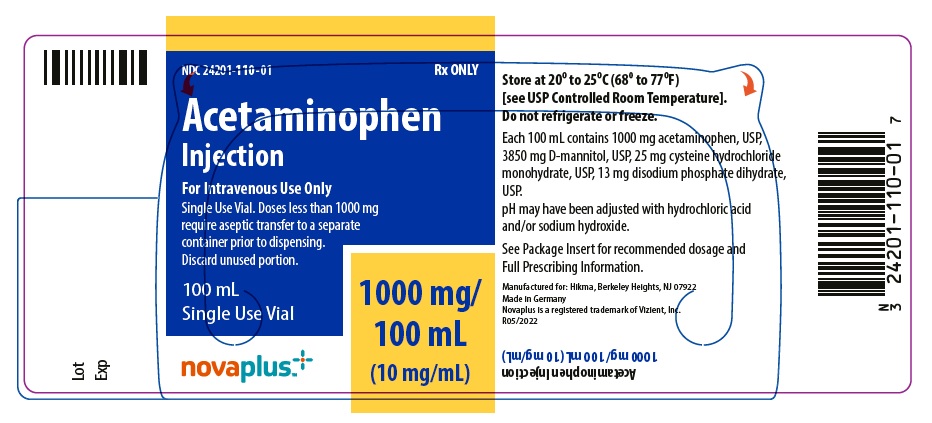
Acetaminophen 1000 mg/100mL Injection — NDC 55579-110-01 (Billing 55579-0110-01)
This is a package of Acetaminophen 1000 mg/100mL Injection from Solupharm Pharmazeutische Erzeugnisse GmbH, marketed since Dec 2020 and currently FDA-listed. It is this product's only package size.
Other active recalls for Acetaminophen (different manufacturers) — 6 · tap to view
Identity & classification
Regulatory identifiers FDA, NLM and CMS codes for this package
- RxCUI (RxNorm): 483017
Where does this data come from?
- FDA openFDA NDC Directory · synced Oct 1, 2026
- FDA label on DailyMed · label index refreshed Oct 1, 2026
- RxNorm (NLM RxNav) · catalog refreshed Oct 1, 2026
- Medi-Span GPI (licensed)
- First Databank (licensed) · refreshed Oct 1, 2026
RxNorm drug class
This medicine belongs to the Anilides class.
Where does this data come from?
- RxClass (NLM) · catalog refreshed Oct 1, 2026
Clinical
Acetaminophen injection is used to relieve mild to moderate pain and to reduce fever. Acetaminophen injection is also used in combination with opioid (narcotic) medications to relieve moderate to severe pain. Acetaminophen is in a class of medications called analgesics (pain relievers) and antipyretics (fever reducers). It works by changing the way the body senses pain and by cooling the body.
Read the full MedlinePlus article ↗- It temporarily relieves minor aches and pains, like headache, backache, toothache, muscle aches, cold aches, minor arthritis pain and menstrual cramps. It also reduces fever.
- Follow your product label or prescriber exactly and never exceed the maximum daily amount. Remember that the limit counts every product with acetaminophen. Too much can seriously d...
- Check the label first. Many combination products also contain acetaminophen, and you shouldn't use two together. If you aren't sure, ask me or your pharmacist.
- Having 3 or more alcoholic drinks every day while using it raises the risk of liver damage. If you take warfarin, talk with your doctor or pharmacist first, since regular high dail...
Patient education
Supplement & herbal interactions
Some supplements/herbs that may interact with Acetaminophen — tap one for details:
Acetaminophen may be associated with lower levels of 1 nutrient — worth a chat with your pharmacist, not a cause for alarm.
Where does this data come from?
- MedlinePlus (NLM) · refreshed Oct 1, 2026
- FDA label on DailyMed · label index refreshed Oct 1, 2026
Ask a licensed pharmacist directly — free, answered by our team.
Pricing
A drug doesn't have one price. Each row is a different public payment system, and none is what you'd pay at the counter — that depends on your insurance. The ⓘ on each row explains what it measures.
| Price system | Per each | Per package |
|---|---|---|
| Retail pharmacies payNADAC · weekly | Not in the retail survey — common for institutional, discontinued, or low-volume packs. | |
| Medicaid paysCMS SDUD · 12 mo | No recent Medicaid claims on file for this NDC — rare and low-volume NDCs are suppressed in the public data. | |
| Medicare drug plans payPart D · quarterly | No Part D plan price is available for this NDC in our data. | |
Where does this data come from?
- CMS NADAC weekly file
- CMS ASP pricing files · refreshed Sep 20, 2026
- CMS Medicaid State Drug Utilization Data · refreshed Oct 2, 2026
- CMS Part D plan pricing files · refreshed Sep 24, 2026
- VA National Acquisition Center price file
Packaging — all sizes for this product
| Package NDC | Description | Marketing start | Marketing end | Status |
|---|---|---|---|---|
| 55579-0110-01 You're viewing this Main listing | 24 BOTTLE in 1 BOTTLE / 100 mL in 1 BOTTLE | 2023-03-01 | — | Active |
Therapeutic equivalents
| Product | Labeler | Pack | NADAC/unit | TE | Status | Price vs. this |
|---|---|---|---|---|---|---|
| Acetaminophen 1000 mg/100mL 00143-9386-10 | Hikma | 100 ml | — | — | FDA listed | — |
| Acetaminophen 10 mg/mL 00264-4100-90 | B. | 100 ml | — | AP2 | FDA listed | — |
| Acetaminophen 10 mg/mL 00781-3156-95 | Sandoz | 10 vials | — | AP1 | FDA listed | — |
| Acetaminophen 10 mg/mL 00781-9274-95 | Sandoz | 10 vials | — | AP1 | FDA listed | — |
| Acetaminophen 10 mg/mL 24201-0100-24 | Hikma | 24 vials | — | AP1 | FDA listed | — |
| Acetaminophen 10 mg/mL 24201-0110-24 | Hikma | 24 vials | — | AP1 | FDA listed | — |
| Acetaminophen 10 mg/mL 25021-0705-82 | Sagent | 50 ml | — | AP2 | FDA listed | — |
| Acetaminophen 10 mg/mL 31722-0205-24 | Camber | 24 vials | — | AP1 | FDA listed | — |
| Acetaminophen 10 mg/mL 36000-0306-60 | Baxter | 100 ml | — | AP1 | FDA listed | — |
| Acetaminophen 10 mg/mL 44567-0340-10 | WG | 100 ml | — | AP1 | FDA listed | — |
| Acetaminophen 10 mg/mL 51662-1540-01 | HF | 100 ml | — | AP1 | FDA listed | — |
| Acetaminophen 10 mg/mL 55150-0307-24 | Eugia | 24 vials | — | AP1 | FDA listed | — |
| Acetaminophen 1000 mg/100mLthis 55579-0110-01 | Solupharm | 24 bottles | — | AP1 | FDA listed | — |
| Acetaminophen 10 mg/mL 55579-0405-24 | Solupharm | 24 vials | — | AP1 | FDA listed | — |
| Acetaminophen 10 mg/mL 63323-0434-00 | Fresenius | 100 ml | — | — | FDA listed | — |
| Acetaminophen 10 mg/mL 65145-0157-10 | Caplin | 10 pouches | — | AP1 | FDA listed | — |
| Acetaminophen 1000 mg/100mL 67457-0940-10 | Mylan | 100 ml | — | AP1 | FDA listed | — |
| Acetaminophen 10 mg/mL 68083-0648-01 | Gland | 100 ml | — | AP2 | FDA listed | — |
| Acetaminophen 10 mg/mL 70518-4184-02 | REMEDYREPACK | 25 vials | — | AP1 | FDA listed | — |
| Acetaminophen 10 mg/mL 72572-0050-10 | Civica, | 10 vials | — | AP1 | FDA listed | — |
| Acetaminophen 10 mg/mL 84549-0100-90 | ProPharma | 100 ml | — | AP2 | FDA listed | — |
Where does this data come from?
- FDA openFDA NDC Directory · synced Oct 1, 2026
- FDA Orange Book · refreshed Sep 3, 2026
- CMS NADAC weekly file
Availability & generic status
This product is an FDA-approved generic. Other versions of the same drug are listed under Therapeutic equivalents, least expensive first.
Where does this data come from?
- FDA Orange Book · refreshed Sep 3, 2026
Inactive Ingredients / Excipients
Inactive ingredients, also called excipients, are components of the drug product other than the active ingredient. They may include fillers, dyes, coatings, preservatives, flavors, or other formulation ingredients.
💡 Tap an ingredient (hover on desktop) to see what it is and why it’s used.
-
UNII ZT934N0X4W
A naturally occurring amino acid salt used as a reducing agent and antioxidant in medications. It helps prevent ingredient breakdown and may improve product stability during storage.
-
UNII 3OWL53L36A
A natural sugar alcohol derived from seaweed or synthesized in the lab. It's used as a filler to add bulk, a sweetener in sugar-free formulas, and a disintegrant to help tablets break apart in the stomach.
-
UNII 94255I6E2T
Sodium phosphate dibasic dihydrate is a salt that helps control the acidity level of a medicine. It acts as a buffer and pH regulator to keep the medication stable and effective.
3 inactive ingredients listed in the exact product block matched to this NDC.
Where does this data come from?
ingredient classCode="IACT" elements from the exact product block matched by this NDC. Label-section narrative from DailyMed / the openFDA label index is shown separately when available.- FDA label on DailyMed · label index refreshed Oct 1, 2026
- FDA openFDA NDC Directory · synced Oct 1, 2026
Inactive ingredient FAQ
Are inactive ingredients the same for every manufacturer?
Why might an inactive ingredient be missing?
Can inactive ingredients matter?
Manufacturer & labeler
Where does this data come from?
- FDA openFDA NDC Directory · synced Oct 1, 2026
- Drugs@FDA
Full prescribing information FDA SPL
🎯 Indications and Usage ▾
ACETAMINOPHEN injection for intravenous use is indicated for the • Management of mild to moderate pain in adult and pediatric patients 2 years and older (1) • Management of moderate to severe pain with adjunctive opioid analgesics in adult and pediatric patients 2 years and older (1) • Reduction of fever in adult and pediatric patients (1) 1 INDICATIONS AND USAGE Acetaminophen injection is indicated for • the management of mild to moderate pain in adult and pediatric patients 2 years and older • the management of moderate to severe pain with adjunctive opioid analgesics in adult and pediatric patients 2 years and older • the reduction of fever in adult and pediatric patients.
⏱️ Dosage and Administration ▾
2 DOSAGE AND ADMINISTRATION • ACETAMINOPHEN injection for intravenous use may be given as a single or repeated dose. (2.1) • ACETAMINOPHEN injection for intravenous use should be administered only as a 15-minute intravenous infusion. (2.4) Adults and Adolescents Weighing 50 kg and Over: • 1000 mg every 6 hours or 650 mg every 4 hours to a maximum of 4000 mg per day.
Minimum dosing interval of 4 hours. (2.2) Adults and Adolescents Weighing Under 50 kg: • 15 mg/kg every 6 hours or 12.5 mg/kg every 4 hours to a maximum of 75 mg/kg per day. Minimum dosing interval of 4 hours.
(2.2) Children: • Children 2 to 12 years of age: 15 mg/kg every 6 hours or 12.5 mg/kg every 4 hours to a maximum of 75 mg/kg per day. Minimum dosing interval of 4 hours. (2.3) Neonates and Infants: • Neonates including premature neonates born at ≥ 32 weeks gestational age to 28 days chronological age, 12.5 mg/kg every 6 hours to a maximum of 50 mg/kg per day.
Minimum dosing interval of 6 hours. (2.4) • Infants (29 days to 2 years of age): 15 mg/kg every 6 hours to a maximum of 60 mg/kg per day. Minimum dosing interval of 6 hours.
(2.4) (2)
2.1General Dosing Information Acetaminophen injection may be given as a single or repeated dose for the treatment of acute pain or fever. No dose adjustment is required when converting between oral acetaminophen and acetaminophen injection dosing in adults and adolescents who weigh 50 kg and above. Calculated maximum daily dose of acetaminophen is based on all routes of administration (i.e., intravenous, oral, and rectal) and all products containing acetaminophen.
Exceeding the maximum mg/kg daily dose of acetaminophen as described in Tables 1-3 may result in hepatic injury, including the risk of liver failure and death. To avoid the risk of overdose, ensure that the total amount of acetaminophen from all routes and from all sources does not exceed the maximum recommended dose.
2.2Recommended Dosage: Adults and Adolescents Adults and adolescents weighing 50 kg and over: the recommended dosage of acetaminophen injection is 1000 mg every 6 hours or 650 mg every 4 hours, with a maximum single dose of acetaminophen injection of 1000 mg, a minimum dosing interval of 4 hours, and a maximum daily dose of acetaminophen of 4000 mg per day (includes all routes of administration and all acetaminophen-containing products including combination products). Adults and adolescents weighing under 50 kg: the recommended dosage of acetaminophen injection is 15 mg/kg every 6 hours or 12.5 mg/kg every 4 hours, with a maximum single dose of acetaminophen injection of 15 mg/kg, a minimum dosing interval of 4 hours, and a maximum daily dose of acetaminophen of 75 mg/kg per day (includes all routes of administration and all acetaminophen-containing products including combination products).
Table 1. Dosing for Adults and Adolescents Age group Dose given Dose given every 4 hours Dose given every 6 hours Maximum single dose Maximum total daily dose of acetaminophen (by all routes) Adults and adolescents (13 years and older) weighing ≥ 50 kg 650 mg 1000 mg 1000 mg 4000 mg in 24 hours Adults and adolescents (13 years and older) weighing < 50 kg 12.5 mg/kg 15 mg/kg 15 mg/kg (up to 750 mg) 75 mg/kg in 24 hours (up to 3750 mg)
2.3Recommended Dosage: Children Children 2 to 12 years of age: the recommended dosage of acetaminophen injection is 15 mg/kg every 6 hours or 12.5 mg/kg every 4 hours, with a maximum single dose of acetaminophen injection of 15 mg/kg, a minimum dosing interval of 4 hours, and a maximum daily dose of acetaminophen of 75 mg/kg per day. Table 2. Dosing for Children Age group Dose given every 4 hours Dose given every 6 hours Maximum single dose Maximum total daily dose of acetaminophen (by all routes) Children 2 to 12 years of Age 12.5 mg/kg 15 mg/kg 15 mg/kg (up to 750 mg) 75 mg/kg in 24 hours (up to 3750 mg)
2.4Recommended Dosage For Treatment of Fever in Neonates and Infants Neonates, including premature neonates born at 32 weeks g… [Excerpted — this section continues on DailyMed.]
💊 Dosage Forms and Strengths ▾
3 DOSAGE FORMS AND STRENGTHS Acetaminophen injection is a sterile, clear, colorless to slightly yellowish, non-pyrogenic, preservative free, isotonic formulation of acetaminophen intended for intravenous infusion. Each 100 mL glass vial contains 1000 mg acetaminophen (10 mg/mL). • Injection for intravenous infusion. • Each 100 mL glass vial contains 1000 mg acetaminophen (10 mg/mL). (3)
⛔ Contraindications ▾
4 CONTRAINDICATIONS Acetaminophen is contraindicated: • In patients with known hypersensitivity to acetaminophen or to any of the excipients in the IV formulation. (4) • In patients with severe hepatic impairment or severe active liver disease. (4) 4 CONTRAINDICATIONS Acetaminophen is contraindicated: • in patients with known hypersensitivity to acetaminophen or to any of the excipients in the intravenous formulation. • in patients with severe hepatic impairment or severe active liver disease [see Warnings and Precautions (5.1)].
⚠️ Warnings and Cautions ▾
5 WARNINGS AND PRECAUTIONS • Administration of acetaminophen in doses higher than recommended (by all routes of administration and from all acetaminophen-containing products including combination products) may result in hepatic injury, including the risk of liver failure and death. (5.1) • Use caution when administering acetaminophen in patients with the following conditions: hepatic impairment or active hepatic disease, in cases of alcoholism, chronic malnutrition, severe hypovolemia, or severe renal impairment (creatinine clearance ≤ 30 mL/min).
(5.1) • Discontinue ACETAMINOPHEN injection for intravenous use immediately at the first appearance of skin rash and if symptoms associated with allergy or hypersensitivity occur. Do not use in patients with acetaminophen allergy. (5.2, 5.4) • Take care when prescribing, preparing, and administering ACETAMINOPHEN injection for intravenous use to avoid dosing errors which could result in accidental overdose and death.
(5.3)
5.1Hepatic Injury Administration of acetaminophen in doses higher than recommended may result in hepatic injury, including the risk of liver failure and death [see Overdosage (10)]. Do not exceed the maximum recommended daily dose of acetaminophen [see Dosage and Administration (2)]. The maximum recommended daily dose of acetaminophen includes all routes of acetaminophen administration and all acetaminophen-containing products administered, including combination products.
Use caution when administering acetaminophen in patients with the following conditions: hepatic impairment or active hepatic disease, alcoholism, chronic malnutrition, severe hypovolemia (e.g., due to dehydration or blood loss), or severe renal impairment (creatinine clearance ≤ 30 mL/min) [see Use in Specific Populations (8.6, 8.7)].
5.2Serious Skin Reactions Rarely, acetaminophen may cause serious skin reactions such as acute generalized exanthematous pustulosis (AGEP), Stevens-Johnson Syndrome (SJS), and toxic epidermal necrolysis (TEN), which can be fatal. Patients should be informed about the signs of serious skin reactions, and use of the drug should be discontinued at the first appearance of skin rash or any other sign of hypersensitivity.
5.3Risk of Medication Errors Take care when prescribing, preparing, and administering acetaminophen injection in order to avoid dosing errors which could result in accidental overdose and death. In particular, be careful to ensure that: • the dose in milligrams (mg) and milliliters (mL) is not confused; • the dosing is based on weight for patients under 50 kg; • infusion pumps are properly programmed; and • the total daily dose of acetaminophen from all sources does not exceed maximum daily limits [see Dosage and Administration (2)].
5.4Allergy and Hypersensitivity There have been post-marketing reports of hypersensitivity and anaphylaxis associated with the use of acetaminophen. Clinical signs included swelling of the face, mouth, and throat, respiratory distress, urticaria, rash, and pruritus. There were infrequent reports of life-threatening anaphylaxis requiring emergent medical attention.
Discontinue acetaminophen injection immediately if symptoms associated with allergy or hypersensitivity occur. Do not use acetaminophen injection in patients with acetaminophen allergy.
🤒 Adverse Reactions ▾
6 ADVERSE REACTIONS ACETAMINOPHEN injection for intravenous use is indicated for the • Management of mild to moderate pain in adult and pediatric patients 2 years and older (1) • Management of moderate to severe pain with adjunctive opioid analgesics in adult and pediatric patients 2 years and older (1) • Reduction of fever in adult and pediatric patients (1) (1) The most common adverse reactions in patients treated with ACETAMINOPHEN injection for intravenous use were nausea, vomiting, headache, and insomnia in adult patients; nausea, vomiting, constipation, and pruritus in pediatric patients.
(6.1) (6) To report SUSPECTED ADVERSE REACTIONS, contact Hikma at us.hikma@ primevigilance.com or call 1-877-845-0689 or FDA at 1-800-FDA-1088 or www.fda.gov/medwatch. (6)
6.1Clinical Trial Experience Because clinical trials are conducted under widely varying conditions, adverse reaction rates observed cannot be directly compared to rates in other clinical trials and may not reflect the rates observed in practice. Adult Population A total of 1020 adult patients have received acetaminophen injection in clinical trials, including 37.3% (n=380) who received 5 or more doses, and 17.0% (n=173) who received more than 10 doses. Most patients were treated with acetaminophen injection 1000 mg every 6 hours.
A total of 13.1% (n=134) received acetaminophen injection 650 mg every 4 hours. All adverse reactions that occurred in adult patients treated with either acetaminophen injection or placebo in repeated dose, placebo-controlled clinical trials at an incidence 3% and at a greater frequency than placebo are listed in Table 4. The most common adverse events in adult patients treated with acetaminophen injection (incidence 5% and greater than placebo) were nausea, vomiting, headache, and insomnia.
Table 4. Treatment-Emergent Adverse Reactions Occurring in 3% of Acetaminophen Injection-treated Adult Patients and at a Greater Frequency than Placebo in Placebo-Controlled, Repeated Dose Studies System Organ Class – Preferred Term Acetaminophen Injection (N=402) n (%) Placebo (N=379) n (%) Gastrointestinal Disorders Nausea Vomiting 138 (34) 62 (15) 119 (31) 42 (11) General Disorders and Administration Site Conditions Pyrexia * 22 (5) 52 (14) Nervous System Disorders Headache 39 (10) 33 (9) Psychiatric Disorders Insomnia 30 (7) 21 (5) * Pyrexia adverse reaction frequency data is included in order to alert healthcare practitioners that the antipyretic effects of Acetaminophen Injection may mask fever.
Other Adverse Reactions Observed During Clinical Studies of Acetaminophen Injection in Adults The following additional treatment-emergent adverse reactions were reported by adult subjects treated with acetaminophen injection in all clinical trials (n=1020) that occurred with an incidence of at least 1% and at a frequency greater than placebo (n=525). Blood and lymphatic system disorders: anemia General disorders and administration site conditions: fatigue, infusion site pain, edema peripheral I nvestigations: aspartate aminotransferase increased, breath sounds abnormal Metabolism and nutrition disorders: hypokalemia Musculoskeletal and connective tissue disorders: muscle spasms, trismus Psychiatric disorders: anxiety Respiratory, thoracic and mediastinal disorders: dyspnea Vascular disorders: hypertension, hypotension Pediatric Population A total of 483 pediatric patients (72 neonates, 167 infants, 171 children, and 73 adolescents) have received acetaminophen injection in active-controlled (n=250) and open-label clinical trials (n=225), including 43.9% (n=212) who received 5 or more doses and 31.2% (n=153) who received more than 10 doses.
Pediatric patients received acetaminophen injection doses up to 15 mg/kg on an every 4 hours, every 6 hours, or every 8 hours schedule. The maximum exposure was 7.7, 6.4, 6.8, and 7.1 days in neonates, infants, children, and adolescents, respectively. The most common adverse events (incidence ≥ 5%) in pediatric patients tr… [Excerpted — this section continues on DailyMed.]
🔄 Drug Interactions ▾
7 DRUG INTERACTIONS • Substances that induce or regulate hepatic cytochrome enzyme CYP2E1 may alter the metabolism of acetaminophen and increase its hepatotoxic potential. (7.1) • Chronic oral acetaminophen use at a dose of 4000 mg/day has been shown to cause an increase in international normalized ratio (INR) in some patients who have been stabilized on sodium warfarin as an anticoagulant. (7.2) (7)
7.1Effects of Other Substances on Acetaminophen Substances that induce or regulate hepatic cytochrome enzyme CYP2E1 may alter the metabolism of acetaminophen and increase its hepatotoxic potential. The clinical consequences of these effects have not been established. Effects of ethanol are complex, because excessive alcohol usage can induce hepatic cytochromes, but ethanol also acts as a competitive inhibitor of the metabolism of acetaminophen.
7.2Anticoagulants Chronic oral acetaminophen use at a dose of 4000 mg/day has been shown to cause an increase in international normalized ratio (INR) in some patients who have been stabilized on sodium warfarin as an anticoagulant. As no studies have been performed evaluating the short-term use of acetaminophen injection in patients on oral anticoagulants, more frequent assessment of INR may be appropriate in such circumstances.
👥 Use in Specific Populations ▾
USE IN SPECIFIC POPULATIONS • Pediatric Use: The effectiveness of ACETAMINOPHEN injection for intravenous use for the treatment of acute pain in pediatric patients younger than 2 years of age has not been established. The safety and effectiveness of ACETAMINOPHEN injection for intravenous use in pediatric patients is supported by evidence from adequate and well controlled studies in adults with additional safety and pharmacokinetic data for this age group. (8.4) • Geriatric Use: No overall differences in safety or effectiveness were observed between geriatric and younger subjects.
(8.5) • Hepatic Impairment: ACETAMINOPHEN injection for intravenous use is contraindicated in patients with severe hepatic impairment or severe active liver disease and should be used with caution in patients with hepatic impairment or active liver disease. (4, 5.1, 8.6) • Renal Impairment: In cases of severe renal impairment, longer dosing intervals and a reduced total daily dose of acetaminophen may be warranted. (5.1, 8.7) (8) Revised: 05/2022 (8) Revised: 2/2023
8.1Pregnancy Risk Summary Published epidemiological studies with oral acetaminophen use during pregnancy have not reported a clear association with acetaminophen use and birth defects, miscarriage, or adverse maternal or fetal outcomes [see Data]. Animal reproduction studies have not been conducted with IV acetaminophen. Reproductive and developmental studies in rats and mice from the published literature identified adverse events at clinically relevant doses with acetaminophen.
Treatment of pregnant rats with doses of acetaminophen approximately equal to the maximum human daily dose (MHDD) showed evidence of fetotoxicity and increases in bone variations in the fetuses. In another study, necrosis was observed in the liver and kidney of both pregnant rats and fetuses at doses approximately equal to the MHDD. In mice and rats treated with acetaminophen at doses within the clinical dosing range, cumulative adverse effects on reproductive capacity were reported.
In mice, a reduction in number of litters of the parental mating pair was observed as well as retarded growth, abnormal sperm in their offspring and reduced birth weight in the next generation. In rats, female fertility was decreased following in utero exposure to acetaminophen [see Data]. The estimated background risk of major birth defects and miscarriages for the indicated population is unknown.
All pregnancies have a background risk of birth defect, loss, or other adverse outcomes. In the U.S. general population, the estimated background risk of major birth defects and miscarriage in clinically recognized pregnancies is 2-4% and 15-20%, respectively. Data Human Data The results from a large population-based prospective cohort, including data from 26,424 women with live born singletons who were exposed to oral acetaminophen during the first trimester, indicate no increased risk for congenital malformations, compared to a control group of unexposed children.
The rate of congenital malformations (4.3%) was similar to the rate in the general population. A population-based, case-control study from the National Birth Defects Prevention Study showed that 11,610 children with prenatal exposure to acetaminophen during the first trimester had no increased risk of major birth defects compared to 4,500 children in the control group. Other epidemiological data showed similar results.
However, these studies cannot definitely establish the absence of any risk because of methodological limitations, including recall bias. Animal Data Studies in pregnant rats that received oral acetaminophen during organogenesis at doses up to 0.85 times the maximum human daily dose (MHDD = 4 grams/day, based on a body surface area comparison) showed evidence of fetotoxicity (reduced fetal weight and length) and a dose-related increase in bone variations (reduced ossification and rudimentary rib changes). Offspring had no evidence of external, visceral, or skeleta… [Excerpted — this section continues on DailyMed.]
🧬 Clinical Pharmacology ▾
12 CLINICAL PHARMACOLOGY
12.1Mechanism of Action The precise mechanism of the analgesic and antipyretic properties of acetaminophen is not established but is thought to primarily involve central actions.
12.2Pharmacodynamics Acetaminophen has been shown to have analgesic and antipyretic activities in animal and human studies. Single doses of acetaminophen injection up to 3000 mg and repeated doses of 1000 mg every 6 hours for 48 hours have not been shown to cause a significant effect on platelet aggregation. Acetaminophen does not have any immediate or delayed effects on small-vessel hemostasis.
Clinical studies of both healthy subjects and patients with hemophilia showed no significant changes in bleeding time after receiving multiple doses of oral acetaminophen.
12.3Pharmacokinetics Distribution The pharmacokinetics of acetaminophen injection have been studied in patients and healthy subjects up to 60 years old. The pharmacokinetic profile of acetaminophen injection has been demonstrated to be dose proportional in adults following administration of single doses of 500, 650, and 1000 mg. The maximum concentration (Cmax) occurs at the end of the 15-minute intravenous infusion of acetaminophen injection.
Compared to the same dose of oral acetaminophen, the Cmax following administration of acetaminophen injection is up to 70% higher, while overall exposure (area under the concentration time curve [AUC]) is very similar. Pharmacokinetic parameters of acetaminophen injection (AUC, Cmax, terminal elimination half-life [T½], systemic clearance [CL], and volume of distribution at steady state [Vss]) following administration of a single intravenous dose of 15 mg/ kg in children and adolescents and 1000 mg in adults are summarized in Table 5.
Table 5. Acetaminophen Injection Pharmacokinetic Parameters Subpopulations AUC0-6h (μg × h/ mL) Cmax (μg/mL) T½ (h) CL (L/h/kg) Vss (L/kg) Children 38 (8) 29 (7) 3.0 (1.5) 0.34 (0.10) 1.2 (0.3) Adolescents 41 (7) 31 (9) 2.9 (0.7) 0.29 (0.08) 1.1 (0.3) Adults 43 (11) 28 (21) 2.4 (0.6) 0.27 (0.08) 0.8 (0.2) The concentrations of acetaminophen injection observed in neonates greater than 32 weeks gestational age at birth treated with 12.5 mg/kg dose are similar to infants, children and adolescents treated with a 15 mg/kg dose, and similar to adults treated with a 1000 mg dose.
At therapeutic levels, binding of acetaminophen to plasma proteins is low (ranging from 10% to 25%). Acetaminophen appears to be widely distributed throughout most body tissues except fat. Metabolism and Excretion Acetaminophen is primarily metabolized in the liver by first-order kinetics and involves three principal separate pathways: Conjugation with glucuronide, conjugation with sulfate, and oxidation via the cytochrome P450 enzyme pathway, primarily CYP2E1, to form a reactive intermediate metabolite (N-acetyl-p-benzoquinone imine or NAPQI).
With therapeutic doses, NAPQI undergoes rapid conjugation with glutathione and is then further metabolized to form cysteine and mercapturic acid conjugates. Acetaminophen metabolites are mainly excreted in the urine. Less than 5% is excreted in the urine as unconjugated (free) acetaminophen and more than 90% of the administered dose is excreted within 24 hours.
📦 How Supplied / Storage and Handling ▾
16 HOW SUPPLIED/STORAGE AND HANDLING Acetaminophen injection is supplied in a 100 mL glass vial containing 1000 mg acetaminophen (10 mg/mL) in cartons of 24 vials. NDC 24201-110-24 Acetaminophen injection should be stored at 20°C to 25°C (68°F to 77°F) [see USP Controlled Room Temperature]. For single-dose only.
The product should be used within 6 hours after opening. Do not refrigerate or freeze. Manufactured for: Hikma Berkeley Heights, NJ 07922 Made in Germany Novaplus is a registered trademark of Vizient, Inc.
Revised: 05/2022
📋 Description ▾
11 DESCRIPTION Acetaminophen is a non-salicylate antipyretic and non-opioid analgesic agent. Its chemical name is N-acetyl-p-aminophenol. Acetaminophen has a molecular weight of 151.16.
Its structural formula is: Acetaminophen injection is a sterile, clear, colorless to slightly yellowish, non pyrogenic, isotonic formulation of acetaminophen intended for intravenous infusion. It has a pH of approximately 5.5 and an osmolality of approximately 290 mOsm/kg. Each 100 mL contains 1000 mg acetaminophen, USP, 3850 mg D-mannitol, USP, 25 mg cysteine hydrochloride, monohydrate, USP, and 13 mg disodium phosphate dihydrate, USP. pH may have been adjusted with hydrochloric acid and/or sodium hydroxide.
Structure
🔬 Clinical Studies ▾
14 CLINICAL STUDIES
14.1Adult Acute Pain The efficacy of acetaminophen injection in the treatment of acute pain in adults was evaluated in two randomized, double-blind, placebo-controlled clinical trials in patients with postoperative pain. Pain Study 1 evaluated the analgesic efficacy of repeated doses of acetaminophen injection 1000 mg vs. placebo every 6 hours for 24 hours in 101 patients with moderate to severe pain following total hip or knee replacement. Acetaminophen injection was statistically superior to placebo for reduction in pain intensity over 24 hours.
There was an attendant decrease in opioid consumption, the clinical benefit of which was not demonstrated. Pain Study 2 evaluated the analgesic efficacy of repeated doses of acetaminophen injection 1000 mg every 6 hours or 650 mg every 4 hours for 24 hours versus placebo in the treatment of 244 patients with moderate to severe postoperative pain after abdominal laparoscopic surgery. Patients receiving acetaminophen injection experienced a statistically significant greater reduction in pain intensity over 24 hours compared to placebo.
14.2Adult Fever The efficacy of acetaminophen injection 1000 mg in the treatment of adult fever was evaluated in one randomized, double-blind, placebo-controlled clinical trial. The study was a 6-hour, single-dose, endotoxin-induced fever study in 60 healthy adult males. A statistically significant antipyretic effect of acetaminophen injection was demonstrated through 6 hours in comparison to placebo.
The mean temperature over time is shown in Figure 1. Figure 1: Mean Temperature (°C) Over Time Structure2
14.3Pediatric Acute Pain and Fever Acetaminophen injection was studied in pediatric patients in three active-controlled trials and three open-label safety and pharmacokinetic trials [see Use in Specific Populations (8.4)].
🧪 Nonclinical Toxicology ▾
13 NONCLINICAL TOXICOLOGY
13.1Carcinogenesis, Mutagenesis, Impairment of Fertility Carcinogenesis Long-term studies in mice and rats have been completed by the National Toxicology Program to evaluate the carcinogenic potential of acetaminophen. In 2-year feeding studies, F344/N rats and B6C3F1 mice were fed a diet containing acetaminophen up to 6000 ppm. Female rats demonstrated equivocal evidence of carcinogenic activity based on increased incidences of mononuclear cell leukemia at 0.8 times the maximum human daily dose (MHDD) of 4 grams/day, based on a body surface area comparison.
In contrast, there was no evidence of carcinogenic activity in male rats (0.7 times) or mice (1.2-1.4 times the MHDD, based on a body surface area comparison). Mutagenesis Acetaminophen was not mutagenic in the bacterial reverse mutation assay (Ames test). In contrast, acetaminophen tested positive in the in vitro mouse lymphoma assay and the in vitro chromosomal aberration assay using human lymphocytes.
In the published literature, acetaminophen has been reported to be clastogenic when administered a dose of 1500 mg/kg/day to the rat model (3.6 times the MHDD, based on a body surface area comparison). In contrast, no clastogenicity was noted at a dose of 750 mg/kg/day (1.8 times the MHDD, based on a body surface area comparison), suggesting a threshold effect. Impairment of Fertility In studies conducted by the National Toxicology Program, fertility assessments have been completed in Swiss mice via a continuous breeding study.
There were no effects on fertility parameters in mice consuming up to 1.7 times the MHDD of acetaminophen, based on a body surface area comparison. Although there was no effect on sperm motility or sperm density in the epididymis, there was a significant increase in the percentage of abnormal sperm in mice consuming 1.7 times the MHDD (based on a body surface area comparison) and there was a reduction in the number of mating pairs producing a fifth litter at this dose, suggesting the potential for cumulative toxicity with chronic administration of acetaminophen near the upper limit of daily dosing.
Published studies in rodents report that oral acetaminophen treatment of male animals at doses that are 1.2 times the MHDD and greater (based on a body surface area comparison) result in decreased testicular weights, reduced spermatogenesis, reduced fertility, and reduced implantation sites in females given the same doses. These effects appear to increase with the duration of treatment. In a published mouse study, oral administration of 50 mg/kg acetaminophen to pregnant mice from Gestation Day 7 to delivery (0.06 times the MHDD, based on a body surface area comparison) reduced the number of primordial follicles in female offspring and reduced the percentage of full-term pregnancies and number of pups born to these females exposed to acetaminophen in utero.
In a published study, oral administration of 350 mg/kg acetaminophen to pregnant rats (0.85 times the MHDD, based on a body surface area comparison) from Gestation Day 13 to 21 (dams) reduced the number of germ cells in the fetal ovary, decreased ovary weight, and reduced the number of pups per litter in F1 females as well as reduced ovary weights in F2 females.
📄 Recent Major Changes ▾
Dosage and Administration (2.5) 11/2016 Dosage and Administration (2.4) 01/2017
📄 Package Label / Principal Display Panel ▾
Package Labeling: Label 2
Medicare Part D spend CMS · PART D · 2026 (Q1)
About this NDC listing & data coverage
What data is (and isn’t) available for this NDC — tap to expand
| NDC identity (package / product / labeler codes) | ✓ Available |
| Labeler | ✓ Available |
| Product & package description | ✓ Available |
| Marketing category & status | ✓ Available |
| Active ingredient / dosage form / route | ✓ Available |
| FDA label (SPL via DailyMed) | ✓ Available |
| Package photos | ✓ Available |
| Inactive ingredients (structured) | ✓ Available |
| NADAC pharmacy acquisition price (CMS) | — Not published for this NDC CMS publishes NADAC only for NDCs reported in its retail-pharmacy survey. |
| Orange Book / therapeutic-equivalence data | ✓ Available |
| HCPCS J-code billing crosswalk | — Not published for this NDC Most self-administered / retail products have no J-code — that is normal. |
| Medicaid utilization (CMS SDUD) | — Not published for this NDC CMS reports utilization only for NDCs with Medicaid claims above its privacy threshold. |