
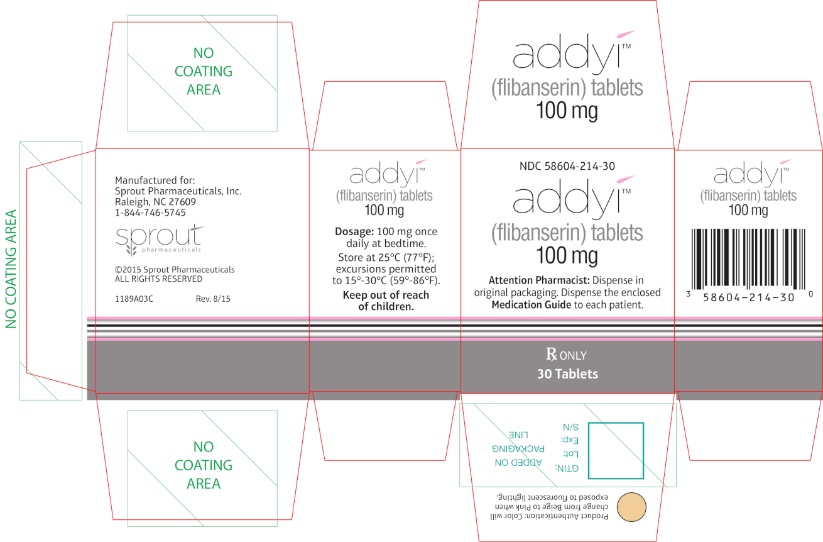
ADDYI flibanserin 100 mg Tablet, Film Coated, 30-count
🆔 Identity & classification
Where does this data come from?
🏷️ RxNorm drug class
This medicine belongs to the Other gynecologicals class.
Where does this data come from?
🏭 Manufacturer & labeler
Where does this data come from?
🩺 Clinical
Flibanserin is used to treat certain women with hypoactive sexual desire disorder (HSDD; low sexual desire that causes distress or is troubling). Flibanserin should not be used for the treatment of HSDD in men or to improve sexual performance. Flibanserin is in a class of medications called a serotonin receptor 1A agonist/serotonin receptor 2A antagonist. It works by changing the activity of serotonin and other natural substances in the brain.
Read the full MedlinePlus article ↗- HSDD — hypoactive sexual desire disorder — is a medical condition where your desire for sex has significantly dropped from what it used to be, it bothers you or is affecting your r...
- What exactly is HSDD, and how do I know if Addyi is right for me?
- Addyi must be taken at bedtime — that's not just a suggestion, it's a safety requirement. The medication can cause low blood pressure, dizziness, fainting, and drowsiness. Taking i...
- Why do I have to take Addyi at bedtime? Can I just take it in the morning?
Patient education
Supplement & herbal interactions
Some supplements/herbs that may interact with Flibanserin — tap one for details:
Where does this data come from?
Ask a licensed pharmacist directly — free, answered by our team.
💊 What it looks like
Where does this data come from?
🧪 Inactive Ingredients / Excipients
Inactive ingredients, also called excipients, are components of the drug product other than the active ingredient. They may include fillers, dyes, coatings, preservatives, flavors, or other formulation ingredients.
💡 Tap an ingredient (hover on desktop) to see what it is and why it’s used.
-
UNII M28OL1HH48
Croscarmellose sodium is a plant-based substance derived from cellulose. It acts as a disintegrant, helping tablets and capsules break down quickly in the digestive system so the medicine can be absorbed.
-
UNII 1K09F3G675
Ferric oxide red is an inorganic iron compound used as a colorant in medicines. It gives tablets, capsules, or other dosage forms a red or reddish tint for identification and appearance.
-
UNII 3NXW29V3WO
Hypromellose is a plant-based thickener made from cellulose. It's used in medicines as a binder to hold ingredients together, a coating for tablets, and a thickener for liquids.
-
UNII EWQ57Q8I5X
Lactose monohydrate is a natural sugar derived from milk. It serves as a filler and binder in tablets and capsules, helping create the proper size, texture, and consistency of the medicine.
-
UNII 70097M6I30
Magnesium stearate is a salt made from magnesium and stearic acid, a fatty substance. It's used in tablets and capsules as a lubricant and glidant to help ingredients flow smoothly during manufacturing and prevent sticking.
-
UNII OP1R32D61U
Microcrystalline cellulose is a purified form of cellulose, a natural fiber from plant sources. It acts as a binder and filler in tablets and capsules, helping hold ingredients together and give the medicine its shape and size.
-
UNII 3WJQ0SDW1A
Polyethylene glycol is a synthetic liquid or solid polymer used in medicines as a solvent, lubricant, and humectant. It helps dissolve active ingredients, reduces friction during manufacturing, and retains moisture in the final product.
-
UNII 7SEV7J4R1U
A powder made from a naturally occurring mineral. In medicines, talc works as a glidant and anti-caking agent, helping tablets and capsules flow smoothly during manufacturing and preventing clumping.
-
UNII 15FIX9V2JP
Titanium dioxide is a bright white mineral powder commonly used as a colorant and opacifying agent. It makes pills and tablets white or lighter in color and helps make coatings non-transparent.
9 inactive ingredients listed in the exact product block matched to this NDC.
Where does this data come from?
ingredient classCode="IACT" elements from the exact product block matched by this NDC. Label-section narrative from DailyMed / the openFDA label index is shown separately when available.Inactive ingredient FAQ
Are inactive ingredients the same for every manufacturer?
Why might an inactive ingredient be missing?
Can inactive ingredients matter?
💲 Pricing
A drug doesn't have one price. Each row is a different public payment system, and none is what you'd pay at the counter — that depends on your insurance. The ⓘ on each row explains what it measures.
| Price system | Per each | Per package |
|---|---|---|
| Retail pharmacies payNADAC · weekly | Not in the retail survey — common for institutional, discontinued, or low-volume packs. | |
| Medicaid paysCMS SDUD · 12 mo | No recent Medicaid claims on file for this NDC — rare and low-volume NDCs are suppressed in the public data. | |
| Medicare drug plans payPart D · quarterly | No Part D plan price is available for this NDC in our data. | |
Where does this data come from?
🔁 Therapeutic equivalents
| Product | Labeler | Pack | NADAC/unit | TE | Status | Price vs. this |
|---|---|---|---|---|---|---|
| Addyi 100 mgthis 58604-0214-30 | Sprout | 30 tablets | — | — | FDA listed | — |
Where does this data come from?
⏳ Availability & generic status
We did not find an FDA-approved generic match for this exact strength, form and route. Patent/protection dates below may affect future generic timing.
Why the date isn’t exact: Generic timing can change because patents may be challenged, settled, licensed, added, removed, or worked around with a narrower label — and FDA approval does not always mean a pharmacy can get the generic today.
🛈 What do these terms mean?
- Patent
- Legal protection listed in the Orange Book that may delay generic approval or launch. Issued by the U.S. Patent & Trademark Office.
- Substance patent
- Covers the active drug molecule itself — the hardest to design around. A generic generally can’t launch until it expires.
- Formulation (product) patent
- Covers a specific formulation or dosage form. A generic can sometimes work around it with a different formulation.
- Method-of-use patent
- A patent covering one specific approved use of the drug — not necessarily the whole molecule. A generic can sometimes launch with a “skinny label” that carves out the protected use and keeps the others.
- Skinny label
- A generic label that omits a still-patented use when the FDA allows it — letting a generic reach the market for the unprotected uses.
- Exclusivity
- FDA-granted marketing protection, separate from patents — e.g. 5-yr new chemical entity, 7-yr orphan drug, or a +6-month pediatric extension.
- Paragraph IV
- A generic applicant’s formal challenge to a listed patent. It can potentially lead to earlier generic entry, but often involves litigation or a settlement.
- RLD / RS
- Reference Listed Drug — the brand product the FDA uses as the reference for generic applications. Reference Standard — the product the FDA expects generics to compare against in bioequivalence testing.
- TE / AB rating
- FDA therapeutic-equivalence rating. An AB rating generally means the FDA considers a generic therapeutically equivalent to — and substitutable for — the brand.
- LOE (loss of exclusivity)
- The latest patent or exclusivity currently listed — the loss-of-exclusivity / latest-listed-protection date shown on this page. Paragraph-IV challenges and settlements can move the real date earlier; FDA approval and a manufacturer’s decision to market can move it later.
Built from the FDA Orange Book. The bars above are scaled to each protection’s expiry; the red LOE marker is the last one to lapse.
| Patent | Type | Use code | Expires |
|---|---|---|---|
| US 7151103 ↗ | Method of use | U-1734 | May 9, 2028 |
| Code | What it grants | Expires |
|---|---|---|
| I-983 | New indication (3-year) | Dec 13, 2028 |
Is there a generic version of ADDYI 100 MG TABLET?
The FDA approved a generic — why can’t I get it at my pharmacy yet?
Why do different websites show different generic release dates?
What does “FDA listed” mean?
What does a patent or protection date mean here?
What does “current Orange Book estimate” mean?
Can a generic come out before the last patent expires?
Can a generic come out after the listed dates?
What is the difference between patents and exclusivity?
Why are there multiple patent dates?
Where does this data come from?
🔬 Reported adverse events (FAERS)
Top reported reactions
Age at onset
Reporter sex
Serious outcomes
Where does this data come from?
📦 Packaging — all sizes for this product
| Package NDC | Description | Marketing start | Status |
|---|---|---|---|
| 58604-0214-30 You're viewing this | 1 BOTTLE in 1 CARTON (58604-214-30) / 30 TABLET, FILM COATED in 1 BOTTLE | 2015-08-18 | Active |
🧭 About this NDC listing & data coverage
What data is (and isn’t) available for this NDC — tap to expand
| NDC identity (package / product / labeler codes) | ✓ Available |
| Labeler | ✓ Available |
| Product & package description | ✓ Available |
| Marketing category & status | ✓ Available |
| Active ingredient / dosage form / route | ✓ Available |
| FDA label (SPL via DailyMed) | ✓ Available |
| Package photos | ✓ Available |
| Inactive ingredients (structured) | ✓ Available |
| NADAC pharmacy acquisition price (CMS) | — Not published for this NDC CMS publishes NADAC only for NDCs reported in its retail-pharmacy survey. |
| Orange Book / therapeutic-equivalence data | ✓ Available |
| HCPCS J-code billing crosswalk | — Not published for this NDC Most self-administered / retail products have no J-code — that is normal. |
| Medicaid utilization (CMS SDUD) | — Not published for this NDC CMS reports utilization only for NDCs with Medicaid claims above its privacy threshold. |
Questions about this listing
Why is there no price listed?
Is the NDC printed on the package the same as the 11-digit billing NDC?
What do the three segments of this NDC mean?
Is this package still being marketed?
Who lists this product with the FDA?
Do I need a prescription for this product?
Where does this data come from?
📄 Full prescribing information FDA SPL
🚨 Boxed Warning ▾
WARNING: HYPOTENSION and SYNCOPE IN CERTAIN SETTINGS Interaction with Alcohol The use of ADDYI and alcohol together close in time increases the risk of severe hypotension and syncope [see Warnings and Precautions (5.1) ]. Counsel patients to wait at least two hours after consuming one or two standard alcoholic drinks before taking ADDYI at bedtime or to skip their ADDYI dose if they have consumed three or more standard alcoholic drinks that evening. Contraindicated with Strong or Moderate CYP3A4 Inhibitors The concomitant use of ADDYI and moderate or strong CYP3A4 inhibitors increases flibanserin concentrations, which can cause severe hypotension and syncope [see Warnings and Precautions (5.2) ] .
Therefore, the use of moderate or strong CYP3A4 inhibitors is contraindicated in patients taking ADDYI [see Contraindications (4) ] . Contraindicated in Patients with Hepatic Impairment The use of ADDYI in patients with hepatic impairment increases flibanserin concentrations, which can cause severe hypotension and syncope [see Warnings and Precautions (5.5) ] . Therefore, ADDYI is contraindicated in patients with hepatic impairment [see Contraindications (4) ] .
WARNING: HYPOTENSION and SYNCOPE IN CERTAIN SETTINGS See full prescribing information for complete boxed warning. • Use of ADDYI and alcohol together close in time increases the risk of severe hypotension and syncope. Counsel patients to wait at least two hours after consuming one or two standard alcoholic drinks before taking ADDYI at bedtime or to skip their ADDYI dose if they have consumed three or more standard alcoholic drinks that evening. ( 4 , 5.1 ) • Severe hypotension and syncope can occur when ADDYI is used with moderate or strong CYP3A4 inhibitors or in patients with hepatic impairment; therefore, ADDYI use in these settings is contraindicated.
( 4 , 5.2 , 5.5 )
🎯 Indications and Usage ▾
1 INDICATIONS AND USAGE ADDYI is indicated for the treatment of women less than 65 years of age with acquired, generalized hypoactive sexual desire disorder (HSDD) as characterized by low sexual desire that causes marked distress or interpersonal difficulty and is not due to: • A co-existing medical or psychiatric condition, • Problems within the relationship, or • The effects of a medication or other drug substance. Acquired HSDD refers to HSDD that develops in a patient who previously had no problems with sexual desire.
Generalized HSDD refers to HSDD that occurs regardless of the type of stimulation, situation or partner. Limitations of Use • ADDYI is not indicated in men. • ADDYI is not indicated to enhance sexual performance. ADDYI is indicated for the treatment of women less than 65 years of age with acquired, generalized hypoactive sexual desire disorder (HSDD) as characterized by low sexual desire that causes marked distress or interpersonal difficulty and is not due to ( 1 ): • A co-existing medical or psychiatric condition, • Problems within the relationship, or • The effects of a medication or other drug substance.
Limitations of Use: • ADDYI is not indicated in men (1) • ADDYI is not indicated to enhance sexual performance. ( 1 )
⏱️ Dosage and Administration ▾
2 DOSAGE AND ADMINISTRATION • Recommended dosage is 100 mg taken once daily at bedtime (2.1) • ADDYI is dosed at bedtime because administration during waking hours increases risks of hypotension, syncope, accidental injury, and central nervous system (CNS) depression (2.1) • Discontinue ADDYI treatment after 8 weeks if no improvement (2.3)
2.1Recommended Dosage The recommended dosage of ADDYI is 100 mg administered orally once per day at bedtime. ADDYI is dosed at bedtime because administration during waking hours increases the risks of hypotension, syncope, accidental injury, and central nervous system (CNS) depression (such as somnolence and sedation) .
2.2Missed Dose If a dose of ADDYI is missed at bedtime, instruct the patient to take the next dose at bedtime on the next day. Instruct the patient to not double the next dose.
2.3Discontinuation of ADDYI Discontinue ADDYI after 8 weeks if the patient does not report an improvement in her HSDD symptoms.
2.4Initiation of ADDYI Following Moderate or Strong CYP3A4 Inhibitor Use If initiating ADDYI following moderate or strong CYP3A4 inhibitor use, start ADDYI 2 weeks after the last dose of the CYP3A4 inhibitor. If initiating a moderate or strong CYP3A4 inhibitor following ADDYI use, start the moderate or strong CYP3A4 inhibitor 2 days after the last dose of ADDYI [see Warnings and Precautions (5.2) ].
2.1Recommended Dosage The recommended dosage of ADDYI is 100 mg administered orally once per day at bedtime. ADDYI is dosed at bedtime because administration during waking hours increases the risks of hypotension, syncope, accidental injury, and central nervous system (CNS) depression (such as somnolence and sedation) .
2.2Missed Dose If a dose of ADDYI is missed at bedtime, instruct the patient to take the next dose at bedtime on the next day. Instruct the patient to not double the next dose.
2.3Discontinuation of ADDYI Discontinue ADDYI after 8 weeks if the patient does not report an improvement in her HSDD symptoms.
2.4Initiation of ADDYI Following Moderate or Strong CYP3A4 Inhibitor Use If initiating ADDYI following moderate or strong CYP3A4 inhibitor use, start ADDYI 2 weeks after the last dose of the CYP3A4 inhibitor. If initiating a moderate or strong CYP3A4 inhibitor following ADDYI use, start the moderate or strong CYP3A4 inhibitor 2 days after the last dose of ADDYI [see Warnings and Precautions (5.2) ].
💊 Dosage Forms and Strengths ▾
3 DOSAGE FORMS AND STRENGTHS Tablets: 100 mg, oval, pink, debossed on one side with "f100" and blank on the other side. Tablets: 100 mg (3)
⛔ Contraindications ▾
4 CONTRAINDICATIONS ADDYI is contraindicated in patients: • Using concomitant moderate or strong CYP3A4 inhibitors [see Boxed Warning and Warnings and Precautions (5.2) ] . • With hepatic impairment [see Boxed Warning and Warnings and Precautions (5.5) ] . • With known hypersensitivity to ADDYI or any of its components. Reactions, including anaphylaxis, reactions consistent with angioedema (e.g., swelling of the face, lips, and mouth), pruritus, and urticaria have been reported [see Adverse Reactions (6.2) ] . • Moderate or strong cytochrome P450 3A4 (CYP3A4) inhibitors (4, 5.2) • Hepatic impairment (4, 5.5) • Known hypersensitivity to ADDYI or its components ( 4 , 5.6 , 6.2 )
⚠️ Warnings and Cautions ▾
5 WARNINGS AND PRECAUTIONS • Hypotension and Syncope due to an Interaction with Alcohol : After taking ADDYI at bedtime, advise patients to avoid alcohol until the following day. (5.1) • Central Nervous System (CNS) Depression (e.g., Somnolence, Sedation) : Can occur with ADDYI alone. Exacerbated by other CNS depressants, and in settings where flibanserin concentrations are increased.
Patients should avoid activities requiring full alertness (e.g., driving or operating machinery) until at least six hours after each dose and until they know how ADDYI affects them. (5.3) • Hypotension and Syncope with ADDYI Alone : Patients with pre-syncope should immediately lie supine and promptly seek medical help if symptoms do not resolve. (5.4) • Hypersensitivity Reactions, including anaphylaxis, angioedema, pruritus, urticaria : Avoid in women with known hypersensitivity to ADDYI or any of its components ( 5.6 )
5.1Hypotension and Syncope due to an Interaction with Alcohol Taking ADDYI within two hours after consuming alcohol increases the risk of severe hypotension and syncope. To reduce this risk, counsel patients to wait at least two hours after drinking one or two standard alcoholic drinks before taking ADDYI at bedtime [see Boxed Warning and Adverse Reactions (6.1) ] . Patients who drink three or more standard alcoholic drinks should skip their ADDYI dose that evening.
One standard alcoholic drink contains 14 grams of pure alcohol and is equivalent to one 12-ounce regular beer (5% alcohol), 5-ounces wine (12% alcohol), or 1.5 ounces of distilled spirits/shot (40% alcohol). After taking ADDYI at bedtime, advise patients to not use alcohol until the following day.
5.2Hypotension and Syncope with CYP3A4 Inhibitors Moderate or Strong CYP3A4 Inhibitors The concomitant use of ADDYI with moderate or strong CYP3A4 inhibitors significantly increases flibanserin concentrations, which can lead to hypotension and syncope [see Adverse Reactions (6.1) ]. The concomitant use of ADDYI with a moderate or strong CYP3A4 inhibitor is contraindicated. If the patient requires a moderate or strong CYP3A4 inhibitor, discontinue ADDYI at least 2 days prior to starting the moderate or strong CYP3A4 inhibitor.
In cases where the benefit of initiating a moderate or strong CYP3A4 inhibitor within 2 days of stopping ADDYI clearly outweighs the risk of flibanserin exposure related hypotension and syncope, monitor the patient for signs of hypotension and syncope. Discontinue the moderate or strong CYP3A4 inhibitor for 2 weeks before restarting ADDYI [see Drug Interactions (7) ]. Multiple Concomitant Weak CYP3A4 Inhibitors Concomitant use of multiple weak CYP3A4 inhibitors that may include herbal supplements (e.g., ginkgo, resveratrol) or non-prescription drugs (e.g., cimetidine) could also lead to clinically relevant increases in flibanserin concentrations that may increase the risk of hypotension and syncope [see Drug Interactions (7) ] .
5.3Central Nervous System Depression ADDYI can cause CNS depression (e.g., somnolence, sedation). In five 24-week, randomized, placebo-controlled, double-blind trials of premenopausal women with HSDD, the incidence of somnolence, sedation or fatigue was 21% and 8% in patients treated with 100 mg ADDYI once daily at bedtime and placebo, respectively [see Adverse Reactions (6.1) and Clinical Studies (14.1) ] . In two similarly designed trials in naturally postmenopausal women with acquired, generalized HSDD, the incidence of somnolence, sedation or fatigue was 10% and 6% in patients less than 65 years of age treated with 100 mg ADDYI once daily at bedtime and placebo, respectively.
The risk of CNS depression is increased if ADDYI is taken during waking hours, or if ADDYI is taken with alcohol or other CNS depressants, or with medications that increase flibanserin concentrations, such as CYP3A4 inhibitors [see Contraindications (4), Warnings and Precautions (5.1, 5.2), Adverse Reactions (6.1) , and Drug Interactions (7) ]. Patien…
🤒 Adverse Reactions ▾
6 ADVERSE REACTIONS The following adverse reactions are discussed in greater detail in other sections of the labeling: • Hypotension and syncope [see Warnings and Precautions (5.1, 5.2, 5.4, 5.5) ] • CNS depression [see Warnings and Precautions (5.3) ] Most common adverse reactions (incidence ≥2%) are dizziness, somnolence, nausea, fatigue, insomnia, urinary tract infection, anxiety, sinusitis, constipation and dry mouth. (6.1) To report SUSPECTED ADVERSE REACTIONS, contact Sprout Pharmaceuticals, Inc. at 1-844-746-5745, or FDA at 1-800-FDA-1088 or www.fda.gov/medwatch.
6.1Clinical Trials Experience Because clinical trials are conducted under widely varying conditions, adverse reaction rates observed in the clinical trials of a drug cannot be directly compared to the rates in the clinical trials of another drug and may not reflect the rates observed in practice. The approved 100 mg ADDYI dosage at bedtime was administered to 2,997 premenopausal women with acquired, generalized HSDD in clinical trials, of whom 1,672 received treatment for at least 6 months, 850 received treatment for at least 12 months, and 88 received treatment for at least 18 months [see Clinical Studies (14) ].
In clinical trials, ADDYI 100 mg once daily at bedtime was administered to 801 postmenopausal women less than 65 years of age with acquired, generalized HSDD, of whom 460 received ADDYI treatment for at least 6 months, and 23 received ADDYI treatment for longer than 6 months. Premenopausal Women The data presented below in Table 1 and Table 2 (left columns) are derived from five 24-week randomized, double-blind, placebo-controlled trials in premenopausal women with acquired, generalized HSDD. In these trials, the frequency and quantity of alcohol use was not recorded.
Three of these trials (Studies 1, 2, and 3) also provided efficacy data [see Clinical Studies (14.1) ]. One trial (Study 5) did not evaluate the 100 mg bedtime dose. In four trials in premenopausal women (Studies 1 through 4), 100 mg ADDYI at bedtime was administered to 1543 premenopausal women with HSDD, of whom 1060 completed 24 weeks of treatment.
The age range of women enrolled was 18-56 years old with a mean age of 36 years old, and 88% were Caucasian and 9% were Black. In Studies 1 through 4 in premenopausal women, serious adverse reactions were reported in 0.9% and 0.5% of ADDYI-treated patients and placebo-treated patients, respectively. Postmenopausal Women The data presented below in Table 1 and Table 2 (right columns) are derived from two randomized, double-blind, placebo-controlled trials intended to be of 24-week duration in naturally postmenopausal women with acquired, generalized HSDD (Studies 6 and 7).
One trial (Study 7) was discontinued prematurely. In these trials, 100 mg ADDYI at bedtime was administered to 801 postmenopausal women less than 65 years of age with HSDD, of whom 460 completed 24 weeks of treatment. The age range of women enrolled was 34-80 years old with a mean age of 56 years old, and 91% were Caucasian, 7% were Black and 94% were less than 65 years of age.
The clinical trial population had no significant comorbid medical conditions and were not taking concomitant medications. Serious adverse reactions were reported in 1.5% and 0.7% of ADDYI-treated patients and placebo-treated patients less than 65 years of age, respectively. Adverse Reactions Leading to Discontinuation Table 1 displays the most common adverse reactions leading to discontinuation in six trials of women less than 65 years of age with HSDD that evaluated the ADDYI 100 mg once daily at bedtime dosage by population studied.
Table 1 Adverse Reactions Adverse reactions leading to discontinuation of > 1% of patients who received ADDYI 100 mg once daily at bedtime and at a higher incidence than placebo-treated patients in the pooled premenopausal women and postmenopausal women trials. Leading to Discontinuation in Randomized, Double-blind, Placebo-controlled Trials in Women with HSDD (< 65 Ye…
🔄 Drug Interactions ▾
7 DRUG INTERACTIONS Table 3 contains clinically significant drug interactions (DI) with ADDYI. Table 3 Clinically Significant Drug Interactions with ADDYI Alcohol Clinical Implications The coadministration of ADDYI with alcohol increased the risk of hypotension, syncope, and CNS depression compared to the use of ADDYI alone or alcohol alone [see Warnings and Precautions (5.1) and Clinical Pharmacology (12.2) ]. Preventing or Managing DI Counsel patients to wait at least two hours after consuming one or two standard alcoholic drinks before taking ADDYI at bedtime or to skip their ADDYI dose if they have consumed three or more alcoholic drinks that evening. [see Boxed Warning , Warnings and Precautions (5.1) , and Adverse Reactions (6.1) ] .
Other CNS Depressants Examples Diphenhydramine, opioids, hypnotics, benzodiazepines Clinical Implications The concomitant use of ADDYI with CNS depressants may increase the risk of CNS depression (e.g., somnolence) compared to the use of ADDYI alone. Preventing or Managing DI Discuss the concomitant use of other CNS depressants with the patient when prescribing ADDYI. Moderate or Strong CYP3A4 Inhibitors Examples of strong CYP3A4 inhibitors Ketoconazole, itraconazole, posaconazole, clarithromycin, nefazodone, ritonavir, saquinavir, nelfinavir, indinavir, boceprevir, telaprevir, telithromycin and conivaptan Examples of moderate CYP3A4 inhibitors Amprenavir, atazanavir, ciprofloxacin, diltiazem, erythromycin, fluconazole, fosamprenavir, verapamil, and grapefruit juice Clinical Implications The concomitant use of ADDYI with moderate or strong CYP3A4 inhibitors increases flibanserin exposure compared to the use of ADDYI alone.
The risk of hypotension and syncope is increased with concomitant use of ADDYI and moderate or strong CYP3A4 inhibitors [see Warnings and Precautions (5.2) , Adverse Reactions (6.1) , and Clinical Pharmacology (12.3) ]. Preventing or Managing DI The concomitant use of ADDYI with moderate or strong CYP3A4 inhibitors is contraindicated . Weak CYP3A4 Inhibitors Examples Oral contraceptives, cimetidine, fluoxetine, ginkgo, ranitidine Clinical Implications The concomitant use of ADDYI with multiple weak CYP3A4 inhibitors may increase the risk of adverse reactions.
Preventing or Managing DI Discuss the use of multiple weak CYP3A4 inhibitors with the patient when prescribing ADDYI. Strong CYP2C19 Inhibitors Examples Proton pump inhibitors, selective serotonin reuptake inhibitors, benzodiazepines, antifungals Clinical Implications The concomitant use of ADDYI with strong CYP2C19 inhibitors may increase flibanserin exposure which may increase the risk of hypotension, syncope, and CNS depression. Preventing or Managing DI Discuss the use of a strong CYP2C19 inhibitor with the patient when prescribing ADDYI.
CYP3A4 Inducers Examples Carbamazepine, phenobarbital, phenytoin, rifabutin, rifampin, rifapetine, St. John's Wort Clinical Implications The concomitant use of ADDYI with CYP3A4 inducers substantially decreases flibanserin exposure compared to the use of ADDYI alone. Preventing or Managing DI The concomitant use of ADDYI with CYP3A4 inducers is not recommended.
Digoxin or Other P-glycoprotein Substrates Examples Digoxin, sirolimus Clinical Implications The concomitant use of ADDYI with digoxin, a drug that is transported by P-glycoprotein (P-gp), increases the digoxin concentration [see Clinical Pharmacology (12.3) ] . This may lead to digoxin toxicity. Preventing or Managing DI Increase monitoring of concentrations of drugs transported by P-gp that have a narrow therapeutic index (e.g., digoxin). • Oral Contraceptives and Other Weak CYP3A4 Inhibitors : Increases flibanserin exposures and incidence of adverse reactions (6.1, 7) • Strong CYP2C19 Inhibitors : Increases flibanserin exposure which may increase risk of hypotension, syncope, and CNS depression (7) • CYP3A4 Inducers : Use of ADDYI not recommended; flibanserin concentrations substantially reduced (7) • Digoxin : Increase…
👥 Use in Specific Populations ▾
8 USE IN SPECIFIC POPULATIONS • Nursing Mothers : ADDYI is not recommended. (8.2) • CYP2C19 Poor Metabolizers : Increases flibanserin exposure which may increase risk of hypotension, syncope, and CNS depression (8.7)
8.1Pregnancy Risk Summary There are no studies of ADDYI in pregnant women to inform whether there is a drug-associated risk in humans. In animals, fetal toxicity only occurred in the presence of significant maternal toxicity including reductions in weight gain and sedation. In pregnant rats and rabbits, adverse reproductive and developmental effects consisted of decreased fetal weight, structural anomalies and increases in fetal loss at exposures greater than 15 times exposures achieved with the recommended human dosage [see Data ] .
Animal studies cannot rule out the potential for fetal harm. The estimated background risk of major birth defects and miscarriage for the indicated population is unknown. All pregnancies have a background risk of birth defect, loss, or other adverse outcomes.
In the U.S. general population, the estimated background risk of major birth defects and miscarriage in clinically recognized pregnancies is 2% to 4% and 15% to 20%, respectively. Data Animal Data Pregnant rats were administered flibanserin at doses of 0, 20, 80 and 400 mg/kg/day (3, 15 and 41 times clinical exposures at the recommended human dose based on AUC) during organogenesis. The highest dose was associated with significant maternal toxicity as evidenced by severe clinical signs and marked reductions in weight gain during dosing.
In the litters of high-dose dams, there were decreased fetal weights, decreased ossification of the forelimbs and increased number of lumbar ribs, and two fetuses with anophthalmia secondary to severe maternal toxicity. The no adverse effect level for embryofetal toxicity was 80 mg/kg/day (15 times clinical exposure based on AUC). Pregnant rabbits were administered flibanserin at doses of 0, 20, 40 and 80 mg/kg/day (4, 8 and 16 times the clinical exposure at the recommended human dose) during organogenesis.
Marked decreases in maternal body weight gain (>75%), abortion and complete litter resorption were observed at 40 and 80 mg/kg/day indicating significant maternal toxicity at these doses. Increases in resorptions and decreased fetal weights were observed at ≥ 40 mg/kg/day. No treatment-related teratogenic effects were observed in fetuses at any dose level.
The no adverse effect level for maternal and embryofetal effects was 20 mg/kg/day (3-4 times clinical exposure based on AUC). Pregnant rats were administered flibanserin at doses of 0, 20, 80 and 200 mg/kg/day (3, 15 and ~ 20 times clinical exposures at the recommended human dose) from day 6 of pregnancy until day 21 of lactation to assess for effects on peri- and postnatal development. The highest dose was associated with clinical signs of toxicity in pregnant and lactating rats.
All doses resulted in sedation and decreases in body weight gain during pregnancy. Flibanserin prolonged gestation in some dams in all dose groups and decreased implantations, number of fetuses and fetal weights at 200 mg/kg/day. Dosing dams with 200 mg/kg also decreased pup weight gain and viability during the lactation period and delayed opening of the vagina and auditory canals.
Flibanserin had no effects on learning, reflexes, fertility or reproductive capacity of the F1 generation. The no adverse effect level for maternal toxicity and peri/postnatal effects was 20 mg/kg/day [see Nonclinical Toxicology (13.1) ].
8.2Lactation Risk Summary Flibanserin is excreted in rat milk. It is unknown whether flibanserin is present in human milk, whether ADDYI has effects on the breastfed infant, or whether ADDYI affects milk production. Because of the potential for serious adverse reactions including sedation in a breastfed infant, ADDYI is not recommended in breastfeeding women.
8.4Pediatric Use ADDYI is not indicated for use in pediatric patients.
8.5 Geriatric Use ADDY…
🤰 Pregnancy ▾
8.1Pregnancy Risk Summary There are no studies of ADDYI in pregnant women to inform whether there is a drug-associated risk in humans. In animals, fetal toxicity only occurred in the presence of significant maternal toxicity including reductions in weight gain and sedation. In pregnant rats and rabbits, adverse reproductive and developmental effects consisted of decreased fetal weight, structural anomalies and increases in fetal loss at exposures greater than 15 times exposures achieved with the recommended human dosage [see Data ] .
Animal studies cannot rule out the potential for fetal harm. The estimated background risk of major birth defects and miscarriage for the indicated population is unknown. All pregnancies have a background risk of birth defect, loss, or other adverse outcomes.
In the U.S. general population, the estimated background risk of major birth defects and miscarriage in clinically recognized pregnancies is 2% to 4% and 15% to 20%, respectively. Data Animal Data Pregnant rats were administered flibanserin at doses of 0, 20, 80 and 400 mg/kg/day (3, 15 and 41 times clinical exposures at the recommended human dose based on AUC) during organogenesis. The highest dose was associated with significant maternal toxicity as evidenced by severe clinical signs and marked reductions in weight gain during dosing.
In the litters of high-dose dams, there were decreased fetal weights, decreased ossification of the forelimbs and increased number of lumbar ribs, and two fetuses with anophthalmia secondary to severe maternal toxicity. The no adverse effect level for embryofetal toxicity was 80 mg/kg/day (15 times clinical exposure based on AUC). Pregnant rabbits were administered flibanserin at doses of 0, 20, 40 and 80 mg/kg/day (4, 8 and 16 times the clinical exposure at the recommended human dose) during organogenesis.
Marked decreases in maternal body weight gain (>75%), abortion and complete litter resorption were observed at 40 and 80 mg/kg/day indicating significant maternal toxicity at these doses. Increases in resorptions and decreased fetal weights were observed at ≥ 40 mg/kg/day. No treatment-related teratogenic effects were observed in fetuses at any dose level.
The no adverse effect level for maternal and embryofetal effects was 20 mg/kg/day (3-4 times clinical exposure based on AUC). Pregnant rats were administered flibanserin at doses of 0, 20, 80 and 200 mg/kg/day (3, 15 and ~ 20 times clinical exposures at the recommended human dose) from day 6 of pregnancy until day 21 of lactation to assess for effects on peri- and postnatal development. The highest dose was associated with clinical signs of toxicity in pregnant and lactating rats.
All doses resulted in sedation and decreases in body weight gain during pregnancy. Flibanserin prolonged gestation in some dams in all dose groups and decreased implantations, number of fetuses and fetal weights at 200 mg/kg/day. Dosing dams with 200 mg/kg also decreased pup weight gain and viability during the lactation period and delayed opening of the vagina and auditory canals.
Flibanserin had no effects on learning, reflexes, fertility or reproductive capacity of the F1 generation. The no adverse effect level for maternal toxicity and peri/postnatal effects was 20 mg/kg/day [see Nonclinical Toxicology (13.1) ].
🧒 Pediatric Use ▾
8.4Pediatric Use ADDYI is not indicated for use in pediatric patients.
🧓 Geriatric Use ▾
8.5Geriatric Use ADDYI is not indicated for the treatment of HSDD in geriatric patients [see Warnings and Precautions (5.1 . 5.2 , and 5.4 )] . Safety and effectiveness of ADDYI for the treatment of HSDD have not been established in geriatric patients.
🆘 Overdosage ▾
10 OVERDOSAGE Overdosage of ADDYI may cause an increase in the incidence or severity of any of the reported adverse reactions [see Warnings and Precautions (5.3, 5.4) and Adverse Reactions (6.1) ]. In the event of overdosage, treatment should address the symptoms and supportive measures, as needed. There is no known specific antidote for flibanserin.
🧬 Clinical Pharmacology ▾
12 CLINICAL PHARMACOLOGY
12.1Mechanism of Action The mechanism of action of ADDYI in the treatment of women less than 65 years of age with acquired, generalized HSDD as characterized by low sexual desire that causes marked distress or interpersonal difficulty (not due a co-existing medical or psychiatric condition, problems within the relationship, or the effects of a medication or other drug substance) is not known.
12.2Pharmacodynamics Receptor Binding: In vitro, flibanserin demonstrated high affinity for the following serotonin (5-hydroxytryptamine or 5-HT) receptors: agonist activity at 5-HT 1A and antagonist activity at 5-HT 2A . Flibanserin also has moderate antagonist activities at the 5-HT 2B , 5-HT 2C , and dopamine D 4 receptors. Alcohol Interaction See Clinical Trials Experience (6.1) Cardiac Electrophysiology The effect of ADDYI on the QT interval was evaluated in a randomized, double-blind, placebo- and active- (single dose moxifloxacin) controlled crossover study in 56 healthy men and women.
Subjects in the ADDYI groups received either 50 mg twice a day (equivalent to the daily recommended dosage) or 100 mg three times a day (3 times the daily recommended dosage) administered for 5 days. The time frame for electrocardiogram (ECG) measurements covered maximum plasma concentrations of flibanserin and relevant metabolites. In this study, ADDYI did not prolong the QT interval to any clinically relevant extent.
The mean increase in heart rate associated with the 100 mg three times a day dose of ADDYI compared to placebo ranged from 1.7 to 3.2 beats per minute.
12.3Pharmacokinetics Flibanserin showed dose-proportional pharmacokinetics for Cmax after single oral doses of 100 mg to 250 mg (the recommended and 2.5 times the recommended dosage, respectively) in healthy female subjects. Steady state was achieved after 3 days of dosing. The extent of exposure (AUC 0-∞ ) with once-daily dosing of 100 mg of flibanserin was increased 1.4-fold as compared to a single dose.
Figure 1 Mean + SD Plasma Flibanserin Concentration-Time Profiles in Healthy Female Subjects Following a Single Oral Dose of 100 mg of Flibanserin (Linear Scale) Absorption Following oral administration of a single 100 mg dose of flibanserin in healthy premenopausal women (N=8), mean (SD) Cmax was 419 (206) ng/mL and mean (SD) AUC 0-inf was 1543 (511) ng*hr/mL. Median (range) time to reach Cmax was 0.75 (0.75 to 4.0) hours. Absolute bioavailability of flibanserin following oral dosing is 33%.
Effect of Food Food increased the extent of absorption and slowed the rate of absorption of a 50 mg dose of flibanserin (one half the recommended dosage). Low-, moderate-, and high-fat meals increased flibanserin AUC 0-inf by 1.18-, 1.43-, and 1.56-fold; increased Cmax by 1.02-, 1.13-, and 1.15-fold; and prolonged median Tmax to 1.5, 0.9, 1.8 hours from 0.8 hours under fasted conditions, respectively. Distribution Approximately 98% of flibanserin is bound to human serum proteins, mainly to albumin.
Elimination Metabolism Flibanserin is primarily metabolized by CYP3A4 and, to a lesser extent, by CYP2C19. Based on in vitro and/or in vivo data, CYP1A2, CYP2B6, CYP2C8, CYP2C9, and CYP2D6 contribute minimally to the metabolism of flibanserin. After a single oral solution dose of 50 mg 14 C-radiolabeled flibanserin, 44% of the total 14 C-flibanserin related radioactivity was recovered in urine, and 51% was recovered in feces.
Flibanserin is extensively metabolized to at least 35 metabolites, most of them occurring in low concentrations in plasma. Two metabolites could be characterized that showed plasma concentrations similar to that achieved with flibanserin: 6,21-dihydroxy-flibanserin-6,21-disulfate and 6-hydroxy-flibanserin-6-sulfate. These two metabolites are inactive.
Excretion Flibanserin has a mean terminal half-life of approximately 11 hours. Specific Populations Hepatic Impairment Single 50 mg oral doses of flibanserin were administered to 10 patients with mild hepa…
🧬 Mechanism of Action ▾
12.1Mechanism of Action The mechanism of action of ADDYI in the treatment of women less than 65 years of age with acquired, generalized HSDD as characterized by low sexual desire that causes marked distress or interpersonal difficulty (not due a co-existing medical or psychiatric condition, problems within the relationship, or the effects of a medication or other drug substance) is not known.
📦 How Supplied / Storage and Handling ▾
16 HOW SUPPLIED/STORAGE AND HANDLING ADDYI is available as a 100 mg oval, pink, film-coated tablet debossed on one side with “f100” and blank on the other side. Available in bottles of 30 tablets. (NDC 58604-214-30) Storage Store at 25°C (77°F); excursions permitted to 15°-30°C (59°-86°F) [see USP controlled room temperature].
📋 Description ▾
11 DESCRIPTION The chemical name of flibanserin is 2H-Benzimidazol-2-one, 1,3-dihydro-1-[2-[4-[3-(trifluoromethyl)phenyl]-1-piperazinyl]ethyl]. Its empirical formula is C 20 H 21 F 3 N 4 O and its molecular weight is 390.41. The structural formula is: Flibanserin is a white to off-white powder, insoluble in water, sparingly soluble in methanol, ethanol, acetonitrile and toluene, soluble in acetone, freely soluble in chloroform, and very soluble in methylene chloride.
ADDYI (flibanserin) tablets are for oral administration. Each ADDYI tablet contains 100 mg of flibanserin. Inactive ingredients consist of lactose monohydrate, microcrystalline cellulose, hypromellose, croscarmellose sodium, magnesium stearate, talc, macrogol, and the coloring agents, titanium dioxide and iron oxide.
Structural Formula
💬 Information for Patients ▾
17 PATIENT COUNSELING INFORMATION Advise the patient to read the FDA-approved patient labeling (Medication Guide). Hypotension and Syncope Inform patients that ADDYI can cause severe hypotension and syncope, particularly when taken close in time with alcoholic drinks or with moderate or strong CYP3A4 inhibitors. • Counsel patients to wait at least two hours after consuming one or two standard alcoholic drinks before taking ADDYI at bedtime or to skip their ADDYI dose if they have consumed 3 or more standard alcoholic drinks that evening.
After taking ADDYI at bedtime, advise patients to not use alcohol until the following day. • Advise patients that moderate or strong CYP3A4 inhibitors are contraindicated with ADDYI and to ask patients to report the use of a new prescription or non-prescription medication or other products that contain CYP3A4 inhibitors (e.g., grapefruit juice, St. John’s Wort). • Advise patients who experience pre-syncope or lightheadedness to lie down and to call for help if symptoms persist [see Contraindications (4) , Warnings and Precautions (5.1 , 5.2) ].
CNS Depression Advise patients that ADDYI can cause CNS depression, such as somnolence and sedation, and that the risk is increased with other CNS depressants and with certain drug interactions (e.g., hypnotics, benzodiazepines, opioids). The risk is also increased if ADDYI is taken during waking hours. Advise patients to avoid activities requiring full alertness (e.g., driving or operating machinery) until at least 6 hours after the ADDYI dose and until they know how ADDYI affects them [see Warnings and Precautions (5.3) ].
Nursing Mothers Advise patients not to breastfeed if they are taking ADDYI [see Use in Specific Populations (8.2) ]. Bedtime Dosing Advise patients to take only one tablet at bedtime and not to take ADDYI at any other time of day [see Dosage and Administration (2) ]. Distributed by: Sprout Pharmaceuticals, Inc.
Raleigh, NC 27609 USA Product and trademark licensed from: Sprout Pharmaceuticals, Inc. Copyright 2025 Sprout Pharmaceuticals, Inc. All rights reserved ADDYI tablets are covered by U.S.
Patents Nos. 7,151,103; 7,420,057; 7,183,410; 8,227,471; 9,468,639; and 9,782,403. IT5046AJ0909 10005639/01 Addyi Logo
💬 Medication Guide ▾
MEDICATION GUIDE ADDYI ® (add-ee) (flibanserin) tablets, for oral use Read this Medication Guide before you start taking ADDYI ® and each time you get a refill. There may be new information. This information does not take the place of talking to your doctor.
What is the most important information I should know about ADDYI? Your risk of severe low blood pressure and fainting (loss of consciousness) is increased: • if you drink alcohol close to the time you take your ADDYI dose, • if you take ADDYI with certain medicines, or • if you have liver problems and you take ADDYI. To lower your risk of low blood pressure and fainting (loss of consciousness): • Do not drink alcohol close to the time you take your ADDYI dose. • After taking ADDYI at bedtime do not drink alcohol until the following day.
Examples of 1 standard alcoholic drink include: o one 12-ounce regular beer o 5 ounces of wine o 1.5 ounces of distilled spirits or shot • Tell your doctor about other medicines you take. Do not take or start taking any prescription or over-the-counter medicines, or herbal supplements without first talking to your doctor. Your doctor will tell you if it is safe to take other medicines or herbal supplements while you are taking ADDYI. • Do not take ADDYI if you have liver problems.
If you take ADDYI and you feel lightheaded or dizzy, lie down right away. Get emergency medical help or ask someone to get emergency medical help for you if the symptoms do not go away or if you feel like you could faint (lose consciousness). If you faint (lose consciousness), tell your doctor as soon as you can.
What is ADDYI? ADDYI is a prescription medicine used to treat hypoactive (low) sexual desire disorder (HSDD) in women <65 years of age who have not had problems with low sexual desire in the past, and who have low sexual desire no matter the type of sexual activity, the situation, or the sexual partner. Women with HSDD have low sexual desire that is troubling to them.
Their low sexual desire is not due to: • a medical or mental health problem • problem in the relationship • medicine or other drug use ADDYI is not for use in men. ADDYI is not for use to improve sexual performance. ADDYI is not for use in Children.
Who should not take ADDYI? Do not take ADDYI if you: • take certain other medicines. Taking ADDYI with certain other medicines can increase the amount of ADDYI in your blood and cause severe low blood pressure, fainting (loss of consciousness), and sleepiness.
Do not take ADDYI if you are taking any of the following medicines: o certain medicines used to treat HIV-1 infection, such as: ▪ amprenavir ▪ atazanavir (REYATAZ ® ) ▪ fosamprenavir (LEXIVA) ▪ ritonavir (NORVIR) ▪ saquinavir (INVIRASE ® ) ▪ nelfinavir (VIRACEPT ® ) ▪ indinavir (CRIXIVAN ® ) o certain medicines that you take by mouth used to treat fungal infections, such as: ▪ fluconazole (DIFLUCAN ® ) ▪ ketoconazole ▪ itraconazole (ONMEL, SPORANOX ® ) ▪ posaconazole (NOXAFIL ® ) o certain antibiotics, including: ▪ ciprofloxacin (CIPRO, CIPRO XR) ▪ erythromycin (ERY-TAB ® ,ERYC ® ,PCE ® ) ▪ telithromycin (KETEK ® ) ▪ clarithromycin (BIAXIN ® ) o certain medicines used to treat Hepatitis C infection, such as: ▪ boceprevir (VICTRELIS ® ) ▪ telaprevir o certain medicines used to treat high blood pressure, chest pain (angina), or other heart problems, such as: ▪ diltiazem (CARDIZEM ® ,CARDIZEM CD ® , CARDIZEM LA ® , CARTIA XT, DILT CD, DILTZAC, TAZTIA XT, Tiazac ® ) ▪ verapamil (CALAN ® , CALAN ® SR, COVERA-HS ® , Verelan ® , Verelan PM) ▪ conivaptan (Vaprisol ® ) o nefazodone: a medicine used to treat depression Ask your doctor or pharmacist if you are not sure if you take any of the medicines listed above.
These are examples of the medicines that you should not take if you are taking ADDYI. Tell your doctor about all of the medicines you take before you start taking ADDYI. • have liver problems What should I tell my doctor before taking ADDYI? Before you take ADDYI, tell your doctor about all…