
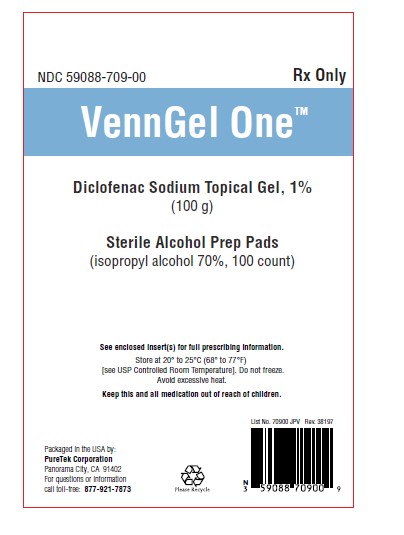
VennGel One diclofenac sodium, isopropyl alcohol Kit — NDC 59088-709-00 (Billing 59088-0709-00)
This is a package of VennGel One diclofenac sodium, isopropyl alcohol Kit from PureTek Corporation, marketed since May 2018 and currently FDA-listed. It is this product's only package size.
NDC database record
One package, one record: these facts belong to NDC 59088-709-00 alone.
- Record
- FDA NDC Directory package listing · Human prescription drug
- Code segments
- 59088 labeler · 709 product · 00 package
- Package marketed since
- May 2, 2018
- Sample package
- No — commercial package
- Listing certified through
- Dec 31, 2026
- Barcode (UPC-A, from the NDC)
- 3 5908870900 9
- Medicaid fills, this package
- 285 prescriptions in the last four reported quarters
- FDA record last changed
- Jul 24, 2026
Identity & classification
Regulatory identifiers FDA, NLM and CMS codes for this package
Drug-database identifiers Medi-Span GPI and First Databank GCN / HICL / AHFS classification
- GSN (GCN sequence number): 076654
- GCN: 42358
- GPI-14 (Medi-Span): 90210030306440
- HICL (First Databank): 003733
- AHFS class code: 28:08.04.04
- RxCUI (RxNorm): 855633
Where does this data come from?
- FDA openFDA NDC Directory · synced Oct 8, 2026
- FDA label on DailyMed · label index refreshed Oct 6, 2026
- RxNorm (NLM RxNav) · catalog refreshed Oct 1, 2026
- Medi-Span GPI (licensed)
- First Databank (licensed) · refreshed Oct 8, 2026
RxNorm drug class
This medicine belongs to the Nonsteroidal Anti-inflammatory Drug class.
Where does this data come from?
- RxClass (NLM) · catalog refreshed Oct 1, 2026
Clinical
Diclofenac topical gel (Solaraze) is used to treat actinic keratosis (flat, scaly growths on the skin caused by too much sun exposure). Diclofenac is in a class of medications called nonsteroidal anti-inflammatory drugs (NSAIDs). The way diclofenac gel works to treat actinic keratosis is not known. Diclofenac is also available as a liquid (Pennsaid) and a gel (Voltaren) that are applied to the skin to treat arthritis pain. This monograph only gives information about diclofenac gel (Solaraze) for actinic keratosis. If you are using either of the products for osteoarthritis, read the monograph e...
Read the full MedlinePlus article ↗- This gel is specifically approved for osteoarthritis pain — the kind that comes from joint wear and tear over time. It works best on joints close to the skin's surface, like your k...
- What exactly is this gel for — can I use it for any joint pain?
- There's a dosing card in the box — use it every time to measure the right amount. Don't just squeeze from the tube and guess. Once you have the right amount on the card, use your h...
- How do I actually apply it — do I just squeeze some out?
Patient education
Supplement & herbal interactions
Where does this data come from?
- MedlinePlus (NLM) · refreshed Oct 1, 2026
- FDA label on DailyMed · label index refreshed Oct 6, 2026
Ask a licensed pharmacist directly — free, answered by our team.
Pricing
A drug doesn't have one price. Each row is a different public payment system, and none is what you'd pay at the counter — that depends on your insurance. The ⓘ on each row explains what it measures.
| Price system | Per each | Per package |
|---|---|---|
| Retail pharmacies payNADAC · weekly | Not in the retail survey — common for institutional, discontinued, or low-volume packs. | |
| Medicaid paysCMS SDUD · 12 mo | $2,730.75 | — |
| Medicare drug plans payPart D · quarterly | No Part D plan price is available for this NDC in our data. | |
Where does this data come from?
- CMS NADAC weekly file
- CMS ASP pricing files · refreshed Sep 20, 2026
- CMS Medicaid State Drug Utilization Data · through Q2 2025
- CMS Part D plan pricing files · refreshed Sep 24, 2026
- VA National Acquisition Center price file
Packaging — all sizes for this product
| Package NDC | Description | Marketing start | Marketing end | Status |
|---|---|---|---|---|
| 59088-0709-00 You're viewing this Main listing | 1 KIT in 1 PACKAGE * 1 TUBE in 1 CARTON / 100 g in 1 TUBE | 2018-05-02 | — | Active |
Therapeutic equivalents
| Product | Labeler | Pack | NADAC/unit | TE | Status | Price vs. this |
|---|---|---|---|---|---|---|
| good sense arthritis pain 10 mg/g 00113-1189-01 | L. | 1 tube | $0.081 | — | Availability likely | — |
| Good Sense Arthritis Pain 10 mg/g 00113-8175-01 | L. | 1 tube | $0.081 | — | Availability likely | — |
| Diclofenac Sodium 10 mg/g 45802-0953-01 | Padagis | 1 tube | $0.081 | — | Availability likely | — |
| Diclofenac Sodium 10 mg/g 68001-0621-45 | BluePoint | 1 tube | $0.081 | — | Availability likely | — |
| Diclofenac sodium 10 mg/g 69097-0720-44 | Cipla | 1 tube | $0.081 | — | Availability likely | — |
| Diclofenac sodium 10 mg/g 69238-2053-01 | Amneal | 1 tube | $0.081 | — | Availability likely | — |
| Diclofenac Sodium 10 mg/g 70512-0106-10 | SOLA | 1 tube | $0.081 | — | Availability likely | — |
| Arthritis Pain 10 mg/g 70677-1125-01 | Strategic | 1 tube | $0.081 | — | Availability likely | — |
| Foster And Thrive Arthritis Pain 10 mg/g 70677-1293-01 | Strategic | 1 tube | $0.081 | — | Availability likely | — |
| Diclofenac Sodium 10 mg/g 76282-0103-39 | EXELAN | 1 tube | $0.081 | — | Availability likely | — |
| Arthritis Pain Reliever 10 mg/g 83324-0306-01 | QUALITY | 1 tube | $0.081 | — | Availability likely | — |
| Arthritis Pain Reliever 10 mg/g 46122-0752-37 | AmerisourceBergen | 1 tube | $0.117 | — | Availability likely | — |
| Diclofenac sodium 10 mg/g 70000-0555-01 | CARDINAL | 1 tube | $0.117 | — | Availability likely | — |
| Voltaren Arthritis Pain 10 mg/g 00067-8152-01 | Haleon | 1 tube | — | — | FDA listed | — |
| Voltaren Arthritis Pain 00067-8153-01 | Haleon | 1 kit | — | — | FDA listed | — |
| Voltaren Arthritis Pain 00067-8154-01 | Haleon | 1 kit | — | — | FDA listed | — |
| Aleve Arthritis Pain Gel 1 mg/g 00280-0039-01 | Bayer | 1 tube | — | — | FDA listed | — |
| Diclofenac sodium 10 mg/g 00363-1210-17 | Walgreens | 1 tube | — | — | FDA listed | — |
| Arthritis Pain Relieving 10 mg/g 00363-3003-02 | Walgreen | 1 tube | — | — | FDA listed | — |
| arthritis pain relieving 10 mg/g 00363-5123-01 | Walgreen | 1 tube | — | — | Discontinued | — |
| Diclofenac Sodium Topical Gel 1% 10 mg/g 00363-7065-10 | Walgreens | 1 tube | — | — | FDA listed | — |
| Diclofenac sodium 10 mg/g 00536-1294-31 | Rugby | 1 tube | — | — | FDA listed | — |
| up and up arthritis pain reliever 10 mg/g 11673-0569-01 | Target | 1 tube | — | — | FDA listed | — |
| Diclofenac Sodium 10 mg/g 11822-0870-01 | Rite | 1 tube | — | — | FDA listed | — |
| Diclofenac sodium 10 mg/g 21130-0028-10 | Safeway, | 1 tube | — | — | FDA listed | — |
| signature care arthritis pain 10 mg/g 21130-0313-01 | Safeway | 1 tube | — | — | Discontinued | — |
| Diclofenac Sodium 10 mg/g 21922-0044-29 | Encube | 1 tube | — | — | Discontinued | — |
| Diclofenac Sodium Topical Gel 1% 10 mg/g 30142-0025-10 | Kroger | 1 tube | — | — | FDA listed | — |
| Diclofenac Sodium 10 mg/g 30142-0277-10 | KROGER | 1 tube | — | — | FDA listed | — |
| topcare athritis pain reliever 10 mg/g 36800-0526-01 | Topco | 1 tube | — | — | FDA listed | — |
| arthritis pain reliever 10 mg/g 37808-0087-01 | H | 1 tube | — | — | FDA listed | — |
| equaline arthritis pain relieving 10 mg/g 41163-0087-01 | United | 1 tube | — | — | FDA listed | — |
| Aspercreme Arthritis .01 g/g 41167-0571-00 | Chattem, | 1 tube | — | — | FDA listed | — |
| Aspercreme Arthritis .01 g/g 41167-0573-02 | Chattem, | 1 tube | — | — | FDA listed | — |
| arthritis pain relieving 10 mg/g 41250-0674-01 | Meijer | 1 tube | — | — | FDA listed | — |
| CareOne arthritis pain relief 10 mg/g 41520-0788-01 | American | 1 tube | — | — | FDA listed | — |
| arthritis pain reliever 10 mg/g 42507-0150-01 | HyVee | 1 tube | — | — | FDA listed | — |
| Diclofenac Sodium 10 mg/g 43598-0885-10 | Dr. | 1 tube | — | — | FDA listed | — |
| Diclofenac Sodium 10 mg/g 43598-0977-05 | Dr. | 1 tube | — | — | FDA listed | — |
| equate arthritis pain 10 mg/g 49035-0262-01 | Wal-Mart | 1 tube | — | — | FDA listed | — |
| Diclofenac sodium 10 mg/g 49035-0269-17 | EQUATE | 1 tube | — | — | FDA listed | — |
| Diclofenac Sodium 10 mg/g 50090-4020-00 | A-S | 1 tube | — | — | FDA listed | — |
| Diclofenac Sodium 10 mg/g 50090-4030-00 | A-S | 1 tube | — | — | FDA listed | — |
| Voltaren Arthritis Pain 10 mg/g 50090-6202-00 | A-S | 24 tubes | — | — | Discontinued | — |
| Diclofenac Sodium 10 mg/g 50090-6998-00 | A-S | 1 tube | — | — | FDA listed | — |
| Diclofenac Sodium 10 mg/g 50090-7243-00 | A-S | 1 tube | — | — | FDA listed | — |
| good sense arthritis pain 10 mg/g 50090-7250-00 | A-S | 1 tube | — | — | FDA listed | — |
| Motrin Arthritis Pain 9.3 mg/g 50580-0574-01 | Kenvue | 1 tube | — | — | FDA listed | — |
| Arthritis Pain Reliever 10 mg/g 51316-0012-15 | CVS | 1 tube | — | — | FDA listed | — |
| Arthritis Pain Reliever 10 mg/g 51316-0073-76 | CVS | 1 tube | — | — | FDA listed | — |
| Diclofenac Sodium Topical 10 mg/g 51316-0804-01 | CVS | 1 tube | — | — | FDA listed | — |
| Arthritis Pain 10 mg/g 53943-0523-01 | Discount | 1 tube | — | — | FDA listed | — |
| Arthritis Pain Reliever 10 mg/g 55319-0969-17 | Family | 1 tube | — | — | FDA listed | — |
| Salonpas 10 mg/g 55328-0801-10 | Hisamitsu | 1 tube | — | — | FDA listed | — |
| DG health arthritis pain 10 mg/g 55910-0424-02 | Dolgencorp | 1 tube | — | — | FDA listed | — |
| Dg Health Arthritis Pain 10 mg/g 55910-0926-50 | Dolgencorp | 1 tube | — | — | FDA listed | — |
| Arthritis Pain Reliever 10 mg/g 56062-0471-02 | Publix | 1 tube | — | — | FDA listed | — |
| arthritis pain reliever 10 mg/g 56062-0878-01 | Publix | 1 tube | — | — | FDA listed | — |
| Diclofenac Sodium 10 mg/g 57483-0185-11 | INNOVUS | 1 tube | — | — | FDA listed | — |
| Crcle Diclofenac Sodium Topical Gel 1% 10 mg/g 57483-0596-01 | Innovus | 1 tube | — | — | FDA listed | — |
| Diclofenac Sodium 10 mg/g 57896-0140-01 | GERI-CARE | 1 tube | — | — | FDA listed | — |
| Diclofenac Sodium 10 mg/g 57896-0147-01 | GERI-CARE | 1 tube | — | — | FDA listed | — |
| Diclofenac Sodium 10 mg/g 58602-0604-07 | Aurohealth | 1 tube | — | — | FDA listed | — |
| Diclofenac Sodium 58602-0606-21 | Aurohealth | 1 kit | — | — | FDA listed | — |
| Diclofenac Sodium 10 mg/g 58602-0609-07 | Aurohealth | 1 tube | — | — | FDA listed | — |
| VennGel Onethis 59088-0709-00 | PureTek | 1 kit | — | — | FDA listed | — |
| Arthritis Pain Reliever 10 mg/g 59640-0198-01 | H | 1 tube | — | — | FDA listed | — |
| Arthritis Pain Reliever 10 mg/g 59726-0012-50 | P | 1 tube | — | — | FDA listed | — |
| Diclofenac Sodium 10 mg/g 62379-0401-02 | Simple | 1 tube | — | — | FDA listed | — |
| Diclofenac Sodium 10 mg/g 63187-0753-00 | Proficient | 1 tube | — | — | FDA listed | — |
| Diclofenac Sodium 10 mg/g 63868-0730-01 | Chain | 1 tube | — | — | FDA listed | — |
| Diclofenac sodium 10 mg/g 63941-0812-53 | Best | 1 tube | — | — | FDA listed | — |
| Diclofenac sodium 10 mg/g 63981-0112-15 | Costco | 3 tubes | — | — | Discontinued | — |
| Diclofenac sodium 10 mg/g 63981-0211-15 | Costco | 3 tubes | — | — | FDA listed | — |
| kirkland signature arthritis pain relief 10 mg/g 63981-0599-05 | Costco | 3 tubes | — | — | FDA listed | — |
| kirkland signature arthritis pain relief 10 mg/g 63981-0799-05 | Costco | 3 tubes | — | — | FDA listed | — |
| Diclofenac Sodium 10 mg/g 67296-2155-01 | Redpharm | 1 tube | — | — | FDA listed | — |
| Arthritis Pain Reliever 10 mg/g 68016-0171-00 | Chain | 1 tube | — | — | FDA listed | — |
| Diclofenac Sodium 10 mg/g 68071-2239-01 | NuCare | 1 tube | — | — | FDA listed | — |
| Diclofenac Sodium 10 mg/g 68071-3456-01 | NuCare | 1 tube | — | — | FDA listed | — |
| Diclofenac Sodium 10 mg/g 68071-3665-01 | NuCare | 1 tube | — | — | FDA listed | — |
| diclofenac sodium 10 mg/g 68071-3671-01 | NuCare | 1 tube | — | — | FDA listed | — |
| Members Mark Arthritis Pain Reliever 10 mg/g 68196-0523-05 | Sam's | 3 tubes | — | — | FDA listed | — |
| members mark arthritis pain reliever 10 mg/g 68196-0870-05 | Sam's | 3 tubes | — | — | FDA listed | — |
| berkley and jensen arthritis pain 68391-0205-00 | BJWC | 1 kit | — | — | FDA listed | — |
| Diclofenac Sodium 10 mg/g 68788-7772-01 | Preferred | 1 tube | — | — | FDA listed | — |
| Diclofenac Sodium 10 mg/g 69842-0729-01 | CVS | 1 tube | — | — | FDA listed | — |
| Diclofenac sodium 10 mg/g 69842-0974-06 | CVS | 2 tubes | — | — | FDA listed | — |
| Diclofenac Sodium 10 mg/g 71205-0552-00 | Proficient | 1 tube | — | — | FDA listed | — |
| good sense arthritis pain 10 mg/g 71205-0670-00 | Proficient | 1 tube | — | — | FDA listed | — |
| Diclofenac Sodium 10 mg/g 71205-0747-00 | Proficient | 1 tube | — | — | FDA listed | — |
| Diclofenac Sodium 10 mg/g 72036-0014-10 | Harris | 1 tube | — | — | FDA listed | — |
| Gencare-Arthritis Pain Relief .01 g/g 72090-0017-01 | Pioneer | 1 tube | — | — | FDA listed | — |
| Diclofenac Sodium Gel 10 mg/g 72189-0479-01 | Direct_Rx | 1 g | — | — | FDA listed | — |
| Amazon Basic Care Arthritis Pain 10 mg/g 72288-0624-03 | Amazon.com | 1 tube | — | — | FDA listed | — |
| basic care arthritis pain 10 mg/g 72288-0870-01 | Amazon.com | 1 tube | — | — | FDA listed | — |
| Arthritis Pain Reliever 10 mg/g 72476-0212-17 | Care | 1 tube | — | — | Discontinued | — |
| Curist Arthritis Relief 1 g/100g 72559-0020-24 | Little | 1 tube | — | — | FDA listed | — |
| Diclofenac sodium 10 mg/g 73469-2053-01 | Scholl's | 1 tube | — | — | FDA listed | — |
| Diclofenac Sodium Topical 1% 1 mg/100g 73581-0104-15 | YYBA | 1 tube | — | — | FDA listed | — |
| Diclofenac Sodium Topical Gel, 1% 1 g/100g 73715-0005-01 | Mohnark | 50 g | — | — | Discontinued | — |
| Topcare Arthritis Pain Reliever 10 mg/g 76162-0804-01 | Topco | 1 tube | — | — | FDA listed | — |
| Diclofenac Sodium 10 mg/g 76420-0091-01 | Asclemed | 100 g | — | — | FDA listed | — |
| Diclofenac Sodium 10 mg/g 76420-0691-01 | Asclemed | 1 tube | — | — | FDA listed | — |
| Arthritis Pain Relieving 10 mg/g 79481-0499-00 | Meijer, | 1 tube | — | — | FDA listed | — |
| Equate Arthritis Pain 10 mg/g 79903-0391-01 | WALMART | 1 tube | — | — | FDA listed | — |
| Diclofenac Sodium 10 mg/g 80425-0233-01 | Advanced | 1 tube | — | — | FDA listed | — |
| Up And Up Arthritis Pain Reliever 10 mg/g 82442-0251-01 | Target | 1 tube | — | — | FDA listed | — |
| Diclofenac Sodium 10 mg/g 83008-0037-00 | Quality | 1 tube | — | — | FDA listed | — |
| Diclofenac Sodium 10 mg/g 84386-0120-01 | Aurobindo | 1 tube | — | — | FDA listed | — |
| Diclofenac sodium 10 mg/g 85766-0136-01 | Sportpharm | 1 tube | — | — | FDA listed | — |
| Diclofenac Sodium 10 mg/g 85766-0137-01 | Sportpharm | 1 tube | — | — | FDA listed | — |
| Diclofenac Sodium 10 mg/g 85766-0160-01 | Sportpharm | 1 tube | — | — | FDA listed | — |
| VennGel II 59088-0224-00 | PureTek | 1 kit | — | — | FDA listed | — |
Where does this data come from?
- FDA openFDA NDC Directory · synced Oct 8, 2026
- FDA Orange Book · refreshed Oct 3, 2026
- CMS NADAC weekly file
Availability & generic status
We did not find an FDA-approved generic match for this exact strength, form and route.
Where does this data come from?
- FDA Orange Book · refreshed Oct 3, 2026
What it looks like
Where does this data come from?
- FDA label on DailyMed · label index refreshed Oct 6, 2026
Inactive Ingredients / Excipients
Inactive ingredients, also called excipients, are components of the drug product other than the active ingredient. They may include fillers, dyes, coatings, preservatives, flavors, or other formulation ingredients.
🧪 Avoiding an ingredient? See Diclofenac Topical (arthritis pain) inactive ingredients by manufacturer: every current product's list side by side, so you can ask your pharmacy for the version that does not list it.
This is label-wide narrative text, not a normalized exact-product ingredient list. A label can cover multiple strengths or packages.
Where does this data come from?
IACT rows and label-wide narrative are kept separate; availability and product-level specificity depend on the submitted label.- FDA label on DailyMed · label index refreshed Oct 6, 2026
- FDA openFDA NDC Directory · synced Oct 8, 2026
Inactive ingredient FAQ
Are inactive ingredients the same for every manufacturer?
Why might an inactive ingredient be missing?
Can inactive ingredients matter?
Manufacturer & labeler
More NDCs from PureTek Corporation labeler code 59088
- Dexatran Multivitamin 6.9 mg; 6 mg; 30 mg; 5 mg; 1 mg; 15 ug; 10 mg; 200 mg; 10 mg Capsule NDC 59088-643-54
- Livita Adults Folate, Multivitamin 200 mg/15mL; 10 ug/15mL; 900 ug/15mL; 200 mg/15mL; 30 mg/15mL; 1.2 mg/15mL; 1.3 mg/15mL; 8 mg/15mL Liquid NDC 59088-659-31
- Livita Children Folate, Multivitamin 66.67 mg/mL; 3.33 ug/mL; 300 ug/mL; 66.67 mg/mL; 10 mg/mL; .4 mg/mL; .43 mg/mL; 2.67 mg/mL Liquid NDC 59088-660-16
- Davimet Multivitamin 750 ug; 24 mg; 36 mg; 10 ug; 10 mg; 1.05 mg; 1.05 mg; 1.2 mg; 13.5 mg; 16 Tablet, Chewable NDC 59088-695-54
- Urea 39.5% 395 mg/g Cream NDC 59088-698-16
- Lidocaine HCl 3% and Hydrocortisone Acetate1% Cream Lidocaine HCl and Hydrocortisone Acetate Kit NDC 59088-700-01
- LidoPure Patch Lidocaine Kit NDC 59088-712-00
- Atrix System 1 Salicylic Acid Kit NDC 59088-713-00
- Lidocaine HCl 3% and Hydrocortisone Acetate 0.5% Cream Kit NDC 59088-721-00
- Lidoxryl Lidocaine Kit NDC 59088-722-00
- Methocarb 500-EZS Methocarbamol Kit NDC 59088-724-00
- Gaba 300-EZS Gabapentin Kit NDC 59088-725-00
Where does this data come from?
- FDA openFDA NDC Directory · synced Oct 8, 2026
- Drugs@FDA
Full prescribing information FDA SPL
🚨 Boxed Warning ▾
WARNING: CARDIOVASCULAR AND GASTROINTESTINAL RISK FULL PRESCRIBING INFORMATION WARNING: RISK OF SERIOUS CARDIOVASCULAR AND GASTROINTESTINAL EVENTS Cardiovascular Thrombotic Events Nonsteroidal anti-inflammatory drugs (NSAIDs) cause an increased risk of serious cardiovascular thrombotic events, including myocardial infarction and stroke, which can be fatal. This risk may occur early in treatment and may increase with duration of use [ see Warnings and Precautions (5.1) ] . Diclofenac sodium topical gel is contraindicated in the setting of coronary artery bypass graft (CABG) surgery [ see Contraindications (4 ) and Warnings and Precautions (5.1) ] .
Gastrointestinal Bleeding, Ulceration, and Perforation NSAIDs cause an increased risk of serious gastrointestinal (GI) adverse events including bleeding, ulceration, and perforation of the stomach or intestines, which can be fatal. These events can occur at any time during use and without warning symptoms. Elderly patients and patients with a prior history of peptic ulcer disease and/or GI bleeding are at greater risk for serious GI events [ see Warnings and Precautions (5.2) ] .
WARNING: RISK OF SERIOUS CARDIOVASCULAR AND GASTROINTESTINAL EVENTS See full prescribing information for complete boxed warning. Nonsteroidal anti-inflammatory drugs (NSAIDs) cause an increased risk of serious cardiovascular thrombotic events, including myocardial infarction and stroke, which can be fatal. This risk may occur early in treatment and may increase with duration of use ( 5.1 ) Diclofenac sodium topical gel is contraindicated in the setting of coronary artery bypass graft (CABG) surgery.
( 4 , 5.1 ) NSAIDs cause an increased risk of serious gastrointestinal (GI) adverse events including bleeding, ulceration, and perforation of the stomach or intestines, which can be fatal. These events can occur at any time during use and without warning symptoms. Elderly patients and patients with a prior history of peptic ulcer disease and/or GI bleeding are at greater risk for serious GI events.
( 5.2 )
🎯 Indications and Usage ▾
1 INDICATIONS AND USAGE Diclofenac sodium topical gel, 1% is indicated for the relief of the pain of osteoarthritis of joints amenable to topical treatment, such as the knees and those of the hands. Diclofenac sodium topical gel, 1% has not been evaluated for use on the spine, hip, or shoulder. Diclofenac sodium topical gel, 1% is a non-steroidal anti-inflammatory drug indicated for the relief of the pain of osteoarthritis of joints amenable to topical treatment, such as the knees and those of the hands.
( 1 ) Diclofenac sodium topical gel, 1% was not evaluated for use on joints of the spine, hip, or shoulder. ( 14.1 )
Uses Antiseptic cleanser Kills harmful bacteria and germs First aid help prevent infection
⏱️ Dosage and Administration ▾
2 DOSAGE AND ADMINISTRATION Use the lowest effective dosage for the shortest duration consistent with individual patient treatment goals [ see Warnings and Precautions (5) ]. Use the lowest effective dosage for shortest duration consistent with individual patient treatment goals ( 2.1 ) Lower extremities: Apply the gel (4 g) to the affected area 4 times daily. Do not apply more than 16 g daily to any one affected joint of the lower extremities.
( 2.2 ) Upper extremities: Apply the gel (2 g) to the affected area 4 times daily. Do not apply more than 8 g daily to any one affected joint of the upper extremities. ( 2.3 ) Total dose should not exceed 32 g per day, over all affected joints.
( 2.3 ) Diclofenac sodium topical gel should be measured onto the enclosed dosing card to the appropriate 2 g or 4 g designation. ( 2 )
2.1Dosing Card [See the patient Instructions for Use] The dosing card can be found attached to the inside of the carton. The proper amount of diclofenac sodium topical gel, 1% should be measured using the dosing card supplied in the drug product carton. The dosing card is made of clear polypropylene.
The dosing card should be used for each application of drug product. The gel should be applied within the rectangular area of the dosing card up to the 2 gram or 4 gram line (2 g for each elbow, wrist, or hand, and 4 g for each knee, ankle, or foot). The 2 g line is 2.25 inches long.
The 4 g line is 4.5 inches long. The dosing card containing diclofenac sodium topical gel, 1% can be used to apply the gel. The hands should then be used to gently rub the gel into the skin.
After using the dosing card, hold with fingertips, rinse, and dry. If treatment site is the hands, patients should wait at least one (1) hour to wash their hands.
2.2Lower extremities including the feet, ankles, or knees Apply the gel (4 g) to the affected foot, ankle, or knee 4 times daily. Diclofenac sodium topical gel, 1% should be gently massaged into the skin ensuring application to the entire affected foot, or knee or ankle. The entire foot includes the sole, top of the foot and the toes. Do not apply more than 16 g daily to any single joint of the lower extremities.
2.3Upper extremities including the hands, wrists, or elbows Apply the gel (2 g) to the affected hand, wrist, or elbow 4 times daily. Diclofenac sodium topical gel, 1% should be gently massaged into the skin ensuring application to the entire affected hand, wrist, or elbow. The entire hand includes the palm, back of the hands, and the fingers.
Do not apply more than 8 g daily to any single joint of the upper extremities. Total dose should not exceed 32 g per day, over all affected joints.
2.4Special Precautions Avoid showering/bathing for at least 1 hour after the application. Inform patient to wash his/her hands after use, unless the hands are the treated joint. If diclofenac sodium topical gel, 1% is applied to the hand(s) for treatment; inform patient not to wash the treated hand(s) for at least 1 hour after the application.
Do not apply diclofenac sodium topical gel, 1% to open wounds. Avoid contact of diclofenac sodium topical gel, 1% with eyes and mucous membranes. Do not apply external heat and/or occlusive dressings to treated joints.
Avoid exposure of the treated joint(s) to natural or artificial sunlight. Avoid concomitant use of diclofenac sodium topical gel, 1% on the treated skin site with other topical products, including sunscreens, cosmetics, lotions, moisturizers, insect repellants, or other topical medications Concomitant use of diclofenac sodium topical gel, 1% with oral non-steroidal anti-inflammatory drugs (NSAIDs) has not been evaluated, and may increase adverse NSAIDs effects. Do not use combination therapy with diclofenac sodium topical gel, 1% and an oral NSAID unless the benefit outweighs the risk and conduct periodic laboratory evaluations.
Avoid wearing of clothing or gloves for at least 10 minutes after applying diclofenac sodium topical gel, 1%.
Di… [Excerpted — this section continues on DailyMed.]
💊 Dosage Forms and Strengths ▾
3 DOSAGE FORM AND STRENGTH Diclofenac sodium topical gel, 1% Diclofenac sodium topical gel, 1% (3)
⛔ Contraindications ▾
4 CONTRAINDICATIONS Diclofenac sodium topical gel is contraindicated in the following patients: Known hypersensitivity (e.g., anaphylactic reactions and serious skin reactions) to diclofenac or any components of the drug product [ see Warnings and Precautions ( 5.7 , 5.9 )] History of asthma, urticaria, or other allergic-type reactions after taking aspirin or other NSAIDs. Severe, sometimes fatal, anaphylactic reactions to NSAIDs have been reported in such patients [ see Warnings and Precautions ( 5.7 , 5.8 ) ] In the setting of coronary artery bypass graft (CABG) surgery [ see Warnings and Precautions ( 5.1 )] Known hypersensitivity to diclofenac orany components of the drug product.
( 4 ) History of asthma, urticaria, or other allergic-type reactions after taking aspirin or other NSAIDs. ( 4 ) In the setting of CABG surgery. ( 4 )
⚠️ Warnings and Cautions ▾
5 WARNINGS AND PRECAUTIONS Hepatotoxicity : Inform patients of warning signs and symptoms of hepatotoxicity. Discontinue if abnormal liver tests persist or worsen or if clinical signs and symptoms of liver disease develop ( 5.3 ) Hypertension: Patients taking some antihypertensive medications may have impaired response to these therapies when taking NSAIDs. Monitor blood pressure ( 5.4 , 7 ) Heart Failure and Edema: Avoid use of diclofenac sodium topical gel in patients with severe heart failure unless benefits are expected to outweigh risk of worsening heart failure ( 5.5 ) Renal Toxicity: Monitor renal function in patients with renal or hepatic impairment, heart failure, dehydration, or hypovolemia.
Avoid use of diclofenac sodium topical gel in patients with advanced renal disease unless benefits are expected to outweigh risk of worsening renal function ( 5.6 ) Anaphylactic Reactions: Seek emergency help if an anaphylactic reaction occurs ( 5.7 ) Exacerbation of Asthma Related to Aspirin Sensitivity: Diclofenac sodium topical gel is contraindicated in patients with aspirin-sensitive asthma. Monitor patients with preexisting asthma (without aspirin sensitivity) ( 5.8 ) Serious Skin Reactions: Discontinue diclofenac sodium topical gel at first appearance of rash or other signs of hypersensitivity ( 5.9 ) Premature Closure of Fetal Ductus Arteriosus: Avoid use in pregnant women starting at 30 weeks gestation.
( 5.10 , 8.1 ) Hematologic Toxicity: Monitor hemoglobin or hematocrit in patients with any signs or symptoms of anemia ( 5.11 , 7 )
5.1Cardiovascular Thrombotic Events Clinical trials of several COX-2 selective and nonselective NSAIDs of up to three years duration have shown an increased risk of serious cardiovascular (CV) thrombotic events, including myocardial infarction (MI) and stroke, which can be fatal. Based on available data, it is unclear that the risk for CV thrombotic events is similar for all NSAIDs. The relative increase in serious CV thrombotic events over baseline conferred by NSAID use appears to be similar in those with and without known CV disease or risk factors for CV disease.
However, patients with known CV disease or risk factors had a higher absolute incidence of excess serious CV thrombotic events, due to their increased baseline rate. Some observational studies found that this increased risk of serious CV thrombotic events began as early as the first weeks of treatment. The increase in CV thrombotic risk has been observed most consistently at higher doses.
To minimize the potential risk for an adverse CV event in NSAID-treated patients, use the lowest effective dose for the shortest duration possible. Physicians and patients should remain alert for the development of such events, throughout the entire treatment course, even in the absence of previous CV symptoms. Patients should be informed about the symptoms of serious CV events and the steps to take if they occur.
There is no consistent evidence that concurrent use of aspirin mitigates the increased risk of serious CV thrombotic events associated with NSAID use. The concurrent use of aspirin and an NSAID, such as diclofenac, increases the risk of serious gastrointestinal (GI) events [ see Warnings and Precautions (5.2) ]. Status Post Coronary Artery Bypass Graft (CABG) Surgery Two large, controlled clinical trials of a COX-2 selective NSAID for the treatment of pain in the first 10 to 14 days following CABG surgery found an increased incidence of myocardial infarction and stroke.
NSAIDs are contraindicated in the setting of CABG [ see Contraindications (4) ]. Post-MI Patients Observational studies conducted in the Danish National Registry have demonstrated that patients treated with NSAIDs in the post-MI period were at increased risk of reinfarction, CV-related death, and all-cause mortality beginning in the first week of treatment. In this same cohort, the incidence of death in the first year post-MI was 20 per 100 person years in NSAID-treated… [Excerpted — this section continues on DailyMed.]
⚠️ Warnings ▾
Warnings For External Use Only Avoid contact with the eyes. If contact occurs, flush eyes with water Flammable, keep away from fire or flame. Do not use With electrocautery procedures In the eyes Stop use and ask a doctor if Irritation and redness develops If condition persists for more than 72 hours, consult a physician Discontinue use and consult a healthcare practitioner if Irritation develops Keep out of reach of children If swallowed, get medical help or contact a Poison Control Center right away
🤒 Adverse Reactions ▾
6 ADVERSE REACTIONS The following adverse reactions are discussed in greater detail in other sections of the labeling: Cardiovascular Thrombotic Events [ see Warnings and Precautions (5.1) ] GI Bleeding, Ulceration and Perforation [ see Warnings and Precautions (5.2) ] Hepatotoxicity [ see Warnings and Precautions (5.3) ] Hypertension [ see Warnings and Precautions (5.4) ] Heart Failure and Edema [ see Warnings and Precautions (5.5) ] Renal Toxicity and Hyperkalemia [ see Warnings and Precautions (5.6) ] Anaphylactic Reactions [ see Warnings and Precautions (5.7) ] Serious Skin Reactions [ see Warnings and Precautions (5.9) ] Hematologic Toxicity [ see Warnings and Precautions (5.11) ] Most common adverse reactions (incidence >2% of patients treated with diclofenac sodium topical gel and greater than placebo) are application site reactions, including dermatitis.
( 6.1 ) To report SUSPECTED ADVERSE REACTIONS, contact Amneal Pharmaceuticals at 1-877-835-5472 or FDA at 1-800-FDA-1088 or www.fda.gov/medwatch .
6.1Clinical Trials Experience Because clinical trials are conducted under widely varying conditions, adverse reaction rates observed in the clinical trials of a drug cannot be directly compared with rates in the clinical trials of another drug and may not reflect the rates observed in practice. During clinical development, 913 patients were exposed to diclofenac sodium topical gel in randomized, double-blind, multicenter, vehicle-controlled, parallel-group studies in osteoarthritis of the superficial joints of the extremities.
Of these, 513 patients received diclofenac sodium topical gel for osteoarthritis of the knee and 400 were treated for osteoarthritis of the hand. Additionally, 583 patients were exposed to diclofenac sodium topical gel in an uncontrolled, open-label, long-term safety trial in osteoarthritis of the knee. Of these, 355 patients were treated for osteoarthritis of 1 knee and 228 were treated for osteoarthritis of both knees.
Duration of exposure ranged from 8 to 12 weeks for the placebo-controlled studies, and up to 12 months for the open-label safety trial. Short-Term Placebo-Controlled Trials: Adverse reactions observed in at least 1% of patients treated with diclofenac sodium topical gel: Non-serious adverse reactions that were reported during the short-term placebo-controlled studies comparing diclofenac sodium topical gel and placebo (vehicle gel) over study periods of 8 to 12 weeks (16 g per day), were application site reactions. These were the only adverse reactions that occurred in > 1% of treated patients with a greater frequency in the diclofenac sodium topical gel group (7%) than the placebo group (2%).
Table 1 lists the types of application site reactions reported. Application site dermatitis was the most frequent type of application site reaction and was reported by 4% of patients treated with diclofenac sodium topical gel, compared to 1% of placebo patients. Adverse Reaction † Diclofenac sodium topical gel N=913 Placebo (vehicle) N=876 N (%) N (%) Any application site reaction 62 (7) 19 (2) Application site dermatitis 32 (4) 6 (˂1) Application site pruritus 7 (˂1) 1 (˂1) Application site erythema 6 (˂1) 3 (˂1) Application site paresthesia 5 (˂1) 3 (˂1) Application site dryness 4 (˂1) 3 (˂1) Application site vesicles 3 (˂1) 0 Application site irritation 2 (˂1) 0 Application site papules 1 (˂1) 0 † Preferred Term according to MedDRA
9.1In the placebo-controlled trials, the discontinuation rate due to adverse reactions was 5% for patients treated with diclofenac sodium topical gel, and 3% for patients in the placebo group. Application site reactions, including application site dermatitis, were the most frequent reason for treatment discontinuation. Long-Term Open-Label Safety Trial: In the open-label, long-term safety study, distribution of adverse reactions was similar to that in the placebo-controlled studies.
In this study, where patients were treated for up to 1 year with diclofenac sodium… [Excerpted — this section continues on DailyMed.]
🔄 Drug Interactions ▾
7 DRUG INTERACTIONS See Table 2 for clinically significant drug interactions with diclofenac. Table 2: Clinically Significant Drug Interactions with Diclofenac Drugs That Interfere with Hemostasis Clinical Impact: Diclofenac and anticoagulants such as warfarin have a synergistic effect on bleeding. The concomitant use of diclofenac and anticoagulants have an increased risk of serious bleeding compared to the use of either drug alone.
Serotonin release by platelets plays an important role in hemostasis. Case-control and cohort epidemiological studies showed that concomitant use of drugs that interfere with serotonin reuptake and an NSAID may potentiate the risk of bleeding more than an NSAID alone. Intervention: Monitor patients with concomitant use of diclofenac sodium topical gel with anticoagulants (e.g., warfarin), antiplatelet agents (e.g., aspirin), selective serotonin reuptake inhibitors (SSRIs), and serotonin norepinephrine reuptake inhibitors (SNRIs) for signs of bleeding [ see Warnings and Precautions (5.11) ].
Aspirin Clinical Impact: Controlled clinical studies showed that the concomitant use of NSAIDs and analgesic doses of aspirin does not produce any greater therapeutic effect than the use of NSAIDs alone. In a clinical study, the concomitant use of an NSAID and aspirin was associated with a significantly increased incidence of GI adverse reactions as compared to use of the NSAID alone [ see Warnings and Precautions (5.2) ]. Intervention: Concomitant use of diclofenac sodium topical gel and analgesic doses of aspirin is not generally recommended because of the increased risk of bleeding [ see Warnings and Precautions (5.11) ].
Diclofenac sodium topical gel is not a substitute for low dose aspirin for cardiovascular protection. ACE Inhibitors, Angiotensin Receptor Blockers, and Beta-Blockers Clinical Impact: NSAIDs may diminish the antihypertensive effect of angiotensin converting enzyme (ACE) inhibitors, angiotensin receptor blockers (ARBs), or beta-blockers (including propranolol) In patients who are elderly, volume-depleted (including those on diuretic therapy), or have renal impairment, co-administration of an NSAID with ACE inhibitors or ARBs may result in deterioration of renal function, including possible acute renal failure.
These effects are usually reversible. Intervention: During concomitant use of diclofenac sodium topical gel and ACE-inhibitors, ARBs, or beta-blockers, monitor blood pressure to ensure that the desired blood pressure is obtained. During concomitant use of diclofenac sodium topical gel and ACE-inhibitors or ARBs in patients who are elderly, volume-depleted, or have impaired renal function, monitor for signs of worsening renal function [see Warnings and Precautions (5.6)].
When these drugs are administered concomitantly, patients should be adequately hydrated. Assess renal function at the beginning of the concomitant treatment and periodically thereafter. Diuretics Clinical Impact: Clinical studies, as well as post-marketing observations, showed that NSAIDs reduced the natriuretic effect of loop diuretics (e.g., furosemide) and thiazide diuretics in some patients.
This effect has been attributed to the NSAID inhibition of renal prostaglandin synthesis. Intervention: During concomitant use of diclofenac sodium topical gel with diuretics, observe patients for signs of worsening renal function, in addition to assuring diuretic efficacy including antihypertensive effects [ see Warnings and Precautions (5.6) ]. Digoxin Clinical Impact: The concomitant use of diclofenac with digoxin has been reported to increase the serum concentration and prolong the half-life of digoxin.
Intervention: During concomitant use of diclofenac sodium topical gel and digoxin, monitor serum digoxin levels. Lithium Clinical Impact: NSAIDs have produced elevations in plasma lithium levels and reductions in renal lithium clearance. The mean minimum lithium concentration increased 15%, and the renal clearance decreased… [Excerpted — this section continues on DailyMed.]
👥 Use in Specific Populations ▾
8 USE IN SPECIFIC POPULATIONS Pregnancy: Use of NSAIDs during the third trimester of pregnancy increases the risk of premature closure of the fetal ductus arteriosus. Avoid use of NSAIDs in pregnant women starting at 30 weeks gestation ( 5.10 , 8.1 ) Infertility: NSAIDs are associated with reversible infertility. Consider withdrawal of diclofenac sodium topical gel in women who have difficulties conceiving. ( 8.3 )
8.1Pregnancy Pregnancy Category C prior to 30 weeks gestation; Category D starting 30 weeks gestation Risk Summary Use of NSAIDs, including diclofenac sodium topical gel, during the third trimester of pregnancy increases the risk of premature closure of the fetal ductus arteriosus. Avoid use of NSAIDs, including diclofenac sodium topical gel, in pregnant women starting at 30 weeks of gestation (third trimester). There are no adequate and well-controlled studies of diclofenac sodium topical gel in pregnant women.
Human and animal studies indicate that diclofenac crosses the placenta. Data from observational studies regarding potential embryofetal risks of NSAID use in women in the first or second trimesters of pregnancy are inconclusive. In the general U.S. population, all clinically recognized pregnancies, regardless of drug exposure, have a background rate of 2 to 4% for major malformations, and 15 to 20% for pregnancy loss.
In animal reproduction studies, no evidence of teratogenicity was observed in mice, rats, or rabbits given diclofenac during the period of organogenesis at doses up to approximately 5, 5, and 10 times, respectively, the maximum recommended topical dose of diclofenac sodium topical gel, despite the presence of maternal and fetal toxicity at these doses [see Data] . Based on animal data, prostaglandins have been shown to have an important role in endometrial vascular permeability, blastocyst implantation, and decidualization.
In animal studies, administration of prostaglandin synthesis inhibitors such as diclofenac, resulted in increased pre- and post-implantation loss. Clinical Considerations Labor or Delivery There are no studies on the effects of diclofenac sodium topical gel during labor or delivery. In animal studies, NSAIDS, including diclofenac, inhibit prostaglandin synthesis, cause delayed parturition, and increase the incidence of stillbirth.
Data Animal data Reproductive and developmental studies in animals demonstrated that diclofenac sodium administration during organogenesis did not produce teratogenicity despite the induction of maternal toxicity and fetal toxicity in mice at oral doses up to 20 mg/kg/day (approximately 5 times the maximum recommended human dose (MRHD) of diclofenac sodium topical gel based on bioavailability and body surface area (BSA) comparison), and in rats and rabbits at oral doses up to 10 mg/kg/day (approximately 5 and 10 times the MRHD based on bioavailability and BSA comparison).
In a study in which pregnant rats were orally administered 2 or 4 mg/kg diclofenac (approximately 1 and 2 times the MRHD based on bioavailability and BSA comparison) from Gestation Day 15 through Lactation Day 21, significant maternal toxicity (peritonitis, mortality) was noted. These maternally toxic doses were associated with dystocia, prolonged gestation, reduced fetal weights and growth, and reduced fetal survival.
8.2Lactation Risk Summary Based on available data, diclofenac may be present in human milk. The developmental and health benefits of breastfeeding should be considered along with the mother’s clinical need for CATAFLAM and any potential adverse effects on the breastfed infant from the CATAFLAM or from the underlying maternal condition. Data One woman treated orally with a diclofenac salt, 150 mg/day, had a milk diclofenac level of 100 mcg/L, equivalent to an infant dose of about 0.03 mg/kg/day.
Diclofenac was not detectable in breast milk in 12 women using diclofenac (after either 100 mg/day orally for 7 days or a single 50 mg intramuscular dose administered in th… [Excerpted — this section continues on DailyMed.]
🤰 Pregnancy ▾
8.1Pregnancy Pregnancy Category C prior to 30 weeks gestation; Category D starting 30 weeks gestation Risk Summary Use of NSAIDs, including diclofenac sodium topical gel, during the third trimester of pregnancy increases the risk of premature closure of the fetal ductus arteriosus. Avoid use of NSAIDs, including diclofenac sodium topical gel, in pregnant women starting at 30 weeks of gestation (third trimester). There are no adequate and well-controlled studies of diclofenac sodium topical gel in pregnant women.
Human and animal studies indicate that diclofenac crosses the placenta. Data from observational studies regarding potential embryofetal risks of NSAID use in women in the first or second trimesters of pregnancy are inconclusive. In the general U.S. population, all clinically recognized pregnancies, regardless of drug exposure, have a background rate of 2 to 4% for major malformations, and 15 to 20% for pregnancy loss.
In animal reproduction studies, no evidence of teratogenicity was observed in mice, rats, or rabbits given diclofenac during the period of organogenesis at doses up to approximately 5, 5, and 10 times, respectively, the maximum recommended topical dose of diclofenac sodium topical gel, despite the presence of maternal and fetal toxicity at these doses [see Data] . Based on animal data, prostaglandins have been shown to have an important role in endometrial vascular permeability, blastocyst implantation, and decidualization.
In animal studies, administration of prostaglandin synthesis inhibitors such as diclofenac, resulted in increased pre- and post-implantation loss. Clinical Considerations Labor or Delivery There are no studies on the effects of diclofenac sodium topical gel during labor or delivery. In animal studies, NSAIDS, including diclofenac, inhibit prostaglandin synthesis, cause delayed parturition, and increase the incidence of stillbirth.
Data Animal data Reproductive and developmental studies in animals demonstrated that diclofenac sodium administration during organogenesis did not produce teratogenicity despite the induction of maternal toxicity and fetal toxicity in mice at oral doses up to 20 mg/kg/day (approximately 5 times the maximum recommended human dose (MRHD) of diclofenac sodium topical gel based on bioavailability and body surface area (BSA) comparison), and in rats and rabbits at oral doses up to 10 mg/kg/day (approximately 5 and 10 times the MRHD based on bioavailability and BSA comparison).
In a study in which pregnant rats were orally administered 2 or 4 mg/kg diclofenac (approximately 1 and 2 times the MRHD based on bioavailability and BSA comparison) from Gestation Day 15 through Lactation Day 21, significant maternal toxicity (peritonitis, mortality) was noted. These maternally toxic doses were associated with dystocia, prolonged gestation, reduced fetal weights and growth, and reduced fetal survival.
🧒 Pediatric Use ▾
8.4Pediatric Use Safety and effectiveness in pediatric patients have not been established.
🧓 Geriatric Use ▾
8.5Geriatric Use Elderly patients, compared to younger patients, are at greater risk for NSAID-associated serious cardiovascular, gastrointestinal, and/or renal adverse reactions. If the anticipated benefit for the elderly patient outweighs these potential risks, start dosing at the low end of the dosing range, and monitor patients for adverse effects [ see Warnings and Precautions (5.1 , 5.2 , 5.3 , 5.6 , 5.13 ) ]. Of the total number of subjects treated with diclofenac sodium topical gel in clinical studies, 498 were 65 years of age and over.
No overall differences in effectiveness or safety were observed between these subjects and younger subjects, but greater sensitivity to the effect of NSAIDs in some older individuals cannot be ruled out. Diclofenac, as with any NSAID, is known to be substantially excreted by the kidney, and the risk of toxic reactions to diclofenac sodium topical gel may be greater in patients with impaired renal function. Because elderly patients are more likely to have decreased renal function, care should be taken when using diclofenac sodium topical gel in the elderly, and it may be useful to monitor renal function.
🆘 Overdosage ▾
10 OVERDOSAGE There has been no experience of overdose with diclofenac sodium topical gel. Symptoms following acute NSAID overdosages have been typically limited to lethargy, drowsiness, nausea, vomiting, and epigastric pain, which have been generally reversible with supportive care. Gastrointestinal bleeding has occurred.
Hypertension, acute renal failure, respiratory depression, and coma have occurred, but were rare [ see Warnings and Precautions (5.1, 5.2, 5.4, 5.6) ]. Manage patients with symptomatic and supportive care following an NSAID overdosage. There are no specific antidotes.
Forced diuresis, alkalinization of urine, hemodialysis, or hemoperfusion may not be useful due to high protein binding. For additional information about overdose treatment, call a Poison Control Center (1-800-222-1222).
🧬 Clinical Pharmacology ▾
12 CLINICAL PHARMACOLOGY
12.1Mechanism of Action Diclofenac has analgesic, anti-inflammatory, and antipyretic properties. The mechanism of action of diclofenac sodium topical gel, like that of other NSAIDs, is not completely understood but involves inhibition of cyclooxygenase (COX-1 and COX-2). Diclofenac is a potent inhibitor of prostaglandin synthesis in vitro.
Diclofenac concentrations reached during therapy have produced in vivo effects. Prostaglandins sensitize afferent nerves and potentiate the action of bradykinin in inducing pain in animal models. Prostaglandins are mediators of inflammation.
Because diclofenac is an inhibitor of prostaglandin synthesis, its mode of action may be due to a decrease of prostaglandins in peripheral tissues. 12.3 Pharmacokinetics The pharmacokinetics of diclofenac sodium topical gel were assessed in healthy volunteers following repeated applications during 7 days of diclofenac sodium topical gel to 1 knee (4 x 4 g per day) or to 2 knees and 2 hands (4 x 12 g per day) versus the recommended oral dose of diclofenac sodium for the treatment of osteoarthritis (3 x 50 mg per day).
A summary of the pharmacokinetic parameters is presented in Table 2. Table 3. Pharmacokinetic Parameters and Comparison of Diclofenac Sodium Topical Gel to Oral Diclofenac Sodium Tablets After Repeated Administration Treatment C max (ng/mL) Mean ± SD % of Oral (CI) t max (hr) Median (range) AUC 0-24 (ng●h/mL) Mean ± SD % of Oral (CI) Diclofenac sodium topical gel 4 x 4 g per day (= 160 mg diclofenac sodium per day) 15 ± 7.3 0.6% (0.5 to 0.7) 14 (0 to 24) 223 ± 128 5.8% (5 to 6.7) Diclofenac sodium topical gel 4 x 12 g per day (= 480 mg diclofenac sodium per day) 53.8 ± 32 2.2% (1.9 to 2.6) 10 (0 to 24) 807 ± 478 19.7% (17 to 22.8) Diclofenac sodium tablets, orally 3 x 50 mg per day (=150 mg diclofenac sodium per day) 2270 ± 778 100% 6.5 (1 to 14) 3890 ± 1710 100% C max = maximum plasma concentration, t max = time of C max : AUC 024 = area under the concentration-time curve; SD = standard deviation; CI confidence interval.
Systemic exposure (area under the concentration-time curve) and maximum plasma concentrations of diclofenac are significantly lower with diclofenac sodium topical gel than with comparable oral treatment of diclofenac sodium. Systemic exposure with recommended use of diclofenac sodium topical gel (4 x 4 g per day applied to 1 knee) is on average 17 times lower than with oral treatment. (Basis: treatment with diclofenac sodium topical gel of 1 knee, 4 times a day versus 50 mg, 3 times a day of oral diclofenac tablets.) The amount of diclofenac sodium that is systemically absorbed from diclofenac sodium topical gel is on average 6% of the systemic exposure from an oral form of diclofenac sodium.
The average peak plasma concentration with recommended use of diclofenac sodium topical gel (4 x 4 g per day applied to 1 knee) is 158 times lower than with the oral treatment. The pharmacokinetics of diclofenac sodium topical gel has been tested under conditions of moderate heat (application of a heat patch for 15 minutes prior to gel application) and of moderate exercise (first gel application followed by a 20-minute treadmill exercise). No clinically relevant differences of systemic absorption and of tolerability were found between applications of diclofenac sodium topical gel (4 x 4 g per day on 1 knee) with and under the conditions tested.
However, the pharmacokinetics of diclofenac sodium topical gel were not tested under the condition of heat application following gel application. Therefore, concurrent use of diclofenac sodium topical gel and heat is not recommended. Drug Interaction Studies Aspirin: When NSAIDs were administered with aspirin, the protein binding of NSAIDs were reduced, although the clearance of free NSAID was not altered.
The clinical significance of this interaction is not known. See Table 2 for clinically significant drug interactions of NSAIDs with aspirin [ see Drug Interactions (… [Excerpted — this section continues on DailyMed.]
🧬 Mechanism of Action ▾
12.1Mechanism of Action Diclofenac has analgesic, anti-inflammatory, and antipyretic properties. The mechanism of action of diclofenac sodium topical gel, like that of other NSAIDs, is not completely understood but involves inhibition of cyclooxygenase (COX-1 and COX-2). Diclofenac is a potent inhibitor of prostaglandin synthesis in vitro.
Diclofenac concentrations reached during therapy have produced in vivo effects. Prostaglandins sensitize afferent nerves and potentiate the action of bradykinin in inducing pain in animal models. Prostaglandins are mediators of inflammation.
Because diclofenac is an inhibitor of prostaglandin synthesis, its mode of action may be due to a decrease of prostaglandins in peripheral tissues.
📦 How Supplied / Storage and Handling ▾
16 HOW SUPPLIED/STORAGE AND HANDLING Diclofenac sodium topical gel, 1% is available in tubes containing 100 g of the topical gel in each tube. Each tube contains diclofenac sodium in a gel base (10 mg of diclofenac sodium per gram of gel or 1%). 100 g tube NDC 65162-833-66 Storage Store at 20° to 25°C (68° to 77°F); excursions permitted to 15° to 30°C (59° to 86°F) [see USP Controlled Room Temperature].
Keep from freezing. Store the dosing card with your diclofenac sodium topical gel.
📦 Storage and Handling ▾
Other Information Store at room temperature 15°-30°C (59°-86°F) Avoid excessive heat
🧪 Active Ingredient ▾
Active ingredient Isopropyl Alcohol, 70% v/v Purpose Antiseptic
🧪 Inactive Ingredients ▾
Inactive Ingredients Water
🎯 Purpose ▾
Purpose Antiseptic
📋 Description ▾
11 DESCRIPTION Diclofenac sodium topical gel, 1% w/w is a non-steroidal anti-inflammatory drug (NSAID) for topical use only. It contains the active ingredient, diclofenac sodium, USP, in an opaque, white to off-white gel base. Diclofenac sodium, USP is a white to off-white crystalline powder.
Diclofenac sodium, USP is a benzeneacetic acid derivative. The chemical name is 2-[(2,6-dichlorophenyl)amino]benzeneacetic acid, monosodium salt. The molecular weight is 318.13.
Its molecular formula is C 14 H 10 Cl 2 NNaO 2 . It has the following structural formula: Diclofenac sodium topical gel, 1% also contains carbomer homopolymer Type C, cocoyl caprylocaprate, fragrance, isopropyl alcohol, mineral oil, polyoxyl 20 cetostearyl ether, propylene glycol, purified water, and strong ammonia solution. chemical structure
💬 Information for Patients ▾
17 PATIENT COUNSELING INFORMATION Advise the patient to read the FDA-approved patient labeling (Medication Guide and Instructions for Use) that accompanies each prescription dispensed. Patients, families, or their caregivers should be informed of the following information before initiating therapy with diclofenac sodium topical gel, 1% and periodically during the course of ongoing therapy. Cardiovascular Thrombotic Events Advise patients to be alert for the symptoms of cardiovascular thrombotic events, including chest pain, shortness of breath, weakness, or slurring of speech, and to report any of these symptoms to their health care provider immediately [ see Warnings and Precautions (5.1) ].
Gastrointestinal Bleeding, Ulceration, and Perforation Advise patients to report symptoms of ulcerations and bleeding, including epigastric pain, dyspepsia, melena, and hematemesis to their health care provider. In the setting of concomitant use of low-dose aspirin for cardiac prophylaxis, inform patients of the increased risk for and the signs and symptoms of GI bleeding [ see Warnings and Precautions (5.2) ]. Hepatotoxicity Inform patients of the warning signs and symptoms of hepatotoxicity (e.g., nausea, fatigue, lethargy, pruritus, diarrhea, jaundice, right upper quadrant tenderness, and “flu-like” symptoms).
If these occur, instruct patient to stop diclofenac sodium topical gel and seek immediate medical therapy [ see Warnings and Precautions (5.3) ]. Heart Failure and Edema Advise patients to be alert for the symptoms of congestive heart failure including shortness of breath, unexplained weight gain, or edema and to contact their healthcare provider if such symptoms occur [ see Warnings and Precautions (5.5) ]. Anaphylactic Reactions Inform patients of the signs of an anaphylactic reaction (e.g., difficulty breathing, swelling of the face or throat).
Instruct patients to seek immediate emergency help if these occur [ see Contraindications (4) and Warnings and Precautions (5.7) ]. Serious Skin Reactions Advise patients to stop diclofenac sodium topical gel immediately if they develop any type of rash and contact their healthcare provider as soon as possible [see Warnings and Precautions (5.9) ]. Female Fertility Advise females of reproductive potential who desire pregnancy that NSAIDs, including diclofenac sodium topical gel, may be associated with a reversible delay in ovulation [ see Use in Specific Populations (8.3) ] Fetal Toxicity Inform pregnant women to avoid use of diclofenac sodium topical gel and other NSAIDs starting at 30 weeks gestation because of the risk of the premature closing of the fetal ductus arteriosus [ see Warnings and Precautions (5.10) and Use in Specific Populations (8.1) ].
Avoid Concomitant Use of NSAIDs Inform patients that the concomitant use of diclofenac sodium topical gel with other NSAIDs or salicylates (e.g., diflunisal, salsalate) is not recommended due to the increased risk of gastrointestinal toxicity, and little or no increase in efficacy [ see Warnings and Precautions (5. 2) and Drug Interactions (7) ]. Alert patients that NSAIDs may be present in "over the counter" medications for treatment of colds, fever, or insomnia.
Use of NSAIDS and Low-Dose Aspirin Inform patients not to use low-dose aspirin concomitantly with diclofenac sodium topical gel until they talk to their healthcare provider [ see Drug Interactions (7) ]. Eye Exposure Instruct patients to avoid contact of diclofenac sodium topical gel with the eyes and mucosa, although not studied, should be avoided. Advise patients that if eye contact occurs, immediately wash out the eye with water or saline and consult a physician if irritation persists for more than an hour [ see Warnings and Precautions (5.15) ].
Special Application Instructions Instruct patients how to use the dosing card to measure the proper dose of diclofenac sodium topical gel to apply. If the patient loses their dosing card, instruct them that they can call 1-800-398-… [Excerpted — this section continues on DailyMed.]
💬 Medication Guide ▾
Medication Guide for Nonsteroidal Anti-inflammatory Drugs (NSAIDs) What is the most important information I should know about medicines called Nonsteroidal Anti-inflammatory Drugs (NSAIDs)? NSAIDs can cause serious side effects, including: Increased risk of a heart attack or stroke that can lead to death. This risk may happen early in treatment and may increase: with increasing doses of NSAIDs with longer use of NSAIDs Do not take NSAIDs right before or after a heart surgery called a “coronary artery bypass graft (CABG).” Avoid taking NSAIDs after a recent heart attack, unless your healthcare provider tells you to.
You may have an increased risk of another heart attack if you take NSAIDs after a recent heart attack. Increased risk of bleeding, ulcers, and tears (perforation) of the esophagus (tube leading from the mouth to the stomach), stomach and intestines: anytime during use without warning symptoms that may cause death The risk of getting an ulcer or bleeding increases with: past history of stomach ulcers, or stomach or intestinal bleeding with use of NSAIDs taking medicines called “corticosteroids”, “anticoagulants”, “SSRIs”, or “SNRIs” increasing doses of NSAIDs longer use of NSAIDs smoking drinking alcohol oolder age poor health advanced liver disease bleeding problems NSAIDs should only be used: exactly as prescribed at the lowest dose possible for your treatment for the shortest time needed What are NSAIDs?
NSAIDs are used to treat pain and redness, swelling, and heat (inflammation) from medical conditions such as different types of arthritis, menstrual cramps, and other types of short-term pain. Who should not take NSAIDs? Do not take NSAIDS: if you have had an asthma attack, hives, or other allergic reaction with aspirin or any other NSAIDs. right before or after heart bypass surgery.
Before taking NSAIDs, tell your health care provider about all of your medical conditions, including if you: have liver or kidney problems have high blood pressure have asthma are pregnant or plan to become pregnant. Talk to your health care provider if you are considering taking NSAIDs during pregnancy. You should not take NSAIDs after 29 weeks of pregnancy. are breastfeeding or plan to breast feed.
Tell your health care provider about all of the medicines you take, including prescription or over-the-counter medicines, vitamins or herbal supplements. NSAIDs and some other medicines can interact with each other and cause serious side effects. Do not start taking new medicine without talking to your health care provider first.
What are the possible side effects of NSAIDs? NSAIDs can cause serious side effects, including: See “What is the most important information I should know about medicines called Nonsteroidal Anti-inflammatory Drugs (NSAIDs)?” ·new or worse high blood pressure heart failure liver problems including liver failure kidney problems including kidney failure low red blood cells (anemia) life-threatening skin reactions life-threatening allergic reactions Other side effects of NSAIDs include: stomach pain, constipation, diarrhea, gas, heartburn, nausea, vomiting and dizziness.
Get emergency help right away if you get any of the following symptoms: shortness of breath or trouble breathing chest pain weakness in one part or side of your body slurred speech swelling of the face or throat Stop taking your NSAID and call your health care provider right away if you get any of the following symptoms: ·nausea more tired or weaker than usual diarrhea itching your skin or eyes look yellow indigestion or stomach pain flu-like symptoms ·vomit blood there is blood in your bowel movement or it is black and sticky like tar unusual weight gain skin rash or blisters with fever swelling of the arms, legs, hands, and feet If you take too much of your NSAID, call your health care provider or get medical help right away.
These are not all the possible side effects of NSAIDs. For more information, ask your health care provider or pharmacist abo… [Excerpted — this section continues on DailyMed.]
📄 Do Not Use ▾
Do not use With electrocautery procedures In the eyes
📄 Stop Use and Ask a Doctor If ▾
Stop use and ask a doctor if Irritation and redness develops If condition persists for more than 72 hours, consult a physician
📄 Keep Out of Reach of Children ▾
Keep out of reach of children If swallowed, get medical help or contact a Poison Control Center right away
🍼 Nursing Mothers ▾
8.3Females and Males of Reproductive Potential Infertility Females Based on the mechanism of action, the use of prostaglandin-mediated NSAIDs, including diclofenac sodium topical gel, may delay or prevent rupture of ovarian follicles, which has been associated with reversible infertility in some women. Published animal studies have shown that administration of prostaglandin synthesis inhibitors has the potential to disrupt prostaglandin-mediated follicular rupture required for ovulation. Small studies in women treated with NSAIDs have also shown a reversible delay in ovulation.
Consider withdrawal of NSAIDs, including diclofenac sodium topical gel, in women who have difficulties conceiving or who are undergoing investigation of infertility.
🧬 Pharmacokinetics ▾
12.3 Pharmacokinetics The pharmacokinetics of diclofenac sodium topical gel were assessed in healthy volunteers following repeated applications during 7 days of diclofenac sodium topical gel to 1 knee (4 x 4 g per day) or to 2 knees and 2 hands (4 x 12 g per day) versus the recommended oral dose of diclofenac sodium for the treatment of osteoarthritis (3 x 50 mg per day). A summary of the pharmacokinetic parameters is presented in Table 2. Table 3.
Pharmacokinetic Parameters and Comparison of Diclofenac Sodium Topical Gel to Oral Diclofenac Sodium Tablets After Repeated Administration Treatment C max (ng/mL) Mean ± SD % of Oral (CI) t max (hr) Median (range) AUC 0-24 (ng●h/mL) Mean ± SD % of Oral (CI) Diclofenac sodium topical gel 4 x 4 g per day (= 160 mg diclofenac sodium per day) 15 ± 7.3 0.6% (0.5 to 0.7) 14 (0 to 24) 223 ± 128 5.8% (5 to 6.7) Diclofenac sodium topical gel 4 x 12 g per day (= 480 mg diclofenac sodium per day) 53.8 ± 32 2.2% (1.9 to 2.6) 10 (0 to 24) 807 ± 478 19.7% (17 to 22.8) Diclofenac sodium tablets, orally 3 x 50 mg per day (=150 mg diclofenac sodium per day) 2270 ± 778 100% 6.5 (1 to 14) 3890 ± 1710 100% C max = maximum plasma concentration, t max = time of C max : AUC 024 = area under the concentration-time curve; SD = standard deviation; CI confidence interval.
Systemic exposure (area under the concentration-time curve) and maximum plasma concentrations of diclofenac are significantly lower with diclofenac sodium topical gel than with comparable oral treatment of diclofenac sodium. Systemic exposure with recommended use of diclofenac sodium topical gel (4 x 4 g per day applied to 1 knee) is on average 17 times lower than with oral treatment. (Basis: treatment with diclofenac sodium topical gel of 1 knee, 4 times a day versus 50 mg, 3 times a day of oral diclofenac tablets.) The amount of diclofenac sodium that is systemically absorbed from diclofenac sodium topical gel is on average 6% of the systemic exposure from an oral form of diclofenac sodium.
The average peak plasma concentration with recommended use of diclofenac sodium topical gel (4 x 4 g per day applied to 1 knee) is 158 times lower than with the oral treatment. The pharmacokinetics of diclofenac sodium topical gel has been tested under conditions of moderate heat (application of a heat patch for 15 minutes prior to gel application) and of moderate exercise (first gel application followed by a 20-minute treadmill exercise). No clinically relevant differences of systemic absorption and of tolerability were found between applications of diclofenac sodium topical gel (4 x 4 g per day on 1 knee) with and under the conditions tested.
However, the pharmacokinetics of diclofenac sodium topical gel were not tested under the condition of heat application following gel application. Therefore, concurrent use of diclofenac sodium topical gel and heat is not recommended. Drug Interaction Studies Aspirin: When NSAIDs were administered with aspirin, the protein binding of NSAIDs were reduced, although the clearance of free NSAID was not altered.
The clinical significance of this interaction is not known. See Table 2 for clinically significant drug interactions of NSAIDs with aspirin [ see Drug Interactions (7) ].
🔬 Clinical Studies ▾
14 CLINICAL STUDIES
14.1Pivotal Studies in Osteoarthritis of the Superficial Joints of the Extremities Study 1 evaluated the efficacy of diclofenac sodium topical gel for the treatment of osteoarthritis of the knee in a 12-week, randomized, double-blind, multicenter, placebo-controlled, parallel-group trial. Diclofenac sodium topical gel was administered at a dose of 4 g, 4 times daily, on 1 knee (16 g per day). Pain as assessed by the patients at Week 12 using the WOMAC (Western Ontario and McMaster Universities Osteoarthritis Index) Pain Subindex was lower in the diclofenac sodium topical gel group than the placebo group.
Study 2 evaluated the efficacy of diclofenac sodium topical gel for the treatment of osteoarthritis in subjects with osteoarthritis of the hand in an 8-week, randomized, double-blind, multicenter, placebo-controlled, parallel-group study. Diclofenac sodium topical gel was administered at a dose of 2 g per hand, 4 times daily, on both hands (16 g per day). Pain in the target hand as assessed by the patients at Weeks 4 and 6 on a visual analog scale from 0 to 100 was lower in the diclofenac sodium topical gel group than the placebo group.
Table 4. Efficacy Outcomes of Diclofenac Sodium Topical Gel in Studies 1 and 2 Diclofenac sodium topical gel Placebo (Vehicle) Adjusted Difference (Placebo - Diclofenac sodium topical gel) Study 1 (Knee) WOMAC Pain * # at Week 12 Sample Size 127 119 Mean outcome 28 37 Δ=7 † 95% confidence interval (1,12) Study 2 (Hand) Pain Intensity # at Week 4 Sample Size 198 187 Mean outcome 43 50 Δ=7 †† 95% confidence interval (2,12) Study 2 (Hand) Pain Intensity # at Week 6 Sample Size 198 187 Mean outcome 40 47 Δ=7 †† 95% confidence interval (1,13) * WOMAC = Western Ontario McMaster Osteoarthritis Index. # Scale from 0 (best) to 100 (worst). † Difference is adjusted using an analysis of covariance (ANCOVA) model with main effects of treatment and center and baseline covariate. †† Difference is adjusted using an analysis of covariance (ANCOVA) model with main effects of treatment, center, indicator of pain in the CMC-1 joint, and baseline as a covariate, and the treatment-by-CMC-1 strata.
🧪 Nonclinical Toxicology ▾
13 NONCLINICAL TOXICOLOGY
13.1Carcinogenesis, Mutagenesis, Impairment of Fertility Carcinogenesis Carcinogenicity studies in mice and rats administered diclofenac sodium as a dietary constituent for 2 years at doses up to 2 mg/kg/day (approximately 0.5 and 1 times, respectively, the maximum recommended human topical dose of diclofenac sodium topical gel based on bioavailability and body surface area (BSA) comparison) resulted in no significant increases in tumor. In a dermal carcinogenicity study conducted in albino mice, daily topical applications of a diclofenac sodium gel product for two years at concentrations up to 0.035% diclofenac sodium (a 29-fold lower diclofenac sodium concentration than present in diclofenac sodium topical gel) did not increase neoplasm incidence.
In a photococarcinogenicity study conducted in hairless mice, topical application of a diclofenac sodium gel product at doses up to 0.035% diclofenac sodium (a 29-fold lower diclofenac sodium concentration than present in diclofenac sodium topical gel) resulted in an earlier median time of onset of tumors incidence. Mutagenesis Diclofenac was not mutagenic or clastogenic in a battery of genotoxicity tests that included the bacterial reverse mutation assay, in vitro mouse lymphoma point mutation assay, chromosomal aberration studies in Chinese hamster ovarian cells in vitro, and in vivo rat chromosomal aberration assay of bone marrow cells.
Impairment of Fertility Diclofenac did not affect male or female fertility in rats at doses up to 4 mg/kg/day (approximately 2 times than the maximum human topical dose of diclofenac sodium topical gel based on bioavailability and BSA comparison).
📄 Carcinogenesis, Mutagenesis, Impairment of Fertility ▾
13.1Carcinogenesis, Mutagenesis, Impairment of Fertility Carcinogenesis Carcinogenicity studies in mice and rats administered diclofenac sodium as a dietary constituent for 2 years at doses up to 2 mg/kg/day (approximately 0.5 and 1 times, respectively, the maximum recommended human topical dose of diclofenac sodium topical gel based on bioavailability and body surface area (BSA) comparison) resulted in no significant increases in tumor. In a dermal carcinogenicity study conducted in albino mice, daily topical applications of a diclofenac sodium gel product for two years at concentrations up to 0.035% diclofenac sodium (a 29-fold lower diclofenac sodium concentration than present in diclofenac sodium topical gel) did not increase neoplasm incidence.
In a photococarcinogenicity study conducted in hairless mice, topical application of a diclofenac sodium gel product at doses up to 0.035% diclofenac sodium (a 29-fold lower diclofenac sodium concentration than present in diclofenac sodium topical gel) resulted in an earlier median time of onset of tumors incidence. Mutagenesis Diclofenac was not mutagenic or clastogenic in a battery of genotoxicity tests that included the bacterial reverse mutation assay, in vitro mouse lymphoma point mutation assay, chromosomal aberration studies in Chinese hamster ovarian cells in vitro, and in vivo rat chromosomal aberration assay of bone marrow cells.
Impairment of Fertility Diclofenac did not affect male or female fertility in rats at doses up to 4 mg/kg/day (approximately 2 times than the maximum human topical dose of diclofenac sodium topical gel based on bioavailability and BSA comparison).
📖 Instructions for Use ▾
Instructions for Use Diclofenac (dye-KLOE-fen-ak) Sodium Topical Gel, 1% Important: Use the dosing card that is inside the diclofenac sodium topical gel carton to correctly measure each dose. The dosing card is re-usable. Do not throw the dosing card away.
Before you use diclofenac sodium topical gel for the first time, your healthcare provider or pharmacist should show you how to correctly measure your dose using the dosing card. Read this Instructions for Use before you start using diclofenac sodium topical gel and each time you get a refill. There may be new information.
This information does not take the place of talking to your healthcare provider about your medical condition or your treatment. Your healthcare provider has prescribed diclofenac sodium topical gel to help relieve arthritis pain in some of your joints. Diclofenac sodium topical gel may be used to treat arthritis pain in the arms (hands, wrists, and elbows) and in the legs (feet, ankles, and knees).
It is not known if diclofenac sodium topical gel is safe and effective if used on your spine, hips, or shoulders. Use diclofenac sodium topical gel exactly how your healthcare provider prescribes it for you. Do not apply diclofenac sodium topical gel anywhere other than where your healthcare provider tells you to.
Do not use more than a total of 32 grams of diclofenac sodium topical gel each day. If you add up the amount of diclofenac sodium topica l gel as directed by your healthcare provider, it should not be more than 32 grams in one day. The dose for your hands, wrists, or elbows is 2 grams of diclofenac sodium topical gel each time you apply it.
Apply diclofenac sodium topical gel 4 times a day (a total of 8 grams each day). Do not apply more than 8 grams each day to any one of your affected hands, wrists, or elbows. The dose for your feet, ankles, or knees is 4 grams of diclofenac sodium topical gel each time you apply it.
Apply diclofenac sodium topical gel 4 times a day (a total of 16 grams each day). Do not apply more than 16 grams each day to any one of your affected feet, ankles, or knees. Some examples of diclofenac sodium topical gel application include: If you use 2 grams of diclofenac sodium topical gel on one hand, 4 times a day, your total dose for one day is 8 grams.
If you use 4 grams of diclofenac sodium topical gel on one knee, 4 times a day, your total dose for one day is 16 grams. Your total dose for one day, treating one hand and one knee, is 8 grams plus 16 grams, which equals 24 grams of diclofenac sodium topical gel. Figure A Before you use a new tube of diclofenac sodium topical gel for the first time, open the foil seal that covers the tube opening by using the spiked top of the cap.
Remember to remove the dosing card from the carton to measure your dose (see Figure A). Apply diclofenac sodium topical gel to clean, dry skin that does not have any cuts, open wounds, infections, or rashes. Do not use heating pads or apply bandages to where you have applied diclofenac sodium topical gel.
Avoid exposing skin where you apply diclofenac sodium topical gel to sunlight and artificial light, such as tanning booths. Do not use sunscreens, cosmetics, lotions, moisturizers, insect repellants, or other topical medicines on the same skin areas where you have applied diclofenac sodium topical gel. Do not get diclofenac sodium topical gel in your eyes, nose, or mouth.
Diclofenac sodium topical gel is only to be used on your skin (topical use). If you get diclofenac sodium topical gel in your eyes, rinse your eyes right away with water or saline. Talk with your healthcare provider if eye irritation lasts for more than one hour.
What if I miss a dose? If you miss a dose of diclofenac sodium topical gel, continue with your next scheduled dose using the prescribed amount of diclofenac sodium topical gel. Do not double the dose.
Applying 2 grams (2 g) of diclofenac sodium topical gel to hands, wrists, or elbows: Step 1. Remove the dosing card that is atta… [Excerpted — this section continues on DailyMed.]
📄 Recent Major Changes ▾
RECENT MAJOR CHANGES Boxed Warning 05/2016 Warnings and Precautions, Cardiovascular Thrombotic Events ( 5.1 ) 05/2016 Warnings and Precautions, Heart Failure and Edema ( 5.5 ) 05/2016 Boxed Warning 05/2016 Warnings and Precautions, Cardiovascular Thrombotic Events ( 5.1 ) 05/2016 Warnings and Precautions, Heart Failure and Edema ( 5.5 ) 05/2016
📄 Package Label / Principal Display Panel ▾
VennGel One label
Medicaid utilization & spend
Reported adverse events (FAERS)
Top reported reactions
Reporter sex
Where does this data come from?
About this NDC listing & data coverage
Listed without an FDA application
This product's marketing category indicates it is marketed without an approved FDA application (no NDA, ANDA, or BLA on file). Having an NDC does not by itself establish FDA approval — the NDC Directory is a listing system, not an approval decision. Approval-linked data such as Orange Book therapeutic-equivalence ratings therefore does not apply.
Kit / multi-component package
This NDC identifies a kit — a package containing more than one component. Structured data (pricing, ingredients, equivalents) is often reported per component rather than for the kit NDC itself, which can make this page look thinner than the components' own pages.
What data is (and isn’t) available for this NDC — tap to expand
| NDC identity (package / product / labeler codes) | ✓ Available |
| Labeler | ✓ Available |
| Product & package description | ✓ Available |
| Marketing category & status | ✓ Available |
| Active ingredient / dosage form / route | ✓ Available |
| FDA label (SPL via DailyMed) | ✓ Available |
| Package photos | ✓ Available |
| Inactive ingredients (structured) | ✓ Available |
| NADAC pharmacy acquisition price (CMS) | — Not published for this NDC CMS publishes NADAC only for NDCs reported in its retail-pharmacy survey. |
| Orange Book / therapeutic-equivalence data | — Not published for this NDC Applies only to products approved under an NDA/ANDA; many listings are out of scope. |
| HCPCS J-code billing crosswalk | — Not published for this NDC Most self-administered / retail products have no J-code — that is normal. |
| Medicaid utilization (CMS SDUD) | ✓ Available |