
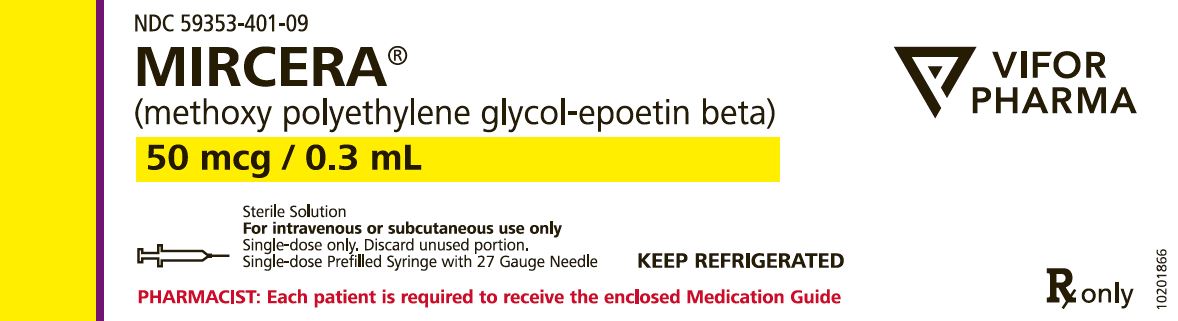
Mircera Methoxy polyethylene glycol-epoetin beta 50 ug/.3mL Injection, Solution, 1 syringe — NDC 59353-401-09 (Billing 59353-0401-09)
This is a package of 1 syringe of Mircera Methoxy polyethylene glycol-epoetin beta 50 ug/.3mL Injection, Solution from Vifor (International) Inc., marketed since Oct 2014 and currently FDA-listed. It is this product's only package size.
NDC database record
One package, one record: these facts belong to NDC 59353-401-09 alone.
- Record
- FDA NDC Directory package listing · Human prescription drug
- Code segments
- 59353 labeler · 401 product · 09 package
- Package marketed since
- Oct 24, 2014
- Sample package
- No — commercial package
- Listing certified through
- Dec 31, 2027
- Barcode (UPC-A, from the NDC)
- 3 5935340109 6
- Medicaid fills, this package
- 50,463 prescriptions in the last four reported quarters
- FDA record last changed
- Sep 3, 2026
Identity & classification
Regulatory identifiers FDA, NLM and CMS codes for this package
Drug-database identifiers Medi-Span GPI and First Databank GCN / HICL / AHFS classification
- GSN (GCN sequence number): 063115
- GCN: 98874
- HICL (First Databank): 035005
- AHFS class code: 20:04.00.00
- RxCUI (RxNorm): 758159
Where does this data come from?
- FDA openFDA NDC Directory · synced Oct 8, 2026
- FDA label on DailyMed · label index refreshed Oct 8, 2026
- RxNorm (NLM RxNav) · catalog refreshed Oct 1, 2026
- Medi-Span GPI (licensed)
- First Databank (licensed) · refreshed Oct 8, 2026
RxNorm drug class
This medicine belongs to the Erythropoiesis-stimulating Agent class.
Where does this data come from?
- RxClass (NLM) · catalog refreshed Oct 1, 2026
Clinical
Methoxy polyethylene glycol-epoetin beta injection is used to treat anemia (a lower than normal number of red blood cells) in people with chronic kidney failure (condition in which the kidneys slowly and permanently stop working over a period of time) in adults on and not on dialysis and in children 5 years of age and older on dialysis who have already received another treatment for anemia. Methoxy polyethylene glycol-epoetin beta injection should not be used to treat anemia caused by cancer chemotherapy and should not be used in place of a red blood cell transfusion to treat severe anemia. Me...
Read the full MedlinePlus article ↗- Mircera isn't treating your kidneys directly — it's stepping in to do a job your kidneys can no longer do well. Healthy kidneys make a hormone called erythropoietin that tells your...
- What exactly is Mircera doing for my kidneys?
- That depends on your situation. If you're just starting treatment on dialysis, you'll likely receive Mircera every two weeks at first. Once your hemoglobin is stable, your doctor m...
- How often will I need to get this injection?
Patient education
Supplement & herbal interactions
Where does this data come from?
- MedlinePlus (NLM) · refreshed Oct 8, 2026
- FDA label on DailyMed · label index refreshed Oct 8, 2026
Ask a licensed pharmacist directly — free, answered by our team.
Pricing
A drug doesn't have one price. Each row is a different public payment system, and none is what you'd pay at the counter — that depends on your insurance. The ⓘ on each row explains what it measures.
| Price system | Per mL | Per package |
|---|---|---|
| Retail pharmacies payNADAC · weekly | Not in the retail survey — common for institutional, discontinued, or low-volume packs. | |
| Medicaid paysCMS SDUD · 12 mo | $383.22 | $383.22 / 1 ml |
| Medicare drug plans payPart D · quarterly | No Part D plan price is available for this NDC in our data. | |
| Medicare Part B allowsASP · J0887 | $1.090 / J0887 unit | — |
Where does this data come from?
- CMS NADAC weekly file
- CMS ASP pricing files · refreshed Sep 20, 2026
- CMS Medicaid State Drug Utilization Data · through Q1 2026
- CMS Part D plan pricing files · refreshed Sep 24, 2026
- VA National Acquisition Center price file
Billing & reimbursement
Where does this data come from?
- CMS ASP NDC-HCPCS crosswalk · refreshed Sep 22, 2026
- DMEPDAC NDC-HCPCS crosswalk
- openFDA NSDE billing units · refreshed Oct 7, 2026
Packaging — all sizes for this product
| Package NDC | Description | Marketing start | Marketing end | Status |
|---|---|---|---|---|
| 59353-0401-09 You're viewing this Main listing | 1 SYRINGE, GLASS in 1 CARTON / 1 mL in 1 SYRINGE, GLASS | 2014-10-24 | — | Active |
Therapeutic equivalents
| Product | Labeler | Pack | NADAC/unit | TE | Status | Price vs. this |
|---|---|---|---|---|---|---|
| Mircera 50 ug/.3mLthis 59353-0401-09 | Vifor | 1 syringe | — | — | FDA listed | — |
Where does this data come from?
- FDA openFDA NDC Directory · synced Oct 8, 2026
- FDA Purple Book · refreshed Oct 5, 2026
- CMS NADAC weekly file
Availability & biosimilar status
Biologics have no small-molecule generics; biosimilar competition is tracked in the FDA Purple Book.
Why the date isn’t exact: Biosimilar timing can change because patents may be challenged, settled, licensed, added or removed, and litigation can move the real date earlier or later.
🛈 What do these terms mean?
- Biologic patent
- A patent the reference product’s maker has publicly listed. A biosimilar generally can’t launch until these expire — unless they’re invalidated or resolved in a settlement.
- Reference-product exclusivity
- A flat 12 years of FDA market protection from the biologic’s first licensure (the BPCIA). No biosimilar can be licensed before it ends, regardless of patents.
- Interchangeable exclusivity
- The first interchangeable biosimilar can earn a period as the only interchangeable version (pharmacists can substitute it without the prescriber).
- Earliest biosimilar (LOE)
- The latest of all the dates above — the soonest a biosimilar can realistically reach the market. Litigation and settlements can move it earlier.
Biologics have no small-molecule “generics” — competition comes from FDA-licensed biosimilars, tracked in the FDA Purple Book.
| Code | What it grants | Expires |
|---|---|---|
| RefProduct | Reference-product exclusivity (12-year, BPCIA) — no biosimilar can be licensed before this date | Apr 28, 2028 |
Is there a biosimilar for MIRCERA 50 MCG/0.3 ML SYRINGE?
Why do different websites show different biosimilar dates?
Can a biosimilar launch before the last patent expires?
What does “current Purple Book estimate” mean?
What does “FDA listed” mean?
What does a patent or protection date mean here?
Where does this data come from?
- FDA Purple Book · refreshed Oct 5, 2026
Inactive Ingredients / Excipients
Inactive ingredients, also called excipients, are components of the drug product other than the active ingredient. They may include fillers, dyes, coatings, preservatives, flavors, or other formulation ingredients.
🧪 Avoiding an ingredient? See Methoxy Polyethylene Glycol-Epoetin Beta Injection inactive ingredients by manufacturer: every current product's list side by side, so you can ask your pharmacy for the version that does not list it.
💡 Tap an ingredient (hover on desktop) to see what it is and why it’s used.
-
UNII 3OWL53L36A
A natural sugar alcohol derived from seaweed or synthesized in the lab. It's used as a filler to add bulk, a sweetener in sugar-free formulas, and a disintegrant to help tablets break apart in the stomach.
-
UNII AE28F7PNPL
Methionine is an amino acid used as a nutrient supplement and pH buffer in medicines. It helps stabilize the formulation and supports the product's overall composition.
-
UNII LQA7B6G8JG
A synthetic polymer made by combining water-soluble compounds. It acts as a surfactant and solubilizer to help mix oil and water-based ingredients, improving the medicine's texture and how active ingredients dissolve.
-
UNII 3980JIH2SW
A salt form of phosphoric acid that acts as a buffer and pH adjuster in medicines. It helps keep the product at the correct acidity level for stability and effectiveness.
-
UNII 36KCS0R750
Sodium sulfate anhydrous is a salt derived from sodium and sulfuric acid. It acts as a filler and diluent in tablets and capsules to add bulk and help achieve proper tablet size and weight.
5 inactive ingredients listed in the exact product block matched to this NDC.
Where does this data come from?
ingredient classCode="IACT" elements from the exact product block matched by this NDC. Label-section narrative from DailyMed / the openFDA label index is shown separately when available.- FDA label on DailyMed · label index refreshed Oct 8, 2026
- FDA openFDA NDC Directory · synced Oct 8, 2026
Inactive ingredient FAQ
Are inactive ingredients the same for every manufacturer?
Why might an inactive ingredient be missing?
Can inactive ingredients matter?
Manufacturer & labeler
More NDCs from Vifor (International) Inc. labeler code 59353
- RETACRIT epoetin alfa-epbx 10000 [iU]/mL Injection, Solution NDC 59353-010-10
- Korsuva difelikefalin 50 ug/mL Injection, Solution NDC 59353-065-12
- RETACRIT epoetin alfa-epbx 20000 [iU]/mL Injection, Solution NDC 59353-120-10
- RETACRIT epoetin alfa-epbx 10000 [iU]/mL Injection, Solution NDC 59353-220-10
- Ferric Carboxymaltose 1 kg/kg Powder NDC 59353-363-00
- Mircera Methoxy polyethylene glycol-epoetin beta 30 ug/.3mL Injection, Solution NDC 59353-400-09
- Mircera Methoxy polyethylene glycol-epoetin beta 75 ug/.3mL Injection, Solution NDC 59353-402-09
- Mircera Methoxy polyethylene glycol-epoetin beta 100 ug/.3mL Injection, Solution NDC 59353-403-09
- Mircera Methoxy polyethylene glycol-epoetin beta 150 ug/.3mL Injection, Solution NDC 59353-404-09
- Mircera Methoxy polyethylene glycol-epoetin beta 200 ug/.3mL Injection, Solution NDC 59353-405-09
- Mircera Methoxy polyethylene glycol-epoetin beta 250 ug/.3mL Injection, Solution NDC 59353-406-09
- Mircera Methoxy polyethylene glycol-epoetin beta 120 ug/.3mL Injection, Solution NDC 59353-407-09
Where does this data come from?
- FDA openFDA NDC Directory · synced Oct 8, 2026
- Drugs@FDA
Full prescribing information FDA SPL
🚨 Boxed Warning ▾
WARNING: ESAs INCREASE THE RISK OF DEATH, MYOCARDIAL INFARCTION, STROKE, VENOUS THROMBOEMBOLISM, THROMBOSIS OF VASCULAR ACCESS and TUMOR PROGRESSION OR RECURRENCE WARNING: ESAs INCREASE THE RISK OF DEATH, MYOCARDIAL INFARCTION, STROKE, VENOUS THROMBOEMBOLISM, THROMBOSIS OF VASCULAR ACCESS and TUMOR PROGRESSION OR RECURRENCE See full prescribing information for complete boxed warning Chronic Kidney Disease: • In controlled trials, patients experienced greater risks for death, serious adverse cardiovascular reactions, and stroke when administered erythropoiesis-stimulating agents (ESAs) to target a hemoglobin level of greater than 11 g/dL ( 5.1 ). • No trial has identified a hemoglobin target level, ESA dose, or dosing strategy that does not increase these risks ( 5.1 ). • Use the lowest Mircera dose sufficient to reduce the need for red blood cell (RBC) transfusions ( 5.1 ).
Cancer: • Mircera is not indicated and is not recommended for the treatment of anemia due to cancer chemotherapy. A dose-ranging study of Mircera was terminated early because of more deaths among patients receiving Mircera than another ESA ( 5.2 ). • ESAs shortened overall survival and/or increased the risk of tumor progression or recurrence in clinical studies in patients with breast, non-small cell lung, head and neck, lymphoid, and cervical cancers ( 5.2 ). Chronic Kidney Disease [see Warnings and Precautions ( 5.1 )] • In controlled trials, patients experienced greater risks for death, serious adverse cardiovascular reactions, and stroke when administered erythropoiesis-stimulating agents (ESAs) to target a hemoglobin level of greater than 11 g/dL. • No trial has identified a hemoglobin target level, ESA dose, or dosing strategy that does not increase these risks. • Use the lowest Mircera dose sufficient to reduce the need for red blood cell (RBC) transfusions.
Cancer [see Warnings and Precautions ( 5.2 )] • Mircera is not indicated and is not recommended for the treatment of anemia due to cancer chemotherapy. A dose-ranging study of Mircera was terminated early because of more deaths among patients receiving Mircera than another ESA. • ESAs have shown shortened overall survival and/or increased the risk of tumor progression or recurrence in clinical studies in patients with breast, non-small cell lung, head and neck, lymphoid, and cervical cancers.
🎯 Indications and Usage ▾
1 INDICATIONS AND USAGE Mircera is an erythropoiesis-stimulating agent (ESA) indicated for the treatment of anemia associated with chronic kidney disease (CKD) in: • adult patients on dialysis and adult patients not on dialysis ( 1.1 ). • pediatric patients 3 months to 17 years of age on dialysis or not on dialysis who are converting from another ESA after their hemoglobin level was stabilized with an ESA ( 1.1 ). Limitations of Use Mircera is not indicated and is not recommended for use: • In the treatment of anemia due to cancer chemotherapy ( 5.2 ). • As a substitute for RBC transfusions in patients who require immediate correction of anemia ( 12.2 ).
Mircera has not been shown to improve quality of life, fatigue, or patient well-being.
1.1Anemia Due to Chronic Kidney Disease Mircera is indicated for the treatment of anemia associated with chronic kidney disease (CKD) in: • adult patients on dialysis and adult patients not on dialysis. • pediatric patients 3 months to 17 years of age on dialysis or not on dialysis who are converting from another ESA after their hemoglobin level was stabilized with an ESA. Limitations of Use Mircera is not indicated and is not recommended: • In the treatment of anemia due to cancer chemotherapy [see Warnings and Precautions ( 5.2 )] . • As a substitute for RBC transfusions in patients who require immediate correction of anemia [see Clinical Pharmacology ( 12.2 )] .
Mircera has not been shown to improve symptoms, physical functioning, or health-related quality of life.
⏱️ Dosage and Administration ▾
2 DOSAGE AND ADMINISTRATION Mircera is administered by subcutaneous or intravenous injection ( 2.2 ). Adult Patients • Initial Treatment: (patients not currently treated with an ESA): • CKD patients on dialysis: 0.6 mcg/kg body weight administered once every two weeks ( 2.2 ). • CKD patients not on dialysis: 1.2 mcg/kg body weight administered once every month as a single subcutaneous injection. Alternatively, a starting dose of 0.6 mcg/kg body weight may be administered once every two weeks as a single intravenous or subcutaneous injection ( 2.2 ). • Conversion from Another ESA: • Dosed once monthly or once every two weeks based on total weekly epoetin alfa or darbepoetin alfa dose at time of conversion ( 2.2 ).
Pediatric Patients • Conversion from another ESA: dosed once every 4 weeks based on total weekly epoetin alfa or darbepoetin alfa dose at time of conversion ( 2.2 ). • In patients less than 6 years of age, maintain the same route of administration as the previous ESA when switching from another ESA to Mircera.
2.1Important Dosing Information Evaluation of Iron Stores and Nutritional Factors Evaluate the iron status in all patients before and during treatment. Administer supplemental iron therapy when serum ferritin is less than 100 mcg/L or when serum transferrin saturation is less than 20%. The majority of patients with CKD will require supplemental iron during the course of ESA therapy.
Monitoring of Response to Therapy Correct or exclude other causes of anemia (e.g., vitamin deficiency, metabolic or chronic inflammatory conditions, bleeding, etc.) before initiating Mircera [see Warnings and Precautions ( 5.9 )]. Following initiation of therapy and after each dose adjustment, monitor hemoglobin weekly until the hemoglobin level is stable and sufficient to minimize the need for RBC transfusion. Individualization of Dosing Individualize and use the lowest dose of Mircera sufficient to reduce the need for RBC transfusions [see Warnings and Precautions ( 5.1 )] .
In controlled trials, patients experienced greater risks for death, serious adverse cardiovascular reactions, and stroke when administered erythropoiesis-stimulating agents (ESAs) to target a hemoglobin level of greater than 11 g/dL for adult patients. No trial has identified a hemoglobin target level, ESA dose, or dosing strategy that does not increase these risks. Physicians and patients should weigh the possible benefits of decreasing transfusions against the increased risks of death and other serious cardiovascular adverse events [see Boxed Warning and Clinical Studies ( 14 )] .
2.2For Adult Patients with CKD Prefilled syringes are not designed for administration of partial doses. Round doses to the closest dose achievable with the prefilled syringes. When initiating or adjusting therapy, monitor hemoglobin levels at least weekly until stable, then monitor at least monthly.
When adjusting therapy consider hemoglobin rate of rise, rate of decline, ESA responsiveness and hemoglobin variability. A single hemoglobin excursion may not require a dosing change. • Do not increase the dose more frequently than once every 4 weeks. Decreases in dose can occur more frequently.
Avoid frequent dose adjustments. • If the hemoglobin rises rapidly (e.g., more than 1 g/dL in any 2-week period), reduce the dose of Mircera by approximately 25% to the closest dose achievable with the prefilled syringes to reduce rapid responses. • If the hemoglobin continues to rise following a dose reduction, discontinue Mircera until the hemoglobin level begins to decrease, at which point therapy should be restarted with a dose that is approximately 25% below the previously administered dose. • For patients who do not respond adequately, if the hemoglobin has not increased by more than 1 g/dL after 4 weeks of therapy, increase the dose by approximately 25% to the closest dose achievable with the prefilled syringes. • For patients who do not respond adequately over a 12-week escalation perio… [Excerpted — this section continues on DailyMed.]
💊 Dosage Forms and Strengths ▾
3 DOSAGE FORMS AND STRENGTHS Injection: 30 mcg, 50 mcg, 75 mcg, 100 mcg, 120 mcg, 150 mcg, 200 mcg, or 250 mcg in 0.3 mL clear, colorless to slightly yellowish solution in single-dose prefilled syringes Injection: 360 mcg in 0.6 mL clear, colorless to slightly yellowish solution in single-dose prefilled syringes • Injection: 30 mcg, 50 mcg, 75 mcg, 100 mcg, 120 mcg, 150 mcg, 200 mcg, or 250 mcg in 0.3 mL solution in single-dose prefilled syringes ( 3 ). • Injection: 360 mcg in 0.6 mL solution in single-dose prefilled syringes ( 3 ).
⛔ Contraindications ▾
4 CONTRAINDICATIONS Mircera is contraindicated in patients with: • Uncontrolled hypertension [see Warnings and Precautions ( 5.3 )] • Pure red cell aplasia (PRCA) that begins after treatment with Mircera or other erythropoietin protein drugs [see Warnings and Precautions ( 5.6 )] • History of serious or severe allergic reactions to Mircera (e.g., anaphylactic reactions, angioedema, bronchospasm, skin rash, and urticaria) [see Warnings and Precautions ( 5.7 , 5.8 )] . • Uncontrolled hypertension ( 4 ). • Pure red cell aplasia (PRCA) that begins after treatment with Mircera or other erythropoietin protein drugs ( 4 ). • History of serious allergic reactions to Mircera, including anaphylaxis ( 4 ).
⚠️ Warnings and Cautions ▾
5 WARNINGS AND PRECAUTIONS • Hypertension: Control hypertension prior to initiating and during treatment with Mircera ( 5.3 ). • Seizures: Seizures have occurred in CKD patients participating in Mircera clinical studies. Increase monitoring of these patients for changes in seizure frequency or premonitory symptoms ( 5.4 ). • PRCA: If severe anemia and low reticulocyte count develop during Mircera treatment, withhold Mircera and evaluate for PRCA ( 5.6 ). • Serious Allergic Reactions: Discontinue Mircera and manage reactions ( 5.7 ). • Severe Cutaneous Reactions: Discontinue Mircera ( 5.8 ).
5.1Increased Mortality, Myocardial Infarction, Stroke, and Thromboembolism • In controlled clinical trials of patients with CKD comparing higher hemoglobin targets (13 to 14 g/dL) to lower targets (9 to 11.3 g/dL), ESAs increased the risk of death, myocardial infarction, stroke, congestive heart failure, thrombosis of hemodialysis vascular access, and other thromboembolic events in the higher target groups. • Using ESAs to target a hemoglobin level of greater than 11 g/dL increases the risk of serious adverse cardiovascular reactions and has not been shown to provide additional benefit [see Clinical Studies ( 14 )] .
Use caution in patients with coexistent cardiovascular disease and stroke [see Dosage and Administration ( 2.2 )] . Patients with CKD and an insufficient hemoglobin response to ESA therapy may be at even greater risk for cardiovascular reactions and mortality than other patients. A rate of hemoglobin rise of greater than 1 g/dL over 2 weeks may contribute to these risks. • In controlled clinical trials of patients with cancer, ESAs increased the risks for death and serious adverse cardiovascular reactions.
These adverse reactions included myocardial infarction and stroke. • In controlled clinical trials, ESAs increased the risk of death in patients undergoing coronary artery bypass graft surgery (CABG) and the risk of deep venous thrombosis (DVT) in patients undergoing orthopedic procedures. The design and overall results of the 3 large trials comparing higher and lower hemoglobin targets are shown in Table 4 (Normal Hematocrit Study (NHS), Correction of Hemoglobin Outcomes in Renal Insufficiency (CHOIR) and Trial to Reduce Cardiovascular Events with Aranesp ® Therapy (TREAT)).
Table 4: Randomized Controlled Trials Showing Adverse Cardiovascular Outcomes in Patients With CKD NHS (N = 1265) CHOIR (N = 1432) TREAT (N = 4038) Time Period of Trial 1993 to 1996 2003 to 2006 2004 to 2009 Population CKD patients on hemodialysis with coexisting CHF or CAD, hematocrit 30 ± 3% on epoetin alfa CKD patients not on dialysis with hemoglobin less than 11 g/dL not previously administered epoetin alfa CKD patients not on dialysis with type II diabetes, hemoglobin ≤11 g/dL Hemoglobin Target; Higher vs. Lower (g/dL) 14.0 vs.
10.013.5 vs. 11.3 13.0 vs. ≥9.0 Median (Q1, Q3) Achieved Hemoglobin level (g/dL) 12.6 (11.6, 13.3) vs. 10.3 (10.0, 10.7) 13.0 (12.2, 13.4) vs.
11.4(11.1, 11.6) 12.5 (12.0, 12.8) vs. 10.6 (9.9, 11.3) Primary Endpoint All-cause mortality or nonfatal MI All-cause mortality, MI, hospitalization for CHF, or stroke All-cause mortality, MI, myocardial ischemia, heart failure, and stroke Hazard Ratio or Relative Risk (95% CI) 1.28 (1.06 to 1.56) 1.34 (1.03 to 1.74) 1.05 (0.94 to 1.17) Adverse Outcome for Higher Target Group All-cause mortality All-cause mortality Stroke Hazard Ratio or Relative Risk (95% CI) 1.27 (1.04 to 1.54) 1.48 (0.97 to 2.27) 1.92 (1.38 to 2.68) Patients with Chronic Kidney Disease NHS: A prospective, randomized, open-label study of 1265 patients with chronic kidney disease on dialysis with documented evidence of congestive heart failure or ischemic heart disease was designed to test the hypothesis that a higher target hematocrit (Hct) would result in improved outcomes compared with a lower target Hct.
In this study, patients were randomized to epoetin alfa treatment targeted to a maintenance hemoglobin of ei… [Excerpted — this section continues on DailyMed.]
🤒 Adverse Reactions ▾
6 ADVERSE REACTIONS The following serious adverse reactions are discussed in greater detail in other sections of the labeling: • Increased Mortality, Myocardial Infarction, Stroke, and Thromboembolism [see Warnings and Precautions ( 5.1 )] • Increased Mortality and/or Tumor Progression in Patients with Cancer [see Warnings and Precautions ( 5.2 )] • Hypertension [see Warnings and Precautions ( 5.3 )] • Seizures [see Warnings and Precautions ( 5.4 )] • Pure Red Cell Aplasia [see Warnings and Precautions ( 5.6 )] • Serious Allergic Reactions [see Warnings and Precautions ( 5.7 )] • Severe Cutaneous Reactions [see Warnings and Precautions ( 5.8 )] The most common adverse reactions (≥ 10%) are hypertension, diarrhea, nasopharyngitis ( 6 ).
To report SUSPECTED ADVERSE REACTIONS, contact Vifor (International) Inc. at 1-800-576-8295, or FDA at 1-800-FDA-1088 or www.fda.gov/medwatch .
6.1Clinical Trials Experience Because clinical trials are conducted under widely varying conditions, adverse reaction rates observed in the clinical studies of Mircera cannot be directly compared to rates in the clinical trials of other drugs and may not reflect the rates observed in practice. Adult Patients The data described below reflect exposure to Mircera in 2737 patients, including 1451 exposed for 6 months and 1144 exposed for greater than one year. Mircera was studied primarily in active-controlled studies (n=1789 received Mircera, and n=948 received another ESA) and in long-term follow up studies.
The population was 18 to 92 years of age, 58% male, and the percentage of Caucasian, Black (including African Americans), Asian and Hispanic patients were 73%, 20%, 5%, and 9%, respectively. Approximately 85% of the patients were receiving dialysis. Most patients received Mircera using dosing regimens of once every two or four weeks, administered subcutaneously or intravenously.
The most commonly reported adverse reactions in ≥10% of patients were hypertension [see Warnings and Precautions ( 5.3 )] , diarrhea, and nasopharyngitis. The most common adverse reactions that led to treatment discontinuation in the Mircera clinical studies were: hypertension, coronary artery disease, anemia, concomitant termination of other CKD therapy and septic shock. Some of the adverse reactions reported are typically associated with CKD, or recognized complications of dialysis, and may not necessarily be attributable to Mircera therapy.
Adverse reaction rates did not importantly differ between patients receiving Mircera or another ESA. Table 6 summarizes the most frequent adverse reactions (≥5%) in patients treated with Mircera. Table 6: Adverse Reactions Occurring in ≥ 5% of CKD Patients BODY SYSTEM Adverse Reaction Patients Treated with Mircera (n=1789) VASCULAR Hypertension 13% Hypotension 5% GASTROINTESTINAL Diarrhea 11% Vomiting 6% Constipation 5% INFECTIONS AND INFESTATIONS Nasopharyngitis 11% Upper Respiratory Tract Infection 9% Urinary Tract Infection 5% NERVOUS SYSTEM Headache 9% MUSCULOSKELETAL AND CONNECTIVE TISSUE Muscle Spasms 8% Back Pain 6% Pain in Extremity 5% INJURY, POISONING AND PROCEDURAL COMPLICATIONS Procedural Hypotension 8% Arteriovenous Fistula Thrombosis 5% Arteriovenous Fistula Site Complication 5% METABOLISM AND NUTRITION Fluid Overload 7% RESPIRATORY, THORACIC AND MEDIASTINAL Cough 6% In the controlled trials, the rates of serious adverse reactions did not importantly differ between patients receiving Mircera and another ESA (38% vs.
42%) except for the occurrence of serious gastrointestinal hemorrhage (1.2% vs. 0.2%). Serious hemorrhagic adverse reactions of all types occurred among 5% and 4% of patients receiving Mircera or another ESA, respectively.
Pediatric Patients In an open-label, multiple dose study, 64 pediatric patients (ages 5 to 17 years) with CKD who were on hemodialysis and who had stable hemoglobin levels while previously receiving another ESA (epoetin alfa/beta or darbepoetin alfa) were then converted to Mircera administered… [Excerpted — this section continues on DailyMed.]
👥 Use in Specific Populations ▾
8 USE IN SPECIFIC POPULATIONS
8.1Pregnancy Risk Summary Available data from a small number of published case reports and postmarketing experience with Mircera use in pregnancy are insufficient to identify a drug associated risk of major birth defects, miscarriage, or adverse maternal or fetal outcomes. Chronic kidney disease is associated with maternal and embryo-fetal risks (see Clinical Considerations) . In animal reproduction studies, administration of methoxy polyethylene glycol-epoetin beta to rats and rabbits during pregnancy and lactation adversely affected offspring at doses 17-fold and greater than the recommended human dose (see Data) .
The estimated background risk of major birth defects and miscarriage for the indicated population is unknown. All pregnancies have a background risk of birth defect, loss, or other adverse outcomes. In the U.S. general population, the estimated background risks of major birth defects and miscarriage in clinically recognized pregnancies is 2 to 4% and 15 to 20%, respectively.
Clinical Considerations Disease Associated Maternal and/or Embryo-Fetal Risk Pregnancy in women with chronic kidney disease has been associated with adverse outcomes including hypertension, pre-eclampsia, miscarriage, premature birth, low-birth-weight, polyhydramnios, and intrauterine growth restriction. Data When methoxy polyethylene glycol-epoetin beta was administered subcutaneously to rats and rabbits during gestation (including the period of organogenesis), bone malformation was observed in both species at 50 mcg/kg once every three days (corresponding to 500 mcg/kg/month or 417-fold the recommended human dose) in studies of embryo-fetal development.
This effect was observed as missing caudal vertebrae resulting in a thread-like tail in one rat fetus, absent first digit metacarpal and phalanx on each forelimb resulting in absent pollex in one rabbit fetus, and fused fourth and fifth cervical vertebrae centra in another rabbit fetus. Dose-related reduction in fetal weights was observed in both rats and rabbits. At doses 5 mcg/kg once every three days and higher, corresponding to 50 mcg/kg/month or 42-fold the recommended human dose, methoxy polyethylene glycol-epoetin beta caused exaggerated pharmacodynamic effects in dams.
Once-weekly doses of methoxy polyethylene glycol-epoetin beta up to 50 mcg/kg/dose (corresponding to 200 mcg/kg/month or 167-fold the recommended human dose) given to pregnant and lactating rats did not adversely affect pregnancy parameters, natural delivery or litter observations in a study of pre-and postnatal development. Increased deaths and significant reduction in the growth rate of the F1 generation were observed during lactation and early post weaning period at 20 and 50 mcg/kg/dose, corresponding to 80 and 200 mcg/kg/month or 67- and 167-fold the recommended human dose.
A significant reduction in the growth rate of the F1 generation was evident already at 5 mcg/kg/dose, corresponding to 20 mcg/kg/month or 17-fold the recommended human dose. However, no remarkable effect on reflex, physical and cognitive development or reproductive performance was observed in F1 generation of any dose groups. The dose level not causing any adverse effect on dams or offspring was not determined.
8.2Lactation Risk Summary There are no data on the presence of methoxy polyethylene glycol-epoetin beta in human milk, the effects on the breastfed child, or the effects on milk production. However, endogenous erythropoietin is present in human milk. In rats, methoxy polyethylene glycol-epoetin beta was present in maternal milk (see Data) .
When a drug is present in animal milk, it is likely that the drug will be present in human milk. The lack of clinical data during lactation precludes a clear determination of the risk of Mircera to a child during lactation. Therefore, the developmental and health benefits of breastfeeding should be considered along with the mother’s clinical need for Mircera and any pote… [Excerpted — this section continues on DailyMed.]
🤰 Pregnancy ▾
8.1Pregnancy Risk Summary Available data from a small number of published case reports and postmarketing experience with Mircera use in pregnancy are insufficient to identify a drug associated risk of major birth defects, miscarriage, or adverse maternal or fetal outcomes. Chronic kidney disease is associated with maternal and embryo-fetal risks (see Clinical Considerations) . In animal reproduction studies, administration of methoxy polyethylene glycol-epoetin beta to rats and rabbits during pregnancy and lactation adversely affected offspring at doses 17-fold and greater than the recommended human dose (see Data) .
The estimated background risk of major birth defects and miscarriage for the indicated population is unknown. All pregnancies have a background risk of birth defect, loss, or other adverse outcomes. In the U.S. general population, the estimated background risks of major birth defects and miscarriage in clinically recognized pregnancies is 2 to 4% and 15 to 20%, respectively.
Clinical Considerations Disease Associated Maternal and/or Embryo-Fetal Risk Pregnancy in women with chronic kidney disease has been associated with adverse outcomes including hypertension, pre-eclampsia, miscarriage, premature birth, low-birth-weight, polyhydramnios, and intrauterine growth restriction. Data When methoxy polyethylene glycol-epoetin beta was administered subcutaneously to rats and rabbits during gestation (including the period of organogenesis), bone malformation was observed in both species at 50 mcg/kg once every three days (corresponding to 500 mcg/kg/month or 417-fold the recommended human dose) in studies of embryo-fetal development.
This effect was observed as missing caudal vertebrae resulting in a thread-like tail in one rat fetus, absent first digit metacarpal and phalanx on each forelimb resulting in absent pollex in one rabbit fetus, and fused fourth and fifth cervical vertebrae centra in another rabbit fetus. Dose-related reduction in fetal weights was observed in both rats and rabbits. At doses 5 mcg/kg once every three days and higher, corresponding to 50 mcg/kg/month or 42-fold the recommended human dose, methoxy polyethylene glycol-epoetin beta caused exaggerated pharmacodynamic effects in dams.
Once-weekly doses of methoxy polyethylene glycol-epoetin beta up to 50 mcg/kg/dose (corresponding to 200 mcg/kg/month or 167-fold the recommended human dose) given to pregnant and lactating rats did not adversely affect pregnancy parameters, natural delivery or litter observations in a study of pre-and postnatal development. Increased deaths and significant reduction in the growth rate of the F1 generation were observed during lactation and early post weaning period at 20 and 50 mcg/kg/dose, corresponding to 80 and 200 mcg/kg/month or 67- and 167-fold the recommended human dose.
A significant reduction in the growth rate of the F1 generation was evident already at 5 mcg/kg/dose, corresponding to 20 mcg/kg/month or 17-fold the recommended human dose. However, no remarkable effect on reflex, physical and cognitive development or reproductive performance was observed in F1 generation of any dose groups. The dose level not causing any adverse effect on dams or offspring was not determined.
🧒 Pediatric Use ▾
8.4Pediatric Use The safety and effectiveness of intravenous and subcutaneous Mircera for the treatment of anemia due to CKD have been established in pediatric patients 3 months to 17 years of age on dialysis and not on dialysis who are converting from another ESA after their hemoglobin level was stabilized with an ESA. The use of Mircera in this pediatric age group is supported by evidence from adequate and well-controlled studies of Mircera in adults, a dose-finding study in 64 pediatric patients 5 to 17 years of age with CKD on hemodialysis and a subcutaneous dose-finding study in 40 patients 3 months to 17 years of age with CKD on dialysis or not on dialysis.
The adverse reaction profile observed in pediatric patients was consistent with the safety profile found in adults. The safety and effectiveness of Mircera have not been established in patients less than 3 months of age [see Adverse Reactions ( 6.1 ) and Clinical Studies ( 14.2 )] . The safety and effectiveness of Mircera have not been established for treatment of anemia in pediatric patients whose hemoglobin level has not been previously stabilized by treatment with an ESA.
🧓 Geriatric Use ▾
8.5Geriatric Use Clinical studies of Mircera did not include sufficient numbers of subjects aged 65 and over to determine whether they respond differently from younger subjects. Other reported clinical experience has not identified differences in responses between the elderly and younger patients. In general, dose selection for an elderly patient should be cautious, usually starting at the low end of the dosing range, reflecting the greater frequency of decreased hepatic, renal, or cardiac function and of concomitant disease or other drug therapy.
🆘 Overdosage ▾
10 OVERDOSAGE Mircera overdosage can elevate hemoglobin levels above the desired level, which should be managed with discontinuation or reduction of Mircera dosage and/or with phlebotomy, as clinically indicated [see Pharmacodynamics ( 12.2 )]. Cases of severe hypertension have been observed following overdose with ESAs [see Warnings and Precautions ( 5.3 )].
🧬 Clinical Pharmacology ▾
12 CLINICAL PHARMACOLOGY
12.1Mechanism of Action Mircera is an erythropoietin receptor activator with greater activity in vivo as well as increased half-life, in contrast to erythropoietin. A primary growth factor for erythroid development, erythropoietin is produced in the kidney and released into the bloodstream in response to hypoxia. In responding to hypoxia, erythropoietin interacts with erythroid progenitor cells to increase red cell production.
Production of endogenous erythropoietin is impaired in patients with CKD and erythropoietin deficiency is the primary cause of their anemia.
12.2Pharmacodynamics Following a single-dose of Mircera in adult patients with CKD, the onset of hemoglobin increase (defined as an increase more than 0.4 g/dL from baseline) was observed 7 to 15 days following initial dose administration [see Dosage and Administration ( 2.2 )] .
12.3Pharmacokinetics The pharmacokinetics of methoxy polyethylene glycol-epoetin beta were studied in adult anemic patients with CKD including patients on dialysis and those not on dialysis. Parameters are presented as the geometric mean [% coefficient of variation (%CV)] unless otherwise specified. Methoxy polyethylene glycol-epoetin beta did not accumulate following administration every four weeks.
However, when Mircera was administered every 2 weeks, serum concentrations at steady state increased by 12%. Multiple dosing had no effect on clearance, volume of distribution or bioavailability of methoxy polyethylene glycol-epoetin beta. Absorption Following the subcutaneous administration of Mircera, the maximum serum concentrations of methoxy polyethylene glycol-epoetin beta were observed at a median [min, max] time of 72 [24, 192] hours.
The absolute bioavailability of Mircera after the subcutaneous administration was 62%. Distribution The volume of distribution at steady state was 61 [46%] mL/kg. Elimination Following an intravenous administration of Mircera 0.4 mcg/kg body weight to patients with CKD receiving peritoneal dialysis, the observed terminal half-life was 119 [55%] hours, and the total systemic clearance was 0.47 [35%] mL/hr/kg.
Following a subcutaneous administration of Mircera 0.8 mcg/kg to CKD patients receiving peritoneal dialysis, the terminal half-life was 124 [57%] hours. Specific Populations The pharmacokinetics of methoxy polyethylene glycol-epoetin beta were not altered by age (range: 6-89 years), gender, race, severe hepatic impairment (Child-Pugh Class C), site of subcutaneous injection (abdomen, arm or thigh), or the use of dialysis. Pediatric Patients A population pharmacokinetic analysis was performed with data from 103 pediatric patients ages 6 months to 17 years and 524 adult patients.
Pediatric patients received Mircera intravenously (N=63, all on hemodialysis) or subcutaneously (total N=40, n=17 on pre-dialysis, n=18 on peritoneal dialysis and n=5 on hemodialysis). The covariate analysis showed a positive body weight effect on clearance (CL) and volume of distribution (V), and a positive age effect on V. Once those covariate effects were taken into account together with the addition of a pediatric subcutaneous bioavailability of 67%, compared to 31% in adults, no differences could be observed in the pharmacokinetic properties of Mircera in pediatric patients compared to adult patients.
12.6Immunogenicity The observed incidence of anti-drug antibodies is highly dependent on the sensitivity and specificity of the assay. Differences in assay methods preclude meaningful comparisons of the incidence of anti-drug antibodies in the studies described below with the incidence of anti-drug antibodies in other studies, including those of Mircera or of other methoxy polyethylene glycol-epoetin beta products. Neutralizing antibodies to Mircera that cross-react with endogenous erythropoietin and other ESAs can result in PRCA or severe anemia (with or without other cytopenias) [see Warnings and Precautions ( 5.6 )] .
Compared to subcutaneous ad… [Excerpted — this section continues on DailyMed.]
🧬 Mechanism of Action ▾
12.1Mechanism of Action Mircera is an erythropoietin receptor activator with greater activity in vivo as well as increased half-life, in contrast to erythropoietin. A primary growth factor for erythroid development, erythropoietin is produced in the kidney and released into the bloodstream in response to hypoxia. In responding to hypoxia, erythropoietin interacts with erythroid progenitor cells to increase red cell production.
Production of endogenous erythropoietin is impaired in patients with CKD and erythropoietin deficiency is the primary cause of their anemia.
📦 How Supplied / Storage and Handling ▾
16 HOW SUPPLIED/STORAGE AND HANDLING
16.1How Supplied Mircera (methoxy polyethylene glycol-epoetin beta) injection is available in single-dose prefilled syringes. The syringe plungers are designated with unique colors for each dosage strength. The prefilled syringes are supplied with a 27 gauge, ½ inch needle.
To reduce the risk of accidental needlesticks after application, each prefilled syringe is equipped with a needle guard that covers the needle during disposal. Mircera is available in the following pack sizes: Single-Dose Prefilled Syringe with a Needle Guard A 27 Gauge, ½ inch Needle is also provided: One Prefilled Syringe/Pack NDC number 30 mcg/0.3 mL NDC 59353-400-09 50 mcg/0.3 mL NDC 59353-401-09 75 mcg/0.3 mL NDC 59353-402-09 100 mcg/0.3 mL NDC 59353-403-09 120 mcg/0.3 mL NDC 59353-407-09 150 mcg/0.3 mL NDC 59353-404-09 200 mcg/0.3 mL NDC 59353-405-09 250 mcg/0.3 mL NDC 59353-406-09 360 mcg/0.6 mL NDC 59353-408-09
16.2Storage Store Mircera refrigerated at 2°C to 8°C (36°F to 46°F) in the original carton to protect from light. Do not freeze or shake. The end-user may store the product at room temperature up to 25°C (77°F) in the original carton up to 30 days. Discard after 30 days.
📦 Storage and Handling ▾
16.2Storage Store Mircera refrigerated at 2°C to 8°C (36°F to 46°F) in the original carton to protect from light. Do not freeze or shake. The end-user may store the product at room temperature up to 25°C (77°F) in the original carton up to 30 days. Discard after 30 days.
📋 Description ▾
11 DESCRIPTION Methoxy polyethylene glycol-epoetin beta, is an ESA which differs from erythropoietin through formation of a chemical bond between either the N-terminal amino group or the ε-amino group of any lysine present in erythropoietin, predominantly Lys 52 and Lys 45 , and methoxy polyethylene glycol (PEG) butanoic acid (approximately 30,000 daltons). This results in a total molecular weight of approximately 60,000 daltons. Methoxy polyethylene glycol-epoetin beta is produced in Chinese hamster ovary (CHO) cells using recombinant DNA technology.
Mircera is formulated as a sterile, preservative-free protein solution for intravenous or subcutaneous administration. Mircera (methoxy polyethylene glycol-epoetin beta) injection is supplied in prefilled syringes (30 mcg, 50 mcg, 75 mcg, 100 mcg, 120 mcg, 150 mcg, 200 mcg, or 250 mcg in 0.3 mL) and formulated in an aqueous solution containing mannitol (9 mg), methionine (0.447 mg), poloxamer 188 (0.03 mg), sodium phosphate monobasic monohydrate (0.414 mg), and sodium sulfate (1.704 mg). Mircera 360 mcg in 0.6 mL is formulated in an aqueous solution containing mannitol (18 mg), methionine (0.894 mg), poloxamer 188 (0.06 mg), sodium phosphate monobasic monohydrate (0.828 mg), and sodium sulfate (3.408 mg).
The solution is clear, colorless to slightly yellowish and the pH is 6.2 ± 0.2.
💬 Information for Patients ▾
17 PATIENT COUNSELING INFORMATION Advise the patient to read the FDA-approved patient labeling ( Medication Guide and Instructions for Use ). Inform patients: • Of the increased risks of mortality, serious cardiovascular reactions, thromboembolic reactions, stroke, and tumor progression [see Warnings and Precautions ( 5.1 , 5.2 )] . • To undergo regular blood pressure monitoring, adhere to prescribed anti-hypertensive regimen and follow recommended dietary restrictions. • To seek medical care immediately if they experience any symptoms of an allergic reaction with use of Mircera [see Warnings and Precautions ( 5.7 )] . • To contact their healthcare provider for new-onset neurologic symptoms or change in seizure frequency. • Of the need to have regular laboratory tests for hemoglobin.
Administer Mircera under the direct supervision of a healthcare provider or, in situations where a patient or caregiver has been trained to administer Mircera at home, provide instruction on the proper use of Mircera, including instructions to: • Carefully review the Medication Guide and the Instructions for Use. • Avoid the reuse of needles, syringes, or unused portions of the Mircera single-dose prefilled syringes and to properly dispose of these items. Always keep a puncture-proof disposal container available for the disposal of used syringes and needles.
Manufactured by: Vifor (International) Inc. Rechenstrasse 37 9014 St. Gallen Switzerland U.S.
License No. 2039
💬 Medication Guide ▾
MEDICATION GUIDE MIRCERA ® (mir-SER-ah) (methoxy polyethylene glycol-epoetin beta) injection, for intravenous or subcutaneous use Read this Medication Guide: • before you start Mircera. • if you are told by your healthcare provider that there is new information about Mircera. • if you are told by your healthcare provider that you may inject Mircera at home, read this Medication Guide each time you receive a new supply of medicine. This Medication Guide does not take the place of talking to your healthcare provider about your medical condition or your treatment.
Talk with your healthcare provider regularly about the use of Mircera and ask if there is new information about Mircera. What is the most important information I should know about Mircera? Mircera may cause serious side effects that can lead to death, including: For people with cancer: Mircera is not for use to treat anemia that is caused by cancer chemotherapy.
If you have certain cancers, your tumor may grow faster, and you may die sooner if you take Mircera. For people with anemia from chronic kidney disease (CKD) who take Mircera: • Serious heart problems, such as heart attack or heart failure, and stroke. You may die sooner if you are treated with Mircera to increase red blood cells (RBCs) to near the same level found in healthy people. • Blood clots.
Blood clots may happen at any time while taking Mircera. Your chance of getting a blood clot that is serious and life threatening is higher if you have cancer. If you are receiving Mircera and you are going to have surgery, talk to your healthcare provider about whether or not you need to take a blood thinner to lessen the chance of blood clots during or following surgery.
Blood clots can form in blood vessels (veins), especially in your leg (deep venous thrombosis or DVT). Pieces of a blood clot may travel to the lungs and block the blood circulation in the lungs (pulmonary embolus). Call your healthcare provider or get medical help right away if you have any of these symptoms: o Chest pain o Trouble breathing or shortness of breath o Pain in your legs, with or without swelling o A cool or pale arm or leg o Sudden confusion, trouble speaking, or trouble understanding others’ speech o Sudden numbness or weakness in your face, arm or leg, especially on one side of your body o Sudden trouble seeing o Sudden trouble walking, dizziness, loss of balance or coordination o Loss of consciousness (fainting) o Hemodialysis vascular access stops working If you and your healthcare provider decide that you should take Mircera, you should be prescribed the smallest dose of Mircera that is necessary to reduce your chance of needing RBC transfusions.
See “ What are the possible side effects of Mircera? ” below for more information. What is Mircera? Mircera is a prescription medicine used to treat anemia in certain people with chronic kidney disease (CKD).
People with anemia have a lower-than-normal number of RBCs. Mircera works like the human protein called erythropoietin to help your body make more RBCs. Mircera is used to reduce or avoid the need for RBC transfusions.
Mircera may be used to treat anemia if it is caused by CKD in: • adults who may or may not be on dialysis • children 3 months to 17 years of age who may or may not be on dialysis who are switching from another erythropoiesis-stimulating agent (ESA) after their hemoglobin level is stable If your hemoglobin level stays too high or if your hemoglobin goes up too quickly, this may lead to serious health problems which may result in death. These serious health problems may happen if you take Mircera, even if you do not have an increase in your hemoglobin level.
Mircera is not used for the treatment of anemia: • that is caused by cancer chemotherapy • in place of emergency treatment for anemia (RBC transfusions). Mircera has not been proven to improve quality of life, fatigue, or well-being. It is not known if Mircera is safe and effective in children who: • are under 3 mon… [Excerpted — this section continues on DailyMed.]
🧬 Pharmacokinetics ▾
12.3Pharmacokinetics The pharmacokinetics of methoxy polyethylene glycol-epoetin beta were studied in adult anemic patients with CKD including patients on dialysis and those not on dialysis. Parameters are presented as the geometric mean [% coefficient of variation (%CV)] unless otherwise specified. Methoxy polyethylene glycol-epoetin beta did not accumulate following administration every four weeks.
However, when Mircera was administered every 2 weeks, serum concentrations at steady state increased by 12%. Multiple dosing had no effect on clearance, volume of distribution or bioavailability of methoxy polyethylene glycol-epoetin beta. Absorption Following the subcutaneous administration of Mircera, the maximum serum concentrations of methoxy polyethylene glycol-epoetin beta were observed at a median [min, max] time of 72 [24, 192] hours.
The absolute bioavailability of Mircera after the subcutaneous administration was 62%. Distribution The volume of distribution at steady state was 61 [46%] mL/kg. Elimination Following an intravenous administration of Mircera 0.4 mcg/kg body weight to patients with CKD receiving peritoneal dialysis, the observed terminal half-life was 119 [55%] hours, and the total systemic clearance was 0.47 [35%] mL/hr/kg.
Following a subcutaneous administration of Mircera 0.8 mcg/kg to CKD patients receiving peritoneal dialysis, the terminal half-life was 124 [57%] hours. Specific Populations The pharmacokinetics of methoxy polyethylene glycol-epoetin beta were not altered by age (range: 6-89 years), gender, race, severe hepatic impairment (Child-Pugh Class C), site of subcutaneous injection (abdomen, arm or thigh), or the use of dialysis. Pediatric Patients A population pharmacokinetic analysis was performed with data from 103 pediatric patients ages 6 months to 17 years and 524 adult patients.
Pediatric patients received Mircera intravenously (N=63, all on hemodialysis) or subcutaneously (total N=40, n=17 on pre-dialysis, n=18 on peritoneal dialysis and n=5 on hemodialysis). The covariate analysis showed a positive body weight effect on clearance (CL) and volume of distribution (V), and a positive age effect on V. Once those covariate effects were taken into account together with the addition of a pediatric subcutaneous bioavailability of 67%, compared to 31% in adults, no differences could be observed in the pharmacokinetic properties of Mircera in pediatric patients compared to adult patients.
🧬 Pharmacodynamics ▾
12.2Pharmacodynamics Following a single-dose of Mircera in adult patients with CKD, the onset of hemoglobin increase (defined as an increase more than 0.4 g/dL from baseline) was observed 7 to 15 days following initial dose administration [see Dosage and Administration ( 2.2 )] .
🔬 Clinical Studies ▾
14 CLINICAL STUDIES
14.1Adult Patients Patients with Chronic Kidney Disease on Dialysis: ESA Effects on Rates of Transfusion In early clinical studies conducted in CKD patients on dialysis, ESAs have been shown to reduce the use of RBC transfusions. These studies enrolled patients with mean baseline hemoglobin levels of approximately 7.5 g/dL and ESAs were generally titrated to achieve a hemoglobin level of approximately 12 g/dL. Fewer transfusions were given during the ESA treatment period when compared to a pre-treatment interval.
In NHS, the yearly transfusion rate was 51.5% in the lower hemoglobin group (10 g/dL) and 32.4% in the higher hemoglobin group (14 g/dL). Patients with Chronic Kidney Disease Not on Dialysis: ESA Effects on Rates of Transfusion In TREAT, a randomized, double-blind trial of 4038 patients with CKD and type 2 diabetes not on dialysis, a post-hoc analysis showed that the proportion of patients receiving RBC transfusions was lower in patients administered an ESA to target a hemoglobin of 13 g/dL compared to the control arm in which the ESA was administered intermittently if hemoglobin concentration decreased to less than 9 g/dL (15% vs.
25%, respectively). In CHOIR, a randomized open-label study of 1432 patients with CKD not on dialysis, use of an ESA to target a higher (13.5 g/dL) vs. lower (11.3 g/dL) hemoglobin goal did not reduce the use of RBC transfusions. In each trial, no benefits occurred for the cardiovascular or end-stage renal disease outcomes.
In each trial, the potential benefit of ESA therapy was offset by worse cardiovascular safety outcomes resulting in an unfavorable benefit-risk profile [see Warnings and Precautions ( 5.1 )]. ESA Effects on Quality of Life Mircera use has not been demonstrated in controlled clinical trials to improve quality of life, fatigue, or patient well-being. ESA Effects on Rates of Death and Other Serious Cardiac Adverse Events Three randomized outcome trials (NHS, CHOIR and TREAT) have been conducted in patients with CKD using Epogen/PROCRIT/Aranesp to target higher vs. lower hemoglobin levels.
Though these trials were designed to establish a cardiovascular or renal benefit of targeting higher hemoglobin levels, in all 3 studies, patients randomized to the higher hemoglobin target experienced worse cardiovascular outcomes and showed no reduction in progression to ESRD. In each trial, the potential benefit of ESA therapy was offset by worse cardiovascular safety outcomes resulting in an unfavorable benefit-risk profile [see Warnings and Precautions ( 5.1 )]. Other ESA Trials The efficacy and safety of Mircera were assessed in six open-label, multi-center clinical studies that randomized patients to either Mircera or a comparator ESA.
Two studies evaluated anemic patients with CKD who were not treated with an ESA at baseline and four studies evaluated patients who were receiving an ESA for treatment of the anemia of CKD. In all studies, patients were assessed as clinically stable at baseline and without evidence of infection or inflammation as determined by history and laboratory data, including C-reactive protein (CRP ≤ 15 mg/L for study 1 and CRP ≤ 30 mg/L for studies 2 to 6). A CRP value above the threshold led to the exclusion of no more than 3% of the screened patients.
In the clinical studies, ESAs were administered to achieve specific hemoglobin levels (see Table 7 and Table 8 ). Following stabilization of hemoglobin levels (12 g/dL), the median monthly Mircera dose was 150 mcg (range of 97 mcg to 270 mcg). Patients Not Currently Treated with an ESA In Study 1 patients who were not receiving dialysis were randomized to Mircera or darbepoetin alfa, administered for 28 weeks.
The starting dose of Mircera was 0.6 mcg/kg administered subcutaneously once every two weeks and the starting dose of darbepoetin alfa was 0.45 mcg/kg administered subcutaneously once a week. In Study 2, patients who were receiving dialysis were randomized to Mircera or another ESA (e… [Excerpted — this section continues on DailyMed.]
🔒 Drug Abuse and Dependence ▾
9 DRUG ABUSE AND DEPENDENCE
9.1Controlled Substance Mircera contains methoxy polyethylene glycol-epoetin beta which is not a controlled substance.
9.2Abuse Abuse is the intentional, non-therapeutic use of a drug, even once, for its desirable psychological or physiological effects. Abuse of Mircera may be seen in athletes for the effects on erythropoiesis. Abuse of drugs that increase erythropoiesis, such as Mircera, by healthy persons may lead to life-threatening cardiovascular complications (e.g., stroke, myocardial infarction, and thromboembolism).
In animal studies, methoxy polyethylene glycol-epoetin beta showed low distribution into the CNS which did not cause behavioral effects consistent with CNS activity.
🧪 Nonclinical Toxicology ▾
13 NONCLINICAL TOXICOLOGY
13.1Carcinogenesis, Mutagenesis, Impairment of Fertility No carcinogenicity or genotoxicity studies have been conducted with Mircera. Methoxy polyethylene glycol-epoetin beta did not induce a proliferative response in either the erythropoietin receptor positive cell lines HepG2 and K562 or the erythropoietin receptor negative cell line RT112 in vitro. In addition, using a panel of human tissues, the in vitro binding of methoxy polyethylene glycol-epoetin beta was observed only in bone marrow progenitor cells.
When methoxy polyethylene glycol-epoetin beta was administered subcutaneously to male and female rats prior to and during mating, reproductive performance, fertility, and sperm assessment parameters were not affected.
📄 Carcinogenesis, Mutagenesis, Impairment of Fertility ▾
13.1Carcinogenesis, Mutagenesis, Impairment of Fertility No carcinogenicity or genotoxicity studies have been conducted with Mircera. Methoxy polyethylene glycol-epoetin beta did not induce a proliferative response in either the erythropoietin receptor positive cell lines HepG2 and K562 or the erythropoietin receptor negative cell line RT112 in vitro. In addition, using a panel of human tissues, the in vitro binding of methoxy polyethylene glycol-epoetin beta was observed only in bone marrow progenitor cells.
When methoxy polyethylene glycol-epoetin beta was administered subcutaneously to male and female rats prior to and during mating, reproductive performance, fertility, and sperm assessment parameters were not affected.
📖 Instructions for Use ▾
INSTRUCTIONS FOR USE MIRCERA ® (mir-SER-ah) (methoxy polyethylene glycol-epoetin beta) injection, for intravenous or subcutaneous use single-dose prefilled syringe Read the Medication Guide that comes with Mircera for the most important information you need to know. This Instructions for Use explains how to give yourself or another individual an injection of Mircera using the single-dose prefilled syringe. Be sure that you read, understand and follow these instructions before injecting a dose of Mircera and each time you get your prescription refilled, so that you are able to use the prefilled syringe correctly and safely.
Your healthcare provider should show you how to correctly prepare and inject Mircera using the single-dose prefilled syringe before you use it for the first time. Ask your healthcare provider or pharmacist if you have any questions about Mircera. When you receive your Mircera prefilled syringes, make sure that: • The name Mircera appears on the pack. • The pack is not damaged.
Do not use Mircera if the prefilled syringe, the pack or the plastic tray containing the prefilled syringe appears to be damaged. • The expiration date on the pack has not passed. Do not use Mircera after the expiration date on the pack . • The strength (mcg/mL) on the Mircera pack is the same as the strength (mcg/mL) prescribed by your healthcare provider. Mircera prefilled syringes come in several different strengths measured in mcg/mL.
Depending on your prescribed dose you may: o receive more than one strength of Mircera prefilled syringes o need to give more than one injection to receive a complete dose Important Information You Need to Know Before Injecting Mircera: • Only use Mircera prefilled syringes if you have been prescribed this medicine by your healthcare provider. • Your healthcare provider may decide that you or a caregiver may give Mircera at home by an injection under your skin (subcutaneous) or by an intravenous injection. Your healthcare provider or nurse will train you how to prepare and inject Mircera properly.
It is important that you do not try to give Mircera unless you or your caregiver has received training from your healthcare provider. • Children under 17 years of age should not inject themselves with Mircera. An adult caregiver should prepare and give Mircera injections to the child. • Keep the Mircera prefilled syringe in the sealed pack until you are ready to use it. • Do not use the syringe if the medicine is cloudy, hazy, or contains particles. • Do not attempt to take the syringe apart. • Do not hold or pull the prefilled syringe by the plunger. • Do not remove the needle shield until you are ready to give an injection. • Do not inject through clothing. • Do not swallow the medicine in the syringe. • Do not touch the activation guards before use (see Figure A).
Touching them may cause the needle safety device to be released too early and make the prefilled syringe unusable. • Do not try to inject a dose that is smaller than the dose (a partial dose) contained in the prefilled syringe. Throw away (dispose of) the used Mircera prefilled syringe right away after use. Do not reuse a Mircera prefilled syringe or needle.
See “Disposing of used Mircera prefilled syringes and needles” at the end of this Instructions for Use. Storing Mircera How should I store Mircera? • Store Mircera in the refrigerator between 36°F to 46°F (2°C to 8°C). • If a refrigerator is not available, Mircera prefilled syringes can be stored at room temperature between 68°F to 77°F (20°C to 25°C) for no more than 30 days. • Throw away Mircera after 30 days if it has been stored at room temperature. • Do not freeze Mircera . Do not use Mircera that has been frozen. • Keep Mircera in the original package to protect it from light. • Do not shake Mircera.
Keep Mircera and all medicines out of the reach of children. Materials (supplies) Materials included in the Mircera prefilled syringe pack (Figure A): • A prefilled syringe containing Mirc… [Excerpted — this section continues on DailyMed.]
📄 Recent Major Changes ▾
Indication and Usage ( 1 ) 04/2024 Dosage and Administration ( 2.2 ) 04/2024
📄 Package Label / Principal Display Panel ▾
PRINCIPAL DISPLAY PANEL - 30 mcg / 0.3 mL Carton Label NDC 59353-400-09 MIRCERA ® (methoxy polyethylene glycol-epoetin beta) 30 mcg / 0.3 mL Sterile Solution For intravenous or subcutaneous use only Single-dose only. Discard unused portion. Single-dose Prefilled Syringe with 27 Gauge Needle KEEP REFRIGERATED PHARMACIST: Each patient is required to receive the enclosed Medication Guide Rx only CSL Vifor PRINCIPAL DISPLAY PANEL - 30 mcg / 0.3 mL Carton Label
PRINCIPAL DISPLAY PANEL - 50 mcg / 0.3 mL Carton Label NDC 59353-401-09 MIRCERA ® (methoxy polyethylene glycol-epoetin beta) 50 mcg / 0.3 mL Sterile Solution For intravenous or subcutaneous use only Single-dose only. Discard unused portion. Single-dose Prefilled Syringe with 27 Gauge Needle KEEP REFRIGERATED PHARMACIST: Each patient is required to receive the enclosed Medication Guide Rx only CSL Vifor PRINCIPAL DISPLAY PANEL - 50 mcg / 0.3 mL Carton Label
PRINCIPAL DISPLAY PANEL - 75 mcg / 0.3 mL Carton Label NDC 59353-402-09 MIRCERA ® (methoxy polyethylene glycol-epoetin beta) 75 mcg / 0.3 mL Sterile Solution For intravenous or subcutaneous use only Single-dose only. Discard unused portion. Single-dose Prefilled Syringe with 27 Gauge Needle KEEP REFRIGERATED PHARMACIST: Each patient is required to receive the enclosed Medication Guide Rx only CSL Vifor PRINCIPAL DISPLAY PANEL - 75 mcg / 0.3 mL Syringe Label
PRINCIPAL DISPLAY PANEL - 100 mcg / 0.3 mL Carton Label NDC 59353-403-09 MIRCERA ® (methoxy polyethylene glycol-epoetin beta) 100 mcg / 0.3 mL Sterile Solution For intravenous or subcutaneous use only Single-dose only. Discard unused portion. Single-dose Prefilled Syringe with 27 Gauge Needle KEEP REFRIGERATED PHARMACIST: Each patient is required to receive the enclosed Medication Guide Rx only CSL Vifor PRINCIPAL DISPLAY PANEL - 100 mcg / 0.3 mL Syringe Label
PRINCIPAL DISPLAY PANEL - 120 mcg / 0.3 mL Carton Label NDC 59353-407-09 MIRCERA ® (methoxy polyethylene glycol-epoetin beta) 120 mcg / 0.3 mL Sterile Solution For intravenous or subcutaneous use only Single-dose only. Discard unused portion. Single-dose Prefilled Syringe with 27 Gauge Needle KEEP REFRIGERATED PHARMACIST: Each patient is required to receive the enclosed Medication Guide Rx only CSL Vifor PRINCIPAL DISPLAY PANEL - 120 mcg / 0.3 mL Carton Label
PRINCIPAL DISPLAY PANEL - 150 mcg / 0.3 mL Carton Label NDC 59353-404-09 MIRCERA ® (methoxy polyethylene glycol-epoetin beta) 150 mcg / 0.3 mL Sterile Solution For intravenous or subcutaneous use only Single-dose only. Discard unused portion. Single-dose Prefilled Syringe with 27 Gauge Needle KEEP REFRIGERATED PHARMACIST: Each patient is required to receive the enclosed Medication Guide Rx only CSL Vifor PRINCIPAL DISPLAY PANEL - 150 mcg / 0.3 mL Syringe Label
PRINCIPAL DISPLAY PANEL - 200 mcg / 0.3 mL Carton Label NDC 59353-405-09 MIRCERA ® (methoxy polyethylene glycol-epoetin beta) 200 mcg / 0.3 mL Sterile Solution For intravenous or subcutaneous use only Single-dose only. Discard unused portion. Single-dose Prefilled Syringe with 27 Gauge Needle KEEP REFRIGERATED PHARMACIST: Each patient is required to receive the enclosed Medication Guide Rx only CSL Vifor PRINCIPAL DISPLAY PANEL - 200 mcg / 0.3 mL Syringe Label
PRINCIPAL DISPLAY PANEL - 250 mcg / 0.3 mL Carton Label NDC 59353-406-09 MIRCERA ® (methoxy polyethylene glycol-epoetin beta) 250 mcg / 0.3 mL Sterile Solution For intravenous or subcutaneous use only Single-dose only. Discard unused portion. Single-dose Prefilled Syringe with 27 Gauge Needle KEEP REFRIGERATED PHARMACIST: Each patient is required to receive the enclosed Medication Guide Rx only Vifor Pharma PRINCIPAL DISPLAY PANEL - 250 mcg / 0.3 mL Syringe Label
PRINCIPAL DISPLAY PANEL - 360 mcg / 0.6 mL Carton Label NDC 59353-408-09 MIRCERA ® (methoxy polyethylene glycol-epoetin beta) 360 mcg / 0.6 mL Sterile Solution For intravenous or subcutaneous use only Single-dose only. Discard unused portion. Single-dose Prefilled Syringe with 27… [Excerpted — this section continues on DailyMed.]
Medicaid utilization & spend
Medicare Part D spend CMS · PART D · 2025 (Q1-Q4)
About this NDC listing & data coverage
What data is (and isn’t) available for this NDC — tap to expand
| NDC identity (package / product / labeler codes) | ✓ Available |
| Labeler | ✓ Available |
| Product & package description | ✓ Available |
| Marketing category & status | ✓ Available |
| Active ingredient / dosage form / route | ✓ Available |
| FDA label (SPL via DailyMed) | ✓ Available |
| Package photos | ✓ Available |
| Inactive ingredients (structured) | ✓ Available |
| NADAC pharmacy acquisition price (CMS) | — Not published for this NDC CMS publishes NADAC only for NDCs reported in its retail-pharmacy survey. |
| Orange Book / therapeutic-equivalence data | ✓ Available |
| HCPCS J-code billing crosswalk | ✓ Available |
| Medicaid utilization (CMS SDUD) | ✓ Available |